christian
Sunday Quote!- Our Cultural Concepts of Christianity
 Every Sunday, I will share a quote from something I’ve been reading. The hope is for you, dear reader, to share your thoughts on the quote and related issues and perhaps pick up some reading material along the way!
Our Cultural Concepts of Christianity
I recently finished Rescuing the Gospel from the Cowboys by Richard Twiss. It was a phenomenal, thought-provoking read that I highly recommend. In one section, Twiss argues that:
If self-revelation is the work of Creator and Creator’s engagement with people and nations, then crosscultural communication never occurs in isolation, in a cultural vacuum, but by definition occurs in a crosscultural context. Human messengers are never free from the prevailing cultural influences of their upbringing, worldview values, and sociocultural/political attitudes of their day. (61, cited below)
The point he is making is that humans are tied to their cultural background in such a way that any time we speak to someone from a different context, that becomes a cross-cultural context, no matter how neutral we attempt to be in our understanding. Thus, when applied to missions, it is important to keep in mind one’s own cultural influences and try to avoid imposing those cultural standards onto other cultures. We must not turn Christianity into Christianity + our own cultural understanding and practice of Christianity. Much of the book focuses on how Western culture has been imposed upon Native culture in Christianity as well as how we might break that cycle.
Rescuing the Gospel from the Cowboys is an excellent read that will challenge most readers’ expectations and presuppositions. I highly recommend it.
Links
Be sure to check out the page for this site on Facebook and Twitter for discussion of posts, links to other pages of interest, random talk about theology/philosophy/apologetics/movies and more!
Sunday Quote– If you want to read more Sunday Quotes and join the discussion, check them out! (Scroll down for more)
Source
Richard Twiss, Rescuing the Gospel from the Cowboys (Downers Grove, IL: InterVarsity, 2015).
SDG.
Book Review: “Theology as Retrieval” by W. David Buschart and Kent D. Eilers
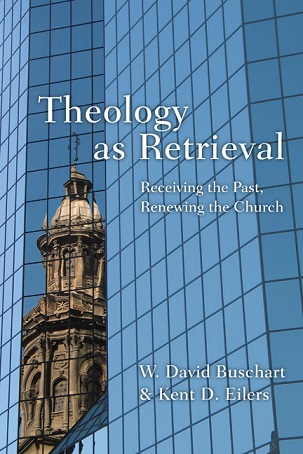
Theology as Retrieval is an exploration of how theologians might look to the past to gain applicable insights into today’s challenges. It is more than that, though. There are several specific aspects of theological retrieval that are addressed in the book from a variety of angles.
After a robust introduction that outlines what is meant by retrieval of theology and the different ways this is being brought about, there are individual chapters on various topics around which retrieval is centering. These are scripture, theology (broadly), worship, spirituality, mission(s), and cosmos. Each chapter has a question that is being addressed by many of the projects, examples of how retrieval is taking place in this specific area, and some of the results of retrieval in that field.
For example, the chapter on worship asks the question “Whose House is This?” Then, it traces various responses to the question, whether various Protestant positions or a Roman Catholic perspective. Next, specific examples of how churches went about creating worship spaces alongside their own explorations of Christian thought from the past about the place of worship. Finally, a few concluding remarks are offered about how retrieval is being done in the area of worship.
The layout thus allows for readers to pick and choose sections to read while continuing to gain different insights into how retrieval is being done. I found the chapters on worship and spirituality to be particularly enlightening. Buschart and Eilers offer not only examples of retrieval but also serve these up almost as morsels to whet the appetite for more. Throughout the book, there is a sense that there is a vast wealth of knowledge waiting to be retrieved and that the work is only being begun. I think this is an accurate portrayal of the state of theological recovery.
After the meaty introduction, the authors tend to take a kind of show, don’t tell approach to the activity of theological retrieval. The examples used are often quite robust, but I was left at times wondering whether it would have been more helpful to add another chapter on how exactly readers might go about their own activity of theological retrieval. The basics are provided in the introduction, and the examples also give several ways of how others have done so, but it would have been nice to have a more substantive overview of methodology.
Theology as Retrieval is a good read with plenty of avenues to explore. Readers will likely experience a yearning to enter into conversation with theologies of the past, and the authors provide some avenues to pursue this research. As far as methodology, however, readers will have to develop their own or try to adapt one from the glimpses provided in the book.
The Good
+Uses plenty of examples to highlight areas of retrieval
+Suggests ways to apply the concepts from the book to the church
+Highlights importance of past theologians
The Bad
-Use of examples sometimes extremely brief
-Could have used more conceptual framework
Disclaimer: I was provided with a review copy of the book from the publisher. I was not asked to give any specific kind of feedback whatsoever.
Links
Be sure to check out the page for this site on Facebook and Twitter for discussion of posts, links to other pages of interest, random talk about theology/philosophy/apologetics/movies and more!
Book Reviews– There are plenty more book reviews to read! Read like crazy! (Scroll down for more, and click at bottom for even more!)
Source
W. David Buschart and Kent D. Eilers, Theology as Retrieval (Downers Grove, IL: InterVarsity, 2015).
SDG.
——
The preceding post is the property of J.W. Wartick (apart from quotations, which are the property of their respective owners, and works of art as credited; images are often freely available to the public and J.W. Wartick makes no claims of owning rights to the images unless he makes that explicit) and should not be reproduced in part or in whole without the expressed consent of the author. All content on this site is the property of J.W. Wartick and is made available for individual and personal usage. If you cite from these documents, whether for personal or professional purposes, please give appropriate citation with both the name of the author (J.W. Wartick) and a link to the original URL. If you’d like to repost a post, you may do so, provided you show less than half of the original post on your own site and link to the original post for the rest. You must also appropriately cite the post as noted above. This blog is protected by Creative Commons licensing. By viewing any part of this site, you are agreeing to this usage policy.
“Never use an argument that you don’t find convincing”?

Not an argument, but a pretty picture nonetheless.
I was contemplating a post I was working on not too long ago and realized I didn’t find one of the arguments I put forward very convincing.
I think that there may be situations in which it is permissible and perhaps even wise to use arguments that you don’t personally find convincing. I want to start this with the caveat that as Christians in no way should you use arguments in this fashion without honestly prefacing them by saying something like “I don’t find this convincing necessarily” or “This is not my view, but some think…” We must be honest in our argumentation, but that doesn’t mean we have to be limited in it.
The Impossibility of Knowing Everything
One reason to use arguments that you don’t personally find convincing is because it is impossible for us to know everything. For example, for a long time I thought Pascal’s Wager was an okay, but not ultimately convincing argument. However, I then read a book on the argument, Pascal’s Wager: Pragmatic Arguments and Belief in God by Jeff Jordan (review linked), which convinced me that the argument is actually fairly powerful. Indeed, after reading the book I even started to use the argument myself.
Thus, what this means is that there was an argument I did not find convincing at one point, but which I later found to be quite convincing indeed. I didn’t have a complete picture of the Wager type argument, and I still don’t. It’s possible that one day I might discover a strong counter-argument which undermines my confidence in the argument.
Effectively any argument that we consider is in a situation like this. We cannot possibly have read every single angle on most (any?) arguments, and so it is possible that any number of arguments we find convincing are really not; or vice versa.
Thus, it might not be a bad idea in some situations to offer something like this: “I haven’t studied X argument much, but as of now I don’t find it very convincing. However, I do think the position it ultimately argues for is true. Perhaps you’d find X argument convincing, and we can talk about it. [Offer X argument.]”
Opening Up New Avenues for Discussion
The closing example above offers another insight into why mentioning or “using” arguments that we don’t personally find convincing could be effective- they might open up avenues for more discussion. For example, when one is doing apologetics, I could see a conversation happening in which an opening could be found by saying something like “I agree! I don’t find X to be a convincing reason to believe in God. Here’s why. Can we talk about Y, though, which I do find convincing?”
Moreover, we are called to pursue the truth and hold fast to what is good. In discussing an argument we might not find convincing, there might be new points raised which cause us to reevaluate the rejected argument in a different light.
The Pragmatic Use of Arguments
Finally, another reason it might be even wise to utilize arguments that we don’t personally find convincing would be pragmatic. For the sake of the following example, just assume that the positions presented are thought be the apologist to be acceptable biblically, though they favor one over the other. Suppose one is talking to an atheist whose only objection left to Christianity is the doctrine of eternal conscious punishment. In that case, the apologist might mention the alternative Christian doctrine of annihilationism/conditionalism, pointing out that although they don’t personally hold the view, it is a view that is established within the Christian tradition and offers an alternative to the eternal conscious punishment view.
In this case, the atheist’s final objection is at least possibly answered–they are confronted with the reality that their final objection is possibly mistaken. And, the apologist with whom they are having this discussion was honest enough to point out they don’t hold to the view, merely that it is a view which answers their objection.
This pragmatic use of argument must be done carefully, and again very openly and honestly. I have found that if one does use this method in a conversation, it generally goes to more fruitful discussions and drawing out more areas of agreement.
Conclusion
Thus, I am of the opinion that it is at least permissible to use arguments that you do not personally find convincing, with the caveat that you do so honestly.
What do you think? Should you only use arguments you personally find convincing? Is it permissible to use arguments you don’t find convincing? Are there circumstances in which this is different?
By the way, I did take that argument out of the post I was working on.
SDG.
——
The preceding post is the property of J.W. Wartick (apart from citations, which are the property of their respective owners, and works of art as credited) and should not be reproduced in part or in whole without the expressed consent of the author. All content on this site is the property of J.W. Wartick and is made available for individual and personal usage. If you cite from these documents, whether for personal or professional purposes, please give appropriate citation with both the name of the author (J.W. Wartick) and a link to the original URL. If you’d like to repost a post, you may do so, provided you show less than half of the original post on your own site and link to the original post for the rest. You must also appropriately cite the post as noted above. This blog is protected by Creative Commons licensing. By viewing any part of this site, you are agreeing to this usage policy.
A World of Darkness and War- “Eisenhorn” by Dan Abnett
 Innocence Proves Nothing.
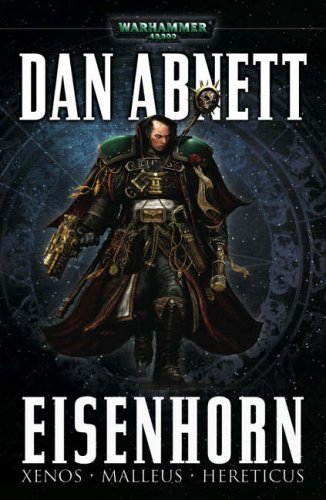
The world of Warhammer 40,000 (hereafter WH40k) is one that has few entry points for the uninitiated. Dan Abnett’s Eisenhorn Trilogy is one such entry point. I reviewed the omnibus on my general interests blog. Here we will be exploring some themes in the trilogy from a worldview perspective. There will be SPOILERS in what follows.
The Darkness
The world of WH40k is ostensibly one set in our very far future. The major tagline for the universe is “In the grim dark future, there is only war.” Confronted by this darkness, readers sometimes struggle to find light. But the light found in the universe is that of relationships: friendships and loyalty. Another light is the fight against the Warp and the forces of Chaos. Christians are similarly called to fight against evil and destroy it. The way that struggle plays out is hotly debated, but Eisenhorn is a kind of call to fight against evil where it is visible.
Puritan or Radical?
There are different sects of the Imperial Inquisition in the WH40k universe and the major way to divide them is along lines of Puritanism or radicalism. Largely, this comes down to whether an Inquisitor would use elements or even knowledge of “Chaos” in order to fight Chaos or whether they would not. This notion of Puritan/Radical is found throughout the Eisenhorn trilogy.
These lines of separation are relevant because in some ways they are paralleled in Christian thought. How literally is the Bible to be taken? How separated from the world should Christians be? What insights can be allowed for in other faith traditions? These are just a few questions that parallel this complex line that is brought to light by Abnett.
Interestingly, the way that Eisenhorn himself develops as a character points to how these might become a false dichotomy. He begins to realize that some of the insights from the Radical side have merit, and began to shift towards a more moderate position. One wonders whether we too often become bogged down in our conservative/liberal divisions to see how the “other side” might have some helpful insights.
War Against Chaos
In the WH40k universe, demons are manifested in the flesh, the forces of darkness work through psychic powers (psykers), aliens worship evil deities, and more. Through the realism of these elements, the universe is put forward as one in which evils are, at times, much easier to identify than the evils we find in our world. Christians have differing views about spiritual warfare (read the link in those words for a brief exploration of a few), but I think we too often pretend that there are no real evils out there or that they can be reduced purely to the evils of the human heart.
Conclusion
The world of WH40k is dark, but the way it portrays evil and the battle against it serves up not only a compelling narrative but one which has some points of contact with Christianity. Ultimately, WH40k ends up left in darkness, but Christianity has the one Story which offers ultimate hope; that found in Christ as victor over death and the devil.
Links
Be sure to check out the page for this site on Facebook and Twitter for discussion of posts, links to other pages of interest, random talk about theology/philosophy/apologetics/movies and more!
Book Reviews– There are plenty more book reviews to read! Read like crazy! (Scroll down for more, and click at bottom for even more!)
Source
Dan Abnett, Eisenhorn (Black Library, 2005).
SDG.
——
The preceding post is the property of J.W. Wartick (apart from quotations, which are the property of their respective owners, and works of art as credited; images are often freely available to the public and J.W. Wartick makes no claims of owning rights to the images unless he makes that explicit) and should not be reproduced in part or in whole without the expressed consent of the author. All content on this site is the property of J.W. Wartick and is made available for individual and personal usage. If you cite from these documents, whether for personal or professional purposes, please give appropriate citation with both the name of the author (J.W. Wartick) and a link to the original URL. If you’d like to repost a post, you may do so, provided you show less than half of the original post on your own site and link to the original post for the rest. You must also appropriately cite the post as noted above. This blog is protected by Creative Commons licensing. By viewing any part of this site, you are agreeing to this usage policy.
Book Review: “Talking Doctrine: Mormons and Evangelicals in Conversation” edited by Richard Mouw and Robert Millet
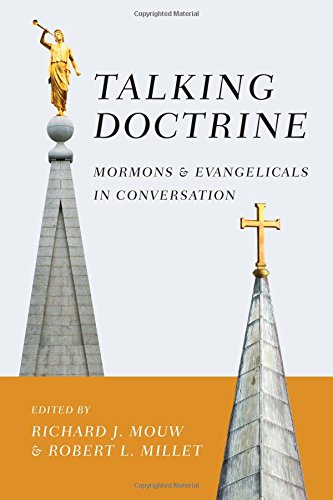
Talking Doctrine: Mormons and Evangelicals in Conversation is a collection of essays from both Mormon and evangelical scholars about the areas of convergence and divergence in their beliefs.
The essays touch on a broad array of topics, though they are organized under two general headings: the nature of the dialogue and specific doctrinal discussions. Each grouping has a diverse set of essays, from a series of reflections on Mormon-evangelical dialogue to the exploration of sacred space under the “nature of the dialogue” to the question of the Trinity and the nature of authority under “specific doctrinal discussions.”
It is quite interesting to see how Mormon and evangelical thought has developed through this dialogue and what areas are left open to explore. Some essays hint at convergence of the belief systems (the nature and efficacy of grace, for example), while others show how wide the divide remains (specifically the discussions on the Trinity and issue of theological anthropology).
I appreciated the calls to honesty in the dialogue on both sides, as well as the tone of each essay which suggested mutual respect even amidst a struggle to understand each other.
One thing that I am really left wondering is how much the Mormon side in this dialogue represents the “Mormon on the street.” That is, would the average Mormon hold to similar beliefs as those writing the essays herein? Often, it seems that the Mormons do not sound all that far from evangelicalism on some issues, but on others the chasm is very wide indeed.
Several of the essays were, frankly, overly optimistic. Sarah Taylor, in “An Evangelical at Brigham Young University,” has a conversation with a Mormon friend in which the Mormon friend affirms the possibility that God the Father sinned, but argues that Christ’s atonement would have canceled out even that sin. Shockingly, Taylor’s conclusion is that the Mormon friend was “the same amount Christian” as she is (emphasis hers) despite the affirmation of God’s sinning. Other head-scratchers like this are found throughout, such as when Brian Birch in “Divine Investiture: Mormonism and the Concept of Trinity” concludes that because Mormonism is similar in some ways to Arianism(though radically dissimilar in others), it can be seen as akin to some form of the Christian tradition (but why should a condemned heresy be concluded to be part of the Christian tradition? how broadly are these scholars painting to be inclusive?).
However, each essay has several intriguing points to take away alongside various insights and challenges. Whether you are an evangelical looking to broaden your understanding of Mormonism or an apologist looking to see some of the most challenging contrasts to evangelicalism found in Mormon thought (or anywhere in between), this is a book that will benefit you.
Talking Doctrine is a fascinating book with many challenging essays and avenues to explore. Frankly, if one is interested at all in apologetics and Mormonism, one should read this book. Whatever shortcomings it has are outweighed by the amount of information found herein. Just be aware of some of these shortcomings.
The Good
+Interesting set of essays
+Tackles some of the tough questions
+Great concern with accurate representation of “others'” beliefs
+Provides insight into both sides of the dialogue
The Bad
-Very minimal space given to each essay
-Some difficult topics seemed to be skirted around or ignored
-Downplays some rather major areas of disagreement
Disclaimer: I received a review copy of this book from the publisher. I was not asked to provide any specific kind of feedback whatsoever.
Links
Be sure to check out the page for this site on Facebook and Twitter for discussion of posts, links to other pages of interest, random talk about theology/philosophy/apologetics/movies and more!
Book Reviews– There are plenty more book reviews to read! Read like crazy! (Scroll down for more, and click at bottom for even more!)
Source
Talking Doctrine: Mormons and Evangelicals in Conversation edited Mouw and Millet (Downers Grove, IL: InterVarsity, 2015).
SDG.
——
The preceding post is the property of J.W. Wartick (apart from citations, which are the property of their respective owners, and works of art as credited) and should not be reproduced in part or in whole without the expressed consent of the author. All content on this site is the property of J.W. Wartick and is made available for individual and personal usage. If you cite from these documents, whether for personal or professional purposes, please give appropriate citation with both the name of the author (J.W. Wartick) and a link to the original URL. If you’d like to repost a post, you may do so, provided you show less than half of the original post on your own site and link to the original post for the rest. You must also appropriately cite the post as noted above. This blog is protected by Creative Commons licensing. By viewing any part of this site, you are agreeing to this usage policy.
Sunday Quote!- We Influence Toward… or Away From Christ
Every Sunday, I will share a quote from something I’ve been reading. The hope is for you, dear reader, to share your thoughts on the quote and related issues and perhaps pick up some reading material along the way!
We Influence Toward… or Away From Christ
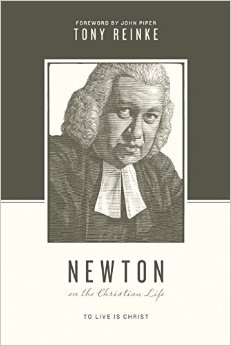
I read through Newton on the Christian Life by Tony Reinke recently (see my review). Before I go any further, I would note this is John Newton and not Isaac Newton. John Newton is the man who wrote Amazing Grace, but his life and influence go well beyond that. Reinke notes that, according to John Newton, we have vast influence even in our everyday interactions with others:
Every day we influence others in one of two directions: (1) toward faith in Christ and eternal glory, or (2) toward rejection of Christ and eternal judgment. (Kindle Location 2801, cited below)
Newton has some insights of his own on how we might best lead towards Christ, and this largely centers around the maturing life of a Christian and trying to live as Christ, for “to live is Christ.”
How is it that our actions are influencing others toward or away from Christ? How might we best live our lives in ways that lead to Christ rather than driving people away from Him? In what ways can we, through the Spirit, live as Christ to the world?
Links
Be sure to check out the page for this site on Facebook and Twitter for discussion of posts, links to other pages of interest, random talk about theology/philosophy/apologetics/movies and more!
Sunday Quote– If you want to read more Sunday Quotes and join the discussion, check them out! (Scroll down for more)
Source
Tony Reinke, Newton on the Christian Life (Downers Grove, IL: Crossway, 2015).
SDG.
Egalitarian Music?
 I often find myself cringing at the lyrics that pass for contemporary Christian music as I listen to the radio (which, admittedly, I rarely do). From songs like “Courageous,” which makes it sound like only men can have courage… or at least that only they were “made to be” that way; to those like “Lead Me,” which encourages co-dependence in relationships, I find myself wondering if there are any egalitarian Christian musicians out there making music that shares that message. I know of none.
Anyone know of any?
The question, of course, is whether the concept of gender “roles” even needs to be an issue for egalitarian musicians. Moreover, how might an egalitarian theme be put forward meaningfully through music? I’m interested to know if anyone has thoughts on this.
Of course, all of this may just be another displayed symptom of the problem I’ve mentioned before with having a distinct genre of “Christian” music over and against other types of music.
Links
Be sure to check out the page for this site on Facebook and Twitter for discussion of posts, links to other pages of interest, random talk about theology/philosophy/apologetics/movies and more!
Christian Discernment Regarding Music: A reflection and response– Here I react to a post encouraging discernment when thinking about the category of Christian music.
On Christian Music– I reflect on the category of “Christian Music” and whether it is even a functionally helpful tool.
Engaging Culture: Demon Hunter’s “Extremist” and the Apologetic Task– I discuss the latest album from Demon Hunter and how music may act as an apologetic endeavor.
SDG.
“Avatar”- A Christian reflection on the film
 I’ll admit it up front: I love the movie “Avatar.” I know that admission will immediately garner scoffers and the like, but I’d like to take this opportunity to look over some of the themes in the film to show why I like it so much. There will be SPOILERS in what follows.
A Concern for Social Justice
First, it must be admitted that there is a strong concern for social justice throughout the film. This concern is borne out in three ways:
1) The disabled- Jake Sully is wheelchair-bound, and this leads to some overt thematic elements related to this. Other characters make offhand remarks over his state. “That’s just wrong”–presumably referring to sending someone with such a disability to Pandora; Jake refuses help from others and relies on his military background to keep himself motivated to do whatever anyone else can. In the extended edition of the film, Jake is also bodily thrown out of a bar early on, which highlights his feelings of injustice and helplessness, while also showing compassion demonstrated by his character. Jake’s veteran benefits can’t pay for a “new set” of legs, so he looks to Pandora for a fresh start.
From these portrayals, one may draw two primary areas of discussion. First, the ultimate solution to Jake’s status is transcendence into the Avatar body. His state is ultimately not one he can overcome himself but one which is ultimately reliant upon others–even deity (see next section). Second, there is some concern here for those with disabilities: we should neither treat them as deficient nor should we ignore the possibility of increasing the well-being of those in such situations.
2) The Environment- Some may not consider notions of concern for the environment a “social justice” issue. However, it should be clear that impact upon an environment definitely brings about societal change. If a group lives in a jungle, razing that jungle to the ground will have profound impact on that people group. Although the portrayal in the film is very straightforward (perhaps even simplistic), the concern for how destruction of an environment can lead to societal ills is certainly portrayed. In the Bible, we are given the command to care for creation. This should translate into a concern for societal well-being as well.
3) The “Other”- The Na’vi (interestingly similar to the Hebrew word for “prophet”) are the “other” in the film. From the human persepctive, they are a strange people. They have a seemingly paganistic nature worship along with inherent pantheism. They prefer to live in trees and tribal communities than building roads and buildings. The way in which the humans interact with the “Other” is ultimately a question of major concern and conflict. By downplaying the needs and disrespecting the culture of the “Other,” humans fail to learn from them and perhaps come to mutual understanding and a better relationship. Rather, the “Other” is seen as one to exploit for one’s own ends. For some discussion of how the “Other” is used in religious contexts, see my post on “The Myth of Religion.”
Deity- Or, Avatar is not Pantheistic
One aspect of the film I have heard other Christians complain about is that the religion of the Na’vi is pantheistic. However, it seems clear that Eywa is no friend to pantheism. Indeed, this “goddess” is far from the pantheistic all-in-all. Rather, it turns out in the climactic battle near the film’s end that Eywa “had heard” Jake’s prayer and in fact answers in rather extraordinary fashion. Eywa (again, interestingly similar to the name of the LORD in Hebrew) turns out to be not so much a pantheistic, monistic One as a theistic deity capable of activity within the natural realm.
Thus, the ultimate reality of the film is that there is such a thing as deity interfacing with the prayers of persons and with power to answer them. This is not to say the film is entirely friendly to Christian theism. For example, one line Jake Sully says to Eywa is that the inhabitants of Earth “killed their Earth-Mother.” Surely this is not an affirmation of theistic faith but rather hints at a kind of pantheon of deities for each planet! Well, not so fast: Jake says this before he even knows that Eywa is truly a deity capable of activity on the planet. He is trying to describe the situation in his doubt, and his prayer is that of a skeptic trying to make sure he’s covered all his bases. The answer of the extent of Eywa’s rule over Pandora (or beyond?) is left unanswered.
Again, I am not trying to suggest that Eywa should be identified with Christian theism. Rather, within the context of the film, it is clear that a deity exists and acts within the “real world.” I think it must be admitted that this is a far cry from the outlook of many films which are either anti-theistic or generally ignore the question of deity altogether.
Conclusion
“Avatar” is a film that’s worth talking about for more than its beauty. Although many mock it for its emulation of some story tropes (Pocahontas in space!), there are more thoughtful elements in the film worth discussing. In particular, the question of divine activity is poignantly brought to the forefront. Moreover, the themes of social justice brought forward call into question our own assumptions about what is the best way to address various needs and issues.
What I’ve written here is only the beginning of possible discussions. A whole slew of topics remained untouched (what of mind/body connections and the use of the Avatars themselves?; what of the use of mercenaries?; what kind of criminal justice system could one have in a corporate run entity like this?; etc.), so I’d love to read your own thoughts on the film.
Links
Be sure to check out the page for this site on Facebook and Twitter for discussion of posts, links to other pages of interest, random talk about theology/philosophy/apologetics/movies and more!
Escaping to Pandora– J. Warner Wallace notes other issues of apologetic importance of the movie “Avatar.” He specifically focuses on the real hope in heaven and the transcendent.
Caring for Creation: A discussion among evangelicals– I write about creation care from a number of perspectives offered at a recent panel of prominent evangelical thinkers in this area.
Also see my other looks into movies (scroll down for more).
SDG.
——
The preceding post is the property of J.W. Wartick (apart from quotations, which are the property of their respective owners, and works of art as credited; images are often freely available to the public and J.W. Wartick makes no claims of owning rights to the images unless he makes that explicit) and should not be reproduced in part or in whole without the expressed consent of the author. All content on this site is the property of J.W. Wartick and is made available for individual and personal usage. If you cite from these documents, whether for personal or professional purposes, please give appropriate citation with both the name of the author (J.W. Wartick) and a link to the original URL. If you’d like to repost a post, you may do so, provided you show less than half of the original post on your own site and link to the original post for the rest. You must also appropriately cite the post as noted above. This blog is protected by Creative Commons licensing. By viewing any part of this site, you are agreeing to this usage policy.
Sunday Quote!- Genesis 1-11 is Fiction?
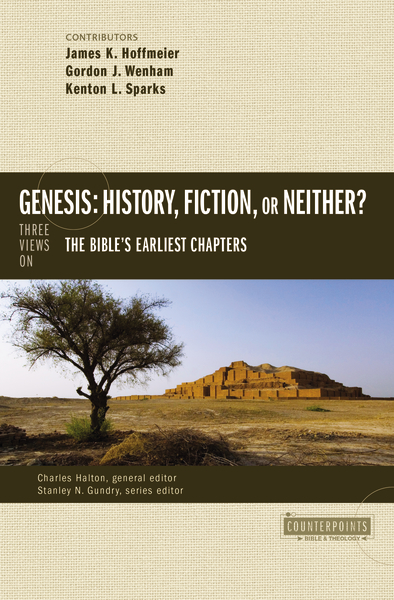 Every Sunday, I will share a quote from something I’ve been reading. The hope is for you, dear reader, to share your thoughts on the quote and related issues and perhaps pick up some reading material along the way!
Genesis 1-11 is Fiction?
Kenton Sparks argues in his chapter of Genesis: History, Fiction, or Neither? that Genesis 1-11 is “ancient historiography,” which is to say, largely mythic fiction. Why does he argue this, and what are the implications? He sums up his position nicely:
[I]t is no longer possible for informed readers to interpret the book of Genesis as straightforward history. There was no Edenic garden, nor trees of life and knowledge, nor a serpent that spoke, nor a worldwide flood in which all living things, save those on a giant boat, were killed by God. Whatever the first chapters of Genesis offer, there is one thing that they certainly do not offer, namely, a literal account of events that actually happened prior to and during the early history of humanity. If Genesis is the word of God, as I and other Christians believe, then we must try to understand how God speaks through a narrative that is no longer the literal history that our Christian forebears often assumed it to be… (111, cited below)
I’m sure some of this statement was for rhetorical flourish, but it is clear that Sparks has chosen to contrast his position with the staunchest literalist position. He references the Flood as global; despite many conservative scholars arguing that it is local; in the same essay he sets his position against 6-day creationism, but does nothing to hint at how his position might contrast with those who do not adhere to that perspective. As I said, I’m sure a lot of this is rhetorical flourish rather than ignorance, but his essay could have been stronger if he’d interacted with more nuanced positions.
That said, it is difficult to reconcile his statement that effectively nothing in Genesis 1-11 refers to a “literal account of events that actually happened…” with his statement that Genesis is the “word of God.” However, he does try to demonstrate this throughout his essay. I remain unconvinced that Genesis 1-11 is largely fiction, though I would find myself in agreement with Sparks at a few points in his exegesis.
What do you think? Would arguing that Genesis 1-11 is effectively fiction–theological fiction, but fiction nonetheless–undermine its viability as the word of God? What might this mean for interpretation of these early chapters?
Links
Be sure to check out the page for this site on Facebook and Twitter for discussion of posts, links to other pages of interest, random talk about theology/philosophy/apologetics/movies and more!
Sunday Quote– If you want to read more Sunday Quotes and join the discussion, check them out! (Scroll down for more)
Source
Kenton Sparks, “Genesis 1-11 as Ancient Historiography” in Genesis: History, Fiction, or Neither? Charles Halton and Stanley Gundry, eds. (Grand Rapids, MI: Zondervan, 2015).
SDG.
Really Recommended Posts 8/21/15- Science Fiction, Debate the New Testament, and more!
 Another week, another round of fresh reads for you, dear readers, to enjoy! This week we have posts on a science fiction author you may not have heard of, a debate between an atheist and a New Testament scholar, theology and miscarriages, a pro-life post with some good arguments and advice for advocates, and creationism.
Cordwainer Smith– Cordwainer Smith was a science fiction author who was also an Anglican. He developed a unique and compelling world full of intriguing insights into humanity, religion, and free will. Here’s a post that develops some of his thought and reflects a bit on his body of work.
How Not to Argue Pro-Choice: Eleven Completely Misguided Arguments– Clinton Wilcox has written a valuable piece here responding to a pro-choice article that alleges to discredit 11 common pro-life arguments. Not only does he respond to each of the 11 attacks on pro-life arguments, but he also clarifies some arguments that we probably shouldn’t be using.
Fact-Checking Dan Barker from Our Recent Debate [with Daniel B. Wallace]– Here’s a meaty read that will help you dive into some of the extra-biblical evidence related to Jesus Christ, among other things.
Miss Carry: The Theology of Unrealized Motherhood– Miscarriages happen to anywhere from 10%-50% of all pregnancies. Yet we don’t often talk about the emotional impact these can have on families. Here’s a post reflecting on the need for a theology of unrealized motherhood.
Billions of Stone Artifacts: Witness to the Ancient Occupation of the Saharan Desert– Joel Duff continues his series responding to an Answers in Genesis argument about the sheer volume of stone artifacts in Africa. The basics are that the fact that billions of artifacts exist means that human occupation must have been much longer than a young earth creationist timeline allows for.

 J.W. Wartick - Reconstructing Faith