christian
Book Review: “From Plato to Christ” by Louis Markos
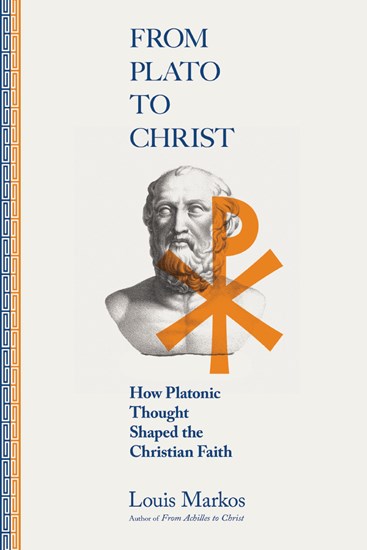
What has Jerusalem to do with Athens? Quite a lot, if one reads Louis Markos’s From Plato to Christ. The work is a partly a look into Plato’s thought, and partly a survey of how Plato’s thought impacted Christianity through its early history.
Markos wastes little time essentially baptizing Plato after the fact. The first page of the preface has Markos claiming that Plato’s writings can be read “as inspired writings used by the God of the Bible to prepare the ancient world for the coming of Christ and the New Testament” (ix). On the same page, he says that Plato is the “culmination of the best of the pagan (Pre-Christian) wisdom” (ibid). One might wonder how, say, the Hebrew Scriptures fit into this scheme, and whether Markos lumps Judaism in with “paganism” as it is pre-Christian or whether he simply dismisses it as being capable of preparing the ancient world for the coming of Christ. Markos’s fervor to recommend Plato to his readers seemingly has no limits, as he quickly navigates through chapters that analyze several of Plato’s writings and argue that he offers a kind of vision for Christianity in the future. I may indeed be understating how eagerly Markos endorses Plato, as he later quotes C.S. Lewis approvingly stating that “Prophets and holy men… do not so much teach us morality as remind us of it” (57). This quote is then applied, at least by implication, to Plato.
Those looking for a critical analysis will need to look elsewhere. Markos’s enthusiasm knows few bounds. Even the very occasional time in which he points out something problematic in Plato’s thought are steeped in explanations about why that might have been part of Plato’s belief system. There is also little by way of critiquing Plato’s system itself, something with a long and storied tradition within Christian philosophy and theology. One might forgive the book for this, as it clearly isn’t intended to be a total look at Christian Platonism, but it seems worth mentioning given that readers without background knowledge on the subject may walk away from reading the book thinking that Christians generally have no problem with Platonism despite there being entire systems of thoughts developed to circumvent or deny Platonism in Christianity.
One example is in the chapter outlining The Republic. Markos outlines the way the republic is built by noting it is Socrates presenting all of these ideas. In a way, this shields Plato from criticism, but allows Markos to pour on praise when he agrees with Plato (see the shift from Socrates to Plato on page 27, for example). There is little about the awful way the city is set up to essentially force young adults into sexual relationships to produce offspring as dictated by the city’s leaders. Markos, having shifted before to claiming that these parts of the text reflect a more mature Plato using Socrates as a mouthpiece, in a footnote directly and singularly assigns Socrates the blame for this eugenic and ethical quagmire (45n9). Plato, it appears, can actually do no wrong.
Markos’s survey of Christian history and influence from Platonism is of interest, though not without problems of its own. He questions Origen’s orthodoxy due to his universalism, which fails to account for the lengthy stream of orthodox Christians (some of whom, as Origen, were condemned much later as heretical for their beliefs) who held to universalism or at least something similar. These sections provide insight into at least the range of Christians who were influenced by Plato, however.
From Plato to Christ is an enthusiastic endorsement of Plato and Platonism for Christians to explore. It’s difficult for this reader to wholly endorse the work, as it presents so uneven a picture both of Platonic thought and early Christian history that it could lead to a skewed view going forward. However, it could serve as an introduction to Christian Platonism for those interested who read it with a critical eye.
Disclaimer: I was provided with a copy of the book for review by the publisher. I was not required to give any specific kind of feedback whatsoever.
All Links to Amazon are Affiliates links
Links
Be sure to check out the page for this site on Facebook and Twitter for discussion of posts, links to other pages of interest, random talk about theology/philosophy/apologetics/movies and more!
Book Reviews– There are plenty more book reviews to read! Read like crazy! (Scroll down for more, and click at bottom for even more!)
SDG.
——
The preceding post is the property of J.W. Wartick (apart from quotations, which are the property of their respective owners, and works of art as credited; images are often freely available to the public and J.W. Wartick makes no claims of owning rights to the images unless he makes that explicit) and should not be reproduced in part or in whole without the expressed consent of the author. All content on this site is the property of J.W. Wartick and is made available for individual and personal usage. If you cite from these documents, whether for personal or professional purposes, please give appropriate citation with both the name of the author (J.W. Wartick) and a link to the original URL. If you’d like to repost a post, you may do so, provided you show less than half of the original post on your own site and link to the original post for the rest. You must also appropriately cite the post as noted above. This blog is protected by Creative Commons licensing. By viewing any part of this site, you are agreeing to this usage policy.
Why I Left the Lutheran Church – Missouri Synod: By Their Fruits… (Part 2)

For several posts, I will be writing about specific things that came up while I was within the LCMS–that is, at its schools, churches, and university–that made me start to think that the LCMS way of things didn’t align with some aspect of reality, what I learned in the Bible, or something else. Here, I continue a miniseries within that about the fruits of our actions and how they tell about who we really are. Check out the Hub for this series to see all my posts on why I left the LCMS.
By their fruits… (Part 2)
[Content warning: discussions of racism, antisemitism, and Islamophobia.]
I talked about how I learned that faith lived wasn’t the same as faith professed in my last post. It was a kind of disturbing reality to become aware of, but also one that would get repeatedly shoved in my face as I studied to be a church worker in the LCMS–initially as a teacher, and later as a pastor. The black-and-white, rigid doctrinal purity I was taught was essential didn’t get applied to the lives of Christians, including church workers and those studying to be the same.
I enjoyed visiting other LCMS churches. I’d come prepared with my well-worn and well-marked Bible, eager to join the Bible study, which is where I knew the rubber hit the road regarding discussions of doctrine. I wanted to engage scripture as much as possible, and learn it as deeply as possible. One visit took me along with another man studying to be a pastor to a church site he was working at. I enjoyed the Bible study well enough.
After church, I went to speak with the pastor, who knew I was a pre-seminary student. He asked me how college was going, and how I liked my classes. At some point, the conversation turned to sports and he asked about my favorite college team. I said it was Nebraska, and the pastor said that he liked them too. The reason, he said, was because they “don’t have any of those black boys on their team.” He favored Nebraska because, in his words, they liked “white boys playing football,” even at positions other teams often had–here he used a derogatory term for African Americans–playing the position. He grinned at me with a knowing smile. I was genuinely shocked. So much so that I was literally dumbstruck. I could not untie my tongue to correct him or even say I disagreed. I think after some awkwardly long silence I said something like “I like them because my parents do,” and walked as swiftly away as possible.
When I met back up with man I’d come with, he asked what I thought about the experience. I’d managed to muster my thoughts a bit more at this point. In no uncertain terms I said the pastor was a racist and that I found that reprehensible for a pastor, especially. I repeated what had been said. I had expected the other pastor-in-training to be similarly incensed. I don’t know exactly what I thought would happen–some kind of confrontation with the pastor over the absurdity of his statements. Instead, this man who was at seminary in the LCMS told me that I shouldn’t be worried about it. The pastor was old, and stuck in his ways. Something to the effect of, “That’s just how people his age think” was said. I was even asked if I would come back the next week for Bible study and church. I was appalled and said something that made it clear I’d not be setting foot in the place again. He shrugged it off.
The LCMS had and has a very uneven stance with race. While outwardly speaking against racism abstractly, inwardly instances of racism were hushed up. Racist jokes were not infrequent among pre-seminary men[1] when I was in college. Whether it was about how “illegals” would ruin our country or jokes about other minorities and stereotypes, these were seen as good natured fun, not as the vile racism they reflected. Again, to my shame, I wasn’t nearly loud enough in my condemnation of it. Indeed, like all too many people, I found myself laughing along to try to fit in. It was easier to conform and be “in,” than to be “out.” The visit to a church with a racist pastor is what broke me. I realized that I was enabling others on that same path. I got louder in pre-seminary circles at lunches or breaks between classes, not laughing at jokes. I wish I’d been better at this than I was, to be honest. Even the inadequate amount of pushback I offered made me a bit of a pariah.
The pattern of racist remarks is one I encountered at many levels of LCMS leadership at many different sites. Defenses of the Confederacy is one way this manifests. Defending an alternate history narrative of “states’ rights” as the cause of the Civil War[2] provides a convenient dog whistle to cover up, at minimum, prejudice. Thus, when I grimaced as I listened to one pastor go on about the “glorious cause” (actual quote) the South had fought for, he was able to take a few steps back and say, “I mean states’ rights, of course!” Defense of the Confederacy cannot avoid being tied to racism. Thankfully, my elementary and middle school education in LCMS schools did not support a Lost Cause false narrative of the history of the United States, but I frequently encountered it among LCMS teachers and pastors.
Directly racist statements were also not out of the question. I already shared above my story about visiting a pastor who doubled down on racist statements, and the defense of that pastor by others. Another pastor, after overhearing an elderly woman using a derogatory word for Black people, told me that I should not be upset or intervene about it because “that was just the times she was in.” I was a young teen at the time, and did not yet have the capacity to question such an answer. But horrific, racist language from people that then gets defended by pastors (or having that same language come from pastors’ mouths) is the kind of thing that makes an impression on a young mind. It would take me some years before I was able to dig through that morass of obfuscation regarding racism and realize that “growing up some number of years ago” does not excuse one for being racist.
Comments about Islam and Muslims were and are extremely common. Reading Facebook comments on LCMS groups trying to teach about racism gives many, many contemporary examples of this. But my own experience in the LCMS demonstrated time and again that Islamophobia was not only endemic in the LCMS, but was often tied to racism in complex and interconnected ways. 9/11 wasn’t when this started, but certainly touched off a number of comments, from Americans across the board. However, within LCMS institutions, I would frequently hear about how Muslims were all trying to kill Christians specifically and that Islam’s teaching is explicitly violent. Indeed, it was not uncommon to be told that if Muslims said Islam wasn’t violent, they were doing so in order to cover up latent desire to cause violence or to allow a kind of shadowy Sharia to sneak into “the West” in order to take over peacefully before starting a violent regime. Any action by anyone who could be identified as Middle Eastern was therefore automatically linked to this global Islamic conspiracy. The tie to racism came up not infrequently, such as Christians who engaged in violent acts but “looked Muslim” being tied to Islam. The color of skin was apparently enough to tie the perpetrator into Islam.
One memorable conversation about Islam ended after I asked something similar to “If all Muslims really wanted to kill all Christians–if that was really want they all wanted, deep down, and they were covering it up–then how come, if there are over one billion Muslims in the world, we aren’t all dead or fighting for our lives?” The question was pointed not because I believed the charge that all Muslims wanted to kill all Christians, but because I wanted to point out the absurdity of the claim. This was in conversation with an LCMS pastor, and the response was basically to change the subject. Again, due to widespread anti-Muslim sentiment in America, this isn’t uncommon, but these are comments from and by pastors or people studying to be pastors within the LCMS, and one might wonder what standards and corrections are being offered within to make this not be such a common problem.
Antisemitism also reared its ugly head. There were offhand remarks about how Jews today (those who hadn’t converted to Christianity, anyway) were all going to hell, for example. While this aligns with the general belief that anyone who isn’t Christian is going to hell, time and again Jewish people were singled out for especial remarks to that effect. Lutherans, especially, have a history of antisemitism. Martin Luther’s horrifying comments about Jews were either ignored or given a context that was supposed to justify them. At multiple points within the LCMS, I was taught that Luther’s comments about Jews were understandable because he was frustrated that they didn’t convert to Christianity. This wasn’t just a way to explain why Luther turned towards antisemitism more fully[3]. Instead, it was an explanation that was supposed to exonerate him, in some way. Luther could emerge from this explanation, if not sparkling clean, then understandable.[4] Rather than simply condemning Luther as a sinful man engaging in detestable behavior–something that would very much align with Lutheran theology–Luther was given an apology for his behavior. This opened up, for some, the possibility of doing the same or at least excusing other behavior. In college, some classmates, including a few pre-seminarians, engaged in Holocaust denial. Some of them were treating as a joke, apparently thinking it was “edgy” to make such comments. However, even “jokes” about antisemitism are engaging in antisemitic behavior.
Racism continues to be a major problem within the LCMS. Currently, controversy has erupted at Concordia University Wisconsin (and by extension, Concordia University Ann Arbor) because the job description for the President of the university included diversity and equity in what was being sought. The extreme conservative pushback against this is a major problem that shows leadership in the LCMS continues to prefer to hide or ignore racism rather than confront it. It’s easier to pretend racism in the LCMS is impossible than it is to confront the ugly truth that it exists and is tolerated and even protected. My own experience encountering racism in the LCMS reinforces this. (For more on this controversy, see my post here.)
Another recent example is from the reporting around a survey of Young Adults who’d left the LCMS. I received this survey and filled it out. When the reporting came out explaining the reasons why people like me had left, racism was one of the examples. One other young adult said she left because her boyfriend, who’s Hispanic, felt unwelcome at an LCMS church. But the report said something to the effect of “We in the LCMS aren’t racist and are welcoming of people from anywhere, so it’s likely that this boyfriend was being paranoid.” I wish I were making that up. But this kind of head-in-the-sand reaction to overt and covert racism is enough of a pattern that it is clearly an issue.
The easiest response to all of this would be to say not all LCMS pastors are racist, and many would be appalled by racist jokes. Not all LCMS pastors are Islamophobic or antisemitic… not all… I agree. It’s true that not all LCMS pastors are guilty of the things I saw and experienced. But too many LCMS pastors allow racism within their ranks. Too many LCMS pastors cover up racist jokes and comments made by peers. Too many LCMS pastors have defended the Confederacy with impunity. “By their fruit, you will know them.”
[1] I’ll occasionally use the term “pre-seminary” or “pre-seminary students.” It should be understood unless otherwise noted that this always refers to groups of exclusively men, and specifically men who were on track to study to be pastors. Women are not permitted to be ordained as pastors in the LCMS, and so it is exceedingly rare for a woman to be enrolled in the pre-seminary program.
[2] States’ Rights was manifestly not the cause of the Civil War. Reading the articles of secession of several states reveals this, as they explicitly state that a major or even the reason for secession was they wanted the Federal Government to enforce the Fugitive Slave Act, itself a major infringement on States’ Rights. I outline some of this, and other reasons to point to slavery as the reason for the Civil War, here.
[3] Research shows that Luther was surrounded by antisemitism from childhood in every context in which he operated, and even his earlier works featured antisemitism at least in illustrations. See Martin Luther: Renegade and Prophet by Lydal Roper.
[4] This propensity to deny or explain away defects in heroes’ character is pervasive. That doesn’t excuse it, but should instead make us cautious about our own heroes.
Links
Formerly Lutheran Church – Missouri Synod (LCMS) or Wisconsin Synod (WELS)– A Facebook group I’ve created for people who are former members of either of these church bodies to share stories, support each other, and try to bring change. Note: Anything you post on the internet has the potential to be public and shared anywhere, so if you join and post, be aware of that.
Why I left the Lutheran Church – Missouri Synod Links Hub– Want to follow the whole series? Here’s a hub post with links to all the posts as well as related topics.
Be sure to check out the page for this site on Facebook and Twitter for discussion of posts, links to other pages of interest, random talk about theology/philosophy/apologetics/movies and more!
SDG.
——
The preceding post is the property of J.W. Wartick (apart from quotations, which are the property of their respective owners, and works of art as credited; images are often freely available to the public and J.W. Wartick makes no claims of owning rights to the images unless he makes that explicit) and should not be reproduced in part or in whole without the expressed consent of the author. All content on this site is the property of J.W. Wartick and is made available for individual and personal usage. If you cite from these documents, whether for personal or professional purposes, please give appropriate citation with both the name of the author (J.W. Wartick) and a link to the original URL. If you’d like to repost a post, you may do so, provided you show less than half of the original post on your own site and link to the original post for the rest. You must also appropriately cite the post as noted above. This blog is protected by Creative Commons licensing. By viewing any part of this site, you are agreeing to this usage policy.
Why I left the Lutheran Church – Missouri Synod: Points of Fracture (Part 1): Science as a Child

I have written about why I am writing this series as well as my history within the LCMS. Now, it is time to turn to what I’m calling points of fracture. For several posts, I will be writing about specific things that came up while I was within the LCMS–that is, at its schools, churches, and university–that made me start to think that the LCMS way of things didn’t align with some aspect of reality, something I learned in the Bible, or something else.[1]
Points of Fracture: Science as a Child
Here, I’ll be sharing the points of fracture that I experienced related to science at a young age. At the outset, I want to point out that much of these points of fracture were discovered by me over time. So, for example, when I talk about my young childhood, it’s not as though I was immediately aware that something was off about what I was learning. Instead, it was a realization that came over time, and the memory of when I was young was something that I recall as an important stepping stone to get to where I am now.
Some of my first memories of conflict between what I believed and what others believed was as a child getting library books. I don’t remember how far we had to go to drive to the library from our tiny town, but I remember it seemed like forever, and that I would consume books on the way home, often falling asleep in the car before arriving at home. I, like many kids, was obsessed with dinosaurs.[2] That meant I raided the library’s section on dinosaurs. I’d memorize the names and facts about them, pore over images of them, and imagine what life would have been like alongside them. If the cover of a library book had a T-Rex ripping apart its prey, that was the book I was going for. But those dinosaur books talked about when dinosaurs lived. Those dates were given as the best scientific approximations based on various dating techniques, ranging from about 66 million years ago to 200 million or more for dinosaurs’ first appearance on Earth.
Those dates, I was told, were wrong. Whenever I saw “millions,” I was told to ignore it. As a young kid, I didn’t press back very hard on that. After all, I had no reason to do so. I knew that I could get facts wrong about all sorts of things, so the notion that basically every book I read about dinosaurs was wrong about how long ago dinosaurs lived wasn’t terribly mind-bending for me. I learned to just run my eyes over any time it said “millions of years,” because that was wrong. The rest of the facts, though, were basically unquestioned. I didn’t have the capacity at the time to put those two things into disharmony. That is, I didn’t realize how odd it was that the books and scientists seemed to be right about, say the ecosystem the dinosaurs lived in, or their diets, or debates about coloration while simultaneously being totally wrong and even untruthful about how long ago they lived.
That last bit is important. I used the word “untruthful” because part of what I was taught, whether directly or through creationist literature I would be exposed to a year or so later, was that scientists weren’t just wrong about the age of the Earth or when dinosaurs lived. No, instead, they were actively lying about it. I want to sit with this for a moment because it is an extremely important distinction. There’s a huge difference between someone being wrong while reporting something they think is factual and someone deliberately deceiving you about something they say is factual. That I came to believe that scientists were actively lying about the age of the Earth would temper my interest in science for more than a decade once it became fully engrained in me. Sometimes I genuinely think I would have ended up in geology or paleontology as a field of study and employment if I hadn’t come to be taught that, because of my deep interest in these topics. But I didn’t, at least in part because I thought scientists were liars.
No small part of that belief came from some of the approved dinosaur books I was gifted during my dinosaur obsession. These dinosaurs books portrayed a different history of the world, with humans walking alongside long-necked dinosaurs and feeding them fruits by hand. I distinctly remember a photograph of an alleged plesiosaur (see below) that had been caught by a fishing boat in one of them. These books didn’t have the same exciting illustrations of T-Rex or Deinonychus (my personal favorite) shredding their prey. Instead, I was taught that they had something more precious–the truth about dinosaurs. These books confronted head on topics like evolution and the age of the Earth, saying in no uncertain terms that evolution was a lie and scientists who taught millions of years were liars as well. I didn’t even understand what evolution was supposed to be at this point, but I knew it was a lie. Again, this disjunction between being mistaken and being liars was something that sucked away my enjoyment of science over time, and also would make it extremely difficult for me to fairly examine evidence.

Later, I remember talking to a child a few grades above me at my LCMS grade school. When I mentioned that I liked dinosaurs, she told me quite sincerely that dinosaurs had never existed. I was incredulous, asking “What about all the bones!?” Her answer surprised me: she said something to the effect of “Those bones were put there by God to test people’s faith.” The total somberness with which she expressed this sentiment took me off guard, but I do remember laughing at her because I thought it was so ridiculous to think that (I wasn’t the kid with the best manners). I would later recall the incident when I was studying more about these topics because it specifically showed me I could see beliefs about science that seemed obviously false and reject them, and that was okay. Even more importantly, it was a time my younger self was given an idea about God that did not seem to align with what I believed about God. Even as a child, the notion that God would be actively trying to deceive people seemed obviously, even hilariously wrong. That God doesn’t deceive us with nature, but that nature rather declares the glory of God (Psalm 19) would be hugely important to me as an adult.
Another topic I remember was about Adam and Eve. I specifically remember learning that all boys and men had one fewer rib than women. This was seen as evidence for the biblical account of Adam having been formed from Eve’s rib. I don’t remember my first source of hearing of this, but I do remember I heard it from more than one adult in my life. It wasn’t actually until college as I was searching online for various science-related things that I learned this was false. To this day, even typing that it’s false has me second-guessing myself, so firm was my belief that men had fewer ribs than women. It’s one of those things that is incredibly easy to disprove, to the point that when passed along, no one thinks to question it. It was honestly a shocking revelation to me when I discovered it wasn’t true, and it spurred me on to search for other things I could disprove or couldn’t confirm.
I believe it was in 6th grade, again at an LCMS school, that I had a single day in which we talked about plate tectonics. It was in a geography class, and we were learning quite briefly about how the map was formed. I recalled some of the maps I’d seen in dinosaur books of Pangaea and asked about that, noticing it appeared as though Africa and South America fit together. I don’t remember the exact answer, but what I got was enough for me to excitedly talk about plate tectonics later, only to be told by a pastor that they don’t exist. How did earthquakes happen, then? I asked. The answer was that God made them happen. I was disturbed even then by this answer. More, I was confused in getting entirely different answers about what caused earthquakes and how continents moved–or whether they moved at all–from two approved sources. Which should I believe? In the moment, I just bracketed it and stopped thinking about it. That was largely my answer for when things like this happened. I assumed others knew more than me, and it would become clear later.
One year in middle school at an LCMS school (I think it was 8th grade), we were super excited to be taking part in a science curriculum that would be shared by schools all over the country. The curriculum used the Hawaiian islands as a touch point for learning all sorts of things about science–whether geology by learning about volcanoes, biology by learning about ecosystems, and the like. I distinctly recall opening the binders we received and flipping through to see the contents. In among the thrilling sections on volcanoes and wildlife, I saw that there was a section about evolution on the islands. I had only the vaguest idea of what evolution meant. I knew it meant something like animals turned into other animals because of seeing it in some dinosaur books I’d read years before. I recalled learning that evolution was a lie, but seeing it show up in a text in my LCMS school made it feel safe… but only for a moment. When I turned to the pages indicated to see what might be said about this intriguing topic, I discovered the pages had been removed. I opened to the page, and found I was flipping from page 55 to page 75. It’s hard to fully capture my feelings at that moment. It was a truly disturbing incident for me. I believe I mentioned it to the teacher and was told that we wouldn’t be covering that topic. I remember flipping back and forth a few times, stunned. It was one of the clearest moments as a kid that I realized something was genuinely being covered up. It wasn’t just that scientists were wrong or lying. That, I could, in my childlike trust, accept. This was a revelation: what scientists taught was being actively covered up or suppressed, as if it would be dangerous to even know about it.
Earlier, I said this was one of the points of fracture that led me to think that maybe the LCMS way of things wasn’t accurate. I want to briefly address a possible objection here. I say “the LCMS view of things,” not necessarily to mean that they have specific teachings on everything I touch upon here or in other posts. For example, it is very clear that the LCMS holds that young earth creationism in some form is the view that ought to be taught to and held by its members. This view, however, is not codified in LCMS official positions. Indeed, according to the LCMS’s official web site about their views, they do not have an official position on the age of the earth. Thus, one could technically take issue with my pointing out that the LCMS’s view of things is a young earth creationist perspective.
However, this would indeed be nothing but a technicality, because in application and practice, no other views are allowed broadly in the LCMS. As one example, one pastor confidentially told me about how some of their peers attempted to introduce a resolution at a pastor’s conference to simply discuss the possibility of views apart from young earth creationism. This pastor approvingly told me that those pastors were literally shouted down by the rest of the pastors at this conference for their attempt. From my own experience, I know of at least 3 different LCMS pastors who questioned the faith of LCMS members who did not hold to a young earth creationist view. Additionally, tying belief in a young earth together with trust in the Bible is ubiquitous in LCMS leadership. In preparing this post, one classmate of mine pointed out that an LCMS professor who was a pastor explicitly taught an old Earth in a class we shared. This experience was perhaps the lone exception to an otherwise uniform experience that I and others have shared related to the LCMS’s views on the age of the Earth.
All of these final points are to say, just because something isn’t explicitly codified on the LCMS web site, for example, doesn’t mean that it’s not part of the DNA of the LCMS. Young Earth Creationism is absolutely integral to the overwhelmingly vast majority of LCMS belief and practice related to any questions about science and faith.
See also my post, The Lutheran Church – Missouri Synod and Creationism: An unnecessary match, in which I go over the 2019 convention’s affirmation of Young Earth Creationism, including a link to the official LCMS blog.
Next: Points of Fracture, Part 2
[1] I debated internally a bit about how to organize my thoughts related to the specific fracture points that led me to see that my views did not align with those of the LCMS. Should I organize them topically, chronologically, or in some other order? I ultimately settled on doing them topically, because it allowed me to arrange each topic chronologically and show how some of these built on themselves over time. I thought it would be less disjointed to present it this way, rather than skipping around.
[2] I say “was obsessed” but I truly remain obsessed with dinosaurs, and find learning about them is still one of my greatest joys.
Links
Formerly Lutheran Church – Missouri Synod (LCMS) or Wisconsin Synod (WELS)– A Facebook group I’ve created for people who are former members of either of these church bodies to share stories, support each other, and try to bring change. Note: Anything you post on the internet has the potential to be public and shared anywhere, so if you join and post, be aware of that.
Be sure to check out the page for this site on Facebook and Twitter for discussion of posts, links to other pages of interest, random talk about theology/philosophy/apologetics/movies and more!
What’s Wrong with Apologetics? – I take a look at some of the issues I’ve found to be broadly true in apologetics-related circles.
SDG.
——
The preceding post is the property of J.W. Wartick (apart from quotations, which are the property of their respective owners, and works of art as credited; images are often freely available to the public and J.W. Wartick makes no claims of owning rights to the images unless he makes that explicit) and should not be reproduced in part or in whole without the expressed consent of the author. All content on this site is the property of J.W. Wartick and is made available for individual and personal usage. If you cite from these documents, whether for personal or professional purposes, please give appropriate citation with both the name of the author (J.W. Wartick) and a link to the original URL. If you’d like to repost a post, you may do so, provided you show less than half of the original post on your own site and link to the original post for the rest. You must also appropriately cite the post as noted above. This blog is protected by Creative Commons licensing. By viewing any part of this site, you are agreeing to this usage policy.
Why I left the Lutheran Church – Missouri Synod: A short history of my time in the LCMS

I was born into the LCMS, baptized not long after my birth. My dad was an LCMS pastor. I was in LCMS parochial schools through 8th grade, went to public high schools, and went to college at an LCMS university.
The teachings of the LCMS were in my veins, and they still are. I memorized parts of Luther’s Small Catechism, recited memory verses, and answered dozens of questions about the catechism when I was confirmed. I went to church weekly. I was involved in several activities within the church, such as being the president of the Youth Group at my church and class president in 8th grade at my LCMS school. I had and still have multiple settings of the liturgy memorized, and frequently sing them to calm myself down or just sing praise when they pop into my mind.
Many of my earliest memories involve being in church or church-related things. For example, I remember being at a children’s sermon (my dad was my pastor, as he was for my whole life until college) in which my dad held up a wood block with “JESUS” silhouetted on it. He asked if anyone knew what it said. Confidently, I raised my hand and said we couldn’t know because it was in a different language! I’d mistaken the raised wood for the letters and assumed it was Hebrew or another language my dad had studied–he loved languages. I can’t tell you the number of memories I have of being with my dad on pastoral visits, sitting and drawing Star Trek ships or sharks as he spoke with members. I went along to several funerals as well.
Whenever the group came through town, I participated in Ongoing Ambassadors for Christ (OAFC), an LCMS ministry group that worked to train Lutherans to share their faith with others.[1] This included going door-to-door in my community and others nearby to tell people about Jesus and invite them to church. We hosted them at our church, and several of the leaders of the OAFC group would stay in our home. I remember a few nights where there’d be teenagers sprawled across multiple couches on the lower floor of the parsonage we lived in, and I’d stay up as late as I’d be allowed talking to the “cool kids” who were in my house. I wanted to be one of them.
I’d participated a few times in the youth group at my friend’s LCMS church. This was also where I went to middle school, as in the LCMS there is an emphasis on private schooling. They had a bigger group due to having a school and more populous community, and it was fun to connect with even more LCMS people my age and do things like the 30 Hour Famine, in which we fasted for 30 hours for solidarity with hungry people worldwide to raise money. These events had a different feel from much of my other church-related life, and for good reason. The events were sponsored by World Vision, a broadly evangelical service organization. It was one of the rare instances in which I participated in broader Christianity with a slightly different flavor from my own.
I went to the LCMS Youth Gathering the year I was eligible. This wasn’t some small event: the event attracted more than 30,000 youths from all over the country. It was an incredible experience at which I remember connecting to bands, meeting interesting people, and staying with a best friend. We’d sing songs, pray, praise, give thanks, and talk with other youths from all over the United States.
I also spent some time on forums debating theology and talking to other Christians. This was back when such things were pretty new. Instant messaging was pretty novel. I remember a relative proudly talking to church members about how I’d debate Lutheran theology with non-Lutherans in a chatroom. There was a darker side to it, though. I had an alarming experience with one of the adult members in the chatroom propositioning me, a minor. Nothing happened beyond that, but I was deeply shaken. It was the first real memory for me of a time in which I truly felt adults were unsafe. But it went beyond that. It was the first memory–an extremely vivid one–of when I discovered faith could be unsafe. It meant people could use an allegedly shared religion to try to go after a kid. Religion could be used, I’d discovered, for evil. I think I was about 10-11 years old. It’s a lesson I’d never forget.
In the first public high school I was at, it was a small town. There were many churches and it ended up that there were 4 other PKs (pastor’s kids) in my class. It was a small school and we’d frequently end up in classes together. I distinctly remember debating doctrine with some of these other PKs. One of them told some good friends of mine they were all going to hell. One of those friends came to me an asked what I thought. “J.W.,” he said, “am I going to hell because I smoke weed? Steve[2] says I will.” I was taken aback for a moment. “No,” I answered. I had no interest in any kind of drugs or underage drinking. Like I said in the first post, I’m a people pleaser, but I’m also a major rule follower, and those things didn’t really have any appeal for me. “No,” I answered. “He’s just wrong.” Steve overheard this, because we were all in a free period and he was just across the classroom. I don’t remember exactly how the conversation went, but I know he challenged me back on it and ended up questioning my salvation, too, because I believed in infant baptism. It was all very serious, but I ended up laughing at that final note. I wasn’t laughing because it was silly to think someone would be going to hell for a different view of baptism (at the time, I wasn’t sure exactly how right you had to be to go to heaven, after all); no, it was silly because the other person was so obviously wrong. The LCMS just was right; it just was the true church; it just taught the true way to believe. At this point, of course, my group of friends was entirely forgotten. The discussion was on a level that only PKs or other theologically-interested people could follow. I wasn’t just right, though, I was righteous. It was a feeling that was engrained into me from hundreds of times I’d been taught that the LCMS doctrines just were facts. Everyone else was mistaken no matter what.
When I went to college, I initially thought I would be an LCMS teacher. While there, I started to get more involved in acting on my faith. I also became interested in Christian apologetics. But a major turning point was still coming. One night, I was praying out under the stars. It was a cold night, but I was outside all on my own with my coat near the river that ran alongside the campus, begging God to end some of the wrongs in the world. I had an intense religious experience. That night, I went back to my dorm, wrote about the experience, and discovered a new and total devotion to God. I already believed in God, and I already was committed to following Christ, but this experience had reinvigorated me and convinced me that God was there and listening. I still believe this was a genuine experience from God.
This experience led me to rethink some of my life. Around this time, my then-fiancée broke up with me. It wasn’t a great time, but it also led me to refocus my life. It was around Thanksgiving that it happened, and when I contemplated what I had to be thankful for on a weekend over which someone I thought I would marry broke up with me, I realized the answer was: a heckuva lot. I decided around then that I wanted to change what I was studying and be a pastor instead. The reason wasn’t because I was particularly enamored with being a pastor. Rather, it was because when I thought of the question “What can I do to dedicate my life to God?” the answer that came most quickly to my mind was “be a pastor.” Clearly, my sense of vocation wasn’t entirely developed at that point (shout out here to Lutherans who get this).
I kept my major and minor, but shifted to the pre-seminary program, enrolling in Hebrew, some theology classes, and Greek. It was a whole different experience, in several unexpected ways. Deciding to become a pre-seminary student may be marked as one of the most major turning points in my life. College featured a number of turning points. What I thought when I decided to become a pastor is that I’d find a group of like-minded men (yes, only men, because only men are allowed to be pastors in the LCMS; women may be deaconesses, but not preach or lead worship). I did find several like-minded men, but I also found some of the most inward-looking, doctrine-obsessed, orthodox-rabid, self-righteous, and, unfortunately, misogynistic people I’d ever run into. I was one of them for a while.
All of this is to say that I was not an incidental layperson within the LCMS. I was fully involved for the majority of my life. This is important, because I believe that it gives some credence to the critiques I will share, and it should also give pause to those who want to simply dismiss my story as someone on the margins of the LCMS. I was in the LCMS from birth through adulthood. I wanted to be an LCMS teacher or pastor. I debated doctrine in favor of the LCMS, working to convince others to join. But the reasons to doubt my convictions about the LCMS were there. It took until I was in college for me to finally depart, and it was then only because I was forced to truly examine what I believed.
It should also be clear that many of these memories are pleasant. Where they aren’t pleasant, many were formative in beneficial ways. Within the LCMS, I developed a love of the Bible and was encouraged to read it continually, a practice I continue and which I believe brings spiritual growth. I made many friends and was encouraged by many mentors, some of whom I still remain in contact with and whom I admire. But even at a young age, the occasional thing would strike me as “off” about the experience and my beliefs. It would take many of these points of fracture for me to consider leaving the LCMS.
Next in series: Points of Fracture.
[1] I’m unsure of when/how it became an official LCMS ministry, as it says they are on the website. It’s been quite a while, so my memory might be foggy, but I remember some discussion about whether or not this group was Lutheran (read: LCMS) enough for us to participate with. There was some skepticism that I remember hearing from more than one LCMS-employed person about their practices and expressions of faith. Looking back, the group as I experienced it 20+ years ago felt like the closest thing to what many describe in mainstream evangelical churches from youth programs. While there were no altar calls, for example, the canvassing of the community, reading other people’s names into John 3:16, asking whether people knew if they’d go to heaven or hell, and the like are all similar to what I’ve heard described in those settings.
[2] Name amended, as will pretty much all the names used in this series.
Links
Formerly Lutheran Church – Missouri Synod (LCMS) or Wisconsin Synod (WELS)– A Facebook group I’ve created for people who are former members of either of these church bodies to share stories, support each other, and try to bring change. Note: Anything you post on the internet has the potential to be public and shared anywhere, so if you join and post, be aware of that.
Be sure to check out the page for this site on Facebook and Twitter for discussion of posts, links to other pages of interest, random talk about theology/philosophy/apologetics/movies and more!
What’s Wrong with Apologetics? – I take a look at some of the issues I’ve found to be broadly true in apologetics-related circles.
SDG.
——
The preceding post is the property of J.W. Wartick (apart from quotations, which are the property of their respective owners, and works of art as credited; images are often freely available to the public and J.W. Wartick makes no claims of owning rights to the images unless he makes that explicit) and should not be reproduced in part or in whole without the expressed consent of the author. All content on this site is the property of J.W. Wartick and is made available for individual and personal usage. If you cite from these documents, whether for personal or professional purposes, please give appropriate citation with both the name of the author (J.W. Wartick) and a link to the original URL. If you’d like to repost a post, you may do so, provided you show less than half of the original post on your own site and link to the original post for the rest. You must also appropriately cite the post as noted above. This blog is protected by Creative Commons licensing. By viewing any part of this site, you are agreeing to this usage policy.
Today in (Theological) History: The Death of Martin Niemöller

Today in history, Martin Niemöller died in 1984. Niemöller was an early supporter of Adolf Hitler and anti-Semite. When the Nazis worked to take over the churches in Germany, he became a founder of the Confessing Church in Germany which opposed the Nazification of the churches. He was outspoken against the so-called Aryan Paragraph which was an explicitly anti-Semitic rule the Nazis implemented in the state church.
He was imprisoned by the Nazis, and during his imprisonment at two different concentration camps, he came to deeply regret his earlier beliefs. Some have tried to lionize him as a hero of the Jews in Germany, but this is false. He himself never denied his guilt for his early support of the Nazis and his anti-Semitism.
He penned the famous “first they came” statement, which is featured at the United States Holocaust Memorial: “First they came for the Communists, and I did not speak out—Because I was not a communist. Then they came for the trade unionists, and I did not speak out—Because I was not a trade unionist. Then they came for the Jews, and I did not speak out—Because I was not a Jew. Then they came for me—and there was no one left to speak for me.”
After the War, he committed himself to pacifism, he helped develop the Stuttgart Declaration of Guilt, in which the Evangelical Church in Germany confessed its guilt for not resisting the Nazis. One part of that Declaration reads:
“Through us infinite wrong was brought over many peoples and countries. That which we often testified to in our communities, we express now in the name of the whole church: We did fight for long years in the name of Jesus Christ against the mentality that found its awful expression in the National Socialist regime of violence; but we accuse ourselves for not standing to our beliefs more courageously, for not praying more faithfully, for not believing more joyously, and for not loving more ardently.”
The Declaration did not, however, explicate the specific wrongs the church had done, and was seen by some Germans as a gesture to capitulate the Allied powers after the War.
Niemöller’s life is a complex study in how Christians participate in horrible atrocities. It is also a study for how Christians can confess their guilt and come to throw themselves on grace. Niemöller remains an important figure for understanding the Church Struggle in Germany.
More on his life at the Holocaust Encyclopedia.
Book Review: “Discovering Biblical Equality” Third Edition edited by Ronald W . Pierce, Cynthia Long Westfall, and Christa L. McKirland
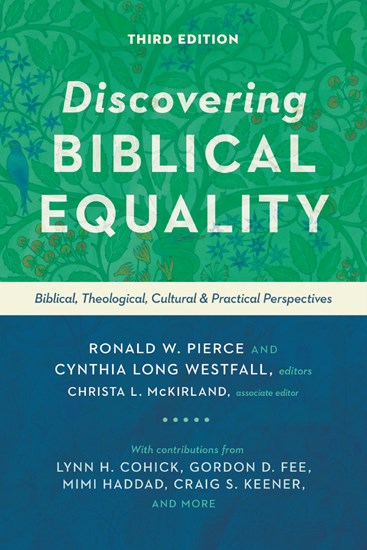
Discovering Biblical Equality: Biblical Theological, Cultural, & Practical Perspectives is a massive tome defending the equality of women in the church and home from a Christian standpoint.
The book is organized around 31 chapters plus an introduction and conclusion. The chapters are broken up into four parts: Looking to Scripture: The Biblical Texts; Thinking it Through: Theological and Logical Perspectives; Addressing the Issues: Interpretive and Cultural Perspectives; Living it Out: Practical Applications. There are highlights in each section, and each essays has its own strengths. Linda Belville’s “Women Leaders in the Bible” goes through many names readers might be familiar with, but also dives into details about some of the specifics, such as the background info we can see in the text for the importance of Huldah (p. 73) and some surprising examples readers might be unfamiliar with (74-75). The discussion of both marriage and singleness with regards to mutuality in Ronald W. Pierce and Elizabeth A. Kay’s chapter (“Mutuality in Marriage and Singleness: 1 Corinthians 7:1-40) is refreshing because so often the discussion centers entirely around marriage. The so-called “clobber passages” of 1 Timothy 2:11-15 and 1 Corinthians 14:34-35 each get their own passage, as do many other related passages.
Kevin Giles’s chapter on “The Trinity Argument for Women’s Subordination” shows the lengths to which some have gone to try to ground women’s inequality. Jeffrey D. Miller’s chapter on gender accurate Bible translation was fascinating and shows how the issues that are often dismissed regarding translation issues can have real, spiritual implications. Mimi Haddad’s chapter on global perspectives and why gender equality matters helps demonstrate the real-life applications of theology.
The book is the third edition of this collection. I own the second edition, which I read some years ago. I compared the table of contents for the two editions, and there is in the third edition a significant overhaul of the included essays. There are 31 chapters in the new edition vs. 29 in the previous one. Several chapters have been entirely replaced, and several new topics are introduced in the third edition. For example a chapter on “Gender Equality and Homosexuality” by William J. Webb in the second edition appears to have been replaced by “Biblical Equality and Same-Sex Marriage” by Ronald W. Pierce in this third edition. The third edition also addresses race and gender, a topic that I don’t recall or see a chapter dedicated to in the second edition. In other words, readers interested in knowing whether it’s worth re-purchasing should rest assured that it very much is. This new edition has a huge amount of new content. I cannot comment on whether essays that appear in each are revised in any way from the original.
The chapter on “Biblical Equality and Same-Sex Marriage” is written by Piece, who is non-affirming in his stance on same-sex marriage. The thrust of the chapter seems to be that one can be a fully committed egalitarian while not affirming same-sex marriage. Such a topic is certainly of interest to the many people who are caught in the middle on these issues. For my part, I’d have liked to see another chapter from an affirming perspective, though I wonder if it wasn’t included because that’s a less controversial pairing. The chapter on race and gender is fascinating and shows how these topics often intersect and overlap.
Discovering Biblical Equality is unquestionably the standard text for those wishing to explore the basics of egalitarian theology on a scholarly level that remains accessible. Every chapter has something to add to the discussion. The depth and breadth of some of the chapters is truly remarkable. I recommend it extremely highly as among the best books on the topic.
Disclaimer: I was provided with a copy of the book for review by the publisher. I was not required to give any specific kind of feedback whatsoever.
All Links to Amazon are Affiliates links
Links
Be sure to check out the page for this site on Facebook and Twitter for discussion of posts, links to other pages of interest, random talk about theology/philosophy/apologetics/movies and more!
Book Reviews– There are plenty more book reviews to read! Read like crazy! (Scroll down for more, and click at bottom for even more!)
SDG.
——
The preceding post is the property of J.W. Wartick (apart from quotations, which are the property of their respective owners, and works of art as credited; images are often freely available to the public and J.W. Wartick makes no claims of owning rights to the images unless he makes that explicit) and should not be reproduced in part or in whole without the expressed consent of the author. All content on this site is the property of J.W. Wartick and is made available for individual and personal usage. If you cite from these documents, whether for personal or professional purposes, please give appropriate citation with both the name of the author (J.W. Wartick) and a link to the original URL. If you’d like to repost a post, you may do so, provided you show less than half of the original post on your own site and link to the original post for the rest. You must also appropriately cite the post as noted above. This blog is protected by Creative Commons licensing. By viewing any part of this site, you are agreeing to this usage policy.
Susan Pevensie, C.S. Lewis, and Enchantment

C.S. Lewis’s Chronicles of Narnia is one of the most instantly recognizable and beloved series of children’s stories of all time. In the series, there is a land called Narnia into which human children occasionally stumble, frequently to epic and long-lasting effect. Susan Pevensie is one of these children. She’s the eldest daughter of the Pevensie clan, one of four children to enter Narnia in The Lion, the Witch, and the Wardrobe. She goes on to eventually become Queen Susan the Gentle.
Later, however, when readers encounter The Last Battle, an apocalyptic exploration of Narnia that includes many of Lewis’s own beliefs, we discover that Susan is, astonishingly, not with the other Pevensies. Susan, we are told by her somber brother Peter, “is no longer a friend of Narnia.” Apparently, she has taken to calling the former adventures in Narnia as just some games the kids played when they were younger, and she’s now much too grown-up for that sort of thing. Susan, we’re told, is much more interested in “nylons and lipstick and invitations” than she is in anything like Narnia.
I remember the first time I read this section. I was sitting in my parochial grade school, using the free time I had during the day to voraciously read anything that came my way. This book, I’d been waiting for. I’d been scared of reading it, because the cover with the unicorn, horn bloodied, was more than a little alarming. But I’d dived in, and discovered one of the strangest adventures I’d read. I didn’t know what to make of it, what with the deceitful animals, people who ignored reality right there in front of them, and more. But then Susan hit, and it hit me like a load of bricks. Surely Susan would never forget Narnia! It felt like a betrayal. Susan, who so practically believed what she saw. Susan, who thought of bringing coats into the always-winter Narnia. Susan, who was always the reasonable one. Susan, who was the Gentle. She was no longer a friend of Narnia? How was this possible? And how was it possible that Susan, who’d literally grown into adulthood as a Queen of Narnia, pretended it was all just a game? Was this the kind of horrifying thing that would happen to me when I grew up?
There has been a lot written about the problem of Susan. A friend shared a Youtube video that explained many of the problem(s) away by contextualizing some of the things within Lewis’s own world that he may have been referencing. I enjoyed it, but some of the explanation didn’t sit right with me because it felt so much like explaining away rather than simply contextualizing. A wonderful post on Tor.com, “The Problem(s) of Susan” by Matt Mikalatos, highlighted many of the issues I have with Susan as an adult. Mikalatos concludes:
“Jack [C.S. Lewis], believe me, if Susan looks for Aslan, she’ll find him. If she asks a question, he’ll answer. If she—even in her old age, even years and years from now—finds herself finds herself alone in that great house, and wanders into the old guest room and gently, not quite believing, raps her knuckles on an ancient wardrobe door, believe me, Jack, Aslan will be waiting to throw it open. And then at last the true happily ever after can begin.”
I love that, and I think it sits so well with me as an adult. Perhaps it is true that Lewis himself didn’t allow himself an expansive enough vision of Narnia–nay, Aslan’s–power. That’s something to think about.
The child in me wonders, though, if Lewis has outwitted me again. Perhaps that scene with Susan isn’t written for the adults–it’s for the children. It’s for children who, like me, would be stunned to think that Susan could forget Narnia. It’s a scene about the loss of enchantment, and one that teaches children to never let go of the enchantment of our own world–our own Narnia. A world in which God the Son entered human flesh and gave himself to die for us.
The notion of enchantment, wonder, and myth is absolutely central to Lewis’s writings throughout his life, whether from his younger period as an atheist, or as an old man. The idea that he might be sneaking this concept into one of his most powerful–and powerfully confusing–works doesn’t seem entirely impossible. If so, then Susan is a heartrending example of the loss of enchantment. Instead of Aslan’s call, she holds out for invitations to parties; instead of donning a bow, she cares deeply for nylons. It’s a tragic story, even as it stretches the limits of imagination given the character Susan has been established to be. Perhaps it is Susan’s nature as Susan the Gentle which leads her into disenchantment–she pursues the trappings of ostensible adulthood in order to continue to act as protector to her siblings. Her mannerisms and dedication lead her, tragically, towards disenchantment. It’s an awful story, and a jarring one. Perhaps it’s meant to be.
I don’t think that’s what Lewis was doing, but I wonder. Could C.S. Lewis have been playing a final twist, a final call towards enchantment for us–as children? A call to not give up on the world, and to realize that faith and hope really are powerful. I suppose I’ll always wonder whatever happened to Susan. Mikalatos’s answer is the one that resonates most with me. But I also like the idea of enchantment–as it feels exactly like something Lewis would do. Perhaps it is.
Links
Be sure to check out the page for this site on Facebook and Twitter for discussion of posts, links to other pages of interest, random talk about theology/philosophy/apologetics/movies and more!
SDG.
——
The preceding post is the property of J.W. Wartick (apart from quotations, which are the property of their respective owners, and works of art as credited; images are often freely available to the public and J.W. Wartick makes no claims of owning rights to the images unless he makes that explicit) and should not be reproduced in part or in whole without the expressed consent of the author. All content on this site is the property of J.W. Wartick and is made available for individual and personal usage. If you cite from these documents, whether for personal or professional purposes, please give appropriate citation with both the name of the author (J.W. Wartick) and a link to the original URL. If you’d like to repost a post, you may do so, provided you show less than half of the original post on your own site and link to the original post for the rest. You must also appropriately cite the post as noted above. This blog is protected by Creative Commons licensing. By viewing any part of this site, you are agreeing to this usage policy.
Book Review: “A Short History of Christian Zionism” by Donald M. Lewis
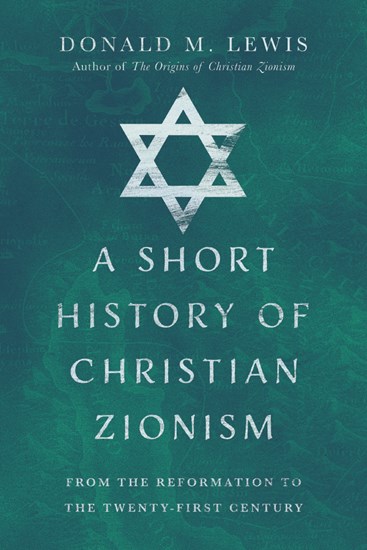
Christian Zionism is a major force in today’s political landscape. It’s especially powerful in the United States, but it’s also a global force. Donald M. Lewis’s A Short History of Christian Zionism gives readers a background for understanding what Christian Zionism is, where and when it came from, and how it impacts us to this day.
The book specifically deals with the time period from the Reformation to the modern day. Chapters cover a huge range of topics, largely in chronological order. First, Lewis’s helpful introduction deals with the competing definitions of Zionism and related terms. Ultimately, he settles upon this as a definition for Christian Zionism: it is “a Christian movement which holds to the belief that the Jewish people have a biblically mandated claim to their ancient homeland in the Middle East” (3, emphasis removed). Lewis notes how Christian Zionism has played a part in identity formation, especially for those in the dispensationalist movement. From there, Lewis moves into tracing the history of the movement itself. The first chapter does give a brief history from the Early Church to the Reformation, after which several chapters deal with different strands of Zionism emerging from various links to the Reformation. From there, links are forged showing Christian Zionism in American Puritanism, 19th Century British Evangelicalism, and how prominent a role the British Empire played in establishing some of the groundwork for later Zionist movements. The vision of World War I and II as vindications for Premillennialism and the correlating rise of Premillennial Dispensationalism and Christian Zionism presents a fascinating case study in the tenth chapter, and multiple developments in Palestine and global revivalist and Zionist activities form out the rest of the book.
Each chapter is filled with enlightening information. I was especially surprised to learn about the Balfour Declaration, a 1917 document in which the British Government publicly declared its support for a “national home of the Jewish people.” This, despite it being opposed by or ignored by many Jews of the time. The chapters outlining the rise of Christian Zionism in the British Empire laying the groundwork for this Declaration and how that declaration impacted later Zionism were absolutely fascinating.
Insights like those are present in virtually every chapter. The early is often cited by modern Zionists to support their reading of Scripture, but Lewis shows how many in the early church were largely ambivalent to ideas that would later form the basis for Christian Zionism. Lewis also is consistently even-keeled in his evaluation of Christian Zionism, rarely offering direct critique or support for any specific aspects of Christian Zionism. It makes the book invaluable as a reference work with little to bother readers about how it reports the historical information.
A Short History of Christian Zionism is a commendably fair evaluation of the Christian Zionist movement. Any readers remotely interested in the topic would be well-served to pick up and read a copy of this fine historical overview.
Disclaimer: I was provided with a copy of the book for review by the publisher. I was not required to give any specific kind of feedback whatsoever.
All Links to Amazon are Affiliates links
Links
Be sure to check out the page for this site on Facebook and Twitter for discussion of posts, links to other pages of interest, random talk about theology/philosophy/apologetics/movies and more!
Book Reviews– There are plenty more book reviews to read! Read like crazy! (Scroll down for more, and click at bottom for even more!)
SDG.
——
The preceding post is the property of J.W. Wartick (apart from quotations, which are the property of their respective owners, and works of art as credited; images are often freely available to the public and J.W. Wartick makes no claims of owning rights to the images unless he makes that explicit) and should not be reproduced in part or in whole without the expressed consent of the author. All content on this site is the property of J.W. Wartick and is made available for individual and personal usage. If you cite from these documents, whether for personal or professional purposes, please give appropriate citation with both the name of the author (J.W. Wartick) and a link to the original URL. If you’d like to repost a post, you may do so, provided you show less than half of the original post on your own site and link to the original post for the rest. You must also appropriately cite the post as noted above. This blog is protected by Creative Commons licensing. By viewing any part of this site, you are agreeing to this usage policy.
“Knife of Dreams” by Robert Jordan- a Christian (re)Reads “A Wheel of Time”
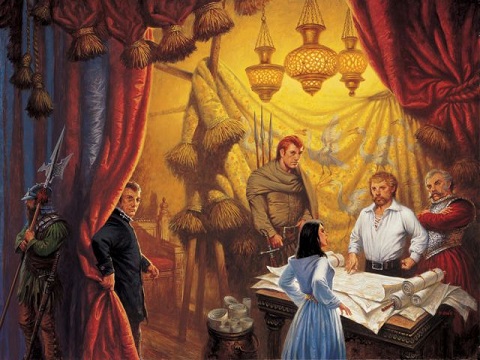
“The Wheel of Time” is a massive fantasy series by Robert Jordan (and, later, Brandon Sanderson) that is being developed into a television show for Amazon Prime. It’s cultural impact is huge, the series having sold more than 44 million copies. Here, I continue my series exploring the books from a Christian worldview perspective. There will be SPOILERS in this post for the series.
Knife of Dreams by Robert Jordan
Action Becomes Reality
In Knife of Dreams, Faile and her companions are being held captive by the Shaido Aiel. In the process, they are forced into servitude and beaten at the whims of their overlords. Faile soon realized the best strategy would be to fain timidity, but also realized the dangers of this:
“[Faile] hoped that Sevanna [one of the Aiel] thought her tamed… She hoped that she was not being tamed. Pretend something too long, and it could become truth… She had to escape before [her husband] got himself killed in the attempt [to rescue her]. Before she stopped pretending.” (167)
Blaise Pascal, after outlining his famous wager (which I defend here), noted that one may align oneself towards belief. That is, when someone begins to act as though one believes a certain way, it can turn into a reality that one believes a certain way. From a worldview perspective, then, we should always be wary of how we live our lives and what we surround ourselves with. However, it is possible to become over-zealous in this regard. After all, Faile herself knew that she wasn’t “tamed” in any way, merely acting the part. In a way, the reluctance or even opposition to role-playing games (eg. Dungeons & Dragons) or other forms of imaginative play in some Christian circles is ignorance of the human capacity for objectivity. We are capable of discerning reality from pretend, and to claim it is inherently dangerous to do the latter is to lose some of what it means to be human–to be image bearers of God by creating anew.
Toxic Masculinity
It finally clicked for me as I was listening to the early parts of this novel that the Children of the Light are, in many ways, an analogue for toxic masculinity. I don’t know if this was intentional on Jordan’s part, so don’t read intent into what I’m saying here. But what is clear is the many parallels. The Children’s extreme dislike of the Aes Sedai bleeds over into distrust of women generally. But more than that, the reasons for their distrust of Aes Sedai ultimately can be peeled away as little more than a thin veneer of misogyny. After all, they have to admit the Aes Sedai will be on the “right side” when it comes to the Last Battle, and even admitting that is nearly impossible. Why? Because it seems as though women are rising above their “place” or the limits of power that the male-dominated Children of the Light seem to think they should have. I’m honestly kind of embarrassed I didn’t notice this thematically before.
The name of the group can easily be read as a not-so-subtle riff on New Testament language referring to followers of Christ (1 Thessalonians 5:5). Unfortunately, too many Christians have bought into cultural disdain for women, whether in the earliest days of the church as Gnosticism and Greek philosophy bled into the early church’s writings about women or into today as Christian leaders continue to be at the forefront of saying women ought not to preach, despite the Bible itself saying both sons and daughters will prophesy (Joel 2:28/Acts 2:17). Too often, overzealousness like that of the Children of the Light leads to oppression.
Conclusion
Knife of Dreams is one of my favorite books in the series. In many ways, it is a major turning point not just as the series gets turned over to Brandon Sanderson after Robert Jordan’s death, but also because the plot is turned at last towards the Last Battle and the events that will bring all of the series into completion.
(All Amazon Links are Amazon Affiliates Links.)
Links
The Wheel of Time– Read all my posts on The Wheel of Time (scroll for more).
Be sure to check out the page for this site on Facebook and Twitter for discussion of posts, links to other pages of interest, random talk about theology/philosophy/apologetics/movies and more!
Book Reviews– There are plenty more book reviews to read! Read like crazy! (Scroll down for more, and click at bottom for even more!)
SDG.
——
The preceding post is the property of J.W. Wartick (apart from quotations, which are the property of their respective owners, and works of art as credited; images are often freely available to the public and J.W. Wartick makes no claims of owning rights to the images unless he makes that explicit) and should not be reproduced in part or in whole without the expressed consent of the author. All content on this site is the property of J.W. Wartick and is made available for individual and personal usage. If you cite from these documents, whether for personal or professional purposes, please give appropriate citation with both the name of the author (J.W. Wartick) and a link to the original URL. If you’d like to repost a post, you may do so, provided you show less than half of the original post on your own site and link to the original post for the rest. You must also appropriately cite the post as noted above. This blog is protected by Creative Commons licensing. By viewing any part of this site, you are agreeing to this usage policy.
Book Review: “The Doctrine of Creation: A Constructive Kuyperian Approach” by Bruce Riley Ashford and Craig G. Bartholomew
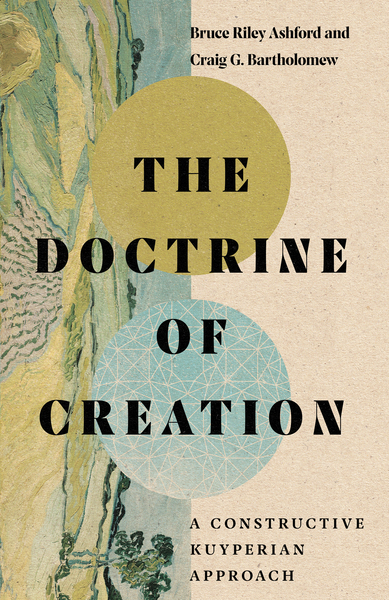
A systematic doctrine of creation is the core of Bruce Riley Ashford and Craig G. Bartholomew’s The Doctrine of Creation: A Constructive Kuyperian Approach. The subtitle begs questions about what is meant by this specific doctrine of creation. First, the authors follow the theology of Abraham Kuyper, a Dutch Reformed theologian of the late 19th and early 20th centuries. Second, the notion of being “constructive” means the doctrine builds upon itself, layer upon layer, making a truly systematic approach.
The authors pursue a broad approach, first discussing the historic Christian Creeds and their place in a construction of a doctrine of creation, then moving on to a broad historical overview of the doctrine itself. Next, they turn to God’s omnipotence and its bearing on creation, then move through biblical and theological discussion of creation to show a specific view of how Creation occurred and what relevance it has for today. Providence–God’s sustaining of the world–is a subject of its own chapter, followed by a chapter about Christ and the Holy Spirit in the New Creation, and the book ends with a application of the doctrine of creation to a few modern topics. There is a short appendix about missional neo-Calvinism at the end.
The way Ashford and Bartholomew build the doctrine of creation is infused with insight from Kuyper throughout, though it’s clear that calling it “Kuyperian” is more to designate it as along the Newo-Calvinist tradition than specifically or robotically following Kuyper. I am by no means an expert in Kuyper’s theology. My comment to this effect is based upon the extensive use of more modern citations as well as more generalized theological strands than simply adherence to Kuyper. Much as a Lutheran might call their approach Lutheran without explicitly following Luther in every regard, the authors are doing the same here.
It was interesting to see the first chapter begin with a discussion of the historic Christian Creeds and a defense of their use in helping construct a doctrine of creation. The book’s audience is clearly intended to be broader than Dutch Reformed readers, and this was perhaps included to show the authors have done their legwork regarding why we should see the Creeds as important to faith formation and theology today. As a Lutheran myself, it is just a given that the Creeds are of great import, and it was most interesting to see the authors engaging in such an extended defense of their use. Speaking of the book’s audience–this book is one that will largely yield fruits based on two things: the effort the reader puts into understanding and following the systemic theology therein; and one’s own theological biases. For example, the author’s discussion of the creation accounts (yes, the “s” is intentional) in Genesis was of great interest to this reader, but others might be inclined to see the accounts as a unified whole. More specifically on the doctrines of providence, omnipotence, and elsewhere, the authors’ Neo-Calvinist/Kuyperian view looms large and so will challenge readers who hold other positions.
I was somewhat surprised to see the focus in the chapter about God’s omnipotence to be so specifically focused on God the Father. Indeed, the chapter itself, following the language of the Apostle’s Creed, is titled “God, the Father Almighty.” But one gets a sense within the chapter that the other members of the Trinity are almost afterthoughts in this aspect of the doctrine of Creation. This is most clear when the authors use language that seems almost a concession in describing the role of the other divine Persons: “we know that the Son and the Spirit are also involved in the act of creation” (140). However, those Persons get little say until a later chapter discusses the New Creation (306ff). Many modern controversies are discussed, with views of omniscience and providence being at the center of a section about creatio continua (continued creation). Here, the authors wrestle with authors within their own tradition (eg. Barth’s resistance to philosophy p. 290-292 and elsewhere) as well as others like Molinists with competing views (they argue for an Augustinian view against the Molinist position, see p. 293-294, but also the discussion on 126).
Numerous intriguing insets are found throughout the text, such as an extended discussion of creation out of nothing (133-137) that includes some discussion of ancient Near Eastern literature. However, the authors focus much more upon Christian tradition and writings than on any attempt to understand the contemporary culture or meanings inherent in the text from an ANE perspective. Many other insets highlight important topics relevant to the issues at hand and present readers with more extensive looks at the authors’ arguments.
I was quite surprised in the final chapter to see the author’s application of their systematic theology to contemporary issues. I wasn’t surprised to see that application made–surely if a Christian doctrine of creation is true, it ought to be able to speak to many modern problems–but rather with the seeming lack of care given in this section to sources and argumentation. Specifically, the authors turn to the question of transgender individuals. They make a distinction between gender dysphoria and “transgender ideology” (360) and assert that “we must recognize transgenderism as deeply incoherent” (ibid). Beyond that, they agree with another writer that “it is a gnostic denigration of the material body that nonetheless insists that a trans person must transform his or her body in order to be whole…” among other things. Here we see the ugly aphorism that “If I don’t like a theological position, it must be Gnosticism” rearing its ugly head.
Beyond the utter historical nonsense that is the equivocation of modern transgender ideology to ancient Gnosticism without anything more than bald assertion, the authors themselves produce the very type of incoherent argument they accuse their interlocutors of performing. First, their definition of “transgender ideology” as the belief that “a person can be born into the body of the wrong sex and can be transformed into the other sex through gender reassignment surgery and/or hormone therapy” (ibid). This definition may reflect the beliefs of some people, but surely not a broad enough consensus as to lump all who go beyond mere acknowledgement of gender dysphoria into this category. Moreover, the authors themselves seem to totally miss one of the central aspects of an understanding of gender dysphoria–something they at least seem to acknowledge as a real difficulty–as they move quite swiftly from discussion of “sex” to discussion of gender. Just one page after their definition, they continue: “A person should not, and indeed cannot, change his or her gender” (361). This seems utterly confused, because the language they’re using reflects objectivity of gender standards which simply cannot be the case given how frequently throughout history those expectations have changed. Men in Elizabethan England were expected to wear ruffles and stockings, so according to these authors’ confused understanding, men today are either sinfully attempting to change their gender by not doing so, or the whole of societal expectations in that era and place were themselves mistaken and indeed impossible (referring to the language of “cannot”). Given the deep misunderstandings of the basic tenets and talking points of modern discussions of transgender topics (something I myself do not claim any expertise in), it seems the authors may have been better served if they’d let the topic lie instead of attempting a triumphant broadside that dissolves into silliness on the most superficial examination.
It is clear that readers of The Doctrine of Creation: A Constructive Kuyperian Approach will be challenged on many levels as they read the book. It is an impressive look at what it means to build a doctrine of creation within a specific theological tradition. There are some stumbles throughout the book, but readers–especially those interested in Reformed doctrine–will find much of interest. Unfortunately, I cannot recommend some of the discussion of modern topics.
Disclaimer: I was provided with a copy of the book for review by the publisher. I was not required to give any specific kind of feedback whatsoever.
All Links to Amazon are Affiliates links
Links
Be sure to check out the page for this site on Facebook and Twitter for discussion of posts, links to other pages of interest, random talk about theology/philosophy/apologetics/movies and more!
Book Reviews– There are plenty more book reviews to read! Read like crazy! (Scroll down for more, and click at bottom for even more!)
SDG.
——
The preceding post is the property of J.W. Wartick (apart from quotations, which are the property of their respective owners, and works of art as credited; images are often freely available to the public and J.W. Wartick makes no claims of owning rights to the images unless he makes that explicit) and should not be reproduced in part or in whole without the expressed consent of the author. All content on this site is the property of J.W. Wartick and is made available for individual and personal usage. If you cite from these documents, whether for personal or professional purposes, please give appropriate citation with both the name of the author (J.W. Wartick) and a link to the original URL. If you’d like to repost a post, you may do so, provided you show less than half of the original post on your own site and link to the original post for the rest. You must also appropriately cite the post as noted above. This blog is protected by Creative Commons licensing. By viewing any part of this site, you are agreeing to this usage policy.

 J.W. Wartick - Reconstructing Faith