christian
Against Open Theism: Scrooge and God’s knowledge of the Future
 I was listening to William Lane Craig’s Defenders podcast (Doctrine of God: Part 13) and he brought up an interesting analogy about omniscience. He discussed Scrooge in Dickens’ “Christmas Carol.” The last spirit to appear to Scrooge is the ghost of Christmas to come. He takes Scrooge around and shows him all sorts of disturbing imagery that will happen. Scrooge asks the ghost whether these are things that must happen, or whether he can stop them. The spirit remains silent.
Craig pointed out the spirit would have to remain silent to have any sort of effect. For suppose the spirit knows what will happen: that Scrooge will repent and so these awful things won’t happen. But then if he tells Scrooge what he knows, Scrooge will feel little remorse about not acting to prevent them. Yet if the spirit told Scrooge these things would happen, then Scrooge has no reason to modify his behavior, for he cannot prevent the events from happening.
Craig suggests, then, that we should look at omniscience and instances of God “changing his mind” in the same fashion. This has some interesting applications in the case of Open Theism, because it undermines one of the core exegetical arguments for the position: cases of God “repenting” or “changing his mind.”
God, on classical theism, knows what will happen in every circumstance. He comprehensively knows the future (contra Open Theism). If this is so, then God would have to withhold some of his knowledge in order to bring things about, despite his knowledge that it would occur. Like the Ghost of Christmas Yet to Come, God would know the answer to Scrooge’s question, but would not answer him, so that he could bring it about that Scrooge would repent.
Consider Jonah. Open Theists often point to the story of Nineveh as an example of God not comprehensively knowing the future. Because God sends Jonah with the message that Nineveh will be destroyed, but then, when Nineveh repents, he shows mercy, many people say that God did not know the Ninevites would have such a reaction. Yet why should this be the case? Isn’t it plausible that God did know they would repent and that God sent the message that they would be destroyed because that is the only way Nineveh would be led to repentance? This is, in fact, hinted at later in the book, when Jonah says to God, “Isn’t this what I said, LORD, when I was still at home? That is what I tried to forestall by fleeing to Tarshish. I knew that you are a gracious and compassionate God, slow to anger and abounding in love, a God who relents from sending calamity” (4:2).
But if God had told the Ninevites “I will not destroy you” because he knew that he would not, would not the impetus of Jonah’s message lose its strength. With the threat of destruction, the Ninevites repented. Without, would they have done so? Imagine Jonah’s message going through the streets “Forty more days and Nineveh will not be destroyed!” I think it obvious that this would probably not have the same effect that the initial message was.
So it seems quite plausible that God, like the Ghost of Christmas Yet to Come (in our analogous case), may refrain from telling all he knows at many points throughout Scripture. For if he told people everything he knew, he would know that they would not repent, turn aside from their evil ways, or bring about the actions he desired. The instances wherein God ‘changes his mind’ or ‘repents’ are instances of this: rather than revealing his knowledge, God withholds it, in order to bring about the ends that he desires to (and knows will) happen. We, like Scrooge, would not respond to calls for repentance if we felt it didn’t make a difference in the end.
Final note: the above account implicitly assumes molinism to be the case. So much the better for it, I say!
SDG.
This is part of a series I’ve written against the doctrine of Open Theism. If you’d like to read more, check out the original post for discussion and links.
——
The preceding post is the property of J.W. Wartick (apart from citations, which are the property of their respective owners) and should not be reproduced in part or in whole without the expressed consent of the author. All content on this site is the property of J.W. Wartick and is made available for individual and personal usage. If you cite from these documents, whether for personal or professional purposes, please give appropriate citation with both the name of the author (J.W. Wartick) and a link to the original URL. This blog is protected by Creative Commons licensing. By viewing any part of this site, you are agreeing to this usage policy.
Book Review: “God Behaving Badly” by David Lamb
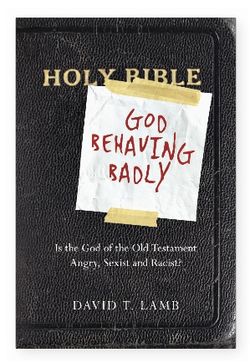 David Lamb’s God Behaving Badly
Throughout the book, Lamb follows a similar outline through each chapter: introduce tough texts, provide answers, synthesize general remarks. Lamb is unafraid to take on the toughest Scripture passages (1 Sam 4-5; Gen 3; Josh 10, 11, etc.). He points out rightly that people who line up on either side of these issues tend to ignore the texts on the other side. Those who call God angry, racist, sexist, and the like tend to ignore those passages which portray God as loving, welcoming, and empowering. Similarly, too many Christians ignore the ‘tough’ passages.
Lamb’s book excels in many specific areas. When discussing issues related to women, Lamb follows William Webb’s “redemptive/progressive” hermeneutic and points out that God is not sexist, but affirming. His treatment of the oft-misunderstood Genesis account is superb. Most interestingly in relation to women in the Bible, he writes, “If it is okay for women to compose sections of the Bible, perhaps we should let them teach it?”(64). Lamb’s scholarship in the Old Testament shines through on numerous occasions throughout the work. He points out the Ancient Near Eastern tendency to utilize hyperbole in descriptions of conquests (77).
There is one major point of divergence I feel with Lamb, however, and that is in the area of mutability/immutability. Without getting too far afield, it is worth noting that Lamb’s treatment of God’s interaction with people is a bit off, in my opinion. While noting texts which say God does not change, Lamb also notes those in which God appears to change his mind. He goes on to say,
Is it good that God changes his mind? …If you are a child who deserves to be punished, it is good when a parent changes his mind about your punishment. If you are a car buyer, it is bad when a used-car dealer changes his mind about the low price he had promised (151).
The words I wrote in my notes were “gross anthropomorphism.” The reason is because while it may be written that God “changes his mind” it would be very strange to say that He could be compared to the cases Lamb points out. God, knowing the future, would know what was going to happen, and so to say that God is like a parent changing their mind seems a bit out of place. I’ll not delve into a major argument with this, but Lamb brings up the case of Jonah as an example for this. Yet it seems from the book of Jonah that God knew Nineveh would repent–the very reason he sent Jonah in the first place (and the reason Jonah did not initially want to go). For it would not make sense for Jonah to be so upset about being sent to Nineveh to tell them to repent if he felt God would punish them regardless. In any case, this does little to undermine Lamb’s overall argument, but it is worth noting as a flaw. A final note I’d like to make is that Lamb frequently uses God’s divine name. This may be off-putting to some readers who feel it should only be presented as the Tetragrammaton, YHWH.
The conclusion of GBB is simply fantastic. Lamb sums up his points in each chapter (a feature I think every conclusion should have).
God Behaving Badly is a great introductory look at a well-known challenge to Christianity. Lamb doesn’t ignore the hard issues in the Bible and tackles them with sincerity and intelligence. I recommend the book to those looking to start exploring issues related to God’s moral nature.
SDG.
——
The preceding post is the property of J.W. Wartick (apart from citations, which are the property of their respective owners) and should not be reproduced in part or in whole without the expressed consent of the author. All content on this site is the property of J.W. Wartick and is made available for individual and personal usage. If you cite from these documents, whether for personal or professional purposes, please give appropriate citation with both the name of the author (J.W. Wartick) and a link to the original URL. This blog is protected by Creative Commons licensing. By viewing any part of this site, you are agreeing to this usage policy.
The Unacknowledged Teachers: an argument for women pastors.
 An argument for the position of egalitarianism (the position that women are not to be restricted from certain offices in the church):
1) Women say things in Scripture which are not condemned (cf. Deborah’s song, Mary’s Magnificat which is used in liturgical worship, Ruth’s words which are used in wedding ceremonies, Esther’s story and her actions, etc., etc.). [Edit: this premise must be made more clear. The things women say in Scripture are not simply not condemned, but are often explicitly centralized. The Song of Deborah; Ruth’s words to Naomi; the magnificat; etc. These words are made into liturgies and used for teaching. Yet they are the words of women. Thanks to Adam at Unworthy Yet Redeemed for pointing out this flaw in the argument. Consider P1 to be modified to “Women say things in Scripture which are centralized and utilized for church liturgies and teaching.”]
2) All Scripture is useful for teaching, rebuking, correcting, and training in righteousness (1 Timothy 3:14-17).
3) Those things which women say in Scripture teach us truths useful for teaching, rebuking, correcting, and training in righteousness (1, 2).
4) If we use truths women teach us in Scripture to teach doctrine/righteousness/etc., we should not exclude women from the ministry. (Premise)
5) We use truths women teach us in Scripture to teach doctrine/righteousness/etc. (1-3)
6) Therefore, we should not exclude women from the ministry (4, 5, modus ponens).
Defense of premise 1: I cited examples in the argument itself. See Judges 4-5; Luke 1:46-56; Ruth 1:16-17 (and the rest of the book); the book of Esther; these are just a few examples.
Defense of premise 2: Again, directly from Scripture: 1 Timothy 3:14-17.
3 follows from 1 and 2.
Premise 4 is likely to be the most controversial of these premises. The position of those who hold that women should not be ordained into the office of the ministry (complementarianism) is generally based upon the suggestion that women should not teach doctrine in a public setting (see more on this below). Therefore, I think that premise 4 must be accepted by complementarians because a denial of this premise would undermine their position. In other words, if one wants to hold that premise 4 is false, they would have to provide a different reason to exclude women from the ministry. Premise 4 simply states that which the sides agree upon. Ultimately, the strength of premise 4 will depend upon one’s definition of “the office of the ministry.” However, if one’s definition of “office of the ministry” includes “teaching”; “teaching doctrine”; “rebuking” [those who need correction]; etc., then premise 4 is correct.
Further, premise 4 could be weakened so that its conclusion would be not quite as strong. Instead, one could reword it as:
4′) If we use truths women teach us in Scripture to teach doctrine/righteousness/etc., we should not exclude women from teaching doctrine/righteousness/etc. to others.
This modified premise will not yield the conclusion that women should not be excluded from the “office of the ministry” but it would yield the conclusion that women should be allowed to teach doctrine, righteousness, and other things no matter who the audience happens to be.
Premise 5 follows from 1-3. 6 follows via modus ponens from 4 and 5. The same could be said for 4′ and the perceived 5′ and 6′.
The language used by those who are against women preaching must be very carefully selected because they do not wish to say women cannot be teachers at the university, or that they cannot teach elsewhere–rather, it is restricted to the church. Yet the argument above would be specifically useful for permitting women to teach in the church. After all, their words are used to teach continually. Whenever the Magnificat is sung or spoken, we use the words of Mary to teach us truths about Jesus. Whenever we read the story of Ruth or use her words in our wedding vows, we use them authoritatively.
Another way we could put this argument would be “If it is okay for women to compose sections of the Bible, perhaps we should let them teach it?” (quoted from Lamb, 64, citation below). I think the answer to the question is eminently obvious: yes
Therefore, women are already acting as a kind of “unacknowledged teacher” in the church: their very words are being used to tell us about God. I conclude that women should not be excluded from the ministry.
Note on terminology: by “teach” I am explicating the role of “teacher” in the church–the pastor.
Part of this argument was developed from a reading of God Behaving Badly by David Lamb (Downers Grove, IL: InterVarsity Press, 2011), 64-65, wherein he states “If it is okay for women to compose sections of the Bible, perhaps we should let them teach it?” (64).
SDG.
——
The preceding post is the property of J.W. Wartick (apart from citations, which are the property of their respective owners) and should not be reproduced in part or in whole without the expressed consent of the author. All content on this site is the property of J.W. Wartick and is made available for individual and personal usage. If you cite from these documents, whether for personal or professional purposes, please give appropriate citation with both the name of the author (J.W. Wartick) and a link to the original URL. This blog is protected by Creative Commons licensing. By viewing any part of this site, you are agreeing to this usage policy.
Book Review: Natural Law: A Lutheran Reappraisal
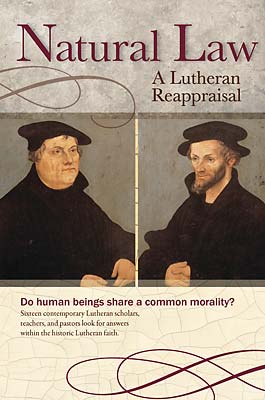 Natural Law: A Lutheran Reappraisal
The individual essays presented in NLL are almost all extremely strong. The topics covered include the views of early Lutherans on natural law (including Luther and the authors of the Confessions) , the view of several later Lutheran individuals (like Barth and Forde), and a kind of “applied ethics” section which uses natural law in individual instances.
The strength of many of these essays is a credit to the Lutheran scholarship which went into the work. The insight into Lutheran thinkers’ views on natural law helps to refute some notions that Lutherans do not “believe in” natural law. In fact, it seems the opposite is the case. “Luther,” argues Thomas Pearson, “understands natural law not as a Christian teaching, but as an observation of human nature in general” (63). Later, Carl Rockrohr expands on this idea to view natural law as a place of common ground for evangelism (196-197).
NLL really shines when it demonstrates that even topics which may at first seem unimportant (like an essay on Friedrich Stahl’s rejection of natural law) can serve to develop a modern view of natural law (Jacob Corzine argues in the aforementioned essay that Stahl’s critique helps ground a Christian natural law theory not in reason but in God [115]).
The applied ethics section of NLL has its ups and downs. “Natural Science, Natural Rights, and Natural Law: Abortion in Historical Perspective” by Korey D. Maas is a simply amazing critique of abortion which presents the case for pro-life not as a religious issue, but as one which can be established on common grounds of natural law (228ff). On the other hand, Albert Collver III’s argument against the ordination of women struggles because it only presents one Lutheran view on the issue (more on that below). The section (and book) concludes with Matthew Cochran’s great summing up and case for the use of natural law as a “Way Forward” for discussions of epistemology and natural law (see esp. 274ff).
The strength of NLL is therefore found in the fact that the essays manage to cohere to the point of building off one another. Whether this was intentional or not, it strengthens the whole work. The early essays provide the framework for the later developments into applied ethics.
This is not to say the book is without faults. One such fault is the woefully inadequate glossary. While the terms included are defined in detail, some terms are inexplicably left out. For example, while the glossary takes lengths to define idealism, it makes no mention of “epistemology,” a concept which was referenced several times. This makes the book seem at times unsure of its purpose. Is it written for the layperson or the professional, the philosopher or the theologian? It includes study questions and a glossary, which suggests use as a textbook in undergraduate (or high school) theology classes, but the very nature of the essays included and the inadequacy of the glossary suggests that only those already familiar with some of the issues will get the most bang for their buck. A final criticism I would level against the book is that while it does present essays from various Lutheran traditions, it is clearly founded specifically upon LCMS teaching. This is unsurprising, given that it is published by Concordia Publishing House (the official publishing arm of the LCMS), but this could cause some confusion when the book devotes an entire chapter to a critique of a different Lutheran tradition (the ELCA). This small shortcoming can also be seen when the book only presents a complementarian view of natural law (that is, a view that natural law excludes women from the ministry) despite the fact that other Lutheran traditions (for example, the NALC or ELCA) are egalitarian (ordain women).
NLL is a simply fantastic work. Lutherans looking to learn about the concept of natural law would be well served to pick the book up and read it cover-to-cover. Those outside of the Lutheran tradition would surely find NLL useful as well, as the essays on applications of natural law can serve as foils for the development of one’s own position. For those wishing to explore the important issue of natural law, I recommend the book highly.
SDG.
——
The preceding post is the property of J.W. Wartick (apart from citations, which are the property of their respective owners) and should not be reproduced in part or in whole without the expressed consent of the author. All content on this site is the property of J.W. Wartick and is made available for individual and personal usage. If you cite from these documents, whether for personal or professional purposes, please give appropriate citation with both the name of the author (J.W. Wartick) and a link to the original URL. This blog is protected by Creative Commons licensing. By viewing any part of this site, you are agreeing to this usage policy.
Against Open Theism: The Infinite Knowledge of God
 Psalm 147:5
“Great is our Lord, and of great power: his understanding is infinite” (KJV).
“Great is our Lord, and abundant in power; his understanding is beyond measure.” (ESV)
” גדול אדונינו ורב־כח לתבונתו אין מספר׃” (Hebrew Old Testament)
Infinite Knowledge
Within Scripture we find that God knows all things. But here, in the Psalms, we read that God’s knowledge is “infinite.” Of course, this is a translation of the Hebrew, which says “…his understanding is without number/measure.” But this can also be correctly translated simply as the KJV does, “His understanding is infinite.” Thus, within Scripture, we have a picture of God’s knowledge as infinite or without number.
The Argument
1) If God’s knowledge is infinite/without number/unable to be counted, then God’s knowledge cannot be increased (it’s infinite).
2) God’s knowledge is without number.
3) God’s knowledge cannot be increased.
4) Open Theism asserts that God’s knowledge can be increased.
5) Therefore, Open Theism is false.
Defense of Premises
Premise 1 can be defended in a similar fashion as one would argue against actual infinites in the Kalam Cosmological Argument. Basically, we cannot add up to infinite. Nor, if something is actually infinite, can we increase or decrease its “number” in any way. We cannot add to infinity and increase it, nor can we take away one item from an infinite set and decrease it to some finite number. Therefore, if God’s knowledge is infinite, it is complete–it cannot be increased.
Premise 2 simply asserts what the Bible passage says.
Premise 3 follows from 1 and 2 deductively.
Premise 4 follows from the core of Open Theism. On Open Theism, God knows all things which have happened and are happening, but he does not necessarily know what will happen until it does happen. Therefore, God’s propositional knowledge would continually be increasing. Each day, he would learn an astounding number of truths which he did not previously know.
Premise 5 follows from 3 and 4; if 3 is true, 4 cannot be true. Yet 3 is true, so 4 cannot be true.
Therefore, Open Theism is false.
A Potential Rebuttal
Can the Open Theist get out of this argument? One way would be to challenge that the Psalm is not claiming God knows an actually infinite number of propositions, but simply that conceptually, God’s knowledge is so far beyond our own it appears to be infinite.
I would respond to this counter-argument by challenging the Open Theist to successfully read that off the Hebrew, which literally says “without number”/”infinite.” Open Theism, by definition, would have to entail God knowing only a finite number of propositions. If God did not know only a finite number of propositions, then His knowledge could not increase (it would be infinite). Thus, on Open Theism, the number of propositions God knows would increase by the second/minute/day. So the Open Theistic reading of Psalm 147:5 would have to read it like “[God’s] knowledge is unlimited; it increases forever.” But that reading is not justified by the text.
[Edit: Note the comment section for some great discussion of this post, wherein two commentators provided a “way out” for the Open Theist regarding my argument and a denial of premise 4.]
This is part of a series I’ve written against the doctrine of Open Theism. If you’d like to read more, check out the original post for discussion and links.
SDG.
——
The preceding post is the property of J.W. Wartick (apart from citations, which are the property of their respective owners) and should not be reproduced in part or in whole without the expressed consent of the author. All content on this site is the property of J.W. Wartick and is made available for individual and personal usage. If you cite from these documents, whether for personal or professional purposes, please give appropriate citation with both the name of the author (J.W. Wartick) and a link to the original URL. This blog is protected by Creative Commons licensing. By viewing any part of this site, you are agreeing to this usage policy
Against Open Theism: Definitions
 I’ve encountered Open Theism a number of times in my readings and online. Many people I respect greatly fall under the category of “Open Theists.” Greg Boyd, for example, wrote one of the first apologetic books I ever read, yet he is an ardent Open Theist. Yet the doctrine of Open Theism is one with which I disagree vehemently. Therefore, I’m going to write several posts outlining a series of arguments against the doctrine.
Definitions
Open Theism: The doctrine that God, through his own freedom and sovereignty, chose to create free creatures (humans) which could make truly free decisions. Because God made these free creatures, he freely chose to limit his knowledge of the future, such that he would not pre-ordain their actions. Therefore, God knows only those things which God unilaterally brings about.
Another Definition
From http://www.opentheism.info/, a site collecting information and advocating Open Theism (endorsed by John Sanders, a well known proponent of the view) we can examine a 5-part definition:
1) “In freedom God decided to create beings capable of experiencing his love.” (emphasis theirs)
2) “God has, in sovereign freedom, decided to make some of his actions contingent upon our requests and actions. God elicits our free collaboration in his plans. Hence, God can be influenced by what we do and God truly responds to what we do.” (emphasis theirs)
3) “God has chosen to exercise general rather than meticulous providence, allowing space for us to operate and for God to be creative and resourceful in working with us. It was solely God’s decision not to control every detail that happens in our lives.”
4) “God has granted us the type of freedom (libertarian) necessary for a truly personal relationship of love to develop. ”
5) “God knows all that can be known given the sort of world he created… in our view God decided to create beings with indeterministic freedom which implies that God chose to create a universe in which the future is not entirely knowable, even for God. For many open theists the ‘future’ is not a present reality-it does not exist-and God knows reality as it is.”
(Again, please note these are quoted verbatim from sections on http://www.opentheism.info/; I do not claim credit for these 5 steps of the definition.)
Areas of Disagreement/Agreement
There are many areas of agreement I can share with the Open Theist. For example, I agree that God created free creatures, who have libertarian free will (1 and 4). I agree that God has not predetermined all future events (3). I agree at least in some sense that God’s actions are contingent upon our own (2)–but that’s where the differences begin.
I disagree with Open Theists on an unqualified 2 and 5. It is my belief that:
A) Future Events are knowable
B) God knows the outcome of all future events before they happen.
C) God’s knowledge of the future allows him to take into account our free choices and respond to them from eternity.
One final area of disagreement would be with the implicit idea within Open Theism of divine temporality. I believe:
D) God is essentially timeless.
What’s at Stake
“Okay, all this is well and good,” you may say, “but what’s the payoff? What’s really at stake in this debate?”
Fair questions! There are some who argue that Open Theism is a heresy, period. A simple Google search turns up dozens of articles and comments calling the doctrine a heresy. Several have attempted to ban Open Theists from evangelical circles (the ETS voted to keep two prominent Open Theists within their ranks; others have lobbied to call it heretical).
I do not think that Open Theists are heretics. While I disagree with their views, I think that they have some very good arguments for their position. I do think, however, that the Scriptural evidence excludes Open Theism from possibility. While there are many passages which could be utilized to argue for the position of Open Theism, I believe those passages which exclude the position take priority, and therefore the passages appearing to advocate the position are to be interpreted as use of metaphors or anthropomorphism.
Other Posts in the Series
This post will also serve as a host for links to other posts in the series. View them below, with brief descriptions of their content:
God’s Infinite Knowledge– Argues that Scripture clearly states God’s knowledge is infinte/without number/unlimited. Yet, on Open Theism, God’s knowledge increases, and would therefore have to be finite. Concludes Open Theism is false.
Scrooge and God’s knowledge of the future– Addresses one of the main arguments for Open Theism–that God changes his mind or repents of certain actions.
Book Review: “No Other God: A Response to Open Theism” by John Frame– I review John Frame’s work on open theism. Interestingly, Frame combats open theism with the opposite extreme: theological determinism, a view which I disagree with as adamantly (or more) than I do open theism.
——
The preceding post is the property of J.W. Wartick (apart from citations, which are the property of their respective owners) and should not be reproduced in part or in whole without the expressed consent of the author. All content on this site is the property of J.W. Wartick and is made available for individual and personal usage. If you cite from these documents, whether for personal or professional purposes, please give appropriate citation with both the name of the author (J.W. Wartick) and a link to the original URL. This blog is protected by Creative Commons licensing. By viewing any part of this site, you are agreeing to this usage policy
Do I reject secular government?
Recently, Austine Cline, of the about.com breed of atheists, has offered this critique of my position on Christian voting/acts in government. My own post on the topic can be found here. I would like to clear up a few things about the position I hold. These clarifications will be found in numbered italics throughout the post below.
1) I accept the authority and respect the secular government.
Cline started his caricature of my position immediately with his title. The title of his entry is “J.W. Wartick: Christians Should Reject Secular Government.”
Let me make this clear. That is a position I deny, and in fact oppose. The Apostle Paul wrote in Romans 13:5-7 that “it is necessary to submit to the authorities, not only because of possible punishment but also as a matter of conscience. This is also why you pay taxes, for the authorities are God’s servants, who give their full time to governing. Give to everyone what you owe them: If you owe taxes, pay taxes; if revenue, then revenue; if respect, then respect; if honor, then honor.” Being a Christian who views the Bible as a source of authority, I agree wholeheartedly.
2) My previous post on the government was intended as a wake-up call to Christians who are lax when voting on moral issues.
One who reads my previous post on this topic should be able to discern that I was not advocating a theocracy, but rather a theo-centric approach to voting. I was arguing that Christians should vote their beliefs, not what they think is most “neutral.” Cline took that and ran with it, and, whether intentionally or not, used his post to try to portray me as some kind of fanatic advocating the overthrow of government in favor of a theocracy. Again, such a position may exist somewhere, but it is not the position I hold.
3) The authority of government comes from God.
Again, Paul makes this clear in Romans 13:1 “Let everyone be subject to the governing authorities, for there is no authority except that which God has established. The authorities that exist have been established by God.”
Obviously, this won’t be convincing to the atheist. But this is intended to rebut a critique from Cline, who wrote, “[Wartick’s argument] presumes that the government has any authority to prevent ‘unrepentant sin’ and ‘unbelief’ in the first place.”
Clearly, if the government gets its authority from God, then it would have the authority to do this. Cline is an atheist, so he rejects such a structure of authority. However, being a Christian, I don’t see any reason to reject it. Yet the focus of Cline’s critique was based upon this premise (in fact, he restates it later “On what basis does Wartick think he has the right to enlist the government to help him prevent other Christians from doing things which he thinks is sinful but they don’t?” and then again in regards to other religions).
My answer to these questions is simple: the government gets its authority from God, so it does have the authority to do these things. Cline presented no argument to the contrary, nor did he offer a positive argument for secular government, other than a brief note that Christians established it to begin with so they would stop killing each other (according to Cline). So Cline’s counter-argument merely begs the question by assuming a secular authority structure. If there were no God or if the authority of the government were not from God, then he would have a valid critique. But criticizing my argument in this manner does not serve to do anything but beg the question against the Christian theist, particularly because my original post was written to fellow Christians (hence the closing line, “Christians, why are you politically atheists?”).
4) Cline misrepresented my argument.
As I’ve already hinted at, Cline cherry-picked portions of my post, and then made a title which seems to aim more towards sensationalism than any kind of respectful debate. I never argued Christians should reject secular government; I did argue that Christians should not be atheists themselves when it comes to politics. This kind of fear-mongering about Christians in politics doesn’t serve anyone but those who are already fanatics themselves–to the other extreme.
SDG.
Christians don’t need apologetics? Think again.
 “We don’t need apologetics. We just need the Holy Spirit.”
“We don’t need to ‘apologize’ for anything!”
“I just believe, and that’s all.”
“There doesn’t have to be a reason to believe in Jesus, you just have to feel it.”
Perhaps you’ve heard some variation of these mantras from leaders or members in your church. I have something to say:
They are wrong.
Consider Jesse Kilgore, a young man who read Richard Dawkins’ The God Delusion, lost his faith, and killed himself.
Yeah, this is an extreme example. But think about it for a second: if you’re a member of a church community, have you heard of youths losing their faith? Have you heard or experienced the day a child comes home and says “I’m an atheist?”
“Okay,” you say, “but what does any of this have to do with apologetics?”
Well, perhaps its best to define the term first. Apologetics can most basically be defined as the defense of the faith. Apologists are people who study philosophy, theology, and other fields in order to become equipped to argue for the central teachings of Christianity. Such argumentation can involve both scientific and philosophical evidence.
Why do we need it? Think once more of the youths who leave the church: how often do they have a rationalization for this lack of faith? It is, in my experience, every time. “There isn’t enough evidence to believe in God,” they may say, or “There is so much evil in the world, I can’t believe there is a good God watching it all.” Such objections are indeed challenges to the faith. But without apologetics we would be left treading water. To the first objection, the response could only be “There may not be, but why not just believe?”; to the second, we could only say “God has his reasons.”
What about to someone like Jesse Kilgore? Could apologetics have helped him? I’m not trying to make light of his suicide–but I think that yes, apologetics would have helped. Had he been exposed to arguments for the existence of God, he would have known Dawkins merely caricatures them and ignores their premises. Had he read books on perspectives on the Creation account (theistic evolutionism, intelligent design, or creationism), he would have been unphased by Dawkins’ arguments for evolution. The bottom line is there are rational arguments out there which easily rebut Dawkins’ claims. It is a failure in the church that Jesse hadn’t been exposed to them.
Christians, I challenge you to learn apologetics. Learn a “case for Christianity” which you can utilize whenever you are witnessing to someone who thinks there are no reasons to believe. My own example of such a case is here. Learn about some more of the basic arguments. Read Lee Strobel, read William Lane Craig. But don’t reject apologetics. Our youths need more. Those without faith deserve more. Apologetics is part of the core of our Christian heritage, let’s make it part of our lives.
Let us not forget the commands to go and make disciples of all nations (Matthew 28:19) and to always have a defense/reason (apologia) (1 Peter 3:15).
SDG.
The end of it all…
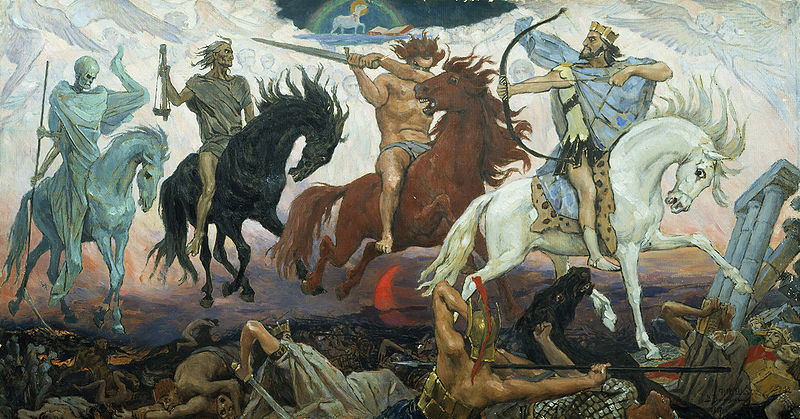 There’s a lot of confusion about endtimes in our world. It isn’t helped by the fact that there are false prophets springing up all around us, trying to tell us that which is to come. The recent controversy over Harold Camping’s prediction that the world would end on May 21st has me thinking about the study of end times (eschatology).
It’s an area I admit I haven’t studied much. The subject is confusing. There is a staggering array of views about what will happen in the end. The book of Revelation, from which we draw much of our knowledge over what will happen in the end times, can be greatly confusing to both the uninitiated and the scholar.
There are two major themes upon which I’d like to focus: knowledge of the end and our behavior at the end.
1) Knowledge of the end
Thinking about the apocalypse–the end of the world–is a tough issue. Like I said, there is a lot of diversity on the subject. As such, it is important for Christians to look to the Bible to see what we can know about the end. The key is to remember that must always go back to the Bible to see what it says about a subject before we believe what someone tells us it may say.
We are warned by Jesus in Matthew that there will arise false prophets (Matthew 24:24). Harold Camping is one such false prophet. He has distorted the truth of Scripture to gain followers.
Perhaps the most telling verse in the Bible which speaks against us being able to know when the end will come is Matthew 24:36, in which Jesus Himself says “But about that day or hour no one knows, not even the angels in heaven, nor the Son, but only the Father.” If that’s true, then how would any other human know? Not even Christ, in his state of humiliation, could tell us when the last day would come!
The bottom line is that we can’t know and we won’t know when the last days have arrived–not until Jesus Himself is here.
2) Behavior at the end
Suppose for a moment we are at the last days; what should our attitude be? The resounding chorus in Scripture is that we should be diligent and ready, but we should continue to spread God’s Kingdom. Looking back at the Matthew 24 passage, Jesus tells us, ““Therefore keep watch, because you do not know on what day your Lord will come… Who then is the faithful and wise servant, whom the master has put in charge of the servants in his household to give them their food at the proper time? It will be good for that servant whose master finds him doing so when he returns” (24:42, 45-46).
So our attitude should be one of the watchful servant: ready for Christ to come, but not letting that distract us from the work He has given us. Rather than put up billboards and go around telling everyone the end is nigh, our task is to continue what should be our “business as usual”–spreading the Word, taking care of the needy, and living our lives as Christians.
Conclusion
It is easy to get caught up in the “end times” controversies. I admit that often when I hear of such predictions, I am more diligent than usual in remembering to repent of my sins. But what does that tell me? It tells me that I need to be more diligent about that at all times. For we need to be ready when Christ does come. A life of readiness for Christ means a life of spreading the Good News about Him to all people. It means living a life of repentance and reconciliation to God. We may not know when the end will come, but it is coming–and we will experience it either in this life or the next.
SDG.
Links
Check out this blog post by Austin which discusses the Camping controversy: here.
News article discussing Camping’s befuddlement about his failure: here.
Image: “Four Horsemen of the Apocalypse” by Viktor Vasnetsov, 1887.
——
The preceding post is the property of J.W. Wartick (apart from citations, which are the property of their respective owners) and should not be reproduced in part or in whole without the expressed consent of the author. All content on this site is the property of J.W. Wartick and is made available for individual and personal usage. If you cite from these documents, whether for personal or professional purposes, please give appropriate citation with both the name of the author (J.W. Wartick) and a link to the original URL. This blog is protected by Creative Commons licensing. By viewing any part of this site, you are agreeing to this usage policy.
The Life Dialogue: Information and the Cell
 This is part of a series of posts on the “Life Dialogue” within Christianity. Check out other posts in the series here.
It is hard to underestimate the importance of the question: “Are we designed?” I’ve really started to realize the question’s reverberations even within the Christian community. Creationists definitely believe we are designed, as we were brought out of nothing by God into being. But theistic evolutionists often argue that the only design inherent in God’s creation was His plan to bring about sentience through evolution. Yet this evolution is blind and unguided. So on theistic evolutionism, we are not designed. Is there a middle ground? Can we say evolution mostly correct, but we are still designed?
Stephen Meyer argues that there is such a middle ground. In his enormously successful book, Signature in the Cell, he argues cogently for the position that there is more to life than “just matter and energy.” There is also information (85). If that is the case, then whence the information?
Essentially the argument goes as follows:
1) If there is information in our cells, its origin must be explained.
2) There is information in our cells.
3) Therefore, the origin of the information must be explained.
4) There are three possible explanations for information: chance, necessity, or design.
5) Chance and necessity are not sufficient explanations for information.
6) Therefore, the information is in our cell due to design.
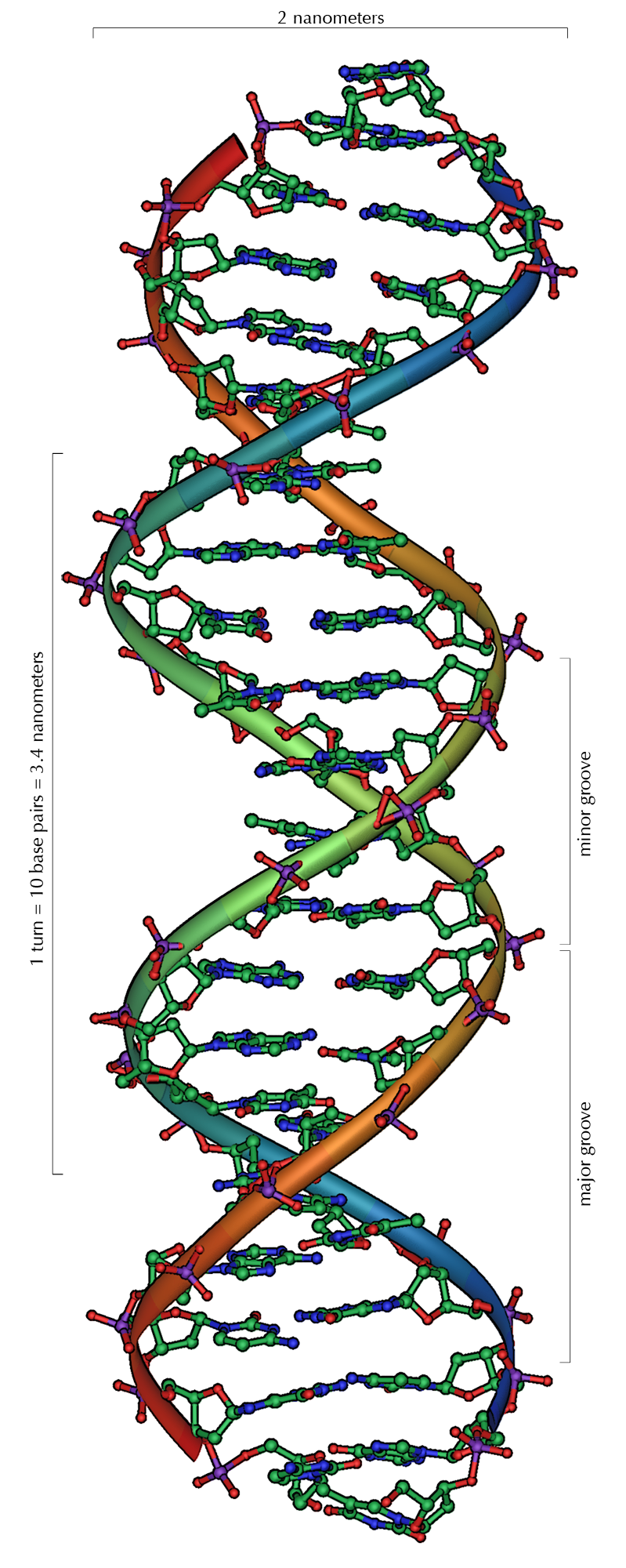
In defense of premise 2, Meyer argues that there is information in the cell that we can detect because DNA isn’t simply random amalgamations of enzymes, rather, they are put in specific order so that they can regulate the production of proteins and RNA. Thus, they act as information which regulates activity of the cell.
3 follows from 1 and 2.
Chance doesn’t seem a sufficient explanation because not only is the generation of information highly improbable, it is also specified (it is information set in a certain way). Necessity won’t work because it presupposes information is already present. Therefore, the cell is designed.
To those Christians interested in the Intelligent Design, Theistic Evolution, Creationism debate, I highly recommend Stephen Meyer’s Signature in the Cell.
A response to an attack on this post found here (search “On Intelligent Design”)
SDG.
——
The preceding post is the property of J.W. Wartick (apart from citations, which are the property of their respective owners) and should not be reproduced in part or in whole without the expressed consent of the author. All content on this site is the property of J.W. Wartick and is made available for individual and personal usage. If you cite from these documents, whether for personal or professional purposes, please give appropriate citation with both the name of the author (J.W. Wartick) and a link to the original URL. This blog is protected by Creative Commons licensing. By viewing any part of this site, you are agreeing to this usage policy.

 J.W. Wartick - Reconstructing Faith