christian
“Black Swan”: A Christian Analysis
 “Black Swan” is, in a word, “disturbing.” There is no doubt that the film is well made, and that Natalie Portman pulls off a stunning performance. Rather than reviewing it as a movie worth seeing, I thought I’d comment on it from a Christian perspective. In what follows, there will be spoilers.
What kind of thoughts can the Christian take away from a movie like “Black Swan”? I think the most obvious point is that the Christian can reflect on the nature of sin. What will things of this world drive us to? In her pursuit of perfection, Nina (Natalie Portman) is driven to the depths of her soul’s darkness. She is lead to violent fantasies (it’s unclear as to whether much of the violence is real or not) and to sexual depravity. It all culminates in her self-destruction, sacrificing her life for the “perfect” performance of “Swan Lake.”
I think we can see similar themes in our own lives as Christians. We often pursue worldly passions–among them a well-paying career; a sexual sin; an addiction; or the like–rather than focusing on that which matters: our Lord. Yet Christians even have this very idea built into the fabric of their belief system: we are sinners, with the capacity for great evil within us. Indeed, we are “originally sinful” and “totally depraved”, by nature we are sinful and unclean. “Black Swan” poignantly portrays this. An innocent girl is driven to the depths of hell in her pursuit of the world. It’s maddening, it’s horrifying, it’s disturbing. Despite this, in a way, the story draws us in. We can relate to the obsession with the world in ways that should scare us. Perhaps that’s why I found “Black Swan” so frightening. It wasn’t a horror movie by any means–it has its thrills and chills–but mostly, the fear is of the reality that could be. Could we become the “Black Swan” ourselves?
Now, I’m not suggesting “Black Swan” is a Christian film. It has sin of almost every imaginable kind portrayed, sometimes graphically. My point is that Christians can take away a message from the movie. The pursuit of the world will lead only to darkness… a “perfection” which can only destroy.
———
The preceding post is the property of J.W. Wartick (apart from citations, which are the property of their respective owners) and should not be reproduced in part or in whole without the expressed consent of the author. All content on this site is the property of J.W. Wartick and is made available for individual and personal usage. If you cite from these documents, whether for personal or professional purposes, please give appropriate citation and provide a link to the original URL. By viewing any part of this site, you are agreeing to this usage policy.
The Life Dialogue: Old Earth Creationism 4
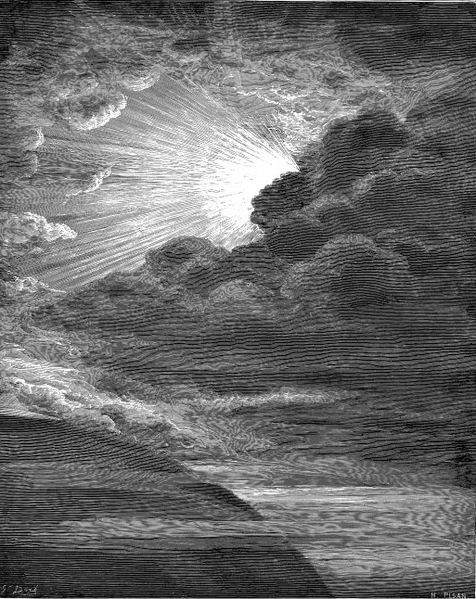 This is part of a series of posts on the “Life Dialogue/Origins Debate” within Christianity. View other posts in the series here.
The obvious point of contention between Old and Young Earth Creationism (hereafter OEC and YEC) is the age of the Earth/Universe. Hugh Ross argues powerfully for an old universe from both a theological and scientific perspective in A Matter of Days: Resolving a Creation Controversy.
The argument against the YEC position (derived from A Matter of Days) runs as follows:
1) The most coherent YEC position to explain the appearance of age in the universe is to hold that the universe appears to be old, but is not old in fact. (YECs often hold that God created light already traveling to earth, created Earth already to the point it could sustain life, etc.)
2) Scripture states that God does not lie. God is not a deceiver.
3) Scripture states that nature provides an accurate record of reality, though not a complete record.
4) 1) Scientific evidence (nature) demonstrates the universe is about 14 billion years old, as opposed to the 10,000(ish) years YECs grant.
5) Therefore, the universe is actually old. This follows from the accurate evidence of nature combined with 2) that God doesn’t deceive. If the universe is, in fact, 10,000 years (or so) old, then God has deceived humanity by making it in such a way that it appears to be much older than it is.
Premise 1) seems to definitely be the case. First, because the universe, according to the most modern science, is anywhere between 13-16 billion years old. Second, while YEC potentially has theories to explain why earth looks so old without relying on it being created already aged to a certain point (i.e. hydroplate theory), this does nothing to explain the background cosmic radiation; how we can see light from stars that are too far away to be seen yet were the universe 10,000 years old, etc. It therefore seems as though the only way to explain the apparent age of the universe is to argue that it is just that: apparent only. On this theory, God created the earth universe enough to support life, about 10,000 years ago.
Premise 2) doesn’t really need a defense (but if desired: Romans 3:4; Numbers 23:19; Deuteronomy 32:4; 1 Samuel 15:29; Titus 1:1-2).
Premise 3) can be seen in things like Psalm 19:1-4a:
“The heavens declare the glory of God;
the skies proclaim the work of his hands.
Day after day they pour forth speech;
night after night they reveal knowledge.
They have no speech, they use no words;
no sound is heard from them.
Yet their voice goes out into all the earth,
their words to the ends of the world.”
Premise 4) is at least implicitly accepted by YECs because they argue that even though science shows the universe is very old, it is not actually that old. It is worth noting that some YECs would claim that “real” and “unbiased” science would not lead to the conclusion that the universe is very old. There is little one can do to counter this claim other than argue that were that true, the YEC account would be able to present a fully testable, verifiable scientific model that shows that things like the background cosmic radiation are false.
Finally, the conclusion seems to follow from the preceding argument. God told us nature is an accurate record; He also created the universe (on YEC) in such a way that it appears to be billions of years old, but is not actually that old. Therefore, He created a universe that would deceive us into thinking, falsely, that the universe is old. But, God does not lie, so this cannot be true. Therefore, the universe is old.
I find this argument very convincing. It underscores my main problem with the YEC position: namely, that the best evidence does show the universe is old, and so God would be a deceiver were He to make it thusly.
SDG.
——
The preceding post is the property of J.W. Wartick (apart from citations, which are the property of their respective owners) and should not be reproduced in part or in whole without the expressed consent of the author. All content on this site is the property of J.W. Wartick and is made available for individual and personal usage. If you cite from these documents, whether for personal or professional purposes, please give appropriate citation and provide a link to the original URL. By viewing any part of this site, you are agreeing to this usage policy.
Book Review: New Proofs for the Existence of God by Robert Spitzer
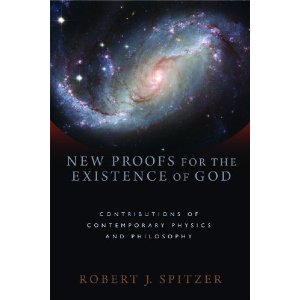
Robert Spitzer’s New Proofs for the Existence of God (hereafter NPEG) presents in rigorous detail, five arguments for the existence of God, a section discussing the plausibility of multiverse/string universe scenarios, and some philosophical discussion on methodology.
Before continuing the review, I should note that the “New” in NPEG is nuanced. Spitzer notes this himself (my guess is that it was a marketing technique. “New” refers to the evidence from cosmology and further research in philosophy which lend new power for these arguments.
Chapter 1 presents a cosmological argument. Spitzer cogently argues that “(1) If there is a reasonable likelihood of a beginning of the universe… and (2) if it is apriori true that ‘from nothing, only nothing comes,’ then it is reasonably likely that the universe came from something which is not physical reality” (Spitzer, 45). This conclusion is supported by explorations of current cosmological theories about the origins of the universe.
Chapter 2 presents the teleological argument, which Spitzer bases on the universal constants. The argument leads to the conclusion that “the odds against an anthropic condition occurring are astronomically high, making any life form… exceedingly improbable.” It is a probabilistic argument, the likes of which I defend in my article Past, Probability, and Teleology (Hope’s Reason 2011-1).
Following chapter 2 is a chapter which discusses the possibilities of inflationary cosmology and the string multiverse written by Bruce Gordon. It is extremely technical and will provide readers with cogent arguments against the possibility of a multiverse scenario circumventing the previous arguments.
Chapter 3 presents Spitzer’s metaphysical argument for the existence of God, which is full of sound argumentation along with some interesting Thomistic Philosophy wherein he discusses God’s simplicity in the most coherent way I have read. I greatly encourage readers to look into this chapter, if only for the discussion of this oft-neglected doctrine.
Spitzer follows this with Chapter 4’s metaphysical argument derived from Bernard Lonergan’s Insight, which is a subtle version of the argument from reason. This chapter was particularly good because it focuses on a little-used type of arguments for the existence of God–that if our universe is intelligible, that can only be explained by God’s existence.
Chapter 5 is an argument from contingency similar to the Leibnizian cosmological argument.
Chapter 6 engages the question of method in philosophy along with whether atheism is actually rational. I was intially put off by the title of this chapter (“Methodological Considerations and the Impossibility of Disproving God”), but happened throughout the book, I was pleasantly surprised by the rigorous arguments and enlightening conclusions Spitzer laid out.
Finally, the last two chapters outline some more considerations about the universe and the relation of humans and God.
NPEG was a surprising read for me. I went in with neutral expectations, and those were blown away. Spitzer’s knowledge of the topics in the work runs deep, and his writing style is clear and cohesive. It is genuinely exciting to read. Readers will be challenged by the arguments for the existence of God, and engaged in the details and philosophical explanations of these arguments. I highly recommend this work to those interested in advanced books on arguments for God’s existence.
——
The preceding post is the property of J.W. Wartick (apart from citations, which are the property of their respective owners) and should not be reproduced in part or in whole without the expressed consent of the author. All content on this site is the property of J.W. Wartick and is made available for individual and personal usage. If you cite from these documents, whether for personal or professional purposes, please give appropriate citation and provide a link to the original URL. By viewing any part of this site, you are agreeing to this usage policy.
The Life Dialogue: Geocreationism Guest Post 2
This is part 2 of a thought-provoking series of guest posts by Mike Trutt on Geocreationism. Check out other posts on the “Life Dialogue” within Christianity here. View Part 1 here.
Mike Trutt is an evangelical Christian with a Jewish background. He believes the Bible is inspired by God, recorded by man, and given its life by the Holy Spirit. You can read about and discuss his Old Earth views on scripture, science, history, and other topics at his blog,http://geocreationism.com.
Geocreationism – Evolution and God
As the reader proceeds, I request an open mind. With many of my theories on Creation, I often get the question of “why”? I cannot always answer. But consider how often God does not explain Himself to you. Quite often, He tells us what He did and what He will do, and we have only to believe Him. Abram was promised a son in His old age. He believed God and it was accounted to Him as righteousness; Zechariah on the other hand laughed, and God shut him up mute until his son John the Baptist was born. And so I take a risk with Creation, attempting to be righteous and not mute, and trusting God’s hand will be gentle if I am wrong. If in the end you still need an answer as to “why” then I offer you this: whatever God did, it was for His glory.
= = =
Evolution is not an easy topic for Christians. Whatever the version, Evolution does not appear to require God any more than God requires Evolution. It is enough to keep atheists and Christians apart, but do not be fooled into picking sides. Such thinking is a trap of the enemy, as either choice is the result of a common theological fallacy… that God would not create using natural or “random” means. But, what if scripture showed otherwise?
Consider this passage in 1 Chronicles 14:15-16…
15 And when you hear the sound of marching in the tops of the balsam trees, then go out to battle, for God has gone out before you to strike down the army of the Philistines.” 16 And David did as God commanded him, and they struck down the Philistine army from Gibeon to Gezer.
God went before David to strike down the philistines; David’s armies went and struck down the philistines. God and David took separate actions, yet accomplished the same defeat. To say then that Evolution is false because God created everything is like saying that David did not achieve victory over the Philistines, because God obviously did. This not only limits God, it contradicts the plain meaning of scripture. If Evolution is true, then Biblically speaking, it is as much God’s instrument as David’s armies above. But, just as a secular historian may study the defeat above and see only David’s army, a scientist studying the species will only see mutation, adaptation, and Natural Selection… but the blindness of man does not negate what he sees any more than it equates to an absence of God.
= = =
On Day 1, God hovered over the deep. As recorded in the size and age of the moon’s craters, meteor strikes devastated the earth’s early oceans, causing clouds and torrential rains throughout the world. From where God hovered in Genesis 1:2, the sun’s still-dim light could not be seen through the rain and clouds, and while the meteors continued it would be so. With His pronouncement to “Let there be light,” the meteors ceased and the light of the sun pierced the darkness. This was 3.9 billion years ago. The rains would not yet stop, but an atmosphere would begin to form. There would now be sunlight, though the sun itself remained unseen.
On Day 2, the torrential rains continued to fall so hard, there was no perceivable separation between the clouds above and the seas below. With God’s declaration to “Let the waters separate from the waters,” the rains started to let up. Was Moses aware of these conditions when he wrote of them? Given their parallels with Egypt’s creation myths, I would say not. However, their alignment with modern secular scientific theories should be enough to give one pause.
On Day 3, the skies were still hazy and the world was still covered in water. God said to “let the water gather together in one place, and let dry ground appear.” Plate tectonics began around 2.4 billion years ago, as the earth hardened beneath the water and earthquakes thrusted the earth’s crust above the seas. God then said to “Let the land produce vegetation: seed-bearing plants and trees on the land that bear fruit with seed in it, according to their various kinds.”
According to their various kinds? Most people take it to mean that the vegetation will be capable of reproduction. But examine the King James translation: “And God said, Let the earth bring forth grass, the herb yielding seed, and the fruit tree yielding fruit after his kind, whose seed is in itself, upon the earth: and it was so.” God specifically listed seeded plants. What of the non-seeded, specifically succulents and spores?
The Bible says the land produced seeded plants at God’s command. It reminds me of David’s victory above. God went before the land to produce seeded plants, and then the land went forth and produced seeded plants. And if the land’s production was as physical as David’s victory, then why be surprised that it left behind some trace? Why be surprised that production of seeded plants required spores and succulents to develop first, each giving way to the next? Why be surprised that God didn’t even wait for the seeded plants to appear before He moved into the sunset and starting His work on Day 4? That’s right. Seeded plants did not appear until 300 million years ago, long after Day 4, which we discuss below. But once again, God’s work for Day 3 was done. It was time for the land to do its work.
On Day 4, as algae and fungi made significant inroads on the land, God said “Let there be lights in the heavens to separate the day from the night.” Scientists believe the Oxygen of these primitive plants cleared up the sky around 1.9 billion years ago. The sun, moon, and stars could be seen clearly in the skies, when they had been completely obscured before.
Day 5’s pronouncement reads, “Let the water teem with living creatures, and let birds fly above the earth across the skies.” Day 6 reads, “Let the land produce living creatures according to their kinds,” and it goes on to list their groups. If interpreted as the initial appearance of sea life, birds, and land mammals, then Days 5 and 6 must overlap, because whales appeared after land mammals in the fossil record. Such overlap of Days is not Biblical, but through scientific discovery we can find a meaning that explains it.
65 million years ago, a giant meteor struck the earth. It is referred to as the KT impact, and it nearly decimated all life on the planet. It killed nearly every dinosaur, bird, sea creature, and mammal around the world. According to the fossil record, the first to recover was sea life. Placing Day 5 after the KT impact, a time when mere life was scant but there, God’s pronouncement becomes apropos, “Let the water teem with living creatures.” Next would be the birds. Why? It was the first time in their existence when they had no natural predators. And, just as Day 3 began a process leading to seeded plants, so Day 5 began a process eventually leading to whales. But wait. This required a recovery of mammals on the land, because they are what eventually led to mammals in the seas. What of the mammals of Day 6? The most comon theories have these days overlap.
According to the fossil record, the mammals that evolved on Day 5 were almost wiped out around 33.5 million years ago, after the whales appeared. The event is called the Grand Coupure. Then, almost as suddenly, the mammals that survived gave way to new varieties, the ones we see today, the ones listed in scripture: “Let the land produce living creatures according to their kinds: the livestock, the creatures that move along the ground, and the wild animals, each according to its kind.” Once again, the specificity of scripture, when compared with the discoveries of science, provides an answer.
= = =
It was hard to fit my treatise on Evolution into the word limitation of a blog, but I hope the point comes through, that secular science is useful and God is sovereign. The next installment will discuss the doctrine of Original Sin, and why death before Adam is compatible.
The Ontological Argument: Question Begging?
 Is the ontological argument question begging? Short answer: some versions yes, others, no. For the long answer, read on:
Many versions of the ontological argument appear to beg the question. The Anselmian version of the argument seems invalid, but there are other formulations of it which avoid its invalidity (cf. Maydole’s chapter on the Ontological Argument in The Blackwell Companion to Natural Theology, eds. Craig + Moreland, 553ff). Then, Alvin Plantinga came along and introduced the modal ontological argument, which relies on S5 modal logic. I have discussed Plantinga’s argument elsewhere, as well as demonstrated its validity.
Therefore, we will focus on a new considerations. Consider the following very simple version of the modal ontological argument:
1) Possibly, God necessarily exists
2) Therefore, God necessarily exists
The argument seems, at first face, to be a very strange argument. However, the argument does not beg the question when viewed through modal logic. 1) does follow from 2) in a non-tautological way, but 1) must be established.
Symbolically, the argument is written as the following (Take “T” to be “God exists”):
1) ◊□T
2) □T
S5 modal logic is based upon this very axiom. Namely, ◊□x⊃□x or ◊□x iff □x (Hughes & Cressewell, A New Introduction to Modal Logic, 58). For in modal logic:
3) that which is “possible” exists in “some possible world.”
4) That which is necessary exists in all possible worlds
Therefore, if something is possibly necessary, then it must obtain in some possible world (3). however, if it is necessary, then it exists in all possible worlds (4). Therefore, if something is possibly (exists in some possible world) necessary (exists in all possible worlds), then it exists in all possible worlds.
Is this argument question begging? If it is, then it is not obviously so. Alexander Pruss has argued out that the argument is question begging only if it is directed at one who does not understand that 1) entails 2) (Pruss, The Principle of Sufficient Reason, 232). I’m not convinced that this is correct. Soundness of arguments don’t depend upon whether people understand them–they depend on whether they are valid or true. However, it seems Pruss has an intuitive point here, in that even if this argument isn’t question begging, it appears to be.
How might the theist respond? Well, Pruss argues that if the theist argues for the establishment of S5, then it is no longer question begging (232). Alvin Plantinga does just that in God, Freedom, and Evil, as Pruss points out. We’ve already established elsewhere that Plantinga’s argument doesn’t beg the question regardless (see here), but this symbolic proof is bolstered by providing an argument for S5.
Then, it seems to be the case that if S5 modality is valid, God necessarily exists.
Are there versions of the ontological argument that resist this reduction to the “simplistic” version offered here? Yes, there are. For example, Stephen Parrish’s ontological argument:
5) The concept of the GPB (Greatest Possible Being) is coherent (and thus broadly logically possible)
6) Necessarily, a being who is the GPB is necessarily existent, and would have (at least) omnipotence, omniscience, and moral perfection essentially.
7) If the concept of the GPB is coherent, then it exists in all possible worlds.
8 ) But if it exists in all possible worlds, then it exists in the actual world.
9) The GPB exists (Parrish, God and Necessity, 82)
This argument may initially seem to be susceptible to the same reduction, but it can avoid this reduction by lengthening it to:
10) the GPB is coherent (and logically possible)
11) the GPB’s coherence entails modal possibility
12) the GPB is necessary
13) modally, if something is possibly necessary, then it is necessary
14) the GPB exists necessarily
The key premise here is 10), because if it is true, then the rest of the argument follows necessarily. What reasons do we have for thinking 10) is true? Such a debate is beyond the scope of this post (good discussions can be found throughout theistic philosophy of religion–see, in particular, Craig and Moreland, Philosophical Foundations for a Christian Worldview and Swinburne, The Coherence of Theism; see also my brief discussion in the post on the argument here); but it seems to me that there is no incoherence in the concept. If that is the case, then I am justified in holding 14).
Therefore, it seems the modal ontological argument is not question begging, particularly if one argues first for the validity of S5 modality. Furthermore, there are other modal arguments which don’t rely on a reduction to a simple modal argument. For example, Parrish’s ontological argument relies instead upon the coherence of the GPB. Such arguments are successful if arguments against the GPB’s coherence are shown to be unsuccessful. In either case, God exists.
Ergo deus est.
SDG.
Sources:
Maydole, Robert E. “The Ontological Argument.” The Blackwell Companion to Natural Theology. Edited William Lane Craig and J.P. Moreland. Blackwell, 2009.
Parrish, Stephen E. God and Necessity. University Press of America. 1997.
Pruss, Alexander. The Principle of Sufficient Reason. Cambridge. 2006.
——
The preceding post is the property of J.W. Wartick (apart from citations, which are the property of their respective owners) and should not be reproduced in part or in whole without the expressed consent of the author. All content on this site is the property of J.W. Wartick and is made available for individual and personal usage. If you cite from these documents, whether for personal or professional purposes, please give appropriate citation and provide a link to the original URL. By viewing any part of this site, you are agreeing to this usage policy.
Atheism’s Universe is Meaningless and Valueless
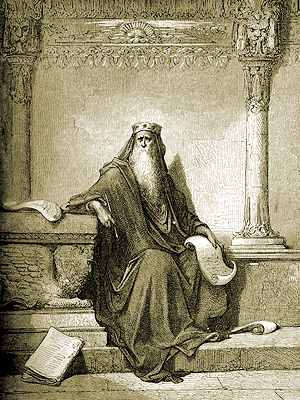 “‘Meaningless! Meaningless!’
says the Teacher.
‘Utterly meaningless!
Everything is meaningless.'” – Ecclesiastes 1:2
My most recent post on the problem of evil granting empirical atheism generated some thoughtful discussion. Most importantly, it lead me to the following argument:
1) On materialistic [I use materialism and physicalism interchangeably, as is common in philosophy today] atheism, all we are is matter in motion.
2) There is no objective reason to value matter moving in way A over matter moving in way B
3) Therefore, on materialistic atheism, there is no value or meaning
Premise 1 seems self-evident. Materialistic atheism, by definition, says that “everything is physical, or as contemporary philosophers sometimes put it, that everything supervenes on, or is necessitated by, the physical” (Stanford Encyclopedia of Philosophy). The physical world is matter.
Premise 2 also seems like it should need little defense, yet atheists continually come up with ideas to try to get around it. For example, one may argue that the subjective suffering of persons should matter. Yet I fail to see how this argument succeeds. Pain and suffering, on materialism, at most supervenes upon neurons firing in the brain (along with chemical reactions and other physical phenomenon). My question for the materialist is: What reason can be provided for favoring matter moving in way A (call it, the way neurons fire when someone is in a state of bliss) over matter moving in way B (neurons firing in the way which causes pain)?
One answer which may be forthcoming is that creatures and persons tend to try to get away from things which cause B. This argument fails to provide an answer to the question, because all it does is push the question back to a higher level. It would change to: Why should we favor physical observable phenomenon which don’t cause avoidance over those that do? Again, the avoidance of B would simply be matter moving in a different way. In order to make a judgment between them, one would have to reach beyond the material world and into the world of objective meaning and value; this is, necessarily, a world which is nonexistent on materialism. Even if one could provide an answer to this second question, say “We tend to not like B. Things we don’t like are bad”, then we would have a purely subjective reality. What of the serial killer who delights in torturing himself, causing things to B? What reason do we have for saying what he is doing is wrong, because, after all, he likes B?
Ultimately, on materialism, everything boils down to matter in motion. Making value judgments about matter in motion is meaningless.
But if everything is matter in motion, then there doesn’t seem to be any way to make value judgments. How does one value a rock over a stick? They’re both just stuff. But then, on materialism, people are just stuff too; albeit more complex. However, if you were to break us down into our ultimately realities, we are no different than the rock. We are matter organized in a different way. Why value us?
There is no objective reason to do so. Therefore, there is no objective meaning or value. Life is purposeless, meaningless, valueless. Atheistic materialism demands this bleak view of the universe. I’m not saying it’s a good reason to abandon that [un]belief. I’m merely saying that those who hold such a view must be consistent.
“Now all has been heard;
here is the conclusion of the matter:
Fear God and keep his commandments,
for this is the duty of all mankind.
For God will bring every deed into judgment,
including every hidden thing,
whether it is good or evil.” -Ecclesiastes 12:13-14
[In the comments, I have suggested that on materialism, there is no such thing as a subject. The claim has proven highly contentious, so I have created a post to clarify my position: https://jwwartick.com/2011/12/05/subjects-materialism/.]
Check out my post on the Ontology of Morality: Some Problems for Humanists and their friends
SDG
——
The preceding post is the property of J.W. Wartick (apart from citations, which are the property of their respective owners) and should not be reproduced in part or in whole without the expressed consent of the author. All content on this site is the property of J.W. Wartick and is made available for individual and personal usage. If you cite from these documents, whether for personal or professional purposes, please give appropriate citation and provide a link to the original URL. By viewing any part of this site, you are agreeing to this usage policy.
The Life Dialogue: Geocreationism Guest Post 1
This is part 1 of a series of guest posts by Mike Trutt on Geocreationism. Check out other posts on the “Life Dialogue” within Christianity here.
Mike Trutt is an evangelical Christian with a Jewish background. He believes the Bible is inspired by God, recorded by man, and given its life by the Holy Spirit. You can read about and discuss his Old Earth views on scripture, science, history, and other topics at his blog,http://geocreationism.com.
Geocreationism- Introduction
I believe the Earth is old, and God’s Word is true. This is not an easy position to hold. There are Christians today feeling challenged to abandon the church, because long-standing theology requires a young earth that science tells them does not exist. Faith tells them that science and scripture should not be at odds, but if the earth is so old, then what does scripture mean? Why does Genesis say what it says, and science sees what it sees? Christians can agree that science and scripture must somehow align, but disagree as to how. A science that conforms to a young earth requires one to dismiss the scientific basis of established dating techniques, while an interpretation of scripture that conforms to an old earth requires an explanation of why pre-historic death does not unravel the doctrine of Original Sin, and in turn our need for a savior. As an Old Earth proponent and a Christian redeemed from sin, I have found no mainstream theory – on either side – that satisfactorily answers these questions.
Though I consider them my brethren in Christ, the Young Earth scientists whose writings I have read do not appear to understand the science they theoretically embrace. While using science reliably for everyday tasks like keeping airplanes in the sky and maintaining reliable cell-phone signals, the moment you provide evidence of something incredibly old that The Great Flood cannot explain, they say carbon dating is unreliable beyond 5,000 years (which is roughly true), hence rendering any dating technique equally suspect. Why? Because the Bible clearly says to them that the Earth is young. To them, evidence to the contrary indicates a misunderstanding of the evidence. While such strong faith is potentially advantageous to their relationship with God, it dismisses the possibility that Genesis is what we misunderstand. But, if that is the case, and the earth is old, then where is the theory of Old Earth Creation that keeps Christian Theology intact? In all my years of looking for it, it isn’t there. Enter Geocreationism.
Most Old Earth approaches relegate Genesis 1-11 to some form of symbolism, even though every chapter is clearly written in a literal manner. For example, concordist theories (e.g., Day-Age, Progressive Creationism) map the days of creation to overlapping geological eras, even though Genesis 1 clearly discerns a break between creation days. Gap theories fail to account for the fossil record, by acknowledging the age of the earth, but not the development of the species. Theistic Evolution relegates God to the beginning of creation, when Genesis 1 clearly shows God’s involvement at every step. And so it goes, as every mainstream Old Earth theory dismisses the plain meaning of scripture, an unsatisfying response to Young Earth theories, which dismiss the plain meaning of the science. It creates a false dichotomy that puts many in the unenviable position of dismissing their heart or dismissing their mind, when God would have us dismiss neither.
= = =
The first mistake of Old and Young Earth Creationists alike is one of perspective. They read Genesis 1 from the perspective of the earth’s experience being created by God, when it is really telling us of God’s experience creating the earth. If there is any doubt then consider who it is that hovered over the deep in Genesis 1:2. God was there, physically hovering. He had a perspective, and from His perspective the earth had no form and He could see no light. “And God said ‘Let there be light,’ and there was light. God saw that the light was good, and he separated the light from the darkness. God called the light ‘day’, and the darkness he called ‘night.’ And there was evening and there was morning – the first day.” (Genesis 1:3-5) From God’s perspective, hovering over the deep, there was now light separated from darkness. In Job 38:5, God describes it as stretching the line upon the face of the earth. Proverbs 8:27 calls that line the circle on the deep, which we see from space, even today.
The Hebrew word used for day is “yom”, and it refers specifically to the period from sundown to sundown, or from darkness to darkness. In other words, God experienced the end of the day, but it was not specifically 24 hours. This has profound implications for understanding Genesis 1, and it is a perspective I have read nowhere else.
For God to, by choice, physically experience 6 days creating, calling each phase of creation “good”, it suggests an ability to watch the earth rotate beneath Him until the entire earth passed Him by. As Genesis 1:2 says so clearly, God hovered over it, an intentional physical perspective for Him to watch His work. But what would happen after 24 hours, after the entire earth has passed through His view? From the perspective of a point on the earth, one “yom” would certainly pass. However, God was not limited to a point upon the earth. He was hovering above it as the earth rotated beneath Him, hovering in the light, which imposes no arbitrary time limit on when He moves into the dark. Combined with the literal meaning of “yom”, scripture is not requiring a creation day to be a 24-hour period. Sundown for God becomes the time God chose, not a time imposed. It means the earth may be old, and God created it in 6 literal days.
= = =
Another common oversight in Genesis 1:2 is the nature of the deep over which God hovered. What is it? When was it? What if science could find a period in history when the earth was covered in water and darkness, a period that ended with the appearance of light, but no land, no life, and no visible sun? Would that confirm at least the possibility that Genesis 1:2 is recording something that literally happened? I thought it would, and I found it.
About 4.5 billion years ago, the earth is thought to have formed. According to the aging of zircon crystals from as long as 4.4 billion years ago, it strongly suggests the formation of an ocean around the world as it cooled. It would also seem from the moon’s craters that large meteors were hitting earth until around 3.9 billion years ago. The sizes of the meteors were large enough to vaporize any ocean that was forming, and blow away any infant atmosphere as well. But interestingly, that stopped quite suddenly 3.9 billion years ago. This gives us a point in time when the earth, covered in water, vapor, and gas was finally allowed to start settling down, and allow the sky to clear. The sun was dimmer at the time, and what light did reach the earth would have been too obscured to be seen. It is the precise condition described in Genesis 1:2, and would seem to record the result of God’s statement, to “Let there be light.”
= = =
While we’re on the topic of the deep and its formation, I want to jump to Genesis 2:4-7…
4 This is the account of the heavens and the earth when they were created, when the LORD God made the earth and the heavens.
5 Now no shrub had yet appeared on the earth and no plant had yet sprung up, for the LORD God had not sent rain on the earth and there was no one to work the ground, 6 but streams came up from the earth and watered the whole surface of the ground. 7 Then the LORD God formed a man from the dust of the ground and breathed into his nostrils the breath of life, and the man became a living being.
What fascinates me about this passage is verse 5. It describes the state of the earth when God first made it. Does this passage give us a clue as to when that was? Well, look at the description of the earth in verses 5 and 6…
- No shrubs
- No plants
- No rain yet, ever
- No people to work the ground
- Streams gassed up from the earth to water the ground
This is in fact a precise description of the earth 4.5 to 4.4 billion years ago. Scientists call this process outgassing. They believe it is how the deep formed, over which I believe God hovered in Genesis 1:2, and it is described quite accurately in Genesis 2:5-6. Though no mainstream theory will call Genesis scientific, the appropriateness of these verses should no longer be overlooked. Finally, we come to verse 7, which says, “Then the LORD God formed a man from the dust of the ground and breathed into his nostrils the breath of life, and the man became a living being.”
To paraphrase, God started with dust 4.4 billion years ago. He then proceeded through 6 literal days of creation until around 6,000-7,000 years ago, when Adam was born. God introduced Himself and breathed new life into him.
To Save a Life: Movie Review

“To Save a Life” is a Christian movie (I imagine some fleeing already, but read the full review!) about some tough issues: teen suicide, self-harm, bullying, and more (no spoilers) come up in this film.
The movie starts with Jake Taylor attending the funeral of a friend from his younger years–a friend with whom he has lost touch. The friend committed suicide, and this leads Jake to seek answers to a number of questions and “Could I have done something?” is paramount among them.
The movie also explores the themes of faith as Jake interacts with a youth pastor while exploring questions about Christianity.
What makes this movie resonate with me is how accurately it portrays a number of aspects of teenage life. I’m very serious here. I knew people like Jake and his friends, and I also knew people who resembled those in the youth group scenes. The movie doesn’t hold punches, there are teens out to sleep with as many people as possible, there are those who have left the faith and are hostile to any mention of it, there is a persistent caricature of Christian belief which the teenagers think they have figured out, even within the Christian youth group there are “pretenders”–only there because they have to be (or want to hang out with friends).
The issues the film covers are, as mentioned, not easy. Teen suicide, cutting/self-harm, and the like are all portrayed. There are answers found, but they are not easy. They provide challenges to viewers to step out of their comfort zone and realize there are more important things in life than the mundane. Viewers will reflect on the movie for some time afterwards, wondering what it is that I should or could be doing.
Now, I mentioned before it is a Christian movie. Often, unfortunately, this means the acting is terrible. Not so with “To Save a Life.” I was engrossed in the film from the first minute. Jake (played by Randy Wayne) is perfectly cast. He poignantly portrays a troubled teenager reaching out for answers. The acting is not overdone. In scenes in which people are fighting, it is realistically uncomfortable; it feels too real. Watchers will have to fight not to pick out people they knew in the characters throughout the film. And this leads me to my next point:
It was stunning to me to watch the movie and realize how close I have been to being any number of these people. I was very close to being a youth who left the faith because of unanswered questions. I thank God that He provided people with answers around me–and people who were willing to say they didn’t know the answers, and point me in a direction to find them.
I watched the movie with my parents this week. My dad is a pastor and he wanted me to evaluate it for its use in a youth group setting. I can say that without a doubt I think this movie should be viewed by youth groups, but it should also be watched by concerned parents with their children. It will provide a springboard for discussion on some difficult issues.
I very highly recommend “To Save a Life.” It will resonate with some viewers in ways that simple lectures or discussions cannot. It presents a strong Christian message, calling youths to strengthen their faith and be willing to reach out to those who are hurting–a message we would do well to take to heart in a hurting world.
——
The preceding post is the property of J.W. Wartick (apart from citations, which are the property of their respective owners) and should not be reproduced in part or in whole without the expressed consent of the author. All content on this site is the property of J.W. Wartick and is made available for individual and personal usage. If you cite from these documents, whether for personal or professional purposes, please give appropriate citation and provide a link to the original URL. By viewing any part of this site, you are agreeing to this usage policy.
Dawkins vs. Craig: Deaf, or blatantly misrepresenting theism?
I stumbled on this video from the recent debate between William Lane Craig et. al and Richard Dawkins et al. which occurred in Mexico. It was via Doug Geivett’s blog (he was another participant in the debate). The video is cut to show Craig’s comments alongside Dawkins’ rebuttals. It seems as though Dawkins either completely missed what Craig was saying, or he is blatantly misrepresenting the case on the other side. I tend to suspect it is the latter, as in the writings of Dawkins which I have read, he doesn’t strike me as the most intellectually honest fellow. Judge for yourself:
The whole debate can be found here.
What Evil? (The Problem of Evil on Empiricism)
 The problem of evil is often seen to be the greatest philosophical challenge to theistic belief. The problem of evil is also most frequently raised by people who are ardent empiricists (which undergirds their atheism). There are many versions of empiricism, but the one we will investigate at the moment is naturalistic, atheistic empiricism, which holds both that there is nothing but the natural world in the sense of the world which can be directly accessed via the senses and only sensory, empirical evidence is sufficient evidence for holding a proposition to be true.
On this view, it seems extremely difficult to figure out what exactly evil is. Sam Harris is well known for trying to show that science is capable of dealing with moral issues (discussed here). The method basically involves finding out what makes people happy (which is “good”) and what makes them unhappy (which makes it “bad”) (see here). It remains totally unclear to me, however, how Harris makes the jump from “happy” to “objective good.” Measuring people’s happiness doesn’t mean measuring goodness. There are serial killers who are very happy to go about secretly killing as many people as possible. That doesn’t make their action “good”, unless you boil “good” down to a purely subjective basis, on which nothing can be decried as “evil” unless 100% of people agree it is indeed evil.
Returning to the problem of evil, then, it seems like theists can simply ask the atheists a question: “What evil?” Judging something as “evil” is necessarily a valuation of an action. How does one make an experiment which can make a value judgment? Certainly, one can try to argue, as does Harris, that values are just [scientific] facts (note that the theist agrees that moral values are facts… but facts centered on the nature of God, not on empirical grounds). But simply asserting something doesn’t make it so. I often say “God exists.” People don’t tend to take this as profound evidence that the statement is true. (Though, perhaps if I said “God exists is a fact.” I might win some over… at least those who take Harris seriously when he makes a similar claim about values in the video linked above.)
So the question remains: What evil? On an atheistic empirical standpoint, there doesn’t seem to be any way to judge actions or events as “evil” other than by saying “I don’t like that.” But perhaps I do like that same event/action. Who’s to judge between us? Bringing numbers into the mix won’t help either. Imagine a scenario in which 1,000,000 people thought some action (rape) was evil. On the other side there were 10,000 who thought the same action was perfectly reasonable, because, after all, that’s how our ancestors behaved. Who is right? Well, on empiricism, perhaps one could argue that the 1,000,000 are right, but then we’re making a judgment on values simply because of a majority vote. Science doesn’t work that way. We don’t just vote on what is empirically correct.
The only way to solve this problem would be to argue that in moral questions, the majority is correct. Yet I don’t see any way to argue in this matter other than metaphysically, which is exactly what the empiricist is trying to avoid. Therefore, on empiricism, there is no such thing as evil. Just good and bad feelings. And that’s not enough.
And so we get to my main argument.
1) One cannot rationally hold both to a proposition’s truth and falsehood.
2) On atheistic empiricism, there is no evil.
3) Atheistic empiricists argue that evil disproves (or challenges) the existence of God [implicit premise: evil exists].
4) Therefore, atheistic empiricists hold that both evil does not exist, and that it does exist (2, 3).
5) Therefore, atheistic empiricism is irrational (1, 4).
In order to avoid the argument, the atheistic empiricist can simply deny 3). However, this would disarm the strongest anti-theistic argument. I see no reason to feel threatened by the problem of evil when it is leveled by an empirical/naturalistic anti-theist. In fact, some have argued that:
1) If evil has meaning, then God exists.
2) Evil has meaning.
3) God exists (1, 2, modus ponens).
This argument is a kind of reverse moral argument, and I think it works, though I doubt one will find many anti-theists who will accept premise 1). As is the case with the moral argument [1) If objective morals exist, then God exists; 2) Objective morals exist; 3) therefore God exists], I believe atheists will vary between denying 1) and 2) as they find convenient.
I leave it to the naturalistic/empirical atheist to show that science can, in fact, test for objective morality, rather than just measuring feelings.
SDG.
——
The preceding post is the property of J.W. Wartick (apart from citations, which are the property of their respective owners) and should not be reproduced in part or in whole without the expressed consent of the author. All content on this site is the property of J.W. Wartick and is made available for individual and personal usage. If you cite from these documents, whether for personal or professional purposes, please give appropriate citation and provide a link to the original URL. By viewing any part of this site, you are agreeing to this usage policy.

 J.W. Wartick - Reconstructing Faith