Christianity
Book Review: “Priscilla” by Ben Witherington III
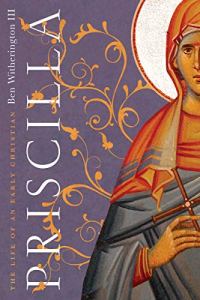 Priscilla: The Life of an Early Christian is an exploration of early Christianity using an integration of fiction and fact, specifically centered on the biblical person, Priscilla. The book is written as an historical fiction account of her life looking back on various stages in early Christianity in Ephesus, Rome, and Corinth. We know from the Bible her importance and that she interacted with Paul and others. Ben Witherington III uses this information alongside a wealth of data about the early Christian world to construct an insightful look at early Christianity.
As a reader, I’ve enjoyed many of these works from InterVarsity Press bringing the early Christian world to life. This one is different from some of the other entries like A Week in the Life of Rome in that it focuses more on a specific biblical individual than on a broader look at early Christianity. In the process, though, Witherington highlights several of the early theological controversies in the church and uses Priscilla and those who knew her to answer some of these questions. For example, another biblical person who shows up is Junia (Romans 16:7), who Witherington points out is likely the same woman as Joanna (Luke 8:3) due to the way names translated between languages (97). Junia, Witherington notes, would have truly been an apostle, because in the Pauline usage, unless qualified, the term did indeed mean ones commissioned by the risen Christ himself (98).
These introductions to broader theological controversies within their first century context are important for readers looking to learn more about theology. At times, they feel a little bit contrived (eg, would there really need to be such detailed explanations about how Hebrew names translated into Latin or Greek for those who were familiar with the languages?) but the importance of the topics raised cannot be understated.
Readers are introduced to a great number of details about life in the first century, as well. Arranged marriages, the importance of places like Caesarea, arrangements in theaters and controversies about them, and many more historically relevant topics are raised throughout the text.
Priscilla: The Life of an Early Christian is a good introduction both to the world of the early Christians and to many related theological topics in the early church.
Disclaimer: I was provided with a copy of the book for review by the publisher. I was not required to give any specific kind of feedback whatsoever.
Links
Be sure to check out the page for this site on Facebook and Twitter for discussion of posts, links to other pages of interest, random talk about theology/philosophy/apologetics/movies and more!
Book Reviews– There are plenty more book reviews to read! Read like crazy! (Scroll down for more, and click at bottom for even more!)
SDG.
——
The preceding post is the property of J.W. Wartick (apart from quotations, which are the property of their respective owners, and works of art as credited; images are often freely available to the public and J.W. Wartick makes no claims of owning rights to the images unless he makes that explicit) and should not be reproduced in part or in whole without the expressed consent of the author. All content on this site is the property of J.W. Wartick and is made available for individual and personal usage. If you cite from these documents, whether for personal or professional purposes, please give appropriate citation with both the name of the author (J.W. Wartick) and a link to the original URL. If you’d like to repost a post, you may do so, provided you show less than half of the original post on your own site and link to the original post for the rest. You must also appropriately cite the post as noted above. This blog is protected by Creative Commons licensing. By viewing any part of this site, you are agreeing to this usage policy.
Dinosaur Eggs: A serious problem for a young earth flood scenario
 Young Earth Creationism is usually paired with some form of flood geology–the notion that Noah’s flood was a global disaster which can account for most, if not all, of the fossil record and stratification of rocks. There are many problems with such a scenario, but for now I want to focus on one: dinosaur eggs.
The Problem Stated
Abstractly, dinosaur eggs aren’t really a problem: they could have been washed away in a global flood or rapidly covered by sediment, thus burying them and having them ready to begin fossilization. Problem solved, right?
As usual, though, the fossil record doesn’t align with such a simple explanation. I was reading Giants of the Lost World, a book by Donald R. Prothero about the history of several huge species that once inhabited South America, and came upon an intriguing passage about a specific find of dinosaur eggs. This find is called, with tongue firmly planted in cheek, “Auca Mahuevo” (to make a reference to contracting the spanish words for “more eggs”). Situated in a region called Auca Mahuida in Argentina near an extinct volcano, the site has revealed an abundance of fossilized dinosaur eggs, including several spectacular finds in which the embryo can be seen inside the egg.
The fossil site is one in which clutches of eggs–between 15-34 eggs in each–were laid in clumps that suggest sauropod nesting sites. There were few crushed eggs, which “suggest[ed] that the site had been protected by the mothers guarding the perimeter but not walking among the eggs once they had been laid…” (33). But here’s where it gets especially interesting for the topic at hand:
The remarkable preservation of the eggs was due to the fact that large flash floods had buried the eggs–and had done so many times, because there were multiple egg layers in the rocks, covering a total thickness of 25 meters (75 ft). (33)
To say that this offers an enormous problem for a global flood scenario as the explanation for all of these eggs is an understatement. This site is evidence that there were multiple periods in which a group of sauropods came to an area, nested, laid eggs, some flash flood occurred that buried them in mud or other sediment, and then the sauropods laid more eggs at a later time in the same area, only to have it happen again. The young earth creationist scenario insists that rapid flooding is required for fossilization, and that is what occurred here, but it occurred at several distinct times, in layers upon layers of eggs.
Possible Young Earth Explanations and More Problems
One possible counter to this is for the young earth creationist (YEC) to assert that these eggs were simply all jumbled together from a single or several sites in the chaos of the flood waters, tossed with mud and left to fossilize. But the lack of crushed eggs, uniformity of species, and organization of the nests all work against such a scenario. If the flood was as turbulent as many flood geology scenarios suggest, how would the eggs have ended up in nests at all? Indeed, if the explanation is that they got jumbled together in the wet silt of the floodwaters, how could the structures of the nests have been preserved on multiple layers? And again, if these eggs just happened to get tossed together, why aren’t they cracked or smashed–how do they still have embryos inside?
Some young earth scenarios include dinosaurs fleeing the rising flood waters only to finally stop to lay eggs in a rush, only to flee on. But this site does not allow for such an explanation, as it shows multiple distinct nesting periods that were covered up over time. The YEC may counter by saying that multiple different dinosaurs fled past the area and just happened to lay their eggs on this site after mud and rain had covered the previous nests, but this doesn’t account for the lack of trampled eggs and the care in which they were organized, as above, suggesting a perimeter being guarded by parents.
Conclusion
Fossil beds like this present an enormous problem for a young earth creationist scenario that relies on the flood to explain the fossil evidence. Time and again, those scenarios fail to account for the actual findings in the field and amount to nothing more than implausible scenarios requiring miracles unrecorded in the Bible to have occurred.
Links
Be sure to check out the page for this site on Facebook and Twitter for discussion of posts, links to other pages of interest, random talk about theology/philosophy/apologetics/movies and more!
What options are there in the origins debate? – A Taxonomy of Christian Origins Positions– I clarify the breadth of options available for Christians who want to interact on various levels with models of origins. I think this post is extremely important because it gives readers a chance to see the various positions explained briefly.
What is the relationship between Christianity and science?- An Overview of 4 Views– How should the Christian faith interact with science? Do they interact at all? I survey 4 major views on these and other questions.
SDG.
——
The preceding post is the property of J.W. Wartick (apart from quotations, which are the property of their respective owners, and works of art as credited; images are often freely available to the public and J.W. Wartick makes no claims of owning rights to the images unless he makes that explicit) and should not be reproduced in part or in whole without the expressed consent of the author. All content on this site is the property of J.W. Wartick and is made available for individual and personal usage. If you cite from these documents, whether for personal or professional purposes, please give appropriate citation with both the name of the author (J.W. Wartick) and a link to the original URL. If you’d like to repost a post, you may do so, provided you show less than half of the original post on your own site and link to the original post for the rest. You must also appropriately cite the post as noted above. This blog is protected by Creative Commons licensing. By viewing any part of this site, you are agreeing to this usage policy.
“Debate on the Evidences for Christianity” – Alexander Campbell vs. Robert Owen (1829) Part 1- Historical Apologetics Debates
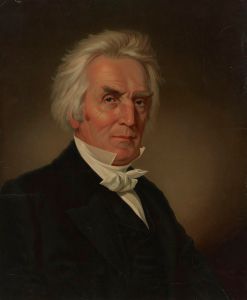
Alexander Campbell (1788-1866)
Alexander Campbell (1788-1866) was a Scots-Irish immigrant in the United States who debated Christianity with a few well-known skeptics. One of his best known debates was with Robert Owen (1771-1858), who argued in favor of agnosticism. This debate was published as “Debate on the Evidences of Christianity” (1829, see link for download). Here, will look at what answers Campbell gave and where his arguments might have been improved. Owen was a fine opponent whom Campbell himself acknowledged as a worthy scholar.
Debate on the Evidences for Christianity Part I
The debate begins with a rather lengthy back-and-forth in which Owen and Campbell confirm and re-affirm their desire to meet and discuss the evidences of Christianity. Yet even in Campbell’s opening response to Owen’s request for a confirmation of the reasons for the debate, Campbell begins to offer an apology. He states:
Why, then, do you say, apologize for bringing this subject into public debate? Because, in so doing, we may appear to concede that it is yet an undecided question sub judice [under judicial hearing/review]; or, at least, that its opponents have some good reason for withholding their assent to its truth, and their consent to its requirements. Neither of which we are, at this time, prepared to admit. (12-13)
In other words, Campbell apologizes to his audience for giving the possibility of putting “God in the dock,” as the older phrase goes. But Campbell notes that Christians are to always have a reason and be prepared to defend their faith, so he presses on in his defense of Christianity.
Campbell then turns to the question of why skepticism is on the rise, a certainly on-point question in our own world. He argues that:
However this may be, for here we would not be dogmatical, we are assured that the progress of scepticism is neither owing to the weakness nor the paucity of the evidences of Christianity ; but to a profession of it unauthorized by, and incompatible with, the [C]hristian scriptures. (14)
Campbell’s reasoning, then, is that skepticism is on the rise not because the arguments and evidence for Christianity is poor, but instead because those who profess Christianity are themselves hypocritical and live unChristian lives.
Then, Campbell states some of the positions he believes his opponent will be force to hold, like holding that humans are no more moral than bees. He also outlines how he would defend Christianity. Namely, he would start by arguing for the truth of revealed religion, then move to show historical evidence, then show the divine origin of Christianity, and finally try to show from the “actual condition of the world” and prophecies that Christianity is from the Creator (18).
The outline he gives on page 18 is particularly interesting for those interested in historical apologetics because it shows how arguments can go in and out of fashion over time. This is evident when one reads several works on the Deist Controversy, but also when one reads older works in general, one finds several arguments people of the time thought were interesting or compelling that we have little interest in. The same could be said in reverse–it is unlikely that some of the arguments modern apologists write about would find much sway in the 1800s. Cultural norms and expectations go into an apologetic just as much as do other factors.
For now, we’ll leave off here, awaiting Owen’s response to Campbell in this first part of the debate.
Questions
- Do you think it would be possible to prove the divine origin of something? If so, how?
- What do you think of Campbell’s presentation of Owen’s position?
- Do you think that professing Christians today harm the witness of Christ? How might an apologist approach such a question?
Links
Be sure to check out the page for this site on Facebook and Twitter for discussion of posts, links to other pages of interest, random talk about theology/philosophy/apologetics/movies and more!
Apologetics Read-Through: Historical Apologetics Read-Along– Here are links for the collected posts in this series and other read-throughs of apologetics books (forthcoming).
Dead Apologists Society– A page for Christians interested in the works of historical apologetics. There is also a Facebook group for it.
SDG.
——
The preceding post is the property of J.W. Wartick (apart from quotations, which are the property of their respective owners, and works of art as credited; images are often freely available to the public and J.W. Wartick makes no claims of owning rights to the images unless he makes that explicit) and should not be reproduced in part or in whole without the expressed consent of the author. All content on this site is the property of J.W. Wartick and is made available for individual and personal usage. If you cite from these documents, whether for personal or professional purposes, please give appropriate citation with both the name of the author (J.W. Wartick) and a link to the original URL. If you’d like to repost a post, you may do so, provided you show less than half of the original post on your own site and link to the original post for the rest. You must also appropriately cite the post as noted above. This blog is protected by Creative Commons licensing. By viewing any part of this site, you are agreeing to this usage policy.
Book Review: “Listening to Sexual Minorities: A Study of Faith and Sexual Identity on Christian College Campuses” by Yarhouse, Dean, Stratton, and Lastoria
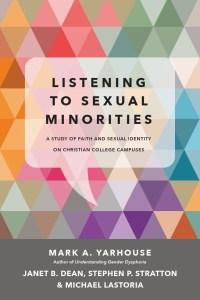 Listening to Sexual Minorities: A Study of Faith and Sexual Identity on Christian College Campuses is an eye-opening book in many ways. The work is essentially a report on several studies of college students on Christian campuses related to sexuality. The book is thus a treasure trove for those interested in seeing how college students–those who self-select for Christian schools–approach and experience sexuality. For anyone interested in that topic, it’s a gold mine.
The first chapter reflects on the tension between faith and sexuality. The authors observe that there are effectively three lenses through which to view sexuality and gender: the integrity, disability, and diversity lenses. The integrity lens offers a religious and theological reading of sex and gender that effectively sees male/female identity as “stamped on one’s body” (9, quoting Robert Gagnon, a Christian theologian). Thus, same-sex behavior and transgender identity are seen as something which will “threaten the integrity of male/female distinctions” (9). The disability framework views sex and gender as a kind of disability, something to be worked through or struggled with. Such a lens effectively agrees with the integrity framework about what is considered “normal” but acknowledges divergence from the same exists. However, such divergence is seen as something reflecting “fallenness” of created order or a kind of disability to be challenged (ibid). The third lens is the “diversity framework” that affirms LGB+ (the umbrella acronym the authors use) as an identity and a community “to be recognized, celebrated, and honored” (9). Among these lenses, of course, there is a range of perspectives about how each lens plays out in practical terms. The authors use these “lenses” to show throughout the book how differing perspectives relate to LGB+ people and questions.
The first chapter also offers some insight into the tension between LGB+ people and communities of faith and how some of that tension has played out, such as Title IX exemptions for schools based on various stands on LGB+ people. Those Title IX exemptions–which allow for discrimination based on sexual identity–are viewed quite differently depending upon one’s lens. For example, one with the integrity lens may see a Title IX exemption as allowing for freedom of religious practice, while one with the disability framework may argue that it excludes some people from being able to explore their questions about sexuality in settings that could be helpful. The first chapter ends with an overview of the demographics of the studies.
The second chapter looks much more closely at the people involved in the studies. It’s somewhat of a given that they are young. What may surprise some is that these sexual minorities (the study participants all report at least some experience of same-sex attraction or behavior (31)) also self-report as very religious, with 90% viewing themselves as moderately to very spiritual, and “a full 62% rating themselves as a nine or ten on a ten-point scale of spirituality” (31). Additionally, 80% reported experiencing the presence of God in their daily lives. Throughout this and other chapters, insets help people who may not be as familiar with the terminology or studies to understand what’s being said. For example in Chapter 2 there is an inset going over various terminology.The studies involved include one longitudinal study, which allowed the authors to see how students’ perceived and identified sexually over time.
The third chapter, “Milestones and Identity,” features information about milestones in sexual-identity development (their phrase, 68). For example, the mean age at which students reported awareness of same-sex feelings was 12.92 years old, while the adoption of the label “gay” was the oldest milestone, at 19.47. Interestingly, this adoption of the label had a mean age more than a year older than the first same-sex relationship. Throughout this and other chapters, excerpts from individual students are provided, allowing some greater insight than just numbers into how students perceived themselves sexually. The fourth chapter is about the development of identity over time, and, among other things, shows how students who reported as being same-sex attracted generally only increased their certainty of that attraction over time (89). Yet, as that identity strengthened, few students were willing or desired to abandon spiritual or religious identity.
The fifth chapter is about faith and sexuality. Among the things it discusses, the authors report on how students view sexual identity–whether it is a choice or something that can be changed, for example. Another chart shows how students viewed sexual behaviors. Some examples: whether same-sex attraction is morally acceptable (most reported yes); whether a celibate life is possible (overwhelmingly yes); and whether same-sex behavior is acceptable (between 3-4 out of 5). It also shows how much distress LGB+ people felt with their attraction alongside their degree of intrinsic religiosity. The sixth chapter reports on how same-sex attracted persons fit into their Christian campus, including how same-sex attraction was viewed on campus. Support from others is clearly important, and the church was seen as the least supportive of all organizations when it came to same-sex attracted people (208-209). The seventh chapter discusses the move out of college, and shows how often a nostalgic view of college developed, such that students viewed their campus as more supportive once they graduated (242).
The authors close the book with a summary of results along with recommendations and conclusions. Intrinsic religiosity “appears to be a major contributor to a sense of fit for sexual minorities at faith-based colleges and universities” (273). The level of distress aligned generally with other students. The strength of same-sex attraction was not linked to emotional health, but campus climate impacted a wide range of life for sexual-minority students (274).
Listening to Sexual Minorities is a book with appeal to a specific audience. If one happens to be interested in how sexuality is perceived and experienced on Christian college campuses, this is a book for that reader. Other readers may want to see what Christian youths are saying about their sexuality, and this book certainly would give insight there as well.
Disclaimer: I was provided with a copy of the book for review by the publisher. I was not required to give any specific kind of feedback whatsoever.
Links
Be sure to check out the page for this site on Facebook and Twitter for discussion of posts, links to other pages of interest, random talk about theology/philosophy/apologetics/movies and more!
Book Reviews– There are plenty more book reviews to read! Read like crazy! (Scroll down for more, and click at bottom for even more!)
SDG.
——
The preceding post is the property of J.W. Wartick (apart from quotations, which are the property of their respective owners, and works of art as credited; images are often freely available to the public and J.W. Wartick makes no claims of owning rights to the images unless he makes that explicit) and should not be reproduced in part or in whole without the expressed consent of the author. All content on this site is the property of J.W. Wartick and is made available for individual and personal usage. If you cite from these documents, whether for personal or professional purposes, please give appropriate citation with both the name of the author (J.W. Wartick) and a link to the original URL. If you’d like to repost a post, you may do so, provided you show less than half of the original post on your own site and link to the original post for the rest. You must also appropriately cite the post as noted above. This blog is protected by Creative Commons licensing. By viewing any part of this site, you are agreeing to this usage policy.
The Billy Graham Rule is a Capitulation to Secular Society
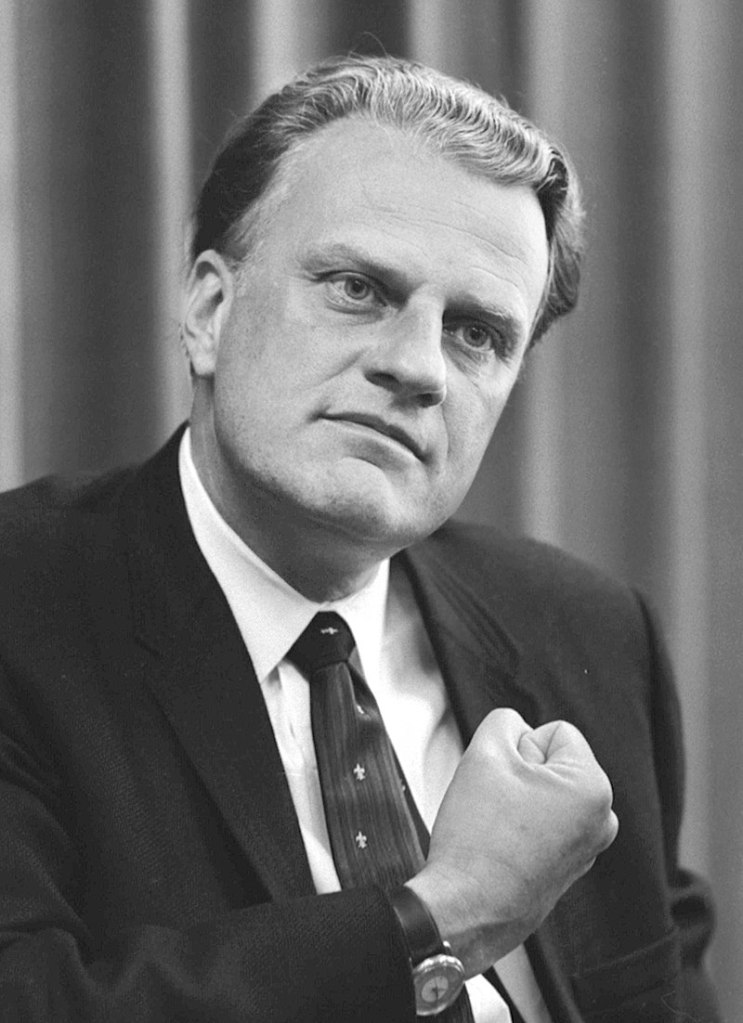
Put most succinctly, the “Billy Graham Rule” is a practice for Christian men in which they live by the moral stricture of never being alone with a woman who is not their wife. This means that Christian men who hold to this rule will not, for example, give a woman a ride home from a meeting. Many interpret the rule in such a way as to mean any one-on-one meeting between a man and woman. This interpretation would even preclude the possibility of a man meeting a woman for coffee in a public space.
The Billy Graham Rule has been criticized for many reasons. Some have argued that the Billy Graham Rule unnecessarily targets women as being universally “seductresses.” Others have argued it objectifies women, making them nothing more than a foil for men. Still others argue that the rule is inherently sexist because it targets women specifically for exclusion. Distressingly, many have pointed out that the Rule makes certain work relationships impossible, because one-on-one meetings can be required between supervisors and subordinates. While I think each of these arguments has value, I want to make my own argument against the rule. Namely, the problem with the Billy Graham Rule is that those who practice it are, in the name of alleged Christian values, in fact giving in to a complete capitulation to non-Christian thought patterns.
The message that is given in our culture is one which pushes the necessity of male-female relations being inherently sexual. On television shows, time and again, men and women who are “just friends” end up together. People who are dating other people start hanging out, they discover a rapport, and the message that is delivered is something akin to “Hey, they’re so good together because they can talk about X, Y, and Z! So now they’re dating.” The same thing plays out in many, many books. Men and women who start as friends inevitably start to wonder about the possibility of dating and often end up together. The message is pushed time and again: men and women can’t be just friends. Even the sitcom entitled Friends features these relationships happening. Secular society states the message loud and clear: men and women who get together one-on-one or who are friends will end up dating or at least one of them will develop feelings for the other.
The Billy Graham Rule presents an attempt to counter to this non-Christian message. It does so by undercutting the scenarios presented by simply making it impossible for a simple one-on-one chat over coffee or a ride home because it’s raining to develop into romantic or sexual feelings. But in doing so, it presents a solution to a problem that itself is what Christians ought to be confronting. Thus, among other possible problems with the Billy Graham Rule, it must be challenged on the front that it cedes to non-Christian society the possibility of male-female relations that remain Godly outside of marriage.
Rather than giving in to the message in secular society that men and women cannot hang out one-on-one without developing romantic or sexual feelings, Christians can offer a better way, a way that embraces the full humanity of both male and female. Men and women are told to submit to each other out of reverence for Christ (Ephesians 5:21). This mutual submission is paired with a radical equality in which there is no male and female in the body of Christ (Galatians 3:28). The very Word of God calls us to challenge the secular message that undercuts male-female relations and reduces them to mere sexual/romantic endeavors. Instead, we are to acknowledge our mutuality and our equality.
So go ahead men, give your women colleagues rides home after meetings. Go out for coffee to talk over a tough time. Do these things as a challenge to secular society and as a witness to the goodness of God–a God who calls us to mutuality in ways that only Christ can demand.
Links
Be sure to check out the page for this site on Facebook and Twitter for discussion of posts, links to other pages of interest, random talk about theology/philosophy/apologetics/movies and more!
SDG.
——
The preceding post is the property of J.W. Wartick (apart from quotations, which are the property of their respective owners, and works of art as credited; images are often freely available to the public and J.W. Wartick makes no claims of owning rights to the images unless he makes that explicit) and should not be reproduced in part or in whole without the expressed consent of the author. All content on this site is the property of J.W. Wartick and is made available for individual and personal usage. If you cite from these documents, whether for personal or professional purposes, please give appropriate citation with both the name of the author (J.W. Wartick) and a link to the original URL. If you’d like to repost a post, you may do so, provided you show less than half of the original post on your own site and link to the original post for the rest. You must also appropriately cite the post as noted above. This blog is protected by Creative Commons licensing. By viewing any part of this site, you are agreeing to this usage policy.
Book Review: “Men and Women in Christ: Fresh Light from the Biblical Texts” by Andrew Bartlett
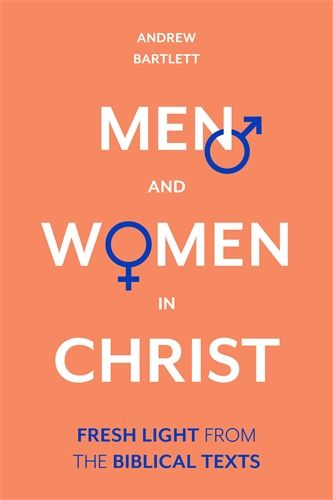
Andrew Bartlett’s Men and Women in Christ: Fresh Light from the Biblical Texts is a major study on the question of how women and men are to relate to each other according to the Bible. Bartlett approaches the question from a more judicial approach, using his experience as an arbitrator as well as his background in theology to shed light on the biblical texts.
The book is more than 400 pages of text and it is filled to the brim with exegetical insights. The first chapter is about tradition and unity; the second explores 1 Corinthians 7’s implications for marriage and male-female relations; the third interprets Colossians 3 and Ephesians 5; the fourth focuses more closely on Ephesians 5; the fifth examines what Genesis 1-3 has to tell us about men and women; the sixth looks at 1 Peter; the seventh through the eighth focus on 1 Corinthians 11; the ninth and tenth look at the meaning of 1 Corinthians 14:34-35 and its place in Scripture; the eleventh through the thirteenth are about 1 TImothy 2; the fourteenth surveys the biblical evidence for women leaders; the fifteenth asks about women elders in light of 1 Timothy 3; the sixteenth and final chapter brings the conclusions together and offers a way forward. Appendices explore methods of biblical interpretation, arguments against mutual submission, uses of the Greek word authenteo, the structure of 1 Timothy 2:12, interpretations of 1 Timothy 2:15, shortcomings in complementarian readings of 1 Timothy 2, and translation issues.
Bartlett begins with a chapter on “revising tradition, seeking unity” in which he looks into how these issues have become as divisive as they are alongside the development of various views. Here it is particularly of interest that Bartlett spends some time arguing that the “complementarian” view is not the traditional view of the church. It is demonstrably the case that complementarianism is not, in fact, that traditional view, despite many of its proponents claiming that title. Bartlett shows that the traditional view, in fact, viewed women as ontologically inferior to men. Woman, on that view, was by nature inferior. By contrast, Jesus explicitly went against his cultural conventions and elevated women throughout the NT. Additionally, modern complementarianism at least claims to support the equality of men and women, itself a direct contradiction to the traditional view.
1 Corinthians 7 is extremely important to the questions related to male-female relations. Bartlett notes that this chapter gives the only explicit details about how decisions are to be made in marriage. Despite the clear importance of this passage to the questions at hand, then, it is curious that so few complementarians offer thorough exegesis of the text. Bartlett notes the various qualities of male-female relations brought to the front in this text, including that they have equal duties in the marriage bed, equal authority to the other partner, the same advice to both widowers and widows, same restrictions on divorce, same rule about unbelievers for men and women, the spiritual impact of the spouses on each toher, the same advice for engaged persons of either sex, the same advice for married/unmarried persons of either sex, and more (25-26).
1 Peter finds that husbands are to give honor in the same way as wives are to do so. English translations may obfuscate the mutuality of the relevant passages, but in 1 Peter 3:7 there is a clear wording that parallels Peter’s other use of the same notion, thus leading to the conclusion that the honor/respect that many complementarians so often attribute only to the male side of the relationship is mistaken. Bartlett challenges egalitarians to see that there are specific biblical obligations for husbands to wives that he says are “asymmetrical” and thus not something wives must do. Specifically, the concept of self-sacrifice, argues Bartlett, is something husbands are called to do in marriage (62-64). His argument here is indeed challenging, but one might counter that the absence of evidence is not evidence of absence–having “asymmetry” in this specific instances does not imply asymmetry in function with certainty.
Bartlett’s careful exegesis of 1 Corinthians 11 deserves a thorough read. Essentially, he notes the various unjustified conclusions from word studies people have drawn from this text. Additionally, he notes problems with Trinitarian theology as taken from the text. The question of what exactly is the “veil/symbol of authority/etc.” looms large, and Bartlett makes a convincing case for reading these passages as referencing sources and hairstyles (143-148). Additionally, he argues that the reading of “a woman ought to have authority over her head” is to be preferred because it avoids major pitfalls of rival views (148ff). It both goes along with Paul’s context in which he specifically mentions women praying and prophesying and also fits in with the concepts related to “source” in the passages.
1 Corinthians 14:34-35 is one of the best known passages in this debate, and Bartlett makes a convincing case, going along with several other scholars, that this text is, in fact, an interpolation that was not in the original text. This is due to both internal and external evidence, such as preserving the unity of thought in the letter, questions about what the verses are supposed to be referencing, and numerous textual evidences related to the floating of the text in different locations as well as marks that indicate it is likely an interpolation.
1 Timothy 2 is another major section of the book, and Bartlett does a service by laying out the context of the text in great detail. There is little doubt that 1 Timothy was written to discuss false teachings and false teachers, with numerous mentions throughout the letter as well as in 2 Timothy of these problems. Bartlett, however, goes more deeply into the context and uses primary sources to note that it appears as though the letter is referencing astrology specifically in numerous places and that the false teaching is related to sorcery/astrology. This puts 1 Timothy 2:9-12 contextually in a discussion of wealthy women with ungodly conduct who should learn to do good works and learn in full submission to God. The nature of the letter as a periodical sent for a specific purpose must not be ignored.
A survey of women church leaders leads to numerous examples of women in various leadership roles in the church. This leads into a discussion of 1 Timothy 3 and whether women may be elders. English translations have mangled these verses in a number of ways, adding male pronouns prolifically where there are none. Additionally, interpreters have failed to take into account that the list of qualifications parallels qualifications Paul explicitly gives for women throughout the letter as well (318-319).
Bartlett ends the book with a call for Christian unity in spite of sharp disagreements on the place of men and women in the church and alongside each other.
If there is one point of critique of I have for Bartlett’s work, it is the occasional uncritical acceptance of anecdotal evidence in questions of modern application. Nowhere is this more clear than in Bartlett’s discussion of the alleged inherent differences of men and women on pages 82-83. Here, Bartlett chides egalitarians for being “sometimes shy of acknowledging innate differences between men and women” (82). What evidence does Bartlett offer for his own perspective, that some differences beyond child-bearing are “innate”? He offers a journalist’s comment from a game show in the UK, who, in trying to offer a good reason why two all-male teams should be the best representatives for a quiz show, offered the example of her husband who arranges his books in alphabetical and chronological order, and whose “proudest boast is that while on holiday in North Wales in 1974, he won a hubcap identification competition. Who could compete with that? Who would want to?” (82-83). It is honestly difficult to fathom how this single anecdote can be taken seriously as an example of alleged innate differences between the sexes. [Edit: The author contacted me and let me know this was intended as a joke–a possible cultural miss on my part not understanding the joke. I’ve made a correction in the rest of this paragraph.] He also offers a footnote referencing a study that argues for hard-wired differences in how male/female brains have differences. I haven’t read that study, so I can’t comment on it specifically. Again, this is a minor complaint in a massive text, but it seemed out of place and worth commenting on.
Men and Women in Christ: Fresh Light from the Biblical Texts is a monumental achievement. It sets standards for rigor as well as for Bartlett’s attempt to find unity in Christ among such hotly contested issues. Anyone who is truly interested in engaging in the questions related to women in the church and home from a Christian perspective will find this book a must read. Highly recommended.
Disclaimer: I was provided with a copy of the book for review by the publisher. I was not required to give any specific kind of feedback whatsoever.
Links
Be sure to check out the page for this site on Facebook and Twitter for discussion of posts, links to other pages of interest, random talk about theology/philosophy/apologetics/movies and more!
Book Reviews– There are plenty more book reviews to read! Read like crazy! (Scroll down for more, and click at bottom for even more!)
SDG.
——
The preceding post is the property of J.W. Wartick (apart from quotations, which are the property of their respective owners, and works of art as credited; images are often freely available to the public and J.W. Wartick makes no claims of owning rights to the images unless he makes that explicit) and should not be reproduced in part or in whole without the expressed consent of the author. All content on this site is the property of J.W. Wartick and is made available for individual and personal usage. If you cite from these documents, whether for personal or professional purposes, please give appropriate citation with both the name of the author (J.W. Wartick) and a link to the original URL. If you’d like to repost a post, you may do so, provided you show less than half of the original post on your own site and link to the original post for the rest. You must also appropriately cite the post as noted above. This blog is protected by Creative Commons licensing. By viewing any part of this site, you are agreeing to this usage policy.
“The Shadow Rising” by Robert Jordan- a Christian (re)reads the Wheel of Time
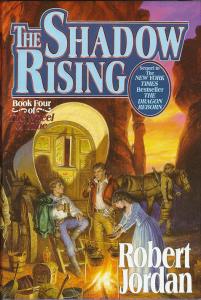 “The Wheel of Time” is a massive fantasy series by Robert Jordan (and, later, Brandon Sanderson) that is being developed into a television show for Amazon Prime. It’s cultural impact is huge, the series having sold more than 44 million copies. Here, we continue the series with Book 4, The Shadow Rising. There will be SPOILERS in this post for the series.
The Allure of Evil
Robert Jordan has already developed some strands of plot through the series in which it is clear that evil isn’t always easily identified. In The Shadow Rising, though, he takes it to another level, and does this by making a more real picture of the allure of evil. That allure is found in the person of Lanfear, who has teased Rand through the earlier works in the series and now shows herself more fully as one of the Forsaken. The ways in which evil weaves itself into our lives and being is not as easily spotted as some may think.
Trust in Security and State
Another aspect of this allure of evil is the way in which we tend to put our trust and interest in the desire for security rather than peace. I have written more extensively about this theme elsewhere, but here in The Shadow Rising we see it illustrated to perfection. Back home, Perrin finds that the people of Two Rivers have come to giving up their own peace of mind in exchange for the security and protection allegedly offered by the Children of the Light. But this protection comes at a high cost. It may mean that Trollocs don’t kill them in their beds–maybe–but it also means that they have to submit to the inquisition that comes with having the Children in town. They don’t tolerate differences of opinion; they love throwing accusations of darkfriend around. This resonates with contemporary culture as well, as we use labels like “liberal” or “fundamentalist” to deride others and silence their opinions. Moreover, in the United States, we have consistently exchanged true peace for the security that is allegedly offered by guns, by keeping the feared “other”–immigrant, asylum seeker, refugee–out of our country, and by constant arms races that seek “peace” through force. But that kind of security also comes at a stiff cost. Is it worth it?
Moreover, if we put our trust in the state or in any other powers of the world (Children of the Light, the Republican Party, the Democratic Party), we have essentially elevated those powers to the place of God. Rather than trusting in God, we trust in the idol of the state, the leader, the organization. That is indeed idolatry, and frankly is something that Dietrich Bonhoeffer, for example, called blasphemy.
Cool Moments
Okay, setting aside the theological and philosophical inquiries for a moment, how many really awesome moments happened in this book? We once again run into Verin, and series veterans will know who she is and enjoy the interaction with Perrin here. Perrin gets married!? Yeah, he does. Faile is totally perfect for him, too. Rand makes it rain in the Waste. Nynaeve fights against a Forsaken, and wins! There are just so many awesome moments here that it is hard to contain them all. Which ones were your favorites?
Links
The Wheel of Time– Read all my posts on The Wheel of Time (scroll for more).
Be sure to check out the page for this site on Facebook and Twitter for discussion of posts, links to other pages of interest, random talk about theology/philosophy/apologetics/movies and more!
Book Reviews– There are plenty more book reviews to read! Read like crazy! (Scroll down for more, and click at bottom for even more!)
SDG.
——
The preceding post is the property of J.W. Wartick (apart from quotations, which are the property of their respective owners, and works of art as credited; images are often freely available to the public and J.W. Wartick makes no claims of owning rights to the images unless he makes that explicit) and should not be reproduced in part or in whole without the expressed consent of the author. All content on this site is the property of J.W. Wartick and is made available for individual and personal usage. If you cite from these documents, whether for personal or professional purposes, please give appropriate citation with both the name of the author (J.W. Wartick) and a link to the original URL. If you’d like to repost a post, you may do so, provided you show less than half of the original post on your own site and link to the original post for the rest. You must also appropriately cite the post as noted above. This blog is protected by Creative Commons licensing. By viewing any part of this site, you are agreeing to this usage policy.
Book Review: “A Theology of Interreligious Relations” by Henning Wrogemann
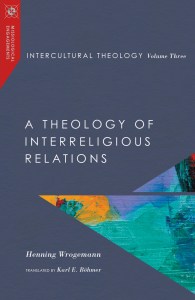 Henning Wrogemann has written a massive, detailed look at interreligious relations from a Christian perspective. A Theology of Interreligious Relations specifically provides a way forward in Christian interaction with other religions.
The book is divided into six parts. The first part focuses on recent Christian theologies of religion. The second part is about how Islam and Buddhism view other religions. The third part is about how to build a theology of interreligious relations. The fourth part is about the dialogical in religious relations. The fifth part builds a theology of interreligious relations. The sixth part discusses intercultural theology and mission alongside religious studies.
One surprising thing in the book was Wrogemann’s look at other religions’ own theologies of interreligious relations. The fascinating Part II of the work looks at how Islam and Buddhism view other religions. For my own part, I’ve only ever thought of religious diversity within a framework of Christian options of exclusivism, inclusivism, and universalism. But of course these categories are deeply steeped in Christian theology to begin with, and so do not come close to exhausting all the options for interreligious relations. This part of the book was particularly enlightening to me as a reader, as it opened my eyes into many more approaches to the religious “other” than I had been aware of, and also how other religious view Christianity.
The examination of recent theologies of religion was just as interesting. Wrogemann’s critical analysis of theses like John Hick’s universalism is worth the price of admission for the book on its own, but Wrogemann offers a whole spectrum of approaches and subjects them to this same critical, insightful analysis.
The building up of his own theology of interreligious relations provides several ways forward in speaking with people of other religious traditions and interacting with them in ways that do not compromise one’s own beliefs while also being true to the central aspects of Christianity. For example, addressing the question of the particularism of Trinitarian theology when it comes to interreligious dialogue, Wrogemann argues that we “must pay attention not only to God’s revealedness but also to the ongoing hiddenness of God’s action in the world…” (424, emphasis his). This means that Christian theology’s task is, at least in regards to interreligious dialogue, “to help interpret ongiong ambivalences” when it comes to such questions (ibid). Additionally, Wrogemann bases his theology for interreligious dialogue squarely in the space of biblical revelation, insisting that we may only build this theology from the revelation of God as revealed in God’s Word and, more explicitly even, in Christ himself (see, for example, Wrogemann’s discussion of the need to acknowledge one’s own faults and work towards understanding by way of exegesis of Matthew 5 on p. 383-384).
When I decided to read the book, I did not realize it was the third in a trilogy on the topic of intercultural theology by Wrogemann. Having read it, though, I would say that the book stand quite well on its own.
A Theology of Interreligious Relations is a surprising, challenging book that readers well return to time and again. Wrogemann’s work here has established a serious starting point for Christian theology of other religions, and one which takes other religious claims seriously. It comes highly recommended, particularly for anyone with an interest in how Christianity may relate to other religions.
Disclaimer: I was provided with a copy of the book for review by the publisher. I was not required to give any specific kind of feedback whatsoever.
Links
Be sure to check out the page for this site on Facebook and Twitter for discussion of posts, links to other pages of interest, random talk about theology/philosophy/apologetics/movies and more!
Book Reviews– There are plenty more book reviews to read! Read like crazy! (Scroll down for more, and click at bottom for even more!)
SDG.
——
The preceding post is the property of J.W. Wartick (apart from quotations, which are the property of their respective owners, and works of art as credited; images are often freely available to the public and J.W. Wartick makes no claims of owning rights to the images unless he makes that explicit) and should not be reproduced in part or in whole without the expressed consent of the author. All content on this site is the property of J.W. Wartick and is made available for individual and personal usage. If you cite from these documents, whether for personal or professional purposes, please give appropriate citation with both the name of the author (J.W. Wartick) and a link to the original URL. If you’d like to repost a post, you may do so, provided you show less than half of the original post on your own site and link to the original post for the rest. You must also appropriately cite the post as noted above. This blog is protected by Creative Commons licensing. By viewing any part of this site, you are agreeing to this usage policy.
“What is a Girl Worth?”- Rachael Denhollander’s Challenging, Thoughtful Memoir of exposing abuse
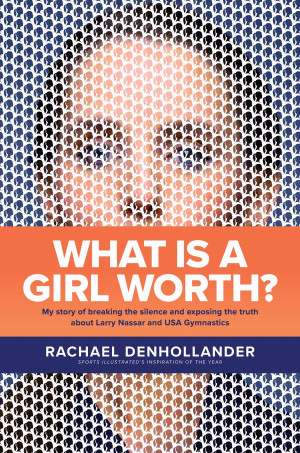
Rachael Denhollander rocketed into the public eye by speaking out against Larry Nassar, formerly a renowned therapist for USA Gymnastics who is now a convicted sex criminal. Her memoir, How Much is a Girl Worth? is a difficult read filled with moments of hope.
Denhollander describes how her interest in gymnastics rose and how her own dedication to the sport led to her getting into the top tier. That top billing ultimately led to recommendations to be treated by Larry Nassar, who was seen by many as having innovative treatments that could fix many symptoms and problems with gymnasts. Nassar, however, began a process of grooming and building trust that he betrayed to sexually abuse Rachael and more than 250 others.
Denhollander shows how abusers build the trust that leads to their being able to abuse others. She also describes how difficult it was to even acknowledge the abuse–coming to the realization that what Nassar was doing was not treatment but abuse. When someone is told by everyone with inside knowledge that someone else is trustworthy and doing innovative treatments, processing that as a child to discern that there is abuse happening is extremely difficult. Readers should be aware there are descriptions of the abuse in this book. It’s a challenging, disturbing read that exposes the abuse of Nassar and call readers to help prevent and prosecute more abuse.
Denhollander also offers critique of Christian cover-ups of abuse as well as how her own faith helped her. For example, Denhollander describes a Sunday school class in which the teacher and others said that King David did not abuse Bathsheba because should have gotten herself out of the situation he manipulated and used his power to get her into. Rather than seeing this as power rape, many of the people in her high school Sunday school class, including her teacher, said David did not abuse Bathsheba. As someone who had been abused and who recognized the signs, this was a disturbing moment for Denhollander, who writes, “This wasn’t just about me. I knew there was at least one rape victim sitting in that class too, and statistically, many more survivors… I knew they would feel guilt for their abuse–and the sting of those words [blaming Bathsheba for the abuse and/or exonerating David], untrue though they were, could be devastating…” (90). Denhollander’s own faith comes through poignantly when she recounts a scene using her notebook as she struggled coming to terms with God and her experiences (101ff). She began with the premise that “There is right and wrong” and as she developed her thoughts she decided that the things that she knew–that God defines good, that God is just and loving–couldn’t be contradicted by the answers she couldn’t figure out yet. It an exhausting (using her word) experience, but one that clearly helped ground her.
The book then recounts Denhollander’s developing relationship with Jacob, whom she met through talking online and who exemplified giving support throughout the rest of the book. From there, readers learn of her work to expose Larry Nassar as an abuser, the pushback she received from it, and, ultimately his being sentenced to prison for the rest of his life. She also describes her own frustration with the fact that time and again, victims were not being given voices are being allowed to make decisions about whether plea bargains would be offered or how various aspects of the case were handled. It’s a strong reminder that reform is needed in handling cases related to abuse.
How Much is a Girl Worth? should be read and digested in order to help ensure that abuse is caught when it happens and that covering it up should never be tolerated. More than that, it’s a testament to the power of faith and hope in awful situations.
Links
Be sure to check out the page for this site on Facebook and Twitter for discussion of posts, links to other pages of interest, random talk about theology/philosophy/apologetics/movies and more!
Book Reviews– There are plenty more book reviews to read! Read like crazy! (Scroll down for more, and click at bottom for even more!)
SDG.
——
The preceding post is the property of J.W. Wartick (apart from quotations, which are the property of their respective owners, and works of art as credited; images are often freely available to the public and J.W. Wartick makes no claims of owning rights to the images unless he makes that explicit) and should not be reproduced in part or in whole without the expressed consent of the author. All content on this site is the property of J.W. Wartick and is made available for individual and personal usage. If you cite from these documents, whether for personal or professional purposes, please give appropriate citation with both the name of the author (J.W. Wartick) and a link to the original URL. If you’d like to repost a post, you may do so, provided you show less than half of the original post on your own site and link to the original post for the rest. You must also appropriately cite the post as noted above. This blog is protected by Creative Commons licensing. By viewing any part of this site, you are agreeing to this usage policy.
Apologetics Guided Reading: George Park Fisher “Manual of Christian Evidences” Chapter 11
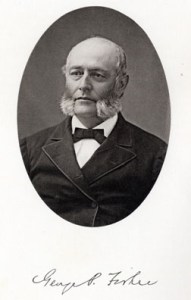
Source for image: http://divinity-adhoc.library.yale.edu/Exhibits/YDSMilestones.htm
I am leading a guided reading of the Manual of Christian Evidences by George Park Fisher. It is freely available online and will serve as a base for discussing Christian apologetics throughout this series. The chapters are short and readable. I encourage you to join in by reading the chapters and commenting with your thoughts. When I discuss the book, I will be citing page numbers from the edition linked above
Chapter 11
Fisher notes the charge that the apostles had “erroneous opinions on certain subjects” and makes it more clear that it may be related to scientific questions like “astronomy, or of other sciences.” Such a charge, however, is largely irrelevant because we can acknowledge they held mistaken views of such things and they may have been “greatly excelled” in knowledge of these topics by others of their or our own day. Instead, what matters is whether someone can show what they report in the Gospels for their testimony of the facts is untrue (86).
The question of religious opinions of the apostles has also been called to account, and Fisher notes one area charged with error was the belief that Jesus would return quite soon. To rebut this, Fisher highlights several passages in which it is made clear that none knows when Christ will return except for the Father, and that those who believe the apostles held this erroneous belief are more likely to discover it. Others have argued that the apostles’ discussion of demons and demoniacs is cause for seeing error, but Fisher offers to possible solutions. One is to accept physical/mental ailments for the cause of these reports and hold that Christ condescended to the beliefs of the time to see, say, epilepsy as evidence of demonic activity. Another solution he offers is more open minded: “Too little is known of the supernatural world to warrant a dogmatic denial of such an influence exercised by evil spirits (89). That is, Fisher argues that we assume much if we grant a supernatural realm and then turn around to deny that it could have such physical manifestations. One might argue that even someone who remains agnostic should grant this as a possibility, for only “dogmatic denial” can exclude this possibility.
Study Questions
1. What do you make of Fisher’s argument that apostolic error regarding scientific questions is irrelevant to their testimony regarding the events they witnessed?
2. Fisher acknowledges that some may simply state that Christ’s healing of demons and discussions of the same could be accommodation to the cultural understandings of the people of his time. What problems might their be with such a reading? How could it be strengthened?
Links
Be sure to check out the page for this site on Facebook and Twitter for discussion of posts, links to other pages of interest, random talk about theology/philosophy/apologetics/movies and more!
Apologetics Read-Through: Historical Apologetics Read-Along– Here are links for the collected posts in this series and other read-throughs of apologetics books (forthcoming).
Dead Apologists Society– A page for Christians interested in the works of historical apologetics. There is also a Facebook group for it.
SDG.
——
The preceding post is the property of J.W. Wartick (apart from quotations, which are the property of their respective owners, and works of art as credited; images are often freely available to the public and J.W. Wartick makes no claims of owning rights to the images unless he makes that explicit) and should not be reproduced in part or in whole without the expressed consent of the author. All content on this site is the property of J.W. Wartick and is made available for individual and personal usage. If you cite from these documents, whether for personal or professional purposes, please give appropriate citation with both the name of the author (J.W. Wartick) and a link to the original URL. If you’d like to repost a post, you may do so, provided you show less than half of the original post on your own site and link to the original post for the rest. You must also appropriately cite the post as noted above. This blog is protected by Creative Commons licensing. By viewing any part of this site, you are agreeing to this usage policy.

 J.W. Wartick - Reconstructing Faith