Christianity
Sunday Quote: Dietrich Bonhoeffer on Anthropomorphism and God
 Every Sunday, I will share a quote from something I’ve been reading. The hope is for you, dear reader, to share your thoughts on the quote and related issues and perhaps pick up some reading material along the way!
Dietrich Bonhoeffer on Anthropomorphism and God
Dietrich Bonhoeffer was a Lutheran theologian who was murdered by the Nazis. Many people don’t delve too deeply into his theology, but I have found reading his broader works to be quite rewarding. Here’s a passage from his Creation and Fall:
God… receives a very specific proper name, Yahweh… One could suppose that such a proper name is evidence of a very primitive idea of God… yet just at this point one must reply that anthropomorphism in thinking of God… is no more irrelevant… than is the abstract use of the generic term ‘deity.’ On the contrary, clear anthropomorphism much more plainly expresses the fact that we cannot think of ‘God as such’ whether in one way or another. The abstract concept of God, precisely because it seeks not to be anthropomorphic, is in actual fact much more so than is childlike anthropomorphism. (74-75, sections 69-70, cited below)
Here, then, Bonhoeffer’s point is that merely abstracting the concept of God and speaking of God “as such” actually does just as much damage to our understanding of God as does “clear anthropomorphism.” That is, when we make God into a kind of philosophical construct, we are just as far away from the relational, radically personal God of the Bible as if we were to be anthropomorphic in a childlike way. For, as he points out in the last sentence above, we put God into our categories rather than the categories of Scripture.
I think Bonhoeffer has a good point here, one that warns people like me who are philosophically minded to remember that our God is an active God. Although it seems clear Bonhoeffer would not deny something like saying God is omnipotent, what he is denying is that we can use those categories to reach “God as such” and fit God into them alone. God–Yahweh–is much more than that, and we need to remember that.
What do you think? Can anthropomorphism be a helpful way to understand God? What dangers, if any, might come from making an abstract concept of deity?
Links
Be sure to check out the page for this site on Facebook and Twitter for discussion of posts, links to other pages of interest, random talk about theology/philosophy/apologetics/movies and more!
Sunday Quote– If you want to read more Sunday Quotes and join the discussion, check them out! (Scroll down for more)
Eclectic Theist– Check out my other blog for my writings on science fiction, history, fantasy movies, and more!
Source
Dietrich Bonhoeffer, Creation and Fall Douglas Stephen Bax, Translator (Minneapolis, MN: Fortress, 2004).
SDG.
Book Review: “Keeping Your Kids on God’s Side” by Natasha Crain
 As a Christian parent, one of the things most important to me is bringing my son up in faith in Christ. As a man with an MA in Christian Apologetics, I know that my child will face many challenges going forward, and that the Christian faith has the answers. The problem, it seems, is figuring out how to unite these two–apologetics and child-rearing–in a way that can be understood by children, without being domineering or scary. Natasha Crain’s book, Keeping Your Kids on God’s Side, is an answer to prayers about this important topic.
The book features 40 “conversations” that can be had with children centered around topics from why we believe the Bible and textual criticism to the existence of God to questions about science and Christianity. Each of these chapters provides an introduction to the topic at hand. Crain utilizes stories of her own children quite well to demonstrate how these conversations might play out–or how they might get started.
The most helpful aspect of the book is that it provides a kind of all-in-one reference for common questions and apologetic topics that can be used to start children on the right path towards defending their faith and the calling of 1 Peter 3:15-16. Each of the 40 conversations is one that is worth having, and is often accompanied with quotes from prominent atheist thinkers to show the objections often raised to the faith.
Crain also does a good job of presenting multiple sides of controversial topics without specifying a side. For example, in the chapter on hell, she presents historical Christian positions (a literal view, a figurative view with eternal punishment, and the conditionalist view). The one place there is a bit of a slip on this regard is when it comes to the creation and evolution debate. She adequately presents both young and old earth creationism, but only gives a view like theistic evolution a passing mention, despite having seemingly increasing support among evangelicals.
A downside to the variety of topics that Crain presents is that she is only ever able to scratch the surface on each. The type of book it is basically makes this a necessity, and Crain does provide resources for further reading. Parents should note that they will need to utilize these resources for continuing conversations.
Keeping your Kids on God’s Side is a phenomenal work. It is the kind of book that parents will come back to time and time again. Not only that, but it has broad enough appeal that it serves as an excellent general apologetic work. It will energize parents to start these conversations with their children and give them the tools to keep them going. I highly recommend this work.
The Good
+Broad-minded approach that doesn’t tell readers what to think on controversial topics
+Clear tone and presentation
+Astounding number of topics introduced with valuable information
+Offers several key points to help discuss topics with children
The Bad
-Very brief on several points
-Doesn’t address full breadth of views on creation/evolution
Disclaimer: I received the book for review from the author. I was not obligated to provide any specific kind of feedback whatsoever.
Source
Natasha Crain, Keeping Your Kids on God’s Side (Eugene, OR: Bethany House Publishers, 2016).
Links
Be sure to check out the page for this site on Facebook and Twitter for discussion of posts, links to other pages of interest, random talk about theology/philosophy/apologetics/movies and more!
Book Reviews– There are plenty more book reviews to read! Read like crazy! (Scroll down for more, and click at bottom for even more!)
Eclectic Theist– Check out my other blog for my writings on science fiction, history, fantasy movies, and more!
SDG.
——
The preceding post is the property of J.W. Wartick (apart from quotations, which are the property of their respective owners, and works of art as credited; images are often freely available to the public and J.W. Wartick makes no claims of owning rights to the images unless he makes that explicit) and should not be reproduced in part or in whole without the expressed consent of the author. All content on this site is the property of J.W. Wartick and is made available for individual and personal usage. If you cite from these documents, whether for personal or professional purposes, please give appropriate citation with both the name of the author (J.W. Wartick) and a link to the original URL. If you’d like to repost a post, you may do so, provided you show less than half of the original post on your own site and link to the original post for the rest. You must also appropriately cite the post as noted above. This blog is protected by Creative Commons licensing. By viewing any part of this site, you are agreeing to this usage policy.
Sunday Quote!- The Failure of Eliminativism for Explaining Mind

Every Sunday, I will share a quote from something I’ve been reading. The hope is for you, dear reader, to share your thoughts on the quote and related issues and perhaps pick up some reading material along the way!
The Failure of Eliminativism for Explaining Mind
Philosophy of mind has long been an interest of mine that I have read extensively on. Stephen Parrish’s The Knower and the Known remains what I consider the most valuable single-volume resource for outlining and refuting various physicalist and materialist varieties of philosophy of mind. I have been re-reading the book and come across many excellent arguments once again.
One example is the section on eilminativist views of the mind. According to those who hold this theory, at the most basic level, things like beliefs and consciousness simply don’t exist and are instead relegated to “Folk Psychology.” Parrish’s critique is incisive. He writes:
One cannot, in the making of theories, coherently deny that there are theories and theory makers. One cannot, in trying to understand something, coherently deny that there is such a thing as understanding, and that there are conscious selves who understand. One cannot try to make reality intelligible by denying the very notion of intelligibility. Yet it is precisely these things that eliminativists attempt to do. Therefore, belief in eliminativism is self-refuting and cannot possibly be true. (139, cited below)
Of course, this argument is not one that is unanticipated by eliminative materialists like Patricia and Paul Churchland. Parrish deals with their counter-arguments at length, but the most pressing problem remains that their position effectively is impossible to maintain, for it denies that it can be believed itself.
I’d highly recommend The Knower and the Known to you, dear readers, if you’d enjoy a lengthy, deep treatment of this and many other related issues. Check out my 2 part review (part 1 and part 2) for more analysis.
Links
Be sure to check out the page for this site on Facebook and Twitter for discussion of posts, links to other pages of interest, random talk about theology/philosophy/apologetics/movies and more!
Sunday Quote– If you want to read more Sunday Quotes and join the discussion, check them out! (Scroll down for more)
Eclectic Theist– Check out my other blog for my writings on science fiction, history, fantasy movies, and more!
Source
Stephen Parrish, The Knower and the Known (South Bend, IN: St. Augustine’s Press, 2013).
SDG.
Downton Abbey: The Final Season Episode 7 – A Christian Perspective
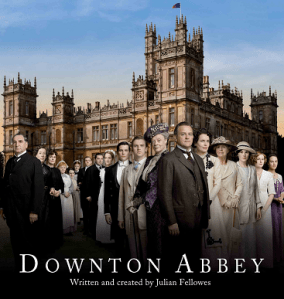 I will be analyzing each episode of the final season of Downton Abbey from a worldview perspective. I will be doing them two at a time to make space for my series on “The Expanse.” There will, of course be SPOILERS for each episode, and I will assume readers know about each previous season and episode’s content as well. It will be assumed that readers are familiar with the characters and circumstances. I will not be summarizing the plot of the episode; I will merely interact with the content from a perspective of worldview. BE COURTEOUS AND DO NOT BRING UP LATER EPISODES THAN THE ONE DISCUSSED HERE IN YOUR COMMENTS.
Episode 7
It is easy to get caught in the trap of demanding perfection from other human beings–despite knowing we can never meet the same standard ourselves. Lady Mary seems to have this kind of demand in her relationships: she wants perfection, and she is rarely able to forgive or see past people’s faults. The question is: will she be able to do this both in regards to herself (by allowing herself to come to terms with some of her own past) and others (particularly Edith). I am concerned with how Lady Mary has been reacting to her suspicions about Lady Edith and Marigold. Will she ever demonstrate anything towards Edith other than a kind of sniping attitude that they have each perpetuated throughout the series?
There was an intriguing point made about Mr. Mason. Daisy has been concerned about sharing him and the love he has for her. But it was stated here that love is not something finite, rather it is something infinite. It is not a zero-sum game in which as love for one person increases, it must decrease for another. Instead, love can keep increasing in an ever-flowing stream. This is a beautiful way to state it, and one that points to the reality of God, who is love. The love of God is abundant, and we need not fear that it will fade away from us.
Finally, not so related to worldview, but can someone explain to me why a man is spying on Mrs. Patmore? He looked like a private detective or something, but there seems to be no possible reason why anyone would ever be spying on Mrs. Patmore. She has no connection to anything I can think of that would make her a person of interest. Any ideas? Don’t spoil if you’ve already seen the next one!
More!
Be sure to let me know what you thought of the episodes, and what worldview-level issues you saw them raise, in the comments below.
Links
Be sure to check out the page for this site on Facebook and Twitter for discussion of posts, links to other pages of interest, random talk about theology/philosophy/apologetics/movies and more!
Eclectic Theist– Check out my other blog for my writings on science fiction, history, fantasy movies, and more!
SDG.
——
The preceding post is the property of J.W. Wartick (apart from quotations, which are the property of their respective owners, and works of art as credited; images are often freely available to the public and J.W. Wartick makes no claims of owning rights to the images unless he makes that explicit) and should not be reproduced in part or in whole without the expressed consent of the author. All content on this site is the property of J.W. Wartick and is made available for individual and personal usage. If you cite from these documents, whether for personal or professional purposes, please give appropriate citation with both the name of the author (J.W. Wartick) and a link to the original URL. If you’d like to repost a post, you may do so, provided you show less than half of the original post on your own site and link to the original post for the rest. You must also appropriately cite the post as noted above. This blog is protected by Creative Commons licensing. By viewing any part of this site, you are agreeing to this usage policy.
Really Recommended Posts 2/19/16- Textual Criticism, Lent,and Jesus on Evil
 Another round of Really Recommended Posts for you, dear readers! This week, we have a biblical scholar from the throw out pile, voting in Lent Madness, the problem of evil and Jesus’ response, textual criticism, and women in combat. Be sure to let the authors know what you thought, and let me know your responses as well!
The Biblical Scholar from the Throw-Out Box– “If [Katharine Bushnell] had been a man, every single contemporary Bible scholar writing on gender would have had to reckon with her findings. As it was, she was a woman, and her work was ignored.” Here’s a post on
Lent Madness– Vote for different theologians throughout history in brackets to determine the winner of this year’s Lent Madness. Who will wear the golden halo this year?
Jesus’ Answer to the Problem of Evil & the Unfairness of God– What did Jesus have to say about the problem of evil? Here is a post looking into this topic in ways that might make us uncomfortable.
Debunking Silly Statements in Greg Gilbert’s Debunking Silly Statements About the Bible: An Exercise in Biblical Transmission– Some clarifications about textual criticism are found in this post that addresses some common misunderstandings that Christian scholars hold about the field.
The Bible and Combat Women- Does the Bible forbid women in combat roles? Does this go against gender roles entirely? Check out this commentary on the issue, and see also my post on the subject.
Book Review: “Edwards on the Christian Life” by Dane C. Ortlund
 Jonathan Edwards is perhaps the most famous of all American theologians. Edwards on the Christian Life draws from his enormous body of work to provide insight into Christian life.
The book is organized around chapters which each focus on one aspect of the Christian life, according to Edwards. Chapters include Joy, Beauty, Heaven, Satan, and more. Each of these is oriented around showing how the chapter’s title relates to Edwards’ view of the Christian life. The chapter on beauty provides a feel for the rest of the book, as Ortlund argues that Edwards’ view of God as beauty/beautiful impacts most of the rest of his theology. The chapter on heaven was particularly excellent. On heaven, Edwards’ vision of the beauty that believers would experience and the way they would interact is brought forth by Ortlund in breathtaking fashion. It is rare to find myself filled with emotion while reading a theology book, but Ortlund’s work in this chapter had me just overcome with awe at the beauty of how Edwards described it.
Other chapters were quite helpful as well, such as the chapters on pilgrimage, obedience, and Satan, set all in a row, which outlined the Christian life, sanctification, and spiritual warfare and temptation respectively. The insights to be drawn from this book on Christian living ought not be understated. Ortlund did a great job bringing forward many of these insights.
Ortlund admirably steers clear of the primary pitfall of some books in the series–getting so caught up in discussing the theology of the person being examined that the book loses focus on “the Christian Life.” This is not to say any of the books in the series are bad–indeed, I have read many and enjoyed them all–but it is good to have the focus on the topic at hand. Each aspect of Edwards’ theology that is examined here is brought to bear on the Christian life in meaningful ways.
The one criticism I have is, ironically, of the criticisms offered. The final chapter (apart from the conclusion) offers four criticisms of Edwards’ theology, such as an overly introspective view. Although I think Ortlund’s criticisms of Edwards are on point, they could have been better dealt with in individual chapters. It’s a minor criticism for a phenomenal book.
Edwards on the Christian Life is yet another excellent entry in the “Theologians on the Christian Life” series. Ortlund introduces readers to a fantastic range of Edwards’ thought, all while remaining focused on how that thought applies to the Christian life. Indeed, it made me want to read more of Edwards myself. I recommend it highly.
The Good
+Amazing chapter on heaven
+Practical examples of Christian living
+Focused and concise
+Excellent format
The Bad
-Criticisms could have been better placed
Source
Dan C. Ortlund, Edwards on the Christian Life (Wheaton, IL: Crossway, 2014).
Disclaimer: I received a copy of the book from the publisher. I was not required to give any specific feedback whatsoever.
Links
Be sure to check out the page for this site on Facebook and Twitter for discussion of posts, links to other pages of interest, random talk about theology/philosophy/apologetics/movies and more!
Book Reviews– There are plenty more book reviews to read! Read like crazy! (Scroll down for more, and click at bottom for even more!)
Eclectic Theist– Check out my other blog for my writings on science fiction, history, fantasy movies, and more!
SDG.
——
The preceding post is the property of J.W. Wartick (apart from quotations, which are the property of their respective owners, and works of art as credited; images are often freely available to the public and J.W. Wartick makes no claims of owning rights to the images unless he makes that explicit) and should not be reproduced in part or in whole without the expressed consent of the author. All content on this site is the property of J.W. Wartick and is made available for individual and personal usage. If you cite from these documents, whether for personal or professional purposes, please give appropriate citation with both the name of the author (J.W. Wartick) and a link to the original URL. If you’d like to repost a post, you may do so, provided you show less than half of the original post on your own site and link to the original post for the rest. You must also appropriately cite the post as noted above. This blog is protected by Creative Commons licensing. By viewing any part of this site, you are agreeing to this usage policy.
Women in Combat? “Sending” women, women pastors, and feminism- a response to Issues Etc. on Women in Combat and Selective Service

Image is public domain and accessible here: https://commons.wikimedia.org/wiki/File:Women_in_Combat_130125-F-DM566-016.jpg
As a Lutheran, a podcast I frequently enjoy is “Issues, Etc.” It continually offers a Lutheran perspective on current events, theological issues, and more. However, there are times where its approach to theology or current events reflects less a Lutheran understanding than a specific brand of theological conservatism. The recent podcast (2/11/16) featured Pastor Hans Fiene discussing “Women in Combat and Selective Service.” I found it to be deeply mistaken on a number of issues, and would like to address just a few of those here.
“Sending” your daughter or wife?
One comment made in the episode labeled any man who would “send” his wife or daughter to investigate a noise downstairs to see if it might be a burglar as a “coward.” There are a number of problems with this statement. First, anyone who “sends” anyone else into a potentially dangerous situation because they don’t want to go themselves might be labeled as cowardly. The way the phrase was said already begs the question. If the situation were reversed, would Fiene say that the wife is “sending” her husband to investigate, or is the husband simply investigating?
Second, suppose that a man is married to a woman who has extensive martial arts training, is a weapons specialist, sleeps with a pistol under her pillow, and immediately leaps into action to investigate such a noise, while the man works a desk job, is of average build and has never used a weapon before. Is it really reasonable to think that the man is cowardly if he allows his wife to investigate the noise? Well, absurdly, others who share Fiene’s view argue that yes, that man has shirked his duty, is cowardly, and probably a wimp. In other words, men are to be shamed and emasculated if a woman is stronger or better at fighting than they are.
The absurdity of such a position knows no bounds. Men are stripped of their manhood if women are perceived as better at things we arbitrarily label “manly.” It gets curiouser and curiouser, as assertions are made that a man ought to intentionally die even if a woman could save him. A reductio ad absurdum is not even required for this kind of position: it demonstrates for itself that it flies in the face of reason.
Women Pastors?
Fiene could not resist the urge to take a jab at those who are for women in the ministry in this discussion, either. He drew a comparison between woeful ignorance of the horrors of war and ignorance of the spiritual warfare that pastors must engage in. In a stunning non sequitor, he stated that “If we lived in a world where pastors were routinely murdered by Pagans who were storming into churches and putting them to death or… where pastors were having to stay behind while everyone was getting the Plague and dying while everyone who was healthy fled… I don’t really think we’d be having an argument over whether or not women should be pastors.”
It is hard to take this kind of statement seriously, and the statement itself is clearly condescension. Fiene assumes that he knows more about his opponents’ sincerity of believe than they do. After all, if only those silly egalitarians really knew what war was like or really believed in spiritual warfare, then they’d clearly change their minds. This leaves no room for sincerity of belief on the part of the egalitarian, and that is extremely problematic. Frankly, I don’t know of anyone who calls themselves an egalitarian who would recant their stance if women pastors were being killed by Pagans or had to deal with Plague. No one wants women to have those things happen to them; indeed, I hope no one wants men to have them happen to them either! The same applies to combat–no one wants soldiers to have to go kill people, I hope. But if difficult spiritual warfare, even death, is what pastors are to endure, and someone genuinely believes women ought to be allowed to be in the ministry, then those are the types of risks that must be taken. And to assume that egalitarians didn’t even think about that possibility or are too timid to even consider it is offensive, to say the least. The only way Fiene can make such a statement is by assuming without any argument that his opponents are insincere.
As an aside, does Fiene completely discount the work of women like Mother Theresa, or Mother Maria Skobtsova (who was murdered by the Nazis), or the countless other women who have done exactly what he thinks egalitarians are silly to think women can do? A lack of integrating church history into an overall worldview might be shown here.
Feminism?
Complementarian (and other conservative) commentators continue to equivocate on the term “feminism.” Instead of acknowledging that there can be any diversity within the group who self identify as feminists, the label is assumed to mean any number of things that many feminists do not put forward. For example, it was not just implied but implicitly stated that “feminism” demanded equality for women by arguing for abortion rights in order to free women from having to deal with childcare. This, of course, ignores the fact that the feminist movement started as strongly pro-life, not to mention the continued existence of groups like Feminists for Life who are out there making a real difference for the pro-life movement.
The use of the term “feminist” as a clobber-word to induce fear is a straw man of the worst kind. It demonstrates either ignorance–a complete lack of knowledge about the breadth of views held by those who call themselves “feminist”–or intentional deceit. Moreover, to lump egalitarianism–the Christian movement for equality of women in the church and home–with this blanket statement of “feminist” as pro-choice, etc. is to obfuscate the issue even further.
Natural Law
I wanted to add a brief note about natural law as well. Fiene and others continue to just throw out “natural law” in an undefined way as though it unequivocally supports their position. Yet one could just as easily appeal to “natural law” to support women in combat roles, for a natural law might just be a threshold of strength and mental endurance that could be seen as suitable for combat roles, and then anyone who meets that threshold is permitted to do so. I don’t want to delve into the deep waters surrounding natural law theory, but the point is that a bald appeal to “natural law” doesn’t do much to support Fiene’s position.
Conclusion
I believe the discussion here has broader application to the discussion over so-called gender roles as well as the debate between egalitarians and complementarians. Fiene’s arguments are the same kind of arguments that are continually trumpeted by opponents of egalitarianism. But, as we have seen here, those arguments are fallacious, they fail to take the opposition seriously, and they rely on ill-defined terms and obfuscation. There is are no reasons provided by Fiene to support his position. Bare assertions, jabs at opponents, and absurdly irrational statements are put in the place of argument.
Source
Hans Fiene, “Women in Combat and Selective Service,” 2/11/16 available at http://issuesetc.org/2016/02/11/1-women-in-combat-and-selective-service-pr-hans-fiene-21116/ accessed 2/13/16.
Links
Be sure to check out the page for this site on Facebook and Twitter for discussion of posts, links to other pages of interest, random talk about theology/philosophy/apologetics/movies and more!
Eclectic Theist– Check out my other blog for posts on Star Trek, science fiction, fantasy, books, sports, food, and more!
SDG.
——
The preceding post is the property of J.W. Wartick (apart from quotations, which are the property of their respective owners, and works of art as credited; images are often freely available to the public and J.W. Wartick makes no claims of owning rights to the images unless he makes that explicit) and should not be reproduced in part or in whole without the expressed consent of the author. All content on this site is the property of J.W. Wartick and is made available for individual and personal usage. If you cite from these documents, whether for personal or professional purposes, please give appropriate citation with both the name of the author (J.W. Wartick) and a link to the original URL. If you’d like to repost a post, you may do so, provided you show less than half of the original post on your own site and link to the original post for the rest. You must also appropriately cite the post as noted above. This blog is protected by Creative Commons licensing. By viewing any part of this site, you are agreeing to this usage policy.
Sunday Quote!- Show Subordination is Better
 Every Sunday, I will share a quote from something I’ve been reading. The hope is for you, dear reader, to share your thoughts on the quote and related issues and perhaps pick up some reading material along the way!
Sunday Quote!- Show Subordination is Better
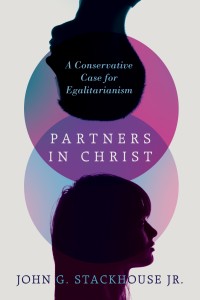
John G. Stackhouse, Jr.’s Partners in Christ presents a balanced perspective on the debate over women in the church. When discussing the issue of the burden of proof over this issue, he argues that:
[I]t seems to me that the burden of proof falls on the complementarian. They are obliged to show how it is really better for subordination to continue to characterize the relationship of Christian men and women, rather than just banging on about “the Bible says…”—again, not to subordinate the Bible to human reason (let alone human preference!), but as a check on their interpretation of God’s authoritative word – (22, emphasis his, cited below)
Stackhouse Jr.’s challenge should not be taken lightly. His point is that each side of the debate cites passages and then could talk past each other by continually saying “the Bible says…” The issue we need to get past that non-starter and demonstrate the position. Moreover, his challenge is powerful because it notes that complementarians must show their position can work in reality rather than as a theological abstraction. They must demonstrate that subordination is better, rather than simply asserting it.
Links
Be sure to check out the page for this site on Facebook and Twitter for discussion of posts, links to other pages of interest, random talk about theology/philosophy/apologetics/movies and more!
Sunday Quote– If you want to read more Sunday Quotes and join the discussion, check them out! (Scroll down for more)
Eclectic Theist– Check out my other blog for my writings on science fiction, history, fantasy movies, and more!
Source
John G. Stackhouse, Jr. Partners in Christ (Downers Grove, IL: InterVarsity, 2015).
SDG.
Downton Abbey: The Final Season Episodes 5 and 6 – A Christian Perspective
I will be analyzing each episode of the final season of Downton Abbey from a worldview perspective. I will be doing them two at a time to make space for my series on “The Expanse.” There will, of course be SPOILERS for each episode, and I will assume readers know about each previous season and episode’s content as well. It will be assumed that readers are familiar with the characters and circumstances. I will not be summarizing the plot of the episode; I will merely interact with the content from a perspective of worldview. BE COURTEOUS AND DO NOT BRING UP LATER EPISODES THAN THE ONE DISCUSSED HERE IN YOUR COMMENTS.
Episode 5
Mr. Mason moved into his new place, and the whole drama surrounding this shows a kind of balance of justice and pragmatism by those involved. He was effectively stripped of his place because a new owner came in and gave him the boot–despite his being tied to the land for so long. This raises many questions about justice, a sense of place, and the balance of all of these concerns. It was good to see it ending well for him, so far.
Episode 6
Trust is something that can be lost, and it is hard to gain. A Christian perspective, I would argue, entails a kind of believing the best of others until proven otherwise. After all, isn’t that how we would like to be treated ourselves? Thomas Barrow has given others many reasons to lose their trust in him. Now that he is reaping the rewards of his own incessant sowing of discontent, he has fully come to realize just how hard it is to regain that trust. In his character, so far, we see in a way the state that all of us have been in or will be in–a state in which we must confront the fact that we have sinned, fallen short of expectations, and cannot earn our way back. Baxter has continued to be an example of grace shown to Barrow in his situation, but his own recalcitrance on accepting her grace shows, perhaps, how far he has fallen. The question is: Will he be able to come back?
Finally, we are left wondering about the relationship of Lady Edith and Lady Mary. When will they ever come to terms? Is it possible that they will? Again we see the impact of broken trust on a relationship. I’m hopeful that grace can make its appearance here as well.
More!
Be sure to let me know what you thought of the episodes, and what worldview-level issues you saw them raise, in the comments below.
Links
Be sure to check out the page for this site on Facebook and Twitter for discussion of posts, links to other pages of interest, random talk about theology/philosophy/apologetics/movies and more!
Eclectic Theist– Check out my other blog for my writings on science fiction, history, fantasy movies, and more!
SDG.
——
The preceding post is the property of J.W. Wartick (apart from quotations, which are the property of their respective owners, and works of art as credited; images are often freely available to the public and J.W. Wartick makes no claims of owning rights to the images unless he makes that explicit) and should not be reproduced in part or in whole without the expressed consent of the author. All content on this site is the property of J.W. Wartick and is made available for individual and personal usage. If you cite from these documents, whether for personal or professional purposes, please give appropriate citation with both the name of the author (J.W. Wartick) and a link to the original URL. If you’d like to repost a post, you may do so, provided you show less than half of the original post on your own site and link to the original post for the rest. You must also appropriately cite the post as noted above. This blog is protected by Creative Commons licensing. By viewing any part of this site, you are agreeing to this usage policy.
Really Recommended Posts 2/12/16- Chivalry, Super Bowl Ad, Jesus Myth, and More!
 I hope I never bore you with my broad selections of posts! I think we have a super lineup here [groaner, I know] with posts on chivalry, the Jesus myth movement, old and young earth creationism, and a Super Bowl ad that is making waves.
Is Jesus a Myth? A Reply to Chris Sosa– A detailed, devastating response to Chris Sosa’s Jesus Mythicism. Historically, the Jesus myth movement is just absurd.
Chivalry, Agency, and Selfless Service– Does egalitarianism kill chivalry? What does chivalry say about agency? These and other questions are addressed in this fantastic post.
Ken Ham’s Biblical Evolution? I Have a book that says otherwise– An incisive critique of Ken Ham and Answers in Genesis on post-Flood animal diversification. Quote from the article- “I have a book before me that provides compelling evidence that Ken Ham’s view of Biblical evolution is wrong. That book is the Bible.”
What a Super Bowl Ad Reveals about our Abortion Culture– Russell Moore comments on the Super Bowl ad everyone is talking about–the one that “humanizes” the fetus.
7 Common Myths About Old Earth Creationism– Old Earth Creationism is often misunderstood and mischaracterized by its opponents on either side. Here are some clarifications on 7 common misunderstandings.

 J.W. Wartick - Reconstructing Faith
