Christianity
Sunday Quote!- Is Natural Revelation Infallible?
 Every Sunday, I will share a quote from something I’ve been reading. The hope is for you, dear reader, to share your thoughts on the quote and related issues and perhaps pick up some reading material along the way!
Is Natural Revelation Infallible?
I’ve been reading through the free ebook A Reformed Approach to Science and Scripture by Keith Mathison, and I came upon some interesting passages discussing natural revelation in the Reformed tradition (I’m Lutheran, so this is from an outsider). Mathison is keen to show that natural revelation–that is, that which God demonstrates through the created order–is capable of conveying truth. But his claim goes well beyond that modest level:
God’s revelation in creation is equally as infallible as His revelation in Scripture, because in both cases, it is God who is doing the revealing, and God is always infallible. (Kindle Location 208-212)
Mathison’s point, I think, well-taken. The fact is that natural revelation, if we assume is something God does, would be by definition infallible. After all, God cannot err. Thus, Mathison is correct. What I think is often missed in discussions about this and other topics related to creation is that although it is perhaps easier for humans to make mistakes when it comes to the natural world, it is quite possible (and obvious) that mistakes are made in interpretation of special revelation–Scripture–as well.
What do you think? Is natural revelation infallible? If so, what does this say about how we should interact on science-faith issues? If not, how does error creep in? Let me know your thoughts in the comments below!
Links
Be sure to check out the page for this site on Facebook and Twitter for discussion of posts, links to other pages of interest, random talk about theology/philosophy/apologetics/movies and more!
Sunday Quote– If you want to read more Sunday Quotes and join the discussion, check them out! (Scroll down for more)
Source
Keith Mathison, A Reformed Approach to Science and Scripture (Ligonier Ministries, 2013).
SDG.
Question of the Week- Mistakes for Apologists?
 Each Week on Saturday, I’ll be asking a “Question of the Week.” I’d love your input and discussion! Ask a good question in the comments and it may show up as the next week’s question! I may answer the questions in the comments myself.
Mistakes for Apologists
We often talk about what apologists should do and what the best arguments are, etc. What we don’t often discuss is what apologists should not do and what some mistakes may be regarding method, argument, and the like. Thus, I thought I would ask:
What’s the single biggest mistake you think apologists make? Why do they make it? What can we do to avoid it?
Is there a methodological error apologists frequently make? Is there a way of presenting that might not be as effective? What are some issues involved in apologetics that might turn others off? Let’s see what you think in the comments.
Links
Be sure to check out the page for this site on Facebook and Twitter for discussion of posts, links to other pages of interest, random talk about theology/philosophy/apologetics/movies and more.
Question of the Week– Check out other questions and give me some answers!
SDG.
Really Recommended Posts 8/22/14- Osteen, apologetics, creationism, and more!
 I have put together what I consider a very strong list of topics for you this go-round. Here, we have Acts, Osteen, Creationism, apologetics (x2), and C.S. Lewis. Check out the posts, and let me know what you think in the comments below!
Finally: A simple timeline of Acts– This tremendously helpful post provides a timeline of acts which shows when different people were traveling together and where they were at various points throughout the book. It is a great way to keep track of the goings-on in the book. Be sure to follow The Overview Bible, as they constantly have fantastic posts.
A Diluvialist Response to Buckland’s Kirkdale Cave Hyena Den– Flood geology has been around for a little while, and here, Joel Duff describes how early diluvialists-young earth flood geologists-initially reacted to some major important finds.
The Guide to Online Decorum for Christian Apologists– How, then, shall we live? This is a question to ask yourself, no matter your situation. Here, Pastor Matt Rawlings discusses how Christian apologists should interact in online settings.
C.S. Lewis’ (really) 10 Best Books– From Christian philosopher David Marshall, we have this list of C.S. Lewis’ 10 best books. Some might be obvious, some might surprise you. Regardless, it’s time to get some extra reading!
Osteen and Peter (Comic)– A poignant pictorial contrast between prosperity “gospel” and Christian life.
5 Things I Hate about Apologetics– Doing apologetics does present some pitfalls regarding faith and life. Check out this post related to these possible difficulties.
Book Review: “Total Truth” by Nancy Pearcey
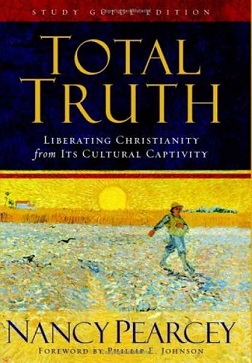 Nancy Pearcey’s Total Truth is dedicated to bringing Christianity into every realm of knowledge rather than relegating it to the outskirts. That is, Christianity is to be seen as “total truth,” applicable to every aspect of reality. It’s a lengthy book so any review of this size is going to leave things out by necessity. I’ll first provide a brief overview. Then, I’ll emphasize some areas I found helpful and areas I questioned.
Overview
The first section of the book is a call for Christians to integrate their worldview into every aspect of reality rather than bifurcating it and only living in different spheres of reality at different times. Next, Pearcey frames the debate over worldviews in terms of a battle for beginnings as she argues Darwinism fails and Intelligent Design is more plausible. Integrated into this section is the notion that Darwinism is a way of looking at reality and a worldview-level belief which is being used to displace Christianity.
The third part traces a brief history of Christianity in America with an eye towards showing that Americans have tended to privatize their religion and use the fact/value split to relegate religion to the area of values. The last chapter addresses how we might live out the Christian worldview in every aspect of our lives.
There is a series of appendices which address topics like Islam, materialism, apologetic method, and politics. Finally, a study guide is included in the edition I was provided, which gives summaries, additional stories, and some questions for each chapter.
Helpful Areas
Pearcey’s emphasis on integrating Christianity into all aspects of our lives is commendable. She accurately describes the plight of many when she speaks of how Christians approach their lives as though church is religion and the rest is something else. Instead, she advocates an integration of the Christian worldview into every aspect of life.
The historical background Pearcey provides into various areas of thought is enlightening and encourages further study into several important areas, including the first and second Awakening.
The stories Pearcey shares throughout the book are great at grabbing and holding attention. They make for good illustrations of many of her points, and also make the book more readable.
The outline of the Fact/Value split and the damage it has done to intellectual and faithful life was much appreciated. Pearcey demonstrated that this alleged split is generally a construct which is used by various worldview systems to try to relegate certain beliefs into the “value” sphere and outside of factual claims. Her incisive critique of this method was both on-point and helpful. The appendices covered interesting topics, and the one on apologetic method, in particular, was worth reading and considering.
Areas I Questioned
At many points throughout the book there is a somewhat conspiratorial tone. That is, it seems to be alleged that somehow all the skeptics (particularly Darwinists) banded together in order to try to overthrow Christianity and American values. It is continually alleged that Darwin was explicitly trying to overthrow religion or at least the possibility of taking religion seriously in the “fact” domain. Many sources were cited in order to justify these claims, but I’m still not convinced that there is some kind of grand conspiracy, nor am I convinced that this is the best way to approach claims about knowledge.
In the section on how Christians can integrate their faith into all aspects of life, Pearcey shares a story about a young man with a marketing degree who was hired to raise funds for a Christian ministry. He “immediately set about implementing the standard techniques he had learned… including a sharp increase in the number of fundraising letters sent out…” (7597).* He defended this choice by saying that statistical analysis showed this would lead to more funds raised. Pearcey’s analysis is as follows:
[I]f any secular organization can achieve the same results using the same “guaranteed” methods, where is the witness to God’s existence? How does relying on statistically reliable patterns persuade a watching world that God is at work? (7610)
I was surprised by this comment. Are we to assume that Christians should ignore statistical analysis? Could not such statistical regularities be part of God’s providential plan (something, in fact, argued by Poythress)? It seems that Pearcey is discounting the possibility of “secular” methods working. But God has ordered the universe in such a way that statistical regularities will occur, and to suggest that we as Christians must reject such regularities and do something else so that we can “persuade a watching world that God is at work” may lead to disaster. I’m not saying we should not trust in God to provide, but when God has revealed a way that things work to us, that’s just as providential as a miraculous windfall of donations [to go off the fundraising example]. Perhaps by following trusted methods, we can prove to a watching world that Christians don’t reject facts or reality.
Pearcey, unfortunately, clings to a view of gender-essentialism: the notion that certain aspects of gendered persons are essential to their nature. For example, after talking about the relegation in modern society of Christianity to the “upper shelf” (the values shelf) of the fact-value split, she laments over the “feminization of the church.” Now the so-called feminization of Christianity has many problems (see my linked post), but Pearcey’s work seems determined to really drag out all stops to present a seeming bogey-woman of femininity:
The underlying dynamic is that the church was adopting a defense strategy vis-a-vis the culture at large. Many churchmen simply retreated from making cognitive claims for religion that could be defended in the public square. Instead, they transferred faith to the private sphere of experience and feelings–which put it squarely into the domain of women. (6978)
I found this, and many statements like it, to be utterly shocking. It seems to be patently absurd to say that “experience” and “feelings” are “squarely… the domain of women.” Really? According to this view, men somehow devoid of all feeling or reliance upon experience and instead manly men spend the day making all sorts of cognitive claims (devoid of experience, mind you, so presumably about Platonic forms or somesuch). I find this to be clearly false. Men have feelings, and that doesn’t make them womanly. Men also have experience (!?). Unfortunately, claims like this persist throughout the book.
Perhaps most importantly, the book doesn’t seem to adequately address the main topic of the book: the need to integrate Christianity into every aspect of life. The final chapter does ask Christians to be godly in their business dealings, to avoid lying and cheating and the like. Moreover, Christians are called to trust in God in their endeavors and view their lives as providentially governed by God. However, I was left wanting much more. After having around 25% of the total length of the book (the beginning chapters, 120ish pages in the print version) dedicated to how Christians seem to not know how to integrate their worldview into their lives, it seemed like having so little space dedicated (about 30 pages in the print version) to how this might actually work in practice was a letdown. It seems like the even the direction offered was pretty straightforward, as Christians at least should know that they are to avoid lying, cheating, etc. in their day-to-day lives and careers.
But how does the Christian go beyond these bite-sized bits like “Moment by moment, we must learn to say no to sin and worldly motivations” (7414) or “[we are to follow] biblical principles in the personal and practical spheres of life” (7516) and get to a position of total integration of Christianity in our lives? Maybe I hope for too much, but I think there ought to be more to it than that. I don’t pretend to say I can do better outlining it, but I do think that there is much more that could have been said here. What readers are left with is essentially a call to be Christians in all their lives, but I think they’ll largely be left asking “how?”
Links
Be sure to check out the page for this site on Facebook and Twitter for discussion of posts, links to other pages of interest, random talk about theology/philosophy/apologetics/movies and more!
Source
Nancy Pearcey, Total Truth (Wheaton, IL: Crossway, 2008).
*All references are to kindle locations.
Disclaimer: I received a review copy of the book through Crossway. I was not obligated by the publisher to give any specific type of feedback whatsoever.
SDG.
——
The preceding post is the property of J.W. Wartick (apart from quotations, which are the property of their respective owners, and works of art as credited; images are often freely available to the public and J.W. Wartick makes no claims of owning rights to the images unless he makes that explicit) and should not be reproduced in part or in whole without the expressed consent of the author. All content on this site is the property of J.W. Wartick and is made available for individual and personal usage. If you cite from these documents, whether for personal or professional purposes, please give appropriate citation with both the name of the author (J.W. Wartick) and a link to the original URL. If you’d like to repost a post, you may do so, provided you show less than half of the original post on your own site and link to the original post for the rest. You must also appropriately cite the post as noted above. This blog is protected by Creative Commons licensing. By viewing any part of this site, you are agreeing to this usage policy.
Original Monotheism and the Rebuttal from Missionaries
 One of the strongest pieces of evidence for original monotheism is the presence within many cultures of an early belief in a “Great Spirit” or a single high god. Often, belief in this deity continues, but that deity is seen as far off and largely uninterested in the affairs of people due to some great sin in the past or present (readers should note that I am generalizing to an extreme degree here and are encouraged to read the book discussed herein for more and better details). Oddly, anthropologists and others have persisted in alleging that this belief is itself a product of missionary activity rather than a reflection of history.
Winfried Corduan, in his recent book In the Beginning God: A Fresh Look at the Case for Original Monotheism, addresses this claim head on. The claim continues to be found in text books noting that, for example, “Christian ideas had evidently spread from tribe to tribe in advance of the missionaries…” (Spencer, Jennings, et al. Native Americans, 366, cited in Corduan, 204, full citation below).
Think about this claim for a moment, though. Suppose Westerners make their first contact with a native tribe. This tribe demonstrates a belief in a high god who has grown angry over sin and thus remains distant. Now, the claim is made that instead of this being a belief the tribe has retained over time, it has actually come from Christian missionaries and spread, like a game of telephone, from tribe to tribe ahead of the missionaries themselves.
Corduan notes a major difficulty with this. Apart from being a wholly “a priori declaration,” this claim runs counter to findings of how cultural diffusion works. “If these supreme beings were inconsistent with the rest of these cultures, if in some tribes they never received any worship…. it makes no sense that all of these tribes picked [monotheistic beliefs] up instantaneously. It is utterly implausible, which may just be the reason there is no evidence for it” (204).
Realistically, this “rebuttal from missionaries” makes little sense of the data at hand. Historically, however, it gained credence through a general bias against anything a Christian missionary might report. “The dogma that no Christians, particularly no missionaries, could be trusted for anything they reported, except, of course, when it happened to suit what the academicians in power were advocating, was deeply ingrained in the universities of Europe at the time…” (90). One must realize how true this statement is. The very people who were studying anthropology and coming to conclusions about how any reports of original monotheism must be due to missionary activity or bias were themselves using those same reports–which, remember, were so full of biased they could not be trusted to describe beliefs accurately–to generate their own theories of the origins and spread of religion.
Another major difficulty with the “rebuttal from missionaries” is that it flies in the face of observed behavior. For example, many of the tribes encountered kept their belief in such a supreme being secret: “almost invariably women, children, and the uninitiated were uninformed about the supreme being” (101). This, of course, begs the question: “Why would the initiated, having learned about God from the missionaries, subsequently keep that knowledge secret from the people who taught it to them just a few years earlier?” (ibid).
Thus, it seems that the allegation that any purported belief in original monotheism must have been due to missionary influence is an extremely flawed notion. Not only does it fly in the face of the way cultural diffusion works, but it also doesn’t make sense of the observed behavior of the peoples involved. Those who wish to explore more should check out Corduan’s In the Beginning God. I have clearly derived the argument here from that book, and I’d like to credit his phenomenal piece (I reviewed it here).
Links
Be sure to check out the page for this site on Facebook and Twitter for discussion of posts, links to other pages of interest, random talk about theology/philosophy/apologetics/movies and more!
Book Review: “In the Beginning God: A Fresh Look at the Case for Original Monotheism” by Winfried Corduan– I review Corduan’s book and touch on only a few of the many interesting topics contained therein.
Sigmund Freud, Totemism, and the origin of religion- Who cares about facts?– I analyze some of Corduan’s comments regarding Sigmund Freud’s theorizing about the origin of religion.
Sunday Quote!- Is Monotheism from Egypt?– I provide a brief quote from Corduan’s book and note how it may interface with some theories related to the source of monotheism.
Source
Winfried Corduan, In the Beginning God: A Fresh Look at the Case for Original Monotheism
SDG.
——
The preceding post is the property of J.W. Wartick (apart from quotations, which are the property of their respective owners, and works of art as credited; images are often freely available to the public and J.W. Wartick makes no claims of owning rights to the images unless he makes that explicit) and should not be reproduced in part or in whole without the expressed consent of the author. All content on this site is the property of J.W. Wartick and is made available for individual and personal usage. If you cite from these documents, whether for personal or professional purposes, please give appropriate citation with both the name of the author (J.W. Wartick) and a link to the original URL. If you’d like to repost a post, you may do so, provided you show less than half of the original post on your own site and link to the original post for the rest. You must also appropriately cite the post as noted above. This blog is protected by Creative Commons licensing. By viewing any part of this site, you are agreeing to this usage policy.
Sunday Quote!- Modern Warfare and the Power of God
Every Sunday, I will share a quote from something I’ve been reading. The hope is for you, dear reader, to share your thoughts on the quote and related issues and perhaps pick up some reading material along the way!
Modern Warfare and the Power of God
I’ve been reading through Holy War in the Bible: Christian Morality and an Old Testament Problem
Modernity is arguably no less brutal than the ancient world for conducting a secularized, technologized, indiscriminate form of war that excludes God from the kill zone on principle, thereby seducing the strong into believing that they are masters of their own destiny. Indeed, the biblical witness unblinkingly confronts modernity most sharply right at this point: “Assyria will not save us; we will not ride upon horses; we will say no more, ‘Our God’ to the work of our hands'” (Hosea 14:3) (66, cited below)
The so-called secularization of war has not somehow cleansed it of evil, but rather made the work of our hands the sole credit and often reason for war. Salvation comes not from others, but we turn to the work of our hands–cruise missiles, drone strikes, and the like–to wage war for resources, land, money, and the like. Has war become more or less justified? Is it somehow sanctified through “secularization”? I think this quote speaks powerfully to these notions. I’m about 1/3 of the way through the book now and I really have enjoyed it. It hasn’t quite been about the topics I expected, but it’s been more challenging and expanding in its vision for that reason.
Links
Be sure to check out the page for this site on Facebook and Twitter for discussion of posts, links to other pages of interest, random talk about theology/philosophy/apologetics/movies and more!
Sunday Quote– If you want to read more Sunday Quotes and join the discussion, check them out! (Scroll down for more)
Source
Stephen Chapman, “Martial Memory, Peaceable Vision: Divine War in the OT” in Holy War in the Bible: Christian Morality and an Old Testament Problem
SDG.
Really Recommended Posts 8/15/14- Christians and Romans, Bible Measurements, Robin Williams, and more!
Here I have another go-round the web as we survey a posts on creationism, early Christianity, measurement in the Bible, interactions between men and women, and Robin Williams. Let me know what you thought of the posts in the comments, and be sure to leave a comment on those whose posts you enjoyed!
Book Plunge: “The Christians as the Romans Saw Them”– Nick Peters reviews a book which seems to be really interesting, because it is about how the Romans viewed the Christians in the early periods of Christian development. The topic should be of interest for those interested in apologetics, church history, history, and sociology.
All the biblical units of measurement– the “Overview Bible” has become one of my favorite sites. It’s value lies in both clear examples and posts but also in its generally denominationally neutral approach to the Bible. In other words, it’s a great site for general Bible knowledge. Here, there is a chart with every single biblical unit of measurement and a modern equivalent. It’s enormously helpful!
5 Ways Married Men Can Act Like Adults Around Women, Single or Not– This post has some satire in it as the author is responding to the notion that men are somehow incapable of controlling themselves around women.
NH Notes- Bent Rock on Display: The Sidelong Hill road cut– how might rocks bend? Must we attribute such bent rocks to the biblical Flood? Check out this post which has some great pictures and discussion of these topics. See my debate review between a young earth and old earth Christian in which this very topic came up.
Robin Williams, Matt Walsh, and Choice– Stephen Bedard offers some very good insight into Christianity and mental illness, along with a response to Matt Walsh’s comments about how Robin Williams’ suicide may be reduced to a choice.
On the Death of Robin Williams-A great reflection on Christianity, mental illness, and hope in the midst of suffering. Check out this thoughtful post.
“Guardians of the Galaxy” – Chaos, “Human” Nature, and the “Good Guys”
 “Guardians of the Galaxy” has been a smash hit at the box office, and it has also received critical acclaim. It’s been branded as a happy-go-lucky film. That said, every story has a worldview. What might we find in “Guardians”? Here, we will analyze the movie from a Christian worldview perspective. There will be SPOILERS in what follows.
Chaos and “Human” Nature
Chaotic is a great word to describe the “Guardians.” Each has personality quirks which make them uniquely set up, it seems, to conflict. The fact that this ragtag band of people manages to save the galaxy (or at least a planet) is part of the fun of the film.
The characters’ personalities, however, seemingly also reveal much about “human,” or at least “personal” nature. Each has a background which haunts them individually, whether it be Starlord’s lost childhood or Rocket’s internal struggle to define himself, they each have difficulties. It is this which makes the characters seem more relatable than they otherwise may have been.
It is easy to feel separated from the world of the superheroes due to their general portrayal as otherworldly powers with little connection to Earth other than finding it as a place for their conflicts. In “Guardians,” it is almost the reverse: the characters are grounded in realistic pasts and limited in their power (each overshadowed by Groot’s power, but simplistic mind), but their battle takes place out in the Galaxy, away from home. By subtly shifting the perspective and powers of the heroes, the filmmakers reverse the paradigm of superhero flicks and are able to put together this story of a motley crew just barely managing to succeed.
I think this tells us something about ourselves as well: we relate better to characters with flaws. Our lives as humans have given us complex pasts with parts we often regret. The question, then, is where we may find redemption? How might we make sense of our lives in the broader scheme of things?
Good Guys
There is a lot of gray area when it comes to evil in “Guardians.” The characters themselves are involved in shady schemes, which leads one to wonder who the “good guys” are. That question, though, is one which brings us around full circle to the question of human nature. From a Christian perspective, there are none who are without fault, and salvation history in the Bible reflects God using imperfect people like Samson (womanizer) and Paul (persecutor of the church) to bring about redemption.
Similarly, the characters in “Guardians” are each flawed, but they work together to defeat great evil. Thrown together in the chaos of a universe with much evil, they make their own way. In “Guardians,” evil happens to be defeated almost by luck, but in reality, such things are not mere happenstance.
Rebirth
There is a real sense of “rebirth” throughout the film. Each character undergoes a transformation from a life of relative lax to one in which, at the end, they seek to defend the galaxy, even if that means breaking a few rules along the way. Groot, of course, undergoes the most literal rebirth as he is fragmented (to death?) in order to protect the other Guardians, only to then be reborn as a single stick. Starlord’s own rebirth is more subtle, as he goes from a ne’er-do-well rogue to trying to actually lead a ragtag band of people to defend the galaxy.
Conclusion
“Guardians of the Galaxy” is a distinctly unconventional superhero flick, as it stars a group of people who can hardly be classified among the “good guys” who just so happen to defeat the worst evil in the galaxy. Despite, or perhaps because of, this, they band together and triumph in a good (?) vs. evil story. It is similar, as I noted, to the notion in the Bible that we are a community of sinner saints and people who have questionable paths may still be used for great good by God.
There is more we could discuss from “Guardians of the Galaxy,” so please do join the discussion in the comments below.
Links
Be sure to check out the page for this site on Facebook and Twitter for discussion of posts, links to other pages of interest, random talk about theology/philosophy/apologetics/movies and more!
Guardians of the Galaxy– Check out Anthony Weber’s take on the movie, which is always worth reading. Be sure to follow his blog, as it is one of the best in the business.
Movies– Read other posts I have written on the movies. Scroll down to see more!
The image is a movie poster for the film and I use it under fair use.
SDG.
——
The preceding post is the property of J.W. Wartick (apart from quotations, which are the property of their respective owners, and works of art as credited; images are often freely available to the public and J.W. Wartick makes no claims of owning rights to the images unless he makes that explicit) and should not be reproduced in part or in whole without the expressed consent of the author. All content on this site is the property of J.W. Wartick and is made available for individual and personal usage. If you cite from these documents, whether for personal or professional purposes, please give appropriate citation with both the name of the author (J.W. Wartick) and a link to the original URL. If you’d like to repost a post, you may do so, provided you show less than half of the original post on your own site and link to the original post for the rest. You must also appropriately cite the post as noted above. This blog is protected by Creative Commons licensing. By viewing any part of this site, you are agreeing to this usage policy.
Young Earth Creationism Does Not Have Historical Pedigree
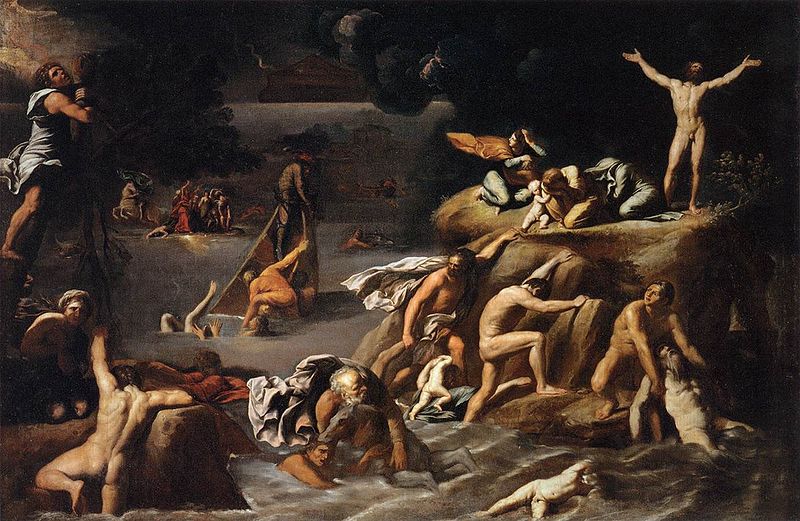
Young Earth Creationists often claim that their view has been the position of the church since its earliest period. Here, I will challenge that notion and argue that, instead, modern creationism is unrecognizable in historic Christianity. Thus, my contention is simple:
Modern young earth creationism has no historical pedigree.
It is impossible to go through a comprehensive survey of early Christian teaching on creation, so my discussion here will be necessarily brief. Further reading may be found in the sources cited, below. I note that if someone wants to contradict my contention, above, they must present evidence showing that the claims about Flood Geology, etc. are all present in early church writings, or indeed any church writings before around 1600.
Now, it is a simple fact that for much of church history, theologians held that the Earth was only a few thousand years old. Do not take this sentence out of context. Recall that we’re talking about modern young earth creationism, not just a belief that the Earth is young. To say that because, for example, some church fathers held the world was a few thousand years old and allege that proves they held to modern creationism is a blatant historical anachronism for several reasons.
First, the reason many of these early teachers of the church held to this view is because their view of overall history was such that the 6 days of creation should match up with 6 “days” of thousand year periods of all of history, culminating in the second coming. The literature on this is quite easy to find, but here are a few choice examples:
“the Lord will finish all things in six thousand years, for a day is with Him a Thousand years… in six days, that is, in six thousand years, all things will be finished…” – Epistle to Barnabas, (quoted in Young and Stearley)
“for in as many days as this world was made, in so many thousand years shall it be concluded.”- Irenaeus (quoted in ibid, 35)
“[Because] in six days God made all things, it follows that 6000 years must be fulfilled.” – Hippolytus (quoted in ibid, 35)
These quotes could be (and are, in the literature) multiplied. The simple fact is that the earliest interpretation of the Genesis text was yes, that it took place in 6 days, but also that those 6 days were important because they outlined the 6000 years of all of Earth’s history, which would end in a seventh day rest of 1000 more years.
Does that sound like modern young earth creationism to you? It shouldn’t. I don’t know of any modern creationist who holds that the Earth should have already ended because it is more than 6000 years old now, or that the days in Genesis correspond strictly to days of 1000 year lengths that define the history of creation.
Second, even the early thinkers who resonate most closely with modern young earth creationism would not have recognized it as it exists now. Early flood theories often had the water simply get placed on earth miraculously and then destroyed by God, held to a “tranquil flood” theory in which the global flood didn’t make any impact on the surface of the planet, held that fossils weren’t actual vestiges of previously living organisms (an interesting piece of geological history), and the like.
 Why is it that YECs take these writers out of their historical contexts? It would be easy to say it is due to a project of quote-mining to find support for one’s view in the past–and I’m sure this is part of it–but perhaps a lot of it is just mere ignorance. The volumes of writings we have from the church fathers, for example, would take years to read, and lifetimes to become well-versed in. Many haven’t even been translated. Thus, it is more expedient to simply find the quote that supports one’s view and use it.
But that’s not at all how we should construct historical theology. The fact is that the constant parade of claims made by YECs that their position is that of the early church is only possible because of a lifting of quotes from church fathers out of their context in order to support the position. Moreover, the people quoted themselves, though they would support the notion of a “young earth” would do so for theological reasons tied to their view of the whole of human history–one which I know of no modern YEC buying into. To cite them as supporting modern YEC, then, is a kind of baptism-by-decontextualization. Only by ignoring the very reasons the early church held their views and the theological worldview that the early church operated under can a YEC find support for their view.
An analogy might be helpful here. To say that the early church agrees with modern young earth creationists would be like saying the early church agrees with modern modalists. Why? Because, after all, many modern modalists claim to be able to uphold the Apostles’ Creed, which, after all, never speaks of distinction of persons in an explicit enough way so as to exclude modalism. Thus, a modalist could say “Our view is from the Apostles’ Creed.” Now of course this is an extreme example, and one could argue at length as to whether the modalist is actually agreeing with the historic Creed, however, the point is that simply finding a single point of doctrine with which one agrees does not mean that one holds to an historic Christian view. It is instead to treat a system of doctrine as something which may be broken apart piecemeal into individual affirmations and then find one of these affirmations with which one agrees. But that doesn’t show one agrees to the system, only to one decontextualized part.
Thus, the best a modern YEC can claim is that the early church also felt the Earth was only a few thousand years old. But to leave it at that is disingenuous, because it paints a picture as though the early church believed this for the same reasons the modern YEC does, but that is not the case. Or perhaps instead it is to, as noted above, just break apart doctrinal systems into component parts and just pick what suits oneself. In either case, it is a mistaken way to approach the question.
The reason the early church held to the young earth was because, as noted above, of their view of the history of the Earth corresponding to 6 days of 1000 years each, not because of alleged geological evidence for a global, catastrophic flood. Although some of the early writers did not hold to this 6 – 1000 paradigm, it is very clear from their writings that there was absolutely no familiarity with the kind of “the Flood did it” reasoning which is so pervasive in YEC today. Modern creationism is founded upon Flood Geology, an absolutely foreign concept to the earliest church teachings.
Indeed, the notion that the early church would have even recognized modern YEC is a bit absurd. Modern YECs use the Noachian Deluge to explain the fossil record, stratification, and the like. But up until John Ray’s time period in the late 1600s, it had been assumed fossils were simply tricks of the rock, not vestiges of once-living organisms (for some interesting reading on this history, check out this post on John Ray). Thus, someone living earlier would simply not have understood what was meant by saying fossils were due to the Flood, let alone knowing what fossils even refer to! Moreover, stratification as a studied feature of geology didn’t really begin in earnest until the 1800s. Again, to then attribute Flood theories back to the early church is wrongheaded.
The Bottom Line
To put what we’ve reviewed above all together: modern young earth creationism does agree with the historical church broadly on the age of the Earth. That’s it. But the categories of thought in which the church has historically envisioned the history of the universe–the very context which YECs try to link their views–have no points of contact with modern creationism. Indeed, they would have been baffling to the early church because these points of contact with Flood Geology simply do not exist. The reasons the early church believed in a “young earth” were linked to their own faulty reading of Scriptures, and an eschatology not shared by modern YECs. In short, Modern Young Earth Creationism has no historical pedigree.
The Young Earth Challenge, Restored
‘Ah!’ one might exclaim. ‘That means that, at least, the early church held to the notion that the Earth was young.’
Well yes, it does mean that. But that hardly justifies belief in modern YEC. Modern YEC is an invention intended to unify the geologic record with an interpretation of the Bible. It is itself an entire system. This interpretation, which leads to speculation about the way the flood formed the geologic record, is not found in the early church. If you disagree, find it for me. Demonstrate that, say, Irenaeus when he wrote about the entire history of the Earth as corresponding to 6 days of 1000 years each, was actually speaking of how Noah’s Flood shaped the geology of the planet in order to layer sediment one atop the other. If one cannot do this, they should not claim to garner support for YEC from the early church.
Once more, YEC has no historical pedigree.
Links
Be sure to check out the page for this site on Facebook and Twitter for discussion of posts, links to other pages of interest, random talk about theology/philosophy/apologetics/movies and more!
“Oceans of Kansas,” Unexpected Fossils, and Young Earth Creationism– I discuss the alleged findings out out-of-sequences fossils in the fossil record and how YEC explanations fail to show they are attributable to a global catastrophic Flood.
What options are there in the origins debate? – A Taxonomy of Christian Origins Positions– I clarify the breadth of options available for Christians who want to interact on various levels with models of origins. I think this post is extremely important because it gives readers a chance to see the various positions explained briefly.
Source and Further Reading
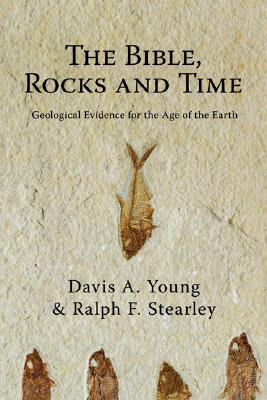
Davis A. Young and Ralph F. Stearley, The Bible, Rocks and Time: Geological Evidence for the Age of the Earth
Stanley L. Jaki, Genesis 1 Through the Ages (New York: Thomas Moore Press, 1992).
SDG.
——
The preceding post is the property of J.W. Wartick (apart from quotations, which are the property of their respective owners, and works of art as credited; images are often freely available to the public and J.W. Wartick makes no claims of owning rights to the images unless he makes that explicit) and should not be reproduced in part or in whole without the expressed consent of the author. All content on this site is the property of J.W. Wartick and is made available for individual and personal usage. If you cite from these documents, whether for personal or professional purposes, please give appropriate citation with both the name of the author (J.W. Wartick) and a link to the original URL. If you’d like to repost a post, you may do so, provided you show less than half of the original post on your own site and link to the original post for the rest. You must also appropriately cite the post as noted above. This blog is protected by Creative Commons licensing. By viewing any part of this site, you are agreeing to this usage policy.
Sunday Quote!- Questioning Exegesis Through Discovery?
Every Sunday, I will share a quote from something I’ve been reading. The hope is for you, dear reader, to share your thoughts on the quote and related issues and perhaps pick up some reading material along the way!
Questioning Exegesis Through Discovery?
One area that evangelical theologians must weigh is the notion that exegesis should line up with reality. Thus, how might one balance an interpretation between some apparent readings and the findings of certain scientific discoveries? Must they even be balanced at all? Davis Young and Ralph Stearley’s magisterial work on the age of the Earth, The Bible, Rocks and Time, provides an interesting historical background for how discoveries led to the questioning of exegesis of certain texts:
[In the 17th Century…] foundations were gradually being laid for questioning the accepted opinion about the age of the Earth [that being a few thousand years]. Advances in the study of fossils and rock strata were both necessary before such questioning would come about… (47, cited below)
Thus, historically, there has been an interplay between scientific discovery and exegesis of key texts of Scripture. Without certain scientific advances, received opinion on certain features of the natural world remain unquestioned. However, once scientific advances made it possible, these opinions were challenged and often abandoned in the face of extrabiblical evidence. The book provides a great overview for how the interplay between discovery and exegesis played out.
What are your thoughts? Should new discoveries be allowed to challenge received interpretations? How might we best deal with discoveries in the natural world which apparently clash with our reading of the text?
Links
Be sure to check out the page for this site on Facebook and Twitter for discussion of posts, links to other pages of interest, random talk about theology/philosophy/apologetics/movies and more!
Sunday Quote– If you want to read more Sunday Quotes and join the discussion, check them out! (Scroll down for more)
Source
Davis A. Young and Ralph F. Stearley, The Bible, Rocks and Time (Downers Grove, IL: InterVarsity Press, 2008).

 J.W. Wartick - Reconstructing Faith