Christianity
Really Recommended Posts 2/28/14
 Kids Say the Darnedest Heresies– How should we react when kids don’t understand essentials of Christian doctrine? Jason Wisdom offers some interesting advice for how to deal with the situation… and it’s not just to laugh it off! I’d be curious to see what parents think of this post!
A Critical Review of Myron Penner’s “The End of Apologetics”– “The End of Apologetics” recently received some acclaim from Christianity Today, which I find a bit shocking, to be honest. Rather than declaring the “end” of Apologetics, we should be encouraging its bolstering and spread. I very highly recommend this post for some looks into the issues Penner’s book raised.
Kevin Lewis: Sharing the Gospel with Atheists (VIDEO)- One of my professors from Biola University, Kevin Lewis, here shares his thoughts on how to share the Gospel with atheists. Kevin Lewis is a witty, awesome lecturer, and I think you’ll enjoy this as much as I did!
Option (COMIC)- A fun way to look at the rather famous “trilemma” from C.S. Lewis. Here, it is presented in comic form.
A Smart Movie that Questions Evolution (Yes It’s Possible!)– There’s a movie coming called “I Origins” which explores intelligent design and the New Atheism through… yes! a storyline! Check out this look into the flick. It’s apparently out already but I can’t seem to track it down anywhere. Have you seen it? What are your thoughts?
Book Review: “A Visual Defense” by Robert Velarde
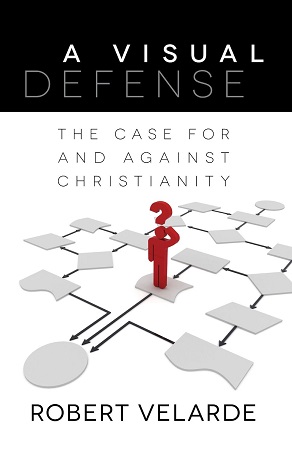 Robert Velarde’s A Visual Defense: The Case for and Against Christianity
Positives
The clear and extremely important benefit of the work is that it really does provide a way for people to envision how a number of arguments related to the truth of Christianity would look mapped out. The way that Velarde brings this out is by making a flow chart with the argument mapped out alongside objections and rebuttals.
The flow charts themselves are extremely helpful, because they really do allow one to sit with the book and use a finger to trace how the argument would work in practice. Although I was familiar with the arguments given, I felt as though I learned some things simply by seeing the arguments lined up in such a way as to follow them pictorially.
The format of the book is also very helpful. Each chapter begins with a flow chart that addresses a specific topic via an argument(s). The different parts of the flow chart have different shapes depending on whether they are the conclusion, assumption, premise, or rebuttal. These flow charts have every bubble numbered. The chapter following the flow chart simply lays out the numbers in order and explains in greater detail the conclusion, the premises, the objections, and the rebuttals. Thus, the format is highly readable and helps to draw out the flow chart more readily. I found myself flipping back to the flow chart very frequently as I read through the book.
Negatives
This book cannot really be used in isolation. One either needs another stack of books to get to the heart of many of the topics introduced or to come to the book with a working knowledge of a wide range of apologetics topics. The numbered outline of each part of the flow chart often gives only a small paragraph in defense of rather major apologetics topics. For example, the defense of the argument from religious experience comprises a page and a half and three bubbles on the flow chart (46-47). The argument itself is an area of major interest for me and, having read ten books and multiple articles on the topic, I realize it is a really massive issue. But due to the format of the book, this diminishes its value somewhat, as it seems like it would best be used as part of an apologetics class or an introduction to the issues related to the defense of the Christian faith. However, in order to do so, one would need a hefty general apologetics book(or a couple more specialized ones) to use alongside it.
I’m sure this was a conscious decision on the part of Velarde and others–the book is surely intended to be used in this fashion–but that doesn’t make the price of entry for newcomer any less.
The “visual” aspect of the visual defense could also be better integrated in the body of the work. The flow charts are extremely helpful, but it perhaps could have been even better to have a few more of them scattered about to use as defenses of various premises or other issues. I’m not a visual learner, so I admit it is hard for me to brainstorm on this, but I also think that the book could have perhaps integrated more pictures to show how the argument moves from one point to the next.
Conclusion
Robert Velarde is to be commended for taking a unique approach to introducing apologetics. The importance of providing a way for visual learners to understand these arguments in a pictorial fashion should not be understated. That said, the book essentially requires others to be read alongside it. I would imagine this book would be most useful for professors or small groups wanting to introduce the topics as opposed to a book to pick up and hand to a friend interested in apologetics. It would be a great tool to utilize in an apologetics class to introduce each major argument and then proceed into lengthier defenses of each.
Links
Be sure to check out the page for this site on Facebook and Twitter for discussion of posts, links to other pages of interest, random talk about theology/philosophy/apologetics/movies and more!
Source
Robert Velarde, A Visual Defense: The Case for and Against Christianity
I was provided with a review copy of the book from Kregel. I was in no way asked or required to offer any specific type of review. My thanks to the publisher for the review copy.
SDG.
——
The preceding post is the property of J.W. Wartick (apart from quotations, which are the property of their respective owners, and works of art as credited; images are often freely available to the public and J.W. Wartick makes no claims of owning rights to the images unless he makes that explicit) and should not be reproduced in part or in whole without the expressed consent of the author. All content on this site is the property of J.W. Wartick and is made available for individual and personal usage. If you cite from these documents, whether for personal or professional purposes, please give appropriate citation with both the name of the author (J.W. Wartick) and a link to the original URL. If you’d like to repost a post, you may do so, provided you show less than half of the original post on your own site and link to the original post for the rest. You must also appropriately cite the post as noted above. This blog is protected by Creative Commons licensing. By viewing any part of this site, you are agreeing to this usage policy.
Book Review: “What’s Your Worldview” by James N. Anderson
 When I first learned about What’s Your Worldview?: An Interactive Approach to Life’s Big Questions
The book’s format is set up such that it outlines something (like what it means to say there is objective truth), then asks whether you believe in it. If you choose yes, you flip to one page; if no, you flip to another. Ultimately, your answers will land you in a worldview. Each worldview has a few pages of brief discussion on how it views reality and what problems might arise with that worldview.
I decided to indeed choose my own adventure and start out reading it from an atheist’s perspective. I figured that would give me a good look into the approach. I quickly realized that answering the questions in such a way got me to “dead ends.” If I said “No” to whether I believed in objective truth, I flipped to the worldview of “Relativism,” had the view explained and some major issues brought up. The end. Full stop. Or is it?
Anderson encouraged readers to go back to the previous question after any worldview evaluation if they didn’t like the conclusions drawn. Thus, continuing the example of relativism, he argued that it is self-defeating: after all, if all truth is relative, is that itself a relative truth? If so, why should I hold to it? Back to the questions! The book encourages such flipping back and forth. It encourages engagement in a way many apologetics books do not.
There is, however, one major drawback to the approach. That is, because it is a book about worldviews, and because it is only just over 100 pages long, there’s not a lot of meat to the discussion. If you’re looking for major critiques and interactions with response-rebuttal-counterpoint on various worldviews, this is not the book you’re looking for. Alongside that, there is a real danger of oversimplification. For example, in the “worldview” section on “nihilism,” it was stated that nihilism is “the view that there are no objective values” (Kindle location 1022). Properly speaking, this only refers to moral nihilism, not nihilism as a full system, which would entail a whole system of “nothings”: no meaning, no objective values, possibly even no reality one can access, etc. Due to the short length, much nuance to each worldview must be lost. Possible objections to Anderson’s brief critiques abound, and readers may be left thinking their own view was perhaps a bit too blithely dismissed.
Of course the length could just as easily be seen as an advantage. One can very easily pick it up and read it in an afternoon; one could hand it to an interested neighbor; it lends itself to use in a brief study period (youth group? adult forum?). These are all advantages. Readers just need to be aware of some disadvantages as well.
I was also very impressed by the depth of insight Anderson gave to rival theist worldviews. Once one answers that there is at least “a” deity, the book still has many more questions to peruse: do you think there is only one?; is Jesus God?; did God communicate with humans? If so, was this communication open?; etc. I found these to be fun to flip through and very informative and on-point. This isn’t an apologetics book that focuses purely on the existence of God; it is, really, a book on worldviews: complete totalities. That said, remember it is not intended to be comprehensive, by any means.
What’s Your Worldview is a really fun apologetics book. The fact that I’m able to write that shows how unique it is. I don’t know of any other book in the same format. It’s refreshing and handy. That said, at times it does feel just like those old “Choose Your Own Adventure” books; you come to the end too quickly. It was a conscious decision on the part of the author/publisher to keep it light and easy to read. And, to that extent, they succeeded. I just found myself wanting a little more. However, I do think this would be an excellent book to pick up and hand off to a friend or relative who may have doubts or may want to explore the beliefs of various worldviews. Just remember the caveat: the book may raise more questions than it answers; so be prepared to have some reasons for the hope within (1 Peter 3:15).
Links
Be sure to check out the page for this site on Facebook and Twitter for discussion of posts, links to other pages of interest, random talk about theology/philosophy/apologetics/movies and more!
Source
James N. Anderson, What’s Your Worldview?: An Interactive Approach to Life’s Big Questions
I received a review copy of the book through Crossway. I was not obligated by the publisher to give any specific type of feedback whatsoever.
SDG.
——
The preceding post is the property of J.W. Wartick (apart from quotations, which are the property of their respective owners, and works of art as credited; images are often freely available to the public and J.W. Wartick makes no claims of owning rights to the images unless he makes that explicit) and should not be reproduced in part or in whole without the expressed consent of the author. All content on this site is the property of J.W. Wartick and is made available for individual and personal usage. If you cite from these documents, whether for personal or professional purposes, please give appropriate citation with both the name of the author (J.W. Wartick) and a link to the original URL. If you’d like to repost a post, you may do so, provided you show less than half of the original post on your own site and link to the original post for the rest. You must also appropriately cite the post as noted above. This blog is protected by Creative Commons licensing. By viewing any part of this site, you are agreeing to this usage policy.
Sunday Quote! – Is Monotheism from Egypt?
 Every Sunday, I will share a quote from something I’ve been reading. The hope is for you, dear reader, to share your thoughts on the quote and related issues and perhaps pick up some reading material along the way!
Is Monotheism from Egypt?
I completed Winfried Corduan’s In the Beginning God: A Fresh Look at the Case for Original Monotheism recently. I have to say, it is one of those books which caused a paradigm-shift for me. It made me realize many mistakes I had made in my assumptions regarding the area of study for origins of religion. I’ll review it in a while when I have time to really sit down and write. Here, we’ll examine the notion that monotheism came from Egyptian polytheism. Corduan wrote:
The people were exhorted to acknowledge Aten, but there was only one way in which they could worship him… the way in which commoners… had always been instructed to worship the gods, by worshipping the pharaoh and his wife… Thus, if Aten were the one and only God, and he could only be worshiped by worshipping the Pharaoh, this was hardly a ‘monotheistic reform.’ Instead, it was the ultimate in egotism and delusions of grandeur. (312)
Corduan’s statement is the climax of several pages of examination of the cult of Akhenaten and the religion of Egypt. Essentially, his point is that one can hardly conclude from this consolidation of worship of deity into one form of worshipping the Pharaoh and his wife that this served as the source for later monotheism, specifically Hebrew/Israelite worship.
What do you know of Egyptian religion and the worship of Aten/the cult of Akhenaten? Have you examined your conclusions regarding this knowledge? What do you think about monotheism and Egypt?
In the Beginning God is an extraordinary study into the origins of religion and the theory of original monotheism. I highly recommend you grab a copy and read it.
Links
Be sure to check out the page for this site on Facebook and Twitter for discussion of posts, links to other pages of interest, random talk about theology/philosophy/apologetics/movies and more!
Source
Winfried Corduan, In the Beginning God: A Fresh Look at the Case for Original Monotheism
SDG.
——
The preceding post is the property of J.W. Wartick (apart from quotations, which are the property of their respective owners, and works of art as credited; images are often freely available to the public and J.W. Wartick makes no claims of owning rights to the images unless he makes that explicit) and should not be reproduced in part or in whole without the expressed consent of the author. All content on this site is the property of J.W. Wartick and is made available for individual and personal usage. If you cite from these documents, whether for personal or professional purposes, please give appropriate citation with both the name of the author (J.W. Wartick) and a link to the original URL. If you’d like to repost a post, you may do so, provided you show less than half of the original post on your own site and link to the original post for the rest. You must also appropriately cite the post as noted above. This blog is protected by Creative Commons licensing. By viewing any part of this site, you are agreeing to this usage policy.
Downton Saturday: Season IV, Episode 7- A Christian worldview perspective
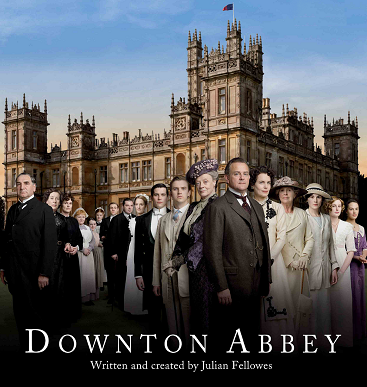 I will be analyzing each episode of the fourth season of Downton Abbey from a worldview perspective. There will, of course be SPOILERS for each episode, and I will assume readers know about each previous season and episode’s content as well. It will be assumed that readers are familiar with the characters and circumstances. I will not be summarizing the plot of the episode; I will merely interact with the content from a perspective of worldview. BE COURTEOUS AND DO NOT BRING UP LATER EPISODES THAN THE ONE DISCUSSED HERE IN YOUR COMMENTS.
The Suitors
I can’t help but think of the opening line of Jane Austen’s Pride and Prejudice: “It is a truth universally acknowledged, that a single man in possession of a good fortune must be in want of a wife.” Here, however, we have “It is a truth universally acknowledged, that a single woman in possession of good fortune must be in want of a husband.” Lady Mary is highly eligible widow, and the men are lining up. It will be interesting to see on what criteria she ultimately chooses, if she chooses any of them. Matthew was a genuinely good man, and it took him quite a while to be convinced/convince Mary.
The Disappearing Bates
Bates disappeared to York for a day. Then, the man who raped Anna turned up dead in an accident. Shocking. It looks like my prediction may come true. From a Christian worldview perspective, one has to ask whether Bates would be justified in killing the man. I would think the answer is fairly obviously no. I recall reading many comments from friends who said they’d kill the man and they really wanted Bates to do so. Although I understand the rage behind such comments, I have to wonder what justification one could get from a Christian worldview for doing so.
On the Christian worldview, such punishment should never be done in a vigilante fashion. Rather, the government has been given the sword (Romans 13:4) in order to carry out justice and punishment as a representative of God on Earth. Interestingly, this is the view of civil government I think we are taught in the Bible: we are to submit to the authorities because they are given as God’s agents on Earth. Does that mean governments always do right or do what God would desire? No, governments are run by sinful people and often for sinful purposes. However, God did not issue “the sword” to the individual; even in the times of ancient Israel, punishment was most often a communal thing: the whole community would present witnesses (at least two in order to convict), and punish through stoning. There is, of course, the notion of the avenger of blood, but even in those cases cities of sanctuary were provided and witnesses were needed.
So, to return to Bates, I do understand his extreme rage, but if he killed the man–as I suspect he did–then his action is not justified. Now, the question may arise as to whether the government would have done right had Bates gone to it. That is a separate issue as well. This episode brought up many things to contemplate regarding justice.
What are your thoughts on this issue?
The Baby
It seems Lady Edith has chosen to keep her baby. Again, as I noted last time, I hardly see a ringing endorsement of a pro-life message here, but it is, nonetheless, a good thing to not have to face that in this series (yet). This episode highlighted another aspect of injustice, however: namely, that in order to not face public ridicule and shame, Lady Edith has to be whisked away to privately have the baby and then give him or her away. Such a society is inherently not a society which fully would support the pro-life message. Women should not be faced with shaming if they choose to have children.
A culture in which the primary reaction to pregnancy is essentially to shutter women away (whether married or not) as if it were an illness, and in the case of unmarried women, to socially scorn them, is not a culture in which a strong pro-life message can succeed.
Prediction
Lady Edith’s pregnancy will be outed.
Links
Be sure to check out the page for this site on Facebook and Twitter for discussion of posts, links to other pages of interest, random talk about theology/philosophy/apologetics/movies and more!
The image is copyright BBC and I do not claim any rights to it. To my knowledge it is freely available for purposes of promotion/critique and I use it under fair use.
SDG.
——
The preceding post is the property of J.W. Wartick (apart from quotations, which are the property of their respective owners, and works of art as credited; images are often freely available to the public and J.W. Wartick makes no claims of owning rights to the images unless he makes that explicit) and should not be reproduced in part or in whole without the expressed consent of the author. All content on this site is the property of J.W. Wartick and is made available for individual and personal usage. If you cite from these documents, whether for personal or professional purposes, please give appropriate citation with both the name of the author (J.W. Wartick) and a link to the original URL. If you’d like to repost a post, you may do so, provided you show less than half of the original post on your own site and link to the original post for the rest. You must also appropriately cite the post as noted above. This blog is protected by Creative Commons licensing. By viewing any part of this site, you are agreeing to this usage policy.
Is Molina’s God Fallible? A response to James N. Anderson
 Recently, I responded to James White’s comments on molinism. Shortly thereafter, White had another podcast in which he made several comments on molinism. He also commented favorably on an article by James N. Anderson, which argues that God is fallible. I left a comment over on Anderson’s blog because I frankly think that he misrepresented Molina’s view. Here, I’ll reproduce the comment I left there with a bit more commentary after the block quote to demonstrate that Anderson’s argument, like White’s, really is a misrepresentation.
My comment (edited to make it a bit shorter):
You wrote, “In other words, there are possible worlds in which God actualizes C so that S will choose A, but S doesn’t choose A. There are possible worlds in which God’s eternal decree doesn’t come to pass, because libertarian-free agents do otherwise than he had planned.”
Molina, on the other hand, explicitly held that if we were to choose otherwise, God would have known otherwise. That is, on Molina’s view (and on the view of William Lane Craig), if we were to choose ~A instead of A, then God would have known ~A instead. Molina, in “On Divine Foreknowledge” makes this extremely clear.
Of course, you could argue that the means by which Molina argues that this is possible is itself mistaken, but the argument is complicated and I’m not going to reproduce it here. My main point is the very core of the argument you’ve given simply misrepresents the position of molinists. Molina (and Craig) held that if a creature were to choose otherwise, then God would know it. Period.
Anderson responded to my comment by noting his argument was related to the decree. Now, I’m not at all sure how this saves Anderson’s article from this error, which I think is fatal: his argument just fails to account for molinism on molinism’s terms. That is, his argument is an attempt at a reductio. Thus, he has to grant the system which he is trying to show is self-referentially incoherent its own terms. He failed to do so. Here is Anderson’s argument in a nutshell:
[T]he Molinist is committed to the claim that although God knows that S would choose A in C, and he actualizes C because he plans for S to choose A, it is nonetheless possible for S not to choose A in C. (Craig clearly affirm[ed] this point a couple of times in his exchange with Helm.) In other words, there are possible worlds in which God actualizes C so that S will choose A, but S doesn’t choose A. There are possible worlds in which God’s eternal decree doesn’t come to pass, because libertarian-free agents do otherwise than he had planned.
Thus, Anderson concludes, on the molinist view, God is possibly fallible. But, as I pointed out in my comment above, Anderson’s argument basically just ignores Molina’s own views about God’s knowledge. I take it from his response to me that he thinks that God’s eternal decree somehow trumps considerations about foreknowledge, and I would think that on a Calvinist system that may be correct, depending upon how one hashes at the details (i.e. on some Calvinists’ expositions of foreknowledge, I have read it is grounded on God’s own action; that is, God foreknows x will happen because God wills x). But of course we’re not here interested on a Calvinist view of foreknowledge or the decree; Anderson is allegedly addressing Molinists.
By now it should be fairly clear where Anderson’s mistake lies: he imports his Calvinistic understanding of foreknowledge and the decree into molinism. But he claims to be critiquing Molina’s views internally; that is, his argument is supposed to show that molinism is self-referentially incoherent because it entails a fallible God. But it doesn’t! It only does so once Anderson has forced the concept of the eternal decree (that is, the specifically Calvinist view of this) as the filter through which molinism must be drawn. But of course that hardly shows that molinism is wrong, any more than filtering Calvinism through an Arminian filter demonstrates Calvinism is incoherent. One must evaluate each view on its own merits; not by presupposing positions which make them false!
There are a few other major difficulties with Anderson’s argument, such as a continued confusion with free knowledge and middle knowledge. See the “technical discussion” below as well as the comments for more.
So to return to Molina and his modern defenders, we find that they affirm in apparent unanimity that if one were to choose to do ~x instead of x, then God would have known ~x to be the case and x to be false. Thus, there simply is no question of a subject bringing about the falsity of God’s knowledge. Moreover, Anderson’s argument also confuses middle knowledge with free knowledge. Once God has actualized a world, it simply is the case that if, in that world, God knows that S will choose A, then S will choose A. Middle knowledge is the moment which considers counterfactuals; free knowledge is the creation of the world and the actualization of those counterfactuals. Thus, Anderson’s argument fails because 1) it fails to actually take Molina’s views into account; 2) it fails to interpret Molina’s views in such a way as to show the view is self-referentially incoherent; and 3) it fails to distinguish between middle and free knowledge.
Technical Discussion in the Comments
Be sure to check out the comments for some great interaction in which Anderson came along and commented as well. It’s a great discussion.
For example, this comment I wrote draws out some of the difficulties with Anderson’s argument further:
Your [I am here addressing Anderson directly] argument is that molinism entails a fallible God. Thus, your argument is that molinism–on molinism’s terms–entails a fallible God. Now, you wrote, “It doesn’t do to say, ‘If S were to choose otherwise then God would have decreed otherwise,’ because that’s dodging the issue.”
First, you misstate the actual premise, which is not that God would have decreed otherwise but that God would have foreknown otherwise; again, this leads me to think you’re not taking molinism on molinism’s terms. Instead, it seems you continue to conflate foreknowledge and the decree. Now, perhaps you simply mistyped that and you meant to say foreknown instead of decreed… in that case:
Second, your argument, again, is to try to show internal incoherence of molinism. In order to do so, you have to grant the premises of molinism. After all, if one wants to show an internal incoherence in a position, simply denying that parts of that position are true will not yield internal incoherence; rather, one must show how the pieces that such a position actually holds do not cohere with each other. Thus, because molinists from Molina to Craig to Thomas Flint (and I think this point is unanimous, though there may always be a “maverick” somewhere, I’m sure) hold that “If S were to do otherwise, God would have known otherwise,” you can’t just deny that premise and say “HA, now see, it is internally incoherent once I’ve denied this premise!” Rather, you would have to show that that premise is itself false.
Now, Molina doesn’t just assert that God would have known otherwise. He does spend several pages developing exactly how it could be the case that If S were to do otherwise, God would have known it–all without appealing to backwards causation. Craig also defends this account in his lengthier work on the topic. Fredosso develops this defense over the course of p 57-63 and 65-68 of his translation of Molina’s “On Divine Foreknowledge.” In the same work, Molina defends his position may be found on p. 119-120; as well as several other places where a whole view of his account provides a lengthier defense.
Thus, it seems to me your argument fails to demonstrate internal incoherence. Molinism on molinism’s terms does not make God fallible.
Third, as far as why I argued you confused middle and free knowledge; the reason is because Molina himself held that because God is eternal and exists in the eternal now rather than as an omnitemporal or temporal being (contra Craig, who defends his position somewhat differently), it is incorrect to hold that once a world has been actualized, then the creatures world may bring it about that that world is not brought about. Again, this goes back to Molina’s view of foreknowledge and free will. But free knowledge is not middle knowledge and is absolute certainty about the “actualized” world. It is unchangeable. Thus, on this third point, your argument fails not only to demonstrate internal coherence but also to interact with Molina’s actual view. The reason is because your argument relies upon the notion that in the here and now a creature could bring it about that ~x if God knows that X will happen. But both Craig and Molina (and every other major defender of Molinism of whom I’m aware, though possibly not Zagzebski as I haven’t read her view) hold that if God knows x will happen, then, necessarily, x will happen. Thus, the freedom of creatures is found in middle knowledge, and that is how it is preserved. God’s actualizing a world brings it about that in that world, the counterfactuals God brought into being will happen. Again, Molina reconciles this as above (and alongside his view that God is Eternal in the technical sense rather than temporal).
Thus, although interesting, I once more conclude that your argument fails to either address molinism or show that it is internally incoherent.
Links
Be sure to check out the page for this site on Facebook and Twitter for discussion of posts, links to other pages of interest, random talk about theology/philosophy/apologetics/movies and more!
James White and Molinism- Confusion about middle knowledge– I argue that James White has made a couple key errors related to molinism. On his most recent comments regarding molinism (his 2/11 podcast), he repeats a key error by saying that in the “exact same circumstances” he chooses differently. In this post, I demonstrate the error of his statement, along with some other mistakes in his critique.
SDG.
——
The preceding post is the property of J.W. Wartick (apart from quotations, which are the property of their respective owners, and works of art as credited; images are often freely available to the public and J.W. Wartick makes no claims of owning rights to the images unless he makes that explicit) and should not be reproduced in part or in whole without the expressed consent of the author. All content on this site is the property of J.W. Wartick and is made available for individual and personal usage. If you cite from these documents, whether for personal or professional purposes, please give appropriate citation with both the name of the author (J.W. Wartick) and a link to the original URL. If you’d like to repost a post, you may do so, provided you show less than half of the original post on your own site and link to the original post for the rest. You must also appropriately cite the post as noted above. This blog is protected by Creative Commons licensing. By viewing any part of this site, you are agreeing to this usage policy.
Sunday Quote! – Does reading Genesis Require a PhD?
 Every Sunday, I share a quote from something I’ve been reading. The hope is for you, dear reader, to share your thoughts on the quote and related issues and perhaps pick up some reading material along the way!
Does Reading Genesis Require a PhD?
One of the topics of major interest to me is the debate within Christianity over the means and timing of creation. Recently, a friend sent me a copy of Reading Genesis 1-2: An Evangelical Conversation
Genesis 1 should be read… as historical narrative that is meant to be taken literally. This is the normal reading of the account… It does not require a person with a PhD to unlock the key to these chapters by appealing to A[ncient] N[ear] E[astern] literature or a special genre or some other special figurative approach. (48)
The quote is in context of Beall’s discussion of various evangelicals “coming out” as not reading the text literally for various reasons, such as ANE context, notions of genre, or the like. Basically, Beall’s point seems to be that we can (and should?) just read the text straightforwardly without having to study all kinds of topics to understand it. What do you think of this notion? What might this say about the cultural context of Genesis? Does that context matter? Should we be concerned with possibilities regarding such a context, differing genres, or the like?
Bonus Quote
Interestingly, a later author in the same work, Tremper Longman III, confronts Beall’s allegation regarding the PhD:
…isn’t the Bible equally clear to everyone, even those who have not studied the Bible and its cultural background? The simple answer to that question is no, it is not. After all, unless you have studied Hebrew, Greek, and Aramaic you cannot read the Bible at all without scholarly help. (121)
Links
Be sure to check out the page for this site on Facebook and Twitter for discussion of posts, links to other pages of interest, random talk about theology/philosophy/apologetics/movies and more!
Source
Todd S. Beall, “Reading Genesis 1-2: A Literal Approach” in Reading Genesis 1-2: An Evangelical Conversation edited J. Daryl Charles (Peabody, MA: Hendrickson Publishers, 2013).
Tremper Longman III, “What Genesis 1-2 Teaches (and What It Doesn’t)” in Reading Genesis 1-2: An Evangelical Conversation edited J. Daryl Charles (Peabody, MA: Hendrickson Publishers, 2013).
SDG.
Downton Saturday: Season IV, Episode 6- a Christian worldview perspective
I will be analyzing each episode of the fourth season of Downton Abbey from a worldview perspective. There will, of course be SPOILERS for each episode, and I will assume readers know about each previous season and episode’s content as well. It will be assumed that readers are familiar with the characters and circumstances. I will not be summarizing the plot of the episode; I will merely interact with the content from a perspective of worldview. BE COURTEOUS AND DO NOT BRING UP LATER EPISODES THAN THE ONE DISCUSSED HERE IN YOUR COMMENTS.
The Decision
The most momentous part of this episode was when Lady Edith was very close to getting an abortion. The scene was extremely emotional: Edith’s sharing of her pregnancy with her Aunt Rosamund and the fact that she had scheduled an abortion. Rosamund insisted on going with and as they were in the waiting room, Edith shared her reasoning: she would be shunned by society, and she wasn’t sure she would be strong enough to deal with that.
Interestingly, the language used about the pregnancy affirmed several points: the baby was “wanted”–the issue was Edith’s own strength; the unborn was considered a baby, as opposed to a part of the mother. I’m hesitant to get as excited as some have gotten regarding possible commentary on “pro-life” or “pro-choice” categories in this episode for a few reasons: although the child was acknowledged as such, the issue was presented as a great danger to Edith. It was, essentially, the myth of the “back alley” abortions tied in with some bones thrown to pro-life people as well. Essentially, the episode offered a kind of please everyone approach to the issue, which, on the one hand, showed the complexity on the issue, but the other made it seem quite contrived.
The issue, of course, is extremely complex, and I did appreciate the emotional turmoil that Edith confronted when it came to the decision one way or the other. However, in light of the language used–killing a baby–one has to wonder, and I emphasize this: at the level of objective truth, what the debate is about.
The Bates Family
The guilt that Anna deals with continues to tear at my heartstrings. She is the victim and the fact that she is dealing with so much guilt–as though she thinks she is somehow to blame or stained because of it–is simply awful. I want to reach through the screen and hug her. Bates’ own take on it is to find whoever did it and destroy them. I get his motivation, but I wonder at his own treatment of Anna as a porcelain doll. He also seems to have shifted his view of her, and that seems to be another way in which the victim is having more wrongs piled atop each other. I do hope they manage to heal as a family.
Prediction
I predict that Bates has figured out who violated Anna and he’s going to kill him, resulting in Bates’ execution and a reaffirmation that British people must want everyone else on Earth to be as depressed as they are. (Yes, this is a bit tongue-in-cheek.)
Links
Be sure to check out the page for this site on Facebook and Twitter for discussion of posts, links to other pages of interest, random talk about theology/philosophy/apologetics/movies and more!
The image is copyright BBC and I do not claim any rights to it. To my knowledge it is freely available for purposes of promotion/critique and I use it under fair use.
SDG.
——
The preceding post is the property of J.W. Wartick (apart from quotations, which are the property of their respective owners, and works of art as credited; images are often freely available to the public and J.W. Wartick makes no claims of owning rights to the images unless he makes that explicit) and should not be reproduced in part or in whole without the expressed consent of the author. All content on this site is the property of J.W. Wartick and is made available for individual and personal usage. If you cite from these documents, whether for personal or professional purposes, please give appropriate citation with both the name of the author (J.W. Wartick) and a link to the original URL. If you’d like to repost a post, you may do so, provided you show less than half of the original post on your own site and link to the original post for the rest. You must also appropriately cite the post as noted above. This blog is protected by Creative Commons licensing. By viewing any part of this site, you are agreeing to this usage policy.
Really Recommended Posts 2/14/14- Rival theism, evidence for faith, apologetics, and more!
The Winter Olympics are on and I am currently experiencing -7 wind chill… which feels warm compared to what we’ve had! Thus, we have an owl post edition of the Really Recommend Posts, which features another round of great reads from across the internet! This week, we peruse rival theism, reasons for apologetics, evidence for faith, and more!
A complex god with a god complex– Edward Feser here discusses some criticisms of classical theism from a rather unexpected avenue: a rival theistic system which does not hold that God is the simplest possible being, among other things. Rather than being an atheistic critique, this is a criticism from a variant on theism. Feser’s comments are insightful and interesting. He is a Thomistic philosopher who continually has extremely insightful thoughts. I’ve been reading through one of his books–The Last Superstition–and a post on a quote from it has spurred much discussion.
J. Warner Wallace: Why are you a Christian?– The importance of apologetics is brought poignantly to the forefront in J. Warner Wallace’s comments in this post. Wallace is the author of Cold-Case Christianity, a simply fantastic apologetics book, and his comments here offer a stirring call to instruction in the faith.
Okay, you’re right. There’s no evidence for faith– Tom Gilson has been at the forefront of responding to Peter Boghossian, the Atheist Tactician. Here, he continues his series of posts regarding Boghossian’s critique of faith in general. The comments are highly insightful.
The Legitimate Use of Thomas Aquinas in Apologetics– What might Thomas Aquinas have to instruct us in apologetics? Here a few major aspects of Aquinas’ continuing contributions to apologetics are discussed.
Gary Habermas- SALT 2013 (VIDEO)- Gary Habermas is a leading expert on Jesus’ Resurrection. Here is a speech he gave at last year’s SALT (Strategic Answers for Life’s Thoughts) conference.
“Lone Survivor” – A Christian reflection on the film
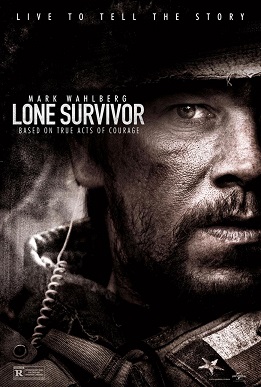 I watched Lone Survivor recently with a friend. I’m a fan of war movies (my favorites being “Patton,” “Midway,” and “Gettysburg”), so I figured i’d probably enjoy this one. I was surprised at points at the depth of the film’s narrative. Here, I will be commenting on the content on the film; not on the true story itself or any side-stories that came off of it. There will, of course, be SPOILERS for the movie in what follows. I will not be summarizing the plot, which may easily be found here.
The Trilemma
Early in the film, the SEALs encounter a situation which brings them to a trilemma: local goat herders compromise their mission security. They are left with three options: they may let the herders go and run for the hills themselves, knowing that a huge number of hostiles will be pursuing them; they may tie the herders up, hoping that they would be found before they died from local predators or cold; or they could terminate the prisoners. The latter two would violate the rules of war, but the soldiers themselves had little chance of surviving with the first option.
Their decision is eventually made after some tense debate; they free the prisoners and flee to try to call for an extract. The SEALs clearly did the right thing in this situation, not purely from a legal perspective but from an ethical perspective as well. The murder of innocents to preserve one’s own safety is not justified. However, the situation also illustrated the intense complexity of the situation of such a war. It also illustrated the very human emotional struggle we would go through in a similar situation: how would you deal with the trilemma? Can you answer it honestly that you would put your own life in extreme peril? Tough questions.
Kill Everything that Moves?
I was a bit worried that the film might serve to portray a simplistic good/bad guy dichotomy in which anyone who looked remotely Arabic was painted as a villain and everyone that moved was to be killed. That was not at all the case. Although it is clear that the Taliban are the “bad guys” in this film, Marcus Luttrell, the “lone survivor,” is ultimately saved by a local who was following Pashtun codes which grant protection for those in need.
There is thus illustrated in the film a greater range of rightness and wrongness than simply good/bad guy. Ancient customs may present a beautiful way to provide succor for someone in need; even a possible enemy. The adherence to strict codes for hospitality is something to which Christians should relate; one need only to read the Bible to discover numerous commands to give relief to the foreigner in the land of Israel or to take care of those in need. The situation in the movie is made interesting because Luttrell was a combatant and it was truly dangerous to those who would take him in to do so.
A Complex Situation
Christians have a wide variety of views when it comes to war. There are strong traditions of pacifism and just war theory, with a spectrum of variances of these two major positions along the way. I am not a political analyst, nor am I up-to-date on the facts related to the war in Afghanistan. Thus, I’m not going to try to comment on the specifics of the war because I would betray ignorance. However, I do think it is important to note that the film does depict some truly evil actions taken by the Taliban in the beheading of a man simply because he may have spoken to the Americans.
But does the issue of violence end there? Does that mean we should intervene? After all, if Americans weren’t there to begin with, such violence (perhaps?) would not happen, for there would be no Americans to inform. But I, again, want to emphasize I don’t know the whole story. I do think that a book by William Cavanaugh, The Myth of Religious Violence, brings into question some of the assumptions we have regarding religion and violence in situations like Afghanistan.
Conclusion
“Lone Survivor” is, unquestionably, a brutal film. There is much violence as well as quite a bit of vulgar language. But amidst these things, the film managed to convey a picture of the war in Afghanistan that was more than a simplistic black-and-white picture. It poignantly portrayed the difficulties of ethical situations in war. It also called into question the notion that there can be quick-and-easy lines drawn for friend and foe. I recommend the film for adults.
Links
Be sure to check out the page for this site on Facebook and Twitter for discussion of posts, links to other pages of interest, random talk about theology/philosophy/apologetics/movies and more!
Book Review: “The Myth of Religious Violence” by William T. Cavanaugh– I review the book which has led me to discuss the ways the category of religion is used to stigmatize the other and also forced me to rethink a number of issues. I highly recommend this book.
Lone Survivor and Insufferable Anti-American Self-Righteousness– The film has caused quite a bit of critical discussion. Here, a soldier reflects on the reaction to the film. Having now seen the movie, I think the viewpoint offered here is interesting and worth the read.
SDG.
——
The preceding post is the property of J.W. Wartick (apart from quotations, which are the property of their respective owners, and works of art as credited; images are often freely available to the public and J.W. Wartick makes no claims of owning rights to the images unless he makes that explicit) and should not be reproduced in part or in whole without the expressed consent of the author. All content on this site is the property of J.W. Wartick and is made available for individual and personal usage. If you cite from these documents, whether for personal or professional purposes, please give appropriate citation with both the name of the author (J.W. Wartick) and a link to the original URL. If you’d like to repost a post, you may do so, provided you show less than half of the original post on your own site and link to the original post for the rest. You must also appropriately cite the post as noted above. This blog is protected by Creative Commons licensing. By viewing any part of this site, you are agreeing to this usage policy.

 J.W. Wartick - Reconstructing Faith