Christianity
What options are there in the origins debate? – A Taxonomy of Christian Origins Positions
 The origins debate within Christianity is often viewed through the lens of a very narrow spectrum. Most recently, this was demonstrated in the debate between Ken Ham and Bill Nye. I also demonstrated this recently by answering questions for old earth creationists (see the first and second parts): some people tend to see the only options available for Christians as either young earth creationism (the earth was made in six 24 hour days 6-10 thousand years ago) or theistic evolutionism (God set it up, then evolution accounts for diversification). These perspectives, though showing a few of those available to Christians, do not actually reflect the whole realm of possibilities for Christians.
More thoughtful Christians tend to think of the perspectives as threefold. There are theistic evolutionists, young earth creationists, and then in between there is a kind of amorphous glob of people who hold to an “old earth” without expressing it in strictly evolutionary terms. Here, we’ll explore this amorphous glob (as well as the extremes) to show that there really is a range of options. I’m writing this mainly to clarify for many some of the difficulties in commenting on creation issues without such a taxonomy.
Gerald Rau’s Mapping the Origins Debate
If I could recommend one book to anyone who is going to get involved in creation issues, I would have to say I’d recommend Gerald Rau’s Mapping the Origins Debate: Six Models of the Beginning of Everything
Rau’s Taxonomy
Rau divided the major positions on the origins debate into a sixfold division (see Rau, 41):
Naturalistic Evolution- On this view, there is no God and no purpose in origins. The process for the origin of species and its diversity is “spontaneous.”
Nonteleological Evolution- On this view, there is a creator, but there remains no intervention in the natural process which yield life and its diversity. Thus, the “conditions necessary for life” were “established at creation.” However, evolution is still without purpose and the creator did not specify its parameters.
Planned Evolution- On this view, there is a creator who had a purpose for life and its origin. This purpose is through a “perfect creation” which “naturally fulfills God’s purposes.” Thus, the purpose which the creator had was essentially front-loaded in at the moment of creation. There is no direction during the process.
Directed Evolution- On this view, there is a creator with a purpose for the diversity of life. Unlike the previous view, the creator doesn’t merely front-load design and purpose but rather intervenes throughout the course of history to bring about purpose: “changes in universe and life” are “subtly directed over time.”
Old-Earth Creation- On this view, the process by which the diversity of species came about is not through directed evolution but rather through creation over time: “major body plans” are “created over millions of years.” New diversity of life is through God’s direct creative act.
Young-Earth creation- on this view, “each ‘kind'” is “created in one week, within the last 10,000 years. All diversity of life is due to God’s creative act; any changes since then are only among the “kinds” represented on the ark.
 A Larger Picture
Rau’s division of these groups is extremely helpful because he hits on the major positions represented within the spectrum. Of course the only options which are available to Christians are those which do not exclude God from the picture. Thus all but naturalistic evolution remain open to the believer. Now, the debate over how these might fit into the teaching of the Bible is not what I’m trying to dive into here. Instead, I’m simply pointing out there is diversity of views greater than the YEC/Theistic Evolutionism divide. One can see from the above that even within theistic evolutionism there is some diversity. Does evolution take place nonteleologically or did God plan it from the beginning? Perhaps God directed evolution along the way. There also is the option of Old Earth Creationism which shares many features with young earth creationism but radically diverges from the latter in many respects.
However, the spectrum opens up even more than Rau’s taxonomy depicts. The views he discusses focus primarily upon the science; that is, they are distinctions among views on the specifics of a scientific account of origins. Other views may be listed which may be distinguished by the reading of the Bible. Now, there is of course much overlap between these and Rau’s list, but I wanted to highlight a few views of interest.
First, there are interpreters like John Sailhamer in his book Genesis Unbound
Second, John Walton’s view reads the creation account within the Ancient Near Eastern context and so he views Genesis not as a literal creation account but rather as an account showing how God is enthroned over the entire creation as King. Again, such a view would be amenable to the spectrum of views possible for a Christian as I noted.
It is worth noting that either of these is distinct from the spectrum Rau lists. They are distinct because they do not require commitment to any of the creation models. Thus, for Collins, Sailhamer, and Walton, one may simply remain open to the evidence rather than filtering the evidence through specific readings of the Genesis text. Of course, one could hold to this view and remain a young earth creationist; but none of these readings explicitly forces someone to hold to any position on the actual means of creation and speciation.
Third, there are positions related to the scientific origins which would further subdivide Rau’s categories as dilineated above. For example, young earth creationists often hold that the Global Flood can account for the fossil record and stratification. But some YECs have historically held that the Flood would have been tranquil and essentially had no impact on the Earth. Other YECs simply hold that the universe and the Earth have an appearance of age because God would have known at what age it would have needed to be in order to sustain life. There is much diversity about the mechanisms related to the Flood as well. Similarly, Old Earth Creationists exist upon a spectrum, though Rau’s principles about what unites them are correct. However, OECs are often confused with other views along the spectrum such as directed evolution. Strictly speaking, an Old Earth Creationist will not hold to the notion that speciation occurs on such a broad scale through evolution.
Conclusion
I have utilized Rau’s work to demonstrate there is a spectrum of beliefs related to the origins debate. The spectrum, I have argued, is even broader than Rau showed. Within each category he listed, there may be subdivisions. Moreover, there are some views which eschew attempts to dilineate the scientific truths but simply ascribe to reading the text. These latter views would fit with essentially any along the spectrum of beliefs so long as God is involved.
The purpose of this post is not to sow confusion for those interested in the topic of origins. Rather, it is to demonstrate that there really are more options on the table than either Young Earth Creationism or Theistic Evolutionism. Within either of those views there is much diversity, and there is a whole range in-between. Thus, let us hope that when we discuss origins we avoid falsely portraying the positions as being so limited that we fail to account for the range. Hopefully, this taxonomy will prove helpful.
Links
Be sure to check out the page for this site on Facebook and Twitter for discussion of posts, links to other pages of interest, random talk about theology/philosophy/apologetics/movies and more!
Source
Gerald Rau, Mapping the Origins Debate: Six Models of the Beginning of Everything
SDG.
——
The preceding post is the property of J.W. Wartick (apart from quotations, which are the property of their respective owners, and works of art as credited; images are often freely available to the public and J.W. Wartick makes no claims of owning rights to the images unless he makes that explicit) and should not be reproduced in part or in whole without the expressed consent of the author. All content on this site is the property of J.W. Wartick and is made available for individual and personal usage. If you cite from these documents, whether for personal or professional purposes, please give appropriate citation with both the name of the author (J.W. Wartick) and a link to the original URL. If you’d like to repost a post, you may do so, provided you show less than half of the original post on your own site and link to the original post for the rest. You must also appropriately cite the post as noted above. This blog is protected by Creative Commons licensing. By viewing any part of this site, you are agreeing to this usage policy.
Sunday Quote! – Is Atheism Wishful Thinking?
 Every Sunday, I will share a quote from something I’ve been reading. The hope is for you, dear reader, to share your thoughts on the quote and related issues and perhaps pick up some reading material along the way!
Atheism as Wish Fulfillment
I’ve been reading through Edward Feser’s The Last Superstition: A Refutation of the New Atheism. Feser is a Thomistic philosopher (one who follows in the tradition of Thomas Aquinas) and so he approaches these questions from a slightly different perspective than that of other theists who have responded to the challenge of the New Atheism. I’ve only just begun the book, but I found this quote juicy:
It is true that a fear of death, a craving for cosmic justice, and a desire to see our lives as meaningful can lead us to want to believe that we have immortal souls specially created by a God who will reward or punish us for our deeds in this life. But it is no less true that a desire to be free of traditional moral standards, and a fear of certain (real or imagined) political and social consequences of the truth of religious belief, can also lead us to want to believe that we are just clever animals with no purpose to our lives other than the purposes we choose to give them, and that there is no cosmic judge who will punish us for disobeying an objective moral law. Atheism, like religion, can often rest more on a will to believe than on dispassionate rational arguments. – Edward Feser, The Last Superstition, 10
Feser’s point is that atheists are just as capable of allowing their desires to cloud judgment when it comes to matters of philosophical judgments as are theists. Everyone has desires; the question is what the evidence is to support those desires. What do you think of this quote? How would you respond to those who assert that religious people are merely seeking wish fulfillment?
Links
Be sure to check out the page for this site on Facebook and Twitter for discussion of posts, links to other pages of interest, random talk about theology/philosophy/apologetics/movies and more!
Guest Post: “The Presumption of Popular Atheism” by David Glass– In this post, David Glass, himself an able response-man to the New Atheism, highlights one primary argument atheists make regarding theism: that theists have all the burden of proof on their side.
SDG.
Downton Saturday: Season 4, Episode V
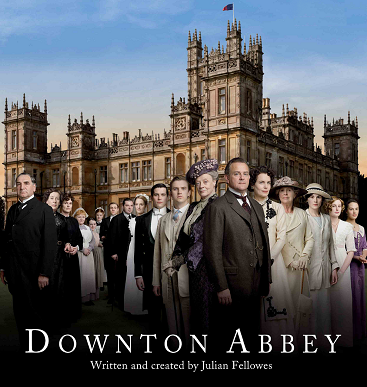 I will be analyzing each episode* of the fourth season of Downton Abbey from a worldview perspective. There will, of course be SPOILERS for each episode, and I will assume readers know about each previous season and episode’s content as well. It will be assumed that readers are familiar with the characters and circumstances. I will not be summarizing the plot of the episode; I will merely interact with the content from a perspective of worldview. BE COURTEOUS AND DO NOT BRING UP LATER EPISODES THAN THE ONE DISCUSSED HERE IN YOUR COMMENTS.
Justice & Aristocracy
The showdown between the Dowager Countess and Mrs. Crawley over the alleged thieving of the gardener was interesting because it illustrated the damage done by injustice. The Dowager was convinced the gardener was a thief, but she didn’t allow for the possibility to clear his name. Interestingly, such injustice would have been prevented by even the ancient laws found in the book of Deuteronomy (19:15) out of the Ancient Near East, in which two witnesses were necessary for conviction.
But the Dowager also showed great courtesy when she was shown to be wrong. She even asked for forgiveness.. from the gardener! What an incredible show of injustice being righted!
I thought the discussions Mary had with the researcher who was anti-aristocracy (I can’t remember his name and I’m afraid to Google spoilers!) were interesting in context of the whole series up to this point. The researcher held Mary and the aristocrats in general in contempt, because they had received what they had rather than earned it and they expected to keep it. But the show has demonstrated how the Grantham family not only provides jobs for the people who work in the home, but also for the farmers who use the land. They have created jobs rather than destroyed them. They are also able to contribute to things like the local hospital and other causes. This is not to say that aristocracy is the greatest thing ever; it is just to note that the show has presented a fairly complex vision of how aristocracy can help or harm the more general population.
One might reflect on this and consider how our own actions may impact others, whatever our place in society.
Race
It was interesting to see how the characters reacted to Jack Ross, a black band leader. I was pleased that Lord Grantham didn’t throw a fit about it. I wish they’d briefly mentioned Wilberforce’s influence in ending the slave trade in Great Britain. It will be interesting to see how the relationship between Mr. Ross and Rose develops.
Women
The discussion Anna had with Bates is worth reflecting upon: she was noting how she should not be viewed as a victim. Bates countered by saying he should have been there to protect her. I think that Anna’s thoughts were perhaps more on target than Bates’. The latter assumed a kind of responsibility for the activity of another; Bates assumed that he should be protecting Anna at all times, and that anything that happened to her was his fault. Such a view, I would argue, is mistaken. Bates’ blame game is misplaced. It is not his fault; nor is it Anna’s fault; it is the rapist’s fault.
Conclusion
I thought the episode brought up a number of interesting points related to race, women, and aristocracy. Justice for the poor was another major theme. I look forward to seeing what comes next. Feel free to comment with your own thoughts on the episode (remember NO SPOILERS FOR LATER EPISODES).
*Okay, I missed a couple. We’re back on now!
Links
Be sure to check out the page for this site on Facebook and Twitter for discussion of posts, links to other pages of interest, random talk about theology/philosophy/apologetics/movies and more!
The image is copyright BBC and I do not claim any rights to it. To my knowledge it is freely available for purposes of promotion/critique and I use it under fair use.
SDG.
——
The preceding post is the property of J.W. Wartick (apart from quotations, which are the property of their respective owners, and works of art as credited; images are often freely available to the public and J.W. Wartick makes no claims of owning rights to the images unless he makes that explicit) and should not be reproduced in part or in whole without the expressed consent of the author. All content on this site is the property of J.W. Wartick and is made available for individual and personal usage. If you cite from these documents, whether for personal or professional purposes, please give appropriate citation with both the name of the author (J.W. Wartick) and a link to the original URL. If you’d like to repost a post, you may do so, provided you show less than half of the original post on your own site and link to the original post for the rest. You must also appropriately cite the post as noted above. This blog is protected by Creative Commons licensing. By viewing any part of this site, you are agreeing to this usage policy.
Really Recommended Posts 2/7/14- Ken Ham/Bill Nye, Russell Wilson, creationism, and more!
 Two huge stories this week: the Super Bowl and the Bill Nye vs. Ken Ham debate. As such, I’ve brought up some links related to each. As always, let me know your thoughts! If you’re interested in the debate, be sure to check out my overview and analysis.
Notable Christians Open to an Old-universe, Old-earth perspective– In the debate, Ken Ham kept mentioning various scientists who were Christian and young earth creationists. Here, there is a list of many notable Christian thinkers who are open to an old-earth perspective instead.
Origins Science and Misconceptions of Historical Science– Over at Naturalis Historia, this extremely relevant post was offered up which contests Ken Ham’s presentation of a major gap between historical sciences and observational sciences.
ESPN spots a ghost in the Seattle-Russell Wilson lovefest– One thing that has received little coverage regarding the Seahawks is Russell Wilson’s faith. Perhaps that’s because he is not so in-your-face as Tim Tebow, but both Wilson and Robert Griffin III are faithful men. Here, the author explores the popularity of Wilson in a fairly secular city.
All 32 NFL Teams Crossed with Star Wars– I love football, and I love Star Wars. These are some awesome Star Wars crossovers for NFL Teams. Check it out!
How about checking out some reviews of the debate between Ken Ham and Bill Nye? Here are a couple:
Ken Ham vs. Bill Nye post-debate analysis– The GeoChristian has a brief overview of the debate with a focus on what each got right or wrong.
Ken Ham vs. Bill Nye: The Aftermath– Luke Nix over at Faithful Thinkers has another thoughtful review. His post focuses much more on the topic of the debate as opposed to a broad overview. Highly recommended.
Be sure to check out my own review of the debate, which gives a lengthy overview as well as specific analysis on the debate- Ken Ham vs. Bill Nye: Analysis of a lose-lose debate.
Ken Ham vs. Bill Nye- An analysis of a lose-lose debate
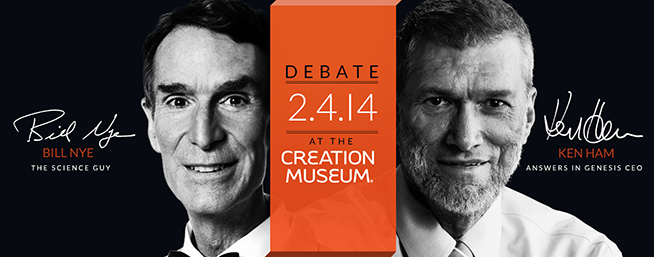 Today, Ken Ham, a young earth creationist, debated against Bill Nye an agnostic famous for “The Science Guy” program, on the topic: “Is creation a viable model of origins in today’s scientific era?” The debate was watched by over 500,000 people and generated a huge amount of interest. Here, I’ll review the debate section by section. Then, I’ll offer some thoughts on the content as well as a concluding summary. If you watched the debate, you may want to just skip down to the Analysis section. The debate may be watched here for a limited time (skip to 13 minutes in to start debate).
Ken Ham Opening
Ham began by noting that many prominent scientists argue that scientists should not debate creationists. He wondered aloud whether that might be because creationism is indeed a viable model and some don’t want that to be shown. He then showed a video of a creationist who was a specialist in science and an inventor, noting that creationism is not mutually exclusive from science.
The three primary points Ham focused on were 1) the definitions of terms; 2) interpretation of the evidence; and 3) the age of the universe is not observational science. Regarding the first, Ham noted that science means knowledge and so evolutionists cannot claim to be doing science. Regarding the second, he argued that both creationists and evolutionists observe the same evidence; they simply interpret that evidence differently. Regarding the third, Ham observed that “We weren’t there” at the beginning of the Earth and so we can’t know through observational science what happened.
Bill Nye Opening
Nye noted that the primary contention of the topic was to see whether the creation model lined up with the evidence. Thus, we must compare Ken Ham’s creation model to the “mainstream” model of science (his word). There are, he contended, major difficulties with Ham’s model, including the fossils found in layers in the Grand Canyon. He noted that there is “not a single place” where fossils of one type cross over with fossils of a different type or era. Yet, on a creation model, one would expect vast amounts of mixing. Thus, the creation model fails to account for the observational evidence.
Nye also noted that there are “billions of people ” who are religious and do not hold to creation science.
Ham Presentation
Ham again emphasized the importance of defining terms. He then presented a few more videos of creationists who are active scientists in various fields. One, a Stuart Burgess [I think I typed that correctly] claimed that he knew many colleagues who expressed interest in creationism but were afraid for their careers.
Non-Christians, Ham alleged, are borrowing from the Christian worldview in order to do science. The reason for this is because their own worldview cannot account for the laws of logic, the uniformity of nature, or the laws of nature. He asked Nye to explain how to account for these aspects of reality without God.
The past cannot be observed directly, he said, and concluded that we can’t be certain that the present is like the past. Thus, we must only deal with the observed facts that we can see now. On this point, the disagreements are over the interpretation of the evidence. That is, there is a set of evidence that both people like Nye and Ham approach. According to Ham, it is their worldviews which color their interpretation of the evidence such that they use the same evidence and get entirely contradictory conclusions.
The diversity of species which is observed is only, Ham argued, difference in “kind.” Thus, it cannot be used as evidence for evolution. The word “evolution” has been “hijacked” and used as evidence for unobservable phenomena extrapolated from that which is observed. The various species demonstrate a “creation orchard” as opposed to an “evolutionary tree.” One may observe different creatures, like dogs, each stemming from an a common origin, but none of these are traceable back to common descent, rather they exhibit discontinuity in the fossil record.
There is a major difference, Ham alleged, between “observational sciences” which looks at the things we can see in repeatable events now and “historical sciences” which extrapolates from the evidence gathered what happened in the past. We can never truly have “knowledge” regarding the historical sciences.
Nye Presentation
Nye began his presentation by noting that the debate took place in Kentucky and “here… we’re standing on layer upon layer upon layer of limestone.” The limestone is made of fossils of creatures which lived entire lives (twenty or more years in many cases) and then died, piled up on top of each other, and formed the limestone underneath much of the state. The amount of time needed for this is much longer than just a few thousand years.
Nye also turned to evidence from ice cores, which would require 170 winter/summer cycles per year for at least a thousand years to generate the current amount of ice built up. In California, there are trees which are extremely ancient, and some trees are even older, possibly as old as 9000 or more years old. Apart from the difficulty of the age of these trees, one must also wonder how they survived a catastrophic flood.
When looking at a place like the Grand Canyon, one never finds lower layer animals mixed with higher level animals. One should expect to find these given a flood. Nye challenged Ham to present just one evidence of the mixing of fossils of different eras together; he said it would be a major blow to the majority sciences.
If the flood explains animal life and its survival, one should observe the migration of animals across the earth in the fossil record; thus a Kangaroo should be found not just in Australia but along the way from wherever the Ark rested. However, these finds are not observed. Finally, the Big Bang has multiple lines of evidence which confirm it as the origin of the universe.
Ham Rebuttal
Ham argued that we can’t observe the age of the Earth. No science can measure it through observational evidence; rather it falls under historical sciences. One should add the genealogies in the Genesis account in order to find the age of the Earth. Whenever a scientist talks about the past, “we’ve got a problem” because they are not speaking from observation: they were not there.
Various radiometric dating methods turn up radically divergent ages for artifacts from the same time period and layer of rocks. The only infallible interpreter of the evidence is God, who provided a record in the Bible.
Nye Rebuttal
Rocks are able to slide in such a way as to interpose different dated objects next to each other.
Nye noted that Ham kept saying we “can’t observe the past,” but that is exactly what is done in astronomy: no observation of stars is not observing the past. Indeed, it takes a certain amount of time for the light to get to Earth from these various stars. The notion that lions and the like ate vegetables is, he argued, preposterous. Perhaps, he asserted, the difficulty is with Ham’s interpretation of the biblical text.
Nye then compared the transmission of the text of the Bible to the telephone game.
Ham Counter-Rebuttal
Ham again pressed that natural laws only work within a biblical worldview. There only needed to be about 1000 kinds represented aboard the ark in order to represent all the current species. Bears have sharp teeth yet eat vegetables.
Nye Counter-Rebuttal
Nye asserted that Ham’s view fails to address fundamental questions like the layers of ice. The notion that there were even fewer “kinds” (about 1000) means that the problem for Ham is even greater: the species would have had to evolve at extremely rapid rates, sometimes even several species a day, in order to account for all the differences of species today.
Q+A
I’ll not cover every single question, instead, I wanted to make note of two major things that came up in the Q+A session.
First, Nye’s answer to any question which challenged him on things like where the matter for the Big Bang came from was to assert that it’s a great mystery and we should find out one day. Second, Ham’s response to any question which (even hypothetically) asked him to consider the possibility that he would be wrong was to assert that such a situation was impossible. In other words, he presupposed he was correct and held to the impossibility that he could be wrong.
Analysis
Ken Ham
Ken Ham’s position was based upon his presuppositional apologetic. He continued to press that it is one’s worldview which colors the interpretation of evidence. The facts, he argued, remained the same for either side. It was what they brought to the facts that led to the radically different interpretations.
There is something to be said for this; it is surely true that we do have assumptions we bring to the table when interpreting the evidence. However, apart from the problem that Ham’s presuppositional approach with creationism is unjustified, Ham failed to deal with facts which really do shoot major holes in his theory. For example, it simply is true that, as Nye noted, when we observe the stars or distant galaxies, we are observing the past. Ham was just wrong on this regard. Moreover, other observational evidence (though not directly showing the past) does demonstrate that the Earth cannot be so young as Ham supposes. Furthermore, his hard and fast distinction between historical sciences and observational sciences is more of a rhetorical device than anything.
Ham’s position, I would argue, fails to account for the evidence which Nye raised (along with a number of other difficulties). Moreover, he continued to paint a picture of the Bible which rejects any but his own interpretation. In other words, he presented a false dichotomy: either young earth creationism or compromise with naturalism. However, I did appreciate Ham’s focus on the Gospel message. It was refreshing to have him present a call to belief in Jesus Christ as Lord and savior in front of such a massive audience.
Bill Nye
Nye did an okay job of trying to show that there may be more to the debate than simply creationism-or-bust for Christianity. Indeed, he actually went so far as to say there is “no conflict” between science and faith. Instead, he argued that Ham’s position is the one which generates such a conflict. His rebuttals provided some major reasons to think that Ham’s creationism could not account for the evidence. In particular, the difficulties presented by the proliferation of species after the flood and the fossil record were solid evidences.
However, Nye’s presentations had a couple difficulties. First, he failed to account for polystrate fossils: the very thing he challenged Ham to present. There really are such things as fossils which are found out of sequence (thanks to ElijiahT and SkepticismFirst on Twitter for this). That’s not to say they prove young earth creationism. Far from it. So Nye seems to have been mistaken on this point. Second, he presented the Big Bang theory as though Fred Hoyle somehow came up with the hypothesis, yet Hoyle is well known for denying the Big Bang. Third, the notion that the interpretation, translation, and transmission of the Bible through time is anything like the telephone game is a tiresome and simply mistaken metaphor.
Both
Both men were extremely respectful and I appreciated their candor. Each had several good points; each had some major flaws in their positions. The dialogue as a whole was interesting and helpful.
Conclusion
Readers by now should realize that I have to confess my title is a bit misleading. I was impressed by the tone of both speakers, though I thought they each made major gaffes alongside some decent points. The bottom line is that I find it unfortunate that we were exposed to a false dichotomy: either creationism or naturalism. There is more to the story. As far as “who won” the debate, I would argue that because of this false dichotomy, neither truly won. However, it seemed to me Ham had a more cohesive 30 presentation. That is, his presentation stayed more focused. Nye’s presentation jumped around quite a bit and had less directness to it. So far as “debate tactics” are concerned, one might chalk that up to a win for Ham. However, Nye successfully dismantled Ham’s presentation in the rebuttal periods. Thus, one was left with the impression that Ham’s view was indeed based upon his presupposition of its truth, while Nye was more open to the evidence. Again, I think both are wrong in many areas, but I hope that Nye’s tearing down of Ham’s position will not demonstrate to some that Christianity is false. As Nye noted, it may instead be Ham’s interpretation which is wrong.
There was much more to cover here than I could get to, so please do leave a comment to continue the discussion.
Links
Be sure to check out the page for this site on Facebook and Twitter for discussion of posts, links to other pages of interest, random talk about theology/philosophy/apologetics/movies and more!
Naturalis Historia– This site is maintained by a biologist who presents a number of serious difficulties for young earth creationism.
Gregg Davidson vs. Andrew Snelling on the Age of the Earth– I attended a debate between an old earth and young earth creationist (the latter from Answers in Genesis like Ken Ham). Check out my overview of the debate as well as my analysis.
Debate Review: Fazale Rana vs. Michael Ruse on “The Origin of Life: Evolution vs. Design”– Theist Fazale Rana debated atheist Michael Ruse on the origin of life. I found this a highly informative and respectful debate.
Reasons to Believe– a science-faith think tank from an old-earth perspective.
Other Reviews of the Debate
Ken Ham vs. Bill Nye post-debate analysis– The GeoChristian has a brief overview of the debate with a focus on what each got right or wrong.
Ken Ham vs. Bill Nye: The Aftermath– Luke Nix over at Faithful Thinkers has another thoughtful review. His post focuses much more on the topic of the debate as opposed to a broad overview. Highly recommended.
Ken Ham vs. Bill Nye: The Debate of the Decade?- Interested in what led up to this debate? Check out my previous post on the topic in which I urged Christians to write on this debate and also traced, briefly, the controversy leading up to this debate.
The image used in this post is was retrieved at Christianity Today and I believe it’s origin is with Answers in Genesis. I use it under fair use to critique the views. I make no claims to owning the rights to the image, and I believe the image, as well as “The Creation Museum” are copyright of Answers in Genesis.
SDG.
——
The preceding post is the property of J.W. Wartick (apart from quotations, which are the property of their respective owners, and works of art as credited; images are often freely available to the public and J.W. Wartick makes no claims of owning rights to the images unless he makes that explicit) and should not be reproduced in part or in whole without the expressed consent of the author. All content on this site is the property of J.W. Wartick and is made available for individual and personal usage. If you cite from these documents, whether for personal or professional purposes, please give appropriate citation with both the name of the author (J.W. Wartick) and a link to the original URL. If you’d like to repost a post, you may do so, provided you show less than half of the original post on your own site and link to the original post for the rest. You must also appropriately cite the post as noted above. This blog is protected by Creative Commons licensing. By viewing any part of this site, you are agreeing to this usage policy.
Disney’s “Frozen”- A Christian reflection
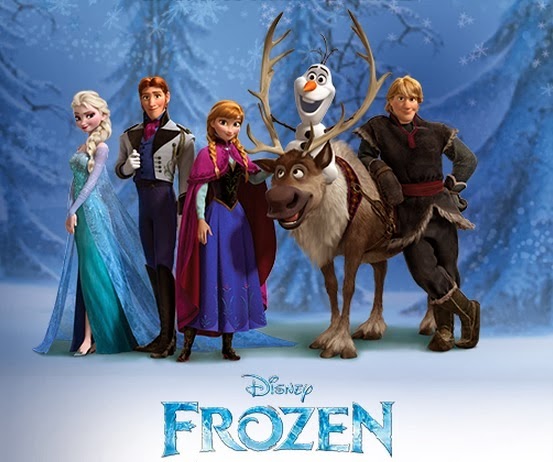 Disney’s “Frozen” has generated quite a bit of buzz, and for good reason. The movie is a feast for the eyes and ears. It’s a delight to watch, and it is filled with interesting thematic elements and humor. Moreover, as a Minnesotan, I feel right at home during this winter. Here, I’ll evaluate the movie from a worldview perspective. There will, of course, be SPOILERS hereafter.
Balance
The core of the tension in the movie is found in Elsa’s power. Her parents try to teach her to restrain it, but when put under duress, her power breaks free and she fled the castle. Interestingly, one may note that the total denial of her capability led to her cutting herself off from those who surround her.
Once she leaves the castle, she decides to break free of her self-restraint. The Oscar-nominated song “Let it Go” is indicative of this. Elsa sings:
Let it go, let it go!
Can’t hold it back anymore
Let it go, let it go!
Turn away and slam the door
I don’t care what they’re going to say
Let the storm rage on
The cold never bothered me anyway
It is interesting to see that there must be some balance between the two extremes. Elsa’s self-imposed restrictions upon her powers led to the separation from those she loved; her release endangers the entire kingdom. Her life, instead, must be lived along a balance. I can’t help but think of the words of Paul:
“I have the right to do anything,” you say–but not everything is beneficial. “I have the right to do anything”–but not everything is constructive.
Christian freedom is a freedom with restraint. There must be balance in the process of sanctification.
Women
Many have hailed “Frozen” for its portrayal of women. Neither Anna nor Elsa have a relationship foisted upon them for the main purpose of the plot. Anna’s developing relationship with Kristoff is made even more interesting by the contrast to her obsession with Prince Hans. Both women are independent. Some tongue-in-cheek humor could be found in the striking way in which both Kristoff and Elsa noted that Anna’s willingness to marry a man she just met that day was a bit absurd.
The plot is not driven by a love story; instead, it is driven by the need for reconciliation. Powerful, strong women are the ones who push the plot forward, while the men are sometimes helpful and even featuring shades of prince charming (Kristoff) or villainous and greedy (Hans). It is not that the portrayal of men is negative (as I just noted, there is a spectrum of motivations for the men involved); rather, it is that women are not seen as incapable of action. It is refreshing.
Our Own State
Elsa herself, far from being the quintessential villain, is someone with whom we may be capable of sympathizing. Like her, we are in a serious predicament brought about by our own actions: we live in need of aid. Our actions have sometimes horrific consequences. At other times, our consciences convict us of the wrongness of our deeds. We long to sing along with Elsa, crying out to “Let it Go” and stop caring anymore. But, like her, we realize that such a state is ultimately not be lauded but to be feared. We lash out at those we love due to our own guilt. Can there be salvation?
Christ
Interestingly, some have argued that the movie actually serves as an allegory of Christ. It is Anna who is wronged by Elsa, but it is only Anna who is able to right the wrong. The person who is wronged is the one who must make it right. Similarly, for the Christian, it is God who is wronged, but God is the only one capable of righting that wrong in the perrson of Christ. (I am here paraphrasing the post I linked to.)
The themes noted above come to fruition here. Our state is characterized by a recognition of the wrongness of our actions, but an incapability of bringing about the reconciliation required. Thus, it is up to the party wronged to bring about this reconciliation, through the true forgiveness offered in Christ.
Links
Be sure to check out the page for this site on Facebook and Twitter for discussion of posts, links to other pages of interest, random talk about theology/philosophy/apologetics/movies and more!
Disney’s Frozen might be the most Christian movie lately– This post reflects upon the movie as an allegory of Christ. As noted, I derived much of the last section from the argument made in this post.
The Image featured in this post is the intellectual property of Disney. I make no claims to ownership and have used it under fair use for the purpose of critical evaluation of the film. To my knowledge the image is freely available as promotional material.
SDG.
——
The preceding post is the property of J.W. Wartick (apart from quotations, which are the property of their respective owners, and works of art as credited; images are often freely available to the public and J.W. Wartick makes no claims of owning rights to the images unless he makes that explicit) and should not be reproduced in part or in whole without the expressed consent of the author. All content on this site is the property of J.W. Wartick and is made available for individual and personal usage. If you cite from these documents, whether for personal or professional purposes, please give appropriate citation with both the name of the author (J.W. Wartick) and a link to the original URL. If you’d like to repost a post, you may do so, provided you show less than half of the original post on your own site and link to the original post for the rest. You must also appropriately cite the post as noted above. This blog is protected by Creative Commons licensing. By viewing any part of this site, you are agreeing to this usage policy.
Sunday Quote! – Secularism as necessary in the Political Sphere?
 Every Sunday, I will share a quote from something I’ve been reading. The hope is for you, dear reader, to share your thoughts on the quote and related issues and perhaps pick up some reading material along the way!
Secularism in International Politics
The quote this week is from Elizabeth Shakman Hurd, The Politics of Secularism in International Relations
“[T]he objective of laicism is to create a neutral public space in which religious belief, practices, and institutions have lost their political significance… The mixing of religion and politics is regarded as irrational and dangerous. For modernization to take hold, religion must be separated from politics… Laicism adopts and expresses a pretense of neutrality… This makes it difficult for those who have been shaped by and draw upon this tradition [laicism] to see the limitations of their own conceptions of religion and politics.” -Elizabeth Hurd, “The Politics of Secularism in International Relations,” 5.
What do you think of the concept of laicism based upon this quote? Have you heard of it before? What are your thoughts on the possibility of the presumption of secularism in politics?
Links
Be sure to check out the page for this site on Facebook and Twitter for discussion of posts, links to other pages of interest, random talk about theology/philosophy/apologetics/movies and more!
Book Review: “The Myth of Religious Violence” by William T. Cavanaugh– I review the book which has led me to discuss the ways the category of religion is used to stigmatize the other and also forced me to rethink a number of issues. I highly recommend this book.
SDG.
Really Recommended Posts 1/31/14- “Frozen,” French and American Atheists, world religions, and more!
 Another week, another round of great reading served up for you, dear readers. I’m writing this in the midst of getting 4-6 inches of snow (it’s already at 3, and not showing signs of slowing…), so I can’t help but feel a little bit like throwing in a Christmas movie today and sipping some cocoa. Oh well! It also made me think of the movie “Frozen.” The topics this week are Disney’s “Frozen,” the conversion story of a French atheist, “Street Epistemology,” the sign of Jonah and world religions, something we can learn from atheists in the “Bible Belt,” and evangelicalism and liturgy.
Disney’s “Frozen” might be the most Christian movie lately– I found this article on the movie “Frozen” to be quite insightful and interesting. I highly recommend the movie as well as this article.
How God turns a French atheist into a Christian theologian– I found this conversion story simply fascinating for how God works in people’s lives. The insights from this theologian are profound, and they speak volumes for the importance of a reasoned faith.
A Look at the New “Street Epistemology” Movement– Eric Chabot analyzes the “Street Epistemology” movement forged by Peter Boghossian for creating atheists. Chabot’s approach is fairly unique in that he explores the movement through means of certitude and doubt–a primary weapon for Boghossian.
Bible Belt Bubble Burst? Wisdom from an atheist friend– The importance of a reasoned faith is shared eloquently here through reflection on a conversation with an atheist friend in the “Bible Belt” of the United States. Highly relevant.
The Sign of Jonah– Winfried Corduan is a major scholar of world religions. In this blog post, he offers up a video of how world religions are impacting the United States alongside a commentary on the “Sign of Jonah” which Jesus says will be given to his contemporaries.
Evangelical conservatives vs. Liturgical conservatives– Is it true that one can be either evangelical or liturgical? Is there such a thing as a perfect blend and harmony of evangelical conservatism and liturgy? Look no further than Lutheranism. Check out this post with some interesting insights.
James White on Molinism- Confusion about middle knowledge
 Recently, James White (a theologian and apologist) did a review of the debate on the Unbelievable? radio show between Paul Helm and William Lane Craig [accessible here; audio will begin immediately]. I thought that White did a decent job critiquing the synergistic tendencies in Craig’s exposition, but I also felt he failed to grasp the thrust of Molinism. I say this with great respect for White, whom I consider very thoughtful in the areas in which he engages. However, it is because of this respect that I write this with the hope that he–or at least others who wish to engage in this area–may be better equipped to engage with Molinism.* Although there are a number of places I could engage with White’s commentary, I want to focus on three particular areas, along with a fourth, methodological, issue.
Molinism and Free Will
The most problematic area in James White’s exposition came when he argued that free will is essentially vacuous on Molinism. His argument was essentially that the Molinist assertion that God knows what we will do in any given circumstance (the doctrine of middle knowledge) entails: “In this circumstance, this person will always do this” (emphasis White’s). Thus, he argued that Molinism is incapable of preserving human free will, which is ironically what Molinism was intended to preserve.
White based his argument on an example [actually a few examples, but this was most prominent]. While biking, he often came to a certain fork in the road. On one day, he may choose to turn one way, on another, he may choose to turn the other. Here’s the issue: White then said “The exact same conditions…” were in play in the scenario he described. The difficulty should be immediately obvious: White is very clearly mistaken that these are the “exact same conditions.” One day is not “exactly the same” as another day. Period. Thus, White’s objection fails. It fails for another reason, which we’ll explore in the next section, but for now it is enough to point out that White bases this objection on the notion that humans are able to choose differently in similar circumstances. That is, although he used the terminology of “the exact same conditions,” his example is merely that of similar conditions. His objection therefore fails.
Confusion about Middle Knowledge
It pains me to point this out for someone who I value as much as White, but I must object that it appeared as though White was disturbingly unfamiliar with what middle knowledge actually is. He continually objected to middle knowledge, as shown above, by arguing that people should be able to choose differently on Molinism but may not. Now, I don’t know how much White has read in this area, but surely if he’s going to engage with Molinists like Craig, he should–as someone whom I recognize as taking great care to read and engage with primary sources–read and understand Molina [let me be clear: I’m not saying he never has–I do not know what White has or has not read and would not claim to know]. Molina himself answers White’s objections in this regard very explicitly at a number of points in his On Divine Foreknowledge.
First, White is mistaken when he portrays Molinists as holding that middle knowledge determines choice. He has it backwards. It is the choices which “would be made” which determine middle knowledge. If one would have chosen differently, middle knowledge would have had different content. This is absolutely central to Molina’s view, and I’ll just quote him once to prove it. In his exposition of how various church fathers allegedly taught things similar to his own view, Molina wrote, “…when free choice by its innate freedom indifferently chooses this or its opposite, then God will bring it about that from eternity He foreknew nothing else, they [the church fathers he is favorably citing] are obviously teaching not that things will come to be because God foreknows that they will, but rather just the opposite” (180, emphasis mine).
Now whether Molina accurately exegeted these church fathers, and regardless of the objection which clearly will follow such a statement (“How is this possible?”–something Molina himself answers in detail in On Divine Foreknowledge), the clear and plain teaching of Molina is exactly opposite of what White seemingly attributed to him: namely, the notion that God’s middle knowledge determines free choices. Rather, it–even according to Molina–is exactly the opposite. Thus, White’s critique in this regard is simply wrong.
Confusion about Middle Knowledge II
A final difficulty with White’s critique was that he, at at least one identifiable point, confused middle knowledge with free knowledge. White was criticizing Craig by saying “if you’re truly free” you should be able to choose a different thing from what middle knowledge states (such as buying a different car than the Mercedes you wanted).
White’s critique was off base for two primary reasons. First, as shown above, he failed to recognize the absolute core of Molina’s doctrine of middle knowledge: that middle knowledge is not dependent upon foreknowledge. Second, White’s critique fails to recognize that middle knowledge interacts with free knowledge (God’s comprehensive knowledge of all things which will occur in creation). The reason for this is because White argues that one, if one has freedom, cannot “violate the middle knowledge… that was supposedly true.”
Here White seemingly confused the free knowledge of God with middle knowledge. It is true that the free knowledge of God cannot have been otherwise, for it is a result of the decree of creation. However, what White failed to recognize is that free knowledge is posterior to middle knowledge and so the fact remains that on Molina’s system (as demonstrated above), one can, in effect, change middle knowledge which would thus bring about a different state of affairs.
Again, the question is not here how this may be the case. Instead, what I am arguing is that White failed to correctly explain Molina’s position and so his critique actually failed to be centered upon the view against which he was arguing.
Methodological Issue: Philosophy?
I was surprised to see White comment so frequently on how this or that “may fly in philosophy classrooms” but apparently would not fly in the “real world” [this latter is not a quote, but he contrasted philosophy classrooms with the world outside of them]. He repeated this claim–or something similar–a number of times. I’ll keep this brief: White’s own engagement with Molinism was almost entirely philosophical. He continued to bring up the grounding objection (a philosophical objection if there ever was one), and he also pressed the attack by saying that Molinism cannot adequately account for the free will it is supposed to preserve (again, a purely philosophical argument). I was surprised to see this from White because I do really think he is quite a careful thinker, but the bottom line is that in denigrating philosophy while using a number of philosophical objections to Molinism he appeared rather inconsistent. Philosophy is a tool of the theologian, and White himself uses it in a number of ways. I would urge him to drop this kind of tongue-in-cheek dismissal of philosophical reasoning, even within theology. It seems to me he himself finds philosophical objections to theological systems to be of worth.
Conclusion
I commend White for taking on a difficult issue, and I readily admit he has more knowledge on any number of areas than I can begin to claim. I highly recommend much of his work, and even where he and I disagree, I have found him to be thoughtful and challenging. That said, I maintain White is mistaken in a few aspects of his interpretation of molinism. In particular, he doesn’t seem to acknowledge the broader philosophical framework behind the view. He also failed to allow for Molina’s own very explicit distinctions and definitions, and thus his critique actually declared Molina’s view to be the exact opposite of that which Molina actually held. I hope my own critique will be seen not as an attack, but rather as a call for clarification for White and others who hope to interact with Molinism.
*Full disclosure: I am a Lutheran with Molinist leanings, though I reject the synergism Molina himself held to. I view Molinism as a philosophical framework as opposed to a complete system.
Links
Be sure to check out the page for this site on Facebook and Twitter for discussion of posts, links to other pages of interest, random talk about theology/philosophy/apologetics/movies and more!
Sources
Luis de Molina On Divine Foreknowledge, edited by Alfred Freddoso (New York: Cornell, 1988).
James White, “The Dividing Line,” January 16, 2014. Accessible here. The primary interaction starts a ways into the show.
SDG.
——
The preceding post is the property of J.W. Wartick (apart from quotations, which are the property of their respective owners, and works of art as credited; images are often freely available to the public and J.W. Wartick makes no claims of owning rights to the images unless he makes that explicit) and should not be reproduced in part or in whole without the expressed consent of the author. All content on this site is the property of J.W. Wartick and is made available for individual and personal usage. If you cite from these documents, whether for personal or professional purposes, please give appropriate citation with both the name of the author (J.W. Wartick) and a link to the original URL. If you’d like to repost a post, you may do so, provided you show less than half of the original post on your own site and link to the original post for the rest. You must also appropriately cite the post as noted above. This blog is protected by Creative Commons licensing. By viewing any part of this site, you are agreeing to this usage policy.
Really Recommended Posts 1/25/14- YA Entertainment, Inerrancy, “Lone Survivor,” Feminism, and Jehovah’s Witnesses
Another week, another list of the internet’s finest brought to you, dear reader. These are some extremely diverse topics, and I’m excited to read your own reactions to the posts. I’ve lined up cultural apologetics, inerrancy, feminism, the “Lone Survivor” flick, and Jehovah’s Witnesses.
Trending Young Adult Entertainment in 2013– Anthony Weber wrote an excellent summary tracing the trends we may see in YA entertainment from 2013. I highly recommend engaging with this post as well as keeping on top of things with YA entertainment, because it shows where our culture is shifting.
What Kind of Evidence Could Nullify Inerrancy?– What does it mean to make the claim that the Bible is inerrant? Does it commit one to an a priori rejection of evidence? It seems to me that this post brings up some of the tension with inerrancy and hermeneutics. I, of course, affirm inerrancy, but I think it is important to distinguish between inerrant text and interpretation. This post brings up some interesting points for discussion with inerrancy.
Lone Survivor and Insufferable Anti-American Self-Righteousness– The film “Lone Survivor” has caused quite a bit of critical discussion. Here, a soldier reflects on the reaction to the film. I share this post with the caveat that I have not seen the film and so I’m sharing it because I thought it was an interesting viewpoint.
Sarah Bessey’s Jesus Feminist– What does it mean to be a feminist for Jesus? Does it actually mean anything? Are the terms contradictory? Check out this look into the book Jesus Feminist.
What Do Jehovah’s Witnesses Believe?– The title seems self-explanatory, but there is more to this post than a simple exposition of Jehovah’s Witness beliefs. Instead, it engages with the beliefs of Jehovah’s witnesses and provides some ways to engage with others.

 J.W. Wartick - Reconstructing Faith