Christianity
“Peter Boghossian, Atheist Tactician”- A brief look at the e-book by Tom Gilson
 I recently downloaded Tom Gilson’s evaluation of Peter Boghossian’s epistemology for my Kindle. The work is witty but also to the point. Gilson launched a full-on attack against Boghossian’s mission to create atheists. The best parts of the book–and let me be clear, I think the entire work is essential reading–were his critique of Boghossian’s view of faith and his appeal to Christians regarding the importance of the topic.
Gilson makes it clear how important it is to provide a reasoned answer to Boghossian’s view. However, he goes much further than that; he notes that Boghossian’s mission is specifically to destroy the faith of Christians. For any Christian, this should be a disturbing thing to hear. Unlike many other atheists, Boghossian seems to have a plan: he’s going to actively work to proselytize Christians for atheism. He may be called an atheist missionary. Gilson called Christians to see this as a serious threat for Christianity. It’s not that Christianity doesn’t have the resources to answer Boghossian’s arguments; instead, it is that we have not equipped ourselves to do so. The average Christian-in-the-pew is basically incapable of refuting Boghossian-esque reasoning, and so will, possibly, have their faith seriously challenged by arguments which are basically vacuous.
Part of Boghossian’s mission, Gilson notes, is to redefine the meaning of faith. For Boghossian, faith should always be understood as “pretending to know what one does not know” (kindle location 118). Gilson notes that not only would such a redefinition be catastrophic for people of faith [of “pretending to know…”], but it is also a completely invented definition with no basis in reality. That is, Boghossian sems to be pretending to know what he doesn’t know. On his own definition, he is very faithful.
Why think that Boghossian’s definition is wrong? Gilson offers a number of points. Among them is the fact that the redefinition of the term cannot account for its usage among the faithful. Gilson shows how the redefined “faith” would lead to an absurd meaning for any number of texts in the Bible. Not only that, but he also cites a number of Christian thinkers to demonstrate that the usage of “faith” is much more grounded in evidence and true belief than it is grounded in a “pretend” world. By the time Gilson has finished dismantling Boghossian’s usage, it becomes clear that the latter is truly living in his own fantasy. The problem is that if Christians do not equip themselves to combat it, the dream may become reality.
There are a number of other excellent portions of this quick read, such as Gilson’s direct interaction with a number of Boghossian’s interviews and writings. He also approaches Boghossian’s work from several angles, providing a solid ground for the refutation of the atheistic work.
In short, I implore you to pick up and read this work by Gilson. He has done an excellent job of showing how Boghossian’s work may prove to be a challenge to Christianity. But the greater service he has done is provided a tool to equip believers to combat this challenge. Read it, spread it. Keep the faith.
Links
You may get Gilson’s e-book for free at this link [I am unsure of how long this offer will last]. You may also support the ministry of Ratio Christi by purchasing the e-book.
Be sure to check out the page for this site on Facebook and Twitter for discussion of posts, links to other pages of interest, random talk about theology/philosophy/apologetics/movies and more!
Source
Tom Gilson, Peter Boghossian, Atheist Tactician (2014).
SDG.
——
The preceding post is the property of J.W. Wartick (apart from quotations, which are the property of their respective owners, and works of art as credited; images are often freely available to the public and J.W. Wartick makes no claims of owning rights to the images unless he makes that explicit) and should not be reproduced in part or in whole without the expressed consent of the author. All content on this site is the property of J.W. Wartick and is made available for individual and personal usage. If you cite from these documents, whether for personal or professional purposes, please give appropriate citation with both the name of the author (J.W. Wartick) and a link to the original URL. If you’d like to repost a post, you may do so, provided you show less than half of the original post on your own site and link to the original post for the rest. You must also appropriately cite the post as noted above. This blog is protected by Creative Commons licensing. By viewing any part of this site, you are agreeing to this usage policy.
Ken Ham vs. Bill Nye- The Debate of the Decade?
 Why care about something written about a debate that hasn’t happened yet? Well frankly, because you need to be prepared for whatever happens afterwards, and the best way to do so is to reflect upon the issue at hand. I decided to do a little research, and I put together this post to help frame the upcoming debate. I also have a few comments on it throughout.
Be Prepared
Fellow Christians, we need to be prepared for this debate. We need to be posting on it beforehand, during, and afterwards. Why? A simple look at Google Trends shows that the search traffic for Ken Ham has spiked hugely since the debate was announced. Side-by-side comparison of Bill Nye and Ken Ham shows both have seen an increase of search traffic from it. To put it simply: people are talking and thinking about this. We need to have a response ready throughout so that the we may demonstrate the reason for the hope within us.
Bill Nye Starts the Fire
The origins of this debate go back all the way to the 17th and 18th century, but we’ll go a bit more modern here and start with Bill Nye’s strong words against creationism. In a video, he began by saying that “Denial of Evolution is unique to the United States…” Such a denial is like “trying to do geology without believing in tectonic plates.” A worldview which denies billions of years, which explains much of the data we see, becomes “untenable” and “inconsistent.” He then addressed the “grown ups” and said “if you want to deny” the scientific evidence for the age of the universe… “that’s fine, but don’t make your kids do it… we need scientifically literate voters [for the future].” Regarding the case for a young earth “there’s no evidence for it.” Nye noted that he believes the young earth worldview won’t exist within a couple centuries.
Answers in Genesis Responds
The young earth creationist group, Answers in Genesis, was quick to respond to Nye’s comments. In a video entitled “Ken Ham Responds to Bill Nye ‘The Humanist Guy,'” Ham was quick to denounce Nye’s attack on creationism. First, he called out Nye for having an “Agenda to teach children not to believe in God…” He went on to say that Bill Nye doesn’t actually understand science. Tying evolutionism to engineering, Ham argued, is nonsensical. Ham felt that Nye’s comments made creationism seem equivalent to child abuse. Instead, he said one should view the teaching that children are “just animals” and there’s no God is the real child abuse. “It’s really people like Bill Nye that are damaging kids. Creationists are telling children that they’re special… made in the image of God.”
Ham alleged that if evolutionism were true, then people should just be able to see it. Instead, he argued that people like Nye have to protect children from hearing any alternative theories so that they don’t question what they’re being taught. “You don’t teach them to think critically… you just want to make sure they only hear about evolution.” Creationists, Ham said, should be happy to teach their children about evolution so that they are able to think critically about it.
False Dichotomy
My primary issue with this debate is that it seems both sides are putting forth a false dichotomy: the only two options, it is alleged, are either naturalistic evolutionism or young earth creationism. However, this does not even begin to exhaust the range of possibilities regarding the origins debate. There are theistic evolutionists, old earth creationists, progressive creationists, and more.
The problem is that when the average person on the street sees a debate like this, they’re going to assume the options they observe are the only positions out there. Suppose Ken Ham gets beaten badly in this debate; in that case, Christians who now think young earth creationism is the only option will believe that it cannot stand up to scrutiny, and–by extension–their faith cannot stand up to scrutiny either. Similarly, suppose Bill Nye gets beaten badly; in that case, Christians may attach their belief to young earth creationism, a position which does not seem viable.
Other Problems
Bill Nye’s comments regarding what parents should or should not do sounds quite a bit like indoctrination. That is, he urged creationist parents not to teach their parents creationism. Now, even though I disagree with Ham’s form of creationism, I do think that parents should be allowed to pass their beliefs on to their children. To say otherwise seems to me an affront to freedom of expression.
As far as Ken Ham’s comments go, I’m not convinced by his assertion that one’s desire to teach evolution must be linked to a desire to teach kids not to believe in God. After all, later in the same video he urges creationist parents to teach their kids about evolution. Surely he’s not saying that creationist parents are trying to teach their children there’s no God when they teach them about evolution! Ham’s comments seem to do the same thing Nye’s did: paint a picture of a false choice between naturalism and his brand of creationism.
Conclusion
I’m not secret about my views regarding young earth creationism. I simply do not think it accounts for the biblical text or the natural record. Neither do I think a naturalistic perspective is capable of dealing with all the data at hand. However, whatever your view, I still strongly encourage you to consider 1) writing on this topic from your perspective. The more Christian voices we have talking about this, the better. Also, 2) don’t fall victim to the false dichotomy offered by this debate. The extremes are not the only options.
Links
Be sure to check out the page for this site on Facebook and Twitter for discussion of posts, links to other pages of interest, random talk about theology/philosophy/apologetics/movies and more!
Check out the live stream of the debate here (the debate is on 2/4/14 at 7PM ET).
The image used in this post is was retrieved at Christianity Today and I believe it’s origin is with Answers in Genesis. I use it under fair use to critique the views. I make no claims to owning the rights to the image, and I believe the image, as well as “The Creation Museum” are copyright of Answers in Genesis.
SDG.
——
The preceding post is the property of J.W. Wartick (apart from quotations, which are the property of their respective owners, and works of art as credited; images are often freely available to the public and J.W. Wartick makes no claims of owning rights to the images unless he makes that explicit) and should not be reproduced in part or in whole without the expressed consent of the author. All content on this site is the property of J.W. Wartick and is made available for individual and personal usage. If you cite from these documents, whether for personal or professional purposes, please give appropriate citation with both the name of the author (J.W. Wartick) and a link to the original URL. If you’d like to repost a post, you may do so, provided you show less than half of the original post on your own site and link to the original post for the rest. You must also appropriately cite the post as noted above. This blog is protected by Creative Commons licensing. By viewing any part of this site, you are agreeing to this usage policy.
Downton Saturday: Downton Abbey Season 4, Episode 2
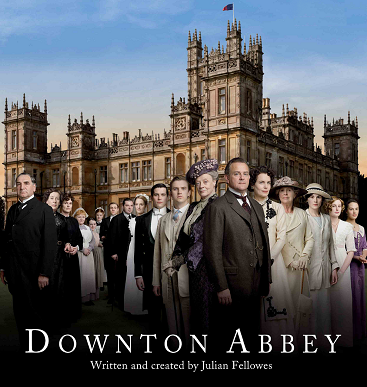 Here, I will be analyzing each episode of the fourth season of Downton Abbey from a worldview perspective. There will, of course be SPOILERS for each episode, and I will assume readers know about each previous season and episode’s content as well. It will be assumed that readers are familiar with the characters and circumstances. I will not be summarizing the plot of the episode; I will merely interact with the content from a perspective of worldview. BE COURTEOUS AND DO NOT BRING UP LATER EPISODES THAN THE ONE DISCUSSED HERE IN YOUR COMMENTS.
That Escalated Quickly
Anna Bates. If you’ve seen it, you know already. I don’t really know what to say. From a worldview perspective, which is my intention with these posts, it is clear that this horrific tragedy deserves punishment. Moreover, the show did a good job of showing the horror of the situation without being explicit–a subtlety from which much contemporary media could learn. I knew something terrible would happen to the Bates family, but I didn’t expect this.
One thing which was abundantly clear is that something like this should not be allowed to continue. If there exists a situation in which anyone is afraid to report abuse, that is an inherently unjust situation and Christians must work against it.
I’m honestly still a bit emotionally disturbed by this episode and it is hard to comment further. Let me know your thoughts in the comments.
Gambling
The episode handled the dangers of gambling in an interesting way. Initially, I thought they’d be going full-court press on the real harms of the activity. Lord Grantham, who can hardly afford to lose money as he’s thinking about how to pay taxes on the estate, loses an undisclosed amount. Moreover, he conceals this loss from his wife, who deserved to know. But, in stepped Michael Gregson, the [married] man with whom Edith is in love. He had some “unscrupulous” times in his past and had figured out that the poker table was infested with a cheat. He then turned the tables on the cheat, recovering the money Grantham and others had lost.
Thus, the episode could have done more to show the great dangers of gambling. Instead, it seemed to make light of the situation. Though, for the sake of the plot, the writers may have simply been using this to endear Gregson to Grantham.
Predictions
I must unfortunately predict the most dire things imaginable. Although I didn’t post it here, one of my predictions–that something horrific would happen to the Bates family because they are too wonderful–already happened. Now, I think that Anna will become pregnant from the travesty and the show might use it to make a case for abortion. I know, that reads like just about the worst direction it could go, but I just think that’s where it will end up. Believe me, if/when it comes to that point I’ll have a lot to say.
I was made distraught by this episode. What are your reactions? Remember to stay spoiler free for later episodes.
Links
Be sure to check out the page for this site on Facebook and Twitter for discussion of posts, links to other pages of interest, random talk about theology/philosophy/apologetics/movies and more!
The image is copyright BBC and I do not claim any rights to it. To my knowledge it is freely available for purposes of promotion/critique and I use it under fair use.
SDG.
——
The preceding post is the property of J.W. Wartick (apart from quotations, which are the property of their respective owners, and works of art as credited; images are often freely available to the public and J.W. Wartick makes no claims of owning rights to the images unless he makes that explicit) and should not be reproduced in part or in whole without the expressed consent of the author. All content on this site is the property of J.W. Wartick and is made available for individual and personal usage. If you cite from these documents, whether for personal or professional purposes, please give appropriate citation with both the name of the author (J.W. Wartick) and a link to the original URL. If you’d like to repost a post, you may do so, provided you show less than half of the original post on your own site and link to the original post for the rest. You must also appropriately cite the post as noted above. This blog is protected by Creative Commons licensing. By viewing any part of this site, you are agreeing to this usage policy.
Really Recommended Posts 1/17/14- Gospels, Abolish Human Abortion, the Kalam, and more!
 Here we have another round of really recommended posts. This one features a couple posts directed inwards at fellow Christians or people with whom we agree alongside a range of interesting topics. It is important to maintain a high standard, so sometimes it is necessary to give criticism where it is due. Drop a comment, let me know what you thought.
A Fundamental Flaw Behind Abolish Human Abortion– A group which I came out strongly in support of some time ago has really started to take a few turns with which I cannot agree. The group is known as Abolish Human Abortion. I think a lot of what they were doing is quite excellent, but I cannot abide by a few of their primary beliefs. Check out this great analysis of one of the major issues with the group.
The kalam cosmological argument defended in a peer-reviewed science journal– The title says it all, though the post does have some nice quotes and bits of information. The kalam cosmological argument is an extremely powerful argument for the existence of God. I have a few posts on it myself.
Dear Parents with Young Children– The importance of bringing your children to church is inestimable. Moreover, choosing a church where Law and Gospel are clearly proclaimed, and a basis for belief is preached is essential. Thank you to those parents who bring their children to church! Check out this great post about the topic.
The Case for the Eyewitness Status of the Gospel Authors– Are there any reasons to think those who wrote the Gospels knew what they were talking about? Here, J. Warner Wallace–who, as a homicide detective, has some experience with eyewitness accounts–argues that the Gospels show good evidence for thinking they are eyewitness accounts.
A Review of 5 Views of Biblical Inerrancy– I do not agree with everything Norman Geisler has to say, but I think portions of this review are of critical importance. I haven’t quite finished the whole article, and I’ve only just started reading the book, but I thought this post was worth passing along for others who find the topic of interest.
“Theological Colonialism”? On theological issues which are ‘only popular in America’
 I recently picked up the latest in the Zondervan “Counterpoints” series: “Five Views on Biblical Inerrancy.” One of the essays, by Michael F. Bird, is entitled “Inerrancy is Not Necessary for Evangelicalism Outside the USA.” I flipped through it and I thought the author certainly had some good things to say. But, I admit that I find the apparent thrust of Bird’s argument is quite mistaken.
The notion that certain theological issues are essentially uninteresting to folks on the other side of either ocean is one I have read (and heard in person) on more than one occasion related to various Christian doctrines. Bird’s own presentation, regarding inerrancy, argues that the CSBI (Chicago Statement on Biblical Inerrancy, a document he is critiquing) demonstrates “An Unfortunate Trend toward Theological Colonialism” (the capitalization is due to this being a section heading). This trend might be discerned thus: “there are thousands of churches around the world that are both evangelical and orthodox and get on with their ministry without ever having heard of the CSBI and without ever using the word inerrancy in their statement of faith” (153-154, cited below).
Very well. Suppose we grant Bird this fact. I’m sure it actually is a fact. But so what? What possible relevance does this have for the truth and claims of inerrancy? Bird’s own conclusion is that, basically, we should not expect evangelicals across the world to saddle themselves with a view that is essentially unfamiliar to them. I think this may be a fair point, but it raises a couple concerns: first, the actual truth value of whatever doctrine is in question; second, concern for continuing to grow in knowledge and faith.
Suppose that you believe a doctrine is of great importance to how one might view other doctrines. Now, someone comes along and informs you that there are people in some area of the world who don’t know about that doctrine or that that area of the world is generally unconcerned with it. Should this somehow lead you to think that the doctrine is unimportant because people outside of your own cultural milieu do not view it as such? Certainly not! It may cause you to reflect upon its alleged importance and perhaps even come to a new view, but the notion that a specific doctrine is largely unimportant to certain groups of people does nothing, in itself, to downplay the actual importance of that doctrine. Nor does it impact the truth value of that doctrine in any way.
Now, at risk of being accused of “theological colonialism,” I am going to also suggest that the apparent disinterest in an important doctrine is less reason to think the doctrine is unimportant than it is reason to perhaps try to inform others of the doctrine’s actual importance. Returning to the example above, suppose the disinterest caused you to reflect upon the doctrine and you concluded that yes, it is actually deeply important. Would you not be concerned that others do not share your conviction, such that perhaps you may feel obligated to inform others about the centrality of said doctrine?
I’m not trying to suggest anyone without concern for inerrancy is ignorant or foolish. But I do think there is something to be said for the notion that a doctrine like inerrancy (or eschatology, or a view of creation, etc., etc.) is something worth exploring and learning about. We are called to expand our knowledge, not be content to sit in the knowledge of the faith we already have. I have become aware of entire realms of theological debates which I didn’t even know existed by reading authors–both international and, yes, American. I have found topics I was disinterested in to be deep, engaging, and edifying. I was subsisting on milk, but I have pursued solid food, and continue to do so [Hebrews 5:12ff]. I hope to continue to be enlightened by international theologians. But I would also hope that international theologians would not dismiss a doctrine because it comes from America.
Finally, is not the very notion that ‘if a doctrine is only of concern to American Evangelicals, then it should be moderated or reigned in’ itself a form of theological colonialism?
Links
Be sure to check out the page for this site on Facebook and Twitter for discussion of posts, links to other pages of interest, random talk about theology/philosophy/apologetics/movies and more!
Source
Michael Bird, “Inerrancy is Not Necessary for Evangelicalism Outside the USA” in Five Views on Biblical Inerrancy (Grand Rapids, MI: Zondervan, 2013), 145-173.
SDG.
——
The preceding post is the property of J.W. Wartick (apart from quotations, which are the property of their respective owners, and works of art as credited; images are often freely available to the public and J.W. Wartick makes no claims of owning rights to the images unless he makes that explicit) and should not be reproduced in part or in whole without the expressed consent of the author. All content on this site is the property of J.W. Wartick and is made available for individual and personal usage. If you cite from these documents, whether for personal or professional purposes, please give appropriate citation with both the name of the author (J.W. Wartick) and a link to the original URL. If you’d like to repost a post, you may do so, provided you show less than half of the original post on your own site and link to the original post for the rest. You must also appropriately cite the post as noted above. This blog is protected by Creative Commons licensing. By viewing any part of this site, you are agreeing to this usage policy.
The Bible Is Not One Book
 I was doing some research recently for a lengthy (book length!) project I am working on and was searching Amazon for some books on Bible prophecy. I came upon a work by John Walvoord called Every Prophecy of the Bible

I was perplexed by his (a male, judging by the picture) objection to confirming the Bible as true through prophecy. He wrote, “The book basically runs off a list of biblical prophecies that have supposedly been fulfilled. Amazingly pretty much all the evidence for these so called fulfilled prophecies comes from the same book making the prophecies in the first place ie the bible.” He then proceeded to ridicule Christians who do believe this as holding to an “infantile” belief.
The Objection
Unfortunately, this is not the first time I have seen an objection like this. Put simply, the objection is that the Bible can’t confirm itself, because that would be a circular argument. In other words, one can’t use material from one part of the Bible to confirm other parts of the Bible because then one is arguing for the truth of the Bible from the Bible.
The Problem
Most people should immediately see what the problem is. Although the Bible as we have it today is a single “book” in the sense that its contents share the same binding, it is really a collection of independent works written across over a thousand years by various authors in different parts of the world. In other words, the Bible is not “one book,” at least in the sense that one needs to maintain for this objection. Thus, if there is a prophecy found in one book which we know to be earlier than a book which is later that records its fulfillment, then there seems to be at least some evidence, prima facie, for the truth of the prophecy. (Of course this would be contingent upon the historical accuracy of the books, etc., etc. but the simple fact of an alleged prophecy’s existing before its fulfillment is an interesting facet to consider.)
A friend, Anthony Weber, made an analogy: think of the Bible as a library of books. Would it not be silly to think you couldn’t pull one book of the shelf and say that it confirmed another book? Suppose each book was about history, and one made a mere mention of a topic, while another featured a more detailed description. Would we not be surprised if someone came along and objected, saying “Well, they’re in the same library, so we can’t trust them!”
Inerrancy?
Christians need to realize that this has implications for doctrine as well. For example, those who maintain inerrancy–and I strongly believe that consistent Christians should do so (see my arguments to this end and defense of the doctrine here)–may be concerned that viewing the Bible in this fashion comes in danger of breaking it up piecemeal and pitting each segment against the others. But this is not what follows at all. Instead, it is simply an acknowledgment that the Bible is a collection of works in different genres written at different times in different places which, when put together, form a coherent whole.
Concluding call for intellectual honesty
In light of what I have explored, I want to first issue a call to the atheists out there: I know that you (atheists) do not all hold to objections like this and would find someone else using this objection a bit alarming. I call you to challenge your fellow atheists to a more honest interaction with positions of faith. If you want to criticize someone else’s position, fine. But do it without completely misrepresenting them. Call out your fellow atheists when they try to put forth this kind of drivel as a serious objection to Christianity. I try to call out fellow Christians when they do the same with other views.
To my fellow Christians: be aware that objections like these are not the backbone of atheism. Frankly, I think people like “gavin” are just grasping at anything to maintain unbelief and ridicule others they choose to look down on as “infantile.” Let’s engage with people who make these objections, but if they persist, dismiss the objection as the ridiculous notion it is. Finally, if you catch yourself treating the Bible like one book without any distinction in genre, time, place, etc., stop yourself. It is important to note the Bible is united in message, but God used different people as they were “carried along by the Holy Spirit.” It wasn’t delivered all by divine dictation.
Links
Be sure to check out the page for this site on Facebook and Twitter for discussion of posts, links to other pages of interest, random talk about theology/philosophy/apologetics/movies and more!
SDG.
——
The preceding post is the property of J.W. Wartick (apart from quotations, which are the property of their respective owners, and works of art as credited; images are often freely available to the public and J.W. Wartick makes no claims of owning rights to the images unless he makes that explicit) and should not be reproduced in part or in whole without the expressed consent of the author. All content on this site is the property of J.W. Wartick and is made available for individual and personal usage. If you cite from these documents, whether for personal or professional purposes, please give appropriate citation with both the name of the author (J.W. Wartick) and a link to the original URL. If you’d like to repost a post, you may do so, provided you show less than half of the original post on your own site and link to the original post for the rest. You must also appropriately cite the post as noted above. This blog is protected by Creative Commons licensing. By viewing any part of this site, you are agreeing to this usage policy.
Downton Saturday: Downton Abbey, Season 4, Episode I
It should be known that I’ve quite enjoyed Downton Abbey. I’ll be watching Season 4 as it airs on PBS, and sharing a few comments from a worldview perspective on each episode, provided I have time, of course! There will, of course be SPOILERS for each episode, and I will assume readers know about each previous season and episode’s content as well. It will be assumed that readers are familiar with the characters and circumstances. I will not be summarizing the plot of the episode; I will merely interact with the content from a perspective of worldview. BE COURTEOUS AND DO NOT BRING UP LATER EPISODES THAN THE ONE DISCUSSED HERE IN YOUR COMMENTS.
Trust
It seems to me that this episode was particularly focused upon the issue of trust. Lady Grantham’s trust in Thomas was increased, but it was actually merely a fluke that Thomas’ hint about the nurse’s mistreatment turned out to be true. Trust can easily be misplaced. Of course, as my wife pointed out, it is possible to see this scene through the lens of “What you intended for evil, God intended for good” (see Genesis 50). Clearly, Thomas’ hint turned out to bring about a great good: the ridding of an abusive nurse.
Another example might be found in the young man’s trust of Rose’s story about being a housemaid. Although these may appear to be “white lies,” it is clear later in the episode that such lies can potentially bring about great harm. The first aspect is the fight the young man got in over Rose. The second potential for harm would be when the man showed up at Downton itself seeking Rose. Although the situation was handled comically, it seems clear it could also have ended in great emotional harm for the young man and possibly Rose as well.
Of course, “Downton Abbey” is largely centered around themes of trust. The way viewers see the interplay of truth and lie is part of the interest of the show. We know who is trustworthy (usually) and not, but the characters do not. It is telling that so many people turn out to have little value so far as trust is concerned.
Women
The times, they are a-changing! The women of Downton are seeking larger roles for themselves, whether it is Rose’s constant striving to explore and be entertained, or Lady Mary’s taking her rightful place as a co-owner of Downton. The show has continually done a good job of showing the interplay of power between patriarchy and the emergence of more egalitarian views in society. Of course much of this is steeped in our own cultural biases as a show is made about the past, but that doesn’t make it any less interesting.
The relationship between Lady Edith and the editor (whose name I can’t recall at this moment) will be interesting to monitor. For the first season in particular, Edith was kind of the whipping child for the show. Everyone seemed to take her for granted. Yet she has emerged as her own person, only to get involved with a married man. Of course, the man’s marriage is to someone who is, with the standards of the time, deemed mad. One might wonder how such a relationship will play out. Moreover, from a worldview perspective, how might we deal with the question of his attempt to divorce his wife due to insanity to marry another? Part of the difficulty of analyzing the situation migIht be found in the fact that (as my wife pointed out), we never meet his wife. Insanity could mean any of a broad spectrum of things; so it is hard to pinpoint the meaning and discussion here. Edith’s whole character continually raises tough questions, which makes her an excellent foil.
Prediction
My primary prediction for this season is that the housemaid that Lord Grantham kissed is going to turn up; likely dredged up in some fashion by Thomas or some other character with a major agenda against the family.
Conclusion
There is, of course, much more to comment on regarding this episode. I’m curious to have your thoughts on the episode and series. Again, do not spoil anything past this episode. What do you think of Edith’s relationship? How might the newfound trust in Thomas play out? What other worldview issues do you see in the episode?
Links
Be sure to check out the page for this site on Facebook and Twitter for discussion of posts, links to other pages of interest, random talk about theology/philosophy/apologetics/movies and more!
The image is copyright BBC and I do not claim any rights to it. To my knowledge it is freely available for purposes of promotion/critique and I use it under fair use.
SDG.
——
The preceding post is the property of J.W. Wartick (apart from quotations, which are the property of their respective owners, and works of art as credited; images are often freely available to the public and J.W. Wartick makes no claims of owning rights to the images unless he makes that explicit) and should not be reproduced in part or in whole without the expressed consent of the author. All content on this site is the property of J.W. Wartick and is made available for individual and personal usage. If you cite from these documents, whether for personal or professional purposes, please give appropriate citation with both the name of the author (J.W. Wartick) and a link to the original URL. If you’d like to repost a post, you may do so, provided you show less than half of the original post on your own site and link to the original post for the rest. You must also appropriately cite the post as noted above. This blog is protected by Creative Commons licensing. By viewing any part of this site, you are agreeing to this usage policy.
Really Recommended Posts 1/10/14- Divergent, marriage, Boghossian, and more!
 Dear readers: As a thank you for stopping by, check out my latest “Really Recommended Posts.” Here, we’ll look at the Young Adult book Divergent (coming to theaters soon!), marriage, Augustine, abortion, Boghossian’s atheist propaganda, and some great free Bible inserts for apologetics. Check ’em out. As always, feel free to drop your own Really Recommended Posts by leaving a comment with your recommendation (and why). Also, feel free to leave a comment on your thoughts on any of these posts.
Free E-Book Download: Peter Boghossian, Atheist Tactician– Let me tell you right now, you should immediately download and start reading this free e-book. It is a response to Peter Boghossian’s A Manual For Creating Atheists. Boghossian is intentionally trying to destroy Christianity and proselytize for atheism. I have not finished the book yet, but what I have read has been excellent. It comes with my recommendation.
Divergent– Anthony Weber over at Empires and Mangers, one of my favorite sites (and one you should follow!), reviewed the YA Book Divergent. He examined it from a worldview perspective. The book is being made into a major motion picture and has been hailed by some as the “next Hunger Games.” That means we’re going to run into it everywhere. What questions can we bring to the table? There are SPOILERS in this linked post.
Modern Marriage Concerns– How might egalitarianism play out in marriage? Here, a brief post explores the nature and possible concerns regarding marriage in an egalitarian system.
A Free Bible Insert to Say Thanks for a Great 2013– Check out this link to get some great printable Bible inserts related to apologetics to tuck into the pages for quick access. I highly recommend checking them out.
Augustine’s Confessions: Some Lessons for apologetics– Augustine’s work, Confessions, is an autobiographical account of parts of his life. In it, he provides some insights into what is needed for an apologetic approach even in our church today.
‘He killed my baby !’: The day I lost my daughter to the Culture of Death– A powerful story about awakening to the wrongness of abortion.
Molinism and Aseity- A knock-down argument against middle knowledge?
 One of the most recent “Straight Thinking” podcasts–a podcast put on by Reasons to Believe–featured Travis Campbell discussing Middle Knowledge (which is an aspect of the philosophical theological position known as molinism). Middle Knowledge is, essentially, God’s knowledge of counterfactuals–that is, the knowledge of things like “If someone talks about molinism, J.W. Wartick will be interested.” That is a counterfactual because it states something which may be contrary to fact–that is, it depends on some condition to be fulfilled in order to be true (in the example above, it is the occasion of someone to talk about molinism).
On the second part of the interview, Campbell discussed some objections to molinism which he felt made the position intractable. One of the first objections he presented was an objection from “aseity” that is, God’s self-existence. According to the doctrine of divine aseity, God does not rely upon anything else for God’s existence. Now, molinism classically holds that God surveys the realm of possible worlds prior to the creative act and so sees all possibilities related to free creaturely choices. Then, God creates the world God desires. Campbell argued that this undermines God’s aseity because it makes God dependent upon creatures for omniscience–one of God’s essential attributes.
The argument, if sound, has great force. After all, if molinism means one must deny an essential attribute of God, there is a pretty serious difficulty with the doctrine. But does it? Campbell cited William Lane Craig, a leading proponent of molinism, as admitting that molinism entails that God’s knowledge, at least, is in some sense dependent upon creaturely choices. From what I have read of WLC,* I have found it seems he frequently makes it appear as though molinism presents God as able to choose among any parts of possible worlds to construct whatever possible world God wants. Not correct… but possibly also not Craig’s actual view;* perhaps Craig is only making it seem thus when he discusses molinism in summary. What I’m getting at is that I’m not convinced Craig is as consistent a molinist as, well, Molina (or in modern times, Thomas P. Flint).
Now for the claim itself, I do not think it follows that God is actually dependent upon creaturely choices. And, if it follows from molinism that God is dependent in that way, then it must also be true of any view which holds to foreknowledge whatsoever. In fact, this is where I have a pretty serious bone to pick with any view which denies comprehensive foreknowledge. Unless I am much mistaken–which is quite possible–the realm of possible worlds is a set of necessary truths. That is, each possible world is a complete set of all true propositions for the entire history of that world.*** But if that is the case, then molinism is no different on God’s creative activity than any other view of creation, for God is simply selecting one from a set of possible worlds.
There is debate over how such a set of possible worlds might be populated–does the set of possible worlds come from God, or is it simply a set of necessary truths?** Whatever one’s answer for this, it remains clear to me that molinism is not defective in this area: the molinist simply holds that God selects a possible world from the set of possible worlds. The fact that the molinist emphasizes that these possible worlds include free choices is essentially a moot point so far as aseity is concerned. If there is such a set of possible worlds, then any view of God’s foreknowledge and creation has to acknowledge that God’s creative act is the bringing forth of one such possible world. If there is no such set, then it seems our universe is necessary, which would itself be problematic for the doctrine of creation.
So it seems to me that Campbell failed to make a compelling argument against molinism from aseity. In order for his argument to be successful, he would have to show that molinism’s view of possible worlds is somehow radically different from any other position and then also demonstrate that molinism’s view also necessarily makes God dependent upon creaturely freedom. But of course that would also involve him having to show that the set of possible worlds, on molinism, is itself independent of God. And it seems to me that although perhaps not all molinists hold that God does generate the set of possible worlds, it is entirely possible for a molinist to consistently hold that this is the case: the set of possible worlds is dependent upon God. And, if that is true, Campbell’s argument fails. I conclude that Campbell’s argument fails because it is both incomplete and unsound.
*I have his Divine Foreknowledge and Human Freedom but I am working through Molina’s work before I transition into it.
**Interestingly, Craig is working in this area for his next major academic work, according to his own discussion of related topics on his podcasts.
***One may hold that a possible world is merely the starting conditions of a world, but I do not see how that distinction could be made coherently. That is, I’m not convinced that a set of possible worlds would not include the entire history of the possible world. Moreover, any who would argue that God has comprehensive knowledge of the future would have to grant that God’s creative act would entail the history of the entire [possible] world.
Links
Be sure to check out the page for this site on Facebook and Twitter for discussion of posts, links to other pages of interest, random talk about theology/philosophy/apologetics/movies and more!
SDG.
——
The preceding post is the property of J.W. Wartick (apart from quotations, which are the property of their respective owners, and works of art as credited; images are often freely available to the public and J.W. Wartick makes no claims of owning rights to the images unless he makes that explicit) and should not be reproduced in part or in whole without the expressed consent of the author. All content on this site is the property of J.W. Wartick and is made available for individual and personal usage. If you cite from these documents, whether for personal or professional purposes, please give appropriate citation with both the name of the author (J.W. Wartick) and a link to the original URL. If you’d like to repost a post, you may do so, provided you show less than half of the original post on your own site and link to the original post for the rest. You must also appropriately cite the post as noted above. This blog is protected by Creative Commons licensing. By viewing any part of this site, you are agreeing to this usage policy.
Dying for Belief: An analysis of a confused objection to one of the evidences for the resurrection
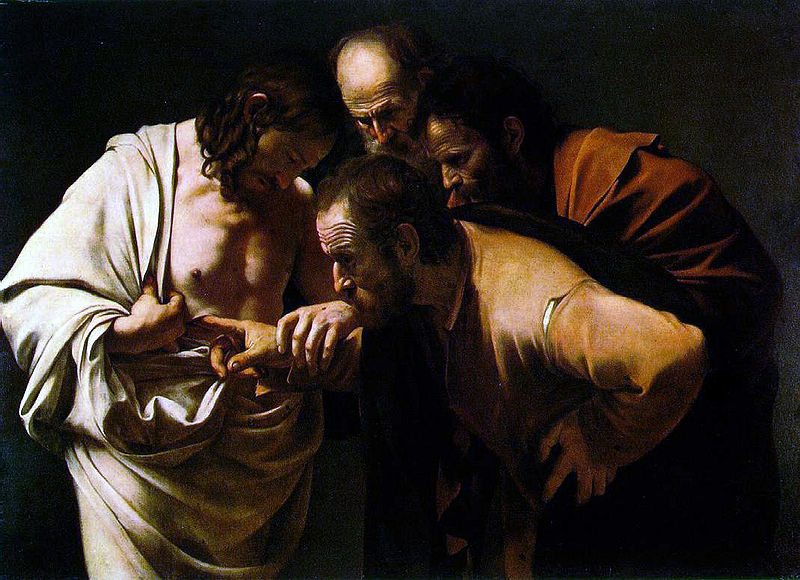 There is an objection to one of the evidences for the resurrection which is, frankly, terribly confused. I most recently ran into it on the discussion page for the radio show Unbelievable? Essentially, the objection goes like this: Christians say the fact that the disciples died for what they believe is evidence for its truth, but all kinds of religious people die for what they believe; are they all true?
The objector then often proceeds to note that some Muslims will die in suicide bombings due to their beliefs; they will note events like Thich Quang Duc burning himself to protest persecution; they will note other events in which religious people die for their beliefs. The implication, it is alleged, is that this cannot count for evidence for the truth of what they belief. People die for false things all the time; it doesn’t make what they believe true.
The objection seems compelling at first because it is, in fact, largely correct. The simple fact that people are willing to die for something does not make whatever they are wiling to die for true. However, this objection shows that the objector is badly misrepresenting the Christian apologetic argument.
The apologetic argument is intended to be used against those who would allege that the disciples made up or plotted for the notion of the resurrection for some reason. It therefore presents a major disanalogy with people of other faiths (or even later Christians) dying for what they believe. The major difference is that the Christian is claiming the disciples who went willingly to their deaths would have known what they were dying for is false, if it were.
Suppose you and a group of friends decided to make up a story to get some money. You decided that you were going to pretend that a buddy had died and risen again. You managed to set up circumstances in which your buddy appeared to die; then smuggled him off to Argentina–because that’s where everyone likes to hide, apparently. Later, you ran about the streets proclaiming that you’d seen your buddy walking around. He had been risen from the dead. And, you’d tell the story for the right price. To your delight, the story spreads like wildfire. But eventually it attracts attention of the wrong kind, and people are coming to kill you. Now, suppose that you could easily get out of it alive by simply confessing you’d made up the whole story. What would you do?
Alleged explanations for the evidence for the resurrection which appeal to purported conspiracies are much like this. The disciples would have known they were lying. Thus, the fact that they willingly went to their deaths does indeed count as evidence for the truth of what they were claiming. Otherwise, one would have to claim that these people quite seriously and willingly went to their deaths for something they knew was a lie they themselves had invented.
Thus, it is not enough for the objector to simply point out that other people die for faith not infrequently. That is not the core of the apologetic argument. Instead, they must argue for the implausible notion that the disciples willingly died for what they knew was a lie. It was not something they simply thought might be a lie; it would have been something that they were certain was false.
I do not think it is too far afield to suggest that the objection fails. It seems far more likely that they certainly believed what they professed were true, and they were in the unique position of knowing whether or not they were lying. Thus, the explanation of the resurrection is more credible than the explanation of a conspiracy. There are, of course, other attempts to explain away the historical argument for the resurrection, but those are arguments for a different time.
Links
Be sure to check out the page for this site on Facebook and Twitter for discussion of posts, links to other pages of interest, random talk about theology/philosophy/apologetics/movies and more!
SDG.
——
The preceding post is the property of J.W. Wartick (apart from quotations, which are the property of their respective owners, and works of art as credited; images are often freely available to the public and J.W. Wartick makes no claims of owning rights to the images unless he makes that explicit) and should not be reproduced in part or in whole without the expressed consent of the author. All content on this site is the property of J.W. Wartick and is made available for individual and personal usage. If you cite from these documents, whether for personal or professional purposes, please give appropriate citation with both the name of the author (J.W. Wartick) and a link to the original URL. If you’d like to repost a post, you may do so, provided you show less than half of the original post on your own site and link to the original post for the rest. You must also appropriately cite the post as noted above. This blog is protected by Creative Commons licensing. By viewing any part of this site, you are agreeing to this usage policy.

 J.W. Wartick - Reconstructing Faith