creationism
Reconstructing the Past: Florrisant Fossil Beds National Monument and Young Earth Creationism
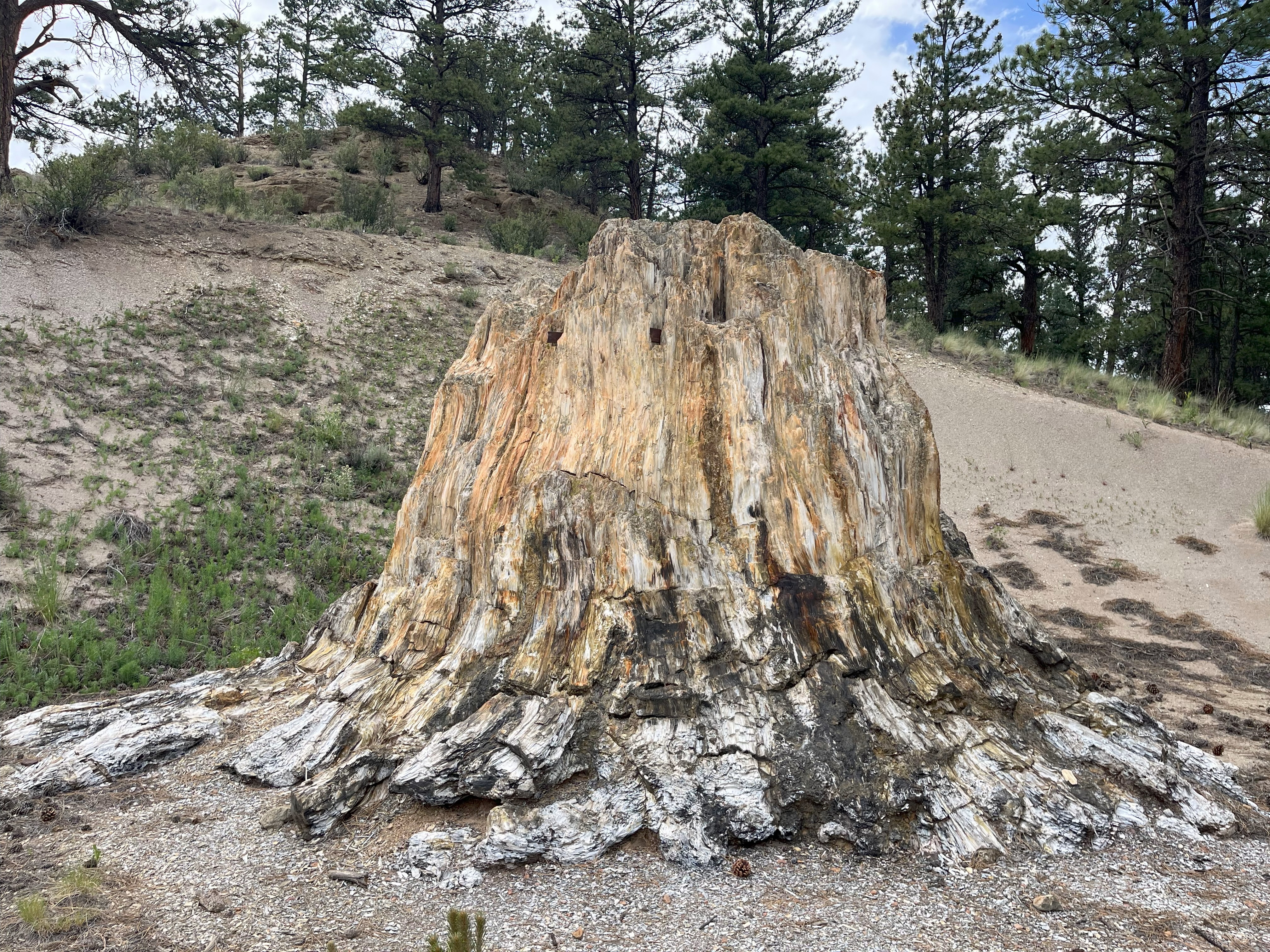
Florissant Fossil Beds National Monument preserves an incredible piece of geological and paleontological time in Colorado. The uniqueness of its geologic history helped preserve incredible details of tiny animals, all the way down to insects, including one of the most famous fossils in the world: a butterfly’s imprint preserved in ash. What struck me most as I wandered this beautiful National Monument and learned more about it was how intricately we can construct the past in this region. Geologists and paleontologists are able to use the clues spread across the landscape to see what happened in great detail. Those details, however, either directly contradict or at least present major difficulties for the narrative told by some Christians known as young earth creationists. Here, we will examine the two narratives alongside the region itself and ask which presents a better picture of the past.
The Narrative told by Conventional Geology and Paleontology
The National Park Service actually has a wonderful video that tells about how Florissant was formed, along with how it was discovered, used, and preserved by humans. My own narrative of conventional science is largely based on that video as well as on placards and other things I read and observed around the site itself.
About 37 million years ago, a volcano’s crater exploded, covering the region with ash. Volcanic activity continued for millions of years, forming layers of ash across the region. Eventually, heavy rainfall dislodged a massive amount of this ash, creating a kind of avalanche of volcanic material known as a lahar. This fast-moving mudflow was enormous, stretching for miles as it spread and eventually covering about 15 feet of the area we now know as the area within Florissant. This mud covered the bottoms of a number of enormous trees, which eventually died and decomposed. Life recovered and the region began to grow again, but another lahar blocked a stream and that stream formed a shallow lake across the area. The water that covered the area had deposited minerals into the ash-covered stumps of these trees, eventually preserving them as petrified wood. Meanwhile, diatoms–tiny algae observable on a microscopic level that persist into today–bloomed in massive quantities in the lake. Along with occasional volcanic eruptions that layered ash in the lake, the diatom blooms dying off also formed layers at the bottom of the lake. These layers alternated (not in a specific pattern), eventually forming paper-thin shale.
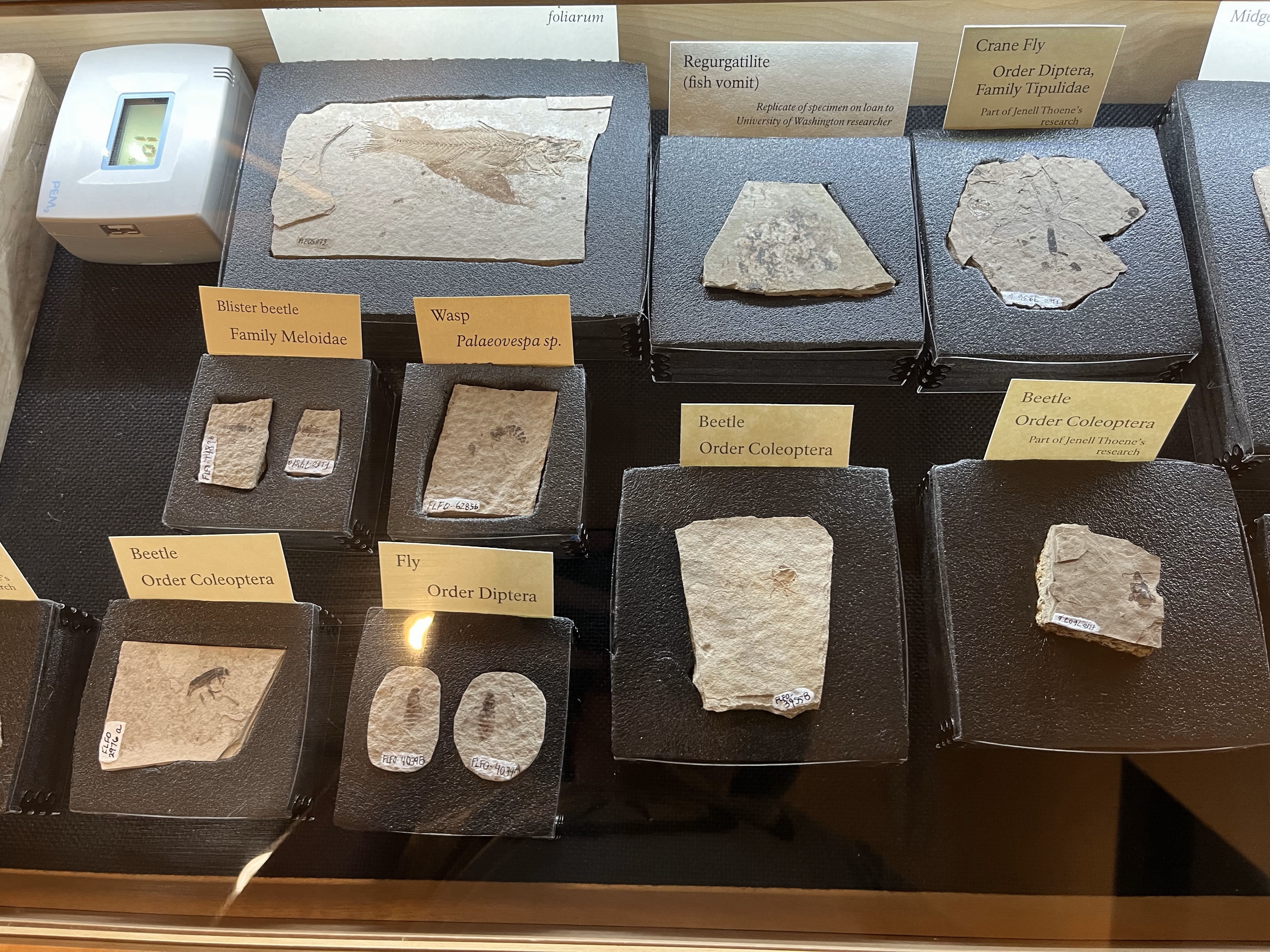
As creatures like fish, birds and even insects died and settled to the bottom of the lake, they were covered with these layers of diatoms and ash. Their bodies were mineralized, and to this day paleontologists can chip apart these incredibly thin layers of shale and find one of the richest deposits of well-preserved insect and plant life in the entire world. Large mammals also roamed the region, including brontotheres, an extinct rhinocerous-like mammal whose bones can be found across the area and into the Badlands. Their bones can also be found. Volcanic activity can be mapped across the region by observing directly the path of lava flows that have hardened into rock. Additionally, distant mountains can be seen to have blown off their tops in volcanic activity of that same time period, demonstrating the violent geologic past of the area.
The uniqueness of this site is due to the many factors involved in its formation: the volcanic activity that led to a lahar covering and preserving enormous ancient trees (including the largest petrified trees by diameter in the entire world); another lahar blocking a stream; additional volcanic activity that mostly spewed ash instead of lava in the area, allowing for preservation of fossils as the ash was cooled and settled in the water; intense periods of diatom activity due to whatever nutrients were provided by rich volcanic soil and plant deposits. For all of these, geologists can quite literally trace lines across the region and map where lava flows hit, where ash fell, whence came some of the volcanic activity (I had a park ranger literally point to the distance at a group of mountains; when looking more closely at the mountains later in the trip, you could see how they were partially collapsed from their volcanic past, blowing parts of themselves almost 100 miles across the landscape), and more. These were observable evidences of a past that linked all of these facets together to create the world-famous fossil site. It was incredible to see how well geologists could use the tools at their disposal to tell the story of the ancient past.
One last broad point in this section: the paleontological record here shows a dramatically different world than what we see in the same region today. The brontotheres are obviously extinct as we don’t see them anymore, but another facet of the discussion is that while the insects look incredibly similar to those of today, there are many with key differences that have changed over the 30+ million years since they were preserved. Some of them aren’t extinct and live into today, but in entirely different parts of the world. One prominently displayed fossil was of a tsetse fly, which once inhabited the land we now know as Colorado, but today lives in tropical Africa. The climate, in other words, has changed so dramatically that this kind of fly can no longer live in the snowy peaks of Colorado, but we have a record of its having done so in a past that was much warmer, and the other fossils in the area confirm the same observations. Conventional timelines don’t have difficulty explaining this, as the long timespan involved allowed for plate tectonics, glacier movement, ice age(s), and more to impact the climate.
Young Earth Creationism’s Two (or more) Narratives
Before diving too far into the narrative told by young earth creationism, we must realize that that movement itself is not monolithic. For a believe system that claims to be the plain reading of the Bible and that can be understood quite simply, it actually ends up teaching incredibly complex and continually edited narratives about the past. Its practitioners disagree on timelines and on how Earth’s geological history formed. So to tell a narrative of Florissant from that perspective, I have to do so knowing that there could be any number of “well, actually” type statements. That said, I believe that death by a thousand caveats is an issue that plagues young earth creationism generally. As YECs have to continually edit their narratives to try to force evidence to fit into a specific favored timeline, the constant ad hoc amendments serve to show just how mistaken YEC is generally. There are at least two broad narratives YECs could offer for Florissant.
The Noah’s Flood Narrative[s]
The Noahic Deluge truly did cover the entire surface of the Earth. In doing so, it churned up enormous amounts of dirt and sediment, remaking it and setting down virtually all sediment layers that we see across the entire Globe. An alternate version of this has a more tranquil Flood, which settled over the surface of the Earth but didn’t greatly impact the geologically observed history. This latter theory is largely abandoned in the literature as it has no explanation for the many aspects of geologic history we see to this day. The former is beset with difficulties, but the one I want to highlight here is that if we assume this is what happened, places like Florissant are almost entirely nonsensical. How would a churning Flood lay down deposits that happen to align in such ways that they can be traced across a region and layered, such that we can see a lahar covered the region, then another blocked a stream, forming a lake, volcanic lava flowed across nearby, and more, and more? It seems to be a non-starter. Why would random bits of sediment get deposited in ways that suggest a geologic past?
The Post-Flood Deposits Narrative
Increasingly, thoughtful YECs are being forced to draw lines to designate pre- and post-Flood deposits in the geologic record. There are a number of reasons for this, but one of the most obvious is that we can see geologic deposits being made today, so the obvious question is asked about how far into the past these records extend before one hits layers that were set down by a supposed global Flood. Many of the difficulties with the YEC narrative in which the Flood explains Florissant are assuaged by claiming that those deposits really were set down in the manner described, but that they were done so in a much more condensed timeline than mainstream geology teaches.
Going along with this, some YECs have suggested the Flood itself is responsible for almost none of the geologic record or, perhaps, only a tiny portion of it. The rest was formed largely as mainstream geologists suggest, but at a pace accelerated by hundreds or even thousands (millions?) of times the speed suggested by mainstream geology. This latter notion has its own massive difficulties, among them being the now well-known (among those involved in debating creationism) heat problem, but also that it doesn’t really provide an explanation for the geologic record other than “it moves fast.” So we’re going to set that one aside and focus on the more mainstream YEC view that Noah’s Flood formed the majority of the geologic column, but that some of it is post-Flood (and pre-, but we’re setting that aside, too). On this view, Florissant is post-Flood and so the way it formed geologically is essentially exactly as the geologists stated with lahars, lava flows, and more leading to what we observe today. The timeline, of course, is off (only a few thousand years instead of 37 million), but this YEC view at least has some kind of attempt to allow for us to learn about such features.
There are many problems with this view, too, however. One is that when we observe layering of sediment in the ways suggested at Florissant, it takes much longer than YECs could allow. While they often point to places like Mount Saint Helens to suggest that such formation could be much faster, this is problematic for a couple reasons. The first is that no mainstream geologist suggests catastrophes like Mount Saint Helens don’t happen in the past; rather, their timelines and observations align with such catastrophic events happening. The second is that Mount Saint Helens has been greatly exaggerated in YEC literature, taking features and labeling them with geologic terms that do not correspond with reality. Thus, an alleged canyon at Mount Saint Helens formed with the eruption is really just ash deposited and then cut through with runoff, which will continue to erode it rapidly in ways expected by mainstream geology. It’s not analogous to something like the Grand Canyon. Finally, a major problem with this “it just went fast” scenario is that it does nothing to explain the observation of different climate zones found in Colorado than what exist today. Are we to believe that alongside layering of ash and diatoms turning to rock and an immensely accelerated rate, the region also went from tropical to Mountainous and snow-covered during the winter in just a thousand or so years?
The answer from YECs of course is, yes, we are supposed to believe that. But what mechanisms do they suggest for this actually occurring? One is the notion that the Flood led to an ice age which, as the Flood waters receded, then changed the climate of the Earth. Another mechanism is the acceleration of nuclear decay (which again runs into the heat problem). Here we find YECs must continue to invent extrabiblical scenarios to explain extrabiblical observations, thus undermining their claim to be simply observing what the Bible says as their scientific starting point.
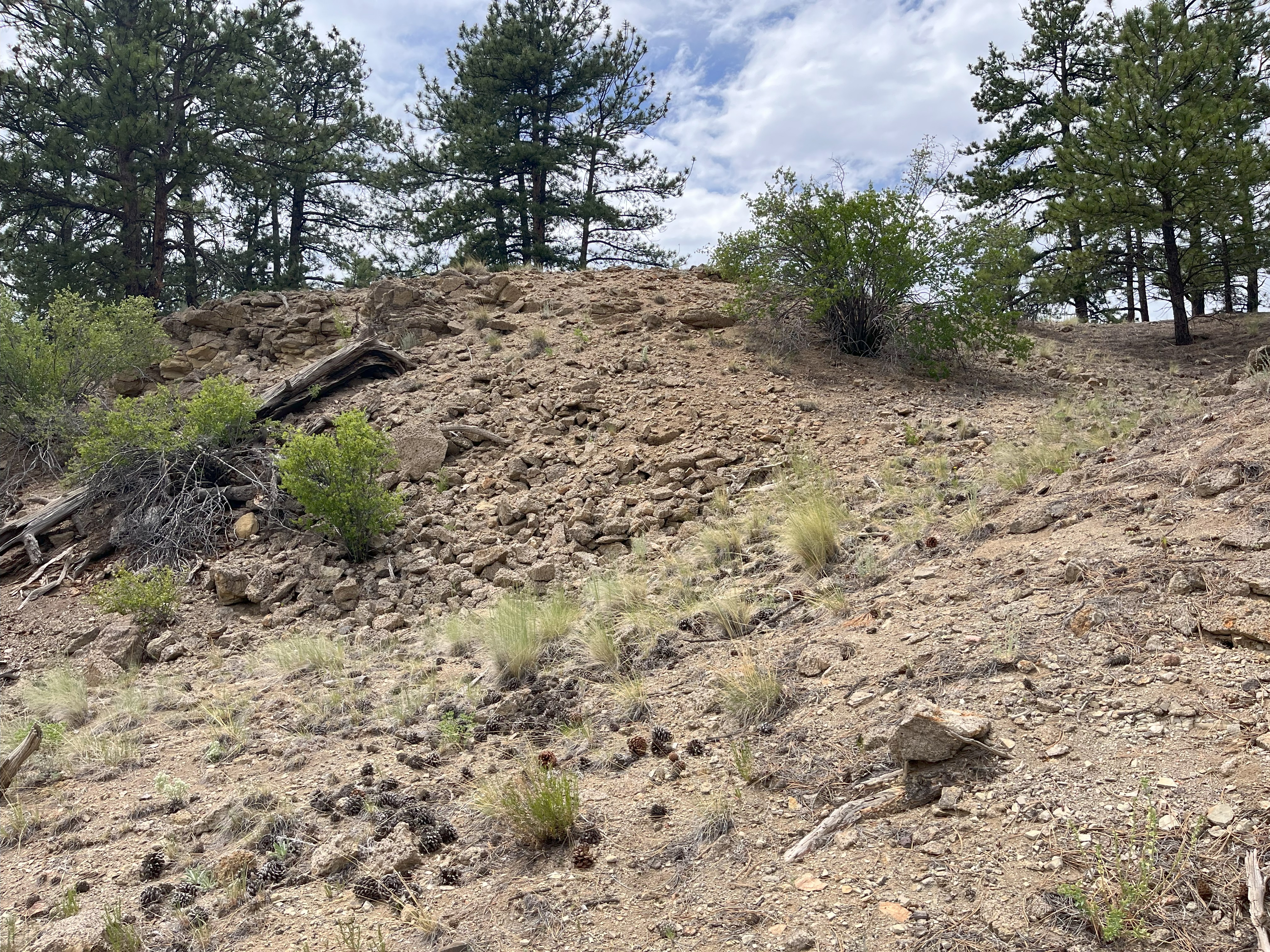
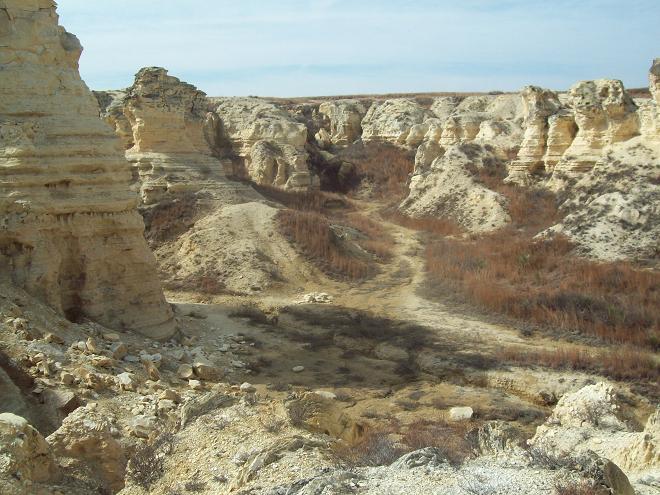
A final problem (not the final problem, simply the last one I’m touching on here) with the YEC scenarios is the sheer amount of deposition at even a relatively tiny site like Florissant. The photograph above shows just one hill composed of shale. This entire hill could be dug into and one could pull out paper-thin pieces of shale layering the entire hill (one should not do this as it is a National Park site and is very illegal; I’m saying this for the sake of observation!). This hill stands far taller than I do, and taller than surrounding trees, and is just one of many hills composed of the same material. All of this managed to get layered, ash-diatom-ash-ash-diatom-diatom-ash, etc. in such minute, miniscule layers that you literally can push them apart with a wedge and see the rock crumble in your hand because each layer is so thin. And for YECs, all of this is supposed to have happened in just a few thousand years, with the ash and diatoms getting compressed into those thin layers of rock, but in such an immense volume that it can cover hills, and in such precision that one can see where the trees were covered with mud from a lahar, and in such a careful way that it settled softly enough to cover but not destroy butterfly wings. Such a belief stretches the imagination beyond the breaking point. And this is but one site.
Conclusion
The first thing I want to conclude is that if you get the chance to visit Florissant Fossil Beds National Monument, you should do so. The hikes are fairly short- it isn’t a massive site. But for a day of exploring and learning about Earth’s past, it is nearly unrivaled.
Florissant provides an incredibly rich look at Earth’s geologic past. In just this one small region, one can literally see where volcanoes once spewed ash and covered parts of the area with lava, one can walk up to rock layers showing deposition of lava that flowed from nearly 100 miles away, one can see the world’s largest (by diameter) petrified trees, one can see the depositions of shale that led to some of the best insect fossils in the entire world, and more. It is an immensely wonderful experience to be able to see firsthand how geologists really can see the landscape and form conclusions about our past. And for all of that, it also provides a set of major problems for young earth creationism, a theory that is continually forced to evolve and add explanations simply to try to wave away the many, many difficulties with it.
Finally, Christians should know that young earth creationism is not even remotely a necessary doctrine for believing the Bible or remaining Christian. It is a theory with almost no connection to church history, and one which is a modern invention to try to counter modern science. The eternal truths of God do not rely upon human innovation of doctrine.
Links
Be sure to check out the page for this site on Facebook and Twitter for discussion of posts, links to other pages of interest, random talk about theology/philosophy/apologetics/movies and more!
Young Earth Creationism– This link will take you to the all my posts on YEC (scroll down for more).
Gregg Davidson vs. Andrew Snelling on the Age of the Earth– I attended a debate between an old earth and young earth creationist (the latter from Answers in Genesis like Ken Ham). Check out my overview of the debate as well as my analysis.
Ken Ham vs. Bill Nye- An analysis of a lose-lose debate– In-depth coverage and analysis of the famous debate between young earth creationist Ken Ham and Bill Nye the science guy.
SDG.
——
The preceding post is the property of J.W. Wartick (apart from quotations, which are the property of their respective owners, and works of art as credited; images are often freely available to the public and J.W. Wartick makes no claims of owning rights to the images unless he makes that explicit) and should not be reproduced in part or in whole without the expressed consent of the author. All content on this site is the property of J.W. Wartick and is made available for individual and personal usage. If you cite from these documents, whether for personal or professional purposes, please give appropriate citation with both the name of the author (J.W. Wartick) and a link to the original URL. If you’d like to repost a post, you may do so, provided you show less than half of the original post on your own site and link to the original post for the rest. You must also appropriately cite the post as noted above. This blog is protected by Creative Commons licensing. By viewing any part of this site, you are agreeing to this usage policy.
Book Review: “The God of Monkey Science” by Janet Kellogg Ray

The God of Monkey Science: People of Faith in a Modern Scientific World by Janet Kellogg Ray explores the interactions of Christians and science in a post-Covid world.
The book explores many topics related to Christianity and science. Kellog Ray includes historical notes about the ways Christians have interacted with science, examples from more recent events such as the rise of the Intelligent Design movement and associated anti-evolution arguments, and even the recent Covid-19 pandemic and Evangelicalism’s largescale embracing of anti-science positions in that time period as well.
A particularly fun aside- one of my blog posts is quoted in the book. Kellogg Ray quotes from one of my posts about leaving my former denomination and how science was a big part of that.
What is especially helpful in the book is how so many real examples of anti-science thinking are provided and then contrasted with context. Some of the examples are especially egregious, such as the attempts to portray Anthony Fauci as anti-mask because of an early video in which he talked about not needing to wear masks at the time but then later, following additional, substantial studies, switching the messaging. This is part of how sciience works–updating guidelines and expectations based on additional or new evidence.
The book is not at all a bash-fest on Christians, either. The author is unabashedly an evangelical Christian, but she writes the book as a kind of long form exhortation to Christians to do better, have humility, and perhaps listen to experts when it comes to science. It’s written in a winsome manner, and will hopefully make some rethink the way they approach science reporting and misinformation.
The God of Monkey Science is a refreshing look at the need for Christians to interact with science more honestly and fruitfully. It is recommended.
All Links to Amazon are Affiliates links
Links
Be sure to check out the page for this site on Facebook and Twitter for discussion of posts, links to other pages of interest, random talk about theology/philosophy/apologetics/movies and more!
Book Reviews– There are plenty more book reviews to read! Read like crazy! (Scroll down for more, and click at bottom for even more!)
SDG.
——
The preceding post is the property of J.W. Wartick (apart from quotations, which are the property of their respective owners, and works of art as credited; images are often freely available to the public and J.W. Wartick makes no claims of owning rights to the images unless he makes that explicit) and should not be reproduced in part or in whole without the expressed consent of the author. All content on this site is the property of J.W. Wartick and is made available for individual and personal usage. If you cite from these documents, whether for personal or professional purposes, please give appropriate citation with both the name of the author (J.W. Wartick) and a link to the original URL. If you’d like to repost a post, you may do so, provided you show less than half of the original post on your own site and link to the original post for the rest. You must also appropriately cite the post as noted above. This blog is protected by Creative Commons licensing. By viewing any part of this site, you are agreeing to this usage policy.
Why I Left the Lutheran Church – Missouri Synod: Points of Fracture (Part 2): Science as a Young Adult
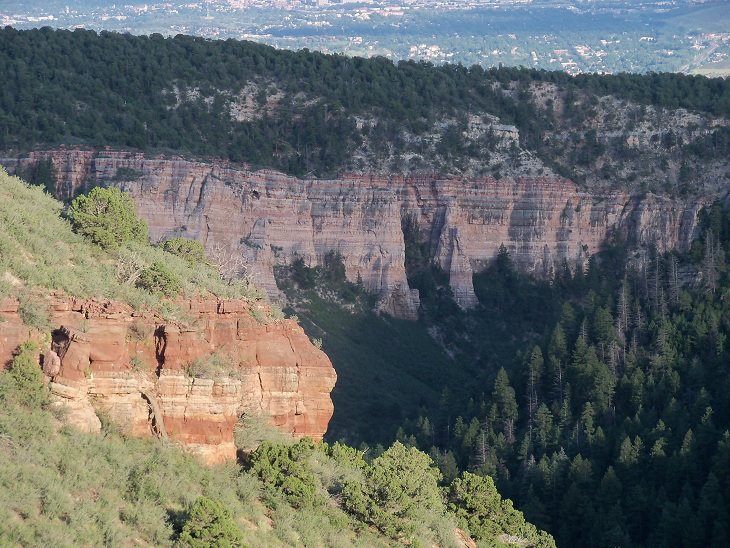
For several posts, I will be writing about specific things that came up while I was within the LCMS–that is, at its schools, churches, and university–that made me start to think that the LCMS way of things didn’t align with some aspect of reality, something I learned in the Bible, or something else.[1]
Points of Fracture: Science as a Young Adult
The cognitive dissonance that I experienced regarding Christianity and science continued to mount as I got older. My previous post went over times in which I recall finding those points of fracture. I left off there in about 8th grade at an LCMS school. Here, I’ll share some of the times as a young adult in which I truly began to struggle with science and my faith.
In college, the hints of fracture at the edges of my view in the world became fault lines. I so often see the narrative of how allegedly secular colleges will destroy the faith of kids, but I was at an LCMS University, and being there nearly destroyed my faith. There are more reasons for this than science, as we’ll see in future posts. For now, though, the focus on questions of science loomed large when I was in college.
I came to college as a faithful Lutheran, though I had my ups and downs. For the first time, I really could not go to church all the time and it wouldn’t matter or hardly even be noticed by most people. Then, I had a major religious experience and realized I wanted to learn about and know God more every day. One way that manifested is that I started reading apologetics. It quickly became clear that issues of science and faith loomed large, and for the first time I truly began to think about the implications of some of these issues.
Then, I had a geology class in college. The professor was an adjunct who, I’m fairly sure, was neither Lutheran nor particularly interested in the theology of the university. He seemed blissfully unaware, as he taught his geology course, that what he was teaching would be worldview-shattering at least for one of his students. It was a course full of students who were on campus for many reasons, not just to attend an LCMS school. Many of them there were on athletics scholarships, and I heard some openly talking about the only reason they were at the school was because it was the only one that offered them such a scholarship. No one was dissenting from this professor, who stood there teaching mainstream geology. This was all stuff I’d never even been exposed to before. How beaches formed, how we could accurately predict how long some formations would take to form, how rock layers could be formed apart from Noah’s Flood. Indeed, Noah’s Flood was never even mentioned in the class. What I thought was the explanation for basically every geological feature on the planet wasn’t even in the index of my geology textbook!
I was totally devastated. Here was evidence, presented in the most mundane, disinterested fashion possible, that the Earth simply could not be merely 10,000 years old or so. While I didn’t really have a grasp on the science, the course taught me enough to realize that something had to give. The way I had been raised made the choice quite stark. The Bible just clearly taught that the Earth was young. “Millions of years” was a lie. Either the Earth really is six to ten thousand years old because the Bible says so or the Bible is untrustworthy and Christianity is false.
We had leaders in our dorms who were called “Spiritual Life Representatives” (SLRs). Think of an RA, but who you could go to in order to discuss spiritual questions or crises. They’d lead devotions and generally make themselves available to students to talk to. I went to my SLR and I was weeping in his dorm room. I was convinced that the geology I had learned had proven that the Earth could not be young, and so how could I possibly continue to believe Christianity was true? He said something that has stuck with me ever since: “If the Earth is more than 10,000 years old, would it really mean that Christ has not been raised from the dead?”
I sat there, tears streaming down my face, and I realized it wouldn’t mean that. He said other things, of course, like that he wasn’t as confident as I was about geology proving things differently, that there were other resources to read. But in that moment, he said something that allowed me to preserve my collapsing faith. I realized then that my faith was built on Christ, not on the age of the Earth.
I threw myself even more into apologetics now, because I felt even more confident that Christianity was true and that I needed to prove it to other people. The freedom provided to me by this conversation with my SLR had me flirt briefly with theistic evolution, but when I mentioned that in apologetics groups I was in, it got shot down hard. Instead, Young Earth Creationism (YEC) was the way to go. I needed to start seeing science the right way, they said. I searched around for groups to help build my faith and defense thereof, and started subscribing to Acts & Facts Magazine from the Institute for Creation Research (ICR). I was hugely impressed by the production values of this creationist publication, with its gorgeous pictures and lengthy articles about things like RATE research and the like. For the uninitiated, RATE stands for Radioisotopes and the Age of The Earth. I was convinced by these publications that, among other things, radiometric dating was falsified, that the Grand Canyon was evidence for a young earth, and that if you just looked at things in nature in the right ways, you’d see a young earth all around you. Reading about creationism in some LCMS literature convinced me even further, and speaking with a few pastors about the topic had me once more feeling rock-solid about my YEC convictions.
I love walking in nature, and I went for a hike somewhere in Michigan and I saw the distinct layers in the rocks. I walked up to them and put my fingers on them. I could trace the layers with my fingers and see how they were distinct in coloration after a certain point. I remember very clearly the feeling of washing over myself of total confidence that these layers were laid down by Noah’s Flood. Later in the hike, I saw a different formation of rocks thrust up through the other ones, so that they were nearly perpendicular to the other layers surrounding them. I stood staring at it for some time, trying to figure out how this could have happened due to Noah’s Flood. I simply couldn’t come up with such a scenario, but I trusted further study would alleviate the stress. I left the hike somewhat disturbed, but mostly confident in my young earth beliefs.[2]
Then, I started noticing that many of the published apologists I was reading weren’t convinced of YEC. I started to dive deep into Old Earth Creationism, which is very similar to YEC except that the direct creation of all animal life happened over long periods of time instead of in a single week of seven 24-hour days. I became deeply engrossed with another creationist organization, Reasons to Believe. This organization taught that there were real, scientific models that could show both that the Bible was true and that you could effectively map it out with special creation of creatures over time. It was a kind of chimerical creature, picking and choosing scientific discoveries that aligned with it while also finding isolated verses in the Bible to say it taught modern science (eg. using Psalm 104:2 to suggest it taught Big Bang cosmology).
Then, I took another science class in college. This one was a biology class to finally knock off my requirements for graduation. The professor had some extremely non-mainstream views. I remember him frequently talking about smoking and insisting that smoking doesn’t cause lung cancer. How did he know? His repeated refrain was: “Correlation is not causation.” If I’d known more at the time about science, I would have pushed back harder on this. At the time, though, it still seemed pretty ludicrous. My grandpa had died of lung cancer, and I was very well aware of it being caused by smoking. The same professor would go wildly off topic during class, frequently shifting to pet issues that he would lecture us about. Several students offered pushback on some of these topics, most of which I don’t remember.
I do recall, though, one day when he talked about creationism. He was very adamant that YEC was the only way to believe, basically pulling the LCMS party line about it being essential to affirm that in order to believe the Bible. But even for the LCMS, some of this guy’s views were far afield. For example, he insisted that the Earth wasn’t tilted before the Fall, which he said meant the Garden of Eden would cover the whole planet as the whole planet would therefore have the same weather as the equator currently does. Dinosaurs, he insisted, all ate plants, and even the teeth we associate with Tyrannosaurus Rex were adapted for eating plants before the Fall.
The whole thing seemed preposterous to me, even as someone who had been steeped in YEC literature. It was at this point I basically realized going back to YEC views was impossible. As someone who wanted to be an LCMS pastor (at the time), that caused me no small amount of trepidation. After all, I’d already heard a story from a pastor who approvingly cited a large group pastors literally shouting down two other pastors who tried to introduce a resolution to even discuss the possibility of anything but a Young Earth in the LCMS. I was aware of the many, many pastors I knew who were totally convinced of YEC. How would I survive in a denomination that was so firmly entrenched? Even the few exceptions I knew about were just that–exceptions. For that reason, I still held my views close to my chest.
Online, I started to write a series of blog posts examining four major views (as I saw them) in Christianity: Young Earth and Old Earth creationism, theistic evolution, and Intelligent Design. The pushback I got for even mentioning theistic evolution from apologetics-interested friends was massive. I’d get warning messages on Facebook about even considering publishing posts about anything but YEC that could be remotely positive.
In an art class, our professor casually went over dates of artwork. We came to some cave paintings, and this professor said they were dated to 13-16,000 years ago. One pre-seminary student raised his hand and pushed back on the date. “The Earth isn’t even more than 10,000 years old. How could there be cave paintings that are older than the Earth?” How, indeed? I wondered. Again, I was a closet Old Earth Creationist at this point. The professor, to their credit, took it in stride. They answered, “I’m reporting the dates that mainstream art historians have given these works. To get credit, you’ll need to give those answers on the test. But you can definitely do your research project on how art dating works!” It was a masterful response.
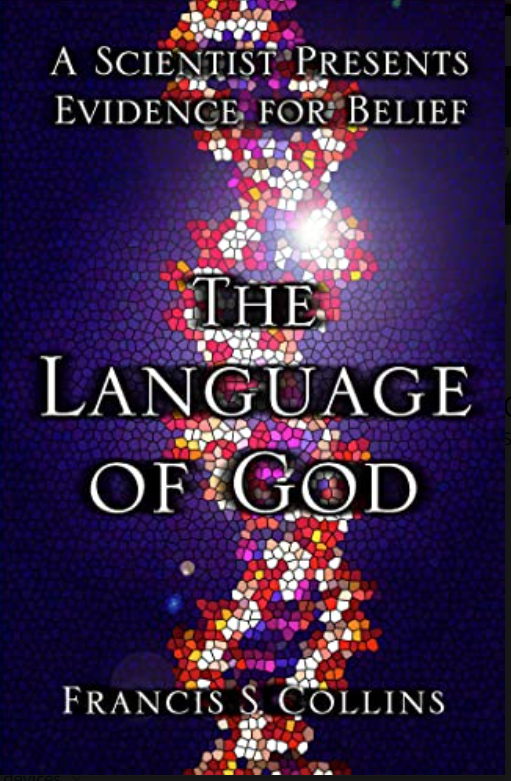
Later, I was at a bookstore with some LCMS members. We were milling about the shelves and I went straight to the Christianity section to see if there were any apologetics books. There, I saw this book with a striking cover that said it was written by a scientist exploring faith. The Language of God , by Francis Collins, unapologetically defended the view of theistic evolution, and I found myself paging through it quickly. I felt guilty for even reading it. Evolution, as I knew, was the enemy of Christianity. But this author was writing about evolution with such confidence as a Christian scientist. He’d had a religious experience himself, and he wrote accessibly and in a winsome fashion. I bought the book away from the others, afraid they might ask me about it. When I read it, it opened my eyes to many possibilities. I wouldn’t immediately come to believe evolution and Christianity were compatible, but I believed that it was possible to believe they were. That wording is intentional, because I want my readers to understand how many steps I had to take along this journey. At this point, I’d come from believing scientists were liars trying to deceive people about the age of the Earth for well, some reason anyway, to believing that it was vaguely possible someone could be a Christian and believe evolution and Christianity were compatible. I cannot emphasize enough how difficult it was to get to that point, and how many side roads and challenges and tears were along the way.
It would take several more years before I could become comfortable with affirming evolution while remaining Christian. I do, now. My first post mentioned religious trauma as part of my time in the LCMS. I haven’t had a lot of ways to portray that so far, but one way I believe I experienced religious trauma from within the LCMS was in the extreme, repeated resistance I experienced regarding science. I adored science, and the religious teachings I experienced led me to be mistrustful of science, and scientists in particular. Christians who were scientists were questionable at best. Like, why would you engage a field full of lies? It would take me more than a decade as an adult to undo that mistrust. Alongside that, it has forced me to question many other things. When you believe things that are easily falsifiable (such as men having one fewer rib than women) and discover that they are, in fact false, it causes a kind of lingering cognitive dissonance that is hard to overcome.
Science is one of the reasons I left the LCMS, but it was intertwined with emotional highs and lows. I experienced crises of faith due to my false beliefs about science. I thought I could no longer believe the Bible because I found evidence in nature that contradicted what I was taught it said. These may seem like small issues to some, but I cannot emphasize how important they were to me, and how important they remain to many others.
Next, we’ll begin exploring other reasons I left the LCMS.
Next: Points of Fracture Part 3
[1] I’ve addressed this in my previous post, but want to point out here that not everything held positionally by the LCMS is spelled out in their teachings. One friend pointed out the helpful categorization related to the LCMS and creationism: the LCMS has a de facto affirmation of young earth creationism, though it is not always made explicit. The evidence is abundant, though one may point to the occasional, very rare exception. On the flip side, the evidence that the LCMS is intrinsically tied to young earth creationism continues to mount. See, for example, my post about an official stance in 2019 that reaffirmed a creationist position.
[2] To tell this story and other parts of this post, I’ve had to very quickly summarize or even skip over parts of creationist arguments. I was fully engaged with YEC at this point and to this day could very easily rattle off numerous arguments in favor of YEC, though I now believe they are mistaken. I know some YEC explanations do exist for these types of formations, but here my goal is to list things that, in the moment, caused me to realize points of departure.
Links
Formerly Lutheran Church – Missouri Synod (LCMS) or Wisconsin Synod (WELS)– A Facebook group I’ve created for people who are former members of either of these church bodies to share stories, support each other, and try to bring change. Note: Anything you post on the internet has the potential to be public and shared anywhere, so if you join and post, be aware of that.
Why I left the Lutheran Church – Missouri Synod Links Hub– Want to follow the whole series? Here’s a hub post with links to all the posts as well as related topics.
Be sure to check out the page for this site on Facebook and Twitter for discussion of posts, links to other pages of interest, random talk about theology/philosophy/apologetics/movies and more!
SDG.
——
The preceding post is the property of J.W. Wartick (apart from quotations, which are the property of their respective owners, and works of art as credited; images are often freely available to the public and J.W. Wartick makes no claims of owning rights to the images unless he makes that explicit) and should not be reproduced in part or in whole without the expressed consent of the author. All content on this site is the property of J.W. Wartick and is made available for individual and personal usage. If you cite from these documents, whether for personal or professional purposes, please give appropriate citation with both the name of the author (J.W. Wartick) and a link to the original URL. If you’d like to repost a post, you may do so, provided you show less than half of the original post on your own site and link to the original post for the rest. You must also appropriately cite the post as noted above. This blog is protected by Creative Commons licensing. By viewing any part of this site, you are agreeing to this usage policy.
Why I left the Lutheran Church – Missouri Synod: Points of Fracture (Part 1): Science as a Child
I have written about why I am writing this series as well as my history within the LCMS. Now, it is time to turn to what I’m calling points of fracture. For several posts, I will be writing about specific things that came up while I was within the LCMS–that is, at its schools, churches, and university–that made me start to think that the LCMS way of things didn’t align with some aspect of reality, something I learned in the Bible, or something else.[1]
Points of Fracture: Science as a Child
Here, I’ll be sharing the points of fracture that I experienced related to science at a young age. At the outset, I want to point out that much of these points of fracture were discovered by me over time. So, for example, when I talk about my young childhood, it’s not as though I was immediately aware that something was off about what I was learning. Instead, it was a realization that came over time, and the memory of when I was young was something that I recall as an important stepping stone to get to where I am now.
Some of my first memories of conflict between what I believed and what others believed was as a child getting library books. I don’t remember how far we had to go to drive to the library from our tiny town, but I remember it seemed like forever, and that I would consume books on the way home, often falling asleep in the car before arriving at home. I, like many kids, was obsessed with dinosaurs.[2] That meant I raided the library’s section on dinosaurs. I’d memorize the names and facts about them, pore over images of them, and imagine what life would have been like alongside them. If the cover of a library book had a T-Rex ripping apart its prey, that was the book I was going for. But those dinosaur books talked about when dinosaurs lived. Those dates were given as the best scientific approximations based on various dating techniques, ranging from about 66 million years ago to 200 million or more for dinosaurs’ first appearance on Earth.
Those dates, I was told, were wrong. Whenever I saw “millions,” I was told to ignore it. As a young kid, I didn’t press back very hard on that. After all, I had no reason to do so. I knew that I could get facts wrong about all sorts of things, so the notion that basically every book I read about dinosaurs was wrong about how long ago dinosaurs lived wasn’t terribly mind-bending for me. I learned to just run my eyes over any time it said “millions of years,” because that was wrong. The rest of the facts, though, were basically unquestioned. I didn’t have the capacity at the time to put those two things into disharmony. That is, I didn’t realize how odd it was that the books and scientists seemed to be right about, say the ecosystem the dinosaurs lived in, or their diets, or debates about coloration while simultaneously being totally wrong and even untruthful about how long ago they lived.
That last bit is important. I used the word “untruthful” because part of what I was taught, whether directly or through creationist literature I would be exposed to a year or so later, was that scientists weren’t just wrong about the age of the Earth or when dinosaurs lived. No, instead, they were actively lying about it. I want to sit with this for a moment because it is an extremely important distinction. There’s a huge difference between someone being wrong while reporting something they think is factual and someone deliberately deceiving you about something they say is factual. That I came to believe that scientists were actively lying about the age of the Earth would temper my interest in science for more than a decade once it became fully engrained in me. Sometimes I genuinely think I would have ended up in geology or paleontology as a field of study and employment if I hadn’t come to be taught that, because of my deep interest in these topics. But I didn’t, at least in part because I thought scientists were liars.
No small part of that belief came from some of the approved dinosaur books I was gifted during my dinosaur obsession. These dinosaurs books portrayed a different history of the world, with humans walking alongside long-necked dinosaurs and feeding them fruits by hand. I distinctly remember a photograph of an alleged plesiosaur (see below) that had been caught by a fishing boat in one of them. These books didn’t have the same exciting illustrations of T-Rex or Deinonychus (my personal favorite) shredding their prey. Instead, I was taught that they had something more precious–the truth about dinosaurs. These books confronted head on topics like evolution and the age of the Earth, saying in no uncertain terms that evolution was a lie and scientists who taught millions of years were liars as well. I didn’t even understand what evolution was supposed to be at this point, but I knew it was a lie. Again, this disjunction between being mistaken and being liars was something that sucked away my enjoyment of science over time, and also would make it extremely difficult for me to fairly examine evidence.

Later, I remember talking to a child a few grades above me at my LCMS grade school. When I mentioned that I liked dinosaurs, she told me quite sincerely that dinosaurs had never existed. I was incredulous, asking “What about all the bones!?” Her answer surprised me: she said something to the effect of “Those bones were put there by God to test people’s faith.” The total somberness with which she expressed this sentiment took me off guard, but I do remember laughing at her because I thought it was so ridiculous to think that (I wasn’t the kid with the best manners). I would later recall the incident when I was studying more about these topics because it specifically showed me I could see beliefs about science that seemed obviously false and reject them, and that was okay. Even more importantly, it was a time my younger self was given an idea about God that did not seem to align with what I believed about God. Even as a child, the notion that God would be actively trying to deceive people seemed obviously, even hilariously wrong. That God doesn’t deceive us with nature, but that nature rather declares the glory of God (Psalm 19) would be hugely important to me as an adult.
Another topic I remember was about Adam and Eve. I specifically remember learning that all boys and men had one fewer rib than women. This was seen as evidence for the biblical account of Adam having been formed from Eve’s rib. I don’t remember my first source of hearing of this, but I do remember I heard it from more than one adult in my life. It wasn’t actually until college as I was searching online for various science-related things that I learned this was false. To this day, even typing that it’s false has me second-guessing myself, so firm was my belief that men had fewer ribs than women. It’s one of those things that is incredibly easy to disprove, to the point that when passed along, no one thinks to question it. It was honestly a shocking revelation to me when I discovered it wasn’t true, and it spurred me on to search for other things I could disprove or couldn’t confirm.
I believe it was in 6th grade, again at an LCMS school, that I had a single day in which we talked about plate tectonics. It was in a geography class, and we were learning quite briefly about how the map was formed. I recalled some of the maps I’d seen in dinosaur books of Pangaea and asked about that, noticing it appeared as though Africa and South America fit together. I don’t remember the exact answer, but what I got was enough for me to excitedly talk about plate tectonics later, only to be told by a pastor that they don’t exist. How did earthquakes happen, then? I asked. The answer was that God made them happen. I was disturbed even then by this answer. More, I was confused in getting entirely different answers about what caused earthquakes and how continents moved–or whether they moved at all–from two approved sources. Which should I believe? In the moment, I just bracketed it and stopped thinking about it. That was largely my answer for when things like this happened. I assumed others knew more than me, and it would become clear later.
One year in middle school at an LCMS school (I think it was 8th grade), we were super excited to be taking part in a science curriculum that would be shared by schools all over the country. The curriculum used the Hawaiian islands as a touch point for learning all sorts of things about science–whether geology by learning about volcanoes, biology by learning about ecosystems, and the like. I distinctly recall opening the binders we received and flipping through to see the contents. In among the thrilling sections on volcanoes and wildlife, I saw that there was a section about evolution on the islands. I had only the vaguest idea of what evolution meant. I knew it meant something like animals turned into other animals because of seeing it in some dinosaur books I’d read years before. I recalled learning that evolution was a lie, but seeing it show up in a text in my LCMS school made it feel safe… but only for a moment. When I turned to the pages indicated to see what might be said about this intriguing topic, I discovered the pages had been removed. I opened to the page, and found I was flipping from page 55 to page 75. It’s hard to fully capture my feelings at that moment. It was a truly disturbing incident for me. I believe I mentioned it to the teacher and was told that we wouldn’t be covering that topic. I remember flipping back and forth a few times, stunned. It was one of the clearest moments as a kid that I realized something was genuinely being covered up. It wasn’t just that scientists were wrong or lying. That, I could, in my childlike trust, accept. This was a revelation: what scientists taught was being actively covered up or suppressed, as if it would be dangerous to even know about it.
Earlier, I said this was one of the points of fracture that led me to think that maybe the LCMS way of things wasn’t accurate. I want to briefly address a possible objection here. I say “the LCMS view of things,” not necessarily to mean that they have specific teachings on everything I touch upon here or in other posts. For example, it is very clear that the LCMS holds that young earth creationism in some form is the view that ought to be taught to and held by its members. This view, however, is not codified in LCMS official positions. Indeed, according to the LCMS’s official web site about their views, they do not have an official position on the age of the earth. Thus, one could technically take issue with my pointing out that the LCMS’s view of things is a young earth creationist perspective.
However, this would indeed be nothing but a technicality, because in application and practice, no other views are allowed broadly in the LCMS. As one example, one pastor confidentially told me about how some of their peers attempted to introduce a resolution at a pastor’s conference to simply discuss the possibility of views apart from young earth creationism. This pastor approvingly told me that those pastors were literally shouted down by the rest of the pastors at this conference for their attempt. From my own experience, I know of at least 3 different LCMS pastors who questioned the faith of LCMS members who did not hold to a young earth creationist view. Additionally, tying belief in a young earth together with trust in the Bible is ubiquitous in LCMS leadership. In preparing this post, one classmate of mine pointed out that an LCMS professor who was a pastor explicitly taught an old Earth in a class we shared. This experience was perhaps the lone exception to an otherwise uniform experience that I and others have shared related to the LCMS’s views on the age of the Earth.
All of these final points are to say, just because something isn’t explicitly codified on the LCMS web site, for example, doesn’t mean that it’s not part of the DNA of the LCMS. Young Earth Creationism is absolutely integral to the overwhelmingly vast majority of LCMS belief and practice related to any questions about science and faith.
See also my post, The Lutheran Church – Missouri Synod and Creationism: An unnecessary match, in which I go over the 2019 convention’s affirmation of Young Earth Creationism, including a link to the official LCMS blog.
Next: Points of Fracture, Part 2
[1] I debated internally a bit about how to organize my thoughts related to the specific fracture points that led me to see that my views did not align with those of the LCMS. Should I organize them topically, chronologically, or in some other order? I ultimately settled on doing them topically, because it allowed me to arrange each topic chronologically and show how some of these built on themselves over time. I thought it would be less disjointed to present it this way, rather than skipping around.
[2] I say “was obsessed” but I truly remain obsessed with dinosaurs, and find learning about them is still one of my greatest joys.
Links
Formerly Lutheran Church – Missouri Synod (LCMS) or Wisconsin Synod (WELS)– A Facebook group I’ve created for people who are former members of either of these church bodies to share stories, support each other, and try to bring change. Note: Anything you post on the internet has the potential to be public and shared anywhere, so if you join and post, be aware of that.
Be sure to check out the page for this site on Facebook and Twitter for discussion of posts, links to other pages of interest, random talk about theology/philosophy/apologetics/movies and more!
What’s Wrong with Apologetics? – I take a look at some of the issues I’ve found to be broadly true in apologetics-related circles.
SDG.
——
The preceding post is the property of J.W. Wartick (apart from quotations, which are the property of their respective owners, and works of art as credited; images are often freely available to the public and J.W. Wartick makes no claims of owning rights to the images unless he makes that explicit) and should not be reproduced in part or in whole without the expressed consent of the author. All content on this site is the property of J.W. Wartick and is made available for individual and personal usage. If you cite from these documents, whether for personal or professional purposes, please give appropriate citation with both the name of the author (J.W. Wartick) and a link to the original URL. If you’d like to repost a post, you may do so, provided you show less than half of the original post on your own site and link to the original post for the rest. You must also appropriately cite the post as noted above. This blog is protected by Creative Commons licensing. By viewing any part of this site, you are agreeing to this usage policy.
Book Review: “Retrieving Augustine’s Doctrine of Creation” by Gavin Ortlund
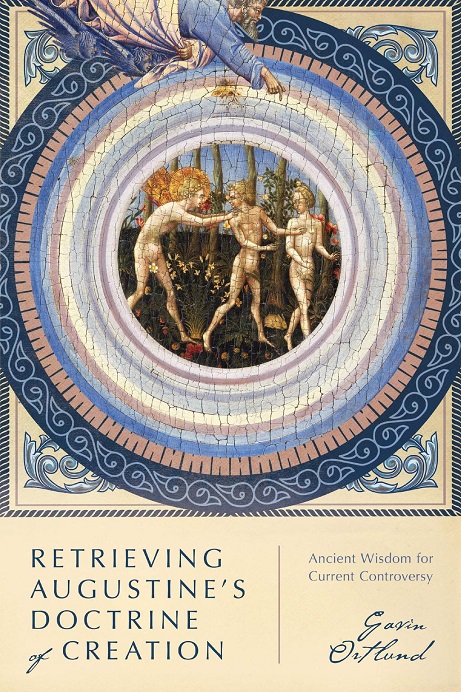
Augustine looms large over the course of church history, and he’s frequently enlisted by people on various–and sometimes contradictory–sides of theological debates. Gavin Ortlund, in Retrieving Augustine’s Doctrine of Creation, seeks to show that Augustine’s doctrine of creation has much to teach us to this day about not just the theological underpinnings of a doctrine of creation but also humility in conclusions.
The first question to ask, though, is whether Augustine should be relevant to today’s debates over the doctrine of creation. Often, Christians today (at least in the United States) focus on heated discussions about evolution, death before the Fall, the historicity of Adam, and related issues. Much of the discussion is about science–or what counts as science. What can Augustine have to say to such debates, when he predated them by 1500 years? In one stirring account, Ortlund answers the question:
Imagine a young man in his late teen years. He has recently moved to the city to go to school. In the course of his study, he becomes convinced that the Genesis creation account is inconsistent with the most sophisticated intellectual trends of the day. He rejects the Christian faith in which he was raised, giving his twenties to youthful sins and worldly ambition.
Eventually, he encounters CHristians who hold to a different interpretation of the early chapters of Genesis, and his intellectual critique of Christianity is undermined. He enters into a time of indecision and deep angst. His mother continues to pray for him. Finally, after much personal struggle, he has a dramatic conversion experience.
This is the testimony of St. Augustine…
Ortlund, 1
It’s a powerful introduction to the rest of the book, because as one reads it, it’s clear that it’s talking about a modern youth in college, learning about geology or evolution in depth for the first time. In fact, it’s Augustine, whose story parallels that of many today. His own struggles can help illumine some of the most controversial topics today.
Perhaps the greatest contribution Augustine brings, though, is a deep sense of humility regarding the creation account. Augustine certainly had strong opinions about how it could be read, but he also realized he could be wrong. Ortlund notes that Augustine emphasized the need to “patiently endure different (orthodox) views” and quotes Augustine’s warnings against presumptuousness of assuming one is correct and obviously so (91-92). Indeed, Augustine goes on to argue that “mischievous arguments” made about the meaning of the sacred text regarding Creation goes against the very purpose of their writing, namely, to produce charity in us (92-93). While he notes that there are some certainties regarding the creation texts, he also puts some of the most hotly disputed topics of our day into the “uncertain” category. For example, the meaning of the days in the Genesis text is one thing that he sees as uncertain, and it is clear that no one can rightly charge Augustine with allegedly giving in to some kind of “evolutionary viewpoint” as Christians who note the same today are often charged with (93-94).
Augustine’s patience and humility arises, in part, from a kind of pastoral concern for certainty (or lack thereof) regarding articles of faith. Ortlund writes, “Augustine can be open to uncertainty because he regards the purpose of theological inquiry to be godliness… we do not always know in advance what will lead to godliness, and so there should be an openness and humility in the posture with which we inquire about the doctrine of creation… Augustine[‘s] patien[ce]…. is [due to] his concern for the spiritual consequences of particularly interpretations. Thus, in the Confessions, he asks, ‘How can it harm me that it should be possible to interpret these words in several ways, all of which may yet prove to be true?'” (97, emphasis his).
The doctrine of creation itself is one Augustine wrote much upon and some of it helps highlight forgotten aspects of the doctrine in our own time. Whether it’s a concern for divine priority in creation (28ff) or Trinitarian agency (43ff); whether it’s the place of angels in creation (as the light of creation? see 125-128) or the importance of temporal beauty (154ff), Augustine’s insights will surprise readers at times while also directing potential further studies into the doctrine of creation.
Augustine also had points that are relevant to some of today’s hotly debated topics, though. For example, the question of animal death looms large in our own time due to charges about death before the fall and evolution, but Augustine, over a thousand years before Darwin, saw the death of Adam and Eve as something they “contracted” from the world that was already present in animals (154). This leaves open the possibility of animal and even pre-human death before the fall, so long as one is willing to have some sort of specially created or even made immortal human pair to have as an originating couple. Again, Augustine could not have been influenced by our modern science, so his insights into possibilities related to this and other topics allow us to glean a kind of unbiased view of the breadth of orthodox options in the modern creation debate.
Ortlund turns to questions of the Fall and evolution as well, noting that Augustine’s theology, while not developed to accommodate biological evolution, could certainly be developed in that direction. For example, Augustine argued that Adam and Eve held a “conditional immortality” that was, in part, granted through the tree of life (209).
Retrieving Augustine’s Doctrine of Creation is a work that can change the tone of the modern debates over creation. By asking an ancient interpreter not to weigh in on modern debates, but instead to speak to the doctrine of creation and then asking that doctrine some of the modern questions, Ortlund has presented a fascinating case for carefully reading and interacting with the text. I very highly recommend this book to anyone interested in Christianity and science, historical theology, or theological retrieval.
Disclaimer: I was provided with a copy of the book for review by the publisher. I was not required to give any specific kind of feedback whatsoever.
All Links to Amazon are Affiliates links
Links
Be sure to check out the page for this site on Facebook and Twitter for discussion of posts, links to other pages of interest, random talk about theology/philosophy/apologetics/movies and more!
Book Reviews– There are plenty more book reviews to read! Read like crazy! (Scroll down for more, and click at bottom for even more!)
SDG.
——
The preceding post is the property of J.W. Wartick (apart from quotations, which are the property of their respective owners, and works of art as credited; images are often freely available to the public and J.W. Wartick makes no claims of owning rights to the images unless he makes that explicit) and should not be reproduced in part or in whole without the expressed consent of the author. All content on this site is the property of J.W. Wartick and is made available for individual and personal usage. If you cite from these documents, whether for personal or professional purposes, please give appropriate citation with both the name of the author (J.W. Wartick) and a link to the original URL. If you’d like to repost a post, you may do so, provided you show less than half of the original post on your own site and link to the original post for the rest. You must also appropriately cite the post as noted above. This blog is protected by Creative Commons licensing. By viewing any part of this site, you are agreeing to this usage policy.
Book Review: “The Genealogical Adam and Eve” by S. Joshua Swamidass
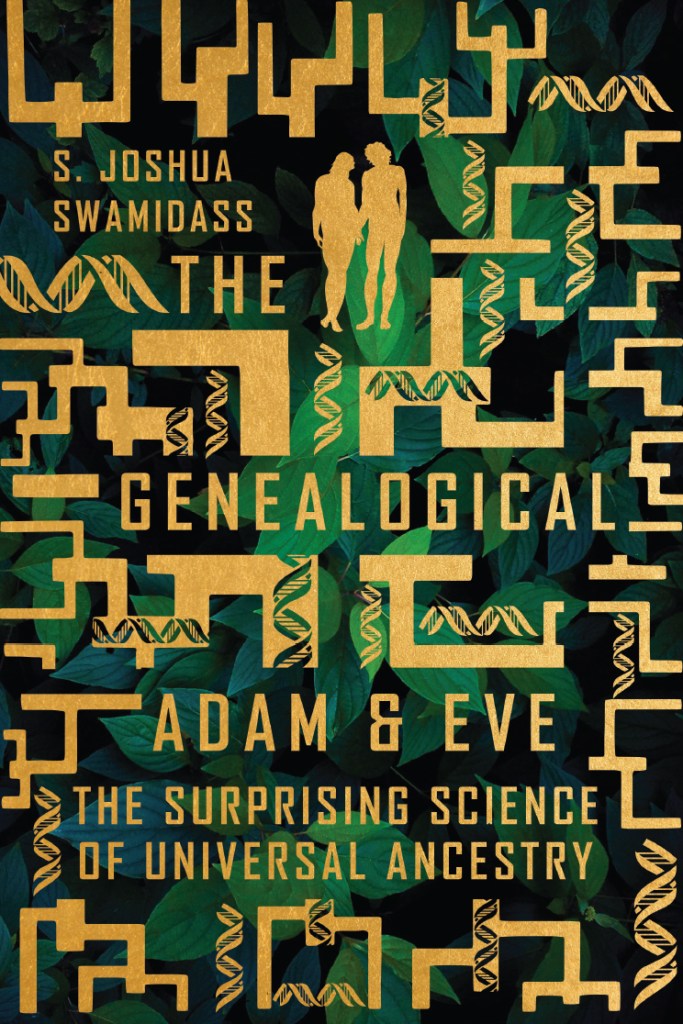
There is little doubt that an enormous amount of ink has been spilled over the question of the historicity of Adam and Eve given an evolutionary account. Often, the charge against theistic evolutionists is that they cannot or do not affirm what is thought to be required of biblical theology related to Adam and Eve. At other times, appeal to Adam and Eve is looked down upon as a quaint, outdated, and clearly mistaken view. Into that fray steps S. Joshua Swamidass with the book The Genealogical Adam & Eve: The Surprising Science of Universal Ancestry. Swamidass argues that there is a way past these seemingly endless debates.
The genealogical hypothesis is central to Swamidass’s argument. Swamidass’s thesis is genealogical, not genetic. Genetics can be used to provide a “tunnel vision” for ancestry (31), but genealogical ancestry is a broader, common language way of looking at ancestry. The hypothesis has 6 main components: 1. Adam and Eve lived recently in the Middle East; 2. they are the genealogical ancestors of everyone (specifically by AD 1); 3. They are specially, or de novo created; 4. interbreeding occurred between the lineage of Adam and Eve and others; 5. no additional miracles apart from special creation of Adam and Eve are allowed (for the purpose of the hypothesis); 6. assume two findings of evolutionary science: human descent common with the great apes and that the size of the human population never dipped to a single couple (p. 26-27).
Swamidass argues that rather than looking at trying to tie all humans together genetically, we may be able to do so genealogically. Once one traces ancestry back by a certain number of generations, one will effectively have so many ancestors that the number would exceed the number of humans who were alive at the time. That’s an absurd conclusion, of course, but it doesn’t account for the way that family trees intermingle and mesh together in many different ways. Nevertheless, due to the exponential way that tracing one’s family history back, Swamidass argues that it’s likely that we can argue that all humans have common ancestors as recently as several thousand years ago.
Swamidass takes this extrapolation and notes that because of this, one can affirm most of the major tenets of traditional Christian belief regarding Adam and Eve. Adam and Eve could have been specially created–science cannot test for this either way–a few thousand years ago, and still be the common ancestors of all living humans. What his thesis does have, of course, is humans outside the garden. But Swamidass notes that even traditional readings of the text have struggled with that due to questions of who Adam and Eve’s children married, or who Cain was afraid of, etc.
One could easily see how Swamidass’s hypothesis could be tweaked in different ways depending upon one’s own conclusions about the data or theological presuppositions. Some theistic evolutionists would likely dispute thesis 3, while creationists would dispute several theses. But what Swamidass has done is effectively offered a possible solution to the many, many science-faith controversies related to Adam and Eve. One can, on Swamidass’s thesis, affirm both the findings of evolutionary biology as well as virtually every aspect of the traditional view of Adam and Eve. The extraordinary import of this should not be understated: Swamidass has offered a defense of a hypothesis that virtually anyone who has written on the topic will need to contend with.
The Genealogical Adam & Eve is sure to be a controversial book. Yet hopefully, within that controversy, there can be a discussion of coming to agreement on specific doctrinal topics, and a broadening of areas where unity can be found. Swamidass has done serious, scholarly work here that anyone who wants to deal with the topic of Adam and Eve will need to address.
Disclaimer: I was provided with a copy of the book for review by the publisher. I was not required to give any specific kind of feedback whatsoever.
Links
Be sure to check out the page for this site on Facebook and Twitter for discussion of posts, links to other pages of interest, random talk about theology/philosophy/apologetics/movies and more!
Book Reviews– There are plenty more book reviews to read! Read like crazy! (Scroll down for more, and click at bottom for even more!)
SDG.
——
The preceding post is the property of J.W. Wartick (apart from quotations, which are the property of their respective owners, and works of art as credited; images are often freely available to the public and J.W. Wartick makes no claims of owning rights to the images unless he makes that explicit) and should not be reproduced in part or in whole without the expressed consent of the author. All content on this site is the property of J.W. Wartick and is made available for individual and personal usage. If you cite from these documents, whether for personal or professional purposes, please give appropriate citation with both the name of the author (J.W. Wartick) and a link to the original URL. If you’d like to repost a post, you may do so, provided you show less than half of the original post on your own site and link to the original post for the rest. You must also appropriately cite the post as noted above. This blog is protected by Creative Commons licensing. By viewing any part of this site, you are agreeing to this usage policy.
Book Review: “Friend of Science, Friend of Faith” by Gregg Davidson
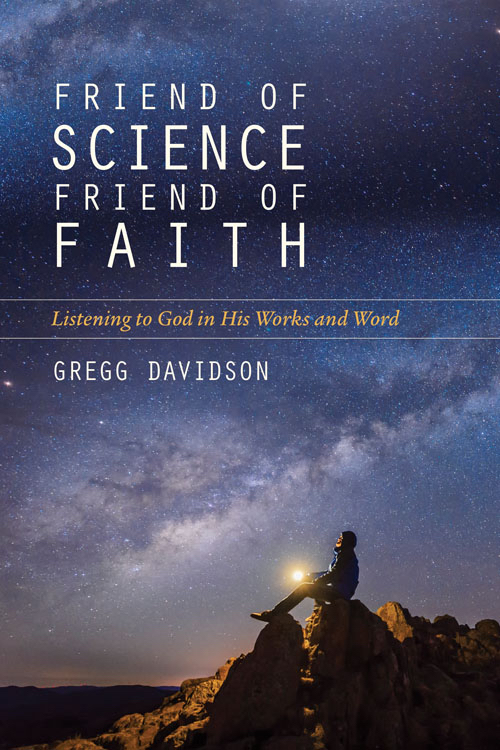
There are times when you read a book and realize it will be foundational going forward for your understanding of a certain topic. Gregg Davidson’s Friend of Science, Friend of Faith: Listening to God in His Works and Word is a book that will surely be formative for this reader on science and faith issues. It is a rigorous, insightful examination of the intersection of Christianity and science that will surprise, delight, and challenge almost any reader.
Science and Christianity is one of those topics that seems so overdone that it may feel as though nothing new can be written on it. But Davidson has written a book that will be refreshing for those who’ve already (as I have) read hundreds of books on the topic. Davidson starts off simply, noting the way that many have created a scenario for a crisis of faith by painting mainstream science as in direct opposition to aspects of Christianity and the Bible. Davidson notes that there are three essential questions when assessing apparent science-Bible tensions (wording and questions on p. 23): 1. Does the infallibility of Scripture rest on a literal interpretation of the verses in question? 2. Does science conflict with the intended message of Scripture? 3. Is the science credible?
These questions form the basis for much of the rest of the book, but Davidson approaches them in ways that are informative and even surprising for those who have trod much of this ground before. One of the many examples of this is right near the beginning, as Davidson goes over the conflict over Heliocentrism vs. Scripture. First, Davidson notes that it was not just Roman Catholics who had problems with Galileo, citing Martin Luther and John Calvin’s own objections to the man’s theory. Second, Davidson notes the real shift in interpretation on Scripture here–something that is integral to the story but often skated over. Christians really were reading passages literally and seeing this as conflict with Scripture. Davidson then filters the Heliocentrism debate through his three questions presented above, noting the way that believers were forced to re-evaluate commonly held notions about Scripture. The conclusion is that science can force us to go back to the text and test our interpretation to see whether it is accurate.
Davidson also argues extensively for accommodation in Scripture. Through his arguments, it becomes clear that Christians must either accept for accommodation of worldviews that had mistaken views of science present in Scripture or deny reality. This is a strong dichotomy, but one example is the question of seeds. Jesus clearly states that the mustard seed is the smallest of seeds (Mark 4:30-32), and it decidedly is not (forget-me-nots, celery, poppies, orchids, and sundews all have smaller seeds). Moreover, Jesus says that grains of wheat die in order to produce more wheat (John 12:24), but seeds do not die in order to grow. Readers who insist on a lack of accommodation in Scripture must therefore live in the uncomfortable realm where Jesus was mistaken on the size of seeds or how plants grow. This is just one of the examples Davidson raises, in addition to answering common objections (like the attempt to argue these are simply phenomenological language) (43ff).
Davidson goes on to note several parts of Scripture that cannot be read literally, problems with insisting on modern science as the real rationale behind several passages dealing with things like the firmament (see 64ff), and how to read Genesis well.
Next, Davidson moves on to the question of whether modern science conflicts with Scripture. This fascinating part of the book sees Davidson showing biblical accounts of things like creation, the origin of life, and more, showing the scientific explanations for these, and then offering a synthesis. This synthesis, it ought to be noted, is not a Concordist view of Scripture that attempts to say modern science is found in Scripture. Instead, Davidson’s syntheses are offered to show that modern science does not conflict with Scripture, a substantive difference that makes a significant change for how Scripture is treated alongside science.
The next part of the book addresses whether modern science is credible. First, Davidson notes the difference between science and philosophy, and how many on almost any side of the science/faith debates conflate the two, insisting that materalism just is science or the like (121ff). Then follows several chapters outlining in clear, distinct ways the science behind things like the age of the universe and Earth, evidence for evolution from many, many different lines of evidence, and problems with various creationist accounts of the same. At no point does Davidson denigrate his opponents, but he instead offers incisive criticisms that demonstrate flaws in their systems.
Several more chapters address problems with creation science, the strange and somewhat surprising shift of so many young earth creationists to effectively endorsing hyper-evolution, and problems with Intelligent Design. Davidson addresses many common creationist arguments and demonstrates their flaws. For example, the argument that millions of years was invented to challenge Christian faith is fatally mistaken due to the fact that many geologists who discovered deep time professed their Christian faith alongside their discoveries. Soft tissue found in dinosaur bones is another argument addressed, showing that the molecular structure of preserved proteins in dinosaur tissue actually show more similarity to birds than reptiles, and that the discovery of rare soft tissue does not, in fact, demonstrate a young earth (219-220). Many more arguments are addressed. Prominent young earth groups like Answers in Genesis have been offering scenarios where rapid speciation occurred post-Flood in order to explain away many difficulties with a certain reading of the Ark narrative. Davidson notes many problems with this scenario, including the lack of time for generational adaptation, the existence of isolated populations, and the misuse of loss of information in genetic coding to explain speciation.
Davidson’s analysis of Intelligent Design points out several flaws with the movement and its arguments. For one, he shows the major difference between William Paley’s original advocacy of design, which was seen as something across all of nature and served as a very broad argument, and modern ID theory which focuses on a few specific instances that are said to point to design. Davidson argues that “if evidence of God is found primarily in places of nature that are beyond our current comprehension, then evidence for God is–almost by definition–continuously shrinking” (261). Moreover, even in the time of people like Leibniz, arguments were already being offered against design of specific features, because they could just as easily be seen as evidence of inefficient design or the need to correct a very good creation. Another problem with ID is that its hypothesis is, ultimately, untestable. Though it is argued that ID can be seen as science, science must be testable, and any number of ways to consider an experiment to try to demonstrate ID fail (264ff). Finally, Davidson closes with a summary of the work and how he’s offered a way forward that won’t lead to the crises of faith noted at the beginning of the book.
It should be noted that the book is richly illustrated in black-and-white with many charts, graphs, and pictures that always add to the text and which often are used to highlight specific ideas or topics.
Friend of Science, Friend of Faith is simply fantastic. It’s the kind of single-volume look at science and faith that could be handed to almost anyone to challenge assumptions and lead to new learning on the topic. I cannot recommend it highly enough; it’s that excellent.
Disclaimer: I was provided with a copy of the book for review by the publisher. I was not required to give any specific kind of feedback whatsoever.
Links
Be sure to check out the page for this site on Facebook and Twitter for discussion of posts, links to other pages of interest, random talk about theology/philosophy/apologetics/movies and more!
Book Reviews– There are plenty more book reviews to read! Read like crazy! (Scroll down for more, and click at bottom for even more!)
SDG.
——
The preceding post is the property of J.W. Wartick (apart from quotations, which are the property of their respective owners, and works of art as credited; images are often freely available to the public and J.W. Wartick makes no claims of owning rights to the images unless he makes that explicit) and should not be reproduced in part or in whole without the expressed consent of the author. All content on this site is the property of J.W. Wartick and is made available for individual and personal usage. If you cite from these documents, whether for personal or professional purposes, please give appropriate citation with both the name of the author (J.W. Wartick) and a link to the original URL. If you’d like to repost a post, you may do so, provided you show less than half of the original post on your own site and link to the original post for the rest. You must also appropriately cite the post as noted above. This blog is protected by Creative Commons licensing. By viewing any part of this site, you are agreeing to this usage policy.
“We Believe in Dinosaurs” – The Ark Encounter Examined
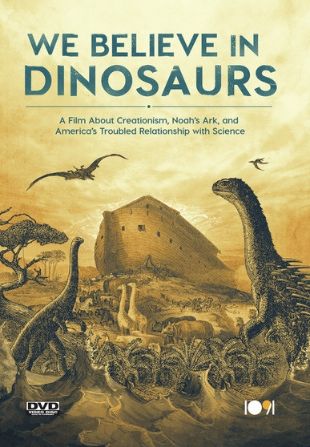
The Ark Encounter is a controversial attempt to create a monument to what one group of people sees as biblical truth. “We Believe in Dinosaurs” documents the making of the Ark, both before and after, through several different lenses–a creationist working on the project, a geologist opposing it, an atheist protesting it, a woman who speaks in defense of creationism, a business owner hoping it will revitalize the town, a pastor who sees it as too closely uniting church and state, and a young Christian man who’s changed his mind. Recently, I had the chance to watch the documentary on PBS. It’s also available on Amazon.
One thing that makes the documentary so fascinating is that range of voices and perspectives it presents. Doug Henderson is the lead project designer at the Creation Museum and in the documentary he helped design the exhibits and leads a team making animals to go on the Ark, among other things. He’s a fully convinced Young Earth Creationist who believes the world is about 6,000 years old and that a global flood can account for the geologic record of our planet. He admits to having some doubts in the past, but that he resolved those doubts through a firm reliance on what he sees as the correct way to interpret the Bible. One of the most poignant moments of the documentary has him appealing to the camera with the notion that “I’m not crazy” and that he’s just as normal as anyone else, he just believes the Earth is young. It’s a rare, emotionally vivid moment in creation-evolution debates where the facade of certainty is stripped away and, as a viewer, one can witness that these are real people with real concerns. It’s powerful.
David Macmillan used to be a young earth creationist, and even donated enough to have his name on the wall at the Creation Museum. His own journey led him to question the truth of young earth creationism and he points out that it was a questioning of the rigidity of interpretation as well as scientific findings that caused him to change his view. As a viewer, he related to me quite a bit because his journey is very similar to my own.
Dan Phelps is a geologist who thinks the Ark Encounter is anti-science and has done the work to demonstrate it. But he rose to prominence in opposition to the project not because of geological disputes but due to his taking issue with tax dollars being used to supplement the building of the Ark. What was most alarming to him was that the Ark Encounter’s job applications at every level, whether project leader or janitor, required strict adherence to the full statement of faith of Answers in Genesis. This meant not only that atheists need not apply, as his op-ed got titled, but also that no Muslims, Hindus, Mormons, and even many, many Christians need apply either. To have this kind of hiring policy while also getting government money was alarming, and the documentary follows the fight against this government funding. Ultimately, this battle was lost and the Ark Encounter received grants and other aid from both state and local governments, despite claims both that the Ark is an evangelistic tool and the strict hiring practices.
One of the most alarming parts of the film is found when Jim Helten, President of the Tri-State Freethinkers (an atheist organization) who raised money to make billboards slamming the Ark Encounter and Creation museum as the “Genocide and Incest” museum is interviewed for the radio. What’s alarming about this is the way the Christian reacts to the atheist in this encounter. Jim alleges that the Ark implies incest and genocide because the flood kills everyone not on the ark, whether innocent or not, and then that the world has to get repopulated through incest because only Noah’s family was on the Ark. One can debate the nuance (or lack thereof) of Jim’s interpretation, but the Christian on the other end of the line turns around and immediately consigns Jim to hell. He says he’ll pray for Jim to not be in hell, but finally becomes unhinged and says “and there’ll be a million serpents biting your legs for eternity” as though that’s a reasonable response to Jim’s charges and his efforts to put up somewhat inflammatory billboards. Jim points out that he’s being threatened with eternal torture for asking for evidence. It’s another one of the moments that the documentary does so well of creating times to think and reflect and wonder. How is it possible that an ostensibly Christian person would think such a response was justified–and where did the line about the serpents come from?
A major aspect of the documentary is showing the Ark Encounter’s impact on the local community. It’s not clear what explicit promises were made, but it is clear that the people of Williamstown, Kentucky were given the impression that the Ark Encounter would bring a business boom to their community and help revitalize a downtown that Jamie Baker, interviewed in the documentary, said was so slow at times you could almost see tumbleweeds. The documentary covers several aspects of this hope, showing one group singing a song about their excitement related to the Ark Encounter. Just a few years later, that same place is a vacant facade, to go along with all the other places for sale or rent in a downtown that hasn’t been helped at all. One person in the documentary said they were promised shuttles would bring people into town to eat and shop, but that they only rarely see even a car driving through.
It is not clear, again, what promises were made to the people of Williamstown, but whatever hopes were raised have since, apparently, been crushed. The Ark Encounter isn’t helping the community in a monetary way so far as one can tell from the documentary. This, despite the city selling 78 acres of land to the Ark Encounter for $1 and giving them $175,000. This may not seem like a big problem–businesses make promises and bully people into helping them turn a profit all the time. But the Ark Encounter is an ostensibly Christian exhibit! Its staff has to subscribe to a strict statement of faith. One would expect integrity and openness from such people, not attacks on people who question their practices and attempts to block or obfuscate information related to their exhibit.
“We Believe in Dinosaurs” is a fascinating, challenging watch. It presents many sides, both sympathetic and not, related to the Ark Encounter. I haven’t even gone over several other people who show up in the documentary, and there’s much more there. I highly recommend it to anyone, given its broad range of interests from religious freedom, church and state issues, questions about science and faith, and more.
Links
What options are there in the origins debate? – A Taxonomy of Christian Origins Positions– I clarify the breadth of options available for Christians who want to interact on various levels with models of origins. I think this post is extremely important because it gives readers a chance to see the various positions explained briefly.
What is the relationship between Christianity and science?- An Overview of 4 Views– How should the Christian faith interact with science? Do they interact at all? I survey 4 major views on these and other questions.
Be sure to check out the page for this site on Facebook and Twitter for discussion of posts, links to other pages of interest, random talk about theology/philosophy/apologetics/movies and more!
Origins Debate– Read a whole bunch more on different views within Christianity of the “origins debate.” Here I have posts on young and old earth creationism, intelligent design, theistic evolutionism, and more!
SDG.
——
The preceding post is the property of J.W. Wartick (apart from quotations, which are the property of their respective owners, and works of art as credited; images are often freely available to the public and J.W. Wartick makes no claims of owning rights to the images unless he makes that explicit) and should not be reproduced in part or in whole without the expressed consent of the author. All content on this site is the property of J.W. Wartick and is made available for individual and personal usage. If you cite from these documents, whether for personal or professional purposes, please give appropriate citation with both the name of the author (J.W. Wartick) and a link to the original URL. If you’d like to repost a post, you may do so, provided you show less than half of the original post on your own site and link to the original post for the rest. You must also appropriately cite the post as noted above. This blog is protected by Creative Commons licensing. By viewing any part of this site, you are agreeing to this usage policy.
Book Review: “The Liturgy of Creation: Understanding Calendars in Old Testament Context” by Michael LeFebvre
The common saying that “the more you know, the more you know you don’t know” applies perhaps especially well to theology. It shouldn’t be surprising, as it is a topic that attempts to make sense of the infinite. Questions in Christianity about creation abound. Modern debates are often more heat than light, with apparently no way to come to an understanding. Michael LeFebvre’s The Liturgy of Creation: Understanding Calendars in Old Testament Context is a book that can help to break that deadlock and help readers learn about some of the context and meaning of key Old Testament passages.
The core of LeFebvre’s thesis is that the Old Testament narratives center around key aspects of everyday life in their temporal contexts. Specifically, the heavenly lights and the agricultural cycle–which crops could be grown when, harvest time, etc.–helped ground those who spoke and wrote the Old Testament in ways that they would understand. From this, LeFebvre notes that we do the Old Testament damage when we insist upon it providing a kind of modern journalistic approach to dates and dating. The way festivals and days were used in the Old Testament helped provide information to those who heard it about how life ought to be lived and how labor and worship go hand-in-hand.
LeFebvre makes this argument over the course of three major parts. Part I- Israel’s Calendars examines the way calendars were used in the Bible and what reference points they had for understanding time. Part II – Festivals and Their Stories surveys the festivals mentioned throughout the Old Testament and why they were celebrated, grounding them both in the context of the Old Testament text and the time and places in which they occurred. Part III – The Creation Week examines the creation week with the insights gained from Parts I and II in mind.
Part I is a deep exploration of how ancient Israel would have read time, showing not only the use of the stars, the moon, and the sun, but also the way seasons ran throughout the region as ways that people measured their own lives and ways of going about living. LeFebvre is fairly comprehensive in his look at all the stories in the Old Testament that have dates as well as bringing up every festival and examining its importance and usage in the Old Testament. Readers will likely find much to examine and benefit from throughout these first two parts.
It is in part III where the rubber meets the road and LeFebvre applies his insights into timing throughout the Old Testament to the specific questions about the week of creation. The days themselves are laid out in such a way as to correspond to his theses about how Israel ordered itself. LeFebvre makes a strong argument that these creation days are not intended to be read in light of modern science and forced into such a box. Instead, they are intended to give order to creation and one’s own life, providing a reason for Sabbath as well as an understanding of all creation within the context of God’s ordered running of the seasons and universe.
The Liturgy of Creation is an excellent look at what the calendars, seasons, and dates in the Old Testament mean in their own context. LeFebvre brings light to some of the more difficult questions in interpretation, while also challenging readers to examine their own assumptions about the text. Highly recommended.
Disclaimer: I was provided with a copy of the book for review by the publisher. I was not required to give any specific kind of feedback whatsoever.
Links
Be sure to check out the page for this site on Facebook and Twitter for discussion of posts, links to other pages of interest, random talk about theology/philosophy/apologetics/movies and more!
Book Reviews– There are plenty more book reviews to read! Read like crazy! (Scroll down for more, and click at bottom for even more!)
SDG.
——
The preceding post is the property of J.W. Wartick (apart from quotations, which are the property of their respective owners, and works of art as credited; images are often freely available to the public and J.W. Wartick makes no claims of owning rights to the images unless he makes that explicit) and should not be reproduced in part or in whole without the expressed consent of the author. All content on this site is the property of J.W. Wartick and is made available for individual and personal usage. If you cite from these documents, whether for personal or professional purposes, please give appropriate citation with both the name of the author (J.W. Wartick) and a link to the original URL. If you’d like to repost a post, you may do so, provided you show less than half of the original post on your own site and link to the original post for the rest. You must also appropriately cite the post as noted above. This blog is protected by Creative Commons licensing. By viewing any part of this site, you are agreeing to this usage policy.
Dinosaur Eggs: A serious problem for a young earth flood scenario
 Young Earth Creationism is usually paired with some form of flood geology–the notion that Noah’s flood was a global disaster which can account for most, if not all, of the fossil record and stratification of rocks. There are many problems with such a scenario, but for now I want to focus on one: dinosaur eggs.
The Problem Stated
Abstractly, dinosaur eggs aren’t really a problem: they could have been washed away in a global flood or rapidly covered by sediment, thus burying them and having them ready to begin fossilization. Problem solved, right?
As usual, though, the fossil record doesn’t align with such a simple explanation. I was reading Giants of the Lost World, a book by Donald R. Prothero about the history of several huge species that once inhabited South America, and came upon an intriguing passage about a specific find of dinosaur eggs. This find is called, with tongue firmly planted in cheek, “Auca Mahuevo” (to make a reference to contracting the spanish words for “more eggs”). Situated in a region called Auca Mahuida in Argentina near an extinct volcano, the site has revealed an abundance of fossilized dinosaur eggs, including several spectacular finds in which the embryo can be seen inside the egg.
The fossil site is one in which clutches of eggs–between 15-34 eggs in each–were laid in clumps that suggest sauropod nesting sites. There were few crushed eggs, which “suggest[ed] that the site had been protected by the mothers guarding the perimeter but not walking among the eggs once they had been laid…” (33). But here’s where it gets especially interesting for the topic at hand:
The remarkable preservation of the eggs was due to the fact that large flash floods had buried the eggs–and had done so many times, because there were multiple egg layers in the rocks, covering a total thickness of 25 meters (75 ft). (33)
To say that this offers an enormous problem for a global flood scenario as the explanation for all of these eggs is an understatement. This site is evidence that there were multiple periods in which a group of sauropods came to an area, nested, laid eggs, some flash flood occurred that buried them in mud or other sediment, and then the sauropods laid more eggs at a later time in the same area, only to have it happen again. The young earth creationist scenario insists that rapid flooding is required for fossilization, and that is what occurred here, but it occurred at several distinct times, in layers upon layers of eggs.
Possible Young Earth Explanations and More Problems
One possible counter to this is for the young earth creationist (YEC) to assert that these eggs were simply all jumbled together from a single or several sites in the chaos of the flood waters, tossed with mud and left to fossilize. But the lack of crushed eggs, uniformity of species, and organization of the nests all work against such a scenario. If the flood was as turbulent as many flood geology scenarios suggest, how would the eggs have ended up in nests at all? Indeed, if the explanation is that they got jumbled together in the wet silt of the floodwaters, how could the structures of the nests have been preserved on multiple layers? And again, if these eggs just happened to get tossed together, why aren’t they cracked or smashed–how do they still have embryos inside?
Some young earth scenarios include dinosaurs fleeing the rising flood waters only to finally stop to lay eggs in a rush, only to flee on. But this site does not allow for such an explanation, as it shows multiple distinct nesting periods that were covered up over time. The YEC may counter by saying that multiple different dinosaurs fled past the area and just happened to lay their eggs on this site after mud and rain had covered the previous nests, but this doesn’t account for the lack of trampled eggs and the care in which they were organized, as above, suggesting a perimeter being guarded by parents.
Conclusion
Fossil beds like this present an enormous problem for a young earth creationist scenario that relies on the flood to explain the fossil evidence. Time and again, those scenarios fail to account for the actual findings in the field and amount to nothing more than implausible scenarios requiring miracles unrecorded in the Bible to have occurred.
Links
Be sure to check out the page for this site on Facebook and Twitter for discussion of posts, links to other pages of interest, random talk about theology/philosophy/apologetics/movies and more!
What options are there in the origins debate? – A Taxonomy of Christian Origins Positions– I clarify the breadth of options available for Christians who want to interact on various levels with models of origins. I think this post is extremely important because it gives readers a chance to see the various positions explained briefly.
What is the relationship between Christianity and science?- An Overview of 4 Views– How should the Christian faith interact with science? Do they interact at all? I survey 4 major views on these and other questions.
SDG.
——
The preceding post is the property of J.W. Wartick (apart from quotations, which are the property of their respective owners, and works of art as credited; images are often freely available to the public and J.W. Wartick makes no claims of owning rights to the images unless he makes that explicit) and should not be reproduced in part or in whole without the expressed consent of the author. All content on this site is the property of J.W. Wartick and is made available for individual and personal usage. If you cite from these documents, whether for personal or professional purposes, please give appropriate citation with both the name of the author (J.W. Wartick) and a link to the original URL. If you’d like to repost a post, you may do so, provided you show less than half of the original post on your own site and link to the original post for the rest. You must also appropriately cite the post as noted above. This blog is protected by Creative Commons licensing. By viewing any part of this site, you are agreeing to this usage policy.

 J.W. Wartick - Reconstructing Faith