creationism
Really Recommended Posts 10/24/14- Reconciling in Christ, Walking Dead, and more!
 Hello friends! I have another set of links for you to peruse. As always, let me know what you think of the links and if you enjoyed them, leave a comment on those blogs! Thanks for stopping in and reading!
Ambassadors for Reconciliation– There has been much ire flying around over the director of the theistic evolutionist group Biologos’ invitation to creationists like Ken Ham to have dinner and talk over the issues. Here, Hugh Ross reflects upon the extreme reactions of some and the ways we can work towards reconciliation. One quote in particular is helpful:
Enough is enough. There are mission fields still to be reached. How can we ask nonbelievers to dialogue with us if we cannot graciously dialogue with one another, if we treat one another as enemies? Unless we make some progress in reconciling our differences, how can we expect to help reconcile a skeptical world to Christ? We are commissioned by God to be His ambassadors. It’s time for us to start behaving as ambassadors.
I think this is spot on. I have personally been accused by a number of those who disagree with me of being a vile compromiser, someone who is actively leading people away from Christ, etc. If this is how we treat fellow believers, why should those who do not yet believe think that we will be capable of honest dialogue with them? Let’s stop the insults and start genuine dialogue. Let us show one another charity.
When Humans Lose their Humanity: “No Sanctuary” and the real Horror of Terminus– What happens when humans are dehumanized? Here’s an interesting look at ‘The Walking Dead’ which explores this question in deeply insightful ways.
Do we really need to teach our kids apologetics when God is in control anyway?– Here’s an excellent post on the need to educate our children in the Christian faith. Unfortunately, some think that we shouldn’t bother because God is in control. How might we answer this?
Is the Shroud Evidence for God’s Existence?– I have a number of friends in apologetics who are convinced that the Shroud of Turin is genuinely the image of Christ. I am personally unconvinced, but I found this article on it interesting for analyzing what we should make of the Shroud, were it to prove genuine.
Intersections: Summit on Origins– I’m going to be at this conference hosted by Bethel University. It’s on the origins debate, a topic of great interest to me. If you’re able to make it, I’d love to see you there! Let me know!
Do Young Earth Creationists Advocate Appearance of Age?
Young Earth Creationists (hereafter YEC or YECs) sometimes make the claim that the reason the universe is found to be so ancient by modern science is because it merely appears to be that old. I myself actually held to this view for a while when I was holding young earth creationism in tension with the evidence I observed.
I have been challenged in the past (for example, in the comments here) to provide evidence to show that this a claim made by anyone other than the “YEC in the street,” so to speak. That is, some YECs have told me that no serious YECs (that is, those who are publishing or working with the larger creationist think-tanks) make this argument.
Published Claim
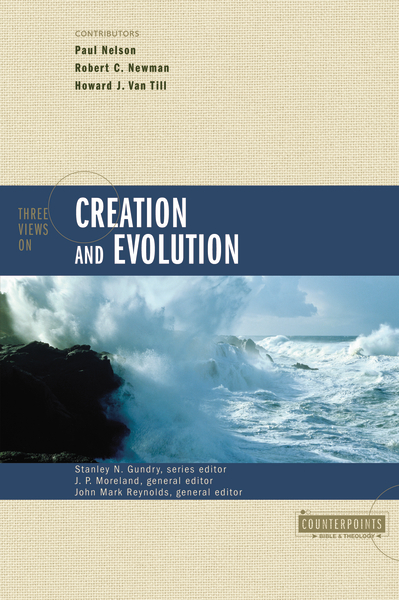
In the past I appealed to various online sources to show that, for example, the Institute for Creation Research makes this claim. I recently finished reading Three Views on Creation and Evolution
Some suggest God could have created starlight in transit to the earth. Perhaps most of cosmic history is apparent rather than actual. (52, cited below)
Initially this may not seem like a claim of “appearance of age,” but the authors go on to defend the plausibility of this “apparent” cosmic history and age of the universe:
…[Perhaps] God needed such a[n ancient appearing] creation to sustain life on earth. It might be necessary to have the universe the size and shape that it is in order for life on this planet to survive… God would have no real motive to ‘actualize’ most of cosmic history… ‘Apparent’ history in the mind of God could not be any different than ‘actual’ history… He would gain a fully functioning universe, but without the ‘waste of time’ needed to actualize the less interesting parts. (52-53)
From these quotes, it is obvious that Nelson and Reynolds are defending the notion of apparent age.
Problems for Young Earth Creationists
The notion of apparent age raises a number of issues for YECs. First is the common charge that this turns God into a deceiver. Nelson and Reynolds anticipated this objection and answered by using an analogy of someone’s mother refinishing an antique chair which would make it appear new. The only deception in this case, the authors argue, would occur if the mother failed to correct someone if they commented on the brand new chair. Similarly, God has provided a “label” to show the universe is not ancient: the Bible.
There are a number of problem with explanations like this one: first, in the case of the chair, further investigation would demonstrate it is not brand new. After all, antique dealers know the value of chairs which have not been tampered with by refinishing! We are able to discover whether additional layers of paint or finishing have been applied over the surface of a chair; similarly, we are able to discover whether things which initially appear young may indeed be quite old. The analogy itself breaks down. Second, the argument begs the question. After all, apart from YECs, those Christians who are asserting the universe is really billions of years old also claim that the Bible does not limit the age to only a few thousand years. This is the reason the challenge of “apparent age” comes up to begin with! So to turn around and say, no, it’s not deception because the Bible says it is young is to merely assert that which is being challenged.
Briefly, one might also wonder why Nelson and Reynolds think God “wasted time” in taking 7 days creating. Their dismissal of, say, star formation as something “less interesting” is frankly astonishing. Would that I could go back in time to see these “less interesting” events!
Another difficulty for the YEC comes in the form of a dilemma: Do you advocate a scientific understanding of young earth (and thus read science into the text) or argue for appearance of age (and thus grant that the Earth appears ancient)?
Think about that line for a moment. If YECs wish to affirm their position, they must either come up with a rival scientific understanding of the age of the universe and therefore read that scientific understanding back into the text (after all, where does Flood geology come from?–certainly not the text of the Bible!) or they must acknowledge the evidence that the universe is indeed quite ancient and merely assert that the evidence is trumped by their understanding of the Bible. The “appearance of age” argument grants that the universe indeed does provide evidence for being quite ancient.
Conclusion
Appearance of age is indeed part of the YEC quiver of arguments, as I have demonstrated. The question is, can this actually save YECs from an inconsistent view? I have argued that it does not. But even if YECs drop the “appearance of age” argument, they must still do that which they often attack others for doing: reading science back into the text of Genesis 1. If you’re a YEC, I hope you will think seriously before using the argument from “appearance of age.” But I also hope you’ll think seriously about whatever your alternative theory for the history of the universe might be. How much of it is actually derived from the pages of Scripture? How does your theory fit the Genesis account? Remember, there are other possibilities out there.
Links
Be sure to check out the page for this site on Facebook and Twitter for discussion of posts, links to other pages of interest, random talk about theology/philosophy/apologetics/movies and more!
Origins Debate– Check out all my posts on the discussion within Christianity over the duration and means of creation.
Source
Paul Nelson and John Mark Reynolds, “Young Earth Creationism” in Three Views on Creation and Evolution
SDG.
——
The preceding post is the property of J.W. Wartick (apart from quotations, which are the property of their respective owners, and works of art as credited; images are often freely available to the public and J.W. Wartick makes no claims of owning rights to the images unless he makes that explicit) and should not be reproduced in part or in whole without the expressed consent of the author. All content on this site is the property of J.W. Wartick and is made available for individual and personal usage. If you cite from these documents, whether for personal or professional purposes, please give appropriate citation with both the name of the author (J.W. Wartick) and a link to the original URL. If you’d like to repost a post, you may do so, provided you show less than half of the original post on your own site and link to the original post for the rest. You must also appropriately cite the post as noted above. This blog is protected by Creative Commons licensing. By viewing any part of this site, you are agreeing to this usage policy.
Really Recommended Posts 10/17/14- the Flood, Acts, and Compromise?
 There is much to read on the internet (understatement of the century). Here, I’ve tracked down a number of posts that are now linked for your reading pleasure. There’s an amazing post on the historical reliability of the book of Acts, a few posts on creationism and the Flood, and a post on the way we should be doing apologetics.
The Reliability of the Book of Acts– A massive set of 84 points of evidence for the historical accuracy of the biblical book of Acts. I highly recommend you read through this and bookmark it.
The Genesis Flood– Was the biblical flood global? What does the text mean? Here is a biblical and scientific perspective on Noah’s Flood.
A Response to “Refuting Compromise”– A number of creationists continue to put Jonathan Safarti’s book Refuting Compromise forward as a must-read for those who would disagree with a young earth paradigm. Unfortunately, the book is largely a series of ad hominem attacks on Hugh Ross and anyone who would not step firmly into line of the young earth view. Here, Hugh Ross responds to the book.
Apologetics as Loving One’s Neighbor– How might we best do apologetics? Here, Pastor Matt argues that apologetics is a way of loving neighbor. We should operate in such a way that our apologetic reflects the gentleness and respect for others that we are to show.
No Room for a Dry Dead Sea in the Young Earth Timeline– The evidence for the Dead Sea having dried up in the past is discussed in this post alongside the question of whether a young earth creationist perspective can account for it.
Alvin Plantinga, the Compromiser?- A Call to Christian Charity in Disagreement
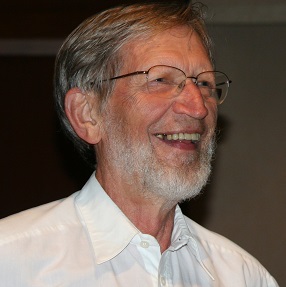 The young earth creationist Ken Ham of Answers in Genesis recently wrote a blog post critiquing eminent Christian philosopher Alvin Plantinga on a number of levels. I’d like to offer a brief analysis of his comments.
Calvin College
Ken Ham doesn’t like Calvin College, where Plantinga once taught. About the school, he says:
Calvin College in Grand Rapids, Michigan, is one of the most ardently compromising Christian Colleges in the US that continues to lead so many young people astray in regards to the authority of Scripture beginning in Genesis.
Harsh words! Of course the reason that Calvin College is said to be a “compromising” college is because it doesn’t follow Ken Ham’s specific interpretation of Genesis as a necessity of Christian faith. By not holding to a position that the Earth is only about 6000 years old, Calvin College gets added to the blacklist of “compromisers.” This kind of name-calling is unbecoming Christians, but that unfortunately hasn’t stopped Ham and his followers.
Plantinga and Science
Ham takes issue with Plantinga’s words on whether science and Christianity may coexist. Following the link to read Plantinga’s own words, one reads:
[Those who believe in a conflict between science and faith] are thinking of evolution plus naturalism, which is the idea that there isn’t any such person as God or anything like God … evolution doesn’t say anything about whether there is such a person as God or not…It’s a metaphysical add-on they are importing into the scientific notion of evolution.
Ham believes that because of this, Plantinga is “equivocating” science and evolution. However, it can hardly be argued that evolution is not the reigning paradigm in biology. Thus, it is not so much equivocation as it is using terms as they are commonly understood. But that aside, the key point is that Plantinga surely seems to be correct. If one does not pair metaphysical naturalism with evolution, it poses no challenge to the existence of deity.
Charity
Now, the nuances of whether evolution may be reconciled with Genesis or not aside, the real question is the appropriateness of name-calling because other Christians believe in a different interpretation of Genesis. Ham wants to keep the focus on the alleged “utter contradiction” between evolution and Genesis, but he does so by elevating his specific interpretation of the Bible above any other view and even above Christian charity. For Ham, there is no need to engage with fellow Christians in a meaningful manner. Instead, he simply dismisses fellow Christians as compromisers and sees that as enough for his followers to ignore any complexities in the debate.
Of course, going back to the issue that Ham wants to frame: the alleged conflict between science and religion, I think that it is vitally important to allow charity in interpretations of Genesis. God’s word is infallible, but human interpreters are not infallible. Instead of lashing out at other Christians because they hold a different view than we do, perhaps we should work to reconcile with and learn from each other.
Ken Ham’s post is just a single example of the constant stream of vitriol spilled out by certain groups against those with whom they disagree. I myself have been called a compromiser, an unbeliever, a follower of Satan, someone who is working to undermine the faith, etc. by people who disagree with me. Why not start the discussion rather than pouring out insults? Why not seek to work together and, if necessary, debate the issues instead of using such nasty language about others?
Links
Be sure to check out the page for this site on Facebook and Twitter for discussion of posts, links to other pages of interest, random talk about theology/philosophy/apologetics/movies and more!
Christian Philosopher Says Science Doesn’t Oppose Faith– Read Ken Ham’s post for his own perspective and words on the topic.
I do not own rights to the image of Alvin Plantinga. I found it with an image search and could not find any original rights attribution. I am using it under fair use.
SDG.
——
The preceding post is the property of J.W. Wartick (apart from quotations, which are the property of their respective owners, and works of art as credited; images are often freely available to the public and J.W. Wartick makes no claims of owning rights to the images unless he makes that explicit) and should not be reproduced in part or in whole without the expressed consent of the author. All content on this site is the property of J.W. Wartick and is made available for individual and personal usage. If you cite from these documents, whether for personal or professional purposes, please give appropriate citation with both the name of the author (J.W. Wartick) and a link to the original URL. If you’d like to repost a post, you may do so, provided you show less than half of the original post on your own site and link to the original post for the rest. You must also appropriately cite the post as noted above. This blog is protected by Creative Commons licensing. By viewing any part of this site, you are agreeing to this usage policy
Really Recommended Posts 10/10/14- Game of Thrones, Abortion, Joshua, and more!
 Another week, another look at some of the most interesting posts on the web. Here we have posts on the Game of Thrones and Philosophy, Joshua 10 and the meaning of the sun standing still, creationist Ken Ham, abortion, and ways your kid might be learning an oversimplified faith. As always, I’d love to read what you think of the posts! Be sure you leave a comment when you go visit to let the authors know your own insights. We have an owl post edition today because it’s cold.
6 Ways You May Be Raising Your Kids with an Oversimplified Faith– We are charged with raising our children in the faith. That doesn’t apply only to parents, but to the entire Christian community. How might we combat the simplistic image of faith that many children have? Check out this great post (and site) from Natasha Crain, and be sure to follow the site for some awesome posts on Christian teaching for children.
Biblical Credibility and Joshua 10: What does the text really claim?– Joshua 10–the passage about the sun ‘standing still’ in the sky has long drawn criticism from non-Christians for various reasons, primarily scientific inaccuracy. Here, eminent scholar John Walton (seriously one of my favorites) explains the text of Joshua 10 in light of other Ancient Near Eastern literature and the way it would have been understood in its time.
Scott Klusendorf Defends the Pro-Life View on the Unbelievable? Radio Show– Recently, Scott Klusendorf–a wonderful pro-life teacher and advocate–debated Mara Clarke on the subject of abortion. It was interesting to listen to this debate and see how the sides played out their arguments. Check out this post to get summary and commentary on the debate.
“You Win or You Die” (from Game of Thrones and Philosophy)– Whatever your view of the appropriateness of “Game of Thrones” (and we must note there is much objectionable content in it), there is no denying its current popularity. Check out this post from Anthony Weber which discusses some issues related to the philosophy of the series.
The Never-ending Debate: Ken Ham’s Obsession with Bill Nye– Some time ago, Ken Ham debated Bill Nye on evolution, the age of the earth, and more (see my summary and commentary on the debate here). Ken Ham has not let this public debate sit, and continues to utilize it to produce creationist material and muster the troops, so to speak. Is this a bad thing? Is it helpful? Let’s here your thoughts. Here is a post analyzing some recent trends in his organization regarding Bill Nye.
Really Recommended Posts 9/26/14- Jesus Seminar, atheists and kids, and creationism!
First, I gotta brag: I have a son! He was born 9/17 and he’s just the cutest darling ever. Yay! I’ve been greatly blessed.
Now, I have still put together some awesome posts for your persual, dear readers! Here we have a nice variety of topics from the need to realize the dangers of a hardened heart to the Jesus seminar to talking about atheism with kids (I’m sure this last one won’t be controversial). Check them out and let me know what you thought!
Chemostratigraphy: silent objector to ‘Flood Geology’– Young Earth Creationists often argue that the Noachian Flood is to be seen as the explanation for the layers of sediment we find all over the planet. Can this claim stand up to scrutiny?
Who Were the Jesus Seminar? Should anyone have taken them seriously?– Christians have long faced challenges thrown at the historical faith by historical critics like those in the Jesus Seminar. But should the Jesus Seminar really be (or have been) taken seriously? Check out this post which addresses some issues related to this group.
14 Ways for Christian Parents to Teach Kids about Atheism– How might we as Christians approach the topic of atheism when speaking with children? Natasha Crain provides some much-needed insights into this area. I think this is a must-read even for those who are not parents so that we can think about how to interact in age-appropriate ways.
The Dangers of a Hardened Heart– The heardening of one’s heart presents a number of dangers for both a life of faith and a life without faith. Eric Chabot addresses these dangers in this thought-provoking post.
Is Your View Falsifiable?– Luke Nix points out a number of helpful ideas regarding whether one’s view is falsifiable. Does this matter? Read the post for many insights related to falsifiability and the Christian life.
Really Recommended Posts 9/19/14- Aquinas, the “Gospel” of Barnabas, Poverty, and More!
I’ll say it: I’m very pleased by this lineup of posts. Here, we have posts addressing metaphysics and cosmology, the Bible and poverty, Muslim Apologetics, Creationism, and Aquinas. How’s that for a diverse lineup? Let me know what you thought of the posts in the comments here.
Cosmology and Causation- Why Metaphysics Matters by Edward Feser– Edward Feser is one of the most brilliant philosophical minds I have encountered. He’s a Thomistic philosopher and whether or not I agree with what he writes, he always challenges me to think on the points he raises. Here, he writes on the importance of metaphysics in the realms of cosmology and causation. Check this out!
Wayne Grudem Debates Richard Glover on the Bible, Poverty, and Foreign Aid– What might the Bible say about foreign aid and poverty? Here, Wintery Knight offers an analysis of a recent debate between Christians on the topic. I have reviewed Wayne Grudem’s book “The Poverty of Nations” which will provide some background to the issues discussed here.
Creationist Influence on Biblical Study Tools– Always be aware that when we’re using any sort of study tool for reading the Bible, there will be interpretation happening. Here, one of my favorite sites takes a look at some ways young earth creationism has influenced some biblical study tools.
The Gospel of Barnabas– Unfortunately, the alleged Gospel of Barnabas is often trotted out in Muslim Apologetics as proof that various aspects of Christianity are false while Islam has them correct. Here’s a great analysis of the dating of this book and whether it should impact us at all in our interfaith discussions.
Did Thomas Aquinas Believe that Sin Affected the Intellect?– Yep. Okay, there is more to it! Check out this post on the topic of Aquinas and the noetic effects of sin.
Really Recommended Posts 8/29/14- Eschatology, Creationism, Morality, and more!
There is a lot of good reading to be found in this round of Really Recommended Posts. Be sure to leave comments on those you enjoyed and let me know what you thought here! The topics include eschatology, creationism, morality, Star Trek, and more!
Hitchens’ Challenge: Name one moral act that a religious person can do that an atheist cannot– Jason Wisdom takes on Christopher Hitchens’ challenge to name a moral act that is exclusive to a religious person. He challenges the core assumptions behind the argument, along with the notion of what it means to be “moral.” This is a great read.
Coexist? – A Pox On Both Bumper Stickers-This post is about more than you may think, so be sure to read it. Philosopher David Marshall takes on the “bumper sticker” mentality of both the “Coexist” bumper sticker and its negation.
Exceptional Dinosaur Tracksite in Denali National Park Reveals Herd of Hadrosaurs– Who doesn’t love to read about dinosaurs and creationism? Put your hand down, you, you’re lying! Check out this post which talks about how a rather awesome find of dinosaur tracks presents a challenge for a young earth paradigm.
What does the Bible say about “End Times”? Three Historic Perspectives– Eschatology is something of a side interest for me, and I found this post by J. Warner Wallace to be a pretty solid summary of a few major positions Christians hold regarding end times.
Some Tips on Research– The title pretty much says it all. These are some handy things to keep in mind while doing research.
Make It So- Parody of “Let it Go”– It’s no secret that I love Star Trek. I’ve discussed it on this site with theological/apologetic questions, and I’ve also had an ongoing series of reviews of TNG on my “alternate interests” site. Here, there is a parody of the song “Let it Go” based on Star Trek: First Contact. I thought it’d be a fun way to round out this week’s posts.
Is the historical Adam a “Gospel” issue?
 [Adam] must be a real individual who rebels against a clear divine directive at a specific moment in real time in a real place. (Barrick, 221, cited below)
One of the many issues which comes up related to the debate over the historical existence of Adam and Eve is the relation of Adam to Christ. Specifically: does undermining of the reality of Adam’s historical person undermine the work of Christ? Here, we’ll explore that question.
To be clear: we are not here exploring whether or not Adam really existed or whether there really was a real pair, Adam and Eve, from whom all humanity sprang. Rather, the question is this: if one denies the historical Adam and Eve, does one undermine the Gospel of Christ? Whatever one thinks of the answer to the question of the historical persons, one should consider the answer to this question as well. There are many issues to be addressed, so this post will only touch on a few. Write a comment to let me know your own thoughts or other issues you think of.
“Gospel” Issue?
In order to ask whether the history of Adam is a “Gospel” issue, we must first consider exactly what is meant by a “Gospel” issue. Definitions are important, and my own search for the meaning of this term yielded a whole range of definitions. Thus, I’m going to focus on a kind of working definition: to say something is a “Gospel” issue is to say that a specific doctrine, if untrue, undermines the Gospel [here meaning the glorious truth of salvation through Jesus Christ] and possibly one’s salvation itself. In the definitions I’ve found, and the use I’ve seen of this term, I believe this is an accurate understanding.
The Historical Adam as a Gospel Issue- Two Perspectives
The book, Four Views on The Historical Adam
the biblical description of sin depends entirely on the historicity of Adam. He must be a real individual… in real time in a real place… [denial of the historical Adam] has serious implications for the doctrine of Scripture and the doctrine of Christ… [quoting John Mahoney]: “If the first man is not historical and the fall into sin is not historical, then one begins to wonder why there is a need for our Lord to come and undo the work of the first man.” That makes the historicity of Adam a gospel issue. (Barrick, 221-222)
Barrick’s argument seems pretty clear: if no historical Adam lived and acted in the Fall, then what reason is there for Christ to come as the second Adam and restore humanity to God? If Barrick’s argument is successful, it does seem to establish that the historical Adam is indeed vital to an understanding of the truths of salvation.
Denis Lamoureux takes up the challenge of restoring confidence in the possibility of the Gospel without an historical Adam. His argument is instead that when “behaviorally modern humans” showed up (about 50,000 years ago), they broke their relationship with God (he does not make explicit how this may have occurred). Moreover, he argues that Barrick’s argument is unsuccessful because it is a non sequitor–the conclusion simply doesn’t follow. Is it really the case, Lamoureux asks, that the reality of sin “depend[s] entirely” upon a historic Adam (Lamoureux, 229)? Barrick’s argument was simply to appeal to the requirement for sin to be an action against God (itself a disputable claim–does sin really require action or is it possible to have [actually] sinful inclination?–but we’ll set that aside). Lamoureux notes that saying there was no historical Adam does not undermine or remove the reality of sinful activity.
Moreover, Lamoureux argues that Barrick’s argument conflates the historicity of Adam with the historicity of the resurrection (ibid). Not only that, but:
The gospel is about Jesus Christ, not Adam. The gospel is about the reality of sin, not how sin entered the world. The gospel is about Jesus dying on the cross for our sins, not specifically Adam’s sin. (ibid, 229)
Adam and the Gospel
So is the historical Adam a “Gospel” issue? Returning to our definition, it seems to me fairly clear that one’s salvation is not determined by whether one believes in a historical Adam. The foundation of faith is Christ raised from the dead (1 Corinthians 15). Lamoureux is right to point out that the Gospel is ultimately the message of our salvation through Jesus Christ. The first part of our definition, however, asks whether the grounding for this salvation might be undermined. Romans 5:12-21 seems to demonstrate that Christ came to save humanity as the second Adam, and that a real person, Adam, really did sin and created the need for salvation.
Lamoureux’s counter to this is to argue that such statements are divine accommodation–that is, Paul did believe in a single, historical Adam, but that doesn’t mean there was one. The debate over this must wait for a different post, but for now I’ll just say that although I think there is divine accommodation in God’s revelation, I’m not convinced it involves allowing for very clearly false statements (such as the claim that Adam existed if Adam did not exist).
So if there is no historical Adam, it seems to me that this entails at least a denial of the specificity of the text in Romans 5. Thus, one could say that this undermines the basis for salvation. However, if one is willing to strip down to the bare bones of “Mere Christianity,” might one still preserve the Gospel? At this point I say yes. The basis for our salvation is belief in Jesus Christ, not belief in Adam. This does not mean that I think the historical Adam is unimportant or non-existent. Rather, I would say that anyone who does wish to say the historical Adam is necessary for salvation has yet to demonstrate that claim.
Links
Be sure to check out the page for this site on Facebook and Twitter for discussion of posts, links to other pages of interest, random talk about theology/philosophy/apologetics/movies and more!
What options are there in the origins debate? – A Taxonomy of Christian Origins Positions– I clarify the breadth of options available for Christians who want to interact on various levels with models of origins. I think this post is extremely important because it gives readers a chance to see the various positions explained briefly.
Check out other posts on the origins debate within Christianity.
Sources
William Barrick, “A Historical Adam: Young-Earth Creation View” in Four Views on The Historical Adam
Denis Lamoureux, “Response from the Evolutionary View” in Four Views on The Historical Adam
SDG.
——
The preceding post is the property of J.W. Wartick (apart from quotations, which are the property of their respective owners, and works of art as credited; images are often freely available to the public and J.W. Wartick makes no claims of owning rights to the images unless he makes that explicit) and should not be reproduced in part or in whole without the expressed consent of the author. All content on this site is the property of J.W. Wartick and is made available for individual and personal usage. If you cite from these documents, whether for personal or professional purposes, please give appropriate citation with both the name of the author (J.W. Wartick) and a link to the original URL. If you’d like to repost a post, you may do so, provided you show less than half of the original post on your own site and link to the original post for the rest. You must also appropriately cite the post as noted above. This blog is protected by Creative Commons licensing. By viewing any part of this site, you are agreeing to this usage policy.
Sunday Quote!- Is Natural Revelation Infallible?
 Every Sunday, I will share a quote from something I’ve been reading. The hope is for you, dear reader, to share your thoughts on the quote and related issues and perhaps pick up some reading material along the way!
Is Natural Revelation Infallible?
I’ve been reading through the free ebook A Reformed Approach to Science and Scripture by Keith Mathison, and I came upon some interesting passages discussing natural revelation in the Reformed tradition (I’m Lutheran, so this is from an outsider). Mathison is keen to show that natural revelation–that is, that which God demonstrates through the created order–is capable of conveying truth. But his claim goes well beyond that modest level:
God’s revelation in creation is equally as infallible as His revelation in Scripture, because in both cases, it is God who is doing the revealing, and God is always infallible. (Kindle Location 208-212)
Mathison’s point, I think, well-taken. The fact is that natural revelation, if we assume is something God does, would be by definition infallible. After all, God cannot err. Thus, Mathison is correct. What I think is often missed in discussions about this and other topics related to creation is that although it is perhaps easier for humans to make mistakes when it comes to the natural world, it is quite possible (and obvious) that mistakes are made in interpretation of special revelation–Scripture–as well.
What do you think? Is natural revelation infallible? If so, what does this say about how we should interact on science-faith issues? If not, how does error creep in? Let me know your thoughts in the comments below!
Links
Be sure to check out the page for this site on Facebook and Twitter for discussion of posts, links to other pages of interest, random talk about theology/philosophy/apologetics/movies and more!
Sunday Quote– If you want to read more Sunday Quotes and join the discussion, check them out! (Scroll down for more)
Source
Keith Mathison, A Reformed Approach to Science and Scripture (Ligonier Ministries, 2013).
SDG.

 J.W. Wartick - Reconstructing Faith