cultural apologetics
Saint Nicholas- A Christian life lived, a story told
It has been remarked, with much truth, that all of us lead double lives, a life of our fancy, in a world of things as they should be, or as we should like them to be, and a life in a world of things as they really are. And this is as it should be. We can lift the level of real existence by thinking of things as we should like them to be. It is well not to walk with one’s eyes always fixed on the ground. (McKnight, cited below, Kindle location 401)
It is easy to hear the “real story” of Santa Claus, but few investigate further than looking it up to see the parallels between the Bishop of Myra’s life and that of the story of Santa Claus. There is so much more to his story–and indeed to stories in general–than that.
Saint Nicholas (270-343 AD) was a valiant man who fought prostitution, abortion, and poverty. He attended the council at Nicaea, from which we received the Nicene Creed. At that council, he defended vigorously the orthodox doctrine of the Trinity. He was an exemplar of Christian teaching put into practice. Not only that, but the legend which has grown up around his life has inspired and enthralled untold numbers of people through the Christian era.
It is important to note the intertwining of legend and truth in the stories about St. Nicholas, and the impact that has had upon innumerable people. George McKnight, writing in the early 1900s, explored a number of issues related to the mingling of fact and fiction in the life of St. Nicholas. The quote highlighted above touches on many of these topics.
First, there is power in narrative. A story which is told well is one which can effect change. We are impacted by fantasy in ways which cause us to reflect upon reality with new–perhaps better trained–eyes. Second, we, as spirited people in a world which we so often see only as the physical, are called to heights of reality by fiction. As McKnight noted, “It is well not to walk with one’s eyes always fixed on the ground.” Our eyes are driven upwards and outwards by the stories we hear–they cause us to interact with others in new ways, and they also cause us to think about topics which perhaps we had not even considered before.
The story of St. Nicholas is no different. Yes, legend has crept into the accounts of this godly man, but what is the purpose of that legend? Not only that, but is it possible to separate out the fiction?, McKnight also commented upon the nature of radical skeptical history being done in his time (about 100 years ago). He bemoaned the fact that nearly every facet of Nicholas’ life is thrown into question with the arrival of critical scholarship. But of course to focus merely upon what is historical fact or fiction is to miss the entire point of the life of St. Nicholas. McKnight goes on:
The story of St. Nicholas consists almost entirely of a series of beneficent deeds, of aid afforded to humanity in distress, accomplished either by St. Nicholas… or through his intervention… The conception of St. Nicholas, then, is almost that of beneficence incarnate. (Kindle Location 469-481).
That is, the story of St. Nicholas, and the legends that surround him, turn him into a type of Christ–one who is deeply concerned for humanity and showing Christian love for God and neighbor.
Yet this is not all there is to the life of the Saint. Although difficult to sift from the legends, there is a historical core to the life of St. Nicholas which is just as profoundly Christian as the legends which have grown up around him. With that said, we turn to the story of St. Nicholas, with an eye toward how his life is one of a Christian lived as well as a story told.
Nicholas is well-attested to have attended the council of Nicaea. There is a possibly apocryphal story about his  attendance there wherein he confronted the heretic Arias himself and slapped him in the face. The story continues, telling of how Nicholas was initially exiled for his act but later allowed to return after Arianism had been thoroughly acknowledged as heresy. Although it is nearly impossible to know whether this story is historically accurate, there is at least some truth behind the story in that Nicholas was known to vehemently defend the orthodox doctrine of the Trinity.
Nicholas actively opposed prostitution. However, instead of simply condemning the practice, he also gave money to young women in need to keep them from turning to prostitution to feed themselves. Again, this truth served as the basis for a possibly historic legend in which Nicholas learned of three women who were about to turn to prostitution (or be sold into slavery, depending on the account) because they couldn’t pay their dowries in order to be wed. Nicholas is said to have thrown a bag of gold for each young woman through their window so that they could be married instead of sell their bodies. Again, this legend may not be true–but it points to the truth about Nicholas’ life–he gave to those in need and fought against the evils of prostitution. It also points beyond itself towards an ideal.
Nicholas fought against the Pagan practices, which led to his persecution and imprisonment by those angered by his preaching against false idols. Furthermore, his opposition to paganism included working against a number of practices in the pagan world, including abortion. Roman Catholics have continued to spearhead St. Nicholas’ commitment to helping children. A search for “Nicholas of Myra” turns up adoption agencies one after another. Christians have used Nicholas’ example as a call to end human trafficking and slavery. One can see throughout these historical kernels how myth and legend could grow up around this figure–fighting heresy, giving to those in need, and having utmost concern for the innocent were all aspects of St. Nicholas’ life. We don’t necessarily know the extent of his actions in these areas, but we know enough to be inspired.
Therefore, we turn to another part of McKnight’s thought-provoking quote at the beginning of this post:
…all of us lead double lives, a life of our fancy, in a world of things as they should be, or as we should like them to be, and a life in a world of things as they really are. And this is as it should be. We can lift the level of real existence by thinking of things as we should like them to be.
Take a moment to consider what McKnight is saying here: we know there is a realm of absolutes–a way that things should be. We also have a way that we should like things to be. But the way the world “really is” does not often reflect that. Yet we can enact change upon our realm of existence–we can “lift it up”–by focusing on the way that things should be, and living our lives differently because of that. St. Nicholas enacted this in his life, working towards the ideal while living in an imperfect world. The legends of St. Nicholas inspire us to do the same. We are not to focus so much on the critical challenge–which stories are true and which are “only” legends. Instead, we are to focus on St. Nicholas as a story–one which inspires us to change the world around us.
Nicholas’ life was one which fought against poverty, paganism, heresy, prostitution, and idolatry. He incorporated sound doctrine into his life and then lived it. There can hardly be a better example of a Christian life lived than that of St. Nicholas. Yet that is not all there is to the story of the “real” saint. No, his life is one of calling us to live a life for Christ as well. His life is action. It is a life incarnate with truth and the beneficence that comes from the Christian worldview. It is a call to follow Christ.
Sources
James Parker III, “My Kind of Santa Claus.”
Robert Ellsberg, “St. Nicholas, Bishop of Myra.”
George Harley McKnight, St. Nicholas (New York: G.P. Putnam’s sons, 1917). This book is available legally free of charge in a number of digital formats through Open Library.
SDG.
——
The preceding post is the property of J.W. Wartick (apart from citations, which are the property of their respective owners, and works of art as credited) and should not be reproduced in part or in whole without the expressed consent of the author. All content on this site is the property of J.W. Wartick and is made available for individual and personal usage. If you cite from these documents, whether for personal or professional purposes, please give appropriate citation with both the name of the author (J.W. Wartick) and a link to the original URL. If you’d like to repost a post, you may do so, provided you show less than half of the original post on your own site and link to the original post for the rest. You must also appropriately cite the post as noted above. This blog is protected by Creative Commons licensing. By viewing any part of this site, you are agreeing to this usage policy.
Engaging Culture: A brief guide for movies
There has been much furor recently over the release of the Hunger Games movie. My own discussion of that movie has drawn a number of comments from Christian visitors, both good and bad (and I appreciate the candor!). One theme that has reverberated throughout the discussion is the appropriateness of Christians watching violent movies or even considering using them to try to engage with the culture at large. There are no easy answers to these questions, but in this post I seek to provide a brief guide for Christians who hope to use movies to engage with the culture at large.
Appropriate?
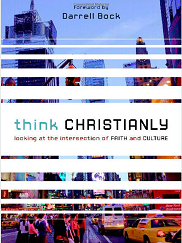 Perhaps the most contentious issue that was brought up in my own discussions of the Hunger Games was the appropriateness of viewing violent movies and even using them to engage with others. Jonathan Morrow, in his important book Think Christianly, provides an excellent discussion of the topic at hand. He prefaces his remarks with the comment that “the Bible would probably get… an NC-17 rating in [some areas like the end of Judges]…” Yet it is important to note that “The Bible does not use evil for exploitation” but rather “always records evil and sinful behavior and the consequences that come with them” (193). Violence in a work does not necessarily exclude it from the Christians’ sphere of engagement.
Morrow provides a number of useful questions for Christians to consider when looking at a movie. Here are a few samples (see p. 194):
- Does it endorse evil…?
- Does it incite us to evil acts?
- Is the evil gratuitous?
These are the types of questions Christians must ask as they consider a movie. Now, it is clear that Christians won’t always agree on the answers to these questions. What some consider gratuitous might be something someone else considers necessary for a plot. But violence of itself does not mean a Christian cannot engage with a movie. In particular, some movies use violence in order to point out the horrors which follow from it. This is, in fact, Biblical. Throughout the Bible, violence is depicted along with its consequences, yet it is clear that in all God is in control (see, for example, the Joseph narrative). As Christians interact with movies that have violence, they can focus the discussion on the consequences of humanity’s sinfulness and the need for a savior.
Engaging With the Movies
Morrow suggests a three-layered approach to movies: examine the form of the film (this involves engaging with the artistic elements such as music, cinematography, and the like); observe the content of the film (what is the message the director is putting forward? who is the hero/villain [these characters generally convey that which the director wants to show as good or bad]); note the function of the film (what is the film’s purpose? does it portray sinful behavior in a positive light?) [191].
These questions allow one to proceed to the level of engagement with the culture. If a film is inappropriate, it is not enough to simply dismiss it as a horrible, immoral movie. Rather, one can engage thoughtfully with those who want to discuss the movie. “Why did you enjoy the movie?”; “What kind of message do you think the movie tried to put forward?”; “Do you agree with the central theme of the film?”–these are the types of questions Christians can ask in order to engage with the culture. Note that none of these questions comes across as antagonistic or angry. Rather, they come across as interested and thoughtful. Whether one has seen a movie or not, one can easily engage in a dialog which can lead to some interesting discussions.
The brief overview I’ve given here is merely a guide. Interested readers should check out Morrow’s book (linked below).
A Case Study: The Hunger Games
 I’ve already discussed The Hunger Games at length in both the film and book versions, so I won’t repeat that discussion. Here, let me just apply what we see above. There are a few minor spoilers below.
What is the form of the film? -Generally, it seems to be a blockbuster movie with grandiose special effects and stirring musical scores. The visuals often dazzle with bright colors in the capitol but they are very subdued in some parts, particularly in the districts which are under the oppressive rule of the capitol.
What is the film’s content? -In my post on the movie, I argued that the content largely serves to direct the audience’s attention inward: we are, in a sense, the capitol. We are the ones who actively participate in activities to give ourselves comfort while there is great suffering around us. The violence in the movie is there, but it is portrayed in a way which does not glorify it. It is the people of the capitol who glorify the violence, and it is the people of the capitol who are the confused villains.
What is the function of the film? -Again, it seems to be a social commentary on the evils we bring about here. The decadence of the capitol is our own indulgence; the violence going on in the Games are the evils of the world. I see the film as a stirring commentary on social injustice.
But what if you think the violence is too much? What if you think I’m just wrong about this particular film? Should you jettison it altogether? I think not. Instead, I suggest you turn to the questions above. Ask: “Why did you like the Hunger Games?”; “Do you think the film glorifies violence, why or why not?”; “What current problems do you think relate to the film?”
Conclusion
Christians are called to engage the culture around them in a transforming fashion (1 Cor 9:19-23). Engaging with popular films is just one way to engage with the culture. As popular movies come out, it is important for Christians to know the relevant issues they raise and be ready to comment on them as they come up. If we can more effectively open discussions with people about these highly relevant topics, we can help show Christianity is an extremely powerful worldview that touches upon every aspect of our lives in a positive way.
Source
Jonathan Morrow, Think Christianly: Looking at the Intersection of Faith and Culture

 J.W. Wartick - Reconstructing Faith