doctrine
Sunday Quote!- Russell Moore on Christmas and the Strangeness of Christianity
 Every Sunday, I will share a quote from something I’ve been reading. The hope is for you, dear reader, to share your thoughts on the quote and related issues and perhaps pick up some reading material along the way!
Russell Moore on Christmas and the Strangeness of Christianity
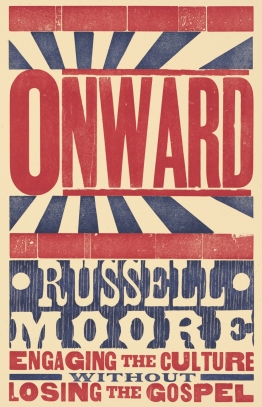
Russell Moore’s Onward: Engaging the Culture Without Losing the Gospel is one of the best books I’ve read all year. He has a way with words that makes reading it a joy, while also giving new insights and perspectives on questions that are highly relevant. In his chapter on religious liberty, he writes about seeing a couple ads in a magazine on a plane. One is a beer ad that said “Silent nights are overrated” and another asked “Who says it is better to give than to receive?” Moore’s comments on the potential offense of these ads are well-worth reading. It’s a longer quote than I normally share, but I think it is worth the time to read:
The… ad agency probably didn’t reflect together… about how the song “Silent Night” is about the holy awe of the dawning Incarnation in Bethlehem. TO them, it probably seemed like just another Christmas song, part of the background music of the culture during this season. Saying it’s “overrated” probably didn’t feel any more insensitive to these copy writers than making a joke about decking the halls or reindeer games. The writers probably never thought… that the statement “It is better to give than to receive” is a quotation from Jesus, via the apostle Paul… It probably just seemed to them like a Benjamin Franklin-type aphorism, along the lines of when someone says… “to be or not to be” while not knowing the difference between Hamlet and Huckleberry Finn…
That ought not make us outraged, but prompt us to see how our neighbors see us–sometimes more in terms of our trivialities than in terms of the depths of meaning of Incarnation, blood atonement, and the kingdom of Christ. This means we need to spend more time engaging our neighbors with the sort of news that shocks angels and redirects stargazers and knocks sheep-herders to the ground. That will seem strange, and that’s all the better, because it is strange. (150, cited below)
Moore also points to Hanukkah and its importance to Judaism as going beyond selling blue stars of David at retail stores. His point is that we need to educate the broader culture about what it means to be Christian, and that means embracing the “weirdness” of our faith rather than working entirely to downplay it. In the context of religious liberty, that means not sacrificing the central claims of the Gospel when trying to make our points about what we believe and why we think it should be protected speech or act.
I recommend Moore’s book, Onward: Engaging the Culture Without Losing the Gospel to you this Christmas season. It’s not a Christmas book of course, but it is worth your time and money to acquire and read it.
Links
Be sure to check out the page for this site on Facebook and Twitter for discussion of posts, links to other pages of interest, random talk about theology/philosophy/apologetics/movies and more!
Sunday Quote– If you want to read more Sunday Quotes and join the discussion, check them out! (Scroll down for more)
Source
Russell Moore, Onward: Engaging the Culture Without Losing the Gospel (Nashville, TN: B&H Publishing, 2015).
SDG.
Book Review: “The Love of God” by John C. Peckham
 There are many different views about what it means to say “God is love” or “God is loving.” Is God’s love like ours? Does God’s love mean God changes? Does God’s love mean God has potential rather than being pure act? How can God be loving? How is the love of God reconciled with justice and election? John C. Peckham’s work, The Love of God, is an attempt to answer many of these questions.
The book is organized topically, with each chapter focusing on a different aspect of divine-world relationship. These include the semantics of divine love, volitional and evaluative aspects of love, whether divine love can be emotional or foreconditioned, and whether that love is reciprocal. Other topics are addressed in addition to these, including the debate over various ways divine-world relationship may be portrayed.
Peckham surveys an enormous number of biblical passages as he analyzes these questions. Unfortunately, only rarely is much time spent on drawing out how these various citations are directly relevant to the points being made. Thus, readers are left to look up the many passages themselves to see whether they concur with the evaluation provided. Peckham largely sides with a perspective that favors human freedom. He also stands against the notion that God is completely immutable or changeless.
The latter point, however, is well-nuanced. Drawing on the work of Rob Lister, who affirms God’s impassibility alongside God’s capability of being impassioned, Peckham qualifies his concept of divine love and its relationship with the doctrine of impassibility. Effectively, he argues that God’s love is reciprocal but does not necessarily rule out the possibility of immutability. He does, however, seem to favor a perspective in which God at least partially changes in response to prayer and love.
Peckham’s perspective in the introduction appears to be quite broad-minded, allowing for concessions to those on either side of (and in between) debates like Calvinism-Arminianism, Thomism-other views, Augustinianism-other perspectives. However, as the book goes on, it becomes apparent that apart from a few places wherein there is some nuance (as noted above with immutability), Peckham draws conclusions with some certainty, while effectively setting aside the opposing view.
The value one gets out of The Love of God, then, largely depends on the amount of work one is willing to put into it. If one takes the time to look up the many, many biblical references, compare them back to the text, and examine the counter-arguments that Peckham offers, this is a book that is well worth the time spent. By contrast, those not willing to put in that time will at least get an idea of what the various major questions are regarding God-world relations and love, but will only be given one perspective on those questions in most cases. The questions are not left as open as many of them seem to require.
The Good
+Provides much insight into biblical teaching on various aspects of love
+Many citations to allow for further study
The Bad
-Not as broad-minded as it initially appears
-Occasionally dismissive of counter-arguments and rival positions
Disclaimer: I received a review copy of this book from the publisher. I was not obligated to write any specific kind of feedback whatsoever.
Source
John C. Peckham, The Love of God (Downers Grove, IL: InterVarsity, 2015).
Links
Be sure to check out the page for this site on Facebook and Twitter for discussion of posts, links to other pages of interest, random talk about theology/philosophy/apologetics/movies and more!
Book Reviews– There are plenty more book reviews to read! Read like crazy! (Scroll down for more, and click at bottom for even more!)
SDG.
——
The preceding post is the property of J.W. Wartick (apart from quotations, which are the property of their respective owners, and works of art as credited; images are often freely available to the public and J.W. Wartick makes no claims of owning rights to the images unless he makes that explicit) and should not be reproduced in part or in whole without the expressed consent of the author. All content on this site is the property of J.W. Wartick and is made available for individual and personal usage. If you cite from these documents, whether for personal or professional purposes, please give appropriate citation with both the name of the author (J.W. Wartick) and a link to the original URL. If you’d like to repost a post, you may do so, provided you show less than half of the original post on your own site and link to the original post for the rest. You must also appropriately cite the post as noted above. This blog is protected by Creative Commons licensing. By viewing any part of this site, you are agreeing to this usage policy.
Adhering to the Book of Concord: “In So Far As” or “Because” it agrees with Scripture?
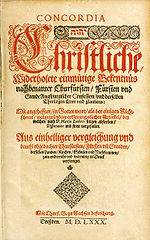
A title page of the Book of Concord
Lutheran theology is derived from and reflective upon not just Martin Luther but also the Lutheran Confessions, as found in the Book of Concord. Within Lutheranism, there is much debate over exactly how tightly one must adhere to the Book of Concord. On one side, there are those who insist we must affirm the Book of Concord “because” it agrees with the Bible. On the other side, others maintain we should affirm it “in so far as” it agrees with the Bible.
Because it Agrees
Representative of the view that one must agree with the Book of Concord because it teaches what the Bible teaches is the following:
Authentically Lutheran churches insist on a subscription to the Confessions [The Lutheran Confessions/Book of Concord are used interchangeably] because they agree with the Bible, not merely in so far as they agree with Scripture. Otherwise, there would be no objective way to make sure that there is faithful teaching and preaching of God’s Word. Everything would depend on each pastor’s private opinions, subjective interpretations, and personal feelings, rather than on objective truth as set forth in the Lutheran Confessions. (Book of Concord (.org) FAQ)
Note some important aspects in this quote. First, the Book of Concord just does agree with the Bible. That is insisted upon. Second, the Book of Concord is said to be “objective truth” as opposed to the “subjective interpretations” of the individual. These considerations frame what I’d like to comment on regarding those who hold to the view that we must agree with the book of Concord “because…”
Because?
I’ll start with the second aspect noted above. There are, of course, all kinds of increasingly detailed issues people on either side of the debate might raise here. For example, how are “objective” and “subjective” being here defined? I’m going to set that kind of issue mostly aside and focus on a few difficulties I see.
The first is that one cannot simply read the words off the pages of the Book of Concord without going through the necessary step of interpreting them. That is, I as a reader of the Book of Concord must try to make sense of the words I am reading, and thus I am participating in the act of interpreting the Book of Concord. If, as the quote above states, the problem is the individual’s subjective nature, then the problem is completely unavoidable. Indeed, even if we grant that the Book of Concord is “objective truth” in its entirety, all we’ve done is moved the problem of subjective interpretation one step back. Now the reader must interpret the Book of Concord in order to get to the objective truth about Scripture found therein.
Another difficulty with this objective/subjective distinction is that it assumes the writers of the Lutheran Confessions were themselves either not subjective (which seems impossible) or explicitly guided by the Spirit to write out objective truth only. I would not dispute that the Holy Spirit could bring about a completely faultless writing, but the question is whether those who affirm the “because” position would like to argue this. The first thing we should do if they do want to argue this would be to see whether the writers of the Book of Concord assert the Holy Spirit did bring about such a completely objective, 100% correct work.
In the Preface to the Book of Concord, we can read:
Finally, with invocation of God Almighty and to his praise and glory and with careful deliberation and meticulous diligence through the particular grace of the Holy Spirit, they wrote down in good order and brought together into one book everything that pertains to and is necessary for this purpose. (Preface, 12)
Later, the Preface makes clear (15) that this Book was “the correct, Christian understanding of the Augsburg Confession…” In the closing of the Preface, we read (23) that those who signed on to it that they “are minded not to manufacture anything new… nor to depart in either substance or expression… from the divine truth… by the grace of the Holy Spirit we intend to persist and remain unanimously in this truth and regulate all religious controversies and their explanations according to it.”
These are all strong statements, and they clearly called upon God the Holy Spirit for guidance in the composition of the various works that make up the Book of Concord. But does it follow that they were explicitly, inerrantly inspired and guided by the Spirit to never once get a single thing wrong in this book? Those who affirm the “because” position must answer yes. There is no wiggle room.
But a close reading of the Preface seems to suggest that although the writers certainly believed everything in the Book of Concord to be without theological error (otherwise they would not have it regulate all controversies, etc.), I have yet to find anywhere that a claim could be made that the book is explicitly inerrant. It would have to be, however, for the “because” position to be true. This human composition would have to be 100% correct in every single minute detail down to the last proof text cited in order for it to be acceptable to affirm that we must agree with it “because” it agrees with Scripture.
Among other things, what follows from that is that anyone who subscribes to the Book of Concord “because” position must have read the entirety, looked up every citation, and assured themselves that every single interpretation, doctrinal position, and the like is 100% correct, lest they be saying that it is a human-made book without error on God’s Word without actually knowing every detail it contains.
The first issue raised above will be addressed in the section named “A Case Study,” below.
In So Far As
A supporting argument for the “In So Far As” position is that we should always only affirm that which is true. If we can agree that the Bible is true in all it teaches, then we should only agree with other writings about the Bible so far as they agree with the Bible. This seems like an obvious conclusion, but the whole debate centers on whether this argument is sound. It is difficult for me to figure out how to support this argument, not because I think it is a poor argument, but because it seems just intuitively clear.
It may help to use an analogy. Historians have debated how to write history and whether writers of history can ever fully get at the “true” history as it happened. Yet very few would deny that there is such a thing as a “true” history. There must be some absolutely correct sequence in which events occurred such that if we had a complete set of writings that simply reported those events, that would be the “true” history. Thus, there is an objectively true history, against which historians can be measured. Granting some of the hand waving involved in this thought experiment, suppose we had a book, The True History of the World, and we looked up the John F. Kennedy assassination therein. We would then have the objectively true report of that hotly-debated historical event as it really did happen. Now suppose I wanted to write a book about the JFK assassination based upon The True History of the World. However careful a historian I am, however excellent and detailed my mind is, however much guidance I may have had, would it be reasonable to say that you agree with my book, The Objective JFK Assassination “because” it agrees with The True History of the World or “in so far as” it does? It seems that the reasonable conclusion would be “in so far as” it does, because we know that The True History of the World is objectively true.
Though imperfect, this analogy gets at the argument written above. We can agree the Bible is inerrant. Thus, if I were to write a book entitled The Objective Bible, I think we can agree that we should only agree with my book so far as it agrees with the Bible, right? No matter how detailed I am, no matter how meticulous, no matter how large a group of thoughtful interpreters I got together to vet my work, it would be entirely reasonable to only affirm agreement with my book so far as it is biblical. Then why would such a standard not also apply to the Book of Concord? I see no reason why that standard would not.
Indeed, to argue against those who affirm the Book of Concord only “in so far as” it agrees with the Bible would mean that one would have to assert that the caution and respect for God’s word implicit in that position–that I would not want to affirm anything, even by mistake, as biblical if it is even possibly in error anywhere–are mistaken. That the care and caution necessary to say “I will only agree with any book in so far as it agrees with the Word of God” is mistaken, and that that the Book of Concord must also be included under the umbrella of books against which all others must be judged.
For the “because” position ultimately, unswervingly leads to the conclusion that we should only affirm any other book “in so far as” it agrees with the Book of Concord. After all, if it is true that the Book of Concord is affirmed because it agrees with Scripture, then it follows that the authority of the Bible is effectively equivalent to the authority of the Book of Concord. The Bible is God’s word, and the Book of Concord is the objective teaching of God’s word without even possible error. That is not simply rhetoric; it is what must follow from the “because” position. Any interpretation of the Bible must be judged against the Book of Concord; hence, any reading of the Bible must also be judged against it.
A Case Study
Finally, we are in position to ask whether the Book of Concord does indeed have any error therein. That is a crucial question, of course, and one not easily resolved by those who remain faithful Lutherans. If, however, there is even one incorrect use of a proof text in the Book of Concord, the “because” position fails.
In the Apology of the Augsburg Confession, Article XXIII (XI) on the Marriage of Priests, section 25, we read:
Therefore this law concerning perpetual celibacy is peculiar to this new pontifical despotism. Nor is it without a reason. For Daniel 11:37, ascribes to the kingdom of Antichrist this mark, namely, the contempt of women.
Daniel 11:37 reads (ESV) “He shall pay no attention to the gods of his fathers, or to the one beloved by women. He shall not pay attention to any other god, for he shall magnify himself above all.”
The whole passage is difficult to interpret given its prophetic message about the Kings of the North and the South. I’m not going to enter into whether this is specifically referencing “Antichrist” or “the kingdom of Antichrist” or anything of the sort. Instead, the issue is with the reading as “contempt of women.” The Reformers were obviously not using the ESV or anything in English. But older English editions like the KJV might support this text as a proof for contempt of women: “Neither shall he regard the God of his fathers, nor the desire of women, nor regard any god: for he shall magnify himself above all.”
But the problem is that critical editions of the Old Testament don’t support a reading as contempt of women. Without going into depths of detail, and because I’m not a Hebrew scholar by any measure, I would just point out that the Hebrew does seem to clearly state “the one desired by women.” So if we are to read 11:37 as a proof text for contempt of women, it doesn’t seem to be a right reading. It’s a minor difficulty, but one nevertheless. Did the citation above from the Book of Concord properly exegete the Bible? I would assert that the use of this proof text is mistaken. If we are to take “paying no attention” as “contempt”–itself a move that could be disputed, then the subject remains “the one desired by women” not “women.”
Now, if the Book of Concord should be agreed with because it agrees with the Bible, then how are we to take this? I don’t know. It seems to me that this is more an example of the way people read the Bible at the time and used proof texts–often stripped of context–in defense of their positions. A single dispute over a citation is not a paradigm shift; indeed, I think that the authors of the Apology were correct on this notion about the marriage of priests. But that doesn’t mean everything they wrote is correct.
Conclusion
I agree with and affirm the Book of Concord in so far as it agrees with Scripture. I think it is correct on a huge amount of the things it teaches. I am currently re-reading it (slowly) and checking citations as I go. I have found it to be edifying and a source of profound theological insight. But it is not the Bible, and I do not think that to be Lutheran–or even a confessing Lutheran–I need to affirm that the Book of Concord is without possible error.
Source
Robert Kolb and Timothy J. Wengert, eds. with Charles P. Arand, translator, The Book of Concord.
Links
Be sure to check out the page for this site on Facebook and Twitter for discussion of posts, links to other pages of interest, random talk about theology/philosophy/apologetics/movies and more!
SDG.
——
The preceding post is the property of J.W. Wartick (apart from quotations, which are the property of their respective owners, and works of art as credited; images are often freely available to the public and J.W. Wartick makes no claims of owning rights to the images unless he makes that explicit) and should not be reproduced in part or in whole without the expressed consent of the author. All content on this site is the property of J.W. Wartick and is made available for individual and personal usage. If you cite from these documents, whether for personal or professional purposes, please give appropriate citation with both the name of the author (J.W. Wartick) and a link to the original URL. If you’d like to repost a post, you may do so, provided you show less than half of the original post on your own site and link to the original post for the rest. You must also appropriately cite the post as noted above. This blog is protected by Creative Commons licensing. By viewing any part of this site, you are agreeing to this usage policy.
Is the Son “Equal To God”? – A reflection on an article from a Trinitarian Subordinationist
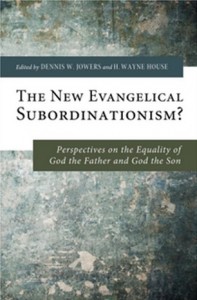
One of the debates going on within evangelicalism today is the concept of the eternal subordination of the Son. That is, is God the Son eternally–not just in the Incarnation or some other temporal state–subordinate to God the Father? Setting aside the complexities of the debate, one of the central questions is whether this eternal subordination entails ontological subordination. The pro-subordination side says it does not; others charge that it does. There are, of course, many other issues, but here we will examine an article from Denny Burk written about Philippians 2:6 in the book The New Evangelical Subordinationism?
Burk’s Thesis: The Son should not pursue “Equality with God”
Denny Burk argues that the Son “should” not pursue “equality with God” and the phrases “form of God” and “equality with God” are not synonymous. He surveys the use of the Greek article and concludes that the use in this instance is not anaphoric–basically the use of one expression carrying the meaning of another in context (I’m not linguist, so I hope I explained this adequately). Granting this distinction, I would suggest that Burk goes too far in concluding the Son is eternally subordinate and in fact arguing that the Son is inequal to the Father.
The Son , he argues, is in the form of God, but should not pursue “equality with God.” The final sentences of his article make this clear: “Therefore, in Paul’s Christology ‘form of God’ is something that Jesus possessed by virtue of his deity, while ‘equality with God’ is not. In fact, ‘equality with God’ is best understood as a role that Jesus refused to pursue so that he could pursue his redemptive work in the incarnation” (104, cited below).
Unequal Persons of the Godhead?
I found these statements astonishing, because I think they fundamentally do divide the Trinitarian persons on an ontological level. Consider the following premise:
P1- If two persons are “unequal,” those persons are not of the same essence.
I think this premise is eminently defensible, but simply asserting this premise begs the question against Burk’s position. Moreover, one would have to narrow down the definition and see what is meant by “unequal,” whether it applies to all forms of inequality, and the like. So rather than going down that route (one which I think would be ultimately successful but also highly complex), I’d simply suggest the following:
P2- If the Son is not “equal to God” to the same extent that the Father is “equal to God” then there is ontological division in the Trinity.
Unfortunately, we again run into the problem that without a demonstration of P2, it begs the question against Burk (and subordinationists who would use the same language). However, I think P2 is even more defensible than P1, so the establishing of P2 shall be the brief project to demonstrate Burk (and any who agree) have crossed the line with subordinationism into undermining the ontological unity of the Trinity.
Defense of P2 and Analysis of Burk’s position
There is no little danger in treating “God” as a kind of distinct entity from “Father,” “Son,” and “Spirit” because we may collapse into not just tritheism but rather quadri-theism where there is God, and then the the other three divine persons. Burk’s lack of defining what is meant by “equal to God” in his expressions seem to cross into this territory.
My defense of P2 will be quite simple. First, Christianity holds that Jesus is God. Period. Ergo, Jesus is equal to God. If Jesus is not just as “equal to God” as God the Father, then Jesus is not God but rather the Father is God and Jesus is some sort of quasi-divine entity having the “form of” but not “equality” with God.
Second, if we argue that two beings, x and y, do not equally share some aspect of nature, z, then it follows that x and y are not both essentially z. Converting that to our discussion of the Trinity, if we suppose that the Son and the Father do not equally have “equality to God,” then surely it must follow that the Son is not essentially God. The substance of the Godhead is not united in this view, but rather divided. If one wants to argue that I am mistaken here, I’d simply ask for a defense of the opposite position. How can there be two entities that are not both reflecting some attribute but who are then said to both be that attribute?
Again, we run into the great difficulty that Burk never does (in this article) adequately explain what he means by “equal to God.” It seems he is using this phrase as though “equal to God” is semantically equivalent to “equal to the Father” but then Burk’s position surely assumes quite a bit and reads subordinationism into the text rather deriving it from this text. After all, we know that Paul is perfectly capable of referencing God as “Father” so if he meant to say that the Son “should not” (using Burk’s terminology) pursue equality to the Father, he could have just said that.
Burk’s own discussion of how “form of God” and equality to God may be distinct is brief:
[A]lthough Jesus actually possessed an identical characteristic of His Father with respect to his deity (i.e. “he existed in the form of God”), he did not want to grasp after another role that was not his–namely, “equality with God.”
…[T]he contrast between “grasping for equality” and “emptying himself” suggests both are functiona categories… Paul argues here that in his pre-incarnate state, Christ’s [sic] existed as theos [I transliterated this word–it is Greek for ‘God’]. Yet in this pre-incarnate existence, Christ Jesus did not seek to be like theos [transliterated] in every respect. (103-104)
These statements lead us to a related difficulty–one related to the first I noted in this section: Burk’s position seems to either turn into equivocation between “God” and “God the Father” without any distinctions (as just noted) or it seems to treat “God” as a distinct entity from the Trinitarian persons. But either of these is extremely problematic.
Moreover, one is forced to wonder how one might say of God the Son that he is God but not like God in every respect. How might one conclude that the persons of the Trinity are of one being if one is “equal to God” in role, but another is not? Burk offers little reason to think this is possible, and simply avers to roles within the Trinity. I contend that this offers little comfort to those with concerns over the possible ontological division within the Trinity coming from subordinationism.
Conclusion
I believe that P1 (properly construed) and P2 are each correct and that Burk’s subordinationism–along with any others who would draw similar conclusions–does indeed ontologically split the Trinity. Moreover, I believe that Burk fails to adequately ground any reason for thinking his position does not break the essential nature of the unity and the one being of the Godhead. It is well and good to assert different roles within the Trinity, but when one “role” is “equality to God,” and that “role” is not shared by all the persons of the Trinity, the implications for Trinitarian theology seem deleterious.
It is certainly possible I am misunderstanding Burk on these points, but it seems the conclusions I’ve drawn follow from his position. I’m happy to be corrected on this. I must, for now, conclude with a rhetorical question: In what sense can we affirm that the Son is God if the Son is not “equal to” God?
Links
Be sure to check out the page for this site on Facebook and Twitter for discussion of posts, links to other pages of interest, random talk about theology/philosophy/apologetics/movies and more!
Women, Complementarianism, and the Trinity- How getting subordination wrong has undermined the Trinity– I note how some complementarians have distorted the doctrine of the Trinity in order to ground their theological position on women in the ministry
Source
Denny Burk, “Christ’s Functiona Subordination in Philippians 2:6: A Grammatical Note with Trinitarian Implications” in The New Evangelical Subordinationism?
SDG.
——
The preceding post is the property of J.W. Wartick (apart from quotations, which are the property of their respective owners, and works of art as credited; images are often freely available to the public and J.W. Wartick makes no claims of owning rights to the images unless he makes that explicit) and should not be reproduced in part or in whole without the expressed consent of the author. All content on this site is the property of J.W. Wartick and is made available for individual and personal usage. If you cite from these documents, whether for personal or professional purposes, please give appropriate citation with both the name of the author (J.W. Wartick) and a link to the original URL. If you’d like to repost a post, you may do so, provided you show less than half of the original post on your own site and link to the original post for the rest. You must also appropriately cite the post as noted above. This blog is protected by Creative Commons licensing. By viewing any part of this site, you are agreeing to this usage policy.
Is Natural Theology Excluded for Apologetics? – Sunday Quote!+
 Here’s a special edition Sunday Quote which features a more extended discussion. Let me know what you think in the comments.
Is Natural Theology Excluded for Apologetics?
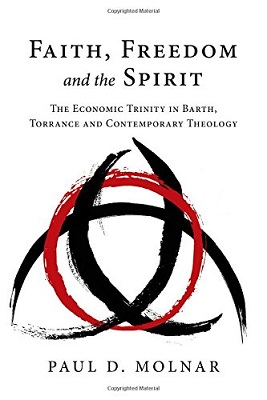
Paul Molnar’s Faith, Freedom and the Spirit 
If contemporary theologians were to make explicit the role of the Holy Spirit in enabling our knowledge of the triune God, then there could be wide agreement that natural theology of whatever stripe is not only unhelpful but is directly excluded from any serious understanding of theological epistemology. (82)
Now, “natural theology” is, according to Justo Gonzalez’s Essential Theological Terms, “A theology that claims to be based on the natural gifts of the human mind, and on the ‘general revelation’ granted to all… rather than on a ‘special revelation’ in Scripture or Jesus Christ” (118). Natural theology, that is, is the attempt to show that God exists and certain other truths through looking at the world. From this quote, it seems that Molnar is arguing that if we had a better notion of the role of the Holy Spirit, we would basically think that natural theology is worthless related to knowledge of God.
Molnar develops this notion further throughout the next 50 pages or so. His argument basically is that if we acknowledge that it is the Holy Spirit who enables faith and knowledge of God, then any “knowledge” of God which is not directly through faith (i.e. through something like a cosmological argument) is not objective knowledge of God.
Although some of what Molnar argues resonates with me–particularly the notion that the Holy Spirit is the one who imparts faith rather than it being some kind of choice we make–I think that his dismissal of natural theology is unnecessary and mistaken. First, the most obvious question to be asked is whether the Spirit can use natural theology to create faith. If it is the case that the Holy Spirit can work through natural theology–something which seems to be clearly correct to me–then the objection that natural theology ignores the role of the Spirit is mistaken.
Second, Molnar’s argument seems to rely on a concept of natural theology which is entirely about trying to impart knowledge of God to those who do not have faith. This, however, ignores the use of apologetics in strengthening the faith of believers. Natural theology can be a valuable tool for those who have faith to pursue the call of 1 Peter 3:15 and have a reason for the hope within them. Whatever one’s view of whether natural theology can bring people to the true God, it seems that it can and should be used for believers to explore the natural world and bolster their faith.
Third and finally, it seems to me that Romans 1 in particular demonstrates that natural theology is not a worthless project. If God’s invisible attributes are capable of being discovered in the things God has made, then surely natural theology has some value in tracing God’s handiwork.
Should we think that natural theology is a failed project? Can it have other uses like those I listed? Is it possible to go from God to Christ? What of the role of the Spirit in apologetics?
Faith, Freedom and the Spirit
Links
Be sure to check out the page for this site on Facebook and Twitter for discussion of posts, links to other pages of interest, random talk about theology/philosophy/apologetics/movies and more!
Sunday Quote– If you want to read more Sunday Quotes and join the discussion, check them out! (Scroll down for more)
Source
Paul D. Molnar, Faith, Freedom and the Spirit (Downers Grove, IL: InterVarsity, 2015).
SDG.
——
The preceding post is the property of J.W. Wartick (apart from quotations, which are the property of their respective owners, and works of art as credited; images are often freely available to the public and J.W. Wartick makes no claims of owning rights to the images unless he makes that explicit) and should not be reproduced in part or in whole without the expressed consent of the author. All content on this site is the property of J.W. Wartick and is made available for individual and personal usage. If you cite from these documents, whether for personal or professional purposes, please give appropriate citation with both the name of the author (J.W. Wartick) and a link to the original URL. If you’d like to repost a post, you may do so, provided you show less than half of the original post on your own site and link to the original post for the rest. You must also appropriately cite the post as noted above. This blog is protected by Creative Commons licensing. By viewing any part of this site, you are agreeing to this usage policy.
Book Review: “The Lost World of Adam and Eve” by John Walton
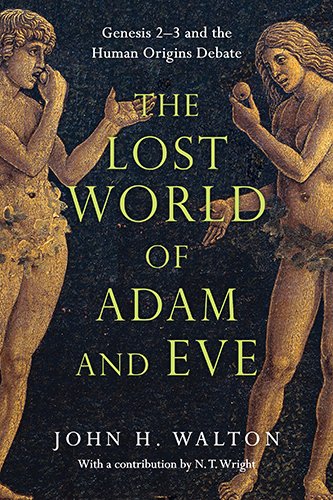 John Walton’s latest book, The Lost World of Adam and Eve
Walton argues that the Genesis creation account does not specifically tell us how Adam and Eve materially came to be but rather is an account of God giving them their functions as the image of God, ushering in order against the chaos. His view is one which sees Adam as archetypical head of humanity rather than necessarily being the first ever human. Adam and Eve were chosen by God to become God’s representatives in the world.
Many intriguing arguments are put forward by Walton once he has established what is the central thesis–that the text is concerned with functional, not material origins. These include reading Genesis 2 as a sequel to rather than recapitulation of Genesis 1, the use of the term “very good” and “good” in the text, the meaning of “formed from dust” and from the rib, the archetypal meaning of Adam and Eve, the real existence of this couple, the priesthood of the couple in sacred space, our role as bringing order from disorder, the “serpent” in the Garden, and more. Each chapter is filled with compelling arguments and sometimes surprising conclusions.
Because the worldview of the ANE was not concerned with material origins, the questions we often ask of the text like “Were Adam and Eve the first humans?”; “Are we all descended from Adam?” and the like are questions which the text is not intended to answer. These are questions from our background, not from the background of the text. Thus, Walton argues that there can be much openness to the answers to these questions. When we come to the New Testament discussions of Adam and Eve, Walton (and the contribution from NT Wright) argue that this is why the notion of federal headship (though not necessarily material/genetic headship) is probably in mind.
Readers who are unconvinced by the notion that we should apply ANE insights to our reading of the text will be challenged to support that claim. Walton cogently argues that although there is not a 1-to-1 correspondence between the worldview of the ANE and the Bible, it is highly questionable to assume that the writers and audience of the Bible would not have been influenced by their background and cultural understanding.
Regarding the science, Walton readily points out that he is not an expert in the area but defers largely to the experts. He applies the exegetical arguments to questions of original sin, federal headship, and the like in the context of modern scientific findings, though he does so in such a way that he retains his commitment to teach what the text does rather than trying to force it to speak of our concerns.
Many (most?) readers will find this book challenging on a number of levels because Walton so readily exposes our presuppositions about what the text should say. Very often Walton simply points readers back to the text to reveal how often we have our expectations bring meaning to the text rather than allowing it to speak for itself.
The Good
+Excellent insight into the ANE background of the Old Testament
+Strong exegetical argument with a commitment to understanding the text
+Coherent with the rest of Walton’s thought
+Challenges our presuppositions about the text
The Bad
-A bit difficult to pin down exactly what his view is of original sin
Conclusion
The Lost World of Adam and Eve
Disclaimer: I was provided with a review copy of the book courtesy of InterVarsity Press. I was not obligated to write any sort of review whatsoever. My thanks to the publisher for the copy.
Links
Be sure to check out the page for this site on Facebook and Twitter for discussion of posts, links to other pages of interest, random talk about theology/philosophy/apologetics/movies and more!
Origins Debate– Read a whole bunch more on different views within Christianity of the “origins debate.” Here I have posts on young and old earth creationism, intelligent design, theistic evolutionism, and more!
Source
John Walton, The Lost World of Adam and Eve
SDG.
——
The preceding post is the property of J.W. Wartick (apart from quotations, which are the property of their respective owners, and works of art as credited; images are often freely available to the public and J.W. Wartick makes no claims of owning rights to the images unless he makes that explicit) and should not be reproduced in part or in whole without the expressed consent of the author. All content on this site is the property of J.W. Wartick and is made available for individual and personal usage. If you cite from these documents, whether for personal or professional purposes, please give appropriate citation with both the name of the author (J.W. Wartick) and a link to the original URL. If you’d like to repost a post, you may do so, provided you show less than half of the original post on your own site and link to the original post for the rest. You must also appropriately cite the post as noted above. This blog is protected by Creative Commons licensing. By viewing any part of this site, you are agreeing to this usage policy.
Book Review: “Luther on the Christian Life” by Carl Trueman
 Carl Trueman’s Luther on the Christian Life
Understanding Luther, argues Trueman, means at least in part to understand his own life and the pressures that exerted on his thought. Thus, in the first chapter (and throughout), readers get a picture of what Luther’s own Christian life was like and how that impacted his thought. Then, Trueman traces Luther’s theology of Christian life through various themes including theology of the Word, Sacraments, righteousness, government, family, and more.
The insights into Luther’s life and theology abound throughout the book, and the way that Trueman skillfully weave the two together is impressive. This is a highly readable and, yes, entertaining book. There is much to learn, but it is a joy to read. Luther’s doctrine of the Christian life is intertwined not only with his own life, but also with his sacramental theology. Trueman draws this out in extended fashion, showing how these ideas are related to readers who may not be familiar with such a way of thinking about the world.
Trueman puts forward a tremendous effort to be sympathetic in his reading of Luther. The sacramental theology of Luther is put forward as part of his understanding of the Christian life without any efforts to undermine or thwart the power of that same message. Trueman is Presbyterian (or so I gather from his Introduction), and admits to serious disagreements with Luther on sacraments and other areas. But he presents in this book Luther’s view, not his own critique, and he does so generously with a spirit of trying to understand and convey Luther’s meaning. This is exactly the kind of Christ-like attitude towards those with whom we disagree that we should all have as Christians, and as a Lutheran I was taken aback by how well Trueman accomplished it.
Luther on the Christian Life
The Good
+Surprisingly sympathetic reading of Luther from a non-Lutheran
+Many insights into Luther’s broader patterns of thought
+Focus on Christian life in Luther’s work is highly interesting
+Constantly brings up strong insights
The Bad
-Not really anything to put in this category
Conclusion
Luther on the Christian Life
I received a review copy of the book from Crossway. I was not required to give any kind of review whatsoever. My thanks to the publisher for the book.
Links
Be sure to check out the page for this site on Facebook and Twitter for discussion of posts, links to other pages of interest, random talk about theology/philosophy/apologetics/movies and more!
Book Reviews– There are plenty more book reviews to read! Read like crazy! (Scroll down for more, and click at bottom for even more!)
Source
Carl Trueman, Luther on the Christian Life
SDG.
——
The preceding post is the property of J.W. Wartick (apart from quotations, which are the property of their respective owners, and works of art as credited; images are often freely available to the public and J.W. Wartick makes no claims of owning rights to the images unless he makes that explicit) and should not be reproduced in part or in whole without the expressed consent of the author. All content on this site is the property of J.W. Wartick and is made available for individual and personal usage. If you cite from these documents, whether for personal or professional purposes, please give appropriate citation with both the name of the author (J.W. Wartick) and a link to the original URL. If you’d like to repost a post, you may do so, provided you show less than half of the original post on your own site and link to the original post for the rest. You must also appropriately cite the post as noted above. This blog is protected by Creative Commons licensing. By viewing any part of this site, you are agreeing to this usage policy.
Book Review: “A Matter of Days” by Hugh Ross, Second Expanded Edition
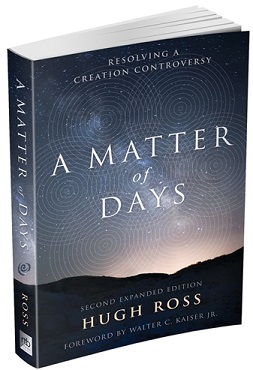
Hugh Ross is one of the most influential Old Earth Creationists alive. The founder of Reasons to Believe, he has had a profound influence on putting forth Old Earth Creationism from a concordist–that is, the notion that the Bible and science will agree where they overlap [often including the notion that the Bible explicitly speaks on scientific issues]–perspective. A Matter of Days
The book provides a huge amount of material for those wanting to interact with topics of creationism. Ross begins by surveying the contentious way the issue is often argued and noting that we as Christians ought to strive for more tolerant attitudes towards each other. Alongside this, he notes various statements by evangelicals allowing for some openness on the topic.
The book covers a massive range of arguments for and against young earth creationism, but the real meat of the text is dealing with various scientific arguments on either side. These are surveyed in a kind of question and answer or objection and rejoinder format in which Ross clearly explains a huge amount of scientific data for an ancient universe and deals with the major objections to such a position from the young earth creationist perspective.
Ross also confronts textual issues in a number of places, including much discussion on the concept of “day” and its meaning in Genesis 1. This, he covers from different perspectives including historic theology, exegesis, and science. He also puts forward a canonical view of how to see Creation in the Bible rather than limiting it simply to Genesis 1-2. There are a number of other texts that he argues also teach on creation.
Although he is an “Old Earth” believer, Ross is also clearly a creationist and puts forward several brief arguments about the faultiness of evolution. This is not a focus of the work, but through such arguments he establishes a clearer picture of his own position related to origins of both life and speciation.
One issue that might be raised with the book is whether the seemingly strict concordism Ross advocates is necessary. For example, rather than arguing that entropy and decay are spoken about in the Bible (100-102), could one not simply note that the human biblical author almost certainly had no concept of entropy and therefore was not addressing it? That is to say, a concept of divine condescension might be easier to hold to than one of future scientific knowledge revealed in the Bible.
The new edition is expanded and has noticeably featured references to some recent works as well as more arguments. It is a rather large re-write with much new information. Readers considering purchase should get this edition.
The Good
+Major point-by-point explorations of evidence for and against an old earth
+Strong defense of the Old Earth Creationist/Concordist position
+Many technical issues explained in understandable ways
+Charitable tone
+Excellent index
+Expanded arguments and new information for the new edition
+Really cool cover
The Bad
-Some questions about concordism remain
-Perhaps too brief on some objections
Conclusion
A Matter of Days
Disclaimer: I was provided with a review copy by the publisher. I was not required to write any sort of review whatsoever thereby.
Links
Be sure to check out the page for this site on Facebook and Twitter for discussion of posts, links to other pages of interest, random talk about theology/philosophy/apologetics/movies and more!
Origins Debate– Read a whole bunch more on different views within Christianity of the “origins debate.” Here I have posts on young and old earth creationism, intelligent design, theistic evolutionism, and more!
Source
Hugh Ross, A Matter of Days
SDG.
——
The preceding post is the property of J.W. Wartick (apart from quotations, which are the property of their respective owners, and works of art as credited; images are often freely available to the public and J.W. Wartick makes no claims of owning rights to the images unless he makes that explicit) and should not be reproduced in part or in whole without the expressed consent of the author. All content on this site is the property of J.W. Wartick and is made available for individual and personal usage. If you cite from these documents, whether for personal or professional purposes, please give appropriate citation with both the name of the author (J.W. Wartick) and a link to the original URL. If you’d like to repost a post, you may do so, provided you show less than half of the original post on your own site and link to the original post for the rest. You must also appropriately cite the post as noted above. This blog is protected by Creative Commons licensing. By viewing any part of this site, you are agreeing to this usage policy.
Sunday Quote!- My Position is the Gospel; Yours is Not!
 Every Sunday, I will share a quote from something I’ve been reading. The hope is for you, dear reader, to share your thoughts on the quote and related issues and perhaps pick up some reading material along the way!
My Position is the Gospel; Yours is Not!
I recently re-read James Emery White’s fantastic Christ Among the Dragons. It is a book that encourages Christian conviction with charity. That is, it encourages Christians to stand firm in their beliefs, while doing so in ways that do not lead to name-calling, bitterness, and resentment. One highly interesting part was when White discussed how some Christians tend to reduce the Gospel to their own position:
when we condescendingly say that our position is simply the ‘gospel,’ as if it’s not really a debate worth having, then we are being arrogant. When we make our view the litmus test of orthodoxy, or even community, we are being neither gracious nor loving. When we say that our view alone upholds God’s sovereignty or that our perspective is the only one that cares about lost people, we are not being truthful. When we exhibit a haughty smirkiness, or we so state our position that we divide churches, student ministry groups, or denominations, then we are sinning. (126-127)
White suggests various criterion for when we might say that one position is, in fact, not the Gospel, but this means moving past our narrow definitions of what we want others to believe about things that are not essentials of the Christian faith. Yes, these things remain important, but they do not allow us to exclude from the church of Christ those who disagree with us.
Christ Among the Dragons is a fantastic book, and well worth the read. White’s insights on this and other issues are spot-on.
Links
Be sure to check out the page for this site on Facebook and Twitter for discussion of posts, links to other pages of interest, random talk about theology/philosophy/apologetics/movies and more!
Sunday Quote– If you want to read more Sunday Quotes and join the discussion, check them out! (Scroll down for more)
Source
James Emery White, Christ Among the Dragons (Downers Grove, IL: InterVarsity, 2010).
SDG.
Reformation Recommended Posts 10/31/14- Reformation Day Reading
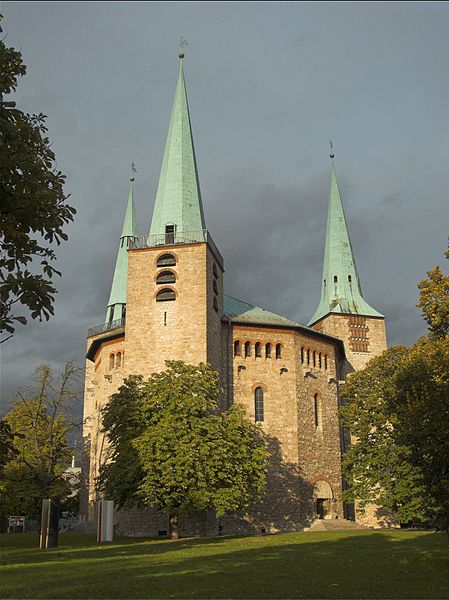 Happy Reformation Day! I have a special edition of posts put together to discuss the Reformation.
Forming and Reforming– Timothy Siburg reflects on how we might see the Reformation working into today in the church. How might we apply the notion of “reform” to formative thought and practice?
The Coming Vindication of Martin Luther– Martin Luther has been both vilified and praised. Will his thought have a vindication, despite the splitting of the church? Check out this post which summarizes a number of points related to Luther’s thought along with many other links to explore.
Debate: Is the Roman Catholic Priesthood Biblical & Ancient? James White vs. Mitchell Pacwa– One of the issues that divides the church is the notion of the priesthood and that office. I found this debate interesting to listen to, and I found that there were some points raised by either side. Is it possible to debate these issues with respect and care? Should we debate these issues? What do you think?
My Writings on the Reformation
I discuss the origins of the European Reformations and how many of its debates carry on into our own day. The debates that took place during the Reformation continue on into today’s theological discussions.
The Church Universal: Reformation Review– What makes a church part of the Church Universal? What makes a church part of the true church? I write on these topics (and more!) and their origins in the Reformation.
Who Interprets Scripture? Sola Scriptura, the Reformation, and the modern era: Reformation Review– I investigate the notion of “sola scriptura” and its different applications in interpreting Scripture. I particularly emphasize the problem of doctrinal unity and the various ways church bodies have dealt with these difficulties from the Reformation into today.
The Continuing Influence of the Reformation: Our lives, our thoughts, our theology- Reformation review– I examine how the issues which came up during the Reformation continue to influence almost every aspect of our lives today. Theology matters.
Women in the Reformation: Hope, Silence, and Circumstance– I explore the role of women throughout the Reformation period from different angles.

 J.W. Wartick - Reconstructing Faith