doctrine
The Unacknowledged Teachers: an argument for women pastors.
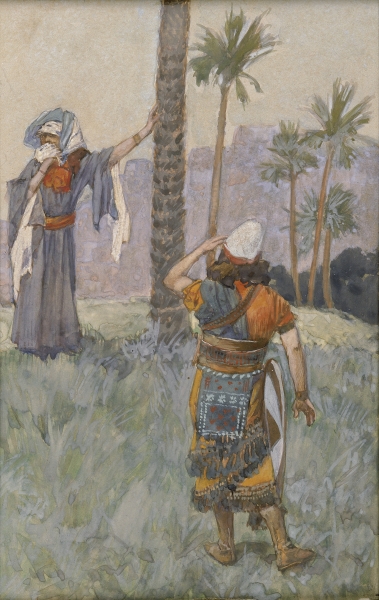 An argument for the position of egalitarianism (the position that women are not to be restricted from certain offices in the church):
1) Women say things in Scripture which are not condemned (cf. Deborah’s song, Mary’s Magnificat which is used in liturgical worship, Ruth’s words which are used in wedding ceremonies, Esther’s story and her actions, etc., etc.). [Edit: this premise must be made more clear. The things women say in Scripture are not simply not condemned, but are often explicitly centralized. The Song of Deborah; Ruth’s words to Naomi; the magnificat; etc. These words are made into liturgies and used for teaching. Yet they are the words of women. Thanks to Adam at Unworthy Yet Redeemed for pointing out this flaw in the argument. Consider P1 to be modified to “Women say things in Scripture which are centralized and utilized for church liturgies and teaching.”]
2) All Scripture is useful for teaching, rebuking, correcting, and training in righteousness (1 Timothy 3:14-17).
3) Those things which women say in Scripture teach us truths useful for teaching, rebuking, correcting, and training in righteousness (1, 2).
4) If we use truths women teach us in Scripture to teach doctrine/righteousness/etc., we should not exclude women from the ministry. (Premise)
5) We use truths women teach us in Scripture to teach doctrine/righteousness/etc. (1-3)
6) Therefore, we should not exclude women from the ministry (4, 5, modus ponens).
Defense of premise 1: I cited examples in the argument itself. See Judges 4-5; Luke 1:46-56; Ruth 1:16-17 (and the rest of the book); the book of Esther; these are just a few examples.
Defense of premise 2: Again, directly from Scripture: 1 Timothy 3:14-17.
3 follows from 1 and 2.
Premise 4 is likely to be the most controversial of these premises. The position of those who hold that women should not be ordained into the office of the ministry (complementarianism) is generally based upon the suggestion that women should not teach doctrine in a public setting (see more on this below). Therefore, I think that premise 4 must be accepted by complementarians because a denial of this premise would undermine their position. In other words, if one wants to hold that premise 4 is false, they would have to provide a different reason to exclude women from the ministry. Premise 4 simply states that which the sides agree upon. Ultimately, the strength of premise 4 will depend upon one’s definition of “the office of the ministry.” However, if one’s definition of “office of the ministry” includes “teaching”; “teaching doctrine”; “rebuking” [those who need correction]; etc., then premise 4 is correct.
Further, premise 4 could be weakened so that its conclusion would be not quite as strong. Instead, one could reword it as:
4′) If we use truths women teach us in Scripture to teach doctrine/righteousness/etc., we should not exclude women from teaching doctrine/righteousness/etc. to others.
This modified premise will not yield the conclusion that women should not be excluded from the “office of the ministry” but it would yield the conclusion that women should be allowed to teach doctrine, righteousness, and other things no matter who the audience happens to be.
Premise 5 follows from 1-3. 6 follows via modus ponens from 4 and 5. The same could be said for 4′ and the perceived 5′ and 6′.
The language used by those who are against women preaching must be very carefully selected because they do not wish to say women cannot be teachers at the university, or that they cannot teach elsewhere–rather, it is restricted to the church. Yet the argument above would be specifically useful for permitting women to teach in the church. After all, their words are used to teach continually. Whenever the Magnificat is sung or spoken, we use the words of Mary to teach us truths about Jesus. Whenever we read the story of Ruth or use her words in our wedding vows, we use them authoritatively.
Another way we could put this argument would be “If it is okay for women to compose sections of the Bible, perhaps we should let them teach it?” (quoted from Lamb, 64, citation below). I think the answer to the question is eminently obvious: yes
Therefore, women are already acting as a kind of “unacknowledged teacher” in the church: their very words are being used to tell us about God. I conclude that women should not be excluded from the ministry.
Note on terminology: by “teach” I am explicating the role of “teacher” in the church–the pastor.
Part of this argument was developed from a reading of God Behaving Badly by David Lamb (Downers Grove, IL: InterVarsity Press, 2011), 64-65, wherein he states “If it is okay for women to compose sections of the Bible, perhaps we should let them teach it?” (64).
SDG.
——
The preceding post is the property of J.W. Wartick (apart from citations, which are the property of their respective owners) and should not be reproduced in part or in whole without the expressed consent of the author. All content on this site is the property of J.W. Wartick and is made available for individual and personal usage. If you cite from these documents, whether for personal or professional purposes, please give appropriate citation with both the name of the author (J.W. Wartick) and a link to the original URL. This blog is protected by Creative Commons licensing. By viewing any part of this site, you are agreeing to this usage policy.
More Committed to Truth than God.
 JP Moreland has said that he is “more committed to truth” than he is to God (JP Moreland, “Christianity and the Nature of Science” Lecture).
What he means is that were it shown that belief in God is irrational, he would drop faith belief in God.
I think it is supremely important for all Christians to maintain this attitude. We cannot simply assume the truth of our position, but must rather be willing to follow the evidence where it leads. Notably, the evidence leads us directly to the existence of God.
Such a view is also Biblical. Examine, for the moment, 1 Corinthians 15:14 “If Christ has not been raised, our preaching is useless and so is your faith.” Paul here asserts what Moreland does: if it is shown that what we believe in is false, then our faith is useless. We must remain committed to truth as we examine the universe around us.
It is that commitment to truth which must also leave us unrestrained from examining the deep topics of our faith. We must be open to modifying the doctrinal positions we hold as we scrutinize them with both Scripture and philosophy. There is objective truth, and we are, in some sense, obligated to pursue it–particularly if the alternative is to blindly hold to our position.
Such advice applies not only to believers but also to those who do not believe. Dogmatic atheists who deny God’s existence on principle are no more committed to truth than theists who believe because they “feel it’s right.”
I can put it no better than the words of our Lord: “You will know the truth and the truth will set you free.” -Jesus, John 8:32
SDG.
Image source: http://commons.wikimedia.org/wiki/File:Nwmsu-truth.jpg
———
The preceding post is the property of J.W. Wartick (apart from citations, which are the property of their respective owners) and should not be reproduced in part or in whole without the expressed consent of the author. All content on this site is the property of J.W. Wartick and is made available for individual and personal usage. If you cite from these documents, whether for personal or professional purposes, please give appropriate citation and provide a link to the original URL. By viewing any part of this site, you are agreeing to this usage policy.
Original Sin and the Metaphysics of the Soul
Original Sin Defined
The writers of the Augsburg Confession (found in the Book of Concord) defined Original Sin as the belief that “…since the fall of Adam all human beings who are propagated according to nature are born with sin, that is, without fear of God… [we] teach that this disease or original fault is truly sin, which even now damns and brings eternal death to those who are not born again through baptism and the Holy Spirit” (BOC, 39).
One Objection
Ezekiel 18:20a states, “The soul who sins is the one who will die. The son will not share the guilt of the father, nor will the father share the guilt of the son.”
The word used for “soul” in this passage is the Hebrew word, nephesh. This passage leads to the objection that original sin cannot be true as I have outlined it, because it involves the son inheriting the guilt of the father.
The Question of the Soul: A Metaphysic of Original Sin
Three views of the soul are prevalent in Christianity. All of them presuppose metaphysical dualism. They are:
1) Our soul is constructed just as our physical body: Our soul is a half-and-half combination of the souls of our mother and father.
2) God specially creates each soul for each person when he/she is conceived/born/etc. Alternatively, God has already created every soul for everyone who will ever live, and puts them in a body when one is needed. The main problem with this view is that it would seem that if original sin is true (in the sense I have outlined it above), then God creates sinful souls for us.
3) Our soul is from Adam. There are no new souls for mankind, rather, we all share, in some sense, Adam’s soul.
I tend to favor 1) (now, anyway). But I favor a version of 1) which is not so much a half-and-half combination of souls, but a union of the totality of the souls we inherit. I originally wrote this post for my new site, but an insightful commentator lead me to heavily edit my views here. Just as we become one in the union of sex, so do our souls become one when we conceive a child.
What this means, then, is that the soul we inherit from our ancestors includes the inheritance of the guilt of sin. I must note the distinction here between sins which require action and those that do not. I have been pondering this idea for some time–is it possible to have sins for which we are guilty that we don’t commit? The answer I lean toward is “No”, but that doesn’t preclude original sin. The reason is that through the soul, we have literally participated in the original sin of Adam. When we are told that we have the “Old Adam” in us, this should be taken in a more literal sense than it often is.
We are told by Paul that there is a natural and spiritual body (1 Corinthians 15:44). These are both the inheritance of our ancestors. In a literal sense, then, there is the “old self” (Romans 6:6) and the Old Adam (1 Corinthians 15:45) which, from birth, enslave us to sin (Romans 6:6). Metaphysically I think this means that our soul has literally participated in, and is therefore held accountable for, the original sin. Original sin is a substantive entity–it corrupts our very nature. This is no mere inclination to sin, but a bondage to sin and a separation from God. It only makes sense to me on a metaphysical level to argue that this sin is inherited through our soul, which, like our body, maintains the union with Adam himself.
So how does this answer the objection from Ezekiel 18:20? Initially, one may argue it seems to purge the passage of all meaning. This is not the case, however. What Ezekiel is referring to is the sin of commission. That is, it refers to a sin which requires an action. Ezekiel is telling us that the actions of the father do not condemn the actions of the son. This does not, however, preclude the original sin in the metaphysical sense in which I have outlined it, because we have each participated in the action which causes original sin.
One final note is required, however. This is again a modification of my original thoughts due to enlightening discussion with my good friend’s comments. We must remember that this stain of sin, this original sin, has passed away for those who have faith in Christ. For, though the passages I quoted above discuss the nature of our original guilt, they immediately turn to salvation which is through Christ. Our New Adam replaces the Old (1 Corinthians 14:42-57), and our enslavement to sin is no more (Romans 6:6-14). Our original guilt, received through our sharing in the action of Adam, and our shared spirit with him, is no more.
Source:
The Book of Concord. Augsburg Fortress. 2000.
——
The preceding post is the property of J.W. Wartick (apart from citations, which are the property of their respective owners) and should not be reproduced in part or in whole without the expressed consent of the author.
New Page: Christian Diversity
I have started another blog, which will not interfere with this one (though there may be some overlap). It is called Christian Diversity. Here’s the mission statement:
Christianity has been separated into divisions over denominational, cultural, and theological lines, yet the message of Christianity remains the same for all generations: Christ crucified for our sins. We at ‘Christian Diversity’ seek to demonstrate that while Christianity may be divided institutionally, we are of one mind spiritually. We affirm ‘Mere Christianity’, which is the belief that Christianity is ultimately this faith in Jesus Christ as Lord and Savior. We affirm the Three Ecumenical Creeds (The Apostles’, Nicene, and Athanasian Creeds).
The goal of ‘Christian Diversity’ is to discuss doctrinal differences on matters not essential to the faith. We understand that the goal of total ecumenism–that is, the unity of all churches–may be out of reach, but we strive to come to the understanding that all Christians are saved, and there are no divisions among us when it comes to Christ. Thus, while we may disagree on many of the issues we discuss, we continue to strive towards a better understanding of our fellow Christians and increase unity with them. This will serve to strengthen us as brothers and sisters in Christ.
Our motto comes from St. Paul, who writes in 1 Corinthians 1:10 I appeal to you, brothers, in the name of our Lord Jesus Christ, that all of you agree with one another so that there may be no divisions among you and that you may be perfectly united in mind and thought.
Check it out! Let me know your thoughts!
Searching for Writers
I’m planning to start a new site (in addition to this one). The point of the site is to have internal Christian dialogue, with an emphasis on the fact that despite our disagreements on matters not related to salvation, we are all Christians and should treat each other with love.
The writers for the site will be required to affirm the three ecumenical creeds (Apostles’, Nicene, and Athanasian). The posts on the site will be intended for the lay reader but will feature doctrinal discussion on a loving, Christian level. Specifically, some topics could include: the origins of life (i.e. creation vs. evolution vs. ID), Christian approaches to religious diversity, original sin, baptism, the role of women in the church, the authority of the Bible, the authority of the Church, etc. The posts would be laid out either as a point-by-point dialogue between the contributers (i.e. a back and forth with short e-mails in published form) or as series of posts with writers talking back and forth.
The purpose will be many-faced: to encourage discussion among Christians about issues which are important, while still maintaining Christian love for each other; striving for church unity by increasing respect among members of the Body of Christ; potentially apologetic/evangelistic purposes; and giving glory to God.
Posts on this new site will be short, so as to make sure the time commitment is not too high. I’m thinking about around 500 words as being the upper limit (though writers could exceed that if they desired–these issues are important and some could require several pages to fully address).
Any interested writers should be prepared to demonstrate writing skill and a knowledge base sufficient for engaging in discussion on the aforementioned topics. Applicants may submit an up to 500 word sample of writing on one of the topics above, along with a short biography and affirmation of Christian belief (this part will not count towards the 500 words) to oontabob@yahoo.com. Applications from Christians of any denomination are accepted, though, once more, adherence to the three ecumenical creeds is a requirement (which includes belief in the Trinity, the divinity of Christ, etc.).
I’m also looking for people talented with graphics/etc. who could potentially help with making pictures/banners/etc. for the site.
Rising Above the Dogma: A Call to Christian Fellowship
Dogmatics. Too often this word is seen as a “dirty” word. We don’t want to deal with stuffy theology books or learning about doctrine. It is my sincere belief that Christianity has unfortunately traveled two paths when dealing with Christian doctrines:
1) Christians simply don’t care about doctrine. They abandon systematic theology, and in turn abandon the soul of Christianity.
2) Christians emphasize soundness of doctrine with such zeal that they alienate and make enemies of fellow Christians. In doing so, they abandon Christ’s teaching.
I just finished reading the book Christ Among the Dragons by James Emery White, and I must say it should be required reading of all Christians. Among the wonderful points made by White throughout this work, I found the most important to be his discussion of our interactions with fellow Christians. Too often, I found myself literally in tears, either because I stood convicted by the words he wrote or because fellow Christians had wronged me in the ways he outlined. He writes concerning debates over doctrinal issues:
“Truth be told, we should have enough theological humility to admit that we may all be wrong. The greater issue is refusing to make our theological viewpoint the test of orthodoxy, the agenda for which we exist and the basis of our community… And our rhetoric isn’t helping. ” (126).
White later quotes two other theologians, John Stott and the Lutheran theologian Peter Meiderlin. Stott wrote:
“Perhaps our criterion for deciding which is which [that is, which doctrines are essential and which are matters of liberty]… should be as follows. Whenever equally biblical Christians, who are equally anxious to understand the teaching of Scripture and to submit to its authority, reach different conclusions, we should deduce that evidently Scripture is not crystal clear in this matter, and therefore we can afford to give one another liberty” (127-128).
Meiderlin said, “In essentials, unity; in non-essentials, liberty; in all things, charity.”
These powerful calls to Christian unity too often fall on deaf ears from those who adhere to either of the views I described above. Those who believe doctrines are unimportant criticize those who attempt to stress the essentials. Those who emphasize doctrinal purity too often attack fellow Christians for matters which should be of liberty.
I hope and pray for a day in which we can move past such disturbances in the body of Christ. No longer will Christians feel “second class” because they are of a different denomination. No longer will Christians abandon the Creeds of the Catholic Church (meaning the whole Church at large, not just the Roman Catholics). No longer will Christians accuse their fellows of rejecting Scripture for having different views on matters of “liberty.” No longer will Christians abandon the message of Christ in favor of ethical teaching.
We Christians are a Body. We must stick together. Divided we fall, united we stand.
I’d like to add that when we deal with our fellow man, and particularly our fellow Christian, the most important thing we should remember is that our message is Christ, and our witness is our deed. I close with another quote from White in Christ Among the Dragons:
“When we condescendingly say that our position is simply the ‘gospel,’ as if it’s not really a debate worth having, then we are being arrogant. When we make our view the litmus test of orthodoxy, or even community, we are being neither gracious nor loving. When we say that our view alone upholds God’s sovereignty or that our perspective is the only one that cares about lost people, we are not being truthful. When we exhibit a haughty smirkiness, or we so state our position that we divide churches, student ministry groups or denominations, then we are sinning.” (126-127)
Source:
White, James Emery. Christ Among the Dragons. InterVarsity Press. 2010.
Christian Doctrines and Analytic Philosophy
I’ve been pondering the possibility for analytic philosophy to explore Christian Doctrine. Clearly, the prospects aren’t terribly dim, for some (such as Alvin Plantinga and, to a greater extent, Richard Swinburne) have done this exact thing. I think it is important to utilize philosophy and theology in a mutually beneficial relationship, and I personally find the results when this happens to be singularly beautiful.
Why undertake this project? First, because I’ve seen a number of objections to core Christian theology which have been disturbing to me. This includes challenges to the doctrine of the Trinity, redemption/atonement, baptism, etc. Second, because I think it is necessary–or at least expedient–to outline doctrines in forms that can be analyzed. Objections to Christianity often come in the form of “X doctrine of Christianity is unintelligible, so it’s false.” If it can be demonstrated that X is intelligible, then such objections fail.
Is such a defense Scriptural? I believe so. Paul often utilized philosophy in his witnessing (see Acts 17:28 for an example). He argued from Scripture, but also utilized philosophical insights to witness to the Greeks. Not only that, but Jesus instructs us to love God with all of our mind (Mark 12:30).
How might such a defense look? It will look AWESOME. Okay, seriously, it will look something like this:
Sin (hereafter s) is broadly defined as any act which distances one from God. Now, on Christianity, s is that for which we must be atoned, for all have committed at least one act that can be classified as s. However, all who commit such acts are to be held accountable. But before God, who can stand (Psalm 130:3)? Therefore it must be an act of God to cleanse us from all unrighteousness.
I put that together just now for the sake of an example, but I’ll be going into more depth as I explore various Christian doctrines in light of analytic philosophy and Scripture.
I’m excited for this project, though I must admit it will likely take quite a bit of time to put anything together for it, as one must not only utilize analytic philosophy, but also doctrine and exegesis for this kind of project.
——
The preceding post is the property of J.W. Wartick (apart from citations, which are the property of their respective owners) and should not be reproduced in part or in whole without the expressed consent of the author.

 J.W. Wartick - Reconstructing Faith
