egalitarianism
Really Recommended Posts 6/20/14- textual criticism, Krauss, and more!
 I’ve put together what I think is a pretty diverse array of topics for you, dear reader, to peruse. Check them out, and let me know what you thought of them! If you liked their post, let them know, too! Comments keep we bloggers going!
Gospel Truth? 10 Quick Questions– Here’s an interesting way to approach evaluation of rival Scriptural traditions–how might we determine whether one is true? What do you think of this list of questions about revealed truth? While you’re at it, Saints and Sceptics (they’re British!) is a great site that is well worth your time to follow and read on a regular basis.
Lawrence Krauss debates “A Universe From Nothing” with an Astrophysicist– Check out this review and commentary on a debate in which Lawrence Krauss continues to press his redefined version of “nothing” to try to explain the existence of the universe. This time, he debates an astrophysicist. Hint: it doesn’t go well.
Towards a Deeper Theology of Women: 4 Contributions of Women Scholars– Both men and women were created in the image of God. As such, they are each capable of contributing to theology and teaching. Check out this list of four contributions of women scholars, complete with some reading to pick up along the way!
Free Bible Icons– The title isn’t the catchiest, but these digital icons for every book of the Bible (and groupings therein) are fun, free, and a great thing to just print off and use as book markers in your Bible. Moreover, they’re just fun to look at.
Evangelical Textual Criticism– How might evangelicals engage in textual criticism? Here’s a site that explores that while also providing a number of resources like bibliographies for study, conference reminders, and the like. For an example of how this plays out, check out this post on Codex Bezae.
Really Recommended Posts 6/6/14- Hell, Pterosaurs, cessationism, and more!

I have once more found a number of excellent reads from all over the web before you, dear reader! Check out the list of topics: the continuation (or lack thereof) of spiritual gifts, a famous paleontologist–Mary Anning, gender and theology, wonder of God, and Hell. Oh yes, how’s that for a broad list? Anyway, be sure to drop a comment to let me know what you thought!
Does Cessationism Still Stand?– Cessationism is the view that spiritual gifts like prophecy, healing, and the like “ceased” after the apostolic period. Here, one author responds to a cessationist critique.
Mary Anning, Plesiosaurs, Pterosaurs, and the Age of Reptiles– Google recently had a celebration of Mary Anning on the search page. What’s the big deal? Here, Joel Duff explores some of the implications of Mary Anning’s discoveries about the “Age of Reptiles.” Want to read more on big lizards and time scales? Check out my post about dinosaurs, Noah’s Flood, and creationism.
Power, Gender, and Evangelicals: Ideas Have Consequences– What does it mean to say that “ideas have consequences”? Should women rely entirely upon men to shape their identity in Christ? Check out this excellent post exploring some if these and related issues.
Stars, sand, and God (Comic)- How important are you in the grand scheme of things? What does the massive scale of our universe say about God? In this comic, we are invited to bask in God’s glory.
Book Plunge: Rethinking Hell– The book Rethinking Hell asks us to do just that; consider hell as not eternal torment or punishment but rather annihilation. Check out this insightful review of the book.
Sunday Quote!- What does “head” mean?
 Every Sunday, I will share a quote from something I’ve been reading. The hope is for you, dear reader, to share your thoughts on the quote and related issues and perhaps pick up some reading material along the way!
What does “head” mean?
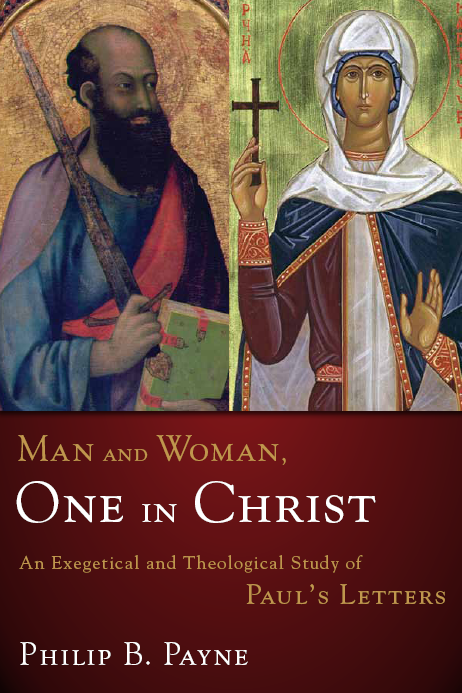
I’ve been rereading Philip Payne’s monumental study of Paul’s letters in relation to the roles of men and women in the church and home, Man and Woman, One in Christ. There is so much in this book to discuss I feel as though every single page deserves its own post. For now, I wanted to highlight his discussion of the meaning of “head” in the much-discussed 1 Corinthians 11:2-16. Payne writes:
The majority view in recent scholarship has shifted to understand “head”… in this passage to mean “source” rather than “authority”… One reason for the popularity of [interpreting it as “authority”] is that in English, German, and Hebrew… the most common metaphorical meaning of “head” is “leader”… Interpreters who in their native tongue associate metaphorical uses of “head” with “leader” naturally make this association when reading this passage. (117-118, cited below)
In the book, Payne goes on to demonstrate why it is that the majority view has turned to viewing “head” as “source.” He provides 15 reasons to think this is the case. A few highlights include contemporary 1st-3rd century usage of the term, lexical support for “source” and lack thereof for “authority,” other usage within the Pauline epistles, difficulties raised by reading it as “authority,” and support for the meaning as “source” from a number of contemporary authors and Church Fathers. In the passage above, I think it’s interesting to see that one’s native language often imports meaning into the text. I’m sure this happens in many places, and I’ve caught myself on some.
If you have any interest at all in the debate over women’s roles in the church and home and do not have this book, you must amend the situation immediately. It doesn’t matter if you are egalitarian or complementarin; you must deal with the arguments raised by Payne, who interacts with top scholars from both sides of the debate (including Piper, Grudem, Wright, and more).
What are your thoughts? How do you read this difficult passage? Does your native tongue perhaps change your perception of the meaning of some parts of the Bible?
Links
Be sure to check out the page for this site on Facebook and Twitter for discussion of posts, links to other pages of interest, random talk about theology/philosophy/apologetics/movies and more!
Sunday Quote– If you want to read more Sunday Quotes and join the discussion, check them out! (Scroll down for more)
Check out my posts on egalitarianism (scroll down for more).
Source
Philip B. Payne, Man and Woman, One in Christ
SDG.
Really Recommended Posts 5/2/14- Hitler’s Philosophers, Lutheranism, and more!
I’ve once more gone through the internet archives to bring together a slew of awesome posts for you, dear readers! Let me know your thoughts, and feel free to share links you’ve enjoyed. I may even put them on an upcoming RRP!
Why I was Once an Atheist– Pastor Matt was a PK–a pastor’s kid–(like me!) and he had some expereinces in the church which led to his atheism. Reading his thoughts provides insight into what we can do better for our children and beyond.
Sanctification– Imagine a woman hearing these words: “The guys just don’t feel like they would be able to lead you spiritually…” What follows from a view in which men spiritually lead women without question? What roles do men and women play?
Why Pro-Life People Need to Become Amateur Philosophers– It is important to have some philosophical knowledge in order to make the case for the pro-life position. Here, some basics are covered with relevance for the issue.
Ways to be Lutheran– How are Lutheran splinter denominations working? What developments and trends are forming in the U.S.? An interesting background for Lutheranism in the United States. I thought it was worth the quick read.
Review: Hitler’s Philosophers by Yvonne Sherratt– What philosophical motivations lay behind Hitler’s activities? This interesting book review talks about some of them. What are your thoughts?
Bruce Gordon: problems with inflationary multiverse cosmologies– What of the multiverse? Might there be evidence for it?
“Husband of One Wife” – What does this mean?
 A common argument for limiting the pastoral ministry to men only is to cite a number of texts where the requirements for elders/overseers/etc. are given. Among these, one which allegedly shows that women are not to hold positions of authority in the church is the statement that the holder of such a position is to be the “husband of one wife” (1 Timothy 3:2; 12; Titus 1:6).
On the face of it, this seems to be a pretty telling argument. After all, if someone is the husband of one wife, then that would certainly seem to exclude women! So what’s the problem?
Is your pastor married?
You see, if someone wants to take the statement in its most literal sense, it isn’t merely, abstractly stating that the overseer/bishop/deacon/elder is supposed to be a man; it is actually saying he is supposed to be a husband.* So if one wants to take the Bible in its most “literal” reading, then one must argue that not only may women not be pastors; neither may any unmarried (or remarried, or divorced, or widowed, etc.) men. Period.
So what’s the problem with this? The problem is that once we get to this level, it should be pretty easy to see how absurd the argument is. What the phrase is intended to convey is monogamy. That is, church leaders are to be monogamous. The teaching is pretty clear when understood in this light. If one is to be a leader in the church, it should be easily observable that they are monogamous and celibate apart from marriage. There are to be no exceptions.
If someone wants to dispute this and press that the real point is that one must be a man, then they must equally argue that no church leader should be unmarried. Considering Paul himself extolled the values of remaining unmarried (and was himself unmarried), such a reading of Paul is problematic, at best.
All of this is to set aside the other difficulties with using passages like this to restrict women from the ministry. One example is the excessive addition of male pronouns into the English translations which are not present in the Greek (see Philip Payne, Man and Woman: One in Christ, 445 [I have reviewed this book here]). Another problem is that they seem to be teaching against polygamy as opposed to any type of gender restrictions (ibid). Finally, the lists of requirements are stated in such a way as to make it actually open for women to hold such offices (Payne, 448-452).
Even if one disagrees on the last paragraph, it should be clear that one cannot use these passages to restrict women from the ministry. They simply do not have the data in them to allow for such a restriction.
*(Yes, I am aware that it may be translated “man of one woman,” but that just makes it extremely clear that the meaning is supposed to be referring to husband and wife. After all, what other reason could there be to be “of one woman”?)
Links
Be sure to check out the page for this site on Facebook and Twitter for discussion of posts, links to other pages of interest, random talk about theology/philosophy/apologetics/movies and more!
Check out my posts on egalitarianism (scroll down for more).
Paul Adams has a series of posts on Philip Payne’s work discussed herein. Check out his series, starting with the first post.
SDG.
——
The preceding post is the property of J.W. Wartick (apart from quotations, which are the property of their respective owners, and works of art as credited; images are often freely available to the public and J.W. Wartick makes no claims of owning rights to the images unless he makes that explicit) and should not be reproduced in part or in whole without the expressed consent of the author. All content on this site is the property of J.W. Wartick and is made available for individual and personal usage. If you cite from these documents, whether for personal or professional purposes, please give appropriate citation with both the name of the author (J.W. Wartick) and a link to the original URL. If you’d like to repost a post, you may do so, provided you show less than half of the original post on your own site and link to the original post for the rest. You must also appropriately cite the post as noted above. This blog is protected by Creative Commons licensing. By viewing any part of this site, you are agreeing to this usage policy.
Really Recommended Posts 4/25/14- Dean Koontz, egalitarianism, “Cosmos,” and more!
 Here, I have a list of great reads for you to browse, from Easter errors to Dean Koontz, from marriage to atheism. Check them all out, and let me know what you thought!
Five Errors to Drop from Your Easter Sermon– Check out this read on common mistakes made when talking about Easter.
Tie-Breaker– What happens when married couples come to a point where they are at an impasse? Does there need to be a marital tie-breaker grounded in notions of hierarchy of genders? Check out this thought-provoking post on the topic. For my own thoughts on the topic, check out my post “Who’s in Charge?” over at CBE.
Dean Koontz’s “Innocence”– From the author (links removed), Anthony Weber, “Dean Koontz is perhaps the most famous Christian author alive today. He has sold over 450,000,000 books, with 17,000,000 added each year. He’s sold more books than Stephen King…” That’s why you should care about the guy. Check out this look at a recent book from Koontz.
What I Needed to Hear as an Atheist (And How I Needed to Hear It)– Approach matters! Check out this fantastic post on how we may approach atheists who are wondering about the faith.
Cosmos Scrubs Religion’s Positive Influence from the History of the Scientific Revolution– The TV series “Cosmos” has seemingly purged any notion of the positive influence of religion from the history of scientific development. Check out this insightful article which explores some of this history and the way “Cosmos” has distorted it.
Really Recommended Posts 4/11/14- submission, creationism, and apologetics!
I’m really itching for a game of Ultimate Frisbee. Seriously, can the snow please melt? Anyway, this week I’m presenting for your reading pleasure a slew of high quality posts on the (non-)tasks of the apologist, submission, “street epistemology,” presuppositionalism, and young earth creationism. How’s that for a lineup? Let me know your thoughts in the comments! I love to read what you think. Have a link to share? Drop it here with your own thoughts on it, and I may include it next time!
What an Apologist’s Job is NOT– Melissa Cain Travis offers some extremely sound advice on things to avoid as an apologist. This is a very practical post and a most read for those of us involved in apologetics. Read it!
On Submitting to One Another– What does it mean to submit? How does the notion of submission to one another play out in the church? Check out this thoughtful post by Paul D. Adams on these topics.
On Interacting with Street Epistemologists– Nick Peters has spent some time interacting with “street epistemologists” trained by atheist Peter Boghossian. Here, he shares some of his insights gained from this task. If you’re unfamiliar with the Boghossian, I highly recommend you check out “Peter Boghossian, Atheist Tactician.”
Picture Charades: Do you know your presuppositional apologists?– A fun activity of identifying key presuppositional thinkers. I take an integrative approach to apologetics, so I think it is important to read evidentialists, presuppositionalists, classical apologists, and yes, even fideists.
An Ancient and Alien Forest Reconstructed: A Challenge for young earth creationism– How might the forests of the past present difficulties for young earth creationism? Well, read the post to find out! It’s well worth it.
Really Recommended Posts 3/28/14- Nature and Scripture, Tolkien’s Beowulf, oneness in Christ, and more!
I have a nice range of posts set up for you. First, we look at the “God’s Not Dead” flick. Then, Tolkien’s translation of Beowulf! From there we survey the interrelationship between nature and Scripture, men and women as images of God, and young earth creationism and animal mimicry. I hope you enjoy them. As always, drop a comment here to let me know what you thought!
An Apologist Reviews “God’s Not Dead”– The movie “God’s Not Dead” is drawing a lot of interest from Christians. How does it hold up with it’s seeming purpose: to show that God is not dead? Check out this review by Nick Peters, a Christian apologist.
JRR Tolkien’s Translation of Beowulf: Bring on the Monsters– A translation from Tolkien of Beowulf may seem pretty ho-hum. After all, there are already English translations! But the book is going to be published not only with the translation, but also Tolkien’s notes and a couple essays. This is, of course, not to mention Tolkien is a renowned scholar of linguistics and so his translation is undoubtedly fantastic. I wait with barely contained glee for this one. Check out this post for reasons to get excited about the book!
Are Nature and Scripture Compatible?– Here, Luke Nix analyzes a number of ways to evaluate nature and Scripture alongside each other. The post has helpful flow charts to visualize this reasoning throughout. I highly recommend the read.
Male and Female: One Image, One Purpose– Men and women are both made in the image of God. What does that mean? How does it play out in our view of men and women? Check out this post by Mimi Haddad on the topic.
The “Good Creation” – Mimicry, Design, and Young Earth Creationism– How do creatures which mimic others (or the environment) reflect upon God’s creation? Check out this post which analyzes the question against the backdrop of young earth creationism.
Really Recommended Posts 3/21/14- egalitarian marriage, the Bible and murdering children, inerrancy, and more!
Well we got snow again here (about 3 inches). If it’s anything like last year, we’ll be seeing snow in May. Alas. Given that we’re stuck inside, I am pleased to present a number of excellent posts here for your perusal. The posts address the notion that egalitarian marriage is less satisfactory, apologetic interaction in social media, a recent meme about murdering children in the Bible, and more!
Gender Roles in Marriage (Part 1): Couples in Traditional Roles Have More Sex, Study Finds– I have seen several people sharing the results of a study in which it was found that couples in traditional roles have more sex. Some have trumpeted this as proof that traditional marriage is actually superior to egalitarian marriage. (Here, realize that “traditional marriage” is referring to a complementarian relationship wherein the man is in charge of the household.) However, apart from the problem that the number of instances of sex in a month is perhaps not the best indicator of marital stability and happiness, it seems there are other difficulties with this study and those drawing conclusions about the superiority of complementarianism. Check out this article on the topic.
How to Murder Children: Bible Style – Debunked– There’s a meme rolling around the internet about how the Bible has murdering children in it. It’s constructed without commentary and seems to be slanted towards the view that the Bible is evil. Check out this debunking of the meme (it includes the original). Very good work here, and I really think you should check it out!
What Christians can learn from skeptics– Certainly not an exhaustive list, this is actually more specifically looking at how skeptics are using Wikipedia to slant opinion on religious issues. How might Christians use this as a way to increase confidence in the faith?
Errors of Inerrancy– An interesting post on how to avoid some pitfalls when thinking of the doctrine of inerrancy. The list of errors includes both mistakes made by both critical scholarship and evangelicals regarding the text of Scripture.
One Christian Apologist’s Advice on Using (Anti-)Social Media– Some good advice here on how to become more effective via social media. Though I personally think Facebook is actually a better way to do apologetics than described in this post.
Really Recommended Posts 1/10/14- Divergent, marriage, Boghossian, and more!
Dear readers: As a thank you for stopping by, check out my latest “Really Recommended Posts.” Here, we’ll look at the Young Adult book Divergent (coming to theaters soon!), marriage, Augustine, abortion, Boghossian’s atheist propaganda, and some great free Bible inserts for apologetics. Check ’em out. As always, feel free to drop your own Really Recommended Posts by leaving a comment with your recommendation (and why). Also, feel free to leave a comment on your thoughts on any of these posts.
Free E-Book Download: Peter Boghossian, Atheist Tactician– Let me tell you right now, you should immediately download and start reading this free e-book. It is a response to Peter Boghossian’s A Manual For Creating Atheists. Boghossian is intentionally trying to destroy Christianity and proselytize for atheism. I have not finished the book yet, but what I have read has been excellent. It comes with my recommendation.
Divergent– Anthony Weber over at Empires and Mangers, one of my favorite sites (and one you should follow!), reviewed the YA Book Divergent. He examined it from a worldview perspective. The book is being made into a major motion picture and has been hailed by some as the “next Hunger Games.” That means we’re going to run into it everywhere. What questions can we bring to the table? There are SPOILERS in this linked post.
Modern Marriage Concerns– How might egalitarianism play out in marriage? Here, a brief post explores the nature and possible concerns regarding marriage in an egalitarian system.
A Free Bible Insert to Say Thanks for a Great 2013– Check out this link to get some great printable Bible inserts related to apologetics to tuck into the pages for quick access. I highly recommend checking them out.
Augustine’s Confessions: Some Lessons for apologetics– Augustine’s work, Confessions, is an autobiographical account of parts of his life. In it, he provides some insights into what is needed for an apologetic approach even in our church today.
‘He killed my baby !’: The day I lost my daughter to the Culture of Death– A powerful story about awakening to the wrongness of abortion.

 J.W. Wartick - Reconstructing Faith