ethics
The Epistemic Argument Against Abortion
 Epistemology is the study of knowing. That is, it is the study of how we know something is true. Here, I will offer an argument against abortion which concerns the question: what do we know about the unborn?
An Analogy*
Suppose you are a demolition expert. You’re sitting outside a building you are to blow and you are about to hit the button. The area has been declared clear and so you have flipped the cover of the button up and you’re about to blow the building. Suddenly, someone cries out–a little red tricycle has been discovered outside the building. Fortunately, however, the people who spotted the tricycle tell you there is only a 20% chance that the child made his or her way inside the building. The equipment being used is expensive and your company is paying more Shrugging while thinking “Time is money,” you go ahead and press the button, blowing up the building. After all, you’re 80% sure there is no one inside.
…Wait a second. That’s horrible! Shouldn’t you check and be sure that there is no one inside the building? After all, that person’s life is worth so much more than the extra money your company will have to spend as the child is searched for.
The question then must be asked: what percent is low enough for you to press the button? Suppose you were 90% sure the child was not inside the building, would you pull the button then, confident that you gave your best effort? How about 95%? 98%? It seems to me the only morally permissible situation would be certainty. The building has been swept entirely from top to bottom and cordoned off, you are positive no one is inside. Then, you may press the button without moral culpability: you are certain you are not killing anyone whether directly or indirectly.
*I should note this example is from Kevin A. Lewis. I modified the scenario slightly.
The Argument Stated and Defended
The argument is actually very simple:
1) If it is possible that the unborn is a human person, we should not kill the unborn.
2) It is possible that the unborn is a human person.
3) Therefore, we should not kill the unborn.
Premise one seems obviously true to me. In order to deny premise one, the advocate for abortion must claim that we may destroy “fetuses” even if it is possible that they are human persons. That is, the pro-choice position must hold that it is permissible to blow the building at 80%; or perhaps even at 98%. Given a similar situation: the doctor with the tools for abortion goes and destroys the fetus with the possibility that, like the red tricycle sitting outside the building, they may not know whether they are killing a child; instead, they go forward with the procedure, even though they may be murdering a baby.
Note that what I’m claiming here is a very small claim: it may be even a .5% chance that the fetus is a baby (of course, I am convinced that from conception, we have a human being, but for the sake of argument I will grant even .01% chance), but then the doctor, like the demolition expert, goes ahead and “blows the building” anyway.
Premise 2 also seems to be obviously true. In order to show me that it is wrong, the pro-choice party must make an argument towards the claim that the unborn is not a human person. Why must they try to prove a universal negative? Well, my claim is very broad: It is possible the unborn is a human person. I have argued towards this end multiple times, and would be willing to engage someone on those points. But the bottom line is, even if my arguments fail, I still think that it is possible the unborn is a human person. I just need reasonable doubt here, not epistemic certainty. Unfortunately for those who are pro-choice, their position must yield epistemic certainty, but it cannot.
The conclusion follows from the premises via modus ponens. Thus, the argument succeeds.
Objections
We can never be sure about anything
Perhaps the most thoughtful answer a pro-choice advocate might make for this argument is that we can never be sure of anything. After all, we cannot be certain that when we drive somewhere, a child might run in front of our car and get hit and killed. Indeed, in the case of a demolition expert, one could always have a helicopter drop a small child onto the building at the last second, or a child could tunnel underneath and get in, etc.
My response to this argument is fairly straightforward. In abortion, we are intentionally going in and killing the fetus (or dismantling it; however you want to put it). The analogy with driving simply doesn’t work. In order for it to be even close to accurate, the driver isn’t driving safely. Instead, it would be like driving drunk along a sidewalk in Chicago. You shouldn’t do it.
The problem with the ‘certainty’ objection is that while it is true we cannot be 100% of just about anything, it is also true that there are some steps we should take in order to give ourselves epistemic certainty. That is, there is a line between saying something is broadly logically possible and saying that it actually reduces one’s epistemic certainty of a proposition. Certainly, it is possible for a helicopter to parachute a child onto the building in the seconds before it explodes, but does that reduce one’s epistemic certainty pertaining to the situation? I do not think so.
You’re A Man
Unfortunately, I run into this argument far more often than one might think. It should be pretty obvious that this argument is completely fallacious. Whatever my gender happens to be, I am capable of reasoning.
Sometimes, the argument is put forth as “get out of my womb” or something similar. Well again, if the unborn is a human being, then I am attempting to protect a distinct human being. Thus, this objection not only begs the question, but it is also insulting. It is nothing more than a rhetorical device.
We can never be certain that the fetus is not a human being
A response like this basically grants my argument. As I have argued, if this is the case abortions should be impermissible. We shouldn’t just bank on uncertainty to gamble with lives. Of course, I am not going to merely appeal to uncertainty, I have positively argued that the unborn are human beings. Period.
Links
Like this page on Facebook: J.W. Wartick – “Always Have a Reason.”
Be sure to check out my other posts in which I argue for the pro-life position. Particularly relevant to the present discussion are “From conception, a human” and “The issue at the heart of the abortion debate.”
Image Credit: Wikimedia Commons Chixoy.
SDG.
——
The preceding post is the property of J.W. Wartick (apart from citations, which are the property of their respective owners, and works of art as credited) and should not be reproduced in part or in whole without the expressed consent of the author. All content on this site is the property of J.W. Wartick and is made available for individual and personal usage. If you cite from these documents, whether for personal or professional purposes, please give appropriate citation with both the name of the author (J.W. Wartick) and a link to the original URL. If you’d like to repost a post, you may do so, provided you show less than half of the original post on your own site and link to the original post for the rest. You must also appropriately cite the post as noted above. This blog is protected by Creative Commons licensing. By viewing any part of this site, you are agreeing to this usage policy.
“Ender’s Game” by Orson Scott Card: A Christian reflection
 Ender’s Game
The Children
Ender himself is a child. Yet throughout the book he ranges from trying to simply be a child to an admiral. He has a calculating, almost “killer” mentality and cannot bear to lose. He insists on excellence. Yet he is shaped by his past, while trying to avoid it. When he is confronted with a situation of survival–or at least one he perceives as such–he reacts with the cold efficiency of a practiced soldier. He escalates the scenario to the point that the “enemy” can never cause harm to him again.
Ender has been selected to be the future leader of Earth’s International Fleet, which is heading off to the worlds of the “Buggers” (also known as the “Formics”) to destroy them. The Buggers are a race of sentient creatures who have attacked Earth twice and almost destroyed humanity both times.
Ender’s brother, Peter, is a sadist. There is no other way to describe him. He loves to inflict pain and scare people. He uses his power to attack the powerless. The scenes in which Peter abuses his brother and sister, Valentine, are disturbing. He also tortures animals. He is evil… or is he?
Valentine is perhaps the paradigm of good in the book. She was “too soft” to be the commander of the International Fleet. She ends up reforming Peter to some degree, though she loses some of herself in that process.
There are a number of children with whom Ender interacts with in Battle School, and they range from friends to enemies. He ends up killing one of them, Bonzo, in self-defense, though he doesn’t learn he actually killed him until much later.
Death, Evolution, and Ethics
The death of Bonzo leads to a number of interesting moral issues. Did Ender step over the line? He continually thinks in terms in which he needs to destroy any possibility of an “enemy” coming back to hurt him, but this mentality is fostered by those who have trained him. Ender has to learn to become a military leader, and he is guided in this learning by Colonel Graff and Mazer Rackham. They guide him, but they do so with a distinctly hands-off approach in which they try to teach him he can rely on no one but himself. This gives Ender a kind of do-or-die mentality that becomes literal a number of times throughout the book.
Bonzo’s death is viewed by Graff as a necessary sacrifice for the fate of humanity. Both Ender and Graff reflect a kind of evolutionary morality wherein the strong survive. They view the war with the Buggers as yet another aspect of this morality. If it comes down to it, it may be that either the Buggers or humans can survive. Graff and Ender seem to agree that this means that humans must be the ones to survive; they are tied to their evolutionary mentality. They must choose to survive.
Yet the book does not seem to actually endorse that kind of morality, for it leads to an untold amount of suffering and indeed the destruction of an entire species of sentient beings. Not only that, but when Ender encounters more knowledge about the Buggers later, he mourns with the Buggers who lamented over the fact that the two species could not reconcile.
Just War and Genocide/Xenocide
The fact that the Buggers did not know what they were doing gives Ender’s Game
Was this lack of effort a realization that humans were sentient? Was it an offer of peace?
Card seems to write that it is, though he never makes it explicit in the book. Yet humans have been attacked and nearly destroyed twice by these aliens, so they mount a counter-offensive. Ultimately, this counter-offensive destroys the Buggers entirely. It is an act of genocide–in fact, it is xenocide, the destruction of an entire species.
However, Ender continues to think that what he is doing when he is commanding the International Fleet is just a game. They never inform him that he is commanding the real army. He ends up making a decision which destroys the Bugger homeworld, and with it, their entire civilization. It kills all the Buggers [except one, as we will see].
One is forced to grapple with the questions that this raises. The fact is that the Buggers attempted to exterminate humanity in order to populate Earth as another colony. But it is possible that they didn’t know what they were doing, and stopped once they seemingly realized humans were sentient. Conversely, humans didn’t know what the Buggers were doing in not attacking. For all the humans knew, the Buggers could have been preparing themselves to attack again with better weapons and even more superior numbers.
I think this book would be a great one for bringing up discussions of Just War, because it doesn’t portray it as a black-and-white issue. Is it possible for war to be just? The issues Card raises here will foster some great discussion of that very question.
Redemption
Yet the book does not end with the destruction of the buggers. Ender goes to colonize one of the planets, now devoid of intelligent life, which make perfect colony worlds for Earth’s overflowing population. The realization that he has destroyed an entire species haunts Ender, but he chooses to go to one of the colonies with his sister.
While he is the governor of this colony, he discovers that one Bugger has survived. A queen larva had been hidden by the Buggers in such a way that only Ender could find her. She shares the memories of the Buggers with him. Here we see one of the most poignant scenes in the book:
If only we could have talked to you, the hive queen said in Ender’s words. But since it could not be, we ask only this: that you remember us, not as enemies, but as tragic sisters, changed into a foul shape by fate or God or evolution. If we had kissed, it would have been the miracle to make us human in each other’s eyes. Instead, we killed each other. (322, cited below)
Ender publishes a work which reflects on the Buggers.It begins a new spiritual/religious movement, which has someone called a “Speaker for the Dead,” who speaks the truth about people who died, no matter how painful it would be. The teachings of this faith are from Ender’s book, which reflects the need for harmony and truth.
Ultimately, redemption is left open. Ender travels the stars in search of a place that the Buggers can be planted such that they live on. He seeks to undo the evil he caused. We are left with the last line of the book: “He looked for a long time” (324).
Other Themes
The concept of overpopulation is found throughout the book. People are limited to only two children. Ender, however, is a “third,” which means that the government had to explicitly let his family have another child. The complexities of this issue are only touched upon, but couuld help drive discussion in a small group or reflection for an individual.
Religion only makes a few passing mentions in the book. It is largely feared/suppressed in the book, though the “Speaker for the Dead” becomes a new religion or kind of spirituality. It is unclear of how this religion is specifically apart from any other religion, but it seems like it is because the teachings come from the “Speaker for the Dead” as a kind of religious text.
 Conclusion
Ender’s Game
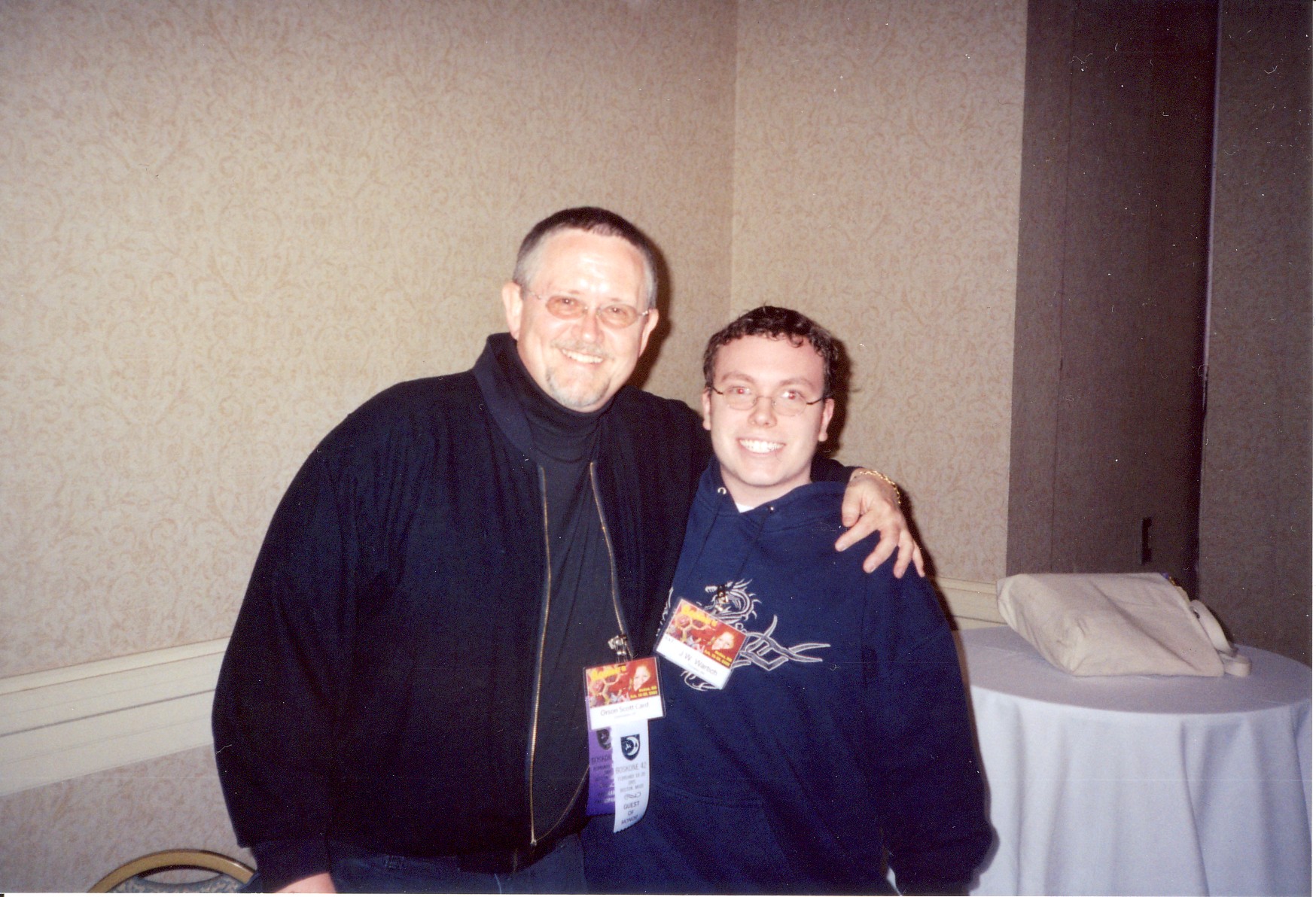
I can’t help but share the picture on the right of me (about 7-8 years ago) with Orson Scott Card. It was one of the most exciting experiences of my life. I found Card to be a gracious, wonderful man who was perfectly willing to sit down with a fanboy teenager and discuss heady issues about philosophy, teaching children about moral issues, and science fiction.
Be sure to check out my look at the movie.
Source
Orson Scott Card, Ender’s Game
Links
Religious Dialogue: A case study in science fiction with Bova and Weber– I take a look at how science fiction has dealt with theological topics, with a particular focus on dialogue about religion.
Be sure to check out my other looks at popular books [scroll down on this link for a number of posts].
Also look into my reviews of several popular movies.
There is No Combat Without Movement– A very different look at Ender’s Game which explores the use of military tactics in the book.
SDG.
——
The preceding post is the property of J.W. Wartick (apart from citations, which are the property of their respective owners, and works of art as credited) and should not be reproduced in part or in whole without the expressed consent of the author. All content on this site is the property of J.W. Wartick and is made available for individual and personal usage. If you cite from these documents, whether for personal or professional purposes, please give appropriate citation with both the name of the author (J.W. Wartick) and a link to the original URL. If you’d like to repost a post, you may do so, provided you show less than half of the original post on your own site and link to the original post for the rest. You must also appropriately cite the post as noted above. This blog is protected by Creative Commons licensing. By viewing any part of this site, you are agreeing to this usage policy.
Genetics and Bioethics: Enhancement or Therapy?

[Note: Revised and expanded 6/15/2015.]
Bioethics is an expanding field with direct implications for our lives. Here, we’ll reflect on the possibility and implications of gene therapy and enhancement. While I was at the Evangelical Philosophical/Theological Society Conference in 2012, I had the pleasure of sitting in on a talk about this very topic, and that will be the focus of this post. Unfortunately, the speaker had been switched around and was not listed in the booklet that I have. Furthermore, I never caught the speaker’s actual name (I tried to write it down when he was introduced, and got Gary Alkins, though I have tried searching online for that and haven’t come up with it), so if someone knows what it is, please let me know. I’ll reference the speaker as “speaker” throughout this post.
The central relevant moral question under discussion was: “Should genetic technology be used to not only heal but also to enhance the human condition?”
A Vital Distinction
An important aspect of this discussion is the distinction between gene enhancement and therapy. Gene therapy is the use of genetic research and information to cure illness. Speaking very hypothetically, suppose that we were able to discover the exact genetic code for illnesses like sickle cell anemia, isolate it, and replace it with a non-anemic code before a person was even born; that would be gene therapy. Genetic enhancement takes this a step further. It allows for modifying people genetically to enhance certain features such as physical strength, endurance, mental aptitude, and the like. It would, in a sense, create “super humans.”
Therapy
Using our knowledge of genetics for therapy, the speaker argued, is perfectly justified. We are called by Christ’s example to treat illnesses, and gene therapy can be seen as an extension of this. There was little time spent defending the moral permissiveness of gene therapy, as the primary question was whether genetic enhancement is morally permissible.
Enhancement
There are several arguments for genetic enhancement. These include:
1) The “natural lottery” argument: if we have the capacity to genetically enhance humans but do not, that means we are, effectively, just playing a genetic lottery to see if our children turn out well. Parents have a moral duty to act against the natural lottery.
2) We encourage environmental enhancement (i.e. seeking better education, putting children in brain-stimulating environments, encouraging sports for their physical well-being, etc.), why is genetic enhancement any different?
3) We already manipulate chemicals (caffeine, vitamins, etc.) for our well-being, why not genetics? In the end, what matters is human well being.
4) Genetic enhancement is simply the next logical step for humanity. If we agree that therapy is good because it stops genetic defects, should we not also hold that enhancement is good because it pushes people to fill their greatest potential.
Against these arguments, the speaker argued [updated section 6/15/15 with some counter-responses]:
A) Genetic enhancement could never match the ideal outlined in these arguments, wherein every human being is enhanced on a number of levels. Instead, it would very likely increase the split between the haves and have-nots by allowing those who have much to increase their dominance over society. The haves could afford to continue enhancing and remain a kind of super-human society while the have-nots would never be able to catch up.
However, a possible counter-argument to this reasoning would be to note that there will always be people who are advantaged and people who are disadvantaged. It’s unclear as to how this should serve to undermine the moral base for genetic enhancement.
B) There is a great good in letting humans accomplish things which stretch their skill set. Think about the steroids controversy in sports. We intuitively know that those who used performance enhancing drugs had an unfair advantage over those who did not. Similarly, those who would be genetically enhanced would have an unfair advantage over those who were not enhanced in almost any conceivable area of human achievement.
It is unclear, though, whether genetic enhancement would undermine the good of accomplishment and human achievement. Indeed, one could argue that genetic enhancement, in fact, bolsters human achievement by widening the scope of possibility for humans. From a pragmatic perspective, though, it sure would make it hard to keep on top of sports records and the like! We’d have to build bigger baseball parks to make home runs harder to hit! But seriously, the argument from human achievement does not seem sound to me.
C) What of bodily autonomy? Who’s to say that it is a good for parents to meddle with their children’s genes. What if a child does not want to be extremely strong, or what of their parents choose to give them giftedness in music, but they simply don’t like to do music? What if the children hate what their parents chose for them: hair color, eye color, etc.? Unlike the “natural lottery,” such attributes related to enhancement actually do have blame to assign to someone. Is there no bodily autonomy involved?
However, as Elijah argues, parents violate “autonomy” of their children all the time. This means there is some difficulty with determining how genetic enhancement would be a qualitative, rather than quantitative difference for this violation of autonomy. The opponent of genetic enhancement must establish that there is an objective difference between enhancement and other forms of violating autonomy, and must also show this difference is enough to ground a rejection of enhancement.
Enhancement and Theology
There are numerous theological issues involved in the debate over genetic enhancement. First, what might it mean for the image of God? Humans were created as “very good” and in the “image of God.” What does it mean to be in that “image of God” and does enhancement change that in any way?
For Christians, the ultimate fulfillment of God’s plan comes in the New Creation. The notion that humanity needs a genetic upgrade reflects the worldview of naturalism. Christians do not hope in their own ingenuity but rather in God’s plan for creation. That does not mean we cannot get actively involved in healing, but it does mean that we do not need to violate persons’ humanity by enhancement. One might argue that the assumption involved in enhancement is that our bodies are not good enough and that we need to improve them. However, such an assumption is not the only possible basis for enhancement. One could argue, instead, that enhancement is based on the notion that we are to keep fighting against the impact of sin in the world and one way to do this is to become stronger, smarter, and the like through the tools God has given us through scientific research.
Although we are fallen creatures, that does not imply that we are creatures capable of getting out of our own fallenness. No enhancement we can do can bring us ultimate salvation.
Evaluation
It seems to me that the arguments against enhancement may seem initially sound, but each one has its own problems.
It seems that if parents select for certain attributes, then parents can be held morally culpable for the genes their children develop. Thus, if the child dislikes an attribute, they could feasibly hold their parents responsible for that selected attribute. Interestingly, this may work both ways too: a child could hold their parents responsible for not changing an attribute. Yet this latter argument seems to make a mockery of parenthood, holding parents responsible for nature. I’m not sure, though, that this culpability is enough of an argument against genetic enhancement.
In the theological sphere, one may wonder whether someone could just as easily argue that because we were created initially “very good,” a pursuit of bodily perfection could be viewed as a fight against the Fall and the curse. I tried to ask this as a question, but there wasn’t time at the end to get to all the questions. The speaker did an excellent job noting possible counter-arguments to their points, and I thought gave a very fair presentation overall. It seems that the best argument against genetic enhancement may be the bodily autonomy argument, but this one has its own significant problems.
I’d like to know what your thoughts are on this topic: Do you think enhancement is moral? Why or why not?
Links
I have written on a number of other talks I went to at the ETS/EPS Conference. I discuss every single session I attended in my post on the ETS/EPS Conference 2012. I also discuss a panel discussion on Caring for Creation, and a debate between a young earth and old earth proponent.
SDG.
——
The preceding post is the property of J.W. Wartick (apart from citations, which are the property of their respective owners, and works of art as credited) and should not be reproduced in part or in whole without the expressed consent of the author. All content on this site is the property of J.W. Wartick and is made available for individual and personal usage. If you cite from these documents, whether for personal or professional purposes, please give appropriate citation with both the name of the author (J.W. Wartick) and a link to the original URL. If you’d like to repost a post, you may do so, provided you show less than half of the original post on your own site and link to the original post for the rest. You must also appropriately cite the post as noted above. This blog is protected by Creative Commons licensing. By viewing any part of this site, you are agreeing to this usage policy.
“Cross Roads” by Wm. Paul Young- An Evangelical’s Perspective
 One of the biggest publishing phenomena of late, The Shack

Free Will
The notion of crossroads is a major theme throughout the work, and Young utilizes the imagery to discuss free will metaphorically. Anthony Spencer (Tony), the main character, finds himself inside his mind, which is portrayed as a kind of land with various roads and places inside it. Initially, he begins exploring this land and finds himself coming to numerous forks in the road. He continues to find these forks and realizes that as he continues to make choices, “it occurred to Tony that the number of direction decisions was diminishing; options were significantly decreasing” (35). Young doesn’t expand on this much, but it seems like a vivid illustration of libertarian free will, wherein one’s choices in the past do indeed influence their choices in the future. As Tony makes choices on his path, he finds that the choices available to him decrease. The reason, it seems, is because his choices have started to form his world. It seems to me that this is a great way to show libertarian free will in literature.
Church
A robust theology of church and salvation is something that I think is necessary for an adequate theology. I find one reason for this illustrated well by Young:
Church, thought Tony. He hadn’t set foot inside one of those since his last foster family had been religious. He and Jake [Tony’s brother] had been required to sit silently for what seemed like hours… He smiled to himself, remembering how he and Jake had schemed together and ‘gone forward’ one night at church, thinking it would win them points with the family, which it did. The attention their conversions garnered was initially rewarding, but it soon became clear that ‘asking Jesus into your heart’ dramatically increased expectations for strict obedience to a host of rules they hadn’t anticipated. He soon became a ‘backslider,’ in a category, he discovered, that was profoundly worse than being pagan in the first place. (124)
It seems clear to me that here the act of conversion has itself become a work, rather than a gift of grace. Tony’s concept of conversion at this point in the book is that of “asking Jesus into your heart.” Unsurprisingly, when he fails to perform other adequate works–obeying a set of rules. The problem with this theology should become clear immediately. By suggesting that Christianity is about “going forward” and publicly affirming a faith, this form of theology puts the believer in the position of affirming faith, rather than receiving it as a gift. When faith becomes a public work, it becomes the Law instead of the Gospel. When demands for works are made on faith, then faith itself becomes a work. Unfortunately, this kind of works-righteousness sneaks into theology at all levels, ever seeking a place to grow.
The problems with this theology are portrayed vividly in this illustration. The notion that people need to make a public declaration of faith leads to its abuse, as Tony and Jake attempted to do, but it also leads to difficulties for those who believe their declaration was itself true (unlike Tony and Jake, who simply did it to glorify themselves in the eyes of their foster parents). When someone makes their “decision for Christ,” their faith life becomes wrapped up in that decision. Their walk with God is contingent upon their continuing to make this decision. Unfortunately, this type of theology makes faith all about one’s own decisions, rather than Christ’s justification and the free gift of faith.
Women
There are many church bodies who do not ordain women to the office of the ministry. That is, they hold beliefs that say women should not be spiritual leaders of men in the church. Young explores this issue when Pastor Skor shows up and challenges Maggie, one of the main characters, regarding her outburst during a church service. Pastor Skor takes Maggie’s outburst and disruptive behavior as a clue to him from God that he has been too lax in his instructing his congregation in the Bible. He makes an argument that women should not be leaders in church and should remain silent:
And we affirm the Word, which declares there is no longer male or female [Galatians 3:28], but… the Word is speaking of how God sees us, not about how we function in the church, and we must always remember that God is a God of order. It is vital that each person play their part, and as long as they stay within the roles that God has mandated, the church functions as it was meant to… (167)
The pastor goes on to quote 1 Corinthians 14:34-35 to support his position. Yet Young, through Clarence, an elder who is with the pastor to talk with Maggie, provides a counter-argument to this reasoning:
It is sarcasm… I believe that the apostle Paul was being sarcastic when he wrote what you read… He is quoting a letter that these folk sent him with questions, and he is in total disagreement with what they have written to him. (168-169)
Clarence defends this position by alluding to 1 Corinthians 14:36, apparently using the KJV: “What? came the word of God out from you? or came it unto you only?” Given the way this verse is worded, Clarence holds that verses 34-35 are a quote from a letter the Corinthians sent to Paul which Paul then responds to sarcastically by wondering whether the Corinthians think that God’s word came only to them.
Young’s offered interpretation seems possible, but perhaps not made explicit enough. It seems to me possible that Paul would have made it more clear that he was quoting another’s writing here. The KJV seems to support the interpretation given to 1 Cor 14:36 here, but other translations phrase it differently, in such a way that the verse seems to be more of a challenge to readers to dismiss what Paul is declaring in 34-35.
Of course, one could still argue that Young’s interpretation has great strength, noting that nowhere in the Bible do we see this command in the Scripture “as the law also says” and so we may infer that Paul is referencing an extra-biblical teaching and rebutting it. In fact, this seems to line up with Young’s argument perfectly because we can see that Paul would be citing a Judaizer’s teaching in the church in Corinth–who would hold that the silence of women is taught by the Law [Jewish extra-biblical law]–and then refuting this by noting that the word of God did not come from them alone (see Katharine Bushnell’s God’s Word to Women
Therefore, it seems to me that Young offers a fairly decent egalitarian interpretation of the passage, though he could have given other arguments which would take into account the passage’s cultural context, in which women were speaking out of turn in worship. The core of the statement seems to me to be that the women in this specific context needed to learn from their husbands at home and remain silent in church so that they did not cause disruption.
The way the scenario plays out in the book is also difficult to evaluate because Maggie definitely was disrupting the church service and would have appeared at least slightly crazy to those around her. She was screaming about a demon speaking to her and was, in fact, mistaken about that. I think she can be forgiven for her extreme reaction given the strange situation in which she found herself, but the Corinthians passage is in context all about order in worship in general, and certainly people bursting in screaming about demons would be disorderly worship.
Thus, it seems to me that Young offers a possible interpretation of 1 Corinthians 14:34-35, but he has made his case problematic by the narrative context in which he placed it. It is worth noting that this work will get people talking about the issue. Young has given a somewhat strong version of a lengthy egalitarian argument in the form of narrative.
Practical Ethics and Disability
Cabby, a boy with Down’s Syndrome, is featured prominently throughout the book. Young uses him as a foil to show that those with disabilities have much to contribute to modern society. Perhaps the most poignant way he does this is through the negative portrayal of Tony’s view of Cabby:
Tony had never known a ‘retarded’ person. He wasn’t sure if that is what you called them… His opinions on most nonbusiness matters may not have been founded on evidence or experience, but he was sure of them. People like Cabby were an unproductive drain on the resources of society; they were valuable only to their families. He believed they were tolerated because of liberal persuasions, not because such people had any intrinsic worth… It is easy to create a category of persons, like retarded or handicapped, and then pass judgment on the group as a whole. He wondered if that was not the heart of all prejudice. (108-109)
In contrast to Tony’s view, Cabby turns out to be insightful and delightful. He is shown to have positive value in a number of ways that go beyond his immediate family. He ultimately shows the practical usefulness of inherent human worth.
God
For Young, understanding God as relationship is central to the concept of deity. The concept of deity that is presented is that of Trinity. Much ink will be spilled, I feel certain, on whether or not Young portrays the persons of the Trinity correctly, just as there was in The Shack (see my own discussion here).
Young’s position seems to be largely unchanged from that in The Shack, and so much of the commentary will follow the same line. I think he does a very good job of exploring the inter-relational character of God and the temporal submission of Christ in the incarnation to God the Father. Some may see the primary difficulty with Young’s portrayal of God is that the Father makes very little appearance in the book, but near the end readers find out that is not the case. In fact, the Father is intricately involved in all aspects of God and the life portrayed in the novel.
Those who conceptualize God as inherently male will have a problem with the book, however. Unfortunately, some paganism has indeed hung on in the church, wherein some view God as a gendered being. In the Bible, however, we find that God is spirit and not a man. Thus, I think that Young’s use of gender with God may shock some but also underscores the fact that God is not a gendered being, and instead transcendent.
Historical Theology
Young offers a short discussion of historical theology and God that seems to me to at least partially miss the mark. It is very brief, but I think it is worth discussing. Young puts the following commentary in the mouth of Jesus himself:
The Greeks, with their love for isolation [of deity] influence Augustine and later Aquinas… and a nonrelational religious Christianity is born. Along come the Reformers, like Luther and Calvin, who do their best to send the Greeks back outside the Holy of Holies, but they are barely in the grave before the Greeks are resuscitated and invited back to teach in their schools of religion. The tenacity of bad ideas is rather remarkable, don’t you think? (73)
There are a number of problems with this small passage. First, Augustine heavily influenced both Calvin and Luther. In fact, Calvin’s theology is tied very intricately to Augustine’s view of free will and original sin. Similarly, Luther’s view of original sin derives directly from Augustine’s exposition in City of God. Second, it seems unfair to view Aquinas as a kind of anti-relationalist when it comes to God’s nature. Aquinas very much emphasized the triunity of God, which was (and is!) an extremely important topic. To thus accuse Aquinas of undermining God’s relational-ness seems unfair. Finally, the notion that the influence of Greek philosophy on Christianity is somehow inherently bad seems a bit shortsighted. There are innumerable positive contributions that reflection on Greek thought has brought into the fold of Christianity. Among these are the very concept of free will that Young pushes in his book, along with a number of aspects of Trinitarian and Incarnational theology that Young seems to support. This may seem to be a nitpick, but it seems to me that if Young is going to use his book to make comments about historical theology, it is vastly important to get that historical development right.
Conclusion
Cross Roads
SDG.
——
The preceding post is the property of J.W. Wartick (apart from citations, which are the property of their respective owners, and works of art as credited) and should not be reproduced in part or in whole without the expressed consent of the author. All content on this site is the property of J.W. Wartick and is made available for individual and personal usage. If you cite from these documents, whether for personal or professional purposes, please give appropriate citation with both the name of the author (J.W. Wartick) and a link to the original URL. If you’d like to repost a post, you may do so, provided you show less than half of the original post on your own site and link to the original post for the rest. You must also appropriately cite the post as noted above. This blog is protected by Creative Commons licensing. By viewing any part of this site, you are agreeing to this usage policy.
A violation of God’s Will: Abortion- or why no Christian should be pro-choice
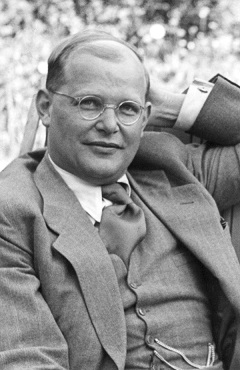 Destruction of the embryo in the mother’s womb is a violation of the right to live which God has bestowed upon this nascent life. To raise the question whether we are here concerned already with a human being or not is merely to confuse the issue. The simple fact is that God certainly intended to create a human being and that this nascent human being has been deliberately deprived of his life. And that is nothing but murder.- Dietrich Bonhoeffer, Ethics
The foresight which Dietrich Bonhoeffer showed in this passage from his book, Ethics, is astounding. Bonhoeffer was a pastor who stood up to the Nazi regime and was martyred–hanged by the Nazis–for his activism on behalf of the innocent lives being slaughtered by Hitler. His view on abortion lines up exactly with his views on preserving human life in Nazi Germany. Bonhoeffer’s argument anticipates and cuts off a number of pro-choice arguments for abortion. Let’s see how.
Bonhoeffer’s argument does not depend whatsoever on whether the unborn is a human being or not (and the unborn is indeed a human being). His argument instead is based upon God’s will for that unborn entity. Examine once more what Bonhoeffer said: “The simple fact is that God certainly intended to create a human being and that this nascent human being has been deliberately deprived of life.” The focus here is not so much on the status of the unborn as a human or not, but rather the focus is upon God’s will for the unborn. Why is it that God set the world up in such a way that the nascent (developing) human being grows into a toddler, adolescent, adult, and senior? Bonhoeffer focuses the argument directly upon God’s will. God has willed that from conception, a plan for a human life is set into motion. Thus, to terminate a pregnancy is to destroy part of God’s plan, a plan for a human life.
For Christians, this logic is binding. The pro-choice objection that the fetus is not a human person is a rabbit trail at this point. Another objection must be thrown out the window as well: namely, the notion that even if the unborn is a human person, the mother has an absolute right to bodily autonomy. For the Christian, God’s will trumps any supposed absolute autonomy. God’s will is absolute. It must be obeyed. To go against God’s will is to sin.
Is there a way for Christians to avoid the implications of Bonhoeffer’s argument? It seems the only way to do this is to deny that God wills for there to be a human being as the result of a pregnancy. I confess that I do not see any possible way for this argument to be convincing. The objector would essentially have to say that God’s will for the unborn is based entirely upon that of the parents’ will. For, after all, if God did not will for there to be a human being as the result of a pregnancy, what would God’s will regarding the conceived being be? It seems that it would have to be arbitrary. But this would seem to be untenable given the doctrine of the nature of God as perfection.
Therefore, Bonhoeffer’s ingenious argument leads to the inescapable conclusion: no Christian can endorse abortion. The fact of the matter is that God so set up the world that the process of human growth begins at conception. Unless there is a complication in the pregnancy or there is an outside source intervening to terminate the pregnancy, the result of conception is a human being.
All Christians say in chorus: Let God’s Will Be Done!
Links
Abortion: The Holocaust of our Day– I explore more reasons to reject the pro-choice position for both Christians and non-Christians at length.
Pro-Life– check out my numerous posts on the issue of abortion.
Sources
Dietrich Bonhoeffer, Ethics
SDG.
——
The preceding post is the property of J.W. Wartick (apart from citations, which are the property of their respective owners, and works of art as credited) and should not be reproduced in part or in whole without the expressed consent of the author. All content on this site is the property of J.W. Wartick and is made available for individual and personal usage. If you cite from these documents, whether for personal or professional purposes, please give appropriate citation with both the name of the author (J.W. Wartick) and a link to the original URL. If you’d like to repost a post, you may do so, provided you show less than half of the original post on your own site and link to the original post for the rest. You must also appropriately cite the post as noted above. This blog is protected by Creative Commons licensing. By viewing any part of this site, you are agreeing to this usage policy.
Crossing the Most Dangerous Line: How some bioethicists undermine humanity
Our point is only that there is nothing bad about death or killing other than disability and disabling. (Sinnott-Armstrong and Miller, cited below)
The authors also do not agree with the term euthanasia for this practice [after birth abortions] as the best interest of the person who would be killed is not necessarily the primary reason his or her life is being terminated. In other words, it may be in the parents’ best interest to terminate the life, not the newborn’s. (Klimas, emphasis mine, cited below)
These are not quotes from a dystopic sci-fi epic; these are quotes from a journal article about murder and a news story about bioethics. The disturbing reality is that there are a number of people working in the field of bioethics today whose positions undermine basic human rights.
Murder as Causing Disability
Why is murder wrong?
There are a number of answers generally given to this question which generally focus on the wrongness of ending life or terminating consciousness. However, a recent article by Walter Sinnott-Armstrong and Franklin Miller denigrates this position as “traditionalist” (note the subtle choice of the word to create an opposition: “traditionalists” are opposed to what? apparently they are opposed to “innovation” “reality” and the like; they are stuck in their mores and these bioethicists must free us from the stone age). They argue that it is causing disability which makes murder wrong; not the wrongness of killing itself.
Murder is wrong, on their view, because it causes “total disabling.” The authors draw out a thought experiment in which a woman, Betty, is incapable of controlling her thoughts, has no motor control, and the like. Essentially, she is completely disabled and cannot do anything, has no awareness of her actions, and the like. Then, the authors ask:
In this case, is Betty any better off totally disabled than dead? If so, then death must involve the loss of something valuable beyond the loss of all abilities forever. If not, then death does not involve the loss of anything valuable beyond what is lost in total disability. Death is still distinct from total disability, but it is no worse.
It is fascinating to see that the authors apparently take this to be a decisive blow to the “traditionalist” position. They write, “We see nothing to make Betty’s death worse than her total disability. This intuition seems to be widely shared, since many people dread death no more than and for the same reasons that they would dread total disability.”
Yet there is something fairly obvious that is just waiting to be pointed out: namely, that Betty’s death does “involve the loss of something valuable beyond the loss of all abilities forever”–what it involves losing is one’s life.
Yes, that’s right, some people make the apparently not-so-obvious claim that life itself is valuable. See, articles like this by Sinnott-Armstrong and Miller don’t interact with their opponents’ positions as much as they try to claim they have refuted them; rather, they simply assume their opponents are wrong. But these authors seem to have anticipated this point (despite their total rejection of the alternative in their thought experiment–they use the experiment as though it seals their case and then only later, once the reader has been led to believe they are absolutely correct, do they deal with this objection). They write:
Of course, opponents will claim that life is sacred or that killing her violates God’s commandment, but why would God forbid us (or have any reason to forbid us) to do something that does not make Betty worse off? Similarly, secular theorists might claim that life has sanctity or intrinsic value (cf Dworkin), but why is life valuable in this extreme case when it includes no ability (or pleasure, as we are still assuming)?
But this is the end of their response! After these lines they turn to attempting to justify their consequentialist assumptions. Surely, however, this is an extremely insufficient response. Nothing in this response undermines the position that life is valuable. Rather, they just ask a question: why is life valuable? But of course the authors are the ones making the claim here. They are claiming life itself is not valuable. If that’s the case, the burden of proof is upon them to show that their position is correct. And note that the way they try to justify this position is by simply assuming their position is correct. They ask why God would forbid something that doesn’t make Betty any worse off… but the point the “traditionalist” is making is that it does make Betty worse off because killing her deprives her of life! There is a subtle question begging occurring throughout the article because the authors simply can’t seem to fathom that life is valuable in itself. Instead, they assert that what is valuable is ability and then sift all moral statements through that assumption.
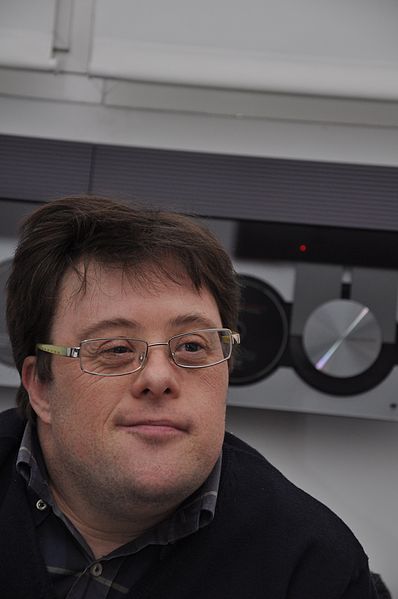
One who reflects upon this position should be not just appalled but also outraged and fearful. Why? Well Sinnott-Armstrong and Miller, by suggesting that what makes killing wrong is the causation of disabilities, imply that disabilities significantly reduce the value or worth of persons. Consider this: the authors repeatedly point out that it is not the deprivation of life that harms Betty, but rather the causing total disability. The grounding of Betty’s value is therefore based upon her abilities. If that is the case, then as Betty suffers disabilities, her value is decreased. Suppose Betty goes from being totally “able” with nothing wrong to becoming paralyzed. Does that mean she is less valuable? “Traditionalists” like me would say no, she is no less valuable. However, the authors of this article have grounded human value on ability. Again, it is the deprivation of capabilities which is wrong with murder, not the deprivation of life on their view. A consequences of this position is that the more “disabled” one becomes, the less valuable they become. Such a position is rightfully horrifying, but it is exactly what such a position entails. If humans’ value is grounded not simply in their being, then whatever standard one grounds this value will imply a sliding scale. Sinnott-Armstrong and Miller suggest that abilities ground value; therefore a disabled child is less valuable than one who is not; a man with Down Syndrome is less valuable than one who does not have it. These are the horrifying implications of their view.
One wonders if it is worth embracing such a position when it entails such blatantly immoral consequences. When one notices that the argument produced therein is based simply upon begging the question and assuming that life itself is not valuable, one finds little reason to commend this position.
Killing Our Children
Bioethicists have not stopped at the line crossed above, however. Recently another pair of bioethicists, Alberto Giubilini and Francesca Minerva, have argued for what they are terming “after-birth abortions.” In layman’s terms, they’re arguing for murdering one’s own children.
What could possibly ground this? Well, these bioethicists argue that, “Both a fetus and a newborn certainly are human beings and potential persons, but neither is a ‘person’ in the sense of ‘subject of a moral right to life’… Merely being human is not in itself a reason for ascribing someone a right to life.”
What exactly constitutes something which could justify killing a newborn? Again, “The circumstances… where after-birth abortion should be considered acceptable include instances where the newborn would be putting the well-being of the family at risk, even if it had the potential for an ‘acceptable’ life.” The authors go on to cite Down Syndrome as an example of these circumstances. Honestly, there is nothing to distinguish this form Eugenics. Let’s kill off those we deem unsuitable for life. It’s abhorrent.
I predicted this very consequence of the pro-choice position not too long ago. Pro-abortion arguments which aim to redefine what it means to be a “person” lead inevitably to infanticide. Fortunately, most pro-choice advocates do not realize this consequence of their position and still find infanticide and the like abhorrent. But those who have carefully reflected on the topic–bioethicists who research the issues involved–have come to realize that if an unborn human being is not worth being called a person, then it is hard to see why a newly born human being is a person either.
Bioethics: A brief reflection
The two case studies provided in this post provide examples for why it is so important to defend a proper view of the value of persons and worth. Once we start to define worth as things which can become a sliding scale (abilities vs. disabilities); once we allow that human beings are worthless if in one location (the womb) but valuable in another (outside the womb); once we seek to redefine terms in order to win a debate; that is when our world will collapse around us. These bioethicists are literally trying to say that it is permissible to kill people if they are totally disabled; they are literally telling us that a child with Down Syndrome might have a life worth living, but is such a strain on their family that the family should be allowed to kill their own child. I wish I were making these things up. These are our times: times in which we’ve allowed people to redefine rights and values in order to allow us to kill our children; times in which the people writing our ethics books argue that murder isn’t wrong because it takes a life but because it disables someone; times in which we can read discussions in medical journals about permitting the killing our own infants because they have certain defects.
God help us.
Sources
Walter Sinnott-Armstrong and Franklin Miller, “What Makes Killing Wrong?” Journal of Medical Ethics, January 2012. Accessible here: http://jme.bmj.com/content/early/2012/01/19/medethics-2011-100351.full
Liz Klimas, “Ethicists Argue for Acceptance of After-Birth Abortions” The Blaze, February 27, 2012, accessible here: http://www.theblaze.com/stories/ethicists-argue-in-favor-of-after-birth-abortions-as-newborns-are-not-persons/.
Picture credit: http://commons.wikimedia.org/wiki/File:Pinedap.JPG
SDG.
——
The preceding post is the property of J.W. Wartick (apart from citations, which are the property of their respective owners) and should not be reproduced in part or in whole without the expressed consent of the author. All content on this site is the property of J.W. Wartick and is made available for individual and personal usage. If you cite from these documents, whether for personal or professional purposes, please give appropriate citation with both the name of the author (J.W. Wartick) and a link to the original URL. If you’d like to repost a post, you may do so, provided you show less than half of the original post on your own site and link to the original post for the rest. You must also appropriately cite the post as noted above. This blog is protected by Creative Commons licensing. By viewing any part of this site, you are agreeing to this usage policy.
Abortions rates are lower in countries where it is legal- some thoughts on recent pro-choice comments
Highly restrictive abortion laws are not associated with lower abortion rates. For example, the abortion rate is high, at 29 and 32 abortions per 1,000 women of childbearing age in Africa and Latin America, respectively—regions where abortion is illegal under most circumstances in the majority of countries. In Western Europe, where abortion is generally permitted on broad grounds, the abortion rate is 12 per 1,000. ( Sedgh G et al. cited below)

There it is in black and white. Countries in which abortion is illegal have higher rates of abortion in most cases. What does this mean for the pro-life argument? Some have argued that pro-life advocates should work to make abortion legal. For example, Margot Magawan writes, “It’s clear that top Republican candidates are being short-sighted and ineffective, rushing off in precisely the wrong direction if their goal truly is to reduce abortions.” The argument seems to be quite simple. After all, if the goal of the pro-life advocates is to reduce the number of abortions, then if making it legal reduces them, they should argue to legalize abortions.
There are a number of problems with this argument, however, and I’ll briefly list them before examining them in turn.
1. Those making this argument seek to compare countries unilaterally based on a situation with all kinds of factors which cannot possibly be weighed fairly.
2. The argument reduces the goal of the pro-life movement to reducing abortions only; but the movement has a broader range than that. The argument is susceptible to a reductio ad absurdum which shows that the premise on which it is based is absurd.
3. The argument begs the question against the pro-life position by assuming the position itself is false.
3. The argument assumes consequentialism as a metaethical theory without argument.
1. Comparing Countries Unilaterally
It seems strange to me to compare the situations of different countries unilaterally on an issue like this. For example, it seems to have been shown that many things cannot be compared in this way. Installing democracy into random countries does not have a stabilizing effect. Comparing the economic situation of Rwanda with that of the United States seems almost grotesque. I’m not disputing the results of the study cited above; rather, I’m disputing the application of those results to a moral sphere. Think of all the factors which must be weighed: economic status, education, career choices, etc. To then take the raw data and apply it to a moral sentiment is quite a stretch. After all, it doesn’t take into consideration all the factors that those countries in which abortion is legal may have.
I do not want to make this the focus of my rebuttal, however, because I think the next 3 points are much stronger. To those we shall now turn.
2. Is Pro-Life About Reducing Abortions?
Another problem with the argument is that it assumes the pro-life position is dedicated to reducing abortions. That sentence may seem strange on a first reading, but read it this way instead: “the pro-life position is dedicated to reducing abortions only.” That is where one of the major difficulties arises for those making this argument. The pro-life position is not only about reducing abortions. In fact, while reducing the number of abortions is a goal of the pro-life movement, that is not the only goal or even, perhaps, the highest goal.
Suppose that reducing abortions was the only goal of the pro-life candidate. In that case, one way to reduce abortions would be by eliminating all human beings. If, after all, not a single human being were alive, there would be no abortions! This is, of course, patently absurd. Why? Not just because it seems obviously wrong to murder everyone on earth (or to murder anyone) in order to reduce the number of abortions, but also because this is a gross reduction of the pro-life position.
The pro-life position isn’t just about reducing the number of abortions. It is about advocating for life. In other words, those in the movement are making a factual and a moral claim: the entities aborted are human persons and it is wrong to kill them. But those who want to make the argument that pro-life advocates should legalize abortions in order to reduce them are, on a pro-life view, essentially arguing something similar to this:
Suppose that making murder legal reduced the number of murders. If you are against murder, you should then legalize murder.
The absurdity of this argument becomes clear because no one but a psychopath wants to legalize murder. But then it becomes clear that those pro-choice people making this argument have begged the question against the pro-life person. Let’s turn to that.
3. The Argument Begs the Question
If the pro-life position is correct, then it makes a mockery of this argument. Suppose, for the sake of argument, that the advocate of the pro-life position is right: the unborn are not merely embryos (and other stages of development) but are rather human persons who deserve the same rights as people outside of wombs. Now, granting these assumptions, suppose one finds that legalizing abortions reduces them. To then argue that “we should legalize abortions to reduce their number” is exactly equivalent to arguing that we should legalize murder to reduce the number of murders. Note here that I’m not saying legalizing murder does reduce the number of murders; I’m arguing that if the pro-life position is correct, these arguments are exactly analogous. One who argues we should legalize abortions would be the same as one who argues we should legalize murders, if the pro-life position is correct.
Thus, it becomes clear that those who make an argument like that of Margot Magawan have begged the question against the pro-life position. They simply assume that it is morally permissible to have an abortion, and combine that with the false position that the pro-life position is only about reducing abortions. Thus, the argument fails because it begs the question. Without argument, the pro-choice advocate has caricatured its opposition and argued against this false image.
4. It assumes consequentialism.
The last rebuttal is more technical, but I want to keep it brief. Consequentialism is, basically, the position that it is not the status of actions themselves which are judged as moral but rather the consequences. If one takes an action which has morally good consequences, that action is deemed good.
Now consider once more the argument, “If your goal is to reduce abortions, you should legalize them [because if abortion is legal, the number is reduced].”
This argument doesn’t take into consideration the moral status of an abortion [again, see above: they’ve already begged the question]. Rather, it assumes that because the consequences (fewer abortions) are considered by pro-life advocates as morally good, they should take the action (legalizing abortions) which open the door for these consequences.
Without too much strain, it becomes clear that most pro-life advocates do not hold to consequentialism as a metaethical theory. There are many alternative metaethical theories which are preferable for any number of reasons. If a pro-life advocate holds to a deontological theory of ethics, for example, he will argue that the wrongness of abortion is outweighed by the benefits of reducing the number. Such examples could be multiplied almost beyond comprehension. Thus, the pro-choice advocate has assumed, again without argument, a controversial position and then utilized that position to argue against pro-life advocates. Therefore, the argument fails.
Conclusion
The argument which has been considered here is that “if the goal of the pro-life advocates is to reduce the number of abortions, then if making it legal reduces them, they should argue to legalize abortions.” I have rebutted this argument in four ways. First, it seems to trivialize the enormous amount of factors which must go into consideration of comparing abortion rates across countries. Second, it reduces the pro-life position almost beyond recognition and is susceptible to a reductio ad absurdem. Third, it begs the question. Fourth, it utilizes a controversial metaethical theory to justify its premise. For these four reasons, I conclude that the argument is unsound.
Source
Sedgh G et al., “Induced abortion: incidence and trends worldwide from 1995 to 2008,” Lancet, 2012. (accessible: http://www.thelancet.com/journals/lancet/article/PIIS0140-6736%2811%2961786-8/fulltext); summary: http://www.guttmacher.org/media/presskits/abortion-WW/statsandfacts.html.
Image Credit: http://commons.wikimedia.org/wiki/File:Prolife-DC.jpg
SDG.
——
The preceding post is the property of J.W. Wartick (apart from citations, which are the property of their respective owners) and should not be reproduced in part or in whole without the expressed consent of the author. All content on this site is the property of J.W. Wartick and is made available for individual and personal usage. If you cite from these documents, whether for personal or professional purposes, please give appropriate citation with both the name of the author (J.W. Wartick) and a link to the original URL. If you’d like to repost a post, you may do so, provided you show less than half of the original post on your own site and link to the original post for the rest. You must also appropriately cite the post as noted above. This blog is protected by Creative Commons licensing. By viewing any part of this site, you are agreeing to this usage policy.
The Moral Argument: Mistakes to Avoid and Practical Advice
 The moral argument has experienced a resurgence of discussion and popularity of late. Some of this may be due to the increased popularity of apologetics. Philosophical discussions about metaethics also seem to have contributed to the discussions about the moral argument. Regardless, the argument, in its many and varied forms, has regained some of the spotlight in the arena of argumentation between theism and atheism. [See Glenn Peoples’ post on the topic for more historical background.]
That said, it is an unfortunate truth that many misunderstandings of the argument are perpetuated. Before turning to these, however, I’ll lay out a basic version of the argument:
P1: If there are objective moral values, then God exists.
P2: There are objective moral values.
Conclusion: Therefore, God exists.
It is not my purpose here to offer a comprehensive defense of the argument. Instead, I seek to lay out some objections to it along with some responses. I also hope to caution my fellow theists against making certain errors as they put the argument forward.
Objections
Objection 1: Objective moral values can’t exist, because there are possible worlds in which there are no agents.
The objection has been raised by comments on my site (see the comment from “SERIOUSLY?” here), but I’ve also heard it in person. Basically, the objection goes: Imagine a world in which all that existed was a rock. There would clearly be no morality in such a universe, which means that P2 must be false. Why? Because in order for there to be objective moral values, those values must be true in all possible worlds. But the world we just imagined has no morality, therefore there are no objective moral values!
The objection as outlined in italics above is just a more nuanced form of this type of argument. What is wrong with it? At the most basic level, the theist could object to the thought experiment. According to classical theism, God is a necessary being, so in every possible world, God exists. Thus, for any possible world, God exists. Thus, to say “imagine a world in which just a rock exists” begs the question against theism from the start.
But there is a more fundamental problem with this objection. Namely, the one making this objection has confused the existence of objective morals with their obtaining in a universe. In other words, it may be true that moral truths are never “activated” or never used as a judgment in a world in which only a rock exists, but that doesn’t mean such truths do not exist in that universe.
To see how this is true, consider a parallel situation. The statement “2+2=4” is a paradigm statement for a necessary truth. Whether in this world or in any other world, it will be the case that when we add two and two, we get four. Now consider again a world in which all that exists is a rock. In fact, take it back a step further and say that all that exists is the most basic particle possible–it is indivisible and as simple as physically possible. In this universe, just one thing exists. The truth, “2+2=4” therefore never will obtain in such a world. But does that mean “2+2=4” is false or doesn’t exist in this world? Absolutely not. The truth is a necessary truth, and so regardless of whether there are enough objects in existence to allow it to obtain does not effect its truth value.
Similarly, if objective moral values exist, then it does not matter whether or not they obtain. They are true in every possible world, regardless of whether or not there are agents.
Objection 2: Euthyphro Dilemma- If things are good because God commands them, ‘morality’ is arbitrary. If God commands things because they are good, the standard of good is outside of God. This undermines the moral argument because it calls into question P1.
Here my response to the objection would be more like a deflection. This objection only serves as an attack on divine command theory mixed with a view of God which is not like that of classical theism. Thus, there are two immediate responses the theist can offer.
First, the theist can ascribe to a metaethical theory other than divine command ethics. For example, one might adhere to a modified virtue theory or perhaps something like divine motivation theory. Further, one could integrate divine command ethics into a different metaethic in order to preserve the driving force of divine commands in theistic metaethics while removing the difficulties of basing one’s whole system upon commands. In this way, one could simply defeat the dilemma head-on, by showing there is a third option the theist can consistently embrace.
Second, one could point out that the dilemma doesn’t actually challenge P1 at all. All it challenges is the grounds for objective morals. Certainly, if the theist embraced the horn of the dilemma in which that which is “good” is grounded outside of God, there would be a problem, but very few theists do this (and for them it seems unlikely the moral argument would be convincing). If the theist embraces the other horn–that what God commands is good/arbitrary–then that would not defeat objective morals anyway, because one could hold that even were God’s decisions arbitrary, they were still binding in all possible worlds. While this would be a bit unorthodox, it would undermine the concern that the Euthyphro dilemma serves to defeat P1. Combined with the first point, it seems this dilemma offers little to concern the theist.
All morality is relative
I prefer Greg Koukl’s tongue-in-cheek response to this type of argument: steal their stereo! If someone really argues that there is no such thing as right and wrong, test them on it! Don’t literally steal their things, but do point out inconsistencies. Everyone thinks there are things that are wrong in the world and should be prevented. If someone continues to press that these are merely illusory ideas–that things like rape, domestic abuse, murder, slavery, genocide are in fact amoral (without any moral status)–then one may simply point out the next time they complain about a moral situation. Such is the thrust of Koukl’s remark–everyone will object if you steal their stereo. Why? Because it is wrong, and we know it.
Advice to other Christians
The moral argument brings up some extremely complex metaethical discourse. While it is, in my opinion, one of the best tools in the apologist’s kit for talking to the average nonbeliever/believer to share reasons to believe, one should familiarize oneself with the complexities facing a fuller defense of the argument so they do not come up empty on a question or objection someone might raise. As always, do not be afraid to acknowledge a great question. For example, one might reply to something one hasn’t researched enough to feel comfortable answering by saying: “Great question! That’s one I haven’t thought about. Could I get back to you in a few days?”
As with any philosophical topic, the more one researches, the more questions will arise, the more interesting branches in the path one will approach, and the more one realizes that philosophy is an astoundingly complex topic. For those theists who wish to use the moral argument, I suggest doing so with a courteous, humble manner. The argument is an attempt to answer some of the hardest questions facing anyone: does God exist? is God good? what does it mean for something to be good? do objective morals exist?
Thus, theists using this argument should be prepared for some serious study. Be ready to answer some hard questions. Be open to great discussion. Above all, always have a reason.
SDG.
——
The preceding post is the property of J.W. Wartick (apart from citations, which are the property of their respective owners) and should not be reproduced in part or in whole without the expressed consent of the author. All content on this site is the property of J.W. Wartick and is made available for individual and personal usage. If you cite from these documents, whether for personal or professional purposes, please give appropriate citation with both the name of the author (J.W. Wartick) and a link to the original URL. If you’d like to repost a post, you may do so, provided you show less than half of the original post on your own site and link to the original post for the rest. You must also appropriately cite the post as noted above. This blog is protected by Creative Commons licensing. By viewing any part of this site, you are agreeing to this usage policy.
Book Review: “Divine Motivation Theory” by Linda Zagzebski
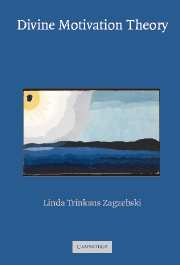 Linda Zagzebski is rightfully becoming a well-known figure in philosophy of religion. Her book, Divine Motivation Theory
The thrust of Zagzebski’s work is focused around two ideas: 1) exemplarism; 2) motivation. Together, these formulate the foundation for the rest of her discussion. The book is divided into three parts. The first explores “Motivation Theory” from a perspective which could be held even by those who are not theists. The second part explores “Motivation Theory” from within a theistic perspective. The third part deals with ethical pluralism.
One of the most important concepts in DMT is that of an exemplar. An exemplar is exactly what one would expect: a figure who demonstrates a “good life” by living it. Zagzebski writes of exemplars: “The particular judgments to which a moral theory must conform include judgments about the identity of paradigmatically good persons [exemplars]” (41). The thrust of Motivation Theory is a refocusing of metaethics. Rather than examining what is good and then evaluating judgments in light of that (as in Platonism, including theistic Platonism in many ways), and rather than focusing upon virtue (as in virtue theory), motivation theory focuses upon persons who are good. These persons formulate the basis for judging what is good, based upon motivation and emotion (40-50). A good action, motivation, or emotion, argues Zagzebski, is one which an exemplar would perform, have, or entertain.
Initially I admit I was a bit put off by this because it seemed quite arbitrary. Could we not define as exemplars people who are vicious and evil. Could not an exemplarist focus on ethics lead to Stalin, Hitler, and Pol Pot as exemplars?
Zagzebski counters this within DMT by focusing in part 2 upon the “divine.” Rather than arbitrarily choosing whomever one wishes as the exemplar, Zagzebski endorses God as the primary exemplar. This provides an alternative to Christian Platonism and Divine Command Theory by arguing instead that “God is essential to morality, not because it comes from either his intellect or his will, but because it comes from his motives. God’s motive dispositions, like ours, are components of his virtues, and all moral value derives from God’s motives” (185). The upshot of this is that God, being a perfect being (granting traditional theism), would have perfect motivations. Whatever God does, must be perfectly motivated.
The theistic focus on motivation within DMT provides several advantages. One among them is the fact that it solves many of the “problems” related to perfect goodness. For example, regarding what makes something God does good, DMT offers the solution that “God is good in the same way that the standard meter stick is one meter long. God is the standard of goodness” (185). Regarding the problem of evil, Zagzebski points out that her theory successfully solves the issue if it is metaphysically possible (313). The reason is that DMT’s focus upon motivation can be used analogically with human parents. “If we can understand,” she writes, “how the motivation of love of a human parent for her child might not involve any considerations of good and evil and yet still be a good motive, we must conclude that promoting good and preventing (or eliminating or not permitting) evil is not necessarily part of the motivational structure of a good being… even a perfect being might love in such [a] way that he would be willing to permit any amount of evil, not for the sake of some good, but out of love for persons” (317). These are oversimplifications of what Zagzebski writes on these problems, but I encourage the interested reader to read her work for a fuller explication.
There are so many things to discuss about DMT that remain, but I feel a full explanation would drag this review on unnecessarily. I would like to note a couple other very interesting arguments Zagzebski makes. She argues that there can be truth values with emotions (75ff). She points out that motivation is extremely important in moral judgments–if someone is doing something just to be hailed as a hero, they are much less praiseworthy than if they are doing it merely out of goodness (see 100ff). Elsewhere, Zagzebski and discusses several principles for dealing with pluralism (369ff). There are important points like these throughout the book. DMT challenges readers to rethink aspects of metaethical theory which they have unreflectively ignored. Yet in doing so, Zagzebski articulates a metaethic for theists which seems to have just as much (or more) plausibility as the alternatives.
Divine Motivation Theory deserves a reading by anyone interested in theistic metaethics. Linda Zagzebski offers a theory that has advantages over both Christian Platonism and Divine Command Theory. I highly recommend this work to any philosopher of religion. I cannot emphasize how much I think readers should get their hands on this work.
Source (and link to Amazon):
Linda Zagzebski Divine Motivation Theory
SDG.
——
The preceding post is the property of J.W. Wartick (apart from citations, which are the property of their respective owners) and should not be reproduced in part or in whole without the expressed consent of the author. All content on this site is the property of J.W. Wartick and is made available for individual and personal usage. If you cite from these documents, whether for personal or professional purposes, please give appropriate citation with both the name of the author (J.W. Wartick) and a link to the original URL. This blog is protected by Creative Commons licensing. By viewing any part of this site, you are agreeing to this usage policy.
Book Review: Natural Law: A Lutheran Reappraisal
 Natural Law: A Lutheran Reappraisal
The individual essays presented in NLL are almost all extremely strong. The topics covered include the views of early Lutherans on natural law (including Luther and the authors of the Confessions) , the view of several later Lutheran individuals (like Barth and Forde), and a kind of “applied ethics” section which uses natural law in individual instances.
The strength of many of these essays is a credit to the Lutheran scholarship which went into the work. The insight into Lutheran thinkers’ views on natural law helps to refute some notions that Lutherans do not “believe in” natural law. In fact, it seems the opposite is the case. “Luther,” argues Thomas Pearson, “understands natural law not as a Christian teaching, but as an observation of human nature in general” (63). Later, Carl Rockrohr expands on this idea to view natural law as a place of common ground for evangelism (196-197).
NLL really shines when it demonstrates that even topics which may at first seem unimportant (like an essay on Friedrich Stahl’s rejection of natural law) can serve to develop a modern view of natural law (Jacob Corzine argues in the aforementioned essay that Stahl’s critique helps ground a Christian natural law theory not in reason but in God [115]).
The applied ethics section of NLL has its ups and downs. “Natural Science, Natural Rights, and Natural Law: Abortion in Historical Perspective” by Korey D. Maas is a simply amazing critique of abortion which presents the case for pro-life not as a religious issue, but as one which can be established on common grounds of natural law (228ff). On the other hand, Albert Collver III’s argument against the ordination of women struggles because it only presents one Lutheran view on the issue (more on that below). The section (and book) concludes with Matthew Cochran’s great summing up and case for the use of natural law as a “Way Forward” for discussions of epistemology and natural law (see esp. 274ff).
The strength of NLL is therefore found in the fact that the essays manage to cohere to the point of building off one another. Whether this was intentional or not, it strengthens the whole work. The early essays provide the framework for the later developments into applied ethics.
This is not to say the book is without faults. One such fault is the woefully inadequate glossary. While the terms included are defined in detail, some terms are inexplicably left out. For example, while the glossary takes lengths to define idealism, it makes no mention of “epistemology,” a concept which was referenced several times. This makes the book seem at times unsure of its purpose. Is it written for the layperson or the professional, the philosopher or the theologian? It includes study questions and a glossary, which suggests use as a textbook in undergraduate (or high school) theology classes, but the very nature of the essays included and the inadequacy of the glossary suggests that only those already familiar with some of the issues will get the most bang for their buck. A final criticism I would level against the book is that while it does present essays from various Lutheran traditions, it is clearly founded specifically upon LCMS teaching. This is unsurprising, given that it is published by Concordia Publishing House (the official publishing arm of the LCMS), but this could cause some confusion when the book devotes an entire chapter to a critique of a different Lutheran tradition (the ELCA). This small shortcoming can also be seen when the book only presents a complementarian view of natural law (that is, a view that natural law excludes women from the ministry) despite the fact that other Lutheran traditions (for example, the NALC or ELCA) are egalitarian (ordain women).
NLL is a simply fantastic work. Lutherans looking to learn about the concept of natural law would be well served to pick the book up and read it cover-to-cover. Those outside of the Lutheran tradition would surely find NLL useful as well, as the essays on applications of natural law can serve as foils for the development of one’s own position. For those wishing to explore the important issue of natural law, I recommend the book highly.
SDG.
——
The preceding post is the property of J.W. Wartick (apart from citations, which are the property of their respective owners) and should not be reproduced in part or in whole without the expressed consent of the author. All content on this site is the property of J.W. Wartick and is made available for individual and personal usage. If you cite from these documents, whether for personal or professional purposes, please give appropriate citation with both the name of the author (J.W. Wartick) and a link to the original URL. This blog is protected by Creative Commons licensing. By viewing any part of this site, you are agreeing to this usage policy.

 J.W. Wartick - Reconstructing Faith


