ethics
Why are Christians politically atheistic?
 Of note: Atheist Austin Cline has recently linked to my post with his own. He caricatures my argument as saying “Christians should reject secular government.” In fact, I explicitly deny this in my post, as anyone who reads it could see.
I take issue with 3 parts of Cline’s critique. First, he attacks my view that the government can have authority to restrict unrepentant sin. Yet the authority for that restriction is based upon my assumption granted for the sake of this post; that the government gets its authority from God (Romans 13:1). Cline, being an atheist, obviously will reject that basis for authority. He did not outline his own position on the authority of government, so I cannot comment upon it, but it begs the question to assume that government should be secular, and then use that to critique a theo-centric government I explicate below. Second, he caricatures my argument as being a theocracy, which I deny explicitly, see below. Finally, he frames his post in a way that is clearly meant to induce panic, by calling it “J.W. Wartick: Christians should reject secular government.” There is nowhere that I have advocated that extreme position. In fact, that is also something I deny explicitly, agreeing with the apostle Paul in Romans, who said “Therefore, it is necessary to submit to the authorities, not only because of possible punishment but also as a matter of conscience. This is also why you pay taxes, for the authorities are God’s servants, who give their full time to governing. Give to everyone what you owe them: If you owe taxes, pay taxes; if revenue, then revenue; if respect, then respect; if honor, then honor” (Romans 13:5-7).
Recently, I was discussing the death of Osama bin Laden and the topic came up about whether he deserved to die, what role it played, and the like. Interestingly, the conversation opened up a discussion I’ve been contemplating. Namely, Why are so many Christians politically atheists?
Consider the death penalty. It was agreed upon that people can deserve the death penalty. Bin Laden, for example, was said to deserve such a penalty, along with serial killers and many murderers. But then the discussion turned to whether the government should deal out such punishment.
The friend offered following principle as normative for Christians:
1) If (some position such as the death penalty) cannot be justified by purely secular means, then it should not be forced onto others.
My immediate and somewhat snarky rejoinder to this argument was/is “Why?”
Why should I be a Christian in every aspect of my life, but when it comes to politics, be secular? Several answers are possible. For example, it could be asserted that “We (Christians) should not force our views onto others.” I think this is a fairly good response. But whence the principle? Perhaps it comes from the idea of living a Christlike life. But I don’t see anything in the example of Christ which said we had to conform to secularism or take religion out of politics. It would take an interesting argument to say that Christ advocated secularism in the realm of politics.
Or take Paul, for example, who states clearly that the government is God’s servant and doesn’t carry the sword “for nothing” (Romans 13:4). Not only that, but the reason the government carries the sword is in case “you do wrong.”
And what, exactly, is wrong? I think it would have to be obvious that, for a Christian, that which is wrong is defined by that which goes against God’s nature and/or commands. But then it seems as though Paul is charging the government to follow that same standard, not some supposedly neutral standard. I’ve argued elsewhere against the plausibility of atheism as a neutral ground. I think it should be clear that atheism is not neutral in regards to religion; rather, it is against religion.
Therefore, it seems strange to me that secularism is chosen as the grounds for determining politics. Why should I, a theist, choose to be atheistic in my politics? I suppose the accusation could then fly that I advocate a theocracy. But what exactly is a theocracy? It’s a political system in which God rules and the laws are divine commands. I never argued that’s what I would like the United States to turn into. My view is simply that Christians should cast their votes for those positions which are favored by Biblical teaching and against those which are condemned. I don’t see any reason to divorce that which I hold most dear (Christian theism) as something from which I must be divorced when it comes to the ballot box.
Consider the following argument, which is admittedly somewhat consequentialist:
A) A life of unrepentant sin often leads to unbelief. (w=>y)
B) Unbelief is the only sin which condemns people to hell. (If y, then z)
C) Advocating some policy, x, permits or encourages lives of unrepentant sin. (x=>w)
D) Therefore, advocating x by extension opens the way for more unbelief and condemnation to hell. (1-3)
E) Therefore, Christians should not advocate x.
So I’m advocating a theo-centric view of politics, not a theocracy. On this view, one’s theism takes center stage. Sincere belief in everlasting life and death leads Christians to take steps within the law to prohibit behaviors which would lead to lives of unrepentant sin.
How would this cash out? Would we have to be prohibitionists or go around making lying illegal? I think that the answer to this second question is pretty clear. Within Scripture there is no prohibition of drinking alcohol (quite the opposite, in some cases). Rather, drunkenness is prohibited and/or discouraged. With the damage alcoholism has done to our society, I doubt that laws which took measures to prevent drunkenness would be a bad thing. I think the laws which would go into effect based upon the argument above would look mostly like what we have now. Now take the case of lying. While lying is clearly discouraged in the Bible, I don’t see any precedent therein for making it illegal in a broad sense. To be perfectly clear, lying already is illegal in some senses: take perjury, for example, or slander. I think these are derivative of a Christian worldview anyway, and laws against libel, slander, and perjury seem to fulfill the requirements of the above argument.
Reflecting on the ideas about bin Laden, above, it would appear there is another principle as well: that of honoring the image of God in man. Osama bin Laden did not honor that image, and for the blood he spilled, his blood was forfeit. Therefore, in addition to E), I would suggest:
2) The intrinsic value of humans (which only makes sense on theism anyway) is such that we should vote for issues which place honor of this value first.
To nuance it for Christians,
2′) The image of God in humans should be respected, and Christians should vote for issues which respect this image.
Finally, a note on Biblical ethics. It is extremely important for Christians to realize the distinctions between Law and Gospel and practice correct exegesis when it comes to these issues. I favor a Lutheran view with some theonomic tilt, but it is important to note that almost no Biblical scholars believe the Levitical and most of the other laws within the Old Testament are applicable today in any literal sense. But the question for this post is not which laws apply and which do not; rather it is a challenge to my fellow Christians.
So my question remains: Christians, why are you politically atheists?
SDG.
——
The preceding post is the property of J.W. Wartick (apart from citations, which are the property of their respective owners) and should not be reproduced in part or in whole without the expressed consent of the author. All content on this site is the property of J.W. Wartick and is made available for individual and personal usage. If you cite from these documents, whether for personal or professional purposes, please give appropriate citation with both the name of the author (J.W. Wartick) and a link to the original URL. This blog is protected by Creative Commons licensing. By viewing any part of this site, you are agreeing to this usage policy.
Sam Harris vs. William Lane Craig: Thoughts and Links
 The debate I’ve been hyping to friends and family happened tonight: Sam Harris, one of the “New Atheists” and author of the books The Moral Landscape, Letter to a Christian Nation, and The End of Faith went up against William Lane Craig, one of my favorite living philosophers. Craig has a PhD in philosophy, as well as a ThD. He’s written extensively on philosophy of religion, apologetics, and time. He’s the author and editor of too many books to list, but they include The Blackwell Companion to Natural Theology, Reasonable Faith, and Time and Eternity. The topic of the debate was “Is Good from God?”
I wanted to share some links for all of you, along with my thoughts about the debate.
Links
Audio of debate here.
Video of the debate here.
Craig rebuts Harris’ allegation of misquotations here.
Craig’s brief post-debate impressions here.
Craig’s thoughts on his strategy in the debate here.
Another analysis of the debate here.
See Wintery Knight’s summary of the debate here.
More links will be posted as I find them.
Analysis of Debate
It is important to note that the topic of the debate is “Is Good from God?” The topic is not “Does God exist?” Nor is it “Is the God of the Old Testament Evil?” Remember this. Also, my apologies in advance for my tense shift throughout. It’s almost 2AM and I’m tired.
Craig Opening
Craig’s opening statement started with him asserting he’d maintain two propositions
I. If God exists, then we have a solid foundation for objective moral values.
He backed this contention up by saying that it is true even if God does not exist, because it is a conditional statement (“If God exists…”). Further, he argued that God’s nature provides the standard against which all moral vales are measured. Important: Note that here Craig is not arguing that objective moral values are grounded in arbitrary commands from God, rather, Craig argues that God is the standard against which morals are judged. It would be true to say God is good simpliciter.
As far as moral duties are concerned, it is these which are constituted by God’s commands, however that does not mean the commands are arbitrary, but rather grounded in the essential nature of God.
Craig’s second contention was:
II. If God does not exist, then there is no strong foundation for objective moral values.
He argued:
1) Why think that human beings have objective moral worth? On atheism, humans are merely “accidental byproducts” of naturalistic evolution. What therefore would mean that humans are more valuable than hyenas, other primates, rocks, etc.?
2) He quotes Michael Ruse, an atheistic philosopher, who points out that morality is, on atheism, illusory. It is a mere socio-biological convention. And to think that morality is objective is simply false. He also quotes Dawkins as saying that we are just machines for propagating DNA. On such a view, how can we be objectively valuable?
3) Craig argues that Harris simply redefines good in nonmoral terms. He argues by stipulation that “well-being” = good, which is to beg the question. Craig argues that Harris has provided no reason to equate the two, and in fact has no grounds from which to do so.
4) Natural science only shows what “is” not what “ought” to be. It can only describe actions, not prescribe them.
5) Harris explicitly denies free will within his writing and so it seems impossible for there to be any culpability for actions. How can someone have “ought” applied to them if they are not free to make choices about their actions?
Harris Opening
Harris begins by noting, as did Craig, the areas of agreement. He agrees that to deny objective morality can lead to some horrific views, and he uses anecdotes to support this claim. Craig and Harris seem to agree that objective morality is something necessary for meaning in the universe. I find no contention with this part of Harris’ discussion.
He goes on to argue that there are “facts” and there are “values.” He argues that science can move from the subjective facts to objective values, although I found his argument here unclear.
Finally, he gets to the point where he specifically outlines his view, which is based upon the well-being of conscious creatures.
Harris argues that “If the word ‘bad’ applies, it is ‘wrong.'” Further, “The minimum standard of moral goodness is to avoid the most possible misery for everyone.” Harris asks us to envision a world in which every conscious being was suffering to the maximum possible extent. He says that this is obviously bad (= wrong) and so we can scientifically determine what is good by working towards the well-being of conscious creatures.
At this point in my notes I wrote “Why?” next to the quotes from Harris. And I think that is exactly the problem. Thus far, Harris has done a good job outlining what he thinks is wrong, but he hasn’t done anything to say why it is wrong, other than by stipulating that it is wrong.
Harris goes on to argue that
1) Questions of right and wrong depend upon minds
2) Minds are natural phenomena
3) Therefore, morality can be understood by science because we can study minds
Against Harris, I would note that each of these premises are contentious, and he doesn’t argue within the debate to support any of them. First, premise 1) is questionable because it actually goes against the nature of objective morality. If something is objectively wrong, even were there no minds in the universe, the action would still be wrong. Here Harris makes the mistake of thinking that because minds make moral judgments, moral judgments are dependent upon minds. I think that is false, and it needs argumentation to support.
Second, premise 2) assumes physicalism, which is the position that our minds are wholly composed of matter, and there is no non-physical property of mind. I’ve argued against this position elsewhere (see for example, my posts here and here). But the thing is that Harris simply takes 2) as given. To be fair to Harris, this is a debate so he hardly has the time to make a substantive case for physicalism. My point here is that Harris’ argument hardly establishes his conclusion–there is a lot of footwork to be done to establish 1) or 2). I think that both have serious difficulties and are generally non-starters.
Finally, Harris briefly asserts that the God of the Old Testament is evil.
Craig First Rebuttal
Craig’s first rebuttal began with him summing up his contentions I and II above. He points out that Harris didn’t attack either contention directly.
Craig points out that the debate is not about Old Testament ethics, but cites Paul Copan’s Is God a Moral Monster? for those interested in the topic.
Harris in particular did not argue against contention I at all, so Craig turns his guns against Harris’ assertions about objective morality on atheism.
First, Craig asks “If atheism is true, what makes flourishing of conscious creatures objectively good?” He goes on to say “They might like to flourish” but that does not provide an objective reason to ground morality in their well-being.
Second, Harris admits that it is possible for rapists/murderers to be happy (in a state of well-being) to the point of being a “peak” in his “moral landscape.” But if that is the case, then an objectively evil entity, on Harris’ account, could occupy the peak of the moral landscape, which would entail a contradiction, because an objectively bad person was viewed as an objectively good thing/state of affairs. I found this particularly powerful to refute Harris, and I liked how the camera shifted to him almost immediately after this statement by Craig. Harris did not look happy.
Finally, Craig argued that because Harris denies freedom of the will, he can’t actually hold that humans have any obligations whatsoever.
Harris Rebuttal 1
Harris started off by saying “that was very interesting.” Fair enough.
Then he says, “Ask yourselves what is wrong with spending eternity in hell”. As he continued along this line of reasoning, I wrote “Harris is curiously arguing against hell…?”
Basically, rather than trying to defend his view whatsoever from Craig’s lucid attacks, Harris turned to the problem of evil. It was here that any doubt in my mind about this debate faded away. Harris made no attempt to defend his position, but rather argued that we have no way to know that Islam is not the true religion, on Craig’s argument, and that the God of the Old Testament is evil. In other words, he abandoned the attempt to defend his position immediately upon the gaping holes Craig’s rebuttal blew through it.
He also seems to have missed Craig’s point that God is essentially good and instead argues against a straw man by asserting that God is not bound by duties, which Craig had already explicitly denied. Then Harris made some offhand remark about psycopathy and religion. He says that he can’t think of a less moral framework than that of the God of the Old Testament.
Craig Rebuttal 2
Craig starts his response by saying, “The less moral framework is atheism!” because it is “not a framework!” Craig seems as baffled as I am that Harris didn’t actually respond to any argument he had leveled against Harris’ “landscape.” Further, he points out that Harris is resorting to red herrings–Sam is trying to derail the debate into a discussion of the problem of evil and Old Testament ethics rather than a debate about whether atheism or theism can better ground objective morality.
Further, Craig notes Harris is totally wrong when he argues the goal of theism is to avoid hell. Rather, theism worships God because He, as the greatest possible being and source of our existence, etc., etc. is worthy of worship, not because of the desire to avoid hell. That is a simple misrepresentation of theism!
Interestingly, Craig also notes that all theists can utilize his contention I, whether they be Hindu, Muslim, Jew, or Christian (etc.). Remember this.
Harris Rebuttal 2
Harris finally attempts to defend his position by saying his position is defended because we “need only assume that the worst possible suffering” for every conscious being would be an objectively bad state of affairs. He says “My argument entails that we can speak objectively about a certain class of subjective facts” namely, moral values. So basically, his argument boils down to “Just believe that x is objectively bad, and my view works!”
Unfortunately, Harris once more gets sidetracked in trying to argue against the existence of God by asserting that the pluralistic nature of religions experience disproves religions. As I’ve noted elsewhere, a mere plurality of opinions does not entail the falsity of all.
Craig Closing Statement
Craig notes that God is the greatest conceivable being, so to ask “Why should we think God is good?” is like asking “Why are bachelors unmarried?”
Further, he points out that Harris has yet to answer the schoolyard question, “Why?” Why, on atheism, should we think that the worst possible state of affairs is objectively bad? We might not like it, but that doesn’t ground it objectively.He closes by saying “All together now, ‘says who?'”
Harris Closing
Again, Harris leads with an argument from religious diversity. He also complains that Craig’s argument for a theistic ground of morality could equally be used by the Muslim, which is exactly correct. Craig said earlier that any theist could ground their morality on God.
Finally, Harris notes that just as we aren’t losing any sleep over the fact that Muslims think we (Christians) are going to hell, he isn’t losing any sleep over Christians thinking he is going to hell. But what kind of argument is this? Someone is unconcerned about a rival hypothesis, so we should think the rival is false? I mean, I’m not losing any sleep over the fact that Harris thinks the basis of my religion is psychosis, because I think it is ridiculous!
Q and A
I simply can’t ignore the Q and A from this one. Some of the questions were just silly, but the two that struck me were both asked of Harris. The first question was from someone who basically asked “If a God were proposed that would meet your [Harris’] definitions of objective morality, would you grant that he could ground morality?” Harris answered very well by saying yes, but then there would be no reason to propose God as the grounds for the morality, for one would have to grant Harris’ account worked.
The second question was the kicker. The person asked, basically “You base objective morality on the an assumption that the worse possible world is bad, why think that is not subjective [based upon an arbitrary assumption]?” Harris answered the only way he could. He said we have to take it as axiomatic that it is objectively bad.
So basically, Harris admits that on his view, we must simply have faith that some things are objectively bad and that the well-being of conscious creatures is objectively good. We must simply assume that something is true, and that is to be our grounds for belief. As Harris put it, it is axiomatic, so it doesn’t have to be justified. On such an account, then, belief in objective morals is, on atheism, a leap of faith–an ungrounded, unjustified (epistemically) leap. I’ll have to be forgiven for thinking Harris failed to adequately defend his position.
Overall, I’d say Harris seemed to fare better than Lawrence Krauss in his debate with Craig (my analysis here), but upon thinking about it, I think Harris may have done far worse. The bottom line is Harris lined up atheism’s best attempt to ground objective morality like a house made of building blocks. Craig came along and knocked them over. Then he laughed.
SDG.
——
The preceding post is the property of J.W. Wartick (apart from citations, which are the property of their respective owners) and should not be reproduced in part or in whole without the expressed consent of the author. All content on this site is the property of J.W. Wartick and is made available for individual and personal usage. If you cite from these documents, whether for personal or professional purposes, please give appropriate citation with both the name of the author (J.W. Wartick) and a link to the original URL. This blog is protected by Creative Commons licensing. By viewing any part of this site, you are agreeing to this usage policy.
Atheism’s Universe is Meaningless and Valueless
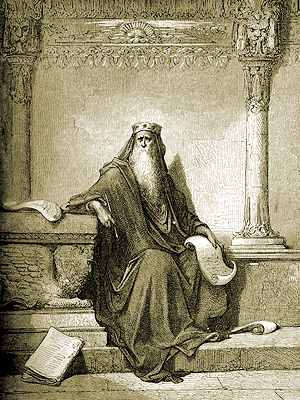 “‘Meaningless! Meaningless!’
says the Teacher.
‘Utterly meaningless!
Everything is meaningless.'” – Ecclesiastes 1:2
My most recent post on the problem of evil granting empirical atheism generated some thoughtful discussion. Most importantly, it lead me to the following argument:
1) On materialistic [I use materialism and physicalism interchangeably, as is common in philosophy today] atheism, all we are is matter in motion.
2) There is no objective reason to value matter moving in way A over matter moving in way B
3) Therefore, on materialistic atheism, there is no value or meaning
Premise 1 seems self-evident. Materialistic atheism, by definition, says that “everything is physical, or as contemporary philosophers sometimes put it, that everything supervenes on, or is necessitated by, the physical” (Stanford Encyclopedia of Philosophy). The physical world is matter.
Premise 2 also seems like it should need little defense, yet atheists continually come up with ideas to try to get around it. For example, one may argue that the subjective suffering of persons should matter. Yet I fail to see how this argument succeeds. Pain and suffering, on materialism, at most supervenes upon neurons firing in the brain (along with chemical reactions and other physical phenomenon). My question for the materialist is: What reason can be provided for favoring matter moving in way A (call it, the way neurons fire when someone is in a state of bliss) over matter moving in way B (neurons firing in the way which causes pain)?
One answer which may be forthcoming is that creatures and persons tend to try to get away from things which cause B. This argument fails to provide an answer to the question, because all it does is push the question back to a higher level. It would change to: Why should we favor physical observable phenomenon which don’t cause avoidance over those that do? Again, the avoidance of B would simply be matter moving in a different way. In order to make a judgment between them, one would have to reach beyond the material world and into the world of objective meaning and value; this is, necessarily, a world which is nonexistent on materialism. Even if one could provide an answer to this second question, say “We tend to not like B. Things we don’t like are bad”, then we would have a purely subjective reality. What of the serial killer who delights in torturing himself, causing things to B? What reason do we have for saying what he is doing is wrong, because, after all, he likes B?
Ultimately, on materialism, everything boils down to matter in motion. Making value judgments about matter in motion is meaningless.
But if everything is matter in motion, then there doesn’t seem to be any way to make value judgments. How does one value a rock over a stick? They’re both just stuff. But then, on materialism, people are just stuff too; albeit more complex. However, if you were to break us down into our ultimately realities, we are no different than the rock. We are matter organized in a different way. Why value us?
There is no objective reason to do so. Therefore, there is no objective meaning or value. Life is purposeless, meaningless, valueless. Atheistic materialism demands this bleak view of the universe. I’m not saying it’s a good reason to abandon that [un]belief. I’m merely saying that those who hold such a view must be consistent.
“Now all has been heard;
here is the conclusion of the matter:
Fear God and keep his commandments,
for this is the duty of all mankind.
For God will bring every deed into judgment,
including every hidden thing,
whether it is good or evil.” -Ecclesiastes 12:13-14
[In the comments, I have suggested that on materialism, there is no such thing as a subject. The claim has proven highly contentious, so I have created a post to clarify my position: https://jwwartick.com/2011/12/05/subjects-materialism/.]
Check out my post on the Ontology of Morality: Some Problems for Humanists and their friends
SDG
——
The preceding post is the property of J.W. Wartick (apart from citations, which are the property of their respective owners) and should not be reproduced in part or in whole without the expressed consent of the author. All content on this site is the property of J.W. Wartick and is made available for individual and personal usage. If you cite from these documents, whether for personal or professional purposes, please give appropriate citation and provide a link to the original URL. By viewing any part of this site, you are agreeing to this usage policy.
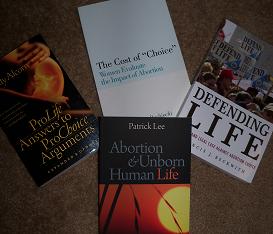
Book Review: Abortion and Unborn Human Life by Patrick Lee
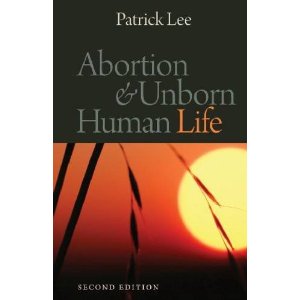 There are few ethical topics more controversial than abortion.Finding books on the topic is not very difficult, one needs only to search “abortion” on Amazon to find more than 10,000 results in the books category. Patrick Lee’s Abortion & Unborn Human Life (hereafter AUHL) stands out as one of the better pro-life books I have read, despite one major flaw.
AUHL starts with a syllogism:
1) Intentionally killing an innocent person always is morally wrong
2) Abortion is the intentional killing of an innocent person
3) Therefore, abortion is always morally wrong.
The rest of the book (164 pages of content) serves to defend this syllogism.
Chapter one argues against the idea that unborn human beings become persons after birth. Lee’s arguments are very good until he starts to argue by going against substance dualism to make his case. I think that this is a major flaw of Patrick Lee’s book. Substance dualism serves as a powerful argument against abortion. Not only that, but to argue against substance dualism primarily for the sake of an ethical position doesn’t make a lot of sense. Lee does introduces several philosophical arguments against dualism, but they fail to make a sufficient case against the position. This makes the rest of his case seem weaker than it is, had it been bolstered by substance dualism rather than arguing against it. It is really unfortunate, because readers may walk away thinking that the case against humans becoming persons after birth is weaker than it is.
In chapter two, Lee argues against the idea that human beings become persons during gestation. This chapter is particularly strong, and Lee introduces many arguments I hadn’t thought about before. Particularly important to this argument is what it means to have “moral standing.” Often, pro-life advocates forget that we sometimes don’t share the same basic presuppositions as the pro-choice advocates. Lee helps to bring the focus back to the basics (I have focused on this elsewhere myself, see here).
Lee argues in chapter 3 that individual human beings come to be at the moment of fertilization. This is another very strong chapter in which Lee offers scientific and philosophical reasons to accept this position.
Chapters 4 and 5 address the particularly chilling (and more recent) arguments that abortion can be justified as non-intentional killing of human beings (4) or that preventing certain consequences permit the killing of human beings (5).
Overall, AUHL is a fantastic read. Lee produces a compelling and powerful case that abortion is morally wrong, no matter what. Despite the rather large flaw of arguing against substance dualism, the book is a must-read for those interested in a philosophical defense of the pro-life position.
Abortion and Unborn Human Life
——
The preceding post is the property of J.W. Wartick (apart from citations, which are the property of their respective owners) and should not be reproduced in part or in whole without the expressed consent of the author. All content on this site is the property of J.W. Wartick and is made available for individual and personal usage. If you cite from these documents, whether for personal or professional purposes, please give appropriate citation and provide a link to the original URL. By viewing any part of this site, you are agreeing to this usage policy.
Abortion: The Struggle Between Objectivity and Subjectivity
 I’ve noticed in the past that as I debate the moral issue of abortion, it seems as though people tend to ignore reason in lieu of emotional appeals. Upon further examination of the issue, I am even more convinced that this is the case. But what is at the bottom of this appeal? Why is it that something which must have an objective answer is treated like subjective, lukewarm hogwash? The reason, I believe, is because the issue of abortion is involved in the overarching debate of subjective (relative) versus objective ethical theories.
What reasons do I have for making this claim? First, we must examine the most prominent pro-choice arguments. Pro-choice arguments generally fall into two broad categories:
1) Devaluing the fetus
2) Pointing towards the value of personal choice/control over one’s own body
Now, 1) fails miserably on a number of logical and scientific levels. See my other posts on the topic for discussions of these reasons (notably, this post and this one). But if 1) is rejected, then 2) may be the only way for pro-choice advocates to argue for their position. Unfortunately, 2) boils down to a kind of subjectivism about morality which ends up being self-defeating.
I am reminded of the echoing catch-phrase popular with politicians, “I am pro-choice, but against abortion.” What does this mean? Often, those who say such things generally mean that whatever someone else wants to do is fine with them. We shouldn’t try to limit the choices others make. We don’t have any reason to regulate what choices someone else can make or can’t make. And sure, I think abortion is wrong, but what right do I have to force my morality on others?
Initially, such arguments seem to make intuitive sense. The problem is that while the argument is trying to avoid forcing any “ought” statements, it has one huge “ought” planted right in the middle of its train of thought. That is, that “We ought not limit the choices of others.” But why should this be the case? There are certainly a huge number of cases in which I would limit the choices of others. Rape, for example, would be one instance where I would say this choice is not to be allowed. Perhaps the argument could be modified, then, and say that as long as one’s choice doesn’t harm anyone else, we ought not limit it. But then this pushes the burden of proof back onto argument 1), which is becoming ever more difficult for the pro-choice advocate to uphold.
Not only that, but having an “ought” statement like any of those above goes exactly contrary to what such statements are asserting. What if I choose to disagree with the statement that we “ought not limit the choices of others”? Should my choice to disagree be limited?
Furthermore, what reasons are their to argue that one should have absolute and total control over one’s own body? For if we do think that this is the case, we should then cease efforts in trying to limit substance abuse, cutting, anorexia, suicide, bulimia, and the like! These are all cases in which someone is simply making choices about his/her own body! If I want to cut myself, that should be my choice! If I want to starve myself, that should be my choice!
No, the bottom line is that the pro-choice camp wants to advocate total relativism. On this view, that which is ethically right for one person is okay for that person. There are innumerable difficulties with such a view (I’ve only touched on these above).
Thus, it seems to me that the pro-choice advocate has insurmountable difficulties with his or her position. First, this view cannot accurately measure when one’s “personhood” begins objectively. Second, it desires to claim an objective “ought” statement which ultimately defeats itself. Third, it runs contrary to scientific advances in measuring the stages of life of the human. Fourth, it stands on shift philosophical soil, for it is unable to accurately define “personhood” in any sufficient manner.
Thus, I conclude, as I’ve done so many times before, that to be pro-abortion is to hold a view that is positively irrational.
——
The preceding post is the property of J.W. Wartick (apart from citations, which are the property of their respective owners) and should not be reproduced in part or in whole without the expressed consent of the author.
Morality and Atheism
I am continually baffled by atheistic accounts of morality.* What, on atheism, gives us the grounds for stating that an action is wrong?
Morals can be either objective or subjective. The thrust of the following argument is intended to show that atheism cannot have objective morals. In other words, an atheist has no way to condemn some action as wrong, other than that it is wrong “in my opinion”.
There are only a few ways I have seen it argued that atheism can have objective moral values. These are:
1) Platonistic Atheism- Morals exist necessarily independently, as abstract objects (such as numbers).
2) Humanism- Humanity first. Humans are to be valued objectively, so morals can be based on what benefits the human race.
3) Science can answer moral questions, somehow.
There are horrendous difficulties with all three of these views.
Platonism about morality could be the best way for atheists to have a “way out”, if you will, for accepting objective morality. The existence of moral values such as “Justice” can be posited as brute facts of our existence. They just exist, and that’s all. The problems with this view are numerous.
First, on this view, the moral values of “Sloth”, “Hedonism,” “Masochism” are also platonic forms existing as brute facts. What reason can be given for choosing to prefer “Justice,” “Uprightness”, etc. over “Masochism,” “Hedonism,” etc.? If all of these things are simply brute facts, then why is it that some should be preferred over others? I see no non-question begging method for determining which values should be favored.
There is no reason, on atheism, to value one over the other. Second, how is it that (granting naturalist evolution) natural selection managed to line us up so wonderfully with what appears to be correct moral cognitions? Again, given that the morals themselves are brute facts of existence, it is utterly remarkable that we evolved in such a way as to line up with what appears to be the “good side” of the moral values (one might object by arguing that we don’t know either way, but then they would have to accept that somehow being a sadomasochist could be a moral good. I doubt very much this is a position worth even considering). Third, there is the thus-far ignored question as to what makes the idea of moral facts existing by brute fact even close to intelligible?
Given the huge problems with 1), and the fact that I consider this the strongest position for the atheist wishing to argue for objective morality, it seems these are dire straits indeed for the atheist ethicist.
2) is equally problematic, however, for a number of reasons. First is that humans often do not agree on what exactly is best for humanity. Which humans are allowed to determine what is right for the whole of society? Furthermore, 2) doesn’t actually provide objective morality at all. It merely sets an arbitrary line for morality–it is moral to act for the good of humanity. What basis is there for taking this assertion as truth? We are humans, but this doesn’t, on atheism, entitle us to any kind of superior ethical or cognitive status. Why is it that humans are objectively valued? It just pushes the problem of objective morality up one level.
FInally, 3) is utterly bankrupt as an explanation for objective morality. I have discussed this position before in more detail (see my discussion of Sam Harris’ attempt at articulating this unintelligible position). 3) basically asserts that somehow, we can empirically detect what is moral by figuring out what makes people happy. Surely, this is no way to detect objective morals, for even if the pool of test subjects is the entire human race, one day the entire human race may determine it makes us happy to kill other humans at will, and then this would be objectively, empirically, moral. It makes us happy, so it is moral! Clearly this is no way to save objective morality, for 1) it makes moral values arbitrary, which is clearly not objective, and 2) it falls victim to the same problems of either position 1) or 2) above, for it must grant one of these positions to pursue some background for determining reality. Sam Harris, in his discussion of this position, simply asserts that “Values are… facts” (see video cited in my link above). Wonderful! I agree that values are facts. But simply saying this doesn’t magically explain their existence.
The massive problems with any atheistic position which attempts to give credence to objective moral values show that the atheist really only has two positions open to him/her: 1) abandon the existence of objective moral values (a route not often taken, but when it is traveled, it leads to subjectivity of morals–which of course means we cannot condemn any action as “wrong” other than as a preference) or 2) abandon atheism and accept a position with better explanatory power for the objective moral facts. I suggest theism as one clear possibility.
*I am not suggesting that atheists cannot be moral people. Indeed, some great examples of moral people are friends of mine who are atheists. The point of this post is, instead, that atheism has no grounds for morality, other than total relativism.
——
The preceding post is the property of J.W. Wartick (apart from citations, which are the property of their respective owners) and should not be reproduced in part or in whole without the expressed consent of the author.
Do we have epistemic “oughts”?
I’ve been contemplating for a while about the “oughts” within epistemology. It is often said that we should do something, or that we are obligated to consider certain types of evidence. But what exactly does this mean? Specifically, I don’t see that it can have any meaning given an atheistic perspective.
Take a recent example. I was talking to a friend of mine who asserted that we “ought” to be skeptical about all things.* The friend was referring to the existence of God as an example, and continued to argue that there are specific things we epistemically should or should not do. We should, for example, approach the question of God’s existence with skepticism. We should take empirical evidence above any other type of evidence. The examples could be multiplied.
The question that came to mind, however, is what kind of justification does an atheist have for arguing that we have epistemic “oughts”? In other words, what is it about people that means we owe it to… well, something… to fully investigate the universe? For, on atheism, there cannot be meaning to our lives other than a “noble lie” which we tell ourselves in order to try to infuse our lives with meaning(Dr. L.D. Rue–cited in On Guard by William Lane Craig, 46). The universe is on a countdown until cosmic heat death. Any actions we take are ultimately utterly devoid of meaning, for no matter how much we impact the human race for good or evil (and who knows what those terms mean, on atheism!?), the human race will, inevitably, fade into non-existence, along with the rest of the universe.
But then what does it matter what our beliefs are? How is it that we can have “oughts” about what we do or don’t believe? What kind of justification is there for thinking that we should or should not try to discover the truth about the universe? Ultimately, my actions, on atheism, do not matter. In the grand scheme of things, I am just more matter in motion, on a big hunk of matter in motion, in a universe filled with matter in motion, which will, itself, fade away.
It is because of this that I cannot think of any reason that there could be epistemic “oughts” on atheism. I think that atheistic philosophy (and indeed anything, on atheism) is an ultimately pointless endeavor, trying to infuse meaning into a universe which is utterly devoid of meaning.
There cannot be epistemic “oughts” on atheism. The very idea is a fiction, another “noble lie” invented to try to keep us from despair.
*I have the friend’s permission to write about this on my blog.
——
The preceding post is the property of J.W. Wartick (apart from citations, which are the property of their respective owners) and should not be reproduced in part or in whole without the expressed consent of the author.
The “Triumph” of Our Era: Institutionalized Death
It is Pro-Life Sunday (which I tend to think of as every Sunday, but that is beside the point).
As such, I will post again on that massacre of our day, abortion. I have written about it in the past. I’ve presented arguments against it here, and I attacked the institutionalized death again here. In this post, I will continue to make philosophical and scientific arguments against the institution of death.
It seems that arguments in the Pro-Choice camp are continually pushed back. I will examine this in detail in a moment, but for now let me sum up what I’m saying.
1. Some argued that the fetus was not a human. That has been obviously and scientifically refuted.
2. They retreated and then argued that the fetus is part of the woman. This has also been completely destroyed by scientific and common-sensical arguments.
3. Some then denied that the fetus was not a person and as such did not have the rights of other persons. This ridiculous claim is a slippery slope that, once started down, cannot be recouped.
4. Finally, the extremists argue that one’s right to one’s body justifies infanticide.
I’m not outlining every argument made by the pro-choice side, but rather showing how much they have been forced to retreat. It went from “a fetus is not a human” => “a fetus is part of the woman” => “a fetus is not a person” => “Okay, the fetus is a human person, but my rights trump the rights of it because it is inside me”
What a society we have become when we attempt to justify killing those whom we acknowledge are the same as us in every way, but unborn! This is the “triumph” of our era: institutionalized death.
First, there was the argument that the fetus was not a human. I don’t think I need to dwell on this point much at all. Clearly, the fetus is human. It is not a whale fetus, it is not a cat, it is not a unicorn, it is a human. It is biologically a human in every way. To deny that the fetus is human is to acknowledge that one has given up any attempt at rational inquiry into truth, as this is a simple fact.
Then, the argument became that the fetus was thus a part of the mother. Just as one had an arm, a leg, or an appendix, the fetus was a part of the body of the mother. This can be refuted in a way that is almost identical. The arm, leg, or appendix are made up of cells that are genetically coded by the mother’s DNA. The fetus, however, has a unique genetic code, often a different blood type, and 50% of the time is even a different gender than the mother. Thus, it is clearly not just some part of the mother that can be cast off. But here’s what makes this argument really strange to me. Even if the fetus were classified as part of the mother, does that mean that one is allowed to do whatever one wants with “it?” Do people routinely cut off their legs or arms, rip out a kidney, or do some other kind of self-mutilation? Obviously not. So what makes the fetus different? This argument is extremely confusing to me to begin with, but the fact that is entirely based on falsehoods means I don’t see a need to delve into it further.
The next stage of argumentation was then that a fetus is obviously human but not a person. While this claim may seem completely ludicrous, it is one that is used very often in debate on the abortion issue. The challenge I lay before one making this argument is to come up with an argument that does not exclude infants, young children, the elderly (senile), people with comas (that they are likely to recover from), etc. from being persons as well. If we are to play with the definition of who a person is, we must acknowledge the ramifications of such foul play and the potential for exclusion from basic rights that it can bring to all of us. And of course this is not to mention the obvious similarities in trying to strip personhood from the fetus with the Nazi efforts to strip personhood from various portions of the population.
A recent and disturbing trend in such argumentation that I have seen, however, is to acknowledge all of these points and still be pro-choice. Someone posting on another blog I was reading stated that they did agree that the fetus was a human person with such rights, but “If the entire human race is inside my womb, I am allowed to commit genocide.” Really? Are you? Is genocide now permissible for the sake of convenience? There really doesn’t seem to be a response to this argument, as the person making such an argument has shown that they literally have no qualms about killing at will. How long before being inside someone isn’t the only way this argument can be applied? Babies rely on their mothers for nourishment and care, so they clearly could be murdered as well, for it is not my duty (on such a view) to care for someone who is not me! This is morally disgusting.
I would like to cover a few other points before I close. There are a few more common arguments that I find equally ridiculous in their attempts to justify Institutionalized Death.
1) It is unfair to bring unwanted babies into the world.
2) It is unfair to bring babies into situations that are not beneficial to them
The first argument basically claims that it is not fair to children to be born to families that do not want them. What the person making such an argument seems fully willing to ignore is that it seems a lot more unfair to kill children who are unwanted! It’s striking that once the baby is born, if the mother doesn’t want it, and say, kills it, we charge her with murder. If she abandons it, we charge her with abandonment, etc. Not being wanted does not strip someone of their rights.
The second argument is often made with such claims that it is unfair to have children born into poverty, etc. I ask in response, “What right do we have to judge the quality of someone’s life before they live it?” In America, particularly, it seems that being born into poverty isn’t such a terrible thing, considering poverty here is rich in most other places. But not only that, I must press home the question, who are we to judge whether someone should live or die based on a guess that they will live in poverty (or some other situation). It seems obvious that a great many people in poverty are quite happy (and one needs only to read the tabloids to see how happy the rich are). There is no guarantee that someone born into poverty (or another situation) will always be there, and there is no way to objectively judge how much they will or will not enjoy their life. So what right do we have to kill people because we may think their lives aren’t worth living?
There are, as always, more points to cover, but I will save those for another post. I challenge anyone who is pro-choice to come here and present their arguments to me without being ad hominem in their attempts to refute me. I challenge anyone who is pro-choice to attempt to justify their position while maintaining some kind of civility. I challenge them to think about their position, and the ramifications that the arguments they make carry.
——
The preceding post is the property of J.W. Wartick and should not be reproduced in part or in whole without the expressed consent of the author.
Abortion: The Holocaust of our Day
Abortion is an issue that goes beyond faith and into simple ethics and morality. Note that these arguments can also be used in a debate with a Christian.
Arguments against abortion must be divided into two categories to insure usefulness in discussion.
The first category is made up of arguments that can be used against abortion with the non-believer.
The second category consists of arguments that can be used against abortion with the Christian. These include Biblical proofs that non-believers would not find convincing, but the believer must accept and submit to.
Arguments against abortion used when talking to non-believers include:
1. An unborn child is clearly a human
2. An unborn child must be defined as a “person,” for there is no clear line where personhood begins
3. Abortion leads logically to infanticide and beyond
4. Although abortion is seen as for women’s rights, it actually (ironically) is destroying women.
Arguments against abortion from a believer’s perspective:
1. Biblical Passages
2. Appeal to Christian Authorities
Before we delve more deeply into the arguments against abortion, let us observe some facts about abortion. In the United States, approximately one in every four pregnancies ends in an abortion (Feinberg, 47). Abortion is often seen as a method of birth control (47). Estimates in developing countries alone state that thirty million to forty-five million women have abortions every year. 125,000 to 250,000 of these women die from botched procedures (48). This is unacceptable. It is the holocaust of our time. Now, some facts of human development. Only 18 days into pregnancy, the baby’s heart is forming. 20 days into the pregnancy, the groundwork of the nervous system, including the brain and spinal cord is being laid. 43 days into pregnancy, the baby’s brain waves can be recorded (Feinberg, 54). That’s less than a month and a half. Can the baby feel pain? Is abortion really a simple procedure that does no harm to the fetus [note that the use of the word fetus is often used to dehumanize the subject, which again brings painful memories of the holocaust to mind]?
The conditions necessary for pain are known to exist in the fetus. These are “1) functioning neurological structures to sense pain; 2) overt behavior expressive of pain; and 3) a cause for pain [abortion] (Feinberg, 55).” Tests have been done that show a child in utero feels pain when pricked by a needle. “Contrary to what proponents of abortion claim, when a mother aborts her baby, most likely the baby feels pain (56).”
Now the arguments against abortion shall be explored in greater detail. The fundamental issue at hand is whether or not the fetus is a human. However, once the pro-choice individual has been persuaded of the fact that the fetus is a human [which we will find out shortly is much easier to prove than one might think], he/she often falls back on the term “personhood.” If the fetus is not a “person,” then it doesn’t have the rights that we “persons” have. These points must be made perfectly clear in order to overcome the evil of abortion.
It should first be noted that the idea of the fetus not being human is quite ridiculous upon examination. The fertilized egg is not going to develop into a bird, a fish, or a railroad train. The only natural possibility this fertilized egg has as it grows is to become a human. This alone is enough evidence to show that the fetus is human, just an undeveloped one. But we must also delve into the scientific aspects here. Norman Ford states that “The union of male and female chromosomes at syngamy [fertilization] ‘gives rise to a single cell with a set of twenty-three pairs of maternal and paternal chromosomes into one genetically new individual cell.’ This process is completed approximately twenty-four hours after fertilization, and yields a cell that is ready to replicate itself (Feinberg, 57).” Thus, it is clear that this zygote is human in nature. Further, before these first 24 hours, there is no way for the fertilized egg to become anything else. Thus, throughout the entirety of pregnancy, a human life is indeed present. The question must then turn to whether or not this human is indeed a “person” with the rights granted to those who have “achieved” personhood.
First, note that the fetus within the mother is an independent organism. This directly refutes the biological view of personhood. The fetus is genetically unique from its mother (Craig, 116). Yes, it lives within its mother, but it is not indeed a vestigial organ or part of its mother. No one can accurately claim that a fetus is the same genetically as its mother (Feinberg, 61). Second, one view of pro-choice advocates is that personhood is something that a fetus only has potential for, it is not indeed a person yet. The most obvious problem with this view is that it begs the question of “What is the definition of a person?” What must one “achieve” in order to be a person? This makes the definition wholly subjective.
A pro-choice party may choose to define personhood to exclude unborn children, but a pro-life party would obviously define it as the opposite. This argument is subjective and cannot be used as grounds to destroy human life. Indeed, it leads to a horrifying slippery slope where personhood could be defined by the majority to destroy the minority—targets could include race, age, etc. Indeed, one of the definitions often used by pro-choice parties includes the “ability to interact with the environment in a meaningful way.” This would then mean that the severely mentally handicapped, babies, and even Joe Shmoe while he is asleep (and therefore unable to interact with the environment in a meaningful way), are not persons. One could kill any of these without any moral repercussions. Personhood is not something that should be determined by a subjective definition.
Thus we see that neither the biological nor the sociological view of personhood can suffice. Neither is a basis upon which one can rationally make a moral judgment. Further, where could one draw the line between person and non-person? A life is a smooth process that, if uninterrupted by unnatural means, will lead to a natural death. The development hypothesis used by those who are pro-choice when determining personhood could be applied at any stage along the path of life (Craig, 116). Infants are clearly not fully developed “persons.” Neither are adolescents or late teenagers. Is 30 years a good point to draw the line where a human has finally earned personhood? What about 50? Should any line like this really be arbitrarily drawn? In the same way, should the line be drawn simply because we cannot see the life?
A baby is clearly going to result from the pregnancy [this is obvious, given that this is the reason abortions are performed]. But if we choose to arbitrarily cut off life at 6 months into development, who says we can’t expand that into infanthood or childhood? How does expulsion through the birth canal magically transform an inhuman, impersonal fetus into a human person (Craig, 119)? There is no clear stage where a human immediately gains personhood, unless one accepts the proposal that each human life is a person.
Perhaps one of the most disturbing and ironic topics in abortion is the fact that with all their gusto to defend the rights of women, pro-choice individuals have contributed to the destruction of females around the world. It was previously stated that abortions in developing nations account for 125,000 to 250,000 deaths of women because of botched pregnancies. Further, in places like India and China where it is preferable to a family to have a male child than a female one, abortion is often used to control the gender of the child. This has lead to an ominous massacre of females across the globe. There is no feasible way that one could argue for women’s rights in order to advocate abortion when it [abortion] is used to destroy the rights for a woman to life.
Finally, there are arguments from a believer’s perspective. The most obvious argument against abortion for the Christian is to cite the Bible. No, there is no verse that states explicitly that one should not have an abortion, but the commandment “Thou shall not murder” combined with other verses leads to undeniable evidence against abortion. Psalm 139:13ff (ESV) “For you formed my inward parts; you knitted me together in my mother’s womb. I praise you for I am fearfully and wonderfully made… My frame was not hidden from you, when I was being made in secret, intricately woven in the depths of the earth. Your eyes saw my unformed substance; in your books were written, every one of them, the days that were formed for me, when as yet there were none of them.” The Christian can’t possibly argue against this with any validity. The most telling verse here is verse 16: “Your eyes saw my unformed substance; in your books were written, every one of them, the days that were formed for me, when as yet there were none of them.” Or, if one prefers NIV, “your eyes saw my unformed body. All the days ordained for me were written in your book before one of them came to be.”God has plans laid out for our lives before we even came into existence. God clearly sees unborn life as having worth. Not only that, but He makes plans for each and every one of us before we are even in existence. There is no way for a believer to wriggle around that.
Another passage that can be offered in support is also from Psalms (51:5): “Surely I was sinful at birth, sinful from the time my mother conceived me.” How can something that is not a human person be sinful? One cannot be sinful if one doesn’t exist.
Dietrich Bonhoeffer says of abortion, “Destruction of the embryo in the mother’s womb is a violation of the right to live which God has bestowed upon this nascent life. To raise the question whether we are here concerned already with a human being or not is merely to confuse the issue. The simple fact is that God certainly intended to create a human being and that this nascent human being has been deliberately deprived of his life. And that is nothing but murder (Bonhoeffer, 174).”
Finally, we must examine a Bible passage that pro-choice Christians often use to attempt to back up their pro-choice stance, Exodus 21:22-25. “If men who are fighting hit a pregnant woman and she gives birth prematurely but there is no serious injury, the offender must be fined whatever the woman’s husband demands and the court allows. But if there is serious injury, you are to take life for life, eye for eye, tooth for tooth, hand for hand, foot for foot, burn for burn, wound for wound, bruise for bruise.” Some believers use this passage to state that it shows the unborn fetus has a lesser status of personhood. They state that verse 22 shows that though the woman loses the child, she sustains no injury, and the penalty is but a fine. They say that this, then, shows that the fetus does not demand the same repercussions as hurting a fellow human (Feinberg 63). There are several problems with this interpretation, however. First, it must be stated that even if one is to concede this interpretation [which is incorrect], it does not authorize abortion. The baby is not intentionally harmed in any manner, but only unintentionally hurt. Second, just the fact that there is a penalty shows that there is wrongdoing here. If the fetus something that may be discarded at will, why is there even a fine for its destruction? Third, the reason the fetus’ death does not require the death penalty is in keeping with the Mosaic exception to the death penalty in cases of accidental death (Exodus 21:13-14, 20-21, Numbers 35:10-34, Deuteronomy 19:1-13). Thus, the fact that there is “merely” a fine does not show that the fetus is less valued. Finally, it absolutely must be noted that Exodus 21 states various penalties for the killing of individuals that cannot be explained away with personhood. For example, verses 20-21 show that one who kills a slave unintentionally has no penalty. No one could argue that the slave is not a “person” (Feinberg, 64).
Further, the correct interpretation of this passage must be seen as the woman giving premature live birth, not a miscarriage. Thus, the implication is quite clear. If the mother gives a premature live birth because of the fight, there is merely a fine (despite no serious injury to anyone), but if either the mother or the fetus is injured, the law of retaliation (eye for an eye) is invoked. Thus, if the fetus is killed, the man causing harm is to be killed. This is remarkable, because it is the only place in Scripture where death is required for accidental homicide. It shows the extreme value placed on the life of the fetus (Feinberg, 65). This interpretation is based on the Hebrew verbs and nouns used in this passage, but that would be tedious to explain here. For further exploration, note the citation.
From this discussion, it can be clear that there is no ground upon which the pro-choice individual can stand.He or she must concede that 1) the fetus is human, 2) the fetus is a person, 3) persons have intrinsic value, and 4) killing a person is murder.
The believer must stand on even shiftier sands, forced to grasp at straws in the face of Biblical and philosophical arguments against abortion. We must pray that God would use His power to overcome the evils of our time. We must pray that God will use us to fight against this atrocity. When we stand at the throne of Christ on judgment day, having fought for the lives of the unborn, those children we did not know and that “The King will reply, ‘I tell you the truth, whatever you did for one of the least of these brothers of mine, you did for me (Matthew 25:40).’”
Sources:
Bonhoeffer, Dietrich. Ethics. New York. Touchstone,1995.
Craig, William Lane. Hard Questions, Real Answers. Wheaton, IL: Crossway Books, 2003.
Feinberg, John. Ethics for a Brave New World. Wheaton, IL: Crossway Books, 1993.
The arguments contained in this post were derived heavily from the sources cited. Of particular help was Feinberg’s Ethics for a Brave New World.
The Suffering God: Christianity, Evil, and God
Christianity is confronted with many questions in this era.
What is it that makes Christianity different?
Aren’t all religions the same?
Are not all the gods people worship really just the same god?
I (and many before me) suggest, however, that there is an answer to all of these questions. One of my professors, the Reverend Dr. Richard J. Shuta, told a story in our class. He was on the way back home, waiting for a cab. A man was waiting with him. Rev. Dr. Shuta is a theologian, and the man, who would be travelling in the cab with him, was a professor of philosophy. The man cut to the chaise and said, “I have just one question. If I stand on a street corner and I see a church, a mosque, a hindu temple, a buddhist temple, etc… why should I enter the church instead of any other?”
Dr. Shuta’s answer was simple, but profound. “Suffering.”
It is remarkable, in my opinion, that suffering, which is often used as a weapon against theism (see my post on this topic), can be such a remarkable explanatory tool for Christianity. For it is suffering itself which sets Christianity apart.
If a list of all the things that united all humanity were compiled, I am sure that suffering would be near the top of the list. Suffering is something each and every individual experiences on some level. It is how we make sense of this suffering that is different.
The God of Christianity understands this universal concept. The God Christianity worships is symbolized by a Cross, the image of suffering. Other religions demand that humanity approaches god. They demand that humanity make oneself better, purify oneself, become nothing, etc. Christianity has God do it for us. God came to us, God suffered, God took the burden on Himself so we may live in eternity.
The Suffering God is the God of Christianity. The Loving God is the God of Christianity. What is it that makes Christianity different? The God of Christianity knows pain, and understands it, and experienced it.
Again, it is the Cross that defines Christianity. What do Christians believe? Christ crucified for all.
Ravi Zacharias states, in Can Man Live Without God? “It is the cross that invites us to die to self that the life of Christ may live in us fully. Without the cross there is no glory in man. The difference between man-made utopias and a God-made heaven is the cross (178).” [Emphasis his]. It is the cross. It is this symbol of suffering Christ. The symbol of our Suffering God. Suffering unites humanity, and God knows this suffering intimately.
Modern theism, according to N.T. Wright, seems to tend towards Enlightenment Deism. I’d tend to agree. Even Christians tend to think of God as some far away being that “loves us” but doesn’t really interact with us. It’s a concept that must be abolished from Christianity, for our God is the God who is Here. Our God is Immanuel, literally “God with us.” This God of Christianity is the one which we have too often abandoned and modified with our philosophical meanderings, allowing worldly concepts to permeate a personal, truly loving God.
The Cross is suffering. The symbol with which we refer to Christ is a symbol of suffering. It is this idea that is vastly important when thinking of Christianity. Christianity acknowledges suffering. Its symbol is one of suffering. Christianity explains suffering in human terms, rather than reducing it to naturalistic accounts, trying to explain it away, and the like. Christianity realizes there is real suffering in the world, and worships the God who suffered Himself that we be reconciled to Him.
Dietrich Bonhoeffer, that great German pastor, martyred for his faith by Hitler, wrote in Ethics, “It is with the Christ who is persecuted and who suffers in His Church that justice, truth, humanity, and freedom now seek refuge; it is with the Christ who found no shelter in the world, the Christ who was cast out from the world, the Christ of the crib and of the cross, under whose protection they now seek sanctuary… (61).”
Christ’s suffering is our shelter.
I’d like to conclude that there is therefore a kind of argument because of evil, not a problem or argument of evil that can be presented in defense for Christianity, rather than as an offense against it. I haven’t fully developed this argument, so I don’t have a formal layout yet. Instead, I’ll present it in informal fashion:
There is a universal suffering which leads to a universal need for comfort. This universal need seems to imply that there is comfort to be had. There is, in fact, some comfort to be had. If there is comfort to be had, it further seems that this comfort must be, possibly, universal. Comfort can only be transferred on a personal, rather than an impersonal level. Thus, the universal comfort must interact on a personal level. A universal comforter that is personal tends to point towards theism rather than any other worldview.
This is only the bare-bones of an argument I’ve only recently started to develop, and I’d be happy to receive feedback, positive or negative.

 J.W. Wartick - Reconstructing Faith