evolution
Really Recommended Posts 12/19/15- Christmas, the Incarnation, science, and more!
 Gotta be brief. Be sure you check out my post on Star Wars: The Force Awakens, too! Enjoy the posts.
3 Ways to Live Out Gender Equality this Christmas– The title explains it, but this is a deep post calling Christians to live out gender equality over the Christmas season. This has some great practical advice.
The Jewish Background of the Incarnation in John 4– Here is a fascinating read on how the Incarnation in John 4 reflects a Jewish background. This is a theologically deep, compelling post that I highly recommend you read.
Are Scientific Explanations the Only Show in Town?– Short answer: no. This post offers 7 quick, accessible points for why this is the case.
Does the New Testament Quote the Old Testament Out of Context– Here’s a thoughtful post by Craig Keener on this extremely complex topic. I recommend reading the post, as well as some books on this interesting topic.
Tales of a Recovering Answer-Addict: From Young Earth Apologist to Evolutionary Creationist– Though we are called to always have a reason, this does not mean we should get addicted to answers–a pitfall I have fallen into myself more than once. Here’s a post about a young earth creationist who fell into that trap, and emerged as a theistic evolutionist/evolutionary creationist.
Star Wars Advent Antiphon- Leader and Lawgiver– Over at “The Sci-Fi Christian,” they are doing a series of Advent Antiphons leading up to Christmas. Each has a look at a Star Wars character, and then relates that character back to Christianity. The’re good reading, so check them out!
Really Recommended Posts 6/26/15- Genetic engineering, parenting, evolution, and more!
 I hope you will enjoy the latest round of the Really Recommended Posts, dear readers! I have taken some time out of a super busy schedule this week–preparing to move to a different state!–to scour the net for great reads to pass on to you. The topics we have include evolution, genetic engineering, parenting, historical apologetics, and racism. Let me know what you think, and, as always, be sure to let the authors know you enjoyed their posts as well!
Learning to Co-Parent– What does it mean to believe in the equality of the genders when it comes to parenting? How do we submit to each other out of love for the Lord through parenting? Here’s a great post on the topic with some practical insights.
Tears, Change, and Trust– A sermon on the Charleston shootings from a friend, Timothy Siburg. There are some good challenges against racism brought up in this post, and I urge you to check it out.
4 Key Points Christian Kids Need to Understand About Evolution– How should we be critical thinkers when it comes to evolution? Here’s a pretty even-keeled post on teaching kids about evolution. The post doesn’t fall into the pitfalls of assuming the absolute validity of any specific viewpoint or oversimplifying the topic. I enjoyed it.
Why You Should Genetically Engineer Your Children– Here’s an interesting argument from a Christian perspective for genetic engineering. I have reflected on the topic in the past and come down on a somewhat more negative perspective, though this post has challenged some of my positions. Check out my own post on genetic therapy and engineering, which I recently revised and updated.
Conrad Emil Lindberg on God and Revelation– Doug Geivett shares some insights on apologetics from the Lutheran theologian Conrad Emil Lindberg in his continuing series on historical apologetics. Be sure to read teh whole series, because it is excellent.
Sunday Quote!- Darwin and Design
 Every Sunday, I will share a quote from something I’ve been reading. The hope is for you, dear reader, to share your thoughts on the quote and related issues and perhaps pick up some reading material along the way!
Darwin and Design
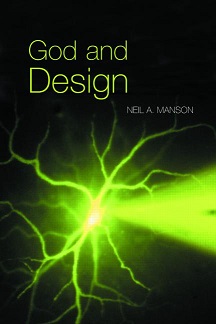
I’ve recently started reading God and Design
It should be possible to define a biological system such that, if it were to exist, its existence could not be explained in Darwinian fashion. If it is impossible to define such a biological system, then it will be impossible to formulate an empirical test that might disconfirm Darwin’s theory. Darwinism’s claim to be a genuine scientific theory would suffer a serious… blow. (11)
The reason Manson argues that the bare possibility of such a definition is required is because of the notion of “falsifiability” in science. While it is debated as to whether falsifiability is an actual criterion for “true” science (at least in the philosophy of science I have read), it has become largely assumed that, in some sense, a theory must be at least in principle falsifiable in order to avoid being question begging or too broadly defined.
Granting that, Manson’s point seems to be a valid one: in order for Darwinism to be viable, it must also be falsifiable. If we can’t even imagine a system that would falsify it, then that may have extremely broad implications. Whether we have imagined such systems–and whether we have discovered them–is a matter of no small amount of debate.
What do you think? Is falsifiability a required criterion for science? Are we able to such a defined biological system to challenge Darwinian evolution? Do such systems actually exist?
God and Design
Links
Be sure to check out the page for this site on Facebook and Twitter for discussion of posts, links to other pages of interest, random talk about theology/philosophy/apologetics/movies and more!
Sunday Quote– If you want to read more Sunday Quotes and join the discussion, check them out! (Scroll down for more)
Source
Neil Manson, “Introduction,” in God and Design ed. Neil Manson (New York: Routledge, 2003).
SDG.
Really Recommended Posts 2/20/15- Egalitarian Marriage, Ken Ham, Kids, and more!
 Another sleep-deprived Really Recommended Posts here! Also, did you know that you can still have allergies when it is -10 degrees Fahrenheit and snowy? I’ve mastered that. Anyway, this week we have posts about Ken Ham, egalitarian marriage, teaching kids critical thinking,
6 Things Egalitarian Marriage is Not– Too often, people who critique the egalitarian position argue that egalitarian marriage means men and women are assumed to be exactly the same or that it is unbiblical. Here are some answers to some misconceptions about egalitarian marriage.
How I’m Teaching my 6-Year-Olds to be Critical Thinkers– Natasha Crain continually writes awesome posts for teaching apologetics in family settings. Here, she shares some tips for teaching critical thinking to your youngsters.
Ken Ham Ascribes Motive to Your Crime– Psychoanalysis of opponents on hot issues is not something we should engage in. Unfortunately, Ken Ham, a prominent Young Earth Creationist, continually assigns motives to those with whom he disagrees.
If Humans Evolved from Apes, Why Do Apes Exist Today? – Look! I can agree with Answers in Genesis, the prominent young earth creationist group, on something! This is a really bad argument that I have, unfortunately, seen many Christians using. Don’t do it.
Eclectic Theist– Did you know I have another web site? I do! On it, I review books, talk about Star Trek, food, tennis, economics, (and more!), and dive into all kinds of random interests. Check it out!
Really Recommended Posts 2/6/15- Attack on Titan, Prophets, and More!
Sleep training a baby? Not the easiest thing in the world, believe it or not. I peel apart my eyelids to present to you, dear readers, this latest round of Really Recommended Posts. Topics include egalitarianism/complementarianism, the Messianic Prophecy in Deuteronomy 18, young earth creationism, and Attack on Titan (with cultural apologetics). I’d say that’s a pretty good set of links, if I do say so myself. Let me know your thoughts in the comments here, and be sure to let the authors know what you thought as well.
Confusing Equality with Sameness: A Complementarian Misconception– Often, those who argue that women should be excluded from leadership roles in the church and home argue against those of the egalitarian position by asserting that egalitarians do not allow for gender differences. Is that true?
Attack on Titan (Empires and Mangers)- Anthony Weber presents a worldview-level analysis of the anime, “Attack on Titan” along with some brief comments and definitions related to anime itself. This is a fantastic post for Christians interested in the show or anime in general, or those who would like to familiarize themselves with those categories in order to interact at a cultural apologetic level. I highly recommend you follow his site as well.
A Look at Messianic Prophecy: Who is the Prophet of Deuteronomy 18:15-18? [Part One] – Hint: it’s Jesus. This three-part series offers a solid look at reasons to believe that Jesus is the fulfillment of this prophecy, not Muhammad (as some Muslims claim) or some other prophet. Here’s another post arguing more specifically against the Muslim claim.
Man’s fallible opinions vs. God’s perfect Word: Who wins?– The notion that the origins debate is set up in this dichotomy is often presented by young earth creationists. Here is an insightful analysis of this argument. I highly recommend you follow “Age of Rocks” as it is an excellent site providing much analysis of the young earth position.
That’s no beaver– Young earth creationists often make claims about species being similar and so showing that they came from the Ark, or that certain fossils in the past somehow throw off the sequence of fossils demonstrating an old earth. Here, an analysis is presented of one young earth claim to this effect.
Alvin Plantinga, the Compromiser?- A Call to Christian Charity in Disagreement
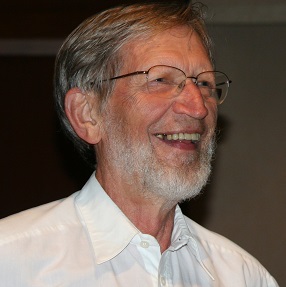 The young earth creationist Ken Ham of Answers in Genesis recently wrote a blog post critiquing eminent Christian philosopher Alvin Plantinga on a number of levels. I’d like to offer a brief analysis of his comments.
Calvin College
Ken Ham doesn’t like Calvin College, where Plantinga once taught. About the school, he says:
Calvin College in Grand Rapids, Michigan, is one of the most ardently compromising Christian Colleges in the US that continues to lead so many young people astray in regards to the authority of Scripture beginning in Genesis.
Harsh words! Of course the reason that Calvin College is said to be a “compromising” college is because it doesn’t follow Ken Ham’s specific interpretation of Genesis as a necessity of Christian faith. By not holding to a position that the Earth is only about 6000 years old, Calvin College gets added to the blacklist of “compromisers.” This kind of name-calling is unbecoming Christians, but that unfortunately hasn’t stopped Ham and his followers.
Plantinga and Science
Ham takes issue with Plantinga’s words on whether science and Christianity may coexist. Following the link to read Plantinga’s own words, one reads:
[Those who believe in a conflict between science and faith] are thinking of evolution plus naturalism, which is the idea that there isn’t any such person as God or anything like God … evolution doesn’t say anything about whether there is such a person as God or not…It’s a metaphysical add-on they are importing into the scientific notion of evolution.
Ham believes that because of this, Plantinga is “equivocating” science and evolution. However, it can hardly be argued that evolution is not the reigning paradigm in biology. Thus, it is not so much equivocation as it is using terms as they are commonly understood. But that aside, the key point is that Plantinga surely seems to be correct. If one does not pair metaphysical naturalism with evolution, it poses no challenge to the existence of deity.
Charity
Now, the nuances of whether evolution may be reconciled with Genesis or not aside, the real question is the appropriateness of name-calling because other Christians believe in a different interpretation of Genesis. Ham wants to keep the focus on the alleged “utter contradiction” between evolution and Genesis, but he does so by elevating his specific interpretation of the Bible above any other view and even above Christian charity. For Ham, there is no need to engage with fellow Christians in a meaningful manner. Instead, he simply dismisses fellow Christians as compromisers and sees that as enough for his followers to ignore any complexities in the debate.
Of course, going back to the issue that Ham wants to frame: the alleged conflict between science and religion, I think that it is vitally important to allow charity in interpretations of Genesis. God’s word is infallible, but human interpreters are not infallible. Instead of lashing out at other Christians because they hold a different view than we do, perhaps we should work to reconcile with and learn from each other.
Ken Ham’s post is just a single example of the constant stream of vitriol spilled out by certain groups against those with whom they disagree. I myself have been called a compromiser, an unbeliever, a follower of Satan, someone who is working to undermine the faith, etc. by people who disagree with me. Why not start the discussion rather than pouring out insults? Why not seek to work together and, if necessary, debate the issues instead of using such nasty language about others?
Links
Be sure to check out the page for this site on Facebook and Twitter for discussion of posts, links to other pages of interest, random talk about theology/philosophy/apologetics/movies and more!
Christian Philosopher Says Science Doesn’t Oppose Faith– Read Ken Ham’s post for his own perspective and words on the topic.
I do not own rights to the image of Alvin Plantinga. I found it with an image search and could not find any original rights attribution. I am using it under fair use.
SDG.
——
The preceding post is the property of J.W. Wartick (apart from quotations, which are the property of their respective owners, and works of art as credited; images are often freely available to the public and J.W. Wartick makes no claims of owning rights to the images unless he makes that explicit) and should not be reproduced in part or in whole without the expressed consent of the author. All content on this site is the property of J.W. Wartick and is made available for individual and personal usage. If you cite from these documents, whether for personal or professional purposes, please give appropriate citation with both the name of the author (J.W. Wartick) and a link to the original URL. If you’d like to repost a post, you may do so, provided you show less than half of the original post on your own site and link to the original post for the rest. You must also appropriately cite the post as noted above. This blog is protected by Creative Commons licensing. By viewing any part of this site, you are agreeing to this usage policy
Really Recommend Posts 6/27/14- Bible Literacy Quiz, YA Lit, and more!
Another week, another slew of posts for you to add some extra reading to your plate! This time around, we have a comic about self-deception, a quiz for you to test yourself, some young adult literature, and more! Let me know what you thought of the posts, and if you liked them, let the authors know on their blogs!
How to Spot a VBS Volunteer (Comic)– I found this hilarious because it speaks so well of my time as a VBS Volunteer many moons ago. I had an absolute blast though, which is something left off the comic. There’s a reason we keep going back: we love the kids, we love what we got to do, despite our eyes twitching from the caffeine (my preferred stimulant was Mountain Dew). Do you have a fun VBS Story? Share it below!
[Not your Sunday School’s] Biblical Literacy Quiz– Speaking of VBS, how about brushing up on some Bible literacy questions? Warning: this won’t be as easy as just answering “Jesus!” every time. Post your grade here! Let’s have some fun with this and maybe motivate ourselves to read more.
Why Neil deGrasse Tyson should stick to science– The host of “Cosmos” has attempted ironic philosophical critiques of philosophy, metaphysics, and more. Here’s a post arguing he should stick to science–if that.
Common Routes to Self-Deception (Comic)– Do you catch yourself following one of these common paths to pulling the wool over your own eyes? How might we work to prevent self-deception? Check out this thought-provoking comic.
Steelheart: Helping Heroes Along– Brandon Sanderson’s latest YA literature has people abuzz. For good reason? Check out this analysis from a worldview perspective by Anthony Weber.
Darwin’s Finches Show Rule Constrained Variation in Beak Shape– Here’s some heavy reading for you. Could it be that variation operates through certain constraints? What might this imply for evolution? What do you think?
“X-Men: Days of Future Past” – A Christian Perspective
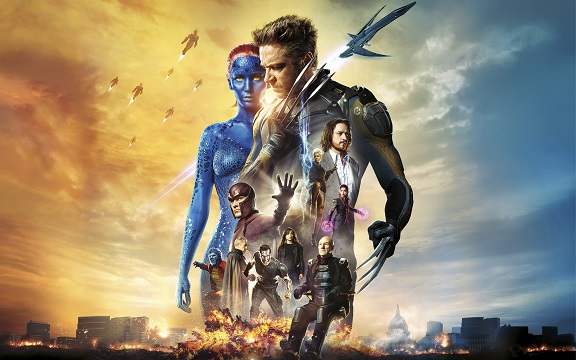 The X-Men franchise has been my favorite of the Marvel franchises for some time, largely because of the worldview questions it brings up. Here, we’ll take a look at the themes in “X-Men: Days of Future Past.” There will be SPOILERS for the film in what follows.
Evolution
Evolution continues to be at the heart of many of the questions raised by the X-Men franchise. What does it mean to say that Mutants are perhaps the next step in evolution for humanity? For some, it means that Mutants should overthrow humanity; after all, they are the lesser-evolved form of life. How should humans and Mutants interact? Are they really a step of evolution, or is it simply a different expression of humanity?
These questions are obviously speculative, but I think the most poignant of them center around the notion of an evolutionary morality. If all we see is merely the product of naturalistic evolution without any sort of grounding for objective morality, who is to say that those Mutants and humans who say that there is a fundamental war between Mutants and humanity are wrong? It seems as though they are exactly right: it is a competition for resources, pure and simple. Yet the questions the movie brings up go beyond such simplistic reasoning. After all, it seems, there is right and wrong that goes beyond the reasoning centered around survival-of-the-fittest. Again, we must wonder: why? Moreover: how is it grounded? These questions get at the heart of worldview questions, and viewers who are left thinking that it is wrong to perpetuate a war between Mutant and human should wonder what grounds they have for thinking it is wrong.
The Heart of Hum…utant?
Many strands of Christian expression view humanity as depraved. That is, humans are sinful at heart, rather than being generally good. “Days of Future Past” aligns with this vision of humanity in a number of ways, but it also, interestingly, portrays mutants as just as frequently evil-leaning as humankind.
The inherent fear of the “Other” was felt throughout, as both Mutant and human worked to destroy each other. However, Mystique’s quest for revenge was a deeper look at aspects of character and worldview. Her quest, despite it being a futile gesture, was telling: she sought revenge despite the possibility that it could destroy all of her own kind. Professor X’s words, however, echoed through time: “Just because someone stumbles and loses their way doesn’t mean they are lost forever.” Mystique, through her choice to refuse to pursue the way of violence into oblivion, ultimately plays a kind of figure of reconciliation. The theme of darkness in the heart which may be redeemed is one which resonates powerfully with the Christian worldview.
A Spectrum of Morality
I think one area that is not explored frequently enough is the notion that there really is a spectum when it comes to that which is moral. I’m not advocating any kind of relativism, but rather the notion that there aren’t always (or even often) black and white moral choices. “Days of Future Past” brings this to the forefront as viewers are confronted with various ways to approach the question of the Mutant. Does one opt for a warfare model which is put forth by Magneto and Dr. Trask, a model which allows for coexistence with separation/secrecy as was generally being followed in the 1970s of the film, or perhaps even cooperation as Dr. X seeks? Perhaps instead, one should forge one’s own way like Mystique or (old) Wolverine, seeking a personal agenda in order to follow one’s own ends.
These aspects are front-and-center throughout the film, as viewers most likely will unconsciously lean towards a certain expression themselves. We discussed above the aspects of evolutionary morality, but I think the movie goes even deeper, trying to get at more basic questions like “What is truth?” and “What is moral/right?” The way viewers answer these questions may lead to further conversations. It seems to me the film clearly favored the kind of mediation road in which Mutant and Human could coexist. But what does that mean for those who favored evolutionary morality or a warfare model? Perhaps such notions are themselves outdated and put to rest because they are of a “Future Past.”
Conclusion
The latest X-Men movie has received much critical acclaim and box-office success. I think that’s for a good reason. It has a compelling plot, great action, and excellent pacing. Our analysis of various themes throughout the movie shows there is thoughtfulness behind it as well. Issues of morality are front and center, though many other themes are worth discussing as well. This is a movie that could be used to start discussions about the faith from many different aspects.
There are many more issues which could be explored in the movie. What are some that resonated with you? Let me know your own thoughts in the comments.
Links
Be sure to check out the page for this site on Facebook and Twitter for discussion of posts, links to other pages of interest, random talk about theology/philosophy/apologetics/movies and more!
Movies– Read other posts I have written on the movies. Scroll down to see more!
The image is a movie poster for the film and I use it under fair use.
SDG.
——
The preceding post is the property of J.W. Wartick (apart from quotations, which are the property of their respective owners, and works of art as credited; images are often freely available to the public and J.W. Wartick makes no claims of owning rights to the images unless he makes that explicit) and should not be reproduced in part or in whole without the expressed consent of the author. All content on this site is the property of J.W. Wartick and is made available for individual and personal usage. If you cite from these documents, whether for personal or professional purposes, please give appropriate citation with both the name of the author (J.W. Wartick) and a link to the original URL. If you’d like to repost a post, you may do so, provided you show less than half of the original post on your own site and link to the original post for the rest. You must also appropriately cite the post as noted above. This blog is protected by Creative Commons licensing. By viewing any part of this site, you are agreeing to this usage policy.
Sunday Quote!- Reframe the Origins Debate?
 Every Sunday, I will share a quote from something I’ve been reading. The hope is for you, dear reader, to share your thoughts on the quote and related issues and perhaps pick up some reading material along the way!
Reframe the Origins Debate?
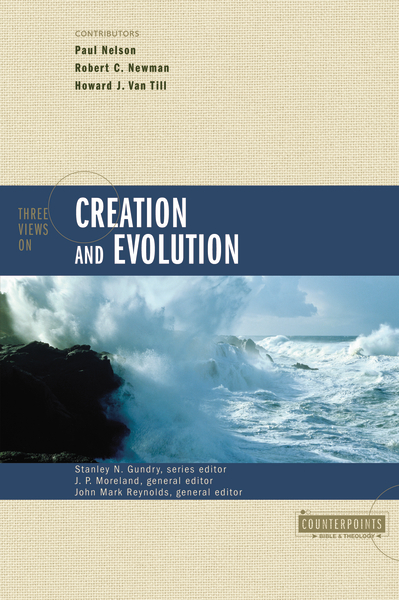
I have been going through a number of books in the Zondervan Counterpoints series and completed Three Views on Creation and Evolution
Is the creation’s formational economy sufficiently robust (that is to say, is it equipped with all the necessary capabilities) to make it possible for the creation to organize and transform itself from elementary forms of matter into the full array of physical structures and life-forms that have existed in the course of time? (Van Till 185-186, cited below)
Howard J. Van Till is a theistic evolutionist (he does not like the term–or at least did not at the publication of this book), and he views that position as a “fully gifted creation”–one in which God, on creating, imbued creation with the capacities to develop naturally over the course of time. This is the “economy of creation” in which–according to Van Till–God created without the need for continual intervention.
Now, so far as this reframing is concerned, it seems to me that Van Till, in attempting to avoid the either/or dichotomy between creation and evolution, went a bit to the other extreme. Putting a word like “robust” in there suggests that anyone who would disagree is clearly questioning the capacity of the Creator in creating. However, I do think there is something to the notion that we do need to rethink exactly where the lines form in the origins debate. I have written on the various options for Christian origins positions and I think that we need to be aware of the fact there is more to it than even “three views” could begin to outline.
Regarding the question itself: what do you think? Do we need to outline the origins debate with different terms so that we can avoid a false dichotomy? Moreover, do you think that creation is indeed set up in such a way?
Links
Be sure to check out the page for this site on Facebook and Twitter for discussion of posts, links to other pages of interest, random talk about theology/philosophy/apologetics/movies and more!
What options are there in the origins debate? – A Taxonomy of Christian Origins Positions– I clarify the breadth of options available for Christians who want to interact on various levels with models of origins. I think this post is extremely important because it gives readers a chance to see the various positions explained briefly.
Sunday Quote– If you want to read more Sunday Quotes and join the discussion, check them out! (Scroll down for more)
Source
Howard J. Van Till, “The Fully Gifted Creation: ‘Theistic Evolution'” in Three Views on Creation and Evolution
SDG.
Ken Ham vs. Bill Nye- An analysis of a lose-lose debate
 Today, Ken Ham, a young earth creationist, debated against Bill Nye an agnostic famous for “The Science Guy” program, on the topic: “Is creation a viable model of origins in today’s scientific era?” The debate was watched by over 500,000 people and generated a huge amount of interest. Here, I’ll review the debate section by section. Then, I’ll offer some thoughts on the content as well as a concluding summary. If you watched the debate, you may want to just skip down to the Analysis section. The debate may be watched here for a limited time (skip to 13 minutes in to start debate).
Ken Ham Opening
Ham began by noting that many prominent scientists argue that scientists should not debate creationists. He wondered aloud whether that might be because creationism is indeed a viable model and some don’t want that to be shown. He then showed a video of a creationist who was a specialist in science and an inventor, noting that creationism is not mutually exclusive from science.
The three primary points Ham focused on were 1) the definitions of terms; 2) interpretation of the evidence; and 3) the age of the universe is not observational science. Regarding the first, Ham noted that science means knowledge and so evolutionists cannot claim to be doing science. Regarding the second, he argued that both creationists and evolutionists observe the same evidence; they simply interpret that evidence differently. Regarding the third, Ham observed that “We weren’t there” at the beginning of the Earth and so we can’t know through observational science what happened.
Bill Nye Opening
Nye noted that the primary contention of the topic was to see whether the creation model lined up with the evidence. Thus, we must compare Ken Ham’s creation model to the “mainstream” model of science (his word). There are, he contended, major difficulties with Ham’s model, including the fossils found in layers in the Grand Canyon. He noted that there is “not a single place” where fossils of one type cross over with fossils of a different type or era. Yet, on a creation model, one would expect vast amounts of mixing. Thus, the creation model fails to account for the observational evidence.
Nye also noted that there are “billions of people ” who are religious and do not hold to creation science.
Ham Presentation
Ham again emphasized the importance of defining terms. He then presented a few more videos of creationists who are active scientists in various fields. One, a Stuart Burgess [I think I typed that correctly] claimed that he knew many colleagues who expressed interest in creationism but were afraid for their careers.
Non-Christians, Ham alleged, are borrowing from the Christian worldview in order to do science. The reason for this is because their own worldview cannot account for the laws of logic, the uniformity of nature, or the laws of nature. He asked Nye to explain how to account for these aspects of reality without God.
The past cannot be observed directly, he said, and concluded that we can’t be certain that the present is like the past. Thus, we must only deal with the observed facts that we can see now. On this point, the disagreements are over the interpretation of the evidence. That is, there is a set of evidence that both people like Nye and Ham approach. According to Ham, it is their worldviews which color their interpretation of the evidence such that they use the same evidence and get entirely contradictory conclusions.
The diversity of species which is observed is only, Ham argued, difference in “kind.” Thus, it cannot be used as evidence for evolution. The word “evolution” has been “hijacked” and used as evidence for unobservable phenomena extrapolated from that which is observed. The various species demonstrate a “creation orchard” as opposed to an “evolutionary tree.” One may observe different creatures, like dogs, each stemming from an a common origin, but none of these are traceable back to common descent, rather they exhibit discontinuity in the fossil record.
There is a major difference, Ham alleged, between “observational sciences” which looks at the things we can see in repeatable events now and “historical sciences” which extrapolates from the evidence gathered what happened in the past. We can never truly have “knowledge” regarding the historical sciences.
Nye Presentation
Nye began his presentation by noting that the debate took place in Kentucky and “here… we’re standing on layer upon layer upon layer of limestone.” The limestone is made of fossils of creatures which lived entire lives (twenty or more years in many cases) and then died, piled up on top of each other, and formed the limestone underneath much of the state. The amount of time needed for this is much longer than just a few thousand years.
Nye also turned to evidence from ice cores, which would require 170 winter/summer cycles per year for at least a thousand years to generate the current amount of ice built up. In California, there are trees which are extremely ancient, and some trees are even older, possibly as old as 9000 or more years old. Apart from the difficulty of the age of these trees, one must also wonder how they survived a catastrophic flood.
When looking at a place like the Grand Canyon, one never finds lower layer animals mixed with higher level animals. One should expect to find these given a flood. Nye challenged Ham to present just one evidence of the mixing of fossils of different eras together; he said it would be a major blow to the majority sciences.
If the flood explains animal life and its survival, one should observe the migration of animals across the earth in the fossil record; thus a Kangaroo should be found not just in Australia but along the way from wherever the Ark rested. However, these finds are not observed. Finally, the Big Bang has multiple lines of evidence which confirm it as the origin of the universe.
Ham Rebuttal
Ham argued that we can’t observe the age of the Earth. No science can measure it through observational evidence; rather it falls under historical sciences. One should add the genealogies in the Genesis account in order to find the age of the Earth. Whenever a scientist talks about the past, “we’ve got a problem” because they are not speaking from observation: they were not there.
Various radiometric dating methods turn up radically divergent ages for artifacts from the same time period and layer of rocks. The only infallible interpreter of the evidence is God, who provided a record in the Bible.
Nye Rebuttal
Rocks are able to slide in such a way as to interpose different dated objects next to each other.
Nye noted that Ham kept saying we “can’t observe the past,” but that is exactly what is done in astronomy: no observation of stars is not observing the past. Indeed, it takes a certain amount of time for the light to get to Earth from these various stars. The notion that lions and the like ate vegetables is, he argued, preposterous. Perhaps, he asserted, the difficulty is with Ham’s interpretation of the biblical text.
Nye then compared the transmission of the text of the Bible to the telephone game.
Ham Counter-Rebuttal
Ham again pressed that natural laws only work within a biblical worldview. There only needed to be about 1000 kinds represented aboard the ark in order to represent all the current species. Bears have sharp teeth yet eat vegetables.
Nye Counter-Rebuttal
Nye asserted that Ham’s view fails to address fundamental questions like the layers of ice. The notion that there were even fewer “kinds” (about 1000) means that the problem for Ham is even greater: the species would have had to evolve at extremely rapid rates, sometimes even several species a day, in order to account for all the differences of species today.
Q+A
I’ll not cover every single question, instead, I wanted to make note of two major things that came up in the Q+A session.
First, Nye’s answer to any question which challenged him on things like where the matter for the Big Bang came from was to assert that it’s a great mystery and we should find out one day. Second, Ham’s response to any question which (even hypothetically) asked him to consider the possibility that he would be wrong was to assert that such a situation was impossible. In other words, he presupposed he was correct and held to the impossibility that he could be wrong.
Analysis
Ken Ham
Ken Ham’s position was based upon his presuppositional apologetic. He continued to press that it is one’s worldview which colors the interpretation of evidence. The facts, he argued, remained the same for either side. It was what they brought to the facts that led to the radically different interpretations.
There is something to be said for this; it is surely true that we do have assumptions we bring to the table when interpreting the evidence. However, apart from the problem that Ham’s presuppositional approach with creationism is unjustified, Ham failed to deal with facts which really do shoot major holes in his theory. For example, it simply is true that, as Nye noted, when we observe the stars or distant galaxies, we are observing the past. Ham was just wrong on this regard. Moreover, other observational evidence (though not directly showing the past) does demonstrate that the Earth cannot be so young as Ham supposes. Furthermore, his hard and fast distinction between historical sciences and observational sciences is more of a rhetorical device than anything.
Ham’s position, I would argue, fails to account for the evidence which Nye raised (along with a number of other difficulties). Moreover, he continued to paint a picture of the Bible which rejects any but his own interpretation. In other words, he presented a false dichotomy: either young earth creationism or compromise with naturalism. However, I did appreciate Ham’s focus on the Gospel message. It was refreshing to have him present a call to belief in Jesus Christ as Lord and savior in front of such a massive audience.
Bill Nye
Nye did an okay job of trying to show that there may be more to the debate than simply creationism-or-bust for Christianity. Indeed, he actually went so far as to say there is “no conflict” between science and faith. Instead, he argued that Ham’s position is the one which generates such a conflict. His rebuttals provided some major reasons to think that Ham’s creationism could not account for the evidence. In particular, the difficulties presented by the proliferation of species after the flood and the fossil record were solid evidences.
However, Nye’s presentations had a couple difficulties. First, he failed to account for polystrate fossils: the very thing he challenged Ham to present. There really are such things as fossils which are found out of sequence (thanks to ElijiahT and SkepticismFirst on Twitter for this). That’s not to say they prove young earth creationism. Far from it. So Nye seems to have been mistaken on this point. Second, he presented the Big Bang theory as though Fred Hoyle somehow came up with the hypothesis, yet Hoyle is well known for denying the Big Bang. Third, the notion that the interpretation, translation, and transmission of the Bible through time is anything like the telephone game is a tiresome and simply mistaken metaphor.
Both
Both men were extremely respectful and I appreciated their candor. Each had several good points; each had some major flaws in their positions. The dialogue as a whole was interesting and helpful.
Conclusion
Readers by now should realize that I have to confess my title is a bit misleading. I was impressed by the tone of both speakers, though I thought they each made major gaffes alongside some decent points. The bottom line is that I find it unfortunate that we were exposed to a false dichotomy: either creationism or naturalism. There is more to the story. As far as “who won” the debate, I would argue that because of this false dichotomy, neither truly won. However, it seemed to me Ham had a more cohesive 30 presentation. That is, his presentation stayed more focused. Nye’s presentation jumped around quite a bit and had less directness to it. So far as “debate tactics” are concerned, one might chalk that up to a win for Ham. However, Nye successfully dismantled Ham’s presentation in the rebuttal periods. Thus, one was left with the impression that Ham’s view was indeed based upon his presupposition of its truth, while Nye was more open to the evidence. Again, I think both are wrong in many areas, but I hope that Nye’s tearing down of Ham’s position will not demonstrate to some that Christianity is false. As Nye noted, it may instead be Ham’s interpretation which is wrong.
There was much more to cover here than I could get to, so please do leave a comment to continue the discussion.
Links
Be sure to check out the page for this site on Facebook and Twitter for discussion of posts, links to other pages of interest, random talk about theology/philosophy/apologetics/movies and more!
Naturalis Historia– This site is maintained by a biologist who presents a number of serious difficulties for young earth creationism.
Gregg Davidson vs. Andrew Snelling on the Age of the Earth– I attended a debate between an old earth and young earth creationist (the latter from Answers in Genesis like Ken Ham). Check out my overview of the debate as well as my analysis.
Debate Review: Fazale Rana vs. Michael Ruse on “The Origin of Life: Evolution vs. Design”– Theist Fazale Rana debated atheist Michael Ruse on the origin of life. I found this a highly informative and respectful debate.
Reasons to Believe– a science-faith think tank from an old-earth perspective.
Other Reviews of the Debate
Ken Ham vs. Bill Nye post-debate analysis– The GeoChristian has a brief overview of the debate with a focus on what each got right or wrong.
Ken Ham vs. Bill Nye: The Aftermath– Luke Nix over at Faithful Thinkers has another thoughtful review. His post focuses much more on the topic of the debate as opposed to a broad overview. Highly recommended.
Ken Ham vs. Bill Nye: The Debate of the Decade?- Interested in what led up to this debate? Check out my previous post on the topic in which I urged Christians to write on this debate and also traced, briefly, the controversy leading up to this debate.
The image used in this post is was retrieved at Christianity Today and I believe it’s origin is with Answers in Genesis. I use it under fair use to critique the views. I make no claims to owning the rights to the image, and I believe the image, as well as “The Creation Museum” are copyright of Answers in Genesis.
SDG.
——
The preceding post is the property of J.W. Wartick (apart from quotations, which are the property of their respective owners, and works of art as credited; images are often freely available to the public and J.W. Wartick makes no claims of owning rights to the images unless he makes that explicit) and should not be reproduced in part or in whole without the expressed consent of the author. All content on this site is the property of J.W. Wartick and is made available for individual and personal usage. If you cite from these documents, whether for personal or professional purposes, please give appropriate citation with both the name of the author (J.W. Wartick) and a link to the original URL. If you’d like to repost a post, you may do so, provided you show less than half of the original post on your own site and link to the original post for the rest. You must also appropriately cite the post as noted above. This blog is protected by Creative Commons licensing. By viewing any part of this site, you are agreeing to this usage policy.

 J.W. Wartick - Reconstructing Faith