historical apologetics
Really Recommended Posts 8/14/15- changing the Bible?, apologetics, carbon dating, and more!
 Another round of Really Recommended Posts for you, dear readers! This week we have textual criticism, an interview with an author, discussion of how stories change the way we think, historical apologetics, and examination of the reliability of carbon dating. Check out the posts and let me know what you think here!
Why Publishers Change the Bible (And That’s OK)! (infographic)- A very helpful, concise, and visual way to see how textual criticism works and why sometimes verses are taken out or added into the Bible.
Interview with God’s Crime Scene Author J. Warner Wallace– J Warner Wallace is a cold-case homicide detective but also a Christian apologist. Here’s a great interview with him about his apologetics ministry and his recently-released book, God’s Crime Scene, which I reviewed here.
The Best Stories– How do fictional stories impact us in “real world” ways? Here’s a post that discusses the impact that stories can have on our lives and the way we think.
A Look at the First Apologists– Here is a great post that shows how the first Christian apologists approached the task of defending the Christian faith. The interesting thing to note is that the first apologists were all Messianic Jews.
Can We Verify Carbon Dating’s Reliability?– Young Earth Creationists often question the reliability of dating methods used to verify an “old earth” perspective. Here’s a post that shows how carbon dating can be independently verified.
10 Questions for Target Critics Regarding “Boys’ Toys” and “Girls’ Toys”– I’ll admit it, I’m not a huge Rachel Held Evans fan. But I do think that the questions she asks here, although somewhat tongue-in-cheek, get at some good points of concern regarding some comments about Target’s “gender neutral toys” policy. Specifically, she references an article by the Council for Biblical Manhood and Womanhood and asks some pointed questions of it. I think it’s worth seeing a different perspective on the issue, and I think that some of the comments by CBMW are clearly ridiculous (see RHE’s question #s 3 and 4).
Rhetoric as Apologetic- Can we learn from ancient apologetics?
 In the ancient world, rhetoric was a major field of study. Briefly, classical rhetoric is the practice of discourse as a means to motivate, inform, persuade. It is hard to pin down to an exact degree what rhetoric is, but here we will use the term as broadly defined above.
Ancient Rhetoric in Apologetics
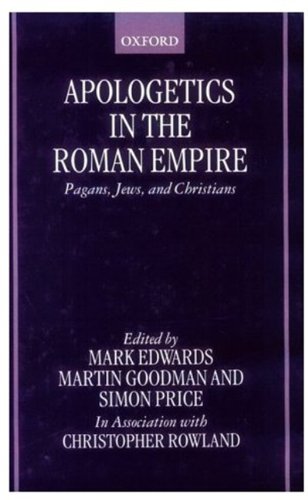
Mark Edwards, in “The Flowering of Latin Apologetic: Lactantius and Arnobius,” (cited below) examines the way these ancient apologists used rhetoric in their defense of the Christian faith. This involved demonstrating that Christians were educated over and against the notion that Christians were all slaves and fools. It also involved showing that Christians were the paragons of (Roman) society rather than people who overthrew society. They presented Christianity as an alternative way of thinking–a whole system which was to overthrow the Pagan thought of the time.
These different aspects of rhetoric in apologetics were specifically aimed at the audience of the time of Lactantius and Arnobius. Perhaps we can learn from their example.
Rhetoric in Apologetics Today
There are a number of ways we may apply rhetoric to apologetics today. One may argue that the use of memes is one (lowbrow) way of utilizing rhetoric in apologetics–making brief points in a provocative manner that brings forth further thought. How might we best use memes in apologetics? Are they even appropriate? These are questions that I will not delve into, but I think they are worth trying to work out for those involved in apologetics or interested in doing the same.
Another aspect of rhetoric which may be integrated into today’s apologetic is the continued deflection of charges from non-Christians against the faith. Specifically, some allege that Christians are stupid. Like Lactantius and Arnobius, we may feel free to flourish the names of Christian scholars through time and into today. Christians cannot truly be classified as necessarily stupid or foolish when they continually work in the highest levels of academia.
Rhetoric in apologetics seems as though it may necessarily be focused on the “low hanging fruit” like the examples given above. I’m not convinced this is the case, nor am I convinced that this is a valid objection to its use. Regarding the latter point, surely if charges are made against Christians necessarily being foolish or lacking education, a valid response is to demonstrate how this is false. The use of memes is frequently effective, though we must be wary of their tendency to oversimplify.
Regarding the former point–that rhetoric is not necessarily focused on “low hanging fruit,” I would note that in many ways, a convincing case depends on how it is presented. Moreover, as Christians we are called to present our case in a way that will put us above reproach in character. If we’re able to eloquently present a case, then perhaps more will consider the case itself. I’m not suggesting we try to obfuscate, but we should try to work to present our case in a winsome manner that utilizes the best scholarship, the most current language, and integrates the fewest possible errors (and this includes typos and spelling errors–something of which I am guilty, I’m sure).
Moreover, Lactantius and Arnobius were both clearly concerned with the imminent attacks on Christianity. They weren’t seeking to anticipate and shoot down future problems so much as they were dealing with the current attacks on their faith. Perhaps we can take this as a call to focus on the issues which face Christianity today ourselves. Like them, we need to confront the most popular of our naysayers and utilize the best scholarship in order to refute criticisms of Christianity.
Links
Be sure to check out the page for this site on Facebook and Twitter for discussion of posts, links to other pages of interest, random talk about theology/philosophy/apologetics/movies and more!
Sunday Quote– If you want to read more Sunday Quotes and join the discussion, check them out! (Scroll down for more)
On the Shoulders of Giants: Rediscovering the lost defenses of Christianity– I have written on how we may discover the enormous resources historical apologists have left behind for us. Take and read!
Source
Mark Edwards, “The Flowering of Latin Apologetic: Lactantius and Arnobius” in Mark Edwards, Martin Goodman, and Simon Price, eds., Apologetics in the Roman Empire
SDG.
——
The preceding post is the property of J.W. Wartick (apart from quotations, which are the property of their respective owners, and works of art as credited; images are often freely available to the public and J.W. Wartick makes no claims of owning rights to the images unless he makes that explicit) and should not be reproduced in part or in whole without the expressed consent of the author. All content on this site is the property of J.W. Wartick and is made available for individual and personal usage. If you cite from these documents, whether for personal or professional purposes, please give appropriate citation with both the name of the author (J.W. Wartick) and a link to the original URL. If you’d like to repost a post, you may do so, provided you show less than half of the original post on your own site and link to the original post for the rest. You must also appropriately cite the post as noted above. This blog is protected by Creative Commons licensing. By viewing any part of this site, you are agreeing to this usage policy.
Really Recommended Posts 6/19/15- Creationism, memes, masculinity, and more!
Another week, another round of excellent reading from around the web for you, dear readers. We have analysis of creationist scholarship, a look at an exciting new book, historical apologetics, pro-life method, and analysis of a meme that attacks Christianity. As always let me know what you think, and let the authors know you enjoyed their posts as well!
The Dangers of Poor Scholarship: A Creationist’s Take on Feathered Dinosaurs– How do Young Earth Creationists often interact with science stories? Is there method consistent? Here, there is an analysis of creationist methodology when it comes not only to feathered dinosaurs but also to how the evaluate faulty arguments and lack consistency.
Malestrom: Swept up in the Currents of a Changing World (Review)– Color me delighted to see a book like this coming out. Our perceptions of what it means to be masculine are deeply embedded in our cultural norms. I have often engaged with complementarians who inform me of exactly what they think men ought to do or what men are “at their core.” But this they do without even acknowledging that even today there are cultures with differing understandings of what is masculine. How might we separate the good from the bad when it comes to talking about masculinity? This book seems to offer a way forward.
William Warburton’s 18th Century Defense of Christianity– It’s amazing how many historical defenses of Christianity are effectively lost in our time. The study of historical apologists is a continually fruitful one that yields great rewards for those who pursue it. Here, Doug Geivett highlights how even arguments that seem tied to their own time periods may provide us with new insights into controversies of our day.
John Reasnor Fails to Show that Incrementalism is Unbiblical– Clinton Wilcox engages in a debate over method when it comes to pro-life reasoning. Some have been arguing that we must do pro-life activism in such a way that only those laws or methods that ban all abortion may be supported. Is this reasonable? Wilcox analyzes the argument. I have provided a lengthy overview of and review of a debate on the same topic.
Will Your Murderer Be In Heaven?– Nick Peters offers an analysis of a meme floating around recently that attacks the goodness of Christianity because one’s own murderer might be in heaven. How does this attack hold up under scrutiny?
William Paley (1743-1805) – Historical Apologist Spotlight
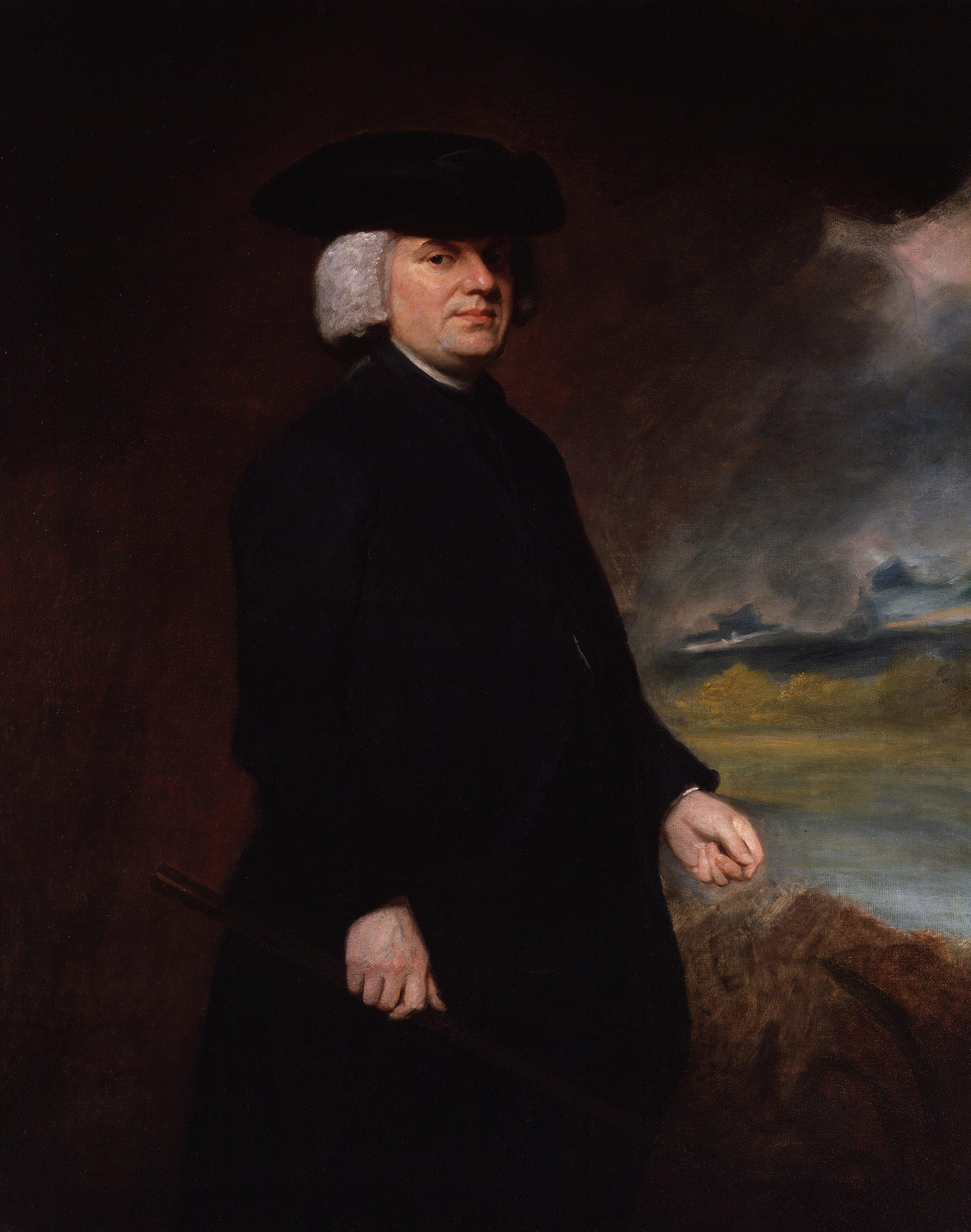 William Paley (1743-1805) is a name which echoes through history. His Natural Theology

Brief Biographical Note*
Paley went to school at Christ’s College and Cambridge. At the latter, he was awarded multiple times for his scholarship. He eventually became the Senior Dean at Christ’s College and was awarded a Doctorate of Divinity from Cambridge. Bishop Barrington of Durham granted him the rectory of Bishop Wearmouth. His life was strewn with accomplishments.
He was a utilitarian with deep Christian convictions. Throughout his life, he remained controversial. His utilitarianism was condemned, as was his critique of the often extreme defenses of property ownership. His anti-slavery was unpopular alongside his support of the American Colonies in the Revolutionary War.
The powerful nature of Paley’s works is revealed in the fact that his major work on utilitarianism, The Principles of Moral and Political Philosophy, became mandatory reading at Cambridge. His Natural Theology continues to be discussed in courses on philosophy of religion. The man was acclaimed by some within the church, who praised his defense of the faith despite others’ objections to his metaethical views.
His contributions to Christian apologetics are the focus of this piece, and we shall turn to them now.
Natural Theology
Paley’s most famous work nowadays is undoubtedly Natural Theology. In this work, he makes his well-known case for the design argument. He utilizes the analogy of a watch. If one finds a watch on a beach, one knows instantly that someone made the watch. Paley applied this same notion to life; one sees the sheer complexity and life and can infer that it, like the watch, was designed.
Many have dismissed Paley’s work here, noting that at points he relies on scientific explanations which have been discredited, while at others his examples have been explained. Yet the genius of his work is found in broader principles, which moderns should note. First, he argued that simply never having observed design in action on a biological level does not preclude any possibility of arguing for that same design (Natural Theology, 8, cited below). Second, evidence of things “going wrong” within a design does not invalidate the design of an object in and of itself. Third, higher level natural laws which may lead to order does not explain away the order itself. Fourth, when something appears to be designed, the burden of proof is upon those who assert an object is not designed.
These points seem to me to hold true to this day. I am sure none of them are uncontroversial, but Paley places his defense of this points squarely within his analysis of those artifacts which he considers to be designed (i.e. the eye and ear). A full treatment of these points thus must turn to his own arguments, but for now I would provide the following brief defenses. Regarding the first, this point seems obvious. If I have never seen someone construct a car, that does not in any way mean that I cannot conclude that someone had to have made it. The second point should be well taken within the context of the debate between Intelligent Design and Darwinian forms of evolution. The point is that simply pointing out a flaw in a design does not mean an entire object is undesigned. The third item seems correct because if something exhibits order, and that order is shown to be based around an ordering principle, the very order in and of itself has not been explained; instead, it is only the mechanism for generating that order which is observed. Finally, the fourth point is likely to be the most controversial–after all, appearances may deceive. Yet it does seem to be the case that if, a priori, something appears designed, then to conclude that something is not designed one must have defeating evidence for this appearance.
A View of the Evidences of Christianity
Paley’s Evidences (commonly known as “Evidences of Christianity”) became almost instantly famous. The work generated a number of summaries and expositions by other authors who were delighted with its style and the arguments contained therein. It is easy to see why, once one has begun a read through this apologetic treatise. Paley presents a number of arguments in favor of the Christian worldview. These evidences are largely historical in nature and include the suffering of those who spread Christianity as evidence for its truth, extrabiblical evidence for the truth of the Gospels, the authenticity of our Gospel accounts due to the early practices and beliefs of Christians, undesigned coincidences, and many more. Paley also provides a dismantling of David Hume’s argument against miracles.
It seems to me that any and all of these arguments retain the force they had in Paley’s own day. Consider the argument from the suffering of Christians. Well of course those of other faiths are willing to even die for that which they believe is true. But Paley rightly pointed out a huge difference between those of other faiths dying for their beliefs and the early eyewitnesses of the events surrounding Christ dying for their own beliefs. Namely, these people would know for certain whether that which they believed were true. That is, they either saw the resurrected Christ or they did not. If they did not, then explaining their willingness to die for this profession of faith becomes extremely difficult. However, if they did actually see that which they declared, their willingness to suffer unto death for this belief makes perfect sense. Many miss this important distinction even to this day. The rest of Paley’s arguments found in the Evidences is filled with insights similar to this.
Horae Paulinae
An argument which has largely been neglected within modern apologetic circles is that of “undesigned coincidences.” I have made an exposition of this argument already, and it should be noted that the best places to discover it are in the realm of historical apologetics. William Paley dedicated this work, Horae Paulinae
Now, the argument from undesigned coincidences takes quite a bit of work to properly outline. It is, in essence, a matter of looking through the Scriptures and finding how incidental details in one account fill in the blanks of another account. However, this description is so brief as to be simplistic. Paley himself acknowledged a number of the difficulties with describing undesigned coincidences in this way. Regarding the Pauline corpus, for example, it could be that someone invented letters from Paul but based them upon his history found in Acts. But the argument itself takes this into account and generally serves as a defeater for this notion by sheer weight of evidence. That is, the more coincidences are found, the more credulity is stretched if one wishes to assert forgery.
Paley buries the objections to undesigned coincidences in this fashion throughout the Horae Paulinae. The sheer volume of coincidences he finds, and the way they seem so clearly to be incidental, serves to dispel doubts about their genuine nature.
Other Works
Here, we have surveyed Paley’s major works, but he was a prolific writer who published sermons and of course his (in)famous work on utlitarian ethics. The preeminence of Paley as a scholar and writer is unquestionable. It is time we acknowledge how much we have to learn from those who have come before us.
Conclusion
We have seen the diverse array of arguments which Paley offered in favor of Christianity. These ranged from biological design arguments to undesigned coincidences to historical arguments in favor of the Gospels. Paley was a masterful writer whose arguments continue to influence apologists and draw ire from atheists to this day. Although the arguments have not been unscathed, I have offered a few reasons to reconsider some which have long been dismissed or forgotten. Paley’s influence endures.
I would like to dedicate this post to Tim McGrew, who introduced me to the vast field of historical apologetics. Without his bubbling delight and enthusiasm in the field, I would never have known much–if anything–about people like Paley. It is my hope and prayer that you may also be persuaded to pursue historical apologetists/apologetics. Be sure to check the links for some good starting places.
Be sure to check out the links at the end of this post as well as the resources from Paley.
Links
Like this page on Facebook: J.W. Wartick – “Always Have a Reason.” I often ask questions for readers and give links related to interests on this site.
Library of Historical Apologetics– Here is where I got started, with Tim McGrew’s phenomenal collection of works. In particular, the “annotated bibliography” will set you up with some fine works. The site features a “spotlight” on the main page for various fantastic reads. Browse and download at will. Also check out their Facebook page.
On the Shoulders of Giants: Rediscovering the lost defenses of Christianity– I provide a number of links as well as an annotated list of historical apologetics works which are great jumping off points for learning more about the vast array of arguments which have largely been forgotten within the realm of apologetic argument. I consider this one of the most important posts on this site.
Forgotten Arguments for Christianity: Undesigned Coincidences- The argument stated– Here I outline the argument from undesigned coincidences and explain how it can be used within apologetics.
Sources
William Paley, Evidences of Christianity
—-, Natural Theology (Oxford World’s Classics)
—-, Horae Paulinae
*I am indebted to the discussion of Paley’s life found in the introduction of the Oxford Classic’s edition of Paley’s Natural Theology, which I have cited above.
SDG.
——
The preceding post is the property of J.W. Wartick (apart from citations, which are the property of their respective owners, and works of art as credited) and should not be reproduced in part or in whole without the expressed consent of the author. All content on this site is the property of J.W. Wartick and is made available for individual and personal usage. If you cite from these documents, whether for personal or professional purposes, please give appropriate citation with both the name of the author (J.W. Wartick) and a link to the original URL. If you’d like to repost a post, you may do so, provided you show less than half of the original post on your own site and link to the original post for the rest. You must also appropriately cite the post as noted above. This blog is protected by Creative Commons licensing. By viewing any part of this site, you are agreeing to this usage policy.
Forgotten Arguments for Christianity: Undesigned Coincidences- The argument stated
 The argument from undesigned coincidences is one of the forgotten arguments for Christianity. It has seen a very recent resurgence through the work of some Christian apologists, such as the philosopher Timothy McGrew. The core of the argument is an investigation of the Bible. When one examines the Scriptures, one finds a number of historical, factual claims which either overlap and confirm others made independently or fill in gaps that authors familiar with current events at the time of the writings would have assumed their readers knew about. These coincidences are therefore undesigned–they are unintentional–but they show that the authors who wrote the books which contain them were telling historical truths.
The Argument Outlined
The argument from undesigned coincinces is not an argument which can be contemplated and accepted or dismissed within minutes or even a few hours of study. The argument must be analyzed by investigating individual instances of the undesigned coincidences for oneself and feeling the weight of the evidence begin to burden the mind.
The argument is an inductive argument. Basically, it argues for the conclusion that the Bible is historically accurate. However, it can be used to argue more specifically towards the conclusion that the miraculous accounts in the Bible did in fact happen.
John James Blunt, an early (1794-1855) proponent of the argument from undesigned coincidences, uses the argument as a challenge:
In our argument we defy people to sit down together, or transmit their writings one to another, and produce the like [undesigned coincidences]. Truths known independently to each of them, must at the bottom of documents having such discrepancies and such agreements as these in question. (J.J. Blunt, kindle location 89, cited below)
It would be hard to make the argument more succinct than this. The argument is built from an ever-growing number of independently observed statements throughout the Bible which coincidentally prove, confirm, or fill in historical gaps of other passages. Therefore, it can feature a huge number of steps, each one an additional piece of evidence. Because of this, it is most easily stated as a challenge. Once you have considered the massive weight of the evidence from untold numbers of undesigned coincidences, can you really maintain your skepticism of the historicity of the Bible?
The argument is used not just to establish the credibility of the Gospels but can be used for a number of other claims about the historicity of Christianity: “The argument deduced from coincidence without design has further claims, because… it establishes the authors of several books of Scripture as independent witnesses to the facts they relate; and this, whether they consulted each other’s writings or not; for the coincidences, if good for anything, are such as could not result from combination, mutual understanding, or arrangement” (Blunt, Kindle Location 78).
Undesigned Coincidences- What are they?
Tim McGrew explains the notion of an undesigned coincidence:
How can we say, no, really there are marks of authenticity [in the Bible]… We should look not for parallel passages in the same words but for what are called undesigned coincidences… Sometimes two works written by different authors incidentally touch on the same point in a manner that cannot be written off as copying or having a copy made from some third source… The two records interlock like the pieces of a jigsaw puzzle. [McGrew, cited below]
Undesigned coincidences overlap and interlock with each other. It is perhaps easiest to explain the concept through an example [I owe this example to Jonathan McLatchie in his post “Undesigned Coincidences: The Ring of Truth”:
Luke 23:1-4:
Then their whole assembly rose up and brought Him before Pilate. They began to accuse Him, saying, “We found this man subverting our nation, opposing payment of taxes to Caesar, and saying that He Himself is the Messiah, a King.”
So Pilate asked Him, “Are You the King of the Jews?”
He answered him, “You have said it.”
Pilate then told the chief priests and the crowds, “I find no grounds for charging this man.”
Wait, what? Isn’t it Pilate’s job to make sure the Jews do not revolt against Caesar? This guy just basically said he was king!
But then compare that to John 18:33-38:
Then Pilate went back into the headquarters, summoned Jesus, and said to Him, “Are You the King of the Jews?”
Jesus answered, “Are you asking this on your own, or have others told you about Me?”
“I’m not a Jew, am I?” Pilate replied. “Your own nation and the chief priests handed You over to me. What have You done?”
“My kingdom is not of this world,” said Jesus. “If My kingdom were of this world, My servants would fight, so that I wouldn’t be handed over to the Jews. As it is, My kingdom does not have its origin here.”
“You are a king then?” Pilate asked.
“You say that I’m a king,” Jesus replied. “I was born for this, and I have come into the world for this: to testify to the truth. Everyone who is of the truth listens to My voice.”
“What is truth?” said Pilate.
After he had said this, he went out to the Jews again and told them, “I find no grounds for charging Him.
John’s telling of the story therefore fills in the gap in Luke’s story. In Luke, there is no reason Pilate would not find grounds for charging Jesus. Only by reading the story in John does one discover that Pilate wanted to let Jesus go because Jesus had explained that his Kingdom was not an earthly kingdom.
If one looks again at these texts in context, one will find that in John, there is no explanation for why Pilate would think Jesus claimed to be a king anyway–it is just out of left field. But turning back to Luke, there is a scene in which the Jews accuse Jesus of claiming to be a king to Pilate. So there is, in these passages, a back-and-forth confirmation. You have to read them both to get the whole picture, and these kinds of details are not the types of things people could plan for.
This is just one example, but they can be multiplied almost beyond comprehension. The way they work is, as McGrew said, like interlocking pieces of a puzzle.
What about Miracles?
The argument can even be used to make a stronger claim. Again, see Blunt, “[I]n several instances the probable truth of a miracle is involved in the coincidences… [W]hen we see the writers of Scriptures clearly telling the truth in those cases where we have the means of checking their accounts… it is reasonable to believe that they are telling the truth in those cases where we have not the means of checking them…” (Kindle Location 89).
Thus, the argument from undesigned coincidences is not a religiously neutral argument. It can also be used to support the truths of miracles. The way this argument works is very subtle. It is not reducible to only the claim that because the Scriptures seem reliable on historical matters due to the undesigned coincidences, we should trust them on the miraculous. Rather, the fact is that the “probable truth of the miracle is involved in the coincidences” (Blunt, 89). “[W]here the natural and supernatural are in close combination, the truth of the former must at least be thought to add to the credibility of the latter” (ibid, 531). The miraculous is sometimes so intertwined with the historical that the confirmation of the historical cannot help but be evidence for the miraculous. Thus, the argument from undesigned coincidences provides a direct argument for the truth of the miraculous.
Conclusion: There’s more where that came from
I have written this post with the intended purpose only to show what the argument from undesigned coincidences looks like. We have seen that it is an inductive argument that is based upon a vast number of examples of varying weight. Furthermore, unlike many historical arguments for Christianity, the argument from undesigned coincidences offers a direct argument for the truth of miracles. I have not addressed possible objections to these arguments. Instead, I leave those for a later post. The next post in this series will outline a few principles of undesigned coincidences.
In closing, it is perhaps best to close with the words of another pre-1900 proponent of the argument:
[S]ince we decide many important worldly matters upon the mere preponderance of evidence and arguments, why should we not adopt the same principles here? It is not necessary in order to recommend the Gospel story for our adoption to insist that it be proved to a mathematical demonstration, and beyond the cavils of every doubter, or of every unreasonable skeptic. Why not adopt that conclusion which has the higher degree of probability rather than the opposite? [Bennett, Kindle Location 59, cited below]
Links
If you want to learn more about forgotten arguments for Christianity, check out my post “On the Shoulders of Giants: Rediscovering the lost defenses of Christianity.”
Tim McGrew has offered a number of other talks on the topic. Please check them out for more discussion of this argument. McGrew on Evidence4Faith. Another lecture by McGrew on undesigned coincidences. Check out McGrew’s interview with Apologetics 315.
Another great post on “undesigned coincidences” can be found at the Christian Apologetics Alliance blog: “The Ring of Truth.”
Cross Examined has a number of coincidences to examine in their post on undesigned coincidences.
Sources
The image is public domain. {{PD-1923}}
John James Blunt, Undesigned Coincidences in the Writings of both the Old and New Testament, New York, 1847.
Edmund Bennett, The Four Gospels from a Lawyer’s Standpoint, New York, 1893.
Timothy McGrew, “Undesigned Coincidences”- this talk can be accessed free of charge here.
William Paley, Evidences of Christianity, New York, 1794; 1865.
SDG.
——
The preceding post is the property of J.W. Wartick (apart from citations, which are the property of their respective owners, and works of art as credited) and should not be reproduced in part or in whole without the expressed consent of the author. All content on this site is the property of J.W. Wartick and is made available for individual and personal usage. If you cite from these documents, whether for personal or professional purposes, please give appropriate citation with both the name of the author (J.W. Wartick) and a link to the original URL. If you’d like to repost a post, you may do so, provided you show less than half of the original post on your own site and link to the original post for the rest. You must also appropriately cite the post as noted above. This blog is protected by Creative Commons licensing. By viewing any part of this site, you are agreeing to this usage policy.
Book Review: “My Christian Apology” by Martin Murphy
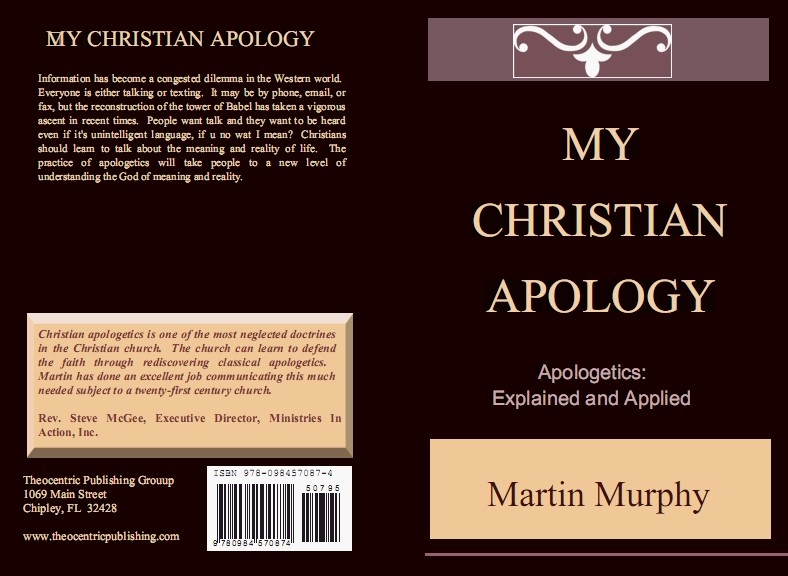 My Christian Apology by Martin Murphy provides some unique insight into apologetics. Rather than focusing upon arguments for the existence of God or methodology at the expense of historical understanding, Murphy grounds both arguments and method in history.
The book starts off with some introductory notes. What is apologetics? How do we communicate apologetics? These sections provide the groundwork of many apologetics texts. But Murphy quickly differentiates his work from most standard introductions to apologetics. His book focuses largely on epistemology and its relation to apologetics.
Murphy does a great job of making these concepts accessible to general readers. He defines epistemology (19) and then gradually eases the reader into its various applications to apologetics (19ff). A central theme throughout is that unbelievers and Christians have common grounds from which they can start discussions. One of these common grounds is Natural Law, which Murphy goes into at length (65ff). Natural Law has been repudiated by many modern thinkers, but it is grounded in Scripture and has a great theological base. I’ve reviewed a Lutheran book on the topic which I think helps show how useful Natural Law is. Murphy points out that Natural Law can provide a basis for knowledge of God. “If we know we are transgressors then we know we have violated the law of God” (73). This knowledge is not saving knowledge, but it provides a basis for judgment (84) and, I think, a possible common ground for apologetics.
Another strength of Murphy’s work is the focus upon historical apologetics. He cites Jonathan Edwards at length and in numerous places while exploring Edwards’ applications to apologetics (see 20-21, 29, 36, etc.). He also emphasizes the works of Southern Presbyterians in the area of apologetics. The historical background is a great quality of the work and one that I think Christian Apologists often fail to emphasize or utilize.
There is some emphasis on theology in My Christian Apology as well. Murphy’s discussion of natural law leads to a drawing out of the “noetic effects of sin.” Again, the points Murphy raises are clear and concise. Some readers will disagree, but all will be challenged. I find this account eminently plausible and I think that even those who disagree need to at least account for the Biblical case for original sin.
Martin Murphy’s My Christian Apology is a brief work that has a ton of great information packed into it. Questions that other basic apologetics books tend to avoid are treated with precision and lucidity. The emphasis on historical apologetics leads to many insights readers won’t find in other introductory works. I recommend that readers use this book along with other basic apologetics books in order to develop a more well-rounded apologetic method.
Source:
Martin Murphy, My Christian Apology (2010).
SDG.
——
The preceding post is the property of J.W. Wartick (apart from citations, which are the property of their respective owners) and should not be reproduced in part or in whole without the expressed consent of the author. All content on this site is the property of J.W. Wartick and is made available for individual and personal usage. If you cite from these documents, whether for personal or professional purposes, please give appropriate citation with both the name of the author (J.W. Wartick) and a link to the original URL. This blog is protected by Creative Commons licensing. By viewing any part of this site, you are agreeing to this usage policy.

 J.W. Wartick - Reconstructing Faith
