Islam
Book Review: “The Closing of the Muslim Mind” by Robert Reilly
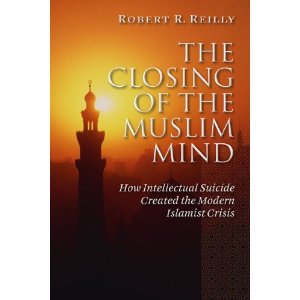 One can tell from the outset that Robert Reilly’s The Closing of the Muslim Mind
The central point of the book is “the story of how Islam grappled with the role of reason after its conquests exposed it to Hellenic thought and how the side of reason ultimately lost in the ensuing, deadly struggle” (1). Reilly contrasts this with how the West dealt with some of the same issues: “The radical voluntaraism (God as pure will) and occasionalism (no cause and effect in the natural order) found in them [Muslim theologians in the 9th-12th centuries] were not seen to any significant extent in the West until… David Hume began writing in the eighteenth century. By that time the recognition of reality had become firmly enough established to withstand the assault… Unfortunately, this was not true in Sunni Islam, where these views arrived much earlier” (7).
Reilly maps out the history of the development of Muslim thought. Initially, once Islam came into contact with western philosophy, there was a great amount of interplay (11ff). One early struggle was between man’s free will and fate. This struggle was over the meaning of key verses in the Qur’an as well as a debate over whether the Qur’an is temporal or eternal and uncreated. The notion that the Qur’an is eternal and uncreated, in turn, restricted rationality from evaluating the meaning therein (19).
The development of Muslim reflection on the Qur’an and Allah’s will led to the replacement of reason with rationality (45-46). Similarly, because the Qur’an was Allah’s will, and it did not explicitly endorse kalam (a branch of Muslim philosophy and theology), this rational discourse was to be abandoned (47). Furthermore, this entailed the destruction of the notion of the “autonomy of reason.” Only within the structures of revelation could reason operate effectively (48).
Furthermore, creation itself has no inherent reason. Each moment is merely a “second-to-second manifestation of God’s will” (51). While one may be tempted to say Christianity is exactly like this (and some branches may indeed hold to this teaching), there is an important distinction between the two views, for on the Christian view of God, God’s action is driven by His nature, and so He will operate within His promises as well as within the boundaries He has set for himself. God, on most Christian views, is inherently rational and so will operate in rational ways. So while creation indeed subsists moment-by-moment because of the will of God, God does not arbitrarily change His will (56ff). On the Muslim view, Reilly argues, God’s will is absolute (as opposed to His nature) and so there is absolute voluntarism. At any time, Allah could will that which before Allah did not will (51-53). Furthermore, one cannot say one “knows” God because God is pure will. As pure will, there is no reason for any particular action, and so God is inherently unknowable (54ff).
Another consequence of viewing God as pure will is that good and evil are essentially vacuous terms. “If Allah is pure will, good and evil are only conventions of Allah’s–some things are halal (permitted/lawful) and others are haram (forbidden/unlawful), simply because He says so and for no reasons in themselves” (70). Allah is therefore above morality and the problem of evil is made meaningless, for evil is merely that which God forbids. Essentially, the system is voluntaristic theism (71ff).
Reilly argues that these theological positions have had dire consequences for Islam in the political realm as well. These positions undermine the inherent worth of human beings and posit the primacy of power over reason (128); democracy is the answer to a question the Muslim world has not asked (130), for if God is pure will, then His regents on earth are operating merely under his whims, and can be just as arbitrary in their decisions (131); “Man’s only responsibility is to obey” (131); finally, “there is no ontological foundation for equal human rights in Islam, which formally divides men and women, believer and unbeliever, freeman and slave” (133).
The consequences reach farther, however, and touch the sciences as well. For if Allah’s will is that which causes all things, then to say that there are “natural” explanations is to insult Allah. Instead of saying that hydrogen and oxygen yield water, people are instructed to say “when you bring hydrogen and oxygen together… by the will of Allah water was created…” (142). Of course, the denial of secondary causation touches upon more pragmatic areas of life as well. After all, if Allah wants something to happen, then it will; if not, then it won’t.
Reilly presents a number of contemporary sources demonstrating how these aspects have been radically undermined in the Muslim world, where often anything can pass as a news story and anything can be stated as true (147ff). Furthermore, the Muslim world trends towards underdevelopment and illiteracy. Reilly maintains that some of this is due to the consequences of the theological views outlined above.
Historically, the dilemma within Islam over reason vs. voluntarism came to a head when the Muslim conquests began to be turned back. When defeats happened, Muslims had to ask why it was that they were losing when, presumably, Allah desired them to win (165ff). Some viewed it as a consequence of the stagnation of science and intellectual development in the Muslim world. Others, however, viewed it as a need to go back to the roots of Islam and become even more radical. The world, therefore, according to Reilly, is faced with a crisis: can reason be re-introduced into the Muslim theology and trickle down into every aspect of life, thus freeing the Muslim world from the shackles of voluntarism? Or, will Islam continue down its path and overemphasize the radical occasionalism of nature and God, while undermining reason? Such is the crisis.
It is striking how well Reilly has supported his theses with quotes from the writings of various Muslim theologians and philosophers. Throughout the work, he quotes numerous scholars from both modern and ancient sources. What these quotes reveal is that his points are not found in a vaccuum–rather, the notion that the absolute, determinating, arbitrary will of Allah underlies everything that happens does indeed undermine rationality.
It is interesting here to reflect briefly upon the notion that some of these same themes are found within certain branches of Christianity. Whenever God’s will is placed as the ultimate source of all activity on earth (voluntarism/occasionalism) rather than as a providential will which guides such activity, reason and rationality can be jettisoned just as easily as they were in the development of Muslim thought. Similarly, if Scripture is seen as above any kind of rational inquiry to determine its meaning, one can replace man’s cognitive abilities with blind faith. Reilly’s book can therefore serve as much a warning for Christians engaging in doctrinal reflection as it is a call to Muslims to restore rationality to their faith.
Reilly’s work, The Closing of the Muslim Mind should be seen as required reading for those interested in interfacing with the Muslim faith. Reilly ties together compelling chains of thought which have led to the current Muslim crisis and demonstrates how current thinking is a result of the past. It is a thoroughly researched book and those opposed to his conclusions will be hard-pressed to show the cracks in his theses. I highly recommend this work. Once one gets past the title, which may be seen as inflammatory by some, Reilly presents well-reasoned, compelling, historically grounded argument about how the theology of Islam has led to the destruction of its intellectual capacity.
Robert Reilly, The Closing of the Muslim Mind
SDG.
——
The preceding post is the property of J.W. Wartick (apart from citations, which are the property of their respective owners) and should not be reproduced in part or in whole without the expressed consent of the author. All content on this site is the property of J.W. Wartick and is made available for individual and personal usage. If you cite from these documents, whether for personal or professional purposes, please give appropriate citation with both the name of the author (J.W. Wartick) and a link to the original URL. If you’d like to repost a post, you may do so, provided you show less than half of the original post on your own site and link to the original post for the rest. You must also appropriately cite the post as noted above. This blog is protected by Creative Commons licensing. By viewing any part of this site, you are agreeing to this usage policy.
A Vision for Christian Apologetics to World Religions
 Christian Apologists seem to only rarely focus upon world religions. Perhaps that is because many Christian apologists feel uncomfortable interacting with other religions. It is easy to be weighed down by fears that one might say something wrong and be deemed either ignorant or bigoted. It may also be simply that Christian apologists don’t feel they have the expertise do operate in this area. It is my goal in this post to paint in broad strokes and provide areas of development for Christian apologetics and theology regarding world religions. Because I’m painting in broad strokes, I’ll be raising many questions I’ll leave unanswered for now. I’ve included links at the end of the post for those interested in reading more.
A Vision for Christian Apologetics and World Religions
It has been said that evangelicalism needs a theology of religions. What does the existence of other religions mean? Do they have truths? How do we interact with them? These questions must be addressed by Christians who desire to explore the reality of their faith. Christian apologists, in particular, must be learned enough to know what position they take on these issues before they seek to defend their faith.
The study of another religion should not be done superficially. It is a good start to have a general volume on “world religions” and then read each religion’s respective section, but it is not nearly enough for the Christian apologist to do if the apologist desires to interact with believers from these other religions. A study of another religion, particularly for those interested in witnessing to them, must be more in-depth. The holy book(s) of the other religion is(are) necessary reading. But one cannot stop there. Few religions are based upon one book. Christians can readily acknowledge this, having had much thought and belief defined through tradition, apostolic and patristic. Similarly, when a Christian studies another religion, he or she must be willing to delve into the religion, to understand it from an insider’s perspective.
It is not enough for the apologist to read books about other religions, seeking to find fast and easy ways to refute them. Rather, the Christian apologist must engage with believers of other faith, acknowledging shared truths where they exist and seeking to understand the differences. Certainly, apologists must know the areas of weakness in other religions so that they can point these out as they debate and dialog on the religions. What I’m suggesting is that this cannot be the only thing Christians know about other religions. They must not be satisfied merely by knowing a series of arguments against those from other religions. Rather, they must be willing and able to engage with those in other religions.
Thus, this vision for Christian Apologetics to World Religions is a vision not just of debate but of dialog; a vision of give-and-take. The Gospel will not be heard where it is beat into people. It will not be heard where the only avenues for its witness are arguments. Paul wrote,
Although I am a free man and not anyone’s slave, I have made myself a slave to everyone, in order to win more people. (1 Corinthians 9:19)
The attitude of the apologist is a servant’s heart–one that seeks to understand. In understanding, he or she will win many. Thus, when apologists approach another religion, they must understand that religion enough to engage with those who believe it and who live it. The Christian apologist must not deceive, but rather seek to understand. In understanding, Christians will understand more about their own faith, and be better able to spread it to those of other faiths.
There are five major things to keep in mind when doing apologetics regarding world religions:
- Know what the other believes. Never assume you know their faith as much as they do.
- Read their book. Nothing will open up avenues for discussion as much as the knowledge that you have read the books they find holy.
- Know Christianity. If you don’t know what you yourself believe, how are you to share that with others? As you engage with people of other faiths, you must continue to learn about your own faith and its answers to the questions others pose.
- Preach the Gospel. The goal should not only be to rebut the others assertions and beliefs. It should be to guide the other towards Christ crucified and the salvation provided for by God.
- Build a Genuine Relationship. It isn’t enough to simply engage in dialog; one must show they are interested in what the other has to say and what they believe. They must also be more than an occasional debate partner; they must build a relationship and become a friend. I’m not suggesting deception here, the relationship must be genuine. By showing a Christlike life to others, we can show them the intimate joys of Christianity.
Going forward, it is time to turn to a method for Christian Apologists to learn about other religions.
 Studying a Religion: A Method of Learning for Christian Apologists
- Read general discussions about the religion. A book on world religions is a good place to start, but be aware that these are, by necessity, generalized.
- Read what other Christians have said about the religion. Neighboring Faiths by Winfried Corduan is a simply phenomenal resource which surveys the world religions from a Christian perspective.
- Read the holy books of the religion with which you are going to interact. If you wish to engage a Muslim, read the Quran. If you want to interact with a Taoist, read the Tao Te Ching. As you read these books, keep in mind that you will find truths in other religions due to God’s natural revelation to all people.
- Seek out believers from the religion, and engage with them in discussion. Ask them what they believe, but don’t allow your questions to be that general. Instead, focus on specifics. For example, “If I were seeking to learn more about your religion and beliefs, how would I go about doing so?”; “What is[are] your favorite passage[s] from your holy book, and why?” Questions like these will show them you’re not seeking to attack but to understand.
- Read web sites dedicated to explaining other religions to those seeking. In this way, you will get a basic introduction to the religion while also viewing it from an insider’s perspective.
- Read other Christians who have engaged these religions in dialog and mission work.
- Consider responses from scholars within the religion to Christians working in that field. Be familiar with arguments for and against the positions you seek to put forward.
- Above all, read God’s word. Only by being familiar with the Bible will one become an effective apologist and missionary. Jesus’ words will draw people from all backgrounds, and the Bible’s richness and truth will gain a hearing from all nations.
This list is, of course, not comprehensive. It merely provides avenues for research.
What to do with the knowledge?
Christians must engage with those of other faiths. Seek out those who are willing to discuss their faith with you. You will find that many interesting discussions will follow and you will learn much about yourself and Christianity in the process. Never stop seeking truth. All truth is from God. If someone from another faith says something which challenges you, seek the answer. There are thousands of years of Christian writing out there just waiting to be tapped. Not only that, but simple searches online will turn up innumerable apologetic resources. Do not let the discussions turn into debates only. Debates are good when there is an audience of people who may be swayed one way or the other, but in individual conversation, your goal should be to spread the Gospel, not to win an argument.
Become a prayer warrior. Do not let a day go by where you do not pray for those with whom you are engaged in discussions about the faith.
Tap your fellow resources. There are many other Christians working in the areas of religions, and they are willing to help. Do not be afraid to ask for it when needed.
Conclusion
The vision for Christian apologetics and world religions I’ve put forth here is admittedly vague, but I hope it will provide a way forward for those interested in dialog with those of other faiths. This vision has followed five primary thoughts: know the other’s faith, read their book, know Christianity, preach the Gospel, and build a genuine relationship. The most important thing to remember is that as a Christian it is your duty to spread the Gospel. Do not let yourself come in its way.
Resources
Some argue that there is no real way to tell whether any religions are true. That is not the case. There are some very real ways to determine truth in a religious paradigm. Check out this post: “Can we evaluate worldviews? How to navigate the sea of ideas.”
What about the truth found in other religion? How do we relate that to Christianity? Kenneth Samples is an amazing writer in this area. Check out this post in which he provides a way forward for thinking about other religions from a Biblical perspective: “Thinking Biblically About the World’s Religions.”
I highly recommend Winfried Corduan’s book Neighboring Faiths.
What about some of those unanswered questions–what about the unevangelized? This is matter of considerable debate and there are numerous books on the topic. I would recommend “What About Those Who Have Never Heard?” for an introduction to these views. For those wanting to explore inclusivism further, see No Other Name by John Sanders. Those interested in exclusivism/particularlism, see Is Jesus the Only Savior? by Ronald Nash.
SDG.
——
The preceding post is the property of J.W. Wartick (apart from citations, which are the property of their respective owners) and should not be reproduced in part or in whole without the expressed consent of the author. All content on this site is the property of J.W. Wartick and is made available for individual and personal usage. If you cite from these documents, whether for personal or professional purposes, please give appropriate citation with both the name of the author (J.W. Wartick) and a link to the original URL. If you’d like to repost a post, you may do so, provided you show less than half of the original post on your own site and link to the original post for the rest. You must also appropriately cite the post as noted above. This blog is protected by Creative Commons licensing. By viewing any part of this site, you are agreeing to this usage policy.
What a Surprise! Christianity defamed, Islam respected. And, guess what, the Bible likely older than the “experts” thought
Alright, school has started again. I managed to crank out at least a few things over break, and I have a number of 1/4-1/2 completed articles that I’ll hopefully finish some time, but for now back to easy posts, like random news stories.
Before we get into that though, go to Google (or your Google search bar) and [note: some curse words and offensive language will show if you follow these instructions, if you would not like to be subjected to that, simply read my article as I’ll describe it] type in “Christianity is…” and check out the suggested searches. Wow, those are some strong terms! “Christianity is b*******” is the first suggestion. Others include “Christianity is not a religion” [what?] and “Christianity is a lie.” That’s some strong stuff. Not very respectful of Christianity, obviously. But now try that same thing for “Islam is” and look at the suggestions. Oh wait, there are none. It’s perfectly fine to defame, attack, insult, and otherwise attack Christianity, but try to talk about Islam and you’ll come up empty. We should certainly not insult Islam. We wouldn’t dare to insult the religion of “peace.”
Google, of course, says it’s a database problem. How convenient. Check out this news story for more annoying facts (and a proof pic, if they ever “fix” the “database problem”).
So, as usual, insulting and attacking Christianity is accepted, but we dare not attack or insult Islam. Why is that?
But I digress. Another news story I found interesting was the discovery of some shards of pottery that suggest the Bible was perhaps written earlier than the “experts” thought! What a surprise! Current “scholarship” attempts to suggest the Hebrew Scriptures were not as old as tradition holds (usually dating them around 6th or 7th century B.C. (that’s Before Christ, by the way), but this evidence shows that, shock of all shocks, Hebrew writing existed longer before than was thought possible (this is, of course, not to mention that it is likely the Hebrew Scriptures were written in an even more ancient form of Hebrew script, but the “experts” are so “spot on” at all times it’s hard not to trust them [massive sarcasm]). The archaeological, historical, philosophical, experiential, and other evidences for theism and Christianity continue to increase in number and veracity. Not that this is surprising to anyone but the so-called experts (note that I’m not trying to insult genuine Biblical scholarship, only the radical, relativistic, super-critical scholarship that the media and anti-theists tend to try to cling to).
Well, back to school work.
Edit 1/17- Another news story on the Bible being older (same thing).

 J.W. Wartick - Reconstructing Faith