J.W. Wartick
Sunday Quote!- Historical Criticism and What Prophets Would Have Done
 Every Sunday, I will share a quote from something I’ve been reading. The hope is for you, dear reader, to share your thoughts on the quote and related issues and perhaps pick up some reading material along the way!
Historical Criticism and What Prophets Would Have Done
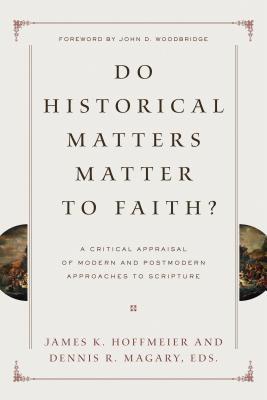
Do Historical Matters Matter to Faith?
[R]edactional analysis is, of course, based on a number of presuppositions about Old Testament prophets and prophecy that cannot be proved, or disproved: (1) that a prophet/editor would not use the same concept or theme in more than one way… (2) that a prophet would not reuse, allude to, or elaborate upon his own (earlier) oracles… and (3) that a prophet would not proclaim anything that was not clearly relevant and perspicuous for his contemporaries ( Schultz 256, cited below)
There is great difficulty with each of these assumptions, as should be clear simply from reading through them. Although each is not necessarily without some merit–surely, for example, it is not an error to think that very often concepts are used in the same ways–the difficulty is when rather than becoming guides for interpretation, these points become areas around which to base limits on the possible meaning of various texts.
The book is full of insights like this throughout, and though I’m still reading through it, I would say I recommend it for the amount of information contained in it, along with the variety of its contents.
What do you think? Are these assumptions valid? How might historical critical methods impact how one reads the text? What presuppositions might be better suited to Christian scholarship regarding prophecy, if any?
Links
Be sure to check out the page for this site on Facebook and Twitter for discussion of posts, links to other pages of interest, random talk about theology/philosophy/apologetics/movies and more!
Sunday Quote– If you want to read more Sunday Quotes and join the discussion, check them out! (Scroll down for more)
Source
Richard Schultz, “Isaiah, Isaiahs, and Current Scholarship” in Do Historical Matters Matter to Faith?
SDG.
Honoring Giftedness- Women in David Weber’s science fiction
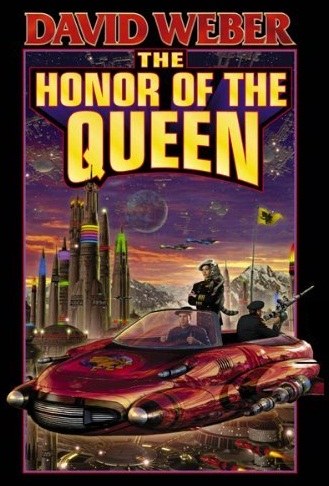 David Weber is the author of a few New York Times Bestselling science fiction series. One, the Honor Harrington series, follows a woman who starts off as a captain of a starship sent on routine (and initially boring) missions. The second book in the series, The Honor of the Queen
The two nations are complementarian in nature. Complementarianism is the theological belief that men and women are “complementary” in roles, which means that men should be in charge in the church and home. I have discussed it and the rival view that women should be ordained/treated as equals (egalitarianism) at length elsewhere [scroll down to see other posts].
What really struck me is that David Weber fairly presented firm theistic believers as a spectrum. In the future, the Christian Church has continued to reform and have splinter groups form because of this. Weber’s presentation of the issue showed that believers–even some who might be considered extreme–can be reasoned with and even persuaded to believe differently based upon evidence. Furthermore, he showed that even those who may line up on the side with which he disagrees are not all (or even mostly) blinded by faith or foolishness. Rather, although there are some truly evil and disillusioned people, Weber shows that many are capable of changing their position or at least acknowledging that rival views are worth consideration.
The most vivid portrayal of this theme is found in a conversation between Admiral Courvosier and Admiral Yakanov. Courvosier is from the same nation as Honor Harrington and wholly endorses his female officer in a position of command. They discuss Captain Honor Harrington:
[Yanakov responds to Courvosier’s question about his society’s reaction to Honor]: “If Captain Harrington is as outstanding an officer as you believe–as I believe–she invalidates all our concepts of womanhood. She means we’re wrong, that our religion is wrong. She means we’ve spent nine centuries being wrong… I think we can admit our error, in time. Not easily… but I believe we can do it.”
“Yet if we do[” Yanakov continues, “]what happens to Grayson [Yanakov’s world]? You’ve met two of my wives. I love all three of them dearly… but your Captain Harrington, just by existing, tells me I’ve made them less than they could have been… Less capable of her independence, her ability to accept responsibility and risk… How do I know where my doubts over their capability stop being genuine love and concern?” (96, cited below)
The exchange is characteristic of the way Grayson’s people are treated throughout the book. They are real people, capable of interacting with other views in honest ways. They feel challenged by a view contrary to their own. Some react poorly, and there are extremists who are blinded by hatred and anger. Yet all of them are treated as people with real concerns shaped by their upbringing and backgrounds.
Honor Harrington ends up saving Grayson, and at the end of the book, she is commended by the rulers of that planet. She talks to the “Protector” [read: king/president] of Grayson:
“You see,” [said the Protector] “we need you.”
“Need me, Sir?” [Responded Honor]
“Yes, Grayson faces tremendous changes… You’ll be the first woman in our history to hold land… and we need you as a model–and a challenge–as we bring our women fully into our society.” (419)
Weber thus allows for even ardent supporters of specific religious backgrounds to respond to reasoned argument and to change. They are capable of interacting on a human level and deserve every bit of respect as those who disagree with them. Again, there are those who are radicals and will not be reasoned with, but they are the minority and they do not win out.
The dialogue presented in this book provides some interesting insight into facets of the present dialogue between complementarians and egalitarians. David Weber’s fictional character presented a challenge to the Grayson’s notions of what it meant to be a woman by being an excellent officer and professional. There are, it seems, real “Honor Harringtons” out there, challenging preconceived notions of what it is to be a woman. When, for example, a woman takes on the role of leadership in the church and succeeds, that should not be dismissed as a fluke, but rather a challenge to a paradigm which may itself be undercutting women’s ability to succeed.
On a personal note, I have been challenged in exactly this way. When I was younger, I was a complementarian and was confronted by a woman who destroyed my presuppositions about what a woman “could do” spiritually. She showed that she could be a leader and present Christ to all without having to fit into role I defined for her. This real challenge caused me to realize that my notions of what a woman “should be” were themselves social constructs, not anything derived from the Bible. Like Yanakov, I had to rethink what my words and actions had done to perhaps limit the women around me. By God’s grace, this woman’s very existence forced me to rethink what I had assumed as truth and go back to God’s word to see where I had gone wrong.
David Weber’s own presentation of Honor Harrington as a paradigm-shattering woman is something that hits close to home for me. For you, dear reader, I think it is worth considering the same: who has challenged your view of what they are “supposed to be”? Is your view of someone’s giftedness directly drawn from the Bible or is it something that you’ve just always assumed? As for me, I think we need more Honor Harringtons in our lives.
Links
Be sure to check out the page for this site on Facebook and Twitter for discussion of posts, links to other pages of interest, random talk about theology/philosophy/apologetics/movies and more!
Check out my posts on egalitarianism (scroll down for more).
Source
David Weber, The Honor of the Queen
SDG.
——
The preceding post is the property of J.W. Wartick (apart from quotations, which are the property of their respective owners, and works of art as credited; images are often freely available to the public and J.W. Wartick makes no claims of owning rights to the images unless he makes that explicit) and should not be reproduced in part or in whole without the expressed consent of the author. All content on this site is the property of J.W. Wartick and is made available for individual and personal usage. If you cite from these documents, whether for personal or professional purposes, please give appropriate citation with both the name of the author (J.W. Wartick) and a link to the original URL. If you’d like to repost a post, you may do so, provided you show less than half of the original post on your own site and link to the original post for the rest. You must also appropriately cite the post as noted above. This blog is protected by Creative Commons licensing. By viewing any part of this site, you are agreeing to this usage policy.
Sunday Quote!- Pragmatic Use of Arguments for God
 Every Sunday, I will share a quote from something I’ve been reading. The hope is for you, dear reader, to share your thoughts on the quote and related issues and perhaps pick up some reading material along the way!
Pragmatic Use of Arguments for God
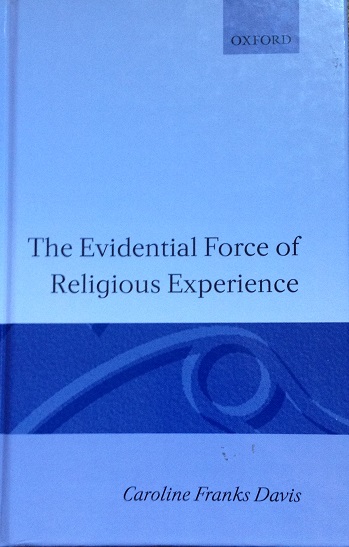
One of my favorite books on any argument for the existence of God is Caroline Franks Davis’ The Evidential Force of Religious Experience. I re-read it recently and came upon a number of awesome insights I hadn’t even marked the first time (how’s that as a case for re-reading books?)! One pertained to the notion that some theistic arguments might be successful, but not useful when it comes to trying to provide evidence to a skeptic:
Some arguments which have been proposed in favor of theism… suffer so many defects or are so controversial that they do not contribute a great deal to the theistic case. (242-243, cited below)
The point is not that all the arguments which may fall into this category are in fact irrational or mistaken (though some may be!), but rather that the usefulness of the arguments are hampered, in particular, by the controversy surrounding said arguments. The central thrust of her passage here is that some arguments may inspire so much objection (even if reasonable), that bringing them up may not contribute to a dialogue. I think this point is fascinating, though the philosophical side of me cries out saying “But if the argument is sound, why not use it!?” I wonder, however, whether this is the right approach.
Are there some theistic arguments which–apart from their soundness–are simply not useful in the case of presenting an apologetic? Should we base our use of these arguments on their utility in that case, or simply upon the logical soundness of the arguments? Which arguments might fall into this category?
Links
Be sure to check out the page for this site on Facebook and Twitter for discussion of posts, links to other pages of interest, random talk about theology/philosophy/apologetics/movies and more!
Sunday Quote– If you want to read more Sunday Quotes and join the discussion, check them out! (Scroll down for more)
Source
Caroline Franks Davis, The Evidential Force of Religious Experience
SDG.
Book Review: “The Stories We Tell” by Mike Cosper
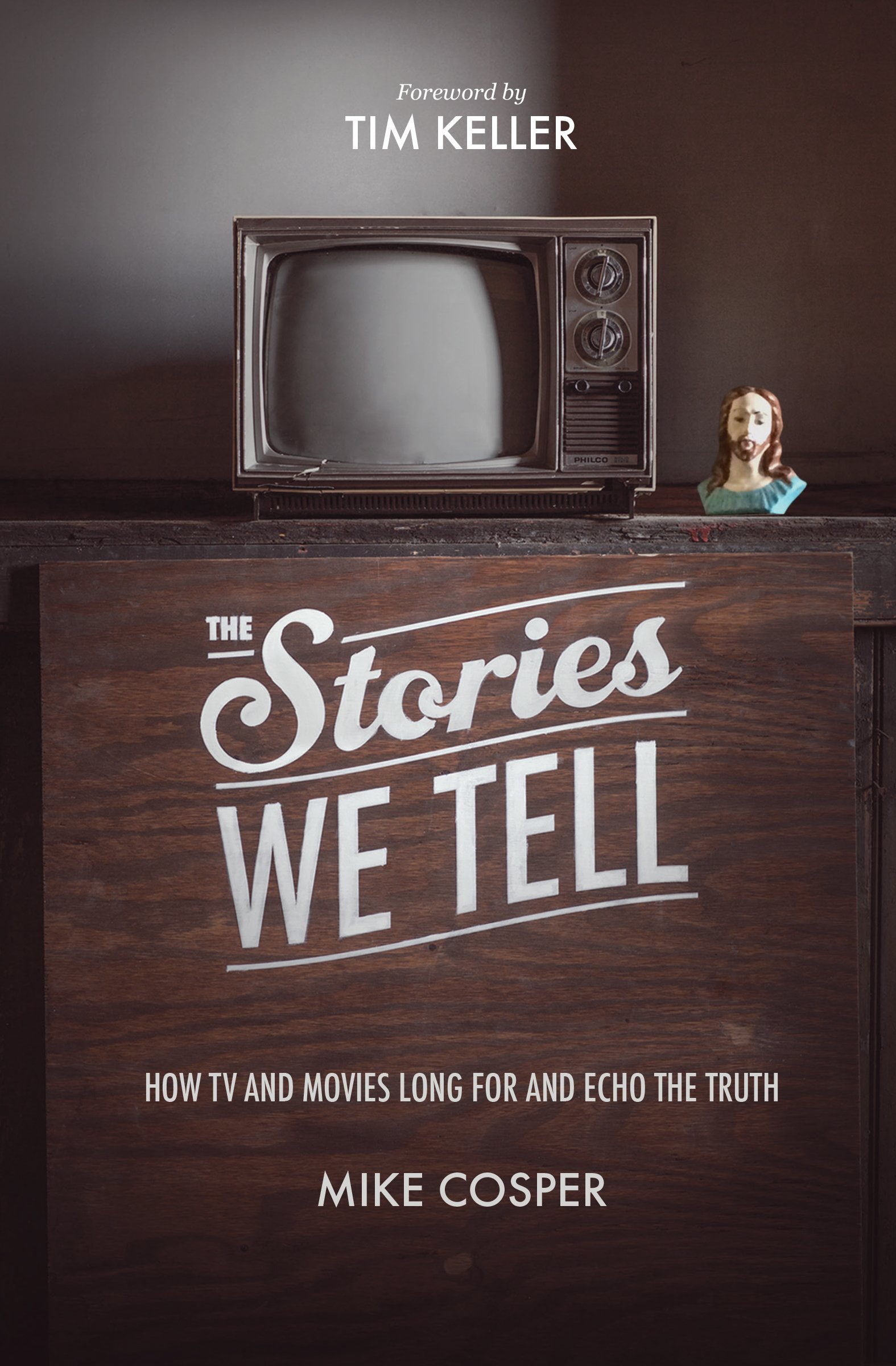
Mike Cosper’s The Stories We Tell
Cosper analyzes several television shows from Mad Men to Project Runway and looks at themes with redemptive value. He doesn’t present a one-size-fits-all picture of how individual genres or specific movies or shows reflect all one specific picture, but rather analyzes the stories told in these forms of media from the perspectives of various aspects of the Christian worldview. These include themes of creation, sin, redemption, love, the fall and success of heroes, and more.
This holistic vision of analyzing stories in TV and at the movies allows readers to open their own avenues for perspectives and reflection in ways that not all books on a topic like this provide. Not only that, but Cosper’s writing is genuinely fascinating. I haven’t watched most of the television shows he discussed, but his presentation of them was enough to allow me to feel as though I knew what was happening and even got me deeply interested in the stories he described. This is not just a good book on how to discuss movies, but it’s also a genuinely interesting overview of a number of stories, whether they’ve been encountered already or not.
Another excellent insight Cosper provided was his look at whether certain stories, movies, and television are appropriate for Christians. He presented a very balanced and insightful look at this topic. First, he noted that the question “how far is too far” is often used to draw boundaries either to allow oneself to get as far as possible or to try to denigrate or call out others. Then, he used two examples of the extremes when it comes to appropriateness: the “overanxious teenager” who wants to get right up to the boundary in order to see as much as they can and the “church lady” who wants to stand as judge to show how others are sinners. He uses these examples to great effect, but does not leave it merely at that. He argues that either extreme is mistaken and also offers a way for Christians to explore appropriateness of various shows and movies.
Conscience and community are to be our guideposts when it comes to the appropriateness of media. Conscience allows us to have an inner arbiter of whether something is appropriate: “If you’re struggling with whether to watch something, ask yourself if you’re sturrling against a conscience that knows better” (Kindle Location 671). A community will help as well by offering a group of others with different experiences and advice. The community will only be helpful, however, if one commits to being honest about viewing habits and having friends who are willing to confront one over the viewing. I found this to be remarkably insightful and Cosper’s perspective on appropriateness is a solid way for Christians to evaluate their viewing habits.
There are many books about Christianity and visual arts like movies and television. Mike Cosper’s The Stories We Tell
Disclaimer: I received a review copy of the book through Crossway. I was not obligated by the publisher to give any specific type of feedback whatsoever.
Links
Be sure to check out the page for this site on Facebook and Twitter for discussion of posts, links to other pages of interest, random talk about theology/philosophy/apologetics/movies and more.
Book Review: “Hollywood Worldviews” by Brian Godawa– Speaking of worldviews in the movies, why not check out my review of this book which seeks to provide a method for analyzing film from a worldview perspective? Let me know what you think.
Engaging Culture: A brief guide for movies– I outline my approach to evaluating movies from a worldview perspective.
I have a number of ways in which I have critically engaged with culture in movies, books, and other arts in my posts on current events (scroll down for more posts).
Source
Mike Cosper, The Stories We Tell (Wheaton, IL: Crossway, 2014).
SDG.
——
The preceding post is the property of J.W. Wartick (apart from quotations, which are the property of their respective owners, and works of art as credited; images are often freely available to the public and J.W. Wartick makes no claims of owning rights to the images unless he makes that explicit) and should not be reproduced in part or in whole without the expressed consent of the author. All content on this site is the property of J.W. Wartick and is made available for individual and personal usage. If you cite from these documents, whether for personal or professional purposes, please give appropriate citation with both the name of the author (J.W. Wartick) and a link to the original URL. If you’d like to repost a post, you may do so, provided you show less than half of the original post on your own site and link to the original post for the rest. You must also appropriately cite the post as noted above. This blog is protected by Creative Commons licensing. By viewing any part of this site, you are agreeing to this usage policy.
“Elysium” – Our Hopes, Greed, Class, and Suffering
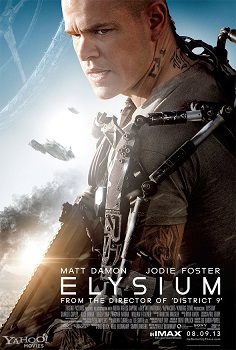 “Elysium” is one of a string of recent action flicks which have taken to exploring bigger issues than how to make the biggest explosion. Here, we’ll look at some themes in the movie and reflect on how they might resonate with the Christian worldview. There will be SPOILERS for the film in what follows. I will not summarize the plot, though a summary may be found here.
Greed and Suffering
The story seems to center around the issue of greed. After all, the premise is essentially that human greed leads to great suffering. The question of whether there is a moral obligation to end suffering is front and center in the movie. The citizens of Elysium live a life of luxury, conveniently located far away from the strife that inhabitants of Earth must undergo. There is a clear and obvious dichotomy between the lives of the people planetside and those on the space colony.
It’s a premise which seems obvious, but there is a twist in the film, which impacts the force of this question. Once the final outcome is determined, and the reprogramming of citizenship is brought about to include all people, Elysium’s automated defenses and medical robots immediately begin helping the people of Earth. Medical shuttles are dispatched with instant-healing devices to help the new citizens. This twist throws a wrench into the reasoning of the question of obligation to end suffering: what if one has nothing to lose in order to help others?
Thus, the question goes beyond mere greed. It is a question of how humans will seek to hold on to what they have, even when it costs nothing to help others. It’s a poignant way to portray the issue, and one which forces viewers to think upon their own attitudes regarding what we have and seek to hold on to.
Of course, this portrayal of the issue doesn’t take away from the question of whether there is an obligation to end suffering. I think the answer, from a Christian perspective, is that we of course do. Then, the question must be asked of how to best alleviate suffering. These and other questions are raised by the film, and in ways which provoke much continued thought.
Class
The issues of greed and suffering are also bookended in the film by the question of class. Even on Earth, where poverty seemed to be ubiquitous, class was an issue. There were those with jobs, those who begged, and those who turned to crime. The sharp distinction between citizens of Elysium and those of Earth makes the point even more obvious. Once again, as Christians, we are forced to ask how we might address this issue of inequality. There are to be no such distinctions in the body of Christ (Galatians 3:28), so how might we help to work towards ending racial, class, and other inequalities on Earth?
Hope
There is a constant theme of hope in what seems like a hopeless world. The people of Earth realize that help could come from Elysium, but they must get there first. They turn their hope to the stars, but there is a Nun who educates the young Max that there is beauty on Earth as well–beauty in humanity, despite our fallen nature.
Conclusion
“Elysium,” though featuring some objectionable content, is a film with much to ponder from a Christian perspective. How are we to approach other humans in a way which doesn’t undermine their dignity? We are to work to end suffering, to bring about equality. We are to prevent a scenario like “Elysium” from ever happening.
Links
Be sure to check out the page for this site on Facebook and Twitter for discussion of posts, links to other pages of interest, random talk about theology/philosophy/apologetics/movies and more.
Engaging Culture: A brief guide for movies– I outline my approach to evaluating movies from a worldview perspective.
I have a number of ways in which I have critically engaged with culture in movies, books, and other arts in my posts on current events (scroll down for more posts).
Elysium: Fighting for Paradise– Anthony Weber addresses a number of other worldview issues brought up in the movie on his fantastic site, Empires and Mangers. Be sure to follow his great blog.
The picture in this post is from a movie poster and I use it under fair use.
SDG.
——
The preceding post is the property of J.W. Wartick (apart from quotations, which are the property of their respective owners, and works of art as credited; images are often freely available to the public and J.W. Wartick makes no claims of owning rights to the images unless he makes that explicit) and should not be reproduced in part or in whole without the expressed consent of the author. All content on this site is the property of J.W. Wartick and is made available for individual and personal usage. If you cite from these documents, whether for personal or professional purposes, please give appropriate citation with both the name of the author (J.W. Wartick) and a link to the original URL. If you’d like to repost a post, you may do so, provided you show less than half of the original post on your own site and link to the original post for the rest. You must also appropriately cite the post as noted above. This blog is protected by Creative Commons licensing. By viewing any part of this site, you are agreeing to this usage policy.
An Apologist’s Insights on “God’s Not Dead”
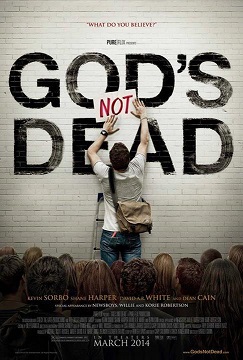 I recently had the chance to watch “God’s Not Dead,” a film which presents a story in which a college student decides to take a stand for his faith against the pressure of an atheistic philosophy professor. A summary of the plot may be found here. As an apologist with an MA in the field, I thought my comments might help provide some insight into the film. I’ll offer a look at some aspects of the film which I wanted to address. Feel free to chime in in the comments with your own thoughts.
Apologetics
The movie presents a clear picture of the need for apologetics. When challenged by attacks on the faith it is important to always have a reason for the hope within (1 Peter 3:15). Josh Wheaton–the protagonist–put together a decent presentation of various evidences for theism in the snippets that viewers get through the film. Of course, these are very simplified and don’t address several major issues with the arguments, but it gets the point across. It also, I have noted through conversations with others, spurred much interest in the area of apologetics. That’s awesome!
That said, I think there are some issues with even the arguments presented in the film. First, after Wheaton has presented the cosmological, design, and other arguments for theism, he is challenged by Professor Radisson on the notion that one just has to choose between atheism and theism. Wheaton acknowledges that yes, it is a choice. Now, there are a number of issues with this portrayal. First, it treats the balance of evidence as a kind of 50/50 proposition, which is, I would think, hardly the position of anyone. Second, it presents a view of belief in which we can just choose what we believe. This is called “doxastic voluntarism” which is a fancy way of saying that one can believe propositions at will. But that is a highly controversial position (just try to force yourself to believe that “Fairies fill my refrigerator every morning” and you’ll see the folly of it) and also flies in the face of biblical accounts of what faith is. Third, here I’ll tip my bias a bit and say I’m fairly well convinced that the balance of evidence is hardly 50/50 but actually compelling.
Another difficulty with the apologetic in the film is that it seems like the lynchpin argument offered was actually just a point of rhetoric. Wheaton presses Professor Radisson and asks “Why do you hate God?” and follows it up with [paraphrased]: “How can you hate someone who doesn’t exist?” This is the last straw and what prompts the class to vote by standing to say that “God’s not dead.” Although I think rhetoric has a clear place in the Christian apologetic (and has since the earliest times: see the apologetic works of Lactantius and Arnobius in the 200-300s AD), I thought it was an odd choice to make it the climactic argument for God. Perhaps it was because this added to the drama of the moment–and I suspect that’s right–but it did so at the cost of detracting from whatever apologetic the film could put forward.
I did, however, appreciate the interaction with some top scholars like Hawking and Lennox. I think it is very important for Christians interested in apologetics to read the top scholars in their fields in order to best get acquainted to the arguments.
Characters or Caricatures?
The way the Muslim father was portrayed was problematic. In the beginning of the film we see him dropping off his daughter and showing great concern for her. Later, he shares an intimate discussion of his faith and the importance of obedience in his background. But then, when it is revealed his daughter has converted to Christianity, he not only kicks her out of the house, but he also immediately hits her more than once. Now, I make no claims to being an expert on this, but I know from anecdotal evidence only that people are indeed kicked out of their homes for converting to Christianity (and sometimes for deconverting), and this is surely a bad thing. It’s not a bad thing to address this as an issue.
But the problem I saw was that the Muslim father’s immediate reaction was violence, without any explanation or any background for thinking this would be a reaction. The rest of the film up to this point had shown him as a caring father who was concerned for the faith and well-being of his daughter. To have him immediately turn to violence when she converted was jarring and I think it speaks to our cultural presuppositions about the religious “Other” to portray the “Other”–the Muslim–in that way. We need to move beyond such stereotypes and into genuine dialogue with those of other faiths, always looking to share the light and love of Christ with them.
On the positive side, the film did do a great job speaking to the importance of reaching out to others like the young man from China. It also emphasized missions in a number of ways, like centering some major plot points around a very amiable character as a missionary.
Pastoral Care
I appreciated the comments about the work of a pastor, in which Pastor Dave in the film was comparing his own work to that of a missionary friend’s and felt his own day-to-day tasks were mundane and trivial. The answer given by the missionary, however, was essentially that such work is part of the work of God as well and that we each occupy a place which God has put us in to make an impact on the world. I thought this was a great message and one that deserves further exploration.
On the other hand, I thought that the pastoral care at points in the movie presented some difficulties. For example, Pastor Dave’s conversation with Josh Wheaton before Wheaton decides to for sure stand up to his professor boiled down to a couple citations (not even quotations) of Bible verses to look up later and the comment that “It’s not easy, but it’s simple” [I may have the order in this quotation wrong]. I’ll be blunt: I think that this is actually a gross oversimplification. Quoting Matthew 10:33 (click for reference) does not actually make the issue facing Wheaton “simple.”
For example, would it be “denying” Christ to acknowledge that one might not have the resources available as a freshman student in a general studies philosophy class (and not a major) to take on a philosophy professor on the topic of God’s existence? I don’t think so. One could instead acknowledge that both the clearly adversarial tone taken in the environment and one’s own lack of knowledge or expertise in the area make it likely that one may actually harm the body of Christ by, well, looking like a freshman non-philosophy student outmatched by an atheistic philosophy professor. Wheaton, of course, has the benefits of film, so he is able to put together a beautiful powerpoint each week and manages to pound the books so hard that he can articulate the cosmological, design, and other arguments within a few days. But is this a realistic perspective? Moreover, is it a “simple” application of the passage to our lives?
Conclusion
“God’s Not Dead” awakens people to the need for apologetics. That is a great compliment, because it is a much-needed awakening. However, it has several issues (including those mentioned above) with the presentation of apologetics, its portrayal of the “Other,” and the oversimplification of several arguments, positions, and even pastoral care and reading of texts. In short, it’s a mixed bag.
Links
Be sure to check out the page for this site on Facebook and Twitter for discussion of posts, links to other pages of interest, random talk about theology/philosophy/apologetics/movies and more!
SDG.
——
The preceding post is the property of J.W. Wartick (apart from quotations, which are the property of their respective owners, and works of art as credited; images are often freely available to the public and J.W. Wartick makes no claims of owning rights to the images unless he makes that explicit) and should not be reproduced in part or in whole without the expressed consent of the author. All content on this site is the property of J.W. Wartick and is made available for individual and personal usage. If you cite from these documents, whether for personal or professional purposes, please give appropriate citation with both the name of the author (J.W. Wartick) and a link to the original URL. If you’d like to repost a post, you may do so, provided you show less than half of the original post on your own site and link to the original post for the rest. You must also appropriately cite the post as noted above. This blog is protected by Creative Commons licensing. By viewing any part of this site, you are agreeing to this usage policy.
Sunday Quote!- The Heartbeat and Delight of Christianity
 Every Sunday, I will share a quote from something I’ve been reading. The hope is for you, dear reader, to share your thoughts on the quote and related issues and perhaps pick up some reading material along the way!
The Heartbeat and Delight of Christianity
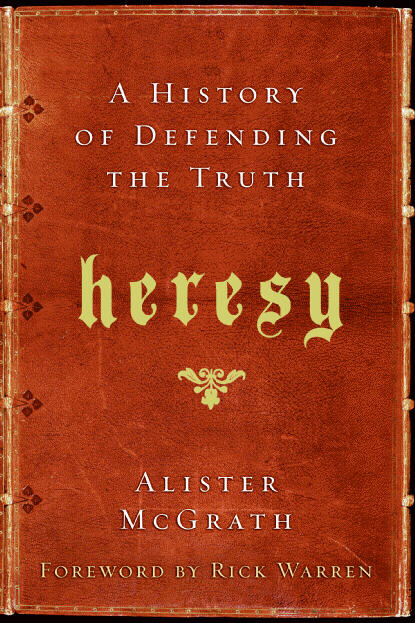
I re-read Alister McGrath’s Heresy: A History of Defending the Truth
If there is a heartbeat of the Christian faith, it lies in the sheer intellectual delight and excitement caused by the person of Jesus of Nazareth. Here is the one whom the church finds to be intellectually luminous, spiritually persuasive, and infinitely satisfying, both communally and individually. (17, cited below)
I found this passage quite powerful. Jesus is the heartbeat of Christianity, and our delight. Without Christ, there is no faith. Without our Lord, there is no salvation. But McGrath goes beyond that: Jesus of Nazareth is an intellectually compelling person, which drives us to seek out formulations to explain who He is; Christ is satisfaction and communal unity.
Have you thought about Jesus in these ways? How has Jesus spurred your intellect? In what ways have you recently delighted in the person of Jesus Christ?
Links
Be sure to check out the page for this site on Facebook and Twitter for discussion of posts, links to other pages of interest, random talk about theology/philosophy/apologetics/movies and more!
Sunday Quote– If you want to read more Sunday Quotes and join the discussion, check them out! (Scroll down for more)
Book Review: “Heresy: A History of Defending the Truth” by Alister McGrath– Check out my review of McGrath’s book.
Source
Alister McGrath, Heresy: A History of Defending the Truth
SDG.
Book Review: “The New Atheist Novel” by Arthur Bradley and Andrew Tate
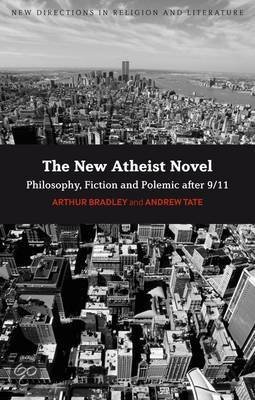 There are moments in which you pick up a book and are delivered into a completely unexpected and fresh-feeling experience. The New Atheist Novel: Fiction, Philosophy and Polemic after 9/11 was one such experience for me. Arthur Bradley and Andrew Tate take readers on a journey through the literature of four modern authors who, they argue, are representative of a new form of novel: the “New Atheist Novel.” This novel is a kind of counter-mythology which invents the transcendent within an atheistic universe. Bradley and Tate analyze the work of Ian McEwan, Martin Amis, Philip Pullman, and Salman Rushdie. The authors show how some have shifted their polemic after 9/11 to viewing religion as a kind of one-size-fits all mentality that has no distinction between liberalism and fundamentalism.
Bradley and Tate apply critical theory to the works of fiction presented in this book in incisive fashion. They draw out themes of the authors analyzed in order to show how often they are just as guilty of irrationality as those against whom they pontificate through the voices in their novels.
Ian McEwan’s fiction, they argue, shows a distinctly New Atheist bent. He sees religious persons as ultimately violent and anti-intellectual. Interstingly, McEewan’s vision of transcendence develops through music and the written word. His post 9/11 writings show a more distinctly anti-Islamist bent, which sees religion as a failure of the imagination. However, Tate and Bradley argue that McEwan’s imagination is itself failing in its capacity to see the radical Muslim act of terror as inherently symbolic and transcendent itself.
This kind of analysis proceeds across the authors analyzed, from Martin Amis’ cliché-filled war against cliché to Salmun Rushdie’s more even-handed but nevertheless anti-theistic vision of the “Quarrels over God.” The analysis of Philip Pullman’s work is perhaps the highest point of the work, as it shows how even in disagreement, one might learn from the “New Atheist Novel.” Pullman’s work shows the myth of the death of God as a kind of human transcendence and freedom from restraint. This vision may be seen as a sometimes on target critique of religion which sometimes becomes authoritarian and too bent towards heresy-hunting. Tate and Bradley ultimately see Pullman’s fiction as a kind of neo-heresy which is attempting to purify religion of its alleged bent towards fundamentalism and too-small vision of deity.
The book’s usefulness goes beyond simple critique. Instead, it gives readers a chance to interact with all literature in a critical fashion. Moreover, Bradley and Tate are not entirely unsympathetic to the “New Atheist Novel” and show how it may help to inform future discussions. The critical interaction is not merely critical but also constructive.
Perhaps the biggest weakness in the book is that its thesis doesn’t seem to carry throughout. The “New Atheist Novel” makes its debut with McEwan, but by the time the author’s reach Rushdie’s slightly more amiable vision of religions in conflict, it seems to lack cohesion as a concept. Perhaps it would be more accurate to say that the “New Atheist Novel” is more of an “Anti- (or Alter-) Theistic Novel” which encompasses not mere anger against religion but rather a critical and sometimes polemical and mistaken vision of the “religious other.” Thus, it seems in the end the “New Atheist Novel” namenclature might not be inaccurate after all, but I tend to think–and the authors reinforce this–of the “New Atheism” along specifically Dawkinsian lines of thought, and Rushdie and Pullman’s works did not seem to fit this usage of the term. A minor gripe, but one worth noting.
This is a book well worth reading and referencing. Don’t be deceived by its length (111 pages of text); it truly has an enormous amount of useful information and discussion. I took a monstrous amount of notes on this book given its length. It will get you thinking, whatever your own view. I recommend it without reservation.
Links
Be sure to check out the page for this site on Facebook and Twitter for discussion of posts, links to other pages of interest, random talk about theology/philosophy/apologetics/movies and more!
Sunday Quote!- The New Atheist Mythology– I share a quote from The New Atheist Novel which discusses the notion that there is a mythology growing up around atheism.
Source
Arthur Bradley and Andrew Tate, The New Atheist Novel: Fiction, Philosophy and Polemic after 9/11 
SDG.
——
The preceding post is the property of J.W. Wartick (apart from quotations, which are the property of their respective owners, and works of art as credited; images are often freely available to the public and J.W. Wartick makes no claims of owning rights to the images unless he makes that explicit) and should not be reproduced in part or in whole without the expressed consent of the author. All content on this site is the property of J.W. Wartick and is made available for individual and personal usage. If you cite from these documents, whether for personal or professional purposes, please give appropriate citation with both the name of the author (J.W. Wartick) and a link to the original URL. If you’d like to repost a post, you may do so, provided you show less than half of the original post on your own site and link to the original post for the rest. You must also appropriately cite the post as noted above. This blog is protected by Creative Commons licensing. By viewing any part of this site, you are agreeing to this usage policy.
Christian Discerment Regarding Music: A reflection and response
 I recently read a post which called for “discernment concerning the Christian music world.” The author, “EvangelZ” writes:
We have been told to be discerning in terms of what types of secular music to not assimilate into our minds if it is degrading, anti-Christ, and vulgar, to name a few. But what about the call to be discerning concerning the Christian music world?
I agree wholeheartedly with this sentiment. We should–must–be discerning when it comes to what music we engage with. Our engagement with both Christian music and “secular” music (whatever these categories even mean) should be reflective of the content of that music. The list EvangelZ provided above is hardly comprehensive, but a good place to start. If our “Christian” music is “degrading” or “vulgar,” that would certainly seem to exclude it from any use in a worship service, and should be a strong reason against our integrating that music into our lives.
Indeed, I would contend that the content of the music should be essentially the criterion (with notable exceptions below) for the music deemed acceptable for a Christian to consume. Of course, there should be a real acknowledgement that some people have different levels of discernment or resilience than others (can we eat the meat offered in sacrifice to false gods or not? after all, it’s just some meat left out for some false idol? [see here if you’re not sure what I’m referencing]).
However, after this introductory comment, EvangelZ spent the rest of the post discussing how we should us discernment regarding Christian music by way of the lives of those who made the music. For example, one issue highlighted was Tim Lambesis’ (singer for “As I Lay Dying”) apostasy. Now, setting aside the issue of whether any “As I Lay Dying” song could even possibly be used in a worship service (although I like metal, I hardly think it lends itself to corporate worship and singing praises), what I want to briefly touch on is exactly this notion: should our discernment apply to content of the music or to the lives of the musicians (or, of course, both)?
After reading the post, I wrote a comment, and I’d like to just reflect on what I wrote there a bit more. I’ll reproduce my comment, in part, here:
[T]he criteria given for discernment in “Christian” music are pretty much all matters of personal character of the musicians, not the actual content of the music. I’m wondering why on the one hand it is content (“secular” music) but on the other (“Christian” music), it is the people producing the music. This raises a number of questions for me:
1) Why the difference in criteria?
=> 1A) Is it because music functions didactically and so we should be aware of who is “teaching” us through music?
=> 1B) If so, then do we need to know about the lives of every single person who has written a song that we use in worship before we are able to use it?
2) If we are to use character as a criteria of discernment for worship music, does that not essentially mean we can’t use any music?
=> Explanation: everyone is a sinner in the process of sanctification, so by default anyone who has written a song we use in worship has still sinned.
=> 2A) Or is the issue simply unrepentant sin?
I think all of these questions are issues we must deal with as we consider the need for discernment in whatever music we listen to. I’ll provide a brief reflection on each issue I raised in these questions:
1) I am unconvinced that there should be any difference in our criteria for discernment when reflecting on Christian or “secular” music. Part of this is because I’m not sure such a dichotomy actually does exist (see here), and part is because I don’t know why such a distinction should exist.
1A) If we grant that hymns or music used in church functions didactically–as teaching–then perhaps a case could be made, but I think, abstractly, the content should once again be the ultimate judge of whether a teaching is good (or not).
1B) Because we cannot feasibly be required to know about the lives of all who write the music we listen to, this cannot serve as a viable criterion for discernment. Perhaps exceptions could be made in those cases wherein we do know something should (and what does “should” mean here?) disqualify one (i.e. I could see the knowledge that ‘the person who wrote this hymn is a satanist’ as a perfectly sound reason for not using a hymn), but one cannot realistically be expected to know about the lives of every single artist who writes any part of our hymnody (or music generally).
2) Because all are sinners, if character is a criterion for discernment, it would seem that all are disqualified.
2A) However, perhaps the qualification could be made that it is merely persistent, unrepentant sin which should disqualify one. But then one has muddied the waters via 1B again.
Thus, I think that for Christians, the best way to use discernment is to apply the truths of the Bible to the content of the music. We cannot realistically be expected to know the backgrounds of every individual who writes the music we may listen to or use in worship, and with the caveat noted above, I think the criterion simply should be the content–the lyrics–of the music. How do we analyze the content? Well I think there are a number of factors, including those rightfully noted above by EvangelZ. God’s revelation in Scripture and the gift of conscience should be our guides.
Links
Be sure to check out the page for this site on Facebook and Twitter for discussion of posts, links to other pages of interest, random talk about theology/philosophy/apologetics/movies and more!
On Christian Music– I reflect on the category of “Christian Music” and whether it is even a functionally helpful tool.
Engaging Culture: Demon Hunter’s “Extremist” and the Apologetic Task– I discuss the latest album from Demon Hunter and how music may act as an apologetic endeavor.
The Call for Discernment Concerning the Christian Music World– Be sure to read the post to which I responded here, and see what you think of their reasoning. I think this is an issue worth discussing.
SDG.
——
The preceding post is the property of J.W. Wartick (apart from quotations, which are the property of their respective owners, and works of art as credited; images are often freely available to the public and J.W. Wartick makes no claims of owning rights to the images unless he makes that explicit) and should not be reproduced in part or in whole without the expressed consent of the author. All content on this site is the property of J.W. Wartick and is made available for individual and personal usage. If you cite from these documents, whether for personal or professional purposes, please give appropriate citation with both the name of the author (J.W. Wartick) and a link to the original URL. If you’d like to repost a post, you may do so, provided you show less than half of the original post on your own site and link to the original post for the rest. You must also appropriately cite the post as noted above. This blog is protected by Creative Commons licensing. By viewing any part of this site, you are agreeing to this usage policy.
Sunday Quote!- Building the Argument from Undesigned Coincidences
 Every Sunday, I will share a quote from something I’ve been reading. The hope is for you, dear reader, to share your thoughts on the quote and related issues and perhaps pick up some reading material along the way!
Build the Argument
J.J. Blunt (1794-1855) wrote what I consider to be one of the strongest pieces of apologetics literature ever written, Undesigned Coincidences in the Writings Both of the Old and New Testaments. The book focuses, clearly enough, on the argument from undesigned coincidences. I’ll not explain the argument here, as I have done so already. But Blunt operated under no false hopes of having comprehensively covered this extremely broad argument:
Much, however, of the same kind of testimony I have no doubt has escaped all of us; and still remains to be detected by future writers on the Evidences. (v, cited below)
Blunt’s words are a call to action for the Christian apologist. The argument from undesigned coincidences is extremely powerful, but it also has massive depths to explore throughout the totality of the Bible which have not even begun to be explored. Moreover, Blunt began the work of relating these “coincidences” to contemporary literature by relating the Gospels and Acts to Josephus, but surely there is much more work to be done by exploring other literature outside of the Bible and seeing how these might be cross-confirmed.
So, fellow Christian apologists, let’s get to work!
Links
Be sure to check out the page for this site on Facebook and Twitter for discussion of posts, links to other pages of interest, random talk about theology/philosophy/apologetics/movies and more!
Forgotten Arguments for Christianity: Undesigned Coincidences- the argument stated– I outline the basics of the argument from undesigned coincidences. I also provide an example of the argument in practice.
Sunday Quote– If you want to read more Sunday Quotes and join the discussion, check them out! (Scroll down for more)
Source
John James Blunt, Undesigned Coincidences in the Writings of both the Old and New Testament, New York, 1847.
SDG.

 J.W. Wartick - Reconstructing Faith