J.W. Wartick
“Divergent” by Veronica Roth – A Christian review of the book
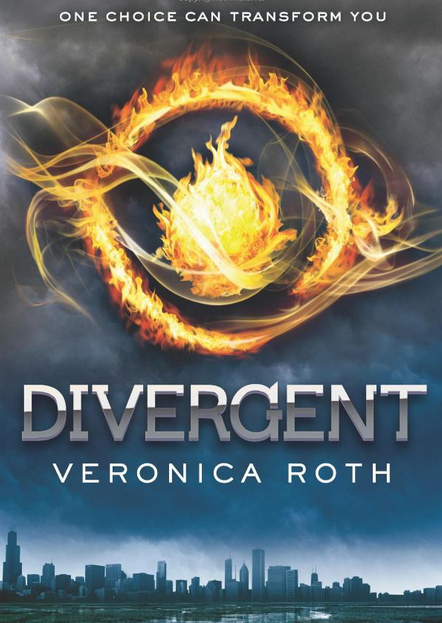 Veronica Roth’s Divergent
Factions/Divergence
In the world of Divergent, Factions are the way of order. The people of the city of Chicago came together after a cataclysmic event (left largely unexplained in the book) to try to restore order. The thought was that they would split people into various Factions which each held to a certain primary guiding principle to combat evil and wrongdoing. For example, the Candor Faction felt that lies were the primary way in which evil entered the world. Deception was how anger and hatred could be brought into the world again, with dire consequences. Other factions-Abnegation, Erudite, Amity, and Dauntless-follow a similar structure of thought: each is constructed around the notion that a specific weakness led to the destruction of the world.
However, Tris, the main character of the book, is Divergent- she does not fit well into any one faction. Those who are divergent are considered dangerous because they are not as fully in line with the thinking of a faction, which makes it harder for them to be conditioned behaviorally to fit into any of the differing paradigms. Thus, they are not only dangerous to the system, but also dangerous to life: they might ruin the system which has protected those inside it.
The notion that humans would divide into different groups which each see a certain facet of human nature as dangerous for the thriving of the species is intriguing. It did seem a bit of a stretch for me to believe that people would willingly divide up into such factions and focus on nothing but those aspects of the human psyche, but it helped to drive the plot and it is perhaps more believable in light of Roth’s statement (through Tris, of course) that each faction began to mock even the good aspects of the others. For example, those who were in Dauntless like Tris would often mock the perceived need for Tris to take an extra step to care for others; or they would laugh at the difficulties with telling lies some people had (“You should have been from Candor!”).
Human nature in Divergent is shown to be more complex through those who are themselves divergent. They see beyond the narrow limits of each individual faction and are therefore immune to the conditioning others succumb to.
Family
Throughout the book, Tris repeats the mantra: Faction before Family. However, the mantra does not play out in reality. Instead, Tris find herself continually longing for her family and the familiarity of her former faction. Although she also finds herself becoming loyal to her new faction, the Dauntless, Tris is ultimately saved by the reunification (however brief) of her family.
The theme is rather poignant, for it suggests there is something to the notion that the family is the proper realm of interaction. It’s not that everyone has a perfect family in the “real world,” rather, the point is that in an ideal situation, everyone would have a support structure within a family. This support structure would be a place for ultimate refuge.
Choice
The book’s cover focuses on choice: it is one choice that defines who you are forever, it says. That choice, of course, is which faction to join. But when push comes to shove, so to speak, towards the end of the book, it turns out that a whole series of choices define you, not just which faction you want to belong to. It is not one choice that defines Tris and the others; it is the choices they make in times of crises, alongside those choices they’ve made throughout their lives, which ultimately determines who they are.
The concept of choice in the book resonates alongside the notion of divergence. After all, the Divergent are those who cannot be neatly categorized into any of the factions. Their choices, it seems, have a bit more freedom, or at least freedom from conditioning. I can’t help but think of the choice made in Eden that led to the Fall. Before that fateful choice, humans had a very wide range of choices available to them; afterwards, humans became bound to sin and much more narrow in their vision. In seeking freedom, we became bound; in trying to open more opportunities, we limited them.
Conclusion
Divergent is a very interesting book written by a woman who professes her Christian faith. The book is very dark at times and there are many more themes I could explore. The interest in “choice” and “divergence” related to human nature and sin is fascinating to me. I’m interested to hear your own thoughts on the issue, so be sure to leave a comment below!
Links
Divergent– Anthony Weber over at Empires and Mangers, one of my favorite sites (and one you should follow!), reviewed the YA Book Divergent. He examined it from a worldview perspective. The book is being made into a major motion picture and has been hailed by some as the “next Hunger Games.” That means we’re going to run into it everywhere. What questions can we bring to the table? There are SPOILERS in this linked post.
Be sure to check out my other looks into popular books (scroll down for more posts).
Source
Veronica Roth, Divergent
SDG.
——
The preceding post is the property of J.W. Wartick (apart from quotations, which are the property of their respective owners, and works of art as credited; images are often freely available to the public and J.W. Wartick makes no claims of owning rights to the images unless he makes that explicit) and should not be reproduced in part or in whole without the expressed consent of the author. All content on this site is the property of J.W. Wartick and is made available for individual and personal usage. If you cite from these documents, whether for personal or professional purposes, please give appropriate citation with both the name of the author (J.W. Wartick) and a link to the original URL. If you’d like to repost a post, you may do so, provided you show less than half of the original post on your own site and link to the original post for the rest. You must also appropriately cite the post as noted above. This blog is protected by Creative Commons licensing. By viewing any part of this site, you are agreeing to this usage policy.
Sunday Quote!- A Disconnect Between Parchment and Pew?
 Every Sunday, I will share a quote from something I’ve been reading. The hope is for you, dear reader, to share your thoughts on the quote and related issues and perhaps pick up some reading material along the way!
A Disconnect Between Parchment and Pew?
I just started reading Jeff Jordan’s Pascal’s Wager: Pragmatic Arguments and Belief in God, which I admit I have high hopes for. Right at the beginning I came upon a brief tidbit I thought was interesting to consider:
A disconnect exists between the arguments that philosophers find interesting and the arguments actually employed by Christians and other theists as reasons in support of their religious commitments. (vii, cited below)
I wonder sometimes about this very disconnect. The average person in the pew is unfamiliar with and unaffected by things like the Kalam Cosmological Argument or the subtle distinctions required to discuss the problem of evil. Rather, they are more concerned with the practical aspects of faith and the amount of work needed to explain these arguments is neither required nor desired. There does exist this disconnect between parchment–the philosophical theories–and the pew–the average Christian. What can we do to bridge this gap? What does this say about the epistemic validity of faith generally? Is this even an area for concern at all? I don’t think there are easy answers to these questions.
Interestingly, Jordan went on to suggest that one way to bridge the disconnect was with pragmatic arguments, such as Pascal’s Wager. It will be interesting to see how he develops that thesis, and how he defends such arguments. I eagerly look forward to continuing my read of the book.
Links
Be sure to check out the page for this site on Facebook and Twitter for discussion of posts, links to other pages of interest, random talk about theology/philosophy/apologetics/movies and more!
Jeff Jordan, Pascal’s Wager: Pragmatic Arguments and Belief in God
What can you do to learn more? Some Tips for Scholarship
 A new year has come and it is time to get motivated to make some good habits. I have often run into people who ask me how I read so much or how to explore these topics more deeply. Let me be clear: I don’t think I’m really anything special. There are plenty of others out there who are doing more things better than I. But, hey, I have an MA degree in Apologetics. I can consider myself qualified to give tips for scholarship, right? I’ve credited them to others if I picked them up from others (and noted that I forgot where I forgot).
Reading
Set a realistic reading goal for yourself, but make it realistic and shoot for the lowest end of what you think is possible. My philosophy professor from my undergraduate studies and good friend, Stephen Parrish, told me about his goal: 2 pages a night from several different books before bed. Does that sound doable to you? I should hope so. Think about it this way (I’m not trying to be crude here): do you spend any time in the restroom? Are you just sitting there? I bet you could read two pages instead of twiddling your thumbs.
The best part about setting a realistic reading goal at the low end of what you think is possible is that you will often do way more than your goal. If you say “I have time to read two pages right now” to yourself, you’ll often get away with 5 pages or even a chapter. Find those 5-10 minute portions in the day (at breakfast over a bowl of cereal is another possibility) and fill them with reading.
Also, be aware of your own enjoyment and interests related to what you’re reading. Don’t just continue reading a book because you started it. If you’re halfway through and feeling as though it’s a huge bore for you and you’re not getting anything out of it–then stop reading the book. Be sure to engage in the highly valuable process of skimming–simply reading one or two sentences per paragraph/page to get to the main points. In particular, this is helpful for those books you really want to get through but are having the problem of boredom. Don’t feel obligated to read everything from every book. If it’s not valuable to you, then stop. I admit I’m a huge offender for this: I do often force myself through books I’m not enjoying. Remind me to stop! You and I don’t have time for that!
Note-Taking for Reading
Let me emphasize the extreme value and importance of taking notes on your reading. Yes, it will slow you down. However, these notes will become invaluable going forward. Tim McGrew was one who really stressed to me the importance of reading notes. He suggested keeping a running file which had all your notes in it on your computer. That way, it is searchable and you can easily find where that quote was you were interested in as you’re doing your own writing. I would suggest keeping a separate file for each book you read, and then one running document with all the book notes together (just copy and paste each book’s entire notes into this document when you finish).
The way I take notes is simply by typing the page number and my very brief summary of what was written. I really need to emphasize this: these notes are absolutely invaluable. Although it will take you longer to read books, if you take notes you will remember the books a lot better and you also will have all your own thoughts on what was most important from the book at your fingertips. Do this. If anyone is interested, leave a comment and I’ll copy and paste a selection sample of my own notes into the comments below.
Listening
Listen to things related to your area of interest. There are almost certainly podcasts on the topics in which you are interested. Look them up. Listen to them while you’re washing dishes, brushing your teeth, or doing the laundry. You’ll be surprised by how interesting these can be, and you’ll also learn and retain quite a bit. Plus, you can listen to them multiple times to get the core ideas down.
Don’t limit your listening to podcasts. Audiobooks are a great way to supplement your reading if you’re afraid you really don’t have a lot of time. Text-to-voice is a great feature on Kindle (and probably other e-readers, though I am not familiar with them) that will read you books out loud in an electronic voice. It’s not the most exciting way to listen to books, but it will help you dive in and you’ll learn a bunch. Another avenue to explore is listening to debates. Look up debates on topics your interested in, or find your favorite scholar and see if they have done any debates. It’s a great way to learn how to engage. Finally, look for lectures available for free. Very often, you’ll be able to find lectures on topics your interested in just by using Google to search for them. Again, this will supplement the materials you’re reading and expand your knowledge of the areas in which you are interested.
I can’t emphasize how important I have found the practice of listening to lectures/debates/audiobooks/podcasts. I listen to them while I’m brushing my teeth, working out, doing dishes/laundry, etc. The amount of material you can consume in those times you might normally not be listening to anything is astounding. Use that time!
Engagement
If you’re going to engage in apologetics (or, really, any other field), you should try to get a feel for the trends and interest of those who are working in the same area. Try reading a blog article or two each week related to your interests. Don’t make this take away from your reading goal for books above. Think about it this way: do you spend a lot of time reading pointless junk from Facebook? (I’ll confess right now: I really do.) Why not use that time to read a couple blog posts you’re interested instead.
While we’re on the topic of blogs, don’t forget to comment on others’ blogs. Not only will this draw them to reciprocate, but it will also help you practice writing in a way which engages you with the topics in which you’re interested.
Try writing a blog yourself. It will bring along people who agree and disagree and give you a feel for how to handle such discussions.
Utilize Facebook and other social media to engage with scholars in the field. Find groups which discuss your areas of interest and join them. You’ll be surprised by how much you can learn if you just look for a little bit.
Avoid Wasting Time
Look, I already admitted I’m a big offender from wasting time on Facebook, but let’s just promise each other we’re going to try to stop that. I’m not saying you need to ignore friends and family. But if you do what I do, you spend a lot of time just scrolling through your feed looking at things that really don’t interest you because it’s mindless and vaguely entertaining. Sound familiar? Why not use that time to read a blog post, listen to a lecture, or send a message to someone else whose opinion you value about a topic you’re interested in? I bet you and I can get a lot more done if we do that.
Whatever your time-waster is, try to cut down on it. There is nothing wrong with taking a break. Let me be clear on that. I find my best way to take a break is to play some video games or read some science fiction and just zone out for a bit. Don’t give up on the things you love for the sake of scholarship. But if you find you’re really just wasting time for the sake of wasting time; cut it out! You have better things to do, and so do I!
Do What You Enjoy!
Be sure to remember you don’t need to have your nose to the grindstone 100% of the time. Make time for the things you enjoy, whether that is reading science fiction novels or watching your favorite TV show. Keep some “you time” for enjoying things outside of scholarship so that you don’t burn yourself out.
Stay Focused on the Goal
What are you working towards? Keep that in mind as you structure your reading, listening, and other studying. It’s fine to read outside that area, but you should always try to remain focused primarily upon your goal.
It is also incredibly important not to become entirely engrossed in studying. As Christians, we need to keep our “eye on the prize” and pursue our worship of and relationship with our Lord and Savior. Make time to read Scripture. Have it be a daily routine: a time to worship through commitment to Christ.
How about you?
What are some of your tips? Do you do any of the things mentioned above? Drop a comment and let me know what you do to increase your knowledge.
Links
Be sure to check out the page for this site on Facebook and Twitter for discussion of posts, links to other pages of interest, random talk about theology/philosophy/apologetics/movies and more!
SDG.
——
The preceding post is the property of J.W. Wartick (apart from quotations, which are the property of their respective owners, and works of art as credited; images are often freely available to the public and J.W. Wartick makes no claims of owning rights to the images unless he makes that explicit) and should not be reproduced in part or in whole without the expressed consent of the author. All content on this site is the property of J.W. Wartick and is made available for individual and personal usage. If you cite from these documents, whether for personal or professional purposes, please give appropriate citation with both the name of the author (J.W. Wartick) and a link to the original URL. If you’d like to repost a post, you may do so, provided you show less than half of the original post on your own site and link to the original post for the rest. You must also appropriately cite the post as noted above. This blog is protected by Creative Commons licensing. By viewing any part of this site, you are agreeing to this usage policy.
Cosmos: Episode I Recap and Review
The Cosmos is all there is or was or ever will be. – Carl Sagan
I will be watching the “Cosmos” TV series and providing recaps and responses as we go. I’ll evaluate the ideas presented for accuracy and give critical responses where I see necessary. Future “Recaps” will likely be shorter, with more length dedicated to the response.*
Episode I: Recap
The episode started off with the above quote from Sagan. Then, we took a trip in a spaceship with the “imagination” to see what the Earth looked like millions of years ago, followed by a picture of what it might look like in the future (apparently like the Borg invasion in “Star Trek: First Contact,” so watch out!).
Then, we got a pretty sweet CG-heavy tour of the solar system via fake spaceship that looks like Eve from Wall-E. I mean it, it was awesome! I was reminded of the majesty of a Ben Bova novel (if you haven’t read him, I would recommend it, but be aware of some rather simplistic discussion of religion). Finally, we zoomed in on Voyager I which had sound travelling from it in vacuum. I’m pretty sure that can’t happen, but I could easily be mistaken about that, so I’d be happy to be corrected.
An unimanginably awesome picture of the Milky Way through infrared really put us in perspective: there are seemingly infinite stars to be seen merely in our galaxy, which is one of an untold panoply of galaxies. As we zoomed out through the gigantic extremes of the universe (the Supercluster), we find that that supercluster is but one among untold billions of galaxies and the observable universe.
But what is meant by “observable universe”? The universe is actually so huge that we can’t actually observe the entire thing because there is more beyond what we can see. But “many… suspect” that our universe is but one in an extremely huge number of actual individual universes (here shown as little bubbles spreading out continually over the screen).
Let’s also not forget the church is a big destroyer and persecutor of science. Galileo proves that science and religion are forever enemies, right? Galileo’s story is preceded by Giordano Bruno, who is portrayed as a kind of anime graphic novel hero maverick because he went along with Copernicus. I’ll just narrate along. He “dared to read the books banned by the church… and that was his undoing.” No really, that’s what they said about him. Interestingly, they also say that Bruno reasoned that because God was infinite, creation couldn’t be anything less. But the evil church threw him out into the cold and he had to sleep on the ground and freeze at night! Then, he had a vision of science dreamland wherein he broke the universe with his finger and lifted the veil of knowledge that the idiots surrounding him had put in place. He floated around the universe and was the first person to figure out that there was vacuum and also the first person to fly in space and land on the moon and sun. (Again, I’m not making this up: this is what he does in the animated sequence in the dream.)
If Bruno was right, according to “Cosmos,” then not only is church authority overthrown, but the Bible can be brought into question *cue religious people gasping in shock.* Bruno was condemned by the church and burned at the stake but magically had powers to float throughout the universe so that’s pretty cool: throw off the chains of church oppression and what you’ll get is genius and the ability to fly in space.
The episode then walked through the history of the universe by paralleling a single year. The Big Bang: we are all made of “star stuff” which was produced through various processes during and after the Big Bang. Earth formed through a number of collisions with various asteroids and the like. The origin of life “evolved” through biochemical evolution. These “pioneering microbes” invented sex, so that’s pretty cool. December 30th (in the cosmic year) brought about the desolation of the dinosaurs with an asteroid. Humans only evolved “the last hour of the last day of the cosmic year.”
 Evaluation
I love space. I love astronomy–my wife can attest to this as I randomly bought an astronomy textbook to read when I was in college. Yeah… I’m a nerd. I don’t claim to have science training or be a scientist, but there is something I can spot: unfounded metaphysical statements. That’s something I honestly expect to see quite a bit of when it comes to this TV series. It actually began with one from Carl Sagan: “The cosmos is all there is or was or ever will be.” Is that a scientific fact about the cosmos? Could you demonstrate that one for me? No. In short, the show begins with an ungrounded metaphysical statement.
Another issue I have is the personification and reification of science. “Science” does x; “Science” gives us y. I’m not at all convinced that “science” is a clearly dilineated entity such that we may speak of it as though it were a reified, ontologically extant entity. What does it mean to say that “science” does something? Don’t we mean that scientists are really the ones who do this? And are not scientists just as much people as anyone else?
The episode’s portrayal of history was very unbalanced. They depicted Giordano Bruno as a kind of hero against the church full of blundering idiots. When he was finally excommunicated, the quotes they put into the church’s mouth were interesting because they portrayed some of the actual issues happening, such as a strict adherence to Aristotelian science. At the time academia really was fully behind Aristotle, and it helped that the church had bought into his cosmology as well. However, for every minimal effort they made at showing some of the historical background, there was some significant effort made to show that the stupid church and its evil Inquisition had a “sole purpose to… torment anyone” who disagreed with the views of the Church. Bruno thought God was infinite so the universe could be infinite as well. Interesting thoughts, but these are juxtaposed against a depiction of everyone else as a bunch of religious idiots who couldn’t transcend space like Bruno could.
Moreover, what banned books that Bruno read are they referencing? Copernicus’ works weren’t put on the list of banned books until 1616 (thanks to Tim McGrew for this information). Just for reference, Bruno died in 1600. I’m curious as to what this depiction was supposed to suggest. I think they mentioned someone else earlier but the ties to Copernicus were evident throughout this section, and given that it was really the rejection of Aristotelianism which was condemning, there was some historical accuracy to be desired here.
Tim McGrew also points out a number of other historical errors, such as the notion that Bruno was burned at the stake for his astronomical views; the notion that everyone at the time thought the Earth was the center of the universe; the notion that being the “center” of the universe meant Earth had a privileged place; and several more major difficulties. I highly recommend surveying them.
The depiction of the multiverse with little-to-no qualification was alarming, for there is much debate over whether there even is such a multiverse, and if there is, to what extent it may be called a multiverse. The portrayal within this episode was essentially a fictitious account being passed off without qualification as something a lot of people believe. The wording used was that “many… suspect” there is such a universe. Well yes, that may be true, but to what extent can we test for these other universes? What models predict them and why? I am uninterested in how many people hold to a belief; I am interested in whether that belief is true.
The survey of the history of the universe was interesting, but there were some major glosses. As an apologist, let me admit my bias here: I would have loved to see some discussion of the fine-tuning involved for life. But that aside, I have to say that the brief snippet used to explore the origin of life: “biochemical evolution” was astonishingly insufficient. I’m sure we’ll get into that in the next episode, but the origin of life is one of the great unsolved mysteries within science and to just hand wave and say “biochemical evolution” is, well, notable to say the least.
Overall, I have to say I was unimpressed by this episode. The historical difficulties were great, but the metaphysical claims throughout passed off as scientific fact were more disturbing.
Links
Be sure to check out the page for this site on Facebook and Twitter for discussion of posts, links to other pages of interest, random talk about theology/philosophy/apologetics/movies and more!
Cosmos, Giordano Bruno, and Getting it Right– A brief but incisive critique of a number of major historical errors made throughout the first episode.
Cosmos with Neil deGrasse Tyson: Same Old Product, Bright New Packaging- In this post, Casey Luskin takes on the notion that science and religion are at war alongside some other errors in the episode.
Is there any science in the new “Cosmos” series, or is it all naturalistic religion?– Wintery Knight takes on the episode for making a bunch of claims without evidence.
Notes
*I may miss an episode or two if I have to work.
The image with the text “Cosmos: A Spacetime Odyssey” is from Fox and belongs to them. It came from promotional material and I use it under fair use and make no claims to ownership.
SDG.
——
The preceding post is the property of J.W. Wartick (apart from quotations, which are the property of their respective owners, and works of art as credited; images are often freely available to the public and J.W. Wartick makes no claims of owning rights to the images unless he makes that explicit) and should not be reproduced in part or in whole without the expressed consent of the author. All content on this site is the property of J.W. Wartick and is made available for individual and personal usage. If you cite from these documents, whether for personal or professional purposes, please give appropriate citation with both the name of the author (J.W. Wartick) and a link to the original URL. If you’d like to repost a post, you may do so, provided you show less than half of the original post on your own site and link to the original post for the rest. You must also appropriately cite the post as noted above. This blog is protected by Creative Commons licensing. By viewing any part of this site, you are agreeing to this usage policy.
Does good always eliminate evil?
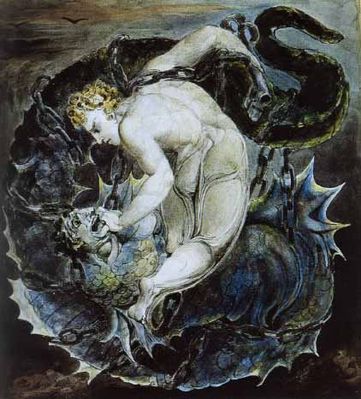 One of the key components of the composition of the problem of evil (at least its logical variety)* is the notion that good will eliminate evil. The late J.L. Mackie put it this way:
A wholly good omnipotent being would eliminate evil completely; if there really are evils, then there cannot be any such being. (Mackie, 150, cited below)
Simply put, this statement and any like it seem fairly obviously false if made without any rather major qualifications. After all, it seems clear that the total elimination of evil is not actually a logically necessary end for a good being, even an all-good, all-powerful being.
C. Stephen Evans presented a case to show that Mackie’s statement (and those like it) are simply mistaken. He noted that the principle that good must eliminate evil seems to be blatantly false without a number of qualifications. He argued that there are some evils which good beings will allow in order to bring about a greater good. The analogy he used was that of parents not allowing their children to ride in automobiles. After all, this would ensure that they would never be involved in the evil of a car crash, but surely it would also prevent greater goods of interaction with friends, learning to drive and the responsibility that comes with, and more (127). However, Evans was quick to note that a deity is by no means directly analogous to a human parent. The resources God would have to prevent evil are infinitely greater than that of a human parent.
In the case of God, however, God cannot bring about the logically impossible. Rather than going for a full-on theodicy (an account of why evils exist), Evans argued that certain goods are impossible to achieve without some evil. Thus, courage necessitates some kind of suffering (128). He did not argue that this notion alone provides a comprehensive theodicy; but for our purposes it is enough. It seems clear that the notion that good must eliminate evil is not only unsupported by argument (it is an a priori assumption), but also patently false. That is, we have evidence that at least some evil must be allowed in order for some good to be brought about.
I want to be clear about my thesis in this post: I am not claiming to have a comprehensive explanation for all evil everywhere. My claim is rather that good does not, by necessity, eliminate evil. That’s all. I believe that I have established this thesis. If so, then Mackie’s argument (and those like it) fail.
*The logical problem of evil is basically an argument that there is a contradiction in theistic belief related to God’s power and goodness and the existence of evil.
Links
Be sure to check out the page for this site on Facebook and Twitter for discussion of posts, links to other pages of interest, random talk about theology/philosophy/apologetics/movies and more!
Sources
C. Stephen Evans, Faith Beyond Reason: A Kierkegaardian Account (Reason & Religion)
J.L. Mackie, The Miracle of Theism (New York: Oxford, 1982).
SDG.
——
The preceding post is the property of J.W. Wartick (apart from quotations, which are the property of their respective owners, and works of art as credited; images are often freely available to the public and J.W. Wartick makes no claims of owning rights to the images unless he makes that explicit) and should not be reproduced in part or in whole without the expressed consent of the author. All content on this site is the property of J.W. Wartick and is made available for individual and personal usage. If you cite from these documents, whether for personal or professional purposes, please give appropriate citation with both the name of the author (J.W. Wartick) and a link to the original URL. If you’d like to repost a post, you may do so, provided you show less than half of the original post on your own site and link to the original post for the rest. You must also appropriately cite the post as noted above. This blog is protected by Creative Commons licensing. By viewing any part of this site, you are agreeing to this usage policy.
Sigmund Freud, Totemism, and the origin of religion- Who cares about facts?
It is amazing, even before Freud’s psychoanalyticial theories were discredited as such, that this idea was ever accepted as anything but an utterly groundless fabrication. (134, cited below)

Oddly, a challenge I still sometimes see to Christianity (and indeed religion in general), is the notion that somehow it is merely cosmic project of some strange psychological phenomena. Although the idea didn’t originate with Freud, his theories seem to be the most popular. Freud’s idea for how religion came to be was essentially a wish-fulfillment of his own: he turned humanity’s religion into a kind of Oedipus complex.
For Freud, religion clearly often involved a father figure. Thus, he reasoned, religion must have come about over some conflict with a father figure which later caused guilt and the lifting up of a kind of father in the sky- God. The conflict, he proposed, came about due to the notion that the dominant male was the only one allowed sexual access to the women in the primitive family (I’m not making this up!). Winfried Corduan’s latest book, In the Beginning God: A Fresh Look at the Case for Original Monotheism, analyzed a number of aspects of origin of religion theories which are relevant to this thesis. Freud’s theory does not survive empirical analysis.
First, Freud’s notion of shared sexuality and group sex among alleged primitive societies was a popular theory at the time, but one utterly unfounded and based upon essentially no observable evidence. Corduan noted the notion of group marriage was largely derived from presuppositions about how the origin of religion and social institutions “must have happened” (114-115). The theory itself was put forth by L.H. Morgan and not based upon observation but rather “his support of evolution and Marxist-like social theories in which he construed ordinary social conventions… as late inventions in human history” (116). Some anthropologists in the field bought into the theory and thus allowed their observations to be directed by the theory, rather than using their contradictory observations to revise the theory. In fact, their theory-driven research resulted in confusion over the actual social constructs which they were observing (116ff).
Second, Freud’s analysis of the way religion developed is itself mistaken. The climax of Freud’s story is the cannibalistic totem feast upon the Father figure as a way to honor the Father and begin the worship thereof. But Freud’s story is again bereft of observational evidence. Freud acutally used the concept of the totem feast to try to discredit Christianity with its teachings on the Lord’s Supper (communion/Eucharist). However, totem feasts are, themselves, extremely rare in totemistic societies (133-134). Totem feasts were observed in only a few societies, but then–as Corduan noted was often the case–the irregular was applied generally and so reporting on the various societies began to rely upon the rarity rather than the norm (if indeed a “norm” can ever be said to apply to wildly diverse practices). Moreover, there is simply no record whatsoever of a cannibalistic totem feast. The very notion was invented by Freud to discredit Christianity.
Freud’s generalized application of an extremely rare and unusual practice to a theory made up through psychoanalysis of peoples who left no record and no longer exist is unfounded. His use of his theory to attempt to discredit Christianity seems to actually teach us more about Freud’s psyche than the actual origins of Christian practice.
Anyway, I’m finding this book highly informative. I highly recommend it. I have found it to be extremely thought-provoking. It is interesting to see how many things we have simply assumed to be true about the origins of religion stem from unchallenged (and unsupported) theories proposed around a hundred years ago. Perhaps it is time to revisit these theories. So far as Freud goes, it seems his bell has tolled.
Links
Be sure to check out the page for this site on Facebook and Twitter for discussion of posts, links to other pages of interest, random talk about theology/philosophy/apologetics/movies and more!
Source
Winfried Corduan, In the Beginning God: A Fresh Look at the Case for Original Monotheism
SDG.
——
The preceding post is the property of J.W. Wartick (apart from quotations, which are the property of their respective owners, and works of art as credited; images are often freely available to the public and J.W. Wartick makes no claims of owning rights to the images unless he makes that explicit) and should not be reproduced in part or in whole without the expressed consent of the author. All content on this site is the property of J.W. Wartick and is made available for individual and personal usage. If you cite from these documents, whether for personal or professional purposes, please give appropriate citation with both the name of the author (J.W. Wartick) and a link to the original URL. If you’d like to repost a post, you may do so, provided you show less than half of the original post on your own site and link to the original post for the rest. You must also appropriately cite the post as noted above. This blog is protected by Creative Commons licensing. By viewing any part of this site, you are agreeing to this usage policy.
Sunday Quote!- The Desperate Lights of Genesis?
 Every Sunday, I will share a quote from something I’ve been reading. The hope is for you, dear reader, to share your thoughts on the quote and related issues and perhaps pick up some reading material along the way!
The Source of Light: A Desperate Bid?
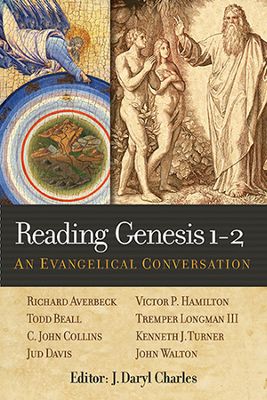
One of the heated questions about the age of the Earth of course concerns the meaning and length of the days of creation. Of the questions related to that, one which persists is where from and why, on a literal reading, is there light before the bodies which produce light (stars, sun, etc.) are apparently created (though this is also debated) on day four? In Reading Genesis 1-2: An Evangelical Conversation, Tremper Longman III offers the following comment on one path that some creationists take to explain the light prior to the sun:
The counterargument [to the fact that the solar bodies were not created until day 4] that God could provide an alternative light source is an act of desperation. Of course, God could provide light and darkness in some other fashion in a twenty-four-hour period, but that would still not constitute a literal evening and morning that is defined by the setting and rising of the sun and the movement of the other celestial bodies. (105, cited below)
Although I’m not sure I would qualify this move as “desperate,” I do still wonder how, exactly, one is to define the days of creation and a “literal” evening and morning without the actual solar bodies. I mean, realistically, what does it mean to say there is “evening” without such a reference point? Interestingly, some concordist positions (concordist meaning views which seek to explain the Bible in light of science or vice versa–and would encompass both young and old earth creationists of various types [see my taxonomy of positions]) actually take this to show that the days are not indeed 24 hour periods.
What are your thoughts on this issue? Do you see this move as desperate or do you think its perfectly reasonable? Somewhere in between? Why?
Source
Tremper Longman III, “What Genesis 1-2 Teaches (and What It Doesn’t)” in Reading Genesis 1-2: An Evangelical Conversation
Book Review: “A Visual Defense” by Robert Velarde
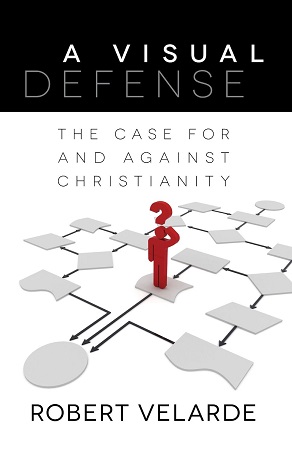 Robert Velarde’s A Visual Defense: The Case for and Against Christianity
Positives
The clear and extremely important benefit of the work is that it really does provide a way for people to envision how a number of arguments related to the truth of Christianity would look mapped out. The way that Velarde brings this out is by making a flow chart with the argument mapped out alongside objections and rebuttals.
The flow charts themselves are extremely helpful, because they really do allow one to sit with the book and use a finger to trace how the argument would work in practice. Although I was familiar with the arguments given, I felt as though I learned some things simply by seeing the arguments lined up in such a way as to follow them pictorially.
The format of the book is also very helpful. Each chapter begins with a flow chart that addresses a specific topic via an argument(s). The different parts of the flow chart have different shapes depending on whether they are the conclusion, assumption, premise, or rebuttal. These flow charts have every bubble numbered. The chapter following the flow chart simply lays out the numbers in order and explains in greater detail the conclusion, the premises, the objections, and the rebuttals. Thus, the format is highly readable and helps to draw out the flow chart more readily. I found myself flipping back to the flow chart very frequently as I read through the book.
Negatives
This book cannot really be used in isolation. One either needs another stack of books to get to the heart of many of the topics introduced or to come to the book with a working knowledge of a wide range of apologetics topics. The numbered outline of each part of the flow chart often gives only a small paragraph in defense of rather major apologetics topics. For example, the defense of the argument from religious experience comprises a page and a half and three bubbles on the flow chart (46-47). The argument itself is an area of major interest for me and, having read ten books and multiple articles on the topic, I realize it is a really massive issue. But due to the format of the book, this diminishes its value somewhat, as it seems like it would best be used as part of an apologetics class or an introduction to the issues related to the defense of the Christian faith. However, in order to do so, one would need a hefty general apologetics book(or a couple more specialized ones) to use alongside it.
I’m sure this was a conscious decision on the part of Velarde and others–the book is surely intended to be used in this fashion–but that doesn’t make the price of entry for newcomer any less.
The “visual” aspect of the visual defense could also be better integrated in the body of the work. The flow charts are extremely helpful, but it perhaps could have been even better to have a few more of them scattered about to use as defenses of various premises or other issues. I’m not a visual learner, so I admit it is hard for me to brainstorm on this, but I also think that the book could have perhaps integrated more pictures to show how the argument moves from one point to the next.
Conclusion
Robert Velarde is to be commended for taking a unique approach to introducing apologetics. The importance of providing a way for visual learners to understand these arguments in a pictorial fashion should not be understated. That said, the book essentially requires others to be read alongside it. I would imagine this book would be most useful for professors or small groups wanting to introduce the topics as opposed to a book to pick up and hand to a friend interested in apologetics. It would be a great tool to utilize in an apologetics class to introduce each major argument and then proceed into lengthier defenses of each.
Links
Be sure to check out the page for this site on Facebook and Twitter for discussion of posts, links to other pages of interest, random talk about theology/philosophy/apologetics/movies and more!
Source
Robert Velarde, A Visual Defense: The Case for and Against Christianity
I was provided with a review copy of the book from Kregel. I was in no way asked or required to offer any specific type of review. My thanks to the publisher for the review copy.
SDG.
——
The preceding post is the property of J.W. Wartick (apart from quotations, which are the property of their respective owners, and works of art as credited; images are often freely available to the public and J.W. Wartick makes no claims of owning rights to the images unless he makes that explicit) and should not be reproduced in part or in whole without the expressed consent of the author. All content on this site is the property of J.W. Wartick and is made available for individual and personal usage. If you cite from these documents, whether for personal or professional purposes, please give appropriate citation with both the name of the author (J.W. Wartick) and a link to the original URL. If you’d like to repost a post, you may do so, provided you show less than half of the original post on your own site and link to the original post for the rest. You must also appropriately cite the post as noted above. This blog is protected by Creative Commons licensing. By viewing any part of this site, you are agreeing to this usage policy.
Book Review: “What’s Your Worldview” by James N. Anderson
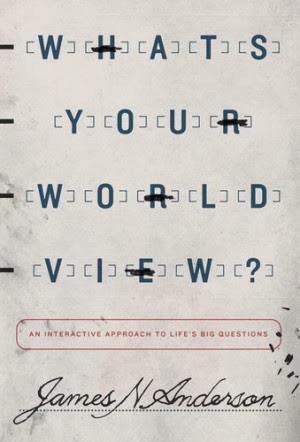 When I first learned about What’s Your Worldview?: An Interactive Approach to Life’s Big Questions
The book’s format is set up such that it outlines something (like what it means to say there is objective truth), then asks whether you believe in it. If you choose yes, you flip to one page; if no, you flip to another. Ultimately, your answers will land you in a worldview. Each worldview has a few pages of brief discussion on how it views reality and what problems might arise with that worldview.
I decided to indeed choose my own adventure and start out reading it from an atheist’s perspective. I figured that would give me a good look into the approach. I quickly realized that answering the questions in such a way got me to “dead ends.” If I said “No” to whether I believed in objective truth, I flipped to the worldview of “Relativism,” had the view explained and some major issues brought up. The end. Full stop. Or is it?
Anderson encouraged readers to go back to the previous question after any worldview evaluation if they didn’t like the conclusions drawn. Thus, continuing the example of relativism, he argued that it is self-defeating: after all, if all truth is relative, is that itself a relative truth? If so, why should I hold to it? Back to the questions! The book encourages such flipping back and forth. It encourages engagement in a way many apologetics books do not.
There is, however, one major drawback to the approach. That is, because it is a book about worldviews, and because it is only just over 100 pages long, there’s not a lot of meat to the discussion. If you’re looking for major critiques and interactions with response-rebuttal-counterpoint on various worldviews, this is not the book you’re looking for. Alongside that, there is a real danger of oversimplification. For example, in the “worldview” section on “nihilism,” it was stated that nihilism is “the view that there are no objective values” (Kindle location 1022). Properly speaking, this only refers to moral nihilism, not nihilism as a full system, which would entail a whole system of “nothings”: no meaning, no objective values, possibly even no reality one can access, etc. Due to the short length, much nuance to each worldview must be lost. Possible objections to Anderson’s brief critiques abound, and readers may be left thinking their own view was perhaps a bit too blithely dismissed.
Of course the length could just as easily be seen as an advantage. One can very easily pick it up and read it in an afternoon; one could hand it to an interested neighbor; it lends itself to use in a brief study period (youth group? adult forum?). These are all advantages. Readers just need to be aware of some disadvantages as well.
I was also very impressed by the depth of insight Anderson gave to rival theist worldviews. Once one answers that there is at least “a” deity, the book still has many more questions to peruse: do you think there is only one?; is Jesus God?; did God communicate with humans? If so, was this communication open?; etc. I found these to be fun to flip through and very informative and on-point. This isn’t an apologetics book that focuses purely on the existence of God; it is, really, a book on worldviews: complete totalities. That said, remember it is not intended to be comprehensive, by any means.
What’s Your Worldview is a really fun apologetics book. The fact that I’m able to write that shows how unique it is. I don’t know of any other book in the same format. It’s refreshing and handy. That said, at times it does feel just like those old “Choose Your Own Adventure” books; you come to the end too quickly. It was a conscious decision on the part of the author/publisher to keep it light and easy to read. And, to that extent, they succeeded. I just found myself wanting a little more. However, I do think this would be an excellent book to pick up and hand off to a friend or relative who may have doubts or may want to explore the beliefs of various worldviews. Just remember the caveat: the book may raise more questions than it answers; so be prepared to have some reasons for the hope within (1 Peter 3:15).
Links
Be sure to check out the page for this site on Facebook and Twitter for discussion of posts, links to other pages of interest, random talk about theology/philosophy/apologetics/movies and more!
Source
James N. Anderson, What’s Your Worldview?: An Interactive Approach to Life’s Big Questions
I received a review copy of the book through Crossway. I was not obligated by the publisher to give any specific type of feedback whatsoever.
SDG.
——
The preceding post is the property of J.W. Wartick (apart from quotations, which are the property of their respective owners, and works of art as credited; images are often freely available to the public and J.W. Wartick makes no claims of owning rights to the images unless he makes that explicit) and should not be reproduced in part or in whole without the expressed consent of the author. All content on this site is the property of J.W. Wartick and is made available for individual and personal usage. If you cite from these documents, whether for personal or professional purposes, please give appropriate citation with both the name of the author (J.W. Wartick) and a link to the original URL. If you’d like to repost a post, you may do so, provided you show less than half of the original post on your own site and link to the original post for the rest. You must also appropriately cite the post as noted above. This blog is protected by Creative Commons licensing. By viewing any part of this site, you are agreeing to this usage policy.
Downton Saturday: Season IV, Episode 7- A Christian worldview perspective
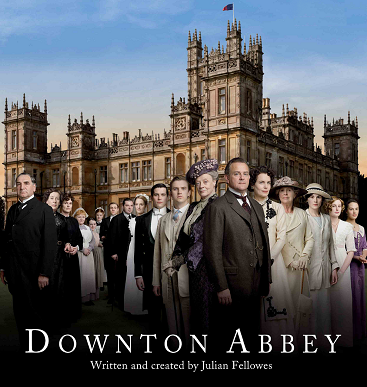 I will be analyzing each episode of the fourth season of Downton Abbey from a worldview perspective. There will, of course be SPOILERS for each episode, and I will assume readers know about each previous season and episode’s content as well. It will be assumed that readers are familiar with the characters and circumstances. I will not be summarizing the plot of the episode; I will merely interact with the content from a perspective of worldview. BE COURTEOUS AND DO NOT BRING UP LATER EPISODES THAN THE ONE DISCUSSED HERE IN YOUR COMMENTS.
The Suitors
I can’t help but think of the opening line of Jane Austen’s Pride and Prejudice: “It is a truth universally acknowledged, that a single man in possession of a good fortune must be in want of a wife.” Here, however, we have “It is a truth universally acknowledged, that a single woman in possession of good fortune must be in want of a husband.” Lady Mary is highly eligible widow, and the men are lining up. It will be interesting to see on what criteria she ultimately chooses, if she chooses any of them. Matthew was a genuinely good man, and it took him quite a while to be convinced/convince Mary.
The Disappearing Bates
Bates disappeared to York for a day. Then, the man who raped Anna turned up dead in an accident. Shocking. It looks like my prediction may come true. From a Christian worldview perspective, one has to ask whether Bates would be justified in killing the man. I would think the answer is fairly obviously no. I recall reading many comments from friends who said they’d kill the man and they really wanted Bates to do so. Although I understand the rage behind such comments, I have to wonder what justification one could get from a Christian worldview for doing so.
On the Christian worldview, such punishment should never be done in a vigilante fashion. Rather, the government has been given the sword (Romans 13:4) in order to carry out justice and punishment as a representative of God on Earth. Interestingly, this is the view of civil government I think we are taught in the Bible: we are to submit to the authorities because they are given as God’s agents on Earth. Does that mean governments always do right or do what God would desire? No, governments are run by sinful people and often for sinful purposes. However, God did not issue “the sword” to the individual; even in the times of ancient Israel, punishment was most often a communal thing: the whole community would present witnesses (at least two in order to convict), and punish through stoning. There is, of course, the notion of the avenger of blood, but even in those cases cities of sanctuary were provided and witnesses were needed.
So, to return to Bates, I do understand his extreme rage, but if he killed the man–as I suspect he did–then his action is not justified. Now, the question may arise as to whether the government would have done right had Bates gone to it. That is a separate issue as well. This episode brought up many things to contemplate regarding justice.
What are your thoughts on this issue?
The Baby
It seems Lady Edith has chosen to keep her baby. Again, as I noted last time, I hardly see a ringing endorsement of a pro-life message here, but it is, nonetheless, a good thing to not have to face that in this series (yet). This episode highlighted another aspect of injustice, however: namely, that in order to not face public ridicule and shame, Lady Edith has to be whisked away to privately have the baby and then give him or her away. Such a society is inherently not a society which fully would support the pro-life message. Women should not be faced with shaming if they choose to have children.
A culture in which the primary reaction to pregnancy is essentially to shutter women away (whether married or not) as if it were an illness, and in the case of unmarried women, to socially scorn them, is not a culture in which a strong pro-life message can succeed.
Prediction
Lady Edith’s pregnancy will be outed.
Links
Be sure to check out the page for this site on Facebook and Twitter for discussion of posts, links to other pages of interest, random talk about theology/philosophy/apologetics/movies and more!
The image is copyright BBC and I do not claim any rights to it. To my knowledge it is freely available for purposes of promotion/critique and I use it under fair use.
SDG.
——
The preceding post is the property of J.W. Wartick (apart from quotations, which are the property of their respective owners, and works of art as credited; images are often freely available to the public and J.W. Wartick makes no claims of owning rights to the images unless he makes that explicit) and should not be reproduced in part or in whole without the expressed consent of the author. All content on this site is the property of J.W. Wartick and is made available for individual and personal usage. If you cite from these documents, whether for personal or professional purposes, please give appropriate citation with both the name of the author (J.W. Wartick) and a link to the original URL. If you’d like to repost a post, you may do so, provided you show less than half of the original post on your own site and link to the original post for the rest. You must also appropriately cite the post as noted above. This blog is protected by Creative Commons licensing. By viewing any part of this site, you are agreeing to this usage policy.

 J.W. Wartick - Reconstructing Faith