J.W. Wartick
Really Recommended Posts 2/21/14- Camels, Vampires, Dinosaurs, Islam, and more!
 I am really excited about the lineup I’ve put together for you, dear readers, in this latest iteration of my Really Recommended Posts. Whether you’re interested in literary apologetics, archaeology, paleontology, world religions, or atheism, I have something here for you! As always, be sure to drop a comment and let me know what you thought!
Camels in the Ancient Near East– Winfried Corduan, a noted scholar of world religions, provides an extremely important look into the question of camels in the Bible and the Ancient Near Eastern context thereof.
Vampire Academy– Anthony Weber has taken the time to read a number of pieces of YA fiction. Vampire Academy is the latest, and a film is in the works based on the book. What can a Christian say regarding its content? Check out his post on the book.
Juvenile Dinosaurs Found Huddling in a Nest: A Local or Global Catastrophe?– Here’s an extremely interesting post on the finding of dinosaurs in a nest. Does it provide evidence for young earth creationism? Also, be sure to check out my own post, “Oceans of Kansas,” Unexpected Fossils, and Young Earth Creationism, which examines another evidence alleged to show a global Flood.
Seeking Allah, Finding Jesus– Daniel Wallace is pumped about the recent book from Nabeel Qureshi about how the latter came to Christ while practicing his Muslim faith. I can’t wait for my own copy to arrive! I had the privilege of taking a class with Qureshi through Biola, so I’m extra excited for this one.
Book Plunge: A Manual for Creating Atheists– Boghossian’s book has created a stir, as he is actively trying to deconvert Christians in particular. Check out this interesting review and examination of the work.
“Oceans of Kansas,” Unexpected Fossils, and Young Earth Creationism
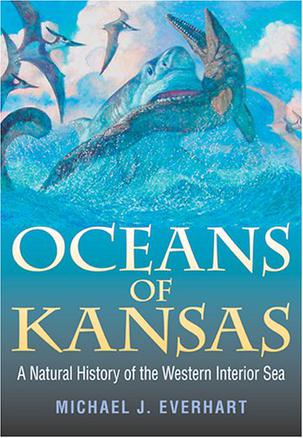 Recently, I reviewed the debate between Bill Nye and Ken Ham. In that debate, Bill Nye challenged Ken Ham to come up with just one fossil that was in the wrong place in the fossil sequence. In that review, I mentioned polystrate fossils as one possibility for the YEC rejoinder. Strictly speaking, these fossils are not “out of sequence” in a formal sense and so do not qualify as such evidence. Are there other possibilities? Michael J. Everhart’s fascinating look at the natural history of the Western Interior Sea brings up another possibility which may draw some looking for out-of-sequence fossils. After an introductory narrative about how a mosasaur (pictured on the cover of the book getting chomped by a shark) fossil could end up broken up in the middle of the sea, he wrote:
“Bloating and Floating” is certainly the case in many instances and is the only reasonable explanation for how the remains of large dinosaurs, such as Niobrarasaurus coleii…could have found their way into the middle of the Western Interior Sea… (48)
There have been, he noted, discoveries of dinosaurs in the middle of what should have been fossils of only aquatic creatures in the chalk and limestone that covers much of the central states–what was in ancient times the Western Interior Sea. His proposed explanation is that a dinosaur might die on the shore and get swept out to sea, bloated and floating until coming to rest at the bottom and becoming fossilized. Though not necessarily the “only reasonable” explanation, Everhart’s scenario provides an interesting test case for rival hypotheses.
Young Earth Creationists (YECs) tend to view evidences like these as proof of the Flood. That is, given a catastrophic global flood, one would expect that different life forms, all killed together by the flooding of the whole Earth, would be mixed together. Thus, a dinosaur in the middle of what should be sea creatures is alleged to provide evidence for the YEC Flood hypothesis.However, Everhart’s scenario does seem to be more plausible than a young earth account for several reasons.
First, Everhart’s proposed scenario is much simpler an explanation than the hypothesis that a global flood swept the dinosaur(s) into the position they are found among so many aquatic remains. This point is not to be understated; on a purely historical level, without any a priori assumptions of what should be the case given a specific reading of Genesis, it seems more reasonable to suppose that a dinosaur died and had its carcass swept out to sea before it was scavenged and sank to the bottom of the sea to be deposited than to suppose that a global catastrophe led to the dinosaur being found in its present location.

A picture I took at “Castle Rock” in central Kansas. This beautiful formation has huge amounts of deposited limestone and shells layered atop each other. One can walk to the walls and literally pull slabs of fossils out of the sides. If the YEC account of the flood were correct, one would expect to find multiple varieties of creatures found throughout these layers.
Second, and perhaps more problematic for the YEC position, is the fact that such finds as these are extremely rare, when, given a global flood, the expectation should be to constantly find such mixing of types of fossils. Simply finding one dinosaur fossil (or even several) among countless numbers of mosasaurs, icthyosaurs, fish, and of course limestone deposits from sea life (alongside shells of all sorts of varieties, etc.) does not actually provide sufficient evidence for the YEC account of the flood. We should instead find primates, dinosaurs, mosasaurs, trilobites, mammoths, and archaeopteryx fossils jumbled together. What we do find is a stunning uniformity of fossils such that the find of a dinosaur is means for speculation regarding how it got there rather than a commonality which demonstrates a planetwide flood.
Third, the dinosaur in question was contemporaneous with the aquatic life. That is, it lived at the same time as the creatures in the chalk in which it was deposited. Again, on a YEC scenario, one would expect instead to find all sorts of mixing of fossils from different time periods. The fact that these dinosaurs lived on land in the same time in which we find them at the bottom of the sea does not suggest a massive global flood which mixed all life (which all lived at the same time) together in one death pool; instead, it counts as direct evidence for the gradual diversification and extinction of life. The finds are consistent with what one would expect with longer periods of time instead of a global flood. Thus, it does not seem that fossils found in unexpected places may serve as evidence for Young Earth Creationism. Indeed, given the second point in particular (and in conjunction with the third), it seems that they serve as yet another evidence against the notion of a young earth and global flood. There are better options for Christians than Young Earth Creationism.
Links
Be sure to check out the page for this site on Facebook and Twitter for discussion of posts, links to other pages of interest, random talk about theology/philosophy/apologetics/movies and more!
What options are there in the origins debate? – A Taxonomy of Christian Origins Positions– I clarify the breadth of options available for Christians who want to interact on various levels with models of origins. I think this post is extremely important because it gives readers a chance to see the various positions explained briefly.
Shells and the Biomass of Earth: A serious problem for young earth creationists– I argue that the sheer amount of living organisms we can discover weighs against a young earth position.
My thanks to fellow blogger “The Natural Historian” for some comments on the topic of this post prior to publication.
Source
Michael J. Everhart, Oceans of Kansas: A Natural History of the Western Interior Sea (Indiana University Press, 2005).
SDG.
——
The preceding post is the property of J.W. Wartick (apart from quotations, which are the property of their respective owners, and works of art as credited; images are often freely available to the public and J.W. Wartick makes no claims of owning rights to the images unless he makes that explicit) and should not be reproduced in part or in whole without the expressed consent of the author. All content on this site is the property of J.W. Wartick and is made available for individual and personal usage. If you cite from these documents, whether for personal or professional purposes, please give appropriate citation with both the name of the author (J.W. Wartick) and a link to the original URL. If you’d like to repost a post, you may do so, provided you show less than half of the original post on your own site and link to the original post for the rest. You must also appropriately cite the post as noted above. This blog is protected by Creative Commons licensing. By viewing any part of this site, you are agreeing to this usage policy.
Is Molina’s God Fallible? A response to James N. Anderson
 Recently, I responded to James White’s comments on molinism. Shortly thereafter, White had another podcast in which he made several comments on molinism. He also commented favorably on an article by James N. Anderson, which argues that God is fallible. I left a comment over on Anderson’s blog because I frankly think that he misrepresented Molina’s view. Here, I’ll reproduce the comment I left there with a bit more commentary after the block quote to demonstrate that Anderson’s argument, like White’s, really is a misrepresentation.
My comment (edited to make it a bit shorter):
You wrote, “In other words, there are possible worlds in which God actualizes C so that S will choose A, but S doesn’t choose A. There are possible worlds in which God’s eternal decree doesn’t come to pass, because libertarian-free agents do otherwise than he had planned.”
Molina, on the other hand, explicitly held that if we were to choose otherwise, God would have known otherwise. That is, on Molina’s view (and on the view of William Lane Craig), if we were to choose ~A instead of A, then God would have known ~A instead. Molina, in “On Divine Foreknowledge” makes this extremely clear.
Of course, you could argue that the means by which Molina argues that this is possible is itself mistaken, but the argument is complicated and I’m not going to reproduce it here. My main point is the very core of the argument you’ve given simply misrepresents the position of molinists. Molina (and Craig) held that if a creature were to choose otherwise, then God would know it. Period.
Anderson responded to my comment by noting his argument was related to the decree. Now, I’m not at all sure how this saves Anderson’s article from this error, which I think is fatal: his argument just fails to account for molinism on molinism’s terms. That is, his argument is an attempt at a reductio. Thus, he has to grant the system which he is trying to show is self-referentially incoherent its own terms. He failed to do so. Here is Anderson’s argument in a nutshell:
[T]he Molinist is committed to the claim that although God knows that S would choose A in C, and he actualizes C because he plans for S to choose A, it is nonetheless possible for S not to choose A in C. (Craig clearly affirm[ed] this point a couple of times in his exchange with Helm.) In other words, there are possible worlds in which God actualizes C so that S will choose A, but S doesn’t choose A. There are possible worlds in which God’s eternal decree doesn’t come to pass, because libertarian-free agents do otherwise than he had planned.
Thus, Anderson concludes, on the molinist view, God is possibly fallible. But, as I pointed out in my comment above, Anderson’s argument basically just ignores Molina’s own views about God’s knowledge. I take it from his response to me that he thinks that God’s eternal decree somehow trumps considerations about foreknowledge, and I would think that on a Calvinist system that may be correct, depending upon how one hashes at the details (i.e. on some Calvinists’ expositions of foreknowledge, I have read it is grounded on God’s own action; that is, God foreknows x will happen because God wills x). But of course we’re not here interested on a Calvinist view of foreknowledge or the decree; Anderson is allegedly addressing Molinists.
By now it should be fairly clear where Anderson’s mistake lies: he imports his Calvinistic understanding of foreknowledge and the decree into molinism. But he claims to be critiquing Molina’s views internally; that is, his argument is supposed to show that molinism is self-referentially incoherent because it entails a fallible God. But it doesn’t! It only does so once Anderson has forced the concept of the eternal decree (that is, the specifically Calvinist view of this) as the filter through which molinism must be drawn. But of course that hardly shows that molinism is wrong, any more than filtering Calvinism through an Arminian filter demonstrates Calvinism is incoherent. One must evaluate each view on its own merits; not by presupposing positions which make them false!
There are a few other major difficulties with Anderson’s argument, such as a continued confusion with free knowledge and middle knowledge. See the “technical discussion” below as well as the comments for more.
So to return to Molina and his modern defenders, we find that they affirm in apparent unanimity that if one were to choose to do ~x instead of x, then God would have known ~x to be the case and x to be false. Thus, there simply is no question of a subject bringing about the falsity of God’s knowledge. Moreover, Anderson’s argument also confuses middle knowledge with free knowledge. Once God has actualized a world, it simply is the case that if, in that world, God knows that S will choose A, then S will choose A. Middle knowledge is the moment which considers counterfactuals; free knowledge is the creation of the world and the actualization of those counterfactuals. Thus, Anderson’s argument fails because 1) it fails to actually take Molina’s views into account; 2) it fails to interpret Molina’s views in such a way as to show the view is self-referentially incoherent; and 3) it fails to distinguish between middle and free knowledge.
Technical Discussion in the Comments
Be sure to check out the comments for some great interaction in which Anderson came along and commented as well. It’s a great discussion.
For example, this comment I wrote draws out some of the difficulties with Anderson’s argument further:
Your [I am here addressing Anderson directly] argument is that molinism entails a fallible God. Thus, your argument is that molinism–on molinism’s terms–entails a fallible God. Now, you wrote, “It doesn’t do to say, ‘If S were to choose otherwise then God would have decreed otherwise,’ because that’s dodging the issue.”
First, you misstate the actual premise, which is not that God would have decreed otherwise but that God would have foreknown otherwise; again, this leads me to think you’re not taking molinism on molinism’s terms. Instead, it seems you continue to conflate foreknowledge and the decree. Now, perhaps you simply mistyped that and you meant to say foreknown instead of decreed… in that case:
Second, your argument, again, is to try to show internal incoherence of molinism. In order to do so, you have to grant the premises of molinism. After all, if one wants to show an internal incoherence in a position, simply denying that parts of that position are true will not yield internal incoherence; rather, one must show how the pieces that such a position actually holds do not cohere with each other. Thus, because molinists from Molina to Craig to Thomas Flint (and I think this point is unanimous, though there may always be a “maverick” somewhere, I’m sure) hold that “If S were to do otherwise, God would have known otherwise,” you can’t just deny that premise and say “HA, now see, it is internally incoherent once I’ve denied this premise!” Rather, you would have to show that that premise is itself false.
Now, Molina doesn’t just assert that God would have known otherwise. He does spend several pages developing exactly how it could be the case that If S were to do otherwise, God would have known it–all without appealing to backwards causation. Craig also defends this account in his lengthier work on the topic. Fredosso develops this defense over the course of p 57-63 and 65-68 of his translation of Molina’s “On Divine Foreknowledge.” In the same work, Molina defends his position may be found on p. 119-120; as well as several other places where a whole view of his account provides a lengthier defense.
Thus, it seems to me your argument fails to demonstrate internal incoherence. Molinism on molinism’s terms does not make God fallible.
Third, as far as why I argued you confused middle and free knowledge; the reason is because Molina himself held that because God is eternal and exists in the eternal now rather than as an omnitemporal or temporal being (contra Craig, who defends his position somewhat differently), it is incorrect to hold that once a world has been actualized, then the creatures world may bring it about that that world is not brought about. Again, this goes back to Molina’s view of foreknowledge and free will. But free knowledge is not middle knowledge and is absolute certainty about the “actualized” world. It is unchangeable. Thus, on this third point, your argument fails not only to demonstrate internal coherence but also to interact with Molina’s actual view. The reason is because your argument relies upon the notion that in the here and now a creature could bring it about that ~x if God knows that X will happen. But both Craig and Molina (and every other major defender of Molinism of whom I’m aware, though possibly not Zagzebski as I haven’t read her view) hold that if God knows x will happen, then, necessarily, x will happen. Thus, the freedom of creatures is found in middle knowledge, and that is how it is preserved. God’s actualizing a world brings it about that in that world, the counterfactuals God brought into being will happen. Again, Molina reconciles this as above (and alongside his view that God is Eternal in the technical sense rather than temporal).
Thus, although interesting, I once more conclude that your argument fails to either address molinism or show that it is internally incoherent.
Links
Be sure to check out the page for this site on Facebook and Twitter for discussion of posts, links to other pages of interest, random talk about theology/philosophy/apologetics/movies and more!
James White and Molinism- Confusion about middle knowledge– I argue that James White has made a couple key errors related to molinism. On his most recent comments regarding molinism (his 2/11 podcast), he repeats a key error by saying that in the “exact same circumstances” he chooses differently. In this post, I demonstrate the error of his statement, along with some other mistakes in his critique.
SDG.
——
The preceding post is the property of J.W. Wartick (apart from quotations, which are the property of their respective owners, and works of art as credited; images are often freely available to the public and J.W. Wartick makes no claims of owning rights to the images unless he makes that explicit) and should not be reproduced in part or in whole without the expressed consent of the author. All content on this site is the property of J.W. Wartick and is made available for individual and personal usage. If you cite from these documents, whether for personal or professional purposes, please give appropriate citation with both the name of the author (J.W. Wartick) and a link to the original URL. If you’d like to repost a post, you may do so, provided you show less than half of the original post on your own site and link to the original post for the rest. You must also appropriately cite the post as noted above. This blog is protected by Creative Commons licensing. By viewing any part of this site, you are agreeing to this usage policy.
Sunday Quote! – Does reading Genesis Require a PhD?
 Every Sunday, I share a quote from something I’ve been reading. The hope is for you, dear reader, to share your thoughts on the quote and related issues and perhaps pick up some reading material along the way!
Does Reading Genesis Require a PhD?
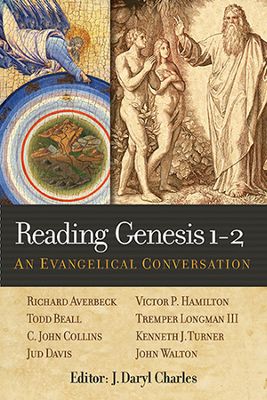
One of the topics of major interest to me is the debate within Christianity over the means and timing of creation. Recently, a friend sent me a copy of Reading Genesis 1-2: An Evangelical Conversation
Genesis 1 should be read… as historical narrative that is meant to be taken literally. This is the normal reading of the account… It does not require a person with a PhD to unlock the key to these chapters by appealing to A[ncient] N[ear] E[astern] literature or a special genre or some other special figurative approach. (48)
The quote is in context of Beall’s discussion of various evangelicals “coming out” as not reading the text literally for various reasons, such as ANE context, notions of genre, or the like. Basically, Beall’s point seems to be that we can (and should?) just read the text straightforwardly without having to study all kinds of topics to understand it. What do you think of this notion? What might this say about the cultural context of Genesis? Does that context matter? Should we be concerned with possibilities regarding such a context, differing genres, or the like?
Bonus Quote
Interestingly, a later author in the same work, Tremper Longman III, confronts Beall’s allegation regarding the PhD:
…isn’t the Bible equally clear to everyone, even those who have not studied the Bible and its cultural background? The simple answer to that question is no, it is not. After all, unless you have studied Hebrew, Greek, and Aramaic you cannot read the Bible at all without scholarly help. (121)
Links
Be sure to check out the page for this site on Facebook and Twitter for discussion of posts, links to other pages of interest, random talk about theology/philosophy/apologetics/movies and more!
Source
Todd S. Beall, “Reading Genesis 1-2: A Literal Approach” in Reading Genesis 1-2: An Evangelical Conversation edited J. Daryl Charles (Peabody, MA: Hendrickson Publishers, 2013).
Tremper Longman III, “What Genesis 1-2 Teaches (and What It Doesn’t)” in Reading Genesis 1-2: An Evangelical Conversation edited J. Daryl Charles (Peabody, MA: Hendrickson Publishers, 2013).
SDG.
Downton Saturday: Season IV, Episode 6- a Christian worldview perspective
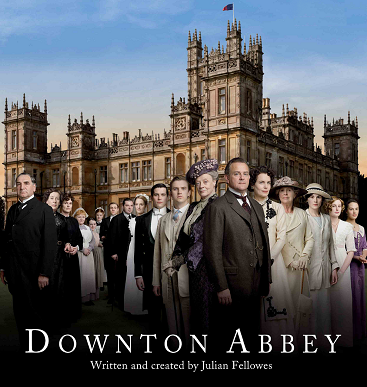 I will be analyzing each episode of the fourth season of Downton Abbey from a worldview perspective. There will, of course be SPOILERS for each episode, and I will assume readers know about each previous season and episode’s content as well. It will be assumed that readers are familiar with the characters and circumstances. I will not be summarizing the plot of the episode; I will merely interact with the content from a perspective of worldview. BE COURTEOUS AND DO NOT BRING UP LATER EPISODES THAN THE ONE DISCUSSED HERE IN YOUR COMMENTS.
The Decision
The most momentous part of this episode was when Lady Edith was very close to getting an abortion. The scene was extremely emotional: Edith’s sharing of her pregnancy with her Aunt Rosamund and the fact that she had scheduled an abortion. Rosamund insisted on going with and as they were in the waiting room, Edith shared her reasoning: she would be shunned by society, and she wasn’t sure she would be strong enough to deal with that.
Interestingly, the language used about the pregnancy affirmed several points: the baby was “wanted”–the issue was Edith’s own strength; the unborn was considered a baby, as opposed to a part of the mother. I’m hesitant to get as excited as some have gotten regarding possible commentary on “pro-life” or “pro-choice” categories in this episode for a few reasons: although the child was acknowledged as such, the issue was presented as a great danger to Edith. It was, essentially, the myth of the “back alley” abortions tied in with some bones thrown to pro-life people as well. Essentially, the episode offered a kind of please everyone approach to the issue, which, on the one hand, showed the complexity on the issue, but the other made it seem quite contrived.
The issue, of course, is extremely complex, and I did appreciate the emotional turmoil that Edith confronted when it came to the decision one way or the other. However, in light of the language used–killing a baby–one has to wonder, and I emphasize this: at the level of objective truth, what the debate is about.
The Bates Family
The guilt that Anna deals with continues to tear at my heartstrings. She is the victim and the fact that she is dealing with so much guilt–as though she thinks she is somehow to blame or stained because of it–is simply awful. I want to reach through the screen and hug her. Bates’ own take on it is to find whoever did it and destroy them. I get his motivation, but I wonder at his own treatment of Anna as a porcelain doll. He also seems to have shifted his view of her, and that seems to be another way in which the victim is having more wrongs piled atop each other. I do hope they manage to heal as a family.
Prediction
I predict that Bates has figured out who violated Anna and he’s going to kill him, resulting in Bates’ execution and a reaffirmation that British people must want everyone else on Earth to be as depressed as they are. (Yes, this is a bit tongue-in-cheek.)
Links
Be sure to check out the page for this site on Facebook and Twitter for discussion of posts, links to other pages of interest, random talk about theology/philosophy/apologetics/movies and more!
The image is copyright BBC and I do not claim any rights to it. To my knowledge it is freely available for purposes of promotion/critique and I use it under fair use.
SDG.
——
The preceding post is the property of J.W. Wartick (apart from quotations, which are the property of their respective owners, and works of art as credited; images are often freely available to the public and J.W. Wartick makes no claims of owning rights to the images unless he makes that explicit) and should not be reproduced in part or in whole without the expressed consent of the author. All content on this site is the property of J.W. Wartick and is made available for individual and personal usage. If you cite from these documents, whether for personal or professional purposes, please give appropriate citation with both the name of the author (J.W. Wartick) and a link to the original URL. If you’d like to repost a post, you may do so, provided you show less than half of the original post on your own site and link to the original post for the rest. You must also appropriately cite the post as noted above. This blog is protected by Creative Commons licensing. By viewing any part of this site, you are agreeing to this usage policy.
Really Recommended Posts 2/14/14- Rival theism, evidence for faith, apologetics, and more!
 The Winter Olympics are on and I am currently experiencing -7 wind chill… which feels warm compared to what we’ve had! Thus, we have an owl post edition of the Really Recommend Posts, which features another round of great reads from across the internet! This week, we peruse rival theism, reasons for apologetics, evidence for faith, and more!
A complex god with a god complex– Edward Feser here discusses some criticisms of classical theism from a rather unexpected avenue: a rival theistic system which does not hold that God is the simplest possible being, among other things. Rather than being an atheistic critique, this is a criticism from a variant on theism. Feser’s comments are insightful and interesting. He is a Thomistic philosopher who continually has extremely insightful thoughts. I’ve been reading through one of his books–The Last Superstition–and a post on a quote from it has spurred much discussion.
J. Warner Wallace: Why are you a Christian?– The importance of apologetics is brought poignantly to the forefront in J. Warner Wallace’s comments in this post. Wallace is the author of Cold-Case Christianity, a simply fantastic apologetics book, and his comments here offer a stirring call to instruction in the faith.
Okay, you’re right. There’s no evidence for faith– Tom Gilson has been at the forefront of responding to Peter Boghossian, the Atheist Tactician. Here, he continues his series of posts regarding Boghossian’s critique of faith in general. The comments are highly insightful.
The Legitimate Use of Thomas Aquinas in Apologetics– What might Thomas Aquinas have to instruct us in apologetics? Here a few major aspects of Aquinas’ continuing contributions to apologetics are discussed.
Gary Habermas- SALT 2013 (VIDEO)- Gary Habermas is a leading expert on Jesus’ Resurrection. Here is a speech he gave at last year’s SALT (Strategic Answers for Life’s Thoughts) conference.
“Lone Survivor” – A Christian reflection on the film
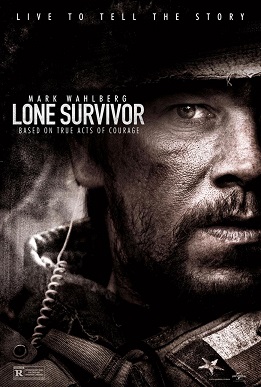 I watched Lone Survivor recently with a friend. I’m a fan of war movies (my favorites being “Patton,” “Midway,” and “Gettysburg”), so I figured i’d probably enjoy this one. I was surprised at points at the depth of the film’s narrative. Here, I will be commenting on the content on the film; not on the true story itself or any side-stories that came off of it. There will, of course, be SPOILERS for the movie in what follows. I will not be summarizing the plot, which may easily be found here.
The Trilemma
Early in the film, the SEALs encounter a situation which brings them to a trilemma: local goat herders compromise their mission security. They are left with three options: they may let the herders go and run for the hills themselves, knowing that a huge number of hostiles will be pursuing them; they may tie the herders up, hoping that they would be found before they died from local predators or cold; or they could terminate the prisoners. The latter two would violate the rules of war, but the soldiers themselves had little chance of surviving with the first option.
Their decision is eventually made after some tense debate; they free the prisoners and flee to try to call for an extract. The SEALs clearly did the right thing in this situation, not purely from a legal perspective but from an ethical perspective as well. The murder of innocents to preserve one’s own safety is not justified. However, the situation also illustrated the intense complexity of the situation of such a war. It also illustrated the very human emotional struggle we would go through in a similar situation: how would you deal with the trilemma? Can you answer it honestly that you would put your own life in extreme peril? Tough questions.
Kill Everything that Moves?
I was a bit worried that the film might serve to portray a simplistic good/bad guy dichotomy in which anyone who looked remotely Arabic was painted as a villain and everyone that moved was to be killed. That was not at all the case. Although it is clear that the Taliban are the “bad guys” in this film, Marcus Luttrell, the “lone survivor,” is ultimately saved by a local who was following Pashtun codes which grant protection for those in need.
There is thus illustrated in the film a greater range of rightness and wrongness than simply good/bad guy. Ancient customs may present a beautiful way to provide succor for someone in need; even a possible enemy. The adherence to strict codes for hospitality is something to which Christians should relate; one need only to read the Bible to discover numerous commands to give relief to the foreigner in the land of Israel or to take care of those in need. The situation in the movie is made interesting because Luttrell was a combatant and it was truly dangerous to those who would take him in to do so.
A Complex Situation
Christians have a wide variety of views when it comes to war. There are strong traditions of pacifism and just war theory, with a spectrum of variances of these two major positions along the way. I am not a political analyst, nor am I up-to-date on the facts related to the war in Afghanistan. Thus, I’m not going to try to comment on the specifics of the war because I would betray ignorance. However, I do think it is important to note that the film does depict some truly evil actions taken by the Taliban in the beheading of a man simply because he may have spoken to the Americans.
But does the issue of violence end there? Does that mean we should intervene? After all, if Americans weren’t there to begin with, such violence (perhaps?) would not happen, for there would be no Americans to inform. But I, again, want to emphasize I don’t know the whole story. I do think that a book by William Cavanaugh, The Myth of Religious Violence, brings into question some of the assumptions we have regarding religion and violence in situations like Afghanistan.
Conclusion
“Lone Survivor” is, unquestionably, a brutal film. There is much violence as well as quite a bit of vulgar language. But amidst these things, the film managed to convey a picture of the war in Afghanistan that was more than a simplistic black-and-white picture. It poignantly portrayed the difficulties of ethical situations in war. It also called into question the notion that there can be quick-and-easy lines drawn for friend and foe. I recommend the film for adults.
Links
Be sure to check out the page for this site on Facebook and Twitter for discussion of posts, links to other pages of interest, random talk about theology/philosophy/apologetics/movies and more!
Book Review: “The Myth of Religious Violence” by William T. Cavanaugh– I review the book which has led me to discuss the ways the category of religion is used to stigmatize the other and also forced me to rethink a number of issues. I highly recommend this book.
Lone Survivor and Insufferable Anti-American Self-Righteousness– The film has caused quite a bit of critical discussion. Here, a soldier reflects on the reaction to the film. Having now seen the movie, I think the viewpoint offered here is interesting and worth the read.
SDG.
——
The preceding post is the property of J.W. Wartick (apart from quotations, which are the property of their respective owners, and works of art as credited; images are often freely available to the public and J.W. Wartick makes no claims of owning rights to the images unless he makes that explicit) and should not be reproduced in part or in whole without the expressed consent of the author. All content on this site is the property of J.W. Wartick and is made available for individual and personal usage. If you cite from these documents, whether for personal or professional purposes, please give appropriate citation with both the name of the author (J.W. Wartick) and a link to the original URL. If you’d like to repost a post, you may do so, provided you show less than half of the original post on your own site and link to the original post for the rest. You must also appropriately cite the post as noted above. This blog is protected by Creative Commons licensing. By viewing any part of this site, you are agreeing to this usage policy.
What options are there in the origins debate? – A Taxonomy of Christian Origins Positions
 The origins debate within Christianity is often viewed through the lens of a very narrow spectrum. Most recently, this was demonstrated in the debate between Ken Ham and Bill Nye. I also demonstrated this recently by answering questions for old earth creationists (see the first and second parts): some people tend to see the only options available for Christians as either young earth creationism (the earth was made in six 24 hour days 6-10 thousand years ago) or theistic evolutionism (God set it up, then evolution accounts for diversification). These perspectives, though showing a few of those available to Christians, do not actually reflect the whole realm of possibilities for Christians.
More thoughtful Christians tend to think of the perspectives as threefold. There are theistic evolutionists, young earth creationists, and then in between there is a kind of amorphous glob of people who hold to an “old earth” without expressing it in strictly evolutionary terms. Here, we’ll explore this amorphous glob (as well as the extremes) to show that there really is a range of options. I’m writing this mainly to clarify for many some of the difficulties in commenting on creation issues without such a taxonomy.
Gerald Rau’s Mapping the Origins Debate
If I could recommend one book to anyone who is going to get involved in creation issues, I would have to say I’d recommend Gerald Rau’s Mapping the Origins Debate: Six Models of the Beginning of Everything
Rau’s Taxonomy
Rau divided the major positions on the origins debate into a sixfold division (see Rau, 41):
Naturalistic Evolution- On this view, there is no God and no purpose in origins. The process for the origin of species and its diversity is “spontaneous.”
Nonteleological Evolution- On this view, there is a creator, but there remains no intervention in the natural process which yield life and its diversity. Thus, the “conditions necessary for life” were “established at creation.” However, evolution is still without purpose and the creator did not specify its parameters.
Planned Evolution- On this view, there is a creator who had a purpose for life and its origin. This purpose is through a “perfect creation” which “naturally fulfills God’s purposes.” Thus, the purpose which the creator had was essentially front-loaded in at the moment of creation. There is no direction during the process.
Directed Evolution- On this view, there is a creator with a purpose for the diversity of life. Unlike the previous view, the creator doesn’t merely front-load design and purpose but rather intervenes throughout the course of history to bring about purpose: “changes in universe and life” are “subtly directed over time.”
Old-Earth Creation- On this view, the process by which the diversity of species came about is not through directed evolution but rather through creation over time: “major body plans” are “created over millions of years.” New diversity of life is through God’s direct creative act.
Young-Earth creation- on this view, “each ‘kind'” is “created in one week, within the last 10,000 years. All diversity of life is due to God’s creative act; any changes since then are only among the “kinds” represented on the ark.
 A Larger Picture
Rau’s division of these groups is extremely helpful because he hits on the major positions represented within the spectrum. Of course the only options which are available to Christians are those which do not exclude God from the picture. Thus all but naturalistic evolution remain open to the believer. Now, the debate over how these might fit into the teaching of the Bible is not what I’m trying to dive into here. Instead, I’m simply pointing out there is diversity of views greater than the YEC/Theistic Evolutionism divide. One can see from the above that even within theistic evolutionism there is some diversity. Does evolution take place nonteleologically or did God plan it from the beginning? Perhaps God directed evolution along the way. There also is the option of Old Earth Creationism which shares many features with young earth creationism but radically diverges from the latter in many respects.
However, the spectrum opens up even more than Rau’s taxonomy depicts. The views he discusses focus primarily upon the science; that is, they are distinctions among views on the specifics of a scientific account of origins. Other views may be listed which may be distinguished by the reading of the Bible. Now, there is of course much overlap between these and Rau’s list, but I wanted to highlight a few views of interest.
First, there are interpreters like John Sailhamer in his book Genesis Unbound
Second, John Walton’s view reads the creation account within the Ancient Near Eastern context and so he views Genesis not as a literal creation account but rather as an account showing how God is enthroned over the entire creation as King. Again, such a view would be amenable to the spectrum of views possible for a Christian as I noted.
It is worth noting that either of these is distinct from the spectrum Rau lists. They are distinct because they do not require commitment to any of the creation models. Thus, for Collins, Sailhamer, and Walton, one may simply remain open to the evidence rather than filtering the evidence through specific readings of the Genesis text. Of course, one could hold to this view and remain a young earth creationist; but none of these readings explicitly forces someone to hold to any position on the actual means of creation and speciation.
Third, there are positions related to the scientific origins which would further subdivide Rau’s categories as dilineated above. For example, young earth creationists often hold that the Global Flood can account for the fossil record and stratification. But some YECs have historically held that the Flood would have been tranquil and essentially had no impact on the Earth. Other YECs simply hold that the universe and the Earth have an appearance of age because God would have known at what age it would have needed to be in order to sustain life. There is much diversity about the mechanisms related to the Flood as well. Similarly, Old Earth Creationists exist upon a spectrum, though Rau’s principles about what unites them are correct. However, OECs are often confused with other views along the spectrum such as directed evolution. Strictly speaking, an Old Earth Creationist will not hold to the notion that speciation occurs on such a broad scale through evolution.
Conclusion
I have utilized Rau’s work to demonstrate there is a spectrum of beliefs related to the origins debate. The spectrum, I have argued, is even broader than Rau showed. Within each category he listed, there may be subdivisions. Moreover, there are some views which eschew attempts to dilineate the scientific truths but simply ascribe to reading the text. These latter views would fit with essentially any along the spectrum of beliefs so long as God is involved.
The purpose of this post is not to sow confusion for those interested in the topic of origins. Rather, it is to demonstrate that there really are more options on the table than either Young Earth Creationism or Theistic Evolutionism. Within either of those views there is much diversity, and there is a whole range in-between. Thus, let us hope that when we discuss origins we avoid falsely portraying the positions as being so limited that we fail to account for the range. Hopefully, this taxonomy will prove helpful.
Links
Be sure to check out the page for this site on Facebook and Twitter for discussion of posts, links to other pages of interest, random talk about theology/philosophy/apologetics/movies and more!
Source
Gerald Rau, Mapping the Origins Debate: Six Models of the Beginning of Everything
SDG.
——
The preceding post is the property of J.W. Wartick (apart from quotations, which are the property of their respective owners, and works of art as credited; images are often freely available to the public and J.W. Wartick makes no claims of owning rights to the images unless he makes that explicit) and should not be reproduced in part or in whole without the expressed consent of the author. All content on this site is the property of J.W. Wartick and is made available for individual and personal usage. If you cite from these documents, whether for personal or professional purposes, please give appropriate citation with both the name of the author (J.W. Wartick) and a link to the original URL. If you’d like to repost a post, you may do so, provided you show less than half of the original post on your own site and link to the original post for the rest. You must also appropriately cite the post as noted above. This blog is protected by Creative Commons licensing. By viewing any part of this site, you are agreeing to this usage policy.
Sunday Quote! – Is Atheism Wishful Thinking?
 Every Sunday, I will share a quote from something I’ve been reading. The hope is for you, dear reader, to share your thoughts on the quote and related issues and perhaps pick up some reading material along the way!
Atheism as Wish Fulfillment
I’ve been reading through Edward Feser’s The Last Superstition: A Refutation of the New Atheism. Feser is a Thomistic philosopher (one who follows in the tradition of Thomas Aquinas) and so he approaches these questions from a slightly different perspective than that of other theists who have responded to the challenge of the New Atheism. I’ve only just begun the book, but I found this quote juicy:
It is true that a fear of death, a craving for cosmic justice, and a desire to see our lives as meaningful can lead us to want to believe that we have immortal souls specially created by a God who will reward or punish us for our deeds in this life. But it is no less true that a desire to be free of traditional moral standards, and a fear of certain (real or imagined) political and social consequences of the truth of religious belief, can also lead us to want to believe that we are just clever animals with no purpose to our lives other than the purposes we choose to give them, and that there is no cosmic judge who will punish us for disobeying an objective moral law. Atheism, like religion, can often rest more on a will to believe than on dispassionate rational arguments. – Edward Feser, The Last Superstition, 10
Feser’s point is that atheists are just as capable of allowing their desires to cloud judgment when it comes to matters of philosophical judgments as are theists. Everyone has desires; the question is what the evidence is to support those desires. What do you think of this quote? How would you respond to those who assert that religious people are merely seeking wish fulfillment?
Links
Be sure to check out the page for this site on Facebook and Twitter for discussion of posts, links to other pages of interest, random talk about theology/philosophy/apologetics/movies and more!
Guest Post: “The Presumption of Popular Atheism” by David Glass– In this post, David Glass, himself an able response-man to the New Atheism, highlights one primary argument atheists make regarding theism: that theists have all the burden of proof on their side.
SDG.
Downton Saturday: Season 4, Episode V
I will be analyzing each episode* of the fourth season of Downton Abbey from a worldview perspective. There will, of course be SPOILERS for each episode, and I will assume readers know about each previous season and episode’s content as well. It will be assumed that readers are familiar with the characters and circumstances. I will not be summarizing the plot of the episode; I will merely interact with the content from a perspective of worldview. BE COURTEOUS AND DO NOT BRING UP LATER EPISODES THAN THE ONE DISCUSSED HERE IN YOUR COMMENTS.
Justice & Aristocracy
The showdown between the Dowager Countess and Mrs. Crawley over the alleged thieving of the gardener was interesting because it illustrated the damage done by injustice. The Dowager was convinced the gardener was a thief, but she didn’t allow for the possibility to clear his name. Interestingly, such injustice would have been prevented by even the ancient laws found in the book of Deuteronomy (19:15) out of the Ancient Near East, in which two witnesses were necessary for conviction.
But the Dowager also showed great courtesy when she was shown to be wrong. She even asked for forgiveness.. from the gardener! What an incredible show of injustice being righted!
I thought the discussions Mary had with the researcher who was anti-aristocracy (I can’t remember his name and I’m afraid to Google spoilers!) were interesting in context of the whole series up to this point. The researcher held Mary and the aristocrats in general in contempt, because they had received what they had rather than earned it and they expected to keep it. But the show has demonstrated how the Grantham family not only provides jobs for the people who work in the home, but also for the farmers who use the land. They have created jobs rather than destroyed them. They are also able to contribute to things like the local hospital and other causes. This is not to say that aristocracy is the greatest thing ever; it is just to note that the show has presented a fairly complex vision of how aristocracy can help or harm the more general population.
One might reflect on this and consider how our own actions may impact others, whatever our place in society.
Race
It was interesting to see how the characters reacted to Jack Ross, a black band leader. I was pleased that Lord Grantham didn’t throw a fit about it. I wish they’d briefly mentioned Wilberforce’s influence in ending the slave trade in Great Britain. It will be interesting to see how the relationship between Mr. Ross and Rose develops.
Women
The discussion Anna had with Bates is worth reflecting upon: she was noting how she should not be viewed as a victim. Bates countered by saying he should have been there to protect her. I think that Anna’s thoughts were perhaps more on target than Bates’. The latter assumed a kind of responsibility for the activity of another; Bates assumed that he should be protecting Anna at all times, and that anything that happened to her was his fault. Such a view, I would argue, is mistaken. Bates’ blame game is misplaced. It is not his fault; nor is it Anna’s fault; it is the rapist’s fault.
Conclusion
I thought the episode brought up a number of interesting points related to race, women, and aristocracy. Justice for the poor was another major theme. I look forward to seeing what comes next. Feel free to comment with your own thoughts on the episode (remember NO SPOILERS FOR LATER EPISODES).
*Okay, I missed a couple. We’re back on now!
Links
Be sure to check out the page for this site on Facebook and Twitter for discussion of posts, links to other pages of interest, random talk about theology/philosophy/apologetics/movies and more!
The image is copyright BBC and I do not claim any rights to it. To my knowledge it is freely available for purposes of promotion/critique and I use it under fair use.
SDG.
——
The preceding post is the property of J.W. Wartick (apart from quotations, which are the property of their respective owners, and works of art as credited; images are often freely available to the public and J.W. Wartick makes no claims of owning rights to the images unless he makes that explicit) and should not be reproduced in part or in whole without the expressed consent of the author. All content on this site is the property of J.W. Wartick and is made available for individual and personal usage. If you cite from these documents, whether for personal or professional purposes, please give appropriate citation with both the name of the author (J.W. Wartick) and a link to the original URL. If you’d like to repost a post, you may do so, provided you show less than half of the original post on your own site and link to the original post for the rest. You must also appropriately cite the post as noted above. This blog is protected by Creative Commons licensing. By viewing any part of this site, you are agreeing to this usage policy.

 J.W. Wartick - Reconstructing Faith