J.W. Wartick
Downton Saturday: Downton Abbey, Season 4, Episode I
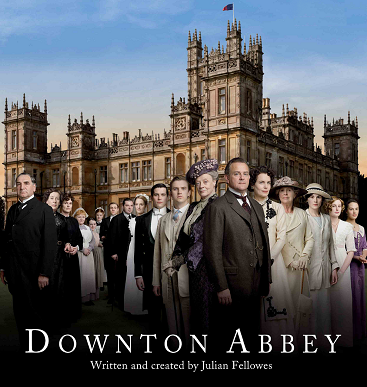 It should be known that I’ve quite enjoyed Downton Abbey. I’ll be watching Season 4 as it airs on PBS, and sharing a few comments from a worldview perspective on each episode, provided I have time, of course! There will, of course be SPOILERS for each episode, and I will assume readers know about each previous season and episode’s content as well. It will be assumed that readers are familiar with the characters and circumstances. I will not be summarizing the plot of the episode; I will merely interact with the content from a perspective of worldview. BE COURTEOUS AND DO NOT BRING UP LATER EPISODES THAN THE ONE DISCUSSED HERE IN YOUR COMMENTS.
Trust
It seems to me that this episode was particularly focused upon the issue of trust. Lady Grantham’s trust in Thomas was increased, but it was actually merely a fluke that Thomas’ hint about the nurse’s mistreatment turned out to be true. Trust can easily be misplaced. Of course, as my wife pointed out, it is possible to see this scene through the lens of “What you intended for evil, God intended for good” (see Genesis 50). Clearly, Thomas’ hint turned out to bring about a great good: the ridding of an abusive nurse.
Another example might be found in the young man’s trust of Rose’s story about being a housemaid. Although these may appear to be “white lies,” it is clear later in the episode that such lies can potentially bring about great harm. The first aspect is the fight the young man got in over Rose. The second potential for harm would be when the man showed up at Downton itself seeking Rose. Although the situation was handled comically, it seems clear it could also have ended in great emotional harm for the young man and possibly Rose as well.
Of course, “Downton Abbey” is largely centered around themes of trust. The way viewers see the interplay of truth and lie is part of the interest of the show. We know who is trustworthy (usually) and not, but the characters do not. It is telling that so many people turn out to have little value so far as trust is concerned.
Women
The times, they are a-changing! The women of Downton are seeking larger roles for themselves, whether it is Rose’s constant striving to explore and be entertained, or Lady Mary’s taking her rightful place as a co-owner of Downton. The show has continually done a good job of showing the interplay of power between patriarchy and the emergence of more egalitarian views in society. Of course much of this is steeped in our own cultural biases as a show is made about the past, but that doesn’t make it any less interesting.
The relationship between Lady Edith and the editor (whose name I can’t recall at this moment) will be interesting to monitor. For the first season in particular, Edith was kind of the whipping child for the show. Everyone seemed to take her for granted. Yet she has emerged as her own person, only to get involved with a married man. Of course, the man’s marriage is to someone who is, with the standards of the time, deemed mad. One might wonder how such a relationship will play out. Moreover, from a worldview perspective, how might we deal with the question of his attempt to divorce his wife due to insanity to marry another? Part of the difficulty of analyzing the situation migIht be found in the fact that (as my wife pointed out), we never meet his wife. Insanity could mean any of a broad spectrum of things; so it is hard to pinpoint the meaning and discussion here. Edith’s whole character continually raises tough questions, which makes her an excellent foil.
Prediction
My primary prediction for this season is that the housemaid that Lord Grantham kissed is going to turn up; likely dredged up in some fashion by Thomas or some other character with a major agenda against the family.
Conclusion
There is, of course, much more to comment on regarding this episode. I’m curious to have your thoughts on the episode and series. Again, do not spoil anything past this episode. What do you think of Edith’s relationship? How might the newfound trust in Thomas play out? What other worldview issues do you see in the episode?
Links
Be sure to check out the page for this site on Facebook and Twitter for discussion of posts, links to other pages of interest, random talk about theology/philosophy/apologetics/movies and more!
The image is copyright BBC and I do not claim any rights to it. To my knowledge it is freely available for purposes of promotion/critique and I use it under fair use.
SDG.
——
The preceding post is the property of J.W. Wartick (apart from quotations, which are the property of their respective owners, and works of art as credited; images are often freely available to the public and J.W. Wartick makes no claims of owning rights to the images unless he makes that explicit) and should not be reproduced in part or in whole without the expressed consent of the author. All content on this site is the property of J.W. Wartick and is made available for individual and personal usage. If you cite from these documents, whether for personal or professional purposes, please give appropriate citation with both the name of the author (J.W. Wartick) and a link to the original URL. If you’d like to repost a post, you may do so, provided you show less than half of the original post on your own site and link to the original post for the rest. You must also appropriately cite the post as noted above. This blog is protected by Creative Commons licensing. By viewing any part of this site, you are agreeing to this usage policy.
Molinism and Aseity- A knock-down argument against middle knowledge?
 One of the most recent “Straight Thinking” podcasts–a podcast put on by Reasons to Believe–featured Travis Campbell discussing Middle Knowledge (which is an aspect of the philosophical theological position known as molinism). Middle Knowledge is, essentially, God’s knowledge of counterfactuals–that is, the knowledge of things like “If someone talks about molinism, J.W. Wartick will be interested.” That is a counterfactual because it states something which may be contrary to fact–that is, it depends on some condition to be fulfilled in order to be true (in the example above, it is the occasion of someone to talk about molinism).
On the second part of the interview, Campbell discussed some objections to molinism which he felt made the position intractable. One of the first objections he presented was an objection from “aseity” that is, God’s self-existence. According to the doctrine of divine aseity, God does not rely upon anything else for God’s existence. Now, molinism classically holds that God surveys the realm of possible worlds prior to the creative act and so sees all possibilities related to free creaturely choices. Then, God creates the world God desires. Campbell argued that this undermines God’s aseity because it makes God dependent upon creatures for omniscience–one of God’s essential attributes.
The argument, if sound, has great force. After all, if molinism means one must deny an essential attribute of God, there is a pretty serious difficulty with the doctrine. But does it? Campbell cited William Lane Craig, a leading proponent of molinism, as admitting that molinism entails that God’s knowledge, at least, is in some sense dependent upon creaturely choices. From what I have read of WLC,* I have found it seems he frequently makes it appear as though molinism presents God as able to choose among any parts of possible worlds to construct whatever possible world God wants. Not correct… but possibly also not Craig’s actual view;* perhaps Craig is only making it seem thus when he discusses molinism in summary. What I’m getting at is that I’m not convinced Craig is as consistent a molinist as, well, Molina (or in modern times, Thomas P. Flint).
Now for the claim itself, I do not think it follows that God is actually dependent upon creaturely choices. And, if it follows from molinism that God is dependent in that way, then it must also be true of any view which holds to foreknowledge whatsoever. In fact, this is where I have a pretty serious bone to pick with any view which denies comprehensive foreknowledge. Unless I am much mistaken–which is quite possible–the realm of possible worlds is a set of necessary truths. That is, each possible world is a complete set of all true propositions for the entire history of that world.*** But if that is the case, then molinism is no different on God’s creative activity than any other view of creation, for God is simply selecting one from a set of possible worlds.
There is debate over how such a set of possible worlds might be populated–does the set of possible worlds come from God, or is it simply a set of necessary truths?** Whatever one’s answer for this, it remains clear to me that molinism is not defective in this area: the molinist simply holds that God selects a possible world from the set of possible worlds. The fact that the molinist emphasizes that these possible worlds include free choices is essentially a moot point so far as aseity is concerned. If there is such a set of possible worlds, then any view of God’s foreknowledge and creation has to acknowledge that God’s creative act is the bringing forth of one such possible world. If there is no such set, then it seems our universe is necessary, which would itself be problematic for the doctrine of creation.
So it seems to me that Campbell failed to make a compelling argument against molinism from aseity. In order for his argument to be successful, he would have to show that molinism’s view of possible worlds is somehow radically different from any other position and then also demonstrate that molinism’s view also necessarily makes God dependent upon creaturely freedom. But of course that would also involve him having to show that the set of possible worlds, on molinism, is itself independent of God. And it seems to me that although perhaps not all molinists hold that God does generate the set of possible worlds, it is entirely possible for a molinist to consistently hold that this is the case: the set of possible worlds is dependent upon God. And, if that is true, Campbell’s argument fails. I conclude that Campbell’s argument fails because it is both incomplete and unsound.
*I have his Divine Foreknowledge and Human Freedom but I am working through Molina’s work before I transition into it.
**Interestingly, Craig is working in this area for his next major academic work, according to his own discussion of related topics on his podcasts.
***One may hold that a possible world is merely the starting conditions of a world, but I do not see how that distinction could be made coherently. That is, I’m not convinced that a set of possible worlds would not include the entire history of the possible world. Moreover, any who would argue that God has comprehensive knowledge of the future would have to grant that God’s creative act would entail the history of the entire [possible] world.
Links
Be sure to check out the page for this site on Facebook and Twitter for discussion of posts, links to other pages of interest, random talk about theology/philosophy/apologetics/movies and more!
SDG.
——
The preceding post is the property of J.W. Wartick (apart from quotations, which are the property of their respective owners, and works of art as credited; images are often freely available to the public and J.W. Wartick makes no claims of owning rights to the images unless he makes that explicit) and should not be reproduced in part or in whole without the expressed consent of the author. All content on this site is the property of J.W. Wartick and is made available for individual and personal usage. If you cite from these documents, whether for personal or professional purposes, please give appropriate citation with both the name of the author (J.W. Wartick) and a link to the original URL. If you’d like to repost a post, you may do so, provided you show less than half of the original post on your own site and link to the original post for the rest. You must also appropriately cite the post as noted above. This blog is protected by Creative Commons licensing. By viewing any part of this site, you are agreeing to this usage policy.
Dying for Belief: An analysis of a confused objection to one of the evidences for the resurrection
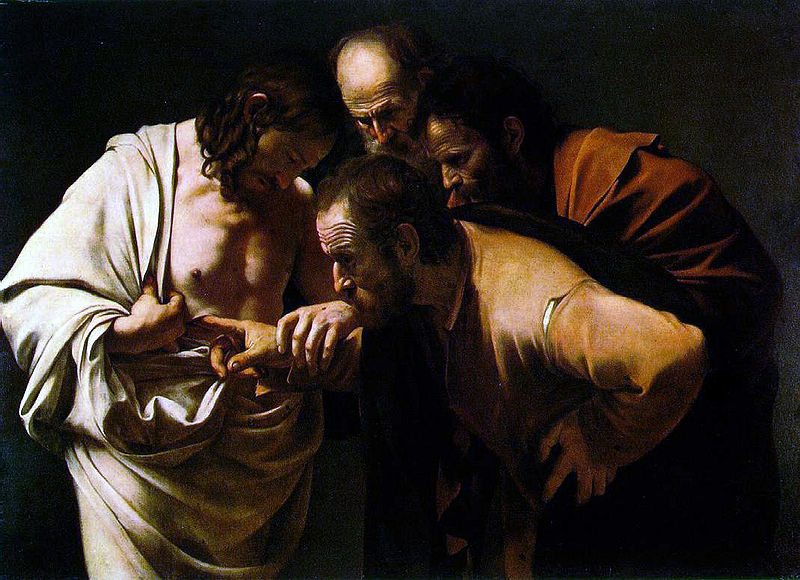 There is an objection to one of the evidences for the resurrection which is, frankly, terribly confused. I most recently ran into it on the discussion page for the radio show Unbelievable? Essentially, the objection goes like this: Christians say the fact that the disciples died for what they believe is evidence for its truth, but all kinds of religious people die for what they believe; are they all true?
The objector then often proceeds to note that some Muslims will die in suicide bombings due to their beliefs; they will note events like Thich Quang Duc burning himself to protest persecution; they will note other events in which religious people die for their beliefs. The implication, it is alleged, is that this cannot count for evidence for the truth of what they belief. People die for false things all the time; it doesn’t make what they believe true.
The objection seems compelling at first because it is, in fact, largely correct. The simple fact that people are willing to die for something does not make whatever they are wiling to die for true. However, this objection shows that the objector is badly misrepresenting the Christian apologetic argument.
The apologetic argument is intended to be used against those who would allege that the disciples made up or plotted for the notion of the resurrection for some reason. It therefore presents a major disanalogy with people of other faiths (or even later Christians) dying for what they believe. The major difference is that the Christian is claiming the disciples who went willingly to their deaths would have known what they were dying for is false, if it were.
Suppose you and a group of friends decided to make up a story to get some money. You decided that you were going to pretend that a buddy had died and risen again. You managed to set up circumstances in which your buddy appeared to die; then smuggled him off to Argentina–because that’s where everyone likes to hide, apparently. Later, you ran about the streets proclaiming that you’d seen your buddy walking around. He had been risen from the dead. And, you’d tell the story for the right price. To your delight, the story spreads like wildfire. But eventually it attracts attention of the wrong kind, and people are coming to kill you. Now, suppose that you could easily get out of it alive by simply confessing you’d made up the whole story. What would you do?
Alleged explanations for the evidence for the resurrection which appeal to purported conspiracies are much like this. The disciples would have known they were lying. Thus, the fact that they willingly went to their deaths does indeed count as evidence for the truth of what they were claiming. Otherwise, one would have to claim that these people quite seriously and willingly went to their deaths for something they knew was a lie they themselves had invented.
Thus, it is not enough for the objector to simply point out that other people die for faith not infrequently. That is not the core of the apologetic argument. Instead, they must argue for the implausible notion that the disciples willingly died for what they knew was a lie. It was not something they simply thought might be a lie; it would have been something that they were certain was false.
I do not think it is too far afield to suggest that the objection fails. It seems far more likely that they certainly believed what they professed were true, and they were in the unique position of knowing whether or not they were lying. Thus, the explanation of the resurrection is more credible than the explanation of a conspiracy. There are, of course, other attempts to explain away the historical argument for the resurrection, but those are arguments for a different time.
Links
Be sure to check out the page for this site on Facebook and Twitter for discussion of posts, links to other pages of interest, random talk about theology/philosophy/apologetics/movies and more!
SDG.
——
The preceding post is the property of J.W. Wartick (apart from quotations, which are the property of their respective owners, and works of art as credited; images are often freely available to the public and J.W. Wartick makes no claims of owning rights to the images unless he makes that explicit) and should not be reproduced in part or in whole without the expressed consent of the author. All content on this site is the property of J.W. Wartick and is made available for individual and personal usage. If you cite from these documents, whether for personal or professional purposes, please give appropriate citation with both the name of the author (J.W. Wartick) and a link to the original URL. If you’d like to repost a post, you may do so, provided you show less than half of the original post on your own site and link to the original post for the rest. You must also appropriately cite the post as noted above. This blog is protected by Creative Commons licensing. By viewing any part of this site, you are agreeing to this usage policy.
2013: The Year’s Best Books, Web, and More! An Apologist’s Year in Review
 Who doesn’t love to look back on the year and reflect on the things done and learned? I’m sure plenty of people don’t! But I do! So here’s my reflection on the year simply highlighting the “bests” that I’ve read/watched/etc. from an apologetic perspective throughout the year. I have not included all the books I read in 2013; rather, only books/movies/etc. which came out/were active/etc. in 2013 are eligible.
Best Books
Best Apologetics Book
J. Warner Wallace, Cold-Case Christianity. I think this book is, hands down, the most important introductory level book for the historical reliability of the New Testament. I reviewed this fantastic book here. Wallace does a fantastic job introducing hard topics in readable ways. His experience as a cold-case detective allows him to draw on his knowledge to make the “detective work” of history exciting and engaging. I highly recommend this book to any and all, whether they are interested in apologetics or not.
Best Advanced Apologetics Book
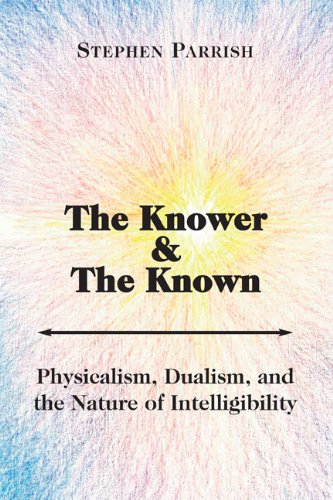
Stephen Parrish, The Knower and the Known. In this advanced work of epistemology and metaphysics, Parrish provides a comprehensive case against physicalism. However, not content with merely the via negativa, he also provides readers with an extensive positive case for substance dualism. I analyzed and reviewed this work in two parts: part 1 focused on the case against naturalism; part 2 focused on the case for dualism.
Best Movie for Discussing Worldview
 “Ender’s Game”- The movie “Ender’s Game” is one of the more philosophical movies to have come out this year. Although its core is a kind of race-against-time action movie, the film explores issues of just war, innocence, morality, and more. I reviewed it with a focus on worldview issues here; I also reviewed the award-winning science fiction book on which it is based.
Best Podcast- For the Best Overall Podcast
The Dividing Line– The podcast of the Calvinist theologian and apologist James White, “The Dividing Line” is consistently interesting and engaging–even when I disagree. White’s emphasis revolves around worldview issues, Calvinist theology, and apologetics–particularly those issues which deal with textual criticism. He is one of the few apologists I know of who consistently engages Muslims. “The Dividing Line” is one of the few podcasts which I listen to every single time. Whether or not you agree with White–and I find I do disagree on several points–you will find his level of engagement with primary materials high, and his critiques will force one to rethink their positions where they disagree.
Best Apologetics Site- For the Best Site focused upon Apologetics
The Poached Egg– I do, of course, mean “best” apart from this one! Okay, not really… I don’t actually think this is the best apologetics blog on the internet… not by a long shot. Anyway, “The Poached Egg” is a kind of apologetics-resource site which features a number of blog articles daily. Greg West runs it and he consistently has an excellent range of resources featured so that people interested in apologetics and related issues may continually interact with new articles of interest. I highly recommend that any readers of this site go and immediately begin following (or at least routinely checking) The Poached Egg.
Best Theological Topics Blog- For the Best Blog on topic(s) specifically related to Theology
Baker Book House Church Connection– Yep, this is a blog about books. That not only means it gets immediate bonus points from me, but it also means that the author, Louis McBride, has a whole slew of topics available. The posts on the blog are generally centered around works the McBride has browsed recently, with brief quotes and reflection upon the content. The broadness of the blog’s content is its greatest draw. I highly recommend following this blog and reading every post for thought-provoking and wide-ranging theological content.
Best Worldview Blog- For The Best Blog on a topic(s) related to the Christian Worldview
The CBE Scroll– The CBE Scroll is the official blog for Christians for Biblical Equality, a group which advocates for the full equality in the home and ministry for men and women. Whether one agrees or disagrees with this perspective, the blog raises a number of highly important arguments with which one must contend.
Best Creation Issues Blog
Naturalis Historia– The issue of the time and length of creation is a highly controversial one among evangelicals today. Here, “The Natural Historian” covers a wide range of topics related to the evidence for the age of the earth, as well as occasionally reflecting upon theological topics. Every single post on this site is worth reading and will inspire much thinking in related areas. I highly, highly recommend this site.
Best Non-Traditional Presentation Apologetics/Theology Blog- For the best blog that utilizes method other than pure text or video to convey its meaning
No Apologies Allowed– Who doesn’t like comics? That’s right, nobody. No Apologies Allowed is a site that uses comics as its primary means to get across apologetic and theological insights. The site is always entertaining and the conversation is quite interesting. Be sure to swing by.
“The Saint Who Would Be Santa Claus” by Adam English – A Seasonably Appropriate Book Review
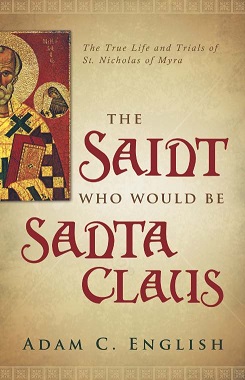
In the quest for the real Santa Claus, what is discovered more often than not is that he can assume any shape. He can accommodate anyone… (191)
There are many discussions floating around about the “real” Santa Claus, Saint Nicholas. I have a bit of a side interest in the topic because I was never a believer in Santa Claus and so I’ve always been interested in the reality behind the myth. So, when I received The Saint Who Would Be Santa Claus
for Christmas last year, I was excited to dive in for the season this year
Perhaps the most interesting portion of the work is English’s discussion of the historiographical difficulties related to unearthing the historical Nicholas of Myra. The difficulty with discovering the “real Santa Claus”–Saint Nicholas–is compounded by the fact that Nicholas of Myra (the Nicholas in question) is often confused with Nicholas of Sion (10; 80; 120; 174). Historical accounts of the life of Nicholas have often conflated these two persons, which means historians must extract them from each other in order to make an account of either. English confronts the possibility that Nicholas did not exist–a possibility put forth by some scholars, in fact–head-on by noting the multiple, independent sources for his life. Although Nicholas did not leave behind a legacy of his own writings, the extant evidence, argues English, is enough to acknowledge his existence as well as a historical core of stories about his life (11ff).
English does a great job of reflecting upon the apparently historical narrative while also drawing out the legends and apologetic tales which grew up around the narratives. Throughout the book, he reports a number of stories related to the life of Nicholas of Myra. He reports these stories seemingly in order of legendary development. For example, the famous story of Nicholas’ gift of gold to three women in need (about to be sold into prostitution) received more embellishment as time went on (57ff). However, English does not always do a great job of making the distinctions clear when these various types of tales are discussed. Part of this is probably due to the historiographical difficulties noted above, but it would have been nice for English to at least offer his opinion regarding the stories he related as to which he felt might be accurate as opposed to inaccurate. At some points he does, but at others he simply offers a series of increasingly surprising accounts without any commentary as to the possible historicity of the accounts.
A central part of the work focuses upon the council of Nicaea and the famous incident of Nicholas’ alleged slapping or punching of Arius or a different heretic (Arian) at the event. English argues that it is unlikely that it would have been Arius, because Arius was not a bishop and so likely would not have been present at the council itself (101-107). Moreover, English believes that a different story, in which Nicholas reasons with an avowed Arian to change his view, is more likely the historical background for the story (107-109). Nicholas’ own place at the council is disputed, but his orthodoxy is acknowledged by all his biographers, and it is likely that he defended the orthodox position at the council itself (107ff).
Apart from his participation at Nicaea, Nicholas also, of course, performed the basic functions of a bishop, which at his time included helping to resolve issues in Myra and the surrounding area (115ff). He helped with the struggle against pagan belief and practice, and at this point some of the stories and legends of Nicholas of Sion were often intermixed with those stories of Nicholas of Myra (120-125).
English’s work also draws out the way that Nicholas of Myra has been adapted for multiple purposes and occasions. Whether this is through the adaptation of his apparently real, historical life to various theological discussions (including Aquinas) or legends which were developed to supplement his legacy and individual viewpoints, Nicholas’ story continues to have widespread appeal.
The Saint Who Would be Santa Claus is an interesting read on a compelling man. Perhaps the most interesting part is the frequent fusion of myth and legend with the historical account. Those interested in the life of the “real Santa Claus” should immediately grab the book for their collection.
Links/Source
Adam English, The Saint Who Would Be Santa Claus: The True Life and Trials of Nicholas of Myra
Saint Nicholas- A Christian life lived, a story told– I wrote about the interplay between myth and reality in the stories about Nicholas. I wrote about how the myth of Nicholas actually bolsters the Christian worldview by pointing toward our longing for the ideal.
Be sure to check out the page for this site on Facebook for discussion of posts, links to other pages of interest, random talk about theology/philosophy/apologetics/movies and more!
SDG.
——
The preceding post is the property of J.W. Wartick (apart from quotations, which are the property of their respective owners, and works of art as credited; images are often freely available to the public and J.W. Wartick makes no claims of owning rights to the images unless he makes that explicit) and should not be reproduced in part or in whole without the expressed consent of the author. All content on this site is the property of J.W. Wartick and is made available for individual and personal usage. If you cite from these documents, whether for personal or professional purposes, please give appropriate citation with both the name of the author (J.W. Wartick) and a link to the original URL. If you’d like to repost a post, you may do so, provided you show less than half of the original post on your own site and link to the original post for the rest. You must also appropriately cite the post as noted above. This blog is protected by Creative Commons licensing. By viewing any part of this site, you are agreeing to this usage policy.
“The Hobbit: The Desolation of Smaug”- A Christian Reflection on the Film
 The second part of “The Hobbit” trilogy has arrived in theaters. What themes does it present? What might we talk about in relation to the latest film? Here, we’ll explore a few themes found through the film and view the movie through worldview glasses. There will be SPOILERS below.
Justice
Perhaps the strongest theme throughout the movie is that of justice. The most obvious aspect of this may be found in the quest at the heart of the story itself: the dwarves seeking to reclaim their homeland.
Yet justice also plays its part in reflection upon each ruler the film shows. Thorin, for example, seems to be consumed in part by greed. He is comfortable leaving members of his group behind so that they do not slow the quest. In fairness, when he does leave Kili, Oin, Fili, and Bofur behind, it is in a place in which they were welcomed (eventually) and so perhaps Thorin is not so cold here as he may seem.
Thranduil, on the other hand, is a clearly unjust ruler. First, he treats his subjects unjustly. When he discusses the potential feelings Legolas has for Tauriel, an elven captain, she (seemingly with some hope) mentions that she thinks he would never allow Legolas to become betrothed to a non-royal. Thranduil responds saying she is right, which is why he charges her with telling Legolas there is no hope. The injustice of the scene is both seen and felt. One cannot help but sympathize with Tauriel against Thranduil’s audacity.
Yet Thranduil’s unjust rule also extends to his entire kingdom. His concern seems to be purely with his own borders, as he prefers to keep evil out rather than confronting it at its source. His isolationism is based upon the notion that only his kingdom has “the light” and so that light must be preserved from the darkness of the surrounding world. The discussion made me think of the fact that some Christian evangelical groups withdraw from the world, because they do not wish to be part of the world or its darkness any longer. Yet as Christians, we are called to go into the world and confront the darkness rather than isolate ourselves from it. Thranduil’s comments speak to our own feelings, and his unjust ways are a call to us for action.
The Master of Laketown is also unjust in his dealings with his people. His highest aim is to preserve his own power. The thought of anyone sharing power with him–or the thought of the people having some say–is horrifying to him. Yet rather than ruling for the sake of his people, it seems his life is consumed by alcoholism and gluttony.
Light in the Darkness
The theme of light opposed to darkness is found throughout the film. Thranduil speaks of the battle between light and darkness in his own confused fashion, Beorn notices the “stench” of evil and a darkness over the woods, and Gandalf directly confronts darkness with light.
The latter instance is perhaps the most powerful, for it features Gandalf facing off against Sauron as Gandalf uses light from his staff to combat the blackness with which Sauron assaults him. Sauron’s words call out, telling Gandalf that there is not enough light in the world to combat his darkness.
For those who know how the Lord of the Rings ends, the scene is ironic. But in the moment, it rings true. It seems that darkness will indeed prevail.
Greed
Thorin, as noted, seems to be consumed by greed. Not only does he leave his fellow dwarves who would slow him behind, but he eventually confronts Bilbo regarding the Arkenstone. He uses his sword to bar Bilbo’s way and demands he hand over the Arkenstone, if he found it. The tension of the scene is only broken when Smaug attempts to destroy them both. However, the greed within Thorin seems to be growing. It will be interesting to see how it plays out in the conclusion to the trilogy.
The Master of Laketown also makes his decision through greed. Although the prophecy regarding the return of the king under the mountain makes clear the notion that his own town will burn, Thorin’s appeal to the Master based upon shared wealth does not fall upon deaf ears. The Master of Laketown succumbs both to his own greed and to the mob which has formed around the debate.
Evil
One of the more interesting things for me to reflect upon in the film was the way evil was portrayed. Clearly, the unjust rulers discussed above are each, in their own way, a kind of evil. However, the orcs were the clearest portrayal of evil. Yet their evil, to me, seemed to be inherently unreasonable. There was little reason for them to act as they did apart from pure hatred. Sauron was calling out to his evil minions as well, and his motivation seems to be simply the destruction of any who are not subject to him.
Reflection upon this depiction of evil leads to an insight: evil is, at its core, irrational. There is no reason to it. It goes against what genuinely makes sense in the world. This applies not only to the fanatical lust for murder which the orcs had, but also to the injustice of the rulers mentioned above. A viewer cannot help but think that Thorin, Thranduil, and the Master are each acting in an illogical fashion. Their greed corrupted them. For the orcs, their lust for suffering has consumed them. Evil is illogical; those who practice it are chasing fantasy.
Conclusion
I admit I did not enjoy “The Desolation of Smaug” as much as I enjoyed “An Unexpected Journey,” though I did still like the movie. I think the themes found here are worth reflecting upon, and the way they are presented forces viewers to really sit back and think as the movie continues. In particular, the feeling of injustice throughout the movie was unexpected, but it touched upon a number of areas related to our own lives and how we live them.
There is, of course, much more which could be discussed regarding the “Desolation of Smaug,” and I turn to you, readers, to start that discussion in the comments.
Links
The Hobbit: An Unexpected Journey- A Christian Perspective– check out my look at the first of “The Hobbit” trilogy.
Be sure to check out the page for this site on Facebook for discussion of posts, links to other pages of interest, random talk about theology/philosophy/apologetics/movies and more!
The picture featured in this discussion is an official movie poster and the property of MGM/New Line/WingNut films. I do not claim any rights to it.
SDG.
——
The preceding post is the property of J.W. Wartick (apart from quotations, which are the property of their respective owners, and works of art as credited; images are often freely available to the public and J.W. Wartick makes no claims of owning rights to the images unless he makes that explicit) and should not be reproduced in part or in whole without the expressed consent of the author. All content on this site is the property of J.W. Wartick and is made available for individual and personal usage. If you cite from these documents, whether for personal or professional purposes, please give appropriate citation with both the name of the author (J.W. Wartick) and a link to the original URL. If you’d like to repost a post, you may do so, provided you show less than half of the original post on your own site and link to the original post for the rest. You must also appropriately cite the post as noted above. This blog is protected by Creative Commons licensing. By viewing any part of this site, you are agreeing to this usage policy.
My Current Projects and Graduation
Hello, dear readers!
I wanted to let you know how much I appreciate your coming and reading my blog, whether you are just a one-off who happened to stumble on this post, or a follower who has read it for years.
As a kind of thank you, I wanted to give you an update on what I’m currently working on behind the scenes. I am, as always, constantly writing blog posts. I try to give a pretty good spread of topics I’m interested and I hope you find them interesting too. I read a lot of books, so book reviews are a constant part of the process.
I graduate from Biola University with my MA in Christian Apologetics on December 20, 2013. I will be graduating in absentia. I don’t have the money to fly out to CA for it, so I’m a little bummed that I won’t be able to walk for my graduation, but I’m also very excited to be finishing. I have had an absolute blast with the courses and I have learned a lot. Anyway, I have actually had two readers contact me because they wanted to send a gift for graduation and/or Christmas. Wow. That is really, really awesome. Thanks so much! If you also want to consider such a thing, feel free to check out my constantly-updated Amazon wish list.
I’m honestly really looking forward to getting the MA hood. Perhaps I’ll wear it around the home. Okay, no I won’t. But it is a really awesome feeling to be right on the verge of my MA!
But now that I’m on the verge of graduating with my MA in Christian Apologetics, I have been thinking ahead and considering what projects I should work on. Here’s an idea of what I’ll be doing.
Writing Books:
Yes, I’m working on a couple books. I’m actively writing on two of them, with a couple others planned in the future. My hope is to get these published through a major Christian publishing house. So hey, if you have any connections or advice, please send them my way either through the comments here or through the “contact” form.
The books I’m working on right now are, I think, going to be both highly relevant and also very sellable. They’re the kind of books that, if I saw they had been written, I would snap them off Amazon instantly. So I hope that others will feel the same way. The first book is about 95 pages right now, but I hate to say that I’m going to keep the topic top secret. I’ll just say this: it is related to apologetics, and it is going to give a lot of unique insight. It will, I think, drive a whole lot of discussion and research going forward. I’m not trying to brag here, I just think that the outcome will be pretty significant.
The other book I’m working on is related to issues of creation and creationism. It’s going to be largely autobiographical and written in the first person as a kind of memoir of my explorations of the issues involved. I may not reflect it much on the blog, but I have a fairly dry sense of humor and that will be reflected in this book.
School
I am planning on continuing my education, hopefully by pursuing a PhD in theology next. I will be applying not for 2014 but for 2015, so I’m taking this year to study languages and the like while working on my books before I go into full time school work again.
Bible Commentary
I have been working on a commentary on the entire Bible. I’m writing this less as a book project than as a simple project for edification. I have been keeping a document in outline format with notes on the various books of the Bible as I read through them. The outline format allows for easily searchable notes, and I also use some paragraphs therein as well. I think it is pretty neat! I am currently going through Proverbs, Deuteronomy, and Luke.
The insights one gets from such a project are amazing. It is fascinating to see the way you find links between books that you never had before. I highly recommend that you also keep a kind of running commentary going as you read through the Word.
Onward!
Anyway, those are the projects I’m currently working on. I hope you enjoyed reading about them. Let me know what your thoughts are! What are you working on? Leave some comments.
Book Review: “The Philosophy of History: Naturalism and Religion- A Historiographical Approach to Origins” by James Stroud
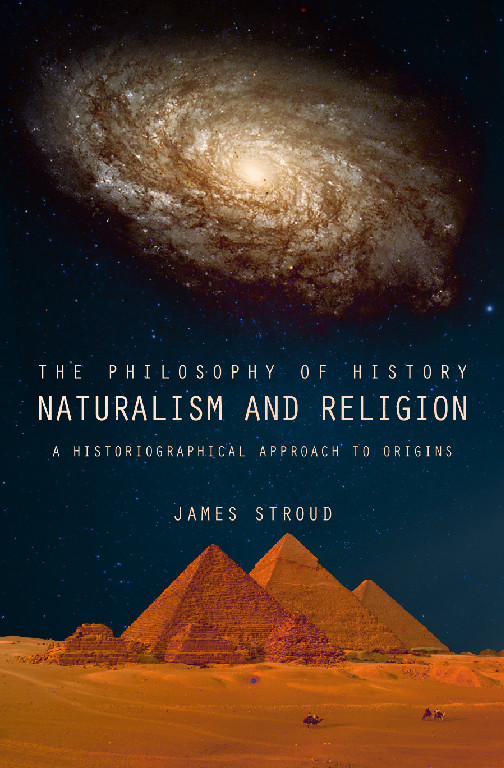
…Either we will stand behind objective truth or sink into the abyss of relativism in the name of political correctness. (278)
One area Christian apologists need to explore further is the study of historiography. Historiography is, basically, the study of how to study history. It provides the framework in which one might seek truth in understanding historical facts. The way we study history will directly impact the results of historical investigation. John Warwick Montgomery, Michael Licona, and N.T. Wright have done an excellent job integrating historiography into their approach, and there are several treatments of historiography in works on archaeology with apologetic import (K.A. Kitchen is but one example), but there remains much room for development of this essential discipline in the area of Christian evidences.
James Stroud, in his work The Philosophy of History: Naturalism and Religion- A Historiographical Approach to Origins
Next, Stroud turned to an analysis of positivism and academic freedom. His argument is essentially that one should not pre-commit to a “closed” philosophy of history such that one cuts off any and all debate about the presuppositions one uses to interpret history and historical sciences. The winners write the history, but they are also capable of restricting the direction research may turn (49-50). There must be a distinction between the definition of science and science in practice; that is, one should not restrict scientific study through the use of one’s presuppositions to determine what is even capable of being studied or used as a hypothesis. Instead, people should be allowed to follow the evidence where it leads, even if such a project may discover things which lie outside the accepted explanations.
It must be acknowledged that Christianity is, by its nature, a distinctly historical religion: “[T]he truth or falsity of Christianity stands or falls with individual events within history…” (69). Thus, Christianity is almost uniquely capable of being approached in such a manner as to discern its truth through historical claims.
Interestingly, Stroud did not limit his use of “philosophy of history” to the study of history. Rather, he expanded it to include origin sciences, which are, he argued, a kind of historical science themselves. Thus, he examined both the origins of the universe and the origin and diversity of life alongside the historical portions of the book. In these sections on the historical sciences, he presents the design argument both in its cosmological and biological forms.
The meat of the book, however, may be found in the exploration of human history, which comprises approximately half the book. Here, Stroud really gets into stride. One central part of his argument is that “Language, writing, civilization, and religion all seem to be in a fairly advanced stage of development [from the beginning]….” (146). Proposed solutions which argue for a gradual evolution of human culture continue to be confronted by discoveries to the contrary, such as Gobekli Tepe, which shattered preconceived notions of the history of religion (155-157). Language appears to be highly complex from the beginning, and there is little reason to think that some languages are more primitive (in the sense of development) than others (149-150). Stroud relates these points back to the expectations one might get from the biblical text and argued that the biblical text presents a plausible interpretation of such evidence (163ff).
The Flood served as one of the case studies Stroud utilized to make his point. He argued that the preponderance of evidence suggests that the biblical flood is accurate (174-177). The Table of Nations in Genesis 10 also hints at “astonishing” accuracy regarding the historical recordings in the earliest portions of the Bible. Moreover, stylistic evidence within Genesis places its date as very ancient, just as one might expect from taking the book at face value.
Yet Genesis is not the only portion of the Bible which received insight from Stroud’s analysis. The conquests recorded in Joshua have been backed up by archaeological findings. The history of David also garnered attention, and Stroud’s handling of the archaeological data is informative and concise.
The New Testament is, of course, centered around Christ, and Stroud explores the evidence for the Resurrection and the narratives related to Him. One very important point he made is that “…it must be pointed out that the… manuscripts we have for Jesus today did not start as a ‘Bible’ but were later [collected into one]… [T]o dismiss any of this manuscript evidence is in effect to dismiss the most primary sources we have on the Historical Jesus” (240). Yet even sources apart from these can account for a number historical aspects of Christian faith and practice, to the point that it becomes very difficult to reject entirely the Christian story (240ff). Stroud defended the Resurrection itself with a type of “minimal facts” argument, in which he reasoned from several largely established facts of the historical Jesus to the resurrection (248ff).
Naturalism, argued Stroud, fails to account for the historical and scientific evidences for the origins of the universe, life and its diversity, civilization, and the evidence related to the historical Jesus. One should therefore not be constricted to operating within a naturalistic paradigm when one investigates origins or history generally. An a priori rejection of the supernatural is unwarranted.
Thus far, I have shown a number of positive portions of the book. That is not to say there are no areas of disagreement or any problems. First, Stroud’s writing style often comes across as autobiographical, which takes away from the academic feeling of the overall work. Second, there are a number of grammatical errors in the book which are sometimes quite distracting. Third, there is a tendency to overstate the case in some places, such as asserting that any discussion of evolution beyond microevolution is “100 percent speculative” (117) or that “all scholars” in some certain field agree with some fact or another. Fourth, at points Stroud states the view of the opposition in ways that I suspect would be objectionable. One example may be found here: “[T]he vast majority of naturalists confirm that humankind did indeed share a common language…” (177) or the notion that “even the most adamant proponents of naturalism” would admit that the origin of life is unexplainable through naturalistic means with the current understanding (115). I suspect that adamant naturalists would object to this and argue that the RNA world hypothesis or some other origin-of-life scenario does, in fact, explain the origin of life.
Many of these difficulties are minor, but they tend to pull down an otherwise excellent work. It is unfortunate, because it also seems like these could all be solved by a good editor. As it stands, however, one should be careful when reading the work to be aware that in many cases one should perhaps temper the sweeping conclusions Stroud makes. In any field of study, there are rarely (if ever!) times where “all scholars” might agree on something, and the language in the book constantly implies that there are many such agreements in some of the most contentious areas of all historical or scientific studies. Although this does not throw his conclusions out the window, it does somewhat devalue the work, as one must read it with an actively cautious eye.
I don’t often (in fact, I can’t think of ever mentioning this before) discuss the cover of a book I’m reviewing, but I have to say this has what might be the coolest cover for an academic book I have seen. I mean seriously, look at it! It is awesome.
With The Philosophy of History James Stroud has provided much needed development for Christians who might want to look into the study of the methods of historical investigation to develop their own understanding of Christianity. He also applies these methods in sometimes surprising ways. I have noted a number of areas of difficulty found within the work, but it should be noted that these are comparatively minor when compared to the project as a whole. Stroud has provided some necessary development in an area of study that Christians should continue to develop. Historiography is an essential field for Christians to study and become involved in, and The Philosophy of History has provided a broad framework for others to continue the work (and hopefully for Stroud to continue, himself). It is an excellent, thought-provoking read which illumines areas of which many apologists, unfortunately, remain unaware.
Source
James Stroud, The Philosophy of History: Naturalism and Religion- A Historiographical Approach to Origins
Disclaimer: I was provided with a copy of this book for review. The author only asked that readers provide feedback of any kind, including negative, in order to broaden the dialogue in this area.
SDG.
——
The preceding post is the property of J.W. Wartick (apart from quotations, which are the property of their respective owners, and works of art as credited; images are often freely available to the public and J.W. Wartick makes no claims of owning rights to the images unless he makes that explicit) and should not be reproduced in part or in whole without the expressed consent of the author. All content on this site is the property of J.W. Wartick and is made available for individual and personal usage. If you cite from these documents, whether for personal or professional purposes, please give appropriate citation with both the name of the author (J.W. Wartick) and a link to the original URL. If you’d like to repost a post, you may do so, provided you show less than half of the original post on your own site and link to the original post for the rest. You must also appropriately cite the post as noted above. This blog is protected by Creative Commons licensing. By viewing any part of this site, you are agreeing to this usage policy.
Book Review: “Hardwired: Finding the God You Already Know” by James Miller
 Irreverent. That’s how I would describe Hardwired
Illustrative was his comment early on in the work. Miller was approached by a mother who was heartbroken over her son leaving the faith. She asked him, “‘How do I convince him there is a God?'” Miller’s answer is indicative of his apologetic method: “He already believes in God.” This startling statement forms the basis for the rest of the book. Miller’s approach revolved around showing people the God they “already know.”
How might one justify this outlandish claim? First, Miller argued that human beings are not “blank slates”–that is, the human mind is in fact shaping that which it observes even as it observes it: “You and I, witnessing events through the same pair of glasses, would not know the same thing, because your brain and my brain do different things with the knowledge” (42). All knowledge is filtered through the preconceptions one has that sorts it into different levels of experience. Miller provided several reasons for thinking that the notion of our minds as blank slates is wrong (42-44; see also 58-61).
The notion that we are not “blank slates” also means that we filter ideas through a number of pre-existing categories. It also means that a wholly objective approach to discovering truth is impossible; we simply cannot step entirely outside of our presuppositions about reality. Moreover, human beings seem to have a shared experience of certain affirmations, even though some may attempt to deny them. For example, “we assume that our perceptions of the world… are accurate… We assume that there are real moral rights and wrongs… We assume that life has a purpose… We assume that there can be meaningful communication in which two people accurately share what they are thinking” (26). These assumptions are not uncontroversial; indeed, many have sought to deny any or all of them. Hardwired featured concise arguments for the fact of each of these notions.
Apart from these seemingly universal human experiences, Miller also argued that the very position of agnosticism is one which does not cohere with reality. Agnosticism is fundamentally a witholding of belief, but that is itself based upon a supposed ignorance of all the available data. He compared it to a court case regarding evidence: “People are only off the hook when they can show both that they didn’t know and that there was no way they could have known.” It is not enough to plead ignorance: “they are still guilty if they didn’t know because they avoided finding out” (55). The Bible clearly states that all people are capable of knowing God, and stand without excuse (Romans 1). “The onus is on honest agnostics to produce a pretty substantial bibliography of failed research” (56).
The fact of God’s existence may be found throughout reality, argued Miller. First, there is the reality of religious experience, but Miller prefers to view these as “epiphanies” which are “a sudden piercing discovery…” which may “draw our attention to things we’ve previously taken for granted or ignored” (69). Second, the existence of moral absolutes is a universal experience. However, this is not to be taken as a proof for God; rather Miller suggested that it means we have “inclinations that cannot be filled by anything but the exisence of God” (91). Even the atheistic moral objection to the God of the Bible assumes objective morality, because it assumes that they are capable of discerning real right and wrong (91-92). The very fact of valuation hints at the Creator (108-111).
The Christian faith gives compelling reasons to believe because its story matches and exceeds the criterion of embarrassment: its “hero,” Jesus, is scorned and shamed, not glorified and given rule over all nations (121ff).
The existence of God, Miller argued, is not tied to arguments or debates, rather, “What convicts us of the existence of God [are]… the soft, subjective facts of an experience that resonates with human longing and confirms are deep suspicions” (156). Hardwired is Miller’s attempt to point to those experiential factors.
By way of analysis, I first note that I think Miller has done an excellent job summarizing a number of extremely complex and difficult issues in ways that the “person on the street” could pick up the book and understand. He is concise and clear. Moreover, I sympathize in many ways with his approach. It seems to me to be true that humans cannot approach a topic as though we are “blank slates” ready to take whatever input we are given without layers of interpretation. That, I think, is the greatest strength of Miller’s approach. He pointed out the deeply seeded assumptions we hold which influence the way we view reality and showed how these lead to God.
However, I wonder about the coherence to Miller’s approach. His critique of natural theology does not sit well with his appeal to some of the very types of arguments that natural theologians use. For example, his appeal to objective morality is essentially no different from the defense provided for the “moral argument” by natural theologians like William Lane Craig, whose approach Miller criticizes. His presuppositional argument itself depends upon some forms of evidentialism (and here I am intentionally wording this to avoid being accused of being unaware of the fact that presuppositional apologists do use evidence–it is manifestly true that even the staunchest presuppositional apologist uses evidence… my point is that the method Miller uses is often evidentialist in its approach). Ultimately, readers will be left with what essentially amounts to an existentialist evidentialism, which seems itself to rely upon natural theology in a number of traceable ways.
Another difficulty I had with Hardwired is that it seemed Miller sometimes overstated his case. Perhaps the most obvious example of this, in my opinion, is his discussion of evolution. He discussed natural selection and sought to evaluate it by looking at humans: “[I]f natural selection actually works, a few million years should make for some pretty shiny, strong, effective gladiators who have good teeth and rarely catch cold… Specifically, there are some traits of humanity that should by all means have been weeded out by now: sleep (which makes people vulnerable to predators for a third of their lives)… endoskeletons, appendices, wisdom teeth, birth defects, stupidity, and obesity” (94).
I’m not about to dive into biology, which is by no means an area of my expertise, but it seems to me that none of these are required expectations given Neo-Darwinism. Miller’s critique does not take into account the fact that humans have worked using their intelligence to circumvent many of these difficulties (i.e. we live in shelters which keep us safe while sleeping; appendices still have function; etc, etc.). The critique offered here also seems shamelessly teleological, which is the very thing Neo-Darwinists would deny within their system.
Hardwired is a brief missive which applies presuppositional apologetics in a straightforward, easy-to-understand fashion. Miller doesn’t fall into using terminology that will be difficult for the uninitiated to understand. Instead, he provides a coherent beginning-to-end approach in how to argue for faith from his presuppositional approach. It is a commendable work for its simplicity, and despite the areas of disagreement I noted above, I certainly think it is worth a read. Miller has a way of answering the difficulties that people raise against Christianity in concise but convincing fashion. It’s a mixed bag, but one well worth the time spent.
Source
James W. Miller, Hardwired: Finding the God you Already Know (Nashville, TN: Abingdon Press, 2013).
Disclaimer
I received a copy of Hardwired free of charge for review. I was only asked to give an honest review of the book.
SDG.
——
The preceding post is the property of J.W. Wartick (apart from quotations, which are the property of their respective owners, and works of art as credited; images are often freely available to the public and J.W. Wartick makes no claims of owning rights to the images unless he makes that explicit) and should not be reproduced in part or in whole without the expressed consent of the author. All content on this site is the property of J.W. Wartick and is made available for individual and personal usage. If you cite from these documents, whether for personal or professional purposes, please give appropriate citation with both the name of the author (J.W. Wartick) and a link to the original URL. If you’d like to repost a post, you may do so, provided you show less than half of the original post on your own site and link to the original post for the rest. You must also appropriately cite the post as noted above. This blog is protected by Creative Commons licensing. By viewing any part of this site, you are agreeing to this usage policy.
“Catching Fire”- A Christian Reflection on the Film
 “Catching Fire” is likely to be one of the biggest blockbusters of the year. There are an extraordinary number of things to discuss in this movie. It is filled to the brim with points of interest. Christians would do well to see it and reflect on some of these themes. I have drawn out a number of them below. There will be SPOILERS in what follows.
The Aftermath
Early in the film, Katniss is hunting alongside Gale. They see some wild turkeys, Katniss draws her bow to fire, lets loose and hits… Marvel? Marvel was the young man she killed in the Hunger Games about a year before. How could he be here? How did he get shot? The screen pans in, and Katniss is hyperventilating, struggling to comprehend the horror she has just witnessed. But… it wasn’t real. She comes back to the present. The nightmare, however, is not over.
The film explores this issue in moving, distressing ways. Katniss seems to be dealing with Post Traumatic Stress Disorder (PTSD). The memory of the violence she has wrought has come back to haunt her. Later, she is confronted by the families of those who died in the Hunger Games that she and Peeta “won.” Her heart is broken. She wakes with nightmares. Violence… is horrific.
But you, in the audience, are forced to deal with another level of the drama: is Katniss to blame for this? Yes, she did kill; but she was forced to kill or be killed. The system dealt her the cards she is playing with: did she merely play the part? Who is to blame? Surely, the system is to blame every bit as much as Katniss. Indeed, is Katniss to blame? An unjust system yields nightmares.
Friendship
Katniss and Peeta are forced to put on a show to meet the expectations of the Capitol. In one (somewhat comical) scene, Peeta is trying to learn more about Katniss, who reveals that she doesn’t feel she has friends. But what is it that makes friendship? As I noted in my look at the book, Katniss betrays her own pragmatism in many points. Her compassion wins out, and demonstrates that she really does have friends and even–shock!–understands what friendship is, though she may not realize it.
Her willingness to sacrifice for her friends proves just how much she understands about the nature of friendship. It is self-giving, self-sacrificing; and not based upon the mere exchange of information, as the scene with Peeta shows.
The Rich
The stark contrast between the lives lived by the people of the Capitol and those of the district comes through very strongly throughout the movie. One cannot help but shake one’s head when considering the way that Caesar Flickerman–the Hunger Games’ gameshow host–first somberly reflects that the people going into the games have been favorites of the Capitol for years but now will all die but one… and then his face turns into a grin and he says “it’s so exciting!”
To the people of the Capitol, it really is all a game. It is a show. But to those who are suffering, it is a remarkable sign of the great line of division between the haves and the have-nots. I think perhaps the most poignant image of this was when Effie Trinket, the escort for the tributes for District 12, is trying to grasp the reality of the horror with which she is confronted. The year before, she was just excited to have potential to win; it really was all just a game. But now, she is faced with the thought of losing her beloved winners. Now, it has become real. But the only way she can try to cope with it is to make them “a team” by purchasing gold things for everyone. Her hair is gold, Katniss’ pin is gold; everyone else should have a gold item as well!
But Effie should not be castigated; indeed, she has become enlightened to the brutality. As one who has awakened, it is right that she should try to fight against the unjust system in whatever way she knows how. Whether her struggle is successful or not, one should commend her for breaking out beyond her closed reality.
 Sacrifice
The theme of sacrifice runs strong throughout the movie. We have already seen that it comes out in friendship [and love] when Katniss is willing to lay down her life for Peeta; but there is another agenda going on of which she is unaware: she has become a symbol of hope for the people of the Districts.
As such, many of the other tributes in the Hunger Games are willing to sacrifice themselves to protect her. Time and again others give up their lives to defend both Peeta and Katniss from the dangers in the arena. But the plot to rescue Katniss is not revealed until the very end. Instead, the theme of sacrifice centers around Katniss and Peeta. Peeta is willing and fully committed to giving his life to save Katniss, but Katniss instead wants to give herself to defend Peeta.
Not only am I reminded of one extremely powerful quote: “Greater love love has no one than this: to lay down one’s life for one’s friends” – John 15:13, but I also reflect upon the figure who spoke them himself: Jesus. Jesus did exactly that: he laid down his life for his friends; indeed, for all people (John 3:16). Could there be echoes of this same self-sacrifice to be found in the story of Katniss? I would suggest that yes, there indeed are; though they are by no means explicit or even intentional.
Yet the theme of hope draws out this theme even more strongly, such that one must wonder: who or what is Katniss?
Revolution
Hope, President Snow realized, was the most dangerous thing of all. It was fine to have fear; one could use fear. But the moment hope was injected into the equation, fear no longer worked. With hope, people were willing to die for an ideal; for a person. Katniss, Snow found, was that embodiment of ideal into a person. Her action of being willing to give up her life in the Hunger Games a year before had become a symbol; the fact that she continued to live had become a rallying cry.
Yet Katniss herself did not realize the extent to which she had become just such an ideal. To Katniss, all she had done was try to survive. And it is in this that her story most clearly displays the disconnect between her and the one true Savior. But thematically, the message remains. A revolution needs hope; one spark can light a fire.
Consider the history of Christianity. It was the hope of the resurrection which brought about enormous social upheaval. Suppression did not work, for the Christians had hope in the risen savior. When I saw the people of District 11 reach out their hands in a symbol of defiance to the Capitol, I considered the defiance of the early Christians in refusing to bow the knee to false idols.
Bringing It Together
Of course these are extrapolations. Anyone could point out holes in the way I drew these themes together to point to a Christian message. But the film itself is so thought-provoking that it demands such extrapolation. It calls for interpretation. How might we apply it to understanding our own times?
First, we must consider the nature of the “system.” There is a call to action found within the Hunger Games, but it is not a call to violent rebellion; rather, the violent rebellion is symbolic of the call the film makes to us to end oppression.
Second, the imagery of Effie’s realization of the injustice is perhaps a wake-up call to those of us who are sleeping with the societal ills of human trafficking, hunger, and racism (to name but a few). Not only must we, like her, be awakened, but we should also make use of the tools we have been given to fight against these injustices. And, thankfully, there are many effective ways we can do so.
Third, the movie features a powerful call to realize the power of hope in what seems like a hopeless world. That power is found in the message of Christianity to a world which is in great need of hope.
Go see “Catching Fire.” I hope it lights a spark within you to fight against the iniquities of injustice in our world. More importantly, I hope it brings you to the realization that the Christian message provides the most powerful hope to the world. The self-sacrifice of one Lord has provided endless hope for all nations, districts, and yes, even the Capitol.
Links
Like this page on Facebook: J.W. Wartick – “Always Have a Reason.”
Check out my look at the themes in the book, “Catching Fire” by Suzanne Collins.
Christian Reflection on The Hunger Games Trilogy– I discuss the entire Hunger Games Trilogy, with a number of comments upon the themes and events found therein.
The Hunger Games Movie: A Christian Perspective– I wrote about the movie, “The Hunger Games” and provided some insight into what Christians may take away as talking points from the film.
Do you like The Hunger Games? Check out my evaluation of Ender’s Game both in movie and book form.
SDG.
——
The preceding post is the property of J.W. Wartick (apart from quotations, which are the property of their respective owners, and works of art as credited; images are often freely available to the public and J.W. Wartick makes no claims of owning rights to the images unless he makes that explicit) and should not be reproduced in part or in whole without the expressed consent of the author. All content on this site is the property of J.W. Wartick and is made available for individual and personal usage. If you cite from these documents, whether for personal or professional purposes, please give appropriate citation with both the name of the author (J.W. Wartick) and a link to the original URL. If you’d like to repost a post, you may do so, provided you show less than half of the original post on your own site and link to the original post for the rest. You must also appropriately cite the post as noted above. This blog is protected by Creative Commons licensing. By viewing any part of this site, you are agreeing to this usage policy.

 J.W. Wartick - Reconstructing Faith