J.W. Wartick
The Rocks Cry Out: A visual journey on a lake and its implications for the age of the earth
 I recently visited Mirror Lake in Wisconsin and had the opportunity to canoe along the lake. Looking up from rowing the canoe, one is able to see exposed rock formations on either side as one goes from one major part of the lake to the other. How did this lake get here? How did the rocks erode as they show?
Two Primary Paradigms
There are two primary paradigms for interpreting the formation of the Earth. These are naturalistic or supernaturalistic. A naturalistic paradigm excludes God from the outset. A supernaturalistic paradigm may have any number of gods or spiritual forces. The reason I make the split here is because it is important to note that, regarding the ultimate origins of the universe and the Earth Christians are in agreement. God is the ultimate cause of reality.
Although we occupy the same paradigm with regards to the origin of all things, Christians are divided along a spectrum of possibilities (other paradigms) about the origin and diversity of life and species. Moreover, Christians are divided on the age of the Earth itself. Is the Earth a few thousand years old or a few billion years old? It is around this question that I shall focus here. Which subdivision of the supernaturalist paradigm better accounts for the evidence? Is the Earth “young” or “old”?
The Rocks, the Flood, and the Questions
Take a look at the photo above. The stone you see there is largely sandstone, layered upon itself. One can go up to the wall and crumble some of the rock between one’s fingers. The layers are extensive, going several dozen feet above the water level before diving below the surface. Where did all this sand come from? Why is it now here, above the ground and exposed?
Global Flood and a Young Earth
There are a number of ways to answer this question, but there is a stark difference between how the answers are given. Young Earth Creationists (hereafter YEC will refer to Young Earth Creationists, Young Earth Creationism, etc.) largely hold to the position that this sand was deposited during the Noahic Flood found in the Bible. That is, these layers of sand were deposited all at once during the great deluge which covered the surface of the earth. Other YECs hold that after the flood, some additional depositions were made by other catastrophic events, including the Ice Age.
What of the notion that nearly all this sediment was placed there by the Noahic Flood? There are immediate problems with this explanation. How is it that the layers are clearly distinct types of rock? For example, I canoed up to the rock shown in the picture and observed the fact that the rock was almost uniformly sandstone. But if the explanation for this is that the sediment was mired together in the Flood, how is it that the types of stone were so neatly parsed out? Should we not instead observe all types of different sediments congealed together? Now, a YEC might counter by pointing out that perhaps the granules were deposited according to their specific gravity, but this would be to appeal to a notion which has been proven wrong via direct observation since John Arbuthnot wrote An Examination of Dr. Woodward’s Account of the Deluge in 1697 (Montgomery, 72-73, cited below).
But there are even more problems with this explanation. If the sediments were all stirred up during a violent Flood, then how did marine animals survive? How did fossilization occur when such violent activity was taking place? What of unconformities in the rock? The issues multiply the more one considers the explanation proffered.
The alternative YEC interpretation–that some of the sediment was placed only later, during the Ice Age, runs into its own share of major difficulties.
 Geologic Time
Other explanations come forth via inference from principles of geology. It should be noted that the foundations of geology were largely laid down by Christians like Hugh Miller and Steno who had themselves reflected upon the Flood and its implications for geology, while also looking at the natural world.
The geology of the Mirror Lake area in Wisconsin, according to this position, was shaped over the course of very long periods of time. The sandstone was cut across during a period of glaciation about 10-20 thousand years ago, and it rests on top of millions of years of geologic processes which created other rock formations, which each have their own explanations of how they came to rest under the sandstone. The lakes themselves were formed by Dell Creek, which takes a right angle. The reason for this angle is explained by “glacial outwash” which blocked the flow of the Creek and forced it to proceed at an angle. The Creek then proceeded to flow into the area it now occupies, shaping the landscape as it moved. It is amazing to consider the time which one can observe as one travels through this area, which was carved by a Creek! For a detailed summary of the formation of the geology of this area, check out the Wisconsin Geological Survey’s report on this region.
Another Challenge for the Flood Explanation
As I canoed through the two major portions of Mirror Lake with several friends, it was interesting to consider how all the winding we experienced as we traversed could have been formed. If this area were formed by the Noahic Flood, then how could it have occurred? After all, the sediment through which it cuts is supposed to have been formed during this flood. But how did the rock get hard enough to be carved through even as it was settling? Why would not the Flood waters have simply caused a mixing of materials?
Plus, one must consider the angle that the occurs in the Mirror Lake area. Why, given fresh layers of sediment deposited by the Flood, did the waters carve out an angle? There seems to be no physical explanation for this phenomenon, granting a YEC paradigm. If the Flood accounts for Earth’s geologic past, then how does it actually explain the physical world?
YECs have sometimes contended that the great amount of pressure put on the sediments by the Flood waters would have allowed for these rocks to form quickly enough to then be carved by the Flood. But if this were the case, how did any marine life survive this extreme pressure? How did delicate fossils get preserved when so much pressure and turbulent water came crashing upon them? Again, we see the difficulties continue to multiply.
 Catastrophism or Uniformitarianism?
Very often, YECs will make a distinction between their own view as catastrophism and other views as uniformitarianism. I have discussed this distinction elsewhere, but it is highly relevant for the observations I was able to make around Mirror Lake.
Generally speaking, catastrophism is the notion that catastrophes (such as a flood, earthquake, etc.) form Earth’s geologic past. WIthin the parlance of YEC, this is generally tightened to mean something more akin to the notion that catastrophes can account for the vast majority of the geologic record. Uniformitarianism is the notion that the processes we observe today were the processes which formed Earth’s geologic past.
It absolutely must be noted that this notion of either catastrophism or uniformitarianism is a false dichotomy. Note that standard geology describes the formation of the Mirror Lake region as both a series of lengthy events taking place over fairly uniform time periods (the formation of the rocks and layers of sediment themselves) and a series of catastrophic events (wherein the Wisconsin Glaciation both scoured the surface and left new deposits and later flooding from the glaciers melting helped carve a path through the area to help form much of the region). That is, there is no either/or question. It is a matter of both/and within standard geology. Catastrophes are part of Earth’s past, but they do not destroy completely the record of the uniformities which have shaped the planet.
A Linchpin?
We have already noted briefly many problems for a YEC paradigm. Perhaps there is an even greater difficulty to be found. YECs wish to offer an explanation for the geologic past and they hold that their reading of the Bible is the most literal. But after looking into YEC explanations of how specific geological formations are formed, is it really the case that YECs are reading the Bible literally? Where does it, in the text, suggest extremely high pressures from the water, the destruction of Earth’s crust or at least its extensive modification, the formation of lakes and rivers due to the activity of the Flood, the deposition of sediments, the formation of fossils, or any number of other specific things that YECs tend to argue are results of the Flood?
It should become clear that these suggestions made by YECs are merely attempts to match their interpretation of the text with the geologic record. It is a guiding presupposition which determines all interpretation of the Bible and natural history. And, as I have argued extensively, it is a presupposition which is misguided.
Conclusion
My journey along the Mirror Lake watershed was enlightening. It was as though I could observe geologic time simply by looking at the rock formations around me. Moreover, it presented me with ample opportunity for reflecting upon the varied explanations given for how all these things were formed and shaped. It seems clear to me that the YEC paradigm suffers from impossible difficulties.
Links
Like this page on Facebook: J.W. Wartick – “Always Have a Reason.” I often ask questions for readers and give links related to interests on this site.
Gregg Davidson vs. Andrew Snelling on the Age of the Earth– This debate was between two Christians about the age of the Earth. I found it highly informative. Check out this post, which surveys the arguments.
Answering Common Young Earth Creationist Arguments– I survey a number of theological, Biblical, and scientific arguments put forth for YEC and find them wanting.
Young Earth Creationism and Presuppositionalism– I argue that YEC is tied directly to a specific use of presuppositionalism, but that it provides an epistemological quandary by doing so.
Check out my other posts on the Origins Debate.
Sources:
David Montgomery, The Rocks Don’t Lie
The Wisconsin Geologic Society.
Wisconsin DNR: Mirror Lake Geology.
SDG.
——
The preceding post is the property of J.W. Wartick (apart from citations, which are the property of their respective owners, and works of art as credited) and should not be reproduced in part or in whole without the expressed consent of the author. All content on this site is the property of J.W. Wartick and is made available for individual and personal usage. If you cite from these documents, whether for personal or professional purposes, please give appropriate citation with both the name of the author (J.W. Wartick) and a link to the original URL. If you’d like to repost a post, you may do so, provided you show less than half of the original post on your own site and link to the original post for the rest. You must also appropriately cite the post as noted above. This blog is protected by Creative Commons licensing. By viewing any part of this site, you are agreeing to this usage policy.
Really Recommended Posts: 6/7/13- Mormonism, The Ice Age, and more!
 Dear Reader, it is now that time to once more share with you my own wanderings across the internet. I have brought to you a random mix of posts which interested me. Given that you still choose to read my site, you probably have some random interests which match my own. Thus, I’ve done your work for you. For free. No problem. Just check out the posts! This week, we have the Ice Age and Creationism, Mormonism, Papal Infallibility,Constantine, the need for apologetics, and an archaeological mystery for you to solve. Leave a comment. Let me know what you liked. Have a post you think I need to read? Well, pass it along!
Mormonism and Christianity: which one is supported by the evidence?– Do you like evidence to go along with your beliefs? I sure do. Wintery Knight investigates the claims of Mormonism and Christianity to discern which one has better evidential support. Read this… you will not be disappointed.
The Pleistocene is Not in the Bible– “Pleistocene” is basically a fancy name for “Ice Age.” Check out this post, which investigates one major young earth creationist claim about the Ice Age and the Bible.
Before “Infallibility” Was a Twinkling in a Pope’s Eye– I found this post very interesting because I have a major love for historical theology and the interplay between history and theology. The author explores the historical development of Papal Infallibility.
It Should Never have Come to That Point– I found this a powerful call for churches to engage in apologetics. I think apologetics is a vital educational tool and anyone who says we don’t need it needs to think again. Check out my own post as a call to apologetics.
Was Constantine a Christian or Pagan?– Constantine has a pretty bad reputation in many circles. Here, Max Andrews addresses some of the more pressing questions about Constantine’s life. I think that in places the case is overstated, but he brings to light many interesting issues to discuss. Look forward to a post from me on Constantine sometime in the (fairly distant) future.
Massive submerged structure stumps Israeli archaeologists– I found this an interesting little piece of archaeological mystery. What was this thing? I’ll be taking your submissions in the comments here.
As always, note that my linking to a post does not entail my endorsement of all of its content.
William Paley (1743-1805) – Historical Apologist Spotlight
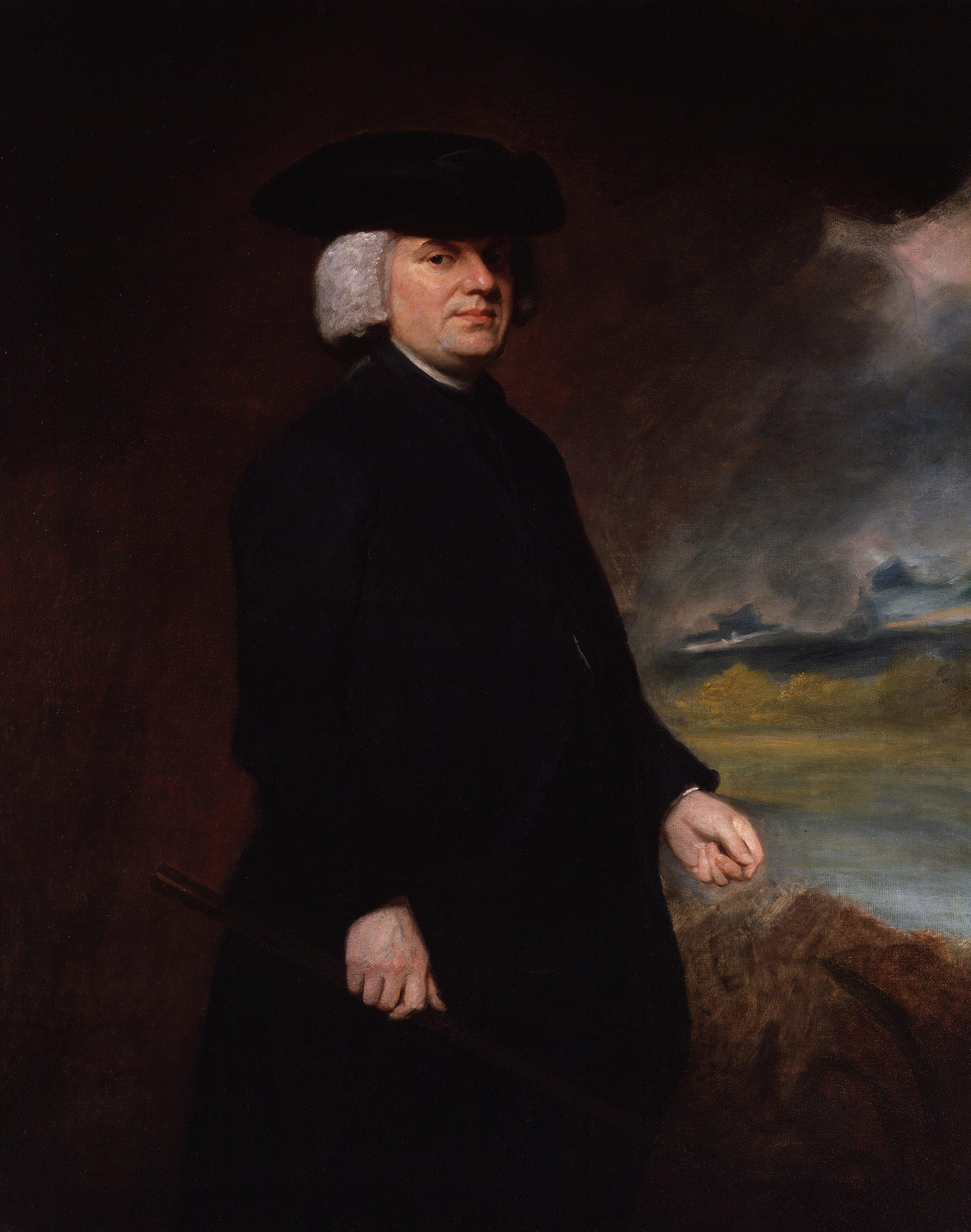 William Paley (1743-1805) is a name which echoes through history. His Natural Theology

Brief Biographical Note*
Paley went to school at Christ’s College and Cambridge. At the latter, he was awarded multiple times for his scholarship. He eventually became the Senior Dean at Christ’s College and was awarded a Doctorate of Divinity from Cambridge. Bishop Barrington of Durham granted him the rectory of Bishop Wearmouth. His life was strewn with accomplishments.
He was a utilitarian with deep Christian convictions. Throughout his life, he remained controversial. His utilitarianism was condemned, as was his critique of the often extreme defenses of property ownership. His anti-slavery was unpopular alongside his support of the American Colonies in the Revolutionary War.
The powerful nature of Paley’s works is revealed in the fact that his major work on utilitarianism, The Principles of Moral and Political Philosophy, became mandatory reading at Cambridge. His Natural Theology continues to be discussed in courses on philosophy of religion. The man was acclaimed by some within the church, who praised his defense of the faith despite others’ objections to his metaethical views.
His contributions to Christian apologetics are the focus of this piece, and we shall turn to them now.
Natural Theology
Paley’s most famous work nowadays is undoubtedly Natural Theology. In this work, he makes his well-known case for the design argument. He utilizes the analogy of a watch. If one finds a watch on a beach, one knows instantly that someone made the watch. Paley applied this same notion to life; one sees the sheer complexity and life and can infer that it, like the watch, was designed.
Many have dismissed Paley’s work here, noting that at points he relies on scientific explanations which have been discredited, while at others his examples have been explained. Yet the genius of his work is found in broader principles, which moderns should note. First, he argued that simply never having observed design in action on a biological level does not preclude any possibility of arguing for that same design (Natural Theology, 8, cited below). Second, evidence of things “going wrong” within a design does not invalidate the design of an object in and of itself. Third, higher level natural laws which may lead to order does not explain away the order itself. Fourth, when something appears to be designed, the burden of proof is upon those who assert an object is not designed.
These points seem to me to hold true to this day. I am sure none of them are uncontroversial, but Paley places his defense of this points squarely within his analysis of those artifacts which he considers to be designed (i.e. the eye and ear). A full treatment of these points thus must turn to his own arguments, but for now I would provide the following brief defenses. Regarding the first, this point seems obvious. If I have never seen someone construct a car, that does not in any way mean that I cannot conclude that someone had to have made it. The second point should be well taken within the context of the debate between Intelligent Design and Darwinian forms of evolution. The point is that simply pointing out a flaw in a design does not mean an entire object is undesigned. The third item seems correct because if something exhibits order, and that order is shown to be based around an ordering principle, the very order in and of itself has not been explained; instead, it is only the mechanism for generating that order which is observed. Finally, the fourth point is likely to be the most controversial–after all, appearances may deceive. Yet it does seem to be the case that if, a priori, something appears designed, then to conclude that something is not designed one must have defeating evidence for this appearance.
A View of the Evidences of Christianity
Paley’s Evidences (commonly known as “Evidences of Christianity”) became almost instantly famous. The work generated a number of summaries and expositions by other authors who were delighted with its style and the arguments contained therein. It is easy to see why, once one has begun a read through this apologetic treatise. Paley presents a number of arguments in favor of the Christian worldview. These evidences are largely historical in nature and include the suffering of those who spread Christianity as evidence for its truth, extrabiblical evidence for the truth of the Gospels, the authenticity of our Gospel accounts due to the early practices and beliefs of Christians, undesigned coincidences, and many more. Paley also provides a dismantling of David Hume’s argument against miracles.
It seems to me that any and all of these arguments retain the force they had in Paley’s own day. Consider the argument from the suffering of Christians. Well of course those of other faiths are willing to even die for that which they believe is true. But Paley rightly pointed out a huge difference between those of other faiths dying for their beliefs and the early eyewitnesses of the events surrounding Christ dying for their own beliefs. Namely, these people would know for certain whether that which they believed were true. That is, they either saw the resurrected Christ or they did not. If they did not, then explaining their willingness to die for this profession of faith becomes extremely difficult. However, if they did actually see that which they declared, their willingness to suffer unto death for this belief makes perfect sense. Many miss this important distinction even to this day. The rest of Paley’s arguments found in the Evidences is filled with insights similar to this.
Horae Paulinae
An argument which has largely been neglected within modern apologetic circles is that of “undesigned coincidences.” I have made an exposition of this argument already, and it should be noted that the best places to discover it are in the realm of historical apologetics. William Paley dedicated this work, Horae Paulinae
Now, the argument from undesigned coincidences takes quite a bit of work to properly outline. It is, in essence, a matter of looking through the Scriptures and finding how incidental details in one account fill in the blanks of another account. However, this description is so brief as to be simplistic. Paley himself acknowledged a number of the difficulties with describing undesigned coincidences in this way. Regarding the Pauline corpus, for example, it could be that someone invented letters from Paul but based them upon his history found in Acts. But the argument itself takes this into account and generally serves as a defeater for this notion by sheer weight of evidence. That is, the more coincidences are found, the more credulity is stretched if one wishes to assert forgery.
Paley buries the objections to undesigned coincidences in this fashion throughout the Horae Paulinae. The sheer volume of coincidences he finds, and the way they seem so clearly to be incidental, serves to dispel doubts about their genuine nature.
Other Works
Here, we have surveyed Paley’s major works, but he was a prolific writer who published sermons and of course his (in)famous work on utlitarian ethics. The preeminence of Paley as a scholar and writer is unquestionable. It is time we acknowledge how much we have to learn from those who have come before us.
Conclusion
We have seen the diverse array of arguments which Paley offered in favor of Christianity. These ranged from biological design arguments to undesigned coincidences to historical arguments in favor of the Gospels. Paley was a masterful writer whose arguments continue to influence apologists and draw ire from atheists to this day. Although the arguments have not been unscathed, I have offered a few reasons to reconsider some which have long been dismissed or forgotten. Paley’s influence endures.
I would like to dedicate this post to Tim McGrew, who introduced me to the vast field of historical apologetics. Without his bubbling delight and enthusiasm in the field, I would never have known much–if anything–about people like Paley. It is my hope and prayer that you may also be persuaded to pursue historical apologetists/apologetics. Be sure to check the links for some good starting places.
Be sure to check out the links at the end of this post as well as the resources from Paley.
Links
Like this page on Facebook: J.W. Wartick – “Always Have a Reason.” I often ask questions for readers and give links related to interests on this site.
Library of Historical Apologetics– Here is where I got started, with Tim McGrew’s phenomenal collection of works. In particular, the “annotated bibliography” will set you up with some fine works. The site features a “spotlight” on the main page for various fantastic reads. Browse and download at will. Also check out their Facebook page.
On the Shoulders of Giants: Rediscovering the lost defenses of Christianity– I provide a number of links as well as an annotated list of historical apologetics works which are great jumping off points for learning more about the vast array of arguments which have largely been forgotten within the realm of apologetic argument. I consider this one of the most important posts on this site.
Forgotten Arguments for Christianity: Undesigned Coincidences- The argument stated– Here I outline the argument from undesigned coincidences and explain how it can be used within apologetics.
Sources
William Paley, Evidences of Christianity
—-, Natural Theology (Oxford World’s Classics)
—-, Horae Paulinae
*I am indebted to the discussion of Paley’s life found in the introduction of the Oxford Classic’s edition of Paley’s Natural Theology, which I have cited above.
SDG.
——
The preceding post is the property of J.W. Wartick (apart from citations, which are the property of their respective owners, and works of art as credited) and should not be reproduced in part or in whole without the expressed consent of the author. All content on this site is the property of J.W. Wartick and is made available for individual and personal usage. If you cite from these documents, whether for personal or professional purposes, please give appropriate citation with both the name of the author (J.W. Wartick) and a link to the original URL. If you’d like to repost a post, you may do so, provided you show less than half of the original post on your own site and link to the original post for the rest. You must also appropriately cite the post as noted above. This blog is protected by Creative Commons licensing. By viewing any part of this site, you are agreeing to this usage policy.
“Ender’s Game” by Orson Scott Card: A Christian reflection
 Ender’s Game
The Children
Ender himself is a child. Yet throughout the book he ranges from trying to simply be a child to an admiral. He has a calculating, almost “killer” mentality and cannot bear to lose. He insists on excellence. Yet he is shaped by his past, while trying to avoid it. When he is confronted with a situation of survival–or at least one he perceives as such–he reacts with the cold efficiency of a practiced soldier. He escalates the scenario to the point that the “enemy” can never cause harm to him again.
Ender has been selected to be the future leader of Earth’s International Fleet, which is heading off to the worlds of the “Buggers” (also known as the “Formics”) to destroy them. The Buggers are a race of sentient creatures who have attacked Earth twice and almost destroyed humanity both times.
Ender’s brother, Peter, is a sadist. There is no other way to describe him. He loves to inflict pain and scare people. He uses his power to attack the powerless. The scenes in which Peter abuses his brother and sister, Valentine, are disturbing. He also tortures animals. He is evil… or is he?
Valentine is perhaps the paradigm of good in the book. She was “too soft” to be the commander of the International Fleet. She ends up reforming Peter to some degree, though she loses some of herself in that process.
There are a number of children with whom Ender interacts with in Battle School, and they range from friends to enemies. He ends up killing one of them, Bonzo, in self-defense, though he doesn’t learn he actually killed him until much later.
Death, Evolution, and Ethics
The death of Bonzo leads to a number of interesting moral issues. Did Ender step over the line? He continually thinks in terms in which he needs to destroy any possibility of an “enemy” coming back to hurt him, but this mentality is fostered by those who have trained him. Ender has to learn to become a military leader, and he is guided in this learning by Colonel Graff and Mazer Rackham. They guide him, but they do so with a distinctly hands-off approach in which they try to teach him he can rely on no one but himself. This gives Ender a kind of do-or-die mentality that becomes literal a number of times throughout the book.
Bonzo’s death is viewed by Graff as a necessary sacrifice for the fate of humanity. Both Ender and Graff reflect a kind of evolutionary morality wherein the strong survive. They view the war with the Buggers as yet another aspect of this morality. If it comes down to it, it may be that either the Buggers or humans can survive. Graff and Ender seem to agree that this means that humans must be the ones to survive; they are tied to their evolutionary mentality. They must choose to survive.
Yet the book does not seem to actually endorse that kind of morality, for it leads to an untold amount of suffering and indeed the destruction of an entire species of sentient beings. Not only that, but when Ender encounters more knowledge about the Buggers later, he mourns with the Buggers who lamented over the fact that the two species could not reconcile.
Just War and Genocide/Xenocide
The fact that the Buggers did not know what they were doing gives Ender’s Game
Was this lack of effort a realization that humans were sentient? Was it an offer of peace?
Card seems to write that it is, though he never makes it explicit in the book. Yet humans have been attacked and nearly destroyed twice by these aliens, so they mount a counter-offensive. Ultimately, this counter-offensive destroys the Buggers entirely. It is an act of genocide–in fact, it is xenocide, the destruction of an entire species.
However, Ender continues to think that what he is doing when he is commanding the International Fleet is just a game. They never inform him that he is commanding the real army. He ends up making a decision which destroys the Bugger homeworld, and with it, their entire civilization. It kills all the Buggers [except one, as we will see].
One is forced to grapple with the questions that this raises. The fact is that the Buggers attempted to exterminate humanity in order to populate Earth as another colony. But it is possible that they didn’t know what they were doing, and stopped once they seemingly realized humans were sentient. Conversely, humans didn’t know what the Buggers were doing in not attacking. For all the humans knew, the Buggers could have been preparing themselves to attack again with better weapons and even more superior numbers.
I think this book would be a great one for bringing up discussions of Just War, because it doesn’t portray it as a black-and-white issue. Is it possible for war to be just? The issues Card raises here will foster some great discussion of that very question.
Redemption
Yet the book does not end with the destruction of the buggers. Ender goes to colonize one of the planets, now devoid of intelligent life, which make perfect colony worlds for Earth’s overflowing population. The realization that he has destroyed an entire species haunts Ender, but he chooses to go to one of the colonies with his sister.
While he is the governor of this colony, he discovers that one Bugger has survived. A queen larva had been hidden by the Buggers in such a way that only Ender could find her. She shares the memories of the Buggers with him. Here we see one of the most poignant scenes in the book:
If only we could have talked to you, the hive queen said in Ender’s words. But since it could not be, we ask only this: that you remember us, not as enemies, but as tragic sisters, changed into a foul shape by fate or God or evolution. If we had kissed, it would have been the miracle to make us human in each other’s eyes. Instead, we killed each other. (322, cited below)
Ender publishes a work which reflects on the Buggers.It begins a new spiritual/religious movement, which has someone called a “Speaker for the Dead,” who speaks the truth about people who died, no matter how painful it would be. The teachings of this faith are from Ender’s book, which reflects the need for harmony and truth.
Ultimately, redemption is left open. Ender travels the stars in search of a place that the Buggers can be planted such that they live on. He seeks to undo the evil he caused. We are left with the last line of the book: “He looked for a long time” (324).
Other Themes
The concept of overpopulation is found throughout the book. People are limited to only two children. Ender, however, is a “third,” which means that the government had to explicitly let his family have another child. The complexities of this issue are only touched upon, but couuld help drive discussion in a small group or reflection for an individual.
Religion only makes a few passing mentions in the book. It is largely feared/suppressed in the book, though the “Speaker for the Dead” becomes a new religion or kind of spirituality. It is unclear of how this religion is specifically apart from any other religion, but it seems like it is because the teachings come from the “Speaker for the Dead” as a kind of religious text.
 Conclusion
Ender’s Game
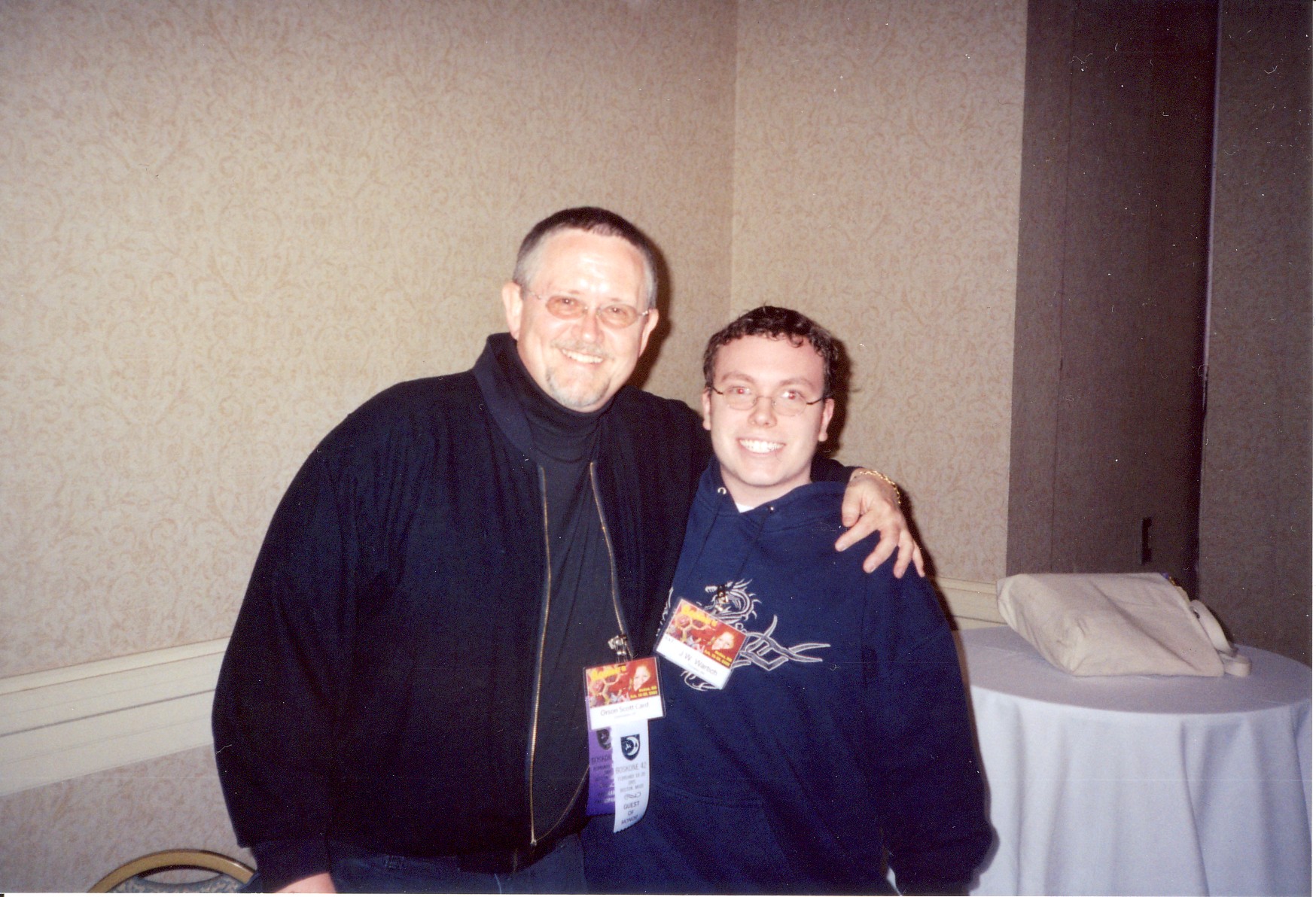
I can’t help but share the picture on the right of me (about 7-8 years ago) with Orson Scott Card. It was one of the most exciting experiences of my life. I found Card to be a gracious, wonderful man who was perfectly willing to sit down with a fanboy teenager and discuss heady issues about philosophy, teaching children about moral issues, and science fiction.
Be sure to check out my look at the movie.
Source
Orson Scott Card, Ender’s Game
Links
Religious Dialogue: A case study in science fiction with Bova and Weber– I take a look at how science fiction has dealt with theological topics, with a particular focus on dialogue about religion.
Be sure to check out my other looks at popular books [scroll down on this link for a number of posts].
Also look into my reviews of several popular movies.
There is No Combat Without Movement– A very different look at Ender’s Game which explores the use of military tactics in the book.
SDG.
——
The preceding post is the property of J.W. Wartick (apart from citations, which are the property of their respective owners, and works of art as credited) and should not be reproduced in part or in whole without the expressed consent of the author. All content on this site is the property of J.W. Wartick and is made available for individual and personal usage. If you cite from these documents, whether for personal or professional purposes, please give appropriate citation with both the name of the author (J.W. Wartick) and a link to the original URL. If you’d like to repost a post, you may do so, provided you show less than half of the original post on your own site and link to the original post for the rest. You must also appropriately cite the post as noted above. This blog is protected by Creative Commons licensing. By viewing any part of this site, you are agreeing to this usage policy.
“Star Trek: Into Darkness” – A Christian Perspective
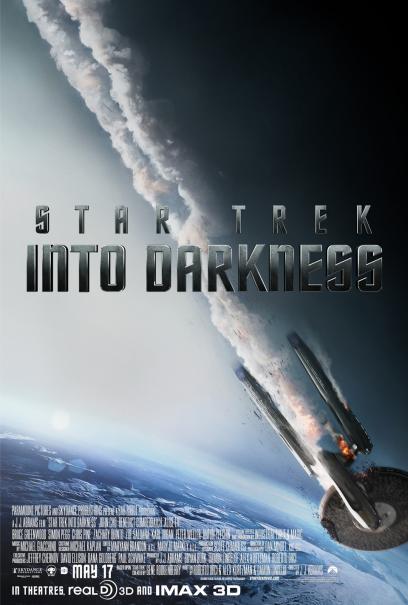 I had the chance to go see “Star Trek: Into Darkness” recently. As a big Trekkie (and Star Wars Fan–I cover all the bases of nerdom), I was extremely excited to see the film. Here, I will survey a number of worldview-level issues in the film. There will, of course, be SPOILERS in what follows.
Primitive Religion
I was a bit taken aback by the portrayal of primitive religion in the movie. At the very beginning, the crew of the Enterprise is engaged in an effort to save a primitive indigenous population. Kirk steals a scroll, to which the natives were giving obeisance. It is apparently something they worship, and when he finally unrolls the scroll to slow them down, which causes them to stop and worship, the situation is shown to be absurd. Once the Enterprise reveals itself, however, the natives immediately forsake this scroll and worship an image they draw in the dirt of the ship.
I may be a bit hyper-critical here, but I can’t help but think that this picture of primitive religion is a bit off. Sure, it’s science fiction, but the people are clearly human-like and it is easy to uncritically imagine the scene as a facsimile for how human religion may have played out. I cannot help but be extremely skeptical of this scenario. First, the notion of a bunch of simplistic idiots whose faith can shift from one moment to the next was odd. Second, the notion that primitive persons automatically worship whatever they see or cannot explain seems inaccurate. I admit that I have not studied the formation of religion as much as I hope to one day, but even what reading I have done reveals an enormous amount of debate on how religions formed and developed. No work I have read, apart from that of those with clear agendas (and little interaction with the archaeological, sociological, and anthropological evidence), has suggested that religion developed just by people seeing a bird and immediately worshiping it. Granted, the Enterprise is more than a bird, but it still seemed odd. Third, I can’t help but think that rather than immediately forsaking their holy scroll, the people would have turned to it to find guidance to discern the meaning of the events they had witnessed.
Again, I realize I am here being extremely critical, but I feel that if a movie is going to engage with religion, it should attempt to do so in an honest fashion. Trek‘s portrayal was, I think, a bit disingenuous.
The Prime Dire… wha?
Star Trek’s metaethical system essentially centers around the “Prime Directive.” The Prime Directive is complex, but essentially boils down to the notion that people should not interfere with lesser-developed cultures. Those who have seen “Into Darkness” know that in no way did the main characters follow this. But as Maureen Moser at Reasons to Believe pointed out, the Prime Directive essentially entails a kind of moral relativism wherein no one is capable of judging other cultures as morally evil. But of course this seems absurd. If, for example, one ran into a lesser-developed society which was exterminating certain groups, it seems obvious that this is a morally wrong action.
In the case of the film, one is forced to wonder–as it seems Kirk did–whether it really is morally satisfactory to allow an entire society to be destroyed simply for the sake of not being seen by that society. Is it morally right to ignore the fates of other societies?
Looking more broadly at the Trek universe one sees again and again that the characters cannot operate within the constrictions of ignoring the ills of other societies. Should we?
 Evil
Evil
Admiral Marcus seemed to lack any kind of motivation other than a desire for militarizing the Federation. I thought this was particularly hard to believe, especially when that motivation made him not even hesitate to carry out atrocities in front of his daughter. Frankly, I saw no real reason for him to go as insane as he did, which made this part of the film harder to believe.
Khan, of course, was the big “secret” going into the movie. I called it back when the character was first shown. Of course it would be Khan. But why did Khan do what he did? He was fairly clearly motivated by revenge, but there was more to his character behind the scenes.
It was revealed that Khan was a war criminal who was conducting a genocide against any whom he found to be “imperfect.” I can’t help but think that this line, was was basically incidental to the plot, is one of the better talking points from the movie. After all, is the destruction of the “imperfect” is exactly what is taking place within our society with issues such as abortion and euthanasia. On the other side, we see the unwillingness to “give a handout” to those who are hungry or in need. Our culture is steeped in a notion where we do not value the “imperfect,” whether they be elderly, unborn, mentally disabled, or poor. Moreover, one must wonder: who defines perfection? I can’t help but think that a character like Khan is not that different from the evils which are occurring each day within our society.
Miracles
When Kirk has given his life to save the crew of the Enterprise, one crew member comments that “It was a miracle.” Spock responds simply, “There are no such things.” I admit that I was baffled by this comment. After all, the series of events which had just occurred in the space of the previous 5 minutes of the film were so over-the-top that the only reasonable explanations were either Hollywood meddling (of course, this was the case) or the hand of the divine.
I vividly remember someone a few rows down in the theater audibly scoffing when Spock said this. Why would this be a reaction to a line like this? Well, simply put, some things are so beyond probability, luck, and circumstance that they cry out for explanation.
Conclusion
Overall, I enjoyed the film. But I realize that I enjoyed it more as a Trekkie than I did at a worldview level. It seems as though the writers attempted to raise some tough questions, but never got around to providing satisfactory answers. When answers were easy to see (as in the case of miracles), a main character like Spock flatly contradicted it. Those who watch the film with worldview-glasses on will find much to discuss. I think the film is worth seeing simply to start up discussions about miracles, relativism, and even some specific ethical issues. I could see the clip at the beginning used as part of a larger discussion on the history of religion. Of course, as a Trekkie, I also think it is worth seeing for the sake of its place in the Star Trek canon. Let me know what you think.
Links
Like this page on Facebook: J.W. Wartick – “Always Have a Reason.” I often ask questions for readers and give links related to interests on this site.
Be sure to check out my other posts on movies (scroll down for more).
Star Trek’s Prime Directive and Moral Relativism– I found this post fascinating. It explores the Trek universe to discuss the metaethical view of relativism.
Engaging Culture: A Brief Guide for movies– I reflect on how Christians can engage with popular movies in order to have meaningful conversations with those around them.
SDG.
——
The preceding post is the property of J.W. Wartick (apart from citations, which are the property of their respective owners, and works of art as credited) and should not be reproduced in part or in whole without the expressed consent of the author. All content on this site is the property of J.W. Wartick and is made available for individual and personal usage. If you cite from these documents, whether for personal or professional purposes, please give appropriate citation with both the name of the author (J.W. Wartick) and a link to the original URL. If you’d like to repost a post, you may do so, provided you show less than half of the original post on your own site and link to the original post for the rest. You must also appropriately cite the post as noted above. This blog is protected by Creative Commons licensing. By viewing any part of this site, you are agreeing to this usage policy.
Book Review: “The Biblical Flood” by Davis Young
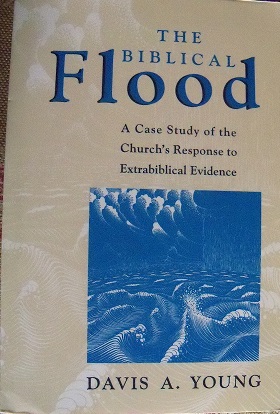 Davis Young seeks in his work, The Biblical Flood
Overview
Young, a Christian geologist, provides a detailed overview of the Church’s theological and scientific musings on the Flood. He develops this overview chronologically, beginning with early Jewish thought. The focus within the entirety of his book is directly centered upon how extrabiblical evidence was used to shape theology and vice versa. The relation should not be understood as binary. Throughout history, there was a spectrum of approaches to the extrabiblical evidence which included resistance (not infrequently forged by ignorance) as well as integration. Here, I will survey only the broadest outline of Young’s discussion.
Early Flood Views
Early Christians were aware of Pagan stories of floods but made little or no appeal to them as evidence for a universal flood, and in fact some argued that these other stories were clearly differentiated from the Biblical account because they were local as opposed to global. There was much speculation over the location of the Ark as well as the notion that fossils were the result of this universal deluge.
Middle Ages and Renaissance
Medieval thought regarding the Flood was steeped in the “ahistorical view of creation” found at the time. That is, the science of the time thought of creation as deductible from the character and nature of God. However, the discovery of the New World brought up many challenges to a universal deluge theory, which challenges began to get recognition. These included the vast number of species which would have had to fit onto the Ark and the discovery of people across the world. During this period, the discovery of flood stories in various cultures began to be viewed as evidence for a universal deluge (37).
New World
The New World continued to present challenges to the universal deluge theory. One of the foremost among these was animal migration. Entirely new and distinct species were discovered in the New World which did not exist in Europe. How did these animals get to these distant lands? More importantly, how did they get there without leaving any traces of themselves behind if they all only came from one location: the Ark? These challenges continue to vex those who hold to a universal deluge (60ff).
Geology’s Origins
The notion of a universal flood has contributed much to the development of geology as a science. The Christian worldview finally presented a picture of the universe which humans could explore in order to learn truths about reality. The Flood itself presented a theory about how to account for the geological features of the earth (65ff). Various features of the natural world were attributed to the flood, including the discovery of marine fossils on mountains and geological features like valleys. These early geologists were committed to an following the evidence where it led.
Diluvialism and Catastrophism
Various theories were put forward to explain the features of the earth. These included varied catastrophic notions, wherein the geological features were explained by a global, catastrophic flood. Such theories are repeated into today.
Geological Evidence Mounts into the Twentieth Century
Young establishes that the evidence against catastrophic diluvialism became weighty fairly early into the investigations of geologists (109ff). New discoveries related to mammoths and the way they died (over a period of time by a variety of causes rather than all at once) were greatly important, as the issue of these mammoths was found throughout the speculation about the flood. New dating methods were developed which were more accurate. Archaeological finds showed floods in areas of the Mesopotamia, but they were dated at different times. The discovery that humanity was widely spread over the earth and that there was no major extinction event throughout this spread raises a significant challenge for Flood Geologists (233). Other major challenges to Flood Geology include (but are by no means limited to): the dating of igneous formations, the cooling of the earth, metamorphism, and continental drift.
Theological Reflections
Throughout this period of discovery, theologians were not inert. Indeed, many theologians were at the front lines, actually participating in the discoveries themselves. Near Eastern Studies have revealed parallels with the Flood account which some have suggested show derivation. Others, however, argue these other flood stories merely show the perpetuity of such events and how ingrained they became on the human consciousness (236ff).
More recently, Flood Geologists have come into being once more. Their arguments parallel almost exactly those found spread in the early days of geology. Yet these arguments have been refuted by the evidence from the earth itself. Some continue to make false statements about the mammoths’ deaths, the formation of sedimentation, dating methods, and more. Young argues that this is largely due to the specialization of studies found within various fields like theology and geology. Theologians are rarely acquainted with the geological evidence, while geologists are rarely versed in theological language.
Theologians who were versed in geology began to see how interpretations of the text, rather than the text itself, had shaped the Christian response to geological evidence. People like Hugh Miller appealed to extrabiblical data in support of their intepretations of the Flood narrative (147ff).
Miller professed puzzlement that learned, respectable theologians would accept “any amount of unrecorded miracle” rather than admit a partial deluge. Could they not see that the controversy was not between Moses and the naturalists but between the readings of different theologians? (151)
More recently, many and varied theories of the flood as local have been developed and defended. The reaction from Flood Geologists has been vigorous, but theories of a global flood include a multitude of quotes from various scientists which would support competing theories of rock formation, sedimentation, and more. That is, Catastrophic Flood views present mutually exclusive theories for how the geological (and other) evidence came to be.
Appendix: Arkeology
The book is capped off with a discussion of “arkeology”: the search for Noah’s Ark. Young notes the array of locations which have been given as well as the mutually contradictory accounts of those who claim to have seen the Ark or evidence of the Ark. He warns Christians to remain cautious of any such claims.
Challenge
I believe that a good way to summarize the content of the book would be to view it as a challenge Young is issuing to those who allege that catastrophic theories are the only possible way to interpret the text and geological evidence. He himself writes, “If conservative and orthodox theology is to remain vital and relevant to a world in need of the Christian gospel… theologians will have to abandon their flirtation with flood geology and other forms of pseudo-science, reacquaint themselves with genuine scientific knowledge, and incorporate that knowledge into their thinking, secure in the realization that genuine insight into God’s creation… is still a gift of God to be treasured” (215).
Young’s book can be viewed through this lens. He shows how scientific knowledge challenged traditional readings of the text, but also how many theologians and Christian geologists alike interacted with this in order to gain “genuine insight” into God’s word and creation.
Conclusion
The Biblical Flood
I do not claim to have touched upon even all the major points found in Young’s work. The book is full of voluminous amounts of historical details which reveal interesting scientific and theological notions. The theory of a global flood was the one of the first major proposals for how the earth’s geological history was formed. As geological discoveries mounted, this theory was falsified. Moreover, theologians who interacted with the extrabiblical evidence had a wide array of responses, from downright rejection of the evidence or reinterpretation of it to attempt to fit a global flood to concordist views in which the extrabiblical evidence informed interpretation of the text. Which direction should we go? Young has presented a major challenge to those wishing to maintain a notion of the global flood. He presents mountains of evidence to challenge catastrophism, while also showing how, historically, thought on the Noahic Flood has comfortably incorporated the extrabiblical evidence without any necessary compromise of the text or faith. I commend the book to the reader without reservation.
Links
Like this page on Facebook: J.W. Wartick – “Always Have a Reason.” I often ask questions for readers and give links related to interests on this site.
Be sure to check out my posts on the “origins debate” which feature a wide range of posts on issues related to varying Christian views on evolution, creation, and more.
Davis Young, The Biblical Flood
SDG.
——
The preceding post is the property of J.W. Wartick (apart from citations, which are the property of their respective owners, and works of art as credited) and should not be reproduced in part or in whole without the expressed consent of the author. All content on this site is the property of J.W. Wartick and is made available for individual and personal usage. If you cite from these documents, whether for personal or professional purposes, please give appropriate citation with both the name of the author (J.W. Wartick) and a link to the original URL. If you’d like to repost a post, you may do so, provided you show less than half of the original post on your own site and link to the original post for the rest. You must also appropriately cite the post as noted above. This blog is protected by Creative Commons licensing. By viewing any part of this site, you are agreeing to this usage policy.
“Iron Man 3”: A Brief Look from a Christian
 I recently had the chance to see “Iron Man 3,” and I must say it is a dazzling sight to behold. Here, I will briefly comment on a few themes. Be aware that there will be major SPOILERS in this post, so stop reading now if you do not wish to have major plot points revealed.
Science and Ethics
One of the recurring themes throughout the film is the notion that there is a real interplay between doing science (and other activities) and ethics. That is, the practice of science is more complex than abstract notions of lab work without any strings attached. Aldrich Killian is a disabled man who longs to transcend the body he was given. He wants to help others who have physical problems. When he is rejected by Tony Stark, he falls to extreme measures to finally cure himself and start “helping” others.
Many characters are seen raising this same issue. Their motivations start out pure: they want to help people, they want to save others, but they ultimately have that dream tainted. They don’t get the funding they need; they are rejected by the people they care about; their experiments don’t turn out as expected. One can see the human predicament here: we too often and easily let ourselves fall from our ideals. We are willing to make a compromise to get towards a “greater good,” yet once we look back, we discover a sea of wrongdoing.
The very brief discussion about scientific funding and the like is worth noting. It is often thought that scientists are some kind of demigods, doing their research and learning things just because they can. But the reality is that funding is very often an issue, that ethical considerations come into the research that is sought, and that people are involved in the scientific enterprise. These are important points to remember.
The Fall and the Human Predicament
The notion of a “fall” is intertwined with the discussion on ethics and science above. The “bad guys” all have aspects which are pitiable. The opening scene with Aldrich leaves one pitying him rather than seeing him as some kind of evil person. Thus, there is development from him as an object of sympathy to an evil man. The development is abrupt, but it can be seen how this development would occur. When someone makes the decision to choose evil rather than good, there is a very real “fall” which goes along with it.
Other characters experience similar difficulties, but perhaps the most interesting is that of Tony Stark himself. He is the billionaire hotshot who could get anything he wants, yet he suffers from bouts of panic and anxiety attacks. He is human, after all. The human predicament is aptly illustrated through the character of Tony Stark. I could almost hear the words of Ecclesiastes echo over his attempts to use his wealth and “charm” to get through everything: “Meaningless, meaningless… everything is meaningless [under the sun]” (see Ecclesiastes 1ff). No matter what heights we attain, we are ultimately grounded within our own sinful nature. We cannot get past it by our own power.
Disabilities
On a personal note, this part of the film was most disturbing for me. My wife was born without her left arm. In “Iron Man 3,” the “bad guys” almost all turn out to be those who are affected by disabilities. They go to Aldrich to get their missing limbs regrown; they are willing to betray their country to help a child who is missing a limb; Aldrich himself is motivated by his desire to overcome his disability. I couldn’t help but think that the film therefore presents a dim view of those with physical disabilities. There were no counterbalances given; it seemed that the operating assumption was if someone is missing a limb or suffering from other physical disabilities, they would be willing to go to almost any extreme to fix it.
Now, I’ll grant that some of these people seem to have been unknowingly used by Aldrich. I admit my personal feelings in this issue up front because I may be overly critical here. Yet I know of other superhero films in recent memory that use this same theme: those with disabilities often turn out to be the bad guys, and they are willing to kill in order to overcome them.
Conclusion
Here, I have only written up some very brief thoughts on the film. I believe those who go to see it will be able to come away with a number of talking points. The interplay between science and ethics was of great interest. The portrayal of disabilities was, perhaps, questionable, and there were moral issues raised throughout. Please leave a comment and let me know your own thoughts on the movie.
Links
Like this page on Facebook: J.W. Wartick – “Always Have a Reason.” I often ask questions for readers and give links related to interests on this site.
A Christian Look at “The Avengers”– I examine a number of other themes in “The Avengers” which Christians and non-Christians can discuss.
If you love these types of movies, let me commend John Carter to you. Check out my post on the film for some awesome themes.
Engaging Culture: A Brief Guide for movies– I reflect on how Christians can engage with popular movies in order to have meaningful conversations with those around them.
Be sure to check out other looks at movies that I have written (scroll down for more).
SDG.
——
The preceding post is the property of J.W. Wartick (apart from citations, which are the property of their respective owners, and works of art as credited) and should not be reproduced in part or in whole without the expressed consent of the author. All content on this site is the property of J.W. Wartick and is made available for individual and personal usage. If you cite from these documents, whether for personal or professional purposes, please give appropriate citation with both the name of the author (J.W. Wartick) and a link to the original URL. If you’d like to repost a post, you may do so, provided you show less than half of the original post on your own site and link to the original post for the rest. You must also appropriately cite the post as noted above. This blog is protected by Creative Commons licensing. By viewing any part of this site, you are agreeing to this usage policy.
The Law Always Condemns, The Gospel Always Saves. Or, why I’m a Lutheran.
Comparing Holy Scripture with other writings, we observe that no book is apparently so full of contradictions as the Bible, and that, not only in minor points, but in the principal matter, in the doctrine how we may come to God and be saved… This riddle is solved when we reflect that there are in Scriptures two entirely different doctrines, the doctrine of the Law and the doctrine of the Gospel. C.F.W. Walther, The Proper Distinction Between Law and Gospel
, 6 (cited fully below)
How are Christians to view the relationship between Law and Gospel? The issue has generated countless views and debates. One recent work which illustrates the breadth of views on this topic is Five Views on Law and Gospel
C.F.W. Walther’s work, The Proper Distinction Between Law and Gospel
Law and Gospel
The most central point of all–that is, the point that I hope readers remember if nothing else–is this: The Law always condemns, the Gospel always saves. This point is emphasized throughout Lutheran theology. What does it mean? Simply put: it means that these two doctrines, found throughout Scripture, have entirely distinct meanings and usages. One cannot intermingle law and gospel while remaining true to either doctrine. Wherever the Gospel is presented as if it had requirements attached to it, there the Gospel is not rightly preached. Whenever the Law is preached as if it offered some kind of free gift, it is not rightly preached.
Law only has power to condemn. It cannot save. That is because none can keep God’s Law. All sin, and all fall short of the glory of God (Romans 3:23). The Law shows what God requires of us. It “issues only commands and demands” (Walther, Proper Distinction…, 9).
In contrast, the Gospel only gives offers without requirements attached (ibid). The Gospel shows us God’s promises and offer of grace.
At first face, one examines the whole of the Bible and finds these teachings throughout. The teachings seem so at odds with one another that one might suspect a contradiction throughout the Biblical teaching. However, the fact is that both doctrines are “equally necessary. Without the Law the Gospel is not understood; without the Gospel the Law benefits us nothing” (Ibid, 8). The reason this is so important is because Law and Gospel are not opposites working against each other. Instead, both “have their final aim [human] salvation” (Ibid, 7). They work together to present a full picture of how salvation comes unto men.
The Law, as we have noted, cannot bring salvation because none but God can fulfill it. That is, it gives the requirements for salvation but no one can meet these requirements! We would all be lost if this were the whole of Biblical teaching. Yet there is more to the story, for the Gospel offers only its promises. God has promised to save. He is mighty to save. God has accomplished our salvation. And this salvation does not come with requirements attached. Such is our hope.
Most simply put then, the purpose of the Law is to show our need for the Gospel because we cannot meet the requirements of the Law. The purpose of the Gospel is to show that God has already met these requirements for us in Jesus Christ and to offer us that fulfillment through Christ’s atoning work. So the Gospel, without the Law, would be empty promises. What need have we for Gospel if we are not sinners? Yet without the Gospel, the Law is only a terror which tells us that all are condemned.
 Some Distortions
A number of objections have been raised against this understanding of Law and Gospel. For example: “[The notion t]hat the law must be viewed as a single entity is one of the most common of all objections made against the Christian use of the Law” (Walter Kaiser, Jr., “The Law as God’s Guidance for the Promotion of Holiness,” 188, cited below). Kaiser then argues against viewing the Law as a single entity. He makes distinctions between Civil, Ceremonial, and Moral laws. I agree that we can make these distinctions, but they do not somehow mean it is impossible to refer to the “Law” as a whole entity with all of the commands God has issued.
Another common objection is that of dispensational thought. It is often charged that because we live in a new dispensation, the teachings of the Mosaic Law, for example, no longer apply to us. Without commenting on the plausibility of dispensationalism, I would simply answer that it seems extremely hard to reconcile the notion that the Mosaic Law has no applicability in our own context with Jesus’ words about the Law: “For truly I tell you, until heaven and earth disappear, not the smallest letter, not the least stroke of a pen, will by any means disappear from the Law until everything is accomplished” (Matthew 5:18). Note that this verse also shows Christ using the “Law” as a single, coherent entity.
Yet does this mean that everything recorded in the Mosaic Law has applicability exactly as written? No. A further discussion along this line of thought would take me too far afield, but I think that the Bible does clearly teach there is some discontinuity between the application of Mosaic Law to the Jew and the New Covenant with Christians (for example, the dietary laws do not apply to Christians). This hints back at the divisions Kaiser was keen to make within the Law, and I think the application to the Christian life can be viewed within the categories he discusses.
Conclusion
There is so much more worth saying about Law and Gospel, but in the interest of keeping this post at a readable length, I have had to set some aside. Interested readers should see the annotated sources below.
We have seen that the Law and Gospel must be properly divided in order to properly understand the whole of the Bible’s teaching. Why do I say that this is why I’m a Lutheran? I hope, at least, that other branches of Christianity teach these distinctions between Law and Gospel. But I have to admit that I have not seen it so consistently done as it is within the Lutheran perspective. Martin Luther was right to focus directly upon this teaching, and I believe it is central to the Reformation[s]. It touches upon soteriology, sanctification, the atonement, and more. Thus, I think it is vitally important to get this doctrine correct. In my studies, I have found no teaching so close to the Biblical truth as the Lutheran teaching on Law and Gospel. I’m not saying that everyone should go and become Lutherans. Instead, I think that everyone should benefit from learning the proper distinction between Law and Gospel and apply it to their lives.
The Law always condemns, the Gospel always saves.
Appendix: The Modified Lutheran View?
I think it is important to note that the view put forth as “The Modified Lutheran View” in Five Views on Law and Gospel
Those who have stuck with me this long should be able to immediately see how this is utterly different from the Lutheran view I proposed above. The distinction between law and gospel is not a temporal distinction whatsoever. The Law is still with us. Walther himself makes this explicit: “[W]e find both teachings in the Old as well as in the New Testament” (Proper Distinction… 62). There is no temporal dividing line between Old and New such that some new reality has dawned on Law and Gospel. Instead, the Law continues to condemn, while the Gospel continues to save.
Yet Moo goes so far as to say this is a point which needs to be “corrected” within the Lutheran view (ibid). He seems to think that Lutherans would deny that Jesus was able to speak law, while also mistakenly painting the Sermon on the Mount as being a preaching entirely of the Law. Indeed, Moo’s view seems to affirm many of the basic tenants the Lutheran view explicitly denies, such as mixing the uses of Law and Gospel.
I thus would say that Moo’s position is not at all the Lutheran view. It is not a modified Lutheran view at all. Instead, it seems to violate a number of the primary distortions noted above. That said, Moo does admirably to defend the notion of the Law as a coherent, cohesive whole. There is much to commend Moo’s essay, but it ultimately fails, I think, to provide a properly Lutheran view of Law and Gospel.
Links
Like this page on Facebook: J.W. Wartick – “Always Have a Reason.” I often ask questions for readers and give links related to interests on this site.
Annotated Sources
C.F.W. Walther, The Proper Distinction Between Law and Gospel
For a more succinct summary of what Walther argues in the above, see God’s No and God’s Yes: The Proper Distinction Between Law and Gospel
Five Views on Law and Gospel, ed. Stanley Gundry (Grand Rapids: MI: Zondervan 1999) – I specifically used the following essays: Walter Kaiser, Jr., “The Law as God’s Guidance for the Promotion of Holiness” in Five Views on Law and Gospel, ed. Stanley Gundry, 177-199, (Grand Rapids, MI: Zondervan, 1999); Douglas Moo, “The Law of Christ as the Fulfillment of the Law of Moses” in Five Views on Law and Gospel, ed. Stanley Gundry, 319-376, (Grand Rapids, MI: Zondervan, 1999). I found this book to be very helpful in outlining various views, but was disappointed with the “modified Lutheran view” (see my appendix here).
SDG.
——
The preceding post is the property of J.W. Wartick (apart from citations, which are the property of their respective owners, and works of art as credited) and should not be reproduced in part or in whole without the expressed consent of the author. All content on this site is the property of J.W. Wartick and is made available for individual and personal usage. If you cite from these documents, whether for personal or professional purposes, please give appropriate citation with both the name of the author (J.W. Wartick) and a link to the original URL. If you’d like to repost a post, you may do so, provided you show less than half of the original post on your own site and link to the original post for the rest. You must also appropriately cite the post as noted above. This blog is protected by Creative Commons licensing. By viewing any part of this site, you are agreeing to this usage policy.
If a Good God Exists: Presuppositional Apologetics and the problem of evil

It is clear that all things are ordered according to the perfect will of the Lord. If the Lord’s reasons for some state of affairs are inscrutable, does that mean that they are unjust? (Augustine, City of God
Book V, Chapter 2).
The problem of evil is the most pervasive argument used against Christianity. It also causes the most doubts among Christians. I know I can attest to crying out to God over the untold atrocities which continue to happen. Yet very often, I think, we are asking the wrong question. Here, I’ll explore the ways the problem of evil is presented. Then, I’ll offer what I think is a unique answer: the presuppositional response to the problem of evil. Finally, we’ll evaluate this response.
Two Ways to Present the Problem of Evil
The problem of evil is posed in a number of ways, but here I’ll outline two varieties.
The Classical/Logical Problem of Evil
God is said to be all powerful and all good, yet evil exists. Thus, it seems that either God does not want to prevent evil (in which case God is not all good) or God is incapable of preventing evil (and is thus not all powerful).
The Evidential Problem of Evil
Evil on its own may not prove that God does not exist (the logical/classical problem of evil), but it seems that surely the amount of evil should be less than what we observe. Surely, God is capable of reducing the amount of suffering by just one less child being beaten, or by one less tsunami killing hundreds. The very pervasiveness of evil makes it clear that no good God exists.
The Presuppositional Response to the Problem of Evil
One of the insights that we can gain from presuppositional apologetics is that it forces us to look at our preconceived notions about reality and how the impact our answers to questions and even the questions we choose to ask. The way that the problems of evil are outlined provides a prime example for how presuppositional approach to apologetics provides unique answers.
The presuppositional answer to these problems of evil is simple: If a good God exists, then these are not problems at all.
Of course, this seems overly simplified, and it is. But what the presuppositionalist is emphasizing is that the only way to make the two problems above make sense is to come from a kind of neutral or negative starting presupposition. The only way to say to construct the dilemma in the classical/logical problem of evil is to assume that there is not an all-powerful and all-good God to begin with. For, if an omnibenevolent, omnipotent being exists, then to say that God does not want to prevent evil seems false; while to say that God is incapable of preventing evil is also false. Thus, there would have to be a third option: perhaps God reasons for allowing evil are inscrutable; perhaps the free will defense succeeds; etc. Only if one assumes that there is no God can one make sense of the logical problem of evil to begin with.
The evidential problem of evil suffers an even worse conundrum given its presuppositions. For it once more assumes that God should do more to prevent evil, and so because God does not do more, God must not exist or must not care about evil. But who is to say that God should do more to prevent evil? Who is in a position to judge the overall evil in the world and say that there should be less? Furthermore, even assuming it were possible for there to be less evil, who knows the whole breadth of possible purposes God might have to allow for suffering and evil? The presuppositionalist agrees with the words of God in Job:
Who has a claim against me that I must pay?
Everything under heaven belongs to me. Job 41:11
The answer must come with humility: no one has such a claim. There is none who can claim that God owes them one thing. Yet this is not all an appeal to God’s sovereignty. Instead, it is an appeal to God’s goodness.
The late Greg Bahnsen, a defender of presuppositional apologetics, presents the presuppositional approach to the problem of evil in his work, Always Ready
If the Christian presupposes that God is perfectly and completely good… then he is committed to evaluating everything within his experience in light of that presupposition. Accordingly, when the Christian observes evil events or things in the world, he can and should retain consistency with his presupposition about God’s goodness by now inferring that God has a morally good reason for the evil that exists. (171-172)
Thus, the strength that one assigns to the problem of evil ultimately depends quite a bit upon one’s presuppositions. If you believe you have good reason for thinking that God exists, then the problem of evil seems much less powerful than if you believe there is no good reason for thinking God exists.
Yeah… and?
Okay, so what’s the point? It may be that what we bring to the table does indeed alter our view of the problem of evil. Does that mean we are at a complete impasse? I think that this is where evidences come in, even on the presuppositional view. If all we have are presuppositions, then we are indeed stuck. But we must look at evidences to see whose presuppositions match reality. And, what we have done by centering the discussion of the problem of evil around presuppositions is to set it to the side. Surely the atheist would not suggest the Christian must abandon their presuppositions? It seems like a more rational perspective to look at the evidences. The presuppositionalist holds that when it comes to evil, it is really just a matter of presuppositions. If a Good God exists, we can trust God.
Links
The Presuppositional Apologetic of Cornelius Van Til– I explore the presuppositional method of apologetics through a case study of the man who may fairly be called its founder, Cornelius Van Til.
Debate Review: Greg Bahnsen vs. Gordon Stein– I review a debate between a prominent presuppositional apologist, the late Greg Bahnsen, and a leading atheist, Gordon Stein. It is worth reading/listening to because the debate really brings out the distinctiveness of the presuppositional apologetic.
I have explored this type of argument about the problem of evil before. See my post, What if? The “Job Answer” to the problem of evil.
I review Greg Bahnsen’s Always Ready.
Image credit: http://commons.wikimedia.org/wiki/File:Las_Conchas_Fire.jpg
SDG.
——
The preceding post is the property of J.W. Wartick (apart from citations, which are the property of their respective owners, and works of art as credited) and should not be reproduced in part or in whole without the expressed consent of the author. All content on this site is the property of J.W. Wartick and is made available for individual and personal usage. If you cite from these documents, whether for personal or professional purposes, please give appropriate citation with both the name of the author (J.W. Wartick) and a link to the original URL. If you’d like to repost a post, you may do so, provided you show less than half of the original post on your own site and link to the original post for the rest. You must also appropriately cite the post as noted above. This blog is protected by Creative Commons licensing. By viewing any part of this site, you are agreeing to this usage policy.
Book Review: “Four Views on the Book of Revelation” (Zondervan Counterpoints Series)
 I have been researching eschatology quite a bit of late. Please be aware, therefore, that this review comes from one who has only read a limited amount on the subject. I will not be offering insights from an expert, and am fully ready to admit that I am still learning. That said, I chose Four Views on the Book of Revelation
Overview of Content
Introduction
The work begins with a rather lengthy introduction to the book of Revelation and the various views regarding its content. The bulk of this section is its introductions to each of the views featured in the work. Interestingly, the historicist view is basically dismissed out of hand in the introduction:
This volume incorporates the current, prevailing interpretations of Revelation. Thus, while the historicist approach once was widspread, today, for all practical purposes, it has passed from the scene. (18)
Preterist View
Kenneth Gentry, Jr. begins his exposition of preterism with a bold claim: “I am firmly convinced that even an introductory survey of several key passages, figures, and events in John’s majestic prophecy can demonstrate the plausibility of the preterist position” (37). Before diving into this survey, however, Gentry outlines the importance of understanding that Revelation “is a highly figurative book that we cannot approach with… literalism” (38). He defends this claim with a number of points, including the precedent of earlier prophets who used symbolism and the difficulty of consistent literal readings (38-40).
Gentry’s case for preterism focuses squarely on the introduction to the book. This is not to suggest that is the only part of his argument, but rather than he himself recognizes the introduction as a central tenant of preterism. He notes the continued refrain of Jesus “coming soon” and argues that this suggests a reading of the text as real prophecies occurring within the lifetimes of those present.
Much of the rest of Gentry’s survey is built upon tying the prophecies in Revelation to the historical events of the attack upon Jerusalem. A good representation can be found in tying the “Beast” 666 to Nero and the seven mountains to Rome (67-69).
Idealist View
Sam Hamstra, Jr. argues that the core of the idealist view of Revelation is found in a message: “While at this moment the children of God suffer in a world where evil appears to have the upper hand, God is sovereign and Jesus Christ has won the victory” (96).
The idealist case centers around seeing Revelation as apocalyptic literature, and interpreting it through that lens (97). However, Revelation is not exclusively apocalyptic but is rather “a mixture of literary styles” (99). The idealist interpretation sees the use of “like” throughout the descriptions of Christ and elsewhere as supportive of the non-literal nature of the book (101ff).
Hamstra’s survey of the book of Revelation continues to note what he holds are the symbolic use of symbols and other imagery. Representative is the use of the number seven, which suggests “completeness… the author is speaking of the church at all times and in all places” (102).
For the idealist, then, the book of Revelation can have multiple fulfillment throughout time. It is a book which comforts Christians who see the constant wars, plagues, and the like seen in Revelation by reminding them that God is in charge. Ultimately, Pate’s view can be summarized easily: “the best understanding… is that Jesus’ utterances about the Kingdom of God were partially fulfilled at his first coming… but remain forthcoming until his return” (175).
Progressive Dispensationalist View
C. Marvin Pate’s progressive dispensationalism is grounded in the theme of “already/not yet” (135). This notion hints at eschatological tension which can be found throughout the book of Revelation, according to Pate. That is, there are things which may seem fulfilled “already” but have “not yet” reached their fullest completion. As an example, he notes “with the first coming of Jesus Christ the age to come already dawned, but it is not yet complete; it awaits the Paraousia for its consummation” (136).
The notion of already/not yet allows Pate to interpret some texts in a kind of preterist light, while maintaining that they still have yet to find their fullest realization. An example can be found in the letters to the churches in which Pate notes that these are set against the background of Caesar worship while also pointing forward to future events (139ff).
Pate’s view is decidedly focused on the millennium and a more literal reading of the texts than the previous two views. The interpretation of Christ’s return is illustrative (166ff).
Classical Dispensationalist View
Robert Thomas argues that dispensationalism must be viewed in light of its hermeneutical system, which attempts to remain as literal as possible throughout the itnerpretation of a text (180). Thus, Thomas is an ardent futurist, waiting for the events recorded in Genesis to come about.
A major challenge for this view is the interpretation of texts about Christ coming “soon” and “quickly.” Thomas notes that this theme can be grounded in the notion of imminence in which we are to always be ready for Christ’s return as opposed to a notion of immediacy (189).
A typical classical dispensationalist reading of Revelation can be found in Thomas’ interpretation of the horsemen. He notes that the first “portrays a rider on a white horse, who represents a growing movement of anti-Christian and false Christian forces at work early in the period… the third… rider on a black horse [represents] famine-inducing forces….” (193-194). Thomas also argues that Israel is not the church and so must have the promises fulfilled to Israel as a nation (196ff).
Thomas argues that the major issue is dependent upon which hermeneutical system one employs. If one employs a literal hermeneutic, he contends, one will be dispensational. Period (211-214).
Analysis/Conclusion
I will only briefly comment on each view here.
Preterism
Gentry’s case is quite strong, but I have to wonder about the appeal to the language of “coming soon,” particularly in light of the constant refrain in the Hebrew Scriptures of the day of the Lord being “near.” These prophets clearly did not witness the “day of the Lord” (which, on preterist views is either the 70AD destruction of the Temple or still is yet to come), and so such language has a precedent for longer periods of time than the preterist appeals to.
Overall, however, some of the themes Gentry points to does hint at the possibility for interpreting certain prophecies as fulfilled in the destruction of Jerusalem.
Idealism
The idealist position has some draw for me because it focuses on the applicability of the book to all Christians in every time and place. In particular, the idealist interpretation of the letters to the churches is, I think, spot on. It allows for historicity while also noting the fact that we continue to live in an age in which all those types of churches still exist.
Yet I can’t help but also note that the idealist interpretation at times seems to play too fast and loose with the text, assuming that certain persons or events are types when it seems more clearly to point to a future fulfillment. Of course, the idealist could respond by saying many of these still are in the future after all.
Progressive Dispensationalism
There is great appeal in the notion of the already/not yet aspects of Revelation, which seems to give proper deference to the historical background of the book while also grounding it ultimately in the future promised fulfillment.
It is interesting to see that Pate is willing to interpret some aspects of the text figuratively, yet remains convinced that there will be a literal 1000 year reign, among other things. One could charge him with inconsistency here (as Robert Thomas does).
Classical Dispensationalism
I admit Thomas’ view was the most confusing for me. He insists that one must read the text literally, but then says that the white horse is not a white horse with a rider but rather “anti-Christian and false Christian forces.” Frankly, that is not the literal meaning of the text. It is commendable to desire to stay as true to the text’s meaning as possible, but using the word “literal” in this way seems to be abuse of language.
But Thomas’ view also has more to recommend it, such as his focus upon the future fulfillment. It is hard to read Revelation and not see many of the events as yet to occur, particularly if one desires to read the text as literally as possible.
General remarks
One thing I must note is that I did experience some great disappointment with the book in that it did not follow the standard format of the Zondervan Counterpoints series. Specifically, the book does not have each author interacting with the others after each view. Although the authors clearly had access to the other essays and were given the opportunity to interact via footnotes throughout their own essay, the level of interaction was not on par with other books in the series.
Others have expressed displeasure with the fact that the book does not present the historicist view of Revelation. I share some of that, though I would still maintain that–despite other reviewers [mostly on Amazon] are saying–there are definitely four distinct views presented in this book. They do not cover all the views as comprehensively as some might like, but the views which are included are each unique and worth reading. The quick dismissal of historicism in the introduction may be the consensus of scholarship, but historicism remains a major view among the laity as well as many clergy and some scholars. To have it not included is not the greatest crime, but it does hint at a lack of completeness with the survey here.
Overall, I would recommend this book as a way for those interested in Revelation and eschatology more generally to read. It presents four major views of the interpretation of Revelation by giving each author a rather lengthy section to make their case. Readers will be familiarized with the different views, along with arguments for and against each view. Although the book could be improved by the inclusion of the historicist position and greater interaction between the views, Four Views on the Book of Revelation
Links
Like this page on Facebook: J.W. Wartick – “Always Have a Reason.”
Book Review: “Understanding End Times Prophecy” by Paul Benware– I review a book on eschatology written from the premillenial dispensationalist position.
Source: Four Views on the Book of Revelation
SDG.
——
The preceding post is the property of J.W. Wartick (apart from citations, which are the property of their respective owners, and works of art as credited) and should not be reproduced in part or in whole without the expressed consent of the author. All content on this site is the property of J.W. Wartick and is made available for individual and personal usage. If you cite from these documents, whether for personal or professional purposes, please give appropriate citation with both the name of the author (J.W. Wartick) and a link to the original URL. If you’d like to repost a post, you may do so, provided you show less than half of the original post on your own site and link to the original post for the rest. You must also appropriately cite the post as noted above. This blog is protected by Creative Commons licensing. By viewing any part of this site, you are agreeing to this usage policy.

 J.W. Wartick - Reconstructing Faith
