J.W. Wartick
Gregg Davidson vs. Andrew Snelling on the Age of the Earth
 I was recently at the Evangelical Philosophical Society conference (see my thoughts on every talk I attended) and one of the sessions was a debate between Gregg Davidson of Solid Rock Lectures and Andrew Snelling of Answers in Genesis on “Scripture, Geology & the Age of the Earth.” A number of readers requested more information on this talk, and I found it very interesting myself. Here, I’ll touch on the highlights of this dialogue as well as my own thoughts.
Davidson- A Biblical Worldview and an Ancient Earth
Gregg Davidson, a geologist who authored When Faith and Science Collide
Another problem is that YECs fail to recognize that their position itself is an interpretation of Scripture. Their view is not Scripture itself. There is a tendency in debates about theology to view one’s own position as what the Bible teaches, but that fails to take into account the possibility of fallible human interpretation.
Davidson argued for an approach to Scripture that takes note of the fact that God often deigns to make use of “the knowledge of the day to communicate truths about the nature of God.” As an example, he referenced Jesus saying that the mustard seed is the smallest seed of all the plants on earth, despite the fact that it is not (Mark 4:30-32). The point was not the size of the seed, but rather the power of faith. Thus,we must be careful not to make Scripture teaching something it does not claim for itself. He pressed that to read into the Genesis text specific dates and time periods is to make the text teach something that it is not claiming.
Turning to the science, Davidson noted that there are any number of evidences for an ancient earth, but that he chose to focus upon just one area from a number of evidences in order to show how interdisciplinary and cross-confirmed the age of the earth is. He focused upon the Hawaiian Islands and their formation and age. There are multiple, independent ways to investigate the age of these islands. The islands were formed by a hot spot–a place where magma shoots up from underneath the crust and bubbles to the surface. This eventually would form islands when enough of the lava cooled and hardened. The islands are on a moving continental plate and so as they move away from the hot spot, the expectation is the islands get progressively older. Thus, in a series of 3 islands arranged thusly: 3-2-1-0 (0 being the hot spot), 3 would be the oldest island.
Davidson first noted the ages that were found by testing the age of the volcanic rock with radiometric dating. These ages yielded millions of years. Now of course most young earth creationists hold that radiometric dating methods are deeply flawed, but Davidson noted that this procedure can be tested for accuracy with independent methods. Before turning to that, he showed a picture of what the estimate for the movement per year of the plate over the hot spot would be based solely upon the radiometric dating. Basically, this works by just taking the distance of 3-2-1 and measuring how far each is from the hot spot, then dividing the radiometric date by that distance to see how far the islands move per year. The estimate yielded movement of 2.6-3.6 inches per year.
Recent technology has allowed us to utilize Global Positioning Systems (GPS) to actually measure the rate that the islands are moving. These measurements yield approximately 3.1 inches per year, which is exactly in the middle of the estimate given by the radiometric dating. Given the measured rate, scientists can extrapolate how many millions of years old the islands are based upon their distance from the hot spot. It’s kind of an inverse way to get the date. They simply divide the measured distance of the islands from the hot spot by the measured rate of movement per year. Of course, this way of measuring is not dependent in any way upon radiometric dating. Thus, there are two independent sources showing the date in millions of years for the Hawaiian Islands.
The coral growth around the Islands was a third confirmation of the ancient age of these formations. This argument was more complex than the first two. Basically, it seemed the argument was that because different corals form closer to the surface, we can look at the coral reefs formed around the islands as they are farther out and see how much the coral has moved up the island as it subducted (moved under the water with the continental plate). Thus, as the islands move farther away, and therefore sink into the water, the coral that can only survive at certain depths is submerged too far for it to get adequate sunlight, and it dies. One can then measure radiometrically the age of rings of corals. When one measures the coral on the islands, they can correlate that with the ages of the corals and the islands themselves. This measurement also lined up with the previous two.
Davidson concluded that the problem with the YEC paradigm is that they will often focus upon rebutting multiple, independent claims. While this may work for each claim individually, the problem is that all of these types of evidence add up to form one cohesive picture. When they are cross-referenced and they all hit on the same age or date range, they all show the same predictions of distance, and the like, it becomes extremely implausible to say that every single way to find the age of the earth is faulty. They form a full picture. Furthermore, Davidson critiqued YECs for often presenting a selective picture of the evidence–only showing the evidence which favors their position.
Snelling- A Biblical and Geological Defense of a Young Earth and the Global Flood
Andrew Snelling is a well-known proponent of YEC, the author of Earth’s Catastrophic Past
Snelling began by offering the common argument that Jesus taught the global flood and young earth creationism. He argued that the Hebrew word used in Genesis 7:17 is only used for this event, which hints at the incredible devastation.
 Furthermore, the language in Genesis states that the mountains were covered. Snelling’s slideshow had the image shown here on the right, which is becoming pervasive in discussions about the extent of the Flood. The argument is that if the Flood were local, it makes a mockery of the Biblical text. (See a different perspective on this issue with Hugh Ross’ “In the Days of Noah.”)
Snelling outlined several things we should look for if there was a global flood. Among these expectations are:
1) Marine fossils in strata for terrestrial creatures- Snelling named a number of places these could be found. This is an expectation because the Flood covered the whole earth, so the creatures should all be mixed together.
2) Rapid burial of creatures and plants- Snelling noted a number of places where fossils show rapid burial. This is expected because the Flood would have suddenly come upon these creatures.
3) Fossil graveyards- The Flood would have killed huge numbers of animals, so we should expect to find huge fossil graveyards, which we do.
4) Evidence that the ocean flooded the continents- if the Flood were global, we would expect to find its sedimentation upon the continents, and we do.
He argued that these are all evidenced in Earth’s catastrophic past, and he pointed to the Grand Canyon as evidence for a number of these evidences.
Snelling also looked at various geological features he said were evidences for a global flood and a young earth. Among these were several layers of sedimentary rock which are bent. He argued that this can only occur when the rock is liquefied like cement–otherwise it cracks–so this sedimentation had to happen during the Flood.
Discussion- Q+A
Next, there was a dialogue between Snelling and Davidson in the form of them asking each other questions. The highlights were a few specific questions:
Davidson asked Snelling about the Grand Canyon: specifically, he noted that the terrestrial fossils were found in similar strata, but never in the same layers, which instead suggests an ebbing and flowing of the water; not a global flood. Furthermore, he pointed out the lack of any pollinating plants in an entire mile of sediment. He asked how Snelling’s account lines up with this data. Snelling responded by arguing that the fossils are indeed mixed together and that we even find footprints in the wrong layers. He argued that due to “devastating tsunamis” which would have swept the earth, some of this could be undone and/or specific types of creatures/plants might have been swept out of the layers.
Snelling gave a brief outline of problems with radiometric dating giving divergent ages and asked Davidson to comment on the difficulties he pointed out with radiometric dating. He argued that often, old earth proponents and “secularists” simply assume an age for the rock and interpret the tests to get that age. Davidson responded noting that he worked with radiometric labs for quite some time and that there is mixing in the chemicals which can be accounted for. He showed a picture showing how some of this can work and how labs have to account for certain elements contaminating the rocks. However, he pointed out there is a margin of error to account for some of these difficulties.
 Davidson then brought up a slide with images of bent rocks. One was a “bench” at a graveyard in which the middle had sagged despite being made of stone. He argued that with enough pressure/time rock can sag under its own weight or (as the picture showed) even no weight at all. Given this evidence, he asked why bent rocks should count in favor of YEC. Snelling responded by saying that hard rock can be bent by pressure but that if the pressure is sufficient the rock will crack. He continued to emphasize that in the Grand Canyon one can observe rocks bending without fracture.
Evaluation
I have to say I was struck by how much this interaction turned on the scientific aspects of the debate. I had thought that Snelling would focus more upon an attack of Davidson’s interpretation of Scripture, and while he did some of that, the majority of his responses were related to scientific arguments. Davidson followed suit and kept hammering examples that showed how the YEC interpretations Snelling gave of various natural phenomena failed.
Davidson’s scientific presentation in his paper was extremely strong. It would be very hard to explain away the fact that three completely independent methods for dating the islands lined up so clearly to point towards an ancient earth. If I had been on the border between young earth or old earth going in, I would have come out as convinced of an old earth. I actually did go in as one who holds to an old earth, having been convinced by the evidence a few years ago, and I came away utterly convinced that YEC is false.
Snelling’s talk was a great defense of the YEC position, but it demonstrated the flaws that Davidson was quick to capitalize on. I was really impressed by the fact that Davidson had a number of slides ready to respond to both Snelling’s presentation and his questions. Davidson’s critique of the “bent rocks” was particularly devastating.
Davidson’s critique of YEC: that they focus upon independently repudiating various dating methods, came to fruition in this discussion. He really showed how the YEC paradigm is utterly dependent upon a selective presentation of data at the exclusion of pieces that do not fit.
One thing I would have liked to see was more debate over the Flood and the Bible passages in general. I was surprised by how much the talk focused on the science–though that was extremely interesting.
Let me know your thoughts on the topic. Have you any insights on any of these issues?
Links
I have written on other talks that I attended at the ETS/EPS Conference in 2012. Specifically, check out my post on Caring for Creation: A discussion among evangelicals. I have also written briefly on every talk I attended. See my post on the ETS/EPS Conference 2012.
There are a great many posts on creation issues on my site. You can access them by checking out my page on the Origins Debate.
Naturalis Historia is a site that focuses primarily on the scientific evidence for an old earth. I highly recommend it.
For the theological aspects of the debate (and also more of the scientific discussion), check out The GeoChristian as well as Geocreationism, two fantastic sites.
Finally, for a comprehensive Biblical and scientific old earth view, see Reasons to Believe.
SDG.
——
The preceding post is the property of J.W. Wartick (apart from citations, which are the property of their respective owners, and works of art as credited) and should not be reproduced in part or in whole without the expressed consent of the author. All content on this site is the property of J.W. Wartick and is made available for individual and personal usage. If you cite from these documents, whether for personal or professional purposes, please give appropriate citation with both the name of the author (J.W. Wartick) and a link to the original URL. If you’d like to repost a post, you may do so, provided you show less than half of the original post on your own site and link to the original post for the rest. You must also appropriately cite the post as noted above. This blog is protected by Creative Commons licensing. By viewing any part of this site, you are agreeing to this usage policy.
“Cross Roads” by Wm. Paul Young- An Evangelical’s Perspective
 One of the biggest publishing phenomena of late, The Shack

Free Will
The notion of crossroads is a major theme throughout the work, and Young utilizes the imagery to discuss free will metaphorically. Anthony Spencer (Tony), the main character, finds himself inside his mind, which is portrayed as a kind of land with various roads and places inside it. Initially, he begins exploring this land and finds himself coming to numerous forks in the road. He continues to find these forks and realizes that as he continues to make choices, “it occurred to Tony that the number of direction decisions was diminishing; options were significantly decreasing” (35). Young doesn’t expand on this much, but it seems like a vivid illustration of libertarian free will, wherein one’s choices in the past do indeed influence their choices in the future. As Tony makes choices on his path, he finds that the choices available to him decrease. The reason, it seems, is because his choices have started to form his world. It seems to me that this is a great way to show libertarian free will in literature.
Church
A robust theology of church and salvation is something that I think is necessary for an adequate theology. I find one reason for this illustrated well by Young:
Church, thought Tony. He hadn’t set foot inside one of those since his last foster family had been religious. He and Jake [Tony’s brother] had been required to sit silently for what seemed like hours… He smiled to himself, remembering how he and Jake had schemed together and ‘gone forward’ one night at church, thinking it would win them points with the family, which it did. The attention their conversions garnered was initially rewarding, but it soon became clear that ‘asking Jesus into your heart’ dramatically increased expectations for strict obedience to a host of rules they hadn’t anticipated. He soon became a ‘backslider,’ in a category, he discovered, that was profoundly worse than being pagan in the first place. (124)
It seems clear to me that here the act of conversion has itself become a work, rather than a gift of grace. Tony’s concept of conversion at this point in the book is that of “asking Jesus into your heart.” Unsurprisingly, when he fails to perform other adequate works–obeying a set of rules. The problem with this theology should become clear immediately. By suggesting that Christianity is about “going forward” and publicly affirming a faith, this form of theology puts the believer in the position of affirming faith, rather than receiving it as a gift. When faith becomes a public work, it becomes the Law instead of the Gospel. When demands for works are made on faith, then faith itself becomes a work. Unfortunately, this kind of works-righteousness sneaks into theology at all levels, ever seeking a place to grow.
The problems with this theology are portrayed vividly in this illustration. The notion that people need to make a public declaration of faith leads to its abuse, as Tony and Jake attempted to do, but it also leads to difficulties for those who believe their declaration was itself true (unlike Tony and Jake, who simply did it to glorify themselves in the eyes of their foster parents). When someone makes their “decision for Christ,” their faith life becomes wrapped up in that decision. Their walk with God is contingent upon their continuing to make this decision. Unfortunately, this type of theology makes faith all about one’s own decisions, rather than Christ’s justification and the free gift of faith.
Women
There are many church bodies who do not ordain women to the office of the ministry. That is, they hold beliefs that say women should not be spiritual leaders of men in the church. Young explores this issue when Pastor Skor shows up and challenges Maggie, one of the main characters, regarding her outburst during a church service. Pastor Skor takes Maggie’s outburst and disruptive behavior as a clue to him from God that he has been too lax in his instructing his congregation in the Bible. He makes an argument that women should not be leaders in church and should remain silent:
And we affirm the Word, which declares there is no longer male or female [Galatians 3:28], but… the Word is speaking of how God sees us, not about how we function in the church, and we must always remember that God is a God of order. It is vital that each person play their part, and as long as they stay within the roles that God has mandated, the church functions as it was meant to… (167)
The pastor goes on to quote 1 Corinthians 14:34-35 to support his position. Yet Young, through Clarence, an elder who is with the pastor to talk with Maggie, provides a counter-argument to this reasoning:
It is sarcasm… I believe that the apostle Paul was being sarcastic when he wrote what you read… He is quoting a letter that these folk sent him with questions, and he is in total disagreement with what they have written to him. (168-169)
Clarence defends this position by alluding to 1 Corinthians 14:36, apparently using the KJV: “What? came the word of God out from you? or came it unto you only?” Given the way this verse is worded, Clarence holds that verses 34-35 are a quote from a letter the Corinthians sent to Paul which Paul then responds to sarcastically by wondering whether the Corinthians think that God’s word came only to them.
Young’s offered interpretation seems possible, but perhaps not made explicit enough. It seems to me possible that Paul would have made it more clear that he was quoting another’s writing here. The KJV seems to support the interpretation given to 1 Cor 14:36 here, but other translations phrase it differently, in such a way that the verse seems to be more of a challenge to readers to dismiss what Paul is declaring in 34-35.
Of course, one could still argue that Young’s interpretation has great strength, noting that nowhere in the Bible do we see this command in the Scripture “as the law also says” and so we may infer that Paul is referencing an extra-biblical teaching and rebutting it. In fact, this seems to line up with Young’s argument perfectly because we can see that Paul would be citing a Judaizer’s teaching in the church in Corinth–who would hold that the silence of women is taught by the Law [Jewish extra-biblical law]–and then refuting this by noting that the word of God did not come from them alone (see Katharine Bushnell’s God’s Word to Women
Therefore, it seems to me that Young offers a fairly decent egalitarian interpretation of the passage, though he could have given other arguments which would take into account the passage’s cultural context, in which women were speaking out of turn in worship. The core of the statement seems to me to be that the women in this specific context needed to learn from their husbands at home and remain silent in church so that they did not cause disruption.
The way the scenario plays out in the book is also difficult to evaluate because Maggie definitely was disrupting the church service and would have appeared at least slightly crazy to those around her. She was screaming about a demon speaking to her and was, in fact, mistaken about that. I think she can be forgiven for her extreme reaction given the strange situation in which she found herself, but the Corinthians passage is in context all about order in worship in general, and certainly people bursting in screaming about demons would be disorderly worship.
Thus, it seems to me that Young offers a possible interpretation of 1 Corinthians 14:34-35, but he has made his case problematic by the narrative context in which he placed it. It is worth noting that this work will get people talking about the issue. Young has given a somewhat strong version of a lengthy egalitarian argument in the form of narrative.
Practical Ethics and Disability
Cabby, a boy with Down’s Syndrome, is featured prominently throughout the book. Young uses him as a foil to show that those with disabilities have much to contribute to modern society. Perhaps the most poignant way he does this is through the negative portrayal of Tony’s view of Cabby:
Tony had never known a ‘retarded’ person. He wasn’t sure if that is what you called them… His opinions on most nonbusiness matters may not have been founded on evidence or experience, but he was sure of them. People like Cabby were an unproductive drain on the resources of society; they were valuable only to their families. He believed they were tolerated because of liberal persuasions, not because such people had any intrinsic worth… It is easy to create a category of persons, like retarded or handicapped, and then pass judgment on the group as a whole. He wondered if that was not the heart of all prejudice. (108-109)
In contrast to Tony’s view, Cabby turns out to be insightful and delightful. He is shown to have positive value in a number of ways that go beyond his immediate family. He ultimately shows the practical usefulness of inherent human worth.
God
For Young, understanding God as relationship is central to the concept of deity. The concept of deity that is presented is that of Trinity. Much ink will be spilled, I feel certain, on whether or not Young portrays the persons of the Trinity correctly, just as there was in The Shack (see my own discussion here).
Young’s position seems to be largely unchanged from that in The Shack, and so much of the commentary will follow the same line. I think he does a very good job of exploring the inter-relational character of God and the temporal submission of Christ in the incarnation to God the Father. Some may see the primary difficulty with Young’s portrayal of God is that the Father makes very little appearance in the book, but near the end readers find out that is not the case. In fact, the Father is intricately involved in all aspects of God and the life portrayed in the novel.
Those who conceptualize God as inherently male will have a problem with the book, however. Unfortunately, some paganism has indeed hung on in the church, wherein some view God as a gendered being. In the Bible, however, we find that God is spirit and not a man. Thus, I think that Young’s use of gender with God may shock some but also underscores the fact that God is not a gendered being, and instead transcendent.
Historical Theology
Young offers a short discussion of historical theology and God that seems to me to at least partially miss the mark. It is very brief, but I think it is worth discussing. Young puts the following commentary in the mouth of Jesus himself:
The Greeks, with their love for isolation [of deity] influence Augustine and later Aquinas… and a nonrelational religious Christianity is born. Along come the Reformers, like Luther and Calvin, who do their best to send the Greeks back outside the Holy of Holies, but they are barely in the grave before the Greeks are resuscitated and invited back to teach in their schools of religion. The tenacity of bad ideas is rather remarkable, don’t you think? (73)
There are a number of problems with this small passage. First, Augustine heavily influenced both Calvin and Luther. In fact, Calvin’s theology is tied very intricately to Augustine’s view of free will and original sin. Similarly, Luther’s view of original sin derives directly from Augustine’s exposition in City of God. Second, it seems unfair to view Aquinas as a kind of anti-relationalist when it comes to God’s nature. Aquinas very much emphasized the triunity of God, which was (and is!) an extremely important topic. To thus accuse Aquinas of undermining God’s relational-ness seems unfair. Finally, the notion that the influence of Greek philosophy on Christianity is somehow inherently bad seems a bit shortsighted. There are innumerable positive contributions that reflection on Greek thought has brought into the fold of Christianity. Among these are the very concept of free will that Young pushes in his book, along with a number of aspects of Trinitarian and Incarnational theology that Young seems to support. This may seem to be a nitpick, but it seems to me that if Young is going to use his book to make comments about historical theology, it is vastly important to get that historical development right.
Conclusion
Cross Roads
SDG.
——
The preceding post is the property of J.W. Wartick (apart from citations, which are the property of their respective owners, and works of art as credited) and should not be reproduced in part or in whole without the expressed consent of the author. All content on this site is the property of J.W. Wartick and is made available for individual and personal usage. If you cite from these documents, whether for personal or professional purposes, please give appropriate citation with both the name of the author (J.W. Wartick) and a link to the original URL. If you’d like to repost a post, you may do so, provided you show less than half of the original post on your own site and link to the original post for the rest. You must also appropriately cite the post as noted above. This blog is protected by Creative Commons licensing. By viewing any part of this site, you are agreeing to this usage policy.
“Les Miserables”: A Christian reflection
“Les Misérables
Natural Law and Human Dignity
One of the most clear themes throughout the movie is the challenge raised in balancing natural rights, natural law, and human dignity. Jean Valjean starts off the movie as a prisoner. He has been imprisoned for 19 years–5 for stealing a loaf of bread, and 14 for trying to escape. These prisoners are essentially slaves. Their personhood is denigrated, and Javert, the Inspector, insists on calling them merely by their numbers. During this scene, the prisoners sing of calling for Jesus to save them, but complain that Jesus has not heard them. Yet God is not dead in this story, as we shall see below.
Several questions are raised here. It seems clear that the human dignity and therefore the natural rights of these people is being violated by the way they are treated, as well as the cruelty of the punishment for petty crimes. Not only that, but it seems that natural law is being violated in that the poor continue to cry out for help to no avail. They need food, shelter, and the like. They are willing to work but can’t find any. The movie provides a poignant commentary on the violations of natural law, rights, and human dignity that continue to be found in our own society.
Javert is the story’s foil for natural law. He brings in a kind of Kantian certainty about moral questions. For him, the law is morally right, and one cannot violate the law. Yet it becomes clear through the film that Javert’s view is actually that which is mistaken. He is operating under a skewed vision of natural law which cannot stand up to scrutiny. His view equates natural law with the law of the land. Valjean grants Javert mercy and Javert later does the same for Valjean, but unlike Valjean, Javert cannot understand mercy. For him, the law of the land is always absolute. Finally, he cannot reconcile his view of the law with the realities of the world which include not just natural law but also the redemptive mercy that God has embedded in it and he kills himself.
Jean Valjean is not the only person whose very worth is questioned. Fantine suffers immensely in the story. She is reduced to selling her hair, then her teeth, and finally her body when she loses her job. Again, her very humanity is threatened by her treatment. She is dehumanized and forced to give up hope. However, Jean Valjean, as she is dying, comes to her aid and promises to take care of Cosette, her daughter. This gives her hope, and restores some of her human dignity.
Redemption
Despite the apparent hopelessness in many scenes, it becomes clear that evil has not won the day. Indeed, Jean Valjean is given another lease on life by Bishop Myriel, who is an extremely positive example of Christian concern for other persons. The Bishop saves Valjean from imprisonment and torture and tells him that he has saved him. He tells Valjean God has a plan for him and in an extremely poignant scene, Valjean struggles with his feelings of hatred and anger in a church. He cannot seem to reconcile the mercy shown to him by the Bishop with his view of the world. It is Valjean’s initial view which loses out. His anger and hatred are given over to providing hope and taking care of the needy. He becomes a moral hero, despite the necessity of his continuing to flee from the authorities.
Ultimately, the grounding for human dignity and rights is found not in the tribulations of the world but in God’s justice in the hereafter. The epic closing scene depicts all the dead lined up in heaven praising God and glorying in redemption. Without this, the movie would be nearly hopeless. Instead, Jean Valjean is guided into the afterlife by Fantine and Bishop Myriel. The explicit Christian elements in this final redemption are clearly portrayed, crucifixes are prominent and it is the Bishop into whose hands Valjean is accepted.
 Salvation and God
It seems clear from the story of “Les Miserables” that God is operating even in the darkness and bitterness of the poor, the downtrodden, and the weary. Jean Valjean comes to realize that God’s plan can be carried out even by him in the mercies that he is able to show by taking care of Cosette and giving to the poor. His struggle over the fact that Bishop Myriel did not condemn him leads him to a view of reality that is a stark contrast with that of Javert’s view, noted above.
Jean Valjean sees the world through the eyes of one to whom mercy has been shown. He realizes that he did not deserve the mercy he was given, but he instead lets it change him forever. He fights against the evils of the world and ultimately, at the end of his life, he realizes that is what he was called to do.
One cannot help but see how stories of all the characters interweave in such a way as to show foreknowledge and planning. Valjean is shown mercy, but to what end? Ultimately, the end is to provide hope into a world with little hope (Fantine) and to save the life of a girl (Cosette). The way these people are brought together provides an abundance of grace and mercy, but not without suffering.
The characters cry out to God throughout the film, asking where He is or why He has allowed some evil. But it becomes clear that their eyes have been focused upon the suffering here-and-now instead of God’s plan for salvation. Without the foreknowledge of God, it is easy to see the ills of this world as reason to hate God. Indeed, that is exactly what some people do. But in “Les Miserables,” God’s plan wins in the end: he brings his people to salvation and they sing in heaven at the end of the film.
Other Themes
Water is a recurring theme in “Les Miserables.” As a Christian I could not help but think of baptism. Valjean is baptized in the rain, but Javert uses water to bring about his own destruction.
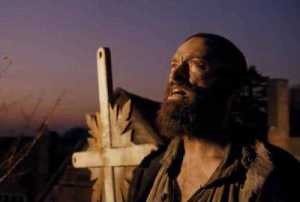
There are crosses featured prominently throughout the movie. The barricade behind which the revolutionaries fight has coffins on the front during the battle. However, at the end of the movie, when all the dead are lined up and singing in the glory of heaven and God’s presence, there is a cross prominently featured. When Jean Valjean struggles with the mercy Bishop Myriel showed to him, crosses are featured all over the screen. All of this seems to tie into the themes of redemption, God’s will, and salvation noted above.
Christians, or people who claim to be Christians, are not always good people. Javert’s skewed view of justice prevented him from taking into account God’s mercy. The innkeeper and his wife claim to be Christians but spend their lives trying to swindle and steal from others. This is a reflection of the truth. Jesus himself noted that there will be weeds among the wheat (Matthew 13:24-30). That is, there will be those who claim to be among the saved who are not and may even seek to destroy the saved.
Victor Hugo
Victor Hugo was not necessarily a friend of organized religion. His religious beliefs changed throughout his life. It seems he became frustrated with the suffering of the people and the inactivity of organized churches in response to this suffering. Some have pegged him as a deist, though a bit of exploration turns up hints that he may have maintained theism through his life. Regardless of Hugo’s own spiritual state, it is clear from the film “Les Miserables” that Christianity is largely beneficial. Not only that, but the story is such an epic tale of redemption with Christian themes interwoven throughout that I can’t help but think (having, admittedly, not read the book) of the extremely positive overall impression I had of the power of Christianity to change people.
Conclusion
“Les Misérables
SDG.
——
The preceding post is the property of J.W. Wartick (apart from citations, which are the property of their respective owners, and works of art as credited) and should not be reproduced in part or in whole without the expressed consent of the author. All content on this site is the property of J.W. Wartick and is made available for individual and personal usage. If you cite from these documents, whether for personal or professional purposes, please give appropriate citation with both the name of the author (J.W. Wartick) and a link to the original URL. If you’d like to repost a post, you may do so, provided you show less than half of the original post on your own site and link to the original post for the rest. You must also appropriately cite the post as noted above. This blog is protected by Creative Commons licensing. By viewing any part of this site, you are agreeing to this usage policy.
All will be made New: Mayans, end times, and eschatology, oh my!
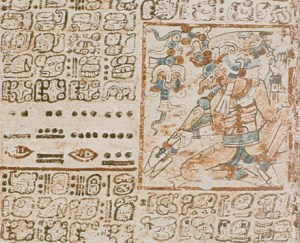 Is it the end? People are rushing to stores stocking up on bottled water and the necessities, preparing for the latest “end” which our world will endure. We’ve endured a few just this year. Some are now saying that the Mayan Calendar counts down to December 21, 2012 and that this was their prediction of the end of the world. The Mayans were extremely accurate in their calendar, so some people are thinking maybe they knew something we do not.
It just so happens that one of my random interests for quite some time has been ancient Mesoamerican history. I love reading about the Maya, Aztec, Inca, and Olmec cultures. Here, I’ll be drawing on those years of study (I am no expert–please don’t get me wrong here) along with my thoughts on Christian eschatology to provide a discussion of the latest “end of the world.”
The Mayans
Cultural Understanding
People often talk about the Mayan Calendar without placing it in its cultural context. The Ancient Maya were a very advanced people. It is easy to think that the people who inhabited ancient South America were a bunch of paganistic simpletons who knew little of the goings on in the world until a boat of enlightened Europeans showed up and taught them better. Such a view is, of course, extremely Eurocentric, and I would suggest it is also betrays a certain lack of knowledge over what it means to be an advanced civilization. The Maya certainly fill that role well, albeit with different types of advancement.
One could argue that the differences in advancements was due, in part, to the radically different worldviews operating in independent spheres of influence. The values of European cultures were shaped by the Christian worldview, and so their concepts of what was important were very divergent from that of the polytheistic Maya. Indeed, this could account for a number of the extreme differences in practical areas, such as the differences in military technology, and of course in the development of religious doctrine. The Maya were not, as some have argued in the past, necessarily a bunch of noble people. Their artwork portraying their religious ceremonies and conquests makes this explicit, with all kinds of atrocities being glorified through their art. An extended comparison of the development of Western and pre-Columbian societies would be fascinating but it is beyond the realm of my discussion here. My point is that the ancient Maya were a very different people and culture from our own.
Why emphasize this point? Well, for one, because the interpretations which have been given to the Mayan Calendar have largely been using a western view of meaning for calendars, dates, and events to interpret a distinctly non-western culture’s apparatus for interacting with reality. The Mayan Calendar is not some construct in a void to be interpreted by various persons from whatever presuppositional strata in which they operate. No, it must be placed within its cultural context in order to even begin to understand what it means that the calendar should have an end.
The Mayan Calendar
Robert Sharer and Loa Traxler discuss the Mayan Calendar extensively in their monumental work, The Ancient Maya
Sharer and Traxler note that:
We take for granted the need to have a fixed point from which to count chronological records, but the ancient Maya seem to have been the only pre-Columbian society to use this basic concept. Different societies select different events as a starting point for their calendars. Our Western chronology, the Gregorian calendar, begins with the traditional year for the birth of Christ. (110, cited below)
The Mayan calendar, on the other hand, uses the end of the last “great cycle” as their starting point for the calendar. They measure something called “The Long Count” which is an extended way to determine a great cycle of 13 “bak’tuns” which are each periods of about 5,128 solar years (110). The previous long count had ended in 3114 BC, and that was the date the Mayans held “established the time of the creation of the current world” (110). And yes, the current “Long Count” will be ending December 21, 2012. What does this mean?
The calendar was not just used for chronology, but rather served more uses, such as divination. Sharer and Traxler note that the calendar was “a source of great power” in the Maya society (102). The Long Count “functioned as an absolute chronology by tracking the number of days elapsed from a zero date to reach a given day recorded by these lesser cycles” (104). Thus, the Long Count served to place the entire calendar cycle into a context: it established a measurable starting point and ending point for their calendar, which was itself extremely accurate due to its use of various astronomical measurements.
The Mayan Calendar shares one distinctive with that of the other Mesoamerican societies, namely, the use of a 52 year cycle. This cycle was celebrated as the end of the world by the Aztecs. The close of one of these 52 year periods literally meant that “the world would come to an end” (107). Yet this end of the world, which happened every 52 years, was not something feared, but rather celebrated due to the dawn of a new Sacred Fire, “the gods had given the world another 52-year lease on life” (107).
We thus have two possible ways to interpret the end of the Mayan Calendar. First, we can see it as simply the terminus of 13 bak’tuns and the end of the unit of measurement of absolute time, which would simply inaugurate the beginning of another cycle of 13 bak’tuns. Second, we can extrapolate from the cultural context that perhaps each terminus of this cycle would be anticipated as the beginning of another “lease on life.” But this is of the utmost importance: neither interpretation suggests some kind of cataclysmic ending of the space-time universe. To call the Mayan Calendar a “prophecy” of endtimes is nothing more than sensationalism. What cause is there to fear this?
 The End of the World
Christians know that the end will come. However, this should not be surprising to anyone with knowledge of astronomy and physics. Indeed, our universe is ticking down to a cosmic heat death. Our universe itself will end. The energy will disperse, the stars will burn out, and all that will be left will be hulks of matter strewn about an ever-expanding galaxy. Or, perhaps there will be a “great crunch”–something I admit I am highly skeptical about–which will lead to an explosion of a new universe. But Christians have a unique perspective on the end of the world.
…[C]oncerning that day and hour no one knows, not even the angels of heaven, nor the Son, but the Father only. Matthew 24:36a.
First, no one will know when the end is come. The end is coming, but it will be like a thief in the night. Jesus tells us that it will be like in the days of Noah, where people continued to live their lives despite the impending doom.
Second, the Christian expects God to be the one to usher in this end. The end will be a new creation. Tears will be wiped away (Revelation 21:4) and creation will be restored. Unfortunately, some Christians have taken this to mean the utter annihilation of all things in the spatio-temporal universe. These Christians will sometimes have a dismissive attitude over the stewardship of the earth. After all, they argue, this universe will be utterly destroyed and we will have a perfect one made for us. Why bother conserving resources? This attitude is simply wrong, and as I have noted elsewhere, we are called to care for creation, something which evangelicals who disagree on certain topics unanimously affirm.
As Christians we are called to always be ready for Christ’s triumphant return. But that preparation does not mean being fearful of every end-time “prophecy.” Indeed, Jesus tells us that many will say the end has come but they are false prophets (Matthew 7:15; 24:4-5; 24:10-11; Luke 21:8; Mark 13:21-23). No, the preparation is the call to make disciples of all nations and to care for those in need.
We will endure another “end of the world” on the 21st of this year. Let’s take the time to reflect on what our Lord tells us in His Word. We do not know how or when, but God knows. We do not know the day or the hour, but God knows. God will take care of us. Let us thank Him.
Links
December 22nd, 2012– A poignant comic which speaks to the reality of what will happen on December 22, 2012.
Caring for Creation: A discussion among evangelicals– Creation care is an issue highly intertwined with eschatology. Here, I review an extremely thought-provoking panel discussion I attended at the Evangelical Theological Society conference in 2012. Climate change, endtimes, and Christianity and science are just a few related issues.
Cormac McCarthy’s Secular Apocalypse– An insightful post which reflects on Cormac McCarthy’s “The Road” and contrasts its vision of the apocalypse with the Christian worldview.
The End of it All…– I reflect on another failed end-time prophecy, this time from one who tried to use the Bible to make the prediction.
Source
Robert Sharer with Loa Traxler, The Ancient Maya
Image Credit
2012 Doomsday Myths Debunked– National Geographic.
SDG.
——
The preceding post is the property of J.W. Wartick (apart from citations, which are the property of their respective owners, and works of art as credited) and should not be reproduced in part or in whole without the expressed consent of the author. All content on this site is the property of J.W. Wartick and is made available for individual and personal usage. If you cite from these documents, whether for personal or professional purposes, please give appropriate citation with both the name of the author (J.W. Wartick) and a link to the original URL. If you’d like to repost a post, you may do so, provided you show less than half of the original post on your own site and link to the original post for the rest. You must also appropriately cite the post as noted above. This blog is protected by Creative Commons licensing. By viewing any part of this site, you are agreeing to this usage policy.
Guest Post: Rev. Kent Wartick on “The Virgin Birth”
“Behold, the virgin shall conceive and bear a son,
and they shall call his name Immanuel”
(which means, God with us). Matthew 1:28 ESV.
Familiar words to most Christians, aren’t they? Along with His Death and Resurrection, the virgin birth of Jesus is among the most celebrated and unifying events in all of Christianity. Nativity scenes can be found in front of Roman Catholic, Lutheran, Baptist, Methodist, and all sorts of churches of all denominations. The virgin birth is counted as among the fundamental doctrines of Christianity, and was important enough to be counted as one of the twelve articles of the Apostolic Creed. For centuries, the account that Jesus Christ was born of a virgin woman, Mary of Nazareth, was undisputed, at least as far as any known challenges can be documented.
But, then, along came the Enlightenment. With it came the idea that science and reason were the test of Scripture and all truth, and not the reverse. Therefore, if Scripture says that Jesus was born of a virgin, and that is not logical nor scientifically provable, then it must be rejected. Thus, the Jefferson “Bible” excludes any reference to the virgin birth as well as Jesus’ miracles, Deity, resurrection, etc. As time went on, through the historical critical method and other destructive methods of using reason not to teach but to judge Scripture, the Enlightenment principle of reason and science over Scripture slowly infiltrated the thinking of many churches. Surveys confirm this infiltration.
1998: A poll of 7,441 Protestant clergy in the U.S. showed a wide variation in belief. The following ministers did not believe in the virgin birth:
- American Lutherans- 19%
- American Baptists- 34%
- Episcopalians- 44%
- Presbyterians- 49%
- Methodists- 60%
2007-DEC: The Barna Group sampled 1,005 adults and found that 75% believed that Jesus was born to a virgin. 53% of the unchurched, and 15% of Agnostics and Atheists believe as well. Even among those who describe themselves as mostly liberal on political and social issues, 60% believe in the virgin birth. (Source for surveys.)
It is a great travesty in the Church today that many clergy find themselves looking at their positions only as a job, and will say what they must to preserve their positions. From the source of the polls previously cited comes this quote:
“…one Hampshire vicar was typical: ‘There was nothing special about his birth or his childhood – it was his adult life that was extraordinary….I have a very traditional bishop and this is one of those topics I do not go public on. I need to keep the job I have got.’
Such hypocrisy and blatant deceit is unworthy of anyone, let alone one who claims to proclaim the Word of God and represent Him to the people. yet such is the state of much of the clergy, as indicated by the above polling figures. No wonder the Church is in such disarray, and seems so powerless in the world today!
If Christianity is only a “nice” way of life that is only about love and compassion, then I suppose the virgin birth is not so essential, But if Christianity is an intimate and personal relationship by faith with the Creator of the Universe, then Who that Creator is makes all the difference. And if being born of a virgin is something He says about himself, even once, in His Book, then it might be best if we believe it. After all, wouldn’t you like to know a bit about, say, the pedigree of a dog or horse that you were to buy, or even more so, wouldn’t you like to know all about a future spouse that you profess to love before marriage? (Please forgive the analogy, which is not meant to cheapen God, spouses, dogs, or horses).
The virgin birth of Christ—and I would say, the historical fact that Jesus was conceived by a miracle like unto creation itself—does not travel alone. It ties intimately into other doctrines-the Holy Trinity, the Deity of Christ, the substitutionary atonement, the inspiration, inerrancy, and infallibility of Scripture, and more. “Scripture cannot be broken”, Jesus said in John 10:35. Even so, the most basic teachings of the Christian faith cannot be broken off and accepted like items on a buffet table. They are all one. Accept all of them-or none of them. That is the challenge that the catechumen, the seeker, the growing disciple of Christ is faced with. Finally, you see, the importance of the virgin birth is found, like all things, bound in the Person and Work of Jesus Christ.
As far as the prophecy quoted by Matthew, namely Isaiah 7:14, much ink has been spilled on this by scholars with more degrees than I have. Some modern Bible translations, notably the NRSV, CEB, TEV and others use “young woman” to translate the Hebrew word almah. Others, such as the NASB, ESV, NKJB, TNIV (=NIV 2011), use the more traditional “virgin.” The LXX also translates the word “virgin.” While the matter is not as simple as some might make it, certainly I would think that the Septuagint scholars would have known Hebrew and Greek well enough to have chosen a different word besides the Greek word for “virgin” if “young woman” would have been indicated. They had no agenda to support a virgin birth or not. The same cannot be said of some modern translators. The sainted Dr. William Beck wrote a study on this subject, available at www.wlsessays.net/.
Human reason helps us put all of these things together systematically from Scripture; but human reason cannot accept and believe them itself. That, too, is a special creative work of the Holy Spirit. What a delight to know that God wants everyone to know Him as He reveals Himself in Scripture. It is through the very words of Scripture that God creates faith. Through those Holy Spirit given and empowered words He keeps one in the faith. As I stand in awe that God chose this supernatural way to join our human race, so I stand in awe that He created faith in my heart, and has kept that faith to this day. All glory and praise to Him forever!
Finally, though, the virgin birth is a matter of faith. For the individual, it is a matter of personal faith whether one accepts what Scripture says about the miraculous conception and birth of Jesus or not. But the virgin birth is also a matter of THE Faith; that is to say, it is an article of Christian doctrine that is beyond dispute. To accept it is to accept a fundamental, essential doctrine of all Christianity. To reject it is to put one outside the bounds of the Christian faith. I pray that this Advent and Christmas season you will join with me, and with all the Christian world, in celebrating the supernatural way that God chose to enter our human race to bear our sin and be our savior.
Rev. Kent Wartick is the pastor of Faith Lutheran Church in Kent, Ohio. He has been preaching for over 26 years in the Lutheran Church – Missouri Synod. He’s my dad, and an inspiration for the faithful.
The Hobbit: An Unexpected Journey- A Christian perspective
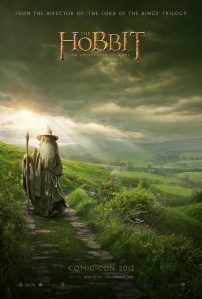
 Unless you’ve been living in a Hobbit-hole somewhere (forgive me!), you know that The Hobbit: An Unexpected Journey was just released in theaters. Short, spoiler free review: It was amazing, go see it. Hereafter, I offer my thoughts on the themes present in the film from a Christian worldview perspective, followed by some links to great posts on the movie and related items. Yes, there are SPOILERS ahead.
An Unexpected Journey
Yes, there is an unexpected journey which begins in this film, believe it or not. Yet the journey was not just unexpected but also vehemently resisted. Bilbo Baggins did not want to go. He was too comfortable with his armchair, his full cabinet, and his total lack of adventure. He was comfortable in his home. He liked it there, and as long as nothing was bothering him, he’d like to stay put, thank you very much.
I can’t help but think of how so many people today are in that same position. We are too comfortable in our pleasant (or at least largely undisturbed) lives, living as though we haven’t a care in the world. We avoid those things which make us uncomfortable. We don’t want to think about them, and we’d rather not even say the words that have anything to do with these hard topics which have become our “adventures.”
For the Christian, this is especially poignant. The scene where Bilbo finally decides to go on the journey has him waking up the next morning after his refusal. He sees his hobbit-hole cleaned up and looking as though the previous night had never happened. But then he sees the contract from Thorin Oakenshield on a table. He picks it up and realizes what he has been called to do. He has to step out and live that life in the great beyond. It is as Gandalf tells him: the world is not contained in books and maps, it is “out there.” Similarly, we cannot become too comfortable in our lives. We are to be in the world, changing it through our actions and through the call to repent and believe. Yes, we can have all the books, we can pray the prayers, but what are we doing? Are we running, leaping, yelling like Bilbo to join the adventure, to spread the Gospel?
Big Evil
Defeating Evil
When the party comes to Rivendell, they encounter Saruman, who had summoned Galadriel. After a brief conference on whether the dwarves should continue their quest and a debate over the existence of a Necromancer, Galadriel privately confronts Gandalf. She asks him why he chose a Hobbit, Bilbo, to embark on such a dangerous quest as a burglar. Gandalf’s insight is telling. He says that “Sarumon thinks evil must be defeated with great power.” But Gandalf is not so convinced. He argues that it is the little things, the everyday choices, which can lead to the defeat of evil. When enough choices are made for good, evil cannot overcome the turning tide against it. Bilbo is weak, but he will become strong in his actions. He will be used for good, despite not having great power.
We can fight evil in that same way. The choices we make everyday have larger consequences. How will I spend my time? Will I make that nasty remark? Will I forgive? There is big evil in this world, but it can be fought, by God’s grace.
Its Reality and Our Resistance
Evil is real. There is evil everywhere in the world, and we need only to look at the headlines to see it. Gandalf is aware of the rising evil in Middle Earth as well. The evils which confront the adventurers are “big.” There are trolls, stone giants, a goblin with a grudge, and more. They are resisted at every turn.
Who can help but see how this theme ties into the last one? Christians are called into a world of big evil. We are called to go into a world which is resisting them–often violently–at every turn.
Evil’s Foothold
Evil seeks places to dwell. The things which are evil must be actively resisted, for any foothold evil gains, it will utilize. Bilbo, Gandalf, Thorin, and Radagast the Brown must all fight against evil as it seeks its foothold in their lives. Radagast is a particularly poignant example. He runs through the forest, fighting evil as much as can be done. He is eccentric and seems crazy, yet he does what he can to fight the evil which seeks to penetrate at every level into the forest. Our hearts are too often willing dwelling places for evil. We must fight it.
 Small Mercies
Courage is the strength to show mercy. Gandalf urges Bilbo to remember this as he considers the adventure. A mercy shown can have important ramifications in the future, as those who know not only the Hobbit but also the Lord of the Rings trilogy should note. By sparing Gollum, Bilbo opened the door for the defeat of a much greater evil far into the future. What mercies can we show? Certainly, we don’t often have a life-or-death situation placed at our feet, but we have the capacity to show mercy on a day-to-day basis.
Evidence and Will
Saruman was confronted by Gandalf with evidence for the existence of a great evil, a Necromancer, who had been discovered by Radagast. Saruman–perhaps already in the thrall of Sauron–seeks any avenue to redefine the evidence. He says that Radagast cannot be trusted, for he is too eccentric and perhaps crazy. Saruman says Radagast spends too much time in the forest, eating mushrooms. Even when confronted with physical evidence, a blade full of evil, he seeks to offer an alternative explanation.
This dialogue between Gandalf, Elrond, Galadriel, and Gandalf is a powerful example of how our will can change the evidence. If we do not wish something to be true, we will seek every avenue to escape its truth. Perhaps Saruman was not yet in the thrall of Sauron, perhaps he merely did not want to think evil could gain such a foothold in his world, but he nevertheless made a decision to doubt his brother wizards. If he had trusted them, he perhaps would not have trodden down the path he takes in Lord of the Rings.
Back Again- Conclusion
JRR Tolkien wrote one of the greatest fantasy epics of all time. He was also a deeply thoughtful Christian. The themes which appear throughout his novels are portrayed vividly on screen. I urge readers to see this movie. When you put on those 3-D glasses, don’t forget to put on your worldview glasses as well. What themes are occurring in this film? How do they relate to my worldview? What worldview can account for these things? The Hobbit: An Unexpected Journey was a fantastic exploration of these themes. We are called to live in the world, we are called to adventure, no matter how much we want to resist. We are called to Christ.
Links
The Call to Adventure– What does the call to adventure mean? Garret Johnson offers a thought-provoking look at the call to adventure in literature and how it can inform our worldview.
Tolkien Experts Talk About His Christian Themes– A video with a number of experts on Tolkien offering their thoughts on the Christian themes in his body of work. Definitely worth watching.
Big Truths from the Hobbit– An excellent post calling Christians to step out of their hobbit-holes.
SDG.
——
The preceding post is the property of J.W. Wartick (apart from citations, which are the property of their respective owners, and works of art as credited) and should not be reproduced in part or in whole without the expressed consent of the author. All content on this site is the property of J.W. Wartick and is made available for individual and personal usage. If you cite from these documents, whether for personal or professional purposes, please give appropriate citation with both the name of the author (J.W. Wartick) and a link to the original URL. If you’d like to repost a post, you may do so, provided you show less than half of the original post on your own site and link to the original post for the rest. You must also appropriately cite the post as noted above. This blog is protected by Creative Commons licensing. By viewing any part of this site, you are agreeing to this usage policy.
Book Review: “Cold Case Christianity” by J. Warner Wallace
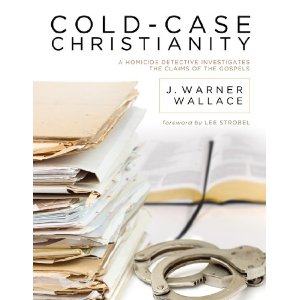 I’ll forego the preliminaries here and just say it: this is the best introductory apologetics book in regards to the historicity of the Gospels I have ever read. If you are looking for a book in that area, get it now. If you are not looking for a book in that area, get it anyway because it is that good. Now, on to the details.
Cold-Case Christianity
He begins the work with a section on method. He argues that we must learn to acknowledge our presuppositions and be aware of them when we begin an investigation. Like the detective who walks into a crime scene with a preconceived notion of how the murder played out, we can easily fall into the trap of using our expectations about a truth claim to color our investigation of the evidence for that claim. Learning to infer is another vastly important piece of the investigation. People must learn to distinguish between the “possible” and the “reasonable” (34ff). This introduction to “abductive reasoning” is presented in such a way as to make it understandable for those unfamiliar with even the term, while also serving as great training on how to teach others to reason for those involved in apologetics.
Chapter 3, “Think Circumstantially” is perhaps the central chapter for the whole book. Wallace notes that what is necessary in order to provide evidence “beyond a reasonable doubt” is not necessarily “direct evidence.” That is, direct evidence–the type of evidence which can prove something all by itself (i.e. seeing it rain outside as proof for it actually raining)–is often thought of to be the standard for truth. Yet if this were the standard for truth, then we would hardly be able to believe anything. The key is to notice that a number of indirect evidences can add up to make the case. For example, if a suspected murderer is known to have had the victim’s key, spot cleaned pants (suspected blood stains), matches the height and weight a witness saw leaving the scene of the crime, has boots that matched the description, was nervous during the interview and changed his story, has a baseball bat (a bat was the murder weapon) which has also been bleached and is dented, and the like, these can add up to a very compelling case (57ff). Any one of these evidences would not lead one to say they could reasonably conclude the man was the murderer, but added together they provide a case which pushes the case beyond a reasonable doubt–the man was the murderer.
In a similar way, the evidences for the existence of God can add up to a compelling case for the God of classical theism. Wallace then turns to examining a number of these arguments, including the moral, cosmological, fine-tuning, and design arguments. These are each touched on briefly, as a kind of preliminary to consider when turning to the case for the Gospels. Furthermore, the notion of “circumstantial” or cumulative case arguments hints towards the capacity to examine the Bible and the Gospels to see if they are true.
Wallace then turns to examining the Gospels–Mathew, Mark, Luke, and John–in light of what he has learned as a detective. He utilizes forensic statement analysis as well as a number of other means by which to investigate witnesses and eyewitness reports to determine whether the Gospels can be trusted. He first turns to Mark and makes an argument that Mark had firsthand contact with Peter, one of the Disciples and an Apostle. He shows how we can search for and find “artifacts”–textual additions that were late into the accounts of the Gospels. None of these are surprises, because we know about them by investigating the evidence we have from the manuscript tradition. By piecing together the puzzle of the evidences for the Gospels, we form a complete picture of Christ (106ff).
It is easy to get caught up in “conspiracy theory” types of explanations for the events in the Bible. People argue that all kinds of alternative explanations are possible. Yet Wallace notes again that there is a difference between possible and reasonable. Simply throwing out possible scenarios does nothing to undermine the truth claims of the Gospels if the Gospels’ own account is more reasonable. Furthermore, drawing on his own knowledge from investigating conspiracy theories, Wallace notes that the Gospels and their authors do not display signs of a conspiracy.
A very important part of Cold-Case Christianity is the notion that we can trace back the “chain of custody” for the Gospels. By arguing that we are able to see how the New Testament was passed authoritatively from one eyewitness to disciple to disciple and so on, Wallace argues that conspiracy theories which argue the Gospel stories were made up have a much less reasonable explanation than that they are firsthand accounts of what happened. Much of the information in these chapters is compelling and draws on knowledge of the Apostles’ and their disciples. It therefore provides a great introduction to church history. Furthermore, Wallace notes that a number of things that we learn from the Gospels are corroborated not just by other Christians, but also by hostile witnesses (182ff). He also argues that we can know that the people who wrote the Gospels were contemporaries of the events they purported to report by noting the difficulties with placing the authors at a later date (159ff). This case is extremely compelling and this reviewer hasn’t seen a better presentation of this type of argument anywhere.
There are many other evidences that Wallace provides for the historicity of the Gospels. These include undesigned coincidences which interlink the Gospel accounts through incidental cross-confirmations in their accounts. I have written on this argument from undesigned coincidences before. Archaeology also provides confirmation of a number of the details noted in the Gospel accounts. The use of names in the Gospels place them within their first century Semitic context.
Again, the individual evidences for these claims may each be challenged individually, but such a case is built upon missing the forest for the trees. On its own, any individual piece of evidence may not prove that the Gospels were written by eyewitnesses, but the force of the evidence must be viewed as a complete whole–pieces of a puzzle which fit together in such a way that the best explanation for them is a total-picture view of the Gospels as history (129ff).
All of these examples are highlighted by real-world stories from Wallace’s work as a detective. These stories highlight the importance of the various features of an investigator’s toolkit that Wallace outlined above. They play out from various viewpoints as well: some show the perspective of a juror, while others are from the detectives stance. Every one of them is used masterfully by Wallace to illustrate how certain principles play out in practice. Not only that, but they are all riveting. Readers–even those who are hostile to Christianity–will be drawn in by these examples. It makes reading the book similar to reading a suspense novel, such that readers will not want to put it down. For example, when looking at distinguishing between possible/reasonable, he uses a lengthy illustration of finding a dead body and eliminating various explanations for the cause of death through observations like “having a knife in the back” as making it much less probable that accidental death is a reasonable explanation, despite being possible.
Throughout the book there are also sidebars with extremely pertinent information. These include quotations from legal handbooks which describe how evidence is to be viewed, explanations of key points within the text, and definitions of terms with which people may be unfamiliar. Again, these add to the usefulness of the book for both a beginner and for the expert in apologetics because it can serve either as a way to introduce the material or as helpful guides for using the book to teach others.
Overall, Cold-Case Christianity
Links
View J. Warner Wallace’s site, Please Convince Me, for a number of free and excellent resources. I highly recommend the blog and podcast.
I would strongly endorse reading this book alongside On Guard
Source
J. Warner Wallace, Cold-Case Christianity
Disclosure: I received a copy of the book for review from the publisher. I was not asked to endorse it, nor was I in any way influenced in my opinion by the publisher. My thanks to the publisher for the book.
SDG.
——
The preceding post is the property of J.W. Wartick (apart from citations, which are the property of their respective owners, and works of art as credited) and should not be reproduced in part or in whole without the expressed consent of the author. All content on this site is the property of J.W. Wartick and is made available for individual and personal usage. If you cite from these documents, whether for personal or professional purposes, please give appropriate citation with both the name of the author (J.W. Wartick) and a link to the original URL. If you’d like to repost a post, you may do so, provided you show less than half of the original post on your own site and link to the original post for the rest. You must also appropriately cite the post as noted above. This blog is protected by Creative Commons licensing. By viewing any part of this site, you are agreeing to this usage policy.
Jesus’ Birth: How undesigned coincidences give evidence for the truth of the Gospel accounts
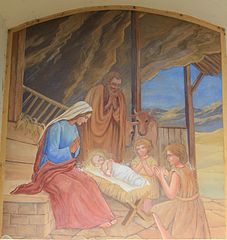 There are many charges raised against the historicity of the birth narratives of Jesus Christ. These run the gamut from objections based upon alleged contradictions to inconsistencies in the genealogies to incredulity over the possibility of a virgin birth. Rather than make a case to rebut each of these objections in turn, here I will focus upon using undesigned coincidences to note how these birth narratives of Christ have the ring of truth. How exactly do undesigned coincidences work? Simply put, they are incidental details that confirm historical details of stories across reports. I have written more extensively on how these can be used as an argument for the historicity of the Gospels: Undesigned Coincidences- The Argument Stated. It should be noted that the birth narrative occurs only in Matthew and Luke. John begins with a direct link of Christ to God, while Mark characteristically skips ahead to the action. Thus, there are only a few places to compare these stories across different reports. However, both Mark and John have incidental details which hint at the birth account. These incidental details lend power to the notion that the birth narratives of Jesus are historical events.
Joseph
First, there is one undesigned coincidence that is such a gaping hole and such a part of these narratives most people will probably miss it. Namely, what in the world was Joseph thinking in Luke!? Do not take my word for this–look up Luke chapters 1-2. Read them. See anything missing? That’s right! Joseph, who is pledged to a virgin named Mary (1:27) doesn’t say anything at all about the fact that his bride-to-be is suddenly pregnant. There is no mention of him worrying at all about it.
So far as we can tell from Luke, Joseph, who we only know as a descendant of David here, is going to be wed to a virgin and then finds out that she’s pregnant. He’s not the father? What’s his reaction? We don’t find out until Luke 2, where Joseph simply takes Mary with him to be counted in the census, dutifully takes Jesus to the Temple, and that’s about it. Isn’t he wondering anything about this child? It’s not his! What happened?
Only by turning to Matthew 1:18ff do we find out that Joseph did have his second thoughts, but that God sent an angel explaining that Mary had not been unfaithful, and that the baby was a gift of the Holy Spirit. So we have an explanation for why Joseph acted as he did in Luke. Now these are independent accounts, and it would be hard to say that Luke just decided to leave out the portion about Joseph just because he wanted to have Matthew explain his account.
The genealogies of Jesus that Matthew and Luke include are different, but they reflect the meta-narratives going on within each Gospel. Luke’s narrative generally points out the women throughout in a positive light, and it is often argued that his genealogy traces the line of Mary. Matthew, writing to a Jewish audience, traces through Jesus’ legal father, Joseph. Now it could be argued that these are simply reflections of the authors’ imaginations within their fictional accounts, but surely including names with descendants tracing all the way back to Abraham and beyond is not a good way to construct a fictional account. No, Matthew and Luke include the genealogies because their accounts are grounded in history.
Incidental Details
Interestingly, the birth narratives of Jesus also help explain the events reported in Mark and John, which do not report His birth. What of the apparent familiarity John had with Jesus in Mark 1:3ff and John 1:19ff? It seems a bit odd for John to go around talking about someone else “out there” who will be better in every way than he himself is without knowing who this other person is. Well, looking back at Matthew and Luke, we find that Mary and Elizabeth (John’s mother) knew each other and had visited each other during their pregnancy. It seems a foregone conclusion that they continued to interact with each other after the births of their sons, which would explain John’s apparent familiarity with Jesus in Mark and John.
Strangely, Mark never mentions Joseph as Jesus’ father. If all we had was Mark’s Gospel, we would be very confused about who Jesus’ father is. The oddness is compounded by the fact that Mary is mentioned a number of times. Well okay, that still seems pretty incidental. But what about the fact that Mark explicitly has a verse where he lists Mary as well as Jesus’ siblings?
Is not this the carpenter, the son of Mary and brother of James and Joses and Judas and Simon? And are not his sisters here with us?” And they took offense at him. (Mark 6:3, ESV)
This verse seems extremely weird. After all, Joseph was a carpenter (well, a more accurate translation is probably “craftsman”) and yet despite Mark explicitly using that word for Jesus, as well as listing Mary and Jesus’ siblings, we still see nothing but silence regarding Jesus’ father. Well, of course! After all, when we turn to the birth narratives in Matthew and Luke, we find that Jesus was born of a virgin. Jesus had no human father. Thus, Mark, ever the concise master of words, simply omits Joseph from details about Jesus’ life. But to not mention Jesus’ father in a largely patriarchal society alongside his mother and siblings seems extremely strange. It is only explained by the fact of the virgin birth, with which Mark would have been familiar. However, Mark didn’t see the birth narrative as important in his “action Gospel.” Only by turning to Matthew and Luke do we find an explanation for the strange omission of Joseph from Mark’s Gospel.
Conclusion
I have listed just a few undesigned coincidences to be gleaned from the birth narratives of Jesus. The fact of the matter is that these can be multiplied almost indefinitely if one looks at the whole of the Gospels, and even moreso if one investigates the whole Bible. These incidental details fit together in such a way as to give the Gospels the ring of truth. The way that Matthew fills in details of Luke, Mark demonstrates his familiarity with the birth narratives, and the intimate connections of Jesus and John are all cross-confirmed is both incidental and amazing. The claim is not that based upon these incidences alone the Gospel accounts are true. No, the claim is that those who challenge the truth of these accounts must account for these incidences in a way that is more plausible than that they simply occur when people relate history. It seems that the only way to do that would be to resort to outlandish narratives that involve the four authors sitting together and discussing which portions of stories to leave out so the others can fill them in. No, instead it seems much more likely that these four authors were writing what they had witnessed–or received from eyewitness testimony, and just as we do when recounting events (think of 9/11, for example, and the different things people remember) they wrote specific details they felt were important or part of the narrative, while the others found other things more important or had other incidental knowledge related to the events they recorded.
SDG.
——
The preceding post is the property of J.W. Wartick (apart from citations, which are the property of their respective owners, and works of art as credited) and should not be reproduced in part or in whole without the expressed consent of the author. All content on this site is the property of J.W. Wartick and is made available for individual and personal usage. If you cite from these documents, whether for personal or professional purposes, please give appropriate citation with both the name of the author (J.W. Wartick) and a link to the original URL. If you’d like to repost a post, you may do so, provided you show less than half of the original post on your own site and link to the original post for the rest. You must also appropriately cite the post as noted above. This blog is protected by Creative Commons licensing. By viewing any part of this site, you are agreeing to this usage policy.
Saint Nicholas- A Christian life lived, a story told
It has been remarked, with much truth, that all of us lead double lives, a life of our fancy, in a world of things as they should be, or as we should like them to be, and a life in a world of things as they really are. And this is as it should be. We can lift the level of real existence by thinking of things as we should like them to be. It is well not to walk with one’s eyes always fixed on the ground. (McKnight, cited below, Kindle location 401)
It is easy to hear the “real story” of Santa Claus, but few investigate further than looking it up to see the parallels between the Bishop of Myra’s life and that of the story of Santa Claus. There is so much more to his story–and indeed to stories in general–than that.
Saint Nicholas (270-343 AD) was a valiant man who fought prostitution, abortion, and poverty. He attended the council at Nicaea, from which we received the Nicene Creed. At that council, he defended vigorously the orthodox doctrine of the Trinity. He was an exemplar of Christian teaching put into practice. Not only that, but the legend which has grown up around his life has inspired and enthralled untold numbers of people through the Christian era.
It is important to note the intertwining of legend and truth in the stories about St. Nicholas, and the impact that has had upon innumerable people. George McKnight, writing in the early 1900s, explored a number of issues related to the mingling of fact and fiction in the life of St. Nicholas. The quote highlighted above touches on many of these topics.
First, there is power in narrative. A story which is told well is one which can effect change. We are impacted by fantasy in ways which cause us to reflect upon reality with new–perhaps better trained–eyes. Second, we, as spirited people in a world which we so often see only as the physical, are called to heights of reality by fiction. As McKnight noted, “It is well not to walk with one’s eyes always fixed on the ground.” Our eyes are driven upwards and outwards by the stories we hear–they cause us to interact with others in new ways, and they also cause us to think about topics which perhaps we had not even considered before.
The story of St. Nicholas is no different. Yes, legend has crept into the accounts of this godly man, but what is the purpose of that legend? Not only that, but is it possible to separate out the fiction?, McKnight also commented upon the nature of radical skeptical history being done in his time (about 100 years ago). He bemoaned the fact that nearly every facet of Nicholas’ life is thrown into question with the arrival of critical scholarship. But of course to focus merely upon what is historical fact or fiction is to miss the entire point of the life of St. Nicholas. McKnight goes on:
The story of St. Nicholas consists almost entirely of a series of beneficent deeds, of aid afforded to humanity in distress, accomplished either by St. Nicholas… or through his intervention… The conception of St. Nicholas, then, is almost that of beneficence incarnate. (Kindle Location 469-481).
That is, the story of St. Nicholas, and the legends that surround him, turn him into a type of Christ–one who is deeply concerned for humanity and showing Christian love for God and neighbor.
Yet this is not all there is to the life of the Saint. Although difficult to sift from the legends, there is a historical core to the life of St. Nicholas which is just as profoundly Christian as the legends which have grown up around him. With that said, we turn to the story of St. Nicholas, with an eye toward how his life is one of a Christian lived as well as a story told.
Nicholas is well-attested to have attended the council of Nicaea. There is a possibly apocryphal story about his 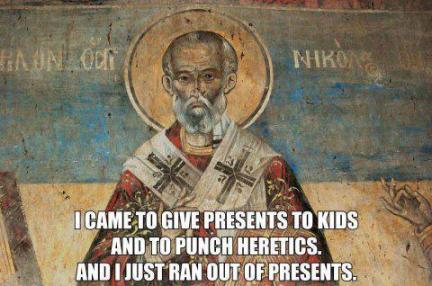 attendance there wherein he confronted the heretic Arias himself and slapped him in the face. The story continues, telling of how Nicholas was initially exiled for his act but later allowed to return after Arianism had been thoroughly acknowledged as heresy. Although it is nearly impossible to know whether this story is historically accurate, there is at least some truth behind the story in that Nicholas was known to vehemently defend the orthodox doctrine of the Trinity.
Nicholas actively opposed prostitution. However, instead of simply condemning the practice, he also gave money to young women in need to keep them from turning to prostitution to feed themselves. Again, this truth served as the basis for a possibly historic legend in which Nicholas learned of three women who were about to turn to prostitution (or be sold into slavery, depending on the account) because they couldn’t pay their dowries in order to be wed. Nicholas is said to have thrown a bag of gold for each young woman through their window so that they could be married instead of sell their bodies. Again, this legend may not be true–but it points to the truth about Nicholas’ life–he gave to those in need and fought against the evils of prostitution. It also points beyond itself towards an ideal.
Nicholas fought against the Pagan practices, which led to his persecution and imprisonment by those angered by his preaching against false idols. Furthermore, his opposition to paganism included working against a number of practices in the pagan world, including abortion. Roman Catholics have continued to spearhead St. Nicholas’ commitment to helping children. A search for “Nicholas of Myra” turns up adoption agencies one after another. Christians have used Nicholas’ example as a call to end human trafficking and slavery. One can see throughout these historical kernels how myth and legend could grow up around this figure–fighting heresy, giving to those in need, and having utmost concern for the innocent were all aspects of St. Nicholas’ life. We don’t necessarily know the extent of his actions in these areas, but we know enough to be inspired.
Therefore, we turn to another part of McKnight’s thought-provoking quote at the beginning of this post:
…all of us lead double lives, a life of our fancy, in a world of things as they should be, or as we should like them to be, and a life in a world of things as they really are. And this is as it should be. We can lift the level of real existence by thinking of things as we should like them to be.
Take a moment to consider what McKnight is saying here: we know there is a realm of absolutes–a way that things should be. We also have a way that we should like things to be. But the way the world “really is” does not often reflect that. Yet we can enact change upon our realm of existence–we can “lift it up”–by focusing on the way that things should be, and living our lives differently because of that. St. Nicholas enacted this in his life, working towards the ideal while living in an imperfect world. The legends of St. Nicholas inspire us to do the same. We are not to focus so much on the critical challenge–which stories are true and which are “only” legends. Instead, we are to focus on St. Nicholas as a story–one which inspires us to change the world around us.
Nicholas’ life was one which fought against poverty, paganism, heresy, prostitution, and idolatry. He incorporated sound doctrine into his life and then lived it. There can hardly be a better example of a Christian life lived than that of St. Nicholas. Yet that is not all there is to the story of the “real” saint. No, his life is one of calling us to live a life for Christ as well. His life is action. It is a life incarnate with truth and the beneficence that comes from the Christian worldview. It is a call to follow Christ.
Sources
James Parker III, “My Kind of Santa Claus.”
Robert Ellsberg, “St. Nicholas, Bishop of Myra.”
George Harley McKnight, St. Nicholas (New York: G.P. Putnam’s sons, 1917). This book is available legally free of charge in a number of digital formats through Open Library.
SDG.
——
The preceding post is the property of J.W. Wartick (apart from citations, which are the property of their respective owners, and works of art as credited) and should not be reproduced in part or in whole without the expressed consent of the author. All content on this site is the property of J.W. Wartick and is made available for individual and personal usage. If you cite from these documents, whether for personal or professional purposes, please give appropriate citation with both the name of the author (J.W. Wartick) and a link to the original URL. If you’d like to repost a post, you may do so, provided you show less than half of the original post on your own site and link to the original post for the rest. You must also appropriately cite the post as noted above. This blog is protected by Creative Commons licensing. By viewing any part of this site, you are agreeing to this usage policy.
Caring for Creation: A discussion among evangelicals
 I recently had the wonderful opportunity to attend the Evangelical Philosophical Society annual meeting (check out my thoughts on the whole thing). The theme of the meeting was “Caring for Creation” and although I generally went to other talks with topics that interested me more, I did get the chance to listen to a talk by Douglas Moo, “Biblical Theology and Creation Care” followed by a panel discussion on caring for creation. The talk by Moo was one of the best papers I attended, and the panel discussion afterwards was both informative and contentious. Readers, I hope you’ll look through the whole thing and engage in some dialogue here. This is an extremely interesting topic and I’d love to read your thoughts on it. I’ll start here by summarizing the highlights of Moo’s paper. Then I’ll look at the panel discussion.
Douglas Moo- “Biblical Theology and Creation Care”
The thrust of Moo’s argument was twofold: first, to outline a “Biblical Theology” and apply that to the notion of stewardship; second, to hint at a strategy going forward for evangelicals interacting with creation care.
There are three ways to look at the texts in regards to creation care: resistance (a pattern which allows one specific interpretation or approach to trump all others and therefore forces all texts into a certain paradigm); recovery (look at different texts and incorporate a broad view that supports an ecological interpretation); and revisionism (adopt a constructive and creative approach that makes meaning from the text while recognizing broad continuity with the text). Moo noted difficulties with all three of these and endorsed a kind of recovery/revisionist approach which “sees the ‘Green'” in the texts while also not forcing texts to be about environmentalism in every case. Furthermore, a sparseness of texts does not necessarily entail that no theology can be drawn from a topic. Instead, there are enough verses which can address creation care to paint in broad strokes.
From this approach, Moo argued that there is a pattern of fulfillment in the New Testament which does not abrogate the Old Testament teachings on creation care but rather incorporates them into the whole world. We are called, Moo argued, to see our authority over the earth as not our own but as Christ’s as Creator.
Moo argued that we must not ignore God’s broad interpretation of “neighbor.” God’s view of neighbor includes not just your friends and your enemies but also those yet unborn. Our culture can be a positive influence in some ways by informing how we can prioritize our work in caring for creation. Furthermore, the concerns of our surrounding culture can inform the directions theology must take. For example, he noted that it was no accident that theologians turned to investigating texts in light of personhood debates in the 1970s with the abortion movement: culture can inform the direction that theology needs to explore, thus giving a more robust theology for coming generations. “When faced with challenges or large scale movements, the church rightly turns to the Bible to see what it may say on that issue.”
Moo then turned to the created world. We are able to learn truths about the world through scientific research. Moo argued that “truth discovered by scientists in the natural world” can inform our worldview because they are viewing the evidence left behind from Creation. It is not scientific theory vs. scientific fact or science vs. the Bible. Instead, Christians must see truth as both interpretations of the science as well as interpretations of the Bible. “We cannot dictate Scripture by science but… current scientific data should not be dismissed unless there is an extremely solid Biblical ground that contradicts this data.” Yes, science changes, but so do interpretations. Sometimes science can inform us of a faulty interpretation of the text. It can cause us to turn to the text to look for a better understanding of both special and natural revelation.
 Moo argued that there is a broad scientific consensus regarding climate change. It is happening and it is at least partially caused by humans. Not all scientists are saying the exact same thing in regards to climate change, but the broad consensus is that it is at least partially anthropogenic.–caused by humans.
Thus, Moo argued, “Biblical theologians have no basis as laity in science to reject what science is telling us on this topic [global warming].” The Bible informs us of the disastrous effects humans can have on the earth, from the fall to Israel’s continued rebellions, which brought harm to the earth itself. Similarly, our own modern rebellions can lead to horrifying effects on the earth.
Moo concluded with a call to Christian philosophers and theologians–and more generally, to Christians at large. “We should be at the forefront of confronting” climate change. We must be concerned with caring for creation.
Panel Discussion
The panel discussion after Moo’s talk quickly became contentious. E. Calvin Beisner began by arguing that we must not lose the distinction between scientific models and reality. He noted that a scientific consensus does not necessarily mean reality, and that dissenting scientists were often those whose careers couldn’t be threatened by loss of livelihood. He generally expressed skepticism over the extent of humanity’s causing climate change.
After Beisner’s general response, the moderator began a Q+A session in which all the panelists- Moo, Beisner, Russell Moore, and Richard Bauckham would be allowed to respond to each question. The first question asked about the political nature of the discussion. All the panelists generally agreed that the discussion goes beyond politics and into interdisciplinary studies of geology, climatology, philosophy, theology, and beyond.
Next, “What can churches do to enhance creation care?” Moo argued that it needs to become an agenda item that churches regularly touch upon. He also said there are a number of easy ways to reduce one’s climate impact that can be incorporated in one’s daily routines. Bauckham expressed a desire for every church to have a ‘care of creation’ group which would inform their church on issues involved in creation care. Beisner also advocated easy things that can be incorporated into one’s life to take care of creation. Moore was concerned with a tangible connection to creation–he advocated getting people out into nature for walks and camping and a fuller understanding of God’s creation.
The next question related to the facts that each would say are agreed upon by all panelists despite their some contradictory opinions. It seemed that across the board they agreed that some climate change is happening. Moo noted that it is easy to find someone to disagree with any fact, but that doesn’t undermine truth.
Another question that came up was where the panelists thought creation care should rank in regards to a priority for Christians. The general view expressed across the board was that there is no easy way to say this should be a number one concern or where it fell in line with other major concerns like abortion, evangelism, and the like. Instead, all the scholars seemed to say that it is people’s duty to be informed on this topic and to do what they can.
 Interestingly, the question: “What are areas of agreement with the other panelists?” was the one that generated the most controversy. It started off well enough with the panelists noting actual areas of agreement. However, once the moderator (whose name I didn’t catch) noted the problem of the West’s excessive consumption, the discussion became heated. Beisner followed this comment with a rather lengthy argument that we need to move past the current scenario of reducing CO2 as a brute cure to the problem. He argued that this could be disastrous to the developing world. The developing world often is still using wood for fuel and to try to prevent them from using coal and other carbon-dioxide producing fuels would not only slow their development but also possibly cause deaths now due to inadequate heating, poor quality water, and the like. He made note of a few studies to this effect and argued that we can’t reduce climate change at the cost of humans who are here now struggling to get enough food and water to survive. He noted one study which showed that the more money spent on reducing climate change, the less the per capita income in the developing world becomes. Thus, he expressed concern for the people on earth now who might suffer from these measures.
Moo then noted truth in what Beisner was saying–we need to be aware of the harm we can cause and see if certain methods of prevention have a cost too high–but dissented from Beisner in arguing that we must also take into account sustainability and future generations, even if that may not make for the ideal “now” for everyone.
Bauckham really turned up the heat when he started his response by saying “Remember Galileo.” He noted that Galileo was initally condemned due to Scripture, but his example shows how trying to “predict from Scripture what science must observe is extremely dangerous.” He said that we need to stop playing “silly games with pseudoscience” [clearly aimed at Beisner’s use of arguments against the consensus Moo and the others argued was in place] and step outside of the Amero-centric view of the world. Regarding the developing world, he responded to Beisner by saying that whole nations are afraid of being consumed by the oceans, which is of course of utmost concern. He expressed worry that Christians in other countries saw Christians in the U.S. as disregarding the ecological crises of our time. Finally, he made a jab at Beisner saying that denying anthropogenic climate change is to the scientific community like denying the existence of Jesus would be to the panel.
Beisner immediately responded, saying that Bauckham had been disingenuous and that he felt the language used was troubling. He argued that the supposed consensus is not a true consensus and that there is debate among experts related to the extent of anthropogenic climate change.
Moore closed this part of the discussion by noting that it is easy to attack each other but that there is a general agreement: things need to change. He advocated change on a local level, with everyone trying to carry a bit of the load for a “full reform of culture.”
Conclusion
There were a number of themes I took away from this discussion. First, I think Moo is spot on when he notes that Biblical theologians have no right to tell scientists what their data is. Moo’s presentation has reverberations for other issues, such as the age of the earth. Not only that, but his general notion of culture driving theology and vice versa was a very interesting concept of which people should take note. Finally, his call to Christians to be at the forefront of confronting climate change and being good stewards of Creation must be taken to heart.
Despite the generally contentious nature of the panel discussion, it remains the case that all the panelists advocated a need to care for creation. The debate was over how that must take place. Clearly, the notion of anthropogenic global warming was a hot topic, but again all the panelists agreed that we need to be doing better than we are now.
What do you think of all these discussions? What can we do? What should we do? Let’s hear it!
Image
The third image is credited to: http://commons.wikimedia.org/wiki/File:Forest_in_Yakushima_30.jpg.
SDG.
——
The preceding post is the property of J.W. Wartick (apart from citations, which are the property of their respective owners, and works of art as credited) and should not be reproduced in part or in whole without the expressed consent of the author. All content on this site is the property of J.W. Wartick and is made available for individual and personal usage. If you cite from these documents, whether for personal or professional purposes, please give appropriate citation with both the name of the author (J.W. Wartick) and a link to the original URL. If you’d like to repost a post, you may do so, provided you show less than half of the original post on your own site and link to the original post for the rest. You must also appropriately cite the post as noted above. This blog is protected by Creative Commons licensing. By viewing any part of this site, you are agreeing to this usage policy.

 J.W. Wartick - Reconstructing Faith
