Jesus Christ
Enter [Science] Fictional Messiah – “Wind and Shadow” and “Daystar” by Kathy Tyers
 Kathy Tyers’ Firebird series is renowned by many for its explorations of worldview questions in a stirring science fiction setting. I have written on the Firebird Trilogy before. Here, we’ll take a look at the two concluding books in the series- Daystar

Human Nature
Both books have much to say about human nature. In particular, questions about the extent and nature of our free will abound as we as readers are confronted with different concepts of determinism and free choice. Although this theme is never, perhaps, fully developed in philosophical terms, the very activity of the characters makes a kind of argument towards the notion that we have free choice that is genuine, though the question of whether this might be compatibilist–set alongside determinism–or not is left open.
Daystar also raises major questions about the nature of humanity itself–are we purely material beings; or perhaps purely spiritual and trapped within a material body; or are we a unified center of body and soul? The organization known as the Collegium puts forward a kind of mystic view that we are eternal souls which, when we die, go back to the infinite, impersonal divine. There are strong elements of both Gnosticism and Platonism to be found in this teaching, and it is one which resonates with New Age type beliefs and other worldviews today. We need to think on this for ourselves: when it comes to the very concept of what it is to be a human, are we essentially matter, or is there something more? Christians need to think on such issues deeply and consider our own standing in the universe.
The Powers
There is a fantastic meld of science fiction technology and the reality of the spiritual realm found throughout the Firebird series. Wind and Shadow
Not long ago I read an excellent book on spiritual warfare which presented several views on the topic. I think we need to be prepared to dive into such challenging topics and see what the Bible has to say about them.
Messiah
Daystar
Tyers brings forth themes about the Messiah in surprisingly insightful ways. First, she integrates several parables into the text as Tavkel instructs people in the faith. (See a recent Sunday Quote! post for one of the parables from the book.)Some of these parables find parallels in those Jesus taught; others are clearly inventions of Tyers’ mind to try to put forth spiritual truths. All of them are unique and engaging. Second, Tavkel is very explicit about his own nature as divine. I think this was a good move on Tyers’ part because sometimes it can be easy to miss how clear Jesus’ own claims of divinity were. When Christ claimed the authority to arbitrate and expand the Mosaic Law, that would have been astonishing. In Daystar, Tavkel points to himself as a divine figure.
One conversation with Meris, a character who is a foreigner and who holds to rival beliefs, depicts Tavkel explaining the notion of being fully divine and fully human. Tavkel explains it by pointing out that “My father created the human form. He has mastery over it…” Meris objects by arguing that it doesn’t make sense that Tavkel can be “one hundred percent” human and one hundred percent God. She asks “Which [are you]?” Tavkel responds, “Both.” When Meris says “That’s not possible,” Tavkel responds: “Is light a wave or a particle Meris?” (426). Though the analogy is not perfect, it does help us to envision how we might assume to much in our own ability to comprehend reality.
Third, there is also much discussion over how the Boh-Dabar may fulfill some prophecies in unexpected ways and that even some preconceptions of what the Messiah figure should be or what verses are even about him might be mistaken. This finds its parallel in some ways in Jesus, who, being the Messiah, yet did not come as a military leader as many expected. To see the people in Daystar figuring out the implications their Messiah has for their understanding is a unique insight into how the Christian story itself might have played out during its earliest days. Confronted by the reality of a risen Lord, notions of what the Messiah should be had to fit this risen Savior.
Daystar is filled to the brim with interesting conversations and speculations like this, and the best part is that they point beyond themselves to the truth of God’s word.
Conclusion
Daystar
Links
Be sure to check out the page for this site on Facebook and Twitter for discussion of posts, links to other pages of interest, random talk about theology/philosophy/apologetics/movies and more!
Kathy Tyers’ “Firebird Trilogy”- Faith, Humanity, and Conflict in the Far Future– I look at a number of worldview issues in the Trilogy in this post.
Microview: “The Annotated Firebird Trilogy” by Kathy Tyers– I review the trilogy with a brief look at the plot and some positives and negatives in the book.
Popular Books– Check out my looks into other popular books (scroll down for more).
Sunday Quote!- A Science Fiction Parable– What might a parable look like in the future? Well, not too much different from one now. Check out this post on Tyers’ speculative parable in Daystar.
Sources
Kathy Tyers, Wind and Shadow (Colorado Springs, CO: Marcher Lord Press [Now Enclave], 2011).
Kathy Tyers, Daystar
SDG.
——
The preceding post is the property of J.W. Wartick (apart from quotations, which are the property of their respective owners, and works of art as credited; images are often freely available to the public and J.W. Wartick makes no claims of owning rights to the images unless he makes that explicit) and should not be reproduced in part or in whole without the expressed consent of the author. All content on this site is the property of J.W. Wartick and is made available for individual and personal usage. If you cite from these documents, whether for personal or professional purposes, please give appropriate citation with both the name of the author (J.W. Wartick) and a link to the original URL. If you’d like to repost a post, you may do so, provided you show less than half of the original post on your own site and link to the original post for the rest. You must also appropriately cite the post as noted above. This blog is protected by Creative Commons licensing. By viewing any part of this site, you are agreeing to this usage policy.
“The Wheel of Time”: A Christian reflection on Books 1-5 of Robert Jordan’s epic saga
Note: I have many updated posts for all the books of The Wheel of Time, as well as looks at worldview questions in the TV series, here.
The Wheel of Time turns and Ages come and pass. What was, what will be, and what is, may yet fall under the Shadow… Let the Dragon ride again on the winds of time.

The Wheel of Time is nothing short of mammoth in size. The series spans 14 books, the shortest of which is about 680 pages. It is a fantasy series encompassing the fulfillment of a number of prophecies which foretold of an Age to come that would once more “break” the world: a man called the Dragon would simultaneously bring salvation and destruction. Here, we’ll explore many of the themes found in the first five books of the series–The Eye of the World, The Great Hunt, The Dragon Reborn, The Shadow Rising, and The Fires of Heaven. We’ll explore the series from a worldview perspective by seeking out the overarching themes found in the books related to the real world.
There will, of course be SPOILERS in what follows. If you’re leaving a comment, do try to limit your discussion to books 1-5. I will be posting on the following books in the series in the upcoming months, so if you want to comment on later parts of the series, please wait for the appropriate post.
Prophecy
It is clear that prophecy is a central theme throughout the books. Everyone, from beggar on the street to king or queen, is aware of the prophecies concerning the Dragon. Bards and entertainers recite the prophecies, using language to tell the stories in different forms. The fulfillment of prophecy is taken to be essentially guaranteed by everyone encountered.
Prophecy is not, however, always fulfilled in the ways expected by the main characters. Rand, for example, is often surprised by how the prophecies about the Dragon are fulfilled in him. Frankly, this makes me think about the way some prophecies of Christ were fulfilled. For example, the statement “Out of Egypt I called my son” is clearly a statement about the nation of Israel, but it is later applied to Christ. Moreover, many expected the Messiah to be a conqueror, but Jesus came to save through his own sacrifice.
The fact that the expectation existed, but the interpretation of the prophecies was diverse, is itself an interesting parallel to Christ as the fulfillment of prophecy. It will be interesting to see how the theme of fulfilled prophecy continues going forward.
Messiah and The Pattern
Interestingly, Rand may be understood as a kind of Messiah figure, but a bit of the inversion of Jesus Christ. Jesus came not to build an earthly kingdom; Rand’s kingdom must be ushered in through war and conquest. However, the destruction Rand is supposed to usher in in some ways seem to mirror prophecies about the end times in the book of Revelation. Moreover, one might wonder at this stage in the series where Rand is headed. Perhaps he will end up giving himself to save the world. But Rand is not himself incarnate Lord ushering in salvation through sacrifice; instead, he is driven by the Pattern–the force of the Wheel of Time which “weaves” strands–people’s lives, the activities of nations, and all things.
The Pattern is said to be woven around certain people who are part of its plan for continuing the revolution of ages. The system seems to imply an eternal universe with a repetition of time and places and reincarnation, but in these books, it seems that Rand may be breaking that pattern. It is unclear as to whether the series is developing in a direction which implies the repetition will continue, but it will be interesting to see where it leads.
Reincarnation is fairly explicit in the book, as Rand, the Dragon, is a reborn Lews Therin–one who was prophesied to return as the Dragon. He has to fight with the thoughts that are in his head from Lews Therin in order to control his own destiny. Again, it will be interesting to see how this plays out. Will Jordan continue to affirm reincarnation as an aspect of reality with a continually repeating “Wheel of Time” or will Rand manage to break the Pattern and turn time into a line rather than a Wheel?
It seems clear that the notions of reincarnation or a continually repeating pattern of time are no part of the Christian worldview. As interesting as these themes are in the books, it is clear they are fiction. The notion that time is constantly repeating is, in fact, false. The universe has a beginning and it is heading towards an end. As fiction, it is entertaining, but it should remain clear that it is fiction.
Rand as Messiah is an interesting way to view the series. The connections to the notion of prophesied salvation are interesting. But in Jordan’s world, the savior comes not only to save, but to ruin. It will be interesting to see where he takes it.
Men and Women
The characters each have their own ideas of how men and women should operate. Jordan seems to satirize the expectations as much as he flaunts them. Women are just as capable as men in the series, though of interest is the different cultural expectations and how men and women are expected to fulfill them in the different nations throughout the books. The Aiel, for example, a people group who live in a desert reason, have extremely different views of men and women than one encounters in other nations. They have societies of warriors, including ones for women, and both men and women are expected to comply with the unwritten laws of honor. Other nations operate with fairly patriarchal views which are reflective of the medieval setting of the work. The complexity of male-female interaction is continually interesting.
In the last of the books we’re exploring, The Fires of Heaven, some characters begin to interact sexually. As with the general views of the roles of men and women, the cultural expectations regarding marriage and sexual union are shown to be diverse across the differing cultures. The acts themselves are not explicit, but nudity is at times referenced and it is clear what has happened.
These sections demonstrate that the characters are not perfect but rather succumb to their various desires, not unlike real people. However, the fact that they are often interwoven with the different cultural expectations regarding marriage may spur discussion among Christians, who are often challenged to defend traditional views of marriage. It seems clear to me that the mere existence of culturally diverse ways of defining marriage does not undermine the notion that there is an ideal form of marriage which was established “in the beginning.”
Conclusion
“The Wheel of Time” starts off strong. It’s a powerful fantasy saga with quite a few themes which resonate with the Christian worldview. There are other themes which are contrary to truth as well. The series may spur discussion about various aspects of reality, from prophecy to views of men and women. So far, I have greatly enjoyed it. I look forward to reading the rest of the series and seeing how I might use it to interact with others regarding the Christian worldview.
Links
Be sure to check out the page for this site on Facebook and Twitter for discussion of posts, links to other pages of interest, random talk about theology/philosophy/apologetics/movies and more!
The art is the official galley art for the cover of The Fires of Heaven. I make no claims to ownership and give all credit to the artist, Darrell Sweet, and copyright holders.
SDG.
——
The preceding post is the property of J.W. Wartick (apart from quotations, which are the property of their respective owners, and works of art as credited; images are often freely available to the public and J.W. Wartick makes no claims of owning rights to the images unless he makes that explicit) and should not be reproduced in part or in whole without the expressed consent of the author. All content on this site is the property of J.W. Wartick and is made available for individual and personal usage. If you cite from these documents, whether for personal or professional purposes, please give appropriate citation with both the name of the author (J.W. Wartick) and a link to the original URL. If you’d like to repost a post, you may do so, provided you show less than half of the original post on your own site and link to the original post for the rest. You must also appropriately cite the post as noted above. This blog is protected by Creative Commons licensing. By viewing any part of this site, you are agreeing to this usage policy.
Question of the Week: Favorite Non-Bible Book on Jesus
 Each Week on Saturday, I’ll be asking a “Question of the Week.” I’d love your input and discussion! Ask a good question in the comments and it may show up as the next week’s question! I may answer the questions in the comments myself.
Jesus the Christ
I try to make sure I’m reading one book on Jesus in my rotation of books all the time. That said, I’m starting to run low on books on Jesus. Thus, why not ask you, dear readers, for some more reading materials?
What’s your favorite non-biblical book on Jesus?
Is it an apologetics book? A work on Christology? What topic is your favorite? Let me know in the comments.
Links
Be sure to check out the page for this site on Facebook and Twitter for discussion of posts, links to other pages of interest, random talk about theology/philosophy/apologetics/movies and more.
Question of the Week– Check out other questions and give me some answers!
SDG.
Sunday Quote!- The Heartbeat and Delight of Christianity
 Every Sunday, I will share a quote from something I’ve been reading. The hope is for you, dear reader, to share your thoughts on the quote and related issues and perhaps pick up some reading material along the way!
The Heartbeat and Delight of Christianity
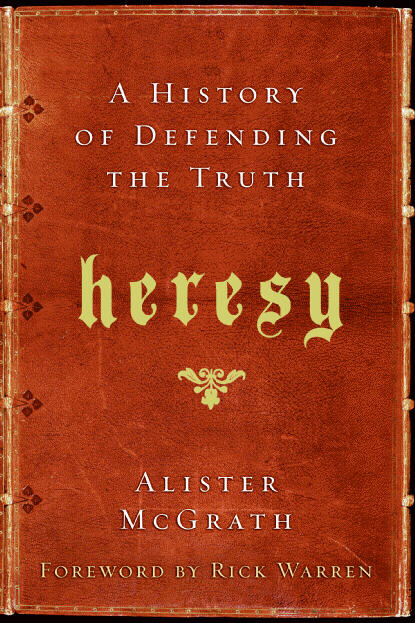
I re-read Alister McGrath’s Heresy: A History of Defending the Truth
If there is a heartbeat of the Christian faith, it lies in the sheer intellectual delight and excitement caused by the person of Jesus of Nazareth. Here is the one whom the church finds to be intellectually luminous, spiritually persuasive, and infinitely satisfying, both communally and individually. (17, cited below)
I found this passage quite powerful. Jesus is the heartbeat of Christianity, and our delight. Without Christ, there is no faith. Without our Lord, there is no salvation. But McGrath goes beyond that: Jesus of Nazareth is an intellectually compelling person, which drives us to seek out formulations to explain who He is; Christ is satisfaction and communal unity.
Have you thought about Jesus in these ways? How has Jesus spurred your intellect? In what ways have you recently delighted in the person of Jesus Christ?
Links
Be sure to check out the page for this site on Facebook and Twitter for discussion of posts, links to other pages of interest, random talk about theology/philosophy/apologetics/movies and more!
Sunday Quote– If you want to read more Sunday Quotes and join the discussion, check them out! (Scroll down for more)
Book Review: “Heresy: A History of Defending the Truth” by Alister McGrath– Check out my review of McGrath’s book.
Source
Alister McGrath, Heresy: A History of Defending the Truth
SDG.
“Edge of Tomorrow” – Sacrifice, Brutality, and Choice
 Live. Die. Repeat.
I had the chance to watch “Edge of Tomorrow” this past weekend and I was surprised by how much I enjoyed the film. It was fantastic. Here, I’ll discuss several themes found in the movie from a worldview perspective. There will be SPOILERS in what follows. I will not summarize the plot, but a summary may be found here.
Choice
Major William Cage (Tom Cruise was brilliantly cast for this role) is presented with a number of choices throughout the film, and it becomes clear that he is not a typical save-the-world type of hero. He is flawed, he has passions, he loses hope. But throughout these aspects of the film, we find the notion of choice. Will Cage has been given an extraordinary opportunity to impact the entire human race. When his blood is mingled with that of an Alpha, his death sets off the “Omega” which resets the day. Over and over again, Cage is faced with a choice: what do I do with this day?
He finds Sergeant Rita Vrataski, who is one of the only people who also realizes what’s happening, though she herself doesn’t remember the days. The question, again, is what do I do with this day? Cage’s character is forced to consider that he has the ability to possibly save all of humanity. In such a situation, what choice does he have? But he does make some choices: he chooses to try to save Rita, to save others. But at other times, he gives in to frustration, allowing members of his squad to die despite being able to prevent it. Cage is not a knight in shining armor, but he confronts us with a human thrown into an impossible situation with the highest possible stakes.
Placing the concept of choice against such a backdrop makes for good drama, but it also begs the question: what are you doing with your day? From a Christian perspective, the choices we make are extremely important–we are called to be witnesses, lights to the world–but do our choices each day reflect that? Do we, like Cage, sometimes allow injustices despite having to put forth just a little extra effort? How do our choices impact our life in Christ? The movie demands that we answer questions like these.
Sacrifice
Cage is also confronted with a kind of self-sacrifice. By admitting he is what he is, he must go through a cycle in which he dies continually, in often brutal ways, in order to try to improve, to save humanity. It is sacrifice, but a sacrifice knowing that he will be back the next day. One must ask, I think, whether that actually diminishes the sacrifice. I don’t think it does. Cage must steel himself each day knowing that death will come again, and again, and again. The only way to prevent it is to save all of humanity by destroying the Omega. Though, in the end, Cage ultimately does give up his life for humanity, only to be brought back by having his blood mingled with that of the Omega. One is left wondering whether he will retain the power or not.
The self-sacrifice of Cage (and Rita) for the sake of humanity is clearly a theme which resonates with the central Christian teaching of Jesus Christ as crucified and resurrected Lord. However, beyond the obvious parallels of giving up life for the sake of all (and subsequent resurrection/awakening), the sacrifice of going in knowing one is to die is something that resonates with the story of Christ. I have sometimes seen a challenge issued theologically to the Christian teaching saying Jesus didn’t really sacrifice himself if he knew he was going to be risen by God. But of course that hardly destroys the notion of self-sacrifice and the real price paid of death. Being risen does not destroy the sacrifice of death.
Brutality
Live. Die. Repeat.
The theme is echoed throughout the film. It may cause one to wonder about the brutality of such a story and its appropriateness, but I think that from a Christian perspective one has to incorporate the rest of the themes found in the movie. The brutality of the cross is itself something from which people shy away, but set against the backdrop of salvation, brutality can become sanctified.
Community/Individual
I have not read the manga that “Edge of Tomorrow” was based on, “All You Need is Kill,” but I have heard that there is some juxtaposition over the primacy of the community vs. individual in either. “Edge of Tomorrow” shows this kind of valuation in many ways throughout the film. First, there is Cage’s continued efforts to save Rita, despite what it might cost–including going on one part of the mission alone in order to prevent her death. Second, there is the concept of both Cage and Rita valuing the community of humanity over the self by willingly spending all the time they have left trying to defend humanity rather than find a way to survive themselves. Finally, both Cage and Rita choose to place the community over the self when rather than trying to save one or the other, they both do what needs to be done and give themselves to save humanity.
For Christians, themes of community and individual are extremely important. It is easy in the Western mindset to become obsessed with the self, but a true community of individuals exists in the body of Christ–each as important as the next. How do we go about living our lives in light of this truth?
Conclusion
There are many other themes to be explored from “Edge of Tomorrow”- what of the Alpha/Omega? What happens to Cage and Rita after the end of the film? Were there any efforts to try to make peace or reach out to the “Mimics”–the aliens that they fight against throughout the movie? These are important themes, and I’d love to get discussion of those started in the comments. For now, it should be clear that the film has many themes to reflect upon and it is well-worth seeing. What did you think of the movie? What other themes have you thought of in relation to it? Let’s get your thoughts in the comments below!
Links
Be sure to check out the page for this site on Facebook and Twitter for discussion of posts, links to other pages of interest, random talk about theology/philosophy/apologetics/movies and more!
All You Need Is Kill/Edge of Tomorrow– “Edge of Tomorrow” is based upon this graphic novel. Check out Anthony Weber’s excellent review and critique of the graphic novel from a Christian perspective. I really recommend you follow his blog as well. It’s in my top five must-read blogs, and it is worth your time to browse at length.
Movies– Read other posts I have written on the movies. Scroll down to see more!
The image is a movie poster for the film and I use it under fair use.
SDG.
——
The preceding post is the property of J.W. Wartick (apart from quotations, which are the property of their respective owners, and works of art as credited; images are often freely available to the public and J.W. Wartick makes no claims of owning rights to the images unless he makes that explicit) and should not be reproduced in part or in whole without the expressed consent of the author. All content on this site is the property of J.W. Wartick and is made available for individual and personal usage. If you cite from these documents, whether for personal or professional purposes, please give appropriate citation with both the name of the author (J.W. Wartick) and a link to the original URL. If you’d like to repost a post, you may do so, provided you show less than half of the original post on your own site and link to the original post for the rest. You must also appropriately cite the post as noted above. This blog is protected by Creative Commons licensing. By viewing any part of this site, you are agreeing to this usage policy.
Book Review: “How God Became Jesus” edited by Michael Bird
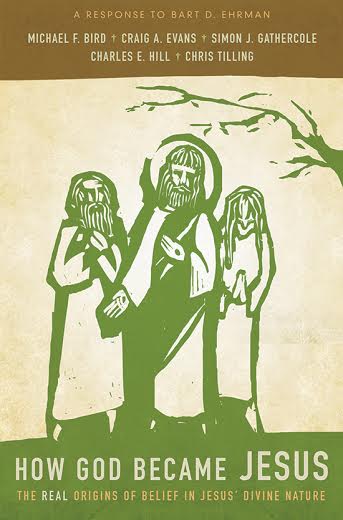 Bart Ehrman has made a name for himself through critical scholarship of Christianity. His latest challenge, a book called How Jesus Became God, contains an argument that the notion that Jesus is God was a later development in the church and not reflective of the earliest teaching. Interestingly, the book was published alongside a response book, How God Became Jesus, in which multiple scholars argue that, far from being a late development, high Christology was the belief of the church.
The book is a series of essays organized around responding to Ehrman’s book essentially point-by-point. Ehrman’s central thesis, that Jesus Christ was exalted from human to deity over the course of theological reflection and some centuries, is directly confronted in a number of ways. First, Michael Bird challenges the thesis by pointing out some major errors in the Ehrman’s use of angels and other exalted beings. Later, a kind of death blow is dealt to the thesis by pointing out that even within the earliest writings there is the alleged full “range” of development of the doctrine of Christ as divine (136ff). Simon gathercole provides interesting philosophical insight into the use of types of change in relation and actuality (114-115).
Other challenges brought against Ehrman include critical analysis of his methodology (Chris Tilling, 117ff), historical insight into the development of orthodoxy (Charles Hill, 151ff), and insight into Christ’s own claims of deity (Bird, 45ff). These present a broad-spectrum approach to analysis of Ehrman’s arguments and demonstrate the difficulty of maintaining his thesis. Readers are exposed to methodological, factual, exegetical, and other errors in Ehrman’s work.
However, the book should not be seen merely as a response to Ehrman. Although it is structured around just such a response, it is a worthy read in its own right because it provides background for exploration of the deity of Christ found throughout Scripture. It also helps readers place these writings in context by showing the cultural surroundings of the discussions over the deity of Christ. Moreover, by analyzing many of Ehrman’s skeptical claims, the authors provide responses to a broader range of objections to the Christian faith. For example, Craig Evans’ essay on the evidences for the burial traditions provides insight into how crucifixion worked in practice and, importantly, how the Biblical narratives line up with these practices.
Various excurses provide documentary evidence for things like 2nd and 3rd century belief in Christ’s deity. These help to break up the book, which can easily be read chapter-by-chapter or as individual essays.
How God Became Jesus is a great read. It provides insight not only for a response to Ehrman’s thesis but also for a number of other issues that come up when talking about the incarnate Lord Jesus Christ. Each essay has much to commend it, and the excurses found throughout provide ways forward to research various other topics. The book is a solid resource for those interested in the deity of Christ.
My thanks to Baker Book House for the book as a gift. Check out their awesome blog to read a number of theological posts a week.
Links
Be sure to check out the page for this site on Facebook and Twitter for discussion of posts, links to other pages of interest, random talk about theology/philosophy/apologetics/movies and more!
Source
How Jesus Became God edited by Michael Bird (Grand Rapids, MI: Zondervan, 2014).
SDG.
——
The preceding post is the property of J.W. Wartick (apart from quotations, which are the property of their respective owners, and works of art as credited; images are often freely available to the public and J.W. Wartick makes no claims of owning rights to the images unless he makes that explicit) and should not be reproduced in part or in whole without the expressed consent of the author. All content on this site is the property of J.W. Wartick and is made available for individual and personal usage. If you cite from these documents, whether for personal or professional purposes, please give appropriate citation with both the name of the author (J.W. Wartick) and a link to the original URL. If you’d like to repost a post, you may do so, provided you show less than half of the original post on your own site and link to the original post for the rest. You must also appropriately cite the post as noted above. This blog is protected by Creative Commons licensing. By viewing any part of this site, you are agreeing to this usage policy.
The Law Always Condemns, The Gospel Always Saves. Or, why I’m a Lutheran.
Comparing Holy Scripture with other writings, we observe that no book is apparently so full of contradictions as the Bible, and that, not only in minor points, but in the principal matter, in the doctrine how we may come to God and be saved… This riddle is solved when we reflect that there are in Scriptures two entirely different doctrines, the doctrine of the Law and the doctrine of the Gospel. C.F.W. Walther, The Proper Distinction Between Law and Gospel
, 6 (cited fully below)
How are Christians to view the relationship between Law and Gospel? The issue has generated countless views and debates. One recent work which illustrates the breadth of views on this topic is Five Views on Law and Gospel
C.F.W. Walther’s work, The Proper Distinction Between Law and Gospel
Law and Gospel
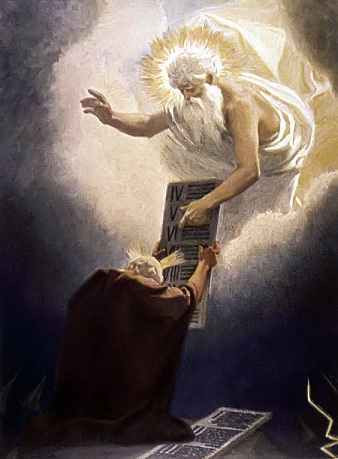
The most central point of all–that is, the point that I hope readers remember if nothing else–is this: The Law always condemns, the Gospel always saves. This point is emphasized throughout Lutheran theology. What does it mean? Simply put: it means that these two doctrines, found throughout Scripture, have entirely distinct meanings and usages. One cannot intermingle law and gospel while remaining true to either doctrine. Wherever the Gospel is presented as if it had requirements attached to it, there the Gospel is not rightly preached. Whenever the Law is preached as if it offered some kind of free gift, it is not rightly preached.
Law only has power to condemn. It cannot save. That is because none can keep God’s Law. All sin, and all fall short of the glory of God (Romans 3:23). The Law shows what God requires of us. It “issues only commands and demands” (Walther, Proper Distinction…, 9).
In contrast, the Gospel only gives offers without requirements attached (ibid). The Gospel shows us God’s promises and offer of grace.
At first face, one examines the whole of the Bible and finds these teachings throughout. The teachings seem so at odds with one another that one might suspect a contradiction throughout the Biblical teaching. However, the fact is that both doctrines are “equally necessary. Without the Law the Gospel is not understood; without the Gospel the Law benefits us nothing” (Ibid, 8). The reason this is so important is because Law and Gospel are not opposites working against each other. Instead, both “have their final aim [human] salvation” (Ibid, 7). They work together to present a full picture of how salvation comes unto men.
The Law, as we have noted, cannot bring salvation because none but God can fulfill it. That is, it gives the requirements for salvation but no one can meet these requirements! We would all be lost if this were the whole of Biblical teaching. Yet there is more to the story, for the Gospel offers only its promises. God has promised to save. He is mighty to save. God has accomplished our salvation. And this salvation does not come with requirements attached. Such is our hope.
Most simply put then, the purpose of the Law is to show our need for the Gospel because we cannot meet the requirements of the Law. The purpose of the Gospel is to show that God has already met these requirements for us in Jesus Christ and to offer us that fulfillment through Christ’s atoning work. So the Gospel, without the Law, would be empty promises. What need have we for Gospel if we are not sinners? Yet without the Gospel, the Law is only a terror which tells us that all are condemned.
 Some Distortions
A number of objections have been raised against this understanding of Law and Gospel. For example: “[The notion t]hat the law must be viewed as a single entity is one of the most common of all objections made against the Christian use of the Law” (Walter Kaiser, Jr., “The Law as God’s Guidance for the Promotion of Holiness,” 188, cited below). Kaiser then argues against viewing the Law as a single entity. He makes distinctions between Civil, Ceremonial, and Moral laws. I agree that we can make these distinctions, but they do not somehow mean it is impossible to refer to the “Law” as a whole entity with all of the commands God has issued.
Another common objection is that of dispensational thought. It is often charged that because we live in a new dispensation, the teachings of the Mosaic Law, for example, no longer apply to us. Without commenting on the plausibility of dispensationalism, I would simply answer that it seems extremely hard to reconcile the notion that the Mosaic Law has no applicability in our own context with Jesus’ words about the Law: “For truly I tell you, until heaven and earth disappear, not the smallest letter, not the least stroke of a pen, will by any means disappear from the Law until everything is accomplished” (Matthew 5:18). Note that this verse also shows Christ using the “Law” as a single, coherent entity.
Yet does this mean that everything recorded in the Mosaic Law has applicability exactly as written? No. A further discussion along this line of thought would take me too far afield, but I think that the Bible does clearly teach there is some discontinuity between the application of Mosaic Law to the Jew and the New Covenant with Christians (for example, the dietary laws do not apply to Christians). This hints back at the divisions Kaiser was keen to make within the Law, and I think the application to the Christian life can be viewed within the categories he discusses.
Conclusion
There is so much more worth saying about Law and Gospel, but in the interest of keeping this post at a readable length, I have had to set some aside. Interested readers should see the annotated sources below.
We have seen that the Law and Gospel must be properly divided in order to properly understand the whole of the Bible’s teaching. Why do I say that this is why I’m a Lutheran? I hope, at least, that other branches of Christianity teach these distinctions between Law and Gospel. But I have to admit that I have not seen it so consistently done as it is within the Lutheran perspective. Martin Luther was right to focus directly upon this teaching, and I believe it is central to the Reformation[s]. It touches upon soteriology, sanctification, the atonement, and more. Thus, I think it is vitally important to get this doctrine correct. In my studies, I have found no teaching so close to the Biblical truth as the Lutheran teaching on Law and Gospel. I’m not saying that everyone should go and become Lutherans. Instead, I think that everyone should benefit from learning the proper distinction between Law and Gospel and apply it to their lives.
The Law always condemns, the Gospel always saves.
Appendix: The Modified Lutheran View?
I think it is important to note that the view put forth as “The Modified Lutheran View” in Five Views on Law and Gospel
Those who have stuck with me this long should be able to immediately see how this is utterly different from the Lutheran view I proposed above. The distinction between law and gospel is not a temporal distinction whatsoever. The Law is still with us. Walther himself makes this explicit: “[W]e find both teachings in the Old as well as in the New Testament” (Proper Distinction… 62). There is no temporal dividing line between Old and New such that some new reality has dawned on Law and Gospel. Instead, the Law continues to condemn, while the Gospel continues to save.
Yet Moo goes so far as to say this is a point which needs to be “corrected” within the Lutheran view (ibid). He seems to think that Lutherans would deny that Jesus was able to speak law, while also mistakenly painting the Sermon on the Mount as being a preaching entirely of the Law. Indeed, Moo’s view seems to affirm many of the basic tenants the Lutheran view explicitly denies, such as mixing the uses of Law and Gospel.
I thus would say that Moo’s position is not at all the Lutheran view. It is not a modified Lutheran view at all. Instead, it seems to violate a number of the primary distortions noted above. That said, Moo does admirably to defend the notion of the Law as a coherent, cohesive whole. There is much to commend Moo’s essay, but it ultimately fails, I think, to provide a properly Lutheran view of Law and Gospel.
Links
Like this page on Facebook: J.W. Wartick – “Always Have a Reason.” I often ask questions for readers and give links related to interests on this site.
Annotated Sources
C.F.W. Walther, The Proper Distinction Between Law and Gospel
For a more succinct summary of what Walther argues in the above, see God’s No and God’s Yes: The Proper Distinction Between Law and Gospel
Five Views on Law and Gospel, ed. Stanley Gundry (Grand Rapids: MI: Zondervan 1999) – I specifically used the following essays: Walter Kaiser, Jr., “The Law as God’s Guidance for the Promotion of Holiness” in Five Views on Law and Gospel, ed. Stanley Gundry, 177-199, (Grand Rapids, MI: Zondervan, 1999); Douglas Moo, “The Law of Christ as the Fulfillment of the Law of Moses” in Five Views on Law and Gospel, ed. Stanley Gundry, 319-376, (Grand Rapids, MI: Zondervan, 1999). I found this book to be very helpful in outlining various views, but was disappointed with the “modified Lutheran view” (see my appendix here).
SDG.
——
The preceding post is the property of J.W. Wartick (apart from citations, which are the property of their respective owners, and works of art as credited) and should not be reproduced in part or in whole without the expressed consent of the author. All content on this site is the property of J.W. Wartick and is made available for individual and personal usage. If you cite from these documents, whether for personal or professional purposes, please give appropriate citation with both the name of the author (J.W. Wartick) and a link to the original URL. If you’d like to repost a post, you may do so, provided you show less than half of the original post on your own site and link to the original post for the rest. You must also appropriately cite the post as noted above. This blog is protected by Creative Commons licensing. By viewing any part of this site, you are agreeing to this usage policy.
Book Review: “Understanding End Times Prophecy” by Paul Benware
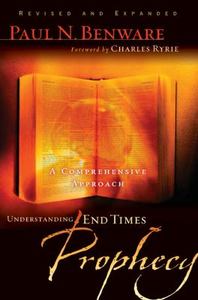 Understanding End Times Prophecy
Wait, What?
Yes, I just used the words dispensational premillenialism together in a sentence as though it made sense. It does. That is one of the many views Benware surveys in the book. Before reading Understanding End Times Prophecy (hereafter UEP), I admit I could not have distinguished a dispensational premillenialist from an amillenialist. Nor could I have identified a pre-wrath view in contrast with a post-wrath view. Benware’s book touches all of these and more, explaining the various positions out there on the various eschatological themes while also providing a thorough critique of those with which he disagrees.
Outline of Contents
Benware starts by outlining some principles for interpreting Biblical prophecy. Primary among these is the notion that prophetic passages must be interpreted literally. Benware explains: “Literal interpretation assumes that… [God] based His revelatory communication on the normal rules of human communication. Literal interpretation understands that in normal communication and in the Scriptures figures of speech are valuable as communication devices…” and it is therefore “not… a rigid ‘letterism’ or ‘mechanical understanding of the language’ that ignores symbols and figures” (23-24).
UEP then outlines a broad understanding of Biblical covenants, noting that the covenant God made with Abraham was unconditional, and so must be fulfilled.Next, Benware turns to a number of passages which outline the Palestinian, Davidic, and New Covenants. These he discusses in the context of promises God makes to Israel which must be fulfilled.
The next major section outlines the major views on the millennium. Benware favors the dispensational premillenial view and so spends some time outlining it.The dispensational view focuses on the covenants found throughout the Bible. It holds that there are different “economies” of God’s working. These dispensations are not time periods, nor are they different ways of salvation. Instead, they are specific truths about how God chooses to work with His people (86ff). This view also holds that God will fulfill promises through Israel as a literal nation in the place that God promised them (88ff).
The premillenial view holds that Christ returns before the millennial kingdom. It holds that the millennium is a literal thousand-year reign of Jesus on earth. Thus, there are two resurrections: first, before the millennial kingdom; second, after the millennial kingdom. Israel factors prominently into this view; Israel will be part of the thousand year reign and will occupy the land that God promised unconditionally to Abraham (94ff). Benware argues against the notion that Israel has become displaced or fulfilled in the church (103-120).
Then Benware turns to the view of amillenialism. Essentially, this view holds that the “millennium” is non-literal and is being fulfilled now during the church age. There is one resurrection, and the judgment comes immediately upon Christ’s return. Thus, the current period is the millennial kingdom (121-137).
Postmillenialism is the subject next discussed in UEP. This view tends to be tied into the notion that we are now living in the kingdom of God and so will usher in a golden age through social justice or action. After this undefined point, Christ will return to judge (139ff). Benware is highly critical of this view, noting that it relies upon the notion that we will continue improving the world (yet the world seems to be falling farther rather than progressing); as well as its rejection of the notion of a literal reign of Israel (150ff).
Finally, Benware evaluates preterism. Essentially, this view holds that the events prophesied in Revelation and elsewhere have either all or mostly been fulfilled already. There is much diversity within this perspective, but largely it is tied in with the notion that the destruction of the temple ushered in the end times (154ff).
The next major area of evaluation in UEP is that of the rapture. Benware analyzes pre-tribulation; post-tribulation; and other rapture views. Pre-tribulation is the view that the rapture will happen before the tribulation period. Post-tribulation is the view that the rapture happens after the tribulation. These directly tie into how one views the coming of Christ and the millennial kingdom (207ff).
Finally, UEP ends with outlines of the seventieth week of the book of Daniel, the Kingdom of God, death and the intermediate state, and the final eternal state. An enormous amount of exposition and discussion is tucked into these final chapters. For example, Benware includes a critique of annihilationism.
I have here only touched on the surface of UEP. Benware is exceedingly thorough and has managed to write an amazing resource on the issues related to End Times Prophecy.
Analysis
As has been noted, UEP is a simply fantastic resource for those who want to look at the various views which are discussed in contemporary evangelicalism. Benware has also provided an extremely detailed exposition of the dispensational premillenialist position. If someone wants to critique that view, UEP will be a book which they must reference. It is that good and that comprehensive.
Furthermore, Benware provides a number of excellent insights through the use of charts. Throughout UEP, there are charts scattered which summarize the content of what Benware argues, show pictorially what various views teach, and more. These charts will become handy for readers to reference later when they want to discuss the issues Benware raises. They also help interested readers learn what various views and positions teach.
Benware rightly shatters false notions that Biblical prophecy is some kind of indiscernible mystery language which humans weren’t meant to think on. His care for making clear what the Bible teaches on a number of issues is noteworthy.
Unfortunately, there are several areas in the book which are cause for caution. Benware’s use of proof texts is sometimes questionable. There is great merit to utilizing a series of related texts after an assertion in order to support one’s argument, but upon looking up several texts that Benware cites to make his points, it seems that he often stretched texts far out of their context or even cited texts which had nothing to do with the argument he made in the context in which he cited them. For just one example, Benware writes “The second phase of his [the Antichrist’s] careerwill take place during the first half of the tribulation… During his rise to power he will make enemies who will assassinate him near the midpoint of the tribulation (cf. Rev. 13:3, 12, 14). But much to the astonishment of the world, he is restored to life and becomes the object of worship (along with Satan)” (300). Note that Benware specifically says that the Antichrist will be assassinated and resurrected. Now, turn to the passages that Benware cites. Revelation 13:3, 12, and 14 state:
3: One of the heads of the beast seemed to have had a fatal wound, but the fatal wound had been healed. The whole world was filled with wonder and followed the beast… 12: It exercised all the authority of the first beast on its behalf, and made the earth and its inhabitants worship the first beast, whose fatal wound had been healed… 14: Because of the signs it was given power to perform on behalf of the first beast, it deceived the inhabitants of the earth. It ordered them to set up an image in honor of the beast who was wounded by the sword and yet lived. (NIV)
Now, where in this section does it say the Antichrist will be assassinated? Where in this section does it talk about the Antichrist dying and being raised to life? Strangely, Benware seems to reject the literal hermeneutic he advocates, and begins to interpret texts in ways that bend them to the breaking point.
The issue of these proof texts opens a broader critique of UEP. Benware constantly insists upon a literal reading of Revelation and other prophetic texts, while also criticizing those who hold other views of using an inconsistent hermeneutic. Yet, as I believe I demonstrated above, Benware often goes well beyond the literal meaning of the texts and comes to conclusions which stretch them past literal readings. In fact, it seems that Benware balances an often literalistic reading of the text with a non-literal reading. Thus, Benware seems to fall victim to the very error he accuses all other positions of falling into.
An overall critique of the position Benware holds would take far too much space and time for this reader to dedicate in this review, but I would note that the conclusions Benware comes to are often the result of the combination of literalistic readings and/or taking texts beyond what they say that I noted above. Some of the worrisome issues include the notion that the sacrificial system will be reinstated (334ff); a view in which the notion that the church seems in no way fulfill the Biblical prophecies about Israel (103ff); hyper-anthropomorphism of spiritual beings (i.e. demons, which are spiritual beings, being physically restricted [130]); and the insistence on literalizing all numbers in the Bible (168), among issues. It’s not that Benware doesn’t argue for these points; instead, it was that it seems his method to get his conclusions was sometimes faulty, and the case not infrequently was overstated.
One minor issue is Benware’s use of citations. It’s not that he fails to cite sources; rather, the difficulty is that he inconsistently tells the reader where the source is from. Very often Benware block quotes another text (with proper end note citation) without letting the reader know who or what he is quoting. Although this may be better for readers only interested in the argument, it can be very frustrating for those interested in knowing where Benware is getting his information to have to flip to the back of the book all the time to trace down sources. The problem is compounded by the fact that sometimes he does tell the reader where the quote is from (for example, he’ll write “so-and-so argues [quote]”) while at other times he just dives directly into the quote. The inconsistent application here may be a minor problem, but it did cause major frustration through my reading of the text.
Conclusion
Understanding End Times Prophecy
Source
Paul Beware Understanding End Times Prophecy
Disclaimer: I was provided a review copy of this book by the publisher My thanks to Moody Books for the opportunity to review the book..
SDG.
——
The preceding post is the property of J.W. Wartick (apart from citations, which are the property of their respective owners, and works of art as credited) and should not be reproduced in part or in whole without the expressed consent of the author. All content on this site is the property of J.W. Wartick and is made available for individual and personal usage. If you cite from these documents, whether for personal or professional purposes, please give appropriate citation with both the name of the author (J.W. Wartick) and a link to the original URL. If you’d like to repost a post, you may do so, provided you show less than half of the original post on your own site and link to the original post for the rest. You must also appropriately cite the post as noted above. This blog is protected by Creative Commons licensing. By viewing any part of this site, you are agreeing to this usage policy.
“Cross Roads” by Wm. Paul Young- An Evangelical’s Perspective
 One of the biggest publishing phenomena of late, The Shack

Free Will
The notion of crossroads is a major theme throughout the work, and Young utilizes the imagery to discuss free will metaphorically. Anthony Spencer (Tony), the main character, finds himself inside his mind, which is portrayed as a kind of land with various roads and places inside it. Initially, he begins exploring this land and finds himself coming to numerous forks in the road. He continues to find these forks and realizes that as he continues to make choices, “it occurred to Tony that the number of direction decisions was diminishing; options were significantly decreasing” (35). Young doesn’t expand on this much, but it seems like a vivid illustration of libertarian free will, wherein one’s choices in the past do indeed influence their choices in the future. As Tony makes choices on his path, he finds that the choices available to him decrease. The reason, it seems, is because his choices have started to form his world. It seems to me that this is a great way to show libertarian free will in literature.
Church
A robust theology of church and salvation is something that I think is necessary for an adequate theology. I find one reason for this illustrated well by Young:
Church, thought Tony. He hadn’t set foot inside one of those since his last foster family had been religious. He and Jake [Tony’s brother] had been required to sit silently for what seemed like hours… He smiled to himself, remembering how he and Jake had schemed together and ‘gone forward’ one night at church, thinking it would win them points with the family, which it did. The attention their conversions garnered was initially rewarding, but it soon became clear that ‘asking Jesus into your heart’ dramatically increased expectations for strict obedience to a host of rules they hadn’t anticipated. He soon became a ‘backslider,’ in a category, he discovered, that was profoundly worse than being pagan in the first place. (124)
It seems clear to me that here the act of conversion has itself become a work, rather than a gift of grace. Tony’s concept of conversion at this point in the book is that of “asking Jesus into your heart.” Unsurprisingly, when he fails to perform other adequate works–obeying a set of rules. The problem with this theology should become clear immediately. By suggesting that Christianity is about “going forward” and publicly affirming a faith, this form of theology puts the believer in the position of affirming faith, rather than receiving it as a gift. When faith becomes a public work, it becomes the Law instead of the Gospel. When demands for works are made on faith, then faith itself becomes a work. Unfortunately, this kind of works-righteousness sneaks into theology at all levels, ever seeking a place to grow.
The problems with this theology are portrayed vividly in this illustration. The notion that people need to make a public declaration of faith leads to its abuse, as Tony and Jake attempted to do, but it also leads to difficulties for those who believe their declaration was itself true (unlike Tony and Jake, who simply did it to glorify themselves in the eyes of their foster parents). When someone makes their “decision for Christ,” their faith life becomes wrapped up in that decision. Their walk with God is contingent upon their continuing to make this decision. Unfortunately, this type of theology makes faith all about one’s own decisions, rather than Christ’s justification and the free gift of faith.
Women
There are many church bodies who do not ordain women to the office of the ministry. That is, they hold beliefs that say women should not be spiritual leaders of men in the church. Young explores this issue when Pastor Skor shows up and challenges Maggie, one of the main characters, regarding her outburst during a church service. Pastor Skor takes Maggie’s outburst and disruptive behavior as a clue to him from God that he has been too lax in his instructing his congregation in the Bible. He makes an argument that women should not be leaders in church and should remain silent:
And we affirm the Word, which declares there is no longer male or female [Galatians 3:28], but… the Word is speaking of how God sees us, not about how we function in the church, and we must always remember that God is a God of order. It is vital that each person play their part, and as long as they stay within the roles that God has mandated, the church functions as it was meant to… (167)
The pastor goes on to quote 1 Corinthians 14:34-35 to support his position. Yet Young, through Clarence, an elder who is with the pastor to talk with Maggie, provides a counter-argument to this reasoning:
It is sarcasm… I believe that the apostle Paul was being sarcastic when he wrote what you read… He is quoting a letter that these folk sent him with questions, and he is in total disagreement with what they have written to him. (168-169)
Clarence defends this position by alluding to 1 Corinthians 14:36, apparently using the KJV: “What? came the word of God out from you? or came it unto you only?” Given the way this verse is worded, Clarence holds that verses 34-35 are a quote from a letter the Corinthians sent to Paul which Paul then responds to sarcastically by wondering whether the Corinthians think that God’s word came only to them.
Young’s offered interpretation seems possible, but perhaps not made explicit enough. It seems to me possible that Paul would have made it more clear that he was quoting another’s writing here. The KJV seems to support the interpretation given to 1 Cor 14:36 here, but other translations phrase it differently, in such a way that the verse seems to be more of a challenge to readers to dismiss what Paul is declaring in 34-35.
Of course, one could still argue that Young’s interpretation has great strength, noting that nowhere in the Bible do we see this command in the Scripture “as the law also says” and so we may infer that Paul is referencing an extra-biblical teaching and rebutting it. In fact, this seems to line up with Young’s argument perfectly because we can see that Paul would be citing a Judaizer’s teaching in the church in Corinth–who would hold that the silence of women is taught by the Law [Jewish extra-biblical law]–and then refuting this by noting that the word of God did not come from them alone (see Katharine Bushnell’s God’s Word to Women
Therefore, it seems to me that Young offers a fairly decent egalitarian interpretation of the passage, though he could have given other arguments which would take into account the passage’s cultural context, in which women were speaking out of turn in worship. The core of the statement seems to me to be that the women in this specific context needed to learn from their husbands at home and remain silent in church so that they did not cause disruption.
The way the scenario plays out in the book is also difficult to evaluate because Maggie definitely was disrupting the church service and would have appeared at least slightly crazy to those around her. She was screaming about a demon speaking to her and was, in fact, mistaken about that. I think she can be forgiven for her extreme reaction given the strange situation in which she found herself, but the Corinthians passage is in context all about order in worship in general, and certainly people bursting in screaming about demons would be disorderly worship.
Thus, it seems to me that Young offers a possible interpretation of 1 Corinthians 14:34-35, but he has made his case problematic by the narrative context in which he placed it. It is worth noting that this work will get people talking about the issue. Young has given a somewhat strong version of a lengthy egalitarian argument in the form of narrative.
Practical Ethics and Disability
Cabby, a boy with Down’s Syndrome, is featured prominently throughout the book. Young uses him as a foil to show that those with disabilities have much to contribute to modern society. Perhaps the most poignant way he does this is through the negative portrayal of Tony’s view of Cabby:
Tony had never known a ‘retarded’ person. He wasn’t sure if that is what you called them… His opinions on most nonbusiness matters may not have been founded on evidence or experience, but he was sure of them. People like Cabby were an unproductive drain on the resources of society; they were valuable only to their families. He believed they were tolerated because of liberal persuasions, not because such people had any intrinsic worth… It is easy to create a category of persons, like retarded or handicapped, and then pass judgment on the group as a whole. He wondered if that was not the heart of all prejudice. (108-109)
In contrast to Tony’s view, Cabby turns out to be insightful and delightful. He is shown to have positive value in a number of ways that go beyond his immediate family. He ultimately shows the practical usefulness of inherent human worth.
God
For Young, understanding God as relationship is central to the concept of deity. The concept of deity that is presented is that of Trinity. Much ink will be spilled, I feel certain, on whether or not Young portrays the persons of the Trinity correctly, just as there was in The Shack (see my own discussion here).
Young’s position seems to be largely unchanged from that in The Shack, and so much of the commentary will follow the same line. I think he does a very good job of exploring the inter-relational character of God and the temporal submission of Christ in the incarnation to God the Father. Some may see the primary difficulty with Young’s portrayal of God is that the Father makes very little appearance in the book, but near the end readers find out that is not the case. In fact, the Father is intricately involved in all aspects of God and the life portrayed in the novel.
Those who conceptualize God as inherently male will have a problem with the book, however. Unfortunately, some paganism has indeed hung on in the church, wherein some view God as a gendered being. In the Bible, however, we find that God is spirit and not a man. Thus, I think that Young’s use of gender with God may shock some but also underscores the fact that God is not a gendered being, and instead transcendent.
Historical Theology
Young offers a short discussion of historical theology and God that seems to me to at least partially miss the mark. It is very brief, but I think it is worth discussing. Young puts the following commentary in the mouth of Jesus himself:
The Greeks, with their love for isolation [of deity] influence Augustine and later Aquinas… and a nonrelational religious Christianity is born. Along come the Reformers, like Luther and Calvin, who do their best to send the Greeks back outside the Holy of Holies, but they are barely in the grave before the Greeks are resuscitated and invited back to teach in their schools of religion. The tenacity of bad ideas is rather remarkable, don’t you think? (73)
There are a number of problems with this small passage. First, Augustine heavily influenced both Calvin and Luther. In fact, Calvin’s theology is tied very intricately to Augustine’s view of free will and original sin. Similarly, Luther’s view of original sin derives directly from Augustine’s exposition in City of God. Second, it seems unfair to view Aquinas as a kind of anti-relationalist when it comes to God’s nature. Aquinas very much emphasized the triunity of God, which was (and is!) an extremely important topic. To thus accuse Aquinas of undermining God’s relational-ness seems unfair. Finally, the notion that the influence of Greek philosophy on Christianity is somehow inherently bad seems a bit shortsighted. There are innumerable positive contributions that reflection on Greek thought has brought into the fold of Christianity. Among these are the very concept of free will that Young pushes in his book, along with a number of aspects of Trinitarian and Incarnational theology that Young seems to support. This may seem to be a nitpick, but it seems to me that if Young is going to use his book to make comments about historical theology, it is vastly important to get that historical development right.
Conclusion
Cross Roads
SDG.
——
The preceding post is the property of J.W. Wartick (apart from citations, which are the property of their respective owners, and works of art as credited) and should not be reproduced in part or in whole without the expressed consent of the author. All content on this site is the property of J.W. Wartick and is made available for individual and personal usage. If you cite from these documents, whether for personal or professional purposes, please give appropriate citation with both the name of the author (J.W. Wartick) and a link to the original URL. If you’d like to repost a post, you may do so, provided you show less than half of the original post on your own site and link to the original post for the rest. You must also appropriately cite the post as noted above. This blog is protected by Creative Commons licensing. By viewing any part of this site, you are agreeing to this usage policy.
Guest Post: Rev. Kent Wartick on “The Virgin Birth”
“Behold, the virgin shall conceive and bear a son,
and they shall call his name Immanuel”
(which means, God with us). Matthew 1:28 ESV.
Familiar words to most Christians, aren’t they? Along with His Death and Resurrection, the virgin birth of Jesus is among the most celebrated and unifying events in all of Christianity. Nativity scenes can be found in front of Roman Catholic, Lutheran, Baptist, Methodist, and all sorts of churches of all denominations. The virgin birth is counted as among the fundamental doctrines of Christianity, and was important enough to be counted as one of the twelve articles of the Apostolic Creed. For centuries, the account that Jesus Christ was born of a virgin woman, Mary of Nazareth, was undisputed, at least as far as any known challenges can be documented.
But, then, along came the Enlightenment. With it came the idea that science and reason were the test of Scripture and all truth, and not the reverse. Therefore, if Scripture says that Jesus was born of a virgin, and that is not logical nor scientifically provable, then it must be rejected. Thus, the Jefferson “Bible” excludes any reference to the virgin birth as well as Jesus’ miracles, Deity, resurrection, etc. As time went on, through the historical critical method and other destructive methods of using reason not to teach but to judge Scripture, the Enlightenment principle of reason and science over Scripture slowly infiltrated the thinking of many churches. Surveys confirm this infiltration.
1998: A poll of 7,441 Protestant clergy in the U.S. showed a wide variation in belief. The following ministers did not believe in the virgin birth:
- American Lutherans- 19%
- American Baptists- 34%
- Episcopalians- 44%
- Presbyterians- 49%
- Methodists- 60%
2007-DEC: The Barna Group sampled 1,005 adults and found that 75% believed that Jesus was born to a virgin. 53% of the unchurched, and 15% of Agnostics and Atheists believe as well. Even among those who describe themselves as mostly liberal on political and social issues, 60% believe in the virgin birth. (Source for surveys.)
It is a great travesty in the Church today that many clergy find themselves looking at their positions only as a job, and will say what they must to preserve their positions. From the source of the polls previously cited comes this quote:
“…one Hampshire vicar was typical: ‘There was nothing special about his birth or his childhood – it was his adult life that was extraordinary….I have a very traditional bishop and this is one of those topics I do not go public on. I need to keep the job I have got.’
Such hypocrisy and blatant deceit is unworthy of anyone, let alone one who claims to proclaim the Word of God and represent Him to the people. yet such is the state of much of the clergy, as indicated by the above polling figures. No wonder the Church is in such disarray, and seems so powerless in the world today!
If Christianity is only a “nice” way of life that is only about love and compassion, then I suppose the virgin birth is not so essential, But if Christianity is an intimate and personal relationship by faith with the Creator of the Universe, then Who that Creator is makes all the difference. And if being born of a virgin is something He says about himself, even once, in His Book, then it might be best if we believe it. After all, wouldn’t you like to know a bit about, say, the pedigree of a dog or horse that you were to buy, or even more so, wouldn’t you like to know all about a future spouse that you profess to love before marriage? (Please forgive the analogy, which is not meant to cheapen God, spouses, dogs, or horses).
The virgin birth of Christ—and I would say, the historical fact that Jesus was conceived by a miracle like unto creation itself—does not travel alone. It ties intimately into other doctrines-the Holy Trinity, the Deity of Christ, the substitutionary atonement, the inspiration, inerrancy, and infallibility of Scripture, and more. “Scripture cannot be broken”, Jesus said in John 10:35. Even so, the most basic teachings of the Christian faith cannot be broken off and accepted like items on a buffet table. They are all one. Accept all of them-or none of them. That is the challenge that the catechumen, the seeker, the growing disciple of Christ is faced with. Finally, you see, the importance of the virgin birth is found, like all things, bound in the Person and Work of Jesus Christ.
As far as the prophecy quoted by Matthew, namely Isaiah 7:14, much ink has been spilled on this by scholars with more degrees than I have. Some modern Bible translations, notably the NRSV, CEB, TEV and others use “young woman” to translate the Hebrew word almah. Others, such as the NASB, ESV, NKJB, TNIV (=NIV 2011), use the more traditional “virgin.” The LXX also translates the word “virgin.” While the matter is not as simple as some might make it, certainly I would think that the Septuagint scholars would have known Hebrew and Greek well enough to have chosen a different word besides the Greek word for “virgin” if “young woman” would have been indicated. They had no agenda to support a virgin birth or not. The same cannot be said of some modern translators. The sainted Dr. William Beck wrote a study on this subject, available at www.wlsessays.net/.
Human reason helps us put all of these things together systematically from Scripture; but human reason cannot accept and believe them itself. That, too, is a special creative work of the Holy Spirit. What a delight to know that God wants everyone to know Him as He reveals Himself in Scripture. It is through the very words of Scripture that God creates faith. Through those Holy Spirit given and empowered words He keeps one in the faith. As I stand in awe that God chose this supernatural way to join our human race, so I stand in awe that He created faith in my heart, and has kept that faith to this day. All glory and praise to Him forever!
Finally, though, the virgin birth is a matter of faith. For the individual, it is a matter of personal faith whether one accepts what Scripture says about the miraculous conception and birth of Jesus or not. But the virgin birth is also a matter of THE Faith; that is to say, it is an article of Christian doctrine that is beyond dispute. To accept it is to accept a fundamental, essential doctrine of all Christianity. To reject it is to put one outside the bounds of the Christian faith. I pray that this Advent and Christmas season you will join with me, and with all the Christian world, in celebrating the supernatural way that God chose to enter our human race to bear our sin and be our savior.
Rev. Kent Wartick is the pastor of Faith Lutheran Church in Kent, Ohio. He has been preaching for over 26 years in the Lutheran Church – Missouri Synod. He’s my dad, and an inspiration for the faithful.

 J.W. Wartick - Reconstructing Faith