Jesus
Really Recommended Posts 5/29/15- Jesus or Muhammad, Kierkegaard, and more!
 Hello folks, it’s another week and that means another round of Really Recommended Posts! Here we have a pretty solid lineup which includes a discussion of whether Muhammad or Jesus was prophesied in the Bible, an accidental flight to North Korea as a sermon illustration, Kierkegaard, the Resurrection, and setting an example for your kids.
A Prophet like Moses: Jesus or Muhammad?– It has often been alleged by Muslim apologists that Deuteronomy 18:18 references a prophecy of Muhammad. How strong is this claim? What about Jesus?
Apologetic Sermon Illustration: Why doctrinal details matter and the case of Kenyan accidental flight to North Korea– Based on a real news story in which a Kenyan made a nightmarish mistake: he flew to Pyongyang, North Korea instead of Pyeongchang, South Korea. In his own words: “…who could tell the difference?” This post is worth reading for the news story alone, but the use of it as an apologetics illustration as well was a great idea. The author used it to discuss religious or doctrinal pluralism.
The Great Dane: Remembering Kierkegaard– A brief snippet on Kierkegaard’s impact and life.
If Jesus did not really rise from the dead (Comic)- Here’s a great illustration of why it is important to realize what relevance the sincere belief of the disciples had regarding evidence for the resurrection.
Why Setting a Good Example for your Kids is Overrated– We need to avoid making our instruction of our children law-oriented and on behavior rather than on the truth of Christianity and the grace of God. Here’s a discussion of how we might do that.
Really Recommended Posts 4/10/15- raising a son, tropical islands, self-harm, and more!
Another round of awesome posts for you, dear readers. Please keep me in your prayers as I have a kidney stone. Sad me. But happy you, because you have some great reading ahead! Self-harm, Easter, raising a son, tropical islands and creationism are all featured topics this week. Let me know your thoughts in the comments here, and be sure to let the authors of the posts know as well.
My Depression and Self Harm vs. Jesus Passion and Sacrifice– Christianity can speak to people in all walks of life and circumstances. Here is a beautiful post that compares the struggles of someone dealing with self-harm to the hope found in the sufferings and death of Christ.
Thoughts on Raising a Son– What is it like to raise a son in our day and world? My wife shares some thoughts on raising a son and the difficulties we face as parents. How can we teach him to not give in to a culture of inequalities?
My Favorite Atheist Easter Memes of 2015– Here, Jason Wisdom shares and analyzes a number of Easter memes atheists put out to “celebrate” this most holy day–the resurrection of God Incarnate. He provides some thoughtful insights into the mindset behind them.
Origins of a Tropical Island – The long road from lava to colonization– Do the formation of islands and their ecology fit into a young earth paradigm? Short answer: no. Check out this post for some reasons why.
The Greatest Risk of All– It is often noted that women were the first evangelists. Does this have any implications for our faith?
Really Recommended Posts 4/3/15- Golden Son, Tyndale, Judaism, and more!

Sketch for the Crucifixion by Thomas Eakins
Today is Good Friday. Let us reflect upon the greatness of God and the power of the Son for our salvation. Amen!
Now, be sure you also dive into this reading material as I have collected it from all corners of the internet for you, dear readers. A broad array of topics is here for your reading pleasure.
Golden Son (Red Rising)– Golden Son is book two of a trilogy by Pierce Brown which is quite interesting. I reviewed the first book myself here. Anthony Weber’s look at the second book provides some solid insights into this YA novel and human nature.
Reject Jesus for Judaism?– A great question and answer about whether it is more reasonable to reject Jesus and embrace Judaism.
“Feminist” is not a Dirty Word– Too often, we see the word “feminist” and react against it with a whole slew of beliefs about what the word must mean before we ask the person who self-identifies as such what it does mean. Here’s a good read to get some insight into the matter.
Tyndale (Comic)- Who was Tyndale and why does he matter? Here’s a neat little comic that answers these and other questions.
Evaluating RC Sproul’s Objection to Presuppositional Apologetics at the Inerrancy Summit– Apologetic method is a debate I try to avoid generally because I think that we need to realize that different approaches will work better for different people and situations. I favor an integrated approach with different methods meshed together. Here’s a look at one objection to the presuppositional method and a response from a presuppositional apologist. What are your thoughts on the matter?
Enter [Science] Fictional Messiah – “Wind and Shadow” and “Daystar” by Kathy Tyers
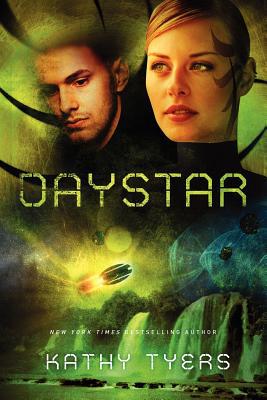 Kathy Tyers’ Firebird series is renowned by many for its explorations of worldview questions in a stirring science fiction setting. I have written on the Firebird Trilogy before. Here, we’ll take a look at the two concluding books in the series- Daystar

Human Nature
Both books have much to say about human nature. In particular, questions about the extent and nature of our free will abound as we as readers are confronted with different concepts of determinism and free choice. Although this theme is never, perhaps, fully developed in philosophical terms, the very activity of the characters makes a kind of argument towards the notion that we have free choice that is genuine, though the question of whether this might be compatibilist–set alongside determinism–or not is left open.
Daystar also raises major questions about the nature of humanity itself–are we purely material beings; or perhaps purely spiritual and trapped within a material body; or are we a unified center of body and soul? The organization known as the Collegium puts forward a kind of mystic view that we are eternal souls which, when we die, go back to the infinite, impersonal divine. There are strong elements of both Gnosticism and Platonism to be found in this teaching, and it is one which resonates with New Age type beliefs and other worldviews today. We need to think on this for ourselves: when it comes to the very concept of what it is to be a human, are we essentially matter, or is there something more? Christians need to think on such issues deeply and consider our own standing in the universe.
The Powers
There is a fantastic meld of science fiction technology and the reality of the spiritual realm found throughout the Firebird series. Wind and Shadow
Not long ago I read an excellent book on spiritual warfare which presented several views on the topic. I think we need to be prepared to dive into such challenging topics and see what the Bible has to say about them.
Messiah
Daystar
Tyers brings forth themes about the Messiah in surprisingly insightful ways. First, she integrates several parables into the text as Tavkel instructs people in the faith. (See a recent Sunday Quote! post for one of the parables from the book.)Some of these parables find parallels in those Jesus taught; others are clearly inventions of Tyers’ mind to try to put forth spiritual truths. All of them are unique and engaging. Second, Tavkel is very explicit about his own nature as divine. I think this was a good move on Tyers’ part because sometimes it can be easy to miss how clear Jesus’ own claims of divinity were. When Christ claimed the authority to arbitrate and expand the Mosaic Law, that would have been astonishing. In Daystar, Tavkel points to himself as a divine figure.
One conversation with Meris, a character who is a foreigner and who holds to rival beliefs, depicts Tavkel explaining the notion of being fully divine and fully human. Tavkel explains it by pointing out that “My father created the human form. He has mastery over it…” Meris objects by arguing that it doesn’t make sense that Tavkel can be “one hundred percent” human and one hundred percent God. She asks “Which [are you]?” Tavkel responds, “Both.” When Meris says “That’s not possible,” Tavkel responds: “Is light a wave or a particle Meris?” (426). Though the analogy is not perfect, it does help us to envision how we might assume to much in our own ability to comprehend reality.
Third, there is also much discussion over how the Boh-Dabar may fulfill some prophecies in unexpected ways and that even some preconceptions of what the Messiah figure should be or what verses are even about him might be mistaken. This finds its parallel in some ways in Jesus, who, being the Messiah, yet did not come as a military leader as many expected. To see the people in Daystar figuring out the implications their Messiah has for their understanding is a unique insight into how the Christian story itself might have played out during its earliest days. Confronted by the reality of a risen Lord, notions of what the Messiah should be had to fit this risen Savior.
Daystar is filled to the brim with interesting conversations and speculations like this, and the best part is that they point beyond themselves to the truth of God’s word.
Conclusion
Daystar
Links
Be sure to check out the page for this site on Facebook and Twitter for discussion of posts, links to other pages of interest, random talk about theology/philosophy/apologetics/movies and more!
Kathy Tyers’ “Firebird Trilogy”- Faith, Humanity, and Conflict in the Far Future– I look at a number of worldview issues in the Trilogy in this post.
Microview: “The Annotated Firebird Trilogy” by Kathy Tyers– I review the trilogy with a brief look at the plot and some positives and negatives in the book.
Popular Books– Check out my looks into other popular books (scroll down for more).
Sunday Quote!- A Science Fiction Parable– What might a parable look like in the future? Well, not too much different from one now. Check out this post on Tyers’ speculative parable in Daystar.
Sources
Kathy Tyers, Wind and Shadow (Colorado Springs, CO: Marcher Lord Press [Now Enclave], 2011).
Kathy Tyers, Daystar
SDG.
——
The preceding post is the property of J.W. Wartick (apart from quotations, which are the property of their respective owners, and works of art as credited; images are often freely available to the public and J.W. Wartick makes no claims of owning rights to the images unless he makes that explicit) and should not be reproduced in part or in whole without the expressed consent of the author. All content on this site is the property of J.W. Wartick and is made available for individual and personal usage. If you cite from these documents, whether for personal or professional purposes, please give appropriate citation with both the name of the author (J.W. Wartick) and a link to the original URL. If you’d like to repost a post, you may do so, provided you show less than half of the original post on your own site and link to the original post for the rest. You must also appropriately cite the post as noted above. This blog is protected by Creative Commons licensing. By viewing any part of this site, you are agreeing to this usage policy.
Sunday Quote!- A Science Fiction Parable
Every Sunday, I will share a quote from something I’ve been reading. The hope is for you, dear reader, to share your thoughts on the quote and related issues and perhaps pick up some reading material along the way!
Science Fiction Parable
Before I dive in here, I want to note that there are SPOILERS for the last book of the fantastic Firebird series by Kathy Tyers in what follows.
Kathy Tyers’ Firebird Trilogy was an amazing piece of science fiction which integrated issues of faith and worldview into a stirring narrative. In Daystar
“Once there was a little girl… She had a little pet that she loved… It was a kind of creature she’d never seen…. It had four stubby legs, a big head, ans sharp little teeth… She opened the bag of pet food the dealer sold them, she put the food into [the pet’s] bowl, and she stroked it while it ate with those sharp little teeth… After a few days, the girl noticed something. Her pet wasn’t getting any bigger. In fact, it looked thin… She found out that [its] species was strictly herbivorous–but the pet dealer had sold them dried meat pellets by mistake…
“It looked like a carnivore. So she asked her parents to buy the right food… And it sniffed the good food, but it wouldn’t eat. It walked away from the bowl and looked up at her with desparately hungry eyes. It had learned to like the wrong food. It refused to eat what would nourish it, because that food seemed strange and mysterious. One day it lay down at her feet, looking up at her with those hungry eyes, and it died.” (430-431, cited below)
The story is powerful and emotionally charged. Like the parables of Jesus, it also hints at much beyond the mere words spoken. For the rest of the book, Meris–the non-believing character Tavkel is telling the parable too–reflects on it and tries to draw out its meaning. The meaning, however, does not become clear until the Boh-Dabar fulfills the same kind of prophecies which Christ fulfilled.
Looking at this specific parable, there are many layers of possible meaning. How might we be eating food that doesn’t nourish us? Could it be a sinful habit, a practice, a temptation we give in to? Have we made ourselves used to bad food so that we don’t recognize that which is good? Do we need to ask God to help bring healing to our own habits of life? But the text could go in other directions as well. Have we seen others in ways that are mistaken? Perhaps we see something about someone else and think we do not want to associate with them. We see “sharp teeth” and think “predator.” We flee from that which is different.
Daystar
Links
Be sure to check out the page for this site on Facebook and Twitter for discussion of posts, links to other pages of interest, random talk about theology/philosophy/apologetics/movies and more!
Enter [Science] Fictional Messiah- Kathy Tyers’ “Wind and Shadow” and “Daystar”– I look into several worldview themes that Tyers raises in these sequels to her Firebird trilogy. What would a Messiah in the future look like?
Sunday Quote– If you want to read more Sunday Quotes and join the discussion, check them out! (Scroll down for more)
Kathy Tyers’ “Firebird Trilogy”- Faith, Humanity, and Conflict in the Far Future– I look at a number of worldview issues brought up in the “Firebird Trilogy.” Be sure also to check out my review of the trilogy on my other site.
Source
Kathy Tyers, Daystar
SDG.
Really Recommended Posts 3/6/15- Graphic Novels, going to church, and more!
 Hello, dear readers! I hope you’ll enjoy the lineup I have for you from the frozen North. I realized the other day I must truly have acclimated because I walked outside in 5 degree (Fahrenheit, AKA -15 Celsius) weather and had to remove my hat because I was warm. Wow. Anyway, some diverse reading for you, which includes posts on a graphic novel reviewed from a Christian perspective, some analysis of Flood Geology, reasons to go to church, an upcoming book I’m super excited for, and how to be a Christian on Facebook.
A Sneak Peek at What’s Inside My New Book– Natasha Crain at “Christian Mom Thoughts” is one of my favorite bloggers. She constantly has great advice for Christian parents and how to integrate apologetics into young lives. This is something extremely valuable. She’s also writing a book! I cannot wait for it. Check out this sneak peek at the book and be sure to follow her site.
Review: Boxers and Saints by Gene Luen Yang– I love graphic novels but it is hard to find those which I’m willing to invest time into. After reading this review and commentary on worldview, I think I may have to pick these two up from Gene Luen Yang.
To Church (COMIC)- Why even bother going to church? Here’s a pretty interesting look at some reasons why it is a good thing for Christians to go!To Church (COMIC)- Why even bother going to church? Here’s a pretty interesting look at some reasons why it is a good thing for Christians to go!
Jesus Christ and Mr. Spock– Was Jesus a myth, like Spock? Some mythicists have been running with this absurdity since the death of Leonard Nimoy. Check out this post which acts as a piece of tribute to Spock while also refuting the ludicrous claims of Jesus mythers.
How to be a Christian Presence on Facebook– Some good advice on interacting on Facebook.
Forams and Diatoms: Testing Young Earth Flood Geology Hypotheses– Does Flood Geology–the Young Earth Creationist’s scientific answer to most questions–succeed when tested? Check out this post for just one test it fails.
Really Recommended Posts 1/16/15- Abortion, Jesus, Science Fiction, and More!
I am really proud of this lineup today, folks. I feel like it’s gotta be one of the broadest ranges of topics I’ve had in a while and they are all very interesting reads, at least in my opinion! Several of them are not just about what the title implies, but about something interesting related to that topic (like the one on pro-life being not just about the pro-life position but about how it might relate to evangelism). I’m pumped to share these posts. Let me know what you think in the comments here, and be sure to let the authors know you enjoyed their posts as well!
How Pro-Life Apologetics Helps Strengthen Your Evangelism– The case for the pro-life position is, in my opinion, absolutely philosophically and scientifically insurmountable. Here, Wintery Knight shares some thoughts on how learning the ins-and-outs of pro-life apologetics can also help evangelism.
Ehrmann Errors on Jesus’ Authority to Forgive– Noted skeptic Bart Ehrmann has argued that the notion that Jesus is divine was a later development in Christianity. What might the Bible itself–the earliest documents we have on the topic–reveal?
Observations About Commenting on Young Earth Creationist Facebook Pages– Let’s clear the water: commenting on Facebook pages is almost always going to get into some random fight about something… probably something completely unrelated to the original comment. The greater the importance of the topic, the more off the rail it often gets. That happens everywhere. However, here, the “Geochristian” shares some insights specific to discussing young earth creationism.
In the Image of Man they Created God; Male They Created Him– God is not male. God is Spirit. It is not inappropriate to use biblical pronouns for God like “He”; however, the danger is that we begin to think of God as a kind of Grandpa in the sky. Here’s some insight into the problems with assigning gender to God.
Scientific Mythologies: How Science and Science Fiction Forge New Religious Beliefs– Here, Anthony Weber shares a brief book review along with some insights related to this wonderful work by James Herrick. I do highly recommend the book to my readers. I shared a Sunday Quote about it some time ago.
Microview: “Understanding Spiritual Warfare: Four Views” edited by James Beilby and Paul Rhodes Eddy
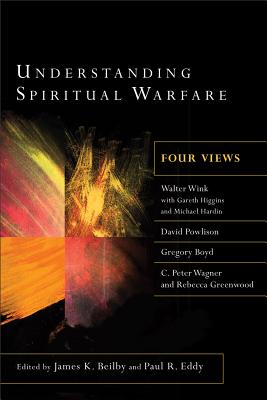 Understanding Spiritual Warfare: Four Views
The work starts with an introduction that does a great job introducing questions of primary importance in discussions of spiritual warfare. Walter Wink’s (alongside Gareth Higgins and Michael Hardin) view is presented first and might best be summarized as: Satan is equal to (and reducible to) human institutions of evil and suffering; he is neither personal nor is he the enemy of God but rather God’s servant–showing people their evil. We fight Satan by fighting institutionalized evil.
David Powlison’s “Classical” view is that spiritual warfare is essentially living like Christ and fighting temptation and sin. Satan is a real person and tempts us. Evils are combated through prayer and a call to repentance. Gregory Boyd’s “Ground-Level Deliverance model” argues for both a Christlike life but also for active warfare against demonic powers and Satan (who are personal and ontologically extant) on an individual level. C. Peter Wagner and Rebecca Greenwood’s “Strategic Level Deliverance model” is committed to finding and rooting out demonic activity in local and even national levels, including making “spiritual maps” to find where areas of demonic activity might be found and trying to identify the specific demons behind various activity.
From the above, it may seem like these views are radically diverse. You’d be correct to think so. James Beilby and Paul Rhodes Eddy did a fantastic job putting together this volume with such diverse views. Questions of orthodoxy at times arise (particularly in regard to Wink’s perspective), but this makes it clear how much divergence there is related to this specific issue. The responses to the different views are each insightful and provide more material of interest to pursue.
It’s rare that I’ve had a book be this interesting and engaging throughout. I highly recommend this volume for anyone with even a remote interest in the topic of spiritual warfare.
The Good
+Excellent diversity of views never feels like you’re reading rehashed material
+Clearly defines several key terms
+Superb introductory material prepares readers to understand some key questions on issue
+Author responses insightful and given just enough space to make serious points
+Cool cover
+Excellent indices
The Bad
-Could have given even more space to responses
-Not enough interaction on exegetical questions
-No rejoinders for authors to responses
Links
Be sure to check out the page for this site on Facebook and Twitter for discussion of posts, links to other pages of interest, random talk about theology/philosophy/apologetics/movies and more!
Book Reviews– There are plenty more book reviews to read! Read like crazy! (Scroll down for more, and click at bottom for even more!)
Source
James Beilby and Paul Rhodes Eddy, eds., Understanding Spiritual Warfare: Four Views
Really Recommended Posts 12/12/14- Marriage, the Cross, Racism, and more!
Another week, another set of posts for you, dear readers! I think you’ll find the post on marriage to be particularly thought-provoking. Pastor Matt’s discussion of re-thinking everything is advice we should all take. Some reflections on Martin Luther King Jr.’s peaceful resistance are well-taken in this time. A video on a conversion experience will be found deeply interesting. Finally, we wrap up with an apologetics comic! Let me know your thoughts here, and be sure to let the others know what you think as well!
The Continuance of Marriage- Luke 20:27-40– The notion that there is no marriage in the New Creation is drawn from this passage. Here, Tony Arsenal analyzes the passage to see if this is indeed what it teaches.
The Benefit of Re-Thinking Everything– What does it mean to re-think things? Can it be a helpful endeavor? Check out Pastor Matt’s thoughts on the topic.
thoughts on waiting– Here, Elizabeth Wartick shares some thoughts on Martin Luther King, Jr.’s peaceful resistance to racism. They are timely and thought-provoking.
Why I am a Christian (David Wood)– [ADULTS only]- This video is a sometimes-disturbing look into David Wood’s thoughts and life as an atheist and how Christ called him to Himself.
The Cross is a Crutch Indeed– [COMIC]- What does it mean to say that religion is a crutch? This comic offers some thoughts and reflection upon the notion.
Sunday Quote!- The Gospels and Contemporary Biography
 Every Sunday, I will share a quote from something I’ve been reading. The hope is for you, dear reader, to share your thoughts on the quote and related issues and perhaps pick up some reading material along the way!
The Gospels and Contemporary Biography
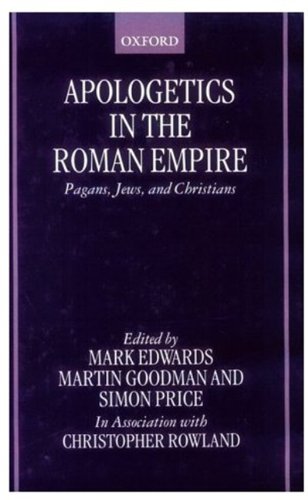
The question of the genre of the Gospels and whether they are to be considered to have historical content is clearly one which is central for Christians. One way we can explore this question is by looking at writings which are contemporary with the Gospels. Simon Swain, in his essay “Defending Hellenism,” which itself shows how various first century Pagans used apologetics against Christians, provides some interesting insight into this issue:
Philostratus has… a biographical aim. In the Roman imperial period, biographical records came to function as vehicles of belief systems, pagan and Christian. (180, cited below)
Swain is specifically discussing a work by Philostratus, In Honour of Apollonius. He notes that the aim of this work is to provide not so much a modern understanding of biography, but a “way of life of that individual…” The genre of Bioi, first century biographies, were both filled with historical teachings but also served a[n]–apologetic–purpose. This is not to say that the documents themselves are false or that anything contained therein is a fabrication. Instead, it is to acknowledge certain aspects of writing in the ancient world which differ from our own understanding of how biographies should work. For the study of the Gospels, then, it provides a way to avoid limiting them to wooden reports of what happened and allow us to see the theological thrust of the writers.
Links
Be sure to check out the page for this site on Facebook and Twitter for discussion of posts, links to other pages of interest, random talk about theology/philosophy/apologetics/movies and more!
Sunday Quote– If you want to read more Sunday Quotes and join the discussion, check them out! (Scroll down for more)
Source
Simon Swain, “Defending Hellenism: Philostratus In Honour of Apollonius” in Mark Edwards, Martin Goodman, and Simon Price, eds., Apologetics in the Roman Empire
SDG.
——
The preceding post is the property of J.W. Wartick (apart from quotations, which are the property of their respective owners, and works of art as credited; images are often freely available to the public and J.W. Wartick makes no claims of owning rights to the images unless he makes that explicit) and should not be reproduced in part or in whole without the expressed consent of the author. All content on this site is the property of J.W. Wartick and is made available for individual and personal usage. If you cite from these documents, whether for personal or professional purposes, please give appropriate citation with both the name of the author (J.W. Wartick) and a link to the original URL. If you’d like to repost a post, you may do so, provided you show less than half of the original post on your own site and link to the original post for the rest. You must also appropriately cite the post as noted above. This blog is protected by Creative Commons licensing. By viewing any part of this site, you are agreeing to this usage policy.

 J.W. Wartick - Reconstructing Faith