Judges
Joshua and Judges as contrasting accounts- Archaeological evidence and apologetic import
Joshua and the Conquest Narratives- Archaeology says otherwise
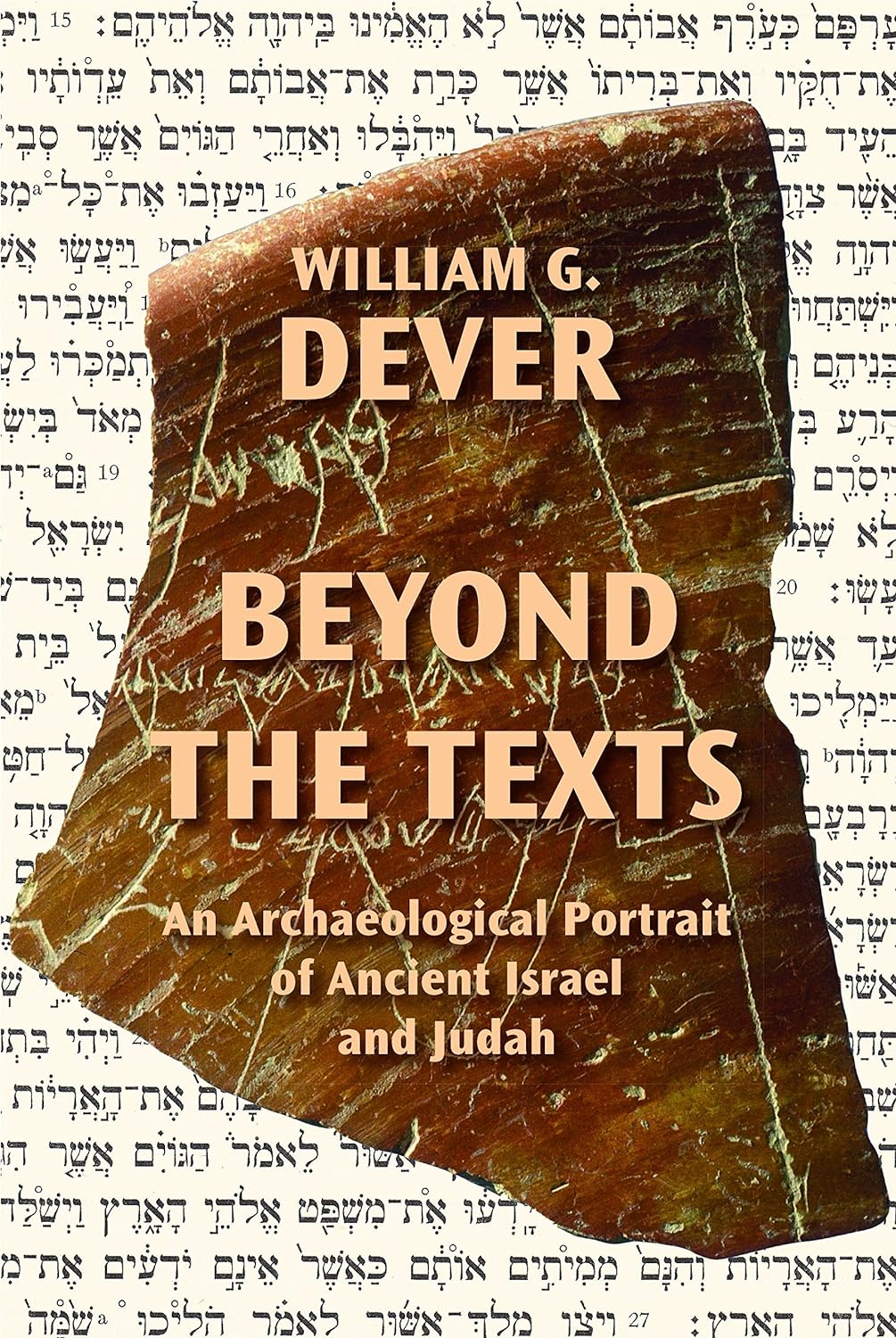
Dever’s work, Beyond the Texts: An Archaeological Portrait of Ancient Israel and Judah is hyper-focused on the archaeological evidence related to Ancient Israel and Judah. There’s a lengthy section at the beginning about the differences between looking at archaeological evidence and its (largely) “given” nature (eg. a soup bowl is a soup bowl-that’s its use, and arguing otherwise doesn’t change it) as opposed to texts like the Bible or other writings which have interpretation, memory, hyperbole, fictionalization, etc. built in.
The book is full of major insights, and Dever continues to rely almost exclusively upon archaeological evidence to make his points. Eventually, he gets to the conquest narratives of Joshua-Judges. Of the 30+ sites mentioned as being conquered in those books of the Bible, only 3-4 have any signs of destruction in the right time period. Writes Dever:
“[I]n the light of the overwhelming archaeological evidence, there was no large scale warfare on the thirteenth- and twelfth-century horizon, except that initiated by the Philistines along the coast… The inevitable conclusion is that the book of Joshua is nearly all fictitious, of little or no value to the historian. It is largely a legend celebrating the supposed exploits of a local folk hero.” (186)
I kind of knew this already–a major impact point for myself as someone who literally got a degree in apologetics was looking at the evidence in ANE history and trying to reconcile that with the Bible. And broadly speaking, evangelicalism has a severe problem when it comes to the archaeological evidence here.
Dever, however, doesn’t simply unload on the Joshua account and move on. He shows the marked contrast between how Judges shows the inhabitation of the land and how Joshua does so, noting the difference in themes between the two books. Dever concludes regarding the two books:
“The conclusion in light of archaeology is inevitable. The book of Joshua looks like a late, Deuteronomistic construct preoccupied with theological concerns, such as the Sinai covenant, centralization, and the temple, that were paramount particularly in the exilic and postexilic era. Its authors were scarcely familiar or concerned with life in the early Iron Age settlements. The book of Judges, by contrast, has the ring of truth about it. The core of the narrative consists of stories about everyday life in the formative, prestate era, when ‘there was no king in Israel [and] all the people did what was right in their own eyes’ (Judges 21:25). The portrait of as much as two hundred years of struggles under charismatic leaders with other peoples of the land–of a long drawn-out process of socioeconomic, political, and cultural change–is more realistic than that of the book of Joshua, which is really the celebration of a legendary hero” (187-188).
These conclusions are supported broadly by Dever’s own look at the way people of that time period were living, with fascinating insights into the lack of states and lack of even defensive positions throughout the region at the time (see 133ff). Additionally, the conclusions are supported by Dever’s noting of the contrast between how Joshua does not accurately represent that region at the time while Judges even has details of how the people lived at the time portrayed in accurate ways (188). A careful reading of the two books reveals these contrasts, to go along with the list complied by Dever which includes things like Israel being a huge territory immediately conquered in Joshua compared to a small, decentralized entity in Judges. Again, the latter, a group of settlements with little to unify them and no central state, reflects the time period and the archaeological data far more than the concept of a vastly populated land ripe for dramatic, swift conquest. This is all buttressed even more by the fact that many of the sites mentioned in Joshua have been excavated and shown to either be unoccupied or unconquered with no layers of destruction in the time period it supposedly would have taken place.
These aspects present a series of problems for the conservative apologist as one who wants a unified, inerrant text with total historical accuracy. We’ll look at one attempt to do just that below, but for now I want to note the import of moving beyond such a view. Dever’s point of Joshua being theologically oriented to questions of the time in which it was written is vastly important. To say that Joshua doesn’t present an accurate view of what actually happened in the land does nothing to undermine its intent. It is not intended to be historically accurate as an account of Iron Age settlement in the region. Instead, it is focused upon questions of the land, the temple, and the strict monotheism, sprinkled with a heaping helping of hero worship of Joshua and classic Ancient Near Eastern hyperbole. It is only when the book is forced into modern boxes that it becomes problematic. The genocidal violence it portrays did not happen, and therefore does not present a problem for God’s character. While some may press that even this portrayal calls into question the character of God, I’m much less interested in that argument, because once we acknowledge that it is a work of humans attempting to understand God, it becomes, for me, much more understandable that sometimes they get it wrong.
A Contrasting, Evangelical View and Some Problems
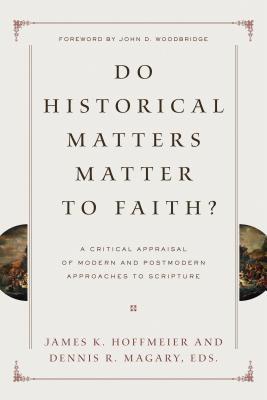
Evangelical apologists, a group which once would have included me, have had a confrontation with this evidence in sight for a long time. In Do Historical Matters Matter to Faith?, a group of evangelical authors published with a conservative press (Crossway, 2012) a collection of essays attempting to confront some of the “modern and postmodern” challenges to Scripture. John M. Monson’s chapter is entitled “Enter Joshua: The ‘Mother of Current Debates’ in Biblical Archaeology.” Monson notes that apart from the most conservative scholars, the Joshua conquest account has been taken to be historically unreliable (431).
Monson confronts this presumed unreliability by calling into question a few things related to consensus views of archaeology. First, he plants the seeds of doubt by complaining that archaeology has been “given a privileged role of proving or–through assumed lack of evidence–disproving the biblical record” (431). Note the wording of this first contention. The use of the word “assumed” here carries a lot of weight in the sentence. Monson is implying that people are simply assuming the biblical text is mistaken on the conquest (and other) accounts. But that implies that there simply hasn’t been anything found, and so people are assuming with “lack of evidence” that there is no evidence. That is not the case, however, as Dever and others have demonstrated. Dever’s book outlines a list of 35+ sites mentioned in the Biblical conquest accounts. Of those sites, only 3-4 have any evidence of even possibly being threatened by Israelite incursions, and the majority of those which have been excavated do not show a layer of destruction in the right timeline for the conquest narratives. Thus, it is hardly fair to say people are assuming the biblical account is unreliable based on a “lack of evidence.” Instead, there is positive evidence to suggest that the Joshua conquest accounts are indeed inventions.
Monson, however, goes on in his defense. He argues that archaeology is a younger discipline and that combining its findings with other disciplines remains “fraught with challenges” (435, 439), he suggests that archaeology is simply assumed to be the discipline to confirm ancient writings but implies that such a use is perhaps mistaken (438-439), and he maintains that archaeology, due to its “scattered, random, and incomplete nature” struggles to find the right place alongside the Bible’s account which “is selective, ancient, and theologically oriented” (439). Many of these points are points that resonate with me, particularly the latter. Archaeology, like paleontology, relies quite a bit on luck. Now, both disciplines can rely increasingly on technology to help guide their finds, so “random” isn’t necessarily correct, but there is no corrective for discovering things which simply no longer exist. Like ancient creatures whose entire fossil record may have been destroyed by vulcanism, excavation, construction, or simply lack of preservation, with archaeology there are any number of figments of the past which no longer exist for any number of reasons. To rely too heavily upon archaeology for the construction of the ancient past seems to be the wrong approach. However, Monson’s own words about the Bible being “selective, ancient, and theologically oriented” should suggest to him and other apologetically oriented and/or evangelical readers that perhaps it is their own view of Scripture which is at fault here. If they are going in assuming that a text written with a theological (or other) purpose is supposed to yield faultless history, then perhaps that assumption itself is worth questioning as well. Indeed, why not simply acknowledge that Joshua is attempting to make theological and selective points rather than convey a 100% accurate historical picture of what happened in Israel?
Monson, for himself, goes on to make an argument that Joshua records geographically accurate accounts of coming into the land. When I originally read the book about 10 years ago, I found this utterly convincing. However, reflection now suggests that Monson’s argument is too neat. For one, while it is elegant in attempting to show that Israel’s conquest as recorded in Joshua would make sense along geographic lines, that doesn’t account for the fact that whatever ancient writers/editors of the book would also be well-familiar with the geography of the region and so would be unlikely to invent or embellish an account which did not correspond to the geography of the area. Second, Monson claims that his argument from geography shifts the burden of proof such that it “lies with those who would deconstruct these stories” (452). That may be, but having two alleged campaigns correspond geographically with the reason does not somehow undermine or disprove the archaeological evidence directly showing that multiple sites allegedly conquered during this time period either show no signs of occupation or no signs of conquest. This, notwithstanding Monson’s claims that some of these sites were uninhabited and so wouldn’t have had such signs (I believe I’m understanding his argument correctly on p. 436-438).
Monson’s argument appears to be revisionist and reactionary. While he provides one positive evidence in support of his claim, his entire argument for these two supposed campaigns relies not upon the actual evidence of destroyed sites but rather on the lay of the land. Fascinatingly, Monson is forced into analogical language even in this geographic argument, such as spending extensive time arguing that the Hebrew word for “gate” can refer to geographical features (448-449). That may well be the case, but it is hard to credit Monson for making an argument that supposedly buttresses the Joshua conquest narratives against archaeological evidence when he is to be found arguing not just that “gate” means a geographical feature, but also that Ai, the region being considered, can be referred to as “The Ruin” due to another lengthy argument relying upon the definite article being used with “ruins” (443-444) and that Ai, apparently problematic for a number of archaeological regions, could have, “For all we know,” been “nothing more than a small squatter’s settlement in the vicinity of the imposing ruins of the mighty Early Bronze Age City of the third millennium BC” (437-438). Well sure, but for all we know, that “squatter’s settlement” would then not make a lot of sense as the sight for two massive military campaigns that crisscrossed a whole region!
Finally, the real motivation between Monson becomes clear at the very end of his chapter. After pointing out the text of Joshua shows him remaining faithful to God, Monson writes: “Over a millennium later, another Joshua walked through this same region. He too remained faithful. If we dismiss the real Joshua ben-Nun and his times, what is to stop us from dismissing the later Joshua, Jesus of Nazareth?” (457). This remarkable final sentence of Monson’s chapter is a case study in a loaded question. First, it implies that only by agreeing with the conquest narratives in toto can one agree there was a “real Joshua ben-Nun.” Second, it implies that there is an evidential link between Jesus and Joshua’s conquest narratives. That may be true, but it is unargued for here. Third, it uses scare tactics. Only those who agree with a slippery slope type argument will acquiesce to it, but for those people–presumably inerrantists–it’s a powerful way to thwart disagreement. After all, if the Bible isn’t historically accurate on Joshua, then that somehow means we have to question Jesus! This, of course, is ridiculous, but it’s exactly what Monson is implying. And frankly, this scare tactic shows where Monson is coming from in the earlier parts of his chapter. There’s not a genuine engagement with the evidence happening. Rather, the evidence needs to be massaged, evaded, or simply denied in order to maintain the story of Joshua at all costs; because for Monson, Jesus and the literal, genocidal conquest of Canaan stand or fall together.
Conclusion
It is probably clear to the reader at this point that I think Dever’s account is much more convincing than Monson’s. Yet, I say this as one who remains a Christian. Reading Dever actually gave me a sigh of relief. For so long, I had a bunch of issues with these accounts. Initially it was the ethical problem–why would God destroy these peoples? Later, I had the archaeological problem–now that I’d sacrificed my ethical impulse to condemn the slaughter, what if it hadn’t actually happened? To have someone who studies the archaeology simply lay out the evidence and say “This did not happen, and it was likely a fictitious invention to celebrate a folk hero” is, in a way, a relief. For one, his following that up with arguing that Judges is likely a much more accurate account makes me convinced yet again of something I’ve thought for a while–that once one leaves aside inerrancy, the biblical text becomes not just more readable but less scary in some ways–it doesn’t require you as a reader to constantly defend the indefensible. For another, setting aside the conquest narratives means that it is what I had long leaned towards–that these parts of the Bible are really just people trying to hyperbolically make “their guy” sound better than “the other guy”–seems backed by archaeological evidence. And Christians, we should truly be concerned with truth rather than attempting to support a pet doctrine, inerrancy, that doesn’t work on its own terms anyway.
All Links to Amazon are Affiliates links
Links
Be sure to check out the page for this site on Facebook and Twitter for discussion of posts, links to other pages of interest, random talk about theology/philosophy/apologetics/movies and more!
Reconstructing Faith– Links for posts related to my own faith journey and how I have been reconstructing faith (scroll down for more).
Inerrancy With No Autographic Text?– Even those looking to defend inerrancy are having difficulty with the concept of the autographic text. But what if it is not just that we can never find such a text, but rather that no such text existed to begin with? I argue that such is the case at least for some works and that inerrancy therefore does not work.
SDG.
——
The preceding post is the property of J.W. Wartick (apart from quotations, which are the property of their respective owners, and works of art as credited; images are often freely available to the public and J.W. Wartick makes no claims of owning rights to the images unless he makes that explicit) and should not be reproduced in part or in whole without the expressed consent of the author. All content on this site is the property of J.W. Wartick and is made available for individual and personal usage. If you cite from these documents, whether for personal or professional purposes, please give appropriate citation with both the name of the author (J.W. Wartick) and a link to the original URL. If you’d like to repost a post, you may do so, provided you show less than half of the original post on your own site and link to the original post for the rest. You must also appropriately cite the post as noted above. This blog is protected by Creative Commons licensing. By viewing any part of this site, you are agreeing to this usage policy.
Book Review: “Reformation Commentary on Scripture, Old Testament, Volume IV: Joshua, Judges, Ruth” edited by N. Scott Amos
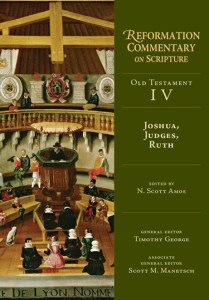 The Reformation Commentary on Scripture series focuses on sharing insights from Reformation theologians on the Bible. Here, we’ll take a brief look at the commentary on Joshua, Judges, and Ruth.
Joshua, Judges, and Ruth have an enormous number of issues that need to be addressed for any reader no matter when they lived. The introduction to this volume shows that several of the topics Reformation-era theologians were interested carry into today- the place of women, creation and providence, sacraments, and more. Reformation theologians also were more focused on some of these than modern theologians are, giving insight in ways that are often unexpected.
The book of Joshua has many theological issues that continue to be debated to this day. The promise of the land to the people of Israel is seen by some of these Reformers as a conditional promise (eg. the English Annotations which note that the promise is given “if they would wholly follow the Lord their God….” (7)). The Reformers often provided highly figurative interpretations of passages throughout the Bible. John Mayer’s linking of Joshua to Jesus sees the crossing of the Jordan as a kind of baptism (20-21). Rahab was particularly controversial among the Reformers–should she have deceive to assist the Israelites? Is she an acceptable role model? Was she a woman of faith? Theologians from Philipp Melanchthon (Lutheran) to Cardinal Cajetan (a counter-Reformer) weigh in on these topics. And again, this is one of the great strengths of this series and of each commentary in it. Readers will get numerous opinions from a range of theological perspectives, giving insight into the debates of the Reformation and the range of theological visions presented during that period.
Judges presents its own series of difficult questions. Jephthah’s apparent sacrifice of his daughter is approached from many directions, whether chastising him for making a foolish vow (Calvin) or noting that Rabbinic interpretation differs from most Christian interpretation of the passage (Johannes Brenz, 363). Other theologians try to make what Jephtah vowed non-literal (eg. Konrad Pellikan, 363-364). Once again this passage remains debated to this day and the multiplicity of voices from the Reformation can help guide that interpretation. Deborah is another hotly debated topic, as Reformers note her leadership or try to avoid the implications of the same.
Ruth’s primary division of opinion–though there are many–is around Naomi’s plan for Boaz. Did Naomi plan for Ruth to seduce Boaz, or was something else going on? Most of the Reformers either play with euphemism here or are either unaware of or ignore the potential implications of Ruth 3. This section of the commentary is especially interesting, as the Reformers try to reconcile the passage with their expectations of the biblical text.
The commentary has moments like this throughout the text, set alongside passages that clearly draw out the theological positions of individual Reformers. It, like the other works in this series, is an excellent read. It will lead you to delving back into the Scriptures yourself as you read the Bible alongside some of the major (and minor!) theologians of the Reformation Period. Reformation Commentary on Scripture: Joshua, Judges, Ruth is a must-read for anyone interested in this field.
Disclaimer: I was provided with a copy of the book for review by the publisher. I was not required to give any specific kind of feedback whatsoever.
Links
Be sure to check out the page for this site on Facebook and Twitter for discussion of posts, links to other pages of interest, random talk about theology/philosophy/apologetics/movies and more!
Book Reviews– There are plenty more book reviews to read! Read like crazy! (Scroll down for more, and click at bottom for even more!)
SDG.
——
The preceding post is the property of J.W. Wartick (apart from quotations, which are the property of their respective owners, and works of art as credited; images are often freely available to the public and J.W. Wartick makes no claims of owning rights to the images unless he makes that explicit) and should not be reproduced in part or in whole without the expressed consent of the author. All content on this site is the property of J.W. Wartick and is made available for individual and personal usage. If you cite from these documents, whether for personal or professional purposes, please give appropriate citation with both the name of the author (J.W. Wartick) and a link to the original URL. If you’d like to repost a post, you may do so, provided you show less than half of the original post on your own site and link to the original post for the rest. You must also appropriately cite the post as noted above. This blog is protected by Creative Commons licensing. By viewing any part of this site, you are agreeing to this usage policy.
Sunday Quote!- Samson’s Torment
Every Sunday, I will share a quote from something I’ve been reading. The hope is for you, dear reader, to share your thoughts on the quote and related issues and perhaps pick up some reading material along the way!
Samson’s Torment
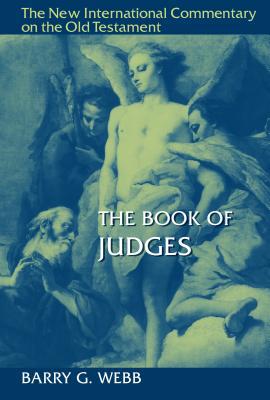
Reading commentaries can be an extremely edifying and valuable experience. I have very slowly been working through the book of Judges alongside Barry G. Webb’s commentary from the New International Commentary on the Old Testament series–an excellent series indeed–and came upon a gem regarding Samson. The passage in question is Judges 16:1-3, in which the people of Gaza attempt to trap him when he comes and sleeps with a prostitute (an interesting path to pursue at a later point) and he instead escapes in the middle of the night by tearing their gate out of the ground and carrying it to Hebron. Webb comments:
[The gate] would have been a formidable barrier… But Samson has spent all his life breaching barriers: between the permissible and the forbidden, holy and profane, man and animal, Israelite and Philistine, Naziriteship and normality. Barriers have never been able to contain him. They appear to him only as challenges which rouse him to a renewed frenzy of breaking through. So it is here again. His “grasping,” “pulling,” “putting,” and “taking” (v. 3) transgress the boundary between the human and superhuman. No normal person could do what he did. But Samson is not normal; that is his glory and his torment. (395, cited below)
Webb’s comments continue as he shows that this act of carrying the gates and placing them before Hebron demonstrate the lack of possible peace between Philistine and Israelite in Samson’s time, among other things. Webb’s comments on Samson are well worth taking the time to read, as is the rest of the commentary on Judges.
Links
Be sure to check out the page for this site on Facebook and Twitter for discussion of posts, links to other pages of interest, random talk about theology/philosophy/apologetics/movies and more!
Sunday Quote– If you want to read more Sunday Quotes and join the discussion, check them out! (Scroll down for more)
Source
Barry Webb, The Book of Judges (Grand Rapids, MI: Wm B. Eerdmans, 2012).
SDG.
Microview: “The Dominant Culture: Living in the Promised Land” by Martin Murphy
 Martin Murphy’s The Dominant Culture
Murphy’s book brings much of the book to life as he retells the stories with an eye for application in the present day. How do Israel’s stories point to truths in our own lives? The book proceeds effectively through the major stories of Judges, with a few comments on minor stories as well. The beauty of the way Murphy does this is that he doesn’t try to make a kind of direct correspondence between the nation of Israel as theocracy and our own world in a kind of one-to-one correspondence; rather, he draws from the stories of Judges to show how we live in a world in which each goes his/her own way, sin reigns, and we need repentance. These and other applications are drawn throughout the book with rather remarkable insight.
There are some downsides in the book, particularly with the marked reading of gender hierarchy into the narrative of Deborah. Here, it seems, Murphy goes off track of what is otherwise marvelous exegetical skill, as he must continually appeal to silence (by saying things like the Bible never says God approved of Deborah as a prophetess) rather than allowing the text itself to demonstrate that Deborah simply was a leader and prophet. The very fact that the author of Judges does not condemn a woman as a prophet and judge when they are quick to condemn other wicked practices (such as using the refrain of “everyone did as they pleased”) in fact seems to point in the opposite direction as that which Murphy goes regarding Deborah. This is, thankfully, just one unfortunate aberration of exegesis among what is otherwise a quite solid job navigating between the need to stay true to the text and draw out applications for today.
The Good
+Often shares insights that bring new light to familiar or unfamiliar texts
+Applicable interpretation rather than merely analytic
+Explains key terms in meaningful way
The Bad
-Unfortunate comments about Deborah and women in leadership
Conclusion
The Dominant Culture
I was provided with a copy of the book for review. I was not obligated by the publisher to write any type of review whatsoever.
Links
Be sure to check out the page for this site on Facebook and Twitter for discussion of posts, links to other pages of interest, random talk about theology/philosophy/apologetics/movies and more!
Book Reviews– There are plenty more book reviews to read! Read like crazy! (Scroll down for more, and click at bottom for even more!)
Source
Martin Murphy, The Dominant Culture
Description is not Prescription: A tale of interpretation
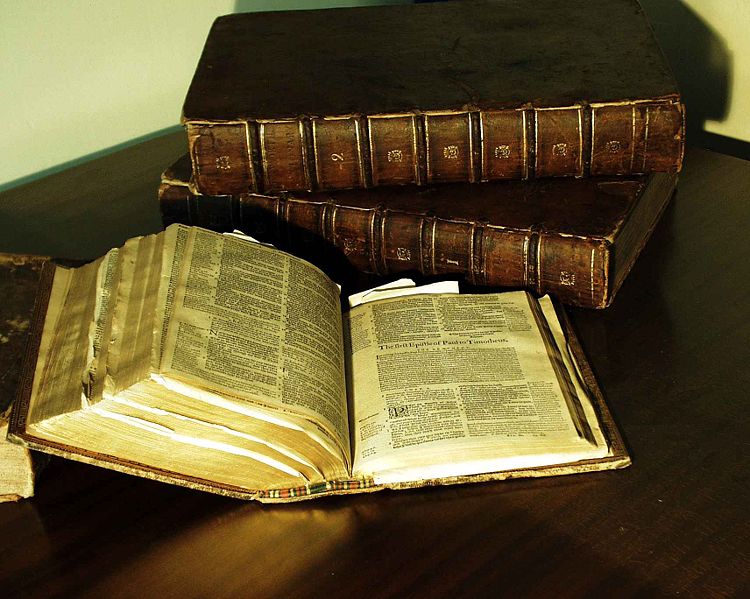 Imagine someone, let’s call him Jim, reading a chapter from a typical history book written on World War 2. In said chapter, one page says “Hitler was intent upon exterminating the Jews. The Nazis proposed a ‘final solution’ intended to wipe the Jews off the face of the earth.”
Jim stands up, indignant, and reacts to this text, “I can’t believe whoever wrote this book! They actually endorse the ‘final solution’! What evil person would dare to recommend such atrocities!?”
We would obviously be puzzled by Jim’s reaction. We would probably correct him by saying something like “Jim, the author isn’t recommending that course of action, they’re merely reporting what happened. It’s a history book. The author’s intent is not to tell you what to do, but to tell you what happened.”
Now imagine a similar scenario. This time, it’s Jessica reading the Bible. She reads that “Jephthah promised God that if he beat the Ammonites in battle he’d sacrifice the first living thing he saw at his house… He beat the ammonites and the first thing he saw was his daughter, whom he sacrificed after giving her time to grieve.” (A paraphrase of Judges 11. See my discussion of this passage here.)
Jessica immediately stands and shouts “How dare the Bible condone human sacrifice! God Himself told Jephthah to sacrifice his daughter!”
Our answer to Jessica is the same as it was to Jim: “Jessica, the Bible is reporting what happened, the author of Judges reports many horrific incidents and sins that God’s people committed, but that doesn’t mean the author is commending what happened or urging others to do likewise.”
Such reactions are similar to those of many who read the Bible. They read a passage which describes something that happened and jump to the conclusion that the Bible–or the God portrayed therein–is evil. The Bible is a collection of genres and writings from various authors, a point often overlooked by those unable–or unwilling–to fully engage the text. Yet often the Bible is merely describing what happened as opposed to prescribing something for God’s people.
Another problem is that people too often think of the Bible as being exclusively a “rulebook.” I think this really plays into the description/prescription fallacy because if the Bible were just a big rulebook, then everything in it would be taken prescriptively. Such people seem to think that every verse can be taken out of context and genre and used as a command. There isn’t much to say in answer to such people except to point out the obvious: there are different genres in the Bible, not all of it is a rulebook.
Image source: http://commons.wikimedia.org/wiki/File:Geneva-bible-picture.jpg
———
The preceding post is the property of J.W. Wartick (apart from citations, which are the property of their respective owners) and should not be reproduced in part or in whole without the expressed consent of the author. All content on this site is the property of J.W. Wartick and is made available for individual and personal usage. If you cite from these documents, whether for personal or professional purposes, please give appropriate citation and provide a link to the original URL. By viewing any part of this site, you are agreeing to this usage policy.

 J.W. Wartick - Reconstructing Faith
