movies
Really Recommended Posts 9/25/15- Biblical language preaching, mosques, “War Room,” and more!
 Hello dear readers! I have put together another list for you to peruse. This week, we’re looking at mosques and churches, using biblical languages in preaching, dealing with aggression in apologetic interactions, the age of the earth based on coral reefs, and “War Room.”
3 Tips for Using Biblical Languages in Preaching– How should pastors make use of that great seminary education and the biblical languages? Well, for one, they should use it big time for research and also doing apologetics. For another, here are some tips about how to use it in preaching in such a way that it won’t go over people’s heads.
The Mosque Denied Today Could Be the Church Denied Tomorrow– When we speak of “religious freedom” we should be aware that that freedom stands or falls for people of different faiths together. That’s why, for example, several Lutheran groups stood with several Native American groups on getting the rights to use various natural drugs in their ceremonies: one day it is trying to make those illegal, the next communion wine might not be served. Here’s a post reflecting on that reality in a time in which a mosque has been denied.
Greg Koukl Explains the Right Way to Deal with an Angry Aggressive Atheist– Unfortunately there are times when people think the way to interact with others is to simply try to “steamroller” them out of the conversation. This doesn’t apply only to angry atheists but can be applied to even theological discussions in which people don’t want to allow for genuine interaction.
Coral reefs are too old to be young!– When we look at the various methods for dating coral reefs, it becomes pretty clear that a Young Earth Creationist understanding of their age cannot hold up under scrutiny.
An Egalitarian War Room Review– I have seen many theological critiques of War Room, from its apparent allowance for people to stay in abusive (verbally) relationships to a kind of God as divine vending machine mentality. Here is one coming at it from the angle of egalitarianism.
“Avatar”- A Christian reflection on the film
 I’ll admit it up front: I love the movie “Avatar.” I know that admission will immediately garner scoffers and the like, but I’d like to take this opportunity to look over some of the themes in the film to show why I like it so much. There will be SPOILERS in what follows.
A Concern for Social Justice
First, it must be admitted that there is a strong concern for social justice throughout the film. This concern is borne out in three ways:
1) The disabled- Jake Sully is wheelchair-bound, and this leads to some overt thematic elements related to this. Other characters make offhand remarks over his state. “That’s just wrong”–presumably referring to sending someone with such a disability to Pandora; Jake refuses help from others and relies on his military background to keep himself motivated to do whatever anyone else can. In the extended edition of the film, Jake is also bodily thrown out of a bar early on, which highlights his feelings of injustice and helplessness, while also showing compassion demonstrated by his character. Jake’s veteran benefits can’t pay for a “new set” of legs, so he looks to Pandora for a fresh start.
From these portrayals, one may draw two primary areas of discussion. First, the ultimate solution to Jake’s status is transcendence into the Avatar body. His state is ultimately not one he can overcome himself but one which is ultimately reliant upon others–even deity (see next section). Second, there is some concern here for those with disabilities: we should neither treat them as deficient nor should we ignore the possibility of increasing the well-being of those in such situations.
2) The Environment- Some may not consider notions of concern for the environment a “social justice” issue. However, it should be clear that impact upon an environment definitely brings about societal change. If a group lives in a jungle, razing that jungle to the ground will have profound impact on that people group. Although the portrayal in the film is very straightforward (perhaps even simplistic), the concern for how destruction of an environment can lead to societal ills is certainly portrayed. In the Bible, we are given the command to care for creation. This should translate into a concern for societal well-being as well.
3) The “Other”- The Na’vi (interestingly similar to the Hebrew word for “prophet”) are the “other” in the film. From the human persepctive, they are a strange people. They have a seemingly paganistic nature worship along with inherent pantheism. They prefer to live in trees and tribal communities than building roads and buildings. The way in which the humans interact with the “Other” is ultimately a question of major concern and conflict. By downplaying the needs and disrespecting the culture of the “Other,” humans fail to learn from them and perhaps come to mutual understanding and a better relationship. Rather, the “Other” is seen as one to exploit for one’s own ends. For some discussion of how the “Other” is used in religious contexts, see my post on “The Myth of Religion.”
Deity- Or, Avatar is not Pantheistic
One aspect of the film I have heard other Christians complain about is that the religion of the Na’vi is pantheistic. However, it seems clear that Eywa is no friend to pantheism. Indeed, this “goddess” is far from the pantheistic all-in-all. Rather, it turns out in the climactic battle near the film’s end that Eywa “had heard” Jake’s prayer and in fact answers in rather extraordinary fashion. Eywa (again, interestingly similar to the name of the LORD in Hebrew) turns out to be not so much a pantheistic, monistic One as a theistic deity capable of activity within the natural realm.
Thus, the ultimate reality of the film is that there is such a thing as deity interfacing with the prayers of persons and with power to answer them. This is not to say the film is entirely friendly to Christian theism. For example, one line Jake Sully says to Eywa is that the inhabitants of Earth “killed their Earth-Mother.” Surely this is not an affirmation of theistic faith but rather hints at a kind of pantheon of deities for each planet! Well, not so fast: Jake says this before he even knows that Eywa is truly a deity capable of activity on the planet. He is trying to describe the situation in his doubt, and his prayer is that of a skeptic trying to make sure he’s covered all his bases. The answer of the extent of Eywa’s rule over Pandora (or beyond?) is left unanswered.
Again, I am not trying to suggest that Eywa should be identified with Christian theism. Rather, within the context of the film, it is clear that a deity exists and acts within the “real world.” I think it must be admitted that this is a far cry from the outlook of many films which are either anti-theistic or generally ignore the question of deity altogether.
Conclusion
“Avatar” is a film that’s worth talking about for more than its beauty. Although many mock it for its emulation of some story tropes (Pocahontas in space!), there are more thoughtful elements in the film worth discussing. In particular, the question of divine activity is poignantly brought to the forefront. Moreover, the themes of social justice brought forward call into question our own assumptions about what is the best way to address various needs and issues.
What I’ve written here is only the beginning of possible discussions. A whole slew of topics remained untouched (what of mind/body connections and the use of the Avatars themselves?; what of the use of mercenaries?; what kind of criminal justice system could one have in a corporate run entity like this?; etc.), so I’d love to read your own thoughts on the film.
Links
Be sure to check out the page for this site on Facebook and Twitter for discussion of posts, links to other pages of interest, random talk about theology/philosophy/apologetics/movies and more!
Escaping to Pandora– J. Warner Wallace notes other issues of apologetic importance of the movie “Avatar.” He specifically focuses on the real hope in heaven and the transcendent.
Caring for Creation: A discussion among evangelicals– I write about creation care from a number of perspectives offered at a recent panel of prominent evangelical thinkers in this area.
Also see my other looks into movies (scroll down for more).
SDG.
——
The preceding post is the property of J.W. Wartick (apart from quotations, which are the property of their respective owners, and works of art as credited; images are often freely available to the public and J.W. Wartick makes no claims of owning rights to the images unless he makes that explicit) and should not be reproduced in part or in whole without the expressed consent of the author. All content on this site is the property of J.W. Wartick and is made available for individual and personal usage. If you cite from these documents, whether for personal or professional purposes, please give appropriate citation with both the name of the author (J.W. Wartick) and a link to the original URL. If you’d like to repost a post, you may do so, provided you show less than half of the original post on your own site and link to the original post for the rest. You must also appropriately cite the post as noted above. This blog is protected by Creative Commons licensing. By viewing any part of this site, you are agreeing to this usage policy.
“Inside Out” – Feelings, Family, and Fun: A Christian Perspective
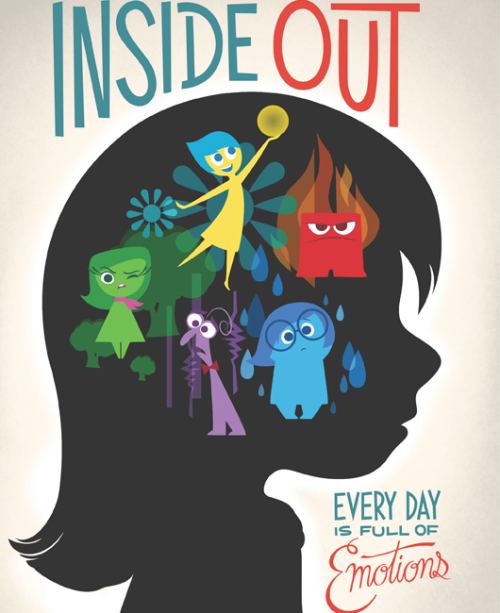 I recently got to see “Inside Out” in theaters and it was a huge treat. The plot was fairly predictable, but it was delightfully done and thought-provoking. Here, we will explore the film from a Christian worldview perspective. There will be SPOILERS in the following review.
Talking about Emotions
It is often quite difficult to talk about our feelings. “Inside Out” provides a springboard for having these discussions, whether with children or, frankly, with adults. Christianity is a faith of not just the mind but also the heart, and we need to be able to talk about how we feel and engage with our emotions in the context of faith.
As a parent, I was pleased to see how little there was objectionable in this movie, as it is one I could see using with my son (who is now 10 1/2 months old) in the future to talk about emotions.
Gender and Family
There are some issues with gender in the film as Riley’s parents were fairly stereotyped in some ways. However, this stereotyping was offset in many ways by Riley herself, who was a highly complex character with different interests and motivations that went beyond such gender stereotypes. As Christians we can have conversations about how our culture so often shoehorns people into strict gender categories without acknowledging its own cultural biases.
Another edifying aspect of the film is its focus on the importance of family. It does not undermine the value or struggles of those families that are non-“nuclear,” but it does affirm the ways that family can shape the lives of children. The formative impact of the parents in this film cannot be understated, and it showed not just in the “core memories” that Riley cherished, but also in her interests and concerns.
As Christians, there are a number of takeaways from this, but perhaps the most important one would be the way that our faith lives can shape our children. I sure hope that Luke has a formative experience that lets his “core memories” include faith at the center of his emotional and rational life. Like Riley’s parents, I am not going to just stand back and watch but rather be sure to expose him to the faith and prayer and allow him to ask questions and learn from an early age.
Emotions Rule?
One possible concern with the film could be the notion that it seems like the emotions are that which rule Riley’s life and actions. Indeed, the emotions cause specific acts in her day, and as different events occur, the different emotions take the controls to drive Riley entirely.
From a Christian perspective, we should interpret things generously (see Martin Luther on the 8th commandment), so the first aspect of a response to this would be to allow that the film had to make things fairly simplistic because, well, it is actually a kids movie, isn’t it? It would be tough to multiply complexity and discuss the importance of reason, logic, and abstract thought for action in a way children could easily understand.
Second, too often in Christian circles I have seen the downplaying of the importance of emotions for our reasoning process. The importance of passional reasoning (having emotions as part of the overall logical process) should not be forgotten. For older children, this film could be a great jumping off point to have a conversation about the interplay between such abstract thought and the emotions, and how they might interlink to form a life of faith and reason.
Third, related to the previous point, we sometimes need a corrective–particularly those of us who lean towards critical thinking–to remind ourselves of the importance of emotions. In a thoughtful, humorous way, Inside Out opens us to such conversations.
Conclusion
Inside Out is a delightful film with comedy, fun, and family all interwoven in a thought-provoking mix. I think it provides several ways for Christians to start conversations about a number of important topics, including reasoning, emotions, gender, and family. I recommend it.
Let me know your thoughts in the comments.
Links
Be sure to check out the page for this site on Facebook and Twitter for discussion of posts, links to other pages of interest, random talk about theology/philosophy/apologetics/movies and more!
Inside Out– One of my favorite websites, Empires and Mangers, shares some thoughts from a Christian perspective on the film. Anthony Weber approaches it from a slightly different angle, and his post is well worth the time spent reading it. Be sure to follow his excellent blog as well.
Movies– Read other posts on this site about movies written from a worldview perspective. (Scroll down for more.)
SDG.
——
The preceding post is the property of J.W. Wartick (apart from quotations, which are the property of their respective owners, and works of art as credited; images are often freely available to the public and J.W. Wartick makes no claims of owning rights to the images unless he makes that explicit) and should not be reproduced in part or in whole without the expressed consent of the author. All content on this site is the property of J.W. Wartick and is made available for individual and personal usage. If you cite from these documents, whether for personal or professional purposes, please give appropriate citation with both the name of the author (J.W. Wartick) and a link to the original URL. If you’d like to repost a post, you may do so, provided you show less than half of the original post on your own site and link to the original post for the rest. You must also appropriately cite the post as noted above. This blog is protected by Creative Commons licensing. By viewing any part of this site, you are agreeing to this usage policy.
Really Recommended Posts 7/17/15- Inside Out, women and sacraments, apologetics, and more!
I’m excited to present this week of “Really Recommended Posts” to you, dear readers, because it is a truly extraordinary lineup. I’ve worked ’round the clock (or at least for an hour) to read and bring to you some excellent posts from all over. Our diverse reads today include the latest Pixar movie, “Inside Out,” the necessity of not sharing (or apologizing for) fake news, women in sacramental churches, an exciting new book, and the criminal justice system. As always, let me know what you think! Be sure to let the authors know you appreciated their posts as well.
Inside Out– One of my favorite web sites, Empires and Mangers, takes a look at Pixar’s latest smash hit, “Inside Out.” Anthony Weber looks at the worldview issues raised in the movie, as well as how it might be used to start discussions about some good topics with children. Check out this great reflection.
An Embarassing Week for Christians Sharing Fake News– Here is some advice that we all need to take to heart. Ed Stetzer goes beyond just calling on Christians to check their sources to a real urgency to repenting and admitting wrong when we do share falsities. This is a phenomenal read that deserves to go viral.
Women Leadership in Sacramental Churches– The debate over women’s “role” in the church looks different in those church bodies which are sacramental in nature. I am Lutheran and have experienced the kind of reasoning outlined in this post to try to restrict women’s places in the church firsthand. This is a good read that will not only broaden perspectives about sacramental churches but also make headway in the debate over women in the church.
New Book by James Warner Wallace: “God’s Crime Scene: A Cold Case Detective Examines the Evidence for a Divinely Created Universe– Here is some background on an exciting upcoming release from the author of “Cold Case Christianity,” J. Warner Wallace. It looks like it will be examining arguments like the fine-tuning argument for the existence of God. I wrote a glowing review of Wallace’s previous book, and I look forward to reading this one as well.
Obama frees drug offenders whose terms ‘didn’t fit crimes’– I think that the criminal justice system has turned into a major issue of injustice that we need to address. I think the President’s calling attention to this is a great thing, regardless of what political stance I and others take. There is gross injustice in inequality of sentencing for drug-related crimes, and there is data to back up that much sentencing is racially-biased. We as Christians must speak up for those treated unjustly, and this is an issue worth talking about. What are your thoughts? I’d love to read them here.
Really Recommended Posts 3/20/15- Blood Moons, Jupiter Ascending, and more!
What’s this!? Weather that is above freezing? I cracked my windows last week when it hit 33 degrees Fahrenheit because I was warm. Then it hit 65! SCORCHING! I think maybe I’ve adapted to life in Minnesota. Anyway, I also took the time out of this beautiful week to provide you, my dear readers, with what I hope will be some most edifying material. Here we have posts on Blood Moons, women’s church history, creationism, Jupiter Ascending, and (!) a great apologetics resource.
Jupiter Ascending– A worldview-minded look at the flick “Jupiter Ascending.” Largely blasted by critics, the film is an attempt at a science fiction fairy tale. What does this “fairy tale” about the future teach us?
Trillions of Stone Artifacts: A Young Earth Anthropology Paradox– Are there more human artifacts than there should be, if we grant young earth creationist assumptions about the age of the Earth? Check out this post for an interesting challenge to this paradigm from the perspective of anthropology.
Blood Moons: An End-Times Sign?– Should we view the fact that there are Four Blood Moons happening as a sign of the end-times? Here’s an examination of the claim that we should.
Women’s History Month: The Early Church– Here are some women in the early church who had profound impacts on the faith.
Apologetics 315– Here’s a site to follow if you don’t already. It features interviews with top apologists, book reviews, resource links, and more! It is one of the first sites I ever followed and it still pays dividends.
“The Hunger Games: Mockingjay Part 1”- A Christian Perspective
 “The Hunger Games: Mockingjay Part 1” is yet another blockbuster hit in the Hunger Games Trilogy. Here, I will reflect on a number of themes found in the movie, drawing out places the film resonates with the Christian worldview. There will be SPOILERS in what follows.
Social Contract?
The concept of a “social contract” theory of government is put forward by President Snow. At one point, he is speaking out for peace (ironically, while executing several prisoners), and his argument is that the Districts are in a contract with the Capitol, which is to provide “order” and justice.
The scene is deeply ironic–and meant to be. It shows what is inherently wrong in a system which relies upon a contract (in this case, one that a side is forced into) as the basis for morality. Simply having such a contract does not, in and of itself bring about a moral system. Ultimately, people are able to distort meanings of terms and ask things like “what does ‘order’ mean?” and change it to suit their needs. The only sound basis for morality is something which cannot be changed on a semantic issue or on the whims of the masses.
If We Burn, You Burn With Us!
There is such a strong sense of injustice that pervades the film that I think little time has been spent thinking on this phrase that has become somewhat a tagline for the movie: “If we burn, you burn with us!” It’s a kind of “eye for an eye” statement which seems at first to have some sense of retributive justice but perhaps ultimately falls into a kind of self-administered vengeance. However, when one probes more deeply one wonders whether it is a species of a “just war” argument.
Such an argument opens up all kinds of avenues for debate, but I think it ultimately does come down to the question of which is greater injustice: allowing a clearly evil system to continue interminably, or stopping it with the only means that can bring about change. It’s a thorny issue, but one I think Christians should consider thoughtfully.
Slaves Among Us
Finnick Odair, one of the Victors, was sold by President Snow into sex slavery. It’s an extremely uncomfortable issue, but one I am glad the film raised. Snow used the threat of violence against loved ones to force Finnick into this system–a disgusting evil. Unfortunately, the reality of sex slavery, including for children, is an extremely real and pervasive vileness that continues in our present age. The United States has many hot spots for sex slavery, and it continues abroad as well. We must work to end this horrific injustice and bring down the systems of evil that help prop it up.
Conclusion
“Mockingjay Part 1,” like the Hunger Games titles before it, brings up many issues for Christians to consider. I encourage you to see it and discuss it with others. Let me know what you think in the comments! Check out the links below for a number of my previous discussions of other films and books in the series.
Links
Be sure to check out the page for this site on Facebook and Twitter for discussion of posts, links to other pages of interest, random talk about theology/philosophy/apologetics/movies and more!
Christian Reflection on The Hunger Games Trilogy– I discuss the entire Hunger Games Trilogy, with a number of comments upon the themes and events found therein.
The Hunger Games Movie: A Christian Perspective– I wrote about the movie, “The Hunger Games” and provided some insight into what Christians may take away as talking points from the film.
“Catching Fire”- A Christian Reflection on the Film–
The image is from an official movie poster and I claim no rights to it. I use it under fair use.
SDG.
——
The preceding post is the property of J.W. Wartick (apart from quotations, which are the property of their respective owners, and works of art as credited; images are often freely available to the public and J.W. Wartick makes no claims of owning rights to the images unless he makes that explicit) and should not be reproduced in part or in whole without the expressed consent of the author. All content on this site is the property of J.W. Wartick and is made available for individual and personal usage. If you cite from these documents, whether for personal or professional purposes, please give appropriate citation with both the name of the author (J.W. Wartick) and a link to the original URL. If you’d like to repost a post, you may do so, provided you show less than half of the original post on your own site and link to the original post for the rest. You must also appropriately cite the post as noted above. This blog is protected by Creative Commons licensing. By viewing any part of this site, you are agreeing to this usage policy.
Really Recommended Posts 11/7/14- Dracula, Hamlet, Ebola, and more!
Another go-round the web leads to some more great reading material for you. Let me know what you think of the various posts in the comments here, and be sure to let the authors know as well! Featured topics are the movie Dracula Untold, Ebola, Hamlet, women in the church, and the existence of God.
Dracula Untold– Anthony Weber offers a perspective on the film “Dracula Untold” from a Christian. Here, read his interesting insights and also get some help deciding whether you want to go see the movie!
Can a Monkey type Hamlet given infinite time?– A common claim regarding complexity and the possibility of it coming through chance is the now time-honored monkeys with keyboards view. Check out this brief look at this thought experiment.
Women as Other– How are women involved in the church? Are we excluding women? What are some consequences of views that treat women as “other” in Christianity?
Edward Feser on the Existence of God– Edward Feser is an extraordinarily brilliant philosopher and even when I disagree I learn from him. Here, there is a brief presentation of one of his arguments for the existence of God.
God Outwits Ann Coulter on Ebola– I’ll admit I don’t always keep up on current events, so this post was surprising to me. What did Ann Coulter say about Ebola and God? Check out this analysis.
“The Railway Man”: Forgiveness is more powerful than hate
 Forgiveness is Stronger than Hate
“Railway Man” is a film based on a true story about WW2 prisoners of war held and tortured by the Japanese. There are SPOILERS in what follows.
Colin Firth plays Eric Lomaz, one of the prisoners. He struggles with PTSD and his wife tries to help him through it. Ultimately, he finds that Takashi Nagase, one of the Japanese soldiers who tortured him, is still alive. He goes back to confront Nagase with malignant intent, but cannot bring himself to kill him. Instead, he goes back to the United Kingdom after the confrontation. Nagase writes to Lomaz in apology and of how he is working towards reconciliation. In the final scene, Lomaz returns with his wife to speak to Nagase, thank him for his work on reconciliation, and offer forgiveness.
The way this film plays out therefore offers a powerful apologetic for the Christian worldview, which values forgiveness very highly. Nagase turned to Buddhism to try to make penance for his sins and work towards reconciliation, but only in the act of forgiveness is any comfort found. True reconciliation is found in the act of forgiveness and the realization that only by acknowledging the incapacity of humanity to work off their sins might one come to the free gift of grace. Nagase is redeemed, but he is redeemed through the free, unmerited forgiveness offered by Lomaz.
Here we have a powerful message which, though never explicit, speaks of the Christian worldview and power of forgiveness.
Conclusion
I was greatly moved by this film. Christians can reflect much on the power of forgiveness and the need for reconciliation from the film. There are a number of themes running throughout “The Railway Man” which have not been discussed here, so feel free to bring more up in the comments. It is a film with great power, and I recommend you watch it.
Links
Be sure to check out the page for this site on Facebook and Twitter for discussion of posts, links to other pages of interest, random talk about theology/philosophy/apologetics/movies and more!
Movies– Read other posts on this site about movies written from a worldview perspective. (Scroll down for more.)
SDG.
The image used in this post was a movie poster and used under fair use. I make no claims to the rights for the image.
——
The preceding post is the property of J.W. Wartick (apart from quotations, which are the property of their respective owners, and works of art as credited; images are often freely available to the public and J.W. Wartick makes no claims of owning rights to the images unless he makes that explicit) and should not be reproduced in part or in whole without the expressed consent of the author. All content on this site is the property of J.W. Wartick and is made available for individual and personal usage. If you cite from these documents, whether for personal or professional purposes, please give appropriate citation with both the name of the author (J.W. Wartick) and a link to the original URL. If you’d like to repost a post, you may do so, provided you show less than half of the original post on your own site and link to the original post for the rest. You must also appropriately cite the post as noted above. This blog is protected by Creative Commons licensing. By viewing any part of this site, you are agreeing to this usage policy.
Book Review: “The Stories We Tell” by Mike Cosper
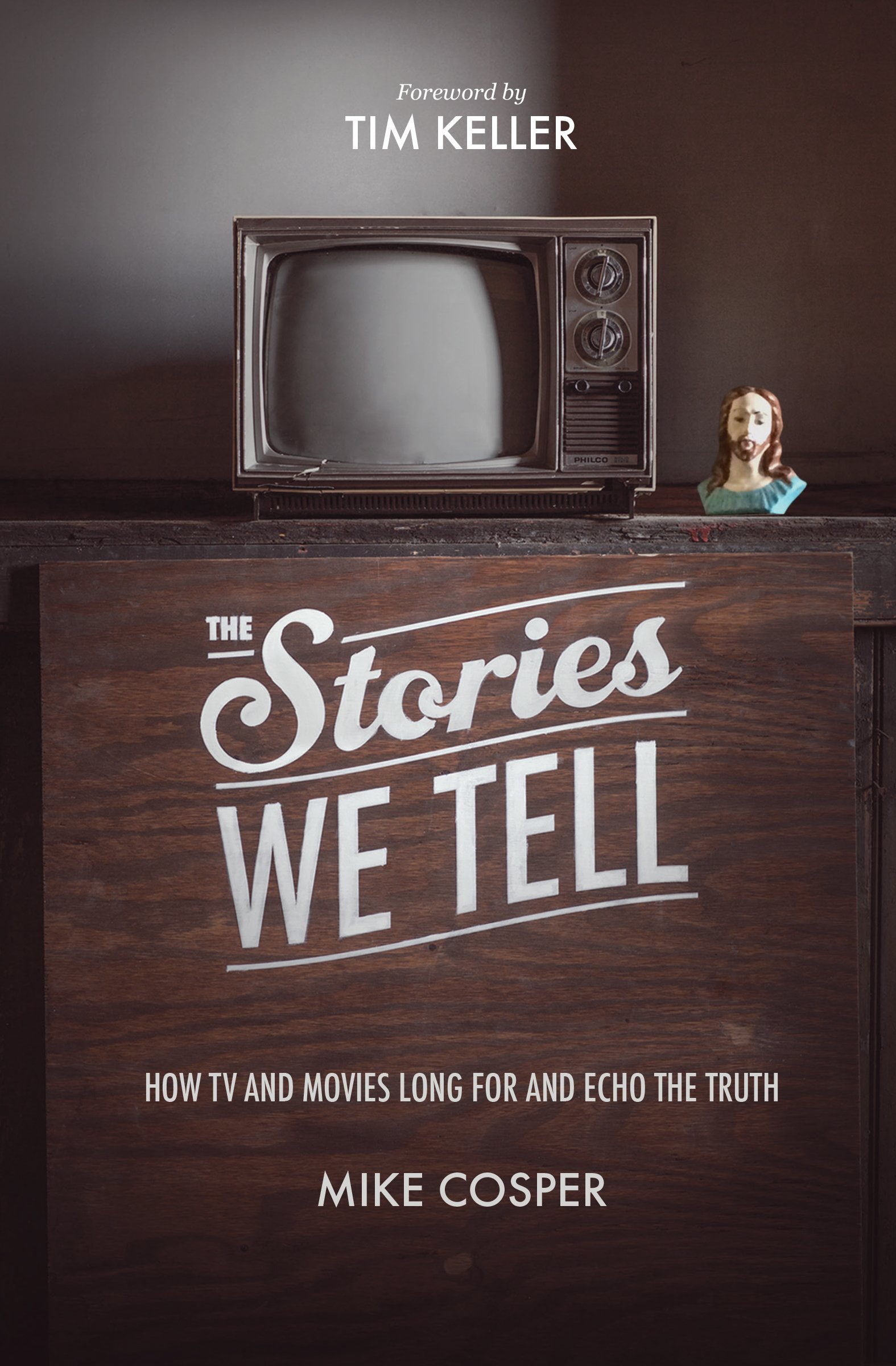
Mike Cosper’s The Stories We Tell
Cosper analyzes several television shows from Mad Men to Project Runway and looks at themes with redemptive value. He doesn’t present a one-size-fits-all picture of how individual genres or specific movies or shows reflect all one specific picture, but rather analyzes the stories told in these forms of media from the perspectives of various aspects of the Christian worldview. These include themes of creation, sin, redemption, love, the fall and success of heroes, and more.
This holistic vision of analyzing stories in TV and at the movies allows readers to open their own avenues for perspectives and reflection in ways that not all books on a topic like this provide. Not only that, but Cosper’s writing is genuinely fascinating. I haven’t watched most of the television shows he discussed, but his presentation of them was enough to allow me to feel as though I knew what was happening and even got me deeply interested in the stories he described. This is not just a good book on how to discuss movies, but it’s also a genuinely interesting overview of a number of stories, whether they’ve been encountered already or not.
Another excellent insight Cosper provided was his look at whether certain stories, movies, and television are appropriate for Christians. He presented a very balanced and insightful look at this topic. First, he noted that the question “how far is too far” is often used to draw boundaries either to allow oneself to get as far as possible or to try to denigrate or call out others. Then, he used two examples of the extremes when it comes to appropriateness: the “overanxious teenager” who wants to get right up to the boundary in order to see as much as they can and the “church lady” who wants to stand as judge to show how others are sinners. He uses these examples to great effect, but does not leave it merely at that. He argues that either extreme is mistaken and also offers a way for Christians to explore appropriateness of various shows and movies.
Conscience and community are to be our guideposts when it comes to the appropriateness of media. Conscience allows us to have an inner arbiter of whether something is appropriate: “If you’re struggling with whether to watch something, ask yourself if you’re sturrling against a conscience that knows better” (Kindle Location 671). A community will help as well by offering a group of others with different experiences and advice. The community will only be helpful, however, if one commits to being honest about viewing habits and having friends who are willing to confront one over the viewing. I found this to be remarkably insightful and Cosper’s perspective on appropriateness is a solid way for Christians to evaluate their viewing habits.
There are many books about Christianity and visual arts like movies and television. Mike Cosper’s The Stories We Tell
Disclaimer: I received a review copy of the book through Crossway. I was not obligated by the publisher to give any specific type of feedback whatsoever.
Links
Be sure to check out the page for this site on Facebook and Twitter for discussion of posts, links to other pages of interest, random talk about theology/philosophy/apologetics/movies and more.
Book Review: “Hollywood Worldviews” by Brian Godawa– Speaking of worldviews in the movies, why not check out my review of this book which seeks to provide a method for analyzing film from a worldview perspective? Let me know what you think.
Engaging Culture: A brief guide for movies– I outline my approach to evaluating movies from a worldview perspective.
I have a number of ways in which I have critically engaged with culture in movies, books, and other arts in my posts on current events (scroll down for more posts).
Source
Mike Cosper, The Stories We Tell (Wheaton, IL: Crossway, 2014).
SDG.
——
The preceding post is the property of J.W. Wartick (apart from quotations, which are the property of their respective owners, and works of art as credited; images are often freely available to the public and J.W. Wartick makes no claims of owning rights to the images unless he makes that explicit) and should not be reproduced in part or in whole without the expressed consent of the author. All content on this site is the property of J.W. Wartick and is made available for individual and personal usage. If you cite from these documents, whether for personal or professional purposes, please give appropriate citation with both the name of the author (J.W. Wartick) and a link to the original URL. If you’d like to repost a post, you may do so, provided you show less than half of the original post on your own site and link to the original post for the rest. You must also appropriately cite the post as noted above. This blog is protected by Creative Commons licensing. By viewing any part of this site, you are agreeing to this usage policy.
“Elysium” – Our Hopes, Greed, Class, and Suffering
 “Elysium” is one of a string of recent action flicks which have taken to exploring bigger issues than how to make the biggest explosion. Here, we’ll look at some themes in the movie and reflect on how they might resonate with the Christian worldview. There will be SPOILERS for the film in what follows. I will not summarize the plot, though a summary may be found here.
Greed and Suffering
The story seems to center around the issue of greed. After all, the premise is essentially that human greed leads to great suffering. The question of whether there is a moral obligation to end suffering is front and center in the movie. The citizens of Elysium live a life of luxury, conveniently located far away from the strife that inhabitants of Earth must undergo. There is a clear and obvious dichotomy between the lives of the people planetside and those on the space colony.
It’s a premise which seems obvious, but there is a twist in the film, which impacts the force of this question. Once the final outcome is determined, and the reprogramming of citizenship is brought about to include all people, Elysium’s automated defenses and medical robots immediately begin helping the people of Earth. Medical shuttles are dispatched with instant-healing devices to help the new citizens. This twist throws a wrench into the reasoning of the question of obligation to end suffering: what if one has nothing to lose in order to help others?
Thus, the question goes beyond mere greed. It is a question of how humans will seek to hold on to what they have, even when it costs nothing to help others. It’s a poignant way to portray the issue, and one which forces viewers to think upon their own attitudes regarding what we have and seek to hold on to.
Of course, this portrayal of the issue doesn’t take away from the question of whether there is an obligation to end suffering. I think the answer, from a Christian perspective, is that we of course do. Then, the question must be asked of how to best alleviate suffering. These and other questions are raised by the film, and in ways which provoke much continued thought.
Class
The issues of greed and suffering are also bookended in the film by the question of class. Even on Earth, where poverty seemed to be ubiquitous, class was an issue. There were those with jobs, those who begged, and those who turned to crime. The sharp distinction between citizens of Elysium and those of Earth makes the point even more obvious. Once again, as Christians, we are forced to ask how we might address this issue of inequality. There are to be no such distinctions in the body of Christ (Galatians 3:28), so how might we help to work towards ending racial, class, and other inequalities on Earth?
Hope
There is a constant theme of hope in what seems like a hopeless world. The people of Earth realize that help could come from Elysium, but they must get there first. They turn their hope to the stars, but there is a Nun who educates the young Max that there is beauty on Earth as well–beauty in humanity, despite our fallen nature.
Conclusion
“Elysium,” though featuring some objectionable content, is a film with much to ponder from a Christian perspective. How are we to approach other humans in a way which doesn’t undermine their dignity? We are to work to end suffering, to bring about equality. We are to prevent a scenario like “Elysium” from ever happening.
Links
Be sure to check out the page for this site on Facebook and Twitter for discussion of posts, links to other pages of interest, random talk about theology/philosophy/apologetics/movies and more.
Engaging Culture: A brief guide for movies– I outline my approach to evaluating movies from a worldview perspective.
I have a number of ways in which I have critically engaged with culture in movies, books, and other arts in my posts on current events (scroll down for more posts).
Elysium: Fighting for Paradise– Anthony Weber addresses a number of other worldview issues brought up in the movie on his fantastic site, Empires and Mangers. Be sure to follow his great blog.
The picture in this post is from a movie poster and I use it under fair use.
SDG.
——
The preceding post is the property of J.W. Wartick (apart from quotations, which are the property of their respective owners, and works of art as credited; images are often freely available to the public and J.W. Wartick makes no claims of owning rights to the images unless he makes that explicit) and should not be reproduced in part or in whole without the expressed consent of the author. All content on this site is the property of J.W. Wartick and is made available for individual and personal usage. If you cite from these documents, whether for personal or professional purposes, please give appropriate citation with both the name of the author (J.W. Wartick) and a link to the original URL. If you’d like to repost a post, you may do so, provided you show less than half of the original post on your own site and link to the original post for the rest. You must also appropriately cite the post as noted above. This blog is protected by Creative Commons licensing. By viewing any part of this site, you are agreeing to this usage policy.

 J.W. Wartick - Reconstructing Faith