movies
2013: The Year’s Best Books, Web, and More! An Apologist’s Year in Review
 Who doesn’t love to look back on the year and reflect on the things done and learned? I’m sure plenty of people don’t! But I do! So here’s my reflection on the year simply highlighting the “bests” that I’ve read/watched/etc. from an apologetic perspective throughout the year. I have not included all the books I read in 2013; rather, only books/movies/etc. which came out/were active/etc. in 2013 are eligible.
Best Books
Best Apologetics Book
J. Warner Wallace, Cold-Case Christianity. I think this book is, hands down, the most important introductory level book for the historical reliability of the New Testament. I reviewed this fantastic book here. Wallace does a fantastic job introducing hard topics in readable ways. His experience as a cold-case detective allows him to draw on his knowledge to make the “detective work” of history exciting and engaging. I highly recommend this book to any and all, whether they are interested in apologetics or not.
Best Advanced Apologetics Book
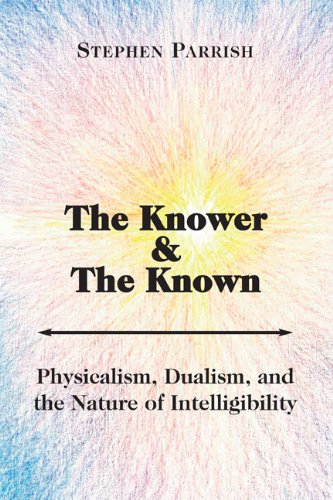
Stephen Parrish, The Knower and the Known. In this advanced work of epistemology and metaphysics, Parrish provides a comprehensive case against physicalism. However, not content with merely the via negativa, he also provides readers with an extensive positive case for substance dualism. I analyzed and reviewed this work in two parts: part 1 focused on the case against naturalism; part 2 focused on the case for dualism.
Best Movie for Discussing Worldview
 “Ender’s Game”- The movie “Ender’s Game” is one of the more philosophical movies to have come out this year. Although its core is a kind of race-against-time action movie, the film explores issues of just war, innocence, morality, and more. I reviewed it with a focus on worldview issues here; I also reviewed the award-winning science fiction book on which it is based.
Best Podcast- For the Best Overall Podcast
The Dividing Line– The podcast of the Calvinist theologian and apologist James White, “The Dividing Line” is consistently interesting and engaging–even when I disagree. White’s emphasis revolves around worldview issues, Calvinist theology, and apologetics–particularly those issues which deal with textual criticism. He is one of the few apologists I know of who consistently engages Muslims. “The Dividing Line” is one of the few podcasts which I listen to every single time. Whether or not you agree with White–and I find I do disagree on several points–you will find his level of engagement with primary materials high, and his critiques will force one to rethink their positions where they disagree.
Best Apologetics Site- For the Best Site focused upon Apologetics
The Poached Egg– I do, of course, mean “best” apart from this one! Okay, not really… I don’t actually think this is the best apologetics blog on the internet… not by a long shot. Anyway, “The Poached Egg” is a kind of apologetics-resource site which features a number of blog articles daily. Greg West runs it and he consistently has an excellent range of resources featured so that people interested in apologetics and related issues may continually interact with new articles of interest. I highly recommend that any readers of this site go and immediately begin following (or at least routinely checking) The Poached Egg.
Best Theological Topics Blog- For the Best Blog on topic(s) specifically related to Theology
Baker Book House Church Connection– Yep, this is a blog about books. That not only means it gets immediate bonus points from me, but it also means that the author, Louis McBride, has a whole slew of topics available. The posts on the blog are generally centered around works the McBride has browsed recently, with brief quotes and reflection upon the content. The broadness of the blog’s content is its greatest draw. I highly recommend following this blog and reading every post for thought-provoking and wide-ranging theological content.
Best Worldview Blog- For The Best Blog on a topic(s) related to the Christian Worldview
The CBE Scroll– The CBE Scroll is the official blog for Christians for Biblical Equality, a group which advocates for the full equality in the home and ministry for men and women. Whether one agrees or disagrees with this perspective, the blog raises a number of highly important arguments with which one must contend.
Best Creation Issues Blog
Naturalis Historia– The issue of the time and length of creation is a highly controversial one among evangelicals today. Here, “The Natural Historian” covers a wide range of topics related to the evidence for the age of the earth, as well as occasionally reflecting upon theological topics. Every single post on this site is worth reading and will inspire much thinking in related areas. I highly, highly recommend this site.
Best Non-Traditional Presentation Apologetics/Theology Blog- For the best blog that utilizes method other than pure text or video to convey its meaning
No Apologies Allowed– Who doesn’t like comics? That’s right, nobody. No Apologies Allowed is a site that uses comics as its primary means to get across apologetic and theological insights. The site is always entertaining and the conversation is quite interesting. Be sure to swing by.
“Pacific Rim” – A Brief Christian Reflection
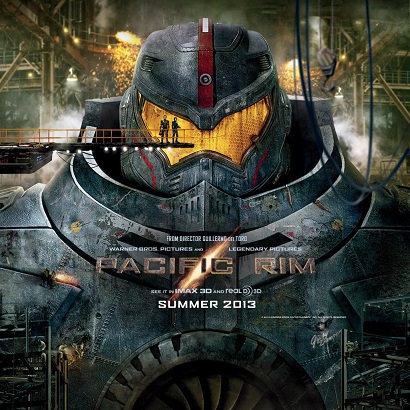 Thankfully, a slew of science fiction films are being released this year. “Pacific Rim” has generated quite a bit of buzz. I recently had the chance to view the film and will here offer some reflections from a Christian perspective. I feel obligated to put a disclaimer here: I realize this film is 99.9999% about blowing things up. I still think that a saying I often use is correct- there is no such thing as a film without a worldview. There will be SPOILERS in what follows. I do not offer a plot summary, as one can be found easily.
Master of the Storms?
Early in the film there is a scene in which Raleigh Becket, a Jaeger (think giant mech-tank) pilot, is marching out into a storm to fight a Kaiju (think Godzilla). As one watches this epic man-made titan march out to fight a monster, one is struck by the hugeness of it, the power of it. If humans can make this, what next? Raleigh discusses how once, humans were afraid of storms like hurricanes. Now, given the might of their creations, they need not fear a hurricane.
The quote seems impressive. After all, many today hope that humanity will reach heights like this. One day, we may be able to face down a hurricane and laugh. The powers of wind and rain may be overcome. But what then?
Interestingly, in the film the very next scene is that of a Kaiju absolutely beating down Raleigh’s Jaeger.
What? That’s not how the story is supposed to go. The story is supposed to show how we have finally transcended ourselves. But that is not the reality. The reality is that a giant Godzilla beast can still destroy even these hurricane-defying machines.
It is ironic, really. In the context of humanity’s defiance against the storms given their machines, another, greater challenge is thrown out there. One can almost imagine people railing against God once more. Why have we been left to fight this world on our own? But then one must remember what God has said:
[The LORD says:] “Can you pull in Leviathan with a fishhook
or tie down its tongue with a rope?…Will it keep begging you for mercy?
Will it speak to you with gentle words?
Will it make an agreement with you
for you to take it as your slave for life?Who has a claim against me that I must pay?
Everything under heaven belongs to me.” (Job 41:1, 3-4, 11)
Ultimately, God is in charge. Our attempts to control the seas, the storms, or the leviathan do not match up to God’s sovereign control over all creation.
The film does nothing to explore this avenue, but one can wonder: what of humankind’s efforts to try to best God? It seems that the answer is: it’s not going to happen. There is always a bigger Kaiju. There are always larger storms. Our fascination with these powerful aspects of creation may itself be a reflection of the Creator.
In the film, of course, humanity triumphs. As in all good action movies, the good guys win (no, I do not like sad endings for movies). But one can only wonder: if the Kaiju could come; what next? The God who rules the storms is the same God who can draw the leviathan with a hook.
Mind and Evolution
How much can our minds handle? In the film, the mental strain of piloting a Jaeger is too much for one person to handle. How do minds work in this context? Somehow they manage to create some linkage between two humans’ minds and create some kind of mental pathway such that the people are able to integrate and work together. What does that mean? I don’t know. It is techno-babble for an action flick. But suppose we were able to do this. What would it imply about minds? Well, no more than what we already know, it seems: our minds are connected to a physical reality. We as humans are grounded in embodiment.
The Kaiju turn out to be clones. I found that pretty surprising given the immense diversity of the creatures. Some had wings; others spit acid; still others had huge hammerheads to use as weapons. What kind of genetic diversity would have to be included in their DNA in order to allow for such radical diversity. I am absolutely not a geneticist–and this movie is absolutely not an attempt to portray anything scientifically accurate–but I wondered about this as I watched the movie.
Conclusion
Let’s be blunt. “Pacific Rim” is a movie for those who want to watch giant walking tanks fighting Godzilla clones. There is a plot to be found, and there are some themes involved–as in any movie–but at its heart, this movie is a pure action flick. That said, there were a few things to reflect upon, such as the notion of humanity trying to overpower God or the forces around us.
Links
Like this page on Facebook: J.W. Wartick – “Always Have a Reason.”
Did you like Pacific Rim? Check out John Carter.
Be sure to check out my other looks at movies here (scroll down for more).
SDG.
——
The preceding post is the property of J.W. Wartick (apart from citations, which are the property of their respective owners, and works of art as credited) and should not be reproduced in part or in whole without the expressed consent of the author. All content on this site is the property of J.W. Wartick and is made available for individual and personal usage. If you cite from these documents, whether for personal or professional purposes, please give appropriate citation with both the name of the author (J.W. Wartick) and a link to the original URL. If you’d like to repost a post, you may do so, provided you show less than half of the original post on your own site and link to the original post for the rest. You must also appropriately cite the post as noted above. This blog is protected by Creative Commons licensing. By viewing any part of this site, you are agreeing to this usage policy.
“Monsters University” -A Brief Look from a Christian
 I recently had the chance to see “Monsters University,” the latest from Pixar. I thought it was, overall, a delightful film. Here, I will share my thoughts on the movie from a Christian perspective. There will be SPOILERS below.
University Life
Pixar did an excellent job capturing the true feeling of adventure at university; the first step on campus, orientation, the first class, friends, and more. I’ll never forget the feeling of anticipating meeting the roommate for the first time; sitting in the first class, and the like. The antics, the fun, and the learning that went on was joyous, and Monsters University does a great job recreating it in film… with monsters.
But there is a darker side to university. Roommates can fall out of favor with each other (I’m thankful my roomie and I remain great friends!), pranks can go wrong, bullies have made it into school as well, and classes can be failed. Monsters University dives into these themes headfirst. Mike Wazowski and James P.”Sulley” Sullivan are immediately at odds. Sulley is able to ride his family name and his size to largely succeed at the school; Mike continues to hit the books. Sulley gets credit for anything good that happens around him; Mike is left in the dust.
However, when Sulley and Mike are both kicked out of their program as “scarers,” they end up being thrust together on a team to try to make it back. In the time that follows, Sulley has to cope with his own inadequacies, Mike has to realize that he needs to work with a team, and the rest of the team learns about their own strengths.
There is a call in this movie: a call to realize there is more to people than meets the eye. Everyone has unique strengths and weaknesses. There is also a call to realize one’s own inadequacies and the need to work together with others.
At today’s university, we are also assaulted by a vast array of choices. One scene in the movie poignantly addressed this: Mike is walking through campus, where stands are set up all around calling for his attention: should he join the debate team, the art club, the scare contest, or others? Similarly, there are any number of things vying for our youth’s attention when they go to university. Have we equipped them to deal with the choices they will inevitably need to make?
Scaring
There is something to be said for the notion that scaring is a good thing among the monsters. This theme is treated with great lightness as a children’s film, but at points it seemed disturbing to me. These monsters need to harvest the screams of children (or others) in order to supply power for their society. Thus, they sneak into a child’s room and scare them in order to make them scream. Although these monsters are generally “nice” “people,” the fact that their job is to scare children as much as possible seems a little untoward.
The question for Christians here, I think, is how much we allow artistic license. Clearly, this film is a fantasy. The monsters are portrayed as “good guys” but this doesn’t necessitate that monsters are bad guys, it is simply a plot device. But, one may press, they are still monsters, and they are still scaring people for a living. How do we discuss such themes?
Garret Johnson has argued that “In all meaningful fiction, there exists an element of fear… The reason all humans respond to this kind of story, the reason the profound reality of fear preceding the most meaningful outcomes resonates with us, is because this is the story of our universe.”
He grounds this discussion in the fact that our own story–the Christian story–points to this reality. There is fear of death, but it is overcome; from tears, joy; from death, life.
Conclusion
“Monsters University” is comedy which will take adults back to days in school, with all the good and bad times that may offer. The themes of reconciliation and teamwork are refreshing, and the undertone of fear is an intriguing thing to speculate upon. How much does fear point us back to our reality; what hope is there in our lives? Will our tears be turned to joy?
Clearly, these questions go well beyond the scope of the film itself. But that does not mean one cannot use the film to dive into the deeper aspects of reality. For those looking to do so, “Monsters University” provides a compelling way forward. For those who aren’t, I would suggest that the themes found therein–particularly of reconciliation and the need to prepare our children for university–are worth the watch.
Links
Like this page on Facebook: J.W. Wartick – “Always Have a Reason.”
Fiction and Fear– Over at Hieropraxis, Garret Johnson writes about the interesting links between fiction and fear. Check out this post for some very interesting discussion.
Be sure to check out my other looks at movies here (scroll down for more).
SDG.
——
The preceding post is the property of J.W. Wartick (apart from citations, which are the property of their respective owners, and works of art as credited) and should not be reproduced in part or in whole without the expressed consent of the author. All content on this site is the property of J.W. Wartick and is made available for individual and personal usage. If you cite from these documents, whether for personal or professional purposes, please give appropriate citation with both the name of the author (J.W. Wartick) and a link to the original URL. If you’d like to repost a post, you may do so, provided you show less than half of the original post on your own site and link to the original post for the rest. You must also appropriately cite the post as noted above. This blog is protected by Creative Commons licensing. By viewing any part of this site, you are agreeing to this usage policy.
“For Greater Glory” – A look at a movie about Christianity in the face of violence
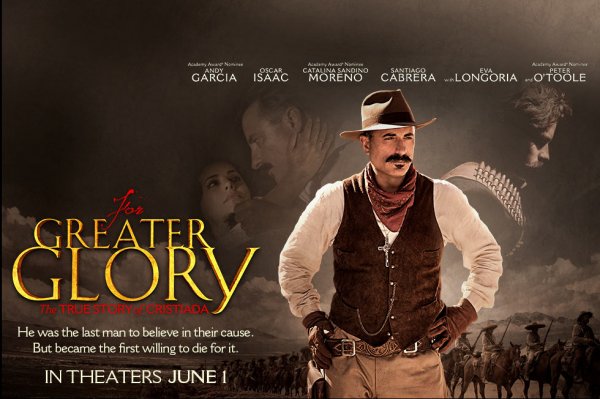 “For Greater Glory“
The Good, the Bad, and the Ugly
The Good
The general Enrique Gorostieta Velarde is clearly a “good guy.” He was, himself, no Christian and certainly not a Roman Catholic, but he stood up against those who would persecute people simply for their beliefs. He also did not stand for compromise: he wanted toleration to be granted to Roman Catholics. He fought for an ideal. Even if that ideal was not one of the faith he was fighting to defend, he felt that there was injustice, and fought against it.
It is unclear whether the historical Enrique Gorostieta Velarde ever became a Christian. In the film, it certainly make it seem as though in making his arguments, he came into a kind of faith in God. It also seems to be the case that the historical general had some political ambitions in that he desired to bring about a change in the Constitution to provide for more toleration.
Father Christopher is an example for Christians everywhere. He does not back down in the face of violence. He became a martyr by standing in front of men who were doing him violence and proclaiming Christ to them. His martyrdom served as inspiration for a number of people in the film.
The Bad
The anti-catholics in the film are clearly the “bad guys.” It is hard to argue with this. Anyone who chooses to attack and kill people simply because of their beliefs certainly qualifies for the catchall “bad guy” terminology.
Plutarco Elías Calles, the Mexican President, an atheist, decides that he must use a violent crackdown to keep the Roman Catholic Church from becoming involved in Mexico. He couches his oppression of the Roman Catholics in language of secularism. Instead of focusing upon their religion, he makes his argument based upon the rule of government: the Roman Catholics serve a ruler (the Pope) who is outside of this country, and so they are a danger to the stability of this country. Despite this “secular” language, the fact of the matter is that throughout the film, the government is viscous not just towards the Roman Catholics as people who serve a different master, but also simply as religious persons. Crosses are burned and churches are destroyed. People are slaughtered during worship. It is a wholesale war against Christianity.
The Ugly
The film does not draw a hard and fast line between “good” and “bad,” however. There are also the ugly: those who, with good intentions, also commit atrocities. The Cristeros (those who fought for religious tolerance of Roman Catholicism) who commit atrocities were the “ugly.” Some felt they had to fight evil with evil, and committed horrible acts in the name of their cause. This is exactly what Christians are called to avoid.
Just War and Pacifism
The movie brought up the constant debate within Christianity between just war theorists and pacifists. It was surprising how lucidly it presented the issues. There were those in the film who refuse to use violence to fight against the government, citing Christ’s example of turning the other cheek. Yet even they become involved in getting supplies such as bullets to the Cristeros. On the other hand, there are those who argue for a just war tradition: when injustice is running rampant, should not Christians be among those who stand up against it, even if that calls for using force? The film never answers one way or another; instead, it leaves it to those watching to weigh the merits of just war and pacifism.
I tend to favor the just war theory myself. It seems to me that if a government like the Nazi Regime exists, then it is perfectly justifiable to use force to prevent them from perpetuating their evils.
Historically, according to more than one source I looked up, it is argued that the Cristeros actually had little impact on the overall outcome of the changes and toleration which came to Mexico. Instead, it was a deal negotiated by the Vatican with the Mexican government. Yet it seems for me historically perplexing as to why, exactly, the Mexican government would have desired a compromise if the Cristeros were not in operation. I speak here as no expert on the topic by any means. I’d be interested in reading your own thoughts.
The Elephant in the Room
It is hard to see this movie without thinking about the elephant in the room: atheists are in power, and religious people are killed. It’s a theme in the movie, but it also plays out time and again throughout human history: the French Revolution, the Soviet Union, the massacres of Armenians in Turkey, the Spanish Civil War, and more. Why is it that it seems, historically, every time a secularist government has taken power, the religious persons are the ones who suffer violence?
The answer to this vexing question seems to me to be quite clear: the notion that religion is violent and secularism stops violence is just false. Not only that, but the distinction between secular and religious is, itself, a mere construct with no ontological reality. I have argued this before when I discuss the Myth of Religion.
Conclusion
“For Greater Glory” is a movie that should be a must-see for those interested in worldview discussions. I could see it being used at an interfaith group, church youth group, or seeker group to generate discussion. The movie is definitely violent, and it shows the good, the bad, and the ugly unapologetically. It is for that reason that it must be seen.
What is perhaps the most shocking part of this movie is the fact that, prior to watching it, I had never heard or even imagined that Mexico had persecuted Christians. The violence committed against Christians by others in authority continues into the modern era, and it is truly depressing to know how little we hear about it. I can’t help sometimes but join with David and say “How long, Oh LORD?” (Psalm 13).
Links
I discuss the way that construct of “religion” has been used to denigrate an alleged “religious other” in my post: The Myth of Religion.
I have looked at a number of other popular movies. Check them out (scroll down to see more posts) in my movies category.
An interesting discussion of Christian pacifism can be found over at Glenn Andrew Peoples’ blog: Pacifism, Matthew 5, and ‘Turning the other cheek’.
SDG.
——
The preceding post is the property of J.W. Wartick (apart from citations, which are the property of their respective owners, and works of art as credited) and should not be reproduced in part or in whole without the expressed consent of the author. All content on this site is the property of J.W. Wartick and is made available for individual and personal usage. If you cite from these documents, whether for personal or professional purposes, please give appropriate citation with both the name of the author (J.W. Wartick) and a link to the original URL. If you’d like to repost a post, you may do so, provided you show less than half of the original post on your own site and link to the original post for the rest. You must also appropriately cite the post as noted above. This blog is protected by Creative Commons licensing. By viewing any part of this site, you are agreeing to this usage policy.
“The Dark Knight Rises”- A Christian Reflection
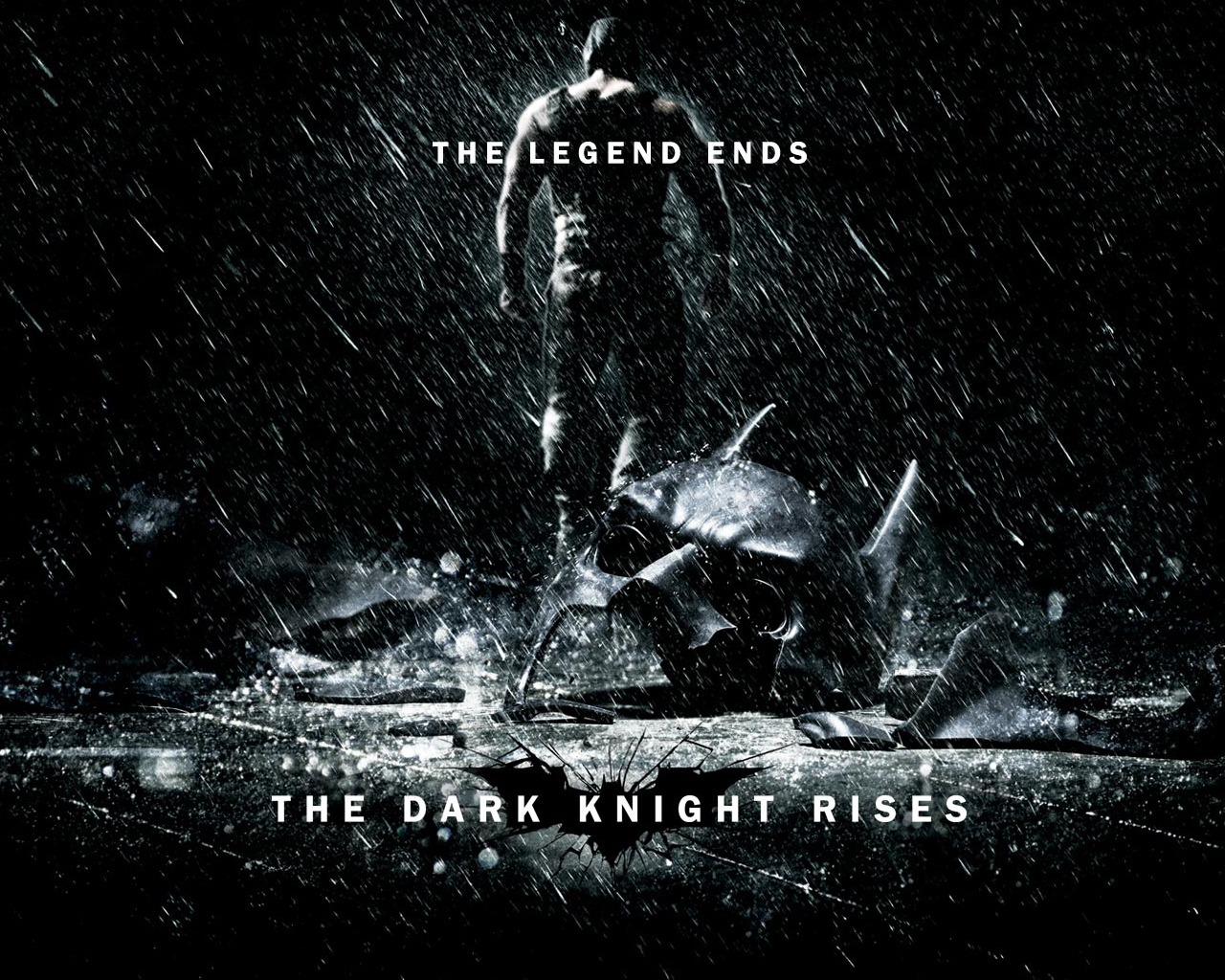 The epic tale begun with Batman Begins


Here’s the last warning: THERE ARE SPOILERS HERE. BIG ONES.
I’m going to eschew giving a plot summary because what I want to contribute to the conversation is a discussion on the themes. If you don’t feel like bothering with the movie, it would be good to at least know about the plot before reading this post. Check here for a brief summary.
Faith
Throughout the movie I kept noticing faith as a major theme. There were those who had maintained faith in a lie: Harvey Dent. Batman had taken the fall for him in The Dark Knight in order to provide Gotham with a needed hero. This faith was misplaced, and Jim Gordon, the police commissioner of Gotham City, almost destroyed himself keeping it inside himself. He said, at one point, “I knew Harvey Dent. I was his friend. And it will be a very long time before someone… Inspires us the way he did. I believed in Harvey Dent.” Yet the whole time Gordon knew he was speaking a lie. He believed in Dent, but he no longer believes in him.
Batman placed his faith in Catwoman/Selina Kyle. He firmly believed that there was more to her than the anger she continually expressed. This interplay was made more interesting by the interaction between Batman’s and Catwoman’s alter egos, Bruce Wayne and Selina Kyle. Selina Kyle, who seemed generally upset with all the rich and famous in Gotham and the decadence found therein–told the rich billionaire Bruce Wayne, “You think this can last? There’s a storm coming, Mr. Wayne. You and your friends better batten down the hatches, because when it hits, you’re all gonna wonder how you ever thought you could live so large and leave so little for the rest of us.” More on the interaction between the two later.
Alfred put his trust in Bruce Wayne. He strongly wanted Wayne to have a satisfying, fulfilling life, and throughout the film he worried that Batman would destroy Wayne. When push came to shove, Alfred was willing to leave Wayne in order to try to save him. Again, more on this later.
Finally, there were those who had faith in Batman. Batman, to them, was more than just a hero, he was a symbol of hope and justice.
One thing viewers should note is that the use of “faith” in The Dark Knight Rises is not some kind of hack definition. It doesn’t mean “belief in the face of insurmountable evidence to the contrary” or “belief in something you know ain’t true.” Instead, faith in the movie is faith in–a trusting faith based on evidence. Those who believed in Harvey Dent were mistaken, but that wasn’t due to evidence, it was active deception. Batman’s faith in Selina Kyle was firmly based on his ability to read her character. Others’ faith in Batman was based upon either a personal knowledge of the secret (Gordon) or knowledge of his actions as Batman (John Blake, others). It is very similar to the faith of the Christian, which is based upon knowledge.
 Rise
Rise
The most obvious theme in the movie was that of “arising.” Bruce Wayne had to overcome his doubts, fears, and become something greater. Yet he had to rely on others to build this journey. The knowledge of his fellow prisoners in ‘the pit’–a prison into which people were thrown, but could climb out. Only one had ever managed it, however, and that was Ra’s Al Ghul’s daughter, who had subsequently saved Bane. Ironically, then, the rise of his enemies forced the Dark Knight to meet their challenge. He had to transcend his limits and become that which Gotham needed in order to save it.
Yet Batman/Wayne wasn’t the only one who rose in the movie. Selina Kyle also experienced a major transition. As a character, she was initially powerfully motivated by anger and a desire to escape. She was portrayed as being very frustrated and angry with the social imbalance of the world and determined to not only try to balance it–in her favor, of course–but also to punish those who made it so imbalanced. When Batman returns to Gotham after his exile by Bane, he confronts Selina. He points out that the storm she predicted earlier has hit, and it doesn’t seem like it was what she wanted. Still, however, she seems determined to be in it all for herself. Yet ultimately she comes back to fight with the Dark Knight against the evil powers that are trying to destroy Gotham. In the end, she does manage to rise, with the guidance and help of Bruce Wayne/Batman.
John Blake–the incorruptible cop–also rose. It is revealed shortly before the film’s end that he is Robin–and that he is about to take up the cowl of Batman, to become the symbol for Gotham. Here, I sensed a feeling of fulfillment. We encourage others to walk in our shoes and left them up when they are down. Without Batman, Blake would not have survived. Yet he goes on to [presumably] become the next Batman, to save others.
Corruption
The world is not all sunshine and daisies. The world is full of corruption and sin. Interestingly, The Dark Knight Rises has much less corruption on the part of the police force than the previous movies. The turn was a noticeable, perceptible shift. As far as the plot goes, I wonder if any of that was due to the “Dent Act” which effectively ended organized crime in Gotham. Despite the relative “cleanness” of the police force, however, there was plenty of corruption to go around. Once Bane overthrows the city, there are “people’s courts” where “justice” is dole out on those already deemed guilty. The prisons are ripped open due to the lie [Harvey Dent] that many were imprisoned by. One wonders, how much of this is justice? Is any of what Bane says true?
Furthermore, it is a powerful reminder of the human condition. Given the chance to rule themselves, Gotham erupted into violence and brutality. It is little wonder that this should happen, given a Christian worldview, because all are sinful and need grace. All deserve justice.
Justice and Freedom
Is there justice? Was Batman just in continuing his adventures as the Caped Crusader? Is violence ever a justifiable means to an end?
Within Christianity there is a long history–traceable to Augustine, at least–of the concept of a “Just War.” There will be much debate over whether the actions of someone like Batman could be justified. Is it ever permissible to take justice into one’s own hands? I leave the question open.
Yet more important questions loom. What is justice? Who is to determine it?
One wonders what worldview could plug these holes that continue to open as human nature is probed by director Christopher Nolan throughout the Batman Trilogy. From the irrational desire to cause fear and anarchy of Scarecrow to the anarchist nihilism of the Joker to the over-reactive retribution of Bane, Nolan has exposed viewers to the depths of human freedom. What price, freedom? Bane tells Gotham he has set them free, yet he has truly imprisoned them by their own nature. What occurs is a vivid portrayal of human nature and destruction.
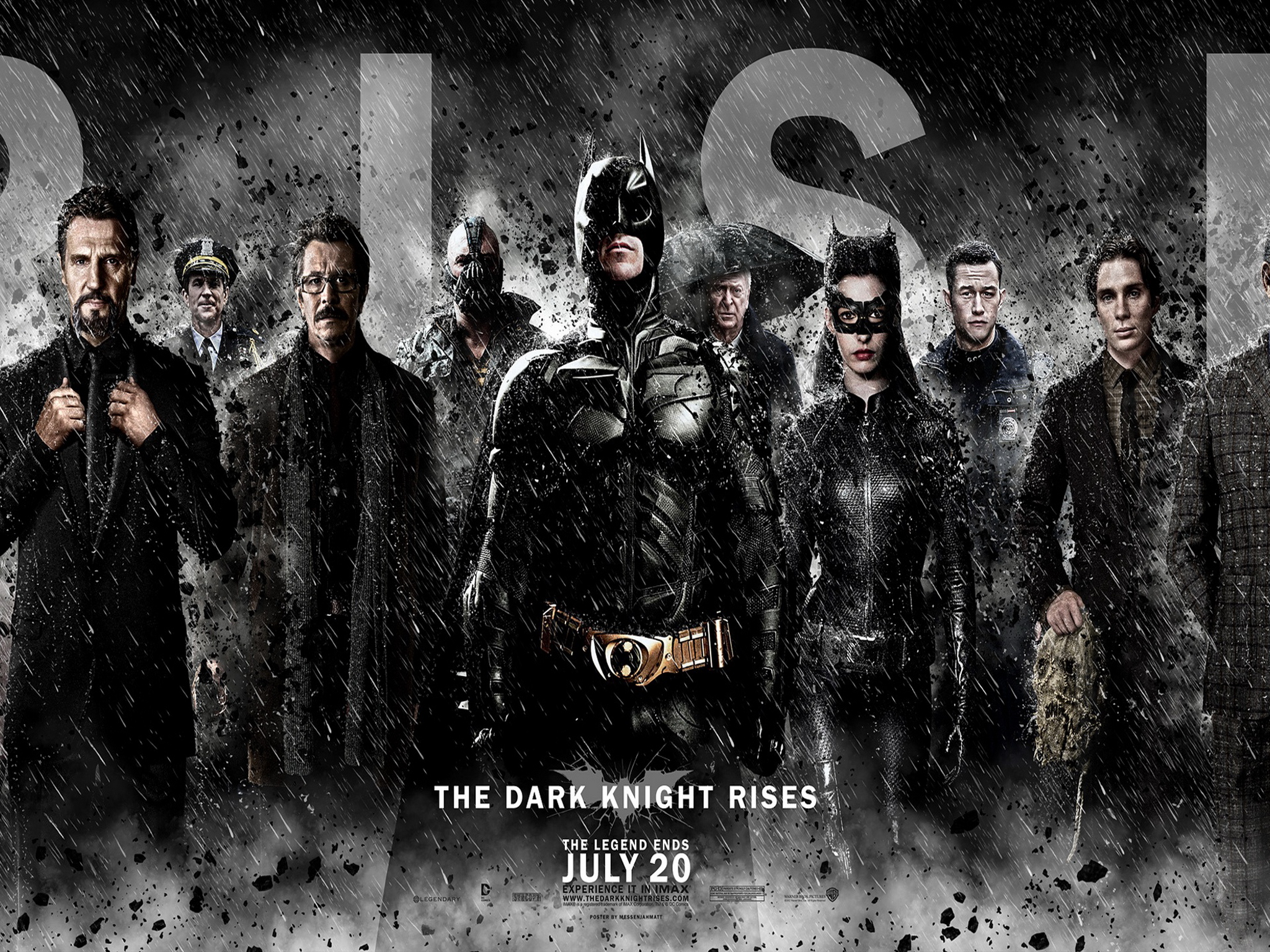 Christian Threads- Redemption and Cleansing
I can’t help but think of Bruce Wayne’s ascension from the pit to the chants of “rise” without thinking of the Christian faith. We sinners are in our own pits of sin. Yet just as Wayne we have a very real lifeline. Yes, Bruce Wayne shunned the physical lifeline, but he clung to an idea: he clung to faith. Similarly, the Christian shuns the physical realm and is saved by faith. Rise.
There is the notion of a “clean slate.” Selina Kyle is primarily motivated by her desire to have such a clean slate. She wants to start over. Batman offers it as a tantalizing price to pay for her help in the final battle. Yet in the end, Selina comes back and redeems herself more than was required by the Bat. At the end of the movie, however, it is revealed that both Bruce Wayne and Selina Kyle have managed to use the “clean slate.” They have started afresh. Again, a Christian allegory or overlay could be applied here. We are all sinners in search of a clean slate, yet we cannot provide it for ourselves. While have no nearly-magical technology to give us a clean slate, we do have salvation by grace through faith. And that, my friends, is something worth considering.
Finally, Wayne’s “rise” coincides with the need I described earlier. The fact that enemies had arisen meant that Batman had to also rise to the challenge. Christians know that once sin came into the world, the only way to cure it would be for God to come into the flesh to save us. Such is poignantly portrayed when Jim Gordon talked to John Blake. Gordon talks about the evils of Gotham and describes how Batman transcends the filth, but he “puts his hands into the filth [with us]” [I believe he says filth, but I have a suspicion it may have been muck–correct me if I’m wrong here]. Wayne, though having no obligation to these people, still loves Gotham, and he is willing to condescend to get his hands dirty–to put his hands into the filthy muck and dirty them in order to save it. Is it an allegory? It certainly works as one. Jesus is God incarnate. A God who loved His creatures so much that He was willing to become one of them–to put his hands into the filth and reach down to save us. Just as Batman did what was necessary to save while also dealing justice, Christ did what was necessary in order to save humanity from its own sin. The Son Rises.
Links
Check out more of my reflections on movies. If you liked The Dark Knight Rises, check out my look at The Avengers.
SDG.
——
The preceding post is the property of J.W. Wartick (apart from citations, which are the property of their respective owners) and should not be reproduced in part or in whole without the expressed consent of the author. All content on this site is the property of J.W. Wartick and is made available for individual and personal usage. If you cite from these documents, whether for personal or professional purposes, please give appropriate citation with both the name of the author (J.W. Wartick) and a link to the original URL. If you’d like to repost a post, you may do so, provided you show less than half of the original post on your own site and link to the original post for the rest. You must also appropriately cite the post as noted above. This blog is protected by Creative Commons licensing. By viewing any part of this site, you are agreeing to this usage policy.
A Christian Look at “The Avengers”
 The Avengers is a huge blockbuster film. Reviewers are raving about it. It’s a cultural phenomenon now. How should a Christian take the movie? Is there anything of value to it, or is it just another action flick? Here, I’ll offer less a review [short review: it was amazing, probably my favorite hero movie other than “The Dark Knight”] than a survey of some thinking points Christians can use to engage with the culture as they interact with the movie. There will be spoilers.
I Need a Hero
Consider the overall theme of The Avengers. Earth is in trouble from outside (alien/demigod) forces. But, in a way, the humans brought this plight upon themselves (they messed with powers they should not have–this theme is found throughout the entirety of the film). How can we be saved? We must look to our hero(es) and utterly rely upon them. Think about it. That is exactly the human condition now. We need a hero. I can’t help but channel that song by Skillet, “Hero.” We aren’t superhuman, we aren’t superheroes. Ultimately, we have to rely on someone else.
The overarching theme of The Avengers is therefore very reminiscent of the Christian story. Christianity holds that we have a plight: we’re under assault from our own sinfulness, into which we were tempted by Satan. We tried to mess with that which we should not have attempted: sin. And now, because of that, we are under assault. We have no way to save ourselves. We need a hero. We can’t escape from it ourselves. Like the civilians on the streets of the cities as they come under attack in the film, we must rely utterly upon that hero. We are powerless.
Yes, I do think that this theme resonates deeply with Christianity. Jesus Christ is our hero. He gave his life for us, willingly. He rose again. He came despite having no need to do so, and saved us from that from which we cannot save ourselves.
Another way to look at this theme is the deep human need for help. We realize we are floating in this gigantic universe and we feel insignificant. What meaning is there? We look to heroes–we fictionalize them and make them into “superheroes.” Even the previews before the movie showed two more hero flicks coming up: The Dark Knight Rises and The Amazing Spiderman. We are obsessed with this theme. Yet the real story of Christianity is even more compelling: we’ve already been saved. God has already acted. He sent us our hero, when we needed Him most. Death itself has been defeated. The human urge to look for a hero, to look beyond ourselves for help, is satisfied poignantly in Christ Jesus our Lord.
God Doesn’t Wear That
One of my favorite lines in the entire movie came from Captain America: “There is only one God, ma’am, and I’m pretty sure He doesn’t dress like that.” [Author’s note: I found several references to this quote and they all varied slightly, however if my memory serves me, this is the correct version.]
What can Christians think about this? Well clearly just saying there is “one God” doesn’t do much, but what is interesting is the context he says this in. Captain America has just met Thor (a demigod/superhero), yet he still affirms there is “only one [true] God.” Sure, Thor can play with lightning, but ultimately he is not God. There is but one God, and He’s infinitely greater than Thor or any of the other “gods” who turn out to be little more than powerful beings from Asgard.
More importantly, I think a Christian could use this pop culture reference in a dialog as one notes the importance of anthropomorphic language about God. God “doesn’t dress like that!” Too often, when we speak of God, we have this picture of some old guy with a beard. But God “doesn’t dress like that.” He’s transcendent, beyond. Yet He chose to come into the flesh to save us (see “I Need a Hero” above)! I found this quote very thought-provoking.
The Beyond
Another theme of The Avengers is the fact that we aren’t alone. Humanity is thought of by some in the movie’s universe as a helpless, defenseless planet which will certainly fall at the slightest attack. Humans are but one amongst many powers in the universe, and not the most powerful.
Again, this theme resonates with Christianity. We aren’t the most powerful beings in the universe, and we are not alone. There are angels and demons, gods, and God. I can’t fully develop the layers of meaning in the Bible in regards to all the powers of the universe, but a great discussion can be found in Gerald McDermott’s God’s Rivals
Conclusion
The Avengers was a fantastic flick. It has everything a huge summer blockbuster needs. It’s worth seeing for the action alone, but the story resonates deeply with our strongest urges. It informs us of our need for a hero/savior. It affirms that we are not alone. I can’t help but say I strongly encourage Christians to see the movie and take note of the themes which resonate with our worldview; they are there in abundance. As we seek to engage with the culture, we can point out how our own story–the True Story of Jesus Christ–satisfies the needs felt in the movie, and more.
Links
The Avengers: Sin, Salvation, and Jonah– There are even more themes in the movie that I think really resonate with the Christian worldview. Check out my other post on the topic.
Please check out my other writings on movies and books. For starters, if you liked The Avengers you may want to check out John Carter.
Drew Zahn also raves about Christian themes in The Avengers. [Major spoilers at this link.]
SDG.
——
The preceding post is the property of J.W. Wartick (apart from citations, which are the property of their respective owners) and should not be reproduced in part or in whole without the expressed consent of the author. All content on this site is the property of J.W. Wartick and is made available for individual and personal usage. If you cite from these documents, whether for personal or professional purposes, please give appropriate citation with both the name of the author (J.W. Wartick) and a link to the original URL. If you’d like to repost a post, you may do so, provided you show less than half of the original post on your own site and link to the original post for the rest. You must also appropriately cite the post as noted above. This blog is protected by Creative Commons licensing. By viewing any part of this site, you are agreeing to this usage policy.
Movie Review: Courageous

I have a new post coming up on this movie in which I reflect on the movie again and point out many of the flaws I missed in writing this review. For now, I hope readers will be satisfied with this link (PDF) that shows some of the issues I have with the movie.
I loved this movie. That said, Courageous is a movie that many people will dislike. First of all, it has a strong Christian message. That alone will alienate many viewers. It also tugs at the heartstrings in very intentional ways. It’s a thriller with a heart. Again, some people will groan about this. There are no big name stars, no extensive CG, no 3D effects.
So why do I say I love this movie? Mostly because of those very things. The movie pulls no punches. People struggle with various sins, they struggle with reconciling their faith and lack of success. They struggle with sorrow. These are people in real lives, living real experiences, real trauma.
The film starts off with a bang, a man fills up his pickup’s tank at a gas station. He steps away for a moment and another man jumps in his truck and drives off. The man chases, leaps into the driver side window, and holds onto the wheel. They fly down the road, the owner of the vehicle clinging on for his life. Finally, he’s thrown from the side, they crash, and the thief runs away, leaving the man and his car. Why did he give chase, risking his life to save a car? Turns out his baby is in the back seat. After the police get the story–and it turns out the man is, himself, a police officer–they drive off. One officer, Adam Mitchell, asks the other, Shane Fuller, whether he would have held onto the wheel. Their answers set the stage for the rest of the movie.
What does it take to be a man? What makes a good father? Is being “good enough” good enough? These are the questions Courageous deals with, among others. The film has several different story paths. There are essentially 5 main characters, and each has a story to tell. None of their stories feel rushed or incomplete.
The acting is also phenomenal. The characters feel very believable, and there are several scenes which highlight each actors’ abilities. The movie is very, very serious. The themes explored are uncomfortable in many ways, and challenging. But the film does a great job breaking up the tension with humor. Several scenes are scattered throughout that ease off the gas pedal enough to let viewers relax and just enjoy the film. It’s action packed, but it won’t keep you from getting the message of the movie.
And ultimately, that is what Courageous is about: a message. Whether viewers respond to the message or not will largely impact their enjoyment of the film. But one thing that all viewers will be able to take a way is that it does take real courage to step up and be a man. Rather than hiding from challenges, we–and here I mean men and women–need to face them. And again, the film doesn’t leave us with just that plea. Rather, it frankly says there is no way to do this without God. Viewers are therefore challenged in numerous ways after viewing Courageous. They’re challenged to be better fathers, to be better Christians, to seek out those in need, to admit their faults, confess them, and turn to God.
I encourage anyone to see this movie, whether fathers, mothers, sons or daughters. It’s not only a movie with a message, it’s just plain good film. The action is fast, the characters are enjoyable, and viewers can’t helped but get sucked in. See this movie!
“…choose for yourselves this day whom you will serve… But as for me and my household, we will serve the LORD.” – Joshua 24:15a, c.
SDG.
——
The preceding post is the property of J.W. Wartick (apart from citations, which are the property of their respective owners) and should not be reproduced in part or in whole without the expressed consent of the author. All content on this site is the property of J.W. Wartick and is made available for individual and personal usage. If you cite from these documents, whether for personal or professional purposes, please give appropriate citation with both the name of the author (J.W. Wartick) and a link to the original URL. This blog is protected by Creative Commons licensing. By viewing any part of this site, you are agreeing to this usage policy.
“Black Swan”: A Christian Analysis
 “Black Swan” is, in a word, “disturbing.” There is no doubt that the film is well made, and that Natalie Portman pulls off a stunning performance. Rather than reviewing it as a movie worth seeing, I thought I’d comment on it from a Christian perspective. In what follows, there will be spoilers.
What kind of thoughts can the Christian take away from a movie like “Black Swan”? I think the most obvious point is that the Christian can reflect on the nature of sin. What will things of this world drive us to? In her pursuit of perfection, Nina (Natalie Portman) is driven to the depths of her soul’s darkness. She is lead to violent fantasies (it’s unclear as to whether much of the violence is real or not) and to sexual depravity. It all culminates in her self-destruction, sacrificing her life for the “perfect” performance of “Swan Lake.”
I think we can see similar themes in our own lives as Christians. We often pursue worldly passions–among them a well-paying career; a sexual sin; an addiction; or the like–rather than focusing on that which matters: our Lord. Yet Christians even have this very idea built into the fabric of their belief system: we are sinners, with the capacity for great evil within us. Indeed, we are “originally sinful” and “totally depraved”, by nature we are sinful and unclean. “Black Swan” poignantly portrays this. An innocent girl is driven to the depths of hell in her pursuit of the world. It’s maddening, it’s horrifying, it’s disturbing. Despite this, in a way, the story draws us in. We can relate to the obsession with the world in ways that should scare us. Perhaps that’s why I found “Black Swan” so frightening. It wasn’t a horror movie by any means–it has its thrills and chills–but mostly, the fear is of the reality that could be. Could we become the “Black Swan” ourselves?
Now, I’m not suggesting “Black Swan” is a Christian film. It has sin of almost every imaginable kind portrayed, sometimes graphically. My point is that Christians can take away a message from the movie. The pursuit of the world will lead only to darkness… a “perfection” which can only destroy.
———
The preceding post is the property of J.W. Wartick (apart from citations, which are the property of their respective owners) and should not be reproduced in part or in whole without the expressed consent of the author. All content on this site is the property of J.W. Wartick and is made available for individual and personal usage. If you cite from these documents, whether for personal or professional purposes, please give appropriate citation and provide a link to the original URL. By viewing any part of this site, you are agreeing to this usage policy.
To Save a Life: Movie Review
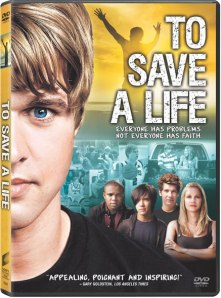
“To Save a Life” is a Christian movie (I imagine some fleeing already, but read the full review!) about some tough issues: teen suicide, self-harm, bullying, and more (no spoilers) come up in this film.
The movie starts with Jake Taylor attending the funeral of a friend from his younger years–a friend with whom he has lost touch. The friend committed suicide, and this leads Jake to seek answers to a number of questions and “Could I have done something?” is paramount among them.
The movie also explores the themes of faith as Jake interacts with a youth pastor while exploring questions about Christianity.
What makes this movie resonate with me is how accurately it portrays a number of aspects of teenage life. I’m very serious here. I knew people like Jake and his friends, and I also knew people who resembled those in the youth group scenes. The movie doesn’t hold punches, there are teens out to sleep with as many people as possible, there are those who have left the faith and are hostile to any mention of it, there is a persistent caricature of Christian belief which the teenagers think they have figured out, even within the Christian youth group there are “pretenders”–only there because they have to be (or want to hang out with friends).
The issues the film covers are, as mentioned, not easy. Teen suicide, cutting/self-harm, and the like are all portrayed. There are answers found, but they are not easy. They provide challenges to viewers to step out of their comfort zone and realize there are more important things in life than the mundane. Viewers will reflect on the movie for some time afterwards, wondering what it is that I should or could be doing.
Now, I mentioned before it is a Christian movie. Often, unfortunately, this means the acting is terrible. Not so with “To Save a Life.” I was engrossed in the film from the first minute. Jake (played by Randy Wayne) is perfectly cast. He poignantly portrays a troubled teenager reaching out for answers. The acting is not overdone. In scenes in which people are fighting, it is realistically uncomfortable; it feels too real. Watchers will have to fight not to pick out people they knew in the characters throughout the film. And this leads me to my next point:
It was stunning to me to watch the movie and realize how close I have been to being any number of these people. I was very close to being a youth who left the faith because of unanswered questions. I thank God that He provided people with answers around me–and people who were willing to say they didn’t know the answers, and point me in a direction to find them.
I watched the movie with my parents this week. My dad is a pastor and he wanted me to evaluate it for its use in a youth group setting. I can say that without a doubt I think this movie should be viewed by youth groups, but it should also be watched by concerned parents with their children. It will provide a springboard for discussion on some difficult issues.
I very highly recommend “To Save a Life.” It will resonate with some viewers in ways that simple lectures or discussions cannot. It presents a strong Christian message, calling youths to strengthen their faith and be willing to reach out to those who are hurting–a message we would do well to take to heart in a hurting world.
——
The preceding post is the property of J.W. Wartick (apart from citations, which are the property of their respective owners) and should not be reproduced in part or in whole without the expressed consent of the author. All content on this site is the property of J.W. Wartick and is made available for individual and personal usage. If you cite from these documents, whether for personal or professional purposes, please give appropriate citation and provide a link to the original URL. By viewing any part of this site, you are agreeing to this usage policy.

 J.W. Wartick - Reconstructing Faith