philosophy of religion
Book Review: “No Other God: A Response to Open Theism” by John Frame
 I recently finished No Other God
Areas of Agreement
One of the strengths of Frame’s book is how clear his thinking is. His style of argumentation is precise, and he clearly lays out what he considers evidence for his positions. He is unafraid to make statements with huge implications.
A particularly interesting aspect of Frame’s work was a brief historical look at the roots of Open Theism, leading it back to the Socinianism. Frame points out that advocates of Open Theism tend to portray their view as the “new theology on the block” despite the fact that it has been around (and rejected) for quite some time.
I believe Frame is correct when he argues against the centralization of any one attribute of God. Specifically, the centralization of love on Open Theism tends to ignore other important attributes of God (49ff). (Interestingly, Frame’s own account of God unnecessarily over-emphasizes Sovereignty, though he disguises this by calling it “Lordship.)
Frame levels strong critiques against Open Theism’s reading of Scripture. Open Theists tend to advocate the “straightforward” reading of texts which help their case. One of Open Theist’s favorite passages is God testing Abraham. Yet Frame rightly notes that if there is a straightforward reading of the text, then God did not know the present truth of Abraham’s heart, whereas Open Theists attempt to use this to support God not knowing the future (47). Further, if God was trying to figure out how Abraham would act in the future, then He was trying to do something He couldn’t (determine what the libertarian free choices of humans would be) according to Open Theism. So the story’s straightforward reading does not work to support Open Theism. Frame urges a similar examination of other passages, though he doesn’t expand on it.
Areas of Disagreement
Despite these areas of agreement, I vehemently oppose Frame’s position on several issues. Most notably, on theistic determinism, compatibilism, and libertarianism.
First, libertarianism. Frame correctly notes that the core of Open Theism is the assumption of libertarianism. Yet his critique of libertarianism is wrongheaded. He caricatures libertarians as believing that choices are made in the absence of any motivation. He writes, commenting on the libertarian view, “if our decisions are caused by anything or anyone (including our own desires), they are not properly our decisions… to be responsible, we must be able to do otherwise” (121). Yet this is explicitly not libertarianism. Peter van Inwagen, for example, explicates libertarianism by saying “…that someone’s acts are undetermined does not entail that they are uncaused” (van Inwagen, An Essay on Free Will, Oxford: 1983, p. 14).
But Frame explicitly centers his critique of libertarianism on a contra-causal account of freedom, saying, for example, “If guilt presupposed libertarian freedom, then in order to show that Hubert [a man accused of robbing a bank] is guilty, the prosecutor would have to show that his decision to rob a bank had no cause…” (126). But again, libertarians deny this very type of contra-causal freedom, so Frame is arguing against a straw man. Because Frame thinks libertarianism is so utterly central to Open Theism, this means that the core of his critique fails to hit home.
The problem with Frame’s counter against libertarianism is that it barely touches the surface of the philosophical arguments for the position. He correctly rails against the idea that our actions are just random occurrences, but incorrectly assumes that this is libertarianism.
Finally, the greatest area of disagreement I have with Frame is on his view of omnidetermination. Consider the following two quotes:
“The uniform witness of Scripture is that the evils of this life come from God” (140).
“…[I]t is important to see that God does in fact bring about the sinful behavior of human beings, whatever problems that may create in our understanding” (68).
I’d be curious to see how Frame reconciles these assertions with the constant witness of Scripture that God is just; fair; good; opposed to evil; etc. Frame utilizes several verses to support his position, but he makes primary those which say God uses “all things” and verses which say calamities are from God. But regarding the former, this can easily refer simply to permissive will, and regarding the latter, the verses he uses are out of context (and even were one to grant the “straightforward reading,” one could counter by saying the calamities are not every evil action, but merely those things which God uses–i.e. storms, other nations, etc.–to instruct His people). Frame, like many theological determinists, is not building even on sand, but on a void. Literally saying that God causes evil is so utterly repugnant and contrary to Scripture that this view overshadows all the good things Frame has to say.
Conclusions
Ultimately, No Other God is on target in a few ways, but it is wildly gunning the wrong direction on too many issues. Frame’s philosophical case against libertarianism is off the mark, he fails to deal with the strong philosophical arguments for libertarianism, and his view that God literally causes evil is baseless. Interestingly, while I went in reading this book looking for some good arguments against Open Theism, I came out with the realization that theological determinism is a far more dangerous doctrine indeed.
SDG.
Check out other posts about Open Theism here.
John Frame,No Other God
——
The preceding post is the property of J.W. Wartick (apart from citations, which are the property of their respective owners) and should not be reproduced in part or in whole without the expressed consent of the author. All content on this site is the property of J.W. Wartick and is made available for individual and personal usage. If you cite from these documents, whether for personal or professional purposes, please give appropriate citation with both the name of the author (J.W. Wartick) and a link to the original URL. This blog is protected by Creative Commons licensing. By viewing any part of this site, you are agreeing to this usage policy.
Book Review: “Eternal God: A Study of God Without Time” by Paul Helm
 Paul Helm is, in my opinion, one of the most lucid thinkers on the topic of God and Time. His Eternal God
Helm points out early in his book that the issue of divine temporality/atemporality is “underdetermined” in Scripture (7). This means it’s one of those fun issues that lies most squarely in philosophy of religion.
And that is where Helm excels. Chapter-by-chapter he outlines a cohesive case for divine atemporality. Where Paul is most successful, I think, is in his rebuttals of arguments for temporality. For example, a well-known argument for temporality is that if God interacts in time, he must be temporal. Helm counters by pointing out that a precisely parallel argument could be constructed for God and space. Yet few Christian philosophers accept that God is spatial (49ff). While this doesn’t rebut the argument, it does point out something important: it doesn’t seem as though the conclusion (God is temporal) follows from the premise (God interacts in time) any more than it would if it were spatial (God is spatial/God interacts with space).
There are many different accounts of divine timelessness, from Brian Leftow’s spaceless timelessness (see his work Time and Eternity) to relative timelessness, and beyond. Helm takes the much less popular route and takes the tough pill of saying that God created spacetime as a static bloc. This allows Helm to easily deny many of the arguments for temporality which stem from a-theory or dynamic time. But it also raises many problems. Foremost among these (in my opinion) is human freedom. For, on the B-Theory of time (static theory), everything which will ever happen, has happened, and in a sense exists. As we go from moment to moment, we’re really just passing through a bloc of spacetime, we aren’t literally moving through a present. Presentness is a subjective phenomenon, given static/B-theory. It’s just our perspective. So where does human responsibility and freedom come in?
Helm here turns to compatibilism. He freely admits that timeless creation entails determinism (170). Thus, he denies that humans have free will in the libertarian sense. But this, he argues, does not undermine human responsibility. I don’t think I can do justice to the nuances of his argument, but the basic idea is that Helm argues that just because past actions/events determine our actions in the future, that doesn’t mean that we aren’t responsible for what we do. As I said, this is a really, really watered down version of his argument, but I think this is one of the weaker points of his work.
Why? Because the idea of responsibility simply does not make sense on determinism, particularly when it is theistic determinism. For consider the idea proposed here. God has created all of time and space as one bloc. Thus, everything I do or have ever done was created by God once he brought the universe into being. Literally, everything I did, I do because God created the universe such that I would do x. So how could it be that I am responsible for doing x, if I never chose to do x. I simply do x because I have to, I have “already” done it, on the static theory. If I could create a time travel device, I could travel forward in time and see myself doing x, and could not prevent it, because God created the world such that I would do x. But the core of responsibility is that I chose to do x. While we punish people for things they do by accident (vehicular manslaughter, for example, or accidentally breaking a window), these things still resulted from prior choices (playing baseball near breakable window/driving carelessly). I simply do not see how any account of responsibility could make sense unless someone can choose to do what they do.
There are several different positions about divine temporality/atemporality. Helm swallows the hard pill of going with the static theory of time to ground his divine atemporality. This, I believe, grants his account extreme philosophical plausibility. If God created the entire universe as a space-time continuum (I’ve always wanted to use that phrase from Star Trek!), then there’s no reason to suppose God would be affected by time. It’s ontologically outside of God, and all of his interactions already have taken place. While I’ve already pointed out some of the problems with this view, these problems are not with the coherence of the view but with the theological nature of it. Thus, I think it possible to say that Helm has adequately defended a position of divine eternity.
It would be impossible to cover everything of interest in such a comprehensive look at the topic of divine timelessness. Helm analyzes an extraordinary number of arguments in great detail. I cannot recommend the book more highly. Although I ultimately reject Helm’s second contention (B-theory), I believe his view is extremely coherent, and I can find little fault in it. Anyone interested in the issue of God’s relationship to time must read this book. It’s a book I think I shall re-read so that I can better grasp his arguments.
(Note: This review is based on the recently published second edition of this text, which includes several new chapters with much of interest, including a rebuttal of William Lane Craig’s arguments against timelessness. I recommend interested readers get their hands on the newer edition.)
SDG.
Source:
Paul Helm, Eternal God
——
The preceding post is the property of J.W. Wartick (apart from citations, which are the property of their respective owners) and should not be reproduced in part or in whole without the expressed consent of the author. All content on this site is the property of J.W. Wartick and is made available for individual and personal usage. If you cite from these documents, whether for personal or professional purposes, please give appropriate citation with both the name of the author (J.W. Wartick) and a link to the original URL. This blog is protected by Creative Commons licensing. By viewing any part of this site, you are agreeing to this usage policy.
Against Open Theism: Scrooge and God’s knowledge of the Future
 I was listening to William Lane Craig’s Defenders podcast (Doctrine of God: Part 13) and he brought up an interesting analogy about omniscience. He discussed Scrooge in Dickens’ “Christmas Carol.” The last spirit to appear to Scrooge is the ghost of Christmas to come. He takes Scrooge around and shows him all sorts of disturbing imagery that will happen. Scrooge asks the ghost whether these are things that must happen, or whether he can stop them. The spirit remains silent.
Craig pointed out the spirit would have to remain silent to have any sort of effect. For suppose the spirit knows what will happen: that Scrooge will repent and so these awful things won’t happen. But then if he tells Scrooge what he knows, Scrooge will feel little remorse about not acting to prevent them. Yet if the spirit told Scrooge these things would happen, then Scrooge has no reason to modify his behavior, for he cannot prevent the events from happening.
Craig suggests, then, that we should look at omniscience and instances of God “changing his mind” in the same fashion. This has some interesting applications in the case of Open Theism, because it undermines one of the core exegetical arguments for the position: cases of God “repenting” or “changing his mind.”
God, on classical theism, knows what will happen in every circumstance. He comprehensively knows the future (contra Open Theism). If this is so, then God would have to withhold some of his knowledge in order to bring things about, despite his knowledge that it would occur. Like the Ghost of Christmas Yet to Come, God would know the answer to Scrooge’s question, but would not answer him, so that he could bring it about that Scrooge would repent.
Consider Jonah. Open Theists often point to the story of Nineveh as an example of God not comprehensively knowing the future. Because God sends Jonah with the message that Nineveh will be destroyed, but then, when Nineveh repents, he shows mercy, many people say that God did not know the Ninevites would have such a reaction. Yet why should this be the case? Isn’t it plausible that God did know they would repent and that God sent the message that they would be destroyed because that is the only way Nineveh would be led to repentance? This is, in fact, hinted at later in the book, when Jonah says to God, “Isn’t this what I said, LORD, when I was still at home? That is what I tried to forestall by fleeing to Tarshish. I knew that you are a gracious and compassionate God, slow to anger and abounding in love, a God who relents from sending calamity” (4:2).
But if God had told the Ninevites “I will not destroy you” because he knew that he would not, would not the impetus of Jonah’s message lose its strength. With the threat of destruction, the Ninevites repented. Without, would they have done so? Imagine Jonah’s message going through the streets “Forty more days and Nineveh will not be destroyed!” I think it obvious that this would probably not have the same effect that the initial message was.
So it seems quite plausible that God, like the Ghost of Christmas Yet to Come (in our analogous case), may refrain from telling all he knows at many points throughout Scripture. For if he told people everything he knew, he would know that they would not repent, turn aside from their evil ways, or bring about the actions he desired. The instances wherein God ‘changes his mind’ or ‘repents’ are instances of this: rather than revealing his knowledge, God withholds it, in order to bring about the ends that he desires to (and knows will) happen. We, like Scrooge, would not respond to calls for repentance if we felt it didn’t make a difference in the end.
Final note: the above account implicitly assumes molinism to be the case. So much the better for it, I say!
SDG.
This is part of a series I’ve written against the doctrine of Open Theism. If you’d like to read more, check out the original post for discussion and links.
——
The preceding post is the property of J.W. Wartick (apart from citations, which are the property of their respective owners) and should not be reproduced in part or in whole without the expressed consent of the author. All content on this site is the property of J.W. Wartick and is made available for individual and personal usage. If you cite from these documents, whether for personal or professional purposes, please give appropriate citation with both the name of the author (J.W. Wartick) and a link to the original URL. This blog is protected by Creative Commons licensing. By viewing any part of this site, you are agreeing to this usage policy.
Book Review: Natural Law: A Lutheran Reappraisal
 Natural Law: A Lutheran Reappraisal
The individual essays presented in NLL are almost all extremely strong. The topics covered include the views of early Lutherans on natural law (including Luther and the authors of the Confessions) , the view of several later Lutheran individuals (like Barth and Forde), and a kind of “applied ethics” section which uses natural law in individual instances.
The strength of many of these essays is a credit to the Lutheran scholarship which went into the work. The insight into Lutheran thinkers’ views on natural law helps to refute some notions that Lutherans do not “believe in” natural law. In fact, it seems the opposite is the case. “Luther,” argues Thomas Pearson, “understands natural law not as a Christian teaching, but as an observation of human nature in general” (63). Later, Carl Rockrohr expands on this idea to view natural law as a place of common ground for evangelism (196-197).
NLL really shines when it demonstrates that even topics which may at first seem unimportant (like an essay on Friedrich Stahl’s rejection of natural law) can serve to develop a modern view of natural law (Jacob Corzine argues in the aforementioned essay that Stahl’s critique helps ground a Christian natural law theory not in reason but in God [115]).
The applied ethics section of NLL has its ups and downs. “Natural Science, Natural Rights, and Natural Law: Abortion in Historical Perspective” by Korey D. Maas is a simply amazing critique of abortion which presents the case for pro-life not as a religious issue, but as one which can be established on common grounds of natural law (228ff). On the other hand, Albert Collver III’s argument against the ordination of women struggles because it only presents one Lutheran view on the issue (more on that below). The section (and book) concludes with Matthew Cochran’s great summing up and case for the use of natural law as a “Way Forward” for discussions of epistemology and natural law (see esp. 274ff).
The strength of NLL is therefore found in the fact that the essays manage to cohere to the point of building off one another. Whether this was intentional or not, it strengthens the whole work. The early essays provide the framework for the later developments into applied ethics.
This is not to say the book is without faults. One such fault is the woefully inadequate glossary. While the terms included are defined in detail, some terms are inexplicably left out. For example, while the glossary takes lengths to define idealism, it makes no mention of “epistemology,” a concept which was referenced several times. This makes the book seem at times unsure of its purpose. Is it written for the layperson or the professional, the philosopher or the theologian? It includes study questions and a glossary, which suggests use as a textbook in undergraduate (or high school) theology classes, but the very nature of the essays included and the inadequacy of the glossary suggests that only those already familiar with some of the issues will get the most bang for their buck. A final criticism I would level against the book is that while it does present essays from various Lutheran traditions, it is clearly founded specifically upon LCMS teaching. This is unsurprising, given that it is published by Concordia Publishing House (the official publishing arm of the LCMS), but this could cause some confusion when the book devotes an entire chapter to a critique of a different Lutheran tradition (the ELCA). This small shortcoming can also be seen when the book only presents a complementarian view of natural law (that is, a view that natural law excludes women from the ministry) despite the fact that other Lutheran traditions (for example, the NALC or ELCA) are egalitarian (ordain women).
NLL is a simply fantastic work. Lutherans looking to learn about the concept of natural law would be well served to pick the book up and read it cover-to-cover. Those outside of the Lutheran tradition would surely find NLL useful as well, as the essays on applications of natural law can serve as foils for the development of one’s own position. For those wishing to explore the important issue of natural law, I recommend the book highly.
SDG.
——
The preceding post is the property of J.W. Wartick (apart from citations, which are the property of their respective owners) and should not be reproduced in part or in whole without the expressed consent of the author. All content on this site is the property of J.W. Wartick and is made available for individual and personal usage. If you cite from these documents, whether for personal or professional purposes, please give appropriate citation with both the name of the author (J.W. Wartick) and a link to the original URL. This blog is protected by Creative Commons licensing. By viewing any part of this site, you are agreeing to this usage policy.
Against Open Theism: Definitions
 I’ve encountered Open Theism a number of times in my readings and online. Many people I respect greatly fall under the category of “Open Theists.” Greg Boyd, for example, wrote one of the first apologetic books I ever read, yet he is an ardent Open Theist. Yet the doctrine of Open Theism is one with which I disagree vehemently. Therefore, I’m going to write several posts outlining a series of arguments against the doctrine.
Definitions
Open Theism: The doctrine that God, through his own freedom and sovereignty, chose to create free creatures (humans) which could make truly free decisions. Because God made these free creatures, he freely chose to limit his knowledge of the future, such that he would not pre-ordain their actions. Therefore, God knows only those things which God unilaterally brings about.
Another Definition
From http://www.opentheism.info/, a site collecting information and advocating Open Theism (endorsed by John Sanders, a well known proponent of the view) we can examine a 5-part definition:
1) “In freedom God decided to create beings capable of experiencing his love.” (emphasis theirs)
2) “God has, in sovereign freedom, decided to make some of his actions contingent upon our requests and actions. God elicits our free collaboration in his plans. Hence, God can be influenced by what we do and God truly responds to what we do.” (emphasis theirs)
3) “God has chosen to exercise general rather than meticulous providence, allowing space for us to operate and for God to be creative and resourceful in working with us. It was solely God’s decision not to control every detail that happens in our lives.”
4) “God has granted us the type of freedom (libertarian) necessary for a truly personal relationship of love to develop. ”
5) “God knows all that can be known given the sort of world he created… in our view God decided to create beings with indeterministic freedom which implies that God chose to create a universe in which the future is not entirely knowable, even for God. For many open theists the ‘future’ is not a present reality-it does not exist-and God knows reality as it is.”
(Again, please note these are quoted verbatim from sections on http://www.opentheism.info/; I do not claim credit for these 5 steps of the definition.)
Areas of Disagreement/Agreement
There are many areas of agreement I can share with the Open Theist. For example, I agree that God created free creatures, who have libertarian free will (1 and 4). I agree that God has not predetermined all future events (3). I agree at least in some sense that God’s actions are contingent upon our own (2)–but that’s where the differences begin.
I disagree with Open Theists on an unqualified 2 and 5. It is my belief that:
A) Future Events are knowable
B) God knows the outcome of all future events before they happen.
C) God’s knowledge of the future allows him to take into account our free choices and respond to them from eternity.
One final area of disagreement would be with the implicit idea within Open Theism of divine temporality. I believe:
D) God is essentially timeless.
What’s at Stake
“Okay, all this is well and good,” you may say, “but what’s the payoff? What’s really at stake in this debate?”
Fair questions! There are some who argue that Open Theism is a heresy, period. A simple Google search turns up dozens of articles and comments calling the doctrine a heresy. Several have attempted to ban Open Theists from evangelical circles (the ETS voted to keep two prominent Open Theists within their ranks; others have lobbied to call it heretical).
I do not think that Open Theists are heretics. While I disagree with their views, I think that they have some very good arguments for their position. I do think, however, that the Scriptural evidence excludes Open Theism from possibility. While there are many passages which could be utilized to argue for the position of Open Theism, I believe those passages which exclude the position take priority, and therefore the passages appearing to advocate the position are to be interpreted as use of metaphors or anthropomorphism.
Other Posts in the Series
This post will also serve as a host for links to other posts in the series. View them below, with brief descriptions of their content:
God’s Infinite Knowledge– Argues that Scripture clearly states God’s knowledge is infinte/without number/unlimited. Yet, on Open Theism, God’s knowledge increases, and would therefore have to be finite. Concludes Open Theism is false.
Scrooge and God’s knowledge of the future– Addresses one of the main arguments for Open Theism–that God changes his mind or repents of certain actions.
Book Review: “No Other God: A Response to Open Theism” by John Frame– I review John Frame’s work on open theism. Interestingly, Frame combats open theism with the opposite extreme: theological determinism, a view which I disagree with as adamantly (or more) than I do open theism.
——
The preceding post is the property of J.W. Wartick (apart from citations, which are the property of their respective owners) and should not be reproduced in part or in whole without the expressed consent of the author. All content on this site is the property of J.W. Wartick and is made available for individual and personal usage. If you cite from these documents, whether for personal or professional purposes, please give appropriate citation with both the name of the author (J.W. Wartick) and a link to the original URL. This blog is protected by Creative Commons licensing. By viewing any part of this site, you are agreeing to this usage policy
“Extraordinary claims need…” What, exactly?
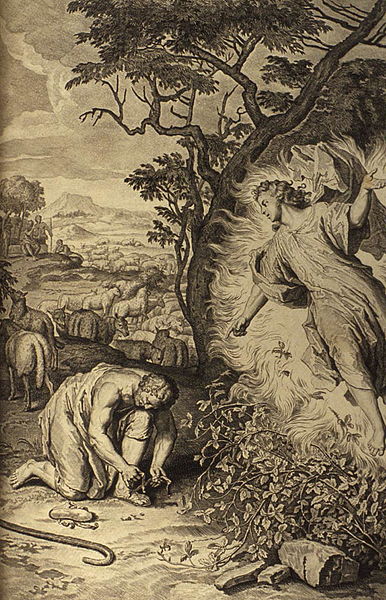 We’ve all heard it before, “Extraordinary claims need extraordinary evidence.”
It’s a maxim repeated all over the internet, and it keeps popping up in debates between Christians and atheists. But what exactly is the phrase telling us? Do extraordinary claims really need extraordinary evidence? And what exactly qualifies as “extraordinary” evidence anyway?
Is it true?
Do extraordinary claims really need extraordinary evidence? Well, intuitively, it seems the answer yes. But is it really true?
Suppose I were to claim that I were not a human, and instead am a giant pink salamander. What kind of evidence would be required in order to back this claim? Well I could obviously submit pictures of myself typing these blog posts as evidence. I could submit videos. I could allow people to come observe me. None of these would really be “extraordinary” types of evidence. Merely observing something is nothing extraordinary. But these could certainly serve as proof for my claim. People would be justified in believing me upon observation–it’s possible that they could be within their epistemic rights simply by seeing pictures of me typing (though with Photoshop and the like, it is more difficult to justify that epistemically).
So despite our intuitions, it seems there must be some kind of argument to establish the truth of the phrase. It seems, upon further thought, that the phrase is false. Ordinary evidence (x observes y to be the case, therefore, x believes y is true) will do even for extraordinary claims. Examples of this nature could be multiplied. So it seems the phrase, on this interpretation, is simply false.
What qualifies as an ‘extraordinary’ claim?
Another problem with the statement “Extraordinary claims need extraordinary evidence” is that those who make the claim never explain what exactly it is that qualifies as an “extraordinary claim.” I mean surely, we could reduce almost any claim to something extraordinary, if we worked hard enough. I claim to be human; that entails a huge amount of ontology such as the existence of a planet which is capable of supporting life, the existence of life on said planet, the higher order of life such that intelligent life could exist, intelligent life which created machines capable of typing out thoughts, etc, etc. Any claim could be said to be “extraordinary”. The attack on “extraordinary claims” fails, in part, because it does not define what qualifies as “extraordinary”. I suspect this is another case of proving too much or not enough: either all claims are extraordinary and not to be believed until we have overwhelming evidence, or claims need just enough evidence to be justified in believing them.
Without a clear explanation of what qualifies as an “extraordinary claim” (and I think there can be none offered without begging the question), there is no reason to accept the statement as true to begin with. But this leads us to the next level:
What is ‘extraordinary evidence’?
What exactly is “extraordinary evidence” anyway? The phrase is thrown around as though it has meaning, and for someone studying philosophy with a heavy analytic bent, this is maddening. What is meant by “extraordinary”!? I think it could give us one of two options: either a) a large amount of evidence; or b) extremely powerful evidence. But even these definitions are ambiguous: what constitutes a “large amount” of evidence or “extremely powerful” evidence?
The phrase therefore seems to rely upon a certain ambiguity in order to maintain its power. There is no clear definition of what constitutes extraordinary evidence; and it seems likely that the phrase is merely used to try to increase the burden of evidence on the theist. Without a clear definition or any kind of argument to support the assertion, however, the theist is justified in rejecting it.
Is that the issue?
Perhaps I’ve missed what’s really the issue here. I suspect the reasoning is that the phrase is meant to refer either to:
1) Things which can’t be observed in the usual fashion
2) Things of great existential import
Consider 1) first. The reasoning here could be that something, like God, which can’t be observed simply by going somewhere and staring, would need extraordinary evidence in order to justify belief in said being. The problem here is that the definition of extraordinary is being used differently than (I think) the phrase is intended. For here, extraordinary would have to mean simply”other” than the ordinary. There would have to be some kind of evidence for a thing’s existence such that it would act as a substitute for “seeing” the thing. But that doesn’t mean we need “more” or “greater” evidence for something described by 1) than we would for something which is a standard, everyday kind of thing. All it means is that we’d have to have a different kind of evidence.
What kind of evidence, specifically? Well it seems as though logical evidence or philosophical argument could serve as a valid substitute for empirical evidence. So either of those could serve to justify someone in her belief in a deity.
Consider 2)–that claims of great existential import need extraordinary evidence. William Lane Craig discussed this in his Reasonable Faith Podcast, “Doubting the Resurrection.” He asserted that if something is of existential importance, we don’t demand more evidence for it; if anything, we should be more open and eager to explore the viability of the claims. Craig proposed the following example: suppose you are diagnosed with a fatal disease and there was “some experimental evidence that a vaccine… might cure you, wouldn’t you be desperate to [try the medicine and] find out if that might save your life… rather than saying, ‘Well, this is such a life-changing situation that I’m going to be as skeptical as I can, and only take this medicine as a last resort when it’s been demonstrated absolutely that” it will cure the disease.
The key point is that claims of extraordinary existential significance require evidence, but they are of such import that it is almost absurd to be totally skeptical of these claims due to their total importance. As Craig points out, if God exists and sent His Son to save us through belief in Him, that is such an extraordinarily significant difference between the universe if that is true as opposed to if it is false that it is worth exploring. He points out that even if there’s only a 1/1,000,000 chance that it’s true, it is worth looking into.
The most obvious rebuttal to this kind of reasoning is a kind of argument from religious diversity: “All the world’s religions have existential significance, and it would be impossible to fully explore all of them in a lifetime”… therefore, what? Perhaps one could argue that because we can’t explore all the options, we shouldn’t bother with any–but that seems to be throwing out everything for no reason. A diversity of options does not entail the falsehood of all.
It may be best to instead look at world religions in light of the kinds of evidence which could be available, and take 1) above with 2) to yield an exploration of religions based upon the types of evidence available for them. For example, the Qur’an contradicts the Bible on the topic of whether Jesus was crucified. Yet we have irrefutable evidence that Jesus was indeed crucified from both Gospel accounts and extrabiblical, contemporary accounts. Therefore, one could see it fit to exclude Islam from the exploration and move on. Perhaps one finds the existential claims of Buddhism less compelling than that of Judaism–in such a case, she would be well within her epistemic rights to explore Judaism rather than Buddhism.
A complete answer to this objection would take us far afield, but for now I think that it may be best to note simply that the objection does not undermine the argument against 2) anyway. As noted, a mere diversity of positions does not entail they are all false. Similarly, our inability to explore all possible options does not mean we should explore none. Perhaps it means, instead, that we should get started.
——
The preceding post is the property of J.W. Wartick (apart from citations, which are the property of their respective owners) and should not be reproduced in part or in whole without the expressed consent of the author. All content on this site is the property of J.W. Wartick and is made available for individual and personal usage. If you cite from these documents, whether for personal or professional purposes, please give appropriate citation with both the name of the author (J.W. Wartick) and a link to the original URL. This blog is protected by Creative Commons licensing. By viewing any part of this site, you are agreeing to this usage policy.
Sam Harris on Christian Sacraments–Lunacy?
 Sam Harris recently debated William Lane Craig on the topic “Is Good from God?” See my comments on the debate here. During the debate, Harris argued that the rituals of Christianity can be seen as a kind of lunacy. Harris said, “[Religion] allows perfectly decent and sane people to believe by the billions what only lunatics could believe on their own. If you wake up tomorrow morning thinking that saying a few Latin words over your pancakes is going to turn them into the body of Elvis Presley, you have lost your mind. But if you think more or less the same thing about a cracker and the body of Jesus, you’re just a Catholic.”
Consider what Harris is claiming here. Basically, he’s saying that to believe a cracker becomes the body of Jesus is a kind of lunacy. Interestingly, throughout the debate he issued these veiled (or not so veiled) insults to Christians at large, and quickly retreated from them when he was called out. But that’s neither here nor there.
My contention is that Harris’ implicit argument against the rationality of the Sacraments (and Christian rituals at large) contains an implicit assumption. Once that assumption is exposed, his argument fails. The implicit assumption is this:
1) Christianity is false
Yeah, I’m serious. The reason is because the only way Harris’ argument makes sense is if one assumes a priori that Christianity is false. For consider his objection if Christianity is true. If Christianity is true, then God exists, Jesus was God, Jesus told us what would happen in Communion/the Eucharist, etc., etc. But then if Christianity is true, it is perfectly rational to hold that the uttering of certain words as part of a ritual would be causative in the sense that God said it would be. So Harris’ argument turns on the assumption that Christianity is false.
But perhaps I’m missing Harris’ point. Perhaps he is instead trying to say “Look at what you guys do! It’s crazy if it’s something else!” But again the only way this would make sense is by assuming Christianity is false. If I believe Christianity is true, then I have no reason to think the rituals involved therein are lunacy or anything other than perfectly rational worship of our God.
But it could be pressed that it does seem as though Harris’ assertion that Holy Communion would be viewed as lunacy in other contexts is in some sense correct. For were I to do the same with pancakes and Elvis, I would be seen as a lunatic. Why not the Christian too? Well, then the question would have to be what kind of evidence do we have for thinking Christianity is true as opposed to other beliefs? In short, if the Christian is epistemically justified in believing Christianity to be true, then Harris’ argument is exposed for what it is: a facile argument which shows how deeply Harris and the other “New Atheists” fail to understand the position they attack.
SDG.
Image: Priest distributing Holy Communion at Holy Protection Church, Düsseldorf.
——
The preceding post is the property of J.W. Wartick (apart from citations, which are the property of their respective owners) and should not be reproduced in part or in whole without the expressed consent of the author. All content on this site is the property of J.W. Wartick and is made available for individual and personal usage. If you cite from these documents, whether for personal or professional purposes, please give appropriate citation with both the name of the author (J.W. Wartick) and a link to the original URL. This blog is protected by Creative Commons licensing. By viewing any part of this site, you are agreeing to this usage policy.
Sam Harris vs. William Lane Craig: Thoughts and Links
 The debate I’ve been hyping to friends and family happened tonight: Sam Harris, one of the “New Atheists” and author of the books The Moral Landscape, Letter to a Christian Nation, and The End of Faith went up against William Lane Craig, one of my favorite living philosophers. Craig has a PhD in philosophy, as well as a ThD. He’s written extensively on philosophy of religion, apologetics, and time. He’s the author and editor of too many books to list, but they include The Blackwell Companion to Natural Theology, Reasonable Faith, and Time and Eternity. The topic of the debate was “Is Good from God?”
I wanted to share some links for all of you, along with my thoughts about the debate.
Links
Audio of debate here.
Video of the debate here.
Craig rebuts Harris’ allegation of misquotations here.
Craig’s brief post-debate impressions here.
Craig’s thoughts on his strategy in the debate here.
Another analysis of the debate here.
See Wintery Knight’s summary of the debate here.
More links will be posted as I find them.
Analysis of Debate
It is important to note that the topic of the debate is “Is Good from God?” The topic is not “Does God exist?” Nor is it “Is the God of the Old Testament Evil?” Remember this. Also, my apologies in advance for my tense shift throughout. It’s almost 2AM and I’m tired.
Craig Opening
Craig’s opening statement started with him asserting he’d maintain two propositions
I. If God exists, then we have a solid foundation for objective moral values.
He backed this contention up by saying that it is true even if God does not exist, because it is a conditional statement (“If God exists…”). Further, he argued that God’s nature provides the standard against which all moral vales are measured. Important: Note that here Craig is not arguing that objective moral values are grounded in arbitrary commands from God, rather, Craig argues that God is the standard against which morals are judged. It would be true to say God is good simpliciter.
As far as moral duties are concerned, it is these which are constituted by God’s commands, however that does not mean the commands are arbitrary, but rather grounded in the essential nature of God.
Craig’s second contention was:
II. If God does not exist, then there is no strong foundation for objective moral values.
He argued:
1) Why think that human beings have objective moral worth? On atheism, humans are merely “accidental byproducts” of naturalistic evolution. What therefore would mean that humans are more valuable than hyenas, other primates, rocks, etc.?
2) He quotes Michael Ruse, an atheistic philosopher, who points out that morality is, on atheism, illusory. It is a mere socio-biological convention. And to think that morality is objective is simply false. He also quotes Dawkins as saying that we are just machines for propagating DNA. On such a view, how can we be objectively valuable?
3) Craig argues that Harris simply redefines good in nonmoral terms. He argues by stipulation that “well-being” = good, which is to beg the question. Craig argues that Harris has provided no reason to equate the two, and in fact has no grounds from which to do so.
4) Natural science only shows what “is” not what “ought” to be. It can only describe actions, not prescribe them.
5) Harris explicitly denies free will within his writing and so it seems impossible for there to be any culpability for actions. How can someone have “ought” applied to them if they are not free to make choices about their actions?
Harris Opening
Harris begins by noting, as did Craig, the areas of agreement. He agrees that to deny objective morality can lead to some horrific views, and he uses anecdotes to support this claim. Craig and Harris seem to agree that objective morality is something necessary for meaning in the universe. I find no contention with this part of Harris’ discussion.
He goes on to argue that there are “facts” and there are “values.” He argues that science can move from the subjective facts to objective values, although I found his argument here unclear.
Finally, he gets to the point where he specifically outlines his view, which is based upon the well-being of conscious creatures.
Harris argues that “If the word ‘bad’ applies, it is ‘wrong.'” Further, “The minimum standard of moral goodness is to avoid the most possible misery for everyone.” Harris asks us to envision a world in which every conscious being was suffering to the maximum possible extent. He says that this is obviously bad (= wrong) and so we can scientifically determine what is good by working towards the well-being of conscious creatures.
At this point in my notes I wrote “Why?” next to the quotes from Harris. And I think that is exactly the problem. Thus far, Harris has done a good job outlining what he thinks is wrong, but he hasn’t done anything to say why it is wrong, other than by stipulating that it is wrong.
Harris goes on to argue that
1) Questions of right and wrong depend upon minds
2) Minds are natural phenomena
3) Therefore, morality can be understood by science because we can study minds
Against Harris, I would note that each of these premises are contentious, and he doesn’t argue within the debate to support any of them. First, premise 1) is questionable because it actually goes against the nature of objective morality. If something is objectively wrong, even were there no minds in the universe, the action would still be wrong. Here Harris makes the mistake of thinking that because minds make moral judgments, moral judgments are dependent upon minds. I think that is false, and it needs argumentation to support.
Second, premise 2) assumes physicalism, which is the position that our minds are wholly composed of matter, and there is no non-physical property of mind. I’ve argued against this position elsewhere (see for example, my posts here and here). But the thing is that Harris simply takes 2) as given. To be fair to Harris, this is a debate so he hardly has the time to make a substantive case for physicalism. My point here is that Harris’ argument hardly establishes his conclusion–there is a lot of footwork to be done to establish 1) or 2). I think that both have serious difficulties and are generally non-starters.
Finally, Harris briefly asserts that the God of the Old Testament is evil.
Craig First Rebuttal
Craig’s first rebuttal began with him summing up his contentions I and II above. He points out that Harris didn’t attack either contention directly.
Craig points out that the debate is not about Old Testament ethics, but cites Paul Copan’s Is God a Moral Monster? for those interested in the topic.
Harris in particular did not argue against contention I at all, so Craig turns his guns against Harris’ assertions about objective morality on atheism.
First, Craig asks “If atheism is true, what makes flourishing of conscious creatures objectively good?” He goes on to say “They might like to flourish” but that does not provide an objective reason to ground morality in their well-being.
Second, Harris admits that it is possible for rapists/murderers to be happy (in a state of well-being) to the point of being a “peak” in his “moral landscape.” But if that is the case, then an objectively evil entity, on Harris’ account, could occupy the peak of the moral landscape, which would entail a contradiction, because an objectively bad person was viewed as an objectively good thing/state of affairs. I found this particularly powerful to refute Harris, and I liked how the camera shifted to him almost immediately after this statement by Craig. Harris did not look happy.
Finally, Craig argued that because Harris denies freedom of the will, he can’t actually hold that humans have any obligations whatsoever.
Harris Rebuttal 1
Harris started off by saying “that was very interesting.” Fair enough.
Then he says, “Ask yourselves what is wrong with spending eternity in hell”. As he continued along this line of reasoning, I wrote “Harris is curiously arguing against hell…?”
Basically, rather than trying to defend his view whatsoever from Craig’s lucid attacks, Harris turned to the problem of evil. It was here that any doubt in my mind about this debate faded away. Harris made no attempt to defend his position, but rather argued that we have no way to know that Islam is not the true religion, on Craig’s argument, and that the God of the Old Testament is evil. In other words, he abandoned the attempt to defend his position immediately upon the gaping holes Craig’s rebuttal blew through it.
He also seems to have missed Craig’s point that God is essentially good and instead argues against a straw man by asserting that God is not bound by duties, which Craig had already explicitly denied. Then Harris made some offhand remark about psycopathy and religion. He says that he can’t think of a less moral framework than that of the God of the Old Testament.
Craig Rebuttal 2
Craig starts his response by saying, “The less moral framework is atheism!” because it is “not a framework!” Craig seems as baffled as I am that Harris didn’t actually respond to any argument he had leveled against Harris’ “landscape.” Further, he points out that Harris is resorting to red herrings–Sam is trying to derail the debate into a discussion of the problem of evil and Old Testament ethics rather than a debate about whether atheism or theism can better ground objective morality.
Further, Craig notes Harris is totally wrong when he argues the goal of theism is to avoid hell. Rather, theism worships God because He, as the greatest possible being and source of our existence, etc., etc. is worthy of worship, not because of the desire to avoid hell. That is a simple misrepresentation of theism!
Interestingly, Craig also notes that all theists can utilize his contention I, whether they be Hindu, Muslim, Jew, or Christian (etc.). Remember this.
Harris Rebuttal 2
Harris finally attempts to defend his position by saying his position is defended because we “need only assume that the worst possible suffering” for every conscious being would be an objectively bad state of affairs. He says “My argument entails that we can speak objectively about a certain class of subjective facts” namely, moral values. So basically, his argument boils down to “Just believe that x is objectively bad, and my view works!”
Unfortunately, Harris once more gets sidetracked in trying to argue against the existence of God by asserting that the pluralistic nature of religions experience disproves religions. As I’ve noted elsewhere, a mere plurality of opinions does not entail the falsity of all.
Craig Closing Statement
Craig notes that God is the greatest conceivable being, so to ask “Why should we think God is good?” is like asking “Why are bachelors unmarried?”
Further, he points out that Harris has yet to answer the schoolyard question, “Why?” Why, on atheism, should we think that the worst possible state of affairs is objectively bad? We might not like it, but that doesn’t ground it objectively.He closes by saying “All together now, ‘says who?'”
Harris Closing
Again, Harris leads with an argument from religious diversity. He also complains that Craig’s argument for a theistic ground of morality could equally be used by the Muslim, which is exactly correct. Craig said earlier that any theist could ground their morality on God.
Finally, Harris notes that just as we aren’t losing any sleep over the fact that Muslims think we (Christians) are going to hell, he isn’t losing any sleep over Christians thinking he is going to hell. But what kind of argument is this? Someone is unconcerned about a rival hypothesis, so we should think the rival is false? I mean, I’m not losing any sleep over the fact that Harris thinks the basis of my religion is psychosis, because I think it is ridiculous!
Q and A
I simply can’t ignore the Q and A from this one. Some of the questions were just silly, but the two that struck me were both asked of Harris. The first question was from someone who basically asked “If a God were proposed that would meet your [Harris’] definitions of objective morality, would you grant that he could ground morality?” Harris answered very well by saying yes, but then there would be no reason to propose God as the grounds for the morality, for one would have to grant Harris’ account worked.
The second question was the kicker. The person asked, basically “You base objective morality on the an assumption that the worse possible world is bad, why think that is not subjective [based upon an arbitrary assumption]?” Harris answered the only way he could. He said we have to take it as axiomatic that it is objectively bad.
So basically, Harris admits that on his view, we must simply have faith that some things are objectively bad and that the well-being of conscious creatures is objectively good. We must simply assume that something is true, and that is to be our grounds for belief. As Harris put it, it is axiomatic, so it doesn’t have to be justified. On such an account, then, belief in objective morals is, on atheism, a leap of faith–an ungrounded, unjustified (epistemically) leap. I’ll have to be forgiven for thinking Harris failed to adequately defend his position.
Overall, I’d say Harris seemed to fare better than Lawrence Krauss in his debate with Craig (my analysis here), but upon thinking about it, I think Harris may have done far worse. The bottom line is Harris lined up atheism’s best attempt to ground objective morality like a house made of building blocks. Craig came along and knocked them over. Then he laughed.
SDG.
——
The preceding post is the property of J.W. Wartick (apart from citations, which are the property of their respective owners) and should not be reproduced in part or in whole without the expressed consent of the author. All content on this site is the property of J.W. Wartick and is made available for individual and personal usage. If you cite from these documents, whether for personal or professional purposes, please give appropriate citation with both the name of the author (J.W. Wartick) and a link to the original URL. This blog is protected by Creative Commons licensing. By viewing any part of this site, you are agreeing to this usage policy.
On the statement that “we are all atheists”
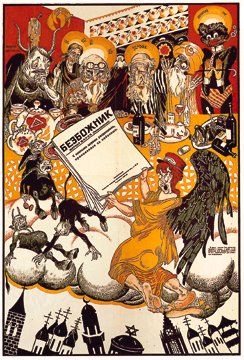 “We are all atheists to other religions, we [atheists] just take it one step further.”
The phrase initially has some kind of shock value, and then it gets you thinking. As a Christian, it may have you thinking, “Wow, I never thought of it that way… maybe there is something to this ‘atheism’ thing.” As an atheist, it may have you saying “Yeah, you Christians are just as rational/skeptical as we atheists about other religions, why not just apply that same logic to your own?”
I’ve addressed this statement/argument/quip/whathaveyou before: here. Yet I keep seeing it pop up in everyday conversation and even from people like Richard Dawkins and Lawrence Krauss in his debate with William Lane Craig.
There’s a problem though, in fact, there’s more than one problem:
1) The statement is false
2) The statement is irrational
3) The statement–as with many false or irrational statements–proves too much (or too little).
Let’s examine to each of these in turn.
The Statement is False
The idea that Christians are atheists to all other religions is simply false. As I’ve explained elsewhere, to other religions, I am not an atheist, I am a rival theist–an adherent of another religion. I’m not an atheist to a Hindu, I am a theist of a different tradition. To the Muslim, I’m not an atheist–I’m a rival theistic believer. So, simply put, the statement is false.
Atheism, by definition, is the belief that there is no God. Therefore, because I believe in a God, I am not an atheist, by definition. William Lane Craig addresses this statement here. The person who brought up the question curiously counters Craig by saying “That’s semantics.” Funny, considering that’s what the atheists are doing: making up semantic word games. Redefine terms to win a debate: atheism at any cost.
The Statement Is Irrational
As I’ve argued elsewhere, the statement is simply irrational. The atheist is literally saying that the theist is an atheist:
necessarily, for any human b, b is either theist (T) or ~T. But Christians are T, therefore they are necessarily ~~T. In English, it is true that any human being is either an atheist or a theist. Christians are theists, therefore, they are necessarily not atheists. (here)
But then what the atheist is saying is that the b who is T = ~T in regards to T`, T“, etc. This is simply false, however, because the b who is T is necessarily ~~T. So the atheist is claiming that a contradiction is true.
The Statement Proves Too Much
Consider the following statement:
there are a theoretically infinite number of possible answers to the equation “Two plus two,” but only one actually true answer. To say that “Two plus two equals four” is to automatically make me an unbeliever in all the other possible answers. It’s not rational, however, for the atheist to say, “Well I just go one step further and choose to disbelieve that four is the answer either.” (Dean Todd)
The same type of argument could be made for any true statement. Therefore, the type of reasoning employed in the “we’re all atheists” statement would undermine all true belief.
But it’s just a quip
In regards to my previous post on this statement, several respondents said variations of “You’re taking it too seriously, it’s just a phrase meant to inspire discussion” or “It’s just a quip”. As one respondent put it:
The original formulation didn’t use the word “atheist.” It simply said, “You disbelieve in all the gods of all the religions other than your own. Well, we godless folks only disbelieve in one more than you do. We disbelieve in them all.” Stated this way, your hair splitting over the poetic use of “atheist” becomes irrelevant and the central point stands
But it can be seen that this falls victim to the same difficulties already pointed out above. For it could be said that “You disbelieve in all the possible answers to the statement 2+2=? except one [4], I just disbelieve in them all.” It’s simply positively irrational to even use it as a talking point. That, or it’s trivially true and therefore pointless.
Finally, consider the reasoning behind the statement that “it’s just a quip.” Does using a phrase as a mere expression excuse it from being contradictory or false? Suppose I were to go around saying “atheists are theists too, they just don’t know it!” After all, in the Bible it says God’s existence is plain and can be easily discerned (Romans 1:18-20). So it follows that atheists are theists! Obviously, if I were to use this as a “quip” or “expression” it would be seen as an insult or a jab. Not only that, but it would be seen as obviously false “I’m not a theist,” the atheist would respond. “But it’s just a quip!” I could reply. That doesn’t excuse it from being utterly false. Or again, many Hindus claim that all people are really Hindus, they just don’t know it. After all, Brahma is all, so anyone is really Brahma and part of Hinduism, whether they know it or not. But this is clearly false. I am not a Hindu. I think the concept of Brahman is self-referentially incoherent. To assign a label to me that is false is not to make a quip, but an insult; to assign a label that is incoherent is irrational.
A Dilemma
I present a dilemma:
Those who assert the “We are all atheists” phrase are either:
1) Making an argument for atheism from the phrase, which is irrational and contradictory
or
2) Being disingenuous and actively making ad hominem jabs at theists (and therefore being irrational)
To maintain the use of this phrase is to live in a world of either irrationality or insult: either way, it is to disrespect ourselves and our fellows.
The Underlying Reasons For Making the Statement
In discussing this statement with atheists, I’ve found that often it is seen as a simple attempt to try to point out to Christians their “inconsistency.” The reasoning is that Christians use their cognitive abilities when rejecting other faiths, but they apparently don’t in regards to their own. Following from this, it is argued that if Christians were to just be as skeptical about their own faith as they were about others’, they’d be atheists too (or at least understand atheism).
There are problems with this reasoning. The first is that it begs the question against Christianity by assuming that there are no good reasons to be a theist (i.e. if you examined Christianity, you’d reject it too). There have been many who have examined Christianity and found it to be epistemologically robust; so the reasoning of the atheist is question begging. But it also assumes that atheism is a kind of epistemic neutral ground (something I examined here): if one is an atheist, he/she can examine all worldviews without bias. Again, the problem is that this is false. Atheism is grounded upon the idea that “there is no God.” As such, that doesn’t make in unbiased–rather, it makes it biased against the existence of a God(s). So to assume that atheism is an unbiased viewpoint through which all religions should be viewed is to once more beg the question.
Therefore, it appears as though we are once more left wanting any good reason to use the phrase. The statement that “we are all atheists” is false, irrational, insulting, and epistemically question begging.
Links
Be sure to check out the page for this site on Facebook and Twitter for discussion of posts, links to other pages of interest, random talk about theology/philosophy/apologetics/movies and more!
Edward Feser has a phenomenal discussion of this same topic in his post: “The ‘one god further’ objection”
Dissecting the ‘One Less God’ Meme– Prayson Daniel takes on a meme based on this argument which has been recently circling the web.
William Lane Craig discusses the definition of atheism in writing. Interestingly, Anthony Flew, the renowned atheistic philosopher (who turned deist late in life) admits that atheists have twisted the meaning of atheism so as to weaken it and allow for agnostics to enter the fold of atheism (and therefore they don’t have to argue for the position that “there is no God”). Craig quotes him herein.
Craig also discusses it in another video here.
Another interesting post on this topic.
SDG.
The featured picture is a poster featuring Soviet Anti-Religion Propaganda.
——
The preceding post is the property of J.W. Wartick (apart from citations, which are the property of their respective owners) and should not be reproduced in part or in whole without the expressed consent of the author. All content on this site is the property of J.W. Wartick and is made available for individual and personal usage. If you cite from these documents, whether for personal or professional purposes, please give appropriate citation with both the name of the author (J.W. Wartick) and a link to the original URL. This blog is protected by Creative Commons licensing. By viewing any part of this site, you are agreeing to this usage policy.
William Lane Craig vs. Lawrence Krauss-Thoughts and links
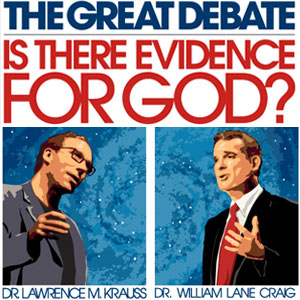 The debate took place on March 30th. I recently watched it and wanted to share my own comments, along with some others’ excellent thoughts.
First, the audio of the debate: here.
Second, William Lane Craig’s “Post Mortem”: here.
Third, Wintery Knight posted an excellent summary of Krauss’ “arguments”. I highly recommend reading it: here.
Fourth, the video is here.
Fifth, cosmologist Luke Barnes writes on Krauss’ misrepresentation of “nothing” here.
Sixth, Craig responds to Krauss’ extensive critique here.
DISCLAIMER: This post has been linked to by PZ Myers as a post which demonstrates the “dishonest distortions of some attendees.” For clarification: I did not attend the debate, but rather watched it online. Further, I answer Myers’ discussion of Bayes in a comment in response to a visitor below. Krauss definitely mistreprents Bayesian theorems in a way which undermines his own position. Finally, Myers’ ad hominem attacks upon Craig do little to back up Krauss’ self-defeating debate. For example, Myers writes that Craig is a “vacuous moron”; he rails against theists who “reject the atheist without thinking”; and he calls me dishonest, though admittedly only through linking to my site. Myers, in other words, uses the same strategy Krauss did in his debate: Calls himself smart, calls his opponents dumb, and declares “win” on the internet.
My thoughts:
Craig Opening
Craig went through his standard 5 arguments set, which remains as powerful as ever. The reason he doesn’t change his opening statement (unless the debate is about something other than the existence of God) is because he doesn’t need to fix what “ain’t broke”.
Krauss Opening
Krauss’ opening statement is simply awful. He starts off by saying Craig is a “professional debater” which is an obvious jab, because Craig is a professional philosopher who is world-renowned in both philosophy of religion and philosophy of time. Krauss goes on to bash logic and philosophy. Against Craig’s argument from contingency, he asserts that some contingent events happen causelessly. For example, he argues that “accidents happen all the time,” and seems to think that this shows that things can happen without cause. Against the Kalam, he argues that the universe is big, and concludes the argument is false. He also says that 2+2=5. He further argues that we can deal mathematically with infinities–something Craig agrees with and in fact deals with in extensive detail in his literature (specifically, The Kalam Cosmological Argument, and elsewhere).
Krauss also seems to argue that Craig’s evidence is not falsifiable, which is strange, considering every argument Craig offered is falsifiable simply by disproving one of the premises. He went on to assert that the universe came into existence out of nothing, for which he provides no evidence. Then he argues that “We don’t know!” if the universe is infinitely old (which runs smack in the face of the Big Bang). We also “don’t know” if there are objective moral values.
So, summing up Krauss’ opening, we have: logic doesn’t work, things pop into existence out of nothing, things can cause themselves, 2+2=5, and we don’t know anything.
Craig 2
Craig pointed out that you can’t deny logic without using logic to come to that conclusion, therefore defeating Krauss’ schoolyard “reasoning”. Craig then destroys Krauss’ argument from Hume, by pointing out Hume didn’t even have access to the probability calculus utilized in arguments from miracles. He goes on to point out that Krauss’ argument that “accidents just happen” as a way to get around causal reasoning is ridiculous–the example of a friend falling out of bed and breaking a leg is not causeless–he broke his leg because he fell out of bed in such and such a way! He also points out that we certainly can add infinites together (again, if Krauss had actually done any research, he’d have known Craig already responded to this argument), but that actual infinites are impossible because it leads to contradictions. Craig goes on to quote George Ellis, a cosmologist, as an expert who disagrees with Krauss.
Craig then pointed out that there’s a difference in terminology between what Krauss said is “nothing” and actual “nothing.” Krauss simply misrepresented what is meant by “nothing” comes from “nothing.” The quantum vacuum, for example, is not “nothing”. He then quoted Krauss on the very topic, pointing out that Krauss clearly intended to distort the meaning of “nothing.” Nothing, Craig explains, means actually nothing–no quantum vacuum, no energy, no matter: nothing. So Krauss has to point out that the universe can come from actual nothing. He then points out that Krauss doesn’t even argue against moral values, and has to go on to quote Krauss’ body of work to point out his only response to the argument, which is that there is no freedom of the will. So Krauss has to argue that there’s no freedom of the will in order to get around Craig’s argument. Finally, Craig nicely shows Krauss how to logically get to God from Christ, since apparently Krauss was unable to make that same inference.
Krauss 2
Krauss starts off by holding that empty space is not empty–something Craig agrees with, which is the entire point of the argument! Craig has been arguing that there was nothing before the universe–something the Big Bang also leads to, but Krauss either can’t fit his mind around this simple concept (before the universe there was actually nothing) or he is blatantly misrepresenting the argument. My bets are on the latter. Krauss says the beginning of the universe is “fascinating” and we should try to understand it, and then argues that it’s possible to not believe in God. (Fantastic reasoning). He then makes another jab at Craig by saying “he’s not an expert” …but well, maybe he is “because he’s read my stuff.”
Krauss interestingly points out there was a time when there was no space and time, and then it came into existence. He holds that this is for no reason, out of nothing.
He goes on to make what I call the “observer’s fallacy”: claiming that because we’re here, we don’t need to explain why we’re here. As with many terrible arguments, the “observer’s fallacy” proves too much–we’re here to observe x, therefore x is probable or had to happen (and therefore we don’t need to speculate about a cause–or there is no cause). Anything can be plugged in. I’m here to observe the hamburger in front of me to eat, therefore it is uncaused!
Krauss’ argument about “empty space” holds that these quantum events happen with different laws at different times. He then concludes that therefore, these are uncaused or undesigned, there is no God. But the obvious flaw in this reasoning is that he already noted that these quantum events happen due to laws, which then precludes his argument against logic in science. He argues that physics has different, random kinds of laws across an unobservable multiverse which we can’t test. Nice bit of metaphysical baggage to add on there.
Krauss also makes the absurd error of equating mathematical probability with epistemic probability. Krauss is correct in saying that if something is 50% likely, that’s just a chance, not a reason to believe it’s true or that it’s the case. However, he misunderstands (I say this because it’s clear so far that he doesn’t know what epistemic probability is) epistemic probability. One example could be drawn from Robin Collins about the thesis of common descent–if I think it is more likely than another theory, I’m not saying that it has a 60% chance, whereas other theories have a 30% or 20% chance… no, I’m saying that given the evidence, it seems as though the thesis of common descent has more epistemic weight than its rivals–it is more likely epistemically. I doubt Krauss will address this in any way through the rest of the debate, because I really do think, judging by his strategy so far, he doesn’t have the philosophical know-how to do so.
In summary, Krauss’ response to Craig’s rejoinder is: “Everything is random! HA! Also, things happen due to causes, but they are uncaused! I’m here to observe things, so they are uncaused!”
Craig 3
Craig now has to get to the point of debating someone who denies logic. Not an enviable position.
Craig starts off by refocusing the debate on whether there is evidence for God or not–“is it the case that God’s existence is more probable” given the evidence presented “than not.” He points out that Krauss didn’t engage Craig’s theses, but rather went off on tangents. For example, Krauss did not deny that he was using the taxicab fallacy–the idea that everything needs an explanation, but once we get to the universe, it needs no explanation. Then Craig argues that the scientific evidence supports the beginning of the universe, using the same paper Krauss argued had nothing to do with God. Craig’s only intent is to use the research to point to a beginning of the universe, so Krauss was again mistaken in his response.
Craig challenges Krauss to present any evidence to suggest the universe is past-eternal. I sincerely doubt Krauss will do anything of the sort, given how evasive he’s been to this point. Craig also challenges Krauss to actually address the fine-tuning argument and present some reason as to why we should believe in the multiverse which we can’t observe. Then Craig points out that most scientists agree the universe is fine-tuned for life, contra Krauss’ denial earlier.
Finally, Craig points out that Krauss misrepresents the moral argument because God’s nature is necessarily such that the divine commands He issues cannot be evil.
Summary: Craig has challenged Krauss to deal with the evidence at hand.
Krauss 3
Not that it is unexpected, but Krauss starts off by outlining just how clear it is that he doesn’t understand epistemic probability. He continues to think that it is reducible to mathematic probability. Plus, his example is simply wrong. Krauss says (paraphrased) “You wanna talk about probability, how bout we ask some scientists if God exists!” He then says that 90% of the National Academy of scientists are atheists. Okay… so how is this probability? It’s a statistic. Apparently Krauss is unaware of the fact that to have a probability, you must, you know, draw a conclusion. He could have said “The chance for me to pull an atheist out of the National Academy of Scientists is 9/10” but simply saying that 90% of them are atheists is not a probability. Not only that, but Krauss is clearly being disingenuous. Also, he clearly doesn’t understand epistemic probability.
Krauss then randomly brought up the “Old Testament God” and says He’s clearly not compassionate.
He hints at the Euthyphro dilemma… but then says “rationality defines morality.” How?
Closing Statements
Craig simply points out Krauss hasn’t refuted any argument.
Krauss resorts to saying “We don’t know x, we don’t know y, we don’t know z.” Then he makes the infamous “We’re all atheists” argument that is the subject of this post and one I will write soon.
Final Thoughts
Imagine a theist/Christian came to a debate and, in order to establish his point, stood up and said “Well logic doesn’t work. Logic isn’t reality. Philosophy is dumb. Theology is better. Theology isn’t governed by logic. Logic is dumb. Logic can’t prove anything about the universe [this latter is a direct quote from Krauss].”
The Christian would be laughed out of the building. But an atheist can stand up and say “logic doesn’t prove anything… Logic isn’t reality… etc.” and people take them seriously. It’s another example of “atheism at any cost.” Rather than acknowledge the existence of God, to which logic and sound reasoning continue to lead us, atheists reject logic and sound reasoning. Krauss, to his credit, did manage to demonstrate this with profound success: atheism is irrational.
SDG.
——
The preceding post is the property of J.W. Wartick (apart from citations, which are the property of their respective owners) and should not be reproduced in part or in whole without the expressed consent of the author. All content on this site is the property of J.W. Wartick and is made available for individual and personal usage. If you cite from these documents, whether for personal or professional purposes, please give appropriate citation with both the name of the author (J.W. Wartick) and a link to the original URL. By viewing any part of this site, you are agreeing to this usage policy.

 J.W. Wartick - Reconstructing Faith
