Sunday Quote
Sunday Quote!- Samson’s Torment
Every Sunday, I will share a quote from something I’ve been reading. The hope is for you, dear reader, to share your thoughts on the quote and related issues and perhaps pick up some reading material along the way!
Samson’s Torment
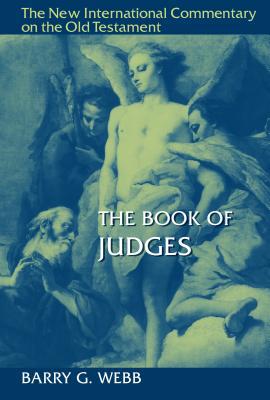
Reading commentaries can be an extremely edifying and valuable experience. I have very slowly been working through the book of Judges alongside Barry G. Webb’s commentary from the New International Commentary on the Old Testament series–an excellent series indeed–and came upon a gem regarding Samson. The passage in question is Judges 16:1-3, in which the people of Gaza attempt to trap him when he comes and sleeps with a prostitute (an interesting path to pursue at a later point) and he instead escapes in the middle of the night by tearing their gate out of the ground and carrying it to Hebron. Webb comments:
[The gate] would have been a formidable barrier… But Samson has spent all his life breaching barriers: between the permissible and the forbidden, holy and profane, man and animal, Israelite and Philistine, Naziriteship and normality. Barriers have never been able to contain him. They appear to him only as challenges which rouse him to a renewed frenzy of breaking through. So it is here again. His “grasping,” “pulling,” “putting,” and “taking” (v. 3) transgress the boundary between the human and superhuman. No normal person could do what he did. But Samson is not normal; that is his glory and his torment. (395, cited below)
Webb’s comments continue as he shows that this act of carrying the gates and placing them before Hebron demonstrate the lack of possible peace between Philistine and Israelite in Samson’s time, among other things. Webb’s comments on Samson are well worth taking the time to read, as is the rest of the commentary on Judges.
Links
Be sure to check out the page for this site on Facebook and Twitter for discussion of posts, links to other pages of interest, random talk about theology/philosophy/apologetics/movies and more!
Sunday Quote– If you want to read more Sunday Quotes and join the discussion, check them out! (Scroll down for more)
Source
Barry Webb, The Book of Judges (Grand Rapids, MI: Wm B. Eerdmans, 2012).
SDG.
Sunday Quote!- Drizzt Do’Urden on Equality

Every Sunday, I will share a quote from something I’ve been reading. The hope is for you, dear reader, to share your thoughts on the quote and related issues and perhaps pick up some reading material along the way!
Drizzt Do’Urden on Equality
For those who don’t know, Drizzt Do’Urden is a chracter from a fantasy series by R.A. Salvatore set in the “Forgotten Realms.” Drizzt is a Dark Elf who rejected the evil ways of his race and went to the surface in order to avoid their constant attempts to kill him. The books are mostly made up of standard swords and sorcery types of action, but there are occasional thoughtful interludes. In one, Salvatore, writing as Drizzt, discusses the concept of “equality” and how it might best be done:
Beware the engineers of society, I say, who would make everyone in all the world equal. Opportunity should be equal… but achievements must remain individual. – Drizzt Do’Urden (572, cited below)
I found this a fairly poignant statement in the midst of what is generally “light” reading for me. In our world, we have all kinds of inequality: there is income inequality, racial inequality, and all kinds of other ills. But a world in which all inequality is eliminated would be horrifying. In such a world, how could we appreciate things like sports, for all people would be forced to perform at the same level? How could we appreciate heroism? Moral fortitude? Any number of “inequalities” are actually good things. I couldn’t code a program to save my life; thank goodness people who are unequal to me at coding are in charge of maintaining this website!
The quote, then, has several subtle messages in it. I think it is worth Christians contemplating on. We should be working to reduce the inequalities of opportunity. People should not be unable to pursue their God-given gifts simply because of their circumstances. But we must beware the danger of trying to crush all inequality and make the world into a sea of sameness.
What are your thoughts? What inequalities should me most actively be working to combat? Is it true that opportunity should be equal?
Links
Be sure to check out the page for this site on Facebook and Twitter for discussion of posts, links to other pages of interest, random talk about theology/philosophy/apologetics/movies and more!
Sunday Quote– If you want to read more Sunday Quotes and join the discussion, check them out! (Scroll down for more)
Source
R.A. Salvatore, Streams of Silver in The Legend of Drizzt, Book II (Wizards of the Coast, 2013).
SDG.
Sunday Quote!- Intelligent Design: Seeing is Believing
 Every Sunday, I will share a quote from something I’ve been reading. The hope is for you, dear reader, to share your thoughts on the quote and related issues and perhaps pick up some reading material along the way!
Intelligent Design: Seeing is Believing
Del Ratzsch, in his essay “Perceiving Design,” argues that the intelligent design movement and its detractors might both be pursuing misguided notions of trying to show that detecting design might be a chain of inference (or not) and then engaging in debate over analogies or things that are conceived as specific empirical examples of design. The reason this is a misguided quest is because, he argues, design is not something that is an inference, but rather perceived. We recognize something is designed by seeing it. After arguing that this is indeed the case, he notes that the strategy of the current intelligent design project should probably change:
The most effective strategy may be… simply to situate a person in experientially favorable circumstances, and hope that any scales will fall from his or her eyes. (137, cited below)
I found Ratzsch’s argument to be interesting, though I’m not sure how it is supposed to impact arguments over design being present in biology. His essay is short and focused on the question of design-as-perception, but he never provides a mechanism for how, exactly, one is supposed to develop that concept into something like a biological design argument. It is very difficult to determine how one might proceed along those lines. I’m sure Ratzsch has some ideas of how it might work, but without any hint, we are left to wonder what such a design argument might look like. Would it really come down to an appeal to someone to sit down, look at something as intricate as the cell, and hope that the “scales will fall from his or her eyes”? It seems that is the direction Ratzsch’s insight would take us.
However, elsewhere in the same paper (132-134) it seems he suggests there can be some relation between inference and perception, but that perception is the “base level” experience of design. One might argue that a reduction to design-as-perception would be a step back for those trying to make empirical arguments for biological design. Perhaps, however, it could be something added back into broader design arguments. Surely, we as Christians believe that the “heavens declare [God’s] handiwork” (Psalm 19). Maybe it is time to allow nature to do some of that declaring; even alongside empirical arguments.
What do you think? How might the notion of design-as-perception help us develop design arguments? Is it helpful at all? Should we reduce design arguments to perceptual arguments?
Links
Be sure to check out the page for this site on Facebook and Twitter for discussion of posts, links to other pages of interest, random talk about theology/philosophy/apologetics/movies and more!
Sunday Quote– If you want to read more Sunday Quotes and join the discussion, check them out! (Scroll down for more)
Source
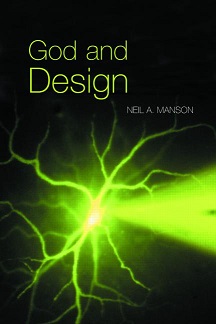
Del Ratzsch, “Perceiving Design” in God and Design ed. Neil Manson (New York: Routledge, 2003).
SDG.
Sunday Quote!- Sanctification and Vocation
 Every Sunday, I will share a quote from something I’ve been reading. The hope is for you, dear reader, to share your thoughts on the quote and related issues and perhaps pick up some reading material along the way!
Sanctification and Vocation
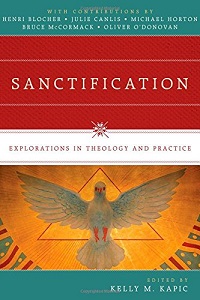
I’ll admit at the outset that I have read very little on the topic of sanctification. Thus, Sanctification: Explorations in Theology and Practice
Sanctification understood biographically has given encouragement to a belief in progressive and incremental moral improvement, to be attained with maturity and age… The map [of constant progression towards final sanctification over one’s life] was indeed wrong. It confused the work of God, who sanctifies old age as he sanctifies childhood, youth, and maturity, with the more attractive features that may decorate the progress of years through unaided nature… why, one wonders, has indulgence been accorded to the doctrine that the elect commit only venial sins after the age of fifty? (155)
I think this question is spot-on. The notion that we as Christians simply are automatically on a linear path to complete sanctification does not match reality and indeed can be extremely damaging to the life of faith. We are sinner-saints who struggle with sins throughout our lives and we must cast our cares on God, ever trusting in the blood of Christ and work of the Spirit to cleanses us from sin and unrighteousness.
What thoughts do you have on sanctification in the life of the believer? How might we be sanctified?
Whatever your views, Sanctification: Explorations in Theology and Practice
Links
Be sure to check out the page for this site on Facebook and Twitter for discussion of posts, links to other pages of interest, random talk about theology/philosophy/apologetics/movies and more!
Sunday Quote– If you want to read more Sunday Quotes and join the discussion, check them out! (Scroll down for more)
Source
“Sanctification and Ethics” by Oliver O’Donovan in Sanctification: Explorations in Theology and Practice
SDG.
Sunday Quote!- The Arts are Necessary for Life of the Church
 Every Sunday, I will share a quote from something I’ve been reading. The hope is for you, dear reader, to share your thoughts on the quote and related issues and perhaps pick up some reading material along the way!
The Arts are Necessary for the Life of the Church
In his Creative Church Handbook, J. Scott McElroy puts forward a broad and extraordinary vision for integrating the visual arts into churches. Early in the book, he makes a case for using the arts in church. In part, he notes:
What if [integration of the arts into church] is necessary for the maturity of the Body of Christ?… What if we need them in the church? (15, cited from a pre-release edition of the book)
I think the answer to these questions is a resounding positive–we do need the arts in church, not just for some notion of being “relevant” but additionally and more importantly for the healthy of the body of Christ. If we are not engaging the creative aspects of our members, we are doing a deep disservice to those same members as we fail to fully disciple them in Christ.
I highly recommend Creative Church Handbook to you, particularly if you are a leader in the church or have a desire for discipling.
Links
Be sure to check out the page for this site on Facebook and Twitter for discussion of posts, links to other pages of interest, random talk about theology/philosophy/apologetics/movies and more!
Sunday Quote– If you want to read more Sunday Quotes and join the discussion, check them out! (Scroll down for more)
Source
J. Scott McElroy Creative Church Handbook
SDG.
Sunday Quote!- Adam and Eve had different names?
 Every Sunday, I will share a quote from something I’ve been reading. The hope is for you, dear reader, to share your thoughts on the quote and related issues and perhaps pick up some reading material along the way!
Hidden Science in the Bible?
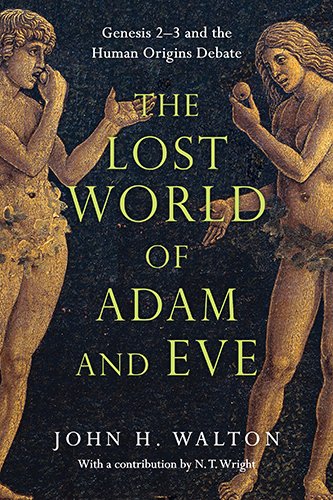
John Walton’s The Lost World of Adam and Eve
Although I believe that Adam and Eve are historical personages–real people in a real past–these cannot be their historical names. The names are Hebrew, and there is no Hebrew at the point in time when Adam and Eve lived.
If these are not historical names, then they must be assigned names, intended by the Hebrew-speaking users to convey a particular meaning… In English, if we read that someon’s name is “Human” and his partner’s name is “Life,” we quickly develop an impression of what is being communicated… These characters, by virtue of their assigned names, are larger than the historical characters to whom they refer. (58-59)
What do you think? Is Walton right to assert these were not the historical names of this couple because Hebrew didn’t exist at that time? What might we derive from this conclusion?
Check out my review of Walton’s book, and see what other insights are offered therein.
Links
Be sure to check out the page for this site on Facebook and Twitter for discussion of posts, links to other pages of interest, random talk about theology/philosophy/apologetics/movies and more!
Sunday Quote– If you want to read more Sunday Quotes and join the discussion, check them out! (Scroll down for more)
Source
John Walton, The Lost World of Adam and Eve
SDG.
Sunday Quote!- Sanctification by Faith Alone?
Every Sunday, I will share a quote from something I’ve been reading. The hope is for you, dear reader, to share your thoughts on the quote and related issues and perhaps pick up some reading material along the way!
Sanctification by Faith Alone?
Sanctification: Explorations in Theology and Practice
One of the chapters, Richard Lints argues that sanctification is something that we receive by faith alone–in contrast to views which argue that it is some later co-operation between the Spirit and the believer to do good works. I hope I’m not misrepresenting his view, as I admit I have read very little on the topic. Thus, I’ll let him make his argument for himself:
The gospel is received rather than achieved by believers, and thus all the benefits given in the gospel are received by faith. The gift of the Holy Spirit is one of those “benefits” and no less than other gifts given in the gospel, so the Holy Spirit is received by faith… And therefore sanctifying faith is not different in its orientation than justifying faith. (44)
What do you think? Is this a good argument for the view that sanctification comes through faith alone? If so, how are works involved in sanctification? What is your view of sanctification overall?
Sanctification: Explorations in Theology and Practice
Links
Be sure to check out the page for this site on Facebook and Twitter for discussion of posts, links to other pages of interest, random talk about theology/philosophy/apologetics/movies and more!
Sunday Quote– If you want to read more Sunday Quotes and join the discussion, check them out! (Scroll down for more)
Source
“Living by Faith–Alone?: Reformed Responses to Antinomianism” by Richard Lints in Sanctification: Explorations in Theology and Practice
Sunday Quote!- The Creative Church Changes the World
Every Sunday, I will share a quote from something I’ve been reading. The hope is for you, dear reader, to share your thoughts on the quote and related issues and perhaps pick up some reading material along the way!
The Creative Church Changes the World
J. Scott McElroy’s Creative Church Handbook is a deeply insightful look into how we might integrate the visual arts into our churches in meaningful ways. But, one may ask, why should we bother to do so? McElroy’s words are worth considering:
When we choose to inspire, disciple and empower the artists in our churches, guiding them into a collaborative relationship with God, they will help the rest of the congregation on the path to unlocking our inherent creativity. The result–a creative church–can change the world. (60 [cited from a pre-release edition])
Put most simply, when we open our doors to creativity in the church, we engage the world on a completely different level than we do if we lack such creative insights. I think McElroy is completely correct here, and we know it is correct because we’ve seen how art like the Mona Lisa, The Last Supper, and other works have changed the world. If we, the church, can continue to engage on this level, how much more change for the Kingdom can we bring into the world?
I highly recommend the Creative Church Handbook. It is one of the best reads I’ve had all year.
Links
Be sure to check out the page for this site on Facebook and Twitter for discussion of posts, links to other pages of interest, random talk about theology/philosophy/apologetics/movies and more!
Sunday Quote– If you want to read more Sunday Quotes and join the discussion, check them out! (Scroll down for more)
Source
J. Scott McElroy Creative Church Handbook
SDG.
Sunday Quote!- Darwin and Design
Every Sunday, I will share a quote from something I’ve been reading. The hope is for you, dear reader, to share your thoughts on the quote and related issues and perhaps pick up some reading material along the way!
Darwin and Design
I’ve recently started reading God and Design
It should be possible to define a biological system such that, if it were to exist, its existence could not be explained in Darwinian fashion. If it is impossible to define such a biological system, then it will be impossible to formulate an empirical test that might disconfirm Darwin’s theory. Darwinism’s claim to be a genuine scientific theory would suffer a serious… blow. (11)
The reason Manson argues that the bare possibility of such a definition is required is because of the notion of “falsifiability” in science. While it is debated as to whether falsifiability is an actual criterion for “true” science (at least in the philosophy of science I have read), it has become largely assumed that, in some sense, a theory must be at least in principle falsifiable in order to avoid being question begging or too broadly defined.
Granting that, Manson’s point seems to be a valid one: in order for Darwinism to be viable, it must also be falsifiable. If we can’t even imagine a system that would falsify it, then that may have extremely broad implications. Whether we have imagined such systems–and whether we have discovered them–is a matter of no small amount of debate.
What do you think? Is falsifiability a required criterion for science? Are we able to such a defined biological system to challenge Darwinian evolution? Do such systems actually exist?
God and Design
Links
Be sure to check out the page for this site on Facebook and Twitter for discussion of posts, links to other pages of interest, random talk about theology/philosophy/apologetics/movies and more!
Sunday Quote– If you want to read more Sunday Quotes and join the discussion, check them out! (Scroll down for more)
Source
Neil Manson, “Introduction,” in God and Design ed. Neil Manson (New York: Routledge, 2003).
SDG.
Sunday Quote!- Hidden Science in the Bible?
Every Sunday, I will share a quote from something I’ve been reading. The hope is for you, dear reader, to share your thoughts on the quote and related issues and perhaps pick up some reading material along the way!
Hidden Science in the Bible?
Some see the Bible as a source of all knowledge. When we come to the very beginning of the Bible, what is it trying to teach us? Might it tell us what to believe about evolution? Could it reveal truths about science that no one knew until they were discovered later? These types of questions come to us very frequently in this age of science in which we invest so much into questions of a material nature.
John Walton, in his latest book, The Lost World of Adam and Eve, argues that these questions are largely misguided:
[God] did not hide information of that sort [scientific] in the text for later readers to be discovered. An assumption on our part that he did would have no reliable controls. For example, in the days when people believed in a steady-state universe, people could easily have gone to the Bible to find confirmation of that science. But today we do not believe the steady-state theory to be true… Such approaches cannot be adopted within an authority framework. (18, cited below)
Walton’s argument is compelling. The notion that the Bible necessarily has hidden throughout scientific insight just waiting to be found can never be arbitrated. Thus, it makes the Bible the tool of one generation and the laughing stock of the next. As we attempt to use the Bible to support various scientific notions, we may do much damage to the text.
How might we best approach the text in a way that does not leave us open to this uncontrollable theorizing? Is it possible to maintain the notion that the Bible does teach us about science? If not, why not? If so, to what extent?
Links
Be sure to check out the page for this site on Facebook and Twitter for discussion of posts, links to other pages of interest, random talk about theology/philosophy/apologetics/movies and more!
Sunday Quote– If you want to read more Sunday Quotes and join the discussion, check them out! (Scroll down for more)
Source
John Walton, The Lost World of Adam and Eve
SDG.

 J.W. Wartick - Reconstructing Faith