Sunday Quote
Sunday Quote!- Cessationism and Defining Miracles

Every Sunday, I will share a quote from something I’ve been reading. The hope is for you, dear reader, to share your thoughts on the quote and related issues and perhaps pick up some reading material along the way!
Cessationism and Defining Miracles
Jon Mark Ruthven’s On the Cessation of the Charismata
The validity of cessationism depends upon a clearly discernible and internally consistent model of miracle which can be applied transparently and uniformly to all candidate cases as they appear throughout history, both in the biblical accounts and afterward. (44, cited below)
Then, he argues–I think rightly–that the cessationist has yet to provide just such a model. It seems instead that there is a kind of arbitrary cut-off point at which miracles are said to be untrustworthy occurrences. Ruthven spends a lengthy portion of the book arguing that the cessationist models have failed this consistency test.
What do you think? Have you seen a model that can consistently affirm the miracles in the Bible but then uniformly and without qualification deny those which are extrabiblical and/or modern? What stance do you take on the issue of miraculous gifts?
Links
Be sure to check out the page for this site on Facebook and Twitter for discussion of posts, links to other pages of interest, random talk about theology/philosophy/apologetics/movies and more!
“Are Miraculous Gifts for Today?”- A look at four views in Christian Theology– I provide a look at four positions on miraculous/spiritual gifts in contemporary theology.
Sunday Quote– If you want to read more Sunday Quotes and join the discussion, check them out! (Scroll down for more)
Source
Jon Mark Ruthven, On the Cessation of the Charismata
SDG.
Sunday Quote!- Ecological Ignorance
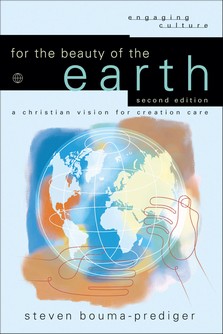 Every Sunday, I will share a quote from something I’ve been reading. The hope is for you, dear reader, to share your thoughts on the quote and related issues and perhaps pick up some reading material along the way!
Ecological Ignorance
In For the Beauty of the Earth
After asking the questions, he poses this challenge:
If the answer to these questions is “no,” then we really do not know where we are. Despite our education we remain ecologically illiterate. (3, cited below)
Now of course we cannot be experts on every aspect of the place in which we live, but we must acknowledge our general ignorance about it. I couldn’t name most of the native flora in the area I live. How might this impact the way in which we view our place in the world? What of our charge to care for God’s creation? How might we better increase our ecological awareness so that we may not do more harm then good?
For the Beauty of the Earth
Links
Be sure to check out the page for this site on Facebook and Twitter for discussion of posts, links to other pages of interest, random talk about theology/philosophy/apologetics/movies and more!
Sunday Quote– If you want to read more Sunday Quotes and join the discussion, check them out! (Scroll down for more)
Book Review: “For the Beauty of the Earth” by Steven Bouma-Prediger– Bouma-Prediger’s book is a fountain of insight into issues of creation care, ecological apologetics, and more. Check out my review to learn more.
Source
Steven Bouma-Prediger, For the Beauty of the Earth
SDG.
Is Natural Theology Excluded for Apologetics? – Sunday Quote!+
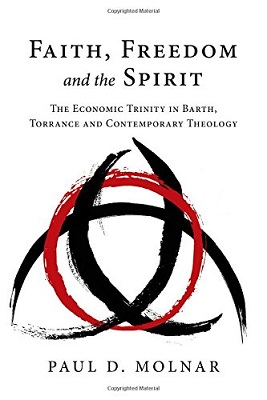 Here’s a special edition Sunday Quote which features a more extended discussion. Let me know what you think in the comments.
Is Natural Theology Excluded for Apologetics?
Paul Molnar’s Faith, Freedom and the Spirit 
If contemporary theologians were to make explicit the role of the Holy Spirit in enabling our knowledge of the triune God, then there could be wide agreement that natural theology of whatever stripe is not only unhelpful but is directly excluded from any serious understanding of theological epistemology. (82)
Now, “natural theology” is, according to Justo Gonzalez’s Essential Theological Terms, “A theology that claims to be based on the natural gifts of the human mind, and on the ‘general revelation’ granted to all… rather than on a ‘special revelation’ in Scripture or Jesus Christ” (118). Natural theology, that is, is the attempt to show that God exists and certain other truths through looking at the world. From this quote, it seems that Molnar is arguing that if we had a better notion of the role of the Holy Spirit, we would basically think that natural theology is worthless related to knowledge of God.
Molnar develops this notion further throughout the next 50 pages or so. His argument basically is that if we acknowledge that it is the Holy Spirit who enables faith and knowledge of God, then any “knowledge” of God which is not directly through faith (i.e. through something like a cosmological argument) is not objective knowledge of God.
Although some of what Molnar argues resonates with me–particularly the notion that the Holy Spirit is the one who imparts faith rather than it being some kind of choice we make–I think that his dismissal of natural theology is unnecessary and mistaken. First, the most obvious question to be asked is whether the Spirit can use natural theology to create faith. If it is the case that the Holy Spirit can work through natural theology–something which seems to be clearly correct to me–then the objection that natural theology ignores the role of the Spirit is mistaken.
Second, Molnar’s argument seems to rely on a concept of natural theology which is entirely about trying to impart knowledge of God to those who do not have faith. This, however, ignores the use of apologetics in strengthening the faith of believers. Natural theology can be a valuable tool for those who have faith to pursue the call of 1 Peter 3:15 and have a reason for the hope within them. Whatever one’s view of whether natural theology can bring people to the true God, it seems that it can and should be used for believers to explore the natural world and bolster their faith.
Third and finally, it seems to me that Romans 1 in particular demonstrates that natural theology is not a worthless project. If God’s invisible attributes are capable of being discovered in the things God has made, then surely natural theology has some value in tracing God’s handiwork.
Should we think that natural theology is a failed project? Can it have other uses like those I listed? Is it possible to go from God to Christ? What of the role of the Spirit in apologetics?
Faith, Freedom and the Spirit
Links
Be sure to check out the page for this site on Facebook and Twitter for discussion of posts, links to other pages of interest, random talk about theology/philosophy/apologetics/movies and more!
Sunday Quote– If you want to read more Sunday Quotes and join the discussion, check them out! (Scroll down for more)
Source
Paul D. Molnar, Faith, Freedom and the Spirit (Downers Grove, IL: InterVarsity, 2015).
SDG.
——
The preceding post is the property of J.W. Wartick (apart from quotations, which are the property of their respective owners, and works of art as credited; images are often freely available to the public and J.W. Wartick makes no claims of owning rights to the images unless he makes that explicit) and should not be reproduced in part or in whole without the expressed consent of the author. All content on this site is the property of J.W. Wartick and is made available for individual and personal usage. If you cite from these documents, whether for personal or professional purposes, please give appropriate citation with both the name of the author (J.W. Wartick) and a link to the original URL. If you’d like to repost a post, you may do so, provided you show less than half of the original post on your own site and link to the original post for the rest. You must also appropriately cite the post as noted above. This blog is protected by Creative Commons licensing. By viewing any part of this site, you are agreeing to this usage policy.
Sunday Quote!- Does 1 Corinthians 15 teach a Millennial Gap?
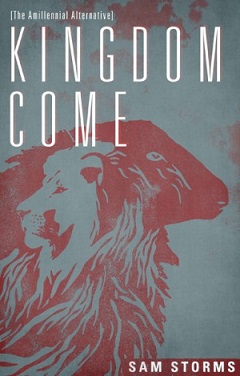 Every Sunday, I will share a quote from something I’ve been reading. The hope is for you, dear reader, to share your thoughts on the quote and related issues and perhaps pick up some reading material along the way!
Does 1 Corinthians 15 teach a Millennial Gap?
Sam Storms’ Kingdom Come: The Amillennial Alternative
Sam Storms analyzes this argument in extended fashion. Here’s a snippet of his discussion:
The premillennialist argues that the “end” [in verse 24] is the end or close of the millennial age, 1000 years after Christ has returned to earth. The amillennialist argues that the “end” is the end or close of the present church age… all one need do is demonstrate which of these two options is correct… So, does Paul tell us when death dies? …As I read 1 Corinthians 15:50-58, the defeat of death occurs at the second coming of Christ… (145, cited below)
If it is the case that Christ’s second coming is indeed the “end,” then it follows that the premillennial interpretation is mistaken and indeed, Storms argues, the whole system mostly collapses on itself. Storms concludes that 1 Corinthians 15 cannot be used to support the notion of a millennial gap.
What do you think? Does 1 Corinthians allow for such a lengthy gap in between parts of the text? What eschatological position do you hold to? How damaging is this text–if at all–for various eschatological positions?
No matter what you think, Kingdom Come: The Amillennial Alternative
Links
Be sure to check out the page for this site on Facebook and Twitter for discussion of posts, links to other pages of interest, random talk about theology/philosophy/apologetics/movies and more!
Sunday Quote– If you want to read more Sunday Quotes and join the discussion, check them out! (Scroll down for more)
Source
Sam Storms, Kingdom Come: The Amillennial Alternative
SDG.
Sunday Quote!- A Science Fiction Parable
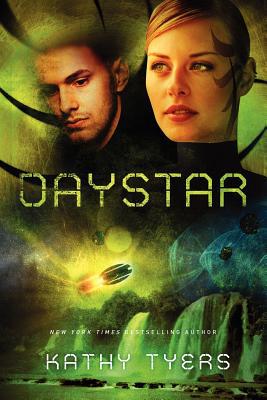
Every Sunday, I will share a quote from something I’ve been reading. The hope is for you, dear reader, to share your thoughts on the quote and related issues and perhaps pick up some reading material along the way!
Science Fiction Parable
Before I dive in here, I want to note that there are SPOILERS for the last book of the fantastic Firebird series by Kathy Tyers in what follows.
Kathy Tyers’ Firebird Trilogy was an amazing piece of science fiction which integrated issues of faith and worldview into a stirring narrative. In Daystar
“Once there was a little girl… She had a little pet that she loved… It was a kind of creature she’d never seen…. It had four stubby legs, a big head, ans sharp little teeth… She opened the bag of pet food the dealer sold them, she put the food into [the pet’s] bowl, and she stroked it while it ate with those sharp little teeth… After a few days, the girl noticed something. Her pet wasn’t getting any bigger. In fact, it looked thin… She found out that [its] species was strictly herbivorous–but the pet dealer had sold them dried meat pellets by mistake…
“It looked like a carnivore. So she asked her parents to buy the right food… And it sniffed the good food, but it wouldn’t eat. It walked away from the bowl and looked up at her with desparately hungry eyes. It had learned to like the wrong food. It refused to eat what would nourish it, because that food seemed strange and mysterious. One day it lay down at her feet, looking up at her with those hungry eyes, and it died.” (430-431, cited below)
The story is powerful and emotionally charged. Like the parables of Jesus, it also hints at much beyond the mere words spoken. For the rest of the book, Meris–the non-believing character Tavkel is telling the parable too–reflects on it and tries to draw out its meaning. The meaning, however, does not become clear until the Boh-Dabar fulfills the same kind of prophecies which Christ fulfilled.
Looking at this specific parable, there are many layers of possible meaning. How might we be eating food that doesn’t nourish us? Could it be a sinful habit, a practice, a temptation we give in to? Have we made ourselves used to bad food so that we don’t recognize that which is good? Do we need to ask God to help bring healing to our own habits of life? But the text could go in other directions as well. Have we seen others in ways that are mistaken? Perhaps we see something about someone else and think we do not want to associate with them. We see “sharp teeth” and think “predator.” We flee from that which is different.
Daystar
Links
Be sure to check out the page for this site on Facebook and Twitter for discussion of posts, links to other pages of interest, random talk about theology/philosophy/apologetics/movies and more!
Enter [Science] Fictional Messiah- Kathy Tyers’ “Wind and Shadow” and “Daystar”– I look into several worldview themes that Tyers raises in these sequels to her Firebird trilogy. What would a Messiah in the future look like?
Sunday Quote– If you want to read more Sunday Quotes and join the discussion, check them out! (Scroll down for more)
Kathy Tyers’ “Firebird Trilogy”- Faith, Humanity, and Conflict in the Far Future– I look at a number of worldview issues brought up in the “Firebird Trilogy.” Be sure also to check out my review of the trilogy on my other site.
Source
Kathy Tyers, Daystar
SDG.
Sunday Quote!- Trading Off the Bible for Science?
 Every Sunday, I will share a quote from something I’ve been reading. The hope is for you, dear reader, to share your thoughts on the quote and related issues and perhaps pick up some reading material along the way!
Trading Off the Bible for Science?
Adam, the Fall, and Original Sin
One area that was fairly interesting was the discussion Hans Madueme offered of an interplay between the Bible and science:
There is a trade-off between what is biblically plausible and what is scientifically plausible. To the degree that the doctrine of the fall reflects the biblical story, to the same degree is it inversely faithful to the evolutionary story. (238, cited below)
I think the language of “trade-off” here might be viewed as a rhetorical flourish. The next phrase is equally weighted to seemingly back-load a specific reading of the story of the fall into what is “plausible” over and against that which is “scientifically plausible.” Although I think there may be something of a trade-off in some sense, in order for this qupte to be true there would have to be an inherent inverse relationship between evolution and the Bible. This may, in fact, be the case, but there are a number of steps that need to be proven before one can get to that point.
More intriguing, perhaps, is the notion that we could recast this “trade-off” between exactly how much science we want to read into the Bible and how biblically plausible we are. I would argue that the more we insist that the Bible is explicitly revealing specifics of exact empirical science, the more we do damage to the text. This is a position that does not see science and the Bible as in complete opposition to each other, nor does it see the Bible as scientifically inaccurate or as “non overlapping magisteria.” Instead, where the Bible speaks to scientific issues–if anywhere–those are affirmed. Where it doesn’t, we should not insist that it does.
What do you think? Is there really a trade-off between science and the Bible? If so, in what way?
Links
Be sure to check out the page for this site on Facebook and Twitter for discussion of posts, links to other pages of interest, random talk about theology/philosophy/apologetics/movies and more!
Sunday Quote– If you want to read more Sunday Quotes and join the discussion, check them out! (Scroll down for more)
Source
Hans Madueme, “The Most Vulnerable Part of the Whole Christian Account: Original Sin and Modern Science” in Adam, the Fall, and Original Sin
SDG.
adam, fall, original sin 238
Sunday Quote!- Sending the “Other” to Hell
 Every Sunday, I will share a quote from something I’ve been reading. The hope is for you, dear reader, to share your thoughts on the quote and related issues and perhaps pick up some reading material along the way!
Sending the “Other” to Hell
We as Christians often need reminders that we are to share our faith with gentleness and respect. I know I often fail in this regard, and sincerely repent and ask for forgiveness from those whom I have failed. Re-reading James Emery White’s Christ Among the Dragons
Many Christians view those outside of the faith as needing to go to hell. They are the bad guys, the enemy. (95)
We see this often when, for example, someone dies and a comment is shared “he/she is burning in hell.” I have, unfortunately, seen this myself many times. But is that the attitude we should be taking as Christians with regard to those of other faiths or–heaven forbid–those with whom we disagree in our own faith tradition?
Whenever this kind of attitude crops up in our own lives, we should repent and ask for forgiveness. Our job is not to send the “other” to hell. It is to share Christ’s love with them.
Links
Be sure to check out the page for this site on Facebook and Twitter for discussion of posts, links to other pages of interest, random talk about theology/philosophy/apologetics/movies and more!
Sunday Quote– If you want to read more Sunday Quotes and join the discussion, check them out! (Scroll down for more)
Source
James Emery White, Christ Among the Dragons
SDG.
christ among dragons- 95
Sunday Quote!- The Reality of Adam and the Origins Debate
Every Sunday, I will share a quote from something I’ve been reading. The hope is for you, dear reader, to share your thoughts on the quote and related issues and perhaps pick up some reading material along the way!
The Reality of Adam and the Origins Debate
Adam, the Fall, and Original Sin
The temptation in this debate [about the historicity of Adam] is to think that Adam is simply one piece in a puzzle in which the fall and evolution are separate pieces that we can rearrange and shuffle around the board. But… Adam and the fall do not float free in Scripture like rootless, atomistic, independent ideas. They are central nodes that hold together and are completely enmeshed in a much broader, organic, theological matrix. (ix, cited below)
What makes this quote so interesting is the way it speaks to the notion–a correct one, I think–that these doctrines are of such central concern. Whether or not these are “essential” doctrines to the Christian faith is hotly debated, but it seems clear that one’s view of original sin (and indeed whether it even exists) and Adam will inter-relate with all kinds of other doctrines, including soteriology, justification, sanctification, and beyond.
What do you think? What doctrines inter-relate most closely with these doctrines? Is it correct to think we can’t treat them in “atomized” form? Is it possible to speak of the notion of whether Adam and Eve were historical figures without also speaking of the implications it has for other doctrines?
Links
Be sure to check out the page for this site on Facebook and Twitter for discussion of posts, links to other pages of interest, random talk about theology/philosophy/apologetics/movies and more!
Sunday Quote– If you want to read more Sunday Quotes and join the discussion, check them out! (Scroll down for more)
Source
Michael Reeves and Hans Madueme, “Adam Under Siege” in Adam, the Fall, and Original Sin
SDG.
Adam, Fall, Original Sin ix
Sunday Quote!- Spiritual Warfare and Mapping the Land?
 Every Sunday, I will share a quote from something I’ve been reading. The hope is for you, dear reader, to share your thoughts on the quote and related issues and perhaps pick up some reading material along the way!
Spiritual Warfare and Mapping the Land?
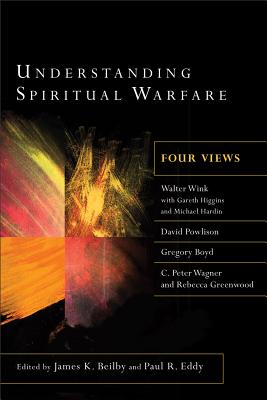
I recently read through Understanding Spiritual Warfare: Four Views
Spiritual mapping is the practice of identifying the spiritual conditions at work in a given community, city, or nation. By gathering objective information (including key historical facts… locations of bloodshed, idolatrous practices, [etc…]) and combining it with spiritual impressions (prophecy, revelation, words of knowledge, dreams, and visions), believers can prayerfully combine all of this information and draw a map that identifies the open doors between the spiritual world and the material world (182-183, cited below).
Now I admit that I come from a background in which spiritual warfare was little (if at all) discussed, but this does seem a little bit more than we can glean from the biblical image of spiritual warfare. Where, for example, are we instructed to try to use dreams and revelation in order to find “open doors” of the spiritual world? Where are we instructed that there might be doors for the spiritual world into our own that are identifiable? I think some aspects of this notion might be helpful for witnessing and the like–after all, knowing the landscape in this fashion would be helpful for identifying areas of conflict in a community and offering Christlike compassion in those areas–but I hesitate to think that the way they can be applied is in this fashion.
What are your thoughts on this? What do you think of spiritual warfare?
Again, I highly recommend this book with its very wide range of diverse views presented on the topic in order to get an introduction.
Links
Be sure to check out the page for this site on Facebook and Twitter for discussion of posts, links to other pages of interest, random talk about theology/philosophy/apologetics/movies and more!
Microview: Understanding Spiritual Warfare: Four Views– I briefly review this highly interesting book on different views of spiritual warfare.
Sunday Quote– If you want to read more Sunday Quotes and join the discussion, check them out! (Scroll down for more)
Source
C. Peter Wagner and Rebecca Greenwood, “The Strategic-Level Deliverance Model” in James Beilby and Paul Rhodes Eddy, eds., Understanding Spiritual Warfare: Four Views
SDG.
Sunday Quote!- Can Adam be (merely) a federal head?
Every Sunday, I will share a quote from something I’ve been reading. The hope is for you, dear reader, to share your thoughts on the quote and related issues and perhaps pick up some reading material along the way!
Can Adam be (merely) a federal head?
I recently finished reading the thought-provoking book, Adam, the Fall, and Original Sin
Adam’s imputed sin has no ontological basis [on this view]. If only Africans and Asians, let us say, are true physical descendants of Adam, God will still impute Adam’s sin to Britons and Americans since Adam was also the federal head of all his contemporaries (among whom would have been their ancestors). This divine decree seems unfair and arbitrary since it is not grounded in an antecedent natural reality. (217, cited below)
I found this to be an argument that could trouble those who hold to Adam as mere federal head (rather than “natural head”–here being used to mean that Adam and Eve were the first of all humans and all are descended from them), but I think a few responses would be possible from the theistic evolutionist perspective. First, one could argue that there need be no grounding in a natural reality for Adam’s federal headship. After all, divine fiat should settle the question! Second, one might instead argue that God’s decree of Adam as federal headship itself just is the ontological basis. That is, there is an ontological basis for the condemnation: God’s decree. Third, one might argue that the federal headship of Adam went alongside the giving of the human soul to Adam and Eve and that the other humans were also given souls with Adam as their federal head. I think other possibilities are possible as well.
What do you think? Does this argument undermine the possibility of theistic evolutionism? Are the possible responses good rebuttals? Are there other possible responses?
Links
Be sure to check out the page for this site on Facebook and Twitter for discussion of posts, links to other pages of interest, random talk about theology/philosophy/apologetics/movies and more!
Sunday Quote– If you want to read more Sunday Quotes and join the discussion, check them out! (Scroll down for more)
Source
Michael Reeves and Hans Madueme, “Threads in a Seamless Garment: Original Sin in Systematic Theology” in Adam, the Fall, and Original Sin
SDG.

 J.W. Wartick - Reconstructing Faith