Theodicy
“Only a Suffering God can help” – Dietrich Bonhoeffer’s Theologia Crucis
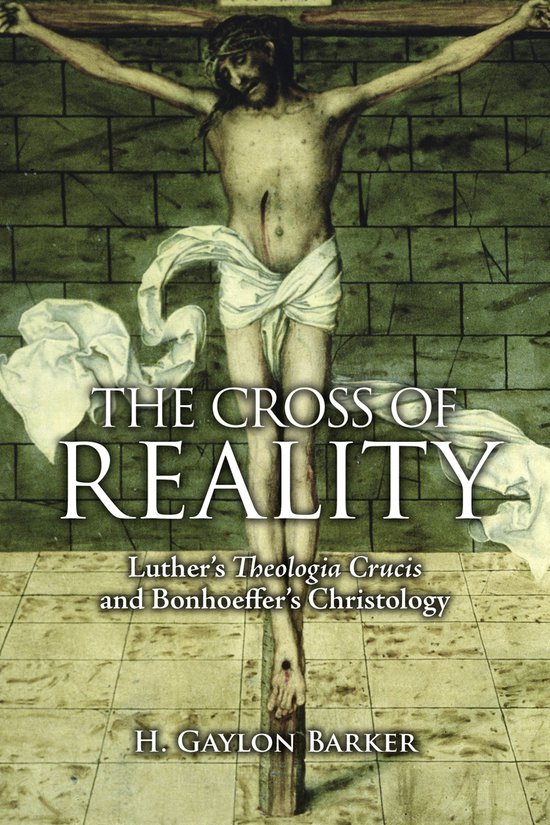
Dietrich Bonhoeffer’s theology is heavily based upon the Theologia Crucis or the Theology of the Cross which he inherited from Martin Luther. H. Gaylon Barker’s The Cross of Reality is a book-length exposition of this important aspect of Bonhoeffer’s theology that brings an enormous amount of material and analysis to bear.
Barker’s analysis of Bonhoeffer’s theology of the cross is worth quoting at length:
“One problem… religion produces , from Bonhoeffer’s perspective, is that it plays on human weakness. In the world in which people live out their lives… this means a disjuncture or contradiction. Daily people rely on their strengths, in which they don’t need God. In practical terms, therefore, God is pushed to the margins, turned to only as a ‘stop-gap’ when other sources have given out. Then God, perceived as a deus ex machina, is brought in to rescue people. This, in turn, leads to the religious conception of God and religion in general as being only partially necessary; they are not essential, but peripheral. All of this leads to intellectual dishonesty, which is not so unlike luther’s description of the theology of glory. The strength of the theology of the cross, on the other hand, is that it calls a thing what it is. It is honest about both God and the world, thereby enabling one to live in the world without seeking recourse in heavenly or escapist realigous practices. Additionally, such religious thinking leads to the creation of a God to suit human needs… For Bonhoeffer and Luther, however, the real God is one who doesn’t appear only in the form we might expect, one whom we can incorporate into our worldview or lifestyle. God is one who is always beyond our grasp, but at the same time is a hidden presence in the world” (394).
Barker highlights Bonhoeffer’s own words to make this point extremely clear:
“[W]e have to live in the world… [O]ur coming of age leads us to a truer recognition of our situation before God. God would have us know that we must live as those who manage their lives without God. The same God who is with us is the God who forsakes us (Mark 15:34! [“And at three in the afternoon Jesus cried out in a loud voice, ‘Eloi, Eloi, lema sabachthani?‘ (which means ‘My God, my God, why have you forsaken me?’)”]). The same God who makes us to live in the world without the working hypothesis of God is the God before whom we stand continually. Before God, and with God, we live without God. God consents to be pushed out of the world and onto the cross; God is weak and powerless in the world and in precisely this way, and only so, is at our side and helps us. Matt. 8:17 [“This was to fulfill what was spoken through the prophet Isaiah: ‘He took up our infirmities and bore our diseases.’] makes it quite clear that Christ helps us not by virtue of his omnipotence but rather by virtue of his weakness and suffering!” [388, quoted from DBWE 8:478-479]
Thus, for Bonhoeffer, God is not there as the divine vending machine, there to send out blessings when needed or called upon due to human inability. Instead, God enters into the world and by suffering, alongside us, helps us.
Bonhoeffer put it thus: “Only a suffering God can help.” Bonhoeffer, seeing the world as it was in his time, during the reign of terror of the Nazis, imprisoned, knew and saw the evils of humanity. And he knew that in seeing this, theodicy would fail. A God who worked only through omnipotence and only where human capacities failed was a God that did not exist. Instead, the God who took on our suffering and came into the world, who “by viture of his weakness and suffering” came to save us, is the only one who acts in the world–in reality.
Only a suffering God can help.
Links
Dietrich Bonhoeffer– read all my posts related to Bonhoeffer and his theology.
SDG.
——
The preceding post is the property of J.W. Wartick (apart from quotations, which are the property of their respective owners, and works of art as credited; images are often freely available to the public and J.W. Wartick makes no claims of owning rights to the images unless he makes that explicit) and should not be reproduced in part or in whole without the expressed consent of the author. All content on this site is the property of J.W. Wartick and is made available for individual and personal usage. If you cite from these documents, whether for personal or professional purposes, please give appropriate citation with both the name of the author (J.W. Wartick) and a link to the original URL. If you’d like to repost a post, you may do so, provided you show less than half of the original post on your own site and link to the original post for the rest. You must also appropriately cite the post as noted above. This blog is protected by Creative Commons licensing. By viewing any part of this site, you are agreeing to this usage policy.
Dietrich Bonhoeffer’s Paper “The Character and Ethical Consequences of Religious Determinism” and Theodicy

I’ve been thinking quite a bit about divine action in the world, theological determinism, and related topics. It’s honestly been a tough part of my reconstructing faith journey–trying to figure out how it all fits together. Questions about God’s action and evil have been particularly vexing. And the trite answers I received and even argued through my apologetics training just don’t seem to work for me as well as they once did. Dietrich Bonhoeffer has been a major–indeed the major–figure in my theological journey. I was shocked to come yesterday upon a paper I know I’d read before but that hadn’t registered as I read all of his works. That paper was about the very topic I’ve been agonizing over of late. It is entitled “The Character and Ethical Consequences of Religious Determinism.” The paper is found in print in Volume 10 of Dietrich Bonhoeffer’s Works in English, Barcelona, Berlin, New York 1928-1931.
First, I should note that Bonhoeffer is not concerned in this paper with theodicy as a primary or perhaps even secondary concern. Bonhoeffer tends to treat evil as a fact of the world rather than attempting to downplay or explain it away. That said, I think the points he makes in this paper are highly relevant to those who are wondering about divine control and theodicy.
Bonhoeffer argues that there is a threefold way to think about determinism in the world. He doesn’t say this is totally expansive of every option. Rather, this is how he divides the possibilities. First, there is philosophical determinism. This largely relates to causal determinism of events in nature. Because of this, he states that this kind of determinism is irrelevant to the question of ethical consequences. While I don’t fully agree with him here–natural evil is a category that is often discussed–I get the point he is getting at. He says it is irrelevant because his next two categories encompass what would be the case if God is involved in such evils.
Thus, his second category is religious determinism. Here, God determines all. A consequence of this view is that evil is good, actually. Bonhoeffer goes on to note the problems with such a view. If one holds this, then “I always know that evil has already been overcome; it follows from my concept of God, which I always have at my disposal in order to explain ‘rightly’ all misfortune in the world…” This, Bonhoeffer says, makes evil and good a “synthesis of nondifference… evil is merely a paradoxical means of actualizing the good” (DBWE10 441-442) Another problem is that it conflates “Creator” with “world cause.” God is the former, not the latter, so God isn’t causing all the evil. To say God causes such is not “Christian determinism.” Here Bonhoeffer gets at the heart of my difficulty with more traditional views of God, because so many of them either bite the bullet on this or try some other means to make it so that while God determines every event that happens, God is still not the cause or direct actor of evil. Bonhoeffer undercuts those claims by noting that they destroy the differences between good and evil, making good and evil ultimately the same. On such a view, as Bonhoeffer states, evil is just a “paradoxical means” of doing good.
It is important, too, to reflect on Bonhoeffer’s brief point about the conflation of God as “Creator” and God as “world cause.” Bonhoeffer only briefly touches on this topic, but he is quite clear that he believes the two are actually opposed to each other. “God is conceived as the world cause, rather than as Creator. The two are completely distinct so that the one excludes the other, something rarely taken into account even though everything follows from this premise.” God, instead, is Creator–the one who brought the world into existence–rather than the one who is causing every event in the world.
From this, Bonhoeffer gets, finally, to what he calls Christian determinism. Here, he argues that Christian determinism merely holds that justification–salvation, if you prefer the term–is the act of God alone. Human beings aren’t capable of doing this act, so God must do it–as “God’s free and sole act” this makes “huma beings… completely in God’s omnipotence” (DBWE 443). The question of human freedom and lack of freedom, says Bonhoeffer, ultimately relates only to… “the ultimate, to salvation” (ibid). Bonhoeffer, a Lutheran, also comments briefly that he thinks this is the point of Luther’s Bondage of the Will; not that all things are determined by God, but that human beings cannot act on their own related to salvation. Bonhoeffer admits Luther goes beyond this, but attributes it instead to Luther’s propensity to “not always clearly distinguish this idea [that of freedom in salvation] from others of a more speculative of cosmically interpretive nature” (ibid).
The ethical consequences of this view of determinism, Bonhoeffer argues, are that evil is actually evil against God. “Good does not stand behind every evil” in contrast to the notion that God intends for evil to happen. Instead, “God wants the good” (ibid). The good that God brings about in salvation is one that “makes human beings free… for God” (444). He turns again to Luther’s assertion that “God brings about both evil and good,” calling it the “ultimate speculative insight that should not itself be used to interpret other circumstances.” This view leads to an antinomy–back to the paradox of religious determinism. Bonhoeffer says this question may remain open, but it seems clear that his Creator vs. world cause (and the opposition here–the vs.–is intentional in Bonhoeffer’s writing) would allow for some interesting spaces to explore here. Bonhoeffer himself notes that the notion “That God as the Creator hates evil and that nonetheless nothing can occur in the world that God does not want is an insoluble antinomy…” However, he goes on to say it is “no longer antinomy… as soon as one believes oneself able to draw conclusions from it for a Christian devaluation of evil” (ibid). He essentially leaves it at that, later saying that the God of guidance is derived from the God of justification, not the reverse. The point here seems to be that the God of determinism in salvation is only arrived at through a God of guidance–eg, non-omni-determinism.
Ultimately, Bonhoeffer’s view remains largely within Lutheran thinking on the issue. He gives credence to Luther’s views of God as ultimate cause of even evil, while arguing that this is mere speculation. His point seems to be that Luther and others who draw that thinking from Luther’s basic positions on justification are doing the reverse of what they should be doing–drawing the God of world cause from the God as Creator. Does Bonhoeffer ultimately appeal to antinomy or mystery? No, he doesn’t. But his position is left somewhat vague, then. What do his final lines about antinomy being defeated by conclusions “for a Christian devaluation of evil” mean? I am not clear on this. However, I think the distinctions between Creator/world cause and his differences between Christian and religious determinism are on the right track of where I’d like to go. Lutheran theology allows for paradox and mystery at times, and I admit that makes me uncomfortable. But Bonhoeffer’s positions in this paper may make it easier to wade into those waters while living in a kind of happy space between speculation and antinomy.
All Links to Amazon are Affiliates links
Links
Dietrich Bonhoeffer– read all my posts related to Bonhoeffer and his theology.
Be sure to check out the page for this site on Facebook and Twitter for discussion of posts, links to other pages of interest, random talk about theology/philosophy/apologetics/movies and more!
Book Reviews– There are plenty more book reviews to read! Read like crazy! (Scroll down for more, and click at bottom for even more!)
SDG.
——
The preceding post is the property of J.W. Wartick (apart from quotations, which are the property of their respective owners, and works of art as credited; images are often freely available to the public and J.W. Wartick makes no claims of owning rights to the images unless he makes that explicit) and should not be reproduced in part or in whole without the expressed consent of the author. All content on this site is the property of J.W. Wartick and is made available for individual and personal usage. If you cite from these documents, whether for personal or professional purposes, please give appropriate citation with both the name of the author (J.W. Wartick) and a link to the original URL. If you’d like to repost a post, you may do so, provided you show less than half of the original post on your own site and link to the original post for the rest. You must also appropriately cite the post as noted above. This blog is protected by Creative Commons licensing. By viewing any part of this site, you are agreeing to this usage policy.
Sunday Quote! – Do Trilobites Yield a Greater Good?
 Every Sunday, I will share a quote from something I’ve been reading. The hope is for you, dear reader, to share your thoughts on the quote and related issues and perhaps pick up some reading material along the way!
Trilobites Yield a Greater Good
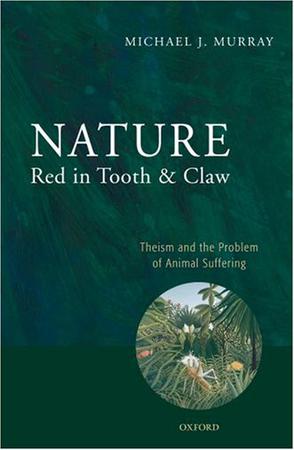
Recently, I finished reading Nature Red in Tooth and Claw
The purpose of that low organism [the trilobite] is by no means exhaustively explained when we have taken a measure of the sensational happiness he derived from his monotonous existence… But a far higher purpose is served in the adaptation of his complicated organism and of the position of his tomb in a sedimentary deposit to arrest the attention and direct the reasoning of a scientific observer. The pleasure of one lofty thought is worth more… than a whole heard of sensational pleasures. (142, cited below)
There is much to unpack in this quote, but for simplicity’s sake we’ll just examine one facet. Wright asserted that the final cause–the ultimate purpose–of a trilobite is not merely found in its own existence, but also in its existing to “arrest the attention and direct the reasoning” of a more highly developed organism. Indeed, Wright argued that the learning the life (and death) of the trilobite brought to the scientific observer was a far greater good than the life the trilobite lived of sensational pleasures.
A number of issues would need to be addressed before a fuller theodicy could be developed from this point. First, not every trilobite was able to convey its life to the good of a scientific observer. Second, is the good of scientific observation really better than sensational life of the trilobite?
Of course, I personally think the point by Wright is interesting and compelling to a point–but to develop that argument would take as much space as Murray dedicates to it. My final observation would be that Wright’s argument was not intended as the final word on the subject. It is but one among many facets of a greater good theodicy or a conjoined theodicy with other varieties of approaches to the problem of evil. Nature Red in Tooth and Claw
Links
Be sure to check out the page for this site on Facebook and Twitter for discussion of posts, links to other pages of interest, random talk about theology/philosophy/apologetics/movies and more!
Animal Pain Re-Visited– Over at Reasonable Faith, Michael Murray defends some theses of his book that I discussed above.
Source
Michael J. Murray, Nature Red in Tooth and Claw: Theism and the Problem of Animal Suffering
Does good always eliminate evil?
 One of the key components of the composition of the problem of evil (at least its logical variety)* is the notion that good will eliminate evil. The late J.L. Mackie put it this way:
A wholly good omnipotent being would eliminate evil completely; if there really are evils, then there cannot be any such being. (Mackie, 150, cited below)
Simply put, this statement and any like it seem fairly obviously false if made without any rather major qualifications. After all, it seems clear that the total elimination of evil is not actually a logically necessary end for a good being, even an all-good, all-powerful being.
C. Stephen Evans presented a case to show that Mackie’s statement (and those like it) are simply mistaken. He noted that the principle that good must eliminate evil seems to be blatantly false without a number of qualifications. He argued that there are some evils which good beings will allow in order to bring about a greater good. The analogy he used was that of parents not allowing their children to ride in automobiles. After all, this would ensure that they would never be involved in the evil of a car crash, but surely it would also prevent greater goods of interaction with friends, learning to drive and the responsibility that comes with, and more (127). However, Evans was quick to note that a deity is by no means directly analogous to a human parent. The resources God would have to prevent evil are infinitely greater than that of a human parent.
In the case of God, however, God cannot bring about the logically impossible. Rather than going for a full-on theodicy (an account of why evils exist), Evans argued that certain goods are impossible to achieve without some evil. Thus, courage necessitates some kind of suffering (128). He did not argue that this notion alone provides a comprehensive theodicy; but for our purposes it is enough. It seems clear that the notion that good must eliminate evil is not only unsupported by argument (it is an a priori assumption), but also patently false. That is, we have evidence that at least some evil must be allowed in order for some good to be brought about.
I want to be clear about my thesis in this post: I am not claiming to have a comprehensive explanation for all evil everywhere. My claim is rather that good does not, by necessity, eliminate evil. That’s all. I believe that I have established this thesis. If so, then Mackie’s argument (and those like it) fail.
*The logical problem of evil is basically an argument that there is a contradiction in theistic belief related to God’s power and goodness and the existence of evil.
Links
Be sure to check out the page for this site on Facebook and Twitter for discussion of posts, links to other pages of interest, random talk about theology/philosophy/apologetics/movies and more!
Sources
C. Stephen Evans, Faith Beyond Reason: A Kierkegaardian Account (Reason & Religion)
J.L. Mackie, The Miracle of Theism (New York: Oxford, 1982).
SDG.
——
The preceding post is the property of J.W. Wartick (apart from quotations, which are the property of their respective owners, and works of art as credited; images are often freely available to the public and J.W. Wartick makes no claims of owning rights to the images unless he makes that explicit) and should not be reproduced in part or in whole without the expressed consent of the author. All content on this site is the property of J.W. Wartick and is made available for individual and personal usage. If you cite from these documents, whether for personal or professional purposes, please give appropriate citation with both the name of the author (J.W. Wartick) and a link to the original URL. If you’d like to repost a post, you may do so, provided you show less than half of the original post on your own site and link to the original post for the rest. You must also appropriately cite the post as noted above. This blog is protected by Creative Commons licensing. By viewing any part of this site, you are agreeing to this usage policy.
If a Good God Exists: Presuppositional Apologetics and the problem of evil

It is clear that all things are ordered according to the perfect will of the Lord. If the Lord’s reasons for some state of affairs are inscrutable, does that mean that they are unjust? (Augustine, City of God
Book V, Chapter 2).
The problem of evil is the most pervasive argument used against Christianity. It also causes the most doubts among Christians. I know I can attest to crying out to God over the untold atrocities which continue to happen. Yet very often, I think, we are asking the wrong question. Here, I’ll explore the ways the problem of evil is presented. Then, I’ll offer what I think is a unique answer: the presuppositional response to the problem of evil. Finally, we’ll evaluate this response.
Two Ways to Present the Problem of Evil
The problem of evil is posed in a number of ways, but here I’ll outline two varieties.
The Classical/Logical Problem of Evil
God is said to be all powerful and all good, yet evil exists. Thus, it seems that either God does not want to prevent evil (in which case God is not all good) or God is incapable of preventing evil (and is thus not all powerful).
The Evidential Problem of Evil
Evil on its own may not prove that God does not exist (the logical/classical problem of evil), but it seems that surely the amount of evil should be less than what we observe. Surely, God is capable of reducing the amount of suffering by just one less child being beaten, or by one less tsunami killing hundreds. The very pervasiveness of evil makes it clear that no good God exists.
The Presuppositional Response to the Problem of Evil
One of the insights that we can gain from presuppositional apologetics is that it forces us to look at our preconceived notions about reality and how the impact our answers to questions and even the questions we choose to ask. The way that the problems of evil are outlined provides a prime example for how presuppositional approach to apologetics provides unique answers.
The presuppositional answer to these problems of evil is simple: If a good God exists, then these are not problems at all.
Of course, this seems overly simplified, and it is. But what the presuppositionalist is emphasizing is that the only way to make the two problems above make sense is to come from a kind of neutral or negative starting presupposition. The only way to say to construct the dilemma in the classical/logical problem of evil is to assume that there is not an all-powerful and all-good God to begin with. For, if an omnibenevolent, omnipotent being exists, then to say that God does not want to prevent evil seems false; while to say that God is incapable of preventing evil is also false. Thus, there would have to be a third option: perhaps God reasons for allowing evil are inscrutable; perhaps the free will defense succeeds; etc. Only if one assumes that there is no God can one make sense of the logical problem of evil to begin with.
The evidential problem of evil suffers an even worse conundrum given its presuppositions. For it once more assumes that God should do more to prevent evil, and so because God does not do more, God must not exist or must not care about evil. But who is to say that God should do more to prevent evil? Who is in a position to judge the overall evil in the world and say that there should be less? Furthermore, even assuming it were possible for there to be less evil, who knows the whole breadth of possible purposes God might have to allow for suffering and evil? The presuppositionalist agrees with the words of God in Job:
Who has a claim against me that I must pay?
Everything under heaven belongs to me. Job 41:11
The answer must come with humility: no one has such a claim. There is none who can claim that God owes them one thing. Yet this is not all an appeal to God’s sovereignty. Instead, it is an appeal to God’s goodness.
The late Greg Bahnsen, a defender of presuppositional apologetics, presents the presuppositional approach to the problem of evil in his work, Always Ready
If the Christian presupposes that God is perfectly and completely good… then he is committed to evaluating everything within his experience in light of that presupposition. Accordingly, when the Christian observes evil events or things in the world, he can and should retain consistency with his presupposition about God’s goodness by now inferring that God has a morally good reason for the evil that exists. (171-172)
Thus, the strength that one assigns to the problem of evil ultimately depends quite a bit upon one’s presuppositions. If you believe you have good reason for thinking that God exists, then the problem of evil seems much less powerful than if you believe there is no good reason for thinking God exists.
Yeah… and?
Okay, so what’s the point? It may be that what we bring to the table does indeed alter our view of the problem of evil. Does that mean we are at a complete impasse? I think that this is where evidences come in, even on the presuppositional view. If all we have are presuppositions, then we are indeed stuck. But we must look at evidences to see whose presuppositions match reality. And, what we have done by centering the discussion of the problem of evil around presuppositions is to set it to the side. Surely the atheist would not suggest the Christian must abandon their presuppositions? It seems like a more rational perspective to look at the evidences. The presuppositionalist holds that when it comes to evil, it is really just a matter of presuppositions. If a Good God exists, we can trust God.
Links
The Presuppositional Apologetic of Cornelius Van Til– I explore the presuppositional method of apologetics through a case study of the man who may fairly be called its founder, Cornelius Van Til.
Debate Review: Greg Bahnsen vs. Gordon Stein– I review a debate between a prominent presuppositional apologist, the late Greg Bahnsen, and a leading atheist, Gordon Stein. It is worth reading/listening to because the debate really brings out the distinctiveness of the presuppositional apologetic.
I have explored this type of argument about the problem of evil before. See my post, What if? The “Job Answer” to the problem of evil.
I review Greg Bahnsen’s Always Ready.
Image credit: http://commons.wikimedia.org/wiki/File:Las_Conchas_Fire.jpg
SDG.
——
The preceding post is the property of J.W. Wartick (apart from citations, which are the property of their respective owners, and works of art as credited) and should not be reproduced in part or in whole without the expressed consent of the author. All content on this site is the property of J.W. Wartick and is made available for individual and personal usage. If you cite from these documents, whether for personal or professional purposes, please give appropriate citation with both the name of the author (J.W. Wartick) and a link to the original URL. If you’d like to repost a post, you may do so, provided you show less than half of the original post on your own site and link to the original post for the rest. You must also appropriately cite the post as noted above. This blog is protected by Creative Commons licensing. By viewing any part of this site, you are agreeing to this usage policy.
The Hobbit: An Unexpected Journey- A Christian perspective
 Unless you’ve been living in a Hobbit-hole somewhere (forgive me!), you know that The Hobbit: An Unexpected Journey was just released in theaters. Short, spoiler free review: It was amazing, go see it. Hereafter, I offer my thoughts on the themes present in the film from a Christian worldview perspective, followed by some links to great posts on the movie and related items. Yes, there are SPOILERS ahead.
An Unexpected Journey
Yes, there is an unexpected journey which begins in this film, believe it or not. Yet the journey was not just unexpected but also vehemently resisted. Bilbo Baggins did not want to go. He was too comfortable with his armchair, his full cabinet, and his total lack of adventure. He was comfortable in his home. He liked it there, and as long as nothing was bothering him, he’d like to stay put, thank you very much.
I can’t help but think of how so many people today are in that same position. We are too comfortable in our pleasant (or at least largely undisturbed) lives, living as though we haven’t a care in the world. We avoid those things which make us uncomfortable. We don’t want to think about them, and we’d rather not even say the words that have anything to do with these hard topics which have become our “adventures.”
For the Christian, this is especially poignant. The scene where Bilbo finally decides to go on the journey has him waking up the next morning after his refusal. He sees his hobbit-hole cleaned up and looking as though the previous night had never happened. But then he sees the contract from Thorin Oakenshield on a table. He picks it up and realizes what he has been called to do. He has to step out and live that life in the great beyond. It is as Gandalf tells him: the world is not contained in books and maps, it is “out there.” Similarly, we cannot become too comfortable in our lives. We are to be in the world, changing it through our actions and through the call to repent and believe. Yes, we can have all the books, we can pray the prayers, but what are we doing? Are we running, leaping, yelling like Bilbo to join the adventure, to spread the Gospel?
Big Evil
Defeating Evil
When the party comes to Rivendell, they encounter Saruman, who had summoned Galadriel. After a brief conference on whether the dwarves should continue their quest and a debate over the existence of a Necromancer, Galadriel privately confronts Gandalf. She asks him why he chose a Hobbit, Bilbo, to embark on such a dangerous quest as a burglar. Gandalf’s insight is telling. He says that “Sarumon thinks evil must be defeated with great power.” But Gandalf is not so convinced. He argues that it is the little things, the everyday choices, which can lead to the defeat of evil. When enough choices are made for good, evil cannot overcome the turning tide against it. Bilbo is weak, but he will become strong in his actions. He will be used for good, despite not having great power.
We can fight evil in that same way. The choices we make everyday have larger consequences. How will I spend my time? Will I make that nasty remark? Will I forgive? There is big evil in this world, but it can be fought, by God’s grace.
Its Reality and Our Resistance
Evil is real. There is evil everywhere in the world, and we need only to look at the headlines to see it. Gandalf is aware of the rising evil in Middle Earth as well. The evils which confront the adventurers are “big.” There are trolls, stone giants, a goblin with a grudge, and more. They are resisted at every turn.
Who can help but see how this theme ties into the last one? Christians are called into a world of big evil. We are called to go into a world which is resisting them–often violently–at every turn.
Evil’s Foothold
Evil seeks places to dwell. The things which are evil must be actively resisted, for any foothold evil gains, it will utilize. Bilbo, Gandalf, Thorin, and Radagast the Brown must all fight against evil as it seeks its foothold in their lives. Radagast is a particularly poignant example. He runs through the forest, fighting evil as much as can be done. He is eccentric and seems crazy, yet he does what he can to fight the evil which seeks to penetrate at every level into the forest. Our hearts are too often willing dwelling places for evil. We must fight it.
 Small Mercies
Courage is the strength to show mercy. Gandalf urges Bilbo to remember this as he considers the adventure. A mercy shown can have important ramifications in the future, as those who know not only the Hobbit but also the Lord of the Rings trilogy should note. By sparing Gollum, Bilbo opened the door for the defeat of a much greater evil far into the future. What mercies can we show? Certainly, we don’t often have a life-or-death situation placed at our feet, but we have the capacity to show mercy on a day-to-day basis.
Evidence and Will
Saruman was confronted by Gandalf with evidence for the existence of a great evil, a Necromancer, who had been discovered by Radagast. Saruman–perhaps already in the thrall of Sauron–seeks any avenue to redefine the evidence. He says that Radagast cannot be trusted, for he is too eccentric and perhaps crazy. Saruman says Radagast spends too much time in the forest, eating mushrooms. Even when confronted with physical evidence, a blade full of evil, he seeks to offer an alternative explanation.
This dialogue between Gandalf, Elrond, Galadriel, and Gandalf is a powerful example of how our will can change the evidence. If we do not wish something to be true, we will seek every avenue to escape its truth. Perhaps Saruman was not yet in the thrall of Sauron, perhaps he merely did not want to think evil could gain such a foothold in his world, but he nevertheless made a decision to doubt his brother wizards. If he had trusted them, he perhaps would not have trodden down the path he takes in Lord of the Rings.
Back Again- Conclusion
JRR Tolkien wrote one of the greatest fantasy epics of all time. He was also a deeply thoughtful Christian. The themes which appear throughout his novels are portrayed vividly on screen. I urge readers to see this movie. When you put on those 3-D glasses, don’t forget to put on your worldview glasses as well. What themes are occurring in this film? How do they relate to my worldview? What worldview can account for these things? The Hobbit: An Unexpected Journey was a fantastic exploration of these themes. We are called to live in the world, we are called to adventure, no matter how much we want to resist. We are called to Christ.
Links
The Call to Adventure– What does the call to adventure mean? Garret Johnson offers a thought-provoking look at the call to adventure in literature and how it can inform our worldview.
Tolkien Experts Talk About His Christian Themes– A video with a number of experts on Tolkien offering their thoughts on the Christian themes in his body of work. Definitely worth watching.
Big Truths from the Hobbit– An excellent post calling Christians to step out of their hobbit-holes.
SDG.
——
The preceding post is the property of J.W. Wartick (apart from citations, which are the property of their respective owners, and works of art as credited) and should not be reproduced in part or in whole without the expressed consent of the author. All content on this site is the property of J.W. Wartick and is made available for individual and personal usage. If you cite from these documents, whether for personal or professional purposes, please give appropriate citation with both the name of the author (J.W. Wartick) and a link to the original URL. If you’d like to repost a post, you may do so, provided you show less than half of the original post on your own site and link to the original post for the rest. You must also appropriately cite the post as noted above. This blog is protected by Creative Commons licensing. By viewing any part of this site, you are agreeing to this usage policy.
Book Review: “Providence and the Problem of Evil” by Richard Swinburne
“In order rationally to believe that there is a God, despite [evil], we need either strong positive evidence for the existence of God, or a record of discovering with respect to many apparent bad states that a theodicy works with respect to them, or a theodicy for each kind of bad state which seems to count against the existence of God.”[1]
The problem of evil is considered by many to be the greatest challenge to theism.[2] Richard Swinburne offers a defense against this problem in his work Providence and the Problem of Evil
Swinburne first develops an account of goods within creation. His account includes beauty, actions, thoughts and feelings as various goods. Given the existence of God, he also argues that worship is a great good.[4] Human freedom is necessary for many goods. With freedom, humans can bring about all types of great goods.[5] The freedom of persons also allows for great evils. These goods are not just goods for people, but they are states which God would be expected to desire to bring about.[6] By developing this account, he is able to turn towards various types of evils.
First, there are moral evils. Moral evils are essentially those bad states of affairs which persons bring about. Swinburne argues that some moral evil is going to be necessary, because it is simply a fact that there are good states of affairs which are logically incompatible.[7] Second, there is natural evil—evils which occur without direct causation by persons.
These sections of the book are largely made up of background, yet Swinburne interweaves his theodicy into the chapters on evil. Central to Swinburne’s account is the idea that for every evil, there is some reason that it occurred. There is, in other words, no evil which is superfluous, no evil which is gratuitous. For every evil mentioned, Swinburne provides a possible reason for God’s allowing it to occur. What reasons could God have for allowing evils like the holocaust, or animal pain? Swinburne sums up his view concisely as follows:
“Every moral evil in the world is such that God allowing it to occur makes possible… the great good of a particular choice between good and bad… Every pain makes possible a courageous response… and normally the goods of compassion and sympathetic action… And all animal pain gives knowledge and opportunity for compassion to animals and humans if they know of it.”[8]
Swinburne’s view is that for every evil, there is a reason. The reason can be knowledge: when people (or animals) observe animals dying in forest fires, they learn to flee from the fires, and thus save themselves and others.[9] Choice is a great good, but in having choices, people can choose to bring about great evils. Horrendous evils like the Holocaust are not just the result of choices in the present, but are the consequences of a long series of evil choices.[10]
Importantly, Swinburne also argues that God is under no obligation to make everyone’s life equally good. “[I]f [God] gives to some ten good things, and to others twenty good things, no one is wronged; nor has he failed to be perfectly good. He has been generous, and, more so, he has made it possible for us to be generous.”[11] God’s providence is good to everyone. There is a level of inequality in the gifts received—but to any and all, gifts are given. The way people choose to use their gifts is what leads to extreme inequities.
Finally, Swinburne argues that God has the right to allow evil, largely due to the extreme dependence people have upon him.[12] Not only that, but God has brought about a world in which every person has the possibility of the nearly infinite good of being with God forever. Thus, Swinburne concludes that God has provided people with a choice between the good and rejection of the good. The responsibility for that action is upon the person, not God.[13]
Throughout Swinburne’s account are several theses many readers may find implausible. He rejects original guilt [he does not deny that there was an original sin and instead holds to an Eastern Orthodox view–thanks to a reader of the original review (linked below) for this point][14] and denies that God knows the future free actions of creatures.[15] These theological points do not undermine his main theses, however. It is undeniable that Swinburne has provided a lucid account of a “greater good theodicy.” He does provide possible reasons for allowing any type of evil to occur.
The key point of divergence with readers will be whether they are willing to accept these reasons in conjunction with his later conclusions. God has reasons for allowing every evil, and he provides for people to have extraordinarily good lives with the afterlife, but there remain those who will reject these goods. Swinburne’s account is cumulative: the reasons provided for allowing evils do not stand on their own. Rather, they stand together and in unison with God’s providence and direct goodness to all persons through maintaining the world, creating them, and providing them with choices.
Those interested in the problem of evil would do well to read Providence and the Problem of Evil. Usage of the “greater good theodicy” is on the wane. Many theists today only provide versions of the “free will defense” in relation to the problem of evil. In doing so, they cast aside a powerful philosophical tool for theism. While the “greater good theodicy” will not convince everyone, it can at least provide a strong cumulative case when joined with other defenses against the problem of evil.
[1] Richard Swinburne, Providence and the Problem of Evil (New York, NY: Oxford, 1998), 29.
[2] See Swinburne’s thoughts on this on pages 4ff.
[3] He also believes that we have strong positive evidence for the existence of God, but he focuses upon theodicy in this work. See his The Existence of God for a case for the existence of God based on positive evidence.
[4] 111ff.
[5] 105-107.
[6] 45.
[7] 125.
[8] 217.
[9] 176ff.
[10] 151-152.
[11] 149.
[12] 223ff.
[13] 251.
[14] 36-41.
[15] 127ff.
This review was originally posted at Apologetics315 here: http://www.apologetics315.com/2011/11/book-review-providence-and-problem-of.html
SDG.
——
The preceding post is the property of J.W. Wartick (apart from citations, which are the property of their respective owners) and should not be reproduced in part or in whole without the expressed consent of the author. All content on this site is the property of J.W. Wartick and is made available for individual and personal usage. If you cite from these documents, whether for personal or professional purposes, please give appropriate citation with both the name of the author (J.W. Wartick) and a link to the original URL. This blog is protected by Creative Commons licensing. By viewing any part of this site, you are agreeing to this usage policy.
The Multiverse and Theism: Theistic reflections on many worlds
 There has been much philosophical and scientific discussion on the topic of the multiverse. Recently, a lot of this discussion has been happening within philosophy of religion. Some attempt to use the multiverse to overcome classical theistic arguments like the Kalam Cosmological Argument, while others try to utilize it to avoid the teleological argument. Atheists and skeptics are not the only ones who are interested in the multiverse, however. Recently, a few prominent theistic philosophers have utilized the multiverse in inventive ways.
The Multiverse and the Problem of Evil
Some theistic philosophers have argued that the multiverse can provide a new type of theodicy. As eminent a philosopher as Alvin Plantinga writes:
…a theist might agree that it is unlikely, given just what we know about our world, that there is such a person as God. But perhaps God has created countless worlds, in fact, all the… universes… in which there is a substantial overall balance of good or evil… [A]s it happens, we find ourselves in one of the worlds in which there is a good deal [of evil]. But the probability of theism, given the whole ensemble of worlds, isn’t particularly low (Plantinga, 463).
Does such a theodicy help theists with the problem of evil? It seems to me that it may, but that it is not particularly strong. It could be included in a cumulative-case type of theodicy, however.
First, Michael Almeida offers a critique of this position. Suppose that God did, in fact, create such a multiverse. It seems plausible that such a universe would be infinite in the number of worlds (after all, for every “good” world, there seems one can always imagine a “better” world). Here Almeida ingeniously applies William Lane Craig’s arguments about the infinite, not to show that the set of universes cannot be infinite, but to show that in an infinite multiverse one could subtract specific worlds from this set without decreasing the good of the multiverse (Almeida, 305-306). Suppose God did in fact actualize an infinite multiverse–all the worlds which are, on the whole, good. If that’s the case, then God could easily not actualize any one (or infinite!) world(s) without decreasing the total good of creation. After all, it would remain infinitely good!
Timothy O’Connor offered a possible response to this argument, noting that “It may well be that [God] would have a distinct motivation to realize every fundamental kind of good-making feature, some of which are incommensurable. If so, this would put a further constraint on universe types… within a candidate infinite hierarchy” (O’Connor 2, 315). God could have chosen to actualize each individual type of good–some of which may exist in our own world to a maximal extent. This doesn’t seem implausible given the tremendous goodness of an event like the Redemption.
Some may be concerned that an appeal to the multiverse may undermine more traditional theodicies such as the “greater good theodicy” or the “free-will defense.” One might envision the multiverse as a kind of “throwing in the towel” on the traditional theistic defenses. I don’t see why this should follow, because any of these traditional theodicies would be just as applicable to our own universe whether it were one or one of many. There are, however, a few problems I see with this defense, which I’ll put off until the section “On the Possibility of a Multiverse” below.
 Which world would God Create?
Some have argued theism is irrational because they hold God is a perfect being, which would entail that God would create the best possible universe–itself an incoherent concept. It is possible that God need not create the best possible world. Robert Merrihew Adams, for example, doesn’t agree that God is obligated to create the “best possible world.” Rather, God could choose to create worlds which manifest His grace (Adams, 62). O’Connor cites William Rowe as providing an effective counter to this by arguing that there would then be a possible being better than the perfect being (O’Connor 1, 114). I’m unconvinced by this counter. If there is no best possible world, God cannot be obligated to create it (because it doesn’t exist).
O’Connor anticipates this response and seems to grant that it may be plausible (115). However, he among other theists, seems to believe that God would actualize a multiverse. He writes, “God’s choice isn’t between… single universes, but between the super universes [‘super universe’ being a ‘collection of one or more totalities that are mutually disconnected save for their common origin within God’s creative choice’]” (O’Connor 1, 116). God, on this view, actualizes many “good” worlds. He writes, “the creative motivation would be not to settle for a finite limit on the individual organic goodness of any of His products” (O’Connor 2, 315). God’s creation of many universes shows his “artisanship” (Ibid).
Such arguments are both interesting and compelling. Those who attack theism based upon the “best possible world” objection may be thwarted by the hypothesis of God’s creative multiverse.
On the Possibility of a Multiverse
Theistic proposals of a multiverse are clearly sometimes motivated for entirely different reasons than naturalists. What difficulties are there with such a proposal?
First, some theists object to the multiverse by arguing that it undermines several theistic arguments. It does not seem that the multiverse would do so, however. The cosmological argument would stand strong in spite of a multiverse, because any inflationary multiverse would still have a beginning in time. Design arguments would similarly be unchallenged because one would have to explain the fine-tuning of the multiverse. These objections to the multiverse, therefore, do not do much damage.
Other objections to the multiverse require more discussion of the meaning of the term “multiverse.” Jeffrey Zweerink notes several levels of multiverse. Some of these are uncontroversial. For example, the “Level I” multiverse is simply a description of other regions beyond the observable universe (Zweerink, 28). Of course, this is hardly what many mean when they refer to a “multiverse.” What is meant by multiverse here is a Level II or higher multiverse, such as inflationary bubble universes or other generative scenarios (Zweerink, 28-29). The difficulty with these is that there doesn’t seem to be any reason to hold that these universes exist. Zweerink notes that the Level II multiverse is predicted by some models of string theory, but to believe there are literally other unobservable universes on the basis of theoretical predictions alone hardly seems convincing.
Given these observations, it seems initially that while theism is unthreatened by the multiverse (and perhaps even bolstered by its possible existence), there is no better reason to think it exists on theism as on other worldviews. But perhaps that’s not the case. One can reflect once more on O’Connor’s belief that the multiverse shows God’s creative artistry (O’Connor 2, 315). Not only that, but one may even predict that God would actualize many worlds in order to bring about His desire to actualize various goods (O’Connor 1, 112ff). Perhaps one could argue that theism may even predict many universes. In that case, the multiverse is more likely than not.
My thoughts
Clearly, I think there may be some merit in the use of the multiverse in theistic arguments. I think it would amazing if, somehow, we made a discovery which confirmed the existence of other universes, and I do believe people could hold that theism might even predict such a discovery, but color me skeptical. I think it would generate an enormous amount of metaphysical baggage to hold to the existence of a multiverse. While the previous arguments may have shown that theism increases the likelihood of a multiverse, I don’t think it increases it enough to justify belief in a world ensemble. I remain open to the possibility, and indeed some compelling arguments have been offered in its favor, but for now I remain unconvinced. That said, I think theists could still utilize the multiverse in response to the problems illustrated above, because even a hypothetical multiverse could be used to bolster these defenses. Those opposed to theism might here object, saying that I condemn their own uses of the multiverse to try to get around theistic arguments. They would be incorrect. I condemn the use of the multiverse on competing views because I don’t think the other views can justify belief in the multiverse, nor do I think their usage actually defeats the difficulties with their own positions.
Is there a theistic multiverse? Maybe. Can theists utilize a hypothetical multiverse in their philosophical speculations? Absolutely.
Sources
Alvin Plantinga, Warranted Christian Belief (New York, NY: Oxford, 2000).
Timothy O’Connor 1, Theism and Ultimate Explanation (Malden, MA: Blackwell, 2008).
Timothy O’Connor 2, “Is God’s Necessity Necessary? Replies to Senor, Oppy, McCann, and Almeida,” Philosophia Christi 12 (2010), 309-316.
Michael J. Almeida, “O’Connor’s Permissive Multiverse” Philosophia Christi 12 (2010), 297-307.
Robert Merrihew Adams, “Must God Create the Best?” in The Virtue of Faith and Other Essays in Philosophical Theology 51-64 (New York: Oxford, 1987).
Jeffrey Zweerink, Who’s Afraid of the Multiverse? (Reasons to Believe, 2008).
Links
I discuss and rebut multiverse objections to the Kalam Cosmological Argument here and here.
The Theological Attraction of the Multiverse– An interesting post on the theology of the multiverse.
Christological Implications of the Multiverse– Another post worth reading on theology and the multiverse.
Living in the Multiverse- Is It Science?– Discussion of scientific evidence for the multiverse.
SDG.
——
The preceding post is the property of J.W. Wartick (apart from citations, which are the property of their respective owners) and should not be reproduced in part or in whole without the expressed consent of the author. All content on this site is the property of J.W. Wartick and is made available for individual and personal usage. If you cite from these documents, whether for personal or professional purposes, please give appropriate citation with both the name of the author (J.W. Wartick) and a link to the original URL. If you’d like to repost a post, you may do so, provided you show less than half of the original post on your own site and link to the original post for the rest. You must also appropriately cite the post as noted above. This blog is protected by Creative Commons licensing. By viewing any part of this site, you are agreeing to this usage policy.
What if? The “Job Answer” to the Problem of Evil
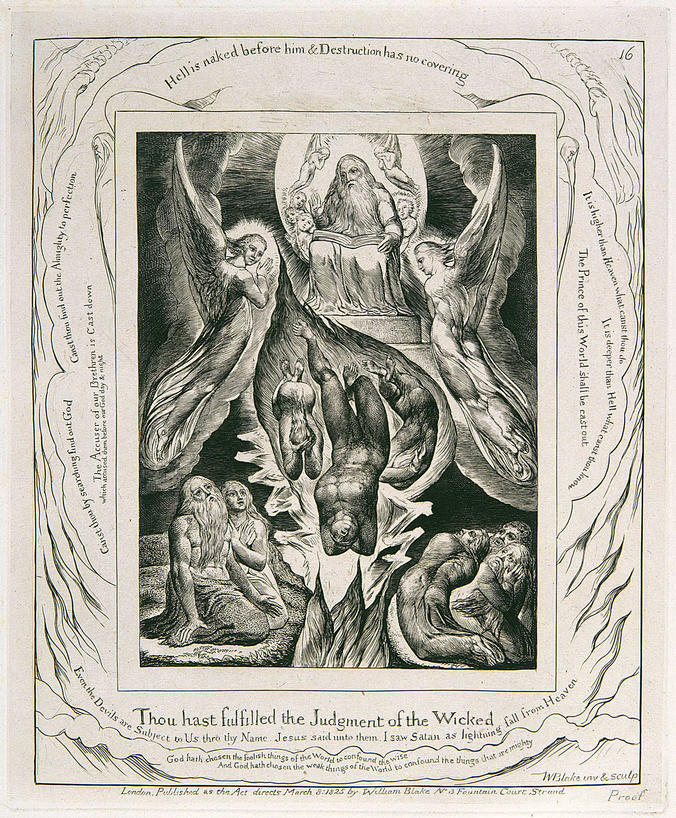 “Who has a claim against me that I must pay?
Everything under heaven belongs to me.” Job 41:11
There are many different kinds of theodicy or defenses to rebut the problem of evil. As I read the Bible I see a few different answers, but one extremely important theodicy in the Scriptures is what I shall deem the “Job Answer,” which is found in the book of Job, although a similar idea is touched upon by Paul in Romans.
Job was known as the most righteous of all the people on earth. Yet God allowed terrible things to happen to him, as part of a test to show Satan that Job was indeed as faithful and righteous as was thought.
But why? Why do bad things happen to good people? Why is it that Job, who God Himself called blameless and upright (1:8) has so many bad things happen to him?
Job’s friends gathered around him and offered various explanations. Job must have done something to deserve it, he must have erred in some way, etc, etc. Yet all of these, Job says, are wrong. He is indeed without blame, and he remains faithful. Yet despite this faith, he cannot help but complain to God. And in this defense of himself and appeal to God, he again points out that he is righteous (see Job 31).
God’s answer to this complaint is where I draw the “Job Answer.” God responds, basically, by saying “Job, you don’t know how I operate, but don’t you think it’s reasonable to conclude that I know what I’m doing?”
Is this a satisfactory answer? Can Job demand another answer? Should he?
That is often the route taken by atheists and even Christians when they investigate the problem of evil. They demand that God provide an answer they themselves find suitable. They act as though God owes them the answer, as if God cannot possibly be good unless the answer is found acceptable in their own eyes. But what does God say to that? In Job chapter 41, He says “Who has a claim against me that I must pay? Everything under heaven belongs to me.”
Is that easy? Is that the answer we Christians like to see? Not really. It would be so much easier if God just said “You know, I gave you guys freedom of will, so given your sinful nature (which you chose, by the way), wouldn’t you expect to see some pretty awful things happening?” That’s the kind of answer I find more appealing. That’s easy.
But that isn’t the answer God gave. He said “Everything belongs to me. Who must I repay?” Does that mean God is not good?
Francis Chan and Preston Sprinkle’s recent book Erasing Hell has had me reflecting on these very questions. Hell is a tough issue, and it has some serious implications for the problem of evil. In a particularly intriguing part of this book, the authors quote Scripture and follow it with a few questions. Specifically, they are reflecting on the idea that God knows who is going to hell before they themselves choose to do so. Check it out:
“What if God, desiring to show his wrath and to make known his power, has endured with much patience vessels of wrath prepared for destruction, in order to make known the riches of his glory for vessels of mercy, which he has prepared beforehand for glory?” (Rom. 9:22-23)
…What if God, as the sovereign Creator of the universe, decided to create ‘vessels of wrath prepared for destruction”? …And what if it’s His way of showing those He saves just how great His glory and mercy is? What would you do if He chose to do this? Refuse to believe in Him? Refuse to be a ‘vessel of mercy’? Does that make any sense? Would you refuse to follow him? Really? Is that wise? (p. 130, cited below)
The passage quoted is from Paul, writing to the Romans. Note how he phrases it: he starts it with what if. He’s not saying this is what God does, or that God does operate in this way, but he’s offering it as a possibility. Chan and Sprinkle continue this line of reasoning: What would we do if this is how God works? Would it make sense to rebel… to become a vessel of wrath just because we know they exist? Does it mean that God is doing wrong if this is how He operates?
Again, we turn back to Job to find the answer. God’s ways our not our own. God answers Job by listing things Job cannot do, and cannot even comprehend. ‘These things,’ God implies, ‘are outside of your comprehension… yet you expect to understand something even more incomprhensible?’ But that is not where God leaves it. He also tells us that ultimately, He will bring justice to all. Those who are now downtrodden will be lifted up, and justice will reign. How can Job respond? By repenting “in dust and ashes” (42:6).
So the “Job Answer” fits in a unique place among various defenses and theodicies for the problem of evil. Instead of using human nature and free will or a greater good to justify evil, the answer given to and by Job is that God, being good, has a reason, even if that reason is inscrutable for us. It is a response of faith.
But this does not mean the “Job Answer” is the only answer given in all of Scripture. Jesus is the ultimate answer to the problem of evil. He came and took our pain and suffering upon Himself, which in turn defeats evil ultimately and for all time. There are other Biblical answers to the problem of evil, but the answer Job gives is simple: Have faith. It does not promote an unphilosophical or unreflective faith, but points out the obvious: If we have good reasons to believe in God, and reasons which point to God as good, then we can simply trust that the apparent problem of evil is solved, ultimately, by God.
Thus, the “Job Answer” implies a second version of theodicy. Namely, that the evidence for the existence of God provides a rebutting defeater for the problem of evil. If we know that God exists and is good, then the problem of evil simply cannot be coherent.
In either case, the “Job Answer” provides a powerful, Biblical, answer to the problem of evil.
Source cited: Francis Chan and Preston Sprinkle Erasing Hell (Colorado Springs, CO: 2011, David C. Cook).
Response to an attack on this post found here (Search for “On Job.”)
SDG.
——
The preceding post is the property of J.W. Wartick (apart from citations, which are the property of their respective owners) and should not be reproduced in part or in whole without the expressed consent of the author. All content on this site is the property of J.W. Wartick and is made available for individual and personal usage. If you cite from these documents, whether for personal or professional purposes, please give appropriate citation with both the name of the author (J.W. Wartick) and a link to the original URL. This blog is protected by Creative Commons licensing. By viewing any part of this site, you are agreeing to this usage policy.
“The Shack” Reviewed by a Conservative (With Poll)
The Shack
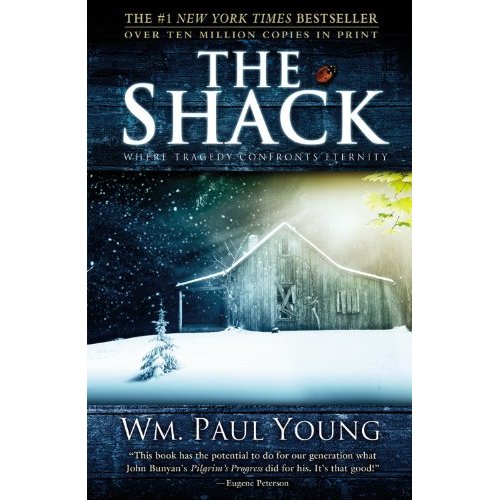
I went in with some strong biases against the book. I’d heard from others that it is pretty terrible theology and borderline (or actual) heresy. Needless to say I wasn’t expecting to enjoy it, but, like any good work will do, The Shack proved my biases wrong.
The plot is fairly simple. A man, Mackenzie, has a horrific tragedy happen to his daughter; this tragedy affects his whole family in negative ways; then he receives a letter from God (?) asking him to come to the place the tragedy happened to talk about things. The rest of the narrative revolves around this discussion. One note I should make as a reviewer is that Young’s prose is fantastic. His descriptions of everyday events and locations inject a reality into the story that is necessary to get readers hooked, and he writes about the uncommon and the supernatural with stunning beauty.
The plot serves as just the background for what the book seems (to me) to be; The Shack is a stirring work of philosophical and theological investigation of the nature of God, the problem of evil, and our hope in Christ.
Readers who have read the work or read anything about it probably already know that God is portrayed in the work as three “persons” in a very literal way. The Father, “Papa”, is a motherly black woman, Jesus is a plain-looking middle-eastern workman, and the Holy Spirit changes her (?) form throughout the work. I feel it is necessary to address this, because this is perhaps the most controversial part of the book. It seems to me, at least, that the idea of God coming to people where they are should not be such a hot issue. Christ Himself describes God’s action in terms of a hen gathering chicks beneath her wings (Luke 13:34). God appeared in various forms throughout the Old and New Testaments (burning bush, still voice in the wind, incarnate Christ, etc.). I find it dubious at best to claim that God does not/can not appear otherwise to individuals–perhaps as a mother to those in need (and this would line up well with the Christian background of religious experiences, cf. Perceiving God by William Alston).
These three persons serve to drive the narrative of The Shack while also making claims about the various works of the persons of God. There are many points throughout the book where I found myself nodding as Young wrote a wonderful insight about the work of God. Young’s answers to some of the most poignant questions of humanity resound throughout the work. One of the most stirring moments is a chapter in which Mackenzie is asked to decide which of his children goes to hell. This is meant to reflect the way Mackenzie (and some Christians) seem to put God in the judgment seat, arbitrarily determining who goes to heaven and who is damned to hell. Mackenzie begs to be condemned instead of his children, and in a powerful turnabout, he is told that this is exactly how God feels. He became incarnate to die for our sins, to give the opportunity for all to be saved, loving all God’s children perfectly (p. 165). Moments like this occur throughout The Shack.
Another thing I must share is The Shack‘s answer to religious diversity. Jesus says that those who love Him come from every background, including other religions. This leads Mackenzie to ask, “Does that mean… that all roads will lead to you?” Jesus answered, “Not at all… Most roads don’t lead anywhere. What it does mean is that I will travel any road to find you” (184). Should Christians agree with this answer? I leave it open to the reader to answer this question. Suffice to say that The Shack will challenge readers from all walks of Christian life.
I finished the book in the span of a day. I set it down late at night, realizing I couldn’t be the same Christian I was before. The Shack grabbed me and wouldn’t let go. The questions Young asks through Mackenzie are questions all Christians must face, and the answers he provides focus on one thing: the Love of God. There are definitely things that made me uncomfortable while reading The Shack, but there are other things I realized were suddenly made clear. Treating The Shack like a theological treatise is unfair. It’s not a doctrine book, it’s a work of Christian fiction, and it excels in its niche, asking questions, giving answers, and leaving it to the reader to decide whether he/she agrees or disagrees. This is a fantastic work and I highly recommend it to my readers. You don’t have to agree with what Young says in The Shack to make the book worth reading, but you should read it.
The Shack

 J.W. Wartick - Reconstructing Faith
