theology
Star Wars: Fate of the Jedi- a Christian reflection on the most recently completed Star Wars series
 Star Wars is not normally where I go to begin discussions about worldview. The most recently completed mini-series, however, “The Fate of the Jedi,” was full of material for discussing worldview perspectives. Here, I will only touch on a few of the many themes the series brought up. Some of these include world religions, objective morality, and theism. Of course, there will be HUGE SPOILERS for the Star Wars universe prior and up to this point. PLEASE REFRAIN FROM POSTING COMMENTS FROM OTHER STAR WARS STORYLINES.
I’ll not be summarizing the plot of the Fate of the Jedi series, which you may find by following the links for the individual books here.
World Religions and the Force
A huge part of the early stages of Fate of the Jedi involved Luke Skywalker and his son, Ben, traveling around the galaxy and visiting other various Force-using schools. These different Force-using schools paralleled, in many ways, various world religions. For example, the Baran Do Sages held onto a kind of gnostic way of knowing, where secret knowledge was preserved by a select group of masters to pass on from generation to generation. Another example is found in the Mind Walkers, who try to separate body from soul in order to walk in a completely different reality. Not only does this also seem gnostic in its bent, but it also reflects the notion of the extinction of the self found in some Eastern religions like Buddhism and Hinduism. There are a few other schools that the Skywalkers visit throughout their travels, and each has aspects of at least one world religion reflected therein.
Of interest is that the way the series approached the various parallels to world religions is that many of them appeared to be fairly obviously wrong. That is, they had a feel of wrongness to them, but they also seemed to get aspects of reality wrong. The Mind Walkers, for example, allowed their bodies to waste away while they experienced their own way of entering into the Force. One cannot help but sense a kind of aversion to this belief system, in which the body is so totally denigrated. Some of their comments also reflected a lack of concern for distinctions between good and evil. Yet again, this is a distinctive of some Eastern religions, and it is a way in which they are factually mistaken. Those who fail to make distinctions between good and evil, between reality and the mental life; they are operating under a mistaken view of reality.
The Fate of the Jedi, then, does not teach a kind of religious pluralism. Instead, it eschews pluralism for showing that some belief systems do not work. They simply do not line up with reality.
Redemption and Betrayal
The character of Vestara Khai is an extremely interesting figure. She may be the most complex character since Mara Jade. A Sith, she is captured by the Skywalkers, who initially do not trust her whatsoever (and for good reason). Yet, in a kind of typical story of conversion in the Star Wars universe, they begin to turn her to the Light Side of the Force. She realizes that her own life has not been based upon good, and she also acknowledges a distinction between good and evil. Her realization is centered around her relationship with her family and friends (such as they are). For a little while, it seems that Vestara is a true convert.
Yet the reader knows throughout that although Vestara has changed her whole way of viewing the universe, she is not entirely a convert. She still puts herself first. In fairness to her, she does so thinking that she is putting others first, and she often does seem to prioritize the needs of Ben–whom she’s come to love–over herself. But when push comes to shove, she betrays the trust of the Skywalkers in the most dire possible way, by giving away the secret identity of a loved one and dooming her to a life of dodging the Lost Tribe of the Sith. A commentary on the darker side of human nature, Khai’s life in the books also begs the question of where one goes from there: what redemption may be in store for someone who seems to have ruined all chances at salvation?
Prophecy and the Celestials
The notion of prophecy is found throughout the Star Wars universe. There was the prophecy of the “Chosen One”; later, prophecies revolved around the Sword of the Jedi and the Unification of the Force. Each of these prophecies were expected to be fulfilled. In the Star Wars universe, prophecy is the product of the Force. One wonders, however, how this plays out with what is an essentially impersonal force. It seems that in order to give revelation, there must be some kind of personal reality; for prophecy relates to the actions of persons.
Ultimately, readers encounter the Celestials–a group of beings (Father, Son, and Daughter… and later Mother) of extreme power. These beings are tied into the whole plot of the expanded universe books of Star Wars in some ingenious (and sometimes a bit questionable) ways. Although these beings may appear to parallel a kind of pantheon, it becomes clear that they are not. They may be seemingly eternal, but they are also contingent: it was entirely possible for them to be destroyed. Again, it is not these beings who drive reality; it is the Force. The Force is the power in the universe, the ‘all in all’ of the Star Wars universe. Yet, as I’ve argued above, it is hard to envision the force as entirely impersonal. It delivers prophecies and sometimes even answers the call of those in need. The “Trinity” created and driven by the Force ultimately drive the Force themselves in many ways.
Conclusion
The Fate of the Jedi series explores a huge number of issues related to worldview. I didn’t get to nearly all the major issues, let alone the minor ones, which come out throughout the series. Of interest is how the series clearly brought up world religions in such a way as to avoid pluralism, but rather provided ways to distinguish between truth and falsehood in religion. Prophecy begs for a personal being, yet the allegedly impersonal Force provides it. It was great to experience the Star Wars universe in such a way as to have it bring up so many issues of worldview in often thoughtful and, frankly, thought-provoking ways.
Links
Be sure to check out the page for this site on Facebook and Twitter for discussion of posts, links to other pages of interest, random talk about theology/philosophy/apologetics/movies and more!
“Fitzpatrick’s War”- Religion, truth, and forgiveness in Theodore Judson’s epic steampunk tale– I take a look at the book Fitzpatrick’s War, a novel of alternative history with steampunk. What could be better? Check out some of the worldview issues brought up in the book.
I have discussed the use of science fiction in showing how religious persons act. Check out Religious Dialogue: A case study in science fiction with Bova and Weber.
Source
Troy Denning, Star Wars: Fate of the Jedi- Apocalypse (New York: Del Rey, 2012).
Disclaimer: The images in this post are copyright of the Star Wars universe and I use them under fair use. I make no claims to ownership of the images.
SDG.
——
The preceding post is the property of J.W. Wartick (apart from quotations, which are the property of their respective owners, and works of art as credited; images are often freely available to the public and J.W. Wartick makes no claims of owning rights to the images unless he makes that explicit) and should not be reproduced in part or in whole without the expressed consent of the author. All content on this site is the property of J.W. Wartick and is made available for individual and personal usage. If you cite from these documents, whether for personal or professional purposes, please give appropriate citation with both the name of the author (J.W. Wartick) and a link to the original URL. If you’d like to repost a post, you may do so, provided you show less than half of the original post on your own site and link to the original post for the rest. You must also appropriately cite the post as noted above. This blog is protected by Creative Commons licensing. By viewing any part of this site, you are agreeing to this usage policy.
Sunday Quote! – Do Trilobites Yield a Greater Good?
 Every Sunday, I will share a quote from something I’ve been reading. The hope is for you, dear reader, to share your thoughts on the quote and related issues and perhaps pick up some reading material along the way!
Trilobites Yield a Greater Good
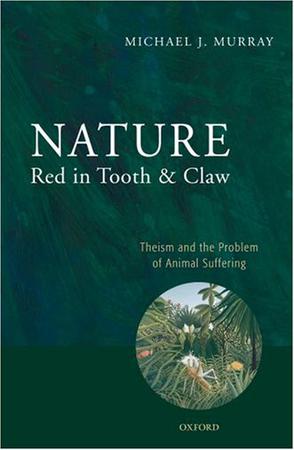
Recently, I finished reading Nature Red in Tooth and Claw
The purpose of that low organism [the trilobite] is by no means exhaustively explained when we have taken a measure of the sensational happiness he derived from his monotonous existence… But a far higher purpose is served in the adaptation of his complicated organism and of the position of his tomb in a sedimentary deposit to arrest the attention and direct the reasoning of a scientific observer. The pleasure of one lofty thought is worth more… than a whole heard of sensational pleasures. (142, cited below)
There is much to unpack in this quote, but for simplicity’s sake we’ll just examine one facet. Wright asserted that the final cause–the ultimate purpose–of a trilobite is not merely found in its own existence, but also in its existing to “arrest the attention and direct the reasoning” of a more highly developed organism. Indeed, Wright argued that the learning the life (and death) of the trilobite brought to the scientific observer was a far greater good than the life the trilobite lived of sensational pleasures.
A number of issues would need to be addressed before a fuller theodicy could be developed from this point. First, not every trilobite was able to convey its life to the good of a scientific observer. Second, is the good of scientific observation really better than sensational life of the trilobite?
Of course, I personally think the point by Wright is interesting and compelling to a point–but to develop that argument would take as much space as Murray dedicates to it. My final observation would be that Wright’s argument was not intended as the final word on the subject. It is but one among many facets of a greater good theodicy or a conjoined theodicy with other varieties of approaches to the problem of evil. Nature Red in Tooth and Claw
Links
Be sure to check out the page for this site on Facebook and Twitter for discussion of posts, links to other pages of interest, random talk about theology/philosophy/apologetics/movies and more!
Animal Pain Re-Visited– Over at Reasonable Faith, Michael Murray defends some theses of his book that I discussed above.
Source
Michael J. Murray, Nature Red in Tooth and Claw: Theism and the Problem of Animal Suffering
Really Recommended Posts 3/21/14- egalitarian marriage, the Bible and murdering children, inerrancy, and more!
 Well we got snow again here (about 3 inches). If it’s anything like last year, we’ll be seeing snow in May. Alas. Given that we’re stuck inside, I am pleased to present a number of excellent posts here for your perusal. The posts address the notion that egalitarian marriage is less satisfactory, apologetic interaction in social media, a recent meme about murdering children in the Bible, and more!
Gender Roles in Marriage (Part 1): Couples in Traditional Roles Have More Sex, Study Finds– I have seen several people sharing the results of a study in which it was found that couples in traditional roles have more sex. Some have trumpeted this as proof that traditional marriage is actually superior to egalitarian marriage. (Here, realize that “traditional marriage” is referring to a complementarian relationship wherein the man is in charge of the household.) However, apart from the problem that the number of instances of sex in a month is perhaps not the best indicator of marital stability and happiness, it seems there are other difficulties with this study and those drawing conclusions about the superiority of complementarianism. Check out this article on the topic.
How to Murder Children: Bible Style – Debunked– There’s a meme rolling around the internet about how the Bible has murdering children in it. It’s constructed without commentary and seems to be slanted towards the view that the Bible is evil. Check out this debunking of the meme (it includes the original). Very good work here, and I really think you should check it out!
What Christians can learn from skeptics– Certainly not an exhaustive list, this is actually more specifically looking at how skeptics are using Wikipedia to slant opinion on religious issues. How might Christians use this as a way to increase confidence in the faith?
Errors of Inerrancy– An interesting post on how to avoid some pitfalls when thinking of the doctrine of inerrancy. The list of errors includes both mistakes made by both critical scholarship and evangelicals regarding the text of Scripture.
One Christian Apologist’s Advice on Using (Anti-)Social Media– Some good advice here on how to become more effective via social media. Though I personally think Facebook is actually a better way to do apologetics than described in this post.
Sunday Quote!- A Disconnect Between Parchment and Pew?
 Every Sunday, I will share a quote from something I’ve been reading. The hope is for you, dear reader, to share your thoughts on the quote and related issues and perhaps pick up some reading material along the way!
A Disconnect Between Parchment and Pew?
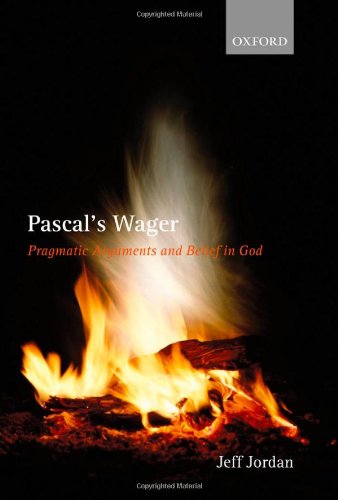
I just started reading Jeff Jordan’s Pascal’s Wager: Pragmatic Arguments and Belief in God, which I admit I have high hopes for. Right at the beginning I came upon a brief tidbit I thought was interesting to consider:
A disconnect exists between the arguments that philosophers find interesting and the arguments actually employed by Christians and other theists as reasons in support of their religious commitments. (vii, cited below)
I wonder sometimes about this very disconnect. The average person in the pew is unfamiliar with and unaffected by things like the Kalam Cosmological Argument or the subtle distinctions required to discuss the problem of evil. Rather, they are more concerned with the practical aspects of faith and the amount of work needed to explain these arguments is neither required nor desired. There does exist this disconnect between parchment–the philosophical theories–and the pew–the average Christian. What can we do to bridge this gap? What does this say about the epistemic validity of faith generally? Is this even an area for concern at all? I don’t think there are easy answers to these questions.
Interestingly, Jordan went on to suggest that one way to bridge the disconnect was with pragmatic arguments, such as Pascal’s Wager. It will be interesting to see how he develops that thesis, and how he defends such arguments. I eagerly look forward to continuing my read of the book.
Links
Be sure to check out the page for this site on Facebook and Twitter for discussion of posts, links to other pages of interest, random talk about theology/philosophy/apologetics/movies and more!
Jeff Jordan, Pascal’s Wager: Pragmatic Arguments and Belief in God
Does good always eliminate evil?
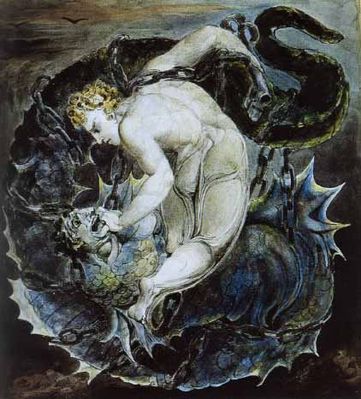 One of the key components of the composition of the problem of evil (at least its logical variety)* is the notion that good will eliminate evil. The late J.L. Mackie put it this way:
A wholly good omnipotent being would eliminate evil completely; if there really are evils, then there cannot be any such being. (Mackie, 150, cited below)
Simply put, this statement and any like it seem fairly obviously false if made without any rather major qualifications. After all, it seems clear that the total elimination of evil is not actually a logically necessary end for a good being, even an all-good, all-powerful being.
C. Stephen Evans presented a case to show that Mackie’s statement (and those like it) are simply mistaken. He noted that the principle that good must eliminate evil seems to be blatantly false without a number of qualifications. He argued that there are some evils which good beings will allow in order to bring about a greater good. The analogy he used was that of parents not allowing their children to ride in automobiles. After all, this would ensure that they would never be involved in the evil of a car crash, but surely it would also prevent greater goods of interaction with friends, learning to drive and the responsibility that comes with, and more (127). However, Evans was quick to note that a deity is by no means directly analogous to a human parent. The resources God would have to prevent evil are infinitely greater than that of a human parent.
In the case of God, however, God cannot bring about the logically impossible. Rather than going for a full-on theodicy (an account of why evils exist), Evans argued that certain goods are impossible to achieve without some evil. Thus, courage necessitates some kind of suffering (128). He did not argue that this notion alone provides a comprehensive theodicy; but for our purposes it is enough. It seems clear that the notion that good must eliminate evil is not only unsupported by argument (it is an a priori assumption), but also patently false. That is, we have evidence that at least some evil must be allowed in order for some good to be brought about.
I want to be clear about my thesis in this post: I am not claiming to have a comprehensive explanation for all evil everywhere. My claim is rather that good does not, by necessity, eliminate evil. That’s all. I believe that I have established this thesis. If so, then Mackie’s argument (and those like it) fail.
*The logical problem of evil is basically an argument that there is a contradiction in theistic belief related to God’s power and goodness and the existence of evil.
Links
Be sure to check out the page for this site on Facebook and Twitter for discussion of posts, links to other pages of interest, random talk about theology/philosophy/apologetics/movies and more!
Sources
C. Stephen Evans, Faith Beyond Reason: A Kierkegaardian Account (Reason & Religion)
J.L. Mackie, The Miracle of Theism (New York: Oxford, 1982).
SDG.
——
The preceding post is the property of J.W. Wartick (apart from quotations, which are the property of their respective owners, and works of art as credited; images are often freely available to the public and J.W. Wartick makes no claims of owning rights to the images unless he makes that explicit) and should not be reproduced in part or in whole without the expressed consent of the author. All content on this site is the property of J.W. Wartick and is made available for individual and personal usage. If you cite from these documents, whether for personal or professional purposes, please give appropriate citation with both the name of the author (J.W. Wartick) and a link to the original URL. If you’d like to repost a post, you may do so, provided you show less than half of the original post on your own site and link to the original post for the rest. You must also appropriately cite the post as noted above. This blog is protected by Creative Commons licensing. By viewing any part of this site, you are agreeing to this usage policy.
Is Molina’s God Fallible? A response to James N. Anderson
 Recently, I responded to James White’s comments on molinism. Shortly thereafter, White had another podcast in which he made several comments on molinism. He also commented favorably on an article by James N. Anderson, which argues that God is fallible. I left a comment over on Anderson’s blog because I frankly think that he misrepresented Molina’s view. Here, I’ll reproduce the comment I left there with a bit more commentary after the block quote to demonstrate that Anderson’s argument, like White’s, really is a misrepresentation.
My comment (edited to make it a bit shorter):
You wrote, “In other words, there are possible worlds in which God actualizes C so that S will choose A, but S doesn’t choose A. There are possible worlds in which God’s eternal decree doesn’t come to pass, because libertarian-free agents do otherwise than he had planned.”
Molina, on the other hand, explicitly held that if we were to choose otherwise, God would have known otherwise. That is, on Molina’s view (and on the view of William Lane Craig), if we were to choose ~A instead of A, then God would have known ~A instead. Molina, in “On Divine Foreknowledge” makes this extremely clear.
Of course, you could argue that the means by which Molina argues that this is possible is itself mistaken, but the argument is complicated and I’m not going to reproduce it here. My main point is the very core of the argument you’ve given simply misrepresents the position of molinists. Molina (and Craig) held that if a creature were to choose otherwise, then God would know it. Period.
Anderson responded to my comment by noting his argument was related to the decree. Now, I’m not at all sure how this saves Anderson’s article from this error, which I think is fatal: his argument just fails to account for molinism on molinism’s terms. That is, his argument is an attempt at a reductio. Thus, he has to grant the system which he is trying to show is self-referentially incoherent its own terms. He failed to do so. Here is Anderson’s argument in a nutshell:
[T]he Molinist is committed to the claim that although God knows that S would choose A in C, and he actualizes C because he plans for S to choose A, it is nonetheless possible for S not to choose A in C. (Craig clearly affirm[ed] this point a couple of times in his exchange with Helm.) In other words, there are possible worlds in which God actualizes C so that S will choose A, but S doesn’t choose A. There are possible worlds in which God’s eternal decree doesn’t come to pass, because libertarian-free agents do otherwise than he had planned.
Thus, Anderson concludes, on the molinist view, God is possibly fallible. But, as I pointed out in my comment above, Anderson’s argument basically just ignores Molina’s own views about God’s knowledge. I take it from his response to me that he thinks that God’s eternal decree somehow trumps considerations about foreknowledge, and I would think that on a Calvinist system that may be correct, depending upon how one hashes at the details (i.e. on some Calvinists’ expositions of foreknowledge, I have read it is grounded on God’s own action; that is, God foreknows x will happen because God wills x). But of course we’re not here interested on a Calvinist view of foreknowledge or the decree; Anderson is allegedly addressing Molinists.
By now it should be fairly clear where Anderson’s mistake lies: he imports his Calvinistic understanding of foreknowledge and the decree into molinism. But he claims to be critiquing Molina’s views internally; that is, his argument is supposed to show that molinism is self-referentially incoherent because it entails a fallible God. But it doesn’t! It only does so once Anderson has forced the concept of the eternal decree (that is, the specifically Calvinist view of this) as the filter through which molinism must be drawn. But of course that hardly shows that molinism is wrong, any more than filtering Calvinism through an Arminian filter demonstrates Calvinism is incoherent. One must evaluate each view on its own merits; not by presupposing positions which make them false!
There are a few other major difficulties with Anderson’s argument, such as a continued confusion with free knowledge and middle knowledge. See the “technical discussion” below as well as the comments for more.
So to return to Molina and his modern defenders, we find that they affirm in apparent unanimity that if one were to choose to do ~x instead of x, then God would have known ~x to be the case and x to be false. Thus, there simply is no question of a subject bringing about the falsity of God’s knowledge. Moreover, Anderson’s argument also confuses middle knowledge with free knowledge. Once God has actualized a world, it simply is the case that if, in that world, God knows that S will choose A, then S will choose A. Middle knowledge is the moment which considers counterfactuals; free knowledge is the creation of the world and the actualization of those counterfactuals. Thus, Anderson’s argument fails because 1) it fails to actually take Molina’s views into account; 2) it fails to interpret Molina’s views in such a way as to show the view is self-referentially incoherent; and 3) it fails to distinguish between middle and free knowledge.
Technical Discussion in the Comments
Be sure to check out the comments for some great interaction in which Anderson came along and commented as well. It’s a great discussion.
For example, this comment I wrote draws out some of the difficulties with Anderson’s argument further:
Your [I am here addressing Anderson directly] argument is that molinism entails a fallible God. Thus, your argument is that molinism–on molinism’s terms–entails a fallible God. Now, you wrote, “It doesn’t do to say, ‘If S were to choose otherwise then God would have decreed otherwise,’ because that’s dodging the issue.”
First, you misstate the actual premise, which is not that God would have decreed otherwise but that God would have foreknown otherwise; again, this leads me to think you’re not taking molinism on molinism’s terms. Instead, it seems you continue to conflate foreknowledge and the decree. Now, perhaps you simply mistyped that and you meant to say foreknown instead of decreed… in that case:
Second, your argument, again, is to try to show internal incoherence of molinism. In order to do so, you have to grant the premises of molinism. After all, if one wants to show an internal incoherence in a position, simply denying that parts of that position are true will not yield internal incoherence; rather, one must show how the pieces that such a position actually holds do not cohere with each other. Thus, because molinists from Molina to Craig to Thomas Flint (and I think this point is unanimous, though there may always be a “maverick” somewhere, I’m sure) hold that “If S were to do otherwise, God would have known otherwise,” you can’t just deny that premise and say “HA, now see, it is internally incoherent once I’ve denied this premise!” Rather, you would have to show that that premise is itself false.
Now, Molina doesn’t just assert that God would have known otherwise. He does spend several pages developing exactly how it could be the case that If S were to do otherwise, God would have known it–all without appealing to backwards causation. Craig also defends this account in his lengthier work on the topic. Fredosso develops this defense over the course of p 57-63 and 65-68 of his translation of Molina’s “On Divine Foreknowledge.” In the same work, Molina defends his position may be found on p. 119-120; as well as several other places where a whole view of his account provides a lengthier defense.
Thus, it seems to me your argument fails to demonstrate internal incoherence. Molinism on molinism’s terms does not make God fallible.
Third, as far as why I argued you confused middle and free knowledge; the reason is because Molina himself held that because God is eternal and exists in the eternal now rather than as an omnitemporal or temporal being (contra Craig, who defends his position somewhat differently), it is incorrect to hold that once a world has been actualized, then the creatures world may bring it about that that world is not brought about. Again, this goes back to Molina’s view of foreknowledge and free will. But free knowledge is not middle knowledge and is absolute certainty about the “actualized” world. It is unchangeable. Thus, on this third point, your argument fails not only to demonstrate internal coherence but also to interact with Molina’s actual view. The reason is because your argument relies upon the notion that in the here and now a creature could bring it about that ~x if God knows that X will happen. But both Craig and Molina (and every other major defender of Molinism of whom I’m aware, though possibly not Zagzebski as I haven’t read her view) hold that if God knows x will happen, then, necessarily, x will happen. Thus, the freedom of creatures is found in middle knowledge, and that is how it is preserved. God’s actualizing a world brings it about that in that world, the counterfactuals God brought into being will happen. Again, Molina reconciles this as above (and alongside his view that God is Eternal in the technical sense rather than temporal).
Thus, although interesting, I once more conclude that your argument fails to either address molinism or show that it is internally incoherent.
Links
Be sure to check out the page for this site on Facebook and Twitter for discussion of posts, links to other pages of interest, random talk about theology/philosophy/apologetics/movies and more!
James White and Molinism- Confusion about middle knowledge– I argue that James White has made a couple key errors related to molinism. On his most recent comments regarding molinism (his 2/11 podcast), he repeats a key error by saying that in the “exact same circumstances” he chooses differently. In this post, I demonstrate the error of his statement, along with some other mistakes in his critique.
SDG.
——
The preceding post is the property of J.W. Wartick (apart from quotations, which are the property of their respective owners, and works of art as credited; images are often freely available to the public and J.W. Wartick makes no claims of owning rights to the images unless he makes that explicit) and should not be reproduced in part or in whole without the expressed consent of the author. All content on this site is the property of J.W. Wartick and is made available for individual and personal usage. If you cite from these documents, whether for personal or professional purposes, please give appropriate citation with both the name of the author (J.W. Wartick) and a link to the original URL. If you’d like to repost a post, you may do so, provided you show less than half of the original post on your own site and link to the original post for the rest. You must also appropriately cite the post as noted above. This blog is protected by Creative Commons licensing. By viewing any part of this site, you are agreeing to this usage policy.
Sunday Quote! – Does reading Genesis Require a PhD?
 Every Sunday, I share a quote from something I’ve been reading. The hope is for you, dear reader, to share your thoughts on the quote and related issues and perhaps pick up some reading material along the way!
Does Reading Genesis Require a PhD?
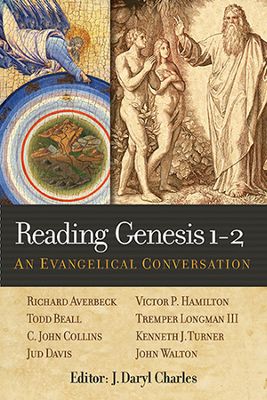
One of the topics of major interest to me is the debate within Christianity over the means and timing of creation. Recently, a friend sent me a copy of Reading Genesis 1-2: An Evangelical Conversation
Genesis 1 should be read… as historical narrative that is meant to be taken literally. This is the normal reading of the account… It does not require a person with a PhD to unlock the key to these chapters by appealing to A[ncient] N[ear] E[astern] literature or a special genre or some other special figurative approach. (48)
The quote is in context of Beall’s discussion of various evangelicals “coming out” as not reading the text literally for various reasons, such as ANE context, notions of genre, or the like. Basically, Beall’s point seems to be that we can (and should?) just read the text straightforwardly without having to study all kinds of topics to understand it. What do you think of this notion? What might this say about the cultural context of Genesis? Does that context matter? Should we be concerned with possibilities regarding such a context, differing genres, or the like?
Bonus Quote
Interestingly, a later author in the same work, Tremper Longman III, confronts Beall’s allegation regarding the PhD:
…isn’t the Bible equally clear to everyone, even those who have not studied the Bible and its cultural background? The simple answer to that question is no, it is not. After all, unless you have studied Hebrew, Greek, and Aramaic you cannot read the Bible at all without scholarly help. (121)
Links
Be sure to check out the page for this site on Facebook and Twitter for discussion of posts, links to other pages of interest, random talk about theology/philosophy/apologetics/movies and more!
Source
Todd S. Beall, “Reading Genesis 1-2: A Literal Approach” in Reading Genesis 1-2: An Evangelical Conversation edited J. Daryl Charles (Peabody, MA: Hendrickson Publishers, 2013).
Tremper Longman III, “What Genesis 1-2 Teaches (and What It Doesn’t)” in Reading Genesis 1-2: An Evangelical Conversation edited J. Daryl Charles (Peabody, MA: Hendrickson Publishers, 2013).
SDG.
James White on Molinism- Confusion about middle knowledge
Recently, James White (a theologian and apologist) did a review of the debate on the Unbelievable? radio show between Paul Helm and William Lane Craig [accessible here; audio will begin immediately]. I thought that White did a decent job critiquing the synergistic tendencies in Craig’s exposition, but I also felt he failed to grasp the thrust of Molinism. I say this with great respect for White, whom I consider very thoughtful in the areas in which he engages. However, it is because of this respect that I write this with the hope that he–or at least others who wish to engage in this area–may be better equipped to engage with Molinism.* Although there are a number of places I could engage with White’s commentary, I want to focus on three particular areas, along with a fourth, methodological, issue.
Molinism and Free Will
The most problematic area in James White’s exposition came when he argued that free will is essentially vacuous on Molinism. His argument was essentially that the Molinist assertion that God knows what we will do in any given circumstance (the doctrine of middle knowledge) entails: “In this circumstance, this person will always do this” (emphasis White’s). Thus, he argued that Molinism is incapable of preserving human free will, which is ironically what Molinism was intended to preserve.
White based his argument on an example [actually a few examples, but this was most prominent]. While biking, he often came to a certain fork in the road. On one day, he may choose to turn one way, on another, he may choose to turn the other. Here’s the issue: White then said “The exact same conditions…” were in play in the scenario he described. The difficulty should be immediately obvious: White is very clearly mistaken that these are the “exact same conditions.” One day is not “exactly the same” as another day. Period. Thus, White’s objection fails. It fails for another reason, which we’ll explore in the next section, but for now it is enough to point out that White bases this objection on the notion that humans are able to choose differently in similar circumstances. That is, although he used the terminology of “the exact same conditions,” his example is merely that of similar conditions. His objection therefore fails.
Confusion about Middle Knowledge
It pains me to point this out for someone who I value as much as White, but I must object that it appeared as though White was disturbingly unfamiliar with what middle knowledge actually is. He continually objected to middle knowledge, as shown above, by arguing that people should be able to choose differently on Molinism but may not. Now, I don’t know how much White has read in this area, but surely if he’s going to engage with Molinists like Craig, he should–as someone whom I recognize as taking great care to read and engage with primary sources–read and understand Molina [let me be clear: I’m not saying he never has–I do not know what White has or has not read and would not claim to know]. Molina himself answers White’s objections in this regard very explicitly at a number of points in his On Divine Foreknowledge.
First, White is mistaken when he portrays Molinists as holding that middle knowledge determines choice. He has it backwards. It is the choices which “would be made” which determine middle knowledge. If one would have chosen differently, middle knowledge would have had different content. This is absolutely central to Molina’s view, and I’ll just quote him once to prove it. In his exposition of how various church fathers allegedly taught things similar to his own view, Molina wrote, “…when free choice by its innate freedom indifferently chooses this or its opposite, then God will bring it about that from eternity He foreknew nothing else, they [the church fathers he is favorably citing] are obviously teaching not that things will come to be because God foreknows that they will, but rather just the opposite” (180, emphasis mine).
Now whether Molina accurately exegeted these church fathers, and regardless of the objection which clearly will follow such a statement (“How is this possible?”–something Molina himself answers in detail in On Divine Foreknowledge), the clear and plain teaching of Molina is exactly opposite of what White seemingly attributed to him: namely, the notion that God’s middle knowledge determines free choices. Rather, it–even according to Molina–is exactly the opposite. Thus, White’s critique in this regard is simply wrong.
Confusion about Middle Knowledge II
A final difficulty with White’s critique was that he, at at least one identifiable point, confused middle knowledge with free knowledge. White was criticizing Craig by saying “if you’re truly free” you should be able to choose a different thing from what middle knowledge states (such as buying a different car than the Mercedes you wanted).
White’s critique was off base for two primary reasons. First, as shown above, he failed to recognize the absolute core of Molina’s doctrine of middle knowledge: that middle knowledge is not dependent upon foreknowledge. Second, White’s critique fails to recognize that middle knowledge interacts with free knowledge (God’s comprehensive knowledge of all things which will occur in creation). The reason for this is because White argues that one, if one has freedom, cannot “violate the middle knowledge… that was supposedly true.”
Here White seemingly confused the free knowledge of God with middle knowledge. It is true that the free knowledge of God cannot have been otherwise, for it is a result of the decree of creation. However, what White failed to recognize is that free knowledge is posterior to middle knowledge and so the fact remains that on Molina’s system (as demonstrated above), one can, in effect, change middle knowledge which would thus bring about a different state of affairs.
Again, the question is not here how this may be the case. Instead, what I am arguing is that White failed to correctly explain Molina’s position and so his critique actually failed to be centered upon the view against which he was arguing.
Methodological Issue: Philosophy?
I was surprised to see White comment so frequently on how this or that “may fly in philosophy classrooms” but apparently would not fly in the “real world” [this latter is not a quote, but he contrasted philosophy classrooms with the world outside of them]. He repeated this claim–or something similar–a number of times. I’ll keep this brief: White’s own engagement with Molinism was almost entirely philosophical. He continued to bring up the grounding objection (a philosophical objection if there ever was one), and he also pressed the attack by saying that Molinism cannot adequately account for the free will it is supposed to preserve (again, a purely philosophical argument). I was surprised to see this from White because I do really think he is quite a careful thinker, but the bottom line is that in denigrating philosophy while using a number of philosophical objections to Molinism he appeared rather inconsistent. Philosophy is a tool of the theologian, and White himself uses it in a number of ways. I would urge him to drop this kind of tongue-in-cheek dismissal of philosophical reasoning, even within theology. It seems to me he himself finds philosophical objections to theological systems to be of worth.
Conclusion
I commend White for taking on a difficult issue, and I readily admit he has more knowledge on any number of areas than I can begin to claim. I highly recommend much of his work, and even where he and I disagree, I have found him to be thoughtful and challenging. That said, I maintain White is mistaken in a few aspects of his interpretation of molinism. In particular, he doesn’t seem to acknowledge the broader philosophical framework behind the view. He also failed to allow for Molina’s own very explicit distinctions and definitions, and thus his critique actually declared Molina’s view to be the exact opposite of that which Molina actually held. I hope my own critique will be seen not as an attack, but rather as a call for clarification for White and others who hope to interact with Molinism.
*Full disclosure: I am a Lutheran with Molinist leanings, though I reject the synergism Molina himself held to. I view Molinism as a philosophical framework as opposed to a complete system.
Links
Be sure to check out the page for this site on Facebook and Twitter for discussion of posts, links to other pages of interest, random talk about theology/philosophy/apologetics/movies and more!
Sources
Luis de Molina On Divine Foreknowledge, edited by Alfred Freddoso (New York: Cornell, 1988).
James White, “The Dividing Line,” January 16, 2014. Accessible here. The primary interaction starts a ways into the show.
SDG.
——
The preceding post is the property of J.W. Wartick (apart from quotations, which are the property of their respective owners, and works of art as credited; images are often freely available to the public and J.W. Wartick makes no claims of owning rights to the images unless he makes that explicit) and should not be reproduced in part or in whole without the expressed consent of the author. All content on this site is the property of J.W. Wartick and is made available for individual and personal usage. If you cite from these documents, whether for personal or professional purposes, please give appropriate citation with both the name of the author (J.W. Wartick) and a link to the original URL. If you’d like to repost a post, you may do so, provided you show less than half of the original post on your own site and link to the original post for the rest. You must also appropriately cite the post as noted above. This blog is protected by Creative Commons licensing. By viewing any part of this site, you are agreeing to this usage policy.
Really Recommended Posts 1/25/14- YA Entertainment, Inerrancy, “Lone Survivor,” Feminism, and Jehovah’s Witnesses
 Another week, another list of the internet’s finest brought to you, dear reader. These are some extremely diverse topics, and I’m excited to read your own reactions to the posts. I’ve lined up cultural apologetics, inerrancy, feminism, the “Lone Survivor” flick, and Jehovah’s Witnesses.
Trending Young Adult Entertainment in 2013– Anthony Weber wrote an excellent summary tracing the trends we may see in YA entertainment from 2013. I highly recommend engaging with this post as well as keeping on top of things with YA entertainment, because it shows where our culture is shifting.
What Kind of Evidence Could Nullify Inerrancy?– What does it mean to make the claim that the Bible is inerrant? Does it commit one to an a priori rejection of evidence? It seems to me that this post brings up some of the tension with inerrancy and hermeneutics. I, of course, affirm inerrancy, but I think it is important to distinguish between inerrant text and interpretation. This post brings up some interesting points for discussion with inerrancy.
Lone Survivor and Insufferable Anti-American Self-Righteousness– The film “Lone Survivor” has caused quite a bit of critical discussion. Here, a soldier reflects on the reaction to the film. I share this post with the caveat that I have not seen the film and so I’m sharing it because I thought it was an interesting viewpoint.
Sarah Bessey’s Jesus Feminist– What does it mean to be a feminist for Jesus? Does it actually mean anything? Are the terms contradictory? Check out this look into the book Jesus Feminist.
What Do Jehovah’s Witnesses Believe?– The title seems self-explanatory, but there is more to this post than a simple exposition of Jehovah’s Witness beliefs. Instead, it engages with the beliefs of Jehovah’s witnesses and provides some ways to engage with others.
“Theological Colonialism”? On theological issues which are ‘only popular in America’
 I recently picked up the latest in the Zondervan “Counterpoints” series: “Five Views on Biblical Inerrancy.” One of the essays, by Michael F. Bird, is entitled “Inerrancy is Not Necessary for Evangelicalism Outside the USA.” I flipped through it and I thought the author certainly had some good things to say. But, I admit that I find the apparent thrust of Bird’s argument is quite mistaken.
The notion that certain theological issues are essentially uninteresting to folks on the other side of either ocean is one I have read (and heard in person) on more than one occasion related to various Christian doctrines. Bird’s own presentation, regarding inerrancy, argues that the CSBI (Chicago Statement on Biblical Inerrancy, a document he is critiquing) demonstrates “An Unfortunate Trend toward Theological Colonialism” (the capitalization is due to this being a section heading). This trend might be discerned thus: “there are thousands of churches around the world that are both evangelical and orthodox and get on with their ministry without ever having heard of the CSBI and without ever using the word inerrancy in their statement of faith” (153-154, cited below).
Very well. Suppose we grant Bird this fact. I’m sure it actually is a fact. But so what? What possible relevance does this have for the truth and claims of inerrancy? Bird’s own conclusion is that, basically, we should not expect evangelicals across the world to saddle themselves with a view that is essentially unfamiliar to them. I think this may be a fair point, but it raises a couple concerns: first, the actual truth value of whatever doctrine is in question; second, concern for continuing to grow in knowledge and faith.
Suppose that you believe a doctrine is of great importance to how one might view other doctrines. Now, someone comes along and informs you that there are people in some area of the world who don’t know about that doctrine or that that area of the world is generally unconcerned with it. Should this somehow lead you to think that the doctrine is unimportant because people outside of your own cultural milieu do not view it as such? Certainly not! It may cause you to reflect upon its alleged importance and perhaps even come to a new view, but the notion that a specific doctrine is largely unimportant to certain groups of people does nothing, in itself, to downplay the actual importance of that doctrine. Nor does it impact the truth value of that doctrine in any way.
Now, at risk of being accused of “theological colonialism,” I am going to also suggest that the apparent disinterest in an important doctrine is less reason to think the doctrine is unimportant than it is reason to perhaps try to inform others of the doctrine’s actual importance. Returning to the example above, suppose the disinterest caused you to reflect upon the doctrine and you concluded that yes, it is actually deeply important. Would you not be concerned that others do not share your conviction, such that perhaps you may feel obligated to inform others about the centrality of said doctrine?
I’m not trying to suggest anyone without concern for inerrancy is ignorant or foolish. But I do think there is something to be said for the notion that a doctrine like inerrancy (or eschatology, or a view of creation, etc., etc.) is something worth exploring and learning about. We are called to expand our knowledge, not be content to sit in the knowledge of the faith we already have. I have become aware of entire realms of theological debates which I didn’t even know existed by reading authors–both international and, yes, American. I have found topics I was disinterested in to be deep, engaging, and edifying. I was subsisting on milk, but I have pursued solid food, and continue to do so [Hebrews 5:12ff]. I hope to continue to be enlightened by international theologians. But I would also hope that international theologians would not dismiss a doctrine because it comes from America.
Finally, is not the very notion that ‘if a doctrine is only of concern to American Evangelicals, then it should be moderated or reigned in’ itself a form of theological colonialism?
Links
Be sure to check out the page for this site on Facebook and Twitter for discussion of posts, links to other pages of interest, random talk about theology/philosophy/apologetics/movies and more!
Source
Michael Bird, “Inerrancy is Not Necessary for Evangelicalism Outside the USA” in Five Views on Biblical Inerrancy (Grand Rapids, MI: Zondervan, 2013), 145-173.
SDG.
——
The preceding post is the property of J.W. Wartick (apart from quotations, which are the property of their respective owners, and works of art as credited; images are often freely available to the public and J.W. Wartick makes no claims of owning rights to the images unless he makes that explicit) and should not be reproduced in part or in whole without the expressed consent of the author. All content on this site is the property of J.W. Wartick and is made available for individual and personal usage. If you cite from these documents, whether for personal or professional purposes, please give appropriate citation with both the name of the author (J.W. Wartick) and a link to the original URL. If you’d like to repost a post, you may do so, provided you show less than half of the original post on your own site and link to the original post for the rest. You must also appropriately cite the post as noted above. This blog is protected by Creative Commons licensing. By viewing any part of this site, you are agreeing to this usage policy.

 J.W. Wartick - Reconstructing Faith