J.W. Wartick
Why I Left the Lutheran Church – Missouri Synod: By Their Fruits… (Part 5)

By Their Fruits… (Part 5)
My previous posts in this miniseries focused on specific things: my discovery that Christians could believe one thing and act in ways contrary to it, racism I encountered in the LCMS, misogyny I encountered in the LCMS, and homophobia rampant in the LCMS. This post will summarize several other aspects of practice and belief I found within the LCMS that drove me away. It comes from a wide variety of sources, but again, I focus on behavior from people who either were leaders in the LCMS (pastors, professors, teachers) or were studying to become those leaders. These are not stories of random laity, but trained LCMS people. Other examples are specifics about LCMS teachings, whether official or not. [1]
Growing up in LCMS schools, I learned to say not just the pledge of allegiance, but the pledge to the cross. Yes, the pledge to the cross. “I pledge allegiance to the cross of our Lord Jesus Christ, and to the faith for which it stands, with mercy and grace for all.” We would stand and say the pledge to both flags, which were set up across from each other in classrooms and sanctuaries. It didn’t bother me until I was a young adult that we would say a pledge to both–as if our allegiance to a nation state should be as strong or on the same level as our allegiance to Christ. When I started to raise objections to flags in sanctuaries or unquestioning allegiance to our nation, I was told, basically that that was along the lines of a Jehovah’s Witness and because they were wrong about everything, I shouldn’t agree with them on this topic. That didn’t sit well with me.
It wasn’t until years later, when I read The Myth of Religious Violence by William Cavanaugh (book review here), that I could better articulate my problems with the integration of nationalism and religion that remains entrenched in many LCMS churches. When I started to express those views, the reaction was almost entirely negative. Flags were in sanctuaries in part, I was told, because of a holdover from when the LCMS shed some of its outward associations with Germany, particularly during WWI[2]. But that didn’t explain why they needed to remain there, or why the pledge to the cross was said alongside the pledge of allegiance. The nation state, I kept pointing out, seemed to be elevated to the same place as allegiance to Christ. The flag in the sanctuary was and is very often next to and on the same level as the so-called Christian flag. The pledges were said in tandem. As a kid, the link between the two was impossible to miss. As an adult, no correctives were offered. Nationalism is frequently conflated with patriotism, just as it is in the general populace. However, reconciling my belief that our allegiance should be to Christ alone with the way allegiance to the nation state is assumed and even pushed within the LCMS became impossible.

Pastors in the LCMS are extremely inconsistent when it comes to practice related to the Lord’s Supper. Many speak with pride about the extreme doctrinal purity the LCMS pushes. In practice, however, maintaining that supposed purity gets complicated. As a kid, I remember not taking communion in other churches. It was because they believed differently from us, and so we weren’t supposed to participate in that. I specifically remember one time before I was “confirmed”[3], I was offered communion at a Methodist church. I was super excited to take it, but (as I recall-it was a young memory) my hand was physically moved from taking the bread or grape juice offered. I remember people being denied communion in our church, and some of them being upset by that. Again, I learned it was because of different beliefs about what communion was. When I got older, I learned that the reasoning behind denying others communion was because we didn’t want people to eat and drink destruction on themselves. This belief was backed by a rather idiosyncratic reading of 1 Corinthians 11:27: “So then, whoever eats the bread or drinks the cup of the Lord in an unworthy manner will be guilty of sinning against the body and blood of the Lord.” This verse was used to justify virtually any reason for not allowing a person to have communion.
While the LCMS has produced documents about who should and should not be allowed to receive communion, from firsthand experience I can say that these documents are entirely ignored or applied whenever the pastor desires (or not). Ultimately, the practice of closed (or, a preferred term: “close”) communion, while given lip service as a way to protect people from grave sin, is wielded by many LCMS pastors as a totally arbitrary way to punish those with whom they disagree. Alternatively, refusing communion to people can enforce a pastor’s doctrinal whims. Indeed, the LCMS website itself renders many decisions to the “individual pastor’s judgment,” such as whether someone with Celiac disease can have communion with gluten-free wafers. Thus, it is entirely possible for there to be LCMS churches in which, because the pastor chooses not to use gluten free wafers, people with Celiac disease are effectively excommunicated not because of different belief but because of a chronic immune disorder.
The decision about whether or not to commune someone was totally arbitrary even in churches in which I found inserts about their beliefs about who could or could not commune in bulletins. One church had such an insert, and it said, essentially, that people who differed about the real presence of Christ’s body and blood in the bread and wine could not receive communion. I remain Lutheran, and affirm real presence to this day. When I was denied communion by the pastor of that same church, he justified it by saying that because I disagreed with the LCMS on other things, I couldn’t really share their belief on real presence, as all beliefs are ultimately tied together. Such a reach for what can or cannot qualify someone based on what is already a tenuous reading of Scripture effectively meant this pastor believed he could exclude anyone from communion for any reason. I told the pastor this, and he just smiled and said he wasn’t changing what he said.
In the LCMS, one of the strongest beliefs I was taught was the need to properly divide law and gospel. C.F.W. Walther, perhaps the single most influential LCMS pastor and leader, wrote a book on the topic. There was no question in my mind that the arbitrariness with which this pastor and others applied closed communion was a key example of mixing gospel (the forgiveness found in the Lord’s Supper) with law (attempts to punish people for disagreement or call out sin therein). This was not the first or only time I’d be denied communion for absurd reasons. Another time, while staying at a friend’s house on a trip, I was denied communion because I didn’t affirm young earth creationism. Indeed, that pastor’s interpretation of 1 Corinthians 11:29 meant that I’d be unworthily receiving the body and blood because I disagreed about how old the planet is. At that stage, I was still a member in good standing within the LCMS and regularly attended an LCMS church, at which I was given communion. In spite of that, I was denied communion at this LCMS church based on the age of the Earth. The practice is, again, entirely arbitrary. LCMS documents and leaders give lip service to how it protects people, but show total disregard for the spiritually abusive way many pastors apply the practice to exclude Christians from participating in Christ’s body and blood.
I could illustrate this time and again with many, many firsthand accounts or accounts shared with me by others. Another Lutheran was denied communion when they were traveling as part of an LCMS choir because they weren’t a young earth creationist. At a different time, the same person was denied communion because they believed women could be pastors. In neither case was this policy stated, nor were others on the same trip queried about their beliefs on those same topics. The only reasonable conclusion is that LCMS pastors are totally arbitrary about when they apply the doctrine of closed communion. This should be seen as a damning indictment of the practice. After all, the LCMS teaches that closed communion is intended to protect people’s souls, or at least protect them from unknowingly participating in sin. If that’s the case, then why would something with such huge import be so subject to inconsistency about its application? And how is it possible that people like me could go to four different LCMS churches and experience 4 totally different practices about communion such that I received it without question in one, after a brief discussion with the pastor in another, and was denied it for totally different reasons in two others? Inconsistency is one of the surest signs of a failing belief or system, and it can be found all over regarding this practice in LCMS churches. The leadership of the LCMS has effectively handed individual pastors a carte blanche to use their office to arbitrarily withhold the Sacrament from parishioners for whatever reason they desire. It’s a recipe for abuse of the system.
In LCMS schools, I was taught to read the Bible. It’s a legacy I keep to this day, and one I hugely appreciate. When I got to college, I finally began learning more about how to read the Bible, not just to read it. The consistency with which the method was applied was impressive, as I found multiple different professors in the theology department (all of whom were pastors) emphasizing points that were, if not the same, then essentially interchangeable. The bedrock belief was that scripture interprets scripture. Another hallmark of the system was talking about the historical grammatical method of interpretation. The historical grammatical method includes attempting to find the original meaning of the text. I found this exciting, because it meant that for the first time, I was reading about history and archeology and seeing what they could teach me regarding the Bible. This was alongside my surging interest in Christian apologetics. I was (and am) fascinated by finding out about idioms in the Bible, or euphemistic language that explained why things were written in the way they were. It was truly an exciting time.
Then, it started to become problematic. The simplistic reading of passages that I grew up with started to make less sense. Some of this coincided with my turning away from young earth creationism. There was a distinct incongruity between what I was learning regarding what the original intent might have been for a passage and what I was supposed to accept it to mean. It culminated in one private discussion with a professor (who, again, was an LCMS pastor) in which I pointed out that it seemed like the Flood story had precursors in the ancient world, and that it seemed to be almost polemical in its intent rather than historical. That is, the Flood story to me read as an intentional reframing of existing stories to teach monotheism and about how God overpowered forces of chaos than it did as a sort of rote historical report. This reading, the professor pointed out, contradicted another aspect of the historical grammatical method, which is that the events depicted in the Bible are actually historical essentially all the way through. I would later learn that this was a distortion of what evangelicals broadly held to be the historical grammatical method, and that would be its own kind of revelatory gain. In the moment, however, I was a bit shocked. I was simply trying to apply the hermeneutic I’d been learning to the texts themselves. Instead, I was being told that I was undermining Scripture as history and, possibly, denying the Bible itself.
When I shared my thoughts with another LCMS pastor, I was told straightforwardly that the way to distinguish someone who believed the Bible or not was to ask them about whether certain passages or books were historical. Thus, this pastor said you should ask whether they believe Jonah was a real person who was truly swallowed by a whale (or, he conceded, maybe a giant fish instead). You should ask whether they believe Adam and Eve were real and whether they were the first and only humans. You should ask whether a snake literally did speak to them. Noah’s Flood was another example. This pastor wasn’t just implying that denial of any of these meant one didn’t believe the Bible, he straightforwardly said it. That meant that my reading had to be rejected out of hand. I was devastated, but for the moment I dropped my investigation of Ancient Near Eastern background for the text. It would take me years to get back into it, and to this day I’m still trying to find resources to learn more.
One thing I’d theorized for a while about the LCMS and other groups that push beliefs that are outside of mainstream science was that once someone starts to disbelieve scientists regarding one thing, it becomes much easier to doubt scientists in other things. I wrote about how, as a child, I learned that scientists weren’t just wrong but were actively lying about things like the age of the Earth. Once you’ve accepted that there is some kind of global scientific conspiracy to cover up something like the age of the Earth, it becomes much easier to accept that same kind of thinking in other areas.
I dove into the question of climate change entirely from the view of one who wanted to deny that it was occurring. Again, from hearing things like Rush Limbaugh’s radio show and other sources, I was convinced it was another example of scientists lying. In college, I continued to read on the topic, watched and listened to several debates, and read some books on either side. What I kept finding is that the numbers couldn’t be thrown out. When I explored the age of the Earth, I kept finding young earth creationists saying things like “We look at the same data, we just interpret it differently.” The same thing seemed to be occurring with climate change. I eventually brought this notion to one of my professors as we talked about what I was hoping to study going forward. We were in his office and I distinctly remember him saying “It’s such a shame that global warming [using the parlance more common at the time] has become a politically charged question. The data is there; it is happening! It’s okay to debate what to do about it, but to deny that it exists is like sticking your head in the sand. It shouldn’t be political.” He went on to talk about a number of other issues he saw as unnecessarily political. It was hugely refreshing to hear, and it helped free me to think about all sorts of topics in different ways. But this put me on the outside of many conversations with LCMS leaders or leaders-in-training, who frequently talked about the lie of global warming. It wouldn’t be a major factor in alienating me from the LCMS, but it would serve as another example of how teaching about scientists all lying in one area made it easier to accept the same elsewhere.[4]
None of these served as overwhelming reasons why I left the LCMS, but united with the reasons from the previous posts, they became a massive case for leaving. Next time, we’ll delve into one more major reason I left the LCMS.
Next: Points of Fracture- Women in the Church
[1] I’ve said before there are many things the LCMS has a de facto position in relation to without explicitly drawing out or spelling it out in doctrines. One of these is the de facto young earth creationism within the LCMS. While they have some documents saying there is no official position, the continued adoption of resolutions effectively teaching YEC makes holding other positions problematic at best and grounds for excommunication for some pastors. I say the latter from my own experience of being denied communion for differing beliefs on the age of the Earth.
[2] There is some of the history of the LCMS’s transition from a German-speaking church to an English-speaking church in Authority Vested by Mary Todd, which has a history of the LCMS.
[3] a broadly used practice in the LCMS to teach children what they supposedly need to know before participating in the Lord’s Supper.
[4] I didn’t include a longer aside about anti-vaccination beliefs in the LCMS. It certainly is not an official position within the LCMS, but I’ve found it to be more common there than in the general population, even before Covid-19. Again, I believe this is linked to a general mistrust of scientists and science. If scientists are liars about one thing, why trust them in others? It genuinely makes me concerned about what might happen in the future if more and more people I know start to refuse vaccines, despite demonstrable evidence that they work.
Links
Formerly Lutheran Church – Missouri Synod (LCMS) or Wisconsin Synod (WELS)– A Facebook group I’ve created for people who are former members of either of these church bodies to share stories, support each other, and try to bring change. Note: Anything you post on the internet has the potential to be public and shared anywhere, so if you join and post, be aware of that.
Why I left the Lutheran Church – Missouri Synod Links Hub– Want to follow the whole series? Here’s a hub post with links to all the posts as well as related topics.
Be sure to check out the page for this site on Facebook and Twitter for discussion of posts, links to other pages of interest, random talk about theology/philosophy/apologetics/movies and more!
SDG.
——
The preceding post is the property of J.W. Wartick (apart from quotations, which are the property of their respective owners, and works of art as credited; images are often freely available to the public and J.W. Wartick makes no claims of owning rights to the images unless he makes that explicit) and should not be reproduced in part or in whole without the expressed consent of the author. All content on this site is the property of J.W. Wartick and is made available for individual and personal usage. If you cite from these documents, whether for personal or professional purposes, please give appropriate citation with both the name of the author (J.W. Wartick) and a link to the original URL. If you’d like to repost a post, you may do so, provided you show less than half of the original post on your own site and link to the original post for the rest. You must also appropriately cite the post as noted above. This blog is protected by Creative Commons licensing. By viewing any part of this site, you are agreeing to this usage policy.
Why I left the Lutheran Church – Missouri Synod: By Their Fruits…. (Part 4)
For several posts, I have been writing about specific things that came up while I was within the LCMS–that is, at its schools, churches, and university–that made me start to think that the LCMS way of things didn’t align with some aspect of reality, what I learned in the Bible, or something else. Here, I continue a miniseries within that about the fruits of our actions and how they tell about who we really are.
By Their Fruits… (Part 4)
[Content warning: Homophobia across the spectrum and language related to it described.]
Homophobia was absolutely a given among pre-seminary students at my LCMS school. Denial of homophobia was also a given. The trite “well actually” type of discussion often seen online abounded in person. (Eg. people saying, as I heard, “I’m not homophobic, because that would mean I’m afraid of homosexual people.”) Calling things “gay” as a derogatory term was absolutely normal among pre-seminary students. The utter contempt for gay people was clear on a day-to-day basis. It should be noted that we had more than one out of the closet gay man on campus.
I’d lived in Massachusetts for a few years in high school. Before we moved there, I had a conversation with some adults about what it meant for someone to be gay. I genuinely didn’t really understand that the category even existed. Having grown up in LCMS schools and churches, I had actually never heard the topic discussed–or at least, not in a way that left me with any memory of the event. As an avid reader, I probably encountered the occasional gay character, but without the background knowledge to even understand the category, I can’t remember any specific instances of that happening. In other words, I was remarkably ill-educated regarding how people lived their lives. The discussion about gay marriage in Massachusetts before moving there was something like: some men think they love other men and want to marry them, which is obviously wrong, and Massachusetts is so liberal that they let them get married, which is wrong. I could understand the concepts when put so simply.
When I went to high school in Massachusetts, it was a bit of a culture shock. I learned there was such a thing as a “Gay Straight Alliance,” and I actually had to ask classmates what that even meant. I had no idea before moving there that rainbow flags existed or what they meant. One classmate I was friendly with asked me to hang out. I didn’t realize he meant it as a date, and had to awkwardly explain as we were hanging out that I was straight–a category I’d only recently learned about.
I remember in sitting in a prep period in high school in a circle with other students and one of them told us she was a lesbian. I barely even knew the word’s definition. For her to then share her story and her struggles as a lesbian in high school was eye-opening to the nth degree. I was, in a word, stunned. I know this sounds unbelievable, but before these experiences in Massachusetts, I really didn’t even know this was a thing. But the teachers in that high school, many of whom I respected, took gay students as a given and didn’t treat them any differently. I’m writing this from my position as someone who was totally ignorant. These experiences had a profound impact on me as I basically learned from these teachers how to treat others. The experience changed how I thought and acted about gay people.
That would be challenged when I got to my LCMS college and said that I didn’t really see the problem with gay marriage. People from all over corrected me, including phone calls from pastors to explain to me what the Bible said and meant about gay people and why letting them get married was wrong. In no uncertain terms, it was explained to me that it was better to not let them get married because although this would maybe make them sad in this life, it would potentially help prevent the eternal punishment they’d experience in hell. I remember pushing back a little, saying that didn’t make sense because other sins people committed don’t automatically consign them to hell, but the counter was that gay marriage was willful, unrepentant sin and so would lead to hell. I was never fully comfortable with this explanation, but at the time it made me silent about objections. I did not want to be responsible for someone’s eternal soul, after all.
I knew of at least a couple gay men on campus, and wanted to make sure that even if I didn’t necessarily support them fully, that they weren’t totally ostracized. I spoke to a few other pre-seminary students, telling them I thought the homophobic comments and jokes needed to be toned down. One asked me to explain, and I argued that if we really believed it was sinful and could put someone’s eternal life in jeopardy, that we should not potentially put up another barrier to their repentance by being jerks to them. This kind of convoluted reasoning never sat well with me. For years, I dealt with a kind of double life in which I struggled with what I thought was doctrinally correct–that it was sinful–and my ethical senses that the arguments against gay marriage and other ways to exclude LGBT+ people from various societal places and norms were discriminatory at best.
What I did not feel ambiguous about, though, was that everyone sins. One of the most frequently quoted passages of the Bible in my life was Romans 3:23: “For all have sinned and fall short of the glory of God.” This verse still remains dear to me. No one is righteous, not even one (Romans 3:10). The fact that everyone was a sinner was perfectly clear. Why, then, did we treat some sinners differently from others?
The contempt for gay men especially was strong among not just men studying to be pastors, but among many pastors as well. There were clear exceptions–one pastor with whom I had quite a lot of interactions wasn’t affirming to my knowledge but also never once condemned gay people of any sort. Those exceptions were just that, though, exceptions. Calling gay men derogatory names was extremely common, and, again, using the word “gay” as an insult was engrained into us. Transgender people were seen as especially sinful–not just because of the Bible passages interpreted to be against homosexuality but also because of prohibitions against cross-dressing (at least, as interpreted by many in the LCMS).[1] Lesbians were barely mentioned as a category, but when they were it was either in order to sexualize lesbians (often with a wink and a nudge) or to shoehorn them into already understood gender norms (women need comfort more than men, so lesbianism could be explained as such), or, when fully confronted, it was something like “If only she’d met a real man” (read: like myself) “she wouldn’t be a lesbian.”
The way so many LCMS future and current leaders spoke so strongly against gay men especially was difficult to reconcile with how they behaved around men they knew were gay. While I cannot speak for the lived experience of gay men on campus, when I saw interactions, it seemed these LCMS leaders-in-training would tone down their language and act almost meekly, as though they were afraid being gay might rub off on them. It sounds absurd, but that’s genuinely the impression I had.
One gay man on campus shared stories with me about how other men in his dorm told him they were concerned they might get AIDs if they washed their clothes in the same washer and dryer as him. Another time, a pre-seminary man accidentally took a drink from his cup and was worried out loud he would get AIDs from taking a sip. The pre-seminary men, he told me, were the people who were worst to him of anyone on campus. These overt examples could certainly be multiplied. The way that pre-seminary men and even LCMS pastors treated and talked about gay people was and is abhorrent. There seems to be more focus on maintaining an insular status quo than in reaching out and trying to love one’s neighbor.
Reflecting on all of this now paints an ugly portrait. While I can accurately say that the rampant homophobia within the LCMS was a factor in driving me away, I can also say that at times I stood on the same side. There’s a sense of belonging in thinking that you stand against “the world” when it comes to morality and ethics, standing strong upon a stance that is perceived as unpopular and may lead to your supposed persecution. I wish I had been better and done more to stand up for people who were often silenced and mocked. I pray that I can do more now. The total lack of love of neighbor was reflected in how LCMS leaders treated and spoke about all non-straight persons. By their fruits…
[1] I don’t want to get into disputes over how to translate passages, but many passages taken to be straightforwardly about transgender people seem to have different implications in the Ancient Near Eastern context in which the Bible was written. I’ll talk some about some disharmony between how I was taught to interpret the Bible and how I saw the Bible being interpreted within the LCMS in a later post.
Links
Formerly Lutheran Church – Missouri Synod (LCMS) or Wisconsin Synod (WELS)– A Facebook group I’ve created for people who are former members of either of these church bodies to share stories, support each other, and try to bring change. Note: Anything you post on the internet has the potential to be public and shared anywhere, so if you join and post, be aware of that.
Why I left the Lutheran Church – Missouri Synod Links Hub– Want to follow the whole series? Here’s a hub post with links to all the posts as well as related topics.
Be sure to check out the page for this site on Facebook and Twitter for discussion of posts, links to other pages of interest, random talk about theology/philosophy/apologetics/movies and more!
SDG.
——
The preceding post is the property of J.W. Wartick (apart from quotations, which are the property of their respective owners, and works of art as credited; images are often freely available to the public and J.W. Wartick makes no claims of owning rights to the images unless he makes that explicit) and should not be reproduced in part or in whole without the expressed consent of the author. All content on this site is the property of J.W. Wartick and is made available for individual and personal usage. If you cite from these documents, whether for personal or professional purposes, please give appropriate citation with both the name of the author (J.W. Wartick) and a link to the original URL. If you’d like to repost a post, you may do so, provided you show less than half of the original post on your own site and link to the original post for the rest. You must also appropriately cite the post as noted above. This blog is protected by Creative Commons licensing. By viewing any part of this site, you are agreeing to this usage policy.
Book Review: “From Plato to Christ” by Louis Markos
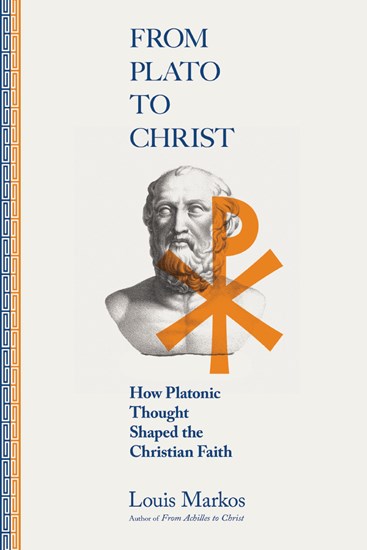
What has Jerusalem to do with Athens? Quite a lot, if one reads Louis Markos’s From Plato to Christ. The work is a partly a look into Plato’s thought, and partly a survey of how Plato’s thought impacted Christianity through its early history.
Markos wastes little time essentially baptizing Plato after the fact. The first page of the preface has Markos claiming that Plato’s writings can be read “as inspired writings used by the God of the Bible to prepare the ancient world for the coming of Christ and the New Testament” (ix). On the same page, he says that Plato is the “culmination of the best of the pagan (Pre-Christian) wisdom” (ibid). One might wonder how, say, the Hebrew Scriptures fit into this scheme, and whether Markos lumps Judaism in with “paganism” as it is pre-Christian or whether he simply dismisses it as being capable of preparing the ancient world for the coming of Christ. Markos’s fervor to recommend Plato to his readers seemingly has no limits, as he quickly navigates through chapters that analyze several of Plato’s writings and argue that he offers a kind of vision for Christianity in the future. I may indeed be understating how eagerly Markos endorses Plato, as he later quotes C.S. Lewis approvingly stating that “Prophets and holy men… do not so much teach us morality as remind us of it” (57). This quote is then applied, at least by implication, to Plato.
Those looking for a critical analysis will need to look elsewhere. Markos’s enthusiasm knows few bounds. Even the very occasional time in which he points out something problematic in Plato’s thought are steeped in explanations about why that might have been part of Plato’s belief system. There is also little by way of critiquing Plato’s system itself, something with a long and storied tradition within Christian philosophy and theology. One might forgive the book for this, as it clearly isn’t intended to be a total look at Christian Platonism, but it seems worth mentioning given that readers without background knowledge on the subject may walk away from reading the book thinking that Christians generally have no problem with Platonism despite there being entire systems of thoughts developed to circumvent or deny Platonism in Christianity.
One example is in the chapter outlining The Republic. Markos outlines the way the republic is built by noting it is Socrates presenting all of these ideas. In a way, this shields Plato from criticism, but allows Markos to pour on praise when he agrees with Plato (see the shift from Socrates to Plato on page 27, for example). There is little about the awful way the city is set up to essentially force young adults into sexual relationships to produce offspring as dictated by the city’s leaders. Markos, having shifted before to claiming that these parts of the text reflect a more mature Plato using Socrates as a mouthpiece, in a footnote directly and singularly assigns Socrates the blame for this eugenic and ethical quagmire (45n9). Plato, it appears, can actually do no wrong.
Markos’s survey of Christian history and influence from Platonism is of interest, though not without problems of its own. He questions Origen’s orthodoxy due to his universalism, which fails to account for the lengthy stream of orthodox Christians (some of whom, as Origen, were condemned much later as heretical for their beliefs) who held to universalism or at least something similar. These sections provide insight into at least the range of Christians who were influenced by Plato, however.
From Plato to Christ is an enthusiastic endorsement of Plato and Platonism for Christians to explore. It’s difficult for this reader to wholly endorse the work, as it presents so uneven a picture both of Platonic thought and early Christian history that it could lead to a skewed view going forward. However, it could serve as an introduction to Christian Platonism for those interested who read it with a critical eye.
Disclaimer: I was provided with a copy of the book for review by the publisher. I was not required to give any specific kind of feedback whatsoever.
All Links to Amazon are Affiliates links
Links
Be sure to check out the page for this site on Facebook and Twitter for discussion of posts, links to other pages of interest, random talk about theology/philosophy/apologetics/movies and more!
Book Reviews– There are plenty more book reviews to read! Read like crazy! (Scroll down for more, and click at bottom for even more!)
SDG.
——
The preceding post is the property of J.W. Wartick (apart from quotations, which are the property of their respective owners, and works of art as credited; images are often freely available to the public and J.W. Wartick makes no claims of owning rights to the images unless he makes that explicit) and should not be reproduced in part or in whole without the expressed consent of the author. All content on this site is the property of J.W. Wartick and is made available for individual and personal usage. If you cite from these documents, whether for personal or professional purposes, please give appropriate citation with both the name of the author (J.W. Wartick) and a link to the original URL. If you’d like to repost a post, you may do so, provided you show less than half of the original post on your own site and link to the original post for the rest. You must also appropriately cite the post as noted above. This blog is protected by Creative Commons licensing. By viewing any part of this site, you are agreeing to this usage policy.
Why I left the Lutheran Church – Missouri Synod: By Their Fruits… (Part 3)
For several posts, I will be writing about specific things that came up while I was within the LCMS–that is, at its schools, churches, and university–that made me start to think that the LCMS way of things didn’t align with some aspect of reality, what I learned in the Bible, or something else. Here, I continue a miniseries within that about the fruits of our actions and how they tell about who we really are.
By Their Fruits… (Part 3)
[Content warning: discussion of misogyny.]
I wrote in my short history of my time in the LCMS: “What I thought when I decided to become a pastor is that I’d find a group of like-minded men… I did find several like-minded men, but I also found some of the most inward-looking, doctrine-obsessed, orthodox-rabid, self-righteous, and, unfortunately, misogynistic people I’d ever run into. I was one of them for a while.”
There’s intense pressure within the LCMS to fit in. The focus on “doctrinal purity” is immense, and this means that any dissent from some supposed norm is met with black-and-white simplicity. There simply cannot be dissent from the LCMS party line if one wants to be right about anything. This pressure to be “doctrinally pure” increases peer pressure on other levels. One doesn’t want to be seen as the weirdo who goes against commonly accepted jokes and practices. I found myself, then, as a pre-seminary student studying to be a pastor, in a group of men[1] with a like-minded focus on doctrine. This manifested in some strange ways.
For one, it meant that we largely had to pretend to know everything about Lutheran and LCMS doctrine. This wasn’t hard for me, as one who was a pastor’s kid and spent much of my childhood memorizing parts of Luther’s Small Catechism and other works. But it meant that if one of us was found out of step with something within the LCMS, there simply was no wiggle room. You either had to conform or be shunned; there’s no middle ground. So if someone was called on something that was not LCMS-correct, they either had to double down and defend it, proving it was LCMS appropriate or they had to show they’d been misunderstood. Recanting or repenting was largely out of the question because it meant that one’s doctrinal purity was suspect going forward. After all, if you couldn’t be trusted to know who to exclude from communion (or not) based on obscure and arcane rules, how could you be trusted to lead a church?[2]
The peer pressure was enormous, and would often get applied to things that weren’t necessarily official stances of the LCMS, but were rather logical outcomes of LCMS stances on things. One of those is the LCMS’s stance on women, which is an historically complex topic that has developed over the life of the Synod (see, for example, this historical work on the topic).
My increasing support of women’s rights and equality put me on the outside of these pre-seminary circles. Eventually, that would permanently remove me from those circles, but that’s a later post. Jokes at the expense of women were frequent. I’ll never forget being in a philosophy class, huddled together with some other pre-seminary men as we waited for the professor, talking around a set of desks. We were talking about intramural sports or something similar when significant others came up. One of the other pre-seminary men bragged about how his significant other had made him a sandwich the previous day, and he joked that “she’d be doing that for the rest of her life.” Everyone else laughed, but I didn’t. My increasing unease with jokes like this was becoming well-known on campus, and at least one of the other men said something like “take a joke” when I said it wasn’t funny.
Jokes weren’t the only way I experienced pastors or pastors-in-training to be derogatory towards women. The very acts and stances they took regarding women underscored this at every level. I heard from multiple different LCMS pastors things like “If a wife isn’t happy, no one in the house is happy,” a saying taken as a kind of truism about how women’s emotional lives will lash out at everyone else and bring them down.
The frequency of jokes in expense of women cannot really be overstated. Whether it was about women making sandwiches, needing to stay in the kitchen, being only good for raising children, or not having the right body parts to be a pastor, women were the butt of jokes. Menstrual cycles were seen with derision, and the verses in the Bible that mentioned them or euphemisms for them were treated with unease. But they also were fodder for jokes, and I heard jokes even from seminarians and pastors about a woman being “in her time of the month” if they were upset or expressed any kind of emotion. Conversely, men were emasculated if they showed emotions, “crying like a girl” or “running like a girl” was reason enough to be treated with scorn. Women’s place in the home was undermined even by their children. Teenage males were told they were “head of the household” if the father was away. I know this isn’t limited to my own experience, as I recall conversations with other LCMS-raised men talking about the same things.
For those who know the inner workings of LCMS theology, all of this shouldn’t be that surprising. While the LCMS ostensibly values women and claims women are fully equal to men, in practice that is far from the truth. Franz Pieper, an early President of what became known as the LCMS, wrote a lengthy multivolume systematic theology work. I used to own it. One of the passages in it basically says regarding women that they ought to be home and in the kitchen. It’s that blunt. I don’t have the volumes on hand anymore to get the exact wording. Pieper is seen by some LCMS theologians as extreme or off-base, but usually because of his views on things like predestination, not because of his views on women. The pre-seminary students were at least vaguely aware of theology like this existing, and some even cited it directly if their jokes about women were questioned.
To the outsider, this might sound absurd. Surely some random college kids wouldn’t be this aware of obscure theological texts from their theological heritage! Well, again, these were men studying specifically to be pastors. And because of the LCMS’s extreme emphasis on doctrinal purity as a kind of shibboleth for deciding who’s in or out, these students were very much aware of at least the basics of their theological heritage. They had to be, else their own doctrinal purity might be questioned and all might be lost. Again, this sounds over the top, but I cannot emphasize how accurate it is.
The emphasis on doctrinal purity came out in regards to other denominations as well. While non-Lutherans were generally tolerated as “wrong” or “deeply deluded” by the pre-seminary crowd, the phrase “familiarity breeds contempt” was astonishingly accurate. The LCMS seems to have an extreme case of bitterness against the Evangelical Lutheran Church in America (ELCA). I’ve noted this as I read LCMS-published theological texts, nearly all of which I’ve read have at least a footnote somewhere trashing the ELCA for some perceived wrong. This absolutely flows through the veins of many pastors in the LCMS, as well as in the pre-seminary and seminary students I knew. One pre-seminary student “converted” from ELCA to LCMS while in college with us, and he quickly moved to distance himself as much as possible from the ELCA, becoming a front-runner in making jokes at the expense of women and about “homosexuals.” This kind of insular hatred directed at a near theological rival is extremely common.
In college, I was dating an ELCA woman, and this led to one of many examples of this that directly impacted me. In the earlier days of Facebook, posts would be “[your name] [status]” so you’d post things like “is tired…” so it would say “J.W. is tired.” I posted something like “J.W. is so grateful to have a girl with [these great attributes]”[3]. A pre-seminary student who saw this status aped it, but modified it ever-so-slightly: “Charles is so grateful to have a girl with [same great attributes] who’s LCMS!”[4] It was a clear dig at my status, and an implicit questioning of my orthodoxy. After all, how could I date a woman who was in the ELCA?
What kind of answer could be given to this? The easiest response to all of this would be to offer a similar response to the proposed one regarding Racism: not all LCMS pastors are racist, and many would be appalled by racist jokes. Not all LCMS pastors are misogynists. Not all LCMS pastors joke about women’s place in the kitchen or write systematic theologies arguing to that end… not all… I agree. It’s true that not all LCMS pastors are guilty of the things I saw and experienced. But too many LCMS pastors allow misogyny within their ranks. Too many LCMS pastors cover up or make demeaning comments about women. Too many LCMS pastors have misogynistic mindsets. “By their fruits, you will know them.”
Next: By their fruit… (Part 3) I discuss still more bad fruit I witnessed within the LCMS.
[1] I occasionally will interchange “men” or “pre-seminary students” or similar terms. Unless otherwise noted, these should all be understood to be all men. The LCMS does not ordain women into the office of ministry, and so women in a pre-seminary program are vanishingly rare.
[2] I will address closed communion and some related idiosyncratic practices within the LCMS in a later post.
[3] Note the use of the term “girl” for woman, and the notion of ownership of a significant other; these talking points were imbibed and encouraged with in an LCMS context that devalues women and treats people who’d care about calling women “girls” as absurdities. Again, I’m not proud of myself for having adopted this language at that point, but I am thankful that woman challenged me to do better.
[4] Again, I’ve changed any names throughout this series.
Links
Formerly Lutheran Church – Missouri Synod (LCMS) or Wisconsin Synod (WELS)– A Facebook group I’ve created for people who are former members of either of these church bodies to share stories, support each other, and try to bring change. Note: Anything you post on the internet has the potential to be public and shared anywhere, so if you join and post, be aware of that.
Why I left the Lutheran Church – Missouri Synod Links Hub– Want to follow the whole series? Here’s a hub post with links to all the posts as well as related topics.
Be sure to check out the page for this site on Facebook and Twitter for discussion of posts, links to other pages of interest, random talk about theology/philosophy/apologetics/movies and more!
SDG.
——
The preceding post is the property of J.W. Wartick (apart from quotations, which are the property of their respective owners, and works of art as credited; images are often freely available to the public and J.W. Wartick makes no claims of owning rights to the images unless he makes that explicit) and should not be reproduced in part or in whole without the expressed consent of the author. All content on this site is the property of J.W. Wartick and is made available for individual and personal usage. If you cite from these documents, whether for personal or professional purposes, please give appropriate citation with both the name of the author (J.W. Wartick) and a link to the original URL. If you’d like to repost a post, you may do so, provided you show less than half of the original post on your own site and link to the original post for the rest. You must also appropriately cite the post as noted above. This blog is protected by Creative Commons licensing. By viewing any part of this site, you are agreeing to this usage policy.
Why I Left the Lutheran Church – Missouri Synod: By Their Fruits… (Part 2)
For several posts, I will be writing about specific things that came up while I was within the LCMS–that is, at its schools, churches, and university–that made me start to think that the LCMS way of things didn’t align with some aspect of reality, what I learned in the Bible, or something else. Here, I continue a miniseries within that about the fruits of our actions and how they tell about who we really are. Check out the Hub for this series to see all my posts on why I left the LCMS.
By their fruits… (Part 2)
[Content warning: discussions of racism, antisemitism, and Islamophobia.]
I talked about how I learned that faith lived wasn’t the same as faith professed in my last post. It was a kind of disturbing reality to become aware of, but also one that would get repeatedly shoved in my face as I studied to be a church worker in the LCMS–initially as a teacher, and later as a pastor. The black-and-white, rigid doctrinal purity I was taught was essential didn’t get applied to the lives of Christians, including church workers and those studying to be the same.
I enjoyed visiting other LCMS churches. I’d come prepared with my well-worn and well-marked Bible, eager to join the Bible study, which is where I knew the rubber hit the road regarding discussions of doctrine. I wanted to engage scripture as much as possible, and learn it as deeply as possible. One visit took me along with another man studying to be a pastor to a church site he was working at. I enjoyed the Bible study well enough.
After church, I went to speak with the pastor, who knew I was a pre-seminary student. He asked me how college was going, and how I liked my classes. At some point, the conversation turned to sports and he asked about my favorite college team. I said it was Nebraska, and the pastor said that he liked them too. The reason, he said, was because they “don’t have any of those black boys on their team.” He favored Nebraska because, in his words, they liked “white boys playing football,” even at positions other teams often had–here he used a derogatory term for African Americans–playing the position. He grinned at me with a knowing smile. I was genuinely shocked. So much so that I was literally dumbstruck. I could not untie my tongue to correct him or even say I disagreed. I think after some awkwardly long silence I said something like “I like them because my parents do,” and walked as swiftly away as possible.
When I met back up with man I’d come with, he asked what I thought about the experience. I’d managed to muster my thoughts a bit more at this point. In no uncertain terms I said the pastor was a racist and that I found that reprehensible for a pastor, especially. I repeated what had been said. I had expected the other pastor-in-training to be similarly incensed. I don’t know exactly what I thought would happen–some kind of confrontation with the pastor over the absurdity of his statements. Instead, this man who was at seminary in the LCMS told me that I shouldn’t be worried about it. The pastor was old, and stuck in his ways. Something to the effect of, “That’s just how people his age think” was said. I was even asked if I would come back the next week for Bible study and church. I was appalled and said something that made it clear I’d not be setting foot in the place again. He shrugged it off.
The LCMS had and has a very uneven stance with race. While outwardly speaking against racism abstractly, inwardly instances of racism were hushed up. Racist jokes were not infrequent among pre-seminary men[1] when I was in college. Whether it was about how “illegals” would ruin our country or jokes about other minorities and stereotypes, these were seen as good natured fun, not as the vile racism they reflected. Again, to my shame, I wasn’t nearly loud enough in my condemnation of it. Indeed, like all too many people, I found myself laughing along to try to fit in. It was easier to conform and be “in,” than to be “out.” The visit to a church with a racist pastor is what broke me. I realized that I was enabling others on that same path. I got louder in pre-seminary circles at lunches or breaks between classes, not laughing at jokes. I wish I’d been better at this than I was, to be honest. Even the inadequate amount of pushback I offered made me a bit of a pariah.
The pattern of racist remarks is one I encountered at many levels of LCMS leadership at many different sites. Defenses of the Confederacy is one way this manifests. Defending an alternate history narrative of “states’ rights” as the cause of the Civil War[2] provides a convenient dog whistle to cover up, at minimum, prejudice. Thus, when I grimaced as I listened to one pastor go on about the “glorious cause” (actual quote) the South had fought for, he was able to take a few steps back and say, “I mean states’ rights, of course!” Defense of the Confederacy cannot avoid being tied to racism. Thankfully, my elementary and middle school education in LCMS schools did not support a Lost Cause false narrative of the history of the United States, but I frequently encountered it among LCMS teachers and pastors.
Directly racist statements were also not out of the question. I already shared above my story about visiting a pastor who doubled down on racist statements, and the defense of that pastor by others. Another pastor, after overhearing an elderly woman using a derogatory word for Black people, told me that I should not be upset or intervene about it because “that was just the times she was in.” I was a young teen at the time, and did not yet have the capacity to question such an answer. But horrific, racist language from people that then gets defended by pastors (or having that same language come from pastors’ mouths) is the kind of thing that makes an impression on a young mind. It would take me some years before I was able to dig through that morass of obfuscation regarding racism and realize that “growing up some number of years ago” does not excuse one for being racist.
Comments about Islam and Muslims were and are extremely common. Reading Facebook comments on LCMS groups trying to teach about racism gives many, many contemporary examples of this. But my own experience in the LCMS demonstrated time and again that Islamophobia was not only endemic in the LCMS, but was often tied to racism in complex and interconnected ways. 9/11 wasn’t when this started, but certainly touched off a number of comments, from Americans across the board. However, within LCMS institutions, I would frequently hear about how Muslims were all trying to kill Christians specifically and that Islam’s teaching is explicitly violent. Indeed, it was not uncommon to be told that if Muslims said Islam wasn’t violent, they were doing so in order to cover up latent desire to cause violence or to allow a kind of shadowy Sharia to sneak into “the West” in order to take over peacefully before starting a violent regime. Any action by anyone who could be identified as Middle Eastern was therefore automatically linked to this global Islamic conspiracy. The tie to racism came up not infrequently, such as Christians who engaged in violent acts but “looked Muslim” being tied to Islam. The color of skin was apparently enough to tie the perpetrator into Islam.
One memorable conversation about Islam ended after I asked something similar to “If all Muslims really wanted to kill all Christians–if that was really want they all wanted, deep down, and they were covering it up–then how come, if there are over one billion Muslims in the world, we aren’t all dead or fighting for our lives?” The question was pointed not because I believed the charge that all Muslims wanted to kill all Christians, but because I wanted to point out the absurdity of the claim. This was in conversation with an LCMS pastor, and the response was basically to change the subject. Again, due to widespread anti-Muslim sentiment in America, this isn’t uncommon, but these are comments from and by pastors or people studying to be pastors within the LCMS, and one might wonder what standards and corrections are being offered within to make this not be such a common problem.
Antisemitism also reared its ugly head. There were offhand remarks about how Jews today (those who hadn’t converted to Christianity, anyway) were all going to hell, for example. While this aligns with the general belief that anyone who isn’t Christian is going to hell, time and again Jewish people were singled out for especial remarks to that effect. Lutherans, especially, have a history of antisemitism. Martin Luther’s horrifying comments about Jews were either ignored or given a context that was supposed to justify them. At multiple points within the LCMS, I was taught that Luther’s comments about Jews were understandable because he was frustrated that they didn’t convert to Christianity. This wasn’t just a way to explain why Luther turned towards antisemitism more fully[3]. Instead, it was an explanation that was supposed to exonerate him, in some way. Luther could emerge from this explanation, if not sparkling clean, then understandable.[4] Rather than simply condemning Luther as a sinful man engaging in detestable behavior–something that would very much align with Lutheran theology–Luther was given an apology for his behavior. This opened up, for some, the possibility of doing the same or at least excusing other behavior. In college, some classmates, including a few pre-seminarians, engaged in Holocaust denial. Some of them were treating as a joke, apparently thinking it was “edgy” to make such comments. However, even “jokes” about antisemitism are engaging in antisemitic behavior.
Racism continues to be a major problem within the LCMS. Currently, controversy has erupted at Concordia University Wisconsin (and by extension, Concordia University Ann Arbor) because the job description for the President of the university included diversity and equity in what was being sought. The extreme conservative pushback against this is a major problem that shows leadership in the LCMS continues to prefer to hide or ignore racism rather than confront it. It’s easier to pretend racism in the LCMS is impossible than it is to confront the ugly truth that it exists and is tolerated and even protected. My own experience encountering racism in the LCMS reinforces this. (For more on this controversy, see my post here.)
Another recent example is from the reporting around a survey of Young Adults who’d left the LCMS. I received this survey and filled it out. When the reporting came out explaining the reasons why people like me had left, racism was one of the examples. One other young adult said she left because her boyfriend, who’s Hispanic, felt unwelcome at an LCMS church. But the report said something to the effect of “We in the LCMS aren’t racist and are welcoming of people from anywhere, so it’s likely that this boyfriend was being paranoid.” I wish I were making that up. But this kind of head-in-the-sand reaction to overt and covert racism is enough of a pattern that it is clearly an issue.
The easiest response to all of this would be to say not all LCMS pastors are racist, and many would be appalled by racist jokes. Not all LCMS pastors are Islamophobic or antisemitic… not all… I agree. It’s true that not all LCMS pastors are guilty of the things I saw and experienced. But too many LCMS pastors allow racism within their ranks. Too many LCMS pastors cover up racist jokes and comments made by peers. Too many LCMS pastors have defended the Confederacy with impunity. “By their fruit, you will know them.”
[1] I’ll occasionally use the term “pre-seminary” or “pre-seminary students.” It should be understood unless otherwise noted that this always refers to groups of exclusively men, and specifically men who were on track to study to be pastors. Women are not permitted to be ordained as pastors in the LCMS, and so it is exceedingly rare for a woman to be enrolled in the pre-seminary program.
[2] States’ Rights was manifestly not the cause of the Civil War. Reading the articles of secession of several states reveals this, as they explicitly state that a major or even the reason for secession was they wanted the Federal Government to enforce the Fugitive Slave Act, itself a major infringement on States’ Rights. I outline some of this, and other reasons to point to slavery as the reason for the Civil War, here.
[3] Research shows that Luther was surrounded by antisemitism from childhood in every context in which he operated, and even his earlier works featured antisemitism at least in illustrations. See Martin Luther: Renegade and Prophet by Lydal Roper.
[4] This propensity to deny or explain away defects in heroes’ character is pervasive. That doesn’t excuse it, but should instead make us cautious about our own heroes.
Links
Formerly Lutheran Church – Missouri Synod (LCMS) or Wisconsin Synod (WELS)– A Facebook group I’ve created for people who are former members of either of these church bodies to share stories, support each other, and try to bring change. Note: Anything you post on the internet has the potential to be public and shared anywhere, so if you join and post, be aware of that.
Why I left the Lutheran Church – Missouri Synod Links Hub– Want to follow the whole series? Here’s a hub post with links to all the posts as well as related topics.
Be sure to check out the page for this site on Facebook and Twitter for discussion of posts, links to other pages of interest, random talk about theology/philosophy/apologetics/movies and more!
SDG.
——
The preceding post is the property of J.W. Wartick (apart from quotations, which are the property of their respective owners, and works of art as credited; images are often freely available to the public and J.W. Wartick makes no claims of owning rights to the images unless he makes that explicit) and should not be reproduced in part or in whole without the expressed consent of the author. All content on this site is the property of J.W. Wartick and is made available for individual and personal usage. If you cite from these documents, whether for personal or professional purposes, please give appropriate citation with both the name of the author (J.W. Wartick) and a link to the original URL. If you’d like to repost a post, you may do so, provided you show less than half of the original post on your own site and link to the original post for the rest. You must also appropriately cite the post as noted above. This blog is protected by Creative Commons licensing. By viewing any part of this site, you are agreeing to this usage policy.
Why I Left the Lutheran Church – Missouri Synod: By Their Fruits… (Part 1)
For several posts, I will be writing about specific things that came up while I was within the LCMS–that is, at its schools, churches, and university–that made me start to think that the LCMS way of things didn’t align with some aspect of reality, what I learned in the Bible, or something else. Here, I’m starting a miniseries within that about the fruits of our actions and how they tell about who we really are.
Points of Fracture: By Their Fruits… (Part 1)
“Thus, by their fruit you will recognize them.” – Matthew 7:20 (NIV)
Earlier in this series, I wrote about my time in the LCMS. I recalled: “What I thought when I decided to become a pastor is that I’d find a group of like-minded men… I did find several like-minded men, but I also found some of the most inward-looking, doctrine-obsessed, orthodox-rabid, self-righteous, and, unfortunately, misogynistic people I’d ever run into. I was one of them for a while.” Here, I begin a series in which I share my firsthand experience within the LCMS of people–pastors, those studying to go to seminary, and seminarians, primarily–showing the fruits of the LCMS. I have to share insights into my own background, too, because I was, as I said, unfortunately “one of them” in many ways for a while.
Due to the nature of this series, in that it is about why I left the LCMS, most of these posts are negative. I do here want to start with a positive, though. I want to make it very clear that in college I encountered a number of professional LCMS theologians and scholars, including pastors (many of whom were professors) who were and are great examples of humility, pastoral concern, and even equity. Some of these stories intersect with them. My experience with the LCMS is not universally negative, of course. I received quite a bit of real pastoral care from LCMS pastors and other professionals. That said, the experiences I had interacting with fellow seminarians and other pastors led me to believe that there was, at the core, something within the LCMS producing bad fruit. ‘By their fruits you will know them,’ spoke our Lord. The fruits of the LCMS are, at the most generous interpretation, ambiguous.
One of the things that drove me out of the LCMS was encounters with its pastors’ behavior as well as the acts of those who were studying to be its pastors. That sentence seems backwards. Thinking about the behavior of people, pastors are held to quite high standards. My time as a pre-seminary student, preparing to become a pastor, exposed me to some of the worst behavior I’d encountered from other Christians. This post has a lengthy story, but it helps draw out some of the themes I experienced time and again. It helps show how my own attitude shifted as I discovered how people who were growing to be leaders in the LCMS behaved did not align with what I’d been taught.
At the LCMS University I attended, we had Spiritual Life Representatives, (SLRs), who were essentially a kind of faith-focused RA equivalent. I was offered the position as one in my junior year, and took to it with gusto. From my own experience (part of which I wrote about in my previous post), I saw the role as almost a protective one–one in which I was to be there to help guide and shepherd my dormitory of students and help them connect with their faith lives.
Fairly early on in my time in this role, a series of pranks back and forth between cross-campus dorms started. The general consensus was it was all in good fun. We had a big water balloon fight early on in the year that involved at least a little bit of attempted sabotage. The pranks kept escalating, though. Our dorm had a large cross that members of our dorm would burn our names into. It was a kind of rite of passage, and the day we signed the cross, the members of my dorm would have a cookout. It was a hugely positive experience of belonging and bonding. Anyway, our rival dorm went to extreme efforts to steal this cross. I admit, the first time I thought it was kind of funny, but then I realized how upset some people in my dorm were getting about it.
The pranks continued. I don’t remember the exact details, but many of them centered very specifically around trying to upset one member of my dorm, likely because he was the one who got most upset by them. I think it was a kind of “poke the bear” mentality, trying to see how much of a rise they could get out of him.
It was around this time that I had taken place in my own kind of rivalry-stoking. I had a Martin Luther costume for Halloween and decided to put it on and take pictures in our rival dorm while they were all in class or elsewhere. I put it on Facebook–pictures of me preaching to the heathens or whatever in the other dorm. I thought it was a pretty good joke at the time. One or two students from the other dorm were incensed though, especially given my general attitude that we needed to cut out the pranks because of how much they were upsetting some people. They commented basically calling me a hypocrite, saying if I wanted to end the pranking I needed to lead by example, etc. It was very clear from their comments that much of this was sarcasm. I went back and forth a couple times. Then I found myself typing up a long response about how I was kind of justified in my own mind and the like. Then, just as I was about to send it, I felt that it was wrong. I felt I was in the wrong. Even though they were just trying to throw things in my face and I doubted whether they were actually upset–that didn’t matter. Maybe they were truly upset, and they certainly weren’t wrong–even if they were being sarcastic–that I needed to lead by example. So I deleted the comment and took down the pictures. I realized that I did need to lead by example, and thought that if I didn’t start now, why would anyone else try?
I finally went to speak to student leadership of the other dorm, explained the situation from my view–that the way they were behaving was causing real annoyance and anger in my dorm–and asking them to stop. I appreciated the willingness to meet and talk about it, but was basically told that people in my dorm needed to cool it and not take things so seriously. When I tried to point out that those of us involved in this were largely all people studying to be pastors or LCMS teachers, and that we should live lives worthy of that calling, I was literally laughed off.
One person in my dorm who was leaning towards agnosticism from being in the LCMS, as he was witnessing these events, came to me and said that it was things like this that led him to think Christianity wasn’t for him. If Christians treated each other this way and laughed off real concerns others raised, why bother with Christianity at all? I don’t remember what I said; I think it was something like Christianity could still be true even if Christians behaved badly, and I think I also apologized for the acts. But what was there, really, to say? I knew this young man had a point, and it was one I’d contemplated myself. If we, LCMS Lutherans, many of whom were studying to be pastors or teachers to train the next generation(s) of believers, couldn’t even lay off pranks that were causing real emotional trauma to others, what did that say about us? Another student who was struggling with his faith came to me and said similar things, essentially that he didn’t want to be considered a Christian any more given the way Christians–especially those who were studying to be pastors and religious teachers–treated each other here. The situation had evolved past silly attempts to sabotage another dorm’s balloon stockpile before a water balloon fight and had turned into something that was actually impacting people’s faith lives in real, measurable ways. They were coming to me and telling me that in almost those exact words.
I finally decided to go to a grown up about the situation. Yes, we were all adults, but this seemed to need intervention or at least advice on a level higher than myself. I asked one of my professors to speak with me about the issue. I sat wtih him for a while describing the situation, not mentioning names, but talking about the details of the pranking incidents, such as who they were against, the targeted antagonism, the fact that at least two different students had approached me about how it was impacting their faith and beliefs, and more. I ended up weeping in front of this professor because I was so intensely upset by the situation. It genuinely did not make sense to me that other Christians would not listen to me about this real impact their actions were having on others.
The professor was very concerned. He said he was especially upset that I was suggesting people who were pre-seminary were involved in this situation. I don’t remember the exact details, but I do remember it becoming clear that he wanted names so he could follow up, and he wanted to take serious action to sort things out. It was what I thought I wanted going in, but I was scared, and probably a bit cowardly. I feared this would lead to people getting taken out of pre-seminary programs or LCMS teaching programs. I didn’t want to name names, in part because I didn’t want to deal with the potential fall out. I ultimately said I’d try to figure it out myself.
The pranking did fall off the wayside fairly quickly after that. I had another conversation with a few people who had friends in the rival dorm and also took the roundabout way of talking with the instigators’ girlfriends to see if they could quell tensions. To this day, I suspect that the professor may have done some digging and helped behind the scenes too. That professor is an example of one of those LCMS leaders who genuinely cares and remains a positive impact on my life.
One of the students on the ‘other side’ of the controversy was especially angry with me, personally, though I’m not sure why. Years later, at which point I’d basically forgotten who he was, he attacked me on a friend’s Facebook post, firing vitriol and curses at me that went far beyond the brief disagreement we had. It was a reminder of just how amateur and juvenile we all were in college. But it was also a stark reminder that that kind of attitude is frequently tolerated and even cultivated within the LCMS. Disagreement there is often not able to end on amiable terms. Because of the doctrinal stance that everything is black and white, it means even ultimately dumb things like some controversy over whether pranking is harmful yielded dramatic, ultimately divisive stances.
These weren’t just random people in the pews, potentially disengaged from the theology. All the men involved in this large pranking controversy (I don’t know what else to call it) were people studying to be church workers. But even when someone came to them, told them the genuine spiritual problems that were happening because of their actions, and asked them to stop, they wouldn’t. It was a disturbing time for me. It was one in which I had to realize professed faith and lived faith didn’t always or even often align. And, as I’d discovered, I wasn’t immune to it.
Next time: By their fruits (part 2) will highlight a number of examples of fruits-based acts that I encountered.
Links
Formerly Lutheran Church – Missouri Synod (LCMS) or Wisconsin Synod (WELS)– A Facebook group I’ve created for people who are former members of either of these church bodies to share stories, support each other, and try to bring change. Note: Anything you post on the internet has the potential to be public and shared anywhere, so if you join and post, be aware of that.
Why I left the Lutheran Church – Missouri Synod Links Hub– Want to follow the whole series? Here’s a hub post with links to all the posts as well as related topics.
Be sure to check out the page for this site on Facebook and Twitter for discussion of posts, links to other pages of interest, random talk about theology/philosophy/apologetics/movies and more!
SDG.
——
The preceding post is the property of J.W. Wartick (apart from quotations, which are the property of their respective owners, and works of art as credited; images are often freely available to the public and J.W. Wartick makes no claims of owning rights to the images unless he makes that explicit) and should not be reproduced in part or in whole without the expressed consent of the author. All content on this site is the property of J.W. Wartick and is made available for individual and personal usage. If you cite from these documents, whether for personal or professional purposes, please give appropriate citation with both the name of the author (J.W. Wartick) and a link to the original URL. If you’d like to repost a post, you may do so, provided you show less than half of the original post on your own site and link to the original post for the rest. You must also appropriately cite the post as noted above. This blog is protected by Creative Commons licensing. By viewing any part of this site, you are agreeing to this usage policy.
Today in (Theological) History: Dietrich Bonhoeffer is Murdered by Nazis
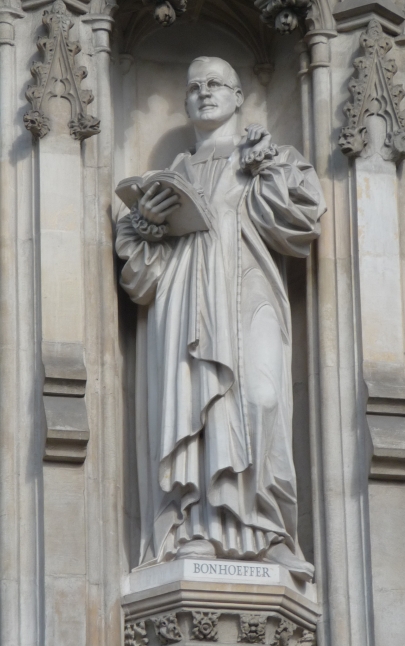
When Christ calls a man, he bids him come and die.
Dietrich Bonhoeffer, Discipleship.
April 9th, 1945: Dietrich Bonhoeffer is Murdered by the Nazis
Dietrich Bonhoeffer was a German Lutheran pastor and theologian who resisted the Nazi regime. Although he was offered the opportunity to accept a position teaching in the United States, he suffered mental anguish at leaving Germany’s struggle behind and decided to return despite the potential threat to his life. The Nazis banned him from publishing and from teaching in Berlin. He spoke against Nazism and was deeply involved in the Confessing Church–the church that opposed Nazification of the church.
Bonhoeffer is remembered in part for his resistance to the Nazi regime, and in part for his stunningly insightful theological writings.
He became involved in a conspiracy to overthrow Hitler and was arrested by the Gestapo, but not for a specific conspiracy. When the conspiracy was finally discovered more fully, his execution was directly ordered from the highest levels of Nazi leadership.
On April 9th, 1945, guards at Flossenbürg concentration camp came to gather him for execution. He reportedly turned to another prisoner and said “This is the end… for me, the beginning of life.” He was killed by hanging from piano wire. His remains were either burned or buried in a mass grave by Allied soldiers when Flossenbürg was liberated.
Bonhoeffer’s theological legacy is difficult to overstate. His Lutheran theology is remarkable in how clearly he draws distinctions. He gained worldwide fame for his Letters and Papers from Prison, which outlines a religionless Christianity in which he pushed back against faith lives lived without action. His theology has been deeply influential on myself, as well. To read more, check out my posts on Dietrich Bonhoeffer (scroll down for more).
Book Review: “Postmortem Opportunity” by James Beilby
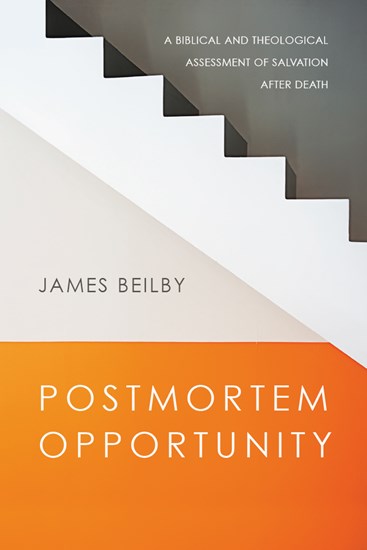
Questions about eternity abound, but one of the most complex is the question of what happens to people who never heard the Gospel. If, the question goes, people who don’t believe in Jesus Christ are condemned, what about people who never even had the chance to decide for themselves? James Beilby’s book, Postmortem Opportunity: A Biblical and Theological Assessment of Salvation After Death is, in part, an answer to that question.
Put simply, Beilby here defends Postmortem Opportunity (hereafter PO in my text), which has the core claim (using his terminology) that: “those who die without receiving a genuine opportunity to hear and respond to the gospel will receive a Postmortem Opportunity to do so” (35, emphasis removed). Of course, there’s quite a bit to unpack even in this claim, such as what constitutes a “genuine opportunity.” Beilby does a commendable job of drawing out definitions and carefully moving readers through each step of the argument.
Beilby starts with a chapter that goes over common views on the destiny of the unevangelized, whether it’s universal salvation, predestination, or any number of other possibilities. In the chapter in which he defines PO, he outlines ways his version may differ from others, such as when it will occur and to whom it will be given. Throughout this and other sections, he uses thought experiments to explain situations. One example was the very helpful and challenging thought experiment regarding the fate of believers who either were on the way to disbelief or non-believers who were very close to believing before they died. It was helpful to clarify that faith and belief is not a kind of black-and-white, all-or-nothing situation, and that robust soteriology must deal with that fact.
Next, Beilby goes over arguments for and against PO, surveying both biblical, historical, and theological arguments. Beilby musters numerous verses to support each aspect of affirmative points he affirms in his view of PO, while also raising some of the objections that immediately come up in any discussion of PO. Interestingly, Beilby has a chapter to explicitly reject inclusivism as a conjunction with his PO, noting that his version basically makes affirmations that would preclude inclusivism and perhaps even make it unnecessary.
Beilby’s argument is interesting and certainly presents the most robust case for PO I have ever encountered. Though, to be fair, some of that may be my own lack of research into the topic. Nevertheless, Beilby’s modest conclusions that PO is, minimally, a possibility based on Scripture and broader theological concerns seem supported by his arguments here.
There are a few critiques I want to point out, however. First, the way Beilby treats biblical texts as data points to be collated as pros and cons for theological argument may call into question some of his interpretations thereof. For example, in the chapter entitled “Scriptural Evidence for Postmortem Opportunity,” he supports one aspect of his PO theory, that people are only condemned for explicit rejection of Christ, by mustering John 3:18, Matthew 10:32-33, and more verses to show that it is a theme found in Scripture. I am tempted to read scripture this same way, as it is what appeals most to my analytical mind.* However, I’m not convinced that this is the best way to read and interpret Scripture. Instead, I believe that the verses cited have contexts that are pointing to entirely different purposes of the entire thought happening. That doesn’t preclude that some kind of tangential points can be found in individual verses, including what Beilby argues is there, but I think more caution regarding interpretation and appealing to broader contexts for these verses would make the argument much stronger. I’m not fully convinced proof texting is a necessarily mistaken way of reading the text, but I am convinced that using the text in that way can and does frequently significantly damage the text. Such a critique can hardly be limited to Beilby, but can certainly be applied to myself and many others.
Another critique is that Beilby unnecessarily limits the scope of his argument fairly early on by saying his version of PO “assumes an explicitly Arminian soteriology” (75). His reasoning behind this appears to be that PO assumes a kind of synergistic view of salvation (75ff). However, to this reader, who is Lutheran and so neither Calvinist or Arminian in soteriology, Beilby’s self-imposed limitation is premature. I suspect this limitation was on purpose for the sake of not having to adjust his PO model to account for other soteriological views. I, however, think that his view of PO could be adjusted without losing too much to match different theological systems. From my own Lutheran upbringing, while many I know would reject PO out of hand, the teaching and affirmation about Christ descending to Hell/the dead was always explicit and strong. From there, it’s not much of a stretch to ask what Christ was doing there, and a kind of PO could flow out from an historic/credal background.
Postmortem Opportunity is a fascinating read on a number of important topics. I admit it has challenged my own views on several topics, and certainly has me going to scripture to read it more fully. I recommend the book for any readers interested in soteriological positions, and those interested in challenging their views.
*My thanks to a friend for pointing out this aspect of reading verses out of context and as data points.
Disclaimer: I was provided with a copy of the book for review by the publisher. I was not required to give any specific kind of feedback whatsoever.
All Links to Amazon are Affiliates links
Links
Be sure to check out the page for this site on Facebook and Twitter for discussion of posts, links to other pages of interest, random talk about theology/philosophy/apologetics/movies and more!
Book Reviews– There are plenty more book reviews to read! Read like crazy! (Scroll down for more, and click at bottom for even more!)
SDG.
——
The preceding post is the property of J.W. Wartick (apart from quotations, which are the property of their respective owners, and works of art as credited; images are often freely available to the public and J.W. Wartick makes no claims of owning rights to the images unless he makes that explicit) and should not be reproduced in part or in whole without the expressed consent of the author. All content on this site is the property of J.W. Wartick and is made available for individual and personal usage. If you cite from these documents, whether for personal or professional purposes, please give appropriate citation with both the name of the author (J.W. Wartick) and a link to the original URL. If you’d like to repost a post, you may do so, provided you show less than half of the original post on your own site and link to the original post for the rest. You must also appropriately cite the post as noted above. This blog is protected by Creative Commons licensing. By viewing any part of this site, you are agreeing to this usage policy.
Why I Left the Lutheran Church – Missouri Synod: Points of Fracture (Part 2): Science as a Young Adult

For several posts, I will be writing about specific things that came up while I was within the LCMS–that is, at its schools, churches, and university–that made me start to think that the LCMS way of things didn’t align with some aspect of reality, something I learned in the Bible, or something else.[1]
Points of Fracture: Science as a Young Adult
The cognitive dissonance that I experienced regarding Christianity and science continued to mount as I got older. My previous post went over times in which I recall finding those points of fracture. I left off there in about 8th grade at an LCMS school. Here, I’ll share some of the times as a young adult in which I truly began to struggle with science and my faith.
In college, the hints of fracture at the edges of my view in the world became fault lines. I so often see the narrative of how allegedly secular colleges will destroy the faith of kids, but I was at an LCMS University, and being there nearly destroyed my faith. There are more reasons for this than science, as we’ll see in future posts. For now, though, the focus on questions of science loomed large when I was in college.
I came to college as a faithful Lutheran, though I had my ups and downs. For the first time, I really could not go to church all the time and it wouldn’t matter or hardly even be noticed by most people. Then, I had a major religious experience and realized I wanted to learn about and know God more every day. One way that manifested is that I started reading apologetics. It quickly became clear that issues of science and faith loomed large, and for the first time I truly began to think about the implications of some of these issues.
Then, I had a geology class in college. The professor was an adjunct who, I’m fairly sure, was neither Lutheran nor particularly interested in the theology of the university. He seemed blissfully unaware, as he taught his geology course, that what he was teaching would be worldview-shattering at least for one of his students. It was a course full of students who were on campus for many reasons, not just to attend an LCMS school. Many of them there were on athletics scholarships, and I heard some openly talking about the only reason they were at the school was because it was the only one that offered them such a scholarship. No one was dissenting from this professor, who stood there teaching mainstream geology. This was all stuff I’d never even been exposed to before. How beaches formed, how we could accurately predict how long some formations would take to form, how rock layers could be formed apart from Noah’s Flood. Indeed, Noah’s Flood was never even mentioned in the class. What I thought was the explanation for basically every geological feature on the planet wasn’t even in the index of my geology textbook!
I was totally devastated. Here was evidence, presented in the most mundane, disinterested fashion possible, that the Earth simply could not be merely 10,000 years old or so. While I didn’t really have a grasp on the science, the course taught me enough to realize that something had to give. The way I had been raised made the choice quite stark. The Bible just clearly taught that the Earth was young. “Millions of years” was a lie. Either the Earth really is six to ten thousand years old because the Bible says so or the Bible is untrustworthy and Christianity is false.
We had leaders in our dorms who were called “Spiritual Life Representatives” (SLRs). Think of an RA, but who you could go to in order to discuss spiritual questions or crises. They’d lead devotions and generally make themselves available to students to talk to. I went to my SLR and I was weeping in his dorm room. I was convinced that the geology I had learned had proven that the Earth could not be young, and so how could I possibly continue to believe Christianity was true? He said something that has stuck with me ever since: “If the Earth is more than 10,000 years old, would it really mean that Christ has not been raised from the dead?”
I sat there, tears streaming down my face, and I realized it wouldn’t mean that. He said other things, of course, like that he wasn’t as confident as I was about geology proving things differently, that there were other resources to read. But in that moment, he said something that allowed me to preserve my collapsing faith. I realized then that my faith was built on Christ, not on the age of the Earth.
I threw myself even more into apologetics now, because I felt even more confident that Christianity was true and that I needed to prove it to other people. The freedom provided to me by this conversation with my SLR had me flirt briefly with theistic evolution, but when I mentioned that in apologetics groups I was in, it got shot down hard. Instead, Young Earth Creationism (YEC) was the way to go. I needed to start seeing science the right way, they said. I searched around for groups to help build my faith and defense thereof, and started subscribing to Acts & Facts Magazine from the Institute for Creation Research (ICR). I was hugely impressed by the production values of this creationist publication, with its gorgeous pictures and lengthy articles about things like RATE research and the like. For the uninitiated, RATE stands for Radioisotopes and the Age of The Earth. I was convinced by these publications that, among other things, radiometric dating was falsified, that the Grand Canyon was evidence for a young earth, and that if you just looked at things in nature in the right ways, you’d see a young earth all around you. Reading about creationism in some LCMS literature convinced me even further, and speaking with a few pastors about the topic had me once more feeling rock-solid about my YEC convictions.
I love walking in nature, and I went for a hike somewhere in Michigan and I saw the distinct layers in the rocks. I walked up to them and put my fingers on them. I could trace the layers with my fingers and see how they were distinct in coloration after a certain point. I remember very clearly the feeling of washing over myself of total confidence that these layers were laid down by Noah’s Flood. Later in the hike, I saw a different formation of rocks thrust up through the other ones, so that they were nearly perpendicular to the other layers surrounding them. I stood staring at it for some time, trying to figure out how this could have happened due to Noah’s Flood. I simply couldn’t come up with such a scenario, but I trusted further study would alleviate the stress. I left the hike somewhat disturbed, but mostly confident in my young earth beliefs.[2]
Then, I started noticing that many of the published apologists I was reading weren’t convinced of YEC. I started to dive deep into Old Earth Creationism, which is very similar to YEC except that the direct creation of all animal life happened over long periods of time instead of in a single week of seven 24-hour days. I became deeply engrossed with another creationist organization, Reasons to Believe. This organization taught that there were real, scientific models that could show both that the Bible was true and that you could effectively map it out with special creation of creatures over time. It was a kind of chimerical creature, picking and choosing scientific discoveries that aligned with it while also finding isolated verses in the Bible to say it taught modern science (eg. using Psalm 104:2 to suggest it taught Big Bang cosmology).
Then, I took another science class in college. This one was a biology class to finally knock off my requirements for graduation. The professor had some extremely non-mainstream views. I remember him frequently talking about smoking and insisting that smoking doesn’t cause lung cancer. How did he know? His repeated refrain was: “Correlation is not causation.” If I’d known more at the time about science, I would have pushed back harder on this. At the time, though, it still seemed pretty ludicrous. My grandpa had died of lung cancer, and I was very well aware of it being caused by smoking. The same professor would go wildly off topic during class, frequently shifting to pet issues that he would lecture us about. Several students offered pushback on some of these topics, most of which I don’t remember.
I do recall, though, one day when he talked about creationism. He was very adamant that YEC was the only way to believe, basically pulling the LCMS party line about it being essential to affirm that in order to believe the Bible. But even for the LCMS, some of this guy’s views were far afield. For example, he insisted that the Earth wasn’t tilted before the Fall, which he said meant the Garden of Eden would cover the whole planet as the whole planet would therefore have the same weather as the equator currently does. Dinosaurs, he insisted, all ate plants, and even the teeth we associate with Tyrannosaurus Rex were adapted for eating plants before the Fall.
The whole thing seemed preposterous to me, even as someone who had been steeped in YEC literature. It was at this point I basically realized going back to YEC views was impossible. As someone who wanted to be an LCMS pastor (at the time), that caused me no small amount of trepidation. After all, I’d already heard a story from a pastor who approvingly cited a large group pastors literally shouting down two other pastors who tried to introduce a resolution to even discuss the possibility of anything but a Young Earth in the LCMS. I was aware of the many, many pastors I knew who were totally convinced of YEC. How would I survive in a denomination that was so firmly entrenched? Even the few exceptions I knew about were just that–exceptions. For that reason, I still held my views close to my chest.
Online, I started to write a series of blog posts examining four major views (as I saw them) in Christianity: Young Earth and Old Earth creationism, theistic evolution, and Intelligent Design. The pushback I got for even mentioning theistic evolution from apologetics-interested friends was massive. I’d get warning messages on Facebook about even considering publishing posts about anything but YEC that could be remotely positive.
In an art class, our professor casually went over dates of artwork. We came to some cave paintings, and this professor said they were dated to 13-16,000 years ago. One pre-seminary student raised his hand and pushed back on the date. “The Earth isn’t even more than 10,000 years old. How could there be cave paintings that are older than the Earth?” How, indeed? I wondered. Again, I was a closet Old Earth Creationist at this point. The professor, to their credit, took it in stride. They answered, “I’m reporting the dates that mainstream art historians have given these works. To get credit, you’ll need to give those answers on the test. But you can definitely do your research project on how art dating works!” It was a masterful response.
Later, I was at a bookstore with some LCMS members. We were milling about the shelves and I went straight to the Christianity section to see if there were any apologetics books. There, I saw this book with a striking cover that said it was written by a scientist exploring faith. The Language of God , by Francis Collins, unapologetically defended the view of theistic evolution, and I found myself paging through it quickly. I felt guilty for even reading it. Evolution, as I knew, was the enemy of Christianity. But this author was writing about evolution with such confidence as a Christian scientist. He’d had a religious experience himself, and he wrote accessibly and in a winsome fashion. I bought the book away from the others, afraid they might ask me about it. When I read it, it opened my eyes to many possibilities. I wouldn’t immediately come to believe evolution and Christianity were compatible, but I believed that it was possible to believe they were. That wording is intentional, because I want my readers to understand how many steps I had to take along this journey. At this point, I’d come from believing scientists were liars trying to deceive people about the age of the Earth for well, some reason anyway, to believing that it was vaguely possible someone could be a Christian and believe evolution and Christianity were compatible. I cannot emphasize enough how difficult it was to get to that point, and how many side roads and challenges and tears were along the way.
It would take several more years before I could become comfortable with affirming evolution while remaining Christian. I do, now. My first post mentioned religious trauma as part of my time in the LCMS. I haven’t had a lot of ways to portray that so far, but one way I believe I experienced religious trauma from within the LCMS was in the extreme, repeated resistance I experienced regarding science. I adored science, and the religious teachings I experienced led me to be mistrustful of science, and scientists in particular. Christians who were scientists were questionable at best. Like, why would you engage a field full of lies? It would take me more than a decade as an adult to undo that mistrust. Alongside that, it has forced me to question many other things. When you believe things that are easily falsifiable (such as men having one fewer rib than women) and discover that they are, in fact false, it causes a kind of lingering cognitive dissonance that is hard to overcome.
Science is one of the reasons I left the LCMS, but it was intertwined with emotional highs and lows. I experienced crises of faith due to my false beliefs about science. I thought I could no longer believe the Bible because I found evidence in nature that contradicted what I was taught it said. These may seem like small issues to some, but I cannot emphasize how important they were to me, and how important they remain to many others.
Next, we’ll begin exploring other reasons I left the LCMS.
Next: Points of Fracture Part 3
[1] I’ve addressed this in my previous post, but want to point out here that not everything held positionally by the LCMS is spelled out in their teachings. One friend pointed out the helpful categorization related to the LCMS and creationism: the LCMS has a de facto affirmation of young earth creationism, though it is not always made explicit. The evidence is abundant, though one may point to the occasional, very rare exception. On the flip side, the evidence that the LCMS is intrinsically tied to young earth creationism continues to mount. See, for example, my post about an official stance in 2019 that reaffirmed a creationist position.
[2] To tell this story and other parts of this post, I’ve had to very quickly summarize or even skip over parts of creationist arguments. I was fully engaged with YEC at this point and to this day could very easily rattle off numerous arguments in favor of YEC, though I now believe they are mistaken. I know some YEC explanations do exist for these types of formations, but here my goal is to list things that, in the moment, caused me to realize points of departure.
Links
Formerly Lutheran Church – Missouri Synod (LCMS) or Wisconsin Synod (WELS)– A Facebook group I’ve created for people who are former members of either of these church bodies to share stories, support each other, and try to bring change. Note: Anything you post on the internet has the potential to be public and shared anywhere, so if you join and post, be aware of that.
Why I left the Lutheran Church – Missouri Synod Links Hub– Want to follow the whole series? Here’s a hub post with links to all the posts as well as related topics.
Be sure to check out the page for this site on Facebook and Twitter for discussion of posts, links to other pages of interest, random talk about theology/philosophy/apologetics/movies and more!
SDG.
——
The preceding post is the property of J.W. Wartick (apart from quotations, which are the property of their respective owners, and works of art as credited; images are often freely available to the public and J.W. Wartick makes no claims of owning rights to the images unless he makes that explicit) and should not be reproduced in part or in whole without the expressed consent of the author. All content on this site is the property of J.W. Wartick and is made available for individual and personal usage. If you cite from these documents, whether for personal or professional purposes, please give appropriate citation with both the name of the author (J.W. Wartick) and a link to the original URL. If you’d like to repost a post, you may do so, provided you show less than half of the original post on your own site and link to the original post for the rest. You must also appropriately cite the post as noted above. This blog is protected by Creative Commons licensing. By viewing any part of this site, you are agreeing to this usage policy.
Why I Left the Lutheran Church – Missouri Synod: Links Hub

I wanted to have a place to collect all the links for my ongoing series of why I left the Lutheran Church – Missouri Synod in one post. Here, I share those links along with related reads.
Series
Finding My Voice– I wrote about why I wanted to write this series of posts, and why I thought it was time to do so.
A short history of my time in the LCMS– I go over my time in the LCMS and why I believe that makes my voice especially relevant in a critique of the Synod.
Points of Fracture (Part 1)- Science as a child– I begin to draw out the points of fracture I felt with the LCMS, starting with science I learned as a child.
Points of Fracture (Part 2)- Science as a young adult– Debates over science finally came to a head as fractures became faults in my faith.
By Their Fruits… (part 1)– I begin a miniseries that goes over a number of ways in which I discovered things within the LCMS practices that drove me away from that church body.
By Their Fruits… (Part 2)– I discuss the racism, anti-Semitism, and Islamophobia I encountered in the LCMS.
By Their Fruits… (Part 3)– I observed and encountered quite a bit of misogyny in the LCMS, and document some here.
By Their Fruits… (Part 4)– Homophobia is rampant in the LCMS at various levels.
By Their Fruits… (Part 5)– Nationalism, inconsistent practices of close/closed communion, and more are additional problems with LCMS practice.
Why I Left the Lutheran Church – Missouri Synod: Points of Fracture: Women in the Church Part 1– I write more about how I was confronted with the LCMS’s views about women in the church and the struggle I had with it.
Why I Left the Lutheran Church – Missouri Synod: Points of Fracture: Women in the Church Part 2– I discuss how intense prayer and fervent study of Scripture led me to believe that women can be pastors.
Why I Left the Lutheran Church – Missouri Synod: Points of Fracture: On the Other Side– I write about my experience as I actively left the LCMS and the spiritual abuse and other difficulties that entailed.
Why I Left the Lutheran Church – Missouri Synod: Still Faithful– I have been asked so many times about why I stayed in any church body after my experiences. Here, I attempt a short answer to the question.
Related Links
Formerly Lutheran Church – Missouri Synod (LCMS) or Wisconsin Synod (WELS)– A Facebook group I’ve created for people who are former members of either of these church bodies to share stories, support each other, and try to bring change. Note: Anything you post on the internet has the potential to be public and shared anywhere, so if you join and post, be aware of that.
Leaving the LCMS/WELS– Not sure about whether to leave or thinking about leaving? Do you want to others who are thinking along the same lines? I created a group for those who are contemplating leaving these denominations, as well.
The Lutheran Church – Missouri Synod and Creationism: An Unnecessary Match– I quote from a resolution passed by the LCMS in convention in 2019 and analyze how it’s a problematic view to put forward.
Unchristian Nonsense: A microcosm of what’s wrong in conservative Lutheranism– I look at some of the controversy surrounding the selection of a new President at one of the Concordias (the universities of the LCMS).
“Power, Politics, and the Missouri Synod” – A book from James C. Burkee that has me thinking about my former denomination– I take a brief look at an historical exploration of Seminex.
LCMS President Harrison’s Letter to Board of Regents of Concordia University Wisconsin – Ann Arbor– I provide my thoughts about President Harrison’s letter in which he addresses some alleged problems at CUWAA.


