J.W. Wartick
Why I left the Lutheran Church – Missouri Synod: Points of Fracture (Part 1): Science as a Child

I have written about why I am writing this series as well as my history within the LCMS. Now, it is time to turn to what I’m calling points of fracture. For several posts, I will be writing about specific things that came up while I was within the LCMS–that is, at its schools, churches, and university–that made me start to think that the LCMS way of things didn’t align with some aspect of reality, something I learned in the Bible, or something else.[1]
Points of Fracture: Science as a Child
Here, I’ll be sharing the points of fracture that I experienced related to science at a young age. At the outset, I want to point out that much of these points of fracture were discovered by me over time. So, for example, when I talk about my young childhood, it’s not as though I was immediately aware that something was off about what I was learning. Instead, it was a realization that came over time, and the memory of when I was young was something that I recall as an important stepping stone to get to where I am now.
Some of my first memories of conflict between what I believed and what others believed was as a child getting library books. I don’t remember how far we had to go to drive to the library from our tiny town, but I remember it seemed like forever, and that I would consume books on the way home, often falling asleep in the car before arriving at home. I, like many kids, was obsessed with dinosaurs.[2] That meant I raided the library’s section on dinosaurs. I’d memorize the names and facts about them, pore over images of them, and imagine what life would have been like alongside them. If the cover of a library book had a T-Rex ripping apart its prey, that was the book I was going for. But those dinosaur books talked about when dinosaurs lived. Those dates were given as the best scientific approximations based on various dating techniques, ranging from about 66 million years ago to 200 million or more for dinosaurs’ first appearance on Earth.
Those dates, I was told, were wrong. Whenever I saw “millions,” I was told to ignore it. As a young kid, I didn’t press back very hard on that. After all, I had no reason to do so. I knew that I could get facts wrong about all sorts of things, so the notion that basically every book I read about dinosaurs was wrong about how long ago dinosaurs lived wasn’t terribly mind-bending for me. I learned to just run my eyes over any time it said “millions of years,” because that was wrong. The rest of the facts, though, were basically unquestioned. I didn’t have the capacity at the time to put those two things into disharmony. That is, I didn’t realize how odd it was that the books and scientists seemed to be right about, say the ecosystem the dinosaurs lived in, or their diets, or debates about coloration while simultaneously being totally wrong and even untruthful about how long ago they lived.
That last bit is important. I used the word “untruthful” because part of what I was taught, whether directly or through creationist literature I would be exposed to a year or so later, was that scientists weren’t just wrong about the age of the Earth or when dinosaurs lived. No, instead, they were actively lying about it. I want to sit with this for a moment because it is an extremely important distinction. There’s a huge difference between someone being wrong while reporting something they think is factual and someone deliberately deceiving you about something they say is factual. That I came to believe that scientists were actively lying about the age of the Earth would temper my interest in science for more than a decade once it became fully engrained in me. Sometimes I genuinely think I would have ended up in geology or paleontology as a field of study and employment if I hadn’t come to be taught that, because of my deep interest in these topics. But I didn’t, at least in part because I thought scientists were liars.
No small part of that belief came from some of the approved dinosaur books I was gifted during my dinosaur obsession. These dinosaurs books portrayed a different history of the world, with humans walking alongside long-necked dinosaurs and feeding them fruits by hand. I distinctly remember a photograph of an alleged plesiosaur (see below) that had been caught by a fishing boat in one of them. These books didn’t have the same exciting illustrations of T-Rex or Deinonychus (my personal favorite) shredding their prey. Instead, I was taught that they had something more precious–the truth about dinosaurs. These books confronted head on topics like evolution and the age of the Earth, saying in no uncertain terms that evolution was a lie and scientists who taught millions of years were liars as well. I didn’t even understand what evolution was supposed to be at this point, but I knew it was a lie. Again, this disjunction between being mistaken and being liars was something that sucked away my enjoyment of science over time, and also would make it extremely difficult for me to fairly examine evidence.

Later, I remember talking to a child a few grades above me at my LCMS grade school. When I mentioned that I liked dinosaurs, she told me quite sincerely that dinosaurs had never existed. I was incredulous, asking “What about all the bones!?” Her answer surprised me: she said something to the effect of “Those bones were put there by God to test people’s faith.” The total somberness with which she expressed this sentiment took me off guard, but I do remember laughing at her because I thought it was so ridiculous to think that (I wasn’t the kid with the best manners). I would later recall the incident when I was studying more about these topics because it specifically showed me I could see beliefs about science that seemed obviously false and reject them, and that was okay. Even more importantly, it was a time my younger self was given an idea about God that did not seem to align with what I believed about God. Even as a child, the notion that God would be actively trying to deceive people seemed obviously, even hilariously wrong. That God doesn’t deceive us with nature, but that nature rather declares the glory of God (Psalm 19) would be hugely important to me as an adult.
Another topic I remember was about Adam and Eve. I specifically remember learning that all boys and men had one fewer rib than women. This was seen as evidence for the biblical account of Adam having been formed from Eve’s rib. I don’t remember my first source of hearing of this, but I do remember I heard it from more than one adult in my life. It wasn’t actually until college as I was searching online for various science-related things that I learned this was false. To this day, even typing that it’s false has me second-guessing myself, so firm was my belief that men had fewer ribs than women. It’s one of those things that is incredibly easy to disprove, to the point that when passed along, no one thinks to question it. It was honestly a shocking revelation to me when I discovered it wasn’t true, and it spurred me on to search for other things I could disprove or couldn’t confirm.
I believe it was in 6th grade, again at an LCMS school, that I had a single day in which we talked about plate tectonics. It was in a geography class, and we were learning quite briefly about how the map was formed. I recalled some of the maps I’d seen in dinosaur books of Pangaea and asked about that, noticing it appeared as though Africa and South America fit together. I don’t remember the exact answer, but what I got was enough for me to excitedly talk about plate tectonics later, only to be told by a pastor that they don’t exist. How did earthquakes happen, then? I asked. The answer was that God made them happen. I was disturbed even then by this answer. More, I was confused in getting entirely different answers about what caused earthquakes and how continents moved–or whether they moved at all–from two approved sources. Which should I believe? In the moment, I just bracketed it and stopped thinking about it. That was largely my answer for when things like this happened. I assumed others knew more than me, and it would become clear later.
One year in middle school at an LCMS school (I think it was 8th grade), we were super excited to be taking part in a science curriculum that would be shared by schools all over the country. The curriculum used the Hawaiian islands as a touch point for learning all sorts of things about science–whether geology by learning about volcanoes, biology by learning about ecosystems, and the like. I distinctly recall opening the binders we received and flipping through to see the contents. In among the thrilling sections on volcanoes and wildlife, I saw that there was a section about evolution on the islands. I had only the vaguest idea of what evolution meant. I knew it meant something like animals turned into other animals because of seeing it in some dinosaur books I’d read years before. I recalled learning that evolution was a lie, but seeing it show up in a text in my LCMS school made it feel safe… but only for a moment. When I turned to the pages indicated to see what might be said about this intriguing topic, I discovered the pages had been removed. I opened to the page, and found I was flipping from page 55 to page 75. It’s hard to fully capture my feelings at that moment. It was a truly disturbing incident for me. I believe I mentioned it to the teacher and was told that we wouldn’t be covering that topic. I remember flipping back and forth a few times, stunned. It was one of the clearest moments as a kid that I realized something was genuinely being covered up. It wasn’t just that scientists were wrong or lying. That, I could, in my childlike trust, accept. This was a revelation: what scientists taught was being actively covered up or suppressed, as if it would be dangerous to even know about it.
Earlier, I said this was one of the points of fracture that led me to think that maybe the LCMS way of things wasn’t accurate. I want to briefly address a possible objection here. I say “the LCMS view of things,” not necessarily to mean that they have specific teachings on everything I touch upon here or in other posts. For example, it is very clear that the LCMS holds that young earth creationism in some form is the view that ought to be taught to and held by its members. This view, however, is not codified in LCMS official positions. Indeed, according to the LCMS’s official web site about their views, they do not have an official position on the age of the earth. Thus, one could technically take issue with my pointing out that the LCMS’s view of things is a young earth creationist perspective.
However, this would indeed be nothing but a technicality, because in application and practice, no other views are allowed broadly in the LCMS. As one example, one pastor confidentially told me about how some of their peers attempted to introduce a resolution at a pastor’s conference to simply discuss the possibility of views apart from young earth creationism. This pastor approvingly told me that those pastors were literally shouted down by the rest of the pastors at this conference for their attempt. From my own experience, I know of at least 3 different LCMS pastors who questioned the faith of LCMS members who did not hold to a young earth creationist view. Additionally, tying belief in a young earth together with trust in the Bible is ubiquitous in LCMS leadership. In preparing this post, one classmate of mine pointed out that an LCMS professor who was a pastor explicitly taught an old Earth in a class we shared. This experience was perhaps the lone exception to an otherwise uniform experience that I and others have shared related to the LCMS’s views on the age of the Earth.
All of these final points are to say, just because something isn’t explicitly codified on the LCMS web site, for example, doesn’t mean that it’s not part of the DNA of the LCMS. Young Earth Creationism is absolutely integral to the overwhelmingly vast majority of LCMS belief and practice related to any questions about science and faith.
See also my post, The Lutheran Church – Missouri Synod and Creationism: An unnecessary match, in which I go over the 2019 convention’s affirmation of Young Earth Creationism, including a link to the official LCMS blog.
Next: Points of Fracture, Part 2
[1] I debated internally a bit about how to organize my thoughts related to the specific fracture points that led me to see that my views did not align with those of the LCMS. Should I organize them topically, chronologically, or in some other order? I ultimately settled on doing them topically, because it allowed me to arrange each topic chronologically and show how some of these built on themselves over time. I thought it would be less disjointed to present it this way, rather than skipping around.
[2] I say “was obsessed” but I truly remain obsessed with dinosaurs, and find learning about them is still one of my greatest joys.
Links
Formerly Lutheran Church – Missouri Synod (LCMS) or Wisconsin Synod (WELS)– A Facebook group I’ve created for people who are former members of either of these church bodies to share stories, support each other, and try to bring change. Note: Anything you post on the internet has the potential to be public and shared anywhere, so if you join and post, be aware of that.
Be sure to check out the page for this site on Facebook and Twitter for discussion of posts, links to other pages of interest, random talk about theology/philosophy/apologetics/movies and more!
What’s Wrong with Apologetics? – I take a look at some of the issues I’ve found to be broadly true in apologetics-related circles.
SDG.
——
The preceding post is the property of J.W. Wartick (apart from quotations, which are the property of their respective owners, and works of art as credited; images are often freely available to the public and J.W. Wartick makes no claims of owning rights to the images unless he makes that explicit) and should not be reproduced in part or in whole without the expressed consent of the author. All content on this site is the property of J.W. Wartick and is made available for individual and personal usage. If you cite from these documents, whether for personal or professional purposes, please give appropriate citation with both the name of the author (J.W. Wartick) and a link to the original URL. If you’d like to repost a post, you may do so, provided you show less than half of the original post on your own site and link to the original post for the rest. You must also appropriately cite the post as noted above. This blog is protected by Creative Commons licensing. By viewing any part of this site, you are agreeing to this usage policy.
Why I left the Lutheran Church – Missouri Synod: A short history of my time in the LCMS

I was born into the LCMS, baptized not long after my birth. My dad was an LCMS pastor. I was in LCMS parochial schools through 8th grade, went to public high schools, and went to college at an LCMS university.
The teachings of the LCMS were in my veins, and they still are. I memorized parts of Luther’s Small Catechism, recited memory verses, and answered dozens of questions about the catechism when I was confirmed. I went to church weekly. I was involved in several activities within the church, such as being the president of the Youth Group at my church and class president in 8th grade at my LCMS school. I had and still have multiple settings of the liturgy memorized, and frequently sing them to calm myself down or just sing praise when they pop into my mind.
Many of my earliest memories involve being in church or church-related things. For example, I remember being at a children’s sermon (my dad was my pastor, as he was for my whole life until college) in which my dad held up a wood block with “JESUS” silhouetted on it. He asked if anyone knew what it said. Confidently, I raised my hand and said we couldn’t know because it was in a different language! I’d mistaken the raised wood for the letters and assumed it was Hebrew or another language my dad had studied–he loved languages. I can’t tell you the number of memories I have of being with my dad on pastoral visits, sitting and drawing Star Trek ships or sharks as he spoke with members. I went along to several funerals as well.
Whenever the group came through town, I participated in Ongoing Ambassadors for Christ (OAFC), an LCMS ministry group that worked to train Lutherans to share their faith with others.[1] This included going door-to-door in my community and others nearby to tell people about Jesus and invite them to church. We hosted them at our church, and several of the leaders of the OAFC group would stay in our home. I remember a few nights where there’d be teenagers sprawled across multiple couches on the lower floor of the parsonage we lived in, and I’d stay up as late as I’d be allowed talking to the “cool kids” who were in my house. I wanted to be one of them.
I’d participated a few times in the youth group at my friend’s LCMS church. This was also where I went to middle school, as in the LCMS there is an emphasis on private schooling. They had a bigger group due to having a school and more populous community, and it was fun to connect with even more LCMS people my age and do things like the 30 Hour Famine, in which we fasted for 30 hours for solidarity with hungry people worldwide to raise money. These events had a different feel from much of my other church-related life, and for good reason. The events were sponsored by World Vision, a broadly evangelical service organization. It was one of the rare instances in which I participated in broader Christianity with a slightly different flavor from my own.
I went to the LCMS Youth Gathering the year I was eligible. This wasn’t some small event: the event attracted more than 30,000 youths from all over the country. It was an incredible experience at which I remember connecting to bands, meeting interesting people, and staying with a best friend. We’d sing songs, pray, praise, give thanks, and talk with other youths from all over the United States.
I also spent some time on forums debating theology and talking to other Christians. This was back when such things were pretty new. Instant messaging was pretty novel. I remember a relative proudly talking to church members about how I’d debate Lutheran theology with non-Lutherans in a chatroom. There was a darker side to it, though. I had an alarming experience with one of the adult members in the chatroom propositioning me, a minor. Nothing happened beyond that, but I was deeply shaken. It was the first real memory for me of a time in which I truly felt adults were unsafe. But it went beyond that. It was the first memory–an extremely vivid one–of when I discovered faith could be unsafe. It meant people could use an allegedly shared religion to try to go after a kid. Religion could be used, I’d discovered, for evil. I think I was about 10-11 years old. It’s a lesson I’d never forget.
In the first public high school I was at, it was a small town. There were many churches and it ended up that there were 4 other PKs (pastor’s kids) in my class. It was a small school and we’d frequently end up in classes together. I distinctly remember debating doctrine with some of these other PKs. One of them told some good friends of mine they were all going to hell. One of those friends came to me an asked what I thought. “J.W.,” he said, “am I going to hell because I smoke weed? Steve[2] says I will.” I was taken aback for a moment. “No,” I answered. I had no interest in any kind of drugs or underage drinking. Like I said in the first post, I’m a people pleaser, but I’m also a major rule follower, and those things didn’t really have any appeal for me. “No,” I answered. “He’s just wrong.” Steve overheard this, because we were all in a free period and he was just across the classroom. I don’t remember exactly how the conversation went, but I know he challenged me back on it and ended up questioning my salvation, too, because I believed in infant baptism. It was all very serious, but I ended up laughing at that final note. I wasn’t laughing because it was silly to think someone would be going to hell for a different view of baptism (at the time, I wasn’t sure exactly how right you had to be to go to heaven, after all); no, it was silly because the other person was so obviously wrong. The LCMS just was right; it just was the true church; it just taught the true way to believe. At this point, of course, my group of friends was entirely forgotten. The discussion was on a level that only PKs or other theologically-interested people could follow. I wasn’t just right, though, I was righteous. It was a feeling that was engrained into me from hundreds of times I’d been taught that the LCMS doctrines just were facts. Everyone else was mistaken no matter what.
When I went to college, I initially thought I would be an LCMS teacher. While there, I started to get more involved in acting on my faith. I also became interested in Christian apologetics. But a major turning point was still coming. One night, I was praying out under the stars. It was a cold night, but I was outside all on my own with my coat near the river that ran alongside the campus, begging God to end some of the wrongs in the world. I had an intense religious experience. That night, I went back to my dorm, wrote about the experience, and discovered a new and total devotion to God. I already believed in God, and I already was committed to following Christ, but this experience had reinvigorated me and convinced me that God was there and listening. I still believe this was a genuine experience from God.
This experience led me to rethink some of my life. Around this time, my then-fiancée broke up with me. It wasn’t a great time, but it also led me to refocus my life. It was around Thanksgiving that it happened, and when I contemplated what I had to be thankful for on a weekend over which someone I thought I would marry broke up with me, I realized the answer was: a heckuva lot. I decided around then that I wanted to change what I was studying and be a pastor instead. The reason wasn’t because I was particularly enamored with being a pastor. Rather, it was because when I thought of the question “What can I do to dedicate my life to God?” the answer that came most quickly to my mind was “be a pastor.” Clearly, my sense of vocation wasn’t entirely developed at that point (shout out here to Lutherans who get this).
I kept my major and minor, but shifted to the pre-seminary program, enrolling in Hebrew, some theology classes, and Greek. It was a whole different experience, in several unexpected ways. Deciding to become a pre-seminary student may be marked as one of the most major turning points in my life. College featured a number of turning points. What I thought when I decided to become a pastor is that I’d find a group of like-minded men (yes, only men, because only men are allowed to be pastors in the LCMS; women may be deaconesses, but not preach or lead worship). I did find several like-minded men, but I also found some of the most inward-looking, doctrine-obsessed, orthodox-rabid, self-righteous, and, unfortunately, misogynistic people I’d ever run into. I was one of them for a while.
All of this is to say that I was not an incidental layperson within the LCMS. I was fully involved for the majority of my life. This is important, because I believe that it gives some credence to the critiques I will share, and it should also give pause to those who want to simply dismiss my story as someone on the margins of the LCMS. I was in the LCMS from birth through adulthood. I wanted to be an LCMS teacher or pastor. I debated doctrine in favor of the LCMS, working to convince others to join. But the reasons to doubt my convictions about the LCMS were there. It took until I was in college for me to finally depart, and it was then only because I was forced to truly examine what I believed.
It should also be clear that many of these memories are pleasant. Where they aren’t pleasant, many were formative in beneficial ways. Within the LCMS, I developed a love of the Bible and was encouraged to read it continually, a practice I continue and which I believe brings spiritual growth. I made many friends and was encouraged by many mentors, some of whom I still remain in contact with and whom I admire. But even at a young age, the occasional thing would strike me as “off” about the experience and my beliefs. It would take many of these points of fracture for me to consider leaving the LCMS.
Next in series: Points of Fracture.
[1] I’m unsure of when/how it became an official LCMS ministry, as it says they are on the website. It’s been quite a while, so my memory might be foggy, but I remember some discussion about whether or not this group was Lutheran (read: LCMS) enough for us to participate with. There was some skepticism that I remember hearing from more than one LCMS-employed person about their practices and expressions of faith. Looking back, the group as I experienced it 20+ years ago felt like the closest thing to what many describe in mainstream evangelical churches from youth programs. While there were no altar calls, for example, the canvassing of the community, reading other people’s names into John 3:16, asking whether people knew if they’d go to heaven or hell, and the like are all similar to what I’ve heard described in those settings.
[2] Name amended, as will pretty much all the names used in this series.
Links
Formerly Lutheran Church – Missouri Synod (LCMS) or Wisconsin Synod (WELS)– A Facebook group I’ve created for people who are former members of either of these church bodies to share stories, support each other, and try to bring change. Note: Anything you post on the internet has the potential to be public and shared anywhere, so if you join and post, be aware of that.
Be sure to check out the page for this site on Facebook and Twitter for discussion of posts, links to other pages of interest, random talk about theology/philosophy/apologetics/movies and more!
What’s Wrong with Apologetics? – I take a look at some of the issues I’ve found to be broadly true in apologetics-related circles.
SDG.
——
The preceding post is the property of J.W. Wartick (apart from quotations, which are the property of their respective owners, and works of art as credited; images are often freely available to the public and J.W. Wartick makes no claims of owning rights to the images unless he makes that explicit) and should not be reproduced in part or in whole without the expressed consent of the author. All content on this site is the property of J.W. Wartick and is made available for individual and personal usage. If you cite from these documents, whether for personal or professional purposes, please give appropriate citation with both the name of the author (J.W. Wartick) and a link to the original URL. If you’d like to repost a post, you may do so, provided you show less than half of the original post on your own site and link to the original post for the rest. You must also appropriately cite the post as noted above. This blog is protected by Creative Commons licensing. By viewing any part of this site, you are agreeing to this usage policy.
Why I Left the Lutheran Church – Missouri Synod: Finding my voice
I’ve wanted to write about my reasons for leaving the Lutheran Church – Missouri Synod (LCMS) for some time. Some years ago, I received a survey sent out to LCMS and ex-LCMS youth. I was just within the age range of people they wanted to respond. I filled it out and sent it in. Reading through some of the results from that survey, it looks like approximately 1-in-3 millennials who were in the LCMS in their younger years have remained. I am not surprised by this. I’m one of the ones who left.
It is difficult for me to write about these things for a few reasons. The first reason is because there are many people I know and love within the LCMS, and there is such complexity in my feelings, thoughts, and beliefs about that. I don’t want to hurt people’s feelings. I am a people pleaser at heart, and I don’t like to be disliked. It is hard to be rejected, and much harder to cause pain to others, intentionally or not. I know that writing about these issues will bring pain to some. My hope, though, is that it can also bring understanding, conversation, and peace to others. I have received several anonymous (and not) e-mails and messages from people reflecting on some of the same issues I have and sharing the same concerns. I’m writing this, in part, for you. But I also write it for those who remain in the LCMS, because it is important to know what at least some people are experiencing therein, and why we are leaving.
The second reason it is difficult to write about is because I know that I will receive backlash. I have already experienced in person chastisement and insults, and received letters and e-mails, Facebook messages, and more from allegedly concerned LCMS leaders and laity. Nearly all of those conversations included some form of saying that I would be going to hell (though not always using those exact words). The reason for this was not because I rejected Jesus Christ as Lord and Savior (He is); it was not because I stopped affirming infant baptism (I do affirm it) or real presence in the Lord’s Supper (I do affirm it); the reasons were not because I rejected the Lutheran Confessions (which I continue to study to better understand). No, all of these messages were sent with their concern that I’d be going to hell because I’d left the LCMS for reasons other than these. It is not easy to be told time and again you’re going to hell. But I trust in Jesus Christ, who is Lord of the Universe, and in whom I trust for my salvation, far more than I trust people in whose interest it is to maintain the status quo and silence dissent from their insular denomination.
I also haven’t written about this more publicly for years because it is traumatic. I have experienced spiritual trauma from my time in the LCMS and from leaving it. Typing that remains difficult for me, not because I don’t believe it, but because it is so hard to acknowledge and name. Spiritual trauma and abuse aren’t easy to pin down and point at, and people so often try to wave it off and cover it up. Naming it as traumatic and difficult is part of the way to heal from it and move forward.
I am now at the point in my life in which I feel mentally and emotionally prepared to do this work. The work I refer to is to share my story in hope that it will benefit others who have similar experiences, thoughts, and concerns. The church should be a place in which Christ’s work is done. My hope is that by sharing my story, I can inspire others to continue to do Christ’s work. I also know that there are parts I still don’t feel ready to share. I am nervous about this, and I pray for peace and courage as I write.
For those reading this silently, for those who are reading and not commenting, I pray for you as well. I pray that my story will be edifying and enlightening. I pray that I don’t bring harm. I pray that if I “cause trouble,” that it is good trouble.
Next in series: a short history of my time in the LCMS.
Links
Formerly Lutheran Church – Missouri Synod (LCMS) or Wisconsin Synod (WELS)– A Facebook group I’ve created for people who are former members of either of these church bodies to share stories, support each other, and try to bring change. Note: Anything you post on the internet has the potential to be public and shared anywhere, so if you join and post, be aware of that.
Be sure to check out the page for this site on Facebook and Twitter for discussion of posts, links to other pages of interest, random talk about theology/philosophy/apologetics/movies and more!
What’s Wrong with Apologetics? – I take a look at some of the issues I’ve found to be broadly true in apologetics-related circles.
SDG.
——
The preceding post is the property of J.W. Wartick (apart from quotations, which are the property of their respective owners, and works of art as credited; images are often freely available to the public and J.W. Wartick makes no claims of owning rights to the images unless he makes that explicit) and should not be reproduced in part or in whole without the expressed consent of the author. All content on this site is the property of J.W. Wartick and is made available for individual and personal usage. If you cite from these documents, whether for personal or professional purposes, please give appropriate citation with both the name of the author (J.W. Wartick) and a link to the original URL. If you’d like to repost a post, you may do so, provided you show less than half of the original post on your own site and link to the original post for the rest. You must also appropriately cite the post as noted above. This blog is protected by Creative Commons licensing. By viewing any part of this site, you are agreeing to this usage policy.
Today in (Theological) History: The Death of Martin Niemöller

Today in history, Martin Niemöller died in 1984. Niemöller was an early supporter of Adolf Hitler and anti-Semite. When the Nazis worked to take over the churches in Germany, he became a founder of the Confessing Church in Germany which opposed the Nazification of the churches. He was outspoken against the so-called Aryan Paragraph which was an explicitly anti-Semitic rule the Nazis implemented in the state church.
He was imprisoned by the Nazis, and during his imprisonment at two different concentration camps, he came to deeply regret his earlier beliefs. Some have tried to lionize him as a hero of the Jews in Germany, but this is false. He himself never denied his guilt for his early support of the Nazis and his anti-Semitism.
He penned the famous “first they came” statement, which is featured at the United States Holocaust Memorial: “First they came for the Communists, and I did not speak out—Because I was not a communist. Then they came for the trade unionists, and I did not speak out—Because I was not a trade unionist. Then they came for the Jews, and I did not speak out—Because I was not a Jew. Then they came for me—and there was no one left to speak for me.”
After the War, he committed himself to pacifism, he helped develop the Stuttgart Declaration of Guilt, in which the Evangelical Church in Germany confessed its guilt for not resisting the Nazis. One part of that Declaration reads:
“Through us infinite wrong was brought over many peoples and countries. That which we often testified to in our communities, we express now in the name of the whole church: We did fight for long years in the name of Jesus Christ against the mentality that found its awful expression in the National Socialist regime of violence; but we accuse ourselves for not standing to our beliefs more courageously, for not praying more faithfully, for not believing more joyously, and for not loving more ardently.”
The Declaration did not, however, explicate the specific wrongs the church had done, and was seen by some Germans as a gesture to capitulate the Allied powers after the War.
Niemöller’s life is a complex study in how Christians participate in horrible atrocities. It is also a study for how Christians can confess their guilt and come to throw themselves on grace. Niemöller remains an important figure for understanding the Church Struggle in Germany.
More on his life at the Holocaust Encyclopedia.
“The Mystery of Julia Episcopa” by John I. Rigoli and Diane Cummings- Historical fiction about the early church and women

What if there had been a woman who was a bishop in the earliest parts of Christian history? What would her life have been like? And, if we found out about her now, what would that entail? These are the questions raised by John I. Rigoli and Diane Cummings in their historical fiction novel, The Mystery of Julia Episcopa.
The Mystery of Julia Episcopa has two primary storylines: the first, set in modern times, follows Valentina Vella and Erika Simone, two archaeologists who come across a tantalizing discovery. The second plot follows Julia Episcopa’s life in the first century as she encounters Christianity and navigates her household life.
The story of Valentina and Erika starts off with a bang: the discovery of a document case that had some intentional damage done to remove the evidence that it was from Julia Episcopa, the last syllable indicating the person involved was a woman. It’s found at the Vatican during the tenure of a pope who is working to make reforms to the Roman Catholic church. These scholars have been, in part, charged with seeing whether there is any evidence of women in leadership in the earliest periods of the church. Their discovery launches them on a quest to attempt to find more information about Julia’s life and position in the church. To that end, readers are taken on an archaeological quest enlisting a few other experts as Valentina and Erika work against the clock and church leaders who are less interested in finding women in leadership than in suppressing them. It’s got the makings of a thriller, and at its best, it delivers the goods.
It’s difficult as a non-expert to assess how accurate the representation of Julia’s life is historically. As a reader, however, these sections delving into her life are among the strongest in the novel. Julia is a complex character with a difficult life, despite being born into wealth in the Roman world. No small amount of reflection on household dynamics and paterfamilias is built into this part of the story. But the concepts the author’s put forward in these sections never overtake the character of Julia and her own tale. It’s a spellbinding story, and strong enough to stand upon its own.
These two stories intertwine as Valentina and Erika come closer and closer to discovering the truth of Julia even as they try to hide the massive significance of their discovery from church authorities who are determined to prevent women from having authoritative roles in the church. Forced to conceal their findings for fear of losing funding in retribution due to others not liking the implications of their discovery, they continue on, using whatever resources they can find and their wit to keep the investigation going. It leads to some surprising discoveries.
One difficulty with the novel is twofold: things happen either too easily or with too much difficulty. For example, when Valentina and Erika decide to try to track down Julia’s tomb, they are convinced they’ll be able to find it. They simply enlist another expert and go to find it. However, archaeological finds, to my knowledge, don’t work that way. Picking a name and then going to try to find that specific person’s tomb from 2000 years ago is not how such finds usually happen. Though there are some pointers to help locate the tomb, the sheer confidence of Valentina and Erika that they can easily find the tomb made it difficult to suspend disbelief. On the flip side, when discoveries are made that include languages like Greek, at least one of our two main characters is unable to read it. It does not seem possible that anyone could become a renowned classical scholar and work with archaeological finds in the ancient world around the Mediterranean and not know a language like Greek.
The novel stumbles a bit in the last third. The following includes major spoilers. The archaeological expedition manages to discover Julia Episcopa’s tomb. Rigoli and Cummings here start to introduce a number of fantastic discoveries all at once. Not only do they find the tomb and therefore strong evidence of a woman who was a bishop in the early church, but they also find her mostly intact diary. The discovery of the tomb alone pushes on plausibility a bit, but adding in ancient texts starts to stretch credulity. Then, however, it truly starts to hit home how much is being packed into this novel at the end. They also find ensconced there a letter revealing the origins of a strong hierarchy for the papacy. If that’s not enough, they also find the Holy Grail! Then, at the end, additional events twist and turn so rapidly it’s hard to keep up. It’s a clear set up for a second novel, but by the end I was left wondering if I thought the whole thing was plausible enough to dive in to the next volume. I will, of course, because the premise alone was enough to sell me into the next book, but I was disappointed by this stumble towards the end.
All of that aside, The Mystery of Julia Episcopa is a refreshing read. More and more real world evidence turns up showing that women did have a much stronger role in the church than has been known for some time. This historical fiction novel, despite some flaws, delivers a compelling tale that lets readers wonder what it might have been like–and what it could be like–if huge discoveries to that end turn up.
All Links to Amazon are Affiliates links
Links
Be sure to check out the page for this site on Facebook and Twitter for discussion of posts, links to other pages of interest, random talk about theology/philosophy/apologetics/movies and more!
Book Reviews– There are plenty more book reviews to read! Read like crazy! (Scroll down for more, and click at bottom for even more!)
SDG.
——
The preceding post is the property of J.W. Wartick (apart from quotations, which are the property of their respective owners, and works of art as credited; images are often freely available to the public and J.W. Wartick makes no claims of owning rights to the images unless he makes that explicit) and should not be reproduced in part or in whole without the expressed consent of the author. All content on this site is the property of J.W. Wartick and is made available for individual and personal usage. If you cite from these documents, whether for personal or professional purposes, please give appropriate citation with both the name of the author (J.W. Wartick) and a link to the original URL. If you’d like to repost a post, you may do so, provided you show less than half of the original post on your own site and link to the original post for the rest. You must also appropriately cite the post as noted above. This blog is protected by Creative Commons licensing. By viewing any part of this site, you are agreeing to this usage policy.
Unchristian Nonsense: A microcosm study of what’s wrong in conservative Lutheranism
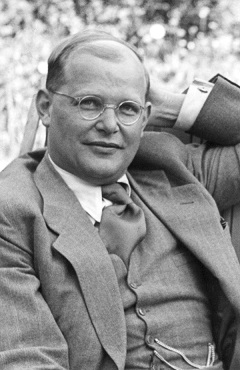
“A word too about the German churches [in America]… The pastors generally are not well trained; to the extent they come from Concordia Seminary (which I saw in St. Louis), that is, from the Missouri Synod, their exclusive orthodoxy is unbearable…”
Dietrich Bonhoeffer, Barcelona, Berlin, New York: 1928-1931 (DBWE 10), 315
Not much has changed since Bonhoeffer’s day. If a single word could sum up the attitude of some conservative Lutherans in the Missouri Synod, it would be “unbearable.” Bonhoeffer didn’t elaborate exactly on what made them unbearable in his own time, but the words “exclusive orthodoxy” certainly seem to point at his meaning. The total focus on insular orthodoxy, often at the cost of, say, orthopraxy, made them unbearable to a man whose theology, ethics, and life were so committed to Christ crucified.
Concordia University Wisconsin is a Lutheran Church – Missouri Synod university which is affiliated with Concordia University Ann Arbor, from which I graduated. It’s looking for a new president. That search has inspired no small amount of pushback, largely in the form of various screeds online. It’s not because the university has opted to search for a non-Lutheran, nor because they haven’t insisted upon impeccable LCMS credentials (such as being a member in good standing of an LCMS church).
No, conservative Lutherans have once again decided to toe the line for the culture war rather than, say, their own Lutheran tradition and confessions. Like the many times I’ve observed LCMS churches partnering with the anti-infant-baptism organization Answers in Genesis for things like Vacation Bible School because of a hot topic like the age of the earth (no really), we find people within this same organization who pay lip service to being exclusively Lutheran while they find their real battlefields and efforts based in the latest conservative talking points. As if reading from a teleprompter on Fox News, places like the misnamed “Christian News” are spouting off about the alleged “wokeness” of Concordia University Wisconsin’s search for a president.
Why? Well, to put in the words of Gregory P. Schulz, writing at Christian News: “Regents have been publicly announcing their determination to have a president who exhibits a ‘demonstrated belief in and commitment to equity and inclusion’ and who promotes racialized ‘diversity in all its myriad forms.'” Yes, that’s right, the problem with this search for the President of Concordia University Wisconsin is because it *checks notes* wants someone who is committed to equity and inclusion *blinks.* What, exactly, makes that problematic? Well, Schulz, apparently an ordained pastor in the LCMS and Professor of Philosophy at Concordia University Wisconsin (this is important), unleashes a lengthy string of meaningless invective of “woke-ness” and its alleged pervasiveness at Concordia University Wisconsin. Readers would be forgiven for thinking that rather than being written by an ordained pastor, this article was submitted, or perhaps edited by someone’s QAnon-guzzling aunt.
Any reader who reads Schulz’s article is treated to a firehose of terms thrown about without even the slightest care for definition. Schulz writes, “My Concordia university is experiencing dysphoria because it is coming under the influence of Woke-ism (that is, a potent cocktail of Progressivism, Neo-Pragmatism, and Marxism).” Schulz, being a professor of philosophy, has either cooked the books to make Woke-ness self-referentially incoherent or simply is staggeringly unaware of the strangeness of his own definition. Given that nowhere else does he actually address what he means by “Woke-ism,” the most likely reason for this is because Schulz is entirely aware of just how easy it is to throw out the term “woke” in order to trigger his fellow conservatives into fits of nearly rabid apoplexy simply from reading it. Of course, ask those same readers to define, say “Neo-Pragmatism,” and the closest many would come would be a Wikipedia article. Again, one can only assume that Schulz is aware of this, which suggests that his article is less intelligent commentary than it is mustering the troops to get behind whatever agenda he’s pushing.
Despite all of Schulz’s raving and incoherent definitions, he does eventually get to some points. For one, he apparently thinks that the “woke-ism” which is allegedly invading Concordia University Wisconsin because of a hope for “equity” is misguided. Why? Well, in his own words, “While there is no systemic racism at Concordia because we are committed to Christ incarnate and His universal justification of all human beings without exception, there certainly is systemic Woke-ism” (emphasis his). Ah yes, as we all know, it is impossible for people to be racist if they’re “committed to Christ incarnate.” Yes, tell that to the many enslavers of Antebellum America. Oh, I’m sorry, are literal facts of history now considered “Woke-ism”? (Spoiler: for Schulz, they are). But for those who actually have any interest in the truth, the myriad and clear examples of white enslavers who nevertheless were totally committed to Christ and, indeed, defended the institution (oops–is that a “systemic” [read: woke] issue?) of slavery through the use of the Bible can be easily accessed by a simple search online. The primary sources are absolutely filled to the gills with examples of this. But Schulz is convinced that this is impossible. But what is possible? Apparently, while the evil of racism can’t coexist with a Christ-centered institution, it is fully possible for the evil (in his mind) of Marxism to do so. Which is it, Schulz? Does commitment to Christ prevent it or not?

But again, Schulz, being a trained philosopher, absolutely has to be aware of this. While I’m hesitant to assign mental states to others because we can’t know their mental life, it seems impossible that someone could be a professor of philosophy and be unaware of such an obvious contradiction. The only other explanation is that, again, Schulz is far more committed to the talking points of whatever he heard on Joe Rogan’s latest podcast than he is to ethical or philosophical consistency. What’s especially disturbing here is that Schulz’s own diatribe reinforces the very thing he’s alleging doesn’t exist. By his insistence that racism is impossible and systemic issues are to be dismissed as woke Marxist communist propaganda, he makes it not only possible but also entirely likely that any such issues that actually do exist are ignored and even reinforced. That is, racism cannot exist somewhere like Concordia University Wisconsin, so any attempt to say it does exist is either blatantly false or “Woke-ism” coming to roost. It’s an awfully convenient way to deal with dissent. As I’ve seen others say online, “Sounds about white.” Er… right.
Schulz, in fact, mentions Bonhoeffer’s Ethics in his post. While I’m convinced that if one printed off Schulz’s post and wrapped a copy of Bonhoeffer’s work in it, one would find a hole burned through the side in the morning a la the Ark of the Covenant in Raiders of the Lost Ark, one wonders whether Schulz might be bothered to go back through Bonhoeffer’s works at length. One wonders if he’s aware of how he has now blatantly turned himself into a stooge for the anti-woke propagandists. One wonders if he’s aware of how he’s perpetuated the “unbearable” nature of the Missouri Synod for anyone even marginally interested in orthopraxy rather than the barest nod towards orthodoxy.
It’s telling Schulz doesn’t bother to quote Bonhoeffer in any length. Perhaps Bonhoeffer’s words about how the gospel was found in the black church in America, not in the white churches, and certainly not in the “unbearable” Missouri Synod are also written off by him as “woke-ism.” Maybe they strike too close to home, so they must be equally dismissed. Perhaps Bonhoeffer’s words about how Christ comes for the marginalized and suffers alongside them strike Schulz as Marxist.
So, is Concordia University Wisconsin pandering to woke-ism? It’s impossible to tell. Schulz’s rag doesn’t bother with such things as careful definitions, seeking to understand the other side, presenting one’s interlocutors in terms they themselves can recognize, or anything of the sort. What I can say though, is Schulz and people like him are why the Missouri Synod remains, as Bonhoeffer said, unbearable.
SDG.
“Power, Politics, and the Missouri Synod” – A book from James C. Burkee that has me thinking about my former denomination

The Lutheran Church – Missouri Synod (LCMS) is a denomination with which I’m intimately familiar, having grown up therein, studied at its schools, gone to one of its universities, and being related or knowing several pastors. Power, Politics, and the Missouri Synod: A Conflict that Changed American Christianity by James C. Burkee explores the way conservatives took control of the Missouri Synod and worked to rid it of those with whom they disagreed. It has a special focus on “Seminex” – a time when one of the LCMS Seminaries had such a conflict that many there went into “exile.”
Burkee’s analysis of the way conservatives came to power within the LCMS is exhaustively documented. Burkee quotes from letters, interviews, publicly available records, newsletters, and more as he meticulously draws out each stage of the conservative takeover of the LCMS.
The LCMS in the 1950s-1970s faced a crossroads. Many within the denomination were following contemporary scholarship, noting some difficulties with some interpretations taught or put forward by LCMS pastors or others, and making a push for joining the call for action on civil rights. For example, in 1964, the moderates within the denomination pushed for more action on civil rights, arguing that because of the Civil Rights Act, the longstanding LCMS interpretation of the Lutheran doctrine of the Two Kingdoms meant that the LCMS needed to take greater strides for integration and for future progress (50-51). These moderates received massive pushback, and it came in the actions of people like Herman Otten, a man who essentially built a conservative movement through his writings, and J.A.O. Preus, who would rise to become President of the Synod. Otten especially stirred up readers of his periodical, Christian News, calling supporters of Civil Rights “commies,” eviscerating anyone who would push for ecumenical work as “liberals” or “communists,” and comparing any dissent from what he saw as necessary doctrines as following Baal (see, eg. 64-65). The tactics Otten used weren’t subtle, but they were effective. Among the doctrines Otten and other conservatives held most dear was that of inerrancy. Moderates, on the other hand, argued that for conservatives, inerrancy of the Bible frequently equated to the inerrancy of the LCMS (25).
What becomes incredibly clear upon reading the book is that the seizing of power within the LCMS was not, as it is sometimes portrayed, some glorious blow struck in behalf and with the help of the Lord. Those who seized power did so through power politics, including backroom deals, threats, and maneuvering of voting blocs. Outlining the way this played out would effectively require tracing an overview of the book, but suffice to say Burkee demonstrates time and again how sometimes minority actors within the LCMS were able to stir up enough dissent and manipulate votes in order to take over the Synod. With the same breath, many of these conservatives condemned political takeovers while using the very tools they pledged to reject.
One thing the book had me contemplating is how things could have been. An endnote revealed a surprising (now) set of resolutions the LCMS had passed before the conservative forcible takeover. They pledged to work to combat racism, promote universal healthcare, and more (241, note 49). It’s incredibly unfortunate that this work was abandoned and even actively worked against after the conservative takeover.
Perhaps the most alarming thing I learned from reading this book was how the dog whistles used back in the 1960s-1970s within the LCMS to cover for outright racism or other ills persisted into my own time. I know this will likely be dismissed by many insiders, but I want to share my own experiences. Time and again, I recall people in positions of authority within the LCMS calling any move to fix societal ills communist. Insinuations about MLK were made that included him being communist. Communist, as Burkee has shown, was an easy way to code for “dismiss this person/concern/etc.” In other words, it was a useful dog whistle. I also have observed some within leadership utilizing even more overt language. One conversation I had with a pastor included them lauding a specific football program for not having many black players. They explicitly stated that was a reason to prefer that program to others. Less overt were the many times I observed lived experience being dismissed. One example was a report about youths who’d left the LCMS, in which the analysis included saying that the racism one youth reported was spurious and/or a localized event that was surely not emblematic of any systemic issues. “Liberal” is another dog whistle employed, a signal that tells insiders to ignore the words that certain teachers, professors, or anyone critical of the Synod might use.
Power, Politics, and the Missouri Synod is an absolutely fascinating read. It’s well-documented, and the revelations Burkee brings forward cannot reasonably be denied by any objective reader. What’s more alarming is that many of these same issues persist into today.
All Links to Amazon are Affiliates links
Links
Be sure to check out the page for this site on Facebook and Twitter for discussion of posts, links to other pages of interest, random talk about theology/philosophy/apologetics/movies and more!
Book Reviews– There are plenty more book reviews to read! Read like crazy! (Scroll down for more, and click at bottom for even more!)
SDG.
——
The preceding post is the property of J.W. Wartick (apart from quotations, which are the property of their respective owners, and works of art as credited; images are often freely available to the public and J.W. Wartick makes no claims of owning rights to the images unless he makes that explicit) and should not be reproduced in part or in whole without the expressed consent of the author. All content on this site is the property of J.W. Wartick and is made available for individual and personal usage. If you cite from these documents, whether for personal or professional purposes, please give appropriate citation with both the name of the author (J.W. Wartick) and a link to the original URL. If you’d like to repost a post, you may do so, provided you show less than half of the original post on your own site and link to the original post for the rest. You must also appropriately cite the post as noted above. This blog is protected by Creative Commons licensing. By viewing any part of this site, you are agreeing to this usage policy.
Book Review: “Resisiting the Marriage Plot: Faith and Female Agency in Austen, Brontë, Gaskell, and Wollstonecraft” by Dalene Joy Fisher

Darlene Joy Fisher’s Resisting the Marriage Plot analyzes the works of Jane Austen, Anne Brontë, Mary Wollstonecraft, and Elizabeth Gaskell to see how each had features that actively went against societal expectations for women. Specifically, the authors Fisher examines used the novel to create dialogues and put forward frameworks for women to have agency within their faith life and society.
Fisher sets these novels within their contemporary context. She notes the pushback many, including pastors, had against novels. This included calling those who read novels “prostitutes” who committed “treason against Virture” (17). However, the novel’s popularity had already been solidified, and some women saw it as a way to expand the way women could influence and interact in society. After an introduction and a chapter that shows how women authors began to “leverage the novel form” (ibid), Fisher turns to examination of individual works by the authors listed. The first chapter is essential reading, though, as Fisher shows how novels can be used for ideology, how women authors challenged coverture, analyzes the authors she looks at for their different faith lives (including questions of orthodoxy, etc.), and shows a preliminary look at the examinations to follow.
Each chapter has an inset providing crucial information about the novel being examined, such as major characters and a summary. This means that readers who have no familiarity with the texts can still easily read along with the book. And Fisher presents quite a bit of analysis on each work. Mansfield Park by Jane Austen is the one I was familiar with, and my understanding of that novel was reshaped in many ways by Fisher’s astute analysis. What Fisher focuses on in each chapter is focused on how each woman resisted the marriage plot–the notion that women needed to get married and stay under their husbands’ protection in unquestioning subservience and obedience. What’s fascinating is how each author challenged this “marriage plot” in different ways. Whether it’s resisting the pressure to marry someone who had abused them in the past or through prioritizing one’s faith, the authors present different ways to challenge their cultural understandings of marriage.
The chapter on Wollstonecraft’s unfinished novel shows how the author valued freedom of agency in order to follow God in an unmediated fashion (61-63). Wollstonecraft also resisted the “romantic delusions” novelists often created, instead using her characters to pursue true virtue instead of simply conforming to romantic expectations (71ff). Austen’s Mansfield Park shows how Fanny, often reviled as a simple or foolish character, is actually using her faith to have resistance to societal expectations (155-156). Anne Brontë’s The Tenant of Wildfell Hall features questions of abuse, women’s need to be able to leave, and the question of romance and obligations to reform partners. Not only does Brontë connect women’s capacity for moral reform with their intellect, she also showed how faith can be liberative rather than constrictive (182-187). Elizabeth Gaskell’s Ruth would be a challenging read for many to this day, as it rejects a kind of “fallen woman” narrative while also using her faith to persevere.
Fisher ultimately shows that the authors she examines presented a challenge to societal norms that remained faithful to a Christian life. While there are questions of the orthodoxy of some of these authors, Fisher’s point is that they showed one need not abandon Christianity as an oppressive religion. Instead, these authors show that Christianity can instead empower and bring freedom to women through countercultural choices (246-247).
Resisting the Marriage Plot is a fascinating read. Fisher thoroughly examines the authors she presents and puts forth a vision of their works that can bring not just new enjoyment to them but also lead readers to living better and more fulfilling lives. Highly recommended.
Disclaimer: I was provided with a copy of the book for review by the publisher. I was not required to give any specific kind of feedback whatsoever.
All Links to Amazon are Affiliates links
Links
Be sure to check out the page for this site on Facebook and Twitter for discussion of posts, links to other pages of interest, random talk about theology/philosophy/apologetics/movies and more!
Book Reviews– There are plenty more book reviews to read! Read like crazy! (Scroll down for more, and click at bottom for even more!)
SDG.
——
The preceding post is the property of J.W. Wartick (apart from quotations, which are the property of their respective owners, and works of art as credited; images are often freely available to the public and J.W. Wartick makes no claims of owning rights to the images unless he makes that explicit) and should not be reproduced in part or in whole without the expressed consent of the author. All content on this site is the property of J.W. Wartick and is made available for individual and personal usage. If you cite from these documents, whether for personal or professional purposes, please give appropriate citation with both the name of the author (J.W. Wartick) and a link to the original URL. If you’d like to repost a post, you may do so, provided you show less than half of the original post on your own site and link to the original post for the rest. You must also appropriately cite the post as noted above. This blog is protected by Creative Commons licensing. By viewing any part of this site, you are agreeing to this usage policy.
Book Review: “Permission to Be Black: My Journey with Jay-Z and Jesus” by A.D. “Lumkile” Thomason

Permission to Be Black: My Journey with Jay-Z and Jesus by A.D. “Lumkile” Thomason is a fascinating read that explores the intersections of race, gender, and Christianity.
Thomason writes with a sometimes stream of consciousness exuberance that nevertheless grounds itself in lived reality. He talks about how Jay-Z’s lyrics gave him a kind of honest form of expression, while in the gospel of Christ, he found hope. Each chapter includes what he calls “cheat codes” about how to live life that include personal advice about blackness, masculinity, and more.
The book is at times hopeful, at times challenging, and all the time piercing in its analysis and thoughts. As a reader, I’m not sure I feel qualified to evaluate it. Thomason comes in like a whirlwind of energy and thought, and this pithy volume will force readers to think. Permission to Be Black is recommended.
Disclaimer: I was provided with a copy of the book for review by the publisher. I was not required to give any specific kind of feedback whatsoever.
All Links to Amazon are Affiliates links
Links
Be sure to check out the page for this site on Facebook and Twitter for discussion of posts, links to other pages of interest, random talk about theology/philosophy/apologetics/movies and more!
Book Reviews– There are plenty more book reviews to read! Read like crazy! (Scroll down for more, and click at bottom for even more!)
SDG.
——
The preceding post is the property of J.W. Wartick (apart from quotations, which are the property of their respective owners, and works of art as credited; images are often freely available to the public and J.W. Wartick makes no claims of owning rights to the images unless he makes that explicit) and should not be reproduced in part or in whole without the expressed consent of the author. All content on this site is the property of J.W. Wartick and is made available for individual and personal usage. If you cite from these documents, whether for personal or professional purposes, please give appropriate citation with both the name of the author (J.W. Wartick) and a link to the original URL. If you’d like to repost a post, you may do so, provided you show less than half of the original post on your own site and link to the original post for the rest. You must also appropriately cite the post as noted above. This blog is protected by Creative Commons licensing. By viewing any part of this site, you are agreeing to this usage policy.
Book Review: “Discovering Biblical Equality” Third Edition edited by Ronald W . Pierce, Cynthia Long Westfall, and Christa L. McKirland
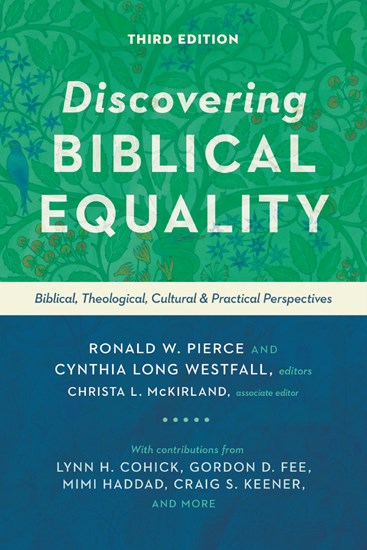
Discovering Biblical Equality: Biblical Theological, Cultural, & Practical Perspectives is a massive tome defending the equality of women in the church and home from a Christian standpoint.
The book is organized around 31 chapters plus an introduction and conclusion. The chapters are broken up into four parts: Looking to Scripture: The Biblical Texts; Thinking it Through: Theological and Logical Perspectives; Addressing the Issues: Interpretive and Cultural Perspectives; Living it Out: Practical Applications. There are highlights in each section, and each essays has its own strengths. Linda Belville’s “Women Leaders in the Bible” goes through many names readers might be familiar with, but also dives into details about some of the specifics, such as the background info we can see in the text for the importance of Huldah (p. 73) and some surprising examples readers might be unfamiliar with (74-75). The discussion of both marriage and singleness with regards to mutuality in Ronald W. Pierce and Elizabeth A. Kay’s chapter (“Mutuality in Marriage and Singleness: 1 Corinthians 7:1-40) is refreshing because so often the discussion centers entirely around marriage. The so-called “clobber passages” of 1 Timothy 2:11-15 and 1 Corinthians 14:34-35 each get their own passage, as do many other related passages.
Kevin Giles’s chapter on “The Trinity Argument for Women’s Subordination” shows the lengths to which some have gone to try to ground women’s inequality. Jeffrey D. Miller’s chapter on gender accurate Bible translation was fascinating and shows how the issues that are often dismissed regarding translation issues can have real, spiritual implications. Mimi Haddad’s chapter on global perspectives and why gender equality matters helps demonstrate the real-life applications of theology.
The book is the third edition of this collection. I own the second edition, which I read some years ago. I compared the table of contents for the two editions, and there is in the third edition a significant overhaul of the included essays. There are 31 chapters in the new edition vs. 29 in the previous one. Several chapters have been entirely replaced, and several new topics are introduced in the third edition. For example a chapter on “Gender Equality and Homosexuality” by William J. Webb in the second edition appears to have been replaced by “Biblical Equality and Same-Sex Marriage” by Ronald W. Pierce in this third edition. The third edition also addresses race and gender, a topic that I don’t recall or see a chapter dedicated to in the second edition. In other words, readers interested in knowing whether it’s worth re-purchasing should rest assured that it very much is. This new edition has a huge amount of new content. I cannot comment on whether essays that appear in each are revised in any way from the original.
The chapter on “Biblical Equality and Same-Sex Marriage” is written by Piece, who is non-affirming in his stance on same-sex marriage. The thrust of the chapter seems to be that one can be a fully committed egalitarian while not affirming same-sex marriage. Such a topic is certainly of interest to the many people who are caught in the middle on these issues. For my part, I’d have liked to see another chapter from an affirming perspective, though I wonder if it wasn’t included because that’s a less controversial pairing. The chapter on race and gender is fascinating and shows how these topics often intersect and overlap.
Discovering Biblical Equality is unquestionably the standard text for those wishing to explore the basics of egalitarian theology on a scholarly level that remains accessible. Every chapter has something to add to the discussion. The depth and breadth of some of the chapters is truly remarkable. I recommend it extremely highly as among the best books on the topic.
Disclaimer: I was provided with a copy of the book for review by the publisher. I was not required to give any specific kind of feedback whatsoever.
All Links to Amazon are Affiliates links
Links
Be sure to check out the page for this site on Facebook and Twitter for discussion of posts, links to other pages of interest, random talk about theology/philosophy/apologetics/movies and more!
Book Reviews– There are plenty more book reviews to read! Read like crazy! (Scroll down for more, and click at bottom for even more!)
SDG.
——
The preceding post is the property of J.W. Wartick (apart from quotations, which are the property of their respective owners, and works of art as credited; images are often freely available to the public and J.W. Wartick makes no claims of owning rights to the images unless he makes that explicit) and should not be reproduced in part or in whole without the expressed consent of the author. All content on this site is the property of J.W. Wartick and is made available for individual and personal usage. If you cite from these documents, whether for personal or professional purposes, please give appropriate citation with both the name of the author (J.W. Wartick) and a link to the original URL. If you’d like to repost a post, you may do so, provided you show less than half of the original post on your own site and link to the original post for the rest. You must also appropriately cite the post as noted above. This blog is protected by Creative Commons licensing. By viewing any part of this site, you are agreeing to this usage policy.


