J.W. Wartick
“The Mystery of Julia Episcopa” by John I. Rigoli and Diane Cummings- Historical fiction about the early church and women
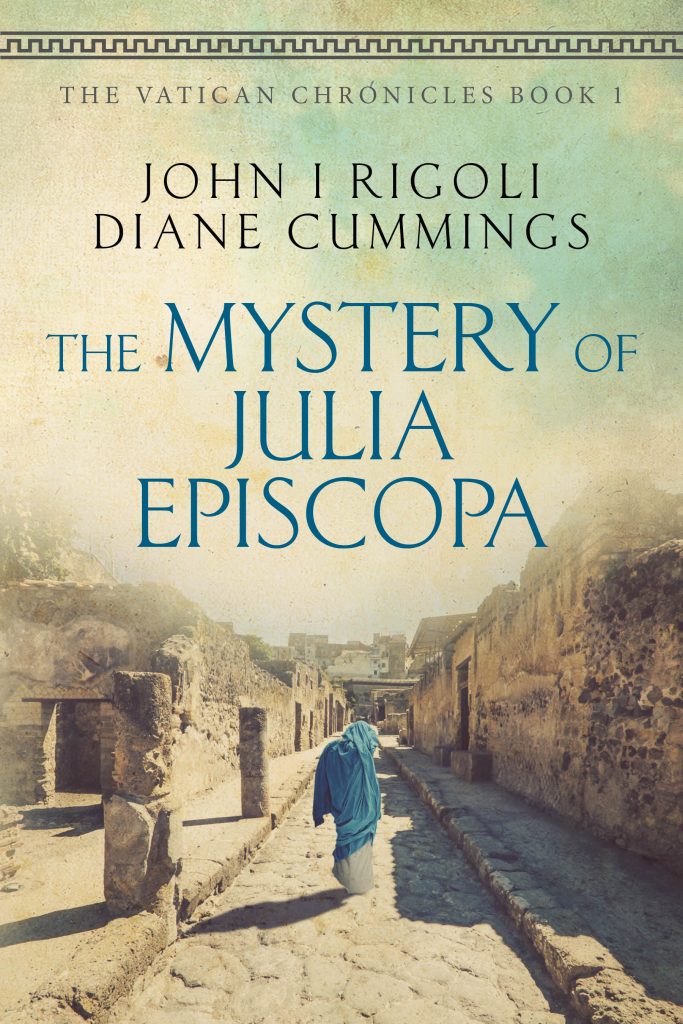
What if there had been a woman who was a bishop in the earliest parts of Christian history? What would her life have been like? And, if we found out about her now, what would that entail? These are the questions raised by John I. Rigoli and Diane Cummings in their historical fiction novel, The Mystery of Julia Episcopa.
The Mystery of Julia Episcopa has two primary storylines: the first, set in modern times, follows Valentina Vella and Erika Simone, two archaeologists who come across a tantalizing discovery. The second plot follows Julia Episcopa’s life in the first century as she encounters Christianity and navigates her household life.
The story of Valentina and Erika starts off with a bang: the discovery of a document case that had some intentional damage done to remove the evidence that it was from Julia Episcopa, the last syllable indicating the person involved was a woman. It’s found at the Vatican during the tenure of a pope who is working to make reforms to the Roman Catholic church. These scholars have been, in part, charged with seeing whether there is any evidence of women in leadership in the earliest periods of the church. Their discovery launches them on a quest to attempt to find more information about Julia’s life and position in the church. To that end, readers are taken on an archaeological quest enlisting a few other experts as Valentina and Erika work against the clock and church leaders who are less interested in finding women in leadership than in suppressing them. It’s got the makings of a thriller, and at its best, it delivers the goods.
It’s difficult as a non-expert to assess how accurate the representation of Julia’s life is historically. As a reader, however, these sections delving into her life are among the strongest in the novel. Julia is a complex character with a difficult life, despite being born into wealth in the Roman world. No small amount of reflection on household dynamics and paterfamilias is built into this part of the story. But the concepts the author’s put forward in these sections never overtake the character of Julia and her own tale. It’s a spellbinding story, and strong enough to stand upon its own.
These two stories intertwine as Valentina and Erika come closer and closer to discovering the truth of Julia even as they try to hide the massive significance of their discovery from church authorities who are determined to prevent women from having authoritative roles in the church. Forced to conceal their findings for fear of losing funding in retribution due to others not liking the implications of their discovery, they continue on, using whatever resources they can find and their wit to keep the investigation going. It leads to some surprising discoveries.
One difficulty with the novel is twofold: things happen either too easily or with too much difficulty. For example, when Valentina and Erika decide to try to track down Julia’s tomb, they are convinced they’ll be able to find it. They simply enlist another expert and go to find it. However, archaeological finds, to my knowledge, don’t work that way. Picking a name and then going to try to find that specific person’s tomb from 2000 years ago is not how such finds usually happen. Though there are some pointers to help locate the tomb, the sheer confidence of Valentina and Erika that they can easily find the tomb made it difficult to suspend disbelief. On the flip side, when discoveries are made that include languages like Greek, at least one of our two main characters is unable to read it. It does not seem possible that anyone could become a renowned classical scholar and work with archaeological finds in the ancient world around the Mediterranean and not know a language like Greek.
The novel stumbles a bit in the last third. The following includes major spoilers. The archaeological expedition manages to discover Julia Episcopa’s tomb. Rigoli and Cummings here start to introduce a number of fantastic discoveries all at once. Not only do they find the tomb and therefore strong evidence of a woman who was a bishop in the early church, but they also find her mostly intact diary. The discovery of the tomb alone pushes on plausibility a bit, but adding in ancient texts starts to stretch credulity. Then, however, it truly starts to hit home how much is being packed into this novel at the end. They also find ensconced there a letter revealing the origins of a strong hierarchy for the papacy. If that’s not enough, they also find the Holy Grail! Then, at the end, additional events twist and turn so rapidly it’s hard to keep up. It’s a clear set up for a second novel, but by the end I was left wondering if I thought the whole thing was plausible enough to dive in to the next volume. I will, of course, because the premise alone was enough to sell me into the next book, but I was disappointed by this stumble towards the end.
All of that aside, The Mystery of Julia Episcopa is a refreshing read. More and more real world evidence turns up showing that women did have a much stronger role in the church than has been known for some time. This historical fiction novel, despite some flaws, delivers a compelling tale that lets readers wonder what it might have been like–and what it could be like–if huge discoveries to that end turn up.
All Links to Amazon are Affiliates links
Links
Be sure to check out the page for this site on Facebook and Twitter for discussion of posts, links to other pages of interest, random talk about theology/philosophy/apologetics/movies and more!
Book Reviews– There are plenty more book reviews to read! Read like crazy! (Scroll down for more, and click at bottom for even more!)
SDG.
——
The preceding post is the property of J.W. Wartick (apart from quotations, which are the property of their respective owners, and works of art as credited; images are often freely available to the public and J.W. Wartick makes no claims of owning rights to the images unless he makes that explicit) and should not be reproduced in part or in whole without the expressed consent of the author. All content on this site is the property of J.W. Wartick and is made available for individual and personal usage. If you cite from these documents, whether for personal or professional purposes, please give appropriate citation with both the name of the author (J.W. Wartick) and a link to the original URL. If you’d like to repost a post, you may do so, provided you show less than half of the original post on your own site and link to the original post for the rest. You must also appropriately cite the post as noted above. This blog is protected by Creative Commons licensing. By viewing any part of this site, you are agreeing to this usage policy.
Unchristian Nonsense: A microcosm study of what’s wrong in conservative Lutheranism
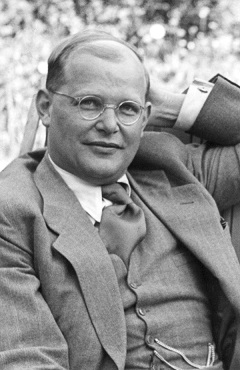
“A word too about the German churches [in America]… The pastors generally are not well trained; to the extent they come from Concordia Seminary (which I saw in St. Louis), that is, from the Missouri Synod, their exclusive orthodoxy is unbearable…”
Dietrich Bonhoeffer, Barcelona, Berlin, New York: 1928-1931 (DBWE 10), 315
Not much has changed since Bonhoeffer’s day. If a single word could sum up the attitude of some conservative Lutherans in the Missouri Synod, it would be “unbearable.” Bonhoeffer didn’t elaborate exactly on what made them unbearable in his own time, but the words “exclusive orthodoxy” certainly seem to point at his meaning. The total focus on insular orthodoxy, often at the cost of, say, orthopraxy, made them unbearable to a man whose theology, ethics, and life were so committed to Christ crucified.
Concordia University Wisconsin is a Lutheran Church – Missouri Synod university which is affiliated with Concordia University Ann Arbor, from which I graduated. It’s looking for a new president. That search has inspired no small amount of pushback, largely in the form of various screeds online. It’s not because the university has opted to search for a non-Lutheran, nor because they haven’t insisted upon impeccable LCMS credentials (such as being a member in good standing of an LCMS church).
No, conservative Lutherans have once again decided to toe the line for the culture war rather than, say, their own Lutheran tradition and confessions. Like the many times I’ve observed LCMS churches partnering with the anti-infant-baptism organization Answers in Genesis for things like Vacation Bible School because of a hot topic like the age of the earth (no really), we find people within this same organization who pay lip service to being exclusively Lutheran while they find their real battlefields and efforts based in the latest conservative talking points. As if reading from a teleprompter on Fox News, places like the misnamed “Christian News” are spouting off about the alleged “wokeness” of Concordia University Wisconsin’s search for a president.
Why? Well, to put in the words of Gregory P. Schulz, writing at Christian News: “Regents have been publicly announcing their determination to have a president who exhibits a ‘demonstrated belief in and commitment to equity and inclusion’ and who promotes racialized ‘diversity in all its myriad forms.'” Yes, that’s right, the problem with this search for the President of Concordia University Wisconsin is because it *checks notes* wants someone who is committed to equity and inclusion *blinks.* What, exactly, makes that problematic? Well, Schulz, apparently an ordained pastor in the LCMS and Professor of Philosophy at Concordia University Wisconsin (this is important), unleashes a lengthy string of meaningless invective of “woke-ness” and its alleged pervasiveness at Concordia University Wisconsin. Readers would be forgiven for thinking that rather than being written by an ordained pastor, this article was submitted, or perhaps edited by someone’s QAnon-guzzling aunt.
Any reader who reads Schulz’s article is treated to a firehose of terms thrown about without even the slightest care for definition. Schulz writes, “My Concordia university is experiencing dysphoria because it is coming under the influence of Woke-ism (that is, a potent cocktail of Progressivism, Neo-Pragmatism, and Marxism).” Schulz, being a professor of philosophy, has either cooked the books to make Woke-ness self-referentially incoherent or simply is staggeringly unaware of the strangeness of his own definition. Given that nowhere else does he actually address what he means by “Woke-ism,” the most likely reason for this is because Schulz is entirely aware of just how easy it is to throw out the term “woke” in order to trigger his fellow conservatives into fits of nearly rabid apoplexy simply from reading it. Of course, ask those same readers to define, say “Neo-Pragmatism,” and the closest many would come would be a Wikipedia article. Again, one can only assume that Schulz is aware of this, which suggests that his article is less intelligent commentary than it is mustering the troops to get behind whatever agenda he’s pushing.
Despite all of Schulz’s raving and incoherent definitions, he does eventually get to some points. For one, he apparently thinks that the “woke-ism” which is allegedly invading Concordia University Wisconsin because of a hope for “equity” is misguided. Why? Well, in his own words, “While there is no systemic racism at Concordia because we are committed to Christ incarnate and His universal justification of all human beings without exception, there certainly is systemic Woke-ism” (emphasis his). Ah yes, as we all know, it is impossible for people to be racist if they’re “committed to Christ incarnate.” Yes, tell that to the many enslavers of Antebellum America. Oh, I’m sorry, are literal facts of history now considered “Woke-ism”? (Spoiler: for Schulz, they are). But for those who actually have any interest in the truth, the myriad and clear examples of white enslavers who nevertheless were totally committed to Christ and, indeed, defended the institution (oops–is that a “systemic” [read: woke] issue?) of slavery through the use of the Bible can be easily accessed by a simple search online. The primary sources are absolutely filled to the gills with examples of this. But Schulz is convinced that this is impossible. But what is possible? Apparently, while the evil of racism can’t coexist with a Christ-centered institution, it is fully possible for the evil (in his mind) of Marxism to do so. Which is it, Schulz? Does commitment to Christ prevent it or not?

But again, Schulz, being a trained philosopher, absolutely has to be aware of this. While I’m hesitant to assign mental states to others because we can’t know their mental life, it seems impossible that someone could be a professor of philosophy and be unaware of such an obvious contradiction. The only other explanation is that, again, Schulz is far more committed to the talking points of whatever he heard on Joe Rogan’s latest podcast than he is to ethical or philosophical consistency. What’s especially disturbing here is that Schulz’s own diatribe reinforces the very thing he’s alleging doesn’t exist. By his insistence that racism is impossible and systemic issues are to be dismissed as woke Marxist communist propaganda, he makes it not only possible but also entirely likely that any such issues that actually do exist are ignored and even reinforced. That is, racism cannot exist somewhere like Concordia University Wisconsin, so any attempt to say it does exist is either blatantly false or “Woke-ism” coming to roost. It’s an awfully convenient way to deal with dissent. As I’ve seen others say online, “Sounds about white.” Er… right.
Schulz, in fact, mentions Bonhoeffer’s Ethics in his post. While I’m convinced that if one printed off Schulz’s post and wrapped a copy of Bonhoeffer’s work in it, one would find a hole burned through the side in the morning a la the Ark of the Covenant in Raiders of the Lost Ark, one wonders whether Schulz might be bothered to go back through Bonhoeffer’s works at length. One wonders if he’s aware of how he has now blatantly turned himself into a stooge for the anti-woke propagandists. One wonders if he’s aware of how he’s perpetuated the “unbearable” nature of the Missouri Synod for anyone even marginally interested in orthopraxy rather than the barest nod towards orthodoxy.
It’s telling Schulz doesn’t bother to quote Bonhoeffer in any length. Perhaps Bonhoeffer’s words about how the gospel was found in the black church in America, not in the white churches, and certainly not in the “unbearable” Missouri Synod are also written off by him as “woke-ism.” Maybe they strike too close to home, so they must be equally dismissed. Perhaps Bonhoeffer’s words about how Christ comes for the marginalized and suffers alongside them strike Schulz as Marxist.
So, is Concordia University Wisconsin pandering to woke-ism? It’s impossible to tell. Schulz’s rag doesn’t bother with such things as careful definitions, seeking to understand the other side, presenting one’s interlocutors in terms they themselves can recognize, or anything of the sort. What I can say though, is Schulz and people like him are why the Missouri Synod remains, as Bonhoeffer said, unbearable.
SDG.
“Power, Politics, and the Missouri Synod” – A book from James C. Burkee that has me thinking about my former denomination

The Lutheran Church – Missouri Synod (LCMS) is a denomination with which I’m intimately familiar, having grown up therein, studied at its schools, gone to one of its universities, and being related or knowing several pastors. Power, Politics, and the Missouri Synod: A Conflict that Changed American Christianity by James C. Burkee explores the way conservatives took control of the Missouri Synod and worked to rid it of those with whom they disagreed. It has a special focus on “Seminex” – a time when one of the LCMS Seminaries had such a conflict that many there went into “exile.”
Burkee’s analysis of the way conservatives came to power within the LCMS is exhaustively documented. Burkee quotes from letters, interviews, publicly available records, newsletters, and more as he meticulously draws out each stage of the conservative takeover of the LCMS.
The LCMS in the 1950s-1970s faced a crossroads. Many within the denomination were following contemporary scholarship, noting some difficulties with some interpretations taught or put forward by LCMS pastors or others, and making a push for joining the call for action on civil rights. For example, in 1964, the moderates within the denomination pushed for more action on civil rights, arguing that because of the Civil Rights Act, the longstanding LCMS interpretation of the Lutheran doctrine of the Two Kingdoms meant that the LCMS needed to take greater strides for integration and for future progress (50-51). These moderates received massive pushback, and it came in the actions of people like Herman Otten, a man who essentially built a conservative movement through his writings, and J.A.O. Preus, who would rise to become President of the Synod. Otten especially stirred up readers of his periodical, Christian News, calling supporters of Civil Rights “commies,” eviscerating anyone who would push for ecumenical work as “liberals” or “communists,” and comparing any dissent from what he saw as necessary doctrines as following Baal (see, eg. 64-65). The tactics Otten used weren’t subtle, but they were effective. Among the doctrines Otten and other conservatives held most dear was that of inerrancy. Moderates, on the other hand, argued that for conservatives, inerrancy of the Bible frequently equated to the inerrancy of the LCMS (25).
What becomes incredibly clear upon reading the book is that the seizing of power within the LCMS was not, as it is sometimes portrayed, some glorious blow struck in behalf and with the help of the Lord. Those who seized power did so through power politics, including backroom deals, threats, and maneuvering of voting blocs. Outlining the way this played out would effectively require tracing an overview of the book, but suffice to say Burkee demonstrates time and again how sometimes minority actors within the LCMS were able to stir up enough dissent and manipulate votes in order to take over the Synod. With the same breath, many of these conservatives condemned political takeovers while using the very tools they pledged to reject.
One thing the book had me contemplating is how things could have been. An endnote revealed a surprising (now) set of resolutions the LCMS had passed before the conservative forcible takeover. They pledged to work to combat racism, promote universal healthcare, and more (241, note 49). It’s incredibly unfortunate that this work was abandoned and even actively worked against after the conservative takeover.
Perhaps the most alarming thing I learned from reading this book was how the dog whistles used back in the 1960s-1970s within the LCMS to cover for outright racism or other ills persisted into my own time. I know this will likely be dismissed by many insiders, but I want to share my own experiences. Time and again, I recall people in positions of authority within the LCMS calling any move to fix societal ills communist. Insinuations about MLK were made that included him being communist. Communist, as Burkee has shown, was an easy way to code for “dismiss this person/concern/etc.” In other words, it was a useful dog whistle. I also have observed some within leadership utilizing even more overt language. One conversation I had with a pastor included them lauding a specific football program for not having many black players. They explicitly stated that was a reason to prefer that program to others. Less overt were the many times I observed lived experience being dismissed. One example was a report about youths who’d left the LCMS, in which the analysis included saying that the racism one youth reported was spurious and/or a localized event that was surely not emblematic of any systemic issues. “Liberal” is another dog whistle employed, a signal that tells insiders to ignore the words that certain teachers, professors, or anyone critical of the Synod might use.
Power, Politics, and the Missouri Synod is an absolutely fascinating read. It’s well-documented, and the revelations Burkee brings forward cannot reasonably be denied by any objective reader. What’s more alarming is that many of these same issues persist into today.
All Links to Amazon are Affiliates links
Links
Be sure to check out the page for this site on Facebook and Twitter for discussion of posts, links to other pages of interest, random talk about theology/philosophy/apologetics/movies and more!
Book Reviews– There are plenty more book reviews to read! Read like crazy! (Scroll down for more, and click at bottom for even more!)
SDG.
——
The preceding post is the property of J.W. Wartick (apart from quotations, which are the property of their respective owners, and works of art as credited; images are often freely available to the public and J.W. Wartick makes no claims of owning rights to the images unless he makes that explicit) and should not be reproduced in part or in whole without the expressed consent of the author. All content on this site is the property of J.W. Wartick and is made available for individual and personal usage. If you cite from these documents, whether for personal or professional purposes, please give appropriate citation with both the name of the author (J.W. Wartick) and a link to the original URL. If you’d like to repost a post, you may do so, provided you show less than half of the original post on your own site and link to the original post for the rest. You must also appropriately cite the post as noted above. This blog is protected by Creative Commons licensing. By viewing any part of this site, you are agreeing to this usage policy.
Book Review: “Resisiting the Marriage Plot: Faith and Female Agency in Austen, Brontë, Gaskell, and Wollstonecraft” by Dalene Joy Fisher

Darlene Joy Fisher’s Resisting the Marriage Plot analyzes the works of Jane Austen, Anne Brontë, Mary Wollstonecraft, and Elizabeth Gaskell to see how each had features that actively went against societal expectations for women. Specifically, the authors Fisher examines used the novel to create dialogues and put forward frameworks for women to have agency within their faith life and society.
Fisher sets these novels within their contemporary context. She notes the pushback many, including pastors, had against novels. This included calling those who read novels “prostitutes” who committed “treason against Virture” (17). However, the novel’s popularity had already been solidified, and some women saw it as a way to expand the way women could influence and interact in society. After an introduction and a chapter that shows how women authors began to “leverage the novel form” (ibid), Fisher turns to examination of individual works by the authors listed. The first chapter is essential reading, though, as Fisher shows how novels can be used for ideology, how women authors challenged coverture, analyzes the authors she looks at for their different faith lives (including questions of orthodoxy, etc.), and shows a preliminary look at the examinations to follow.
Each chapter has an inset providing crucial information about the novel being examined, such as major characters and a summary. This means that readers who have no familiarity with the texts can still easily read along with the book. And Fisher presents quite a bit of analysis on each work. Mansfield Park by Jane Austen is the one I was familiar with, and my understanding of that novel was reshaped in many ways by Fisher’s astute analysis. What Fisher focuses on in each chapter is focused on how each woman resisted the marriage plot–the notion that women needed to get married and stay under their husbands’ protection in unquestioning subservience and obedience. What’s fascinating is how each author challenged this “marriage plot” in different ways. Whether it’s resisting the pressure to marry someone who had abused them in the past or through prioritizing one’s faith, the authors present different ways to challenge their cultural understandings of marriage.
The chapter on Wollstonecraft’s unfinished novel shows how the author valued freedom of agency in order to follow God in an unmediated fashion (61-63). Wollstonecraft also resisted the “romantic delusions” novelists often created, instead using her characters to pursue true virtue instead of simply conforming to romantic expectations (71ff). Austen’s Mansfield Park shows how Fanny, often reviled as a simple or foolish character, is actually using her faith to have resistance to societal expectations (155-156). Anne Brontë’s The Tenant of Wildfell Hall features questions of abuse, women’s need to be able to leave, and the question of romance and obligations to reform partners. Not only does Brontë connect women’s capacity for moral reform with their intellect, she also showed how faith can be liberative rather than constrictive (182-187). Elizabeth Gaskell’s Ruth would be a challenging read for many to this day, as it rejects a kind of “fallen woman” narrative while also using her faith to persevere.
Fisher ultimately shows that the authors she examines presented a challenge to societal norms that remained faithful to a Christian life. While there are questions of the orthodoxy of some of these authors, Fisher’s point is that they showed one need not abandon Christianity as an oppressive religion. Instead, these authors show that Christianity can instead empower and bring freedom to women through countercultural choices (246-247).
Resisting the Marriage Plot is a fascinating read. Fisher thoroughly examines the authors she presents and puts forth a vision of their works that can bring not just new enjoyment to them but also lead readers to living better and more fulfilling lives. Highly recommended.
Disclaimer: I was provided with a copy of the book for review by the publisher. I was not required to give any specific kind of feedback whatsoever.
All Links to Amazon are Affiliates links
Links
Be sure to check out the page for this site on Facebook and Twitter for discussion of posts, links to other pages of interest, random talk about theology/philosophy/apologetics/movies and more!
Book Reviews– There are plenty more book reviews to read! Read like crazy! (Scroll down for more, and click at bottom for even more!)
SDG.
——
The preceding post is the property of J.W. Wartick (apart from quotations, which are the property of their respective owners, and works of art as credited; images are often freely available to the public and J.W. Wartick makes no claims of owning rights to the images unless he makes that explicit) and should not be reproduced in part or in whole without the expressed consent of the author. All content on this site is the property of J.W. Wartick and is made available for individual and personal usage. If you cite from these documents, whether for personal or professional purposes, please give appropriate citation with both the name of the author (J.W. Wartick) and a link to the original URL. If you’d like to repost a post, you may do so, provided you show less than half of the original post on your own site and link to the original post for the rest. You must also appropriately cite the post as noted above. This blog is protected by Creative Commons licensing. By viewing any part of this site, you are agreeing to this usage policy.
Book Review: “Permission to Be Black: My Journey with Jay-Z and Jesus” by A.D. “Lumkile” Thomason

Permission to Be Black: My Journey with Jay-Z and Jesus by A.D. “Lumkile” Thomason is a fascinating read that explores the intersections of race, gender, and Christianity.
Thomason writes with a sometimes stream of consciousness exuberance that nevertheless grounds itself in lived reality. He talks about how Jay-Z’s lyrics gave him a kind of honest form of expression, while in the gospel of Christ, he found hope. Each chapter includes what he calls “cheat codes” about how to live life that include personal advice about blackness, masculinity, and more.
The book is at times hopeful, at times challenging, and all the time piercing in its analysis and thoughts. As a reader, I’m not sure I feel qualified to evaluate it. Thomason comes in like a whirlwind of energy and thought, and this pithy volume will force readers to think. Permission to Be Black is recommended.
Disclaimer: I was provided with a copy of the book for review by the publisher. I was not required to give any specific kind of feedback whatsoever.
All Links to Amazon are Affiliates links
Links
Be sure to check out the page for this site on Facebook and Twitter for discussion of posts, links to other pages of interest, random talk about theology/philosophy/apologetics/movies and more!
Book Reviews– There are plenty more book reviews to read! Read like crazy! (Scroll down for more, and click at bottom for even more!)
SDG.
——
The preceding post is the property of J.W. Wartick (apart from quotations, which are the property of their respective owners, and works of art as credited; images are often freely available to the public and J.W. Wartick makes no claims of owning rights to the images unless he makes that explicit) and should not be reproduced in part or in whole without the expressed consent of the author. All content on this site is the property of J.W. Wartick and is made available for individual and personal usage. If you cite from these documents, whether for personal or professional purposes, please give appropriate citation with both the name of the author (J.W. Wartick) and a link to the original URL. If you’d like to repost a post, you may do so, provided you show less than half of the original post on your own site and link to the original post for the rest. You must also appropriately cite the post as noted above. This blog is protected by Creative Commons licensing. By viewing any part of this site, you are agreeing to this usage policy.
Book Review: “Discovering Biblical Equality” Third Edition edited by Ronald W . Pierce, Cynthia Long Westfall, and Christa L. McKirland
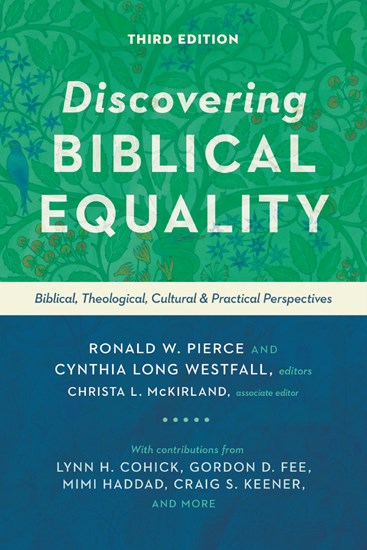
Discovering Biblical Equality: Biblical Theological, Cultural, & Practical Perspectives is a massive tome defending the equality of women in the church and home from a Christian standpoint.
The book is organized around 31 chapters plus an introduction and conclusion. The chapters are broken up into four parts: Looking to Scripture: The Biblical Texts; Thinking it Through: Theological and Logical Perspectives; Addressing the Issues: Interpretive and Cultural Perspectives; Living it Out: Practical Applications. There are highlights in each section, and each essays has its own strengths. Linda Belville’s “Women Leaders in the Bible” goes through many names readers might be familiar with, but also dives into details about some of the specifics, such as the background info we can see in the text for the importance of Huldah (p. 73) and some surprising examples readers might be unfamiliar with (74-75). The discussion of both marriage and singleness with regards to mutuality in Ronald W. Pierce and Elizabeth A. Kay’s chapter (“Mutuality in Marriage and Singleness: 1 Corinthians 7:1-40) is refreshing because so often the discussion centers entirely around marriage. The so-called “clobber passages” of 1 Timothy 2:11-15 and 1 Corinthians 14:34-35 each get their own passage, as do many other related passages.
Kevin Giles’s chapter on “The Trinity Argument for Women’s Subordination” shows the lengths to which some have gone to try to ground women’s inequality. Jeffrey D. Miller’s chapter on gender accurate Bible translation was fascinating and shows how the issues that are often dismissed regarding translation issues can have real, spiritual implications. Mimi Haddad’s chapter on global perspectives and why gender equality matters helps demonstrate the real-life applications of theology.
The book is the third edition of this collection. I own the second edition, which I read some years ago. I compared the table of contents for the two editions, and there is in the third edition a significant overhaul of the included essays. There are 31 chapters in the new edition vs. 29 in the previous one. Several chapters have been entirely replaced, and several new topics are introduced in the third edition. For example a chapter on “Gender Equality and Homosexuality” by William J. Webb in the second edition appears to have been replaced by “Biblical Equality and Same-Sex Marriage” by Ronald W. Pierce in this third edition. The third edition also addresses race and gender, a topic that I don’t recall or see a chapter dedicated to in the second edition. In other words, readers interested in knowing whether it’s worth re-purchasing should rest assured that it very much is. This new edition has a huge amount of new content. I cannot comment on whether essays that appear in each are revised in any way from the original.
The chapter on “Biblical Equality and Same-Sex Marriage” is written by Piece, who is non-affirming in his stance on same-sex marriage. The thrust of the chapter seems to be that one can be a fully committed egalitarian while not affirming same-sex marriage. Such a topic is certainly of interest to the many people who are caught in the middle on these issues. For my part, I’d have liked to see another chapter from an affirming perspective, though I wonder if it wasn’t included because that’s a less controversial pairing. The chapter on race and gender is fascinating and shows how these topics often intersect and overlap.
Discovering Biblical Equality is unquestionably the standard text for those wishing to explore the basics of egalitarian theology on a scholarly level that remains accessible. Every chapter has something to add to the discussion. The depth and breadth of some of the chapters is truly remarkable. I recommend it extremely highly as among the best books on the topic.
Disclaimer: I was provided with a copy of the book for review by the publisher. I was not required to give any specific kind of feedback whatsoever.
All Links to Amazon are Affiliates links
Links
Be sure to check out the page for this site on Facebook and Twitter for discussion of posts, links to other pages of interest, random talk about theology/philosophy/apologetics/movies and more!
Book Reviews– There are plenty more book reviews to read! Read like crazy! (Scroll down for more, and click at bottom for even more!)
SDG.
——
The preceding post is the property of J.W. Wartick (apart from quotations, which are the property of their respective owners, and works of art as credited; images are often freely available to the public and J.W. Wartick makes no claims of owning rights to the images unless he makes that explicit) and should not be reproduced in part or in whole without the expressed consent of the author. All content on this site is the property of J.W. Wartick and is made available for individual and personal usage. If you cite from these documents, whether for personal or professional purposes, please give appropriate citation with both the name of the author (J.W. Wartick) and a link to the original URL. If you’d like to repost a post, you may do so, provided you show less than half of the original post on your own site and link to the original post for the rest. You must also appropriately cite the post as noted above. This blog is protected by Creative Commons licensing. By viewing any part of this site, you are agreeing to this usage policy.
Book Review: “First Nations Version: An Indigenous Translation of the New Testament”

When I saw the First Nations Version: An Indigenous Translation of the New Testament was coming out, I was intrigued. What kind of new things might it bring to the table? The editors of this version provide some explanation of choices made in the brief introduction. For example, they translated names while leaving the Anglicized version of the name in parentheticals in smaller font. Thus, Jesus is “Creator Sets Free (Jesus)” whenever the name appears. The editors tried to bring as many First Nations peoples into the process as possible, but of course there are so many that it wasn’t possible.
Even small things like the decision made about names made for some fascinating reading as I saw so many names with meanings I would have known if I’d sat and thought about them (or consulted my Hebrew or Greek Lexicons if I couldn’t remember the roots), but that I never had done the work for. It was amazing time and again to see these names with their meanings right in front of the reader.
The editors also added occasional italicized texts to help the story get told in a more oral fashion. Thus, there are occasional places in the text where an italicized portion (which the editors make very clear are not part of the original text, but there to help emphasize the oral recitation/hearing aspect of the text) adds some flare, such as Jesus “turning powerfully” to do something or confront someone. There are also some explanatory notes, italicized and set apart from the text that offer either context for passages or additional insight into reasoning behind some of the passages. For example, 1 Peter 3, with its discussion of the Flood and Baptism (translated as “purification ceremony”), has a brief explanatory note about the Flood so hearers unfamiliar with it may know what’s happening. These italicized portions are a remarkable addition that makes the text more readable and which give key insights into some passages.
I was driven near to tears time and again by the beauty of the text. I knew that “Jesus” meant “He Saves,” but to see Jesus’s name time and again translated as “Creator Sets Free” really drove the point home in a way that knowing it abstractly didn’t do. Headings occasionally made me sit back and think, such as the Transfiguration (Matthew 17:1-13) having the heading “He Talks to the Ancestors.” Growing up and hearing how “ancestor worship/veneration” would be seen as syncretism and bad, I had never thought of this particular passage as a species of the same. It’s just a fascinating and challenging way to put the passage, an this happens many times throughout the NT (another example is the Temptation of Christ being called in Mark, “His Vision Quest”). Parables are sometimes reworded entirely, such as substituting horses for talents (the coins) in some parables. These are examples of contextualizing the NT and I found them to be quite beautiful.
One way I analyze a translation of the Bible is by looking up some specific passages and seeing how they are translated. One I look at is Romans 16:7. This passage has a history of obstruction, as some biblical scholars have attempted to turn Junia into a man due to her being listed as an apostle. I was gratified to see the FNV translation: “I send greetings also to Victory Man (Andronicus) and Younger One (Junia), my fellow Tribal Members and fellow prisoners, who have a good reputation as message bearers. They walked with the Chosen One before I did.” The translation as “message bearers” is interesting, as the same term is used occasionally for the disciples (eg. Matthew 10:1). Thus, the FNV does a good job noting that Junia was both a woman and among the apostles/disciples/etc. Of course, this study shows that some of our theological interests aren’t necessarily shared by the translators of the FNV, as they are more free with using varied terms for offices than some other translators are. Again, the equivalence between “disciples” (translated in various way) as “message bearers” and “apostles” as the same suggests this.
Other passages are 1 Timothy 3, in which many translations add masculine pronouns where the are none. The FNV reads naturally on this section, speaking of spiritual leaders. Problematic passages like 1 Corinthians 11:5-6 have explanatory notes (see above) that show how the cultural expectations may be applied here, and contextualizing it for First Nations believers (in this specific passage, with a reference to women not sitting around the drum).
Overall, time and again I found some of the more difficult passages translated in ways I thought caught the meaning of the text. Some were given explanatory notes, while others were not. It’s clear the text provides one of the more egalitarian readings of the New Testament in any translation. Additionally, discussions of Baptism (called the “Purification Ceremony”) and the Lord’s Supper are well done.
The First Nations Version is a phenomenal work. It is poetic, beautiful, and striking time and again. It captures the feel of hearing God’s word spoken, and it corrects some mistakes other translations make. I cannot recommend it highly enough. I honestly might start using it as my preferred version for personal reading. It’s that wonderful.
Disclaimer: I was provided with a copy of the book for review by the publisher. I was not required to give any specific kind of feedback whatsoever.
All Links to Amazon are Affiliates links
Links
Be sure to check out the page for this site on Facebook and Twitter for discussion of posts, links to other pages of interest, random talk about theology/philosophy/apologetics/movies and more!
Book Reviews– There are plenty more book reviews to read! Read like crazy! (Scroll down for more, and click at bottom for even more!)
SDG.
——
The preceding post is the property of J.W. Wartick (apart from quotations, which are the property of their respective owners, and works of art as credited; images are often freely available to the public and J.W. Wartick makes no claims of owning rights to the images unless he makes that explicit) and should not be reproduced in part or in whole without the expressed consent of the author. All content on this site is the property of J.W. Wartick and is made available for individual and personal usage. If you cite from these documents, whether for personal or professional purposes, please give appropriate citation with both the name of the author (J.W. Wartick) and a link to the original URL. If you’d like to repost a post, you may do so, provided you show less than half of the original post on your own site and link to the original post for the rest. You must also appropriately cite the post as noted above. This blog is protected by Creative Commons licensing. By viewing any part of this site, you are agreeing to this usage policy.
Bonhoeffer’s Life in Fiction- Critical Review of “My Dearest Dietrich: A Novel of Dietrich Bonhoeffer’s Lost Love” by Amanda Barratt

Amanda Barratt offers an historical novel based on the life of Dietrich Bonhoeffer with My Dearest Dietrich. As the subtitle states, it is “A Novel of Dietrich Bonhoeffer’s Lost Love.” Specifically, Barratt delves into Bonhoeffer’s letters and writings and builds a narrative around them focused on his relationship with Maria von Wedemeyer.
Barratt does a fine job of weaving that narrative around Bonhoeffer’s letters. I wouldn’t consider myself an expert on Bonhoeffer, but having read many books about him as well as his collected works, the narrative seems to at least largely follow the course of his life. Bonhoeffer’s close relationship with Ruth von Kleist-Retzow, Maria’s grandmother, is highlighted. Interestingly, Bonhoeffer’s first meeting with Maria is only presented in the briefest type of flashbacks. Historically, Maria’s grandmother had tried to get Bonhoeffer to accept Maria into his confirmation class, but he refused after seeing her as “too immature” to do so. In the novel, she’s upset about having embarrassed herself in front of him some years before.
In a sense, My Dearest Dietrich is a reframing of Bonhoeffer’s life. Essentially, Barratt turns many of his encounters with Maria or others into a kind of building of and reflecting upon growing love in order to make the plot work. However, much of this is done inside Bonhoeffer’s head rather than being drawn from historical documents. This is, of course, the way historical novels must work. Barratt’s goal of showing Bonhoeffer’s growing relationship and love for Maria requires this kind of internal monologue throughout in order to make sense. Thus, it has to be invented for the sake of the story.
Those who have studied Bonhoeffer extensively know that there is some question about his sexuality and more specifically his relationship with Eberhard Bethge. The most thorough look at these questions may be found in The Doubled Life of Dietrich Bonhoeffer by Diane Reynolds. Reynolds argues extensively that Bonhoeffer was in love with Bethge. Moreover, she argues that Bonhoeffer’s relationship with Maria von Wedemeyer was a kind of cover as his imprisonment loomed. His relationship with the much younger Maria would solidify him as a “masculine” German–something emphasized in Nazi propaganda–while also providing a cover for any hints of homosexuality. Gay people were one of the oppressed classes of the Nazis who were rounded up and murdered by them (homosexuality remained outlawed in Germany for sometime after, as well). Thus, Maria would serve as a kind of double cover for any questions about Bonhoeffer’s conforming to cultural expectations.
Reynolds’s book presents a strong, thoughtful argument with which any scholarship related to Bonhoeffer must contend (see my full review of the book here). Barratt’s novel ignores that and essentially offers a counter-narrative in which Bonhoeffer is struck almost immediately by the thoughtfulness of young Maria and eventually comes to fall in love with her and get engaged with the intent to marry. For Barratt, none of these questions about sexuality arise. The absence of Bonhoeffer’s growing love and thoughts of love in some of his other works is explained largely through having no time to reflect upon it and actively resisting reflecting on it because he believed, in Barratt’s account, that other things were more important.
My Dearest Dietrich, then, is not just a novel about Bonhoeffer’s life. It is a retelling of the events and framing them in a way that cuts away some of the more intriguing questions about his sexuality and love for Maria. Bonhoeffer’s relationship to Maria, and the age difference between them (he was her senior by 18 years) has perplexed some Bonhoeffer scholars. Reynolds’s exploration helps make sense of some of these questions. Indeed, even setting aside his sexuality, simply offering the explanation that he saw Maria as a way to show his German virility to the Nazi interrogators is plausible enough.
What one makes of My Dearest Dietrich, then, is what one may. Barratt’s clear influence from Eric Metaxas’s pseudo-biography of Bonhoeffer is found in her acknowledgements, where she makes it clear that she was most influenced by that work. Metaxas’s biography, however, is largely ignored or rejected by broader Bonhoeffer scholarship due to its transformation of Bonhoeffer into a character of Metaxas’s own choosing. That Barratt was so deeply influenced by this biography and then wrote a novel of Bonhoeffer’s life with virtually no reference to any of the possible controversies it may raise is an interesting detail.
Barratt does make a compelling narrative, though, and one which, if she’s right about Bonhoeffer’s relationship, does a good job explaining those historical anomalies she does acknowledge. For example, Maria’s constant theme of doubting Bonhoeffer’s love is partially balanced by Bonhoeffer actively resisting the same for the sake of what he sees in the novel as his more important work of resistance. If Barratt’s view of Bonhoeffer’s love and sexuality (again, the latter being wholly ignored as a topic here) are correct, then her novel at least offers a way to make more sense of it all.
My Dearest Dietrich, then, is not merely an historical fiction. Rather, it is a kind of apologetic for one vision of Bonhoeffer. One that stretches the man in ways that go beyond the historical record, his own writings, and perhaps even the deepest parts of his character. As Stephen R. Haynes put it, the “battle for Bonhoeffer” continues. This novelization of his life is another battle front offering an alternate narrative of the man’s life and legacy.
All Links to Amazon are Affiliates links
Links
Dietrich Bonhoeffer– read all my posts related to Bonhoeffer and his theology.
Be sure to check out the page for this site on Facebook and Twitter for discussion of posts, links to other pages of interest, random talk about theology/philosophy/apologetics/movies and more!
Book Reviews– There are plenty more book reviews to read! Read like crazy! (Scroll down for more, and click at bottom for even more!)
SDG.
——
The preceding post is the property of J.W. Wartick (apart from quotations, which are the property of their respective owners, and works of art as credited; images are often freely available to the public and J.W. Wartick makes no claims of owning rights to the images unless he makes that explicit) and should not be reproduced in part or in whole without the expressed consent of the author. All content on this site is the property of J.W. Wartick and is made available for individual and personal usage. If you cite from these documents, whether for personal or professional purposes, please give appropriate citation with both the name of the author (J.W. Wartick) and a link to the original URL. If you’d like to repost a post, you may do so, provided you show less than half of the original post on your own site and link to the original post for the rest. You must also appropriately cite the post as noted above. This blog is protected by Creative Commons licensing. By viewing any part of this site, you are agreeing to this usage policy.
Book Review: “Winsome Conviction” by Tim Muehlhoff and Richard Langer

Winsome Conviction: Disagreeing Without Dividing the Church by Tim Muehlhoff and Richard Langer provides readers with a way to analyze conviction and acknowledge differences of opinion even on deeply held beliefs without causing undue division.
The book is divided into three sections. The first provides biblical foundations for analyzing conviction, along with several historical examples. The second section discusses how to communicate convictions, including questions about division and divisiveness, fellowship, echo chambers, and more. The third section provides five chapters on how to discuss convictions–even differing ones–in a more winsome way.
I especially enjoyed the authors using historical examples to highlight some of the problems we still face today regarding convictions. The first chapter, a “historical prelude,” used the example of Roger Williams and the formation of New England with its history of religious freedom. It’s fascinating to see how, historically, some of the people most concerned with separating church and state were those who had the most deeply held religious convictions. More recent examples, such as religious symbolism in the crest of a city, help to bring these discussions into modern light. This chapter alone makes the book well-worth reading, because it sets up a way to look at some neutral examples in history and other places and to use them in discussing convictions in one’s own setting.
The final five chapters on applying what the authors have case studies, such as differing opinions on how to read the book of Genesis, intermixed with advice on how to hold to sincere convictions while still maintaining unity in church. The book is therefore a valuable resource for those seeking to unite while allowing for significant disagreements. Not only that, it also provides a way forward in understanding how people with similar background ideologies may differ significantly on what seem like basic issues.
Winsome Conviction would make an excellent group read for churches, especially those looking to welcome people from many different backgrounds and beliefs.
Disclaimer: I was provided with a copy of the book for review by the publisher. I was not required to give any specific kind of feedback whatsoever.
All Links to Amazon are Affiliates links
Links
Be sure to check out the page for this site on Facebook and Twitter for discussion of posts, links to other pages of interest, random talk about theology/philosophy/apologetics/movies and more!
Book Reviews– There are plenty more book reviews to read! Read like crazy! (Scroll down for more, and click at bottom for even more!)
SDG.
——
The preceding post is the property of J.W. Wartick (apart from quotations, which are the property of their respective owners, and works of art as credited; images are often freely available to the public and J.W. Wartick makes no claims of owning rights to the images unless he makes that explicit) and should not be reproduced in part or in whole without the expressed consent of the author. All content on this site is the property of J.W. Wartick and is made available for individual and personal usage. If you cite from these documents, whether for personal or professional purposes, please give appropriate citation with both the name of the author (J.W. Wartick) and a link to the original URL. If you’d like to repost a post, you may do so, provided you show less than half of the original post on your own site and link to the original post for the rest. You must also appropriately cite the post as noted above. This blog is protected by Creative Commons licensing. By viewing any part of this site, you are agreeing to this usage policy.
Susan Pevensie, C.S. Lewis, and Enchantment

C.S. Lewis’s Chronicles of Narnia is one of the most instantly recognizable and beloved series of children’s stories of all time. In the series, there is a land called Narnia into which human children occasionally stumble, frequently to epic and long-lasting effect. Susan Pevensie is one of these children. She’s the eldest daughter of the Pevensie clan, one of four children to enter Narnia in The Lion, the Witch, and the Wardrobe. She goes on to eventually become Queen Susan the Gentle.
Later, however, when readers encounter The Last Battle, an apocalyptic exploration of Narnia that includes many of Lewis’s own beliefs, we discover that Susan is, astonishingly, not with the other Pevensies. Susan, we are told by her somber brother Peter, “is no longer a friend of Narnia.” Apparently, she has taken to calling the former adventures in Narnia as just some games the kids played when they were younger, and she’s now much too grown-up for that sort of thing. Susan, we’re told, is much more interested in “nylons and lipstick and invitations” than she is in anything like Narnia.
I remember the first time I read this section. I was sitting in my parochial grade school, using the free time I had during the day to voraciously read anything that came my way. This book, I’d been waiting for. I’d been scared of reading it, because the cover with the unicorn, horn bloodied, was more than a little alarming. But I’d dived in, and discovered one of the strangest adventures I’d read. I didn’t know what to make of it, what with the deceitful animals, people who ignored reality right there in front of them, and more. But then Susan hit, and it hit me like a load of bricks. Surely Susan would never forget Narnia! It felt like a betrayal. Susan, who so practically believed what she saw. Susan, who thought of bringing coats into the always-winter Narnia. Susan, who was always the reasonable one. Susan, who was the Gentle. She was no longer a friend of Narnia? How was this possible? And how was it possible that Susan, who’d literally grown into adulthood as a Queen of Narnia, pretended it was all just a game? Was this the kind of horrifying thing that would happen to me when I grew up?
There has been a lot written about the problem of Susan. A friend shared a Youtube video that explained many of the problem(s) away by contextualizing some of the things within Lewis’s own world that he may have been referencing. I enjoyed it, but some of the explanation didn’t sit right with me because it felt so much like explaining away rather than simply contextualizing. A wonderful post on Tor.com, “The Problem(s) of Susan” by Matt Mikalatos, highlighted many of the issues I have with Susan as an adult. Mikalatos concludes:
“Jack [C.S. Lewis], believe me, if Susan looks for Aslan, she’ll find him. If she asks a question, he’ll answer. If she—even in her old age, even years and years from now—finds herself finds herself alone in that great house, and wanders into the old guest room and gently, not quite believing, raps her knuckles on an ancient wardrobe door, believe me, Jack, Aslan will be waiting to throw it open. And then at last the true happily ever after can begin.”
I love that, and I think it sits so well with me as an adult. Perhaps it is true that Lewis himself didn’t allow himself an expansive enough vision of Narnia–nay, Aslan’s–power. That’s something to think about.
The child in me wonders, though, if Lewis has outwitted me again. Perhaps that scene with Susan isn’t written for the adults–it’s for the children. It’s for children who, like me, would be stunned to think that Susan could forget Narnia. It’s a scene about the loss of enchantment, and one that teaches children to never let go of the enchantment of our own world–our own Narnia. A world in which God the Son entered human flesh and gave himself to die for us.
The notion of enchantment, wonder, and myth is absolutely central to Lewis’s writings throughout his life, whether from his younger period as an atheist, or as an old man. The idea that he might be sneaking this concept into one of his most powerful–and powerfully confusing–works doesn’t seem entirely impossible. If so, then Susan is a heartrending example of the loss of enchantment. Instead of Aslan’s call, she holds out for invitations to parties; instead of donning a bow, she cares deeply for nylons. It’s a tragic story, even as it stretches the limits of imagination given the character Susan has been established to be. Perhaps it is Susan’s nature as Susan the Gentle which leads her into disenchantment–she pursues the trappings of ostensible adulthood in order to continue to act as protector to her siblings. Her mannerisms and dedication lead her, tragically, towards disenchantment. It’s an awful story, and a jarring one. Perhaps it’s meant to be.
I don’t think that’s what Lewis was doing, but I wonder. Could C.S. Lewis have been playing a final twist, a final call towards enchantment for us–as children? A call to not give up on the world, and to realize that faith and hope really are powerful. I suppose I’ll always wonder whatever happened to Susan. Mikalatos’s answer is the one that resonates most with me. But I also like the idea of enchantment–as it feels exactly like something Lewis would do. Perhaps it is.
Links
Be sure to check out the page for this site on Facebook and Twitter for discussion of posts, links to other pages of interest, random talk about theology/philosophy/apologetics/movies and more!
SDG.
——
The preceding post is the property of J.W. Wartick (apart from quotations, which are the property of their respective owners, and works of art as credited; images are often freely available to the public and J.W. Wartick makes no claims of owning rights to the images unless he makes that explicit) and should not be reproduced in part or in whole without the expressed consent of the author. All content on this site is the property of J.W. Wartick and is made available for individual and personal usage. If you cite from these documents, whether for personal or professional purposes, please give appropriate citation with both the name of the author (J.W. Wartick) and a link to the original URL. If you’d like to repost a post, you may do so, provided you show less than half of the original post on your own site and link to the original post for the rest. You must also appropriately cite the post as noted above. This blog is protected by Creative Commons licensing. By viewing any part of this site, you are agreeing to this usage policy.

 J.W. Wartick - Reconstructing Faith