J.W. Wartick
Really Recommended Posts 5/13/16- full quivers, the man who refused to salute, and were you there?
 I hope you won’t mind a somewhat shortened Really Recommended Posts this week. I had to make them brief for several reasons. First, I am taking a class on historical writings in regards to special divine action. It is wonderful. Second, these are super high-quality links so you should read them all instead of skipping a couple. Third, I’m tired and I’ve been sick. As always, let me know what you think, and be sure to let the authors know as well.
The German Non-Saluter Myth– I think this is a pretty cool story about the man in the photograph that heads this post. He is largely (and, it seems probably legendarily) believed to be a man who directly experienced much oppression at the hands of the Nazis. However, it seems that closer investigation (with comparison of family photos) suggests it was simply a pious Protestant who refused to bow the knee, as it were. Yet the “boring” story of the latter possibility has its own power: the power of faith over tyranny.
Quiver full speech crashes airplanes– The notion that a certain class of people ought to be deferred to rather than challenged is common. Here is a post that analyzes the frequent complementarian assertion that men ought not be challenged in their authority by women and applies the same idea to pilots and copilots. This isn’t just an ivory tower thought experiment–real stories are brought forward, and it turns out it doesn’t seem to work very well.
Were You There?– A common challenge issued from young earth creationists is to ask scientists and other believers: “Were you there?” It’s intended to score rhetorical points, showing that someone can’t really know that the world is quite ancient when they weren’t there themselves. Here’s a post addressing this common challenge.
Book Review: “Bonhoeffer Speaks Today” by Mark Devine
 Mark Devine’s Bonhoeffer Speaks Today is a pithy summary of the doctrines of Dietrich Bonhoeffer and how they might be applicable now.
The book is organized around chapters that each focus on how Bonhoeffer’s thought might be applied to today. Within each chapter are sub-headings, sometimes as short as one paragraph, that look at specific aspects of his works or life to apply them now. The brevity of the book is one of its strengths. Often, stirring insights can be found in a section no longer than a few sentences. I think this shows both the depth and intricacy of Bonhoeffer’s own thought as well as the way Devine has arranged the book to highlight them.
There are two areas I’d like to critique in regards to the book. The first is that Bonhoeffer’s clear Lutheranism is ignored. Dietrich Bonhoeffer is clearly a Lutheran through-and-through with a commitment to orthodox Lutheran understanding of Baptism and the Lord’s Supper. To write of Bonhoeffer speaking today without incorporating his sacramental understanding which is so integral to his theology is to take away from Bonhoeffer much of his voice. The second criticism is that the language used throughout the book continues to use the archaic “man” to refer to “men and women” as well as other gendered language when it would be just as simple to make the language inclusive.
Bonhoeffer Speaks Today is full of practical theology from the writings of one of the most engaging theologians of the 19th Century. If you’re looking for an introduction to his thought, this is a good place to start. However, be aware that a central aspect of Bonhoeffer–his Lutheranism–is notably absent.
The Good
+Excellent brief introduction to Bonhoeffer’s life and context
+Filled with juicy quotations
+Many, many digestable insights
The Bad
-Does not use gender inclusive language
-No mention of Bonhoeffer’s Lutheranism
Links
Be sure to check out the page for this site on Facebook and Twitter for discussion of posts, links to other pages of interest, random talk about theology/philosophy/apologetics/movies and more!
Bonhoeffer’s Troubling Theology?- A response to an article on Dietrich Bonhoeffer’s theological perspectives– I look at an argument that Bonhoeffer’s theology is “troubling” to evangelicals and point out how much of it is merely a product of his Lutheran background.
Book Reviews– There are plenty more book reviews to read! Read like crazy! (Scroll down for more, and click at bottom for even more!)
Eclectic Theist– Check out my other blog for my writings on science fiction, history, fantasy movies, and more!
SDG.
——
The preceding post is the property of J.W. Wartick (apart from quotations, which are the property of their respective owners, and works of art as credited; images are often freely available to the public and J.W. Wartick makes no claims of owning rights to the images unless he makes that explicit) and should not be reproduced in part or in whole without the expressed consent of the author. All content on this site is the property of J.W. Wartick and is made available for individual and personal usage. If you cite from these documents, whether for personal or professional purposes, please give appropriate citation with both the name of the author (J.W. Wartick) and a link to the original URL. If you’d like to repost a post, you may do so, provided you show less than half of the original post on your own site and link to the original post for the rest. You must also appropriately cite the post as noted above. This blog is protected by Creative Commons licensing. By viewing any part of this site, you are agreeing to this usage policy.
Who is Worthy?- A reflection on closed communion in Lutheran churches

I do not claim rights to this image and was unable to find original source. Possibly here: http://thehandsomehansons.blogspot.com/2010/11/lutheran-seal.html
My wife and I have been refused communion on more than one occasion. In each instance it was in a Lutheran church that we were turned away. We are, ourselves, Lutherans, but the church bodies that did not commune us were different groups of Lutherans, and held that the divisions between us justified not giving us the gifts of the sacrament that Christ promised.
Here, I’d like to examine this practice of some Lutheran churches, often referred to as “closed communion.”[1] What do the actual Lutheran Confessions say about who may receive the Lord’s Supper? That is the question which must be asked by any claiming to be Lutheran.
We believe, teach, and confess that the entire worthiness of the guests at the table of his heavenly meal is and consists alone in the most holy obedience and perfect merit of Christ. We make his obedience and merit our own through true faith, concerning which we receive assurance through the sacrament. Worthiness consists in no way in our own virtues, or in internal or external preparations. (The Formula of Concord, Epitome, Article VII, Section 20)
The Lutheran Confessions leave no wiggle room here. What makes one worthy to receive the sacrament? Is it one’s preparation? No. Is it one’s denominational commitment? No. It is explicitly and clearly stated here: “the most holy obedience and perfect merit of Christ” which is itself made our own “through true faith.” Indeed, what does it mean to add the requirement of complete doctrinal agreement onto these words? Would not such a teaching be to make one’s “own virtues”–here of the doctrinal variety–what makes one worthy? It seems so. The teaching here, however, is that it is only faith in Christ’s words and works that make one worthy.
Just in case one wants to persist and allege that there may be some difficulty interpreting these words, Martin Luther himself states, in the Large Catechism:
Now we must also consider who the person is who receives such power and benefit [from the Lord’s Supper]… It is the one who believes what the words say and what they give, for they are not spoken or preached to stone and wood but to those who hear them, to those whom he says, “Take and eat”…All those who let these words be addressed to them and believe that they are true have what the words declare…
Now this is the sum total of a Christian’s preparation to receive this sacrament worthily. (The Large Catechism, The Sacrament of the Altar, section 33-36)
What does Luther himself teach here? “[T]his is the sum total of a Christian’s preparation…” (emphasis mine). And what is that sum total? Simply being one who “let these words be addressed to them and believe that they are true…” Once again, we see no mention of further conditions. There is no place here for refusing communion to those who believe the words are for them. The Christian must simply take hold of the words of Christ, which promise his body and blood to them. They need not be part of a specific denomination (which would have been historically impossible or at least unlikely at this point). It is the faith of the individual that makes them worthy, not their adherence to a set of doctrinal truths apart from those affirmed about the Lord’s Supper.
What do Lutherans who turn away other Lutherans from the sacrament say about their reasoning? Here is one example, from the Lutheran Church – Missouri Synod:
Because the Bible teaches that this Sacrament may also be spiritually harmful if misused, and that participation in the Lord’s Supper is an act of confession of faith, the LCMS ordinarily communes only those who have been instructed in the teachings of our church and who have confessed their faith in these teachings. (LCMS FAQ, cited below)
Here we see an unwarranted limit being placed on the sacrament of communion. What makes one worthy to receive this sacrament? The Lutheran Confessions make it explicit that that which makes one worthy is faith in the words of Christ. Here, however, an addition is made: “only those who have been instructed in the teachings of our church [the LCMS] and who have confessed their faith in these teachings” are “ordinarily” communed. Yet this limit is nowhere taught in the Book of Concord.
Counter-Argument
A possible counter-argument to the above is that there were no divergent Lutherans or Lutheran groups at the time the Lutheran Confessions were written, so they couldn’t have even addressed the issue. Apart from the fact that this is historically false (for parts of the Book of Concord were written to correct others within the folds of Lutheranism), it doesn’t change the Book of Concord’s teaching on the topic. The Lutheran Confessions make very strong statements. Phrases like “the sum total” and “alone” are used accompanying what the Confessions teach in regards to worthiness for the Lord’s Supper. These phrases are exclusive. That is, they affirm explicitly that no other expectations may be added. For what else might saying “sum total” or “alone” mean?
Conclusion
Those Lutheran groups who have added requirements for worthily receiving the Lord’s Supper stand against the Book of Concord’s own teaching on the topic. Time and again Luther and other confessors state that the only requirement for worthiness is to affirm the words of Christ and take hold of them by faith. Any who add requirements to receiving this sacrament have made their own words supersede those of the Confessions.
[1] Closed communion may also refer to simply keeping communion closed to those who affirm what the Book of Concord teaches regarding the Lord’s Supper. There is a fine line between this practice and making the additions to the Book of Concord’s teaching as noted in this post. I am not addressing this less stringent variety here.
Sources
LCMS Frequently Asked Questions Doctrinal Issues- The Lord’s Supper/Holy Communion (accessible here).
Robert Kolb and Timothy J. Wengert, eds. The Book of Concord: The Confessions of the Evangelical Lutheran Church (Minneapolis, MN: Fortress, 2000).
Links
Be sure to check out the page for this site on Facebook and Twitter for discussion of posts, links to other pages of interest, random talk about theology/philosophy/apologetics/movies and more!
Adhering to the Book of Concord “In So Far As” or “Because” it Agrees with Scripture?– I argue that Lutherans must hold the position that we adhere to the Book of Concord In So Far As it Agrees with Scripture.
Eclectic Theist– Check out my other blog for posts on Star Trek, science fiction, fantasy, books, sports, food, and more!
SDG.
——
The preceding post is the property of J.W. Wartick (apart from quotations, which are the property of their respective owners, and works of art as credited; images are often freely available to the public and J.W. Wartick makes no claims of owning rights to the images unless he makes that explicit) and should not be reproduced in part or in whole without the expressed consent of the author. All content on this site is the property of J.W. Wartick and is made available for individual and personal usage. If you cite from these documents, whether for personal or professional purposes, please give appropriate citation with both the name of the author (J.W. Wartick) and a link to the original URL. If you’d like to repost a post, you may do so, provided you show less than half of the original post on your own site and link to the original post for the rest. You must also appropriately cite the post as noted above. This blog is protected by Creative Commons licensing. By viewing any part of this site, you are agreeing to this usage policy.
Sunday Quote!- “Gospel” Rap? “Christian” Music?
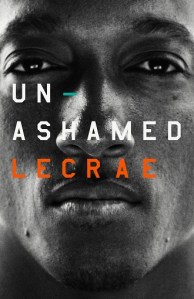 Every Sunday, I will share a quote from something I’ve been reading. The hope is for you, dear reader, to share your thoughts on the quote and related issues and perhaps pick up some reading material along the way!
“Gospel” Rap? “Christian” Music?
I just started reading popular hip-hop star Lecrae’s biography, Unashamed. What makes Lecrae notable is the combination of his success in the music industry, specifically through rap/hip-hop, along with his unwavering commitment to his faith in Jesus Christ.
Lecrae notes one of the difficulties with labeling music as “Christian” music:
Being an outspoken Christian in the music industry means always feeling out of place…
This is one of the reasons I don’t fully embrace the “Christian rapper” label. It isn’t that I’m ashamed of being a Christian. I’m not… But labeling the music that way creates hurdles and is loaded down with baggage. Plus, it isn’t a true expression of the music I’m making. I try to produce music that is life-giving and inspires people to hope… I want to address themes that people who aren’t Christian can appreciate. (6-7, cited below)
He tells a few stories about how this label has actually hindered the impact his music can have on the world. Is it possible that by using the label “Christian music” we may be doing more harm than good? How might Christians make music that speaks to a world thirsting for truth?
Lecrae’s autobiography has already forced me to think deeply about a number of issues. Unashamed is recommended reading, though I note I haven’t finished it yet.
Source
Lecrae Moore with Jonathan Merritt, Unashamed (Nashville, TN: B&H Publishing Group, 2016).
Links
Be sure to check out the page for this site on Facebook and Twitter for discussion of posts, links to other pages of interest, random talk about theology/philosophy/apologetics/movies and more!
On Christian Music– I wrote a post about the label “Christian music” and how that can lead to a number of difficulties with discernment.
Christian Discernment Regarding Music: A Reflection and Response– I reflect in depth on how we can use our discernment properly when it comes to music.
Sunday Quote– If you want to read more Sunday Quotes and join the discussion, check them out! (Scroll down for more)
Eclectic Theist– Check out my other blog for my writings on science fiction, history, fantasy movies, and more!
Really Recommended Posts 5/6/16- creationism and the Grand Canyon, Deborah, and more!
Deborah judging in Israel
It’s another week and I’m here to bring you some more great reading for your weekend. Be sure to let the authors know what you think, and let me know here as well. Topics for this week include the Grand Canyon and the biblical Flood, Deborah as leader, Jehovah’s Witnesses, and more!
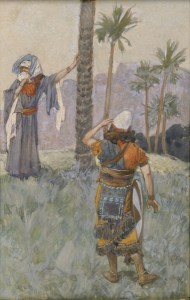
Deborah and the “no available men” argument– A refutation of the notion that Deborah was only chosen to lead Israel because there were “no available men” who could or would do so. Unfortunately, this argument is fairly common among those who do not wish to affirm the Bible’s teaching on women’s equal leadership.
The Grand Canyon’s Magnificent Witness to Earth’s History– Often, young earth creationists argue that the Grand Canyon can only be explained (or at least is better explained) by the biblical Flood as a global flood. A new book is challenging that perception. Check out this post to learn more.
7 Things to Know about Jehovah’s Witnesses– It is important to understand others’ beliefs. Here is a post outlining 7 points of belief for Jehovah’s Witnesses.
Calamity (The Reckoners)– Superheroes and villains face off with those who seek vengeance against those villains who destroyed their world. Check out this look at worldview issues in Brandon Sanderson’s latest Young Adult novel, Calamity. Also check out my own reflection on the book.
Manual of Christian Evidences: Fisher Chapter 1 Guided Reading

A picture I took of a path through the woods. All rights reserved.
I am leading a guided reading of the Manual of Christian Evidences by George Park Fisher. It is freely available online and will serve as a base for discussing Christian apologetics throughout this series. The chapters are short and readable. I encourage you to join in by reading the chapters and commenting with your thoughts. When I discuss the book, I will be citing page numbers from the edition linked above.
Chapter 1
It is always important when reading a non-fiction book to find the thesis. What is it that George Park Fisher is trying to accomplish with his Manual?
Spoiler alert (har har): the answer is that he’s trying to establish the veracity of “the New Testament histories” (2). I think a valuable question to follow such a statement up with is “so what?”
Suppose Fisher succeeds, and shows that the NT histories are trustworthy, would not some scholars continue to argue that this doesn’t demonstrate the miraculous contained therein (as I’m sure Tim can attest, given his recent debates with Bart Ehrman)? That is, would not many historians say we can trust the NT documents as history, but we need not trust the miraculous therein?
I think a possible response to this is actually found in another work by a dead apologist, J.J. Blunt. In his “Undesigned Coincidences,” he notes that “by establishing the truth of ordinary incidents which involve the miracle, which compass the miracle round about, and which cannot be separated from the miracle without the utter laceration of the history itself, goes very near to establish it.” (J.J. Blunt, “Undesigned Coincidences in the Writings both of the Old and New Testaments: An Argument of their Veracity” (New York: Robert Carter & Brothers, 1855), 9-10).
Interestingly, this is not so much the tactic Fisher uses going forward. He could defend the value of such a study by noting that because of the way some of the miraculous accounts are embedded in those NT histories, we cannot excise the miraculous without making the whole thing nonsensical. That is, the miraculous is itself part of the history. However, he opts for a different approach, as we will see in the coming chapters.
What do you think of this as a response? What other responses might be possible? Moreover, what other points in this chapter came to mind for you?
Links
Be sure to check out the page for this site on Facebook and Twitter for discussion of posts, links to other pages of interest, random talk about theology/philosophy/apologetics/movies and more!
Apologetics Read-Through: Historical Apologetics Read-Along– Here are links for the collected posts in this series and other read-throughs of apologetics books (forthcoming).
Dead Apologists Society– A page for Christians interested in the works of historical apologetics. There is also a Facebook group for it.
SDG.
——
The preceding post is the property of J.W. Wartick (apart from quotations, which are the property of their respective owners, and works of art as credited; images are often freely available to the public and J.W. Wartick makes no claims of owning rights to the images unless he makes that explicit) and should not be reproduced in part or in whole without the expressed consent of the author. All content on this site is the property of J.W. Wartick and is made available for individual and personal usage. If you cite from these documents, whether for personal or professional purposes, please give appropriate citation with both the name of the author (J.W. Wartick) and a link to the original URL. If you’d like to repost a post, you may do so, provided you show less than half of the original post on your own site and link to the original post for the rest. You must also appropriately cite the post as noted above. This blog is protected by Creative Commons licensing. By viewing any part of this site, you are agreeing to this usage policy.
Sunday Quote!- Explanation as a Zero-Sum Game?
 Every Sunday, I will share a quote from something I’ve been reading. The hope is for you, dear reader, to share your thoughts on the quote and related issues and perhaps pick up some reading material along the way!
Explanation as a Zero-Sum Game?
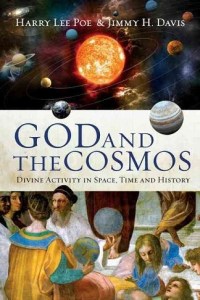
God and the Cosmos by Harry Lee Poe and Jimmy H. Davis offers a deep look at the problem of divine activity in a created world. The authors explore the question from a number of perspectives, providing much insight into an intriguing question. One aspect they address is the notion that explanation is a kind of zero-sum game:
To those who hold the view of scientific naturalism, our explanations of natural events are a zero-sum game. To them a 100 percent natural explanation means a 0 percent divine involvement. (17, cited below)
Thus, the authors argue that many who hold to a non-theistic worldview allege that explanation is a numbers game. If one can fully explain a phenomenon through natural means, that must mean that theism has nothing to say about it. Intriguingly, though the authors don’t note this, a similar view is espoused by many Christians who tacitly grant this premise, arguing against natural explanations due to a fear of deism or other non-Christian beliefs. Yet when we look at the statement on its face, it seems absurd. We know explanations are not zero-sum. My belief that it is raining might lead me to bring an umbrella with when I go outside, but one might also be able to construct a series of physical explanations of the same event (i.e. describe all the neurons fired, muscles moved, etc.).
God and the Cosmos is the kind of book that keeps readers thinking well after reading the content. I’m still working through it, but so far I recommend it. As an interesting aside, Harry Lee Poe is related to Edgar Allan Poe (yes, that one), and also wrote a fascinating book on his relation: “Evermore: Edgar Allan Poe and the Mystery of the Universe.”
Links
Be sure to check out the page for this site on Facebook and Twitter for discussion of posts, links to other pages of interest, random talk about theology/philosophy/apologetics/movies and more!
Sunday Quote– If you want to read more Sunday Quotes and join the discussion, check them out! (Scroll down for more)
Eclectic Theist– Check out my other blog for my writings on science fiction, history, fantasy movies, and more!
Source
Harry Lee Poe and Jimmy H. Davis, God and the Cosmos (Downers Grove, IL: InterVarsity, 2012).
SDG.
Really Recommended Posts 4/29/16- Pascal, apologetics, and more!

A picture of a goldfinch I took. All rights reserved.
Sorry for the late posting of this week’s Really Recommended Posts. I’ve been very busy. That said, I still managed to draw together some great posts from around the web. I hope you enjoy them!
Unexplained Allusions: The sons of thunder– There are so many lines of evidence for the truthfulness of the Bible that it can be hard to even learn about all of them. Here’s a post that explains yet another one of these lines of evidence: unexplained allusions.
7 Places Where Gender Inclusive Bible Translation Really Matters– From the article: “I have often made the point that the King James Version and the pre-2011 New International Versions each include more than 1,000 occurrences of the words ‘man’ and ‘men’ which are not found in the Greek New Testament… gender-inclusive translations such as the NRSV, NLT, NIV 2011, and CEB are taking steps toward the character of the Greek New Testament, not away from it.”
The Unraveling of Starlight and Time– An in-depth analysis of a Young Earth Creationist proposal for explaining distant starlight. The analysis is of the prominent work, Starlight and Time by D. Russell Humphreys, as well as a later revision of his theory.
Christian Thinkers 101: A Crash Course on Blaise Pascal– Pascal is most often known for his (in)famous Pascal’s Wager (I defend this argument here). Yet there is a lot more to this thinker than you may know. Read on for an introduction to the thought of this historic thinker.
Book Review: “Evolution and Holiness: Sociobiology, Altruism, and the Quest for Wesleyan Perfection” by Matthew Nelson Hill
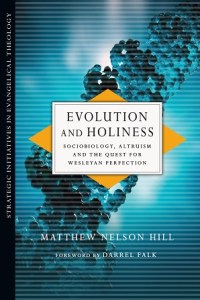 Matthew Nelson Hill’s book, Evolution and Holiness might cause a great number of double-takes when it comes to the subject matter revealed in the subtitle: Sociobiology, Altruism, and the Quest for Wesleyan Perfection. Indeed, this is one of the more unique studies I have read.
Hill’s thesis is essentially that, granting the truth of human evolution, it is still possible to maintain the highest possible levels of belief in sanctification and holiness. To support this thesis, he examines the Wesleyan concept of holiness, which is essentially that humans can be made perfect in this life. He argues that, if evolution and Wesleyan holiness are not incompatible, then effectively any view of sanctification can be compatible with evolution. The reason for this conclusion is that Wesleyan holiness is largely agreed upon as the most stringent type of holiness, and so if it can past the test put forward by human evolution, other views ought to be able to as well.
Now that we have looked at the thesis of the book, it is important to take a step back. Hill is not concerned here with whether evolution is true, though it seems that he certainly would say it is. His concern is, instead, to see how this might impact the specific doctrine of sanctification. Thus, the book is not a critical analysis of either evolution or Wesleyan holiness (or any other variety). Instead, it is put forward as a defense of their compatibility.
Hill analyzes various theories of evolutionary psychology and the notion that we have “selfish genes” which determine our behavior. Though he offers a few critiques of these theories, his main aim is to see whether the truths of Christianity might overcome the deterministic aspects of these ideas. The filter through which these questions are analyzed is the concept of altruism. Hill argues that naturalistic evolutionary accounts cannot fully explain human altruism. Various proposed naturalistic mechanisms are examined and found wanting, though Hill admits they may offer partial explanations. Ultimately, however, Hill argues that Christianity offers a way around the alleged determinism of our behavior by genes. The power of the Holy Spirit may enable us to overcome the “selfishness” of our genetic lineage and the evolutionary struggle in order to seek to live holy lives. Christianity therefore offers a superior explanation of altruism, even within the strictures of evolutionary theory.
One difficulty throughout the book is the number of assumptions made that will be unpalatable or even irrational to readers. At one point (123-124), Hill simply states that mind is the product of the brain without any argument. He cites in a footnotes Daniel Dennett’s work, but that seems a weak reason to think that such an assumption is worth carrying on, particularly in light of powerful, convincing reasons to think that the mind not only is not but cannot be merely the workings of the brain. Of course, Hill may simply be making this assumption (one he seems to agree with) without argument because the stated purpose of the book basically grants the whole narrative of evolution, which most often includes some form of denial of substance (or other) dualism. Another place this happens is when Hill refers to a number of arguments from natural theology and apologetics as “God of the gaps” type arguments. He doesn’t specifically cite any argument, but it seems odd for him to throw out that phrase without singling out any specific argument as an instance of the type.
Evolution and Holiness is a book that stands unique in my reading experience. It meshes ideas that seem completely disparate into a coherent whole and challenges assumptions we might make regarding these differing ideas. Readers looking for critical interaction with these ideas will have to look elsewhere. Hill offers a synthesis, not a critique. Whether one agrees with his conclusions or not, I suspect they will find the book an interesting read.
The Good
+Unique topic exposes readers to many new ideas
+Deep look at central theses
The Bad
-Assumes without argument many unconnected points
Source
Matthew Nelson Hill, Evolution and Holiness (Downers Grove, IL: InterVarsity, 2016).
Links
Be sure to check out the page for this site on Facebook and Twitter for discussion of posts, links to other pages of interest, random talk about theology/philosophy/apologetics/movies and more!
Made Perfect in this Life?- A Lutheran reflection on Methodist sanctification– I analyze the notion of Wesleyan perfection from a Lutheran perspective.
Book Reviews– There are plenty more book reviews to read! Read like crazy! (Scroll down for more, and click at bottom for even more!)
Eclectic Theist– Check out my other blog for my writings on science fiction, history, fantasy movies, and more!
SDG.
——
The preceding post is the property of J.W. Wartick (apart from quotations, which are the property of their respective owners, and works of art as credited; images are often freely available to the public and J.W. Wartick makes no claims of owning rights to the images unless he makes that explicit) and should not be reproduced in part or in whole without the expressed consent of the author. All content on this site is the property of J.W. Wartick and is made available for individual and personal usage. If you cite from these documents, whether for personal or professional purposes, please give appropriate citation with both the name of the author (J.W. Wartick) and a link to the original URL. If you’d like to repost a post, you may do so, provided you show less than half of the original post on your own site and link to the original post for the rest. You must also appropriately cite the post as noted above. This blog is protected by Creative Commons licensing. By viewing any part of this site, you are agreeing to this usage policy.
Response to “Problem in the Pro-Life Camp”- Abortion, victims, and moral culpability
 A recent comment by Donald Trump caused something of a stir. What a surprise. This time, it was about abortion, and he said that there has to be “some kind of punishment” for the woman who chooses an abortion, should abortion be made illegal. The internet exploded, as people of both pro-choice and pro-life persuasions came out to discuss the topic, largely coming out against Trumps comments. Here, I want to discuss one post from a pro-life individual that offers a critique of the pro-life movement for not arguing for a harsher punishment of women who choose abortions, in the case of them being illegal. That post is entitled, “Problem in the Pro-Life Camp.” At the outset, it is worth revealing my bias in this. I am pro-life myself and I think that this is a complex topic that many pro-life persons have not thought deeply about. I am essentially editing and re-posting my comments here with some context.
The post in question begins by stating the “problem” with the pro-life camp:
The problem that I have with the “pro-life” movement in general is that much of it appeals to the woman as being the victim/or merely the accomplice to the crime. Rather, the mother is the transgressor who in the majority of cases, knowingly tested positive in her pregnancy test and nevertheless, storms into the abortion mill with premeditated murder. Whether the sin is done in ignorance or not, she is still morally culpable before God. She is not a victim.
Men and women are indeed victims when abortion is presented as the only logical choice or the only option. They are victims when people of specific races are targeted for abortion advertising. But whether one agrees on this or not, it is largely irrelevant to the primary point you’re making in this post. It seems that there are two issues raised in the post, but they are interlinked: the notion that the woman is a victim in abortion is false, and that is intrinsically linked to the notion that woman is morally culpable.
The original post asked, “Can an abortive mother who has malice of forethought be considered a victim and be morally responsible the same time? Morally responsible for what? when they are already deemed a victim.”
It seems to me that there are clear cases where someone who is a victim could still be morally culpable. A child soldier who has been forced into fighting for a cause they don’t believe in is a victim, yet the killing he or she may do is not without moral culpability. We may give a lighter sentence or charge than murder, but that doesn’t mean that this victim is without moral culpability whatsoever. Indeed, I think this is a far better analogy than the one with the bully utilized in the original post. (A bully beats up someone to take their money, and then sends others to do so; are they a victim?) After all, the analogy with the bully begins with the bully directly beating up someone else! The analogy, then, falls apart at the beginning, because I don’t know of any case (I suppose there could be such a case–but I would be surprised if it were even possible) where a woman performed an abortion on herself.
Now my analogy is to show that the notion of being a victim is not incompatible with the notion of being morally culpable. It does not demonstrate that the woman who seeks an abortion is a victim. Instead, my purpose was to show that the complaint of incompatibility is mistaken.
Thus, it seems to me that the pro-life person who maintains that a woman is, in some sense, morally culpable for the abortion, while also arguing or believing that the woman is, in some sense, a victim in such a situation is not being inconsistent.
The original post appealed to a question asked in a group of women who had abortions. They were asked whether they believed they were victims. I agree that self-definition is vastly important, but I also think it is easy to be mistaken about such things. For example, someone who is working as a prostitute may say that they are not a victim and they did it by choice, but even if they choose such a profession, the fact remains that the act of purchasing another’s body for sexual gratification does, indeed, victimize them whether they acknowledge it or not. I’m not saying that women who have abortions are prostitutes, obviously. My point is that self-defining oneself as “not a victim” does not make it the case.
To sum up: my response has sought to demonstrate two primary points. (1) The notion of someone being a victim does not necessarily undermine the notion of that person being morally culpable; (2) Self definition does not necessarily show us with certainty that someone is not a victim.
I would like to emphasize that these points don’t necessarily reflect my own views. I have, instead, written simply to show that the argument here is not sound.
Responses and Replies
The author of the original post kindly responded to my comments above. The comment can be viewed at the original post. I offer below my reply.
A woman cannot be both a victim or morally responsible at the same time. Either she is a victim or morally responsible (i.e. murderer)… I am using ‘victim’ in a more specific and literal fashion concerning a crime against the unborn.
As a result, it would be a logical fallacy (violates the law of non-contradiction and Scripture) to call a murderer a victim.
I think the conclusions here are hardly surprising, then. By what is written above, victim is being specifically defined as “a crime against the unborn” and then concluding, in accord with this definition, that anyone who disagrees is violating the law non-contradiction. Yet this is does not defeat the argument put forth above. I could just as easily say: “A woman can be both a victim and morally responsible at the same time. I am using ‘victim’ in the sense that makes this true. Therefore, disagreeing with me is fallacious.” Yet that is exactly what the response here has argued. I did assert that a woman can be a victim and morally responsible at the same time, but I defended that assertion with arguments.
Substantively we agree that it is a morally culpable act to seek an abortion. The area of disagreement remains as I outlined it in my original comment, and so far the response is simply to define out of existence any evidence to the contrary.
The author of the post followed with another response, arguing that the pro-life movement has consistently held that women are victims in abortions, but that they cannot be. He wrote,
abortive mothers are not victims, when they commit abortions… Either they are a victim or the transgressor when the abortion is committed.
In other words, what we have is simply a re-affirmation of the original point without argument. My purpose in commenting was to establish that being morally culpable is not incompatible with being a victim. I have been arguing all along this is a false dichotomy, and at no point has there been any attempt to refute the argument I’ve put forward. Each response has merely reasserted the initial premise without argument.
Because the purpose of my responses have been limited to the above point, I haven’t made an extended argument for how one might view the woman involved in abortion also as victim. Given the mere reassertion without argument, I believe that on some level my point has carried.
As a final question, I’d ask whether the author of this post, EvangelZ, believes that women are in no way harmed by abortion. That is, does he believe that abortion does not, in fact, lead to increased risk for breast cancer, that it leads to a higher risk of suicide, that it leads to increased risk for depression, that potential for future miscarriages is increased post-abortion, or that other risks (such as the possibility of the death or physical harm to the mother) are not, in fact damaging? The position of this post and the comments following it entail that no harm comes to the mother in any sense. After all, the mother is not–and according to the author–cannot be a victim (repeated claims of logical impossibility entail this). Hence, the woman cannot possibly be harmed by abortion, because that would entail that she is, in some sense, also a victim. Thus, EvangelZ or any who share this position are forced to conclude that abortion in no way causes harm to the mother. I think that is a pill too tough to swallow, because it seems obviously false.
Links
Be sure to check out the page for this site on Facebook and Twitter for discussion of posts, links to other pages of interest, random talk about theology/philosophy/apologetics/movies and more!
Problem in the Pro-Life Camp– The original post I am responding to here.
Be sure to check out my other posts in which I argue for the pro-life position. Particularly relevant to the present discussion are “From conception, a human” and “The issue at the heart of the abortion debate.”
SDG.
——
The preceding post is the property of J.W. Wartick (apart from citations, which are the property of their respective owners, and works of art as credited) and should not be reproduced in part or in whole without the expressed consent of the author. All content on this site is the property of J.W. Wartick and is made available for individual and personal usage. If you cite from these documents, whether for personal or professional purposes, please give appropriate citation with both the name of the author (J.W. Wartick) and a link to the original URL. If you’d like to repost a post, you may do so, provided you show less than half of the original post on your own site and link to the original post for the rest. You must also appropriately cite the post as noted above. This blog is protected by Creative Commons licensing. By viewing any part of this site, you are agreeing to this usage policy.

 J.W. Wartick - Reconstructing Faith