J.W. Wartick
Sunday Quote!- You are a Theologian
 Every Sunday, I will share a quote from something I’ve been reading. The hope is for you, dear reader, to share your thoughts on the quote and related issues and perhaps pick up some reading material along the way!
You Are a Theologian
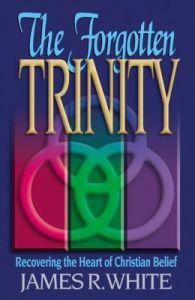
I just finished reading The Forgotten Trinity by James White. I found it to have a lot of good insight into the basics of Trinitarian doctrine. One line struck me as he emphasized the need for Christians to learn doctrine:
If you are a Christian, you are a theologian. You have no choice. Theology is simply knowing about God. (34, cited below)
The logical question we should ask ourselves following this is: “Am I a good theologian?” I don’t mean we all need to be skilled or know all of theology (an impossibility). What I mean–and what White is getting at–is that we need to ensure that we are believing and teaching rightly when we proclaim our faith. And, make no mistake, we are called to proclaim that faith (1 Peter 3:15-16, for example).
The Forgotten Trinity is a helpful read for those wanting to explore the basics of Trinitarian doctrine.
Links
Be sure to check out the page for this site on Facebook and Twitter for discussion of posts, links to other pages of interest, random talk about theology/philosophy/apologetics/movies and more!
Bonhoeffer’s Troubling Theology?- A response to an article on Dietrich Bonhoeffer’s theological perspectives– I have argued elsewhere that the broad evangelical understanding of Bonhoeffer may, indeed, be a misunderstanding of the fact that he is Lutheran.
Sunday Quote– If you want to read more Sunday Quotes and join the discussion, check them out! (Scroll down for more)
Eclectic Theist– Check out my other blog for my writings on science fiction, history, fantasy movies, and more!
Source
James White, The Forgotten Trinity (Minneapolis, MN: Bethany House Publishers, 1998).
SDG.
Really Recommended Posts 4/22/16

A picture of a goldfinch I took. All rights reserved.
Hello dear readers! My apologies for missing this last week. It was a chaotic week and I was tired so I didn’t get around to the Really Recommended Posts. To make up for it, I brought together an awesome selection for you to read, dear friends. I also used a new picture for post this week. It’s spring, and I’ve been watching the goldfinches in my yard. It’s wonderful seeing them all over, and I got this okay shot of one sitting amongst dandelions. As always, be sure to let me know what you think of the posts, and let the authors know themselves.
A Look at the Apologetics of Paul– How did Paul defend the Christian faith? Here is an extensive look at the way Paul does apologetics. I think a careful reading of and interaction with this post would do anyone interested in apologetics good.
Was Bonhoeffer a Liberal?– Some evangelicals have recently taken aim at Dietrich Bonhoeffer to undermine his increasing influence. Here, the question is asked: was Bonhoeffer a liberal? (It could also be asked: why is “liberal” a dirty word among evangelicals?) See also my Bonhoeffer’s Troubling Theology? – A response to an article on Dietrich Bonhoeffer’s theological perspectives.
“Risen” and what makes a good Christian film– “Risen” is coming to blu-ray/DVD in less than a month. It’s the story of Jesus’ Resurrection, told from a perspective that hasn’t been considered that much before–that of a skeptical Roman. Does it make a good Christian film?
Avoiding Extremes Amidst Canada’s Euthanasia Debate– It’s all too easy to get caught up in the most extreme positions when debating a topic. Here’s a good post urging caution with regards to the debate over euthanasia in Canada.
Meme Crush Part 1– A good post taking down the silly absurdity of an anti-Christian meme tweeted by “God.” Check out part 2 as well.
Apologetic Arguments: Let’s not unintentionally weaken them
 J.J. Blunt (1794-1855) gave some advice in his book Undesigned Coincidences (freely available at that link–copyright expired) that ought to be applied by we apologists to every single argument we consider. His own book put forward the argument from undesigned coincidences, which is essentially an argument that looks across the Bible to compare books to each other in order to see if details in one might be confirmed in another. Blunt, however, did not feel every single one he found would be seen as useful to his overall argument, and that is where I think his advice might be applied to apologetics generally. He wrote:
I could add several other examples of this class [referring to an undesigned coincidence], i.e. where allusions in the prophets are very sufficiently responded to by events recorded in the historical Books of Scripture, but still the want of precision in the terms makes it difficult to affirm the coincidence between the two documents with confidence; and therefore I have thought it better to suppress such instances, as not possessing that force of evidence which entitles them to a place in these pages… the internal testimony is not so strong as to carry conviction along with it, of such being really the case; and this failing, it is folly to weaken a sound argument by a fanciful extension of it (253).
Here we see that Blunt has more arguments and instances he believes may carry at least some tiny weight, but that he decides it is better to “suppress” (i.e. not share) them, for doing so might take away from the stronger evidences that carry the proof. This, I think, presents an admirable way to approach doing apologetics, and one that we need to take to heart. It is all to easy to present an argument and then either (1) press the argument’s conclusion so far beyond what is warranted that we undercut the conclusion itself or (2) give continual, weak evidences.
Regarding the first potential difficulty, an argument can easily be pressed beyond its conclusion. Thus, for example, we may argue that a form of the cosmological argument demonstrates a first cause, and go on to argue this first cause is omnipotent, which seems a strong enough inference. But then we may go on and say the first cause must be free, to bring something out of nothing, which involves a choice. And then we may argue this implies omniscience for what could be free and able to create a universe as intricate as ours? One can see how quickly we’ve gone beyond an argument’s conclusion (a cause of the universe) to the point that we need to construct many more arguments to make our case. It may be better to let the cause be what we conclude, and use other arguments to establish other conclusions.
The second difficulty is one that is difficult to nuance. For example, a “cumulative case” approach is a good way to present arguments, but we need to balance that cumulative case with whether the arguments we are using for cumulative effect carry enough weight to be considered. We ought to be careful not to include arguments that, due to their weakness, may distract from the strength of the overall case. This applies even if the “weak” arguments do, in fact, provide some positive evidence. Sometimes it is best to let the case stand as it is. Other times, it is not.
As far as Blunt’s specific instances, I kind of wish he’d at least preserved them somewhere for us to browse, even if they are weak enough he doesn’t think them convincing. That way, we could look them up ourselves and see if 160+ years may have shed more light on the potential coincidence. Alas, we will not know what they are until the hereafter. As it stands, though, Blunt’s work is a giant of apologetics.
We apologists need to be careful not to unintentionally weaken our argument by being tempted to include every possible line of evidence. Sometimes, that can make our case appear weaker than it actually is.
Source
J.J. Blunt, Undesigned Coincidences in the Writings both of the Old and New Testaments: An Argument of their Veracity (New York: Robert Carter & Brothers, 1855).
Links
Be sure to check out the page for this site on Facebook and Twitter for discussion of posts, links to other pages of interest, random talk about theology/philosophy/apologetics/movies and more!
Dead Apologists Society– A page for Christians interested in the works of historical apologetics. There is also a Facebook group for it.
Library of Historical Apologetics– A massive wealth of resources, with links to many, many books freely available (copyright expired) for those interested in historical apologetics.
Forgotten Arguments for Christianity: Undesigned Coincidences- The argument stated– I explain the argument from undesigned coincidences in more detail, with several links for further reading.
SDG.
——
The preceding post is the property of J.W. Wartick (apart from quotations, which are the property of their respective owners, and works of art as credited; images are often freely available to the public and J.W. Wartick makes no claims of owning rights to the images unless he makes that explicit) and should not be reproduced in part or in whole without the expressed consent of the author. All content on this site is the property of J.W. Wartick and is made available for individual and personal usage. If you cite from these documents, whether for personal or professional purposes, please give appropriate citation with both the name of the author (J.W. Wartick) and a link to the original URL. If you’d like to repost a post, you may do so, provided you show less than half of the original post on your own site and link to the original post for the rest. You must also appropriately cite the post as noted above. This blog is protected by Creative Commons licensing. By viewing any part of this site, you are agreeing to this usage policy.
Book Review: “Bonhoeffer on the Christian Life” by Stephen J. Nichols
 Bonhoeffer on the Christian Life by Stephen J. Nichols is part of the “Theologians on the Christian Life” series from Crossway. This volume focuses on Dietrich Bonhoeffer, a German Lutheran theologian who was murdered by the Nazis. What is remarkable about this book is the way it successfully shows the interplay between Bonhoeffer’s theology and his life lived, and then demonstrates this is something we, too, can comprehend.
Nichols balances discussion about Bonhoeffer’s theology with discussion of his life. This is more than simply combining biography with theology. Instead, Nichols demonstrates that Bonhoeffer’s theology of Christian life is acted out by Bonhoeffer. Thus, readers are able to read about Bonhoeffer while learning what it means to lead a Christian life. This is fitting, because Bonhoeffer did act out the core of his theology, which, as the subtitle of the book (“From the Cross, For the World”) suggests, is cruciform. For Bonhoeffer, Christian living is living as Christ to the world, and this includes living and dying with Christ.
The book has chapters on ecclesiology, prayer, confession, and more. The chapters noted are particularly insightful. Nichols draws much from Bonhoeffer’s Life Together to show his doctrine of the church, which itself is deeply connected to a life of spiritual discipline, confession to one another, and willingness to suffer for Christ. Nichols notes well, however, that we in the West are not likely to be asked to pay the same cost of discipleship that Bonhoeffer did: execution for his lived faith. But that, Nichols argues, does not mean that we cannot live Christ-like lives. Rather than making Bonhoeffer a hero–and Nichols notes that Bonhoeffer would have rejected that categorization–we ought see him as a Christian living out the life God called him to.
Nichols balances the excitement of learning about Bonhoeffer’s life with the unveiling of deeper thoughts on the way Bonhoeffer points to a Christian life lived. It makes the book quite readable, despite its often complex subject matter.
There is, however, one glaring hole in the treatment of Bonhoeffer’s theology of the Christian life. That is, Bonhoeffer’s Lutheranism, and specifically his view of the proper theology as one of Word and Sacrament. A search of the book reveals but one reference to baptism, and only two references to the Lord’s Supper. However, Bonhoeffer continually held to the importance of these sacraments throughout his theology. For example, in The Cost of Discipleship, he wrote:
How then do we come to participate in the Body of Christ, who did all this for us? …The answer is, through the two sacraments of his Body, baptism and the Lord’s Supper. (239, edition linked above)
From this and many other references, it is clear that sacraments are central to Bonhoeffer’s understanding of ecclesiology. Yet Nichols doesn’t even mention them in the section on ecclesiology, an otherwise richly rewarding section of the book. Only a passing reference is made to the sacraments, despite their centrality to Bonhoeffer’s Lutheran understanding of grace and Christian living. This is a significant difficulty, for it effectively removes Bonhoeffer’s theology from its context.
Bonhoeffer on the Christian Life is an excellent, practical read. It shows how integrated Bonhoeffer’s theology is with his life, and gives many practical examples for readers to apply to their own lives. The book does, however, de-contextualize his theology by ignoring key aspects of his Lutheranism and their impact on Christian living. Readers will get much good from the book, but perhaps not as much good as they could have had it allowed Bonhoeffer’s Lutheranism to shine through.
The Good
+Focused on Bonhoeffer’s practical theology
+Gives insight into Bonhoeffer’s life with applications
+Excellent annotations for further reading
The Bad
-Little attention paid to Bonhoeffer on the sacraments
Disclaimer: I received a copy of the book for review from the publisher. I was not obligated to write any specific kind of feedback whatsoever.
Source
Stephen Nichols, Bonhoeffer on the Christian Life (Wheaton, IL: Crossway, 2014).
Links
Be sure to check out the page for this site on Facebook and Twitter for discussion of posts, links to other pages of interest, random talk about theology/philosophy/apologetics/movies and more!
Bonhoeffer’s Troubling Theology?- A response to an article on Dietrich Bonhoeffer’s theological perspectives– I look at an argument that Bonhoeffer’s theology is “troubling” to evangelicals and point out how much of it is merely a product of his Lutheran background.
Book Reviews– There are plenty more book reviews to read! Read like crazy! (Scroll down for more, and click at bottom for even more!)
Eclectic Theist– Check out my other blog for my writings on science fiction, history, fantasy movies, and more!
SDG.
——
The preceding post is the property of J.W. Wartick (apart from quotations, which are the property of their respective owners, and works of art as credited; images are often freely available to the public and J.W. Wartick makes no claims of owning rights to the images unless he makes that explicit) and should not be reproduced in part or in whole without the expressed consent of the author. All content on this site is the property of J.W. Wartick and is made available for individual and personal usage. If you cite from these documents, whether for personal or professional purposes, please give appropriate citation with both the name of the author (J.W. Wartick) and a link to the original URL. If you’d like to repost a post, you may do so, provided you show less than half of the original post on your own site and link to the original post for the rest. You must also appropriately cite the post as noted above. This blog is protected by Creative Commons licensing. By viewing any part of this site, you are agreeing to this usage policy.
“Remarkable Creatures” by Tracy Chevalier – Creationism, women, and paleontology
 Remarkable Creatures by Tracy Chevalier is a historical fiction novel based on the lives of Mary Anning and Elizabeth Philpot, early fossil hunters in England. It raises an astonishing number of worldview questions related to women, paleontology, and creationism, and we will here discuss just a few of these issues. There will be SPOILERS in what follows, but it is history!
Paleontology, Creationism, and Controversy
Perhaps the most fascinating aspect of Remarkable Creatures is its survey of the controversies surrounding the discovery of fossils that challenged reigning scientific and religious paradigms. One of the greatest challenges was to come to believe that extinction had occurred. Think about it: if all you ever knew was the living beings around you, what possible reason would there be for thinking that those beings could die out, such that none were left anywhere? Mary Anning and Elizabeth Philpot’s finds of creatures like icthyosaurus challenged even the greatest thinkers of the time to come up with new paradigms for fitting these creatures–which didn’t exist anywhere on earth at their time–into reality.
For a time, it was thought that the bones of icthyosaurus were just those of a crocodile. But then Mary Anning discovered a complete fossil that included huge eyes (eyes that even had bones in them!). This forced people to the realization that these truly were novel creatures.
It’s a fascinating thing to think about, because the problem wasn’t just that it forced them to come up with a new concept–extinction. It also led to theological crises. After all, why would God create creatures that would all die out? One pastor in the book was particularly disturbed by this notion. He argues with Elizabeth Philpot: “All that you see about you is as God set it out in the beginning. He did not create beasts and then get rid of them. That would suggest He had made a mistake, and of course God is all knowing and incapable of error…” (144, citation from large print edition [only one they had at the library]). Philpot then comes back, noting that rock formations change and that if creation is supposed to be without change, how could rock fall or change a cliff face? The pastor ultimately comes back by saying that “God placed the fossils there when He created the rocks, to test our faith…” (145). Chevalier cleverly puts an answer in Philpot’s head: “It is my faith in you [the pastor as interpreter of Scripture] that is being tested, I thought” (145). The pastor, it should be noted, was also using, as was commonplace, Bishop Ussher’s chronology of the world, which put the date of creation “on the night preceding the 23rd of October 4004 B.C.” (144). Philpot wryly remarks- “I had always wondered at his precision.”
Another idea that was prominent at the time was the notion of anatomical laws or conformity with Aristotle’s Great Chain of Being. According to these ideas, there is a kind of hierarchy of being that puts humans at the top (usually) with other creatures in stages below that. It is not evolution, for it predates that idea. Instead, it is a way of ordering those creatures which exist now according to some principles. Mary Anning’s finding of a plesiosaur challenged this chain of being by violating the ways that creatures were supposed to appear or exist.
Late in the book, Elizabeth Philpot is finally questioned on what she thinks about the fossils and God. She is pleased to finally be asked:
I am comfortable with reading the Bible figuratively rather than literally. For instance, I think the six days in Genesis are not literal days, but different periods of creation, so that it took many thousands–or hundreds of thousands of years–to create. It does not demean God; it simply gives Him more time to build this extraordinary world. (391, again note reference from large print edition)
Although this is a work of historical fiction, these debates continue into today. Some groups still use Bishop Ussher’s chronology to date the age of the earth. Although few would argue that there are no extinct creatures, new forms of the same arguments have led to the young earth creationist movement, in which people argue that the Bible requires us to believe that all the creatures that are extinct were alive at the same time as humans. I have personally had conversations with young earth creationists who say that fossils are one way God tests our faith (I know of no young earth organization who would use this argument, thankfully). Scientific findings continue to challenge entrenched religious beliefs.
One is perhaps left to wonder, like Philpot’s thoughts, on how some people get so much precision. The Bible nowhere puts a date on creation. Nor does the Bible demand that all creatures that have ever lived were allowed at the same time. Yet these beliefs persist, and many Christians insist that if one does not hold to them, they are not true Christians, or are perhaps abandoning Scripture. As in Mary Anning’s time, we still have much work to do. We cannot let our external paradigms (things like Aristotle’s Great Chain of Being, or perhaps more germane, our own assumptions about how texts ought to be read “literally” and what the word “literal” means) determine how God is allowed to act or what God may communicate to us.
Women
The book does a good job portraying the way the contributions of women were ignored or even stolen. Mary Anning was an expert fossil hunter–self taught. Yet time and again, men used her expertise to find their fossils and then take credit for the finds. Although her contributions were acknowledged later, her life of poverty is a sad testimony to the way that unequal treatment of women can so easily be perpetuated. The book portrays this unequal treatment in many ways. First, there is the exclusion of both Philpot and Anning from societies of geologists (this was before paleontology was a separate field of study from geology). Second, social norms provide for a simple way to create inequality. When one sex is given the benefit of the doubt (men, in this case) while the other is considered permanently damaged even by gossip about impropriety (women), restraints upon the social movement and capacity of the latter follow by necessity. Third, the contributions of women were ignored.
Unfortunately, parallels to each of these scenarios continue today. Women are excluded from certain groups or positions (such as those who keep women from becoming pastors), thus creating spiritual inequality. Conventions of purity culture, for example, treat women as “impure” or “damaged goods,” putting the onus on young women to abstain while simultaneously removing blame from young men. The power of imagery–objectification of women–continues to impact both women and men in negative ways. We can learn from Remarkable Creatures that much progress has been made, but it also points us in the direction of more work to be done.
Conclusion
Remarkable Creatures is a fascinating read. Although it is dry at times, it provides much insight into a number of discoveries that changed the world. It highlights the careers of two women who contributed much to paleontology in its formative stages. Perhaps most importantly, it challenges us to keep improving, to keep thinking, and to keep observing God’s remarkable world.
Source
Tracy Chevalier, Remarkable Creatures (New York: Penguin, 2010).
Links
Be sure to check out the page for this site on Facebook and Twitter for discussion of posts, links to other pages of interest, random talk about theology/philosophy/apologetics/movies and more!
Popular Books– Read through my other posts on popular books–science fiction, fantasy, and more! (Scroll down for more.)
Mary Anning: Plesiosaurs, Pterosaurs, and The Age of Reptiles– A post that highlights the contributions Mary Anning made to the paleontology. It particularly focuses on how these discoveries pre-dated Darwin.
SDG.
——
The preceding post is the property of J.W. Wartick (apart from quotations, which are the property of their respective owners, and works of art as credited; images are often freely available to the public and J.W. Wartick makes no claims of owning rights to the images unless he makes that explicit) and should not be reproduced in part or in whole without the expressed consent of the author. All content on this site is the property of J.W. Wartick and is made available for individual and personal usage. If you cite from these documents, whether for personal or professional purposes, please give appropriate citation with both the name of the author (J.W. Wartick) and a link to the original URL. If you’d like to repost a post, you may do so, provided you show less than half of the original post on your own site and link to the original post for the rest. You must also appropriately cite the post as noted above. This blog is protected by Creative Commons licensing. By viewing any part of this site, you are agreeing to this usage policy.
Sunday Quote: Dietrich Bonhoeffer as Lutheran
 Every Sunday, I will share a quote from something I’ve been reading. The hope is for you, dear reader, to share your thoughts on the quote and related issues and perhaps pick up some reading material along the way!
Dietrich Bonhoeffer as Lutheran
Dietrich Bonhoeffer is one of the most engaging characters of the 20th century as well as an immensely important and popular theologian. As time goes on, more and more people know who he is and acknowledge his influence on their work and lives. I have noticed, however, a strange lack of awareness or acknowledgement of Bonhoeffer’s Lutheranism. That is, many take what he says about discipleship, ecclesiology, prayer, and the like to heart, but divorce those ideas from their Lutheran context in his thought. Yet, for Bonhoeffer, his Lutheran theology was central to his understanding of Christianity. He wrote in The Cost of Discipleship:
How then do we come to participate in the Body of Christ, who did all this for us? It is certain that there can be no fellowship or communion with him except through his Body, baptism and the Lord’s Supper… The sacraments begin and end in the Body of Christ, and it is only the presence of that Body which makes them what they are. The word of preaching is insufficient to make us members of Christ’s body; the sacraments also have to be added. Baptism incorporates us into the unity of the Body of Christ, and the Lord’s Supper fosters and sustains our fellowship and communion… in that Body. (239, cited below)
These words can be found echoed in Bonhoeffer’s writings. His understanding of the universe was a Lutheran understanding, one which teaches Word and Sacrament. To do justice to his legacy, we need to acknowledge the fact that he isn’t just some theologian we can pull individual ideas from; instead, we must see him as Lutheran.
Links
Be sure to check out the page for this site on Facebook and Twitter for discussion of posts, links to other pages of interest, random talk about theology/philosophy/apologetics/movies and more!
Bonhoeffer’s Troubling Theology?- A response to an article on Dietrich Bonhoeffer’s theological perspectives– I have argued elsewhere that the broad evangelical understanding of Bonhoeffer may, indeed, be a misunderstanding of the fact that he is Lutheran.
Sunday Quote– If you want to read more Sunday Quotes and join the discussion, check them out! (Scroll down for more)
Eclectic Theist– Check out my other blog for my writings on science fiction, history, fantasy movies, and more!
Source
Dietrich Bonhoeffer, The Cost of Discipleship (New York: Touchstone, 1995).
SDG.
Really Recommended Posts 4/8/16- Lewis, Van Til, headship, and more!
 Just got back from vacation in Washington state. Wow, it is beautiful there! Anyway, I have another round of links for you, dear readers. We have free writings from Cornelius Van Til, a problem for post-Flood models of diversification, C.S. Lewis, and discussion of “male headship.” Check them out and let me know what you think!
Cornelius Van Til free downloads– Cornelius Van Til was an advocate of presuppositional apologetics. I have written extensively on presuppositionalism myself. Van Til is probably the best-known advocate of the method. Here are free readings from him.
The Great Genetic Bottleneck that Contradicts Ken Ham’s Radical Accelerated Diversification– Ken Ham advocates a kind of hyper-diversification after the Flood which allows for the number of species we see today. What
Christian Thinkers 101: A Crash Course on C.S. Lewis– C.S. Lewis is one of the greatest Christian thinkers of the 20th century. Here’s a great post (with infographic!) that gives tons of information on his life and thought.
5 Myths of Male Headship– The concept of “headship” is often a product more of our own assumptions than of the biblical text. Here is a post that shows 5 myths about male headship that are often assumed.
“Ghost Hawk” by Susan Cooper- Cultural Imperialism and Christianity
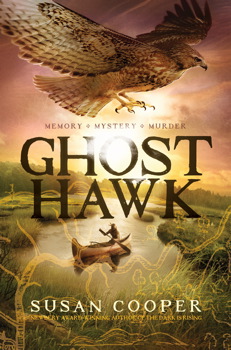
Susan Cooper is a renowned author best known for The Dark is Rising Sequence. Her latest young adult novel, Ghost Hawk, is an deeply compelling look at the dangers of cultural imperialism and the ways that cultures interact. Here, I’ll examine the book from a worldview level. The will be SPOILERS in what follows.
Cultural Imperialism
Cultural imperialism occurs when a dominant group asserts its customs or traditions as normative over those of another. For a fantastic book that looks at some of these issues in context of First Nations/Native Americans, see Richard Twiss’s Rescuing the Gospel from the Cowboys. The white settlers coming into the land are imposing their culture and customs on the Native groups in the area. That this is historical reality is beyond dispute. Cooper presents this, however, in an intriguing way.
John and others are in favor of reform–working with the Native groups and trying to understand them. Others, notably Puritans, believe that all the Natives are without any kind of possible hope. They are simply the heathen, and must be not only converted, but must conform themselves to the European cultural standards. This same imperialism carries into today as missions to Native groups too often wish to banish all Native expressions of spirituality.
The story does not take a happy turn. The efforts to come to mutual understanding largely fail, and Little Hawk is murdered in the process. Little Hawk’s spirit lingers to speak with John for some time (see below).
Despite all the reasons why Little Hawk and John might give up hope, they persist in trusting that hope might be found:
“These people[,” John said, “]they have no charity either for the Indians or for Christians who do not follow their own harsh rules. They talk about the word of the Lord, but they do not listen to it. Shall we destroy each other, in the end?”
…”Change is made by the voice of one person at a time,” [Little Hawk/Ghost Hawk] said…
“But you had no choice [to kill the wolf,” John said to Ghost Hawk. “]We too kill wolves, to keep them from eating the animals that we want to eat. We choose to do it. We have choices all the time, and so often we make the wrong ones.” (291-292, cited below)
There are a number of avenues to explore in this quote. First, it is worth noting that that different Christian voices are presented in the novel. Yes, some present a view in which the Native peoples are merely the heathen–not even worth associating with. Yet others work towards understanding and following God’s word. Second, the concept of choice is quite blatant here: our choices is what can make the difference going forward. When we choose to continue to act as a cultural aggressor, the cycle is perpetuated. What can be done to make a change? Again, different choices–following God’s word.
Ghost Hawk
The story of Ghost Hawk is set during early colonization of what would become known as Massachusetts. The first half of the book follows Little Hawk, a Native American boy who begins his quest to become a man. He encounters the spirit of a hawk/osprey in the wild, but when he returns home he discovers that plague has killed the vast portion of his family and tribe. As the story goes on, he encounters John, the son of a settler. Little Hawk is murdered by one of the settlers as John looks on, and himself becomes a kind of Manitou spirit, communicating with John for some time. Yet the story reaches beyond the initial setting, swirling past over a century of time as the land that was once used by the Massachusetts and other tribes now “belongs” to others. Ultimately, Little Hawk’s spirit is released as a kind of totem of his–his axe–is melded into a tree.
Conclusion
Ghost Hawk asks us to think about cultural imperialism from a different perspective. Susan Cooper invites us to consider the societal and systemic wrongs that have been done to Native groups and to enter into a conversation about how we can work to change that going forward. Moreover, her care to show different perspectives is admirable. Christians should be reflective of past wrongs and seek mutual reconciliation. We need to be aware of how our own expectations are not equivalent with the expectations of the Bible. Reading Ghost Hawk provides a way to start thinking about those issues.
Links
Be sure to check out the page for this site on Facebook and Twitter for discussion of posts, links to other pages of interest, random talk about theology/philosophy/apologetics/movies and more!
Popular Books– Read through my other posts on popular books–science fiction, fantasy, and more! (Scroll down for more.)
Source
Susan Cooper, Ghost Hawk (New York: Margaret K. McElderry, 2013).
SDG.
——
The preceding post is the property of J.W. Wartick (apart from quotations, which are the property of their respective owners, and works of art as credited; images are often freely available to the public and J.W. Wartick makes no claims of owning rights to the images unless he makes that explicit) and should not be reproduced in part or in whole without the expressed consent of the author. All content on this site is the property of J.W. Wartick and is made available for individual and personal usage. If you cite from these documents, whether for personal or professional purposes, please give appropriate citation with both the name of the author (J.W. Wartick) and a link to the original URL. If you’d like to repost a post, you may do so, provided you show less than half of the original post on your own site and link to the original post for the rest. You must also appropriately cite the post as noted above. This blog is protected by Creative Commons licensing. By viewing any part of this site, you are agreeing to this usage policy.
Apologetics Guided Reading: Historical Apologetics Read-Along

Image from a camping trip I took. The beauty of creation points to the existence of God.
I am going to lead a read-through of a historical apologetics work, Manual of Christian Evidences by George Park Fisher. Why choose this book? There are a few reasons. First, it is public domain and therefore available for free through various online formats (including getting it on your Kindle or other e-reading formats). Second, it provides a good framework for understanding the historical development of apologetics from its time (late 19th century) until now. Third, it introduces a few arguments that most people familiar with modern apologetics will find novel, thus showing the importance of exploring historical apologetics. Finally, fourth, I’ve already been doing a read-along of the book in the Facebook group, “Dead Apologists Society,” and I can both tie this discussion back to that group and also use what I’ve been writing up there for this.
I’m interested to get some feedback on this read along because I want it to be useful both for myself and for you, my readers. I have a few questions for you, then, readers. First, are you interested in this? Second, what kind of format would be most helpful for you? I already have a few posts in the works with some questions on the content and application. Third, how often would work for reading along? The chapters are quite short and readable, and I was thinking either weekly or monthly would be the goal. I’m leaning towards monthly so I can space them out more easily.
The book can be acquired here. We’ll be using the 1892 edition, which is available in various e-formats here.
I hope you’ll join me in this read-along!
Read Along Links
Chapter 1– What is the purpose of the Manual? This chapter gives us a preview of what kind of arguments Fisher will use going forward. I provide some questions and discussion for chapter 1 here.
Chapter 2– Fisher defines and defends the possibility of miracles. Come talk about some related issues regarding free will, the definition of miracles, and more.
Chapter 3– Fisher introduces the “argument from felt need” for Christianity (also known as the “argument from desire”). Learn about this argument and its defense.
Chapter 4– A great difference between Christianity in Fisher’s time and in our time is revealed. How does it impact his defense of Christianity? How must ours change?
Chapter 5– Jesus’s character is unique, argues Fisher, such that we can see the person himself as unique.
Chapter 6– Jesus’s behaviors, argues Fisher, show that they are not invented.
Chapter 7– Paul’s letters offer more insight into the life of Christ.
Chapter 8– A brief argument for the authenticity of the Gospels is offered.
Chapter 9– Are the writers of the apostles themselves trustworthy? If we can trust them to tell the truth and their words are accurately reported, then we have reason to believe Christianity.
Links
Dead Apologists Society– A page for Christians interested in the works of historical apologetics. There is also a Facebook group for it.
Made Perfect in this Life? – A Lutheran reflection on Methodist sanctification

I was visiting a United Methodist Church and the pastor preached on the doctrine of sanctification. She referenced the affirmation within the Methodist church that Christians can receive perfection in this life.
I’ve been curious about this assertion for some time, and I decided to explore some more. On the United Methodist Church’s website, in the section entitled “Our Wesleyan Heritage,” sanctification is defined, in part:
We’re to press on, with God’s help, in the path of sanctification toward perfection. By perfection, Wesley did not mean that we would not make mistakes or have weaknesses. Rather, he understood it to be a continual process of being made perfect in our love of God and each other and of removing our desire to sin. (accessed here)
The embedded link sends readers to a sermon from John Wesley. In that sermon, he talks about what he means by being made perfect in this life. He distinguishes between what, in his view, is not attainable in this life regarding perfection, as well as what is attainable. Christians, he argues, are not made perfect in knowledge in this life, nor will they become free from making mistakes, nor from illness, nor from temptations. Instead, Christian perfection in this life will lead to various blessings:
First, not to commit sin… Secondly, to be freed from evil thoughts and evil tempers…
Wesley, of course, goes into much more detail than that, and defends his positions from various objections. The length of the sermon makes it prohibitive for a detailed interaction, so I just want to focus on these aspects of Wesleyan/Methodist sanctification.
Sanctification Over Time?
The notion of achieving perfection over time is something that causes difficulty because it makes sanctification a biographical account. To clarify, a quote from Oliver O’Donovan in his chapter in the book Sanctification: Explorations in Theology and Practice entitled “Sanctification and Ethics,”- “Sanctification understood biographically [as occurring over the span of a life] has given encouragement to a belief in progressive and incremental moral improvement, to be attained with maturity and age” (155, cited below).
The implication of a view of continual sanctification that is progressive leads to the assumption that a more mature Christian ought to also be more sanctified. Yet this may lead to failed expectations related to the Christian life. If one is led to expect perfection in this life, and they continue to find themselves simul iustus et peccator (to borrow a very Lutheran phrase: simultaneously justified and a sinner [or a sinner and a saint, as it has come to be said]), they may lose their assurance of hope not just in sanctification but also in salvation. After all, their expectations of the Christian life are undercut.
It may be answered that the proper interpretation of Wesley is, rather, that he argued for instantaneous perfection. But this is a debate for a different time. (See the book Sanctification: Explorations in Theology and Practice for chapters related to this topic.)
A Lutheran Interaction
The Lutheran Confessions make it clear that sanctification is the work of the Holy Spirit (Formula of Concord, Article III, paragraph 41). In the Large Catechism, Luther refers to the basics of what could be considered a Lutheran view of sanctification:
…because holiness has begun and is growing daily, we await the time when our flesh will be put to death, will be buried with all its uncleanness, and will come forth gloriously and arise to complete and perfect holiness in a new, eternal life. Now, however, we remain only halfway pure and holy. The Holy Spirit must always work in us through the Word, granting us daily forgiveness until we attain to that life where… there will be only perfectly pure and holy people… (The Large Catechism, Second Part, section 57-58)
Thus, a Lutheran perspective of sanctification sees humans as part holy and part sinful. But what are we to make of this? Here, perhaps, is where the Methodist and Lutheran view of sanctification may split most sharply, for the Lutheran will note that what makes us holy is the Spirit through Word and Sacrament. That is, through the taking of Holy Communion and the receiving of absolution, we are daily made holy by the Spirit of God. Thus, holiness is, yes, in part works driven and completed by the Spirit, but it is also and perhaps mostly that which we gain through participation in the community of Christ, the church. For Lutherans, Word and Sacrament stand paramount.
Some object to this Lutheran position, charging Lutherans with a kind of antinomianism. After all, it can’t be that easy, right? Yet on the Lutheran view, sanctification is ongoing, but not in the sense that we discussed above. Instead, it is something that the Spirit works continually for us. Moreover, though the topic is hotly debated in Lutheran circles, the notion of the “third use of the law”–as a guide for Christian life–helps curb antinomianism and turn the Christian back to Christ for forgiveness.
Conclusion
I believe I have more to learn in this area, and I am interested to read on the topic further. I have a book on the topic I’m currently reading, so I’m hoping this will give me some more insight into the fascinating topic. For now, it seems to me that the primary division between the Lutheran and Methodist view here is centered not so much on the concept of perfection now (though that is an intriguing topic to explore), but rather on a view of sanctification through the Sacraments.
Sources
Robert Kolb and Timothy J. Wengert, eds. The Book of Concord: The Confessions of the Evangelical Lutheran Church (Minneapolis, MN: Fortress, 2000).
Oliver O’Donovan, “Sanctification and Ethics” in Sanctification: Explorations in Theology and Practice edited by Kelly M. Kapic (Downers Grove, IL: InterVarsity, 2014).
Other sources are linked above.
Links
Be sure to check out the page for this site on Facebook and Twitter for discussion of posts, links to other pages of interest, random talk about theology/philosophy/apologetics/movies and more!
Eclectic Theist– Check out my other blog for posts on Star Trek, science fiction, fantasy, books, sports, food, and more!
SDG.
——
The preceding post is the property of J.W. Wartick (apart from quotations, which are the property of their respective owners, and works of art as credited; images are often freely available to the public and J.W. Wartick makes no claims of owning rights to the images unless he makes that explicit) and should not be reproduced in part or in whole without the expressed consent of the author. All content on this site is the property of J.W. Wartick and is made available for individual and personal usage. If you cite from these documents, whether for personal or professional purposes, please give appropriate citation with both the name of the author (J.W. Wartick) and a link to the original URL. If you’d like to repost a post, you may do so, provided you show less than half of the original post on your own site and link to the original post for the rest. You must also appropriately cite the post as noted above. This blog is protected by Creative Commons licensing. By viewing any part of this site, you are agreeing to this usage policy.

 J.W. Wartick - Reconstructing Faith