J.W. Wartick
Book Review: “Owen on the Christian Life” by Matthew Barrett and Michael Haykin
 Owen on the Christian Life provides a broad-spectrum approach to John Owen’s theological insights into the Christian life. It is part of the “Theologians on the Christian Life” series from Crossway (see my other reviews in this series here).
John Owen was a Puritan. Yes, one of “those people.” The word “puritan” has something of a bad connotation nowadays, but the theological movement was actually remarkably broad. Moreover, many insights can be gleaned from reading through the works of these theologians who emphasized a Christian life lived.
The authors outline Owen’s theology through a number of chapters that build on each other, including chapters on the Trinity, penal substitution, justification, and more. Readers also learn about Owen’s transition towards congregationalism, discussions about church and state, and more.
Central to Owen’s theology are the Trinitarian relations, which can help us to learn about divine-human and human-relations as well. Owen emphasized the importance of religious experience for the Christian life. This experience was never taken to trump the authority of the Bible–far from it. Instead, it was taken to be a bulwark in times of doubt and need. Justification in Owen’s view provides a way to be assured of one’s salvation, for God completes that which God has set out to do. Sanctification is where I believe Owen’s main contributions might be found, though I will outline that more below.
The primary critique I have of the book is that it doesn’t seem to focus on Owen’s specific views of the Christian life as the other works in the series have. As I outlined above, there are chapters emphasizing various aspects of Owen’s theology, but these only get tied into the Christian life in what seems like offhand fashion at times. This makes the book read more like an exposition of Owen’s broader (largely Calvinistic) theology than a specific look at his doctrine of the Christian life. Particularly surprising to me was how Owen’s insights on sanctification and overcoming sin and temptation were lumped in with discussions of the power of prayer and the indwelling Spirit. Perhaps this is at least partially my own bias, having been edified greatly by his works on sin and temptation, but I think that more space dedicated to his work in this area would have been on point in a book on the Christian life.
That said, the authors do a good job summarizing Owen’s approach to overcoming sin and putting it to death in our lives. Owen argues for several steps a Christian can take to battle sin and temptation in their lives. This is a proactive approach which views the Christian life as a Spirit-empowered battle against the temptations we face. Steps Owen describes include the envisioning of the consequences of sin, reflection on the Bible, and realizing the fact of the suffering our sin causes Christ.
Owen on the Christian Life provides insight into the whole of Owen’s theology, with a focus on his theology of Christian living. It’s not necessarily as focused on the topic at hand as some other books in the series, but it is a worthy read that provides an introduction into the thought of this theological giant.
The Good
+Excellent insights into the Christian life
+Provides broad overview of Owen’s work
+Great insights into doctrine of the Holy Spirit, sanctification, and more
The Bad
-Doesn’t seem to focus entirely on the Christian Life
Links
Be sure to check out the page for this site on Facebook and Twitter for discussion of posts, links to other pages of interest, random talk about theology/philosophy/apologetics/movies and more!
Book Reviews– There are plenty more book reviews to read! Read like crazy! (Scroll down for more, and click at bottom for even more!)
Book Review: “Overcoming Sin and Temptation” by John Owen– I review a book from John Owen which has positively impacted my spiritual life in many ways.
Source
Matthew Barrett and Michael Haykin Owen on the Christian Life (Wheaton, IL: Crossway, 2015).
SDG.
——
The preceding post is the property of J.W. Wartick (apart from quotations, which are the property of their respective owners, and works of art as credited; images are often freely available to the public and J.W. Wartick makes no claims of owning rights to the images unless he makes that explicit) and should not be reproduced in part or in whole without the expressed consent of the author. All content on this site is the property of J.W. Wartick and is made available for individual and personal usage. If you cite from these documents, whether for personal or professional purposes, please give appropriate citation with both the name of the author (J.W. Wartick) and a link to the original URL. If you’d like to repost a post, you may do so, provided you show less than half of the original post on your own site and link to the original post for the rest. You must also appropriately cite the post as noted above. This blog is protected by Creative Commons licensing. By viewing any part of this site, you are agreeing to this usage policy.
Bible Note: Psalm 50:9-13- God doesn’t need you
 I’ve been reading through the Bible and making a kind of commentary on the whole thing as I go. Needless to say this has been a lengthy project! Here’s an expanded note I made in Psalm 50.
I know the saying I’ve heard many places, “Never quote/read a Bible verse.” The meaning is of course to emphasize the word “a” and point out that all verses have context. Although that is true, I don’t think that means we can never read just one verse and get a clear meaning or teaching out of it. Here’s a pretty neat verse, though:
50:12- “If I were hungry I would not tell you, for the world is mine, and all that is in it.”
In context (50:9-13), you can see that it is surrounded by God noting that God has no needs, that God does not need to eat or drink, and the like.
In the Ancient Near East, sacrifices were often thought to be providing the needs for the gods. Here, in context (50:8, 13), it is clear that YHWH is distinguishing Himself from those alleged deities. There are no needs God has. Indeed, if God had needs, there would be no need to tell us because all belongs to God already. This is a powerful reminder of God’s sovereignty over all the universe.
There is also no small amount of irony/humor involved in the passage. The irony is centered on the fact of God’s power as well. Supposing that a God who created the entire universe does exist, is it not frankly hilarious to imagine that same deity depending on us to provide food? Against the backdrop of the Ancient Near East (see Walton’s work for an extended look), this makes more sense, though. It was thought that by providing for food and drink for the gods, the one offering the food could free the deity up to take care of more cosmic needs. In stark contrast, the God of the Bible claims not only to be fully capable of taking care of the cosmos, but also asserts there are no needs God has that we can fulfill. It’s an astonishing declaration of God’s might.
It also can provide some degree of comfort: God doesn’t need you. Grace is a gift.
What are your thoughts? How might we take this verse in its ancient context and draw out the humor for today?
Sunday Quote!- Mormonism and Breaking the Ninth Commandment
Every Sunday, I will share a quote from something I’ve been reading. The hope is for you, dear reader, to share your thoughts on the quote and related issues and perhaps pick up some reading material along the way!
Mormonism and Breaking the Ninth Commandment
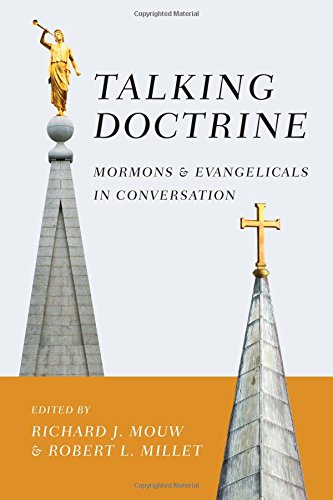
Talking Doctrine: Mormons & Evangelicals in Conversation is an intriguing collection of essays from evangelical and Mormon scholars (see my review). In one essay, Cory B. Willson briefly comments on something that an evangelical, Richard Mouw, said in an address at the Mormon Tabernacle in 2004:
The common habit of telling Mormons what they believe without bothering to ask them, Mouw noted, has often led to misrepresenting and even demonizing their beliefs and practices–a form of bearing false witness against our Latter-day Saint neighbors. (80, cited below)
Mouw’s point should be well-taken. Too often in interfaith dialogue there is a tendency to jump on assumed beliefs rather than getting to know the religious “other.” Instead, we should focus on what those religious “others” are actually telling us they believe, so that we do not give false testimony against them. I wrote a post about a vision for Christian apologetics to world religions that focuses more on this topic.
What do you think? How might we map ways forward in interfaith dialogue that does not misrepresent the other side? How could this be better applied to evangelical-Mormon discussions?
[Note: there are some different ways of numbering the commandments. The Commandment Referred to here is “Do not give false testimony against your neighbor” which is commonly known as the 8th or 9th Commandment, depending on how a tradition breaks them up. I stuck with it as the 9th commandment because that’s how the quote had them numbered.]
Links
Be sure to check out the page for this site on Facebook and Twitter for discussion of posts, links to other pages of interest, random talk about theology/philosophy/apologetics/movies and more!
Sunday Quote– If you want to read more Sunday Quotes and join the discussion, check them out! (Scroll down for more)
Book Review: Talking Doctrine: Mormons and Evangelicals in Conversation edited by Mouw and Millet– I review the book from which this quote came.
Source
Talking Doctrine: Mormons and Evangelicals in Conversation edited Mouw and Millet (Downers Grove, IL: InterVarsity, 2015).
SDG.
Andy Weir’s “The Martian”- A Christian Look at the Book: Humanity, Community, and Hope
 There is a lot of buzz surrounding Andy Weir’s novel, The Martian. It’s being made into a movie staring Matt Damon. Here, we will look at the book from a worldview perspective. There will be major SPOILERS in what follows.
The Value of a Human
One of the objections raised in the novel to moving missions around to try to save Mark is the sheer cost of the expedition. Why spend millions or even billions of dollars trying to save just one person, particularly when there are so many others who could be saved?
Towards the end, Mark himself is reflecting on this and he writes “The cost of my survival must have been hundreds of millions of dollars. All to save one dorky botanist. Why bother? …[T]hey did it because every human being has a basic instinct to help each other out. It might not seem that way sometimes, but it’s true… Yes, there are [expletive]s who just don’t care, but they’re massively outnumbered by the people who do. And because of that, I had billions of people on my side.”
The appeal to basic goodness of humanity is not without a number of assumptions. For example, how is it that the basic goodness of humanity is established? It isn’t just assumed–the evidence cited is that the overwhelming majority of people have basic instinct built into them to help others. But I wonder whether that evidence is drawn more from the extraordinary circumstances Mark found himself in than from the reality of human nature. It is a fact that women are taught in this country (the United States) to shout “fire” rather than “rape” if they are under assault, because people will answer more readily to cries to help fight a fire than they will try to intervene in an assault. The circumstances often determine how willing we are to go the extra mile to help others.
Thus, the conclusion seems a bit naive. Yes, the world pulled together in this work of fiction to help a man stranded on Mars–and I suspect that all kinds of red tape would, in fact, be cut if this ever happened–but that cannot be applied universally to every situation. The fact that there is so much human suffering happening right now–visible human suffering that can be seen in places that are, for example, attacked by IS, or wracked by storms, and the like–without humanity pulling together to stop it suggests that this notion of universal good will towards all is not as powerful as was suggested.
On the other hand, from a Christian perspective, each and every human life is precious, not because we have some inherent need to help others (though that could arguably be there), but because we share human nature, a nature given to us by God to be the image of God in this universe. Humans are valuable simply because they are humans, and we have an obligation to help those in need.
Humans and Others
It is not explored very deeply, but there is a sense throughout the book that humans are made to be with others. Mark feels a profound sense of loneliness when he realizes he is stuck on Mars, but he ultimately gets to work on trying to survive as quickly as possible. This work helps to distract him from his sense of loss, but at times throughout the book it crops up again. The sense of loneliness is at times crushing for him, but he is always able to get himself moving again, perhaps because he continually has hope that the loneliness will be squashed by being rescued or at least getting contact with Earth.
Humans are made to be people in community. I think this again reflects the Christian concept of the image of God. As God is Triune and in community (speaking here rather metaphorically, of course), we are made to be in community as well. Moreover, God created man but then realized “it is not good for man to be alone” and created a woman. These profound words are often explored from various angles, but I wonder whether they don’t also speak to us from a sense of loneliness. We are not meant to be alone but rather to exist in community. Our existential longing and loneliness ultimately points beyond ourselves to a higher reality–in which we may experience communion with God.
Conclusion
The Martian is an entertaining read. It doesn’t raise as many worldview questions as some other science fiction works do, but it does ask us to consider the value of humanity and shared experience. I’d recommend reading it, but be aware of a large amount of swearing.
Links
Be sure to check out the page for this site on Facebook and Twitter for discussion of posts, links to other pages of interest, random talk about theology/philosophy/apologetics/movies and more!
Popular Books– Read through my other posts on popular books–science fiction, fantasy, and more! (Scroll down for more.)
SDG.
——
The preceding post is the property of J.W. Wartick (apart from quotations, which are the property of their respective owners, and works of art as credited; images are often freely available to the public and J.W. Wartick makes no claims of owning rights to the images unless he makes that explicit) and should not be reproduced in part or in whole without the expressed consent of the author. All content on this site is the property of J.W. Wartick and is made available for individual and personal usage. If you cite from these documents, whether for personal or professional purposes, please give appropriate citation with both the name of the author (J.W. Wartick) and a link to the original URL. If you’d like to repost a post, you may do so, provided you show less than half of the original post on your own site and link to the original post for the rest. You must also appropriately cite the post as noted above. This blog is protected by Creative Commons licensing. By viewing any part of this site, you are agreeing to this usage policy.
Sunday Quote!- Making a Composite Jesus
 Every Sunday, I will share a quote from something I’ve been reading. The hope is for you, dear reader, to share your thoughts on the quote and related issues and perhaps pick up some reading material along the way!
Making a Composite Jesus
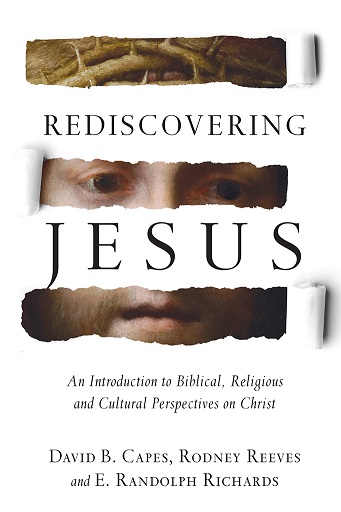
I finished reading through Rediscovering Jesus not too long ago and I was struck by something fairly early on: the authors challenged readers to come to the realization that we are often operating under a kind of composite portrait of Jesus:
My Jesus is often a smorgasbord Jesus, a Jesus who doesn’t look like the one in the Bible. Just like a buffet in the cafeteria, where I go through the line and pick out what I want, I read through the Gospels, pulling out stories I like. (17, cited below)
The authors go on to note that our view of Jesus is not only formed buffet-like from imagery found in the Bible, but also through various ways the culture has influenced us to think about Jesus. What are some of the ways that your picture of Jesus may have been shaped by extra-biblical imagery? How might we find the composite Jesus we have created that often stands alongside us as we try to read about Jesus in the scriptures?
Rediscovering Jesus is full of insights like this, and I highly commend it to you, dear readers.
Source
David B. Capes, Rodney Reeves, and E. Randolph Richards, Rediscovering Jesus (Downers Grove, IL: InterVarsity, 2015).
Links
Be sure to check out the page for this site on Facebook and Twitter for discussion of posts, links to other pages of interest, random talk about theology/philosophy/apologetics/movies and more!
Sunday Quote– If you want to read more Sunday Quotes and join the discussion, check them out! (Scroll down for more)
SDG.
Really Recommended Posts 9/25/15- Biblical language preaching, mosques, “War Room,” and more!
 Hello dear readers! I have put together another list for you to peruse. This week, we’re looking at mosques and churches, using biblical languages in preaching, dealing with aggression in apologetic interactions, the age of the earth based on coral reefs, and “War Room.”
3 Tips for Using Biblical Languages in Preaching– How should pastors make use of that great seminary education and the biblical languages? Well, for one, they should use it big time for research and also doing apologetics. For another, here are some tips about how to use it in preaching in such a way that it won’t go over people’s heads.
The Mosque Denied Today Could Be the Church Denied Tomorrow– When we speak of “religious freedom” we should be aware that that freedom stands or falls for people of different faiths together. That’s why, for example, several Lutheran groups stood with several Native American groups on getting the rights to use various natural drugs in their ceremonies: one day it is trying to make those illegal, the next communion wine might not be served. Here’s a post reflecting on that reality in a time in which a mosque has been denied.
Greg Koukl Explains the Right Way to Deal with an Angry Aggressive Atheist– Unfortunately there are times when people think the way to interact with others is to simply try to “steamroller” them out of the conversation. This doesn’t apply only to angry atheists but can be applied to even theological discussions in which people don’t want to allow for genuine interaction.
Coral reefs are too old to be young!– When we look at the various methods for dating coral reefs, it becomes pretty clear that a Young Earth Creationist understanding of their age cannot hold up under scrutiny.
An Egalitarian War Room Review– I have seen many theological critiques of War Room, from its apparent allowance for people to stay in abusive (verbally) relationships to a kind of God as divine vending machine mentality. Here is one coming at it from the angle of egalitarianism.
Book Review: “Rescuing the Gospel from the Cowboys” by Richard Twiss

Rescuing the Gospel from the Cowboys by Richard Twiss presents a broad, far-reaching analysis of the contact and sometimes conflict between Christianity and Native cultures.
Conflict is a major theme of the book, as Twiss traces the history of interactions between Western Christians and Native peoples. This history involves much wrongdoing, from wanton destruction of Native peoples through disease (which was at some points compared to the plagues on Egypt attacking the Native peoples), to continued missiology that refuses to adapt to new insights from anthropology.
A central question asked time and again through the book is why, in order to be Christian, people must give up all their cultural background and embrace a Eurocentric version of religious practice. The example often used is that of drums in worship. Many argue that this is an example of potentially dangerous syncretism–the incorporation of anti-Christian ideology into allegedly Christian worship. They allege that because drums have been used in spiritual fashions that are non-Christian, they must be tied to non-Christian beliefs. Twiss argues that, instead, it is an example of critical contextualization–integrating the Christian faith by means of cultural expressions. He notes that this is allowed in all kinds of ideas and expressions in Western cultures. He mentions the integration of Platonic and Aristotelian thought into Creedal expressions as one example. Another example could be the general allowance for Christmas trees–themselves once expressions of pagan practices.
Thus, a major aspect of Twiss’ project is to demonstrate that Native peoples must be allowed to develop their own understanding of how to follow the Jesus way. Just as in Western churches, incense, organs, Christmas trees, specific candle lightings, and the like are allowed and even endorsed; so too should Native expressions and critical incorporation of their own practices be allowed in worship. Only then, argues Twiss, can the Gospel be truly integrated into Native life and communities.
Twiss also outlines various ways missions have been done to Native peoples and notes that these have largely changed and adapted in response to new insights from anthropology, but these adaptations have been adapted abroad, not in Native mission fields. This means a continued colonializing is taking place as Native peoples are expected to change everything, without being allowed to keep their own religious expressions. He summons much data to support these claims.
A major chapter in the book features his amalgamation of stories into a fictional sweat lodge ceremony in which nine different Native men are talking about their struggles with following Christ in a Native culture. These provide great insights into the ways in which Native people have worked to integrate their culture and faith together and met enormous resistance.
By the time I finished the book, I realized that I’d had to be fairly introspective and consider my own faults along with all that I had learned. I had, at least in my head, thought of various practices like integrating Native dancing into worship as being some kind of syncretism. I hadn’t thought about how plenty of the things I do (Christmas trees, for example) had sprung from a cultural milieu and come to be accepted in Western Christianity. I had been convicted by Twiss, but also enlightened.
The few critiques I have to offer of the book pale in comparison to its insight, but I’ll note them here. First, there are a couple times in which it seems to repeat the same point more than once–sometimes even with the same quote or citation. I’m sure this is due to it having been finished posthumously, and so the editors drew together works from Twiss’ other materials, but it remains disconcerting at points. Another issue is that there are several points at which Twiss lists a whole slew of relevant scholars and a major work or two from each. It’s the kind of thing that could have been more easily relegated to endnotes in order to clean up the text a bit, but this is a minor nitpick.
The appendices are quite useful, including a list of various words or phrases used to refer to Native American peoples, as well as when they were first used and how they’ve come to be used now.
I recommend Rescuing the Gospel from the Cowboys as highly as possible. It is filled with excellent information, convicting insights, and hope. Pick it up and read it.
The Good
+Touches on a number of important topics
+Deep insights with convicting but guiding words
+Awesome cover
+Excellent use of stories to illustrate important points
+Provides hope and applicable insights
+Useful appendices
The Bad
-Occasionally repetitive
-Large lists of scholars at points with little context
Disclaimer: I received a review copy of this book from the publisher. They did not require any specific kind of feedback whatsoever.
Links
Be sure to check out the page for this site on Facebook and Twitter for discussion of posts, links to other pages of interest, random talk about theology/philosophy/apologetics/movies and more!
Book Reviews– There are plenty more book reviews to read! Read like crazy! (Scroll down for more, and click at bottom for even more!)
Source
Richard Twiss, Rescuing the Gospel from the Cowboys (Downers Grove, IL: InterVarsity, 2015).
SDG.
——
The preceding post is the property of J.W. Wartick (apart from quotations, which are the property of their respective owners, and works of art as credited; images are often freely available to the public and J.W. Wartick makes no claims of owning rights to the images unless he makes that explicit) and should not be reproduced in part or in whole without the expressed consent of the author. All content on this site is the property of J.W. Wartick and is made available for individual and personal usage. If you cite from these documents, whether for personal or professional purposes, please give appropriate citation with both the name of the author (J.W. Wartick) and a link to the original URL. If you’d like to repost a post, you may do so, provided you show less than half of the original post on your own site and link to the original post for the rest. You must also appropriately cite the post as noted above. This blog is protected by Creative Commons licensing. By viewing any part of this site, you are agreeing to this usage policy.
Sunday Quote!- On Theological Controversies from John Newton
Every Sunday, I will share a quote from something I’ve been reading. The hope is for you, dear reader, to share your thoughts on the quote and related issues and perhaps pick up some reading material along the way!
On Theological Controversies- From John Newton
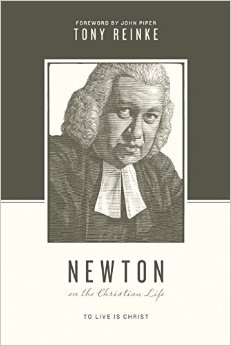
I recently finished reading Newton on the Christian Life (see my review here), a book about John Newton’s pastoral theology. John Newton worked on slave ships but after his conversion worked to help end slavery in the British Empire. His pastoral theology had great depth, as evidenced in this quote on theological controversies, published in a newspaper during a particularly bitter debate between Arminians and Calvinists:
[B]efore you engage in debate, you must take heed of your opponent. He is an eternal creature. If he is not a Christian… he warrants your deepest pity, kindness, and prayers… If, however, your theological opponent is a genuine Christian, think about your future together in heaven.” (Kindle Location 5460, cited below)
Think about that for a moment. Your “debate opponent” will be together with you in heaven forever. This isn’t someone you can hide comfortably from behind a keyboard. You’ll meet one way or another. How do you think you should treat this child of God?
But that’s not all. Newton’s advice applies even moreso if the debate is against someone who is not a Christian, for they “warrant… your deepest pity, kindness, and prayers.” What kind of Christians are we if our theological debates drive people away from Christ (another theme in Newton’s pastoral theology)?
We should keep in mind Newton’s advice as we engage others; all of whom bear the image of God.
Links
Be sure to check out the page for this site on Facebook and Twitter for discussion of posts, links to other pages of interest, random talk about theology/philosophy/apologetics/movies and more!
Sunday Quote– If you want to read more Sunday Quotes and join the discussion, check them out! (Scroll down for more)
Source
Tony Reinke, Newton on the Christian Life (Downers Grove, IL: Crossway, 2015).
SDG.
Really Recommended Posts 9/18/15- Anti-Trinitarianism, Homo Fossil, and more!
Another week, another batch of great reads for you, dear readers. As I write this, I’m running a fever so I’m not going to offer much commentary. Just read the stuff. It’s worth your time.
How to Defend an Anti-Trinitarian Theology– This post presents a challenge for those who would attempt to defend an Anti-Trinitarian theology from the Bible. It outlines the difficulties that face those who would take such a position. Well worth the read, trust me!
Biological Determinism and the “Oughtness” of Manhood– “If the eligibility criteria for church leadership includes possessing a Y chromosome, then we have already bought into the notion that our genes determine who we can and cannot be in the body of Christ.” If we are biologically determined, what follows from that?
The Danger of Teaching Kids to Be True to Themselves– If we teach kids to simply be true to themselves, what follows from it? Here are some potential pitfalls from the popular “be true to yourself” philosophy. Do you think that they are overstated, or not?
Bones of Contention: Ape, Human, or Fraud? Young Earth Creationists Respond to the Dinaledi Chamber Fossil Discovery– A survey of some of the popular Young Earth responses to the recent find of a possible homo fossil.
Humans and Persons– Here’s a post that challenges the hard division between humans and persons that some are trying to press for for the sake of certain moral commitments.
Book Review: “Bavinck on the Christian Life” by John Bolt
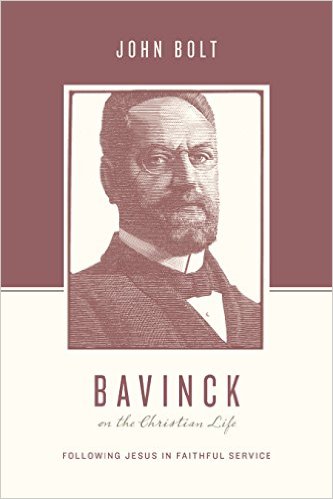
Bavinck on the Christian Life is another entry in the “Theologians on the Christian Life” series from Crossway. Check out my other reviews in the series.
The chapter on union with Christ is particularly insightful. Bolt draws out Bavinck’s insights into Christology, which include going beyond redemption and looking to eschatology and creation as important aspects of Christology as well. Union with Christ is explored from various angles, including penetrating looks at deism and pantheism alongside an examination of the Orthodox doctrine of theosis. This latter portion is particularly interesting both because it allows for some evangelical-Orthodox dialogue and because it clarifies some important distinctions Orthodox distinctions make that allow them to avoid pantheism or panentheism in regards to divinization.
I also appreciated the extensive biographical background to set the stage for Bavinck’s theology by showing how he interacted with the controversies of his time. The overview provided herein of Bavinck’s thought is also insightful. He was thoroughly Calvinist. His view of the world was tied up in Trinitarianism, and he grounded not only his view of reality but also of various aspects of reality in the Trinity. An important insight from Bavinck is the way in which work is part of the human vocation and living out of the image of God. As a Lutheran I particularly enjoyed the emphasis on work as being part of God’s plan for humanity.
One criticism I have is that the author seemed to have a bit of a political axe to grind. In chapter 3, for example, welfare is mentioned at least twice and referenced off hand a third time. Bolt seems keen to point out that Christians can differ on this subject, writing at one point “The Bible is quite clear about the responsibility of God’s children to help those who are poor and needy. Whether or not this commitment to the poor demands support for higher taxes and greater government welfare is quite another matter” (Kindle location 1211-1221). The 10th chapter of the book returns to this issue and places it in Bavinck’s own context with debates over the social gospel and the meaning of the Kingdom (see especially Kindle location 4300 and following). This at least places the whole discussion in Bavinck’s own day.
Yet, remarkably, Bavinck’s response to social inequality seems, according to Bolt, to simply shift the problem elsewhere. Bavinck casts inequality and social injustice squarely into the realm of divine sovereignty: “God’s preordaining was the final, most profound cause of all differences among creatures… It is neither the free will of man, nor merit and worth, nor culture or even nature that is the source… but God’s almighty and all-powerful will…” (4540). I’m not saying this is inherently mistaken. What I’m saying is this doesn’t even begin to answer the question raised: how should we deal with injustice? Sure, a Calvinist would argue that all that happens is sovereingly decreed by God, but how does just saying that in any way answer the preceding question? It just moves it up a (or several) level(s).
Bavinck was also someone who “ascribe[d] to women a primary calling in the home, and he point[ed] to human history, as well as the narratives and laws of the Old Testament, as evidence for a patriarchal structure of human society” (Kindle location 3001). Yet, he also argued that no man is complete without some aspects of femininity and no woman is complete without some aspects of masculinity. How that plays out is largely left up for interpretation, though Bolt argues that this demonstrates that although Bavinck would align with “complementarianism”–the view that men and women have different roles in church and home–he would not ascribe to some of the “will-to-power, macho masculinity and eroticized or subservient, passive femininity” (Kindle loc 3076). Bavinck also challenged some of the patriarchal views of his own society. One way he did this was supporting women’s suffrage. These are admirable qualities He emphasized the role of children and family as the calling of humanity, but one wonders what this might say to those who remain single or childless.
A final, though minor, critique is that there are many portions of the book in which the overall outline of the book is walked back through, or references are made to previous chapters alongside a brief description of why such a reference is relevant in context. It’s a minor thing to point out, but it was distracting at points and gave an impression that the book wasn’t always organized logically.
Bavinck on the Christian Life provides perspective on Bavinck’s thought, life, and context. It isn’t quite as polished as the other books in the series, but it remains a worthy read.
The Good
+Interesting insight into the theological context of Bavinck’s day
+Good cautionary words on worldview analysis
The Bad
-At some points too concerned with modern controversies
-Too many words spent explaining why the book was organized in the fashion it was
-Expresses commitment to “patriarchy”
Disclaimer: I was provided with a review copy of the book from the publisher. I was not asked to give any specific kind of feedback whatsoever.
Links
Be sure to check out the page for this site on Facebook and Twitter for discussion of posts, links to other pages of interest, random talk about theology/philosophy/apologetics/movies and more!
Book Reviews– There are plenty more book reviews to read! Read like crazy! (Scroll down for more, and click at bottom for even more!)
Source
John Bolt, Bavinck on the Christian Life (Wheaton, IL: Crossway, 2015).
SDG.
——
The preceding post is the property of J.W. Wartick (apart from quotations, which are the property of their respective owners, and works of art as credited; images are often freely available to the public and J.W. Wartick makes no claims of owning rights to the images unless he makes that explicit) and should not be reproduced in part or in whole without the expressed consent of the author. All content on this site is the property of J.W. Wartick and is made available for individual and personal usage. If you cite from these documents, whether for personal or professional purposes, please give appropriate citation with both the name of the author (J.W. Wartick) and a link to the original URL. If you’d like to repost a post, you may do so, provided you show less than half of the original post on your own site and link to the original post for the rest. You must also appropriately cite the post as noted above. This blog is protected by Creative Commons licensing. By viewing any part of this site, you are agreeing to this usage policy.


