J.W. Wartick
Young Earth Creationism Does Not Have Historical Pedigree
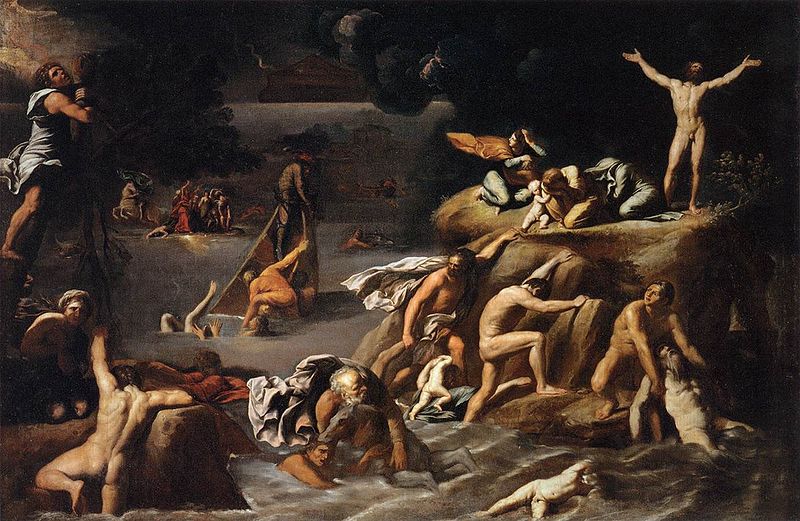
Young Earth Creationists often claim that their view has been the position of the church since its earliest period. Here, I will challenge that notion and argue that, instead, modern creationism is unrecognizable in historic Christianity. Thus, my contention is simple:
Modern young earth creationism has no historical pedigree.
It is impossible to go through a comprehensive survey of early Christian teaching on creation, so my discussion here will be necessarily brief. Further reading may be found in the sources cited, below. I note that if someone wants to contradict my contention, above, they must present evidence showing that the claims about Flood Geology, etc. are all present in early church writings, or indeed any church writings before around 1600.
Now, it is a simple fact that for much of church history, theologians held that the Earth was only a few thousand years old. Do not take this sentence out of context. Recall that we’re talking about modern young earth creationism, not just a belief that the Earth is young. To say that because, for example, some church fathers held the world was a few thousand years old and allege that proves they held to modern creationism is a blatant historical anachronism for several reasons.
First, the reason many of these early teachers of the church held to this view is because their view of overall history was such that the 6 days of creation should match up with 6 “days” of thousand year periods of all of history, culminating in the second coming. The literature on this is quite easy to find, but here are a few choice examples:
“the Lord will finish all things in six thousand years, for a day is with Him a Thousand years… in six days, that is, in six thousand years, all things will be finished…” – Epistle to Barnabas, (quoted in Young and Stearley)
“for in as many days as this world was made, in so many thousand years shall it be concluded.”- Irenaeus (quoted in ibid, 35)
“[Because] in six days God made all things, it follows that 6000 years must be fulfilled.” – Hippolytus (quoted in ibid, 35)
These quotes could be (and are, in the literature) multiplied. The simple fact is that the earliest interpretation of the Genesis text was yes, that it took place in 6 days, but also that those 6 days were important because they outlined the 6000 years of all of Earth’s history, which would end in a seventh day rest of 1000 more years.
Does that sound like modern young earth creationism to you? It shouldn’t. I don’t know of any modern creationist who holds that the Earth should have already ended because it is more than 6000 years old now, or that the days in Genesis correspond strictly to days of 1000 year lengths that define the history of creation.
Second, even the early thinkers who resonate most closely with modern young earth creationism would not have recognized it as it exists now. Early flood theories often had the water simply get placed on earth miraculously and then destroyed by God, held to a “tranquil flood” theory in which the global flood didn’t make any impact on the surface of the planet, held that fossils weren’t actual vestiges of previously living organisms (an interesting piece of geological history), and the like.
 Why is it that YECs take these writers out of their historical contexts? It would be easy to say it is due to a project of quote-mining to find support for one’s view in the past–and I’m sure this is part of it–but perhaps a lot of it is just mere ignorance. The volumes of writings we have from the church fathers, for example, would take years to read, and lifetimes to become well-versed in. Many haven’t even been translated. Thus, it is more expedient to simply find the quote that supports one’s view and use it.
But that’s not at all how we should construct historical theology. The fact is that the constant parade of claims made by YECs that their position is that of the early church is only possible because of a lifting of quotes from church fathers out of their context in order to support the position. Moreover, the people quoted themselves, though they would support the notion of a “young earth” would do so for theological reasons tied to their view of the whole of human history–one which I know of no modern YEC buying into. To cite them as supporting modern YEC, then, is a kind of baptism-by-decontextualization. Only by ignoring the very reasons the early church held their views and the theological worldview that the early church operated under can a YEC find support for their view.
An analogy might be helpful here. To say that the early church agrees with modern young earth creationists would be like saying the early church agrees with modern modalists. Why? Because, after all, many modern modalists claim to be able to uphold the Apostles’ Creed, which, after all, never speaks of distinction of persons in an explicit enough way so as to exclude modalism. Thus, a modalist could say “Our view is from the Apostles’ Creed.” Now of course this is an extreme example, and one could argue at length as to whether the modalist is actually agreeing with the historic Creed, however, the point is that simply finding a single point of doctrine with which one agrees does not mean that one holds to an historic Christian view. It is instead to treat a system of doctrine as something which may be broken apart piecemeal into individual affirmations and then find one of these affirmations with which one agrees. But that doesn’t show one agrees to the system, only to one decontextualized part.
Thus, the best a modern YEC can claim is that the early church also felt the Earth was only a few thousand years old. But to leave it at that is disingenuous, because it paints a picture as though the early church believed this for the same reasons the modern YEC does, but that is not the case. Or perhaps instead it is to, as noted above, just break apart doctrinal systems into component parts and just pick what suits oneself. In either case, it is a mistaken way to approach the question.
The reason the early church held to the young earth was because, as noted above, of their view of the history of the Earth corresponding to 6 days of 1000 years each, not because of alleged geological evidence for a global, catastrophic flood. Although some of the early writers did not hold to this 6 – 1000 paradigm, it is very clear from their writings that there was absolutely no familiarity with the kind of “the Flood did it” reasoning which is so pervasive in YEC today. Modern creationism is founded upon Flood Geology, an absolutely foreign concept to the earliest church teachings.
Indeed, the notion that the early church would have even recognized modern YEC is a bit absurd. Modern YECs use the Noachian Deluge to explain the fossil record, stratification, and the like. But up until John Ray’s time period in the late 1600s, it had been assumed fossils were simply tricks of the rock, not vestiges of once-living organisms (for some interesting reading on this history, check out this post on John Ray). Thus, someone living earlier would simply not have understood what was meant by saying fossils were due to the Flood, let alone knowing what fossils even refer to! Moreover, stratification as a studied feature of geology didn’t really begin in earnest until the 1800s. Again, to then attribute Flood theories back to the early church is wrongheaded.
The Bottom Line
To put what we’ve reviewed above all together: modern young earth creationism does agree with the historical church broadly on the age of the Earth. That’s it. But the categories of thought in which the church has historically envisioned the history of the universe–the very context which YECs try to link their views–have no points of contact with modern creationism. Indeed, they would have been baffling to the early church because these points of contact with Flood Geology simply do not exist. The reasons the early church believed in a “young earth” were linked to their own faulty reading of Scriptures, and an eschatology not shared by modern YECs. In short, Modern Young Earth Creationism has no historical pedigree.
The Young Earth Challenge, Restored
‘Ah!’ one might exclaim. ‘That means that, at least, the early church held to the notion that the Earth was young.’
Well yes, it does mean that. But that hardly justifies belief in modern YEC. Modern YEC is an invention intended to unify the geologic record with an interpretation of the Bible. It is itself an entire system. This interpretation, which leads to speculation about the way the flood formed the geologic record, is not found in the early church. If you disagree, find it for me. Demonstrate that, say, Irenaeus when he wrote about the entire history of the Earth as corresponding to 6 days of 1000 years each, was actually speaking of how Noah’s Flood shaped the geology of the planet in order to layer sediment one atop the other. If one cannot do this, they should not claim to garner support for YEC from the early church.
Once more, YEC has no historical pedigree.
Links
Be sure to check out the page for this site on Facebook and Twitter for discussion of posts, links to other pages of interest, random talk about theology/philosophy/apologetics/movies and more!
“Oceans of Kansas,” Unexpected Fossils, and Young Earth Creationism– I discuss the alleged findings out out-of-sequences fossils in the fossil record and how YEC explanations fail to show they are attributable to a global catastrophic Flood.
What options are there in the origins debate? – A Taxonomy of Christian Origins Positions– I clarify the breadth of options available for Christians who want to interact on various levels with models of origins. I think this post is extremely important because it gives readers a chance to see the various positions explained briefly.
Source and Further Reading
Davis A. Young and Ralph F. Stearley, The Bible, Rocks and Time: Geological Evidence for the Age of the Earth
Stanley L. Jaki, Genesis 1 Through the Ages (New York: Thomas Moore Press, 1992).
SDG.
——
The preceding post is the property of J.W. Wartick (apart from quotations, which are the property of their respective owners, and works of art as credited; images are often freely available to the public and J.W. Wartick makes no claims of owning rights to the images unless he makes that explicit) and should not be reproduced in part or in whole without the expressed consent of the author. All content on this site is the property of J.W. Wartick and is made available for individual and personal usage. If you cite from these documents, whether for personal or professional purposes, please give appropriate citation with both the name of the author (J.W. Wartick) and a link to the original URL. If you’d like to repost a post, you may do so, provided you show less than half of the original post on your own site and link to the original post for the rest. You must also appropriately cite the post as noted above. This blog is protected by Creative Commons licensing. By viewing any part of this site, you are agreeing to this usage policy.
Sunday Quote!- Questioning Exegesis Through Discovery?
Every Sunday, I will share a quote from something I’ve been reading. The hope is for you, dear reader, to share your thoughts on the quote and related issues and perhaps pick up some reading material along the way!
Questioning Exegesis Through Discovery?
One area that evangelical theologians must weigh is the notion that exegesis should line up with reality. Thus, how might one balance an interpretation between some apparent readings and the findings of certain scientific discoveries? Must they even be balanced at all? Davis Young and Ralph Stearley’s magisterial work on the age of the Earth, The Bible, Rocks and Time, provides an interesting historical background for how discoveries led to the questioning of exegesis of certain texts:
[In the 17th Century…] foundations were gradually being laid for questioning the accepted opinion about the age of the Earth [that being a few thousand years]. Advances in the study of fossils and rock strata were both necessary before such questioning would come about… (47, cited below)
Thus, historically, there has been an interplay between scientific discovery and exegesis of key texts of Scripture. Without certain scientific advances, received opinion on certain features of the natural world remain unquestioned. However, once scientific advances made it possible, these opinions were challenged and often abandoned in the face of extrabiblical evidence. The book provides a great overview for how the interplay between discovery and exegesis played out.
What are your thoughts? Should new discoveries be allowed to challenge received interpretations? How might we best deal with discoveries in the natural world which apparently clash with our reading of the text?
Links
Be sure to check out the page for this site on Facebook and Twitter for discussion of posts, links to other pages of interest, random talk about theology/philosophy/apologetics/movies and more!
Sunday Quote– If you want to read more Sunday Quotes and join the discussion, check them out! (Scroll down for more)
Source
Davis A. Young and Ralph F. Stearley, The Bible, Rocks and Time (Downers Grove, IL: InterVarsity Press, 2008).
Question of the Week: Paradigm Shifting Books
 Each Week on Saturday, I’ll be asking a “Question of the Week.” I’d love your input and discussion! Ask a good question in the comments and it may show up as the next week’s question! I may answer the questions in the comments myself.
Paradigm Shifting Books
I’ve been re-reading a lot of books recently and it’s made me reflect on how some books have truly changed how I thought about things. Sometimes, this even applies to whole paradigms and ways of thinking instead of simply changing how I viewed a specific event or whether I thought a specific fact was true or not. In light of that:
Have you ever read a book which forced you to re-think a topic so thoroughly that it shifted your paradigm? What was it? What did it make you think about?
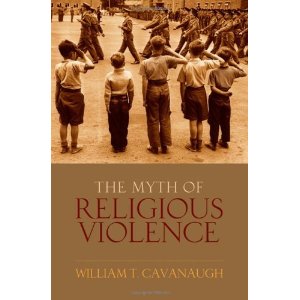
The picture on this post is one of those books for me. It made me rethink how I thought about “religious violence” and even whether there is such a thing as “religious” as a distinct category from “secular.” It was a monumentally important book for me and has continually found me going back to it and referencing ideas. I hope you, dear readers, have had books like this in your own lives.
Links
Be sure to check out the page for this site on Facebook and Twitter for discussion of posts, links to other pages of interest, random talk about theology/philosophy/apologetics/movies and more.
Question of the Week– Check out other questions and give me some answers!
SDG.
Really Recommended Posts 8/8/14- 666 and the Beast, Evidentialism, Pascal, and more!
 I have set up another round of great posts for your reading pleasure, dear readers! Check out posts on eschatology, egalitarianism, apologetics, creationism, and more! Let me know if you liked a post in the comments below, and if you liked theirs, be sure to let them know! Comments keep us going! This edition is an “owl post” because I’m watching Harry Potter while I write this.
The Mark of the Beast Demystified; or, “I’ve got 666 problems but the rapture ain’t one of them”– A post which discusses the various interpretations of the “Mark of the Beast” among various eschatological views. A very good read!
Different but Equal? Giving Words their Real Meaning– What is entailed by a position which suggests that men and women have different but equal roles in marriage and the church (and society)? Check out this evaluation of the position.
Why I’m a Christian Evidentialist– J. Warner Wallace explains the benefits of an apologetic method like evidentialism and the reasons he chose this method over any other. It’s a fascinating post with some solid insights. While you’re at it, why not answer the “Question of the Week” about your own favorite apologetic method?
Ken Ham’s Ark Adventure to Usher in a Modern Reformation?– Ken Ham of Answers in Genesis was recently in the news for his views on aliens, but he’s also been working to build Noah’s Ark, kind of. Check out this post which analyzes Ham’s comments about this project and the history of creationism.
Betting on Pascal’s Wager, Kind of– Pastor Matt Rawlings explains Pascal’s Wager in a brief, basic way. I recently also outlined and defended a version of the Wager, which I think has more credence than many people grant it.
“The Measure of a Man” – Star Trek: The Next Generation and Personhood
 Star Trek: The Next Generation is my favorite television series. I’ve been rewatching it recently with my wife and I got to the episode called “The Measure of a Man” (check out my plot recap and review here). This episode brings up some issues I felt were pretty relevant for discussing here. We will explore only two major aspects of this episode: personhood and self-sacrifice. There will be SPOILERS for the episode in what follows.
Personhood
The episode centered around the question of whether Data could be property. Properly speaking, it seems the episode was centered around whether Data was to be considered a “person” in the legally relevant sense. The arguments brought up regarding this question were interesting, particularly for those of us interested in philosophy of mind.
Data’s conversation with Maddox, the scientist who wishes to disassemble him in order to build more of him, centers around phenomenal consciousness. Data argues that although he has no doubt Maddox could preserve the content of his memories by simply downloading the, erm, data from his brain, he thinks there is something more to these thoughts and memories than simple facts. There is a “feel” to thoughts which have a kind of aboutness that is ultimately beyond the facts and into the realm of experience.
Frankly, this is a stunningly complex argument to make for a television show. It reflects a kind of appeal to phenomenology: the content of thoughts and the “aboutness” or taste of them. Some philosophers of mind (and I would agree with them) argue that there is a real notion of this phenomenal aspect of thought which goes beyond the simple facts. Indeed, this very aspect of thoughts and feelings–the ability to have an “about” aspect to them–is the very criterion for consciousness which some philosophers appeal to. In context of the episode, if Data really has this “aboutness,” I would say it is indisputable that he would be a person (not to say that consciousness is required for personhood, but surely a self-aware, conscious being would by necessity a person be).
Ultimately, the episode climaxes in an argument over what is it that determines someone as human or a person, and Maddox summarizes the standard definitions well by appealing to self-awareness and consciousness–though again this is disputable: surely I am a person even when unconscious!–and the arguments center around this question. These are interesting and necessary questions and I think they get at the depth of the philosophical debate surrounding this issue.
Self-Sacrifice
Interestingly, this episode also clearly focuses on the concept of “self-sacrifice.” William Riker does not want to prosecute the case against Data, but he is forced to in order to save his friend. In one epic scene, he ends up flipping Data’s power switch off and as Data collapses he says “the strings are cut” referring to Pinocchio. The final scene shows Data finding Riker staring out into space, clearly pensive over his actions and hurt over his own seeming attack on his friend. Data, however, states that although Riker knew his actions would “wound” him, Riker still prosecuted the case because he knew the alternative would be, for Data, at least akin to if not literally death. Thus, Data says, Riker “saved me.”
This kind of self-sacrifice is found exactly at the heart of the Christian message. Christ was wounded for our transactions, and, as Riker does here, Jesus came knowing that such wounding would happen. These wounds were borne for our sake.
Conclusion
“The Measure of a Man” is one of those rare episodes of a serial TV show which forces viewers to take a step back and think–really think–on a topic. Whether you agree with the conclusions of the episode or not, it must be admitted it raises a number of interesting topics to explore. What do you think of this episode? What additional themes did you pick up in it? How do your favorite shows resonate with your worldview?
Links
Be sure to check out the page for this site on Facebook and Twitter for discussion of posts, links to other pages of interest, random talk about theology/philosophy/apologetics/movies and more!
Star Trek: TNG Season 2, “The Measure of a Man” and “The Dauphin”– Check out my ongoing recaps and reviews of Star Trek: TNG episodes at my “other interests” site, Eclectic Theist. Here, I review this episode and the following one. More recaps may be viewed here or by searching on that site.
The photo in this episode was a screenshot capture of the episode. I claim no rights to it and use it under fair use.
SDG.
——
The preceding post is the property of J.W. Wartick (apart from quotations, which are the property of their respective owners, and works of art as credited; images are often freely available to the public and J.W. Wartick makes no claims of owning rights to the images unless he makes that explicit) and should not be reproduced in part or in whole without the expressed consent of the author. All content on this site is the property of J.W. Wartick and is made available for individual and personal usage. If you cite from these documents, whether for personal or professional purposes, please give appropriate citation with both the name of the author (J.W. Wartick) and a link to the original URL. If you’d like to repost a post, you may do so, provided you show less than half of the original post on your own site and link to the original post for the rest. You must also appropriately cite the post as noted above. This blog is protected by Creative Commons licensing. By viewing any part of this site, you are agreeing to this usage policy.
Sunday Quote!- The Gullibility of Religious Experience?
 Every Sunday, I will share a quote from something I’ve been reading. The hope is for you, dear reader, to share your thoughts on the quote and related issues and perhaps pick up some reading material along the way!
The Gullibility of Religious Experience?
My discussions of the Argument from Religious Experience here have led to any number of challenges, many of which center around the notion that if we were to accept religious experience as a way to discern reality, why not also accept UFOs, Bigfoot sightings, and the like? In other words, the charge is that if we accept REs, we are somehow made gullible regarding other, non-desirable situations. Caroline Franks Davis, in her tour de force work on the argument from religious experience, The Evidential Force of Religious Experience, confronts this charge head on:
[T]he challenges to certain types of experience (e.g. dreams) and to experience of certain types of entities and phenomena (e.g. elves, ‘auras’) are so widely successful and so well-known that claims based on such experiences have come to be regarded by adults initially with suspicion rather than with credulity. (101, cited below).
The point is that in cases like those she lists, and others like UFOs, Bigfoot, etc., the challenges to such observations are indeed successful (i.e. an airplane light interpreted as a UFO) and well-known that we have an a priori reason to treat them with suspicion. However, it remains to be shown whether there are such successful and well-known rebuttals for the case of religious experience. Indeed, the majority of Caroline Franks Davis’ work is dedicated to showing that this is, in fact, not the case. Moreover, her argument in this section is more complex, and should not be reduced merely to this quote (which I have only done for the sake of this post!).
What are your thoughts? Do you think this is a successful rebuttal? How might we distinguish between credible cases and non-credible cases?
Links
Be sure to check out the page for this site on Facebook and Twitter for discussion of posts, links to other pages of interest, random talk about theology/philosophy/apologetics/movies and more!
Sunday Quote– If you want to read more Sunday Quotes and join the discussion, check them out! (Scroll down for more)
Source
Caroline Franks Davis, The Evidential Force of Religious Experience
SDG.
Question of the Week: Which apologetic method do you prefer?
 Each Week on Saturday, I’ll be asking a “Question of the Week.” I’d love your input and discussion! Ask a good question in the comments and it may show up as the next week’s question! I may answer the questions in the comments myself.
Apologetic Method
There are a number of different apologetic methods, such as evidentialism, presuppositionalism, classical apologetics, cumulative-case apologetics, Reformed Epistemology, and some even consider forms of fideism to be a type of apologetics.
I’m curious as to what your preferred apologetic method is:
Which apologetics method do you prefer? Do you consider it to be the only method which is viable?
There are some who argue that, for example, presuppositionalism is the only biblical apologetic method. Others (like myself) prefer an integrative approach which uses aspects of as many different approaches as possible. What are your thoughts? How have you used your apologetic approach most effectively? Let me know in the comments!
Links
Be sure to check out the page for this site on Facebook and Twitter for discussion of posts, links to other pages of interest, random talk about theology/philosophy/apologetics/movies and more.
Question of the Week– Check out other questions and give me some answers!
SDG.
Really Recommended Posts 8/1/14- Marriage, Biblical Songs, Confucius, and More!
 Here’s another go-round of great posts for your perusal, dear readers! As always, let me know what you thought, and be sure to drop a comment on those you enjoyed!
Co-Leadership in Marriage: Who’s in Authority?– A question which often comes up in discussions about egalitarianism–the view that men and women have equal authority in the church and home–is how one is supposed to determine who’s in charge in marriage. Here’s a solid post answering that question.
Man’s Fallible Ideas vs. God’s Infallible Word– It is often said that we should harbor some sort of distrust towards “Man’s Fallible Ideas.” Here, Luke Nix examines this claim and sees how it may be applied to issues like creationism.
The Two Most Overlooked Apologetics Verses in the Bible– There are many verses in the Bible which are commonly referenced when it comes to apologetics. Here, Tom Gilson brings up two which are not often referenced in terms of apologetics. I originally found this over at The Poached Egg, which is a site well worth you following!
All the Songs in the Bible [Infographic]– Here, there is an outline and explanation of every single song in the Bible. It’s pretty interesting to see them all written out and explained. Frankly, I find this to be one of the more interesting and helpful sites on the web related to general Bible knowledge. Be sure to follow it for some more excellent general Bible knowledge posts.
How Confucius proves Jesus– Did Jesus exist? How we approach this question should be consistent. How do we explore other historical questions? Check out this post, which explores the question.
“Family Guy” is no friend of atheists
 I used to watch almost every episode of Family Guy in the first season or two. I thought it was sometimes a clever show, but as it went on it seemed to devolve into a series of flashbacks and random, drawn-out asides which broke apart the coherence of the story. I recently saw most of an episode of “Family Guy” in which it was revealed that Brian, the family’s dog (who talks and is essentially part of the family), is an atheist. The episode is called “Not All Dogs Go to Heaven.”
My first observation is that despite the apparent intent to make people more aware of the demonization which happens with atheists, the episode does not portray Brian in the best light by any means. For one, Brian’s reasons for remaining an atheist are revealed to be a bit absurd to say the least. When Meg–the daughter who is often the butt of jokes on the show–asked Brian why he doesn’t believe in God given “all the evidence,” he responded with an argument that made my jaw drop. To paraphrase him, he said that Hubble Space Telescope has been taking so many amazing pictures of the wonders of the universe but has never found some old man with a white beard “out there” somewhere. It then cut to an aside with an old man with a beard riding on something with some sweet music in the background [see my comments on the show being a bunch of asides and flashbacks].
Seriously, that is apparently one of Brian’s main reasons for rejecting theism, according to the episode. Really? I don’t know if this is really a reflection of what Seth MacFarlane (creator of Family Guy) believes about Christianity; but if it is he needs to perhaps reflect upon his own rejection of it. The notion that God should be found somewhere in the physical universe by something as simplistic as the Hubble Space Telescope (or anything, for that matter) and would be seen as an old man with a beard is… well, obscene. If that were my picture of what Christians believed, I’d be an atheist too. But Christians don’t believe this. Instead, they believe that God is spirit and one cannot artistically make anything which looks like God. The old man with a beard was popularized by some Christian art which, for the sake of depicting deity, chose that image to portray God. That doesn’t mean Christians actually believe God is an old man with a beard cruising through space somewhere.
The worst part about this scene is that it seems like Brian is supposed to get points for his response here somehow. That is, it’s like the viewer can feel a running tally going and apparently they’re supposed to check one off for the atheists. But gross misrepresentation of others’ religion does not mean that one has made a good point. Sure, people can sit around laughing at the notion that God is some old white guy–I’ll join them!–but to think that Brian said anything constructive is absurd. I realize it is a TV show, and a fairly shallow one at that, but I expected more. Mea Culpa, I suppose.
So it seems Brian’s atheism is based upon a farce. But that’s not the only reason I think this episode is actually unfriendly to atheists. In a later conversation with Meg, who has newly found a rather zealous faith, he confronts her belief directly with what is apparently some kind of knock-down argument because it destroys her faith:
Meg: “You are not gonna turn me from my faith, Brian!”
Brian: “Ok, fine. Then let me just ask you this. If there were a God would he put you here on Earth with a flat chest and a fat [butt]?”
Meg: “I’m made in his image…”
Brian: “Really? Would he give you a smoking hot mom like Lois and then have you grow up looking like Peter [her odd looking father]? …And what kind of God would put you in a house where no one respects or cares about you?”
That is essentially the extent of the comments on Brian’s reasoning for atheism. Apparently, for Brian [and perhaps MacFarlane, depending upon if he is actually sharing his view], God’s entire purpose should be to go around making everyone’s life the best possible life ever. God is some kind of cosmic vending machine, and if you don’t win the lottery, you should doubt the existence of that vending machine. What was most horrifying about this sequence, in my opinion, was the fact that the “image of God” was reduced down to having a hot body. Ridiculous! Being made in God’s image does not mean that everyone is going to be physically perfect. Such a notion completely misrepresents what is meant by the “image of God” which historic Christianity has long held refers to the intellect, soul, reason, etc.; not physical perfection or even physical form.
Brian’s last retort seems to seal the deal for Meg. After all, why would God put people in homes in which they aren’t cared for? Well, I don’t know, why would God put Joseph in a home in which his brothers sold him into slavery? Oh… right. You see, anyone who thinks that is an objection to the existence of God presumes they know better than God. That is, they know how to run things; they should be in charge. But I’m sorry to anyone who thinks that: you don’t. Moreover, why assume that we should know the reasons for this, or even that there are reasons? Again, I am stretching the philosophical muscle of the show quite a bit [understatement of the millenium], but the whole episode seems disingenuous.
The episode did do some good things, however, in showing the absurdity of mistreating and abusing atheists due to their lack of shared belief. I agree with this. We should not say atheists are automatically terrible people or that we wouldn’t want to live next to them. Anyone who does endorse mistreatment of atheists is acting in a decidedly un-Christian manner and should repent. Period. My point in this post is simply that this episode of Family Guy doesn’t do atheists any favors. It misrepresents Christianity in order to abuse it, but it also presents atheism in an extremely shallow way. Rather than spurring discussion, the episode merely seems bent upon mutual ridicule. I hope my atheist friends would choose, instead, to engage in dialogue rather than resorting to this kind of nonsense–and the same goes for my Christian friends as well.
Links
Be sure to check out the page for this site on Facebook and Twitter for discussion of posts, links to other pages of interest, random talk about theology/philosophy/apologetics/movies and more!
——
The preceding post is the property of J.W. Wartick (apart from quotations, which are the property of their respective owners, and works of art as credited; images are often freely available to the public and J.W. Wartick makes no claims of owning rights to the images unless he makes that explicit) and should not be reproduced in part or in whole without the expressed consent of the author. All content on this site is the property of J.W. Wartick and is made available for individual and personal usage. If you cite from these documents, whether for personal or professional purposes, please give appropriate citation with both the name of the author (J.W. Wartick) and a link to the original URL. If you’d like to repost a post, you may do so, provided you show less than half of the original post on your own site and link to the original post for the rest. You must also appropriately cite the post as noted above. This blog is protected by Creative Commons licensing. By viewing any part of this site, you are agreeing to this usage policy.
Pascal’s Wager: The Utility Argument Explained
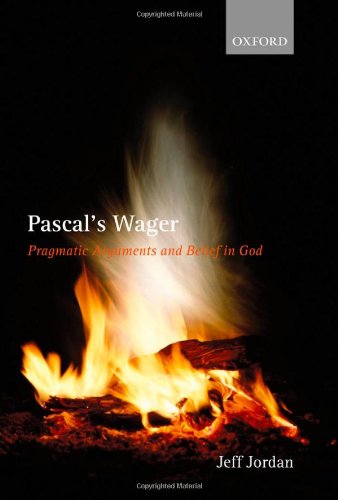 …I realized that Pascal’s Wager is a much stronger argument than I had thought.
Let’s get it out of the way: Pascal’s Wager does not have much “street cred.” It’s much-maligned as nothing more than rolling the dice, and doing so for no good reason. After all, on which deity should one wager?
Here, I’ll take a look at one formulation of Pascal’s Wager, then very briefly offer a way to perhaps circumvent the “many gods” objection. I’ll be relying heavily upon Jeff Jordan’s book, Pascal’s Wager: Pragmatic Arguments and Belief in God, in what follows.
One way to lay out the Wager may be as follows (quoted from Jordan, 23, cited below):
1. for any person S, and alternatives, a and b, available to S, if the expected utility of a exceeds that of b, S should choose a
2. believing in God carries more expected utility than does not believing
3. Therefore, one should believe in God
Now, this is a pretty straightforward argument. 3, the conclusion, follows via modus ponens. Thus, it is up to the one who wants to deny 3 to deny one of the premises. Let’s examine each in turn.
Premise 1 seems to be logical, but it has actually garnered just as many objections as the second premise. Some have argued that one should not reduce belief in God to a “gamble” or some pragmatic choice. Others have argued that one cannot simply choose to believe and argued that the Wager results in Doxastic Voluntarism–the notion that one may simply change beliefs at will. In order to combat each objection in turn, one would have to show that it may be permissible to choose pragmatically even in religion. Jordan argues to this effect at length, but for the sake of argument I think it may be enough to just say that generally, we do make choices which we think will benefit us, and this is not an objectionable path of reasoning. Moreover, the Wager does not reduce to doxastic voluntarism, for one may indeed change one’s disposition toward something, but not at will. This is a complex argument, and I think we may set it aside for now because there is nothing in Premise 1 which would demand doxastic voluntarism.
Premise 2, of course, is highly contentious as well. Some allege that belief in God prevents the joys of hedonistic living; others allege that one would not know which deity to choose; still others would argue that there could exist deities that would reward unbelief.
Again, dealing with each in turn would take quite some time, so I’ll simply offer a few comments. First, hedonistic living in one life would not outweigh the benefits of eternity with a benevolent deity. Second, the Wager may simply be used to prefer theism generally–after all, if one does not wager on any deity, there would be no possibility of infinite (or nearly limitless) expected utility from one’s wager. Third, inventing fictions to attempt to rival established religious traditions which have, presumably, been believed by our epistemic peers (to use the term of Jordan, 80-81) does not put them on par.
Now, it should be fairly clear that even an incredibly low probability for God’s existence may have much higher expected utility than unbelief, for the overall possible gain is much higher. Jordan elaborates on this and answers many objections (such as the notion that “betting” on something which is highly improbable is necessarily irrational). For now, I simply leave this statement hanging because it helps my purpose, which is to demonstrate to those interested that the Wager is worth investigating further.
Because of the above, another of the strengths of the argument may be found in its usefulness to the apologist. Pascal’s Wager, Jordan argued, may be viewed as a kind of “last ditch” argument for apologists and theism (24). After all, suppose one were to come up with an argument which convinced you that the truth of theism is quite unlikely indeed. In that case, Pascal’s Wager provides a rational reason to continue to believe in God. For, even if it is unlikely that God exists, the utility of believing that God exists has a potentially infinite reward and thus trumps the utility of not believing that God exists.
Remember, though, that this functions for any possibility of God existing that is greater than zero. It was at this point in the book that I realized that Pascal’s Wager is a much stronger argument than I had thought. Not only may it be adequate to ground theistic belief, but it also may serve as a kind of bulwark against anti-theistic arguments as well.
I have argued that Pascal’s Wager may be formulated in such a way that one should believe in God. Now there is, of course, much more nuance and many more objections to each premise. Interested readers should check out Jeff Jordan’s Pascal’s Wager: Pragmatic Arguments and Belief in God.
Links
Be sure to check out the page for this site on Facebook and Twitter for discussion of posts, links to other pages of interest, random talk about theology/philosophy/apologetics/movies and more!
Question of the Week: Wagering Much?– In this post, I asked the question of apologists about whether or not they used Pascal’s Wager. The feedback I got was diverse and interesting. Check out the post, and let me know your own thoughts.
Source
Jeff Jordan, Pascal’s Wager: Pragmatic Arguments and Belief in God
SDG.
——
The preceding post is the property of J.W. Wartick (apart from quotations, which are the property of their respective owners, and works of art as credited; images are often freely available to the public and J.W. Wartick makes no claims of owning rights to the images unless he makes that explicit) and should not be reproduced in part or in whole without the expressed consent of the author. All content on this site is the property of J.W. Wartick and is made available for individual and personal usage. If you cite from these documents, whether for personal or professional purposes, please give appropriate citation with both the name of the author (J.W. Wartick) and a link to the original URL. If you’d like to repost a post, you may do so, provided you show less than half of the original post on your own site and link to the original post for the rest. You must also appropriately cite the post as noted above. This blog is protected by Creative Commons licensing. By viewing any part of this site, you are agreeing to this usage policy.


