Current Events
Why I Left the Lutheran Church – Missouri Synod: By Their Fruits… (Part 2)

For several posts, I will be writing about specific things that came up while I was within the LCMS–that is, at its schools, churches, and university–that made me start to think that the LCMS way of things didn’t align with some aspect of reality, what I learned in the Bible, or something else. Here, I continue a miniseries within that about the fruits of our actions and how they tell about who we really are. Check out the Hub for this series to see all my posts on why I left the LCMS.
By their fruits… (Part 2)
[Content warning: discussions of racism, antisemitism, and Islamophobia.]
I talked about how I learned that faith lived wasn’t the same as faith professed in my last post. It was a kind of disturbing reality to become aware of, but also one that would get repeatedly shoved in my face as I studied to be a church worker in the LCMS–initially as a teacher, and later as a pastor. The black-and-white, rigid doctrinal purity I was taught was essential didn’t get applied to the lives of Christians, including church workers and those studying to be the same.
I enjoyed visiting other LCMS churches. I’d come prepared with my well-worn and well-marked Bible, eager to join the Bible study, which is where I knew the rubber hit the road regarding discussions of doctrine. I wanted to engage scripture as much as possible, and learn it as deeply as possible. One visit took me along with another man studying to be a pastor to a church site he was working at. I enjoyed the Bible study well enough.
After church, I went to speak with the pastor, who knew I was a pre-seminary student. He asked me how college was going, and how I liked my classes. At some point, the conversation turned to sports and he asked about my favorite college team. I said it was Nebraska, and the pastor said that he liked them too. The reason, he said, was because they “don’t have any of those black boys on their team.” He favored Nebraska because, in his words, they liked “white boys playing football,” even at positions other teams often had–here he used a derogatory term for African Americans–playing the position. He grinned at me with a knowing smile. I was genuinely shocked. So much so that I was literally dumbstruck. I could not untie my tongue to correct him or even say I disagreed. I think after some awkwardly long silence I said something like “I like them because my parents do,” and walked as swiftly away as possible.
When I met back up with man I’d come with, he asked what I thought about the experience. I’d managed to muster my thoughts a bit more at this point. In no uncertain terms I said the pastor was a racist and that I found that reprehensible for a pastor, especially. I repeated what had been said. I had expected the other pastor-in-training to be similarly incensed. I don’t know exactly what I thought would happen–some kind of confrontation with the pastor over the absurdity of his statements. Instead, this man who was at seminary in the LCMS told me that I shouldn’t be worried about it. The pastor was old, and stuck in his ways. Something to the effect of, “That’s just how people his age think” was said. I was even asked if I would come back the next week for Bible study and church. I was appalled and said something that made it clear I’d not be setting foot in the place again. He shrugged it off.
The LCMS had and has a very uneven stance with race. While outwardly speaking against racism abstractly, inwardly instances of racism were hushed up. Racist jokes were not infrequent among pre-seminary men[1] when I was in college. Whether it was about how “illegals” would ruin our country or jokes about other minorities and stereotypes, these were seen as good natured fun, not as the vile racism they reflected. Again, to my shame, I wasn’t nearly loud enough in my condemnation of it. Indeed, like all too many people, I found myself laughing along to try to fit in. It was easier to conform and be “in,” than to be “out.” The visit to a church with a racist pastor is what broke me. I realized that I was enabling others on that same path. I got louder in pre-seminary circles at lunches or breaks between classes, not laughing at jokes. I wish I’d been better at this than I was, to be honest. Even the inadequate amount of pushback I offered made me a bit of a pariah.
The pattern of racist remarks is one I encountered at many levels of LCMS leadership at many different sites. Defenses of the Confederacy is one way this manifests. Defending an alternate history narrative of “states’ rights” as the cause of the Civil War[2] provides a convenient dog whistle to cover up, at minimum, prejudice. Thus, when I grimaced as I listened to one pastor go on about the “glorious cause” (actual quote) the South had fought for, he was able to take a few steps back and say, “I mean states’ rights, of course!” Defense of the Confederacy cannot avoid being tied to racism. Thankfully, my elementary and middle school education in LCMS schools did not support a Lost Cause false narrative of the history of the United States, but I frequently encountered it among LCMS teachers and pastors.
Directly racist statements were also not out of the question. I already shared above my story about visiting a pastor who doubled down on racist statements, and the defense of that pastor by others. Another pastor, after overhearing an elderly woman using a derogatory word for Black people, told me that I should not be upset or intervene about it because “that was just the times she was in.” I was a young teen at the time, and did not yet have the capacity to question such an answer. But horrific, racist language from people that then gets defended by pastors (or having that same language come from pastors’ mouths) is the kind of thing that makes an impression on a young mind. It would take me some years before I was able to dig through that morass of obfuscation regarding racism and realize that “growing up some number of years ago” does not excuse one for being racist.
Comments about Islam and Muslims were and are extremely common. Reading Facebook comments on LCMS groups trying to teach about racism gives many, many contemporary examples of this. But my own experience in the LCMS demonstrated time and again that Islamophobia was not only endemic in the LCMS, but was often tied to racism in complex and interconnected ways. 9/11 wasn’t when this started, but certainly touched off a number of comments, from Americans across the board. However, within LCMS institutions, I would frequently hear about how Muslims were all trying to kill Christians specifically and that Islam’s teaching is explicitly violent. Indeed, it was not uncommon to be told that if Muslims said Islam wasn’t violent, they were doing so in order to cover up latent desire to cause violence or to allow a kind of shadowy Sharia to sneak into “the West” in order to take over peacefully before starting a violent regime. Any action by anyone who could be identified as Middle Eastern was therefore automatically linked to this global Islamic conspiracy. The tie to racism came up not infrequently, such as Christians who engaged in violent acts but “looked Muslim” being tied to Islam. The color of skin was apparently enough to tie the perpetrator into Islam.
One memorable conversation about Islam ended after I asked something similar to “If all Muslims really wanted to kill all Christians–if that was really want they all wanted, deep down, and they were covering it up–then how come, if there are over one billion Muslims in the world, we aren’t all dead or fighting for our lives?” The question was pointed not because I believed the charge that all Muslims wanted to kill all Christians, but because I wanted to point out the absurdity of the claim. This was in conversation with an LCMS pastor, and the response was basically to change the subject. Again, due to widespread anti-Muslim sentiment in America, this isn’t uncommon, but these are comments from and by pastors or people studying to be pastors within the LCMS, and one might wonder what standards and corrections are being offered within to make this not be such a common problem.
Antisemitism also reared its ugly head. There were offhand remarks about how Jews today (those who hadn’t converted to Christianity, anyway) were all going to hell, for example. While this aligns with the general belief that anyone who isn’t Christian is going to hell, time and again Jewish people were singled out for especial remarks to that effect. Lutherans, especially, have a history of antisemitism. Martin Luther’s horrifying comments about Jews were either ignored or given a context that was supposed to justify them. At multiple points within the LCMS, I was taught that Luther’s comments about Jews were understandable because he was frustrated that they didn’t convert to Christianity. This wasn’t just a way to explain why Luther turned towards antisemitism more fully[3]. Instead, it was an explanation that was supposed to exonerate him, in some way. Luther could emerge from this explanation, if not sparkling clean, then understandable.[4] Rather than simply condemning Luther as a sinful man engaging in detestable behavior–something that would very much align with Lutheran theology–Luther was given an apology for his behavior. This opened up, for some, the possibility of doing the same or at least excusing other behavior. In college, some classmates, including a few pre-seminarians, engaged in Holocaust denial. Some of them were treating as a joke, apparently thinking it was “edgy” to make such comments. However, even “jokes” about antisemitism are engaging in antisemitic behavior.
Racism continues to be a major problem within the LCMS. Currently, controversy has erupted at Concordia University Wisconsin (and by extension, Concordia University Ann Arbor) because the job description for the President of the university included diversity and equity in what was being sought. The extreme conservative pushback against this is a major problem that shows leadership in the LCMS continues to prefer to hide or ignore racism rather than confront it. It’s easier to pretend racism in the LCMS is impossible than it is to confront the ugly truth that it exists and is tolerated and even protected. My own experience encountering racism in the LCMS reinforces this. (For more on this controversy, see my post here.)
Another recent example is from the reporting around a survey of Young Adults who’d left the LCMS. I received this survey and filled it out. When the reporting came out explaining the reasons why people like me had left, racism was one of the examples. One other young adult said she left because her boyfriend, who’s Hispanic, felt unwelcome at an LCMS church. But the report said something to the effect of “We in the LCMS aren’t racist and are welcoming of people from anywhere, so it’s likely that this boyfriend was being paranoid.” I wish I were making that up. But this kind of head-in-the-sand reaction to overt and covert racism is enough of a pattern that it is clearly an issue.
The easiest response to all of this would be to say not all LCMS pastors are racist, and many would be appalled by racist jokes. Not all LCMS pastors are Islamophobic or antisemitic… not all… I agree. It’s true that not all LCMS pastors are guilty of the things I saw and experienced. But too many LCMS pastors allow racism within their ranks. Too many LCMS pastors cover up racist jokes and comments made by peers. Too many LCMS pastors have defended the Confederacy with impunity. “By their fruit, you will know them.”
[1] I’ll occasionally use the term “pre-seminary” or “pre-seminary students.” It should be understood unless otherwise noted that this always refers to groups of exclusively men, and specifically men who were on track to study to be pastors. Women are not permitted to be ordained as pastors in the LCMS, and so it is exceedingly rare for a woman to be enrolled in the pre-seminary program.
[2] States’ Rights was manifestly not the cause of the Civil War. Reading the articles of secession of several states reveals this, as they explicitly state that a major or even the reason for secession was they wanted the Federal Government to enforce the Fugitive Slave Act, itself a major infringement on States’ Rights. I outline some of this, and other reasons to point to slavery as the reason for the Civil War, here.
[3] Research shows that Luther was surrounded by antisemitism from childhood in every context in which he operated, and even his earlier works featured antisemitism at least in illustrations. See Martin Luther: Renegade and Prophet by Lydal Roper.
[4] This propensity to deny or explain away defects in heroes’ character is pervasive. That doesn’t excuse it, but should instead make us cautious about our own heroes.
Links
Formerly Lutheran Church – Missouri Synod (LCMS) or Wisconsin Synod (WELS)– A Facebook group I’ve created for people who are former members of either of these church bodies to share stories, support each other, and try to bring change. Note: Anything you post on the internet has the potential to be public and shared anywhere, so if you join and post, be aware of that.
Why I left the Lutheran Church – Missouri Synod Links Hub– Want to follow the whole series? Here’s a hub post with links to all the posts as well as related topics.
Be sure to check out the page for this site on Facebook and Twitter for discussion of posts, links to other pages of interest, random talk about theology/philosophy/apologetics/movies and more!
SDG.
——
The preceding post is the property of J.W. Wartick (apart from quotations, which are the property of their respective owners, and works of art as credited; images are often freely available to the public and J.W. Wartick makes no claims of owning rights to the images unless he makes that explicit) and should not be reproduced in part or in whole without the expressed consent of the author. All content on this site is the property of J.W. Wartick and is made available for individual and personal usage. If you cite from these documents, whether for personal or professional purposes, please give appropriate citation with both the name of the author (J.W. Wartick) and a link to the original URL. If you’d like to repost a post, you may do so, provided you show less than half of the original post on your own site and link to the original post for the rest. You must also appropriately cite the post as noted above. This blog is protected by Creative Commons licensing. By viewing any part of this site, you are agreeing to this usage policy.
Today in (Theological) History: Dietrich Bonhoeffer is Murdered by Nazis
When Christ calls a man, he bids him come and die.
Dietrich Bonhoeffer, Discipleship.
April 9th, 1945: Dietrich Bonhoeffer is Murdered by the Nazis
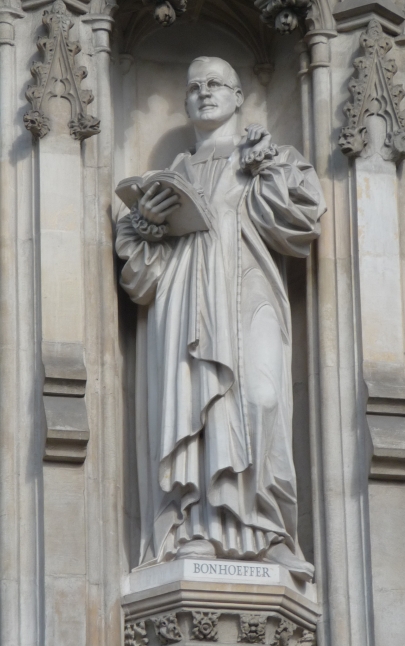
Dietrich Bonhoeffer was a German Lutheran pastor and theologian who resisted the Nazi regime. Although he was offered the opportunity to accept a position teaching in the United States, he suffered mental anguish at leaving Germany’s struggle behind and decided to return despite the potential threat to his life. The Nazis banned him from publishing and from teaching in Berlin. He spoke against Nazism and was deeply involved in the Confessing Church–the church that opposed Nazification of the church.
Bonhoeffer is remembered in part for his resistance to the Nazi regime, and in part for his stunningly insightful theological writings.
He became involved in a conspiracy to overthrow Hitler and was arrested by the Gestapo, but not for a specific conspiracy. When the conspiracy was finally discovered more fully, his execution was directly ordered from the highest levels of Nazi leadership.
On April 9th, 1945, guards at Flossenbürg concentration camp came to gather him for execution. He reportedly turned to another prisoner and said “This is the end… for me, the beginning of life.” He was killed by hanging from piano wire. His remains were either burned or buried in a mass grave by Allied soldiers when Flossenbürg was liberated.
Bonhoeffer’s theological legacy is difficult to overstate. His Lutheran theology is remarkable in how clearly he draws distinctions. He gained worldwide fame for his Letters and Papers from Prison, which outlines a religionless Christianity in which he pushed back against faith lives lived without action. His theology has been deeply influential on myself, as well. To read more, check out my posts on Dietrich Bonhoeffer (scroll down for more).
Why I Left the Lutheran Church – Missouri Synod: Points of Fracture (Part 2): Science as a Young Adult

For several posts, I will be writing about specific things that came up while I was within the LCMS–that is, at its schools, churches, and university–that made me start to think that the LCMS way of things didn’t align with some aspect of reality, something I learned in the Bible, or something else.[1]
Points of Fracture: Science as a Young Adult
The cognitive dissonance that I experienced regarding Christianity and science continued to mount as I got older. My previous post went over times in which I recall finding those points of fracture. I left off there in about 8th grade at an LCMS school. Here, I’ll share some of the times as a young adult in which I truly began to struggle with science and my faith.
In college, the hints of fracture at the edges of my view in the world became fault lines. I so often see the narrative of how allegedly secular colleges will destroy the faith of kids, but I was at an LCMS University, and being there nearly destroyed my faith. There are more reasons for this than science, as we’ll see in future posts. For now, though, the focus on questions of science loomed large when I was in college.
I came to college as a faithful Lutheran, though I had my ups and downs. For the first time, I really could not go to church all the time and it wouldn’t matter or hardly even be noticed by most people. Then, I had a major religious experience and realized I wanted to learn about and know God more every day. One way that manifested is that I started reading apologetics. It quickly became clear that issues of science and faith loomed large, and for the first time I truly began to think about the implications of some of these issues.
Then, I had a geology class in college. The professor was an adjunct who, I’m fairly sure, was neither Lutheran nor particularly interested in the theology of the university. He seemed blissfully unaware, as he taught his geology course, that what he was teaching would be worldview-shattering at least for one of his students. It was a course full of students who were on campus for many reasons, not just to attend an LCMS school. Many of them there were on athletics scholarships, and I heard some openly talking about the only reason they were at the school was because it was the only one that offered them such a scholarship. No one was dissenting from this professor, who stood there teaching mainstream geology. This was all stuff I’d never even been exposed to before. How beaches formed, how we could accurately predict how long some formations would take to form, how rock layers could be formed apart from Noah’s Flood. Indeed, Noah’s Flood was never even mentioned in the class. What I thought was the explanation for basically every geological feature on the planet wasn’t even in the index of my geology textbook!
I was totally devastated. Here was evidence, presented in the most mundane, disinterested fashion possible, that the Earth simply could not be merely 10,000 years old or so. While I didn’t really have a grasp on the science, the course taught me enough to realize that something had to give. The way I had been raised made the choice quite stark. The Bible just clearly taught that the Earth was young. “Millions of years” was a lie. Either the Earth really is six to ten thousand years old because the Bible says so or the Bible is untrustworthy and Christianity is false.
We had leaders in our dorms who were called “Spiritual Life Representatives” (SLRs). Think of an RA, but who you could go to in order to discuss spiritual questions or crises. They’d lead devotions and generally make themselves available to students to talk to. I went to my SLR and I was weeping in his dorm room. I was convinced that the geology I had learned had proven that the Earth could not be young, and so how could I possibly continue to believe Christianity was true? He said something that has stuck with me ever since: “If the Earth is more than 10,000 years old, would it really mean that Christ has not been raised from the dead?”
I sat there, tears streaming down my face, and I realized it wouldn’t mean that. He said other things, of course, like that he wasn’t as confident as I was about geology proving things differently, that there were other resources to read. But in that moment, he said something that allowed me to preserve my collapsing faith. I realized then that my faith was built on Christ, not on the age of the Earth.
I threw myself even more into apologetics now, because I felt even more confident that Christianity was true and that I needed to prove it to other people. The freedom provided to me by this conversation with my SLR had me flirt briefly with theistic evolution, but when I mentioned that in apologetics groups I was in, it got shot down hard. Instead, Young Earth Creationism (YEC) was the way to go. I needed to start seeing science the right way, they said. I searched around for groups to help build my faith and defense thereof, and started subscribing to Acts & Facts Magazine from the Institute for Creation Research (ICR). I was hugely impressed by the production values of this creationist publication, with its gorgeous pictures and lengthy articles about things like RATE research and the like. For the uninitiated, RATE stands for Radioisotopes and the Age of The Earth. I was convinced by these publications that, among other things, radiometric dating was falsified, that the Grand Canyon was evidence for a young earth, and that if you just looked at things in nature in the right ways, you’d see a young earth all around you. Reading about creationism in some LCMS literature convinced me even further, and speaking with a few pastors about the topic had me once more feeling rock-solid about my YEC convictions.
I love walking in nature, and I went for a hike somewhere in Michigan and I saw the distinct layers in the rocks. I walked up to them and put my fingers on them. I could trace the layers with my fingers and see how they were distinct in coloration after a certain point. I remember very clearly the feeling of washing over myself of total confidence that these layers were laid down by Noah’s Flood. Later in the hike, I saw a different formation of rocks thrust up through the other ones, so that they were nearly perpendicular to the other layers surrounding them. I stood staring at it for some time, trying to figure out how this could have happened due to Noah’s Flood. I simply couldn’t come up with such a scenario, but I trusted further study would alleviate the stress. I left the hike somewhat disturbed, but mostly confident in my young earth beliefs.[2]
Then, I started noticing that many of the published apologists I was reading weren’t convinced of YEC. I started to dive deep into Old Earth Creationism, which is very similar to YEC except that the direct creation of all animal life happened over long periods of time instead of in a single week of seven 24-hour days. I became deeply engrossed with another creationist organization, Reasons to Believe. This organization taught that there were real, scientific models that could show both that the Bible was true and that you could effectively map it out with special creation of creatures over time. It was a kind of chimerical creature, picking and choosing scientific discoveries that aligned with it while also finding isolated verses in the Bible to say it taught modern science (eg. using Psalm 104:2 to suggest it taught Big Bang cosmology).
Then, I took another science class in college. This one was a biology class to finally knock off my requirements for graduation. The professor had some extremely non-mainstream views. I remember him frequently talking about smoking and insisting that smoking doesn’t cause lung cancer. How did he know? His repeated refrain was: “Correlation is not causation.” If I’d known more at the time about science, I would have pushed back harder on this. At the time, though, it still seemed pretty ludicrous. My grandpa had died of lung cancer, and I was very well aware of it being caused by smoking. The same professor would go wildly off topic during class, frequently shifting to pet issues that he would lecture us about. Several students offered pushback on some of these topics, most of which I don’t remember.
I do recall, though, one day when he talked about creationism. He was very adamant that YEC was the only way to believe, basically pulling the LCMS party line about it being essential to affirm that in order to believe the Bible. But even for the LCMS, some of this guy’s views were far afield. For example, he insisted that the Earth wasn’t tilted before the Fall, which he said meant the Garden of Eden would cover the whole planet as the whole planet would therefore have the same weather as the equator currently does. Dinosaurs, he insisted, all ate plants, and even the teeth we associate with Tyrannosaurus Rex were adapted for eating plants before the Fall.
The whole thing seemed preposterous to me, even as someone who had been steeped in YEC literature. It was at this point I basically realized going back to YEC views was impossible. As someone who wanted to be an LCMS pastor (at the time), that caused me no small amount of trepidation. After all, I’d already heard a story from a pastor who approvingly cited a large group pastors literally shouting down two other pastors who tried to introduce a resolution to even discuss the possibility of anything but a Young Earth in the LCMS. I was aware of the many, many pastors I knew who were totally convinced of YEC. How would I survive in a denomination that was so firmly entrenched? Even the few exceptions I knew about were just that–exceptions. For that reason, I still held my views close to my chest.
Online, I started to write a series of blog posts examining four major views (as I saw them) in Christianity: Young Earth and Old Earth creationism, theistic evolution, and Intelligent Design. The pushback I got for even mentioning theistic evolution from apologetics-interested friends was massive. I’d get warning messages on Facebook about even considering publishing posts about anything but YEC that could be remotely positive.
In an art class, our professor casually went over dates of artwork. We came to some cave paintings, and this professor said they were dated to 13-16,000 years ago. One pre-seminary student raised his hand and pushed back on the date. “The Earth isn’t even more than 10,000 years old. How could there be cave paintings that are older than the Earth?” How, indeed? I wondered. Again, I was a closet Old Earth Creationist at this point. The professor, to their credit, took it in stride. They answered, “I’m reporting the dates that mainstream art historians have given these works. To get credit, you’ll need to give those answers on the test. But you can definitely do your research project on how art dating works!” It was a masterful response.
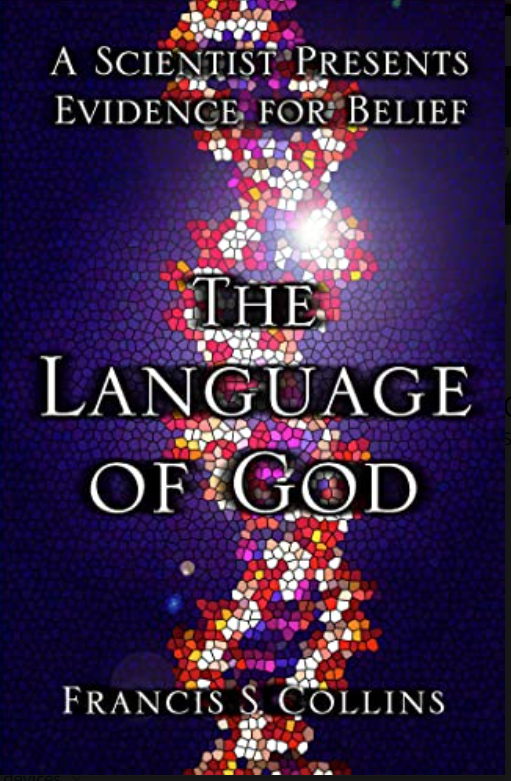
Later, I was at a bookstore with some LCMS members. We were milling about the shelves and I went straight to the Christianity section to see if there were any apologetics books. There, I saw this book with a striking cover that said it was written by a scientist exploring faith. The Language of God , by Francis Collins, unapologetically defended the view of theistic evolution, and I found myself paging through it quickly. I felt guilty for even reading it. Evolution, as I knew, was the enemy of Christianity. But this author was writing about evolution with such confidence as a Christian scientist. He’d had a religious experience himself, and he wrote accessibly and in a winsome fashion. I bought the book away from the others, afraid they might ask me about it. When I read it, it opened my eyes to many possibilities. I wouldn’t immediately come to believe evolution and Christianity were compatible, but I believed that it was possible to believe they were. That wording is intentional, because I want my readers to understand how many steps I had to take along this journey. At this point, I’d come from believing scientists were liars trying to deceive people about the age of the Earth for well, some reason anyway, to believing that it was vaguely possible someone could be a Christian and believe evolution and Christianity were compatible. I cannot emphasize enough how difficult it was to get to that point, and how many side roads and challenges and tears were along the way.
It would take several more years before I could become comfortable with affirming evolution while remaining Christian. I do, now. My first post mentioned religious trauma as part of my time in the LCMS. I haven’t had a lot of ways to portray that so far, but one way I believe I experienced religious trauma from within the LCMS was in the extreme, repeated resistance I experienced regarding science. I adored science, and the religious teachings I experienced led me to be mistrustful of science, and scientists in particular. Christians who were scientists were questionable at best. Like, why would you engage a field full of lies? It would take me more than a decade as an adult to undo that mistrust. Alongside that, it has forced me to question many other things. When you believe things that are easily falsifiable (such as men having one fewer rib than women) and discover that they are, in fact false, it causes a kind of lingering cognitive dissonance that is hard to overcome.
Science is one of the reasons I left the LCMS, but it was intertwined with emotional highs and lows. I experienced crises of faith due to my false beliefs about science. I thought I could no longer believe the Bible because I found evidence in nature that contradicted what I was taught it said. These may seem like small issues to some, but I cannot emphasize how important they were to me, and how important they remain to many others.
Next, we’ll begin exploring other reasons I left the LCMS.
Next: Points of Fracture Part 3
[1] I’ve addressed this in my previous post, but want to point out here that not everything held positionally by the LCMS is spelled out in their teachings. One friend pointed out the helpful categorization related to the LCMS and creationism: the LCMS has a de facto affirmation of young earth creationism, though it is not always made explicit. The evidence is abundant, though one may point to the occasional, very rare exception. On the flip side, the evidence that the LCMS is intrinsically tied to young earth creationism continues to mount. See, for example, my post about an official stance in 2019 that reaffirmed a creationist position.
[2] To tell this story and other parts of this post, I’ve had to very quickly summarize or even skip over parts of creationist arguments. I was fully engaged with YEC at this point and to this day could very easily rattle off numerous arguments in favor of YEC, though I now believe they are mistaken. I know some YEC explanations do exist for these types of formations, but here my goal is to list things that, in the moment, caused me to realize points of departure.
Links
Formerly Lutheran Church – Missouri Synod (LCMS) or Wisconsin Synod (WELS)– A Facebook group I’ve created for people who are former members of either of these church bodies to share stories, support each other, and try to bring change. Note: Anything you post on the internet has the potential to be public and shared anywhere, so if you join and post, be aware of that.
Why I left the Lutheran Church – Missouri Synod Links Hub– Want to follow the whole series? Here’s a hub post with links to all the posts as well as related topics.
Be sure to check out the page for this site on Facebook and Twitter for discussion of posts, links to other pages of interest, random talk about theology/philosophy/apologetics/movies and more!
SDG.
——
The preceding post is the property of J.W. Wartick (apart from quotations, which are the property of their respective owners, and works of art as credited; images are often freely available to the public and J.W. Wartick makes no claims of owning rights to the images unless he makes that explicit) and should not be reproduced in part or in whole without the expressed consent of the author. All content on this site is the property of J.W. Wartick and is made available for individual and personal usage. If you cite from these documents, whether for personal or professional purposes, please give appropriate citation with both the name of the author (J.W. Wartick) and a link to the original URL. If you’d like to repost a post, you may do so, provided you show less than half of the original post on your own site and link to the original post for the rest. You must also appropriately cite the post as noted above. This blog is protected by Creative Commons licensing. By viewing any part of this site, you are agreeing to this usage policy.
Why I Left the Lutheran Church – Missouri Synod: Links Hub

I wanted to have a place to collect all the links for my ongoing series of why I left the Lutheran Church – Missouri Synod in one post. Here, I share those links along with related reads.
Series
Finding My Voice– I wrote about why I wanted to write this series of posts, and why I thought it was time to do so.
A short history of my time in the LCMS– I go over my time in the LCMS and why I believe that makes my voice especially relevant in a critique of the Synod.
Points of Fracture (Part 1)- Science as a child– I begin to draw out the points of fracture I felt with the LCMS, starting with science I learned as a child.
Points of Fracture (Part 2)- Science as a young adult– Debates over science finally came to a head as fractures became faults in my faith.
By Their Fruits… (part 1)– I begin a miniseries that goes over a number of ways in which I discovered things within the LCMS practices that drove me away from that church body.
By Their Fruits… (Part 2)– I discuss the racism, anti-Semitism, and Islamophobia I encountered in the LCMS.
By Their Fruits… (Part 3)– I observed and encountered quite a bit of misogyny in the LCMS, and document some here.
By Their Fruits… (Part 4)– Homophobia is rampant in the LCMS at various levels.
By Their Fruits… (Part 5)– Nationalism, inconsistent practices of close/closed communion, and more are additional problems with LCMS practice.
Why I Left the Lutheran Church – Missouri Synod: Points of Fracture: Women in the Church Part 1– I write more about how I was confronted with the LCMS’s views about women in the church and the struggle I had with it.
Why I Left the Lutheran Church – Missouri Synod: Points of Fracture: Women in the Church Part 2– I discuss how intense prayer and fervent study of Scripture led me to believe that women can be pastors.
Why I Left the Lutheran Church – Missouri Synod: Points of Fracture: On the Other Side– I write about my experience as I actively left the LCMS and the spiritual abuse and other difficulties that entailed.
Why I Left the Lutheran Church – Missouri Synod: Still Faithful– I have been asked so many times about why I stayed in any church body after my experiences. Here, I attempt a short answer to the question.
Related Links
Formerly Lutheran Church – Missouri Synod (LCMS) or Wisconsin Synod (WELS)– A Facebook group I’ve created for people who are former members of either of these church bodies to share stories, support each other, and try to bring change. Note: Anything you post on the internet has the potential to be public and shared anywhere, so if you join and post, be aware of that.
Leaving the LCMS/WELS– Not sure about whether to leave or thinking about leaving? Do you want to others who are thinking along the same lines? I created a group for those who are contemplating leaving these denominations, as well.
The Lutheran Church – Missouri Synod and Creationism: An Unnecessary Match– I quote from a resolution passed by the LCMS in convention in 2019 and analyze how it’s a problematic view to put forward.
Unchristian Nonsense: A microcosm of what’s wrong in conservative Lutheranism– I look at some of the controversy surrounding the selection of a new President at one of the Concordias (the universities of the LCMS).
“Power, Politics, and the Missouri Synod” – A book from James C. Burkee that has me thinking about my former denomination– I take a brief look at an historical exploration of Seminex.
LCMS President Harrison’s Letter to Board of Regents of Concordia University Wisconsin – Ann Arbor– I provide my thoughts about President Harrison’s letter in which he addresses some alleged problems at CUWAA.
Why I left the Lutheran Church – Missouri Synod: Points of Fracture (Part 1): Science as a Child

I have written about why I am writing this series as well as my history within the LCMS. Now, it is time to turn to what I’m calling points of fracture. For several posts, I will be writing about specific things that came up while I was within the LCMS–that is, at its schools, churches, and university–that made me start to think that the LCMS way of things didn’t align with some aspect of reality, something I learned in the Bible, or something else.[1]
Points of Fracture: Science as a Child
Here, I’ll be sharing the points of fracture that I experienced related to science at a young age. At the outset, I want to point out that much of these points of fracture were discovered by me over time. So, for example, when I talk about my young childhood, it’s not as though I was immediately aware that something was off about what I was learning. Instead, it was a realization that came over time, and the memory of when I was young was something that I recall as an important stepping stone to get to where I am now.
Some of my first memories of conflict between what I believed and what others believed was as a child getting library books. I don’t remember how far we had to go to drive to the library from our tiny town, but I remember it seemed like forever, and that I would consume books on the way home, often falling asleep in the car before arriving at home. I, like many kids, was obsessed with dinosaurs.[2] That meant I raided the library’s section on dinosaurs. I’d memorize the names and facts about them, pore over images of them, and imagine what life would have been like alongside them. If the cover of a library book had a T-Rex ripping apart its prey, that was the book I was going for. But those dinosaur books talked about when dinosaurs lived. Those dates were given as the best scientific approximations based on various dating techniques, ranging from about 66 million years ago to 200 million or more for dinosaurs’ first appearance on Earth.
Those dates, I was told, were wrong. Whenever I saw “millions,” I was told to ignore it. As a young kid, I didn’t press back very hard on that. After all, I had no reason to do so. I knew that I could get facts wrong about all sorts of things, so the notion that basically every book I read about dinosaurs was wrong about how long ago dinosaurs lived wasn’t terribly mind-bending for me. I learned to just run my eyes over any time it said “millions of years,” because that was wrong. The rest of the facts, though, were basically unquestioned. I didn’t have the capacity at the time to put those two things into disharmony. That is, I didn’t realize how odd it was that the books and scientists seemed to be right about, say the ecosystem the dinosaurs lived in, or their diets, or debates about coloration while simultaneously being totally wrong and even untruthful about how long ago they lived.
That last bit is important. I used the word “untruthful” because part of what I was taught, whether directly or through creationist literature I would be exposed to a year or so later, was that scientists weren’t just wrong about the age of the Earth or when dinosaurs lived. No, instead, they were actively lying about it. I want to sit with this for a moment because it is an extremely important distinction. There’s a huge difference between someone being wrong while reporting something they think is factual and someone deliberately deceiving you about something they say is factual. That I came to believe that scientists were actively lying about the age of the Earth would temper my interest in science for more than a decade once it became fully engrained in me. Sometimes I genuinely think I would have ended up in geology or paleontology as a field of study and employment if I hadn’t come to be taught that, because of my deep interest in these topics. But I didn’t, at least in part because I thought scientists were liars.
No small part of that belief came from some of the approved dinosaur books I was gifted during my dinosaur obsession. These dinosaurs books portrayed a different history of the world, with humans walking alongside long-necked dinosaurs and feeding them fruits by hand. I distinctly remember a photograph of an alleged plesiosaur (see below) that had been caught by a fishing boat in one of them. These books didn’t have the same exciting illustrations of T-Rex or Deinonychus (my personal favorite) shredding their prey. Instead, I was taught that they had something more precious–the truth about dinosaurs. These books confronted head on topics like evolution and the age of the Earth, saying in no uncertain terms that evolution was a lie and scientists who taught millions of years were liars as well. I didn’t even understand what evolution was supposed to be at this point, but I knew it was a lie. Again, this disjunction between being mistaken and being liars was something that sucked away my enjoyment of science over time, and also would make it extremely difficult for me to fairly examine evidence.

Later, I remember talking to a child a few grades above me at my LCMS grade school. When I mentioned that I liked dinosaurs, she told me quite sincerely that dinosaurs had never existed. I was incredulous, asking “What about all the bones!?” Her answer surprised me: she said something to the effect of “Those bones were put there by God to test people’s faith.” The total somberness with which she expressed this sentiment took me off guard, but I do remember laughing at her because I thought it was so ridiculous to think that (I wasn’t the kid with the best manners). I would later recall the incident when I was studying more about these topics because it specifically showed me I could see beliefs about science that seemed obviously false and reject them, and that was okay. Even more importantly, it was a time my younger self was given an idea about God that did not seem to align with what I believed about God. Even as a child, the notion that God would be actively trying to deceive people seemed obviously, even hilariously wrong. That God doesn’t deceive us with nature, but that nature rather declares the glory of God (Psalm 19) would be hugely important to me as an adult.
Another topic I remember was about Adam and Eve. I specifically remember learning that all boys and men had one fewer rib than women. This was seen as evidence for the biblical account of Adam having been formed from Eve’s rib. I don’t remember my first source of hearing of this, but I do remember I heard it from more than one adult in my life. It wasn’t actually until college as I was searching online for various science-related things that I learned this was false. To this day, even typing that it’s false has me second-guessing myself, so firm was my belief that men had fewer ribs than women. It’s one of those things that is incredibly easy to disprove, to the point that when passed along, no one thinks to question it. It was honestly a shocking revelation to me when I discovered it wasn’t true, and it spurred me on to search for other things I could disprove or couldn’t confirm.
I believe it was in 6th grade, again at an LCMS school, that I had a single day in which we talked about plate tectonics. It was in a geography class, and we were learning quite briefly about how the map was formed. I recalled some of the maps I’d seen in dinosaur books of Pangaea and asked about that, noticing it appeared as though Africa and South America fit together. I don’t remember the exact answer, but what I got was enough for me to excitedly talk about plate tectonics later, only to be told by a pastor that they don’t exist. How did earthquakes happen, then? I asked. The answer was that God made them happen. I was disturbed even then by this answer. More, I was confused in getting entirely different answers about what caused earthquakes and how continents moved–or whether they moved at all–from two approved sources. Which should I believe? In the moment, I just bracketed it and stopped thinking about it. That was largely my answer for when things like this happened. I assumed others knew more than me, and it would become clear later.
One year in middle school at an LCMS school (I think it was 8th grade), we were super excited to be taking part in a science curriculum that would be shared by schools all over the country. The curriculum used the Hawaiian islands as a touch point for learning all sorts of things about science–whether geology by learning about volcanoes, biology by learning about ecosystems, and the like. I distinctly recall opening the binders we received and flipping through to see the contents. In among the thrilling sections on volcanoes and wildlife, I saw that there was a section about evolution on the islands. I had only the vaguest idea of what evolution meant. I knew it meant something like animals turned into other animals because of seeing it in some dinosaur books I’d read years before. I recalled learning that evolution was a lie, but seeing it show up in a text in my LCMS school made it feel safe… but only for a moment. When I turned to the pages indicated to see what might be said about this intriguing topic, I discovered the pages had been removed. I opened to the page, and found I was flipping from page 55 to page 75. It’s hard to fully capture my feelings at that moment. It was a truly disturbing incident for me. I believe I mentioned it to the teacher and was told that we wouldn’t be covering that topic. I remember flipping back and forth a few times, stunned. It was one of the clearest moments as a kid that I realized something was genuinely being covered up. It wasn’t just that scientists were wrong or lying. That, I could, in my childlike trust, accept. This was a revelation: what scientists taught was being actively covered up or suppressed, as if it would be dangerous to even know about it.
Earlier, I said this was one of the points of fracture that led me to think that maybe the LCMS way of things wasn’t accurate. I want to briefly address a possible objection here. I say “the LCMS view of things,” not necessarily to mean that they have specific teachings on everything I touch upon here or in other posts. For example, it is very clear that the LCMS holds that young earth creationism in some form is the view that ought to be taught to and held by its members. This view, however, is not codified in LCMS official positions. Indeed, according to the LCMS’s official web site about their views, they do not have an official position on the age of the earth. Thus, one could technically take issue with my pointing out that the LCMS’s view of things is a young earth creationist perspective.
However, this would indeed be nothing but a technicality, because in application and practice, no other views are allowed broadly in the LCMS. As one example, one pastor confidentially told me about how some of their peers attempted to introduce a resolution at a pastor’s conference to simply discuss the possibility of views apart from young earth creationism. This pastor approvingly told me that those pastors were literally shouted down by the rest of the pastors at this conference for their attempt. From my own experience, I know of at least 3 different LCMS pastors who questioned the faith of LCMS members who did not hold to a young earth creationist view. Additionally, tying belief in a young earth together with trust in the Bible is ubiquitous in LCMS leadership. In preparing this post, one classmate of mine pointed out that an LCMS professor who was a pastor explicitly taught an old Earth in a class we shared. This experience was perhaps the lone exception to an otherwise uniform experience that I and others have shared related to the LCMS’s views on the age of the Earth.
All of these final points are to say, just because something isn’t explicitly codified on the LCMS web site, for example, doesn’t mean that it’s not part of the DNA of the LCMS. Young Earth Creationism is absolutely integral to the overwhelmingly vast majority of LCMS belief and practice related to any questions about science and faith.
See also my post, The Lutheran Church – Missouri Synod and Creationism: An unnecessary match, in which I go over the 2019 convention’s affirmation of Young Earth Creationism, including a link to the official LCMS blog.
Next: Points of Fracture, Part 2
[1] I debated internally a bit about how to organize my thoughts related to the specific fracture points that led me to see that my views did not align with those of the LCMS. Should I organize them topically, chronologically, or in some other order? I ultimately settled on doing them topically, because it allowed me to arrange each topic chronologically and show how some of these built on themselves over time. I thought it would be less disjointed to present it this way, rather than skipping around.
[2] I say “was obsessed” but I truly remain obsessed with dinosaurs, and find learning about them is still one of my greatest joys.
Links
Formerly Lutheran Church – Missouri Synod (LCMS) or Wisconsin Synod (WELS)– A Facebook group I’ve created for people who are former members of either of these church bodies to share stories, support each other, and try to bring change. Note: Anything you post on the internet has the potential to be public and shared anywhere, so if you join and post, be aware of that.
Be sure to check out the page for this site on Facebook and Twitter for discussion of posts, links to other pages of interest, random talk about theology/philosophy/apologetics/movies and more!
What’s Wrong with Apologetics? – I take a look at some of the issues I’ve found to be broadly true in apologetics-related circles.
SDG.
——
The preceding post is the property of J.W. Wartick (apart from quotations, which are the property of their respective owners, and works of art as credited; images are often freely available to the public and J.W. Wartick makes no claims of owning rights to the images unless he makes that explicit) and should not be reproduced in part or in whole without the expressed consent of the author. All content on this site is the property of J.W. Wartick and is made available for individual and personal usage. If you cite from these documents, whether for personal or professional purposes, please give appropriate citation with both the name of the author (J.W. Wartick) and a link to the original URL. If you’d like to repost a post, you may do so, provided you show less than half of the original post on your own site and link to the original post for the rest. You must also appropriately cite the post as noted above. This blog is protected by Creative Commons licensing. By viewing any part of this site, you are agreeing to this usage policy.
Why I left the Lutheran Church – Missouri Synod: A short history of my time in the LCMS
I was born into the LCMS, baptized not long after my birth. My dad was an LCMS pastor. I was in LCMS parochial schools through 8th grade, went to public high schools, and went to college at an LCMS university.
The teachings of the LCMS were in my veins, and they still are. I memorized parts of Luther’s Small Catechism, recited memory verses, and answered dozens of questions about the catechism when I was confirmed. I went to church weekly. I was involved in several activities within the church, such as being the president of the Youth Group at my church and class president in 8th grade at my LCMS school. I had and still have multiple settings of the liturgy memorized, and frequently sing them to calm myself down or just sing praise when they pop into my mind.
Many of my earliest memories involve being in church or church-related things. For example, I remember being at a children’s sermon (my dad was my pastor, as he was for my whole life until college) in which my dad held up a wood block with “JESUS” silhouetted on it. He asked if anyone knew what it said. Confidently, I raised my hand and said we couldn’t know because it was in a different language! I’d mistaken the raised wood for the letters and assumed it was Hebrew or another language my dad had studied–he loved languages. I can’t tell you the number of memories I have of being with my dad on pastoral visits, sitting and drawing Star Trek ships or sharks as he spoke with members. I went along to several funerals as well.
Whenever the group came through town, I participated in Ongoing Ambassadors for Christ (OAFC), an LCMS ministry group that worked to train Lutherans to share their faith with others.[1] This included going door-to-door in my community and others nearby to tell people about Jesus and invite them to church. We hosted them at our church, and several of the leaders of the OAFC group would stay in our home. I remember a few nights where there’d be teenagers sprawled across multiple couches on the lower floor of the parsonage we lived in, and I’d stay up as late as I’d be allowed talking to the “cool kids” who were in my house. I wanted to be one of them.
I’d participated a few times in the youth group at my friend’s LCMS church. This was also where I went to middle school, as in the LCMS there is an emphasis on private schooling. They had a bigger group due to having a school and more populous community, and it was fun to connect with even more LCMS people my age and do things like the 30 Hour Famine, in which we fasted for 30 hours for solidarity with hungry people worldwide to raise money. These events had a different feel from much of my other church-related life, and for good reason. The events were sponsored by World Vision, a broadly evangelical service organization. It was one of the rare instances in which I participated in broader Christianity with a slightly different flavor from my own.
I went to the LCMS Youth Gathering the year I was eligible. This wasn’t some small event: the event attracted more than 30,000 youths from all over the country. It was an incredible experience at which I remember connecting to bands, meeting interesting people, and staying with a best friend. We’d sing songs, pray, praise, give thanks, and talk with other youths from all over the United States.
I also spent some time on forums debating theology and talking to other Christians. This was back when such things were pretty new. Instant messaging was pretty novel. I remember a relative proudly talking to church members about how I’d debate Lutheran theology with non-Lutherans in a chatroom. There was a darker side to it, though. I had an alarming experience with one of the adult members in the chatroom propositioning me, a minor. Nothing happened beyond that, but I was deeply shaken. It was the first real memory for me of a time in which I truly felt adults were unsafe. But it went beyond that. It was the first memory–an extremely vivid one–of when I discovered faith could be unsafe. It meant people could use an allegedly shared religion to try to go after a kid. Religion could be used, I’d discovered, for evil. I think I was about 10-11 years old. It’s a lesson I’d never forget.
In the first public high school I was at, it was a small town. There were many churches and it ended up that there were 4 other PKs (pastor’s kids) in my class. It was a small school and we’d frequently end up in classes together. I distinctly remember debating doctrine with some of these other PKs. One of them told some good friends of mine they were all going to hell. One of those friends came to me an asked what I thought. “J.W.,” he said, “am I going to hell because I smoke weed? Steve[2] says I will.” I was taken aback for a moment. “No,” I answered. I had no interest in any kind of drugs or underage drinking. Like I said in the first post, I’m a people pleaser, but I’m also a major rule follower, and those things didn’t really have any appeal for me. “No,” I answered. “He’s just wrong.” Steve overheard this, because we were all in a free period and he was just across the classroom. I don’t remember exactly how the conversation went, but I know he challenged me back on it and ended up questioning my salvation, too, because I believed in infant baptism. It was all very serious, but I ended up laughing at that final note. I wasn’t laughing because it was silly to think someone would be going to hell for a different view of baptism (at the time, I wasn’t sure exactly how right you had to be to go to heaven, after all); no, it was silly because the other person was so obviously wrong. The LCMS just was right; it just was the true church; it just taught the true way to believe. At this point, of course, my group of friends was entirely forgotten. The discussion was on a level that only PKs or other theologically-interested people could follow. I wasn’t just right, though, I was righteous. It was a feeling that was engrained into me from hundreds of times I’d been taught that the LCMS doctrines just were facts. Everyone else was mistaken no matter what.
When I went to college, I initially thought I would be an LCMS teacher. While there, I started to get more involved in acting on my faith. I also became interested in Christian apologetics. But a major turning point was still coming. One night, I was praying out under the stars. It was a cold night, but I was outside all on my own with my coat near the river that ran alongside the campus, begging God to end some of the wrongs in the world. I had an intense religious experience. That night, I went back to my dorm, wrote about the experience, and discovered a new and total devotion to God. I already believed in God, and I already was committed to following Christ, but this experience had reinvigorated me and convinced me that God was there and listening. I still believe this was a genuine experience from God.
This experience led me to rethink some of my life. Around this time, my then-fiancée broke up with me. It wasn’t a great time, but it also led me to refocus my life. It was around Thanksgiving that it happened, and when I contemplated what I had to be thankful for on a weekend over which someone I thought I would marry broke up with me, I realized the answer was: a heckuva lot. I decided around then that I wanted to change what I was studying and be a pastor instead. The reason wasn’t because I was particularly enamored with being a pastor. Rather, it was because when I thought of the question “What can I do to dedicate my life to God?” the answer that came most quickly to my mind was “be a pastor.” Clearly, my sense of vocation wasn’t entirely developed at that point (shout out here to Lutherans who get this).
I kept my major and minor, but shifted to the pre-seminary program, enrolling in Hebrew, some theology classes, and Greek. It was a whole different experience, in several unexpected ways. Deciding to become a pre-seminary student may be marked as one of the most major turning points in my life. College featured a number of turning points. What I thought when I decided to become a pastor is that I’d find a group of like-minded men (yes, only men, because only men are allowed to be pastors in the LCMS; women may be deaconesses, but not preach or lead worship). I did find several like-minded men, but I also found some of the most inward-looking, doctrine-obsessed, orthodox-rabid, self-righteous, and, unfortunately, misogynistic people I’d ever run into. I was one of them for a while.
All of this is to say that I was not an incidental layperson within the LCMS. I was fully involved for the majority of my life. This is important, because I believe that it gives some credence to the critiques I will share, and it should also give pause to those who want to simply dismiss my story as someone on the margins of the LCMS. I was in the LCMS from birth through adulthood. I wanted to be an LCMS teacher or pastor. I debated doctrine in favor of the LCMS, working to convince others to join. But the reasons to doubt my convictions about the LCMS were there. It took until I was in college for me to finally depart, and it was then only because I was forced to truly examine what I believed.
It should also be clear that many of these memories are pleasant. Where they aren’t pleasant, many were formative in beneficial ways. Within the LCMS, I developed a love of the Bible and was encouraged to read it continually, a practice I continue and which I believe brings spiritual growth. I made many friends and was encouraged by many mentors, some of whom I still remain in contact with and whom I admire. But even at a young age, the occasional thing would strike me as “off” about the experience and my beliefs. It would take many of these points of fracture for me to consider leaving the LCMS.
Next in series: Points of Fracture.
[1] I’m unsure of when/how it became an official LCMS ministry, as it says they are on the website. It’s been quite a while, so my memory might be foggy, but I remember some discussion about whether or not this group was Lutheran (read: LCMS) enough for us to participate with. There was some skepticism that I remember hearing from more than one LCMS-employed person about their practices and expressions of faith. Looking back, the group as I experienced it 20+ years ago felt like the closest thing to what many describe in mainstream evangelical churches from youth programs. While there were no altar calls, for example, the canvassing of the community, reading other people’s names into John 3:16, asking whether people knew if they’d go to heaven or hell, and the like are all similar to what I’ve heard described in those settings.
[2] Name amended, as will pretty much all the names used in this series.
Links
Formerly Lutheran Church – Missouri Synod (LCMS) or Wisconsin Synod (WELS)– A Facebook group I’ve created for people who are former members of either of these church bodies to share stories, support each other, and try to bring change. Note: Anything you post on the internet has the potential to be public and shared anywhere, so if you join and post, be aware of that.
Be sure to check out the page for this site on Facebook and Twitter for discussion of posts, links to other pages of interest, random talk about theology/philosophy/apologetics/movies and more!
What’s Wrong with Apologetics? – I take a look at some of the issues I’ve found to be broadly true in apologetics-related circles.
SDG.
——
The preceding post is the property of J.W. Wartick (apart from quotations, which are the property of their respective owners, and works of art as credited; images are often freely available to the public and J.W. Wartick makes no claims of owning rights to the images unless he makes that explicit) and should not be reproduced in part or in whole without the expressed consent of the author. All content on this site is the property of J.W. Wartick and is made available for individual and personal usage. If you cite from these documents, whether for personal or professional purposes, please give appropriate citation with both the name of the author (J.W. Wartick) and a link to the original URL. If you’d like to repost a post, you may do so, provided you show less than half of the original post on your own site and link to the original post for the rest. You must also appropriately cite the post as noted above. This blog is protected by Creative Commons licensing. By viewing any part of this site, you are agreeing to this usage policy.
Today in (Theological) History: The Death of Martin Niemöller

Today in history, Martin Niemöller died in 1984. Niemöller was an early supporter of Adolf Hitler and anti-Semite. When the Nazis worked to take over the churches in Germany, he became a founder of the Confessing Church in Germany which opposed the Nazification of the churches. He was outspoken against the so-called Aryan Paragraph which was an explicitly anti-Semitic rule the Nazis implemented in the state church.
He was imprisoned by the Nazis, and during his imprisonment at two different concentration camps, he came to deeply regret his earlier beliefs. Some have tried to lionize him as a hero of the Jews in Germany, but this is false. He himself never denied his guilt for his early support of the Nazis and his anti-Semitism.
He penned the famous “first they came” statement, which is featured at the United States Holocaust Memorial: “First they came for the Communists, and I did not speak out—Because I was not a communist. Then they came for the trade unionists, and I did not speak out—Because I was not a trade unionist. Then they came for the Jews, and I did not speak out—Because I was not a Jew. Then they came for me—and there was no one left to speak for me.”
After the War, he committed himself to pacifism, he helped develop the Stuttgart Declaration of Guilt, in which the Evangelical Church in Germany confessed its guilt for not resisting the Nazis. One part of that Declaration reads:
“Through us infinite wrong was brought over many peoples and countries. That which we often testified to in our communities, we express now in the name of the whole church: We did fight for long years in the name of Jesus Christ against the mentality that found its awful expression in the National Socialist regime of violence; but we accuse ourselves for not standing to our beliefs more courageously, for not praying more faithfully, for not believing more joyously, and for not loving more ardently.”
The Declaration did not, however, explicate the specific wrongs the church had done, and was seen by some Germans as a gesture to capitulate the Allied powers after the War.
Niemöller’s life is a complex study in how Christians participate in horrible atrocities. It is also a study for how Christians can confess their guilt and come to throw themselves on grace. Niemöller remains an important figure for understanding the Church Struggle in Germany.
More on his life at the Holocaust Encyclopedia.
“The Mystery of Julia Episcopa” by John I. Rigoli and Diane Cummings- Historical fiction about the early church and women

What if there had been a woman who was a bishop in the earliest parts of Christian history? What would her life have been like? And, if we found out about her now, what would that entail? These are the questions raised by John I. Rigoli and Diane Cummings in their historical fiction novel, The Mystery of Julia Episcopa.
The Mystery of Julia Episcopa has two primary storylines: the first, set in modern times, follows Valentina Vella and Erika Simone, two archaeologists who come across a tantalizing discovery. The second plot follows Julia Episcopa’s life in the first century as she encounters Christianity and navigates her household life.
The story of Valentina and Erika starts off with a bang: the discovery of a document case that had some intentional damage done to remove the evidence that it was from Julia Episcopa, the last syllable indicating the person involved was a woman. It’s found at the Vatican during the tenure of a pope who is working to make reforms to the Roman Catholic church. These scholars have been, in part, charged with seeing whether there is any evidence of women in leadership in the earliest periods of the church. Their discovery launches them on a quest to attempt to find more information about Julia’s life and position in the church. To that end, readers are taken on an archaeological quest enlisting a few other experts as Valentina and Erika work against the clock and church leaders who are less interested in finding women in leadership than in suppressing them. It’s got the makings of a thriller, and at its best, it delivers the goods.
It’s difficult as a non-expert to assess how accurate the representation of Julia’s life is historically. As a reader, however, these sections delving into her life are among the strongest in the novel. Julia is a complex character with a difficult life, despite being born into wealth in the Roman world. No small amount of reflection on household dynamics and paterfamilias is built into this part of the story. But the concepts the author’s put forward in these sections never overtake the character of Julia and her own tale. It’s a spellbinding story, and strong enough to stand upon its own.
These two stories intertwine as Valentina and Erika come closer and closer to discovering the truth of Julia even as they try to hide the massive significance of their discovery from church authorities who are determined to prevent women from having authoritative roles in the church. Forced to conceal their findings for fear of losing funding in retribution due to others not liking the implications of their discovery, they continue on, using whatever resources they can find and their wit to keep the investigation going. It leads to some surprising discoveries.
One difficulty with the novel is twofold: things happen either too easily or with too much difficulty. For example, when Valentina and Erika decide to try to track down Julia’s tomb, they are convinced they’ll be able to find it. They simply enlist another expert and go to find it. However, archaeological finds, to my knowledge, don’t work that way. Picking a name and then going to try to find that specific person’s tomb from 2000 years ago is not how such finds usually happen. Though there are some pointers to help locate the tomb, the sheer confidence of Valentina and Erika that they can easily find the tomb made it difficult to suspend disbelief. On the flip side, when discoveries are made that include languages like Greek, at least one of our two main characters is unable to read it. It does not seem possible that anyone could become a renowned classical scholar and work with archaeological finds in the ancient world around the Mediterranean and not know a language like Greek.
The novel stumbles a bit in the last third. The following includes major spoilers. The archaeological expedition manages to discover Julia Episcopa’s tomb. Rigoli and Cummings here start to introduce a number of fantastic discoveries all at once. Not only do they find the tomb and therefore strong evidence of a woman who was a bishop in the early church, but they also find her mostly intact diary. The discovery of the tomb alone pushes on plausibility a bit, but adding in ancient texts starts to stretch credulity. Then, however, it truly starts to hit home how much is being packed into this novel at the end. They also find ensconced there a letter revealing the origins of a strong hierarchy for the papacy. If that’s not enough, they also find the Holy Grail! Then, at the end, additional events twist and turn so rapidly it’s hard to keep up. It’s a clear set up for a second novel, but by the end I was left wondering if I thought the whole thing was plausible enough to dive in to the next volume. I will, of course, because the premise alone was enough to sell me into the next book, but I was disappointed by this stumble towards the end.
All of that aside, The Mystery of Julia Episcopa is a refreshing read. More and more real world evidence turns up showing that women did have a much stronger role in the church than has been known for some time. This historical fiction novel, despite some flaws, delivers a compelling tale that lets readers wonder what it might have been like–and what it could be like–if huge discoveries to that end turn up.
All Links to Amazon are Affiliates links
Links
Be sure to check out the page for this site on Facebook and Twitter for discussion of posts, links to other pages of interest, random talk about theology/philosophy/apologetics/movies and more!
Book Reviews– There are plenty more book reviews to read! Read like crazy! (Scroll down for more, and click at bottom for even more!)
SDG.
——
The preceding post is the property of J.W. Wartick (apart from quotations, which are the property of their respective owners, and works of art as credited; images are often freely available to the public and J.W. Wartick makes no claims of owning rights to the images unless he makes that explicit) and should not be reproduced in part or in whole without the expressed consent of the author. All content on this site is the property of J.W. Wartick and is made available for individual and personal usage. If you cite from these documents, whether for personal or professional purposes, please give appropriate citation with both the name of the author (J.W. Wartick) and a link to the original URL. If you’d like to repost a post, you may do so, provided you show less than half of the original post on your own site and link to the original post for the rest. You must also appropriately cite the post as noted above. This blog is protected by Creative Commons licensing. By viewing any part of this site, you are agreeing to this usage policy.
“Power, Politics, and the Missouri Synod” – A book from James C. Burkee that has me thinking about my former denomination

The Lutheran Church – Missouri Synod (LCMS) is a denomination with which I’m intimately familiar, having grown up therein, studied at its schools, gone to one of its universities, and being related or knowing several pastors. Power, Politics, and the Missouri Synod: A Conflict that Changed American Christianity by James C. Burkee explores the way conservatives took control of the Missouri Synod and worked to rid it of those with whom they disagreed. It has a special focus on “Seminex” – a time when one of the LCMS Seminaries had such a conflict that many there went into “exile.”
Burkee’s analysis of the way conservatives came to power within the LCMS is exhaustively documented. Burkee quotes from letters, interviews, publicly available records, newsletters, and more as he meticulously draws out each stage of the conservative takeover of the LCMS.
The LCMS in the 1950s-1970s faced a crossroads. Many within the denomination were following contemporary scholarship, noting some difficulties with some interpretations taught or put forward by LCMS pastors or others, and making a push for joining the call for action on civil rights. For example, in 1964, the moderates within the denomination pushed for more action on civil rights, arguing that because of the Civil Rights Act, the longstanding LCMS interpretation of the Lutheran doctrine of the Two Kingdoms meant that the LCMS needed to take greater strides for integration and for future progress (50-51). These moderates received massive pushback, and it came in the actions of people like Herman Otten, a man who essentially built a conservative movement through his writings, and J.A.O. Preus, who would rise to become President of the Synod. Otten especially stirred up readers of his periodical, Christian News, calling supporters of Civil Rights “commies,” eviscerating anyone who would push for ecumenical work as “liberals” or “communists,” and comparing any dissent from what he saw as necessary doctrines as following Baal (see, eg. 64-65). The tactics Otten used weren’t subtle, but they were effective. Among the doctrines Otten and other conservatives held most dear was that of inerrancy. Moderates, on the other hand, argued that for conservatives, inerrancy of the Bible frequently equated to the inerrancy of the LCMS (25).
What becomes incredibly clear upon reading the book is that the seizing of power within the LCMS was not, as it is sometimes portrayed, some glorious blow struck in behalf and with the help of the Lord. Those who seized power did so through power politics, including backroom deals, threats, and maneuvering of voting blocs. Outlining the way this played out would effectively require tracing an overview of the book, but suffice to say Burkee demonstrates time and again how sometimes minority actors within the LCMS were able to stir up enough dissent and manipulate votes in order to take over the Synod. With the same breath, many of these conservatives condemned political takeovers while using the very tools they pledged to reject.
One thing the book had me contemplating is how things could have been. An endnote revealed a surprising (now) set of resolutions the LCMS had passed before the conservative forcible takeover. They pledged to work to combat racism, promote universal healthcare, and more (241, note 49). It’s incredibly unfortunate that this work was abandoned and even actively worked against after the conservative takeover.
Perhaps the most alarming thing I learned from reading this book was how the dog whistles used back in the 1960s-1970s within the LCMS to cover for outright racism or other ills persisted into my own time. I know this will likely be dismissed by many insiders, but I want to share my own experiences. Time and again, I recall people in positions of authority within the LCMS calling any move to fix societal ills communist. Insinuations about MLK were made that included him being communist. Communist, as Burkee has shown, was an easy way to code for “dismiss this person/concern/etc.” In other words, it was a useful dog whistle. I also have observed some within leadership utilizing even more overt language. One conversation I had with a pastor included them lauding a specific football program for not having many black players. They explicitly stated that was a reason to prefer that program to others. Less overt were the many times I observed lived experience being dismissed. One example was a report about youths who’d left the LCMS, in which the analysis included saying that the racism one youth reported was spurious and/or a localized event that was surely not emblematic of any systemic issues. “Liberal” is another dog whistle employed, a signal that tells insiders to ignore the words that certain teachers, professors, or anyone critical of the Synod might use.
Power, Politics, and the Missouri Synod is an absolutely fascinating read. It’s well-documented, and the revelations Burkee brings forward cannot reasonably be denied by any objective reader. What’s more alarming is that many of these same issues persist into today.
All Links to Amazon are Affiliates links
Links
Be sure to check out the page for this site on Facebook and Twitter for discussion of posts, links to other pages of interest, random talk about theology/philosophy/apologetics/movies and more!
Book Reviews– There are plenty more book reviews to read! Read like crazy! (Scroll down for more, and click at bottom for even more!)
SDG.
——
The preceding post is the property of J.W. Wartick (apart from quotations, which are the property of their respective owners, and works of art as credited; images are often freely available to the public and J.W. Wartick makes no claims of owning rights to the images unless he makes that explicit) and should not be reproduced in part or in whole without the expressed consent of the author. All content on this site is the property of J.W. Wartick and is made available for individual and personal usage. If you cite from these documents, whether for personal or professional purposes, please give appropriate citation with both the name of the author (J.W. Wartick) and a link to the original URL. If you’d like to repost a post, you may do so, provided you show less than half of the original post on your own site and link to the original post for the rest. You must also appropriately cite the post as noted above. This blog is protected by Creative Commons licensing. By viewing any part of this site, you are agreeing to this usage policy.
Bonhoeffer’s Life in Fiction- Critical Review of “My Dearest Dietrich: A Novel of Dietrich Bonhoeffer’s Lost Love” by Amanda Barratt

Amanda Barratt offers an historical novel based on the life of Dietrich Bonhoeffer with My Dearest Dietrich. As the subtitle states, it is “A Novel of Dietrich Bonhoeffer’s Lost Love.” Specifically, Barratt delves into Bonhoeffer’s letters and writings and builds a narrative around them focused on his relationship with Maria von Wedemeyer.
Barratt does a fine job of weaving that narrative around Bonhoeffer’s letters. I wouldn’t consider myself an expert on Bonhoeffer, but having read many books about him as well as his collected works, the narrative seems to at least largely follow the course of his life. Bonhoeffer’s close relationship with Ruth von Kleist-Retzow, Maria’s grandmother, is highlighted. Interestingly, Bonhoeffer’s first meeting with Maria is only presented in the briefest type of flashbacks. Historically, Maria’s grandmother had tried to get Bonhoeffer to accept Maria into his confirmation class, but he refused after seeing her as “too immature” to do so. In the novel, she’s upset about having embarrassed herself in front of him some years before.
In a sense, My Dearest Dietrich is a reframing of Bonhoeffer’s life. Essentially, Barratt turns many of his encounters with Maria or others into a kind of building of and reflecting upon growing love in order to make the plot work. However, much of this is done inside Bonhoeffer’s head rather than being drawn from historical documents. This is, of course, the way historical novels must work. Barratt’s goal of showing Bonhoeffer’s growing relationship and love for Maria requires this kind of internal monologue throughout in order to make sense. Thus, it has to be invented for the sake of the story.
Those who have studied Bonhoeffer extensively know that there is some question about his sexuality and more specifically his relationship with Eberhard Bethge. The most thorough look at these questions may be found in The Doubled Life of Dietrich Bonhoeffer by Diane Reynolds. Reynolds argues extensively that Bonhoeffer was in love with Bethge. Moreover, she argues that Bonhoeffer’s relationship with Maria von Wedemeyer was a kind of cover as his imprisonment loomed. His relationship with the much younger Maria would solidify him as a “masculine” German–something emphasized in Nazi propaganda–while also providing a cover for any hints of homosexuality. Gay people were one of the oppressed classes of the Nazis who were rounded up and murdered by them (homosexuality remained outlawed in Germany for sometime after, as well). Thus, Maria would serve as a kind of double cover for any questions about Bonhoeffer’s conforming to cultural expectations.
Reynolds’s book presents a strong, thoughtful argument with which any scholarship related to Bonhoeffer must contend (see my full review of the book here). Barratt’s novel ignores that and essentially offers a counter-narrative in which Bonhoeffer is struck almost immediately by the thoughtfulness of young Maria and eventually comes to fall in love with her and get engaged with the intent to marry. For Barratt, none of these questions about sexuality arise. The absence of Bonhoeffer’s growing love and thoughts of love in some of his other works is explained largely through having no time to reflect upon it and actively resisting reflecting on it because he believed, in Barratt’s account, that other things were more important.
My Dearest Dietrich, then, is not just a novel about Bonhoeffer’s life. It is a retelling of the events and framing them in a way that cuts away some of the more intriguing questions about his sexuality and love for Maria. Bonhoeffer’s relationship to Maria, and the age difference between them (he was her senior by 18 years) has perplexed some Bonhoeffer scholars. Reynolds’s exploration helps make sense of some of these questions. Indeed, even setting aside his sexuality, simply offering the explanation that he saw Maria as a way to show his German virility to the Nazi interrogators is plausible enough.
What one makes of My Dearest Dietrich, then, is what one may. Barratt’s clear influence from Eric Metaxas’s pseudo-biography of Bonhoeffer is found in her acknowledgements, where she makes it clear that she was most influenced by that work. Metaxas’s biography, however, is largely ignored or rejected by broader Bonhoeffer scholarship due to its transformation of Bonhoeffer into a character of Metaxas’s own choosing. That Barratt was so deeply influenced by this biography and then wrote a novel of Bonhoeffer’s life with virtually no reference to any of the possible controversies it may raise is an interesting detail.
Barratt does make a compelling narrative, though, and one which, if she’s right about Bonhoeffer’s relationship, does a good job explaining those historical anomalies she does acknowledge. For example, Maria’s constant theme of doubting Bonhoeffer’s love is partially balanced by Bonhoeffer actively resisting the same for the sake of what he sees in the novel as his more important work of resistance. If Barratt’s view of Bonhoeffer’s love and sexuality (again, the latter being wholly ignored as a topic here) are correct, then her novel at least offers a way to make more sense of it all.
My Dearest Dietrich, then, is not merely an historical fiction. Rather, it is a kind of apologetic for one vision of Bonhoeffer. One that stretches the man in ways that go beyond the historical record, his own writings, and perhaps even the deepest parts of his character. As Stephen R. Haynes put it, the “battle for Bonhoeffer” continues. This novelization of his life is another battle front offering an alternate narrative of the man’s life and legacy.
All Links to Amazon are Affiliates links
Links
Dietrich Bonhoeffer– read all my posts related to Bonhoeffer and his theology.
Be sure to check out the page for this site on Facebook and Twitter for discussion of posts, links to other pages of interest, random talk about theology/philosophy/apologetics/movies and more!
Book Reviews– There are plenty more book reviews to read! Read like crazy! (Scroll down for more, and click at bottom for even more!)
SDG.
——
The preceding post is the property of J.W. Wartick (apart from quotations, which are the property of their respective owners, and works of art as credited; images are often freely available to the public and J.W. Wartick makes no claims of owning rights to the images unless he makes that explicit) and should not be reproduced in part or in whole without the expressed consent of the author. All content on this site is the property of J.W. Wartick and is made available for individual and personal usage. If you cite from these documents, whether for personal or professional purposes, please give appropriate citation with both the name of the author (J.W. Wartick) and a link to the original URL. If you’d like to repost a post, you may do so, provided you show less than half of the original post on your own site and link to the original post for the rest. You must also appropriately cite the post as noted above. This blog is protected by Creative Commons licensing. By viewing any part of this site, you are agreeing to this usage policy.

 J.W. Wartick - Reconstructing Faith