Current Events
Ben Hur- The Great Christian Epic
 There was a time when Hollywood battled for which studio could churn out the best epic, the greatest film, the most splendor upon the big screen. “Ben Hur” was a film which towered above all the rest. It won 11 academy awards, a feat matched only by two other movies (“Titanic” and “The Return of the King”), but it was also the only one of those three to win for acting (Best Actor: Charlton Heston as Ben Hur and Hugh Griffith won Best Support Actor).
Although best remembered for its famous chariot race scene, the film’s themes continue to echo with our own times. At the heart of “Ben Hur” is a struggle between ways of viewing the world set alongside an epic story which relates that struggle to the cosmic struggle for redemption and salvation of the people of God. There will be SPOILERS for the film in what follows.
Background
It is important to note that “Ben Hur” is based upon the novel of the same name by Lew Wallace. Wallace, a general during the Civil War, was disturbed by a conversation he had with a prominent skeptic of the time, Robert Ingersoll. Ingersoll’s challenge against the historicity of Christianity gave Wallace a great desire to search the historical acconts around the time of Christ and compose Ben-Hur: A Tale of the Christ
A Battle of Worldviews
The question of worldview is explored throughout the film. What is it that makes hte people of the Roman colony of Judea so obstinate? They seek after Messiahs, after a different savior each day of the week. One conversation poignantly illustrates the heart of this conflict:
Sextus, a centurion in charge of the Roman garrison asks Messala, who has come to relieve him, “How do you fight an idea?”
Messala responds “You ask how to fight an idea? Well, I’ll tell you how: with another idea.”
Messala realizes that at the heart of the people’s will is their worldview. Their hope is in the destruction of Rome. They long for a Messiah who will lead them to a successful revolt to throw off the Romans. Yet Messala desires to fight this hope with his own worldview: that of the power of humankind. Rome is power, and for him, the Emperor is that power deified.
 Revenge
Vengeance. It’s a theme which seems initially to drive the movie. Messala betrays his friend, Judah Ben Hur, towards the beginning of the film. The Hur family is thrown into prison to languish there, and Judah is sent to the galleys to row as a slave. Judah swears to Messala that he will take revenge upon him upon his return. In a deeply ironic voice, Messala responds, “Return?” The life of a galley slave is not expected to be long.
But Judah does return. He rescues the Roman Quintus Arius who is in charge of his ship and is eventually adopted into the Arius family. He returns to Judea as the son of a consul, with all the power and privilege his rank implies. After learning of a way to take revenge upon Messala without the possible legal ramifications–by besting him in the circus maximus in a chariot race and leaving Messala destitute from debt–Judah succeeds in the arena.
The climax of the quest for vengeance can be found in the scene in which Judah Ben Hur confronts Messala for the first time since seeming to come back from the dead. He slams his seal–the seal of the Consul QUintus Arius–into a document and stares Messala down. Now, Judah is in the superior position. He is the one whose victory is inevitable. From this point on, his vengeance seems assured.
However, after Ben Hur’s epic defeat of Messala in the chariot race, which leaves Messala not only broke but also leaves his body broken, it turns out that revenge is not as sweet as it may seem. Messala informs Judah “the race goes on”–his family is still alive, but they are lepers, left to flounder on the edges of society as unclean, cursed wretches.
It is not revenge which pays. It may give some kind of satisfaction for the briefest moment, but Judah learns its satisfaction is only fleeting. His glory must be found elsewhere, and it is not a glory he can bring himself.
Redemption
Judah is devastated by his discovery that his mother and sister are lepers. He realizes there is nothing he can do to save them, and it seems Messala’s own plan has achieved victory after all. Judah, moved by compassion, takes up his mother and sister in his arms despite their protests, almost guaranteeing that he, too, will contract the terrible disease.
He and Esther, a servant of his former household, take his family through the streets of Jerusalem. The latest Messiah, Jesus, is set to be crucified, and a crowd gathers there to watch. As Jesus dies, his blood runs through the rainwater as it spreads out symbolically to the world. When it touches the Hur family, they are cleansed of their diseases, washed utterly by the blood of Christ. In a stunning twist, it is not the hero who brings about victory, but rather the Messiah who has only been seen briefly throughout the film at pivotal moments. It is Jesus to whom all glory is given, not to Judah Ben Hur.
We have seen that Messala hoped in a human who took upon deity for himself. But the film (and indeed Wallace’s earlier book) show that this hope is misplaced. The God-man that humans should look to is not the conqueror; he is not god because he has human power; instead, the God-man Jesus Christ took on flesh in order to save, to humble himself and become obedient to death on the cross. It is a subversive tale. It is a story of redemption and salvation. It is an idea against which the powers of humanity and the devil muster all their strength to attempt to overthrow, but the idea lives on. It is the idea which cannot be overcome, cannot be outshined.
Conclusion
“Ben Hur” is my favorite movie of all time. The epic clearly portrays the truth that is above all truths: we are powerless, but God is powerful. Judah Ben Hur is unable to save that which he loves and must ultimately rely upon another, who saves them through the washing of his blood. Ben Hur’s story is our own in many ways. We continually struggle against the powers of the world and we often have motivations which are, at best, questionable. But ultimately, we find that when we rely upon ourselves, we are unsuccessful. Only when we rely upon God do we find success.
Sources
Tim LaHaye, “Introduction” in Lew Wallace, Ben-Hur: A Tale of the Christ
Ben Hur.
SDG.
——
The preceding post is the property of J.W. Wartick (apart from citations, which are the property of their respective owners, and works of art as credited) and should not be reproduced in part or in whole without the expressed consent of the author. All content on this site is the property of J.W. Wartick and is made available for individual and personal usage. If you cite from these documents, whether for personal or professional purposes, please give appropriate citation with both the name of the author (J.W. Wartick) and a link to the original URL. If you’d like to repost a post, you may do so, provided you show less than half of the original post on your own site and link to the original post for the rest. You must also appropriately cite the post as noted above. This blog is protected by Creative Commons licensing. By viewing any part of this site, you are agreeing to this usage policy.
“Pacific Rim” – A Brief Christian Reflection
 Thankfully, a slew of science fiction films are being released this year. “Pacific Rim” has generated quite a bit of buzz. I recently had the chance to view the film and will here offer some reflections from a Christian perspective. I feel obligated to put a disclaimer here: I realize this film is 99.9999% about blowing things up. I still think that a saying I often use is correct- there is no such thing as a film without a worldview. There will be SPOILERS in what follows. I do not offer a plot summary, as one can be found easily.
Master of the Storms?
Early in the film there is a scene in which Raleigh Becket, a Jaeger (think giant mech-tank) pilot, is marching out into a storm to fight a Kaiju (think Godzilla). As one watches this epic man-made titan march out to fight a monster, one is struck by the hugeness of it, the power of it. If humans can make this, what next? Raleigh discusses how once, humans were afraid of storms like hurricanes. Now, given the might of their creations, they need not fear a hurricane.
The quote seems impressive. After all, many today hope that humanity will reach heights like this. One day, we may be able to face down a hurricane and laugh. The powers of wind and rain may be overcome. But what then?
Interestingly, in the film the very next scene is that of a Kaiju absolutely beating down Raleigh’s Jaeger.
What? That’s not how the story is supposed to go. The story is supposed to show how we have finally transcended ourselves. But that is not the reality. The reality is that a giant Godzilla beast can still destroy even these hurricane-defying machines.
It is ironic, really. In the context of humanity’s defiance against the storms given their machines, another, greater challenge is thrown out there. One can almost imagine people railing against God once more. Why have we been left to fight this world on our own? But then one must remember what God has said:
[The LORD says:] “Can you pull in Leviathan with a fishhook
or tie down its tongue with a rope?…Will it keep begging you for mercy?
Will it speak to you with gentle words?
Will it make an agreement with you
for you to take it as your slave for life?Who has a claim against me that I must pay?
Everything under heaven belongs to me.” (Job 41:1, 3-4, 11)
Ultimately, God is in charge. Our attempts to control the seas, the storms, or the leviathan do not match up to God’s sovereign control over all creation.
The film does nothing to explore this avenue, but one can wonder: what of humankind’s efforts to try to best God? It seems that the answer is: it’s not going to happen. There is always a bigger Kaiju. There are always larger storms. Our fascination with these powerful aspects of creation may itself be a reflection of the Creator.
In the film, of course, humanity triumphs. As in all good action movies, the good guys win (no, I do not like sad endings for movies). But one can only wonder: if the Kaiju could come; what next? The God who rules the storms is the same God who can draw the leviathan with a hook.
Mind and Evolution
How much can our minds handle? In the film, the mental strain of piloting a Jaeger is too much for one person to handle. How do minds work in this context? Somehow they manage to create some linkage between two humans’ minds and create some kind of mental pathway such that the people are able to integrate and work together. What does that mean? I don’t know. It is techno-babble for an action flick. But suppose we were able to do this. What would it imply about minds? Well, no more than what we already know, it seems: our minds are connected to a physical reality. We as humans are grounded in embodiment.
The Kaiju turn out to be clones. I found that pretty surprising given the immense diversity of the creatures. Some had wings; others spit acid; still others had huge hammerheads to use as weapons. What kind of genetic diversity would have to be included in their DNA in order to allow for such radical diversity. I am absolutely not a geneticist–and this movie is absolutely not an attempt to portray anything scientifically accurate–but I wondered about this as I watched the movie.
Conclusion
Let’s be blunt. “Pacific Rim” is a movie for those who want to watch giant walking tanks fighting Godzilla clones. There is a plot to be found, and there are some themes involved–as in any movie–but at its heart, this movie is a pure action flick. That said, there were a few things to reflect upon, such as the notion of humanity trying to overpower God or the forces around us.
Links
Like this page on Facebook: J.W. Wartick – “Always Have a Reason.”
Did you like Pacific Rim? Check out John Carter.
Be sure to check out my other looks at movies here (scroll down for more).
SDG.
——
The preceding post is the property of J.W. Wartick (apart from citations, which are the property of their respective owners, and works of art as credited) and should not be reproduced in part or in whole without the expressed consent of the author. All content on this site is the property of J.W. Wartick and is made available for individual and personal usage. If you cite from these documents, whether for personal or professional purposes, please give appropriate citation with both the name of the author (J.W. Wartick) and a link to the original URL. If you’d like to repost a post, you may do so, provided you show less than half of the original post on your own site and link to the original post for the rest. You must also appropriately cite the post as noted above. This blog is protected by Creative Commons licensing. By viewing any part of this site, you are agreeing to this usage policy.
“Monsters University” -A Brief Look from a Christian
 I recently had the chance to see “Monsters University,” the latest from Pixar. I thought it was, overall, a delightful film. Here, I will share my thoughts on the movie from a Christian perspective. There will be SPOILERS below.
University Life
Pixar did an excellent job capturing the true feeling of adventure at university; the first step on campus, orientation, the first class, friends, and more. I’ll never forget the feeling of anticipating meeting the roommate for the first time; sitting in the first class, and the like. The antics, the fun, and the learning that went on was joyous, and Monsters University does a great job recreating it in film… with monsters.
But there is a darker side to university. Roommates can fall out of favor with each other (I’m thankful my roomie and I remain great friends!), pranks can go wrong, bullies have made it into school as well, and classes can be failed. Monsters University dives into these themes headfirst. Mike Wazowski and James P.”Sulley” Sullivan are immediately at odds. Sulley is able to ride his family name and his size to largely succeed at the school; Mike continues to hit the books. Sulley gets credit for anything good that happens around him; Mike is left in the dust.
However, when Sulley and Mike are both kicked out of their program as “scarers,” they end up being thrust together on a team to try to make it back. In the time that follows, Sulley has to cope with his own inadequacies, Mike has to realize that he needs to work with a team, and the rest of the team learns about their own strengths.
There is a call in this movie: a call to realize there is more to people than meets the eye. Everyone has unique strengths and weaknesses. There is also a call to realize one’s own inadequacies and the need to work together with others.
At today’s university, we are also assaulted by a vast array of choices. One scene in the movie poignantly addressed this: Mike is walking through campus, where stands are set up all around calling for his attention: should he join the debate team, the art club, the scare contest, or others? Similarly, there are any number of things vying for our youth’s attention when they go to university. Have we equipped them to deal with the choices they will inevitably need to make?
Scaring
There is something to be said for the notion that scaring is a good thing among the monsters. This theme is treated with great lightness as a children’s film, but at points it seemed disturbing to me. These monsters need to harvest the screams of children (or others) in order to supply power for their society. Thus, they sneak into a child’s room and scare them in order to make them scream. Although these monsters are generally “nice” “people,” the fact that their job is to scare children as much as possible seems a little untoward.
The question for Christians here, I think, is how much we allow artistic license. Clearly, this film is a fantasy. The monsters are portrayed as “good guys” but this doesn’t necessitate that monsters are bad guys, it is simply a plot device. But, one may press, they are still monsters, and they are still scaring people for a living. How do we discuss such themes?
Garret Johnson has argued that “In all meaningful fiction, there exists an element of fear… The reason all humans respond to this kind of story, the reason the profound reality of fear preceding the most meaningful outcomes resonates with us, is because this is the story of our universe.”
He grounds this discussion in the fact that our own story–the Christian story–points to this reality. There is fear of death, but it is overcome; from tears, joy; from death, life.
Conclusion
“Monsters University” is comedy which will take adults back to days in school, with all the good and bad times that may offer. The themes of reconciliation and teamwork are refreshing, and the undertone of fear is an intriguing thing to speculate upon. How much does fear point us back to our reality; what hope is there in our lives? Will our tears be turned to joy?
Clearly, these questions go well beyond the scope of the film itself. But that does not mean one cannot use the film to dive into the deeper aspects of reality. For those looking to do so, “Monsters University” provides a compelling way forward. For those who aren’t, I would suggest that the themes found therein–particularly of reconciliation and the need to prepare our children for university–are worth the watch.
Links
Like this page on Facebook: J.W. Wartick – “Always Have a Reason.”
Fiction and Fear– Over at Hieropraxis, Garret Johnson writes about the interesting links between fiction and fear. Check out this post for some very interesting discussion.
Be sure to check out my other looks at movies here (scroll down for more).
SDG.
——
The preceding post is the property of J.W. Wartick (apart from citations, which are the property of their respective owners, and works of art as credited) and should not be reproduced in part or in whole without the expressed consent of the author. All content on this site is the property of J.W. Wartick and is made available for individual and personal usage. If you cite from these documents, whether for personal or professional purposes, please give appropriate citation with both the name of the author (J.W. Wartick) and a link to the original URL. If you’d like to repost a post, you may do so, provided you show less than half of the original post on your own site and link to the original post for the rest. You must also appropriately cite the post as noted above. This blog is protected by Creative Commons licensing. By viewing any part of this site, you are agreeing to this usage policy.
“Warm Bodies” – A Christian Reflection
 What is a Zombie? What if a zombie had some kind of thoughts in their head? What if… love could be involved? These are the types of questions raised–often in a very tongue-in-cheek fashion–in “Warm Bodies,” a zombie thriller with a twist. Here, I will analyze the movie from a Christian perspective. There will be SPOILERS in what follows.
What’s the Problem?
There are corpses. Walking ones. It’s kind of a problem, because in order to survive they need to eat humans.
Yet “Warm Bodies” goes beyond standard zombie fare. “R”, the main character–a zombie “corpse”–meets Julie and something is changed in him. His heart has a beat, and he is slowly starting to get better; he starts talking more normally a well. Eventually, this change manifests itself well enough for his personality to come out and for Julie to start to realize there is more to him than meets the eye.
Unfortunately… R also happened to kill Julie’s boyfriend. And, he’s been eating said boyfriend’s brain as well. He’s “not proud of it” but he also wants to find out from the brain what it is that makes Julie tick.
There is also the questions of the other “corpses”–will they too have some kind of heart-moving moment? And what about the skeletal zombies known as “bonies”?
What’s the Solution?
The solution seems to be love. But there is more to it than that. Julie’s love awakens R and their touching relationship begins to wake other “corpses” from their slumber. But R remains a corpse. There is something yet to be done for him. That comes in a climactic scene in which R and Julie are pursued by bonies. R grabs Julie and puts his body under her in order to save her as they jump from great height into a pool of water.
R emerges from the water cleansed and alive. Does this theme echo at all with Christianity? I couldn’t help but immediately think of baptism. The scene is stunning. R falls into the water and as he descends and rises out, his old self–his “corpse”-ness– is washed away. He emerges restored. He is human. I found this not very dissimilar at all to casting off the old Adam. R was a new creation. So are we (2 Corinthians 5:17). I personally found this scene as central to the entire film. It was the emergence of life from death. It was stirring.
As for the bonies? Well, they all get slaughtered because they are beyond hope. The cavalier attitude the film throws in this aside fits well with the rest of the tongue-in-cheek attitude of the movie, but on reflection it seems almost inappropriate. It is easy to celebrate the destruction of dehumanized flesh-eating monsters, but how did they get that way? Ultimately, it was because they were left alone in their “corpse” state long enough to devolve into mindless human-killing machines. It is a truly sobering thought to consider that this isn’t too terribly far from the “real world.”
In the End?
How is it that humanity got to be this way, with the split between humans and undead? It’s a question the film does not explore. But it is easy to see some potent imagery happening: people are vulnerable; other people are predatory. The theme is only barely developed in the film, and even then it is often played off as comedy. But the truth is that, unfortunately, this is how humanity often plays out. Many people are dead in sin (Romans 8:7) and continue to live out their lives apart from the saving work of Christ. We are to go out into the world and spread God’s love to them. We are to get to them before they harden their hearts; before there are any “bonies” out there.
As for us? We too were dead in sin. But the old has gone, the new has come. In Christ, we are a new creation. We are washed clean from our sins.
Links
Like this page on Facebook: J.W. Wartick – “Always Have a Reason.”
Warm Bodies: Exhuming Humanity– Anthony Weber compares the book and the movie to draw out even more themes and provide an extremely thorough evaluation of them both. If you don’t follow his blog, you really should do so.
Be sure to check out my other looks at movies here (scroll down for more).
SDG.
——
The preceding post is the property of J.W. Wartick (apart from citations, which are the property of their respective owners, and works of art as credited) and should not be reproduced in part or in whole without the expressed consent of the author. All content on this site is the property of J.W. Wartick and is made available for individual and personal usage. If you cite from these documents, whether for personal or professional purposes, please give appropriate citation with both the name of the author (J.W. Wartick) and a link to the original URL. If you’d like to repost a post, you may do so, provided you show less than half of the original post on your own site and link to the original post for the rest. You must also appropriately cite the post as noted above. This blog is protected by Creative Commons licensing. By viewing any part of this site, you are agreeing to this usage policy.
“Ender’s Game” by Orson Scott Card: A Christian reflection
 Ender’s Game
The Children
Ender himself is a child. Yet throughout the book he ranges from trying to simply be a child to an admiral. He has a calculating, almost “killer” mentality and cannot bear to lose. He insists on excellence. Yet he is shaped by his past, while trying to avoid it. When he is confronted with a situation of survival–or at least one he perceives as such–he reacts with the cold efficiency of a practiced soldier. He escalates the scenario to the point that the “enemy” can never cause harm to him again.
Ender has been selected to be the future leader of Earth’s International Fleet, which is heading off to the worlds of the “Buggers” (also known as the “Formics”) to destroy them. The Buggers are a race of sentient creatures who have attacked Earth twice and almost destroyed humanity both times.
Ender’s brother, Peter, is a sadist. There is no other way to describe him. He loves to inflict pain and scare people. He uses his power to attack the powerless. The scenes in which Peter abuses his brother and sister, Valentine, are disturbing. He also tortures animals. He is evil… or is he?
Valentine is perhaps the paradigm of good in the book. She was “too soft” to be the commander of the International Fleet. She ends up reforming Peter to some degree, though she loses some of herself in that process.
There are a number of children with whom Ender interacts with in Battle School, and they range from friends to enemies. He ends up killing one of them, Bonzo, in self-defense, though he doesn’t learn he actually killed him until much later.
Death, Evolution, and Ethics
The death of Bonzo leads to a number of interesting moral issues. Did Ender step over the line? He continually thinks in terms in which he needs to destroy any possibility of an “enemy” coming back to hurt him, but this mentality is fostered by those who have trained him. Ender has to learn to become a military leader, and he is guided in this learning by Colonel Graff and Mazer Rackham. They guide him, but they do so with a distinctly hands-off approach in which they try to teach him he can rely on no one but himself. This gives Ender a kind of do-or-die mentality that becomes literal a number of times throughout the book.
Bonzo’s death is viewed by Graff as a necessary sacrifice for the fate of humanity. Both Ender and Graff reflect a kind of evolutionary morality wherein the strong survive. They view the war with the Buggers as yet another aspect of this morality. If it comes down to it, it may be that either the Buggers or humans can survive. Graff and Ender seem to agree that this means that humans must be the ones to survive; they are tied to their evolutionary mentality. They must choose to survive.
Yet the book does not seem to actually endorse that kind of morality, for it leads to an untold amount of suffering and indeed the destruction of an entire species of sentient beings. Not only that, but when Ender encounters more knowledge about the Buggers later, he mourns with the Buggers who lamented over the fact that the two species could not reconcile.
Just War and Genocide/Xenocide
The fact that the Buggers did not know what they were doing gives Ender’s Game
Was this lack of effort a realization that humans were sentient? Was it an offer of peace?
Card seems to write that it is, though he never makes it explicit in the book. Yet humans have been attacked and nearly destroyed twice by these aliens, so they mount a counter-offensive. Ultimately, this counter-offensive destroys the Buggers entirely. It is an act of genocide–in fact, it is xenocide, the destruction of an entire species.
However, Ender continues to think that what he is doing when he is commanding the International Fleet is just a game. They never inform him that he is commanding the real army. He ends up making a decision which destroys the Bugger homeworld, and with it, their entire civilization. It kills all the Buggers [except one, as we will see].
One is forced to grapple with the questions that this raises. The fact is that the Buggers attempted to exterminate humanity in order to populate Earth as another colony. But it is possible that they didn’t know what they were doing, and stopped once they seemingly realized humans were sentient. Conversely, humans didn’t know what the Buggers were doing in not attacking. For all the humans knew, the Buggers could have been preparing themselves to attack again with better weapons and even more superior numbers.
I think this book would be a great one for bringing up discussions of Just War, because it doesn’t portray it as a black-and-white issue. Is it possible for war to be just? The issues Card raises here will foster some great discussion of that very question.
Redemption
Yet the book does not end with the destruction of the buggers. Ender goes to colonize one of the planets, now devoid of intelligent life, which make perfect colony worlds for Earth’s overflowing population. The realization that he has destroyed an entire species haunts Ender, but he chooses to go to one of the colonies with his sister.
While he is the governor of this colony, he discovers that one Bugger has survived. A queen larva had been hidden by the Buggers in such a way that only Ender could find her. She shares the memories of the Buggers with him. Here we see one of the most poignant scenes in the book:
If only we could have talked to you, the hive queen said in Ender’s words. But since it could not be, we ask only this: that you remember us, not as enemies, but as tragic sisters, changed into a foul shape by fate or God or evolution. If we had kissed, it would have been the miracle to make us human in each other’s eyes. Instead, we killed each other. (322, cited below)
Ender publishes a work which reflects on the Buggers.It begins a new spiritual/religious movement, which has someone called a “Speaker for the Dead,” who speaks the truth about people who died, no matter how painful it would be. The teachings of this faith are from Ender’s book, which reflects the need for harmony and truth.
Ultimately, redemption is left open. Ender travels the stars in search of a place that the Buggers can be planted such that they live on. He seeks to undo the evil he caused. We are left with the last line of the book: “He looked for a long time” (324).
Other Themes
The concept of overpopulation is found throughout the book. People are limited to only two children. Ender, however, is a “third,” which means that the government had to explicitly let his family have another child. The complexities of this issue are only touched upon, but couuld help drive discussion in a small group or reflection for an individual.
Religion only makes a few passing mentions in the book. It is largely feared/suppressed in the book, though the “Speaker for the Dead” becomes a new religion or kind of spirituality. It is unclear of how this religion is specifically apart from any other religion, but it seems like it is because the teachings come from the “Speaker for the Dead” as a kind of religious text.
 Conclusion
Ender’s Game
I can’t help but share the picture on the right of me (about 7-8 years ago) with Orson Scott Card. It was one of the most exciting experiences of my life. I found Card to be a gracious, wonderful man who was perfectly willing to sit down with a fanboy teenager and discuss heady issues about philosophy, teaching children about moral issues, and science fiction.
Be sure to check out my look at the movie.
Source
Orson Scott Card, Ender’s Game
Links
Religious Dialogue: A case study in science fiction with Bova and Weber– I take a look at how science fiction has dealt with theological topics, with a particular focus on dialogue about religion.
Be sure to check out my other looks at popular books [scroll down on this link for a number of posts].
Also look into my reviews of several popular movies.
There is No Combat Without Movement– A very different look at Ender’s Game which explores the use of military tactics in the book.
SDG.
——
The preceding post is the property of J.W. Wartick (apart from citations, which are the property of their respective owners, and works of art as credited) and should not be reproduced in part or in whole without the expressed consent of the author. All content on this site is the property of J.W. Wartick and is made available for individual and personal usage. If you cite from these documents, whether for personal or professional purposes, please give appropriate citation with both the name of the author (J.W. Wartick) and a link to the original URL. If you’d like to repost a post, you may do so, provided you show less than half of the original post on your own site and link to the original post for the rest. You must also appropriately cite the post as noted above. This blog is protected by Creative Commons licensing. By viewing any part of this site, you are agreeing to this usage policy.
“Star Trek: Into Darkness” – A Christian Perspective
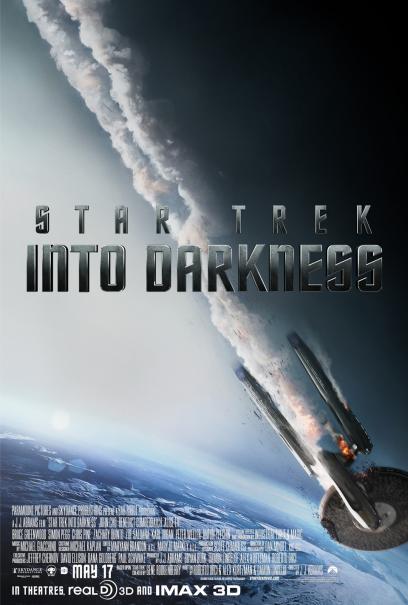 I had the chance to go see “Star Trek: Into Darkness” recently. As a big Trekkie (and Star Wars Fan–I cover all the bases of nerdom), I was extremely excited to see the film. Here, I will survey a number of worldview-level issues in the film. There will, of course, be SPOILERS in what follows.
Primitive Religion
I was a bit taken aback by the portrayal of primitive religion in the movie. At the very beginning, the crew of the Enterprise is engaged in an effort to save a primitive indigenous population. Kirk steals a scroll, to which the natives were giving obeisance. It is apparently something they worship, and when he finally unrolls the scroll to slow them down, which causes them to stop and worship, the situation is shown to be absurd. Once the Enterprise reveals itself, however, the natives immediately forsake this scroll and worship an image they draw in the dirt of the ship.
I may be a bit hyper-critical here, but I can’t help but think that this picture of primitive religion is a bit off. Sure, it’s science fiction, but the people are clearly human-like and it is easy to uncritically imagine the scene as a facsimile for how human religion may have played out. I cannot help but be extremely skeptical of this scenario. First, the notion of a bunch of simplistic idiots whose faith can shift from one moment to the next was odd. Second, the notion that primitive persons automatically worship whatever they see or cannot explain seems inaccurate. I admit that I have not studied the formation of religion as much as I hope to one day, but even what reading I have done reveals an enormous amount of debate on how religions formed and developed. No work I have read, apart from that of those with clear agendas (and little interaction with the archaeological, sociological, and anthropological evidence), has suggested that religion developed just by people seeing a bird and immediately worshiping it. Granted, the Enterprise is more than a bird, but it still seemed odd. Third, I can’t help but think that rather than immediately forsaking their holy scroll, the people would have turned to it to find guidance to discern the meaning of the events they had witnessed.
Again, I realize I am here being extremely critical, but I feel that if a movie is going to engage with religion, it should attempt to do so in an honest fashion. Trek‘s portrayal was, I think, a bit disingenuous.
The Prime Dire… wha?
Star Trek’s metaethical system essentially centers around the “Prime Directive.” The Prime Directive is complex, but essentially boils down to the notion that people should not interfere with lesser-developed cultures. Those who have seen “Into Darkness” know that in no way did the main characters follow this. But as Maureen Moser at Reasons to Believe pointed out, the Prime Directive essentially entails a kind of moral relativism wherein no one is capable of judging other cultures as morally evil. But of course this seems absurd. If, for example, one ran into a lesser-developed society which was exterminating certain groups, it seems obvious that this is a morally wrong action.
In the case of the film, one is forced to wonder–as it seems Kirk did–whether it really is morally satisfactory to allow an entire society to be destroyed simply for the sake of not being seen by that society. Is it morally right to ignore the fates of other societies?
Looking more broadly at the Trek universe one sees again and again that the characters cannot operate within the constrictions of ignoring the ills of other societies. Should we?
 Evil
Evil
Admiral Marcus seemed to lack any kind of motivation other than a desire for militarizing the Federation. I thought this was particularly hard to believe, especially when that motivation made him not even hesitate to carry out atrocities in front of his daughter. Frankly, I saw no real reason for him to go as insane as he did, which made this part of the film harder to believe.
Khan, of course, was the big “secret” going into the movie. I called it back when the character was first shown. Of course it would be Khan. But why did Khan do what he did? He was fairly clearly motivated by revenge, but there was more to his character behind the scenes.
It was revealed that Khan was a war criminal who was conducting a genocide against any whom he found to be “imperfect.” I can’t help but think that this line, was was basically incidental to the plot, is one of the better talking points from the movie. After all, is the destruction of the “imperfect” is exactly what is taking place within our society with issues such as abortion and euthanasia. On the other side, we see the unwillingness to “give a handout” to those who are hungry or in need. Our culture is steeped in a notion where we do not value the “imperfect,” whether they be elderly, unborn, mentally disabled, or poor. Moreover, one must wonder: who defines perfection? I can’t help but think that a character like Khan is not that different from the evils which are occurring each day within our society.
Miracles
When Kirk has given his life to save the crew of the Enterprise, one crew member comments that “It was a miracle.” Spock responds simply, “There are no such things.” I admit that I was baffled by this comment. After all, the series of events which had just occurred in the space of the previous 5 minutes of the film were so over-the-top that the only reasonable explanations were either Hollywood meddling (of course, this was the case) or the hand of the divine.
I vividly remember someone a few rows down in the theater audibly scoffing when Spock said this. Why would this be a reaction to a line like this? Well, simply put, some things are so beyond probability, luck, and circumstance that they cry out for explanation.
Conclusion
Overall, I enjoyed the film. But I realize that I enjoyed it more as a Trekkie than I did at a worldview level. It seems as though the writers attempted to raise some tough questions, but never got around to providing satisfactory answers. When answers were easy to see (as in the case of miracles), a main character like Spock flatly contradicted it. Those who watch the film with worldview-glasses on will find much to discuss. I think the film is worth seeing simply to start up discussions about miracles, relativism, and even some specific ethical issues. I could see the clip at the beginning used as part of a larger discussion on the history of religion. Of course, as a Trekkie, I also think it is worth seeing for the sake of its place in the Star Trek canon. Let me know what you think.
Links
Like this page on Facebook: J.W. Wartick – “Always Have a Reason.” I often ask questions for readers and give links related to interests on this site.
Be sure to check out my other posts on movies (scroll down for more).
Star Trek’s Prime Directive and Moral Relativism– I found this post fascinating. It explores the Trek universe to discuss the metaethical view of relativism.
Engaging Culture: A Brief Guide for movies– I reflect on how Christians can engage with popular movies in order to have meaningful conversations with those around them.
SDG.
——
The preceding post is the property of J.W. Wartick (apart from citations, which are the property of their respective owners, and works of art as credited) and should not be reproduced in part or in whole without the expressed consent of the author. All content on this site is the property of J.W. Wartick and is made available for individual and personal usage. If you cite from these documents, whether for personal or professional purposes, please give appropriate citation with both the name of the author (J.W. Wartick) and a link to the original URL. If you’d like to repost a post, you may do so, provided you show less than half of the original post on your own site and link to the original post for the rest. You must also appropriately cite the post as noted above. This blog is protected by Creative Commons licensing. By viewing any part of this site, you are agreeing to this usage policy.
“Iron Man 3”: A Brief Look from a Christian
 I recently had the chance to see “Iron Man 3,” and I must say it is a dazzling sight to behold. Here, I will briefly comment on a few themes. Be aware that there will be major SPOILERS in this post, so stop reading now if you do not wish to have major plot points revealed.
Science and Ethics
One of the recurring themes throughout the film is the notion that there is a real interplay between doing science (and other activities) and ethics. That is, the practice of science is more complex than abstract notions of lab work without any strings attached. Aldrich Killian is a disabled man who longs to transcend the body he was given. He wants to help others who have physical problems. When he is rejected by Tony Stark, he falls to extreme measures to finally cure himself and start “helping” others.
Many characters are seen raising this same issue. Their motivations start out pure: they want to help people, they want to save others, but they ultimately have that dream tainted. They don’t get the funding they need; they are rejected by the people they care about; their experiments don’t turn out as expected. One can see the human predicament here: we too often and easily let ourselves fall from our ideals. We are willing to make a compromise to get towards a “greater good,” yet once we look back, we discover a sea of wrongdoing.
The very brief discussion about scientific funding and the like is worth noting. It is often thought that scientists are some kind of demigods, doing their research and learning things just because they can. But the reality is that funding is very often an issue, that ethical considerations come into the research that is sought, and that people are involved in the scientific enterprise. These are important points to remember.
The Fall and the Human Predicament
The notion of a “fall” is intertwined with the discussion on ethics and science above. The “bad guys” all have aspects which are pitiable. The opening scene with Aldrich leaves one pitying him rather than seeing him as some kind of evil person. Thus, there is development from him as an object of sympathy to an evil man. The development is abrupt, but it can be seen how this development would occur. When someone makes the decision to choose evil rather than good, there is a very real “fall” which goes along with it.
Other characters experience similar difficulties, but perhaps the most interesting is that of Tony Stark himself. He is the billionaire hotshot who could get anything he wants, yet he suffers from bouts of panic and anxiety attacks. He is human, after all. The human predicament is aptly illustrated through the character of Tony Stark. I could almost hear the words of Ecclesiastes echo over his attempts to use his wealth and “charm” to get through everything: “Meaningless, meaningless… everything is meaningless [under the sun]” (see Ecclesiastes 1ff). No matter what heights we attain, we are ultimately grounded within our own sinful nature. We cannot get past it by our own power.
Disabilities
On a personal note, this part of the film was most disturbing for me. My wife was born without her left arm. In “Iron Man 3,” the “bad guys” almost all turn out to be those who are affected by disabilities. They go to Aldrich to get their missing limbs regrown; they are willing to betray their country to help a child who is missing a limb; Aldrich himself is motivated by his desire to overcome his disability. I couldn’t help but think that the film therefore presents a dim view of those with physical disabilities. There were no counterbalances given; it seemed that the operating assumption was if someone is missing a limb or suffering from other physical disabilities, they would be willing to go to almost any extreme to fix it.
Now, I’ll grant that some of these people seem to have been unknowingly used by Aldrich. I admit my personal feelings in this issue up front because I may be overly critical here. Yet I know of other superhero films in recent memory that use this same theme: those with disabilities often turn out to be the bad guys, and they are willing to kill in order to overcome them.
Conclusion
Here, I have only written up some very brief thoughts on the film. I believe those who go to see it will be able to come away with a number of talking points. The interplay between science and ethics was of great interest. The portrayal of disabilities was, perhaps, questionable, and there were moral issues raised throughout. Please leave a comment and let me know your own thoughts on the movie.
Links
Like this page on Facebook: J.W. Wartick – “Always Have a Reason.” I often ask questions for readers and give links related to interests on this site.
A Christian Look at “The Avengers”– I examine a number of other themes in “The Avengers” which Christians and non-Christians can discuss.
If you love these types of movies, let me commend John Carter to you. Check out my post on the film for some awesome themes.
Engaging Culture: A Brief Guide for movies– I reflect on how Christians can engage with popular movies in order to have meaningful conversations with those around them.
Be sure to check out other looks at movies that I have written (scroll down for more).
SDG.
——
The preceding post is the property of J.W. Wartick (apart from citations, which are the property of their respective owners, and works of art as credited) and should not be reproduced in part or in whole without the expressed consent of the author. All content on this site is the property of J.W. Wartick and is made available for individual and personal usage. If you cite from these documents, whether for personal or professional purposes, please give appropriate citation with both the name of the author (J.W. Wartick) and a link to the original URL. If you’d like to repost a post, you may do so, provided you show less than half of the original post on your own site and link to the original post for the rest. You must also appropriately cite the post as noted above. This blog is protected by Creative Commons licensing. By viewing any part of this site, you are agreeing to this usage policy.
Abortion, fundamentalists, physicalism, and evolution: Sawyer’s “Calculating God” and some contentious issues
 I have already written on Sawyer’s Calculating God
Fundamentalism, Religion, and Abortion
Sawyer lumps fundamentalism in with the discussions about abortion. Unfortunately, fundamentalism is portrayed in the worst possible light, not unlike in the work of Ben Bova. The religious fundamentalists here are extremists bent on destroying anything that counts as evidence against their worldview. As such, they are first introduced as blowing up an abortion clinic (86-87). Frequent readers of my site know that I write often from a pro-life perspective but also that I am very much opposed to violence in this opposition. Unfortunately, such principled opposition is not portrayed as an option in Sawyer’s work.
Interestingly the discussion of abortion in the book–intentionally or not–reveals some important details about the abortion debate. The alien, Hollus, notes the irony in being “pro-life” while also killing people who perform abortions. Yet in this discussion, Hollus reveals something of note:
Hollus looked at me [Tom Jericho, the main character] for the longest time. “These–what did you call them? Fundamentalist extremists? These fundamentalist extremists believe it is wrong to kill even an unborn child?”
“Yes” [Tom responded].
It may take a moment, but think about it: Sawyer expresses incredulity at this notion through the alien Hollus, yet in what may have been a Freudian slip, calls the unborn “children.” Yes, of course I’m opposed to killing an unborn child! In fact, this dialogue reveals exactly what is at stake in the abortion debate: if the unborn is not a human person, then who cares what you do with it? But if it is, then what relevant status difference is there between a child who is located inside the mother as opposed to outside the mother? Again, I’ve written more on this issue elsewhere, but it is important to note that even in expressing incredulity about this, there is a revealing phrase: child. It is an unborn child killed in abortion.
Disturbingly, the book touches on an issue very relevant to the personhood debate: children who are screened for disabilities. In one scene, Hollus is confronted by a child with Down’s Syndrome. He notes nonchalantly that a similar disease is almost always “screened for” in the wombs of the alien mothers (115-116). Unfortunately, this exact thing is happening right now. Unborn children who are shown as having Down’s Syndrome are being aborted inside their mothers at an alarming rate. I can’t help but see this as a modern eugenics movement: killing those we deem unworthy of life for a genetic reason. The logic that this entails is even more disturbing.
Of course the same fundamentalists who bombed the abortion clinic were also out to destroy any evidence for evolution. They sought to destroy a fossil exhibit which they saw as an affront to God. Thus, I can’t help but think that the way Sawyer presents fundamentalists is a bit disingenuous. Not all fundamentalists are incapable of reason and violent. Indeed, almost no fundamentalists are like this! Thankfully, there are positive examples of religious persons in Calculating God, including Tom’s wife.
In one poignant scene, Tom–who is dying from cancer–struggles with the fact that he has been confronted with evidence for the existence of a god. He considers famous atheists who purportedly went to death, all the while denying God’s existence to the end. Yet Tom himself gets down on his knees to pray. When he does so, though, he considers the words of someone from his past: “The Lord works in mysterious ways.” He can’t help but react violently against this:
Such bull. Such unmitigated crap. I felt my stomach knotting. Cancer didn’t happen for any purpose. It tore people apart; if a god did create life, then he’s a shoddy workman, churning out flawed, self-destructing products. “God,” [he prayed] “I wish–I wish you had decided to do some things differently.” (230-231)
Interestingly, in the book, cancer turns out to actually have a purpose… in the sense of being a side-effect of something great: the ability to fuse genetic codes with other intelligently designed species. Here it seems Sawyer has employed a great deal of imaginative techno-babble to explore the notion of a physical god, but it also has hints of a greater good theodicy akin to that of Swinburne.
Physicalism
The discussion of physicalism in Sawyer’s work is very brief, but enlightening. There is a variety of substance dualism here in the sense of emergence. That is, in Sawyer’s fictional world, intelligence and “mind” emerges from matter once complexity reaches a certain threshold. This is similar to the theories of emergence theorists like William Hasker. I can’t help but find this a bit strange. The people who argue for this type of theory are frequently the same who are very hostile to the notion of anything beyond the physical realm, yet they argue that something aphysical can indeed “emerge” from matter itself. Surely this is a leap of the imagination! That matter has creative force simply because it can reach a certain level of complexity seems to me patently absurd.
Not only that, emergence suffers from a second major problem. Namely, if our “mind” is simply a product of complexity in matter, then our “intelligence” is entirely supervenient upon physical complexity. Indeed, our intelligence is a product of that complexity and therefore cannot operate independently of that matter. Therefore, it is hard to see any kind of properties that our minds would have that would be capable of maintaining free will or even rational thought on this theory. Indeed, I have trouble seeing how this theory would be any different from physicalistic monism.
Evolution
The simple notion of evolution is a given in the book. No, it is not friendly to any who are unwilling to accept the notion of “macroevolution,” as the term is used in relevant literature. All the intelligent beings depicted in the book had evolved from a (potentially distinct) distant ancestor.
Darwinian evolution is simply assumed as truth in Calculating God. Or is it? The deity presented in the book is not very conducive to undirected evolution via natural selection and chance. It is portrayed as hurling asteroids at the planets where life was developing in order to press a “reset” button on the creatures that were currently dominant there. It also shown that this deity prevented other catastrophes from happening on these planets, thus interfering with natural selection. Indeed, the evolution depicted here is eerily similar to intelligent design, wherein the process is guided by a deity with a specific aim.
Indeed, one could argue that the entire book is an argument for intelligent design, albeit divorced from much of the theological framework that many of that movement’s frameworks operate within. Yet I can’t help but find this part of Sawyer’s argument (if, indeed, the intention is to make the argument that theists have it all wrong) is completely off. After all, the “god” of Sawyer’s universe is imperfect and concrete in the sense of physically existing. But this works against his concept of deity as being capable of coordinating the events it brings about. Granted, he could perhaps continue to increase the power of this deity beyond what is clearly outlined in the book, but there are hints that the deity is capable of knowing what is happening on places where it is not present, that it is capable of knowing what will happen with certain directions for evolution, and what will happen at the end of the universe. These work against the notion of God as a kind of blundering physical entity that just happens to be supremely powerful. Indeed, the god of calculating God may not be as hostile to Christianity as it initially seems. It serves as a pointer towards the true God of spacetime.
Links
Like this page on Facebook: J.W. Wartick – “Always Have a Reason”
Check out my other post on this book: Aliens that believe in God: The theological speculations of Robert Sawyer’s “Calculating God”
I have discussed the use of science fiction in showing how religious persons act. Check out Religious Dialogue: A case study in science fiction with Bova and Weber.
What would it mean if we discovered life? I have reflected on the possibility: Alien Life: Theological reflections on life on other planets.
Our Spooky Universe– I make the case for the intelligent design argument for the existence of God, which is heavily used throughout Calculating God.
Check out my other looks at popular level books. (Scroll down to see more!)
Source
Robert Sawyer, Calculating God
SDG.
——
The preceding post is the property of J.W. Wartick (apart from citations, which are the property of their respective owners, and works of art as credited) and should not be reproduced in part or in whole without the expressed consent of the author. All content on this site is the property of J.W. Wartick and is made available for individual and personal usage. If you cite from these documents, whether for personal or professional purposes, please give appropriate citation with both the name of the author (J.W. Wartick) and a link to the original URL. If you’d like to repost a post, you may do so, provided you show less than half of the original post on your own site and link to the original post for the rest. You must also appropriately cite the post as noted above. This blog is protected by Creative Commons licensing. By viewing any part of this site, you are agreeing to this usage policy.
Mulan Among Us: Disney’s “Mulan” and Womanhood
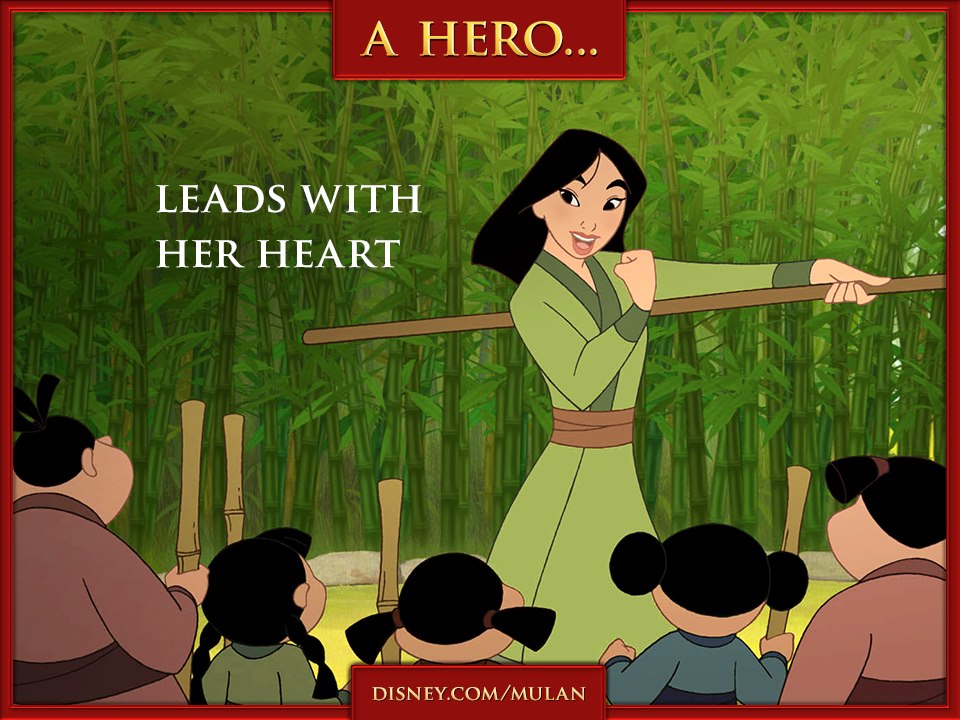
Disney’s “Mulan
Warning: There are spoilers for Disney’s Mulan in the following discussion
Mulan and Cultural Expectations
Mulan is a warrior. She is powerful, capable, and determined.
Oh, and I forgot: she is a woman.
It is that “shocking” pronouncement which is the focus of the Disney’s Mulan
Mulan is challenged at numerous points throughout the movie. She does not fit into her society’s gender ideals. She is expected to be clean, quiet, submissive, and “womanly.” And she tries to fit into these expectations. The culture wants her to be a good wife, so she tries to match what her culture’s idea is in order to become a good wife. Those who have seen the movie knows she fails miserably. When she visits the matchmaker, she recites, in a stumbling way, the right sayings: “Fulfill your duties, calmly and respectively. Reflect before you… Act!” She lacks grace, poise, and ultimately ends up comically ruining the whole scene, setting the matchmaker on fire and dousing that fire with hot tea, running the matchmaker’s makeup and earning the pronouncement that she will never fit society’s expectations for her.
Yet this reveals another cultural shock: it is the very fact that Mulan is placed into a one-size-fits-all box to take on roles which do not match her abilities that leads to her triumph. It is not that she should be trying harder, or that she is wrong; instead, the fact is that it is her culture’s expectations which are wrong. Mulan destroys those expectations. She saves China, and the Emperor himself honors her. Thus, the expectations are shattered, and Mulan remains “true to herself.” Her abilities destroyed the cultural norms that people had tried to apply to her.
“So what!?” you may be asking. “I already knew this, though I may not have outlined it like this.” After all, telling women to be submissive and arguing that there are very specific roles that they should fit into is a thing of the past.
Is it?
Have you never heard the phrase “she wears the pants in that family”? That speaks to a division of roles that is still at least unconsciously acknowledged in our culture. What about “make me a sandwich” or “get in the kitchen”? What of more subtle distinctions? “I would never vote for a woman president.” “A man is in charge of the family.”
Moreover, some theological traditions continue to argue that there are very explicit roles for man and woman in leadership and the home. It is to that concept that we will turn to, with a focus on Mulan.
Mulan and Theology
The shock of Mulan’s story may seem almost comical to us, but the fact remains that there are women whose talents are not being acknowledged. They do not fit the mold. It is said within some branches of contemporary theology that women are to submit to their husbands. These theologians teach that women have very specific roles: that of “helper,” servant, or anything but “leader” or “teacher.” According to these views, women can teach other women and even male children, but when it comes to man, she is always subordinate. Consider the following passage, from a book endorsing this view (“Recovering Biblical Manhood and Womanhood
[I]t is simply impossible that from time to time a woman not be put in a position of influencing or guiding men. For example, a housewife in her backyard may be asked by a man how to get to the freeway. At that point she is giving a kind of leadership… But we all know that there is a way for that housewife to direct the man that neither of them feels their mature femininity or masculinity compromised. (John Piper, 50, cited below)
Moreover, women, on this view, must be careful about how they give their advice; they must remember that they are to be submissive:
A wife who ‘comes on strong’ with her advice will probably drive a husband into passive silence, or into active anger (Ibid, 52)
I can’t help but think of the scene from Mulan just before she saves the Emperor when she is trying to get people to listen to her about the great danger of the Huns in the Imperial City. They pull away from her forcibly, ignoring what she says. Finally, her trusty sidekick, Mushu, points out that “You’re a woman.”
Such is the way in which manhood and womanhood is supposed to play out within those branches of contemporary theology which lean towards complementarianism–the view that men and women are to occupy different “roles” in the church and the home. Women are to be submissive, even when they try to give directions to a man. Mulan, in this view, perhaps came on “too strong” in her insistence that the Emperor was in danger. If she had only been more submissive, then she would not have provoked “passive silence” or “active anger.”
The absurdity of this notion can be found in the fact that it is the victim who is blamed for the abuse. “Passive silence” can be just as harmful as “active anger.” Is it really acceptable to say that a woman, by offering advice, “provokes” the man? Moreover, is it really honorable to men to turn us into seething machines, who, if the right button is pressed, turn into active aggressors or passively-aggressive “victims”? Again, the movie “Mulan” has presented a more balanced approach: there are women who transcend society’s–and religion’s–expectations.
There are Mulans among us. There are women who challenge this perceived view of manhood and womanhood. There are women who are gifted greatly to be leaders, not followers. There are women with the gift of teaching. There are women whose very existence shatters the notion that woman’s role is to be submissive. Their talents and abilities call us to use them, not to force them to singular submission. The Bible calls us to mutual submission, not a singular silence from one gender. These Mulans are powerful missionaries, leaders, teachers, yes, even pastors: gifted and called by God to take on roles that their cultural milieu often wants to deny to them.
I pray that more of these women would arise and use their gifts for the church. Many women have already done so, but our church’s culture has too often tried to silence women. Instead, we need to acknowledge the Mulans we know.
Check the links below for more discussions of women and the church. For all my posts on the topic, check out my egalitarianism category (scroll down for more posts).
Links
Be sure to check out my looks at other movies. If you like Mulan, what about Brave?
For information on egalitarianism–the view that the Bible teaches us women and men should fill equal roles–check out “Christians for Biblical Equality.”
Women in the Ministry: The philosophy of equality and why complementarianism fails– I argue that the position in which women are excluded from church leadership entails inequality of being.
Book Review: “Good News for Women” by Rebecca Groothuis– I review an excellent book on the issue of gender equality in the Bible.
Religious Dialogue: A case study in science fiction with Bova and Weber– I take a look at how science fiction has dealt with theological topics, with a particular focus on dialogue about religion and women.
I discuss the notion of having my expectations of women shattered here.
Sources
John Piper, “A Vision of Biblical Complementarity: Manhood and Womanhood defined According to the Bible” in Recovering Biblical Manhood and Womanhood
Mulan
Image Credit
The image used in this post is credited to the Mulan Facebook page.
SDG.
——
The preceding post is the property of J.W. Wartick (apart from citations, which are the property of their respective owners, and works of art as credited) and should not be reproduced in part or in whole without the expressed consent of the author. All content on this site is the property of J.W. Wartick and is made available for individual and personal usage. If you cite from these documents, whether for personal or professional purposes, please give appropriate citation with both the name of the author (J.W. Wartick) and a link to the original URL. If you’d like to repost a post, you may do so, provided you show less than half of the original post on your own site and link to the original post for the rest. You must also appropriately cite the post as noted above. This blog is protected by Creative Commons licensing. By viewing any part of this site, you are agreeing to this usage policy.
“A Place at the Table” – A Movie Review
 Sometimes, there are movies that come along and force you to think. “A Place at the Table
The film–a documentary–can be summed up by this: the issue of hunger is complex, and it is very much a problem in the United States. It shares a number of personal stories which reflect the truth of these statements. Although it touches on the lives of several people, “A Place at the Table” focuses its narrative around three people: Barbie, a single mother in Philadelphia who is struggling to find a job and feed her children; Rosie, a 5th-grader in Colorado whose family is trying to stay on their feet; and Tremonica, a 2nd-grader who is overweight, yet still involved in the food insecurity.
Food insecurity is, essentially, dealing with a lack of ensured access to food. Concretely, it means that those who suffer from food insecurity are unsure of where their next meal will come from. The statistics shared in the movie state that one in every six Americans are struggling with food insecurity.
These narratives serve to truly draw out the complexities of the issue of food insecurity. Barbie, at the start of the movie, is on food stamps. She is barely scraping together enough food to give to her children while also keeping herself fed. She is trying to find a job. Moreover, the amount that she gets for food doesn’t allow her to afford fruits and vegetables. Instead, she has to rely on feeding her children pastas and carb-rich foods. When she eventually gets a full-time job, she almost immediately loses her benefits, which leaves her with the same problem because she’s still trying to get on her feet.
Tremonica is overweight, but it is actually because her family doesn’t have enough to eat a healthy, balanced diet. Yes, she’s getting food, but her mom can’t afford to buy fruits and vegetables. Moreover, the area they live in makes it extremely difficult to get fresh produce because major shipping doesn’t get profitability in shipping to remote locations.
Rosie’s family of seven lives in one house in order to survive. They often run out of milk and food in the middle of the week, and so rely on dry cereal to eat for some meals. Rosie benefits from the food bags a local church distributes, but needs more support. A neighbor, who runs a ranch, has had to take on a second job in order to feed his family.
Barbie and Tremonica’s cases are also used to focus on the issue of subsidizing crops. Farm subsidies have been given billions of dollars, which keeps the costs of certain foods low (such as grain, corn, and the like). Yet other foods, like fruits, are not subsidized as heavily or at all, and so they are more expensive. When someone has a very limited budget for food, they see a pound of strawberries for five dollars while a bag of chips is 50 cents. It is easy to make that decision when you’re a parent just trying to make sure there is food on the table every day.
Rosie’s case also shows the complexities of food insecurity. She gets meals every day, but they are often small and lack the nutrients she needs to survive. Her education suffers because a lack of nourishment leads to inattentiveness in class. The broader issue is painted: when children are being sent to school hungry, they aren’t learning as well as they could, which perpetuates the cycle of poverty and food insecurity.
Another big issue discussed in the film is that of school lunches. The amount the government gives to schools to provide a meal is somewhere around two dollars (sorry, I don’t remember the exact amount the movie mentioned). This is not enough to pay for a well-balanced diet, and so contributes to the overall problem for children lacking nutrition.
Although the film claims to offer no answers, the people who are interviewed offer plenty. Perhaps the biggest complaint I have with the film is that it almost makes one ask too many questions. The people who are interviewed -some of them writers and experts on the topic–offer a variety of often contradictory solutions to the problem. Just as an example, one woman argued that a living wage is the solution: if we raise minimum wage to the point that people can live off of it, then we’ll solve the issue. Others argued that more funding for the government assistance programs already in place would at least reduce the issue. Yet the film only touched on the notion that perhaps this issue is more complex than a single solution.
Consider the solution of raising minimum wage to a “living wage.” First, there’s the question of what qualifies for a “living.” What does it mean to be able to “live”? Is there a certain standard of comfort? Is it more than arbitrary? Or is it just being able to some kind of food, shelter, and clothing? If minimum wage is increased, companies tend to cut hours or even employees, which may actually contribute to, rather than solve the problem. There’s also the notion that all companies have some kind of unlimited wealth of profit that they are unwilling to tap into, but that seems to be false. Some companies would not be able to afford to pay more. I’m not trying to say that any of these solutions are right or wrong. Instead, I’m saying that we can’t oversimplify the issue and make it one-dimensional. As one of my friends mentioned: it’s a matter of worldview.
That, I think, is the core of the issue. Worldview. How is it that we let people go hungry in a country in which we overproduce food? It was heartening to see that pretty much all the experts interviewed on the topic agreed that religious organizations have done much to help by providing free meals and more. However, that alone is not enough. There is a stigma attached to food insecurity which is unfair, at best. This was observed in the film as one of the men who had to go to a food pantry to get food talked about how he was embarrassed and ashamed to do so. Moreover, there is often a knee-jerk reaction against “handouts” when conversations come up like this. It is easy to find anecdotal stories of abuses of food stamps and the like.
Yet, for the Christian, it seems that we are called to feed the hungry. We are called to set aside our biases, our pride, and we are called to feed the hungry and take care of the poor. We are called to be worldview changers–working towards an end to hunger. This doesn’t mean the complexities just disappear. My point here is that we, as Christians, must be involved in this movement. Ignorance and apathy should not be an excuse.
All should also feel the powerful pull for the love-of-neighbor which is ingrained into us by our conscience. Moreover, as one of the experts pointed out, we can view this as a kind of patriotic issue: do we really want to say we’re proud of a country in which one-in-four children goes hungry?
Ultimately, “A Place at the Table” is worth seeing. One is left walking away from the movie with a new awareness of the problem of food insecurity. However, would have been nice to have lengthened the movie in order to explore some of the possible solutions and complexities more fully. It is important to neither oversimplify nor dismiss this issue.
SDG.
——
The preceding post is the property of J.W. Wartick (apart from citations, which are the property of their respective owners, and works of art as credited) and should not be reproduced in part or in whole without the expressed consent of the author. All content on this site is the property of J.W. Wartick and is made available for individual and personal usage. If you cite from these documents, whether for personal or professional purposes, please give appropriate citation with both the name of the author (J.W. Wartick) and a link to the original URL. If you’d like to repost a post, you may do so, provided you show less than half of the original post on your own site and link to the original post for the rest. You must also appropriately cite the post as noted above. This blog is protected by Creative Commons licensing. By viewing any part of this site, you are agreeing to this usage policy.

 J.W. Wartick - Reconstructing Faith