Bioethics
Saint Nicholas- A Christian life lived, a story told
It has been remarked, with much truth, that all of us lead double lives, a life of our fancy, in a world of things as they should be, or as we should like them to be, and a life in a world of things as they really are. And this is as it should be. We can lift the level of real existence by thinking of things as we should like them to be. It is well not to walk with one’s eyes always fixed on the ground. (McKnight, cited below, Kindle location 401)
It is easy to hear the “real story” of Santa Claus, but few investigate further than looking it up to see the parallels between the Bishop of Myra’s life and that of the story of Santa Claus. There is so much more to his story–and indeed to stories in general–than that.
Saint Nicholas (270-343 AD) was a valiant man who fought prostitution, abortion, and poverty. He attended the council at Nicaea, from which we received the Nicene Creed. At that council, he defended vigorously the orthodox doctrine of the Trinity. He was an exemplar of Christian teaching put into practice. Not only that, but the legend which has grown up around his life has inspired and enthralled untold numbers of people through the Christian era.
It is important to note the intertwining of legend and truth in the stories about St. Nicholas, and the impact that has had upon innumerable people. George McKnight, writing in the early 1900s, explored a number of issues related to the mingling of fact and fiction in the life of St. Nicholas. The quote highlighted above touches on many of these topics.
First, there is power in narrative. A story which is told well is one which can effect change. We are impacted by fantasy in ways which cause us to reflect upon reality with new–perhaps better trained–eyes. Second, we, as spirited people in a world which we so often see only as the physical, are called to heights of reality by fiction. As McKnight noted, “It is well not to walk with one’s eyes always fixed on the ground.” Our eyes are driven upwards and outwards by the stories we hear–they cause us to interact with others in new ways, and they also cause us to think about topics which perhaps we had not even considered before.
The story of St. Nicholas is no different. Yes, legend has crept into the accounts of this godly man, but what is the purpose of that legend? Not only that, but is it possible to separate out the fiction?, McKnight also commented upon the nature of radical skeptical history being done in his time (about 100 years ago). He bemoaned the fact that nearly every facet of Nicholas’ life is thrown into question with the arrival of critical scholarship. But of course to focus merely upon what is historical fact or fiction is to miss the entire point of the life of St. Nicholas. McKnight goes on:
The story of St. Nicholas consists almost entirely of a series of beneficent deeds, of aid afforded to humanity in distress, accomplished either by St. Nicholas… or through his intervention… The conception of St. Nicholas, then, is almost that of beneficence incarnate. (Kindle Location 469-481).
That is, the story of St. Nicholas, and the legends that surround him, turn him into a type of Christ–one who is deeply concerned for humanity and showing Christian love for God and neighbor.
Yet this is not all there is to the life of the Saint. Although difficult to sift from the legends, there is a historical core to the life of St. Nicholas which is just as profoundly Christian as the legends which have grown up around him. With that said, we turn to the story of St. Nicholas, with an eye toward how his life is one of a Christian lived as well as a story told.
Nicholas is well-attested to have attended the council of Nicaea. There is a possibly apocryphal story about his  attendance there wherein he confronted the heretic Arias himself and slapped him in the face. The story continues, telling of how Nicholas was initially exiled for his act but later allowed to return after Arianism had been thoroughly acknowledged as heresy. Although it is nearly impossible to know whether this story is historically accurate, there is at least some truth behind the story in that Nicholas was known to vehemently defend the orthodox doctrine of the Trinity.
Nicholas actively opposed prostitution. However, instead of simply condemning the practice, he also gave money to young women in need to keep them from turning to prostitution to feed themselves. Again, this truth served as the basis for a possibly historic legend in which Nicholas learned of three women who were about to turn to prostitution (or be sold into slavery, depending on the account) because they couldn’t pay their dowries in order to be wed. Nicholas is said to have thrown a bag of gold for each young woman through their window so that they could be married instead of sell their bodies. Again, this legend may not be true–but it points to the truth about Nicholas’ life–he gave to those in need and fought against the evils of prostitution. It also points beyond itself towards an ideal.
Nicholas fought against the Pagan practices, which led to his persecution and imprisonment by those angered by his preaching against false idols. Furthermore, his opposition to paganism included working against a number of practices in the pagan world, including abortion. Roman Catholics have continued to spearhead St. Nicholas’ commitment to helping children. A search for “Nicholas of Myra” turns up adoption agencies one after another. Christians have used Nicholas’ example as a call to end human trafficking and slavery. One can see throughout these historical kernels how myth and legend could grow up around this figure–fighting heresy, giving to those in need, and having utmost concern for the innocent were all aspects of St. Nicholas’ life. We don’t necessarily know the extent of his actions in these areas, but we know enough to be inspired.
Therefore, we turn to another part of McKnight’s thought-provoking quote at the beginning of this post:
…all of us lead double lives, a life of our fancy, in a world of things as they should be, or as we should like them to be, and a life in a world of things as they really are. And this is as it should be. We can lift the level of real existence by thinking of things as we should like them to be.
Take a moment to consider what McKnight is saying here: we know there is a realm of absolutes–a way that things should be. We also have a way that we should like things to be. But the way the world “really is” does not often reflect that. Yet we can enact change upon our realm of existence–we can “lift it up”–by focusing on the way that things should be, and living our lives differently because of that. St. Nicholas enacted this in his life, working towards the ideal while living in an imperfect world. The legends of St. Nicholas inspire us to do the same. We are not to focus so much on the critical challenge–which stories are true and which are “only” legends. Instead, we are to focus on St. Nicholas as a story–one which inspires us to change the world around us.
Nicholas’ life was one which fought against poverty, paganism, heresy, prostitution, and idolatry. He incorporated sound doctrine into his life and then lived it. There can hardly be a better example of a Christian life lived than that of St. Nicholas. Yet that is not all there is to the story of the “real” saint. No, his life is one of calling us to live a life for Christ as well. His life is action. It is a life incarnate with truth and the beneficence that comes from the Christian worldview. It is a call to follow Christ.
Sources
James Parker III, “My Kind of Santa Claus.”
Robert Ellsberg, “St. Nicholas, Bishop of Myra.”
George Harley McKnight, St. Nicholas (New York: G.P. Putnam’s sons, 1917). This book is available legally free of charge in a number of digital formats through Open Library.
SDG.
——
The preceding post is the property of J.W. Wartick (apart from citations, which are the property of their respective owners, and works of art as credited) and should not be reproduced in part or in whole without the expressed consent of the author. All content on this site is the property of J.W. Wartick and is made available for individual and personal usage. If you cite from these documents, whether for personal or professional purposes, please give appropriate citation with both the name of the author (J.W. Wartick) and a link to the original URL. If you’d like to repost a post, you may do so, provided you show less than half of the original post on your own site and link to the original post for the rest. You must also appropriately cite the post as noted above. This blog is protected by Creative Commons licensing. By viewing any part of this site, you are agreeing to this usage policy.
A violation of God’s Will: Abortion- or why no Christian should be pro-choice
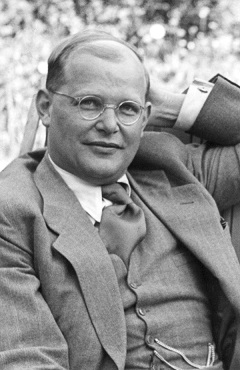 Destruction of the embryo in the mother’s womb is a violation of the right to live which God has bestowed upon this nascent life. To raise the question whether we are here concerned already with a human being or not is merely to confuse the issue. The simple fact is that God certainly intended to create a human being and that this nascent human being has been deliberately deprived of his life. And that is nothing but murder.- Dietrich Bonhoeffer, Ethics
The foresight which Dietrich Bonhoeffer showed in this passage from his book, Ethics, is astounding. Bonhoeffer was a pastor who stood up to the Nazi regime and was martyred–hanged by the Nazis–for his activism on behalf of the innocent lives being slaughtered by Hitler. His view on abortion lines up exactly with his views on preserving human life in Nazi Germany. Bonhoeffer’s argument anticipates and cuts off a number of pro-choice arguments for abortion. Let’s see how.
Bonhoeffer’s argument does not depend whatsoever on whether the unborn is a human being or not (and the unborn is indeed a human being). His argument instead is based upon God’s will for that unborn entity. Examine once more what Bonhoeffer said: “The simple fact is that God certainly intended to create a human being and that this nascent human being has been deliberately deprived of life.” The focus here is not so much on the status of the unborn as a human or not, but rather the focus is upon God’s will for the unborn. Why is it that God set the world up in such a way that the nascent (developing) human being grows into a toddler, adolescent, adult, and senior? Bonhoeffer focuses the argument directly upon God’s will. God has willed that from conception, a plan for a human life is set into motion. Thus, to terminate a pregnancy is to destroy part of God’s plan, a plan for a human life.
For Christians, this logic is binding. The pro-choice objection that the fetus is not a human person is a rabbit trail at this point. Another objection must be thrown out the window as well: namely, the notion that even if the unborn is a human person, the mother has an absolute right to bodily autonomy. For the Christian, God’s will trumps any supposed absolute autonomy. God’s will is absolute. It must be obeyed. To go against God’s will is to sin.
Is there a way for Christians to avoid the implications of Bonhoeffer’s argument? It seems the only way to do this is to deny that God wills for there to be a human being as the result of a pregnancy. I confess that I do not see any possible way for this argument to be convincing. The objector would essentially have to say that God’s will for the unborn is based entirely upon that of the parents’ will. For, after all, if God did not will for there to be a human being as the result of a pregnancy, what would God’s will regarding the conceived being be? It seems that it would have to be arbitrary. But this would seem to be untenable given the doctrine of the nature of God as perfection.
Therefore, Bonhoeffer’s ingenious argument leads to the inescapable conclusion: no Christian can endorse abortion. The fact of the matter is that God so set up the world that the process of human growth begins at conception. Unless there is a complication in the pregnancy or there is an outside source intervening to terminate the pregnancy, the result of conception is a human being.
All Christians say in chorus: Let God’s Will Be Done!
Links
Abortion: The Holocaust of our Day– I explore more reasons to reject the pro-choice position for both Christians and non-Christians at length.
Pro-Life– check out my numerous posts on the issue of abortion.
Sources
Dietrich Bonhoeffer, Ethics
SDG.
——
The preceding post is the property of J.W. Wartick (apart from citations, which are the property of their respective owners, and works of art as credited) and should not be reproduced in part or in whole without the expressed consent of the author. All content on this site is the property of J.W. Wartick and is made available for individual and personal usage. If you cite from these documents, whether for personal or professional purposes, please give appropriate citation with both the name of the author (J.W. Wartick) and a link to the original URL. If you’d like to repost a post, you may do so, provided you show less than half of the original post on your own site and link to the original post for the rest. You must also appropriately cite the post as noted above. This blog is protected by Creative Commons licensing. By viewing any part of this site, you are agreeing to this usage policy.
From conception, a human
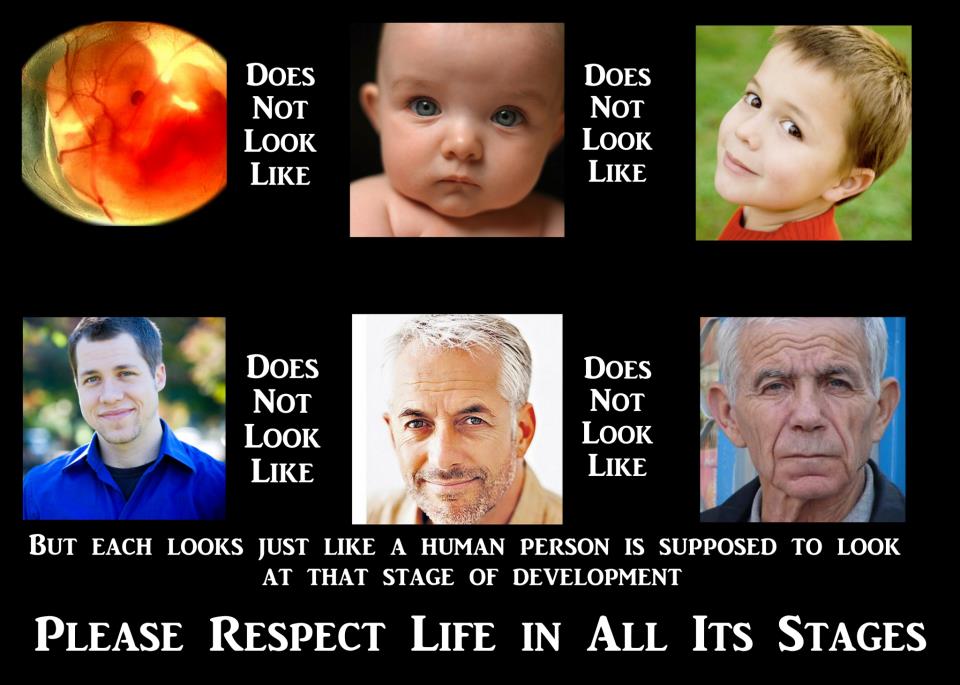 It is important for those on either side of the abortion debate to be informed. One part of that is to realize there are some really, really bad arguments out there. The argument that the unborn is merely a “blob of cells” or “human tissue” is one such argument. Simply put, if one makes this argument they are not on the side of scientific facts.
From the Scientists
A survey of textbooks on embryology by medical professionals shows that regardless of what the person on the street says, science tells us that from conception there is a new human being. I will now demonstrate through the citation of many such sources.
Zygote: this cell results from the union of an oocyte and a sperm. A zygote is the beginning of a new human being (i.e., an embryo). Human development begins at fertilization… This highly specialized, totipotent cell marks the beginning of each of us as a unique individual. [Moore, K. and T.V.N. Persaud, The Developing Human: Clinically Oriented Embryology (6th ed.), (Philadelphia: W.B. Saunders Company, 1998), pp 2-18.]*
“Embryo: An organism in the earliest stage of development; in a man, from the time of conception to the end of the second month in the uterus.”
[Dox, Ida G. et al. The Harper Collins Illustrated Medical Dictionary. New York: Harper Perennial, 1993, p. 146]**In this text, we begin our description of the developing human with the formation and differentiation of the male and female sex cells or gametes, which will unite at fertilization to initiate the embryonic development of a new individual. Larsen, W.J. 1998. Essentials of Human Embryology, Churchill Livingstone, New York, pp. 1-17.*
Fertilization is an important landmark because, under ordinary circumstances, a new, genetically distinct human organism is thereby formed… O’Rahilly, R. and F. Muller. 1996. Human Embryology & Teratology, Wiley-Liss, New York, pp. 5-55.*
The development of a human being begins with fertilization, a process by which two highly specialized cells, the spermatozoon from the male and the oocyte from the female, unite to give rise to a new organism, the zygote. [Langman, Jan. Medical Embryology. 3rd edition. Baltimore: Williams and Wilkins, 1975, p. 3]**
The development of a human begins with fertilization, a process by which the spermatozoon from the male and the oocyte from the female unite to give rise to a new organism, the zygote.
[Sadler, T.W. Langman’s Medical Embryology. 7th edition. Baltimore: Williams & Wilkins 1995, p. 3]**
Furthermore, a number of medical professionals testified under oath to a U.S. Senate committee.
“I have learned from my earliest medical education that human life begins at the time of conception.”- Dr. Alfred Bongioanni (University of Pennsylvania)*
“[A]fter fertilization has taken place a new human being has come into being.”- Dr. Jerome LeJeune (University of Descartes)*
“It is scientifically correct to say that an individual human life begins at conception”- Dr. Micheline Matthews-Roth (Harvard University Medical School)*
Quotes like these could be multiplied almost beyond measure. Scientifically speaking, those who say that the unborn is not a human being are, to put it bluntly, ignorant.
[Want more quotes from professionals? Check them out (each word there is a different link)]
Science, back with a vengeance
 Some may think that amassing endless quotes from medical professionals and scientists is not convincing. They’d rather see the evidence themselves. Let me present it very briefly.
1) The zygote has distinct DNA from the mother (and is therefore not part of the mother).
2) About 50% of the time, the unborn has a different gender than the mother (and is therefore not part of the mother).
3) From conception, the zygote grows and organizes itself (and is therefore a unique individual).
4) As long as there is an environment in which the resources required for life continue to be provided, the zygote will continue to mature and, well, live (much like a baby, or a 20 year old).
5) The zygote is alive and continues to grow.
Therefore, from conception we have an individual with unique DNA and sometimes even a different gender; we have an individual which grows and organizes itself; we have an individual which, as long as no one destroys it, will continue to grow and mature into an adult.
There is a reason the literature sounds so confident that human life begins at conception: those who deny this would have to say that 50% of the time, males with distinct DNA from their “bodies,” who organize themselves towards growth, are reducible to their female mothers. That is what the pro-choice advocate would have to say: “Yes, that male ‘clump of cells’ inside the mother with its self-organization and different DNA is actually part of the mother.” This despite the fact that any DNA test would not show this to be the case. Of course, the female’s DNA would be different as well, so again, the absurdity would have to follow.
The Philosophical Side
Let’s suppose for a moment the science were unconvincing, or at least left open the possibility of denial. What about philosophical arguments that the unborn is not a human being?
Viability
Some argue that viability is the point at which we can decide when an embryo goes from a ‘clump of cells’ to a human being. However, viability continues to be pushed to earlier and earlier stages of development for the embryo. Does that mean that human life continues to be extended earlier and earlier?
This argument is fairly ridiculous because it entails that what was not a human being 100 years ago is now suddenly, miraculously a human being due to new technologies to sustain life. In other words, it reduces humanity to a sliding scale. Imagine a nuclear fallout happened and our technology was pushed back into the 1700s era. Suddenly, viability would be much later than it currently is. Does that mean that those who were humans/persons before suddenly lost that privilege based upon our technology level?
No Brain/No Pain
Some argue that the ‘clump of cells’ is not a human being until it has a brain or can feel pain. There are a number of problems with this argument.
1) it assumes physicalism–it assumes that human beings are somehow identical with their brains. This is a huge area of exploration and I won’t delve into it here.
2) It is unclear how the growth of a body part somehow transforms something from a clump of cells into a human being.
3) It is a completely arbitrary cut-off. Why pick the brain as the arbitrary cutoff? Note that it has to be arbitrary unless someone has an intrinsic value to place all of the qualities of humanity in the brain.
4) If feeling pain is necessary for human life, then someone who is in a coma and can recover is not a human being. Likewise with someone who has passed or gone into shock.
5) The fact is that the unborn can feel pain at somewhere around 7-8 weeks into term. Those who deny that evidence simply must concede that evidence of pain at about 20 weeks. What does that mean? Unfortunately, abhorrently, it means that those unborn who are aborted in extremely gruesome ways [see here: warning: graphic descriptions–and I picked the least graphic one I could find] and that they feel the pain. This is an unfortunate, disturbing, fact. People who deny this fact are either blissfully unaware of the scientific literature or, to be frank, lying. So what to do with this evidence? If the reason for allowing abortion really is that the baby can’t feel pain (and I very much doubt that it is–this is just a rationalization for the real reason behind it), then any abortions over 20 weeks should be illegal.
But really, what is the rationale driving this argument? Why should we care if a “lump of cells” feels pain? After all, according to pro-choice advocates, until the unborn is somehow transformed into a baby by passing from inside to outside of the mother, the unborn is just a “ball of cells.” So really, who cares if it feels pain? Again, that’s because this reason is just a red herring. The real issue is personhood.
Reliance
Some argue that because the unborn has to rely upon the mother to survive it is not a human. But of course so does a newborn infant. If it is asserted that the difference is because the unborn is inside the mother than one can’t help but wonder how going from inside to outside the mother suddenly transforms something from a ‘clump of cells’ into a human being.
For a number of other philosophical arguments see my posts on my pro-life page.
Conclusion
The argument that the unborn is merely a clump of cells is scientifically untenable. Those who make this claim are ignorant of the scientific data that states the exact opposite is the case. If they maintain their assertions in the face of the scientific evidence, then it can only be through blind faith or willful deception.
The philosophical arguments fair no better.
From conception, a human.
*Found quoted at “When Does Human Life Begin”
**Found quoted at Life Begins at Fertilization with the Embryo’s Conception
SDG.
——
The preceding post is the property of J.W. Wartick (apart from citations, which are the property of their respective owners, and works of art as credited) and should not be reproduced in part or in whole without the expressed consent of the author. All content on this site is the property of J.W. Wartick and is made available for individual and personal usage. If you cite from these documents, whether for personal or professional purposes, please give appropriate citation with both the name of the author (J.W. Wartick) and a link to the original URL. If you’d like to repost a post, you may do so, provided you show less than half of the original post on your own site and link to the original post for the rest. You must also appropriately cite the post as noted above. This blog is protected by Creative Commons licensing. By viewing any part of this site, you are agreeing to this usage policy.
Pro-Life, Pro-War, Pro-Death Penalty? Hypocrite! -Consistently valuing human life
 The image to the right has been making its rounds on the internet, and it reflects an argument with which many who are pro-life and pro-death penalty will have to contend. The picture sums the argument up pretty well, but I will draw it out:
1) You are pro-life
2) You are pro-war [it is not stated what is meant by pro-war, exactly]
3) You are pro-death penalty
4) 1-3 conjoined are inconsistent
The simplest way to show this argument fails is to show that 1-3 are not inconsistent, which I shall now endeavor to do. What I mean to sketch here is a consistent ethic for valuing human life.
Pro-Life
Clearly, this piece of the argument is meant to be the one that is inconsistent. The proponent of the argument could say, “If you are really pro-life, then you should value life in every other sphere.” I agree, but the person who argues in this way is often pro-choice, and so it is relevant to at least link to my other arguments for the pro-life position. Interested readers should view my pro-life page for a number of my articles on the topic.
Pro-War
This is perhaps the most confusing of the labels. I think very few people are pro-war in an undefined sense. I think that perhaps those spreading this image mean the Iraq war, but that is a political issue rather than an issue about the value of life. Why is it a political issue? Because almost everyone (except staunch pacifists) would agree with the notion of a Just War. What is meant by that term is that there are some sets of circumstances which justify using military force in order to prevent their continuance.
For example, what I consider one of the most infamous cases is the Rwandan Genocide in 1994. During that genocide, an estimated 800,000 people were slaughtered, yet the UN pulled out their presence. The U.S. did not intervene, and Europe did very little. In my opinion, this was a truly deplorable example of international complacency, which allowed hundreds of thousands of people to be murdered wholesale. Should we have intervened with military force in that genocide? I say absolutely. When there are circumstances wherein human beings are being systematically destroyed by a national power, it seems like Just War against that national power is justified.
If someone wants to disagree with me on that, that is fine, but I don’t see how this notion that we should intervene to prevent genocide and other atrocities somehow means that I am not valuing human life. I would challenge someone to show how this is inconsistent with the pro-life stance.
Of course, the point that some have made is that the image is somehow linked to the Iraq War. But then the issue is whether the Iraq war is a Just War or not. I’m not going to start that debate, so I’ll just point out what I said above: if one is pro-life and for waging war in a just fashion, there is no inconsistency.
Pro-Death Penalty
In my opinion, this is actually more difficult to defend from a pro-life position than ‘pro-[Just]-war.’ Why? Well, we’ll get to that. First, let me make the positive case for the death penalty. As a Christian, I could just reference the Bible and point out that the government doesn’t carry the sword for nothing and that the notion of the death penalty for murder is pretty consistent throughout. But! I think it is important to show a more integral part of the case: being for the death penalty is part of valuing human persons.
How is that possible? Well, consider this: one reason the death penalty seems to me to be justified is that what is being said by it is that the human life is so valuable that if you willingly destroy someone else’s life, then your own life is forfeit.
I find this reasoning to be fairly solid and certainly consistent with a pro-life stance. On this view, life is so extremely valuable that the murder of a fellow human being means your own life must be forfeit.
Several objections could be lodged here.
1) One could object that this seems like a wholly retributive system. In response, I would say that may indeed be the case, but the current debate is not over what kind of penal system should be in place but rather on the consistency of a pro-life stance with other positions.
2) One could argue that the justice system is imperfect and therefore someone who is innocent may be executed. This is a much more powerful argument, in my opinion, and must be taken into consideration. Of course, any system of justice is going to be imperfect, and that imperfection alone does not justify jettisoning everything. Furthermore, one could argue that the extreme burden of proof in order to convict someone of murder when the penalty is death almost ensures that the innocent will not be proven guilty. More on (2) later.
3) One could argue that the death penalty does nothing to decrease violent crime. Again, this is a side issue and actually isn’t the justification for the death penalty I offered above.
It therefore seems to me that (2) is a powerful response to the death penalty argument from a pro-life perspective. If we should err on the side of caution whenever it comes to human life, then perhaps it is more consistent to be against the death penalty. However, it seems that the argument to justify the death penalty above does give a powerful reason to maintain the death penalty in light of the vanishingly improbable likelihood of someone innocent being killed. I rate this as about a 50/50, and think that one can be consistently pro-death penalty and pro-life. I leave it to the opposition to show me otherwise.
Conclusion
I have shown that one can be pro-life and pro-[just]-war. I have furthermore shown that one can be pro-life and pro-death penalty, with one minor caveat. Regardless of where one stands on the second argument against the death penalty offered above, it seems that one can remain consistent as pro-life and pro-death penalty if they hold that the value of human life trumps the argument.
I have therefore shown that 1-3 are indeed consistent and therefore 4 is false.
I think the biggest problem I have is that images like this do not do anything to contribute to the conversation. They are merely jabs at the other side. I think that the only way to have serious discussion is to avoid these types of “meme” images altogether. If your goal is to convince the other side, then engage in honest dialog. Do not post pictures to mock them. I say this to everyone.
SDG.
——
The preceding post is the property of J.W. Wartick (apart from citations, which are the property of their respective owners, and works of art as credited) and should not be reproduced in part or in whole without the expressed consent of the author. All content on this site is the property of J.W. Wartick and is made available for individual and personal usage. If you cite from these documents, whether for personal or professional purposes, please give appropriate citation with both the name of the author (J.W. Wartick) and a link to the original URL. If you’d like to repost a post, you may do so, provided you show less than half of the original post on your own site and link to the original post for the rest. You must also appropriately cite the post as noted above. This blog is protected by Creative Commons licensing. By viewing any part of this site, you are agreeing to this usage policy.
Really Recommended Posts 6/2/2012
 Another Owl Post edition. This edition of my really recommended posts features a critique of Krauss, archaeology, abortion and polity, an apologetics comic (check it out!), molinism, Christopher Hitchens, and religious diversity. Check out the links and let me know what you think!
Not Understanding Nothing– Edward Feser, one of my favorite bloggers and a fantastic Thomistic philosopher, critiques Lawrence Krauss’ book, “A Universe from Nothing.”
Archaeologists Uncover first extra-biblical reference to Bethlehem– It’s amazing that something so small can be so important!
An Unexpected Confession at the Great Disclosure– A great apologetics comic with a “what if?” scenario.
“They Would Have Believed…” — A Molinist Exegesis of Matthew 11:20-24– Molinism is a theological position I hold strongly because it seems to solve many difficulties of both philosophy and exegesis. Check out this excellent post on the latter.
Christopher Hitchens confessed he would not get rid of all religion. What is, perhaps, most interesting about this video is the discussion of Dawkins, who as a “free thinker” was utterly incredulous about Hitchens’ view.
Do We Need to Prove All Other Religions False?– Interesting look at the rationality of a particular belief in light of diversity.
Abortion Jeopardizes 900-year-old Liechtenstein dynasty– very interesting read about polity and abortion in another country (unless you’re from Liechtenstein, in which case it’s your country!).
Crossing the Most Dangerous Line: How some bioethicists undermine humanity
Our point is only that there is nothing bad about death or killing other than disability and disabling. (Sinnott-Armstrong and Miller, cited below)
The authors also do not agree with the term euthanasia for this practice [after birth abortions] as the best interest of the person who would be killed is not necessarily the primary reason his or her life is being terminated. In other words, it may be in the parents’ best interest to terminate the life, not the newborn’s. (Klimas, emphasis mine, cited below)
These are not quotes from a dystopic sci-fi epic; these are quotes from a journal article about murder and a news story about bioethics. The disturbing reality is that there are a number of people working in the field of bioethics today whose positions undermine basic human rights.
Murder as Causing Disability
Why is murder wrong?
There are a number of answers generally given to this question which generally focus on the wrongness of ending life or terminating consciousness. However, a recent article by Walter Sinnott-Armstrong and Franklin Miller denigrates this position as “traditionalist” (note the subtle choice of the word to create an opposition: “traditionalists” are opposed to what? apparently they are opposed to “innovation” “reality” and the like; they are stuck in their mores and these bioethicists must free us from the stone age). They argue that it is causing disability which makes murder wrong; not the wrongness of killing itself.
Murder is wrong, on their view, because it causes “total disabling.” The authors draw out a thought experiment in which a woman, Betty, is incapable of controlling her thoughts, has no motor control, and the like. Essentially, she is completely disabled and cannot do anything, has no awareness of her actions, and the like. Then, the authors ask:
In this case, is Betty any better off totally disabled than dead? If so, then death must involve the loss of something valuable beyond the loss of all abilities forever. If not, then death does not involve the loss of anything valuable beyond what is lost in total disability. Death is still distinct from total disability, but it is no worse.
It is fascinating to see that the authors apparently take this to be a decisive blow to the “traditionalist” position. They write, “We see nothing to make Betty’s death worse than her total disability. This intuition seems to be widely shared, since many people dread death no more than and for the same reasons that they would dread total disability.”
Yet there is something fairly obvious that is just waiting to be pointed out: namely, that Betty’s death does “involve the loss of something valuable beyond the loss of all abilities forever”–what it involves losing is one’s life.
Yes, that’s right, some people make the apparently not-so-obvious claim that life itself is valuable. See, articles like this by Sinnott-Armstrong and Miller don’t interact with their opponents’ positions as much as they try to claim they have refuted them; rather, they simply assume their opponents are wrong. But these authors seem to have anticipated this point (despite their total rejection of the alternative in their thought experiment–they use the experiment as though it seals their case and then only later, once the reader has been led to believe they are absolutely correct, do they deal with this objection). They write:
Of course, opponents will claim that life is sacred or that killing her violates God’s commandment, but why would God forbid us (or have any reason to forbid us) to do something that does not make Betty worse off? Similarly, secular theorists might claim that life has sanctity or intrinsic value (cf Dworkin), but why is life valuable in this extreme case when it includes no ability (or pleasure, as we are still assuming)?
But this is the end of their response! After these lines they turn to attempting to justify their consequentialist assumptions. Surely, however, this is an extremely insufficient response. Nothing in this response undermines the position that life is valuable. Rather, they just ask a question: why is life valuable? But of course the authors are the ones making the claim here. They are claiming life itself is not valuable. If that’s the case, the burden of proof is upon them to show that their position is correct. And note that the way they try to justify this position is by simply assuming their position is correct. They ask why God would forbid something that doesn’t make Betty any worse off… but the point the “traditionalist” is making is that it does make Betty worse off because killing her deprives her of life! There is a subtle question begging occurring throughout the article because the authors simply can’t seem to fathom that life is valuable in itself. Instead, they assert that what is valuable is ability and then sift all moral statements through that assumption.
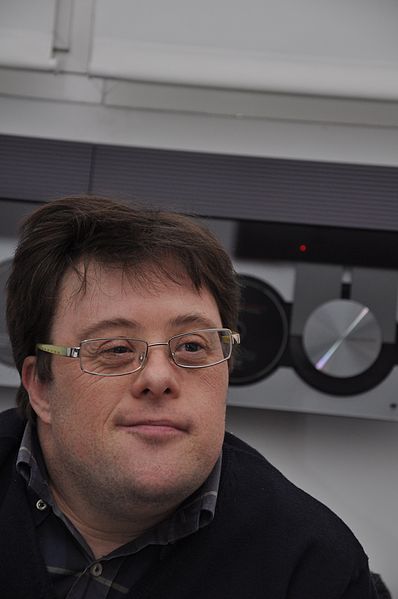
One who reflects upon this position should be not just appalled but also outraged and fearful. Why? Well Sinnott-Armstrong and Miller, by suggesting that what makes killing wrong is the causation of disabilities, imply that disabilities significantly reduce the value or worth of persons. Consider this: the authors repeatedly point out that it is not the deprivation of life that harms Betty, but rather the causing total disability. The grounding of Betty’s value is therefore based upon her abilities. If that is the case, then as Betty suffers disabilities, her value is decreased. Suppose Betty goes from being totally “able” with nothing wrong to becoming paralyzed. Does that mean she is less valuable? “Traditionalists” like me would say no, she is no less valuable. However, the authors of this article have grounded human value on ability. Again, it is the deprivation of capabilities which is wrong with murder, not the deprivation of life on their view. A consequences of this position is that the more “disabled” one becomes, the less valuable they become. Such a position is rightfully horrifying, but it is exactly what such a position entails. If humans’ value is grounded not simply in their being, then whatever standard one grounds this value will imply a sliding scale. Sinnott-Armstrong and Miller suggest that abilities ground value; therefore a disabled child is less valuable than one who is not; a man with Down Syndrome is less valuable than one who does not have it. These are the horrifying implications of their view.
One wonders if it is worth embracing such a position when it entails such blatantly immoral consequences. When one notices that the argument produced therein is based simply upon begging the question and assuming that life itself is not valuable, one finds little reason to commend this position.
Killing Our Children
Bioethicists have not stopped at the line crossed above, however. Recently another pair of bioethicists, Alberto Giubilini and Francesca Minerva, have argued for what they are terming “after-birth abortions.” In layman’s terms, they’re arguing for murdering one’s own children.
What could possibly ground this? Well, these bioethicists argue that, “Both a fetus and a newborn certainly are human beings and potential persons, but neither is a ‘person’ in the sense of ‘subject of a moral right to life’… Merely being human is not in itself a reason for ascribing someone a right to life.”
What exactly constitutes something which could justify killing a newborn? Again, “The circumstances… where after-birth abortion should be considered acceptable include instances where the newborn would be putting the well-being of the family at risk, even if it had the potential for an ‘acceptable’ life.” The authors go on to cite Down Syndrome as an example of these circumstances. Honestly, there is nothing to distinguish this form Eugenics. Let’s kill off those we deem unsuitable for life. It’s abhorrent.
I predicted this very consequence of the pro-choice position not too long ago. Pro-abortion arguments which aim to redefine what it means to be a “person” lead inevitably to infanticide. Fortunately, most pro-choice advocates do not realize this consequence of their position and still find infanticide and the like abhorrent. But those who have carefully reflected on the topic–bioethicists who research the issues involved–have come to realize that if an unborn human being is not worth being called a person, then it is hard to see why a newly born human being is a person either.
Bioethics: A brief reflection
The two case studies provided in this post provide examples for why it is so important to defend a proper view of the value of persons and worth. Once we start to define worth as things which can become a sliding scale (abilities vs. disabilities); once we allow that human beings are worthless if in one location (the womb) but valuable in another (outside the womb); once we seek to redefine terms in order to win a debate; that is when our world will collapse around us. These bioethicists are literally trying to say that it is permissible to kill people if they are totally disabled; they are literally telling us that a child with Down Syndrome might have a life worth living, but is such a strain on their family that the family should be allowed to kill their own child. I wish I were making these things up. These are our times: times in which we’ve allowed people to redefine rights and values in order to allow us to kill our children; times in which the people writing our ethics books argue that murder isn’t wrong because it takes a life but because it disables someone; times in which we can read discussions in medical journals about permitting the killing our own infants because they have certain defects.
God help us.
Sources
Walter Sinnott-Armstrong and Franklin Miller, “What Makes Killing Wrong?” Journal of Medical Ethics, January 2012. Accessible here: http://jme.bmj.com/content/early/2012/01/19/medethics-2011-100351.full
Liz Klimas, “Ethicists Argue for Acceptance of After-Birth Abortions” The Blaze, February 27, 2012, accessible here: http://www.theblaze.com/stories/ethicists-argue-in-favor-of-after-birth-abortions-as-newborns-are-not-persons/.
Picture credit: http://commons.wikimedia.org/wiki/File:Pinedap.JPG
SDG.
——
The preceding post is the property of J.W. Wartick (apart from citations, which are the property of their respective owners) and should not be reproduced in part or in whole without the expressed consent of the author. All content on this site is the property of J.W. Wartick and is made available for individual and personal usage. If you cite from these documents, whether for personal or professional purposes, please give appropriate citation with both the name of the author (J.W. Wartick) and a link to the original URL. If you’d like to repost a post, you may do so, provided you show less than half of the original post on your own site and link to the original post for the rest. You must also appropriately cite the post as noted above. This blog is protected by Creative Commons licensing. By viewing any part of this site, you are agreeing to this usage policy.
Really Recommended Posts 3/25/12
 The recommended posts this week feature some extremely important topics. I can’t emphasize how much I recommend each one. As always, check out my brief description, browse as you want. Let me know of any other great links! Topics this week feature atheistic hermeneutics, after-birth abortions, the Reason Rally, Harold Camping’s admission of sin, Mormon scriptures, and apologetic methods. Like I said, a great array!
What Happens When Atheists Don’t Care About Hermeneutics?– A really excellent post highlighting the importance of intellectual honesty and humility in dialog.
“If there is no difference between a fetus in the womb and a new born baby, it should follow that neither should be killed. But, granting the scientific evidence demonstrating the continuity of life, some “ethicists” and pro-abortion fanatics are coming to a different conclusions: Since we can abort fetuses, we should also be able to “abort” new-born infants. So says an article in one of the most influential journals in medical ethics…” Check out the article and a brief evaluation here.
Atheistic fundamentalism? Is it a contradiction? No, not at all. The Reason Rally is full of it.
Harold Camping, who infamously failed in a number of doomsday predictions has confessed his sin. I’m honestly quite touched by this level of academic honesty and what seems like a sincere confession and repentance from another Christian brother.
Often, Mormons will tell you that if you just read the Book of Mormon and pray you’ll know it’s true. I’ve done so and not been convinced, but so have others. Sean McDowell points out some of the difficulties he found in the Mormon scriptures.
Holly Ordway has a simply fantastic series on effective communication in apologetics. Check out the first post here.
Finally, I couldn’t resist a plug for my favorite band. Check out this interview with the Christian Metal band, Demon Hunter.
Abortions rates are lower in countries where it is legal- some thoughts on recent pro-choice comments
Highly restrictive abortion laws are not associated with lower abortion rates. For example, the abortion rate is high, at 29 and 32 abortions per 1,000 women of childbearing age in Africa and Latin America, respectively—regions where abortion is illegal under most circumstances in the majority of countries. In Western Europe, where abortion is generally permitted on broad grounds, the abortion rate is 12 per 1,000. ( Sedgh G et al. cited below)

There it is in black and white. Countries in which abortion is illegal have higher rates of abortion in most cases. What does this mean for the pro-life argument? Some have argued that pro-life advocates should work to make abortion legal. For example, Margot Magawan writes, “It’s clear that top Republican candidates are being short-sighted and ineffective, rushing off in precisely the wrong direction if their goal truly is to reduce abortions.” The argument seems to be quite simple. After all, if the goal of the pro-life advocates is to reduce the number of abortions, then if making it legal reduces them, they should argue to legalize abortions.
There are a number of problems with this argument, however, and I’ll briefly list them before examining them in turn.
1. Those making this argument seek to compare countries unilaterally based on a situation with all kinds of factors which cannot possibly be weighed fairly.
2. The argument reduces the goal of the pro-life movement to reducing abortions only; but the movement has a broader range than that. The argument is susceptible to a reductio ad absurdum which shows that the premise on which it is based is absurd.
3. The argument begs the question against the pro-life position by assuming the position itself is false.
3. The argument assumes consequentialism as a metaethical theory without argument.
1. Comparing Countries Unilaterally
It seems strange to me to compare the situations of different countries unilaterally on an issue like this. For example, it seems to have been shown that many things cannot be compared in this way. Installing democracy into random countries does not have a stabilizing effect. Comparing the economic situation of Rwanda with that of the United States seems almost grotesque. I’m not disputing the results of the study cited above; rather, I’m disputing the application of those results to a moral sphere. Think of all the factors which must be weighed: economic status, education, career choices, etc. To then take the raw data and apply it to a moral sentiment is quite a stretch. After all, it doesn’t take into consideration all the factors that those countries in which abortion is legal may have.
I do not want to make this the focus of my rebuttal, however, because I think the next 3 points are much stronger. To those we shall now turn.
2. Is Pro-Life About Reducing Abortions?
Another problem with the argument is that it assumes the pro-life position is dedicated to reducing abortions. That sentence may seem strange on a first reading, but read it this way instead: “the pro-life position is dedicated to reducing abortions only.” That is where one of the major difficulties arises for those making this argument. The pro-life position is not only about reducing abortions. In fact, while reducing the number of abortions is a goal of the pro-life movement, that is not the only goal or even, perhaps, the highest goal.
Suppose that reducing abortions was the only goal of the pro-life candidate. In that case, one way to reduce abortions would be by eliminating all human beings. If, after all, not a single human being were alive, there would be no abortions! This is, of course, patently absurd. Why? Not just because it seems obviously wrong to murder everyone on earth (or to murder anyone) in order to reduce the number of abortions, but also because this is a gross reduction of the pro-life position.
The pro-life position isn’t just about reducing the number of abortions. It is about advocating for life. In other words, those in the movement are making a factual and a moral claim: the entities aborted are human persons and it is wrong to kill them. But those who want to make the argument that pro-life advocates should legalize abortions in order to reduce them are, on a pro-life view, essentially arguing something similar to this:
Suppose that making murder legal reduced the number of murders. If you are against murder, you should then legalize murder.
The absurdity of this argument becomes clear because no one but a psychopath wants to legalize murder. But then it becomes clear that those pro-choice people making this argument have begged the question against the pro-life person. Let’s turn to that.
3. The Argument Begs the Question
If the pro-life position is correct, then it makes a mockery of this argument. Suppose, for the sake of argument, that the advocate of the pro-life position is right: the unborn are not merely embryos (and other stages of development) but are rather human persons who deserve the same rights as people outside of wombs. Now, granting these assumptions, suppose one finds that legalizing abortions reduces them. To then argue that “we should legalize abortions to reduce their number” is exactly equivalent to arguing that we should legalize murder to reduce the number of murders. Note here that I’m not saying legalizing murder does reduce the number of murders; I’m arguing that if the pro-life position is correct, these arguments are exactly analogous. One who argues we should legalize abortions would be the same as one who argues we should legalize murders, if the pro-life position is correct.
Thus, it becomes clear that those who make an argument like that of Margot Magawan have begged the question against the pro-life position. They simply assume that it is morally permissible to have an abortion, and combine that with the false position that the pro-life position is only about reducing abortions. Thus, the argument fails because it begs the question. Without argument, the pro-choice advocate has caricatured its opposition and argued against this false image.
4. It assumes consequentialism.
The last rebuttal is more technical, but I want to keep it brief. Consequentialism is, basically, the position that it is not the status of actions themselves which are judged as moral but rather the consequences. If one takes an action which has morally good consequences, that action is deemed good.
Now consider once more the argument, “If your goal is to reduce abortions, you should legalize them [because if abortion is legal, the number is reduced].”
This argument doesn’t take into consideration the moral status of an abortion [again, see above: they’ve already begged the question]. Rather, it assumes that because the consequences (fewer abortions) are considered by pro-life advocates as morally good, they should take the action (legalizing abortions) which open the door for these consequences.
Without too much strain, it becomes clear that most pro-life advocates do not hold to consequentialism as a metaethical theory. There are many alternative metaethical theories which are preferable for any number of reasons. If a pro-life advocate holds to a deontological theory of ethics, for example, he will argue that the wrongness of abortion is outweighed by the benefits of reducing the number. Such examples could be multiplied almost beyond comprehension. Thus, the pro-choice advocate has assumed, again without argument, a controversial position and then utilized that position to argue against pro-life advocates. Therefore, the argument fails.
Conclusion
The argument which has been considered here is that “if the goal of the pro-life advocates is to reduce the number of abortions, then if making it legal reduces them, they should argue to legalize abortions.” I have rebutted this argument in four ways. First, it seems to trivialize the enormous amount of factors which must go into consideration of comparing abortion rates across countries. Second, it reduces the pro-life position almost beyond recognition and is susceptible to a reductio ad absurdem. Third, it begs the question. Fourth, it utilizes a controversial metaethical theory to justify its premise. For these four reasons, I conclude that the argument is unsound.
Source
Sedgh G et al., “Induced abortion: incidence and trends worldwide from 1995 to 2008,” Lancet, 2012. (accessible: http://www.thelancet.com/journals/lancet/article/PIIS0140-6736%2811%2961786-8/fulltext); summary: http://www.guttmacher.org/media/presskits/abortion-WW/statsandfacts.html.
Image Credit: http://commons.wikimedia.org/wiki/File:Prolife-DC.jpg
SDG.
——
The preceding post is the property of J.W. Wartick (apart from citations, which are the property of their respective owners) and should not be reproduced in part or in whole without the expressed consent of the author. All content on this site is the property of J.W. Wartick and is made available for individual and personal usage. If you cite from these documents, whether for personal or professional purposes, please give appropriate citation with both the name of the author (J.W. Wartick) and a link to the original URL. If you’d like to repost a post, you may do so, provided you show less than half of the original post on your own site and link to the original post for the rest. You must also appropriately cite the post as noted above. This blog is protected by Creative Commons licensing. By viewing any part of this site, you are agreeing to this usage policy.
Really Recommended Posts 3/3/12
 The really recommended posts this go-round feature Richard Dawkins, bioethics, philosopher’s opinions, women in the ministry, and more!
Arguments about Jesus’ resurrection are fascinating, and can be extremely useful in the question of theism. See this great article which features rigorous application of probability theory to the arguments from the resurrection.
Richard Dawkins’ book, The Greatest Show On Earth claims to show the undeniable evidence for evolution. Does it succeed? Jonathan Mclatchie does not think so and has written an excellent, lengthy review to show how Dawkins fails.
Philip Payne, the author of “Man and Woman, One in Christ” (which I reviewed here) has an excellent web site which responds to many criticisms of his positions. Those interested in the issue of women in the ministry should look into it.
No peer reviewed papers advocating intelligent design? False! Check out this list.
After birth abortions? Basically the logical conclusions of the general pro-choice position. Read more.
Prosblogion conducted a survey about philosopher’s opinions on theistic arguments. The results are mostly unsurprising, but interesting nevertheless. Check it out.
Really Recommended Posts 02/03/12
 Says the Madman, “Humanity is Dead, and We Are Its Murderers”– An insightful post which argues that naturalism has undermined the worth and value of humans.
Zombies of Christianity– I really enjoyed this discussion of the diversity of doctrine in Christianity and how to approach it.
My latest post on abortion generated some controversy, but I’d like to point out that scientifically, the unborn simply is a human being. One can find this not only in numerous medical textbooks on embryology, but also in the words of abortions-rights advocates themselves. Check out this phenomenal post which outlines the fact that the unborn are human beings, period- Medical Testimony.
C.S. Lewis is one of the greatest Christian Apologists of all time. Check out this post which brings us Beyond Mere Christianity. Interested in literary apologetics? Check out Holly Ordway’s guest post on my blog here.
A Response to the Problem of an ‘Evil God’ as Raised by Stephen Law.– An excellent article, which I don’t fully agree with (I think Edward Feser answers the challenge correctly, for example), but which provides a thorough critique of Law’s position.
The Artist: A Film Review and Reflection- Holly Ordway shares her thoughts on “The Artist.”
How Many Atheists in America? Fewer than You Might Think– Pretty self explanatory.

 J.W. Wartick - Reconstructing Faith

