Science
Really Recommended Posts 9/8
 I’ve decided to change up my format a bit for these posts. Rather than just offering links with brief explanations, I will offer a bit of commentary and/or critique as I see fit. Also, rather than having links at the end, you can click on the link titles to go directly to the pages. Finally, yes that picture is supposed to be a pun.
Mathematicians and Philosophers: René Decartes: a really awesome discussion from Marvin Bittinger which explains briefly Descartes’ contributions to math and faith.
If you liked that one, check out Marvin’s other posts, including one on Blaise Pascal here.
Jason Dulle has been writing a series of posts on Biblical Archaeology. They each focus on a discovery which shows the truth of specific Bible passages. These posts are eminently readable and Jason helpfully sums up the Biblical significance. I highly recommend both his main site and the series. You can a sample of his posts here: Belshazzar; Nehemiah 2. Check out his site.
Joy of Dead Babies? Steve Bedard looks at one of the hard verses of the Bible: “Blessed shall he be who takes your little ones and dashes them against the rock!” (Psalms 137:9 ESV). I think Steve has some really excellent points here about interpretation. We must remember the genre and intent of the verses we read.
Living in the Multiverse: Is it Science?– a great blog about the multiverse from Max Andrews. He outlines some philosophy of science, then delves into multiverse theories, and finally adds a comment (I hesitate to call it an argument) that the multiverse would show the artistry of the Creator. I’m not sure I buy into the multiverse, but Max makes a compelling case. You can also check out his post on the theological implications of the multiverse.
Letter to a Christian Nation: Entry 1, Pages 1-7– Justin Effler is reading through Sam Harris’ Letter to a Christian Nation and doing a great job pointing out some fallacies and errors in thinking. First up: Harris’ redefinition of “atheist.”
Rejecting Christian Theism Because It’s Just Too Much Work– Wintery Knight outlines a dialogue in which Jim Wallace and an atheist were speaking. The atheist rejects theism because they don’t feel like taking the time to investigate.
http://whomadegod.org/ -Edgar Andrews’ site for his blog and book, “Who Made God.” It’s a phenomenal read that I just finished today. I highly, highly recommend it. Find it on amazon.
Dawkins and Oppy vs. Theism: Defending the Kalam Cosmological Argument
 “[Arguments for God’s existence from an infinite regress] make the entirely unwarranted assumption that God himself is immune to the regress.” -Richard Dawkins, The God Delusion, 101.
Dawkins vs. the Kalam
Just over a year ago at Richard Dawkins’ site, someone asked Dawkins to respond to the Kalam Cosmological Argument (see an exposition of the argument here). The reader outlined the argument:
- Whatever begins to exist has a cause
- The universe began to exist
- Therefore, the universe has a cause
Dawkins is frequently witty, but often wrong. The argument is for broad theism. The Kalam is intended to show that the universe is caused, it is not an argument for Christianity specifically. I pointed out in another post that just because an argument is for broad theism (or just the brute existence of God), that doesn’t mean the argument is useless evidentially for Christianity. If we know the universe is caused, then we also know whatever caused the universe must be capable of causation (obviously), choice (it must select a moment to bring about the universe), powerful enough to bring the universe into existence out of nothing, etc. This would be powerful evidence and part of a cumulative case towards Christianity.
Then there’s Dawkins’ quote in The God Delusion which I have seen utilized to challenge the Kalam. First, I should note that Dawkins’ quote is in response to Aquinas’ Five Ways/Proofs. Further, it seems to be intentionally pointed towards a Leibnizian version of the Cosmological Argument (for a fuller defense of that argument, see here). But, a simple answer to Dawkins objection, which he seems to think is devastating, would be to point out that the universe and God are different types of entities. The universe is contingent, and God is necessary. That’s not arbitrary, that’s just the kind of things those entities are.
A Philosophical Attack On the Kalam
Not all atheists are as capable of blind, willful ignorance as Dawkins. Graham Oppy’s recent book Arguing About Gods has a thoughtful, challenging section dedicated to William Lane Craig’s exposition of the Kalam.
Oppy challenges Craig on every step of the Kalam, but I’m going to focus upon one. Oppy writes, “[I]t is quite unclear why one should suppose that the allegedly counter-intuitive behavior of the transfinite [numbers]… casts doubt on the idea that the very smallest transfinite cardinals do find application to ‘the real world'”(Arguing About Gods, 140).
This proposal is meant to challenge Craig’s contention that the infinite cannot actually exist. For, if there can be no actual infinites, then the objects we see around us–indeed, the universe itself–must have begun. Yet Oppy’s contention really only reflects mathematical truths. But surely this is a rather untenable claim. Oppy would have to provide evidence that the infinite actually exists and is not just an abstract mathematical concept. Craig’s contention is that the infinite can only be used in things like Cantor’s theory for mathematical equations. Why does Craig make this restriction? He cites David Hilbert, the famous German Mathematician, who points out that:
the infinite is nowhere found in reality. It neither exists in nature nor provides a legitmate basis for rational thought… the role for infinite to play is solely that of an idea… (David Hilbert Quoted in Craig, 87, cited below)
Yet Oppy provides no reason to think that there are actually infinite things found in reality. Rather, he resorts to claiming that Craig misinterpreted Hilbert’s paradoxes and that “If the Cantorian theory of the transfinite numbers is intelligible, then we can suppose that some parts of it find application ‘in the real world…'” (Oppy, 140). But is that true? Aren’t there plenty of things that are intelligible but for which we have no application ‘in the real world’? I abstract a bit when I point this out, but it is perfectly intelligible that there could be flying pigs, yet we don’t find an application of that in “the real world” other than as a false statement. There are nearly limitless examples of intelligible things we can think of, or intelligible theories, which have no application in the real world.
But perhaps Oppy isn’t making a claim quite as strong as saying actual infinites exist. Perhaps he is just referring to the possibility that they do. The problem then, however, is that, as Craig writes in a critique of Oppy’s position, “Oppy’s attempt to defend the possibility of the existence of an actual infinite is vitiated by his conflation of narrowly and broadly logical possibility.” The problem is that Oppy has confused broad logical possibility (that it is possible to construct a consistent set with an actual infinite) with modal (the notion that an infinite actually does exist in a possible world) or actual possibility in the real world. Again, Craig writes, ” Oppy… seems to take a proposition’s freedom from inconsistency in first-order logic to be indicative of that proposition’s being true in some possible world” (Craig b, cited below). So Oppy has not done anything to defeat the Kalam. Even were Craig to grant that Cantorian theory allows for broad logical possibility of actual infinites, it would not show that they are actually possible in our world. And again, even were they possible in the real world, an actual infinite would have to exist in order to discredit the Kalam. Thus, Oppy’s counter to the Kalam is quite weak–it’s based upon a conflation of broadly logical and actual possibility, and even were he to show that infinites are actually possible, the problem would remain that we have observed none.
Yet, and this is very important to note, even if actual infinites did exist, that wouldn’t undermine the idea that everything which began has a cause. It would only allow atheists to claim the universe did not begin. But how would they go about claiming that? They’d have to show that a model of the origins of the universe which allowed for an infinite past was plausible–more plausible than the alternative. Yet the only hope for showing this would be to make a theory as parsimonious as the Big Bang theory, which postulates an absolute beginning to the universe. So, even were there actually infinite things in the universe, which I very much doubt, that would not undermine the Kalam. It would make the argument more difficult to defend, but it would not falsify it. All it would show is that there are objects which are not caused.
Thus, I take it that the Kalam Cosmological Argument does not suffer defeat, either from vocal, misguided atheists like Dawkins, or thoughtful philosophers like Graham Oppy.
Links:
Again, see an outline and defense of the Kalam Cosmological Arugment here.
William Lane Craig discusses another objection: whether a beginningless past is actually infinite: here. He offers a number of critiques of Oppy’s position here. You can also access a review by Craig of Oppy’s book here (you will need to sign up for a free account on http://www.reasonablefaith.org/).
Check out my review of a recent debate between Craig and Lawrence Krauss, in which the Kalam was discussed here. (Includes a link to the actual debate.)
Wintery Knight writes about how to defend the Kalam at his site: http://winteryknight.wordpress.com/2009/04/08/how-to-defend-the-kalam-cosmological-argument-just-like-william-lane-craig/
Sources:
Graham Oppy, Arguing About Gods (New York, NY: Cambridge, 2006).
Richard Dawkins, The God Delusion (New York, NY: Houghton Mifflin, 2008).
William Lane Craig, The Kalam Cosmological Argument (Eugene, OR: Wipf and Stock, 1979).
William Lane Craig b, “Graham Oppy on the Kalam Cosmological Argument” (Leadership U, November 8, 2005), http://www.leaderu.com/offices/billcraig/docs/oppy.html, accessed 9/1/2011. Also found at http://www.reasonablefaith.org/site/News2?page=NewsArticle&id=5162.
Image credit: ESA/Hubble and NASA: http://spacetelescope.org/images/potw1021a/, found at http://commons.wikimedia.org/wiki/File:PGC_39058.jpg.
SDG.
——
The preceding post is the property of J.W. Wartick (apart from citations, which are the property of their respective owners) and should not be reproduced in part or in whole without the expressed consent of the author. All content on this site is the property of J.W. Wartick and is made available for individual and personal usage. If you cite from these documents, whether for personal or professional purposes, please give appropriate citation with both the name of the author (J.W. Wartick) and a link to the original URL. This blog is protected by Creative Commons licensing. By viewing any part of this site, you are agreeing to this usage policy.
Really Recommended Posts 9/4
“An Open Letter to Young Christian Apologists” over at “Thomistic Bent.” It is pretty self-explanatory: the post says many things to us youngsters!
http://humblesmith.wordpress.com/2011/08/30/an-open-letter-to-young-christian-apologists/
Geocreationism–a site about old earth creationism, theistic evolution, and refutations of young earth creationism. This site recently had a major, major makeover and you must check it out.
http://www.geocreationism.com/index.html
“You Skim, You Lose!” at InChristus by Paul D. Adams–this post briefly discusses our society’s tendency to blow through things without really reading them and then draws the discussion to the book of Proverbs.
http://inchristus.wordpress.com/2011/08/31/you-skim-you-lose/
From Jewish Worldview- A Plea to Atheists: Pedophilia is next on the Slippery Slope; Let us turn back before it’s too late–a post which talks about atheism as bereft of ontology for values.
http://www.jewishworldreview.com/0811/atheists_pedophilia.php3
Isn’t it arrogant and immoral for Christians to evangelize? Isn’t it? Find out:
“Diamonds in the Dust” –an upcoming novel about a woman’s life torn apart in South Africa. It looks quite promising. I’ve been promised a review copy and I’m looking forward to reading it!
Was Jesus Real? -Arthur over at Cold and Lonely Truth writes about this common objection to the existence of Jesus with lucidity and, more importantly, sources. Check it out:
The Life Dialogue: Information and the Cell
 This is part of a series of posts on the “Life Dialogue” within Christianity. Check out other posts in the series here.
It is hard to underestimate the importance of the question: “Are we designed?” I’ve really started to realize the question’s reverberations even within the Christian community. Creationists definitely believe we are designed, as we were brought out of nothing by God into being. But theistic evolutionists often argue that the only design inherent in God’s creation was His plan to bring about sentience through evolution. Yet this evolution is blind and unguided. So on theistic evolutionism, we are not designed. Is there a middle ground? Can we say evolution mostly correct, but we are still designed?
Stephen Meyer argues that there is such a middle ground. In his enormously successful book, Signature in the Cell, he argues cogently for the position that there is more to life than “just matter and energy.” There is also information (85). If that is the case, then whence the information?
Essentially the argument goes as follows:
1) If there is information in our cells, its origin must be explained.
2) There is information in our cells.
3) Therefore, the origin of the information must be explained.
4) There are three possible explanations for information: chance, necessity, or design.
5) Chance and necessity are not sufficient explanations for information.
6) Therefore, the information is in our cell due to design.
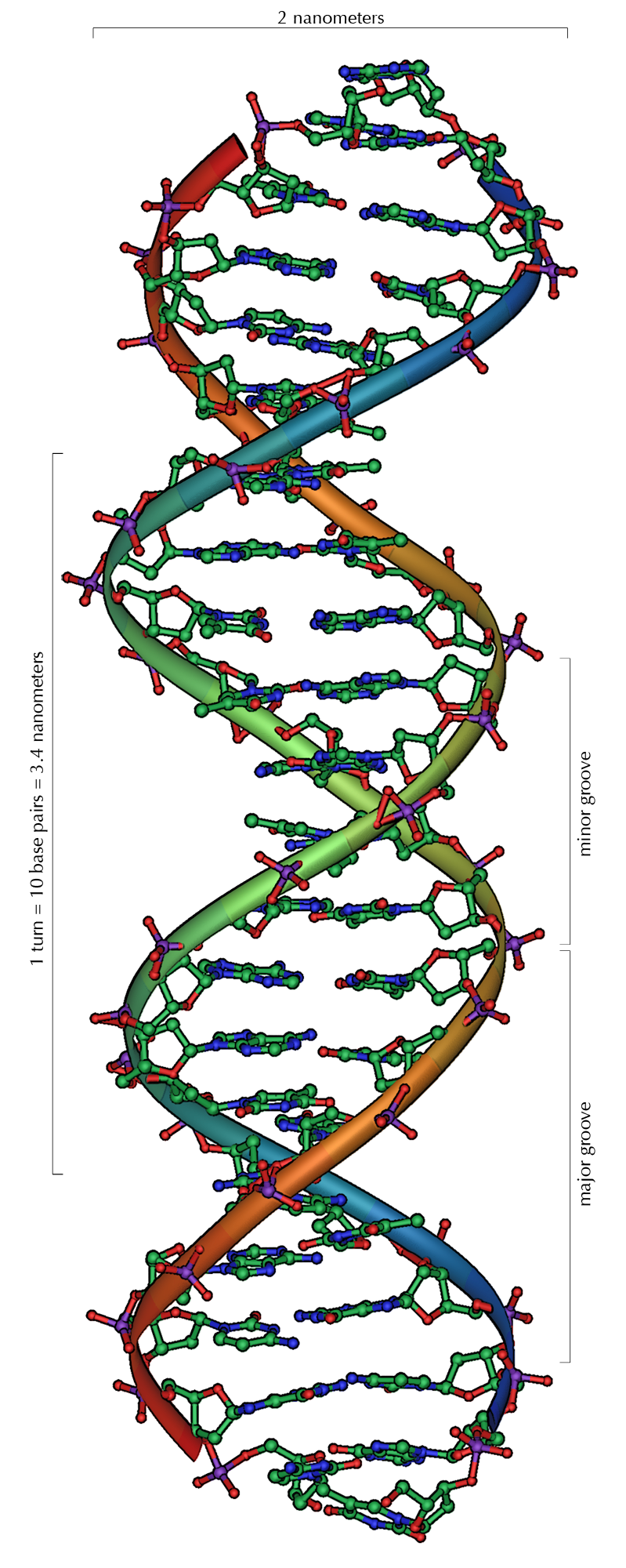
In defense of premise 2, Meyer argues that there is information in the cell that we can detect because DNA isn’t simply random amalgamations of enzymes, rather, they are put in specific order so that they can regulate the production of proteins and RNA. Thus, they act as information which regulates activity of the cell.
3 follows from 1 and 2.
Chance doesn’t seem a sufficient explanation because not only is the generation of information highly improbable, it is also specified (it is information set in a certain way). Necessity won’t work because it presupposes information is already present. Therefore, the cell is designed.
To those Christians interested in the Intelligent Design, Theistic Evolution, Creationism debate, I highly recommend Stephen Meyer’s Signature in the Cell.
A response to an attack on this post found here (search “On Intelligent Design”)
SDG.
——
The preceding post is the property of J.W. Wartick (apart from citations, which are the property of their respective owners) and should not be reproduced in part or in whole without the expressed consent of the author. All content on this site is the property of J.W. Wartick and is made available for individual and personal usage. If you cite from these documents, whether for personal or professional purposes, please give appropriate citation with both the name of the author (J.W. Wartick) and a link to the original URL. This blog is protected by Creative Commons licensing. By viewing any part of this site, you are agreeing to this usage policy.
The Life Dialogue: Geocreationism and Original Sin
This is a guest post by Mike Trutt on Geocreationism. Check out other posts on the “Life Dialogue” within Christianity here. Check out his other posts on Geocreationism here and here.
Mike Trutt is an evangelical Christian with a Jewish background. He believes the Bible is inspired by God, recorded by man, and given its life by the Holy Spirit. You can read about and discuss his Old Earth views on scripture, science, history, and other topics at his blog,http://geocreationism.com.
Original Sin
Whether you believe Adam was physically born or formed directly from dust, most Old Earth Creationists have the following belief in common: animals, plants, and people were alive and dying long before Adam and Eve ate of the apple. Why is this important? Because Original Sin introduced “death” into the world, and Evolution requires you to believe physical death existed before Original Sin.
Consider the following two passages, commonly used by Young Earth Creationists (YECs) to demonstrate that if the Word of God is true, then there was no physical death before Original Sin (emphasis added)…
Romans 5:12 – Therefore, just as sin entered the world through one man, and death through sin, and in this way death came to all people, because all sinned.
1 Corinthians 15:21-22 – For since death came through a man, the resurrection of the dead comes also through a man. For as in Adam all die, so in Christ all will be made alive.
In other words, so the argument goes, physical death could not precede Original Sin because physical death entered the world through Original Sin. It is in part why Christ Himself died for us. Looking at these passages, could it be any clearer? Allow for physical death before Adam, and it means either Christ had no reason to die, or the Word of God is wrong. It makes Old Earth Creationists (OECs) appear not to take the scripture very seriously.
= = =
Christians generally agree that Adam’s body began to deteriorate immediately after the Original Sin, and it eventually led to his physical death. But, is it the corrupting nature of sin that caused the deterioration, and hence death? Not according to 2 Corinthians 5 (emphasis and (comments) added)…
4 For while we are in this tent (i.e., earthly body), we groan and are burdened, because we do not wish to be unclothed but to be clothed instead with our heavenly dwelling, so that what is mortal may be swallowed up by life. 5 Now the one who has fashioned us for this very purpose is God, who has given us the Spirit as a deposit, guaranteeing what is to come.
In other words, God designed us to physically die so that our earthly mortality can be swallowed up by our heavenly immortality. Knowing that God designed us to be mortal while on earth, that same design should be found in Adam, even before his sin. In fact, it is found in Genesis 2:9 (emphasis added)…
The LORD God made all kinds of trees grow out of the ground—trees that were pleasing to the eye and good for food. In the middle of the garden were the tree of life and the tree of the knowledge of good and evil.
Why provide sinless Adam with the Tree of Life, unless his body was otherwise mortal? Without that tree, Adam would die; with the tree, he would live forever. Even after Adam’s sin, God placed angels and a flaming sword to guard the Tree of Life from him, lest he “reach out his hand and take also from the tree of life and eat, and live forever.” (Genesis 3:22b) In other words, before the Original Sin and after, Adam’s immortality depended on the Tree of Life. Like Paul said, Adam was designed to die.
= = =
We could just leave it at that, but there are a few scriptures we should address. For example, if Original Sin was merely the occasion of Adam’s physical death, never the instrument, then what was God warning Adam of when he said not to eat from the Tree of the Knowledge of Good and Evil?
Genesis 2:17b – …for when you eat from [the Tree of the Knowledge of Good and Evil] you will certainly die.
The most straightforward reading of this verse implies that eating the apple would immediately physically kill Adam. In fact, when Eve repeated God’s warning back to Satan in the Garden, she clearly thought God meant immediate physical death. But then Satan corrected her…
Genesis 3:4-5 – “You will not certainly die,” the serpent said to the woman. “For God knows that when you eat from it your eyes will be opened, and you will be like God, knowing good and evil.”
In the Gospels, Satan always tempted Jesus with the truth. That is what made it tempting. Is it not then reasonable to consider that Satan was telling Eve the truth about physical death, even while he deceived her in regards to God’s meaning? After all, when Eve ate the fruit, she did not immediately physically die. In fact, just as Satan predicted, Adam’s and Eve’s eyes were opened to knowing good and evil… and they knew what they did was evil.
What then was Satan’s deception? For one thing, he left out what God really meant by “die”, by making “death” seem like a “coming alive”. Before the Fall, Adam and Eve were in a state of sinless perfection; afterwards they were not. Before the fall, they were naked and did not think twice about it; afterwards they were self-conscious and covered themselves up. The moment they both sinned, they went from being blameless to being in need of redemption. It was a dramatic change, as sudden and jarring as Genesis 2:17 makes it sound. In a very significant and spiritual way, they both died that day.
By the same token, there was another deception. Assuming Eve realized the fruit was keeping her alive, she really had no idea that God was going to punish her by depriving her of it. God may have been promising spiritual death for her sin, but Eve was in fear of physical death. Satan knew God would not immediately kill her physical body, but he failed to tell her that she would eventually die. One possibility is that he didn’t know.
So now we see that both spiritual death and physical death indeed resulted from the Fall. However, it is the immediacy of Adam’s and Eve’s spiritual death that demonstrates the meaning of God’s promise in Genesis 2:17. Yes, they physically died… eventually. Yes, it was a result of their sin. However, the mechanism of their death was through deprivation of the Tree of Life; their tendency to deteriorate was designed into them.
= = =
When Adam and Eve sinned, they died a spiritual death. Original Sin deprived them of the Tree of Life, but the design of their bodies did not actually change. It is in this context that we can review the first proof verse on Original Sin…
Romans 5:12 – Therefore, just as sin entered the world through one man, and death through sin, and in this way death came to all men, because all sinned.
As a proof verse against evolution, YECs are essentially viewing the verse as if it says the following…
Therefore, just as sin entered the world through one man, and mortality through sin, and in this way mortality came to all men, because all sinned.
But, Paul also wrote 2 Corinthians 5:5, which says that mortality is designed into us, providing our path toward immortality with God. Therefore, mortality did not enter the world through sin. Now, Romans 5:12 is clearly a reference to the death in Genesis 2:17b, and we saw above that it was speaking of spiritual death. It is spiritual death that entered the world through sin.
= = =
The other proof verse is similar…
1 Corinthians 15:21-22 For since death came through a man, the resurrection of the dead comes also through a man. For as in Adam all die, so in Christ all will be made alive.
Similar to Romans 5:12, YECs use this verse as follows…
For since mortality came through a man, immortality comes also through a man. For as in Adam all are mortal, so in Christ all will be made immortal.
However, not only is this verse not discussing mortality and immortality, it isn’t even discussing Christ’s saving grace. According to 1 Corinthians 15:12 verses 21 and 22 are trying to explain the resurrection, which the Corinthians were on the verge of rejecting. Daniel explained the resurrection as follows…
Daniel 12:2 – Multitudes who sleep in the dust of the earth will awake: some to everlasting life, others to shame and everlasting contempt.
In other words, both saved and unsaved will be resurrected through Christ. To be sure, judgment will follow, but Paul was only talking about the resurrection itself. To paraphrase our proof verse…
For since spiritual death came through a man, the resurrection of the dead comes also through a man. For as in Adam all earn judgment, so in Christ all will resurrect to face that judgment.
In closing, Original Sin introduced spiritual death, but we were always designed to die.
———
The preceding post is the property of Mike Trutt (apart from citations, which are the property of their respective owners) and should not be reproduced in part or in whole without the expressed consent of the author. All content on this site is the property of J.W. Wartick and is made available for individual and personal usage. If you cite from these documents, whether for personal or professional purposes, please give appropriate citation and provide a link to the original URL. By viewing any part of this site, you are agreeing to this usage policy.
The Life Dialogue: Old Earth Creationism 4
 This is part of a series of posts on the “Life Dialogue/Origins Debate” within Christianity. View other posts in the series here.
The obvious point of contention between Old and Young Earth Creationism (hereafter OEC and YEC) is the age of the Earth/Universe. Hugh Ross argues powerfully for an old universe from both a theological and scientific perspective in A Matter of Days: Resolving a Creation Controversy.
The argument against the YEC position (derived from A Matter of Days) runs as follows:
1) The most coherent YEC position to explain the appearance of age in the universe is to hold that the universe appears to be old, but is not old in fact. (YECs often hold that God created light already traveling to earth, created Earth already to the point it could sustain life, etc.)
2) Scripture states that God does not lie. God is not a deceiver.
3) Scripture states that nature provides an accurate record of reality, though not a complete record.
4) 1) Scientific evidence (nature) demonstrates the universe is about 14 billion years old, as opposed to the 10,000(ish) years YECs grant.
5) Therefore, the universe is actually old. This follows from the accurate evidence of nature combined with 2) that God doesn’t deceive. If the universe is, in fact, 10,000 years (or so) old, then God has deceived humanity by making it in such a way that it appears to be much older than it is.
Premise 1) seems to definitely be the case. First, because the universe, according to the most modern science, is anywhere between 13-16 billion years old. Second, while YEC potentially has theories to explain why earth looks so old without relying on it being created already aged to a certain point (i.e. hydroplate theory), this does nothing to explain the background cosmic radiation; how we can see light from stars that are too far away to be seen yet were the universe 10,000 years old, etc. It therefore seems as though the only way to explain the apparent age of the universe is to argue that it is just that: apparent only. On this theory, God created the earth universe enough to support life, about 10,000 years ago.
Premise 2) doesn’t really need a defense (but if desired: Romans 3:4; Numbers 23:19; Deuteronomy 32:4; 1 Samuel 15:29; Titus 1:1-2).
Premise 3) can be seen in things like Psalm 19:1-4a:
“The heavens declare the glory of God;
the skies proclaim the work of his hands.
Day after day they pour forth speech;
night after night they reveal knowledge.
They have no speech, they use no words;
no sound is heard from them.
Yet their voice goes out into all the earth,
their words to the ends of the world.”
Premise 4) is at least implicitly accepted by YECs because they argue that even though science shows the universe is very old, it is not actually that old. It is worth noting that some YECs would claim that “real” and “unbiased” science would not lead to the conclusion that the universe is very old. There is little one can do to counter this claim other than argue that were that true, the YEC account would be able to present a fully testable, verifiable scientific model that shows that things like the background cosmic radiation are false.
Finally, the conclusion seems to follow from the preceding argument. God told us nature is an accurate record; He also created the universe (on YEC) in such a way that it appears to be billions of years old, but is not actually that old. Therefore, He created a universe that would deceive us into thinking, falsely, that the universe is old. But, God does not lie, so this cannot be true. Therefore, the universe is old.
I find this argument very convincing. It underscores my main problem with the YEC position: namely, that the best evidence does show the universe is old, and so God would be a deceiver were He to make it thusly.
SDG.
——
The preceding post is the property of J.W. Wartick (apart from citations, which are the property of their respective owners) and should not be reproduced in part or in whole without the expressed consent of the author. All content on this site is the property of J.W. Wartick and is made available for individual and personal usage. If you cite from these documents, whether for personal or professional purposes, please give appropriate citation and provide a link to the original URL. By viewing any part of this site, you are agreeing to this usage policy.
The Life Dialogue: Geocreationism Guest Post 2
This is part 2 of a thought-provoking series of guest posts by Mike Trutt on Geocreationism. Check out other posts on the “Life Dialogue” within Christianity here. View Part 1 here.
Mike Trutt is an evangelical Christian with a Jewish background. He believes the Bible is inspired by God, recorded by man, and given its life by the Holy Spirit. You can read about and discuss his Old Earth views on scripture, science, history, and other topics at his blog,http://geocreationism.com.
Geocreationism – Evolution and God
As the reader proceeds, I request an open mind. With many of my theories on Creation, I often get the question of “why”? I cannot always answer. But consider how often God does not explain Himself to you. Quite often, He tells us what He did and what He will do, and we have only to believe Him. Abram was promised a son in His old age. He believed God and it was accounted to Him as righteousness; Zechariah on the other hand laughed, and God shut him up mute until his son John the Baptist was born. And so I take a risk with Creation, attempting to be righteous and not mute, and trusting God’s hand will be gentle if I am wrong. If in the end you still need an answer as to “why” then I offer you this: whatever God did, it was for His glory.
= = =
Evolution is not an easy topic for Christians. Whatever the version, Evolution does not appear to require God any more than God requires Evolution. It is enough to keep atheists and Christians apart, but do not be fooled into picking sides. Such thinking is a trap of the enemy, as either choice is the result of a common theological fallacy… that God would not create using natural or “random” means. But, what if scripture showed otherwise?
Consider this passage in 1 Chronicles 14:15-16…
15 And when you hear the sound of marching in the tops of the balsam trees, then go out to battle, for God has gone out before you to strike down the army of the Philistines.” 16 And David did as God commanded him, and they struck down the Philistine army from Gibeon to Gezer.
God went before David to strike down the philistines; David’s armies went and struck down the philistines. God and David took separate actions, yet accomplished the same defeat. To say then that Evolution is false because God created everything is like saying that David did not achieve victory over the Philistines, because God obviously did. This not only limits God, it contradicts the plain meaning of scripture. If Evolution is true, then Biblically speaking, it is as much God’s instrument as David’s armies above. But, just as a secular historian may study the defeat above and see only David’s army, a scientist studying the species will only see mutation, adaptation, and Natural Selection… but the blindness of man does not negate what he sees any more than it equates to an absence of God.
= = =
On Day 1, God hovered over the deep. As recorded in the size and age of the moon’s craters, meteor strikes devastated the earth’s early oceans, causing clouds and torrential rains throughout the world. From where God hovered in Genesis 1:2, the sun’s still-dim light could not be seen through the rain and clouds, and while the meteors continued it would be so. With His pronouncement to “Let there be light,” the meteors ceased and the light of the sun pierced the darkness. This was 3.9 billion years ago. The rains would not yet stop, but an atmosphere would begin to form. There would now be sunlight, though the sun itself remained unseen.
On Day 2, the torrential rains continued to fall so hard, there was no perceivable separation between the clouds above and the seas below. With God’s declaration to “Let the waters separate from the waters,” the rains started to let up. Was Moses aware of these conditions when he wrote of them? Given their parallels with Egypt’s creation myths, I would say not. However, their alignment with modern secular scientific theories should be enough to give one pause.
On Day 3, the skies were still hazy and the world was still covered in water. God said to “let the water gather together in one place, and let dry ground appear.” Plate tectonics began around 2.4 billion years ago, as the earth hardened beneath the water and earthquakes thrusted the earth’s crust above the seas. God then said to “Let the land produce vegetation: seed-bearing plants and trees on the land that bear fruit with seed in it, according to their various kinds.”
According to their various kinds? Most people take it to mean that the vegetation will be capable of reproduction. But examine the King James translation: “And God said, Let the earth bring forth grass, the herb yielding seed, and the fruit tree yielding fruit after his kind, whose seed is in itself, upon the earth: and it was so.” God specifically listed seeded plants. What of the non-seeded, specifically succulents and spores?
The Bible says the land produced seeded plants at God’s command. It reminds me of David’s victory above. God went before the land to produce seeded plants, and then the land went forth and produced seeded plants. And if the land’s production was as physical as David’s victory, then why be surprised that it left behind some trace? Why be surprised that production of seeded plants required spores and succulents to develop first, each giving way to the next? Why be surprised that God didn’t even wait for the seeded plants to appear before He moved into the sunset and starting His work on Day 4? That’s right. Seeded plants did not appear until 300 million years ago, long after Day 4, which we discuss below. But once again, God’s work for Day 3 was done. It was time for the land to do its work.
On Day 4, as algae and fungi made significant inroads on the land, God said “Let there be lights in the heavens to separate the day from the night.” Scientists believe the Oxygen of these primitive plants cleared up the sky around 1.9 billion years ago. The sun, moon, and stars could be seen clearly in the skies, when they had been completely obscured before.
Day 5’s pronouncement reads, “Let the water teem with living creatures, and let birds fly above the earth across the skies.” Day 6 reads, “Let the land produce living creatures according to their kinds,” and it goes on to list their groups. If interpreted as the initial appearance of sea life, birds, and land mammals, then Days 5 and 6 must overlap, because whales appeared after land mammals in the fossil record. Such overlap of Days is not Biblical, but through scientific discovery we can find a meaning that explains it.
65 million years ago, a giant meteor struck the earth. It is referred to as the KT impact, and it nearly decimated all life on the planet. It killed nearly every dinosaur, bird, sea creature, and mammal around the world. According to the fossil record, the first to recover was sea life. Placing Day 5 after the KT impact, a time when mere life was scant but there, God’s pronouncement becomes apropos, “Let the water teem with living creatures.” Next would be the birds. Why? It was the first time in their existence when they had no natural predators. And, just as Day 3 began a process leading to seeded plants, so Day 5 began a process eventually leading to whales. But wait. This required a recovery of mammals on the land, because they are what eventually led to mammals in the seas. What of the mammals of Day 6? The most comon theories have these days overlap.
According to the fossil record, the mammals that evolved on Day 5 were almost wiped out around 33.5 million years ago, after the whales appeared. The event is called the Grand Coupure. Then, almost as suddenly, the mammals that survived gave way to new varieties, the ones we see today, the ones listed in scripture: “Let the land produce living creatures according to their kinds: the livestock, the creatures that move along the ground, and the wild animals, each according to its kind.” Once again, the specificity of scripture, when compared with the discoveries of science, provides an answer.
= = =
It was hard to fit my treatise on Evolution into the word limitation of a blog, but I hope the point comes through, that secular science is useful and God is sovereign. The next installment will discuss the doctrine of Original Sin, and why death before Adam is compatible.
The Life Dialogue: Geocreationism Guest Post 1
This is part 1 of a series of guest posts by Mike Trutt on Geocreationism. Check out other posts on the “Life Dialogue” within Christianity here.
Mike Trutt is an evangelical Christian with a Jewish background. He believes the Bible is inspired by God, recorded by man, and given its life by the Holy Spirit. You can read about and discuss his Old Earth views on scripture, science, history, and other topics at his blog,http://geocreationism.com.
Geocreationism- Introduction
I believe the Earth is old, and God’s Word is true. This is not an easy position to hold. There are Christians today feeling challenged to abandon the church, because long-standing theology requires a young earth that science tells them does not exist. Faith tells them that science and scripture should not be at odds, but if the earth is so old, then what does scripture mean? Why does Genesis say what it says, and science sees what it sees? Christians can agree that science and scripture must somehow align, but disagree as to how. A science that conforms to a young earth requires one to dismiss the scientific basis of established dating techniques, while an interpretation of scripture that conforms to an old earth requires an explanation of why pre-historic death does not unravel the doctrine of Original Sin, and in turn our need for a savior. As an Old Earth proponent and a Christian redeemed from sin, I have found no mainstream theory – on either side – that satisfactorily answers these questions.
Though I consider them my brethren in Christ, the Young Earth scientists whose writings I have read do not appear to understand the science they theoretically embrace. While using science reliably for everyday tasks like keeping airplanes in the sky and maintaining reliable cell-phone signals, the moment you provide evidence of something incredibly old that The Great Flood cannot explain, they say carbon dating is unreliable beyond 5,000 years (which is roughly true), hence rendering any dating technique equally suspect. Why? Because the Bible clearly says to them that the Earth is young. To them, evidence to the contrary indicates a misunderstanding of the evidence. While such strong faith is potentially advantageous to their relationship with God, it dismisses the possibility that Genesis is what we misunderstand. But, if that is the case, and the earth is old, then where is the theory of Old Earth Creation that keeps Christian Theology intact? In all my years of looking for it, it isn’t there. Enter Geocreationism.
Most Old Earth approaches relegate Genesis 1-11 to some form of symbolism, even though every chapter is clearly written in a literal manner. For example, concordist theories (e.g., Day-Age, Progressive Creationism) map the days of creation to overlapping geological eras, even though Genesis 1 clearly discerns a break between creation days. Gap theories fail to account for the fossil record, by acknowledging the age of the earth, but not the development of the species. Theistic Evolution relegates God to the beginning of creation, when Genesis 1 clearly shows God’s involvement at every step. And so it goes, as every mainstream Old Earth theory dismisses the plain meaning of scripture, an unsatisfying response to Young Earth theories, which dismiss the plain meaning of the science. It creates a false dichotomy that puts many in the unenviable position of dismissing their heart or dismissing their mind, when God would have us dismiss neither.
= = =
The first mistake of Old and Young Earth Creationists alike is one of perspective. They read Genesis 1 from the perspective of the earth’s experience being created by God, when it is really telling us of God’s experience creating the earth. If there is any doubt then consider who it is that hovered over the deep in Genesis 1:2. God was there, physically hovering. He had a perspective, and from His perspective the earth had no form and He could see no light. “And God said ‘Let there be light,’ and there was light. God saw that the light was good, and he separated the light from the darkness. God called the light ‘day’, and the darkness he called ‘night.’ And there was evening and there was morning – the first day.” (Genesis 1:3-5) From God’s perspective, hovering over the deep, there was now light separated from darkness. In Job 38:5, God describes it as stretching the line upon the face of the earth. Proverbs 8:27 calls that line the circle on the deep, which we see from space, even today.
The Hebrew word used for day is “yom”, and it refers specifically to the period from sundown to sundown, or from darkness to darkness. In other words, God experienced the end of the day, but it was not specifically 24 hours. This has profound implications for understanding Genesis 1, and it is a perspective I have read nowhere else.
For God to, by choice, physically experience 6 days creating, calling each phase of creation “good”, it suggests an ability to watch the earth rotate beneath Him until the entire earth passed Him by. As Genesis 1:2 says so clearly, God hovered over it, an intentional physical perspective for Him to watch His work. But what would happen after 24 hours, after the entire earth has passed through His view? From the perspective of a point on the earth, one “yom” would certainly pass. However, God was not limited to a point upon the earth. He was hovering above it as the earth rotated beneath Him, hovering in the light, which imposes no arbitrary time limit on when He moves into the dark. Combined with the literal meaning of “yom”, scripture is not requiring a creation day to be a 24-hour period. Sundown for God becomes the time God chose, not a time imposed. It means the earth may be old, and God created it in 6 literal days.
= = =
Another common oversight in Genesis 1:2 is the nature of the deep over which God hovered. What is it? When was it? What if science could find a period in history when the earth was covered in water and darkness, a period that ended with the appearance of light, but no land, no life, and no visible sun? Would that confirm at least the possibility that Genesis 1:2 is recording something that literally happened? I thought it would, and I found it.
About 4.5 billion years ago, the earth is thought to have formed. According to the aging of zircon crystals from as long as 4.4 billion years ago, it strongly suggests the formation of an ocean around the world as it cooled. It would also seem from the moon’s craters that large meteors were hitting earth until around 3.9 billion years ago. The sizes of the meteors were large enough to vaporize any ocean that was forming, and blow away any infant atmosphere as well. But interestingly, that stopped quite suddenly 3.9 billion years ago. This gives us a point in time when the earth, covered in water, vapor, and gas was finally allowed to start settling down, and allow the sky to clear. The sun was dimmer at the time, and what light did reach the earth would have been too obscured to be seen. It is the precise condition described in Genesis 1:2, and would seem to record the result of God’s statement, to “Let there be light.”
= = =
While we’re on the topic of the deep and its formation, I want to jump to Genesis 2:4-7…
4 This is the account of the heavens and the earth when they were created, when the LORD God made the earth and the heavens.
5 Now no shrub had yet appeared on the earth and no plant had yet sprung up, for the LORD God had not sent rain on the earth and there was no one to work the ground, 6 but streams came up from the earth and watered the whole surface of the ground. 7 Then the LORD God formed a man from the dust of the ground and breathed into his nostrils the breath of life, and the man became a living being.
What fascinates me about this passage is verse 5. It describes the state of the earth when God first made it. Does this passage give us a clue as to when that was? Well, look at the description of the earth in verses 5 and 6…
- No shrubs
- No plants
- No rain yet, ever
- No people to work the ground
- Streams gassed up from the earth to water the ground
This is in fact a precise description of the earth 4.5 to 4.4 billion years ago. Scientists call this process outgassing. They believe it is how the deep formed, over which I believe God hovered in Genesis 1:2, and it is described quite accurately in Genesis 2:5-6. Though no mainstream theory will call Genesis scientific, the appropriateness of these verses should no longer be overlooked. Finally, we come to verse 7, which says, “Then the LORD God formed a man from the dust of the ground and breathed into his nostrils the breath of life, and the man became a living being.”
To paraphrase, God started with dust 4.4 billion years ago. He then proceeded through 6 literal days of creation until around 6,000-7,000 years ago, when Adam was born. God introduced Himself and breathed new life into him.
The Life Dialogue: Young Earth Creationism 4
 This is part of a series of posts on the “Life Dialogue” within Christianity. Check out other posts in the series here.
In my last post on Young Earth Creationism (hereafter YEC), I examined the case for the literal 24 hour periods in the Genesis account from the YEC perspective. Now I want to turn to YEC’s case against God using evolution. It should be clear to those following this debate that this post is therefore oriented towards the theological aspect of the dialogue rather than the scientific aspect.
Often, YECs argue against other beliefs in the dialogue by pressing that God would not have used evolution to bring about mankind. (This objection cannot apply to some forms of Old Earth Creationism, in which God does specially create man.) Essentially, the argument goes, “God’s character comes into question” if He used death to bring about these species (Ham, 35). They ask, “How could a God of love allow such horrible processes as disease, suffering, and death for millions of years as part of His ‘very good’ creation?” (Ham, 36).
Such questions make up some of the strong theological arguments for the YEC position. There are only a few ways I know to answer this line of reasoning. 1) One can affirm that the death which entered at original sin has the consequence of spiritual death as opposed to physical death [thus, when sin entered the world, all were condemned to hell through it, but they already died]; 2) God specially created mankind, and humans would not have died if they had not sinned; 3) Deny that such questions actually call God’s character into question.
1) seems a bit implausible from Scripture, though I suppose it is possible to hold this position (many do)
2) allows one to be more in-line with Scripture in my opinion, though one has to sacrifice some of the main reasons to hold a view other than YEC to affirm this (one can’t argue that all life evolved whether guided or not if one affirms special creation of man)
3) This may actually be the most fruitful path, though it must be combined with one of the above reasons. Just as God’s character is not called into question by the fact of death and suffering post-fall, so too is God’s character not called into question on such things pre-fall. One could argue this in a number of ways. Perhaps the possible worlds were limited to those in which God could only bring about mankind through a long process.
Does this YEC position work as intended? I think it does to some extent. It undermines some of the theological foundation of the other positions, while showing that YEC has an answer for the same problem. If there are no good answers to these challenges posed by advocates of YEC, YEC itself gains some strong theological credibility. The options above are capable of handling the challenge, but at what cost? I’ll have to see if there are better answers to be found before I give my final verdict.
——
The preceding post is the property of J.W. Wartick (apart from citations, which are the property of their respective owners) and should not be reproduced in part or in whole without the expressed consent of the author.
The Life Dialogue: Theistic Evolution 4
This is part of a series of posts on the “Life Dialogue” within Christianity. Check out other posts in the series here.
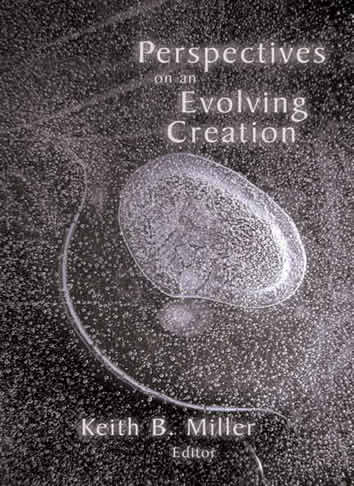 I recently read a very interesting article on theistic evolution by Loren Haarsma and Terry M. Gray entitled “Complexity, Self Organization, and Design.” Interestingly, I found what I think are some of the most interesting arguments for the theistic evolutionist position, but I also found some of the hardest objections to the position (scientifically) that I have stumbled across.
I’ll start with the interesting evidence for their position. First, they note that the word “design” doesn’t belong exclusively to the Intelligent Design theorists, because theistic evolutionists argue that God designed the initial laws which gave rise to evolution and eventually humanity. In other words, God foreknew and intended for mankind to evolve, and set up the laws such that we would (or at least that some sentient beings with which God intended to interact would arise, 289).
They further argue that “With the right set of rules, a random, iterative process can start with a simple environment and self-assemble a complex environment” (293, emphasis theirs). The arguments for this position are interesting to me, and I am no scientist, but it seems to me that the three ways from which they argue for this possibility make more sense to me if there is some kind of intelligence behind the process.
The three strategies for self-organized complexity they argue are:
1) Preprogrammed self assembly– “…pieces are designed so that random interactions between them eventually lead to assembly of the desired complex object(s)”
2) Information transfer from the environment– objects incorporate information from the environment through “a process of random exploration and feedback”
3) Interaction among agents– “random interactions and feedback” lead to “increased productivity or survivability” (290)
It seems to me that 1) could be simply incorporated into laws at the beginning of the universe (but these laws would have to be designed, as the authors point out). 2) seems to me as though it simply couldn’t be totally random. For evolution to work, on the understanding I’ve gleaned from my readings, the complexity would have to aid the survivability of the entity. I think a problem here is that there is no way to determine when/why/how the random interactions suddenly latch onto those things which are helpful. If it truly is a random process, then it would randomly continue to select for characteristics, casting off old ones and making room for new ones.
Incorporating natural selection doesn’t seem like it would help much here either, because then those random selections which are negative would terminate the species. So my problems with 2) are twofold (even granting that God Designed the laws such that these interactions would occur): 1. there doesn’t seem to be an explanation for the process stopping the random selections (and therefore keeping the trait); 2. we aren’t talking about computer algorithms here, we’re talking living entities–if they select the wrong traits, they die.
Ultimately I found these arguments interesting reading, but I just don’t see how they support Theistic Evolutionism more than, say Intelligent Design. The authors do make the interesting point that it could have been the case that God set up/designed the laws such that life would arise, but the ways that complexity is integrated into the process seems to me, at least, to demand further explanation.
Source:
Haarsma, Loren and Terry M. Gray, Complexity, Self-Organization, and Design, in Perspectives on an Evolving Creation, edited Keith B. Miller, p. 288-309.
——
The preceding post is the property of J.W. Wartick (apart from citations, which are the property of their respective owners) and should not be reproduced in part or in whole without the expressed consent of the author.

 J.W. Wartick - Reconstructing Faith
