theology
Did God Create the Universe for Humans? – Some thoughts on God’s purposes for creating
 I have read on more than one occasion an atheist making the argument that goes something like this: if humans are the most important creation, why did God create such a vast universe? The argument is that God really wasted a lot of space if the universe was created for us. Another way I’ve seen this argument is as follows: the universe is full of galaxies that are even beyond our capacity to ever observe. Why, if God created the universe for us, is there so much here that is worthless to us? Furthermore, why is so much of the universe hostile to human life? Humans can’t live in overwhelming majority of the universe. Why is it so hostile if it were created for us?
A different discussion with an atheist was touched off when they asserted that the Bible states humans are the most important creation, so why create so much of the universe outside of our power to observe?
I’m going to offer an explanation which may come as something of a surprise: there is nothing in the Bible which makes it explicit that humans are the most important creation. I would go so far as to say that anyone who claims that is reading an unjustified anthropocentric worldview onto the text.
Perhaps the most commonly cited explanation for why we should think humans are the center of creation is the Genesis creation account, and specifically Genesis 1:27-28:
So God created mankind in his own image,
in the image of God he created them;
male and female he created them.God blessed them and said to them, “Be fruitful and increase in number; fill the earth and subdue it. Rule over the fish in the sea and the birds in the sky and over every living creature that moves on the ground.” (NIV)
But again, where in this text does it suggest that humans are the most important creation? It does show that we were made in God’s image, but it does not say that because of that, we are more important than anything else in creation. Too often people read into texts what they think it says, as opposed to reading what the text actually says. Again, I simply ask this: where in the text does it say that humans are the most important part of all of creation? As a friend pointed out, one could easily say the sun is the most important part of creation, because without it, we would not all be alive. But either view is equally unsupported by the Bible.
Another rationale that is used from this passage is the notion that humans are to have dominion over or rule over the earth (verse 28). But again, how does it follow from this that humans are more important? The problem is that we have a skewed view of importance. For us, very often, we think importance is equal to power. When someone has power, they are more important than someone without power. But such notions of power and hierarchy are extrabiblical ideas which we have read onto the text.
In fact, it seems that the Bible says we are not the greatest of all creation. Psalm 8:5 references humans and says that “You [God] have made them [humans] a little lower than the angels and crowned them with glory and honor.” So yes, humans are “crowned” with glory, but they are also ” a little lower than the angels.” It seems the Bible says that we may not be the greatest things to walk the universe. [I should note that the Bible may, in fact, note that humans are the most important part of all creation, but were I to grant this, my reasoning below still holds.]
But some people remain dissatisfied by this explanation, and claim that Christians very often do claim that humans are the crown of all creation or that the universe was made for us. Here, I suggest that once again, people have been thinking very anthropocentrically. In fact, they have limited God to the point of making God incapable of even having the same range of possibilities that humans have. The assumption built into this argument is that God created for the sole purpose of humanity. But just like other persons, it is possible for God to have more than one end in taking an action. Thus, even if we grant that humans were the most important creation–in contrast to the above argument–it still does not follow that the universe is exclusively for humans. God can have different ends.
Think about it this way: when you take an action, you very often have more than one end in mind. For example, you may get in your car to go to a local shopping store so that you can go to the grocery store and also because you want to stop and look at books at the bookstore. Here, you have taken an action (gotten into the car and taken it somewhere) with more than one end in mind. Similarly, God can create with more than one end in mind. Even if humans are the greatest of all creation (which I deny), it is also possible that God also created for other reasons. For example, God may have created gratuitous galaxies because they are beautiful. I can’t help but look at the stars and have my heart stop. The beauty of creation is extraordinary. It cannot be described in words. Perhaps this was one end God had in mind, along with the creation of humans. There are a number of other reasons God could have created apart from humans, so it seems to me that the objection here is short-sighted.
Only by creating God not just in our own image, but in an image less than our own, can we come up with an objection to the existence of such a God based upon the vastness of the universe, or its hostility to life.
Links
Beauty is a powerful reason to favor the Christian worldview. Check out this excellent post on the topic over at Well Spent Journey: Christianity and High Beauty (With Pictures!).
More Planets Than Stars – Exoplanets and Our Little Blue Ball– Naturalis Historia features a simply superb post on the possibilities of other life/planets like ours. It also briefly addresses the issue I have discussed in this post. I recommend checking it out.
From Divine Engineer to Divine Architect– Over at Faithful Thinkers, Luke Nix wrote about a similar topic. His post explores the notion of God as an architect, transcending the either/or dichotomy created by some about God’s purpose for creation.
I have reflected on what life on other planets might mean for Christianity: Theological Reflections on Life on Other Planets.
SDG.
——
The preceding post is the property of J.W. Wartick (apart from citations, which are the property of their respective owners, and works of art as credited) and should not be reproduced in part or in whole without the expressed consent of the author. All content on this site is the property of J.W. Wartick and is made available for individual and personal usage. If you cite from these documents, whether for personal or professional purposes, please give appropriate citation with both the name of the author (J.W. Wartick) and a link to the original URL. If you’d like to repost a post, you may do so, provided you show less than half of the original post on your own site and link to the original post for the rest. You must also appropriately cite the post as noted above. This blog is protected by Creative Commons licensing. By viewing any part of this site, you are agreeing to this usage policy.
Resource Review: “In the Days of Noah: A Deeper Look at the Genesis Flood”
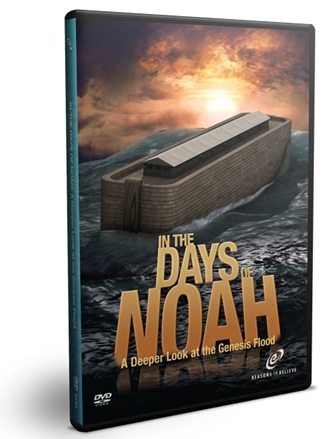 Reasons to Believe is a science faith think-tank dedicated to showing that Christianity is true. Recently, I had the opportunity to view their resource, “In the Days of Noah.” The video features a lecture by Hugh Ross regarding the extent, location, and timing of the Noahic (Biblical) Flood.
One of the central points of Ross’ argument is that people must take an integrative approach to the question of the Genesis Flood. It is not enough to look at just one verse or one chapter or even one book of the Bible and declare the question closed. Instead, Ross argues, one must take the entirety of the Scriptural data and see what it tells readers about the Flood. Not only that, but the relevant scientific findings must be taken into account as well.
For many Christians, the extent of the Flood is taken as a test for orthodoxy. Ross argues convincingly, however, that the Biblical account does not necessitate that the Flood covered the entire surface of the planet. He goes over a wide range of texts that discuss events that are said to be “world wide” or to “cover the whole earth” or that are supposed to bring “every nation” to a certain place and shows how the usage of the term was relative to the author. Ross cites a number of texts to back up this claim and shows how in many places–the Joseph narrative, writings about Solomon, etc.–the words taken as universals generally (“whole earth,” “all nations,” etc.) are used specifically to mean the whole immediate/relevant world.
There are a number of texts describing creation that go into greater detail about specific aspects of the Genesis account. Ross outlines his argument via these texts by specifically noting a number which discuss the limits set for the waters. For example, Proverbs 8:29 states quite explicitly that God gave the sea its boundary. Ross continues through the Bible and cites numerous examples wherein it talks about God setting boundaries for the waters. From there, he makes the argument that these verses give us a principle: God has set the oceans in their boundaries from Creation. He then utilizes this as an argument for a local flood as opposed to a global flood.
I think that this may be the weakest part of Ross’ argument, because it is possible to counter this reasoning by saying that just because there are a number of texts talking about the boundaries set for the water, it does not mean that the water can never cross these boundaries. In fact, one might counter by noting that Ross’ view entails a kind of uncertainty over what exactly is meant when the Bible discusses the boundaries or limits for the oceans. After all, even on Ross’ view, some body of water covered a vast expanse of land–indeed, the whole inhabited world at the time. In fact, one may argue that due to what we know about plate tectonics, the oceans have not, in fact, had clear boundaries from the beginning but have instead been shifting as the continental plates drift.
Of course, Ross could counter by noting that those continental plates themselves act as boundaries for the oceans. Even though these plates shift, they remain ‘fixed’ in the sense of constant. Regardless, it seems that the rebuttal given above must be given at least some weight in considering Ross’ overall argument. However, even if one denies the force of his argument for the Scriptural notion of fixed boundaries as being a limit for a global flood, one must still contend with his argument to open up the possibility of a local flood by noting the difference between general and specific uses of the notion of a “worldwide” event.
That said, Ross turns to the scientific evidence and notes a number of evidences against a global flood. First, there are such things as unambiguous signs of a flood. He points out the possibility of checking ice cores and sediment cores for the continuous record of the last several hundred thousand years, so if there was a global flood there should be a signal in the ice layers evidence for a global flood. These layers are annual and we know this by looking for volcanic eruptions lined up in the layers at the correct times. These can therefore be calibrated by lining them up with volcanic eruptions that we know of historically. Moreover, the ice layers line up with the ellipticity of the earth, so there are multiple independent ways to test these ice layers. However, in these layers there are none of the telltale signs for a global flood.
So where was the flood? Ross notes a number of verses in the Bible to narrow in on the location of Eden, and then extrapolates from that where civilization would flourish. Due to some geological evidence for there having been a blockage on the end of the Persian Gulf which would have, combined with the melting of ice and the extreme amount of rain noted in the Biblical account, flooded a huge portion of the Mesopotamian Plain. The region is surrounded by mountains which would have blocked in the water for the flood. Such a flood would have wiped out the extent of known humanity at the time, argues Ross.
 There are a number of arguments that young earth creationists, who often rely upon “Flood Geology” to explain a number of features of the geological past to maintain their view of the history of the earth, would raise to Ross’ presentation. For example, the image on the right was created by Answers in Genesis to parody the notion that a flood can be local when the Bible says that even the mountain-tops were covered (Genesis 7:18-20) [all credit for the image to Answers in Genesis, I make no claim to having produced it in any way]. Ross answers this argument by noting that the word can also mean hills and that with the extent of the flood he proposed, there would be no visible hills or mountains from the Ark. Thus, Ross’ argument is much along the lines of his integrative approach: that we must take into account all the relevant Biblical texts as well as noting the scientific evidence.
It would be remiss to have a review of a video without looking into the visuals. The video is a lecture divided into chapters, so a decent portion of it is spent watching Hugh Ross talk. However, there are also a number of very useful images and slides presented which will provide viewers in groups with opportunity for discussion and individual viewers with valuable resources to discuss the Biblical Flood.
“In the Days of Noah” is a great resource for those interested in the Noahic Flood. Hugh Ross is a lucid thinker and clearly lays out his perspective on the flood in terms that listeners will easily comprehend. Ross’ case is based off a holistic approach to natural and special revelation. Although Ross does not answer every counter-argument which those opposed to his view may present, the video can act as a valuable way to open discussions and perhaps come to a better understanding of God’s truth.
Source
“In the Days of Noah: A Deeper Look at the Genesis Flood” (Reasons to Believe), 2010.
Image Credit for the second image goes to Answers in Genesis.
SDG.
——
The preceding post is the property of J.W. Wartick (apart from citations, which are the property of their respective owners, and works of art as credited) and should not be reproduced in part or in whole without the expressed consent of the author. All content on this site is the property of J.W. Wartick and is made available for individual and personal usage. If you cite from these documents, whether for personal or professional purposes, please give appropriate citation with both the name of the author (J.W. Wartick) and a link to the original URL. If you’d like to repost a post, you may do so, provided you show less than half of the original post on your own site and link to the original post for the rest. You must also appropriately cite the post as noted above. This blog is protected by Creative Commons licensing. By viewing any part of this site, you are agreeing to this usage policy.
Gregg Davidson vs. Andrew Snelling on the Age of the Earth
 I was recently at the Evangelical Philosophical Society conference (see my thoughts on every talk I attended) and one of the sessions was a debate between Gregg Davidson of Solid Rock Lectures and Andrew Snelling of Answers in Genesis on “Scripture, Geology & the Age of the Earth.” A number of readers requested more information on this talk, and I found it very interesting myself. Here, I’ll touch on the highlights of this dialogue as well as my own thoughts.
Davidson- A Biblical Worldview and an Ancient Earth
Gregg Davidson, a geologist who authored When Faith and Science Collide
Another problem is that YECs fail to recognize that their position itself is an interpretation of Scripture. Their view is not Scripture itself. There is a tendency in debates about theology to view one’s own position as what the Bible teaches, but that fails to take into account the possibility of fallible human interpretation.
Davidson argued for an approach to Scripture that takes note of the fact that God often deigns to make use of “the knowledge of the day to communicate truths about the nature of God.” As an example, he referenced Jesus saying that the mustard seed is the smallest seed of all the plants on earth, despite the fact that it is not (Mark 4:30-32). The point was not the size of the seed, but rather the power of faith. Thus,we must be careful not to make Scripture teaching something it does not claim for itself. He pressed that to read into the Genesis text specific dates and time periods is to make the text teach something that it is not claiming.
Turning to the science, Davidson noted that there are any number of evidences for an ancient earth, but that he chose to focus upon just one area from a number of evidences in order to show how interdisciplinary and cross-confirmed the age of the earth is. He focused upon the Hawaiian Islands and their formation and age. There are multiple, independent ways to investigate the age of these islands. The islands were formed by a hot spot–a place where magma shoots up from underneath the crust and bubbles to the surface. This eventually would form islands when enough of the lava cooled and hardened. The islands are on a moving continental plate and so as they move away from the hot spot, the expectation is the islands get progressively older. Thus, in a series of 3 islands arranged thusly: 3-2-1-0 (0 being the hot spot), 3 would be the oldest island.
Davidson first noted the ages that were found by testing the age of the volcanic rock with radiometric dating. These ages yielded millions of years. Now of course most young earth creationists hold that radiometric dating methods are deeply flawed, but Davidson noted that this procedure can be tested for accuracy with independent methods. Before turning to that, he showed a picture of what the estimate for the movement per year of the plate over the hot spot would be based solely upon the radiometric dating. Basically, this works by just taking the distance of 3-2-1 and measuring how far each is from the hot spot, then dividing the radiometric date by that distance to see how far the islands move per year. The estimate yielded movement of 2.6-3.6 inches per year.
Recent technology has allowed us to utilize Global Positioning Systems (GPS) to actually measure the rate that the islands are moving. These measurements yield approximately 3.1 inches per year, which is exactly in the middle of the estimate given by the radiometric dating. Given the measured rate, scientists can extrapolate how many millions of years old the islands are based upon their distance from the hot spot. It’s kind of an inverse way to get the date. They simply divide the measured distance of the islands from the hot spot by the measured rate of movement per year. Of course, this way of measuring is not dependent in any way upon radiometric dating. Thus, there are two independent sources showing the date in millions of years for the Hawaiian Islands.
The coral growth around the Islands was a third confirmation of the ancient age of these formations. This argument was more complex than the first two. Basically, it seemed the argument was that because different corals form closer to the surface, we can look at the coral reefs formed around the islands as they are farther out and see how much the coral has moved up the island as it subducted (moved under the water with the continental plate). Thus, as the islands move farther away, and therefore sink into the water, the coral that can only survive at certain depths is submerged too far for it to get adequate sunlight, and it dies. One can then measure radiometrically the age of rings of corals. When one measures the coral on the islands, they can correlate that with the ages of the corals and the islands themselves. This measurement also lined up with the previous two.
Davidson concluded that the problem with the YEC paradigm is that they will often focus upon rebutting multiple, independent claims. While this may work for each claim individually, the problem is that all of these types of evidence add up to form one cohesive picture. When they are cross-referenced and they all hit on the same age or date range, they all show the same predictions of distance, and the like, it becomes extremely implausible to say that every single way to find the age of the earth is faulty. They form a full picture. Furthermore, Davidson critiqued YECs for often presenting a selective picture of the evidence–only showing the evidence which favors their position.
Snelling- A Biblical and Geological Defense of a Young Earth and the Global Flood
Andrew Snelling is a well-known proponent of YEC, the author of Earth’s Catastrophic Past
Snelling began by offering the common argument that Jesus taught the global flood and young earth creationism. He argued that the Hebrew word used in Genesis 7:17 is only used for this event, which hints at the incredible devastation.
 Furthermore, the language in Genesis states that the mountains were covered. Snelling’s slideshow had the image shown here on the right, which is becoming pervasive in discussions about the extent of the Flood. The argument is that if the Flood were local, it makes a mockery of the Biblical text. (See a different perspective on this issue with Hugh Ross’ “In the Days of Noah.”)
Snelling outlined several things we should look for if there was a global flood. Among these expectations are:
1) Marine fossils in strata for terrestrial creatures- Snelling named a number of places these could be found. This is an expectation because the Flood covered the whole earth, so the creatures should all be mixed together.
2) Rapid burial of creatures and plants- Snelling noted a number of places where fossils show rapid burial. This is expected because the Flood would have suddenly come upon these creatures.
3) Fossil graveyards- The Flood would have killed huge numbers of animals, so we should expect to find huge fossil graveyards, which we do.
4) Evidence that the ocean flooded the continents- if the Flood were global, we would expect to find its sedimentation upon the continents, and we do.
He argued that these are all evidenced in Earth’s catastrophic past, and he pointed to the Grand Canyon as evidence for a number of these evidences.
Snelling also looked at various geological features he said were evidences for a global flood and a young earth. Among these were several layers of sedimentary rock which are bent. He argued that this can only occur when the rock is liquefied like cement–otherwise it cracks–so this sedimentation had to happen during the Flood.
Discussion- Q+A
Next, there was a dialogue between Snelling and Davidson in the form of them asking each other questions. The highlights were a few specific questions:
Davidson asked Snelling about the Grand Canyon: specifically, he noted that the terrestrial fossils were found in similar strata, but never in the same layers, which instead suggests an ebbing and flowing of the water; not a global flood. Furthermore, he pointed out the lack of any pollinating plants in an entire mile of sediment. He asked how Snelling’s account lines up with this data. Snelling responded by arguing that the fossils are indeed mixed together and that we even find footprints in the wrong layers. He argued that due to “devastating tsunamis” which would have swept the earth, some of this could be undone and/or specific types of creatures/plants might have been swept out of the layers.
Snelling gave a brief outline of problems with radiometric dating giving divergent ages and asked Davidson to comment on the difficulties he pointed out with radiometric dating. He argued that often, old earth proponents and “secularists” simply assume an age for the rock and interpret the tests to get that age. Davidson responded noting that he worked with radiometric labs for quite some time and that there is mixing in the chemicals which can be accounted for. He showed a picture showing how some of this can work and how labs have to account for certain elements contaminating the rocks. However, he pointed out there is a margin of error to account for some of these difficulties.
 Davidson then brought up a slide with images of bent rocks. One was a “bench” at a graveyard in which the middle had sagged despite being made of stone. He argued that with enough pressure/time rock can sag under its own weight or (as the picture showed) even no weight at all. Given this evidence, he asked why bent rocks should count in favor of YEC. Snelling responded by saying that hard rock can be bent by pressure but that if the pressure is sufficient the rock will crack. He continued to emphasize that in the Grand Canyon one can observe rocks bending without fracture.
Evaluation
I have to say I was struck by how much this interaction turned on the scientific aspects of the debate. I had thought that Snelling would focus more upon an attack of Davidson’s interpretation of Scripture, and while he did some of that, the majority of his responses were related to scientific arguments. Davidson followed suit and kept hammering examples that showed how the YEC interpretations Snelling gave of various natural phenomena failed.
Davidson’s scientific presentation in his paper was extremely strong. It would be very hard to explain away the fact that three completely independent methods for dating the islands lined up so clearly to point towards an ancient earth. If I had been on the border between young earth or old earth going in, I would have come out as convinced of an old earth. I actually did go in as one who holds to an old earth, having been convinced by the evidence a few years ago, and I came away utterly convinced that YEC is false.
Snelling’s talk was a great defense of the YEC position, but it demonstrated the flaws that Davidson was quick to capitalize on. I was really impressed by the fact that Davidson had a number of slides ready to respond to both Snelling’s presentation and his questions. Davidson’s critique of the “bent rocks” was particularly devastating.
Davidson’s critique of YEC: that they focus upon independently repudiating various dating methods, came to fruition in this discussion. He really showed how the YEC paradigm is utterly dependent upon a selective presentation of data at the exclusion of pieces that do not fit.
One thing I would have liked to see was more debate over the Flood and the Bible passages in general. I was surprised by how much the talk focused on the science–though that was extremely interesting.
Let me know your thoughts on the topic. Have you any insights on any of these issues?
Links
I have written on other talks that I attended at the ETS/EPS Conference in 2012. Specifically, check out my post on Caring for Creation: A discussion among evangelicals. I have also written briefly on every talk I attended. See my post on the ETS/EPS Conference 2012.
There are a great many posts on creation issues on my site. You can access them by checking out my page on the Origins Debate.
Naturalis Historia is a site that focuses primarily on the scientific evidence for an old earth. I highly recommend it.
For the theological aspects of the debate (and also more of the scientific discussion), check out The GeoChristian as well as Geocreationism, two fantastic sites.
Finally, for a comprehensive Biblical and scientific old earth view, see Reasons to Believe.
SDG.
——
The preceding post is the property of J.W. Wartick (apart from citations, which are the property of their respective owners, and works of art as credited) and should not be reproduced in part or in whole without the expressed consent of the author. All content on this site is the property of J.W. Wartick and is made available for individual and personal usage. If you cite from these documents, whether for personal or professional purposes, please give appropriate citation with both the name of the author (J.W. Wartick) and a link to the original URL. If you’d like to repost a post, you may do so, provided you show less than half of the original post on your own site and link to the original post for the rest. You must also appropriately cite the post as noted above. This blog is protected by Creative Commons licensing. By viewing any part of this site, you are agreeing to this usage policy.
“Cross Roads” by Wm. Paul Young- An Evangelical’s Perspective
 One of the biggest publishing phenomena of late, The Shack

Free Will
The notion of crossroads is a major theme throughout the work, and Young utilizes the imagery to discuss free will metaphorically. Anthony Spencer (Tony), the main character, finds himself inside his mind, which is portrayed as a kind of land with various roads and places inside it. Initially, he begins exploring this land and finds himself coming to numerous forks in the road. He continues to find these forks and realizes that as he continues to make choices, “it occurred to Tony that the number of direction decisions was diminishing; options were significantly decreasing” (35). Young doesn’t expand on this much, but it seems like a vivid illustration of libertarian free will, wherein one’s choices in the past do indeed influence their choices in the future. As Tony makes choices on his path, he finds that the choices available to him decrease. The reason, it seems, is because his choices have started to form his world. It seems to me that this is a great way to show libertarian free will in literature.
Church
A robust theology of church and salvation is something that I think is necessary for an adequate theology. I find one reason for this illustrated well by Young:
Church, thought Tony. He hadn’t set foot inside one of those since his last foster family had been religious. He and Jake [Tony’s brother] had been required to sit silently for what seemed like hours… He smiled to himself, remembering how he and Jake had schemed together and ‘gone forward’ one night at church, thinking it would win them points with the family, which it did. The attention their conversions garnered was initially rewarding, but it soon became clear that ‘asking Jesus into your heart’ dramatically increased expectations for strict obedience to a host of rules they hadn’t anticipated. He soon became a ‘backslider,’ in a category, he discovered, that was profoundly worse than being pagan in the first place. (124)
It seems clear to me that here the act of conversion has itself become a work, rather than a gift of grace. Tony’s concept of conversion at this point in the book is that of “asking Jesus into your heart.” Unsurprisingly, when he fails to perform other adequate works–obeying a set of rules. The problem with this theology should become clear immediately. By suggesting that Christianity is about “going forward” and publicly affirming a faith, this form of theology puts the believer in the position of affirming faith, rather than receiving it as a gift. When faith becomes a public work, it becomes the Law instead of the Gospel. When demands for works are made on faith, then faith itself becomes a work. Unfortunately, this kind of works-righteousness sneaks into theology at all levels, ever seeking a place to grow.
The problems with this theology are portrayed vividly in this illustration. The notion that people need to make a public declaration of faith leads to its abuse, as Tony and Jake attempted to do, but it also leads to difficulties for those who believe their declaration was itself true (unlike Tony and Jake, who simply did it to glorify themselves in the eyes of their foster parents). When someone makes their “decision for Christ,” their faith life becomes wrapped up in that decision. Their walk with God is contingent upon their continuing to make this decision. Unfortunately, this type of theology makes faith all about one’s own decisions, rather than Christ’s justification and the free gift of faith.
Women
There are many church bodies who do not ordain women to the office of the ministry. That is, they hold beliefs that say women should not be spiritual leaders of men in the church. Young explores this issue when Pastor Skor shows up and challenges Maggie, one of the main characters, regarding her outburst during a church service. Pastor Skor takes Maggie’s outburst and disruptive behavior as a clue to him from God that he has been too lax in his instructing his congregation in the Bible. He makes an argument that women should not be leaders in church and should remain silent:
And we affirm the Word, which declares there is no longer male or female [Galatians 3:28], but… the Word is speaking of how God sees us, not about how we function in the church, and we must always remember that God is a God of order. It is vital that each person play their part, and as long as they stay within the roles that God has mandated, the church functions as it was meant to… (167)
The pastor goes on to quote 1 Corinthians 14:34-35 to support his position. Yet Young, through Clarence, an elder who is with the pastor to talk with Maggie, provides a counter-argument to this reasoning:
It is sarcasm… I believe that the apostle Paul was being sarcastic when he wrote what you read… He is quoting a letter that these folk sent him with questions, and he is in total disagreement with what they have written to him. (168-169)
Clarence defends this position by alluding to 1 Corinthians 14:36, apparently using the KJV: “What? came the word of God out from you? or came it unto you only?” Given the way this verse is worded, Clarence holds that verses 34-35 are a quote from a letter the Corinthians sent to Paul which Paul then responds to sarcastically by wondering whether the Corinthians think that God’s word came only to them.
Young’s offered interpretation seems possible, but perhaps not made explicit enough. It seems to me possible that Paul would have made it more clear that he was quoting another’s writing here. The KJV seems to support the interpretation given to 1 Cor 14:36 here, but other translations phrase it differently, in such a way that the verse seems to be more of a challenge to readers to dismiss what Paul is declaring in 34-35.
Of course, one could still argue that Young’s interpretation has great strength, noting that nowhere in the Bible do we see this command in the Scripture “as the law also says” and so we may infer that Paul is referencing an extra-biblical teaching and rebutting it. In fact, this seems to line up with Young’s argument perfectly because we can see that Paul would be citing a Judaizer’s teaching in the church in Corinth–who would hold that the silence of women is taught by the Law [Jewish extra-biblical law]–and then refuting this by noting that the word of God did not come from them alone (see Katharine Bushnell’s God’s Word to Women
Therefore, it seems to me that Young offers a fairly decent egalitarian interpretation of the passage, though he could have given other arguments which would take into account the passage’s cultural context, in which women were speaking out of turn in worship. The core of the statement seems to me to be that the women in this specific context needed to learn from their husbands at home and remain silent in church so that they did not cause disruption.
The way the scenario plays out in the book is also difficult to evaluate because Maggie definitely was disrupting the church service and would have appeared at least slightly crazy to those around her. She was screaming about a demon speaking to her and was, in fact, mistaken about that. I think she can be forgiven for her extreme reaction given the strange situation in which she found herself, but the Corinthians passage is in context all about order in worship in general, and certainly people bursting in screaming about demons would be disorderly worship.
Thus, it seems to me that Young offers a possible interpretation of 1 Corinthians 14:34-35, but he has made his case problematic by the narrative context in which he placed it. It is worth noting that this work will get people talking about the issue. Young has given a somewhat strong version of a lengthy egalitarian argument in the form of narrative.
Practical Ethics and Disability
Cabby, a boy with Down’s Syndrome, is featured prominently throughout the book. Young uses him as a foil to show that those with disabilities have much to contribute to modern society. Perhaps the most poignant way he does this is through the negative portrayal of Tony’s view of Cabby:
Tony had never known a ‘retarded’ person. He wasn’t sure if that is what you called them… His opinions on most nonbusiness matters may not have been founded on evidence or experience, but he was sure of them. People like Cabby were an unproductive drain on the resources of society; they were valuable only to their families. He believed they were tolerated because of liberal persuasions, not because such people had any intrinsic worth… It is easy to create a category of persons, like retarded or handicapped, and then pass judgment on the group as a whole. He wondered if that was not the heart of all prejudice. (108-109)
In contrast to Tony’s view, Cabby turns out to be insightful and delightful. He is shown to have positive value in a number of ways that go beyond his immediate family. He ultimately shows the practical usefulness of inherent human worth.
God
For Young, understanding God as relationship is central to the concept of deity. The concept of deity that is presented is that of Trinity. Much ink will be spilled, I feel certain, on whether or not Young portrays the persons of the Trinity correctly, just as there was in The Shack (see my own discussion here).
Young’s position seems to be largely unchanged from that in The Shack, and so much of the commentary will follow the same line. I think he does a very good job of exploring the inter-relational character of God and the temporal submission of Christ in the incarnation to God the Father. Some may see the primary difficulty with Young’s portrayal of God is that the Father makes very little appearance in the book, but near the end readers find out that is not the case. In fact, the Father is intricately involved in all aspects of God and the life portrayed in the novel.
Those who conceptualize God as inherently male will have a problem with the book, however. Unfortunately, some paganism has indeed hung on in the church, wherein some view God as a gendered being. In the Bible, however, we find that God is spirit and not a man. Thus, I think that Young’s use of gender with God may shock some but also underscores the fact that God is not a gendered being, and instead transcendent.
Historical Theology
Young offers a short discussion of historical theology and God that seems to me to at least partially miss the mark. It is very brief, but I think it is worth discussing. Young puts the following commentary in the mouth of Jesus himself:
The Greeks, with their love for isolation [of deity] influence Augustine and later Aquinas… and a nonrelational religious Christianity is born. Along come the Reformers, like Luther and Calvin, who do their best to send the Greeks back outside the Holy of Holies, but they are barely in the grave before the Greeks are resuscitated and invited back to teach in their schools of religion. The tenacity of bad ideas is rather remarkable, don’t you think? (73)
There are a number of problems with this small passage. First, Augustine heavily influenced both Calvin and Luther. In fact, Calvin’s theology is tied very intricately to Augustine’s view of free will and original sin. Similarly, Luther’s view of original sin derives directly from Augustine’s exposition in City of God. Second, it seems unfair to view Aquinas as a kind of anti-relationalist when it comes to God’s nature. Aquinas very much emphasized the triunity of God, which was (and is!) an extremely important topic. To thus accuse Aquinas of undermining God’s relational-ness seems unfair. Finally, the notion that the influence of Greek philosophy on Christianity is somehow inherently bad seems a bit shortsighted. There are innumerable positive contributions that reflection on Greek thought has brought into the fold of Christianity. Among these are the very concept of free will that Young pushes in his book, along with a number of aspects of Trinitarian and Incarnational theology that Young seems to support. This may seem to be a nitpick, but it seems to me that if Young is going to use his book to make comments about historical theology, it is vastly important to get that historical development right.
Conclusion
Cross Roads
SDG.
——
The preceding post is the property of J.W. Wartick (apart from citations, which are the property of their respective owners, and works of art as credited) and should not be reproduced in part or in whole without the expressed consent of the author. All content on this site is the property of J.W. Wartick and is made available for individual and personal usage. If you cite from these documents, whether for personal or professional purposes, please give appropriate citation with both the name of the author (J.W. Wartick) and a link to the original URL. If you’d like to repost a post, you may do so, provided you show less than half of the original post on your own site and link to the original post for the rest. You must also appropriately cite the post as noted above. This blog is protected by Creative Commons licensing. By viewing any part of this site, you are agreeing to this usage policy.
All will be made New: Mayans, end times, and eschatology, oh my!
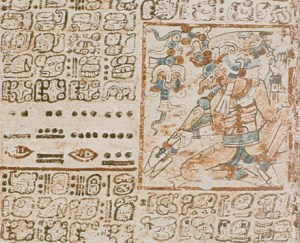 Is it the end? People are rushing to stores stocking up on bottled water and the necessities, preparing for the latest “end” which our world will endure. We’ve endured a few just this year. Some are now saying that the Mayan Calendar counts down to December 21, 2012 and that this was their prediction of the end of the world. The Mayans were extremely accurate in their calendar, so some people are thinking maybe they knew something we do not.
It just so happens that one of my random interests for quite some time has been ancient Mesoamerican history. I love reading about the Maya, Aztec, Inca, and Olmec cultures. Here, I’ll be drawing on those years of study (I am no expert–please don’t get me wrong here) along with my thoughts on Christian eschatology to provide a discussion of the latest “end of the world.”
The Mayans
Cultural Understanding
People often talk about the Mayan Calendar without placing it in its cultural context. The Ancient Maya were a very advanced people. It is easy to think that the people who inhabited ancient South America were a bunch of paganistic simpletons who knew little of the goings on in the world until a boat of enlightened Europeans showed up and taught them better. Such a view is, of course, extremely Eurocentric, and I would suggest it is also betrays a certain lack of knowledge over what it means to be an advanced civilization. The Maya certainly fill that role well, albeit with different types of advancement.
One could argue that the differences in advancements was due, in part, to the radically different worldviews operating in independent spheres of influence. The values of European cultures were shaped by the Christian worldview, and so their concepts of what was important were very divergent from that of the polytheistic Maya. Indeed, this could account for a number of the extreme differences in practical areas, such as the differences in military technology, and of course in the development of religious doctrine. The Maya were not, as some have argued in the past, necessarily a bunch of noble people. Their artwork portraying their religious ceremonies and conquests makes this explicit, with all kinds of atrocities being glorified through their art. An extended comparison of the development of Western and pre-Columbian societies would be fascinating but it is beyond the realm of my discussion here. My point is that the ancient Maya were a very different people and culture from our own.
Why emphasize this point? Well, for one, because the interpretations which have been given to the Mayan Calendar have largely been using a western view of meaning for calendars, dates, and events to interpret a distinctly non-western culture’s apparatus for interacting with reality. The Mayan Calendar is not some construct in a void to be interpreted by various persons from whatever presuppositional strata in which they operate. No, it must be placed within its cultural context in order to even begin to understand what it means that the calendar should have an end.
The Mayan Calendar
Robert Sharer and Loa Traxler discuss the Mayan Calendar extensively in their monumental work, The Ancient Maya
Sharer and Traxler note that:
We take for granted the need to have a fixed point from which to count chronological records, but the ancient Maya seem to have been the only pre-Columbian society to use this basic concept. Different societies select different events as a starting point for their calendars. Our Western chronology, the Gregorian calendar, begins with the traditional year for the birth of Christ. (110, cited below)
The Mayan calendar, on the other hand, uses the end of the last “great cycle” as their starting point for the calendar. They measure something called “The Long Count” which is an extended way to determine a great cycle of 13 “bak’tuns” which are each periods of about 5,128 solar years (110). The previous long count had ended in 3114 BC, and that was the date the Mayans held “established the time of the creation of the current world” (110). And yes, the current “Long Count” will be ending December 21, 2012. What does this mean?
The calendar was not just used for chronology, but rather served more uses, such as divination. Sharer and Traxler note that the calendar was “a source of great power” in the Maya society (102). The Long Count “functioned as an absolute chronology by tracking the number of days elapsed from a zero date to reach a given day recorded by these lesser cycles” (104). Thus, the Long Count served to place the entire calendar cycle into a context: it established a measurable starting point and ending point for their calendar, which was itself extremely accurate due to its use of various astronomical measurements.
The Mayan Calendar shares one distinctive with that of the other Mesoamerican societies, namely, the use of a 52 year cycle. This cycle was celebrated as the end of the world by the Aztecs. The close of one of these 52 year periods literally meant that “the world would come to an end” (107). Yet this end of the world, which happened every 52 years, was not something feared, but rather celebrated due to the dawn of a new Sacred Fire, “the gods had given the world another 52-year lease on life” (107).
We thus have two possible ways to interpret the end of the Mayan Calendar. First, we can see it as simply the terminus of 13 bak’tuns and the end of the unit of measurement of absolute time, which would simply inaugurate the beginning of another cycle of 13 bak’tuns. Second, we can extrapolate from the cultural context that perhaps each terminus of this cycle would be anticipated as the beginning of another “lease on life.” But this is of the utmost importance: neither interpretation suggests some kind of cataclysmic ending of the space-time universe. To call the Mayan Calendar a “prophecy” of endtimes is nothing more than sensationalism. What cause is there to fear this?
 The End of the World
Christians know that the end will come. However, this should not be surprising to anyone with knowledge of astronomy and physics. Indeed, our universe is ticking down to a cosmic heat death. Our universe itself will end. The energy will disperse, the stars will burn out, and all that will be left will be hulks of matter strewn about an ever-expanding galaxy. Or, perhaps there will be a “great crunch”–something I admit I am highly skeptical about–which will lead to an explosion of a new universe. But Christians have a unique perspective on the end of the world.
…[C]oncerning that day and hour no one knows, not even the angels of heaven, nor the Son, but the Father only. Matthew 24:36a.
First, no one will know when the end is come. The end is coming, but it will be like a thief in the night. Jesus tells us that it will be like in the days of Noah, where people continued to live their lives despite the impending doom.
Second, the Christian expects God to be the one to usher in this end. The end will be a new creation. Tears will be wiped away (Revelation 21:4) and creation will be restored. Unfortunately, some Christians have taken this to mean the utter annihilation of all things in the spatio-temporal universe. These Christians will sometimes have a dismissive attitude over the stewardship of the earth. After all, they argue, this universe will be utterly destroyed and we will have a perfect one made for us. Why bother conserving resources? This attitude is simply wrong, and as I have noted elsewhere, we are called to care for creation, something which evangelicals who disagree on certain topics unanimously affirm.
As Christians we are called to always be ready for Christ’s triumphant return. But that preparation does not mean being fearful of every end-time “prophecy.” Indeed, Jesus tells us that many will say the end has come but they are false prophets (Matthew 7:15; 24:4-5; 24:10-11; Luke 21:8; Mark 13:21-23). No, the preparation is the call to make disciples of all nations and to care for those in need.
We will endure another “end of the world” on the 21st of this year. Let’s take the time to reflect on what our Lord tells us in His Word. We do not know how or when, but God knows. We do not know the day or the hour, but God knows. God will take care of us. Let us thank Him.
Links
December 22nd, 2012– A poignant comic which speaks to the reality of what will happen on December 22, 2012.
Caring for Creation: A discussion among evangelicals– Creation care is an issue highly intertwined with eschatology. Here, I review an extremely thought-provoking panel discussion I attended at the Evangelical Theological Society conference in 2012. Climate change, endtimes, and Christianity and science are just a few related issues.
Cormac McCarthy’s Secular Apocalypse– An insightful post which reflects on Cormac McCarthy’s “The Road” and contrasts its vision of the apocalypse with the Christian worldview.
The End of it All…– I reflect on another failed end-time prophecy, this time from one who tried to use the Bible to make the prediction.
Source
Robert Sharer with Loa Traxler, The Ancient Maya
Image Credit
2012 Doomsday Myths Debunked– National Geographic.
SDG.
——
The preceding post is the property of J.W. Wartick (apart from citations, which are the property of their respective owners, and works of art as credited) and should not be reproduced in part or in whole without the expressed consent of the author. All content on this site is the property of J.W. Wartick and is made available for individual and personal usage. If you cite from these documents, whether for personal or professional purposes, please give appropriate citation with both the name of the author (J.W. Wartick) and a link to the original URL. If you’d like to repost a post, you may do so, provided you show less than half of the original post on your own site and link to the original post for the rest. You must also appropriately cite the post as noted above. This blog is protected by Creative Commons licensing. By viewing any part of this site, you are agreeing to this usage policy.
Caring for Creation: A discussion among evangelicals
 I recently had the wonderful opportunity to attend the Evangelical Philosophical Society annual meeting (check out my thoughts on the whole thing). The theme of the meeting was “Caring for Creation” and although I generally went to other talks with topics that interested me more, I did get the chance to listen to a talk by Douglas Moo, “Biblical Theology and Creation Care” followed by a panel discussion on caring for creation. The talk by Moo was one of the best papers I attended, and the panel discussion afterwards was both informative and contentious. Readers, I hope you’ll look through the whole thing and engage in some dialogue here. This is an extremely interesting topic and I’d love to read your thoughts on it. I’ll start here by summarizing the highlights of Moo’s paper. Then I’ll look at the panel discussion.
Douglas Moo- “Biblical Theology and Creation Care”
The thrust of Moo’s argument was twofold: first, to outline a “Biblical Theology” and apply that to the notion of stewardship; second, to hint at a strategy going forward for evangelicals interacting with creation care.
There are three ways to look at the texts in regards to creation care: resistance (a pattern which allows one specific interpretation or approach to trump all others and therefore forces all texts into a certain paradigm); recovery (look at different texts and incorporate a broad view that supports an ecological interpretation); and revisionism (adopt a constructive and creative approach that makes meaning from the text while recognizing broad continuity with the text). Moo noted difficulties with all three of these and endorsed a kind of recovery/revisionist approach which “sees the ‘Green'” in the texts while also not forcing texts to be about environmentalism in every case. Furthermore, a sparseness of texts does not necessarily entail that no theology can be drawn from a topic. Instead, there are enough verses which can address creation care to paint in broad strokes.
From this approach, Moo argued that there is a pattern of fulfillment in the New Testament which does not abrogate the Old Testament teachings on creation care but rather incorporates them into the whole world. We are called, Moo argued, to see our authority over the earth as not our own but as Christ’s as Creator.
Moo argued that we must not ignore God’s broad interpretation of “neighbor.” God’s view of neighbor includes not just your friends and your enemies but also those yet unborn. Our culture can be a positive influence in some ways by informing how we can prioritize our work in caring for creation. Furthermore, the concerns of our surrounding culture can inform the directions theology must take. For example, he noted that it was no accident that theologians turned to investigating texts in light of personhood debates in the 1970s with the abortion movement: culture can inform the direction that theology needs to explore, thus giving a more robust theology for coming generations. “When faced with challenges or large scale movements, the church rightly turns to the Bible to see what it may say on that issue.”
Moo then turned to the created world. We are able to learn truths about the world through scientific research. Moo argued that “truth discovered by scientists in the natural world” can inform our worldview because they are viewing the evidence left behind from Creation. It is not scientific theory vs. scientific fact or science vs. the Bible. Instead, Christians must see truth as both interpretations of the science as well as interpretations of the Bible. “We cannot dictate Scripture by science but… current scientific data should not be dismissed unless there is an extremely solid Biblical ground that contradicts this data.” Yes, science changes, but so do interpretations. Sometimes science can inform us of a faulty interpretation of the text. It can cause us to turn to the text to look for a better understanding of both special and natural revelation.
 Moo argued that there is a broad scientific consensus regarding climate change. It is happening and it is at least partially caused by humans. Not all scientists are saying the exact same thing in regards to climate change, but the broad consensus is that it is at least partially anthropogenic.–caused by humans.
Thus, Moo argued, “Biblical theologians have no basis as laity in science to reject what science is telling us on this topic [global warming].” The Bible informs us of the disastrous effects humans can have on the earth, from the fall to Israel’s continued rebellions, which brought harm to the earth itself. Similarly, our own modern rebellions can lead to horrifying effects on the earth.
Moo concluded with a call to Christian philosophers and theologians–and more generally, to Christians at large. “We should be at the forefront of confronting” climate change. We must be concerned with caring for creation.
Panel Discussion
The panel discussion after Moo’s talk quickly became contentious. E. Calvin Beisner began by arguing that we must not lose the distinction between scientific models and reality. He noted that a scientific consensus does not necessarily mean reality, and that dissenting scientists were often those whose careers couldn’t be threatened by loss of livelihood. He generally expressed skepticism over the extent of humanity’s causing climate change.
After Beisner’s general response, the moderator began a Q+A session in which all the panelists- Moo, Beisner, Russell Moore, and Richard Bauckham would be allowed to respond to each question. The first question asked about the political nature of the discussion. All the panelists generally agreed that the discussion goes beyond politics and into interdisciplinary studies of geology, climatology, philosophy, theology, and beyond.
Next, “What can churches do to enhance creation care?” Moo argued that it needs to become an agenda item that churches regularly touch upon. He also said there are a number of easy ways to reduce one’s climate impact that can be incorporated in one’s daily routines. Bauckham expressed a desire for every church to have a ‘care of creation’ group which would inform their church on issues involved in creation care. Beisner also advocated easy things that can be incorporated into one’s life to take care of creation. Moore was concerned with a tangible connection to creation–he advocated getting people out into nature for walks and camping and a fuller understanding of God’s creation.
The next question related to the facts that each would say are agreed upon by all panelists despite their some contradictory opinions. It seemed that across the board they agreed that some climate change is happening. Moo noted that it is easy to find someone to disagree with any fact, but that doesn’t undermine truth.
Another question that came up was where the panelists thought creation care should rank in regards to a priority for Christians. The general view expressed across the board was that there is no easy way to say this should be a number one concern or where it fell in line with other major concerns like abortion, evangelism, and the like. Instead, all the scholars seemed to say that it is people’s duty to be informed on this topic and to do what they can.
 Interestingly, the question: “What are areas of agreement with the other panelists?” was the one that generated the most controversy. It started off well enough with the panelists noting actual areas of agreement. However, once the moderator (whose name I didn’t catch) noted the problem of the West’s excessive consumption, the discussion became heated. Beisner followed this comment with a rather lengthy argument that we need to move past the current scenario of reducing CO2 as a brute cure to the problem. He argued that this could be disastrous to the developing world. The developing world often is still using wood for fuel and to try to prevent them from using coal and other carbon-dioxide producing fuels would not only slow their development but also possibly cause deaths now due to inadequate heating, poor quality water, and the like. He made note of a few studies to this effect and argued that we can’t reduce climate change at the cost of humans who are here now struggling to get enough food and water to survive. He noted one study which showed that the more money spent on reducing climate change, the less the per capita income in the developing world becomes. Thus, he expressed concern for the people on earth now who might suffer from these measures.
Moo then noted truth in what Beisner was saying–we need to be aware of the harm we can cause and see if certain methods of prevention have a cost too high–but dissented from Beisner in arguing that we must also take into account sustainability and future generations, even if that may not make for the ideal “now” for everyone.
Bauckham really turned up the heat when he started his response by saying “Remember Galileo.” He noted that Galileo was initally condemned due to Scripture, but his example shows how trying to “predict from Scripture what science must observe is extremely dangerous.” He said that we need to stop playing “silly games with pseudoscience” [clearly aimed at Beisner’s use of arguments against the consensus Moo and the others argued was in place] and step outside of the Amero-centric view of the world. Regarding the developing world, he responded to Beisner by saying that whole nations are afraid of being consumed by the oceans, which is of course of utmost concern. He expressed worry that Christians in other countries saw Christians in the U.S. as disregarding the ecological crises of our time. Finally, he made a jab at Beisner saying that denying anthropogenic climate change is to the scientific community like denying the existence of Jesus would be to the panel.
Beisner immediately responded, saying that Bauckham had been disingenuous and that he felt the language used was troubling. He argued that the supposed consensus is not a true consensus and that there is debate among experts related to the extent of anthropogenic climate change.
Moore closed this part of the discussion by noting that it is easy to attack each other but that there is a general agreement: things need to change. He advocated change on a local level, with everyone trying to carry a bit of the load for a “full reform of culture.”
Conclusion
There were a number of themes I took away from this discussion. First, I think Moo is spot on when he notes that Biblical theologians have no right to tell scientists what their data is. Moo’s presentation has reverberations for other issues, such as the age of the earth. Not only that, but his general notion of culture driving theology and vice versa was a very interesting concept of which people should take note. Finally, his call to Christians to be at the forefront of confronting climate change and being good stewards of Creation must be taken to heart.
Despite the generally contentious nature of the panel discussion, it remains the case that all the panelists advocated a need to care for creation. The debate was over how that must take place. Clearly, the notion of anthropogenic global warming was a hot topic, but again all the panelists agreed that we need to be doing better than we are now.
What do you think of all these discussions? What can we do? What should we do? Let’s hear it!
Image
The third image is credited to: http://commons.wikimedia.org/wiki/File:Forest_in_Yakushima_30.jpg.
SDG.
——
The preceding post is the property of J.W. Wartick (apart from citations, which are the property of their respective owners, and works of art as credited) and should not be reproduced in part or in whole without the expressed consent of the author. All content on this site is the property of J.W. Wartick and is made available for individual and personal usage. If you cite from these documents, whether for personal or professional purposes, please give appropriate citation with both the name of the author (J.W. Wartick) and a link to the original URL. If you’d like to repost a post, you may do so, provided you show less than half of the original post on your own site and link to the original post for the rest. You must also appropriately cite the post as noted above. This blog is protected by Creative Commons licensing. By viewing any part of this site, you are agreeing to this usage policy.
The Continuing Influence of the Reformation: Our lives, our thoughts, our theology- Reformation Review
 The Reformation has had a lasting impact upon our lives. You may not realize it, but from the economy to politics, from theology to family life, the debates of the Reformation resonate through to today. Here, we will investigate in very broad strokes the influence the Reformation continues to have on our daily lives.
Family
The Reformation period led to a development of thought about the family. Praise of the family over and against celibacy was ubiquitous throughout the Reformation thinkers (Diamard MacCulloch, The Reformation
The Reformation’s thought on marriage was largely patriarchal. Men were the heads of the family both spiritually and in society. This was less a development of the Reformation as it was a continuation of the view of marriage in contemporary cultural thought. Interestingly, Protestantism led to a relaxation of two aspects of marriage. First, the clergy was allowed to marry; second, divorce was legally established in many Reformation contexts (MacCulloch, 660). By allowing for divorce, the Reformers undercut the notion of marriage as a sacrament (as above), but they also helped draw a distinction between the moral law of the Bible and the law of the land. Whether this was for better or worse, one may debate.
Economy
Capitalism had already begun before the European Reformations, having its renewal start in Italian city states in the 12th Century (for a detailed and extremely interesting discussion of this, see Rodney Stark, The Victory of Reason

The Reformation also paved the way for a “Protestant Work Ethic.” Martin Luther’s notion of the “priesthood of all believers” demolished the hard distinction between the “temporal” and “spiritual” realm which dominated the thought of the church at the time. By breaking down this barrier, hard labor was elevated. It was no longer seen as an inferior life to that of monastic withdrawal; rather, any type of work could be pleasing to God (McGrath, 256-258). In contemporary churches, one can often hear about how the engineer, the retail worker, the auto worker, and the like should all utilize their skills to the glory of God. Such thinking came directly from the Reformation.
 Theology
Clearly, the most pervasive influence of the Reformation has been upon theology. I have already written on a number of these aspects. The Reformation thought necessarily reflected upon the church. How do we define the church, and who belongs in the church? These questions drove the Reformers to a number of views on the role of the church universal. I discuss these at length in my post on the Church Universal. Central to the Reformation was the notion of sola scriptura. However, it quickly became apparent that without any specific way to interpret Scripture, radical individualism would follow. I’ve written on the Reformers views on these topics and the continuing debate today in my post on Sola Scriptura. To try to list all the areas of theology that the Reformation touched upon would be impossible for a post of this size, so suffice to say I will be discussing these more in the future.
Other Aspects
Diarmard MacCulloch, in his magisterial study of the Reformation, aptly named The Reformation
Counter Reformation
It would be remiss of me to write this without noting that one of the huge continuing influences of the Reformation was the Roman Catholic counter-reformation. The Reformation did not go by unnoticed by Roman Catholics, by any stretch of the imagination. Instead, the Catholic Church reacted against the Reformation and, in part, did so by incorporating many aspects of the Reformation.
Interestingly, some of the debates that played out within Protestantism were mirrored within the Roman Catholic Church. For example, a debate similar to the Calvinist-Arminian arguments became pervasive in Banezian and Molinist schools of thought. It is intriguing to note, however, that the Catholics largely allowed these debates to remain internal without dividing. The Catholic Church, it seems favored doctrinal humility over unity on a number of levels (for a discussion of doctrinal humility/unity, check out my post on the Church).
That is not to say, however, that the Roman Catholics were eager to affirm every aspect of the Reformer’s theology. Part of the counter-reformation included the Inquisition and the formation of the Society of Jesus (Jesuits). Ignatius of Loyola founded the Society of Jesus to counter what he saw not as doctrinal aberration but lives that were not conformed to the moral standards of the church (Carter Lindberg, The European Reformations, 333ff).
Finally, it could easily be argued that the modern innovation of Vatican II has its roots within the Reformation and Counter-Reformation. The changes brought about by Vatican II reflect a development of thought that has occurred since the Reformation on many of the issues brought up by the Reformers.
Conclusion
The Reformation’s influence on today’s society is pervasive. Our thinking on family, economy, working, theology, sex and sexuality, and more are all reflections of the influence of Reformation thought. In many ways, these aspects of our lives are just further reforms on the thoughts of the Reformers. The aspects in which we have changed dramatically since the Reformation, it could be argued, are areas in which the Reformation laid the groundwork for exploration. Our thoughts are Reformation thoughts. Our debates are Reformation debates. Our God is the Reformation’s God.
Regardless of your own feelings on the Reformation, these comments are undeniable. The way you think is largely formed by the debates that happened during the Reformation. Your freedom of expression was opened by Reformation developments on the value of every human being. Investigating the Reformation is a worthy endeavor because it opens up new avenues for exploration of our own era.
Links
Please check out my other posts on the Reformation:
I discuss the origins of the European Reformations and how many of its debates carry on into our own day.
The notion of “sola scriptura” is of central importance to understanding the Reformation, but it is also hotly debated to day and can be traced to many theological controversies of our time. Who interprets Scripture?
The Church Universal: Reformation Review– What makes a church part of the Church Universal? What makes a church part of the true church? I write on these topics (and more!) and their origins in the Reformation.
Sources
Alister E. McGrath, Reformation Thought: An Introduction
Carter Lindberg, The European Reformations
Diarmaid MacCulloch The Reformation
Rodney Stark, The Victory of Reason
Thanks
Alister McGrath’s Reformation Thought: An Introduction was a gift from an anonymous donor. I was blown away when I saw it show up at my door and I have to say Thank you so much for being such a blessing! Whoever you are, you made my day. Well, more than just one day actually. This series of posts is a direct result of your donation. Thank you!
SDG.
——
The preceding post is the property of J.W. Wartick (apart from citations, which are the property of their respective owners, and works of art as credited) and should not be reproduced in part or in whole without the expressed consent of the author. All content on this site is the property of J.W. Wartick and is made available for individual and personal usage. If you cite from these documents, whether for personal or professional purposes, please give appropriate citation with both the name of the author (J.W. Wartick) and a link to the original URL. If you’d like to repost a post, you may do so, provided you show less than half of the original post on your own site and link to the original post for the rest. You must also appropriately cite the post as noted above. This blog is protected by Creative Commons licensing. By viewing any part of this site, you are agreeing to this usage policy.
Book Review: “Good News for Women” by Rebecca Groothuis
 The debate over women’s roles in the home and in the church rages on. A large part of the debate has focused upon the Bible verses that either side raises in defense of their view. Little of the debate has focused on the philosophical implications of either position. Rebecca Groothuis’ Good News for Women
Groothuis first turns to a Biblical case for the equality of men and women. She bases this notion on several Biblical texts. She refers to God’s creation of both male and female in the image/likeness of God (21ff). Her argument also goes into Galatians 3:26-28 and notes how it again draws out the equality between male and female. Regarding the discussions of women’s silence in the churches, Groothuis parallels these passages to those about slaves submitting to their masters:
[T]he strategy of the New Testament church was to tolerate the social subordination of slaves and women so as not to risk alienating non-Christians from the gospel, and yet to modulate and moderate these customs, and ultimately to point beyond them to God’s original intention for human relations. Today, however, when non-Christians are not likely to be offended by an equalitarian gospel, but are likely to find a hierarchical gospel offensive, we have no reason to perpetuate the cultural practices that were intially intended for Christians living in patriarchal societies (25).
Groothuis concludes that throughout the Bible, there is a pattern in which male and female are equal in being. They are, in other words, ontologically equal. Neither is more valuable than the other.
It should be noted that most complementarians today are willing to grant this case. They agree that women and men are indeed created equal and should have equal rights. Groothuis then turns to a series of philosophical arguments which seek to demonstrate that the complementarian position cannot consistently hold that women are equal to men while holding that they are excluded from the ministry. Her argument, therefore, goes deeper than an exegetical challenge. Instead, her argument undermines the theological core groundings of complementarianism.
The very core of Groothuis’ argument is that complementarianism is grounded upon an ontological difference between male and female. The reason she holds that complementarinism must hold this position is “[b]ecause a woman’s traditionally inferior status follows necessarily from the single fact of her essential, female nature, her status is itself a function of her ‘being’ [ontology]; it is determined by what she is, not by what she can do” (53). Complementarians hold that women cannot hold certain offices of the church due only to the fact of her femininity. It is not based upon a functional subordination in which the female chooses to take up a role that is subordinate (62ff); instead, it must be grounded upon the female’s nature as a female. There is nothing about the female which limits her from being a pastor, on most contemporary complementarian positions (that is, those which no longer hold that women are excluded from the ministry simply because she is not as smart or gifted as men in general). Instead, it is exclusively her feminine nature which determines her role as subordinate. Therefore, it is part of her essential nature. I have argued this point myself elsewhere: “Women in the Ministry: The philosophy of equality and why complementarianism fails.”
Grothuis continues with extensive argument to rebut the notion of servant leadership (78ff). She also deals with various analogies complementarians use to attempt to ground equality and hierarchy, such as the Trinity (55ff–it should be noted that grounding subordination in the Trinity undermines the doctrine of the Godhead). It should become immediately apparent as to how this leads to a problem for complementarians. Biblically, they are forced to concede that women and men are, in fact, equal. However, their position undermines this Biblical position of the equality of men and women. Therefore, it seems their position fails.
Groothuis then turns to a number of strategies that complementarians have used in order to try to tie the subordination of women in to patterns of the Godhead. Unfortunately, many of these strategies end up making God into a gendered creature rather than a transcendent Creator. Some complementarians, such as C.S. Lewis, actually go so far as to make God male (93). Groothuis points out that this gendering of God cannot be affirmed based upon the Bible. One difficulty is that both male and female language is used of God (93-94). Yet she insists that the debate must not become a simple adding up of verses on either side to see how God illustrates either gender. That would turn God into a “God who suffers from some gender identity confusion” (93). Instead:
The view that God is both masculine and feminine confuses and distorts the image of God in humanity. It requires that the divine image be divided between women and men, such that women image God’s feminine aspects and men image God’s masculine aspects. This sexualizing of spiritual attributes renders men and women spiritual ‘opposites,’ creating a need to compartmentalize aspects of spiritual life and ministry into separate masculine and feminine quarters. (98)
Groothuis also spends some time dealing with some of the odd–and frankly, pagan–ideas used by some complementarians. For example, some argue that God must act as a male in the creation event: one who gives so much, while the created world merely receives. To be blunt, they describe God’s creative act as a sexual act, with no Biblical support. Groothuis rightly points out that this idea is little more than paganism dressed up in theism, but goes on to note that “It seems a good deal of imagination and determination is required in order to characterize the strenuous effort required of a woman’s body in nourishing, growing, and delivering a child as ‘overwhelmingly passive,’ while depicting the male role of standing around watching it happen as ‘active’!” (95). Another abuse of gender in the Godhead involves some complementarians arguing that because Jesus was a man, only men can be priests (109ff). Groothuis points out that “If we are to regard maleness as essential to who Christ is as Christ, not only must we question whether Jesus Christ can represent women as fully as he can men… we must also view women as essentially inferior to men. Women lack the Christlike attribute of maleness that renders men best qualified to represent Christ…” (113). Interestingly, then, complementarians who utilize this argument essentially undermine the doctrine of the atonement: for Christ’s maleness is emphasized to the point that Jesus is not an adequate representation of humanity. He is essentially male.
The second half of Good News for Women focuses upon an evaluation of the texts used to support complementarianism. These texts are examined in light of the theological points already established. Namely, women and men are created equally as imagers/likenesses of God; and that any attempt to ground hierarchy ultimate fails because it undermines this Biblical concept of equality. A full presentation of Groothuis’ analysis of these texts would probably triple the length of this review, and I don’t see any way to sum up these arguments adequately in a few sentences, so I unfortunately must leave it to those interested to read the book to see these analyses.
Finally, it would be remiss to go without mentioning the outstanding contribution Groothuis gives to the discussion of egalitarian marriage. Groothuis discusses marriage in detail for over 40 pages of the book. What is astonishing is how lucidly she lays out the principles of egalitarian marriage. She illustrates the nature of marriage and how it is a give-and-take with both persons involved as opposed to one ruling over the other. She also discusses in detail how such an egalitarian system can work without having anyone to have a vote to “trump” the other’s vote. Frankly, the book is worth reading just for her discussion on marriage.
Groothuis’ most important contribution here is in the first part of her book, which establishes a strong theological and philosophical case for the equality of men and women in teaching roles in the Church and equal roles in marriage. However, there are numerous important insights throughout the text, both into specific verses and into overarching themes in the debate from both the complementarian and egalitarian positions. Groothuis’ discussion of egalitarian marriage provides a way forward for discussion on the roles of men and women in marriage and also helps to give insight into the Biblical view of marriage. Overall Good News for Women
Links
See my other writings on egalitarianism on my theology page (scroll to the bottom).
I argue that certain complementarian arguments undermine the Trinity.
I review a book which focuses entirely upon exegetical issues related to egalitarianism: Man and Woman: One in Christ.
Source
Rebecca Groothuis, Good News for Women
SDG.
——
The preceding post is the property of J.W. Wartick (apart from citations, which are the property of their respective owners, and works of art as credited) and should not be reproduced in part or in whole without the expressed consent of the author. All content on this site is the property of J.W. Wartick and is made available for individual and personal usage. If you cite from these documents, whether for personal or professional purposes, please give appropriate citation with both the name of the author (J.W. Wartick) and a link to the original URL. If you’d like to repost a post, you may do so, provided you show less than half of the original post on your own site and link to the original post for the rest. You must also appropriately cite the post as noted above. This blog is protected by Creative Commons licensing. By viewing any part of this site, you are agreeing to this usage policy.
The Church Universal: Reformation Review
 Perhaps the most crucial debate of the Reformation Era was over the nature of the universal church. During the Reformation, the church had split into numerous separate bodies. But were each of these bodies truly “the church”? Was salvation only found through membership in the Catholic Church? Finally, how did one determine what church bodies were part of “the church” if there were some new criterion for establishing what counted as “the church”? Having found their origins prior to the Reformation and a spectrum of answers during the Reformation, these questions continue to be debated into our own time.
The Church Universal
The key to understanding the emerging doctrine of the church within the Reformation is to note a distinction in meanings for “apostolic continuity.” On the one hand, one could note a literal apostolic continuity in which the authority of the Apostles themselves was passed from one person to another. On the other hand, some argued that the authority of the church was found in continuity with apostolic doctrine, not with a literal continuity of passed-on authority (McGrath, Reformation Thought: An Introduction
The Protestants began to view church authority as a consequence of right doctrine. This view allowed them to divorce themselves from the Roman Catholic church (and thus potentially lose the literal passing down of authority from one to another from the apostles) while still maintaining that their own churches remained part of the church universal.
Yet this was not the only question facing those trying to distinguish which churches were “true” as opposed to “false” churches. Surely there ought to be some signs of a “true church” to distinguish it from those that had fallen away. Martin Bucer and Martin Luther offered ways forward on this: the marks of the church. Luther insisted that what made a true church was “right administration of the sacraments and true preaching of the Gospel” while Bucer held that there was a third mark: discipline (Diarmaid MacCulloch The Reformation
The Background to the Reformation Debate
Alister McGrath notes how important it is to note the origins of the reformation debate regarding the church here. Specifically, the debate can be traced back to the Donatist controversy in the earlier church (third century). Essentially, this controversy centered around the very nature of the true church. The Christian church had been persecuted, and many had renounced their faith in order to avoid persecution. The question was asked: should these persons be allowed back into the true church? Could they still administer the sacraments and interact with the true body of Christ?
The Donatists said that those who had lapsed had become apostate and could not be allowed back into the church. However this belief was eventually considered to be incorrect and detrimental to the unity of the Church. Augustine argued against the Donatists and pointed out how the church is a “mixed body” of sinners and saints (McGrath, 144ff).
The concept of a sinner-saint was utilized by Martin Luther and other Reformers to note that the church was a body in which the Holy Spirit was actively working sanctification. That is, God was working to make the Church holy, but that did not mean that each individual in the church was absolutely devoid of sin.
How did all of this fit into the Reformation discussions on the true church? Simply put, the Donatists were radically schismatic. They sought to divorce themselves from “sinners” within the church. The Donatists were condemned for their schismatism, and so the Reformers had to deal with the fact that they themselves had either been forcibly removed from or split from the Roman Catholic Church. Thus, the importance of apostolic authority through theological unity became central in understanding the continuity of the Church.
The Modern Debates
The notion that right doctrine delineates the true church as opposed to literal apostolic continuity has a number of interesting outcomes which are very relevant for today’s church bodies.
First, it introduces a great difficulty for many church bodies in determining with whom one can fellowship. If the authority of the church universal is based upon true teachings rather than a passing down of authority from one person to another, then where is the line for how much teaching must be correct in order to remain as the true church?
Different church bodies offer different answers. Some church bodies err on the side of openness and humility and allow many into their fold who hold radically differing views. People in these organizations may hold to different views on things like the ordination of women, the age of the earth, and the like. Other church bodies err on the side of unity in doctrine and restrict membership to those that affirm sound doctrine as taught by their own body. For these church groups, a certain creed or body of work is referenced as the authoritative teaching of the church. If one differs from these teachings, then one is not part of their church body. (For more on the notion of using creeds or bodies of teachings as authoritative interpretations, see my post on “Who Interprets Scripture? Sola Scriptura, the Reformation, and the modern era.”)
To be frank, some Christians fail to recognize the diversity of these answers and simply assume that anyone who has a differing organizational structure is “liberal” or “conservative”–using the words in a derogatory manner. Such an attitude does not contribute to discussions on church organization. By failing to recognize the commendable attitude of humility in the churches that emphasize the unity of faith as opposed to the unity of individual doctrines, some unfairly label other church bodies as unbiblical or apostate. Similarly, by failing to recognize the commendable need for unity of belief in church bodies that emphasize right belief, some unfairly label these church bodies as schismatic or unchristian.
It also seems to me that both of these groups should learn from each other. Too many church groups vary too far one way or the other on these issues. Church bodies that emphasize humility in doctrine can often undermine their own church’s teachings. Similarly, church bodies that emphasize unity in doctrine can undermine their capacity for outreach and cooperation with other church bodies.
The Roman Catholic Church, following Vatican II, officially viewed non-Catholic churches as separated brethren–other bodies of true believers who were practicing independently. Such an affirmation ultimately undermines part of the debate that has raged since the Reformation: are Protestants saved, according to Roman Catholic teaching? This debate was hot during the Reformation and beyond, as the Roman Catholic church continued to deny salvation outside of the Catholic Church. Now, however, it is acknowledged that salvation can be found within Protestant circles as well.
Finally, the options Luther and Bucer offered to describe the “marks of the church” continue to be extremely important. Bucer’s emphasis on independent church discipline has–insofar as I can tell–largely fallen by the wayside, though it remains a point of interest in Anabaptist and other traditions. Although I would be hesitant to make a structured church discipline one of the marks of the true church, it would appear to be greatly important to have a system for disciplining those within the church who do not adhere to basic moral and/or doctrinal norms. However, this must be consistent with the notion that all believers are sinners being formed into saints through the process of sanctification. The modern church in the West perhaps does not have enough emphasis on the importance of church discipline, but caution should be taken so that a reform in this area does not lead the church back to a Donatist-like position.
Conclusion
So what makes a church a true church? The Reformers do still speak to us on this issue. Continuity with apostolic teaching is that which designates a true church. It is not easy to know where to draw the line between unity and humility, but over-emphasizing either leads to great difficulties for a church body. Of utmost importance, however, is the acknowledgement that though not all church bodies agree on every topic (there’s an understatement!), these church bodies are part of the saving body of Christ and therefore part of the salvific work of the Holy Spirit. Remembering this simple fact might help to spur on a bit of humility and unity among the Church Universal.
Links
Please check out my other posts on the Reformation:
I discuss the origins of the European Reformations and how many of its debates carry on into our own day.
The notion of “sola scriptura” is of central importance to understanding the Reformation, but it is also hotly debated to day and can be traced to many theological controversies of our time. Who interprets Scripture?
Sources
Alister E. McGrath a, Reformation Thought: An Introduction
Diarmaid MacCulloch The Reformation
Image: credit to Beatrice- http://commons.wikimedia.org/wiki/File:San_Pietro_e_Ponte_SAngelo_(notte).jpg
Thanks
Alister McGrath’s Reformation Thought: An Introduction was a gift from an anonymous donor. I was blown away when I saw it show up at my door and I have to say Thank you so much for being such a blessing! Whoever you are, you made my day. Well, more than just one day actually. This series of posts is a direct result of your donation. Thank you!
SDG.
——
The preceding post is the property of J.W. Wartick (apart from citations, which are the property of their respective owners, and works of art as credited) and should not be reproduced in part or in whole without the expressed consent of the author. All content on this site is the property of J.W. Wartick and is made available for individual and personal usage. If you cite from these documents, whether for personal or professional purposes, please give appropriate citation with both the name of the author (J.W. Wartick) and a link to the original URL. If you’d like to repost a post, you may do so, provided you show less than half of the original post on your own site and link to the original post for the rest. You must also appropriately cite the post as noted above. This blog is protected by Creative Commons licensing. By viewing any part of this site, you are agreeing to this usage policy.
Who Interprets Scripture? Sola Scriptura, the Reformation, and the modern era: Reformation Review
 Theological debates raged throughout the period of the Reformation. These debates were about who had the right to interpret Scripture, what was the nature of salvation, who had authority in the church, and the like. Sound familiar? It should. Many of the debates that were central to the reformers are still in our purview today. Central to several of these debates focused upon the interpretation of Scripture.
Sola Scriptura: Two difficulties
The Reformers operated under the ideal of sola scriptura. The term literally means “scripture alone.” The notion seems simple enough: when it comes to doctrine, practice, and belief, the church universal is to be guided by Scripture alone. Yet it quickly became apparent during the Reformation era that things were not quite so simple.
First, sola scriptura was largely founded upon the notion that any Christian could read and understand Scripture. Yet, as became clear due to the fierce debates of the meaning of the Sacraments (i.e. the debate between Luther and Zwingli on the “real presence” in the Lord’s Supper), it seemed that on some things, Scripture wasn’t so simple (McGrath a, Reformation Thought: An Introduction
Second, Anabaptists and others argued that sola scriptura meant that every single individual Christian could read and understand the Bible for themselves. How was this problematic? Well, if every Christian could understand every part of the Bible, then there was no way to arbitrate between differing interpretations of soteriology (doctrine of salvation), eschatology (doctrine of the end times), and the like. Of course, not all of these interpretations could be correct, and if those who had argued for the individualism of Scriptural interpretation were correct, then they could all be right, in some sense. Furthermore, the issue was exacerbated in that because no one had the authority to proclaim what doctrines were correct, the church began to increasingly split to the point that “the radical Reformation was not a unified movement, but rather a chorus of protest against the clergy, secular authorities, and Reformers such as Luther and Zwingli. It was a reservoir for uncompromising protest that could well up in the most varied social circles… ‘Within the turmoiled flood of radical reform or restitution the fresh vitalities of the Reformation… were borne along swiftly to radical extremes'” (Carter Lindberg, The European Reformations
Limiting Perspicuity
The solution to the first problem was simply to concede that, on at least some issues, Scripture was not crystal clear. On at least certain points, the magisterial reformers “had conceded that Scripture is obscure” (McGrath a, 108). There was genuine disagreement over some issues. However, not all agreed with this conclusion, and some still pressed that all of Scripture was indeed clear. Such an argument tied into the second problem the Reformers had to confront in relation to sola scriptura: who has the right interpretation?
 Which Interpretation? Tradition’s Importance
Tradition played an important role in determining how the interpretation of Scripture was to be undertaken. During the Medieval period, a number of developments in hermeneutics laid the groundwork for the various interpretive methods utilized in the Reformation (McGrath b, 148ff). There were three primary views which emerged during the Reformation.
First, there was the position that “there is no place for tradition in the interpretation of the Bible. Every individual or community is free to interpret the Bible without reference to the Christian past” (McGrath a, 100). Such a position was part of the Radical Reformation and led to innumerable differing interpretations of Scripture. Of course, this was the group of reformers which applied sola scriptura most consistently. They took the principle literally and only allowed the Bible to be authoritative. However, with no way to arbitrate between differing doctrines, it seemed that such a position was incapable of standing up to scrutiny. All it could allow for was rampant individualism.
Second, there was the position that tradition was “an additional mode of divine revelation, in which information that was not committed to writing in the Bible was passed down…” (McGrath a, 100). The Roman Catholic church endorsed this position. However, it did not become popular with the reformers at all.
Instead, the Reformers developed a third position, one which stood as a middle way between the extremes of enshrining tradition and rejecting it outright. On this position, “Tradition designates a traditional way of interpreting a biblical text, which does not displace the text” (McGrath a, 100). Tradition therefore does not become an independent source of authority, but rather a way of interpreting the authority–Scripture–in an authoritative manner. By using tradition in this manner, the Reformers avoided the individualism of rejecting tradition, while also avoiding the error of raising tradition to the same level of importance as Scripture.
The third way was developed largely in the Reformed and Lutheran traditions, but it had its core in the historic Christian Creeds. Within the Lutheran tradition, the Apostles’; Nicene; and Athanasian Creeds were taken as theological foundations, and the Augsburg Confession and the later Book of Concord (which drew together several other confessions of the Lutheran faith) became the interpretive lens through which the Lutheran church would view Scripture and right doctrine.
Modern Theology, Reformation Problems
The discussions which occurred in the Reformation on the nature of sola scriptura, tradition, and the interpretation of Scripture had their origins in the past, and they continue into today. Some continue to insist that anyone can read the Bible and understand it in its entirety.
Against those who argue against their position, they insist that they themselves are just reading what the Bible says. This can be seen in a number of debates in Christian theology. It seems the best response to those who wield the ‘perspicuity of Scripture’ as a weapon against alternatives to their own doctrine have no alternative against those who disagree other than going back and forth claiming their own interpretation is correct and/or more clear.
The example I most often like to use is the book of Revelation and eschatology. Someone who claims the perspicuity of Scripture applies to the whole of Scriptural teaching must claim, in order to be consistent, that these doctrines are clear. Thus, such a person must maintain that every single verse in Revelation can simply be read by anyone and understood.
To be frank, I find this absurd. The extreme diversity of people’s interpretations of Revelation seem to undermine the notion that every passage in Scripture is clear. Furthermore–as has already been noted–those who hold to this radically individualistic position of Scripture have no way to decide between differing interpretations of Scripture. They are thus left with no way to determine any doctrine, whether it is radically opposed to Christianity or not, is heretical. Thus, one who holds this position cannot condemn modalism, as long as the person arguing for it is only using the Bible. After all, Scripture is clear! Everyone can read it. Therefore, it seems that this debate which continues to rage on from the Reformation must end. In order to avoid the mire of wanton individualism, we must have some principles for interpretation.
Another major issue of contemporary debate is that of Creeds and “paper popes.” Often, for example, the Lutheran Church is accused of utilizing the Book of Concord as a “paper pope”–a book which acts as an infallible interpreter of Scripture. Similarly, some argue that the historical Christian creeds are not Scripture and therefore must not be affirmed: again, sola scriptura.
It may be helpful to see this as a case study: in Lutheran circles, there is a debate over whether one must agree with the Book of Concord (the Lutheran Confessions) because it agrees with Scripture or insofar as it agrees with Scripture. Note the very important difference. If one says it is “because,” one is affirming that the Book of Concord is the correct intepretation of every relevant passage of Scripture. If one affirms that it is “insofar as,” one is admitting that there may be error in that interpretation. From a Lutheran perspective, this debate is hard to resolve. I tend to line up on the latter (insofar as) view.
However, it is clear that once one takes that position, one must lean more towards individualism. Again: how does one arbitrate doctrine if one does not adhere to any kind of authoritative statement on doctrine? It seems to me that one must at least hold that God has the power to transmit His teaching truthfully, and that’s why the historical Christian Creeds are vastly important. There must be a line drawn somewhere, but people may ever debate where to draw that line.
The key is perhaps found in Scripture itself, in which Christians are instructed not to continue arguments needlessly nor to focus upon topics which will create division (1 Corinthians 1:10ff; Ephesians 4:1ff). These teachings do not, however, preclude division nor do they allow for rampant individualism. It seems to me, therefore, that by adhering to the ecumenical council’s teaching–specifically, the creeds–as drawing out the right teachings of the church, we can avoid some of the great difficulties illustrated above. That’s why I would focus upon the Creeds which were drawn from those councils (like the Apostles’, and Nicene Creeds) as the sources of authoritatively governing Christian interpretations on those topics.
Conclusion
Many theological questions that are in play today have their origins in various aspects of Reformation thought, which themselves have their origins in earlier Christian thought. The issue of the perspicuity of Scripture, it seems to me, must be limited to that of soteriology and perhaps a few other core issues. On who has the authority to interpret Scripture, it seems that the Reformers offered a way forward: by agreeing to submit to the authority of ecumenical Creeds not as sources of their own authority but rather as authoritative interpretations of the Bible, Christians can proceed in their reading of Scripture and interpretations thereof through those lenses. Thus, the danger of individualism and endless division can be avoided.
Link(s)
I survey the origins of the Reformation.
Sources
Alister E. McGrath a, Reformation Thought: An Introduction
Alister E. McGrath b, The Intellectual Origins of the European Reformation
Carter Lindberg, The European Reformations
Thanks
Alister McGrath’s Reformation Thought: An Introduction was a gift from an anonymous donor. I was blown away when I saw it show up at my door and I have to say Thank you so much for being such a blessing! Whoever you are, you made my day. Well, more than just one day actually. This series of posts is a direct result of your donation. Thank you!
SDG.
——
The preceding post is the property of J.W. Wartick (apart from citations, which are the property of their respective owners, and works of art as credited) and should not be reproduced in part or in whole without the expressed consent of the author. All content on this site is the property of J.W. Wartick and is made available for individual and personal usage. If you cite from these documents, whether for personal or professional purposes, please give appropriate citation with both the name of the author (J.W. Wartick) and a link to the original URL. If you’d like to repost a post, you may do so, provided you show less than half of the original post on your own site and link to the original post for the rest. You must also appropriately cite the post as noted above. This blog is protected by Creative Commons licensing. By viewing any part of this site, you are agreeing to this usage policy.

 J.W. Wartick - Reconstructing Faith

.jpg)