apologetics
Really Recommended Posts 7/18/14- the Jesus Myth, Apologetics, Avatar, and more!
 I have here, on offer, some of the best from around the web. The topics included are the “Jesus Myth” theory, women in the church, apologetics, Avatar, and faith in Christian music. If you liked the posts, be sure to drop those authors a comment, as we love them! Let me know your own thoughts in the comments here!
Four Tactics of Jesus Mythers– Those who claim that Jesus never existed have a few tactics in common. Here, Eric Chabot draws out a few of these and shows how these tactics are faulty for the study of history.
Towards a Deeper Theology of Women– “Our theology of women and how the dynamics between men and women are played out in the life of the church deeply impacts Christian community, the effectiveness of ministry, and our witness of Christ to the world-at-large.” This post calls us to develop a theology of women which goes beyond the constraints normally placed upon such development.
The End of Apologetics (Part One)– William Lane Craig comments upon the recent book, The End of Apologetics. The book is a writing against
Ryan Clark Interview (Video)– Here, the lead singer of the heavy metal band “Demon Hunter” discusses how a song from their latest album reflects the life they live of faith and the challenges brought forward in their context. I have written on “Christian Music” elsewhere, and have also reflected upon how Demon Hunter’s latest album may serve as a cultural apologetic.
Escaping to Pandora– Here, J. Warner Wallace reflects on how the film “Avatar” shows our deeper longings. It’s a great post interacting with the culture in an apologetic fashion. Be sure to follow his very excellent blog.
Really Recommended Posts 7/11/14- Inerrancy, Men, a young earth?, and more!
I’m pretty excited about this latest round-up of posts which I have gathered for your reading pleasure. Let me know what you think in the comments. If you liked someone else’s article, be sure to drop a comment, because those keep we bloggers going! Thanks for reading.
The Bad Boys, The Secret, and Apologetics Teams in Churches– A post that combines NBA with apologetics? One which encourages specialization of apologetics-oriented sites? Sign me up! This is a fantastic post and well worth your time to read. Check it out.
“What Your Husband Isn’t Telling You”: Is this book telling the truth about men?-A review and critique of a book which alleges some pretty heinous things about men and women.
Was the crucifixion a matter of child abuse?– It has been alleged more than once that the crucifixion was a kind of divine child abuse. Was it? Check out this brief post showing that this allegation is a farce.
“Best Evidences for a Young Earth” – Andrew Snelling and the Salty Seas– Does the amount of salt in the oceans provide evidence for a young earth? Check out this analysis of Andrew Snelling’s–of Answers in Genesis–argument that it is.
A Response to James White on “Defining Inerrancy”– An interesting post showing that maybe we, as Christians, should desire a place at the table such that we can offer an internal critique of non-Christian thought. Check out this thought-provoking read!
Move Over, Kalam, Here is the best argument for theism
 Yeah, I said it. The Kalam Cosmological Argument is in vogue, and for good reason. It’s an extremely powerful argument for the existence of God, the first Cause. Nothing I say here should be taken as a condemnation of the Kalam. However, I don’t think it is the most powerful argument for theism. In fact, I don’t think it’s even close. The Argument from Religious Experience wins that prize, and it is a landslide.
Is it so powerful?
The obvious question is this: what makes the Argument from Religious Experience (hereafter ARE) so powerful? Here are just a few reasons:
1. The ARE is malleable and may be used as an argument for a) merely the existence of the transcendent–anything beyond the physical world; b) theism specifically c) Christianity specifically.
2. The ARE does not rely upon anything more than things we already do in everyday life, such as trusting that people are reporting the truth.
3. The ARE has evidence backed from millions of persons across the world and time.
4. It is possible, though not at all certain, to have personal confirmation of the ARE.
Why Not ARE?
Okay, well if it’s so strong, why don’t more apologists use the argument? There are a number of reasons, and some are basic: they haven’t read about the argument in much popular apologetic literature and so are unfamiliar with the argument, they know of it but are unsure of how to formulate it in a helpful way, or they simply haven’t thought about how powerful the argument is. Another reason may be (as I suggested elsewhere) that apologists prefer arguments that are useful in debate formats.
To be honest, though, I think the primary reason is because the ARE has almost an inherent strangeness to it. There is a kind of spiritualism about the argument itself which might turn off apologists who would prefer a purely deductive argument. If one wants to talk about a religious “experience,” there is a kind of feeling to that phrase which an argument like the Kalam does not share. Just admitting that there is a category of religious experience itself admits to a kind of transcendence, and I think that apologists–I include myself in this category–are overly cautious about spirituality. So let’s get over it and start using this powerful argument, okay?
What is the ARE?
As I noted in point 1 in favor of the ARE’s strength above, the argument itself is malleable and may be formulated in different ways (for some examples, see my post on the usefulness of the argument). Here’s a way to formulate it to merely defend a transcendent reality:
1. Generally, when someone has an experience of something, they are within their rational limits to believe the experience is genuine.
2. Across all socio-historical contexts, people have had experiences they purport to be of a transcendent realm.*
3. Therefore, it is rational to believe there is a transcendent realm.
Just consider this for a second. The argument leaves a few spaces to fill in for the sake of making it deductively valid, but we’ll just look at how it stands now. Suppose that 2 is true. In that case, one who wants to deny the ARE’s strength would have to say that all of the experiences of these people have been in error. Frankly, when it comes down to it, that’s a pretty big claim, because reports of religious experience really do come from all times and places.
The argument, though, can be narrowed to defend theism specifically or even Christianity. For more on this, see my post talking about its strength as it narrows.
Now point 2 above suggested the ARE doesn’t rely on anything more than what we do in everyday life. I am speaking, of course, of the principle of credulity: the notion that when x appears to someone in way s, it is rational [barring some epistemic defeater]** to believe that x is s (or some other formulation). Moreover, we also trust the principle of testimony: when person x tells us that y occurred, it is prima facie rational to believe y. When you read a news story and someone says they saw a woman running from the scene of a crime, it is rational to believe them. Similarly, when millions say they have experienced a transcendent realm, prima facie it is rational to believe them.
 The Knock Down Objection?
The most common objection is the objection from competing religions. That is, if person x has an experience that purports to prove Christianity, and person y has an experience of the truth of Buddhism, what then? Often it is suggested that x and y’s testimony would just cancel each other out. But of course that’s not the case in any other area of experience. If I am a witness in court testifying about a murder, and I say I saw a tall dark male commit the crime, while another witness says they saw a short pale male, does each testimony cancel the other? Well, suppose the criminal was of average male height and fairly tan. To me, a short very pale man, he would appear tall and dark. To someone who is taller than I and of darker skin, the person would appear short and pale.
The point is that even with religious experience, different facets may be recognized even were the experience the same. Now much more nuance needs to go into this argument, but I think cogent answers have been provided in the relevant literature. The point is that even the most common and strongest objection to the ARE really isn’t that powerful in the end, particularly when weighed against the cumulative force of religious experience.
Conclusion
I readily admit this post has only very briefly touched on issues which could each take entire volumes to discuss. There is so much more to consider, and so many avenues to explore, but I think my overall point stands: The ARE is the strongest argument for theism. Fellow apologists, I suggest you research the argument (see the suggested reading list at the end of this post and also check out my other posts below) and use it! Let’s integrate it into our defense of the faith. Let me know your own thoughts below.
Links
Be sure to check out the page for this site on Facebook and Twitter for discussion of posts, links to other pages of interest, random talk about theology/philosophy/apologetics/movies and more!
The Argument from Religious Experience: Some thoughts on method and usefulness– a post which puts forward an easy-to-use version of the ARE and discusses its importance in apologetic endeavors.
The Argument from Religious Experience: A look at its strength– I evaluate the different ways the ARE may be presented and discuss how strong the argument may be considered across different formulations.
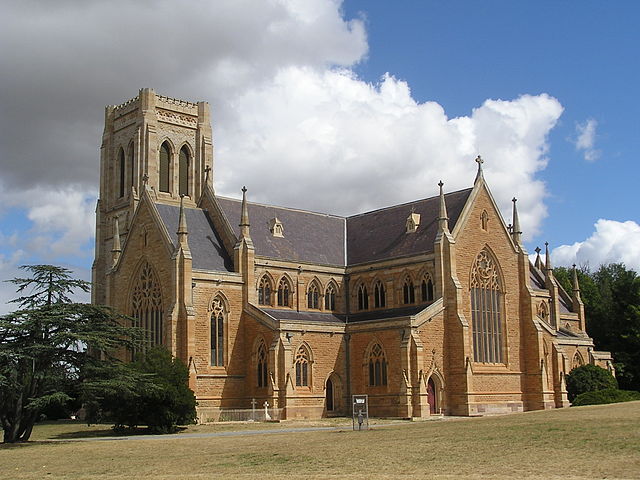
The image above to the left was a photo taken by me and I claim all rights noted below. The image to the right is from Wiki Commons.
*[thanks to a commentator for correcting this error- see comments]
**In the interest of shortening this post, I glossed over tightening of the principle of credulity and have added this clause to make it more clear.
SDG.
——
The preceding post is the property of J.W. Wartick (apart from quotations, which are the property of their respective owners, and works of art as credited; images are often freely available to the public and J.W. Wartick makes no claims of owning rights to the images unless he makes that explicit) and should not be reproduced in part or in whole without the expressed consent of the author. All content on this site is the property of J.W. Wartick and is made available for individual and personal usage. If you cite from these documents, whether for personal or professional purposes, please give appropriate citation with both the name of the author (J.W. Wartick) and a link to the original URL. If you’d like to repost a post, you may do so, provided you show less than half of the original post on your own site and link to the original post for the rest. You must also appropriately cite the post as noted above. This blog is protected by Creative Commons licensing. By viewing any part of this site, you are agreeing to this usage policy.
Question of the Week: Wagering much?
 Each Week on Saturday, I’ll be asking a “Question of the Week.” I’d love your input and discussion! Ask a good question in the comments and it may show up as the next week’s question! I may answer the questions in the comments myself.
Wagering much?
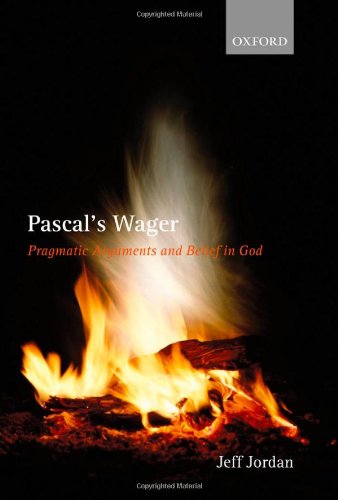
Okay, the title may be a little deceptive. I’m talking about Pascal’s Wager! I recently finished Pascal’s Wager: Pragmatic Arguments and Belief in God by Jeff Jordan (and loved it- posts coming… eventually). That got me thinking quite a bit on Pascal’s Wager, of course! It also made me wonder why I haven’t really heard much about it in apologetic circles. Thus, the question:
What do you think of Pascal’s Wager as an argument for Christian theism (or bare theism)? Why? How much have you studied it?
I am, of course, a bit biased having just read a book I thought was phenomenal arguing that the argument is sound. Let’s hear what you have to think in the comments! I might chime in as well!
Links
Be sure to check out the page for this site on Facebook and Twitter for discussion of posts, links to other pages of interest, random talk about theology/philosophy/apologetics/movies and more.
Question of the Week– Check out other questions and give me some answers!
SDG.
Sunday Quote!- Heresy as the Historical Loser?
 Every Sunday, I will share a quote from something I’ve been reading. The hope is for you, dear reader, to share your thoughts on the quote and related issues and perhaps pick up some reading material along the way!
Heresy as the Historical Loser?
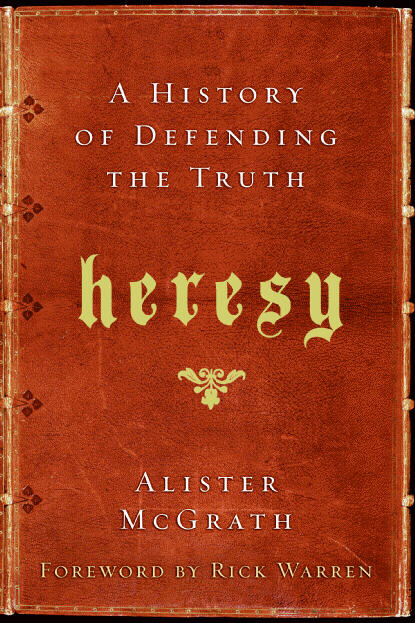
Alister McGrath’s book, Heresy: A History of Defending the Truth was a great read when I read it around two years ago, so I decided to reread it and get my notes in computer form. Almost immediately I began to discover reasons I enjoyed it so much. For example, McGrath notes that heresy has garnered much excitement and interest of late. Many see ancient heresies as something worth reconsidering, perhaps in light of losing by chance. He writes:
In this view, the distinction between heresy and orthodoxy is arbitrary, a matter of historical accident. Orthodoxy designates ideas that won, heresy those that lost. (3, cited below)
The rest of the book is dedicated to the history of heresy and how it interacted with orthodoxy. What do you think, though, of this notion that the distinction between heresy and orthodoxy is arbitrary? Could it be that orthodoxy is merely a historical accident? McGrath, of course, argues that it is not.
Links
Be sure to check out the page for this site on Facebook and Twitter for discussion of posts, links to other pages of interest, random talk about theology/philosophy/apologetics/movies and more!
Sunday Quote– If you want to read more Sunday Quotes and join the discussion, check them out! (Scroll down for more)
Book Review: “Heresy: A History of Defending the Truth” by Alister McGrath– Check out my review of McGrath’s book.
Source
Alister McGrath, Heresy: A History of Defending the Truth
SDG.
Intelligent Design in Fiction – Ben Bova’s “New Earth” and Intelligent Design
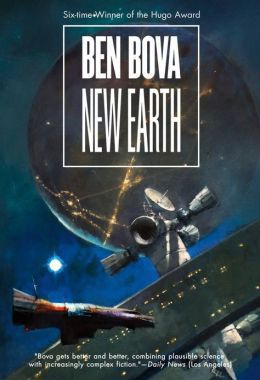 Ben Bova is a six time winner of the Hugo Award. His books hit best seller lists, and he is acknowledged as one of the all-time masters of science fiction. I’ve already explored several themes found in one of his latest books, New Earth. Here, we will look at how one might view the book as a fictionalization of the way to discover intelligent design in unexpected places. I should note that I am highly doubtful that Bova intended the book to be viewed through this lens, which makes the discovery of such a possible theme more surprising. There will be SPOILERS in what follows.
Expectations
When a team from Earth discovered the planet they dubbed “New Earth,” it defied explanation. Between a pair of stars, one of which went nova in the relatively recent past, the timing was off for such a planet to exist. The strangeness of the planet only increased when life was discovered on its surface. Finally, when intelligent life in fairly similar form to humans greet the human visitors in English, the astonishment of the explorers is complete.
But of course that’s not all that is strange about the planet. Under the surface it is actually hollow, with metal mantle that contains a gravity generator. Each of these aspects ultimately leads to the inescapable conclusion: the planet was designed for life, specifically life like that of Earth. The revelation comes from a Precursor–an ancient, sentient machine–the planet was designed to lure humans into first contact so a message of coming destruction could be delivered. The planet and the life on it were indeed designed with purpose. The eeriness of the situation is, in fact, telling.
Finding Design
In New Earth, when things show up with unexpected parameters or where they “should not be,” it is reason for further scientific exploration. Ultimately, this exploration yields the conclusion of design. I must emphasis this aspect of the book: design is not a hypothesis excluded at the outset. Instead, it is the logical outcome of putting the disparate pieces of evidence–unexpected location, age, life, types and forms of life, breathable atmosphere, hollow planet, etc.–together.
Put this in perspective: today one of the major critiques against the notion of “intelligent design” in the origins of life, its diversity, or our universe is that, essentially, one must have an a priori commitment to reject such intelligent causes as some kind of primitive magical reality in which people believe anything. However, in New Earth, epistemic openness to the possibility of design leads to real scientific discovery… of design.
I can’t help but think there is something informative here. The notion that scientific hypotheses must, by definition, exclude design not only would–if consistently practiced–remove any notion of agent causation from any situation (such as a human doing something), but could also hamper actual discovery. Methodological naturalism–the notion that science must operate in such a way as to exclude the possibility of agency–could actually be limiting the scientific enterprise. This is not to say that any unexpected observation should immediately be credited to design. Rather, my point is that if design is the most plausible of competing hypotheses, there is no reason to exclude it from the realm of possibility.
New Earth provides just such an example of how, ultimately, design was a better operating hypothesis than rival theories. When the explorers initially discussed the strange circumstances in the planet (specifically its seeming impossible location), one character remarked that [paraphrased] “It’s here! The models must be wrong!” Ultimately, this exclamation was shown to be incorrect: the models remained correct but did not account for the possibility of design.
Conclusion
One might note that Bova’s work perhaps shows the disjunct between design and naturalistic process. The juxtaposition of New Earth and its unexpected location, age, flora, and fauna against Earth’s more “typical” age and location provides readers with a reduced sense of the wonders of Earth. Moreover, in Bova’s broader canon, even Mars at one point had intelligent life upon its surface.
However, one must look to Earth and consider what we actually do observe rather than simply declaring that Earth “is here” so it must have gotten here through naturalistic means. Does Earth (or our universe) provide evidence for the hypothesis of design? That is, is design a more plausible explanation than naturalistic explanations which are offered? That’s a question which will take much exploration.
Links
Be sure to check out the page for this site on Facebook and Twitter for discussion of posts, links to other pages of interest, random talk about theology/philosophy/apologetics/movies and more!
A Solar System and Cosmos Filled with Life?- A reflection on Ben Bova’s “Farside” and “New Earth”– I explore the notion that life should be expected all over the place in a post that looks at some of Bova’s most recent works.
Our Spooky Universe: Fine-Tuning and God– Here, I present evidence that our universe indeed has been designed.
“Fitzpatrick’s War”- Religion, truth, and forgiveness in Theodore Judson’s epic steampunk tale– I take a look at the book Fitzpatrick’s War, a novel of alternative history with steampunk. What could be better? Check out some of the worldview issues brought up in the book.
I have discussed the use of science fiction in showing how religious persons act. Check out Religious Dialogue: A case study in science fiction with Bova and Weber.
Source
Ben Bova, New Earth (New York: Tor, 2013).
SDG.
——
The preceding post is the property of J.W. Wartick (apart from quotations, which are the property of their respective owners, and works of art as credited; images are often freely available to the public and J.W. Wartick makes no claims of owning rights to the images unless he makes that explicit) and should not be reproduced in part or in whole without the expressed consent of the author. All content on this site is the property of J.W. Wartick and is made available for individual and personal usage. If you cite from these documents, whether for personal or professional purposes, please give appropriate citation with both the name of the author (J.W. Wartick) and a link to the original URL. If you’d like to repost a post, you may do so, provided you show less than half of the original post on your own site and link to the original post for the rest. You must also appropriately cite the post as noted above. This blog is protected by Creative Commons licensing. By viewing any part of this site, you are agreeing to this usage policy.
Sunday Quote!- Beauty of Creation?
 Every Sunday, I will share a quote from something I’ve been reading. The hope is for you, dear reader, to share your thoughts on the quote and related issues and perhaps pick up some reading material along the way!
The Beauty of Creation?
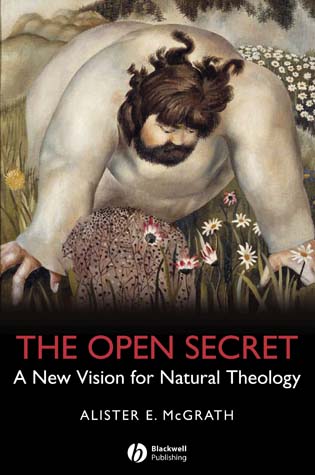
I’ve finished rereading The Open Secret by Alister McGrath. It presents a powerful picture of natural theology as touching every aspect of life.
One of the branches of evidence for the argument from design is the notion that the world in which we live is beautiful. However, many have rightly noted that there seems to be a disconnect between this picture of the world as beautiful and loving and the reality that nature is “red in tooth and claw.” Yet Christian natural theology has a more complete view of the world:
…[N]ature as presently observed, cannot be assumed to be nature, as orginally created… The creation stands in need of renewal from a God who will create all things anew… There is a profoundly eschatological dimension to an authentically Christian natural theology… The fading beauty and goodness of the world are to be interpreted in light of the hope of their restoration and renewal. (208; 206, cited below)
Christianity does acknowledge the notion that creation is “groaning” and that nature may show much disorder and vileness alongside beauty and transcendence. The former attributes are results of the fall, but as McGrath noted, Christian natural theology is eschatological: it looks ahead to a future where all things will be renewed and consummated God’s divine plan.
It seems to me this vision of the future is something which gives natural theology within Christianity a broader explanatory scope which may not be matched by other systems. By orienting this world as it is in between a broader historical scheme of creation, fall, redemption, consummation, this vision of natural theology allows for and even expects many of the observed phenomena.
What do you think? What is your view of how the beauty of creation may be balanced with some of its ugliness?
Links
Be sure to check out the page for this site on Facebook and Twitter for discussion of posts, links to other pages of interest, random talk about theology/philosophy/apologetics/movies and more!
Sunday Quote– If you want to read more Sunday Quotes and join the discussion, check them out! (Scroll down for more)
“A New Vision for Natural Theology” A Book Review of “The Open Secret” by Alister McGrath– I review the book discussed in this post. It presents a vision for natural theology and apologetics.
Book Review: “Pig and the Accidental Oink! – Picture Book Apologetics”
 When I found out about “Picture Book Apologetics” I was intrigued by the notion of bringing apologetics into the realm of picture books. Pig and the Accidental Oink!
…What? Right, that’s what the book does. But J.D. Camorlinga, the author, doesn’t just throw phrases like that into the children’s book. For this review, I’ll start at the end. The end of the book has two pages dedicated to parents interested in taking the content of the book beyond its pages. One page has an activity suggestion, the other has an explanation of the content in greater detail (here is where the term “Kalam Cosmological Argument” is used–and defined!).
The activity involves chocolate chip cookies (a bonus) and uses them to explain the notion that something does not come from nothing. The note to parents is helpful and provides avenues for further exploration.
The picture book itself is engaging and fun. Two children encounter a pig, who insists that “It makes more sense to believe that everything began by accident” than that God created the universe. The children go home, dejected, but their father explains that things don’t just pop into existence out of nothing; observation in the lives of the children shows that things which begin have causes. Armed with a new strategy for discussing beginnings, the children return to Pig and convince him that he can’t just posit an accident as the most reasonable explanation when his own experience contradicts it. They then run and play together happily.
Though I’m not completely sure about the wisdom of making the skeptical stand-in a pig (a bit too polemical, perhaps?), there is much to commend in Accidental Oink! The story is fun to follow; the characters are interesting, and the art is great. The illustrations are quite good. They’re what looks like colored pencil drawings and they’re vibrant and they avoid the generic look that some children’s books have. There remains a kind of charming style throughout the book that is recognizable on its own. Moreover, it’s definitely the kind of book to start all kinds of great conversations.
Pig and the Accidental Oink!
Links
Be sure to check out the page for this site on Facebook and Twitter for discussion of posts, links to other pages of interest, random talk about theology/philosophy/apologetics/movies and more!
Youth Apologetics Network– An interesting site which seeks to provide resources for youths related to apologetics. They are affiliated with Picture Book Apologetics as well. Great resources to explore for those interested in youth ministry.
——
The preceding post is the property of J.W. Wartick (apart from quotations, which are the property of their respective owners, and works of art as credited; images are often freely available to the public and J.W. Wartick makes no claims of owning rights to the images unless he makes that explicit) and should not be reproduced in part or in whole without the expressed consent of the author. All content on this site is the property of J.W. Wartick and is made available for individual and personal usage. If you cite from these documents, whether for personal or professional purposes, please give appropriate citation with both the name of the author (J.W. Wartick) and a link to the original URL. If you’d like to repost a post, you may do so, provided you show less than half of the original post on your own site and link to the original post for the rest. You must also appropriately cite the post as noted above. This blog is protected by Creative Commons licensing. By viewing any part of this site, you are agreeing to this usage policy.
Doubts about Evidentialism? C. Stephen Evans and a fideistic problem for evidentialists
 I’ve been reading through a few books related to apologetic methodology and epistemology of late. Most recently, I have finished Faith Beyond Reason: A Kierkegaardian Account by C. Stephen Evans. One thing that struck me in the book was a brief discussion of a possible difficulty with evidentialism as an apologetic methodology. Evidentialism is, essentially, the notion that apologetics should be based upon evidences to convince unbelievers of the truth of Christianity.* Evans himself did not direct a specific attack against the method, but some of his work could be perceived as a critique of the method. Specifically, he discussed Kierkegaard’s rejection of evidentialism:
[Kierkegaard] wants to argue that if you want something like an eternal happiness more than anything else, then it may be reasonable to commit yourself wholeheartedly to something that promises to help you obtain it, even if the chances of obtaining what you seek are not high because the objective probability that eternal happiness is truly to be gained in this way is not high either. (Evans, 108, cited below)
The thrust of this point is that one may, perhaps, rationally commit to a belief when the risk/reward is at a certain level. It’s a little similar to Pascal’s Wager, but Evans has more in mind than this: “[I]f your desire for this good is high enough… then even a very low probability would be sufficient to motivate belief” (ibid). The argument is therefore more subtle than a simple risk/reward scenario.** Instead, Evans’ point (or at least his exegetical point regarding Kierkegaard) is that one’s own desires play into commitment to beliefs, and that this is not itself an irrational thing.
Yet this point may seem a bit devastating to evidentialists. After all, evidentialists would generally hold that one should not believe without sufficient evidence, and that theistic arguments are strong enough to convince others to believe. If, however, one may grant that it may be reasonable to hold to beliefs even if there is a very low probability on the basis of one’s desire for a certain end, then it seems that evidentialism may itself be a faulty grasping for rationalistic certainty.
Within Kierkegaard’s own context, he was certainly reacting against rationalism. But evidentialism is not reducible to stark rationalism. Rather, it is a method not only of apologetics but also of epistemic investigation, depending upon one’s usage. Perhaps the evidentialist may acknowledge that one may rationally commit to a position–say, theistic belief–based upon one’s desire for that great good, but that does not preclude evidences for that belief. More importantly, the evidentialist may introduce the concept of a defeater–a belief which may serve to disprove or make another belief more improbable. Once one has been presented with defeaters, one may not rationally cling to one’s belief simply because one desires the truth of it; instead, one must either defeat the defeaters themselves or have sufficient evidence to hold to the belief in spite of possible evidence against it.
It therefore seems to me that arguments like Kierkegaard’s point does not do much to discredit evidentialism. Rather, it merely provides a possibility for people to hold beliefs in the absence of evidence either way. Once one has evidence against one’s belief, however, one should–at risk of epistemic suicide–either ground one’s belief or show that the evidence against that belief is not firmly grounded. Evans seems to acknowledge this as well, for he noted the value of evidence despite the possibility for “properly basic” belief.
Of course the question of whether one “should” think one way or another is itself highly contentious. I’ll leave that debate for another post or, even better, the comments.
*Yes, I do realize I’ve vastly oversimplified here. That’s the nature of writing shortish blog posts! For what I consider the best discussion of different apologetic methodologies, check out Faith Has Its Reasons
**I also acknowledge that Pascal’s Wager is more complex than a simple risk/reward scenario.
Source
C. Stephen Evans, Faith Beyond Reason: A Kierkegaardian Account (Reason & Religion)
Links
Be sure to check out the page for this site on Facebook and Twitter for discussion of posts, links to other pages of interest, random talk about theology/philosophy/apologetics/movies and more!
SDG.
——
The preceding post is the property of J.W. Wartick (apart from quotations, which are the property of their respective owners, and works of art as credited; images are often freely available to the public and J.W. Wartick makes no claims of owning rights to the images unless he makes that explicit) and should not be reproduced in part or in whole without the expressed consent of the author. All content on this site is the property of J.W. Wartick and is made available for individual and personal usage. If you cite from these documents, whether for personal or professional purposes, please give appropriate citation with both the name of the author (J.W. Wartick) and a link to the original URL. If you’d like to repost a post, you may do so, provided you show less than half of the original post on your own site and link to the original post for the rest. You must also appropriately cite the post as noted above. This blog is protected by Creative Commons licensing. By viewing any part of this site, you are agreeing to this usage policy.
Really Recommended Posts 4/25/14- Dean Koontz, egalitarianism, “Cosmos,” and more!
 Here, I have a list of great reads for you to browse, from Easter errors to Dean Koontz, from marriage to atheism. Check them all out, and let me know what you thought!
Five Errors to Drop from Your Easter Sermon– Check out this read on common mistakes made when talking about Easter.
Tie-Breaker– What happens when married couples come to a point where they are at an impasse? Does there need to be a marital tie-breaker grounded in notions of hierarchy of genders? Check out this thought-provoking post on the topic. For my own thoughts on the topic, check out my post “Who’s in Charge?” over at CBE.
Dean Koontz’s “Innocence”– From the author (links removed), Anthony Weber, “Dean Koontz is perhaps the most famous Christian author alive today. He has sold over 450,000,000 books, with 17,000,000 added each year. He’s sold more books than Stephen King…” That’s why you should care about the guy. Check out this look at a recent book from Koontz.
What I Needed to Hear as an Atheist (And How I Needed to Hear It)– Approach matters! Check out this fantastic post on how we may approach atheists who are wondering about the faith.
Cosmos Scrubs Religion’s Positive Influence from the History of the Scientific Revolution– The TV series “Cosmos” has seemingly purged any notion of the positive influence of religion from the history of scientific development. Check out this insightful article which explores some of this history and the way “Cosmos” has distorted it.

 J.W. Wartick - Reconstructing Faith